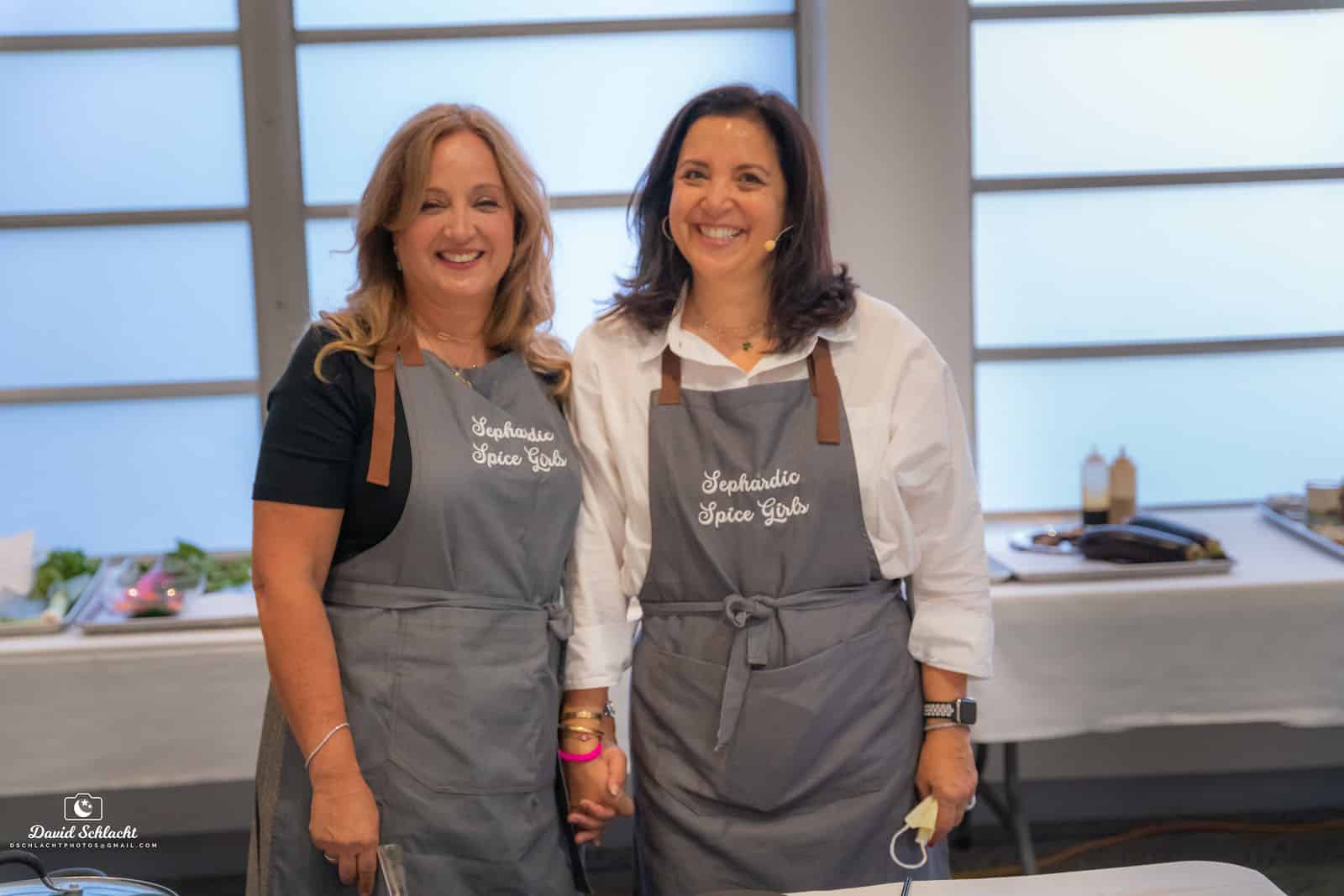
The Sephardic Spice Girls Sharon Gomperts and Rachel Emquies Sheff have been cooking and teaching together for years. The duo has collaborated on events for the Sephardic Educational Center, as well as many community cooking classes.
“Mostly what being a Sephardic Spice Girl is all about is making cooking and entertaining easy,” Gomperts told the Journal. “We’re connecting people to the recipes of their grandmothers [and] their mothers, [while] inspiring younger chefs to go ahead and not be scared to be in the kitchen.”
Gomperts and Sheff began sharing their recipes with the Jewish Journal community in February 2020. Sheff ran into publisher David Suissa at a Moroccan event, and told him the Jewish Journal needed more food coverage. Suissa gave her the go ahead!
“The whole beginning was right when Covid started, so it gave us something to focus on,” Sheff told the Journal. “Another thing is that Sharon and I have been friends since we were 15, so we’re kind of on the same wavelength.”
Sheff was born in Casablanca to a Spanish Moroccan family that emigrated to Los Angeles when she was seven. Gomperts was born in Tel Aviv to a family with roots in Baghdad and El Azair, Iraq. Her family emigrated to Sydney, Australia and then to Los Angeles. They both have a passion for healthy cooking and sharing delicious food with family and friends.
“Rachel grew up with her mom in the kitchen; I grew up with my Iraqi grandmother in the kitchen,” Gomperts said. “It’s really interesting how our kitchens really complement each other in terms of the Moroccan flavors and the Iraqi flavors.”
As a child, Sheff would peel potatoes. Gompert’s “job” was to peel the garlic and thread the needle for her grandmother so she could stuff a chicken. “I was so proud,” Gompert said.
There is so much power in food and food memories.
“You have a bite of something, and you’re flashing all kinds of memories of your childhood,” Sheff said. “Or you smell something at someone’s house, and you’re like, ‘Wow! My mother used to make that.’”
Added Gomperts, “We have such a [strong] restaurant culture, and it’s great – I love eating out – but it’s so much healthier and much more economical to eat at home. So why not do it well.”
Sheff is a fan of using preserved lemons on almost anything, and they both love stuffed food, as it combines their Moroccan and Iraqi roots. Their recipes for Preserved Lemons and Stuffed Artichokes are below.
To make things simple when cooking, Sheff suggests thinking things through first.
“If you have [all of your ingredients] lined up, it should come together easily,” she said. “And give yourself a break if it doesn’t come out the way your mother made it.”
She added, “It took me over and over and over again to make olive chicken until it tasted like my mother’s.”
Gomperts is a fan of simple cooking, as well.
“Soups are easy, healthy, delicious and impressive for your guests,” Gompert said. “So if you feel overwhelmed in the kitchen, start with soups.”
For more from the Sephardic Spice Girls, follow them on Instagram @sephardicspicegirls, on Facebook at Sephardic Spice SEC Food and on their website Sephardicspicegirls.com.
Every week, Debra Eckerling hosts bite-sized conversations about food, cooking, and community. Check out the full conversation: JewishJournal.com/podcast.
For the full conversation, listen to the podcast:
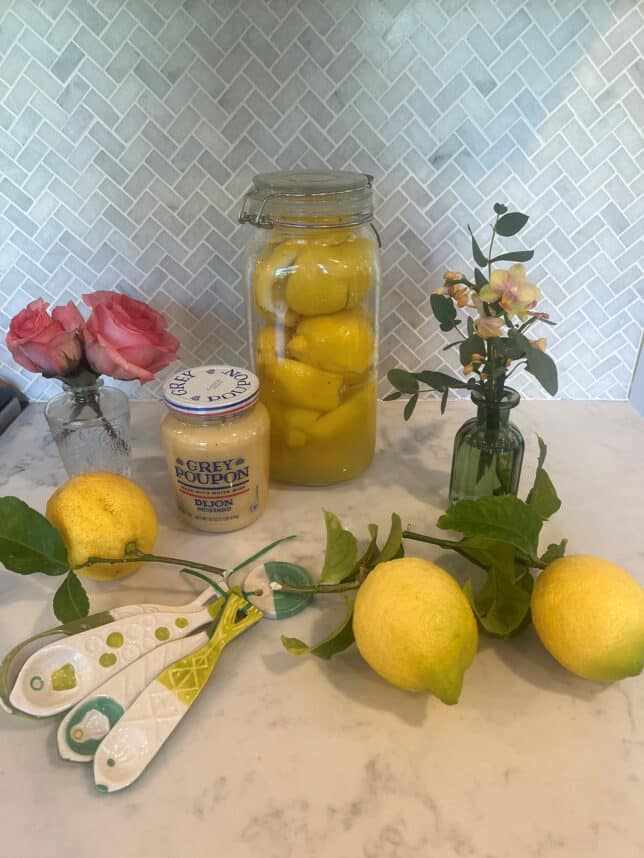
Preserved Lemons
18 lemons, washed and dried
1 cup kosher salt
Remove the stem of the lemon. Quarter the lemon lengthwise, with two cuts three-quarters of the way. Make sure that the lemon stays intact. Stuff all sides of the lemon with a generous amount of salt and squeeze the lemon closed.
Place lemon inside a 1-liter glass jar with an airtight lid. Repeat the salting process, then push down each lemon. Add more lemons until the jar is full.
Add the juice of 2 lemons.
Seal the jar tightly and shake the contents. Leave on the countertop.
The following day, add several more lemons. Repeat the following day, until the jar is full and no more lemons can be added.
Shake daily so that the brine coats the lemons.
After one week, place the jar in the refrigerator.
Lemons will be ready to use in three weeks.
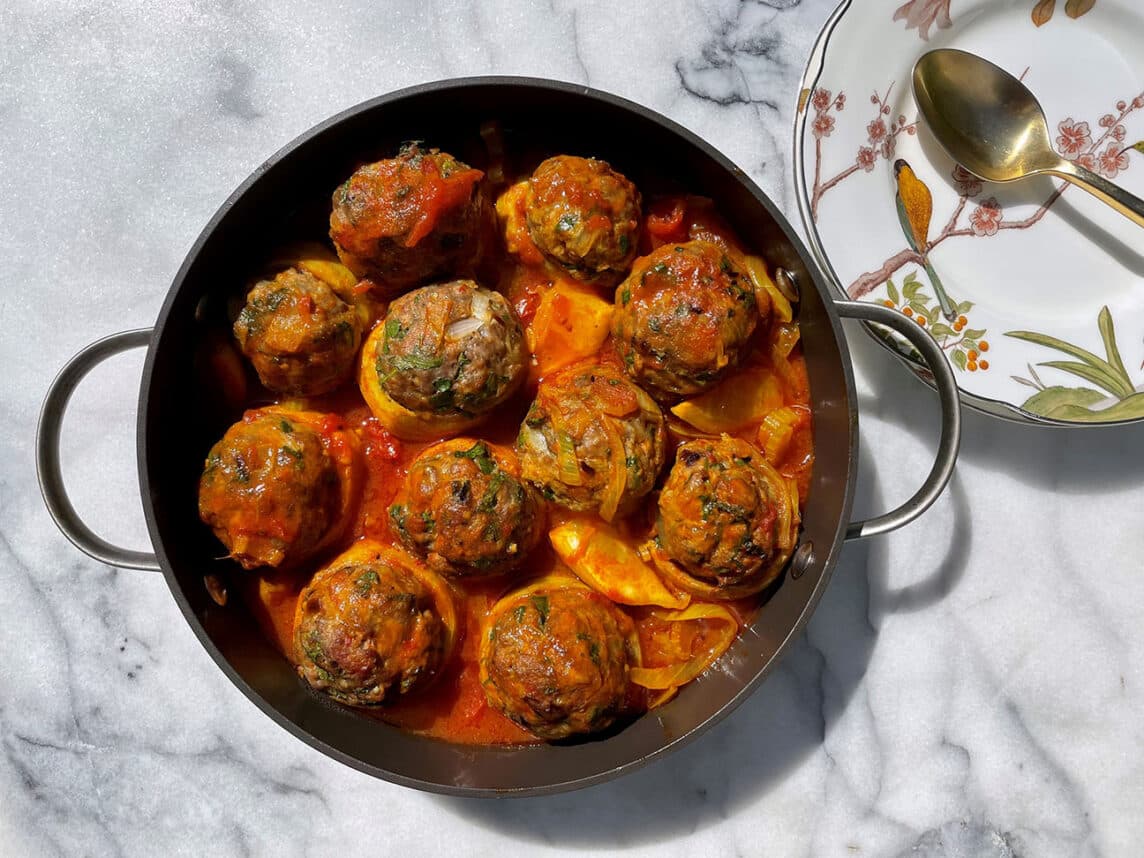 Stuffed Artichokes
Ingredients:
2 14-ounce bags of artichoke hearts
Meatball Stuffing:
2 pounds ground beef
1/2 cup parsley, finely chopped
2 large eggs
1/2 cup potato starch
1/2 teaspoon coriander
1/2 teaspoon cumin
1/2 teaspoon nutmeg
1/2 teaspoon allspice
Salt and pepper
Tomato Broth:
1/3 cup avocado oil
1 large onion, diced
3 stalks celery, finely chopped
8 cloves garlic
1 lemon, washed and quartered
1 cup water
1 14.5 ounce can of chopped tomatoes
1 tablespoon sugar
1 teaspoon turmeric
1 teaspoon paprika
1 teaspoon kosher salt
1/2 teaspoon freshly ground black pepper
Instructions:
Let artichokes thaw on a paper towel. Then lay artichokes on a baking sheet.
In a large bowl, add the meat, parsley, eggs, potato starch and spices. Gently combine ingredients.
Roll meat mixture into 3-inch balls and place inside the artichoke hearts, making sure that the meat filling forms a 1-inch dome over the artichoke.
Over medium heat, warm the oil in a large frying pan. Then sauté the onion until it is golden. Add the celery and garlic and sauté for two minutes.
Lightly squeeze the lemon into the sauce and place rinds inside the sauce. Then add water, chopped tomatoes, sugar and spices, and stir well.
Bring to a boil, then cover the pot and lower heat and simmer for 30 minutes.
Pour all the sauce into a deep ovenproof dish, then place the stuffed artichoke hearts into the sauce, making sure not to submerge the meat in the sauce.
Heat oven to 350°F and bake for one hour.
Makes approximately 18-20 artichoke hearts. Suitable for freezing.
Debra Eckerling is a writer for the Jewish Journal and the host of “Taste Buds with Deb.” Subscribe on YouTube or your favorite podcast platform. Email Debra: tastebuds@jewishjournal.com.