fbpx

June 22, 2023

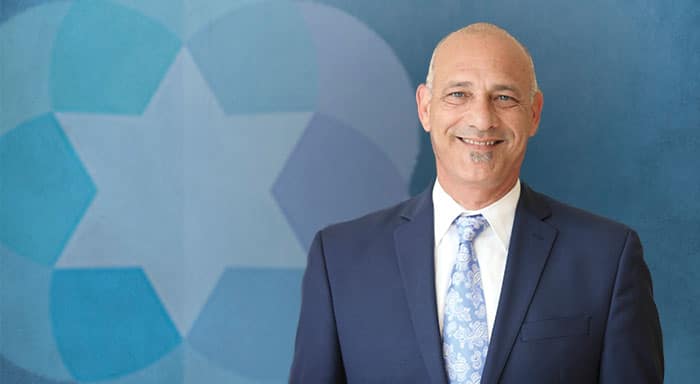
Earnest Zev

Politicians love to schmooze. A quick smile with a happy handshake is their default position. No small talk is too small. And who could blame them? If your livelihood depends on voters liking you, you better be likeable. That’s why politicians and public servants tend to look super-friendly regardless of who they meet— in their line of work, they can’t afford to alienate anyone.

Local civic icon Zev Yaroslavsky is different. He’s friendly, yes, but he’s not really a schmoozer. He’s more the earnest type.

He has a sharp gaze with a gentle smile, but it’s not the instant, wide-open politician’s smile that sucks up oxygen. His look is properly serious, the look of a man engaged with consequential issues who’d much rather discuss potholes than the Lakers. 

I’ve run into him countless times over the years, usually at public functions. He has a sharp gaze with a gentle smile, but it’s not the instant, wide-open politician’s smile that sucks up oxygen. His look is properly serious, the look of a man engaged with consequential issues who’d much rather discuss potholes than the Lakers.

On one of our many encounters, I mentioned that I was trying to help a homeless Jewish woman I had met on Pico, and I was running into dead ends. His face lit up. He told me about an initiative he had been involved with that might help her. Within a few days, after a few calls and meetings, the woman was housed in a safe place. This was “Earnest Zev” at his best.

So, when I heard about his new book, “Zev’s Los Angeles: From Boyle Heights to the Halls of Power. A Political Memoir,” I saw it as a big deal, not just for people who love this town, but for anyone interested in its fascinating and often frustrating recent history.

The book works precisely because, like Zev, the tone is earnest. Over a long career of working through the endless bureaucracy that characterizes local politics, not to mention having to weather complaints from all sides of the Jewish community, Zev never lost sight of his dedication to serve the public good.     

“It’s easy to be cynical,” he writes, “but I’ve lived my entire life convinced that holding public office is one of the most important callings in a democracy — a singular opportunity to improve the lives of those we are elected to represent.”

In her review for the Journal this week, Kathleen Hayes writes: “Yaroslavsky — former City Councilman, now retired from the County Board of Supervisors — has written, with Josh Getlin, an account of his years in government that will impress the most jaded critic.”

Indeed, who is not jaded these days?

The noise and divisiveness of modern politics, and the coarseness of modern discourse, have become in many ways toxic and unbearable. The latest Gallup polls show that our trust in both the media and Congress is at all-time lows. And on social media, it is snark and sarcasm and verbal warfare that dominate. Earnest is for suckers.

In this sea of cynicism, Zev has offered us a testament to the power of earnestness, a power rooted in one of our most precious resources: trust. Earnest people tend to be more trustworthy. That’s just a fact. They tend to be more credible. 

The non-conformists today are those who are sincere and earnest. They are the true rebels. Unlike the conformists who fight only for their political tribes and never show weakness, these earnest rebels are not afraid to look for solutions that work for everyone. 

Zev’s career was not all roses. Sometimes, the bureaucracy won. But through it all, he never lost his earnest demeanor; he never lost hope.

In her review, citing some of Zev’s accomplishments, Hayes asks: “How did Los Angeles change from having a notoriously skeletal public transit system to boasting a vast system of buses, subway, light rail and shuttles? How was Martin Luther King Jr. Hospital resuscitated, after being forced to close due to its dismal performance in one of L.A.’s most underserved communities? How did the Santa Monica Mountains National Recreation Area come into being?”

Her answer gives you a sense of Zev’s four decades of public life: “By plowing ahead through a migraine-inducing series of administrative roadblocks, justly or unjustly harsh public criticism, not-so-gentle pressure from powerful sponsors and ‘friends,’ internal rancor and plenty of other difficulties.”

It’s trendy nowadays to look at the many ills of Los Angeles and take off to places like Florida, Texas or Arizona. For those of us who are sticking around through thick and thin, Zev’s undying civic pride offers us a boost, as if to say, “Do like me and don’t give up.” How earnest.

The key lesson I gleaned from Zev’s book is that you can be hip and cool and the world’s greatest schmoozer, but if you really want to accomplish good stuff in life, it’s best to be earnest.

The key lesson I gleaned from Zev’s book is that you can be hip and cool and the world’s greatest schmoozer, but if you really want to accomplish good stuff in life, it’s best to be earnest.

It may even get people to like you.

Earnest Zev Read More »

Rabbi Jonathan Aaron: Theater Paved His Route

Rabbi Jonathan Aaron’s background is rich with theatrical experiences, but he leaves no doubt where his feet and his heart are planted. After 27 years at Temple Emanuel of Beverly Hills — the only congregation he has served — he told the Journal in his resonant, theater-trained voice, “I am a rabbi 100% … but I understand how to make a moment.” 

That wasn’t always the case. Nearly a decade passed after his graduation from Emerson College’s theater program before he entered rabbinic school. His natural inclination was to act. “I was teaching theater and living all over the country,” he explained, “running around, doing whatever I needed to do. Part of the issue was I wasn’t sure what I wanted to do. I was writing, I was directing, and I was doing acting.” It was satisfying, but not remunerative. “The other side of me was a singer/songwriter – that whole world of James Taylor and Paul Simon,” he  said. “I was connected to the Jewish community as a song leader. I was doing retreats all over the country and weeklong camps. As person of theatre, not making money, being a song leader was a great way to make money because it was on a weekend. I always had my foot in the Jewish community.”

Music and Judaism, he said, were stressed in his family. The youngest of three brothers — all musicians and teachers, two of them rabbis – Aaron grew up around Hartford, Conn. Music was such a big part of his family, he believes that in another time, his mother would have been a cantor. Born in Monheim, Germany, the daughter of Hugo Chaim Adler, “a pretty famous composer in Reform circles,” she was eight when her family fled the Nazis in January 1939. “I love America because it saved my mother’s life, really,” he said. 

But the most defining moment in the rabbi’s adult life occurred in a conversation with his brother, Rabbi David Aaron of Hebrew Union College, Cincinnati. He was writing kids’ educational television shows when David told him “If you want clout when you walk into a room with these shows, why don’t you think about getting a Master’s in Jewish education?”

He did, but there was a wrinkle. “As I went through there I said, ‘I don’t know anything. I need to learn more. I will stay another three years and get a rabbinic degree, which I will always have, no matter what I end up doing.’”

What he loved about Judaism, both while working on his Master’s and later in rabbinical school, was the studying, the creative interpretation. He was intrigued “by the idea that the Biblical text is a diving board, and you dive into a sea of commentaries. It’s not telling you what it means. It’s up to you, creatively, to figure out what it is. I took those same techniques and used them in my Torah study.”

“It’s about how you find your life in this text. In that way, I believe that theater prepared me for the creative endeavor of Torah study.” 

He says it all comes down to creative endeavor and expression. “It’s about how you find your life in this text,” he said. “In that way, I believe that theater prepared me for the creative endeavor of Torah study.” He found that when he was in rabbinic school, “it is all in your head.” But when he was singing with youth groups, it was all about what’s in your heart. So these days he is guided by a combination of head and heart, and a desire to be intellectually honest — but with his heart leading the way. His heart is buttressed by his family: His wife, actress Michelle Azar, and their two daughters. 

Post-pandemic, he said, things are completely different. “We are trying to figure out what people need now … A lot of it comes down to allowing a person to have his or her own expressive entrance into Judaism. How can we create a safe environment so people feel as if they have permission to express themselves without being ridiculed or being judged.”  

Has Rabbi Aaron been able to entice his congregation back to Temple Emanuel?  It’s a mixed bag. He has encountered congregants who have been at Emanuel for 60 years, but didn’t come to services much. Amazingly, they told him they hadn’t missed a pandemic online service in three years. Every Friday night, they log on for services, “so in that way they are connecting to prayer a lot more than before.” He also noted that his Introduction to Judaism class is half again larger than before. “One of the greatest things a rabbi gets to do,” Aaron said, “is teach someone who doesn’t know much about Judaism, and turn them onto it.” 

Fast Takes with Rabbi Jonathan Aaron

Jewish Journal: What is your favorite Jewish food?

Rabbi Aaron: Matzoh ball soup – although my mom’s brisket is right up there. Her cupcakes are third.

JJ: Your favorite music?

Rabbi Aaron: All kinds of music. If there is one thing I don’t listen to, it’s hip-hop. I listen to everything from the Ting Tings to James Taylor to classical. My favorite moment though is, if my wife is around and my daughter is around, we play and sing.

JJ: What book is on your night table?

Rabbi Aaron: “Genesis Ideology,” written by my brother, Rabbi David Aaron.

Rabbi Jonathan Aaron: Theater Paved His Route Read More »

Feeling “At Home”

What does it mean to feel “at home”? During a recent visit to Jerusalem, this question filled my mind.

I spent Passover in Jerusalem and stayed on for a month until the Bar Mitzvah of our oldest grandchild. During this visit, I felt at home in a way that I rarely feel in Los Angeles, where I live. Sitting in Aroma café with my daughter-in-law, teacher and writer Rachel Sharansky Danziger, I exclaimed over and over, “I feel at home here!”

If home means comfort and familiarity, then L.A. surely beats Israel. America in general and Los Angeles in particular have mastered the art of making life convenient. Amazon packages appear overnight. Costco and Target are open every day. Hey, it’s 70 degrees almost every day! The government runs predictably without much drama from hyper-individualistic bureaucrats. Traffic can be bad, but you can often work around it. The stores are well-stocked. Undoubtedly, L.A. is a great place to be a consumer.  But does convenient shopping make a place a home?

I have dwelled in Los Angeles most of my life, and the city has been good to me. I started and raised my family, reconnected to Jewish observance, and founded a successful business here. I own a home not far from the beach. By most standards, I have it made. Nevertheless, I have never truly felt at home in Los Angeles. It’s the city I live in. But a genuine sense of home? Not really. 

Given that Los Angeles is so comfortable and familiar, why does it not feel like home? What is home after all? Is it a physical place? A product of relationships? A state of mind? I think it is all of those. In many ways, Los Angeles is surely my home – I know my way around, even when Google Maps is offline.  I know where to buy everything I need. But in my soul’s-eye view, the city lacks a heartbeat.

Perhaps being at home has nothing to do with physical location. As the proverb says, “Home is where the heart is.” With my husband and children, I am home. Part of the magnetism of Israel is that I have two married children and a passel of grandchildren there.  Each one is a universe and each one brings me joy. Yet even though I have dear family members and friends in LA as well, the lure of Israel still beckons.

So, what exactly do I mean by feeling “at home” in Israel? It’s a profound sense of being where I belong — as if the missing piece of a puzzle has finally found its rightful spot. Being a Jew is natural there. 

So, what exactly do I mean by feeling “at home” in Israel? It’s a profound sense of being where I belong — as if the missing piece of a puzzle has finally found its rightful spot. Being a Jew is natural there, unlike the United States, where we are a tiny minority. Religious school is free, unlike the sky-high private tuition we pay in America. Kosher food abounds – no prowling through grocery aisles to find the few products I can buy. Before Passover, there were dumpsters in the street specifically marked for people to burn their chametz. I just can’t see that in L.A.  Certainly, the presence of loved ones makes a difference, but I think that even Jews who don’t have blood kin in Israel can feel they have returned to their “family” when they enter the Holy Land.

Friends who’ve made Aliyah assure me that moving to Israel entails serious cultural and linguistic shock. I imagine that if I moved there permanently, it would take a while for me to gain the familiarity that I enjoy effortlessly in L.A. I would undoubtedly lean on my adult children who paved the path. But once I got through the red tape, my sense is that at-homeness would be waiting for me. Living as a Jew in a Jewish state would feel seamless and natural.

Now that I have returned to Los Angeles, the at-home feeling of Israel is fading as I embed myself deeper into the familiar places and things of my house and neighborhood. Nevertheless, the light of Israel shines in my memory as a place where physical, emotional, and spiritual homes can become one.


Elizabeth Danziger is the author of four books, including Get to the Point, 2nd edition, which was originally published by Random House. She lives in Venice, California.

Feeling “At Home” Read More »

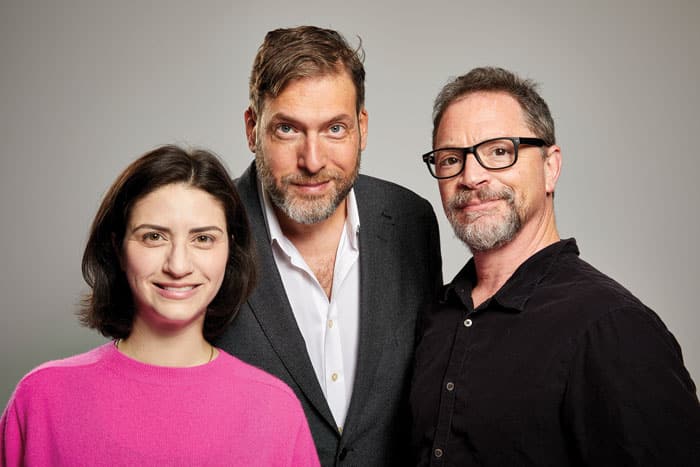
Joshua Malina to Replace Co-host Mark Oppenheimer on“Unorthodox” Podcast

“Unorthodox,” the podcast produced by Tablet Magazine, is one of the most popular Jewish podcasts around. The show has featured interviews with prominent Jewish figures, from comedian Modi to food blogger Chanie Apfelbaum and activist Hen Mazzig. Now, after bidding farewell to longtime co-host Mark Oppenheimer, the show has signed on Joshua Malina to join Stephanie Butnick and Liel Leibovitz. 

Malina is best known for playing Will Bailey on “The West Wing” and U.S. Attorney General David Rosen on “Scandal,” can currently be seen on Broadway as Hermann in “Leopoldstadt.” He also co-hosted the podcast “Chutzpod!” with Rabbi Shira Stutman and fights antisemitism on Twitter @JoshMalina  “(((Jew))).”

The actor was already a fan of “Unorthodox” when he was tapped to join. “The show, and Tablet, have become a real hub of the Jewish community, and I want to be part of the broader discussion,” Malina told the Journal. “I am looking forward to sharing my own opinions, but I am equally enthusiastic about hearing Stephanie and Liel’s take on things, and I am looking forward to discussions with a wide variety of intriguing guests.” Malina’s first episode was May 24, and featured an interview with Aaron Saidman, executive producer of Netflix’s “Jewish Matchmaking.” “Unorthodox” also showcases current news in the Jewish world and every episode features a “Gentile of the Week.” 

Butnick and Leibovitz are doing a live show and Q&A with Malina at the June 22 performance of “Leopoldstadt.” The Tony-award winning play by Tom Stoppard  follows a Viennese Jewish family from 1899 to the mid-20th Century. After “Leopoldstadt” closes on July 2, he’ll be returning to Los Angeles to find more acting work.

“I am pleased that I will have an episode of ‘Unorthodox’ each week to focus on,” he said. 

According to Leibovitz, Malina was chosen for the position of co-host because he is able to have civil conversations about important issues with people in a time when that’s not always possible. “Our least favorite thing about our particular moment in time is that we’re losing the ability to argue without seeing someone who disagrees with us as our enemy,” Leibovitz said. “Joshua is an incredibly open-minded and open-hearted person and, as you can tell from his hilarious and profound Twitter account, he’s committed both to asking really thorny questions and to having really respectful arguments with people who see the world differently.”

When Oppenheimer left the show, Butnick and Leibovitz wrote down a list of requirements the new person needed to possess. 

When Oppenheimer left the show, Butnick and Leibovitz wrote down a list of requirements the new person needed to possess. “It had to be someone who cares deeply about the Jewish community, someone who is curious and passionate about all aspects of Jewish life and someone who digs our vibe and whom we love and respect,” Butnick said. “We read over this list again and realized that we were both thinking about the exact same person: Joshua Malina.”

Malina grew up observing the Jewish holidays and keeping kosher. He attended Westchester Day School, a Modern Orthodox school in Mamaroneck, New York, for grade school. “That experience had a major impact on my Jewish identity,” he said. “In addition to giving me some of the tools that help to live a Jewish life — learning Hebrew, studying Torah — there was an emphasis at school on attempting to live ethically, and being a decent person.”

Malina said he wears his Judaism on his sleeve, waking up and saying the Modeh Ani every morning and the Shema every night before he goes to bed. 

Today, Malina said he wears his Judaism on his sleeve, waking up and saying the Modeh Ani every morning and the Shema every night before he goes to bed. “I have at least bookended my day in a Jewish fashion,” he said. “And I hope in between, that I walk the walk during the day. As a co-host of ‘Unorthodox,’ I will attempt to talk the talk, bringing my two cents to news and issues that affect our community.”

Joshua Malina to Replace Co-host Mark Oppenheimer on“Unorthodox” Podcast Read More »

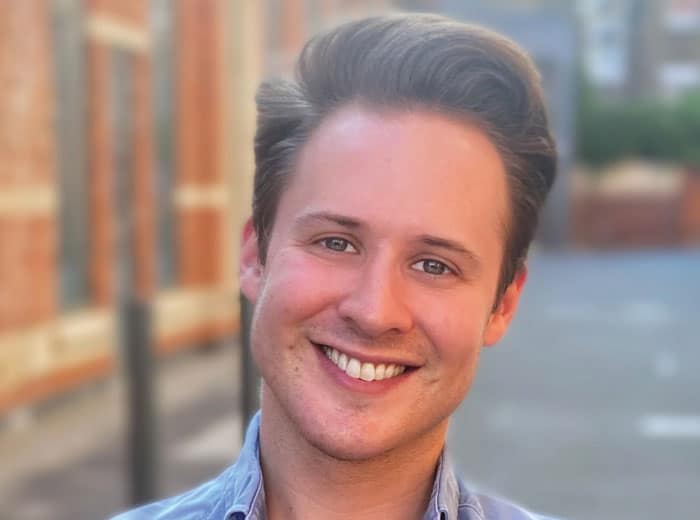
How Pride Saved My Life

“I have done nothing wrong.” These words echoed relentlessly in my mind as I stood in the upstairs bathroom of my parents’ house, battling against the weight of internalized homophobia and years of having endured mental anguish.

To my 16-year-old self, the significance of these words was profound, a revelation that would shape the course of my life. This realization became the turning point in the internal struggle I faced, one that encompassed both my identity as a gay person and later as a Jew. It marked the beginning of my transformative journey toward embracing LGBTQ+ pride, eventually leading me to write a book encouraging a modern Jewish Pride movement. Along this path, I discovered the profound healing power of pride.

Before embarking on this life-changing journey toward Jewish and Zionist pride, I was a teenager, weighed down by a seemingly insurmountable sense of shame. This shame inflicted immense pain, leading me to self-harm and to even attempt suicide. Regrettably, my story resonates with countless individuals worldwide. Shame, regardless of its source, is a corrosive force that damages those who forced to endure it.

The impact of shame on mental health has been studied extensively by experts such as Professors June Tangney of George Mason University and Ronda L. Dearing of the University of Houston. They found that “shame-proneness can also increase one’s risk for other psychological problems. The link with depression is particularly strong; for instance, one large-scale meta-analysis in which researchers examined 108 studies involving more than 22,000 subjects showed a clear connection.” 

This shame marked the beginning of my personal journey, but the seed of self-esteem and confidence that was ignited in that bathroom at the age of 16 continued to grow within me. It was a gradual transformation, not an instant occurrence. As I entered my 20s, I actively embarked on a quest for LGBTQ+ pride. I had an unquenchable thirst for knowledge about my community and a deep desire to understand and belong to the LGBTQ+ community. Above all, I yearned to make peace with my true self. In my pursuit, I stumbled upon a film that would forever alter my life: “Milk,” a 2008 biopic about Harvey Milk, the first LGBTQ+ individual elected to office in the United States, who also happened to be Jewish. Little did I anticipate the profound impact it would have on me.

Anger became a vital indicator of my growing self-esteem. I was not consumed by it. I understood that it was okay to experience anger as part of my journey toward self-acceptance.

One scene from the film left a lasting  impact on me. As Harvey Milk addressed a crowd of gay individuals, his words echoed in my soul: “I know you are angry. I am angry!” Those simple yet powerful words resonated deeply within me, prompting me to confront the anger stemming from my own experiences. At that moment, I came to a realization. Anger was not merely a negative emotion to suppress or ignore. It held a significant meaning: It hinted at a sense of self-worth, a sense of empowerment. I recognized that I had done nothing wrong, and I deserved better than the discrimination I had faced. Anger became a vital indicator of my growing self-esteem. I was not consumed by anger, nor did I let it define me. Instead, I allowed myself to feel it and acknowledged its presence. I understood that it was okay to experience anger as part of my journey toward self-acceptance.

At 36 years old, I take pride in my gay identity. As an openly gay teacher in Hong Kong, I was honored to serve as a role model for LGBTQ+ students, ensuring they never feel the pain I once did. 

Despite my admiration for Jewish LGBTQ+ leaders like Harvey Milk, I initially viewed the two parts of my identity — Jewish and gay — as separate entities. I failed to recognize the commonalities and shared lessons that could be applied to both communities. However, it was through the concept of pride that I finally found a way to integrate these seemingly distinct aspects that defined who I was.

Driven by my years of educating about the Holocaust, I decided to join Twitter with a specific mission in mind: To confront Jeremy Corbyn, the then leader of the Labour Party, infamous for his racist attitudes toward Jews.

Driven by my years of educating about the Holocaust, I decided to join Twitter with a specific mission in mind: To confront Jeremy Corbyn, the then-leader of the Labour Party, infamous for his racist attitudes toward Jews. It gradually became clear to me that Corbyn embodied a form of Jew-hatred that I had personally experienced, even though I didn’t immediately recognize it.

My experience at Glasgow University was marred by left-wing Jew-hatred. This made me feel isolated and othered. Still, I refused to internalize the hate directed at me, however uncomfortable this pressurized atmosphere was to navigate. Given my background as a Holocaust educator and historian of historical Jew-hatred, as well as my own experiences at university, I felt equipped to understand Corbyn’s mindset and explain it to others. I aimed to convey these complex ideas in a way that was accessible to people around the world. Over time, my presence on Twitter grew, establishing me as a prominent young voice in the battle against Corbyn’s left-wing Jew-hatred.

During that period, I had the privilege of witnessing the remarkable strength and resilience of the British Jewish community. Their justified anger in response to the Labour Party’s betrayal left me in awe. From my vantage point in Hong Kong, I watched with admiration as British Jews orchestrated the powerful “enough is enough” campaign, standing up against Corbyn’s Jew-hatred. This rallying cry embodied the understanding that we deserved better treatment and should not tolerate such mistreatment. However, amid this empowering movement, I couldn’t help but notice certain high-profile Jews who seemed subdued by shame. They were unable to join the fight as they prioritized their affiliation with what David Hirsh, the British academic, terms the Leftist “Community of the Good” over their Jewish identity. It reminded me of the times I had tried to conform to society’s expectations of being a “good gay person,” suppressing aspects of my LGBTQ+ identity to fit into a palatable mold. This observation reinforced in me the importance of standing proudly in one’s identity, refusing to be silenced or diminished by shame or external expectations.

I began contemplating the profound psychological impact of Jew-hatred on the Jewish community. It was a moment of reckoning for British Jews, as we questioned our true acceptance in the country we have called home for centuries. This unsettling and traumatic experience left me personally affected. The relentless hate propagated by Corbyn’s followers, who targeted and vilified Jews online, shook me to the core. The realization that such events were unfolding in 21st-century Britain left me feeling isolated and filled with disbelief. It was like being trapped in a horrifying nightmare.

These experiences revealed a troubling reality: discussions about the true impact of Jew-hatred on Jews are rarely explored. While there is extensive analysis and investigation of acts of Jew-hatred, the focus often centers around the non-Jewish perspective. We examine their perceptions, feelings, and actions toward Jews. Yet, we seldom delve into the profound effect this relentless hatred has on our own self-perception and our Jewish identity, and as such we are left unable to defend ourselves.

In those powerful moments, I was struck with a surge of emotion as I realized: Jews deserve a pride movement. This wasn’t merely about individual pride (which many Jews undoubtedly feel), but about uniting to create a movement that educates, inspires and empowers us as a collective.
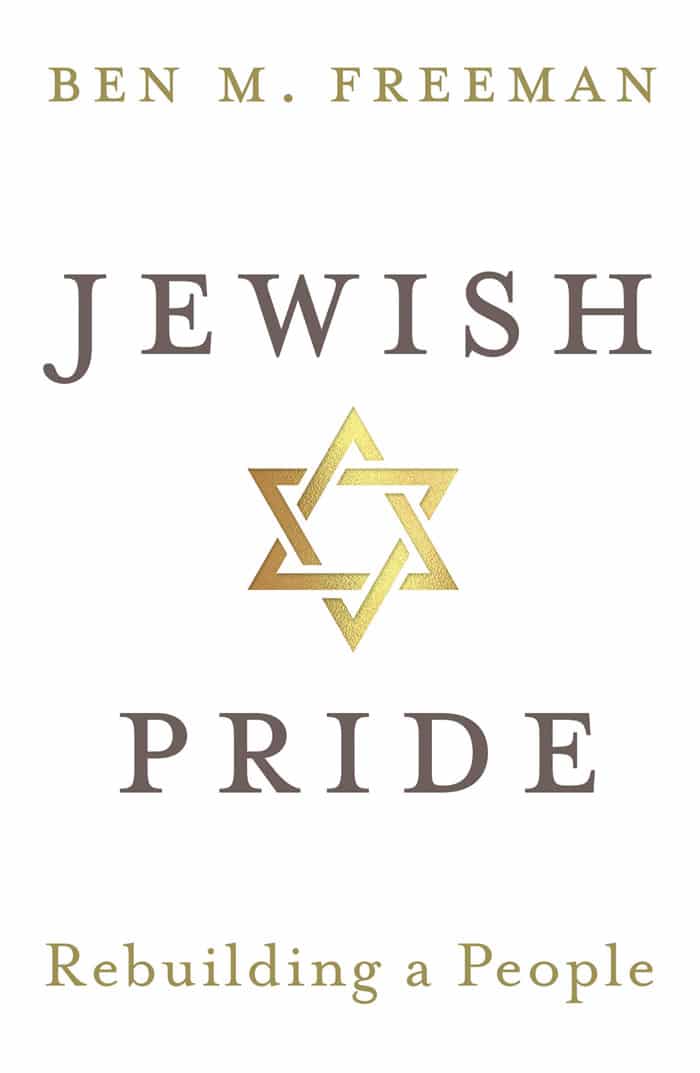
When I initially broached the topic of Jewish Pride, some individuals believed that the slogan was for LGBTQ+ Jews only. I swiftly rejected this notion. Jewish Pride stands as a unique and distinct pride movement created specifically for the Jewish community. While its inception may have been inspired by my personal journey toward LGBTQ+ pride, it is essential to emphasize that Jewish Pride is inclusive and intended for all Jews. 

As a result of this journey, I wrote a manifesto for a modern Jewish Pride movement in my book, “Jewish Pride: Rebuilding a People” in February 2021. The manifesto served as a rallying cry for Jews to unite and forge a pride movement that would educate and empower us.

As I cautioned in the book, pride should not be mistaken for superiority or blind adherence. Rather, this pride is grounded in a deep love and appreciation for our Jewishness, which can empower us to offer constructive criticism when it is warranted.

But as I cautioned in the book, pride should not be mistaken for superiority or blind adherence. Rather, this pride is grounded in a deep love and appreciation for our Jewishness, which can actually empower us to offer ourselves constructive criticism when it is warranted. Our community is far from perfect and Jewish Pride is hardly naive to that. We are diverse and argumentative and it is natural for us to hold differing opinions. However, as “am echad,” one people, we strive to find common ground through embracing pride in our shared heritage. 
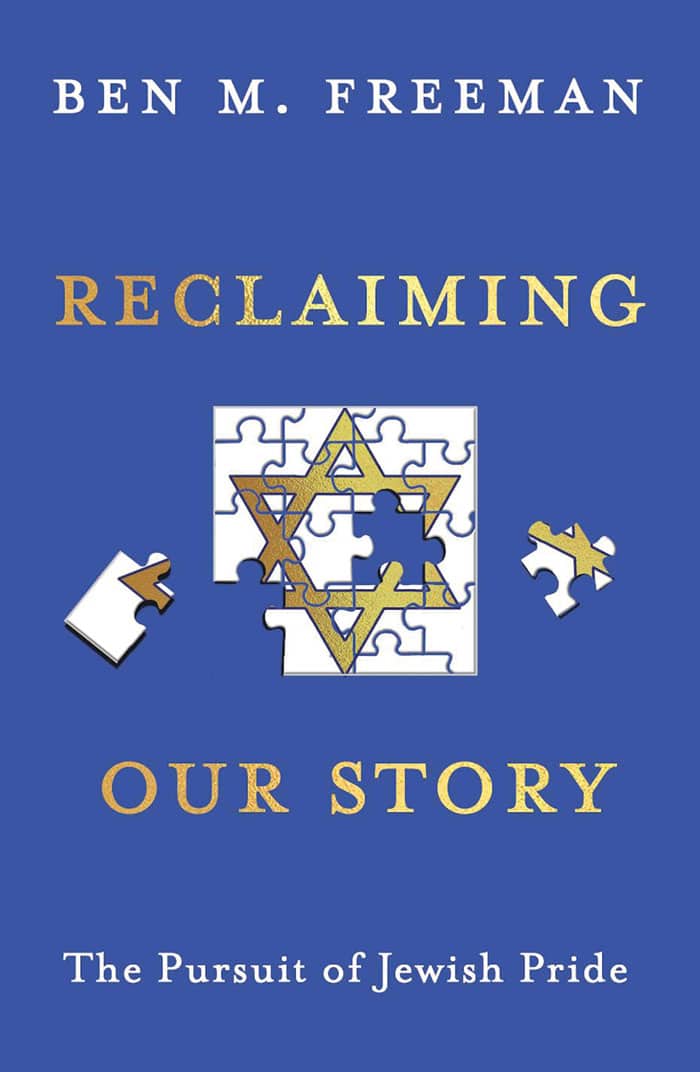
In October 2022, I published my second book, “Reclaiming our Story: The Pursuit of Jewish Pride.” It delves into the concept of internalized anti-Jewishness, aiming to shed light on the profound impact of Jew-hatred on Jews. In it, I explore the notion of the broken mirror of Jewish identity, wherein the non-Jewish world imposes their own categories of “Good Jews” and “Bad Jews” onto us. Tragically, we often internalize and define ourselves through this distorted reflection. The consequences for Jewish identity have been devastating.

As a minority, Jews face a power imbalance when interacting with the majority in the Diaspora and the world at large. While there may be instances, such as in certain areas of the United States, where Jews may feel part of the majority, the truth remains that we represent a specific civilization and a small community. This power imbalance often gives rise to misconceptions and biases toward minorities. What’s most harmful is when members of the minority group internalize these misguided perspectives, perpetuating a distorted understanding of their own identity.

Have you ever caught yourself saying, “I am Jewish, but …” or even “I am Zionist, but …”? I’ll confess that I have. Those were moments when I tried to be a “Good Jew,” shrinking my Jewishness to fit in and seek acceptance. Yet this not only disrespects the courageous legacy of Jews who fought for their identity throughout history, it also proves fruitless. In truth, there are no “Good Jews” or “Bad Jews”—there are only Jews.

Since the publication of “Jewish Pride,” the very notion of Jewish Pride has percolated to the surface and has influenced the Jewish conversation. Its principles have permeated the sermons of rabbis during the High Holy Days, disseminating the message of pride and empowerment. Teen organizations are diligently building a new generation of confident and proud Jews. Many in our community are beginning to acknowledge that Jewish Pride is a powerful and effective weapon against Jew-hatred. 

Jewish Pride is igniting a welcomed shift in how Jews perceive their identity, inspiring individuals to reclaim their heritage, stand tall and resist the forces of hatred. As more communities embrace the idea, Jewish Pride can become a unifying force that strengthens our community’s resilience and fosters a collective sense of belonging and purpose.

Jewish Pride, as I know from personal experience, allows us to shed any lingering sense of shame associated with our identity. It grants us the agency to define ourselves on our own terms, rather than accepting externally imposed notions of Jewishness. By rejecting non-Jewish definitions of what it means to be Jewish, Jewish Pride empowers us to embark on a journey of self-discovery, exploring our Jewish identities through an authentic Jewish lens.

Through the lens of Jewish Pride, we can reclaim our narratives, traditions and values, celebrating the rich tapestry of Jewish history and culture.

Through the lens of Jewish Pride, we can reclaim our narratives, traditions and values, celebrating the rich tapestry of Jewish history and culture. It encourages us to delve deeper into our roots, connect with our community, and forge meaningful connections with Jewish traditions and teachings. In short, Jewish pride reminds us that we have plenty to be proud about.

The essence of being Jewish encompasses more than a religion or shared faith. We are also a nation, a culture, a people with a miraculous story.  

The essence of being Jewish encompasses more than a religion or shared faith. We are also a nation, a culture, a people with a miraculous story.  We are indigenous to the Land of Israel, with a rich heritage of laws, traditions, practices and beliefs. As inheritors of a great and ancient civilization, we should embrace our specificity and take pride in it.

Many prominent Jews reject this idea. Far-right former French Presidential candidate Éric Zemmour, for example, in an attempt to ingratiate himself to the French, tweeted, “Napoleon is my grandfather, and Joan of Arc my grandmother.” Author Theodor Lessing eloquently countered by writing: “Who are you? … Your father was Judah the Maccabee, Queen Esther was your mother. The chain continues from you … to Saul, David, and Moses.” 

Growing up in Scotland, my family and I were aware and accepting of our differences within the predominantly Christian society. Despite being a small minority of 5,000 Jews in the entire country, we held steadfast in our understanding of who we were. Our distinct identity was expressed through the celebration of Jewish holidays, eating Jewish foods, the recitation of prayers in Hebrew, and adherence to ancient laws rooted in the Land of Israel.

Our comfort in our differences did not stem from a belief in our superiority. We did not consider ourselves better than others. It also did not mean that we lacked a sense of Scottish or British identity. On the contrary, we embraced the beauty of dual identities, allowing our Jewishness and Britishness/Scottishness to coexist harmoniously within us. We did not face the burden of having to choose between these identities but instead found strength and fulfilment in embodying both. 

Given the persecution and adversity we’ve faced through the millennia, it’s a testament to the indomitable spirit of our people that we stand here today in 2023, alive and able to fight to keep our story going. Our civilization is a tapestry woven with threads of joy, beauty, intellect and tradition. It’s a heritage that resonates through the ages. 

In terms of my LGBTQ+ identity, pride has been my salvation. It shattered the chains of shame that bound me and emboldened me to embrace my identity, defying the world’s judgments and expectations. It is high time we Jews embrace our identity unapologetically and declare with unwavering pride to ourselves and to the world: “We are Jews, we are proud and we hold our heads high. We refuse to bend or alter ourselves to fit the molds of non-Jewish acceptance.”

Together, let us continue to reclaim our story and build a vibrant future rooted in the meaningful and justified sentiment of Jewish pride.


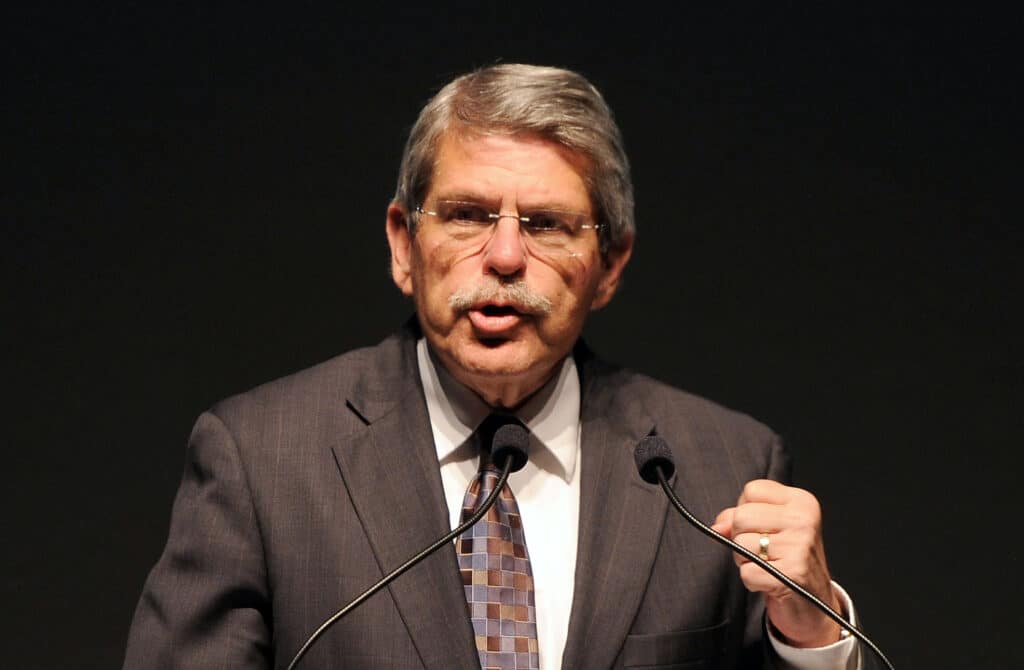
Ben M. Freeman is an internationally renowned gay Jewish author and educator focusing on Jewish identity and historical and contemporary Jew-hatred. A Holocaust scholar for over 15 years, Ben came to prominence during the Corbyn Labour Jew-hate crisis and quickly became one of his generation’s leading Jewish thinkers and voices against anti-Jewish racism.

How Pride Saved My Life Read More »

Campus Watch June 22, 2023

El Camino Community College Superintendent Denounces Commencement Speaker Accusing Israel of “Killing and Torturing Palestinians”

El Camino Community College Superintendent Brenda Thames denounced the recent commencement speech from student Jana Abulaban, who accused Israel of “killing and torturing Palestinians.”

The New York Post reported that Thames said in a statement that Abulaban’s speech “was not approved by El Camino College officials and does not reflect the values and views of the school.” Thames also said that Abulaban was only supposed to “introduce another speaker” and that the school has since informed Abulaban that her speech was inappropriate. However, Abulaban told the Post that her advisor approved her speech a couple days before the ceremony and he “backed me up on it.”

Jewish Legal Groups Urge ABA to Investigate CUNY’s Accreditation 

Three Jewish legal groups wrote a June 13 letter to the American Bar Association (ABA) on June 13 urging the organization to investigate if the City University of New York (CUNY) should have their formal accreditation revoked.

The American Association of Jewish Lawyers, National Jewish Advocacy Center and International Legal Forum argued that Students for Justice in Palestine (SJP) activist Fatima Mousa Mohammed’s May 12 commencement speech “was rife with unadulterated antisemitism” since she  “equated Zionism…) with racism and white supremacy, falsely accused Israel of indiscriminately targeting Palestinians, as well as expressed support for the discriminatory boycott, divestment and sanctions (BDS) movement against Israel and invoked antisemitic tropes about Jewish ‘investors’ and ‘donors.’” The legal groups added that Mohammed’s speech was “loudly applauded by school officials” and that the subsequent condemnation from CUNY was “grossly inadequate.”

Hayward School District Unanimously Approves Another Contract with Liberated Ethnic Studies Group

The Hayward Unified School District unanimously approved another contract with the Liberated Ethnic Studies Model Curriculum Consortium (LESMCC) on June 14, a move that the pro-Israel education group StandWithUs “strongly condemns.”

“The district is continuing to ignore concerns raised by the Jewish community and many others,” StandWithUs CEO and Co-Founder Roz Rothstein said in a statement. “Ethnic studies can help educate about marginalized communities, fight racism, and empower students to build a better future. Unfortunately, LESMCC has done the opposite with statements and content that fuel hatred and division across California and beyond.” 

As previously reported by the Journal, the Hayward school district had approved a contract with the LESMCC in July 2022 as well; in response to criticism from Jewish groups, a spokesperson from the district told the Journal in August 2022 “that the district “strongly and unequivocally condemns all forms of hate, including racism and antisemitism” and that “Jewish Studies and Israeli Studies are not part of the Ethnic Studies discipline. However, that will never preclude those topics from being included in other parts of our students’ curriculum.”

Jewish Teacher Quits, Says School Didn’t Properly Respond to Antisemitic Harassment He Faced from Student

A Jewish teacher resigned from his position at a Massachusetts middle school on June 15, claiming that the school didn’t properly respond to antisemitic harassment he was facing from a student.

Insider reported that the teacher, Morrison Robblee, claimed that he sent a sixth-grade student at Nessacus Regional Middle School in the town of Dalton to detention for mocking the kippah that Robblee was wearing; the student later gave him a drawing that had the words “Sorry Jew” with a drawing of Adolf Hitler standing over a dead body identified as a “Jew.” The student was suspended and removed from the class but continued to harass Robblee in the hall and over email, the teacher claimed. The student is now facing a criminal harassment charge.

Robblee was placed on administrative leave after he made a face to the student in the hall and for talking to other students about the student; Robblee admitted to making the face in response to the student swearing at him, but denied mentioning the student to other students.  

Three Berkeley Law Jewish Students Honored with AJC Award

Three Jewish students at Berkeley Law received an award from the American Jewish Committee (AJC) during the AJC Global Forum in Tel Aviv on June 13.

The Jewish News of Northern California (The J) reported that the award was the AJC Sharon Greene Award for Campus Advocacy for “college-based advocates who combat antisemitism while supporting Jewish life on campus,” according to an AJC press release. The three students who received the award lead the Jewish Law Students Association at Berkeley Law and “led the Jewish student response” to the myriad student groups that passed bylaws banning Zionist speakers to campus.

Campus Watch June 22, 2023 Read More »

Table for Five: Korach

One verse, five voices. Edited by Salvador Litvak, the Accidental Talmudist

They, and all they possessed, descended alive into the grave; the earth covered them up, and they were lost to the assembly.
Num. 16:33


Bracha Goetz
The Goetz Bookshop

This week we have the chance to learn from Korach. He was an ambitious and powerful cousin of Moses and Aaron. Korach sought to challenge their leadership and attracted many followers with his charismatic ways. The problem is that Korach and his followers were not challenging Moses and Aaron for noble reasons, but because they were jealously seeking honor. How are we like the followers of Korach who got swallowed up into the earth? We also descend while still alive when we chase after honor. Our pure essence gets covered up, and we lose connection with others. Estrangement results from repeatedly letting our destructive impulses influence our actions. When we get caught up in material pursuits and forget what brings lasting pleasure, our spirits get deadened too. What separates us from our real, pure selves and from a sense of unity with others? Anger, the pursuit of honor, and letting our impulsive desires control us. How can we become more alive? By practicing gratitude — the essence of being Jewish. We all have aspects of Korach and his followers within us, and we can learn from them how to live more fully so that we too don’t sink down — feeling genuine gratitude for what we currently have, appreciating others’ virtues, and thankfully and nobly spreading loving kindness. These are ways to experience fulfillment. Throughout each day we are granted multiple opportunities to choose between covering up our souls with dirt or letting them gratefully shine with vibrant life.


Rabbi Aryeh Markman
Executive Director, Aish LA

Why was Korach buried alive? Imagine quarreling with Michael Jordan, arguably the greatest basketball player of all time, that you should have taken the last shot, not him, with the game on the line. A thousand times more chutzpah than that is challenging the greatest prophet who ever lived. God said, “Moses was the humblest man on the face of the earth.” Rabbeinu Bechaye, a classic commentator, explains that Korach erred in seeking to rise to a lofty position for which he was unfit. “The Peter Principle.” [Ed. note: “The Peter Principle” was a 1969 bestseller that claimed in hierarchical companies, all competent employees are, eventually, promoted to their “‘level of incompetence.]  We all do it. Moses didn’t see himself as any greater than the ground he walked on, but Korach acted like he was greater than Moses himself. For this arrogance Korach was literally brought low, into the bowels of the earth.

If we don’t have a leader, if the anarchists have their way, if there are no boundaries, if laws are not made and those made are not enforced, then the Mishna in Ethics of the Fathers, Chapter 3:2, says that people will swallow each other alive. Since Korach argued that the entire nation was holy and equal, they didn’t need a leader. And if they needed a leader, it should be Korach and not Moses. For that Korach was punished. He was swallowed by the ground to hint at the natural consequences of what we would do to one another because of his proposal. Be humble, know your place and be careful of your ulterior motives. Don’t bite off more than you can chew!


Dr. Rachel Lerner
Jewish Educator

This profound and chilling verse speaks to the fate of Korach and his followers, who rebelled against the authority of Moses and Aaron. The account teaches important lessons about the consequences of challenging divinely appointed leadership, and the fragility of human existence. 

The earth covering them up symbolizes the finality and irrevocability of their fate, a reminder that the consequences of our actions have lasting implications. Their wives and children are swallowed as well, so that no future generations of the rebels survive. Moreover, the verse speaks to the concept of collective responsibility within the Jewish community. Korach’s followers were not merely individuals, but part of a larger assembly. Their rebellion affected the entire community, highlighting the interconnectedness of Jewish society. The loss of these individuals serves as a cautionary tale, demonstrating the potential harm that can arise from challenging the established order. 

Was this the only way for Moses to shut down the rebellion? If God could cause the miraculous opening of the earth to swallow the people, surely there could be another, less tragic, miraculous consequence for those who revolted. They needed to be punished and yet we must also view this truly disturbing example with empathy. Yes, there are more productive ways to bring about change and challenge leadership. We don’t know what the reasoning was behind each person’s decision to join the rebellion, to act out in this way. How can we learn the lesson of reverence and also mourn the loss of human life? 


Nili Isenberg
Pressman Academy, Judaic Study Faculty

At twilight, 10 things were created on the eve of the first Sabbath (Pirkei Avot 5:6), including the mouth of the earth that swallowed Korach’s rebellion. In our parsha (Numbers 16:28-30), Moses warns, “If God brings about something unheard of, such that the ground opens its mouth and swallows them, and if they go down alive into Sheol, you will know they have spurned God.” The 13th century commentator Chizkuni emphasizes that the “unheard of” element is not the eruption of the mouth of the earth, but the descent of living people into the underworld. 

We have seen this mouth of the earth before, when God admonished Cain (Genesis 4:11), “You shall be more cursed than the ground which opened its mouth to receive your brother’s blood.” We also heard the spies (Numbers 13:32) fearfully claim that the land “devours its inhabitants.” Kohelet reaffirmed (Ecclesiastes 3:20) that “everything comes from the dust, and to the dust returns,” but not ALIVE … 

Can one, like Dante, simply walk into the inferno on a road trip to see the sights and learn the lessons? Maybe … (see Eruvin 19a for the locations of entrances!). Perhaps we should regard this living descent to hell as a reminder of the eternal opportunity for repentance. After all, Korach merited to have his descendants sing God’s praises in the holy Temple (see Psalms), and Rabbi Eliezer argued that even the assembly of Korach has a share in the World to Come (Sanhedrin 108a).


Rabbi David Eliezrie
President, Rabbinical Council of Orange County

In a contradiction in terms, the verse states, they descended in the earth, but they were alive. Hassidism explains this dichotomy. Living a life to the fullest is to live a life enriched with mitzvot and the study of the Torah. One can go through the motions to seek glory, impressing others so they will say, “he is such a great rabbi!” When Torah is used to achieve such goals, it loses its vitality. 

Korach was scholarly, affluent, and a leader. He chose to exploit these qualities to seek grandeur and importance; instead of dedicating them to a higher purpose, he used them to advance himself. The highest aspiration of a human is to connect to G-d. When we distort the teachings of Torah for our own purposes, we may be alive, but we are not really living. 

The sons of Korach did not suffer his fate. They too were swallowed up by the earth, but eventually emerged from the ordeal. Why? Despite their decadence they still had a spark of true life, a connection to Torah and G-d. That was the catalyst for their regret and repentance, prompting their salvation and return to the community. 

Table for Five: Korach Read More »

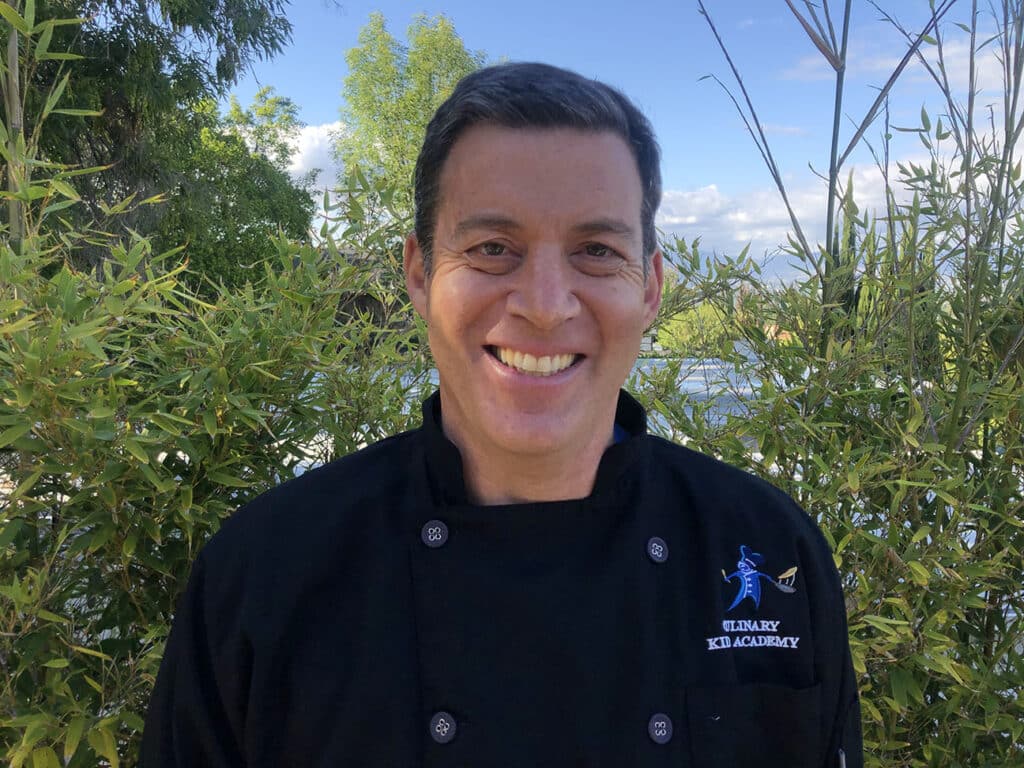
Culinary Judaics Academy’s Danny Corsun: Cooking, Education and One Pot Pasta

Chef Danny Corsun has combined cooking, teaching and Judaism to create an extraordinary platform. Culinary Judaics Academy (CJA) is a Netflix-esque platform, providing masterclasses for Jewish learning through cooking.

“It’s an out-of-the-box way of approaching spirituality and faith,” Corsun told the Journal. “It’s very experiential, very tactile.”

Corsun uses food, which is not necessarily Jewish cooking, as a vehicle to teach thematic lessons. The recipe might be specific to a holiday; for instance he teaches how to make cheese blintzes for Shavuot. However, it could also relate to a lesson in CJA’s Jewish value series.

For instance, Corsun teaches about acts of loving-kindness through a recipe for sun dried tomato risotto.

“If you’ve ever made risotto, you know you’ve got to put [in] a lot of loving kindness [and] a lot of patience to make it correctly,” he said.

According to Corsun, whose background is in entertainment and education, every workshop incorporates three things:

  1. A. cooking-connection to the theme.
  2. A Jewish connection.
  3. A contemporary lens through which to look at your Judaism, so it’s relatable, personal and usable as you navigate your life.

The experience of cooking, whether it’s through CJA or with family and friends, helps you become your best self.

For those who want to become more comfortable in the kitchen, Corsun said to stop being intimidated. You don’t need “fancy schmancy equipment,” he said. “[If you have] bowls, knives and a heating source, you’re good.”

Choose recipes that aren’t intimidating. And know that it’s okay to mess up.

For instance CJA’s blintz-class involves making crepes. “You’re going to throw out the first one; I guarantee you,” Corsun said. “I don’t care if you’re Wolfgang Puck, you’re going to throw out the first crepe, because that’s just the way it is.”

Also remember, even if the crepes look bad, they probably taste good.

“Don’t be so critical of yourself that everything has to be perfect,” Corsun said. “[Cooking] is about figuring it out. And how do you figure it out? It’s just trial and error.”

Corsun is also all about really easy recipes.

“I am a big fan of things that don’t require a whole lot of cleaning time,” he said..” If you can do things in one or two pots, then you’re the master.”

Corsun’s calls his One Pot Farmers Market Pasta amazing.

“You’re literally making the sauce and the pasta at the same time,” he said. “The key is using a vegetable broth or vegetable stock as the liquid that boils the pasta, and you are simultaneously making the sauce as well. It’s one of the easiest recipes I’ve ever made, and one of the more delicious ones.”

Get CJA’s One Pot Pasta recipe below.

Learn more about Culinary Judaics Academy.

For the full conversation, listen to the podcast:

Watch the interview:

CJA’s ONE POT FARMERS MARKET PASTA!

Photo courtesy Danny Corsun

This recipe is a great way to make a meal without making a huge mess in your kitchen. Great flavors come together for a delicious and hearty dish that your friends and family will love.

12 ounces pasta (Your choice – Penne or Linguine works great!)
1 can (15 ounces) diced tomatoes with liquid

2 Tbsp of tomato paste
2 cups quartered cherry tomatoes

1 cup of diced carrots

1 large sweet onion, diced
4 cloves garlic, thinly sliced
1/2 teaspoon red pepper flakes
2 teaspoons dried oregano leaves
2 large sprigs basil, chopped

4 1/2 cups vegetable broth
2 tablespoons extra virgin olive oil

Salt and pepper to taste
1/2 cup of Parmesan cheese (plus some for garnish)

Add oil to a large pot. Saute onions, carrots, cherry tomatoes, garlic and basil. Season with salt and pepper. Once sweated down, add in tomato paste and mix. Then pour in canned tomatoes and the vegetable broth and then the pasta. Sprinkle the pepper flakes and oregano on top. Drizzle top with oil.

Cover pot and bring to a boil. Reduce to a low simmer and keep covered and cook for about 10 minutes, stirring every 2 minutes or so. Cook until almost a good amount of the liquid has evaporated (you can leave about an inch of liquid in the bottom of the pot).

Season again if needed, stirring pasta several times to distribute the liquid in the bottom of the pot. Finish with parmesan cheese and stir to incorporate. Serve garnished with additional parmesan cheese and fresh basil. Enjoy!


Debra Eckerling is a writer for the Jewish Journal and the host of “Taste Buds with Deb.Subscribe on YouTube or your favorite podcast platform. Email Debra: tastebuds@jewishjournal.com.


Culinary Judaics Academy’s Danny Corsun: Cooking, Education and One Pot Pasta Read More »