
Politicians love to schmooze. A quick smile with a happy handshake is their default position. No small talk is too small. And who could blame them? If your livelihood depends on voters liking you, you better be likeable. That’s why politicians and public servants tend to look super-friendly regardless of who they meet— in their line of work, they can’t afford to alienate anyone.
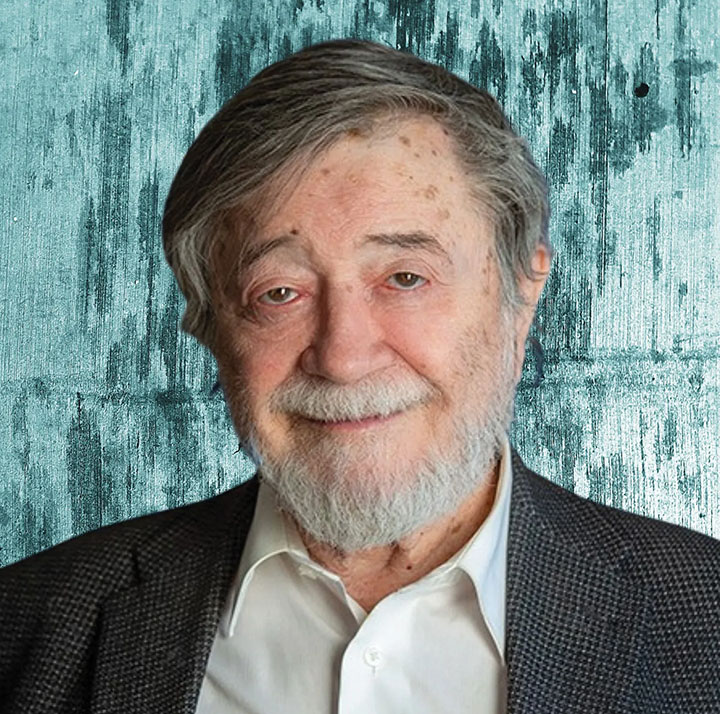
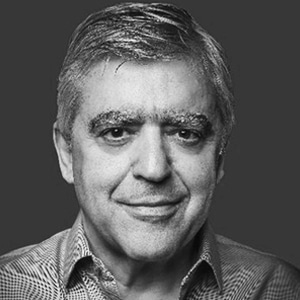
Local civic icon Zev Yaroslavsky is different. He’s friendly, yes, but he’s not really a schmoozer. He’s more the earnest type.
He has a sharp gaze with a gentle smile, but it’s not the instant, wide-open politician’s smile that sucks up oxygen. His look is properly serious, the look of a man engaged with consequential issues who’d much rather discuss potholes than the Lakers.
I’ve run into him countless times over the years, usually at public functions. He has a sharp gaze with a gentle smile, but it’s not the instant, wide-open politician’s smile that sucks up oxygen. His look is properly serious, the look of a man engaged with consequential issues who’d much rather discuss potholes than the Lakers.
On one of our many encounters, I mentioned that I was trying to help a homeless Jewish woman I had met on Pico, and I was running into dead ends. His face lit up. He told me about an initiative he had been involved with that might help her. Within a few days, after a few calls and meetings, the woman was housed in a safe place. This was “Earnest Zev” at his best.
So, when I heard about his new book, “Zev’s Los Angeles: From Boyle Heights to the Halls of Power. A Political Memoir,” I saw it as a big deal, not just for people who love this town, but for anyone interested in its fascinating and often frustrating recent history.
The book works precisely because, like Zev, the tone is earnest. Over a long career of working through the endless bureaucracy that characterizes local politics, not to mention having to weather complaints from all sides of the Jewish community, Zev never lost sight of his dedication to serve the public good.
“It’s easy to be cynical,” he writes, “but I’ve lived my entire life convinced that holding public office is one of the most important callings in a democracy — a singular opportunity to improve the lives of those we are elected to represent.”
In her review for the Journal this week, Kathleen Hayes writes: “Yaroslavsky — former City Councilman, now retired from the County Board of Supervisors — has written, with Josh Getlin, an account of his years in government that will impress the most jaded critic.”
Indeed, who is not jaded these days?
The noise and divisiveness of modern politics, and the coarseness of modern discourse, have become in many ways toxic and unbearable. The latest Gallup polls show that our trust in both the media and Congress is at all-time lows. And on social media, it is snark and sarcasm and verbal warfare that dominate. Earnest is for suckers.
In this sea of cynicism, Zev has offered us a testament to the power of earnestness, a power rooted in one of our most precious resources: trust. Earnest people tend to be more trustworthy. That’s just a fact. They tend to be more credible.
The non-conformists today are those who are sincere and earnest. They are the true rebels. Unlike the conformists who fight only for their political tribes and never show weakness, these earnest rebels are not afraid to look for solutions that work for everyone.
Zev’s career was not all roses. Sometimes, the bureaucracy won. But through it all, he never lost his earnest demeanor; he never lost hope.
In her review, citing some of Zev’s accomplishments, Hayes asks: “How did Los Angeles change from having a notoriously skeletal public transit system to boasting a vast system of buses, subway, light rail and shuttles? How was Martin Luther King Jr. Hospital resuscitated, after being forced to close due to its dismal performance in one of L.A.’s most underserved communities? How did the Santa Monica Mountains National Recreation Area come into being?”
Her answer gives you a sense of Zev’s four decades of public life: “By plowing ahead through a migraine-inducing series of administrative roadblocks, justly or unjustly harsh public criticism, not-so-gentle pressure from powerful sponsors and ‘friends,’ internal rancor and plenty of other difficulties.”
It’s trendy nowadays to look at the many ills of Los Angeles and take off to places like Florida, Texas or Arizona. For those of us who are sticking around through thick and thin, Zev’s undying civic pride offers us a boost, as if to say, “Do like me and don’t give up.” How earnest.
The key lesson I gleaned from Zev’s book is that you can be hip and cool and the world’s greatest schmoozer, but if you really want to accomplish good stuff in life, it’s best to be earnest.
The key lesson I gleaned from Zev’s book is that you can be hip and cool and the world’s greatest schmoozer, but if you really want to accomplish good stuff in life, it’s best to be earnest.
It may even get people to like you.