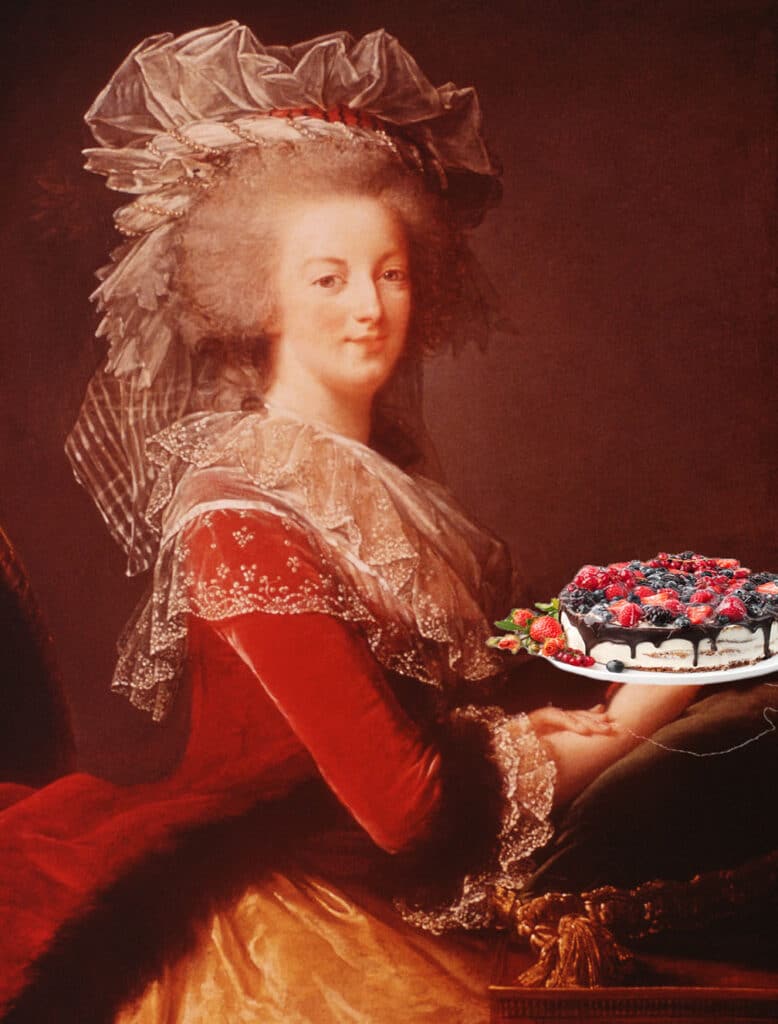
them all eat cake (she meant the sort with cheese) …..
who cares if they will sue us?”
French folk would to the Fräulein have said “Please!”
if she’d said it on Shavuos,
but to the story we should pay no homage,
because she never said it.
The story’s fraudulent, free from French fromage,
fake news we need to edit.
Instead let us all concentrate on truth,
called in the Torah emet,
and after on Shavuot reading Ruth,
eat cheesecake free of rennet.
Cheese is of course the very best of fillers
for cake that isn’t parveh,
most parva (brief) of the five megillahs,
the one that I most love, a
dessert for something I would never barter:
the Torah all Jews this day re-receive,
its six thirteen commandments’ magna carta,
God-given, Jews believe.
I think the reason that Jews have a minhag to eat cheesecake on Shavuot is because of the description of Mount Sinai, the site of the theophany that we celebrate on the festival, as הַר גַּבְנֻנִּים, Har Gabnunim, in Ps. 68:16:טז הַר-אֱלֹהִים הַר-בָּשָׁן: הַר גַּבְנֻנִּים, הַר-בָּשָׁן. 16 A mountain of God is the mountain of Bashan; har gabnunim, a mountain with humps is the mountain of Bashan.
The word גַּבְנֻנִּים, gabnunim, is related to a Hebrew root גבן, gbn, which not only denotes “hump-backed,” but also means “coagulate,” the root of the Hebrew word for cheese, גבינה, gebinah,; as in Job 10:10 (translated by Edward Greenstein in Job: A New Translation (Yale; 2019):
י הֲלֹא כֶחָלָב, תַּתִּיכֵנִי; וְכַגְּבִנָּה, תַּקְפִּיאֵנִי. 10 Have you not poured me out like milk, and jelled me like gebinah, cheese?
Gershon Hepner is a poet who has written over 25,000 poems on subjects ranging from music to literature, politics to Torah. He grew up in England and moved to Los Angeles in 1976. Using his varied interests and experiences, he has authored dozens of papers in medical and academic journals, and authored “Legal Friction: Law, Narrative, and Identity Politics in Biblical Israel.” He can be reached at gershonhepner@gmail.com.
In the first episode of “The Marvelous Mrs. Maisel,” the luminous, five-season Amazon Prime hit that will come to an end on May 26, a frustrated Joel Maisel asks his wife, Miriam (Midge), “Do you know what a dream is? A dream is what keeps you going in a job you hate.”
Granted, Joel, masterfully played by Michael Zegen, utters this question as he’s packing his suitcase and leaving his wife and children for a shot at comedy stardom (and to be with his receptionist). But I believe there’s a piece of Joel in many of us — a yearning to, at least, be afforded a chance to fulfill a dream, even if we fail.
And if there’s a small piece of Joel in most of us, there is a huge chunk of Midge in others: Midge also has a dream (to be a famous comedian), but unlike Joel, she possesses the talent to realize it, if only the omnipresent gatekeepers, whether nightclub owners, talent managers or talk show hosts, would allow her entry through the metaphoric gates that stand between Midge and her dream.
A lot has been said about the show’s extraordinary appeal to our senses: The late 1950s/early 1960s set designs, costumes, colors, music and camera magic are deliciously vibrant. The acting is so memorable that viewers may not be able to associate the cast with anything other than the show for a long time. And I believe the writing is as good as it gets in Hollywood.
I’ve watched the show since its first episode in 2017, and far from feeling like I was watching a television show, I always felt that I was enjoying every moment of a great, 50-minute film.
At the heart of “The Marvelous Mrs. Maisel” is an important truth about the human experience: the innate need to be seen for what we can offer, and to be more than who we are.
At the heart of “The Marvelous Mrs. Maisel” is an important truth about the human experience: the innate need to be seen for what we can offer, and to be more than who we are.
That’s why I’ve never forgotten Joel’s description of a dream as something that “keeps you going in a job you hate.” Expanded further, a dream is the lifesaver that keeps you afloat in any state that’s intolerable, whether you’re living in a run-down apartment or surviving day-to-day in an unhappy home.
I revere stay-at-home mothers as much as I respect working women, but Midge had much more to offer than the limitations of being an early 1960s housewife allowed. And I would bet that many of us have so much more to offer than what our present reality has allotted.
Even Joel, whom I loathed in early episodes for his immature womanizing, had so much more to offer as a husband, father, son and eventual entrepreneur. To the writers’ (and actor Zegen’s) credit, Joel’s character arc is a reminder of why we will still need and love complex characters; the show introduced Joel as an irresponsible adulterer who broke his family because he was unsatisfied at home and work. And then, as each season progressed, he emerged as a verifiable good guy who relentlessly protected his loved ones, especially Midge.
In fact, Joel’s soft spot for Midge (and Midge’s soft spot for Joel) is so heartwarming that for five seasons, viewers like me have held out hope that Joel and Midge will end up together again. I should note that as of press time, I have not seen the final episode of the series because it has not yet aired. And even if I had watched it, I would never spoil the surprises because they’re just too good.
Yes, Midge is more talented than her husband. And she’s more talented than all of the other comics who appear on the show, with the possible exception of the real-life (and larger than life) Lenny Bruce, played so well by Luke Kirby. Luck and timing are vital for success, but if “Mrs. Maisel” has taught us anything, it is that we also need the reassurance that we live in a world in which those who possess the most talent will inevitably float to the top. Extraordinary talent has to be rewarded with great success, doesn’t it?
For five seasons, Midge’s talent has still gone mostly unrewarded. But her persistence and resilience were the ultimate reasons why I tuned in each season, with home viewings turning into a sanctified ritual (kids asleep, phones put away and popcorn, Chinese food and a cocktail within arms’ reach).
The sheer brilliance of the show was that Midge had to succeed. She simply had to.
And viewers knew that despite the near-impossible hurdles female comedians faced decades ago, if someone with Midge’s talent didn’t make it, what chance would there be for the rest of us to realize our dreams?
Fewer things are more gratifying than rooting for someone with genuine talent, who is trying their hardest to succeed at what they love most. That’s why it was so satisfying to interview Michael Zegen (mentioned above) by phone last week and to learn how badly he wanted the role of Joel.
Michael Zegen (Photo by Pascal Le Segretain/Getty Images)
“There was no doubt in my mind that this [show] was going to be something very special,” he told me. “But I had to jump through hoops, I wanted it so badly that I auditioned three times.” I asked Zegen if he had an early inkling that the show would become a worldwide hit (it has won 20 Emmy awards and is accessible in 200 countries). “The fact that I read something on my computer and actually laughed out loud at some of the jokes, that’s so rare, for me, personally,” he said about reading the script. “And being a Jewish show, so to speak, it was something that I felt a kinship towards. I understood this world, this character and the humor.”
Zegen is Jewish, as are many other actors on the show. And I was never bothered by the fact that the title character, Midge, was played non-Jewish actress Rachel Brosnahan, or that Tony Shalhoub played her father, Abe Weissman, and Marin Hinkle her mother, Rose. What mattered most to me was that the acting was superb.
After his last audition (and a screen test with Brosnahan in front of Amy Sherman-Palladino and Dan Palladino), Zegen had to wait two weeks to learn if he had secured the role. “Every day was a rollercoaster,” he said. One day, Zegen, who lives in New York City, walked for miles along the Hudson River to put the auditions out of his mind, but, as he reflected, “it’s impossible when you want it so badly.” That day, his agent finally called with the good news.
The first people Zegen called were his parents, Jeffrey and Rachelle. “They were just excited to hear I’d gotten a job, but it being a Jewish show was the icing on the cake,” he said. And then, Rachelle, like any good Jewish mother, warned, “Be careful what you wish for.”
Zegen was so excited that during the show’s first season, he brought a DVD of it to a New Jersey assisted living facility where his grandmother, Szoszana, a Holocaust survivor, lived. Now 99, Szoszana began carrying with her a magazine featuring an interview with her grandson even before she moved into the assisted living facility.
Kevin Pollak (Photo by Jamie McCarthy/Getty Images for Prime Video)
I asked Kevin Pollak, who played Joel’s lovable father, Moishe Maisel, how the show has served as an important ambassador of Judaism and Jewish American practices, albeit midcentury, New York Jewish experiences. “Based on what fans have insisted to me, and from genuinely all over the world, the biggest connection, or impact is always family,” he said. “For Jews all over the world that I have spoken to, there is tremendous pride from their connection to the show, also on a family level, but with the deep-rooted Jewish connection as well.”
Zegen also understands the family connection as an invaluable part of the show. The Maisel and Weissman families are loud and intrusive (has anyone ever made such a fuss on Coney Island’s Wonder Wheel, even if it was a replica?). “The one common thread that everybody can identify with is family,” said Zegen. “Family is universal. That’s why the show resonates with people in India or China or anywhere else.”
He told me about the time he was shopping at a Manhattan CVS and a girl who was visiting the United States from India approached him. She asked Zegen if he would pose for a picture with her and her family, then informed him that they happened to be in the middle of a “Marvelous Mrs. Maisel” walking tour. “I had to tell her I wasn’t part of the tour,” he quipped. The girl told Zegen why the show is so beloved in India: “It’s all about family.”
For many worldwide, “Mrs. Maisel” may have offered their first glimpse into the lives, quirks and customs of Jews, or, at least, Ashkenazim in New York. “Especially now with antisemitism on the rise, it’s nice to see lovely, funny Jews on TV,” Zegen said about a show that has featured everything from a summer in the Catskills to a Tisha b’Av scene and an impromptu declaration in which Midge announces, “We got the rabbi!” for a Yom Kippur break the fast meal.
“Amy and Dan do that rare thing of writing brilliantly, then casting to perfection in their minds,” Pollak said. “Then they allow those actors to bring these words to life.” Pollak added that he received minimal direction other than “pace it up.”
A masterful comic and impressionist, Pollak was only 10 when he began performing in a way that showed real talent. “My mother commented, ‘Well, this is what you’re going to do now.’ There was no stopping the little pisher.”
For both Pollak and Zegen, “Mrs. Maisel” was “lighting in a bottle,” a term both used to describe a show that Pollak described as “so magical and cinematic.”
What am I going to do now that this show, which has meant so much to me, ends? And from where will I find comparable writing? Pollak was right when he told me, “The creators and writers have such love for their characters; there was never character assassination for the purposes of a gag or to move the stories along.” This show has been so good to me as a woman, a mother, a writer and a Jew that last year, I wrote a column for this paper titled, “‘Mrs. Maisel’ is Making Me Marvelous.”
But like the good father he played on “Mrs. Maisel,” Pollak also offered me reassurance about saying goodbye to a show that has felt like an old friend. “You’ve got an opportunity to rewatch, either from the beginning or your favorite episodes,” he said. “It is a profound experience to be involved with your heart, your mind and your need to spend time with these people.”
In the end, the Maisels and the Weissmans were more than characters; in Pollak’s words, they’re people. When I told Zegen that I am experiencing the blues while contemplating that there will be no more new episodes, he said, “I’m having a hard time coming with the ending as well.”
For his part, Pollak began recording a podcast with the show’s writers, directors, cast and key department heads during the final season. “My Mrs. Maisel Pod” will premiere June 5. Zegen is busy with the limited HBO series “The Penguin,” starring Colin Farrell, which is a spin-off of “The Batman.” Zegen will play a villain and mobster named Alberto Falcone. Zegen’s no stranger to mobster roles, having played notorious Jewish gangster Bugsy Siegel in HBO’s “Boardwalk Empire.”
As for me, I’ve been told numerous times that at the end of the day, “The Marvelous Mrs. Maisel” is still “just a show.” But I can’t help it. After six years, I feel like part of the family — the long-lost Persian Jewish cousin who entered the Maisel mishpacha through marriage and whom everyone wants to join at Passover because she serves rice.
After six years, I feel like part of the family—the long-lost Persian Jewish cousin who entered the Maisel mishpacha through marriage and whom everyone wants to join at Passover because she serves rice.
It took a long time for me to realize that in rooting for Midge, I was rooting for a part of myself that I wish could be seen — an internal flicker of individual exceptionality that we all have in one form or another, which has the potential to turn into a fiery blaze.
The gatekeepers will still be there, as always, but perhaps we may assign them less power. And maybe, in Midge’s words, we can finally ask, “What if we discover one day that we were always the ones in charge? Just … no one told us.”
Timeless Wisdom from “The Marvelous Mrs. Maisel”
Midge: “Does anyone really read corrections?”
Abe: “Of course they do. I start every paper reading the corrections. That’s how you know who the idiots are.”
Susie: “I don’t mind being alone. I just do not want to be insignificant.”
Abe: “Life isn’t fair. It’s hard and cruel. You have to pick your friends as if there’s a war going on. You want a husband who will take a bullet for you, not one who points to the attic and says, ‘They’re up there.’”
Midge: “Comedy is fueled by oppression, by the lack of power, by sadness and disappointment, by abandonment and humiliation. Now, who the hell does that describe more than women? Judging by those standards, only women should be funny.”
Tabby Refael is an award-winning, Iranian American Jewish writer, speaker and civic action activist. Follow her on Twitter and Instagram @TabbyRefael
When Marina, a Russian Jewish immigrant, first came to babysit for my two-year-old son Ari, she was in her mid-50s. In many ways, she was perfect for the job. A graduate of the Institute of Foreign Languages in Almaty, Kazakhstan, she was fluent in English. Unlike previous hires, she didn’t limit herself to babysitting but happily took on other household chores.Most important, she adored my Ari, doting on him like a grandmother and bragging to the other sitters in the park that her charge was the cutest.
My friend Roxanne tried to convince me that I should find a younger woman to care for my child, not an old woman like Marina. But fortunately, I didn’t listen to her. I held onto my old woman, and today, at 86, she still comes in three mornings a week. She treats Ari as her own grandson, giving him money on his birthday and on Purim. My son graciously accepts the gifts of his only living “grandparent.”
Coming from the former Soviet Union, Marina knew next to nothing about Jewish observance. But week after week, she helped me prepare for Shabbat, cooking up a storm of dishes. Since my grandparents and great-grandparents also hailed from Russia, she was already familiar with the recipes.
Coming from the former Soviet Union, Marina knew next to nothing about Jewish observance. But week after week, she helped me prepare for Shabbat, cooking up a storm of dishes.
I never realized what close attention she was paying until one day, she asked about my Shabbat candles. “My friend tells me you put out one candle for each child and one for you and your husband. Is that right?” she asked.
Honestly, I didn’t know if this was halacha or minhag, but we did put out three, two for us and one for our son. She was thinking of lighting her own candles and wanted to get it right.
On Purim every year, I send Marina home with shalach monos to share with her daughter and grandson. She told me that she remembered her grandmother in Russia giving gifts to her friends on this day.
Always known to me as Marina Popova, I recently learned that her birth name was Miriam Weitzman. Upon starting school in Kazakhstan, to which her family had been forcibly relocated from war-torn Leningrad, her schoolteacher proclaimed, “From now on you will be called Marina,” and so it was. Miriam became Marina. When she married, she became Marina Popova, a change she was reluctant to make, but her mother told her it was perhaps prudent to hide her Jewish identity.
I only recently discovered the story of Marina’s mother. After her husband went off to fight in the war, she was left alone with Marina, then an infant. One day, her husband came home unexpectantly, accompanied by another woman, unabashedly pregnant with his child.
“How can I leave her?” he asked.
Marina’s mother was so traumatized that she never married again, and Marina grew up without a father.
Marina’s grandson, Jeffrey, now 26, carries his father’s Jewish surname and dates only Jewish women. They came to our son’s bar mitzvah and, God willing, will one day attend his wedding.
On our kitchen counter, I display three family photos. The first shows my mother and my aunt, seated side by side, in my aunt’s art-filled apartment, the second, our son, leaning against a giant oak tree in Prospect Park, and the third, Marina, holding up two-year-old Ari to show off his Purim costume. He is clad as the Pillsbury doughboy in a white stretchy and classic baker’s hat that Marina and her daughter lovingly and expertly sewed.
“I’m so happy you keep my picture on your counter,” Marina remarked. Truthfully, I hadn’t put it there because of her, but because of Ari, not even noticing who was holding him. Nevertheless, there she is, embracing her adopted grandson, like any proud Jewish grandmother, and there the picture remains, to this day, although he is now a 27-year-old adult.
And yet, intentionally or not, as she wishes me good Shabbat, I realize she did end up becoming more Jewish, after all.
Like many Jews from the former Soviet Union, Marina came here looking for a better life, seeking to live the American dream. When she arrived with her non-Jewish husband and intermarried daughter, she was not searching for her Jewish roots. For that, she could have stayed in Israel, her first destination upon leaving Russia. But that option was not under consideration, as her goal was to reach America. And yet, intentionally or not, as she wishes me good Shabbat, I realize she did end up becoming more Jewish, after all.
Marjorie Ordene, MD is an integrative physician and nutritionist. Her essays, short stories and poetry have been published in various magazines and anthologies including Tablet, Aish.com, The Sun, Lilith, Ami Magazine and Mishpacha Magazine.
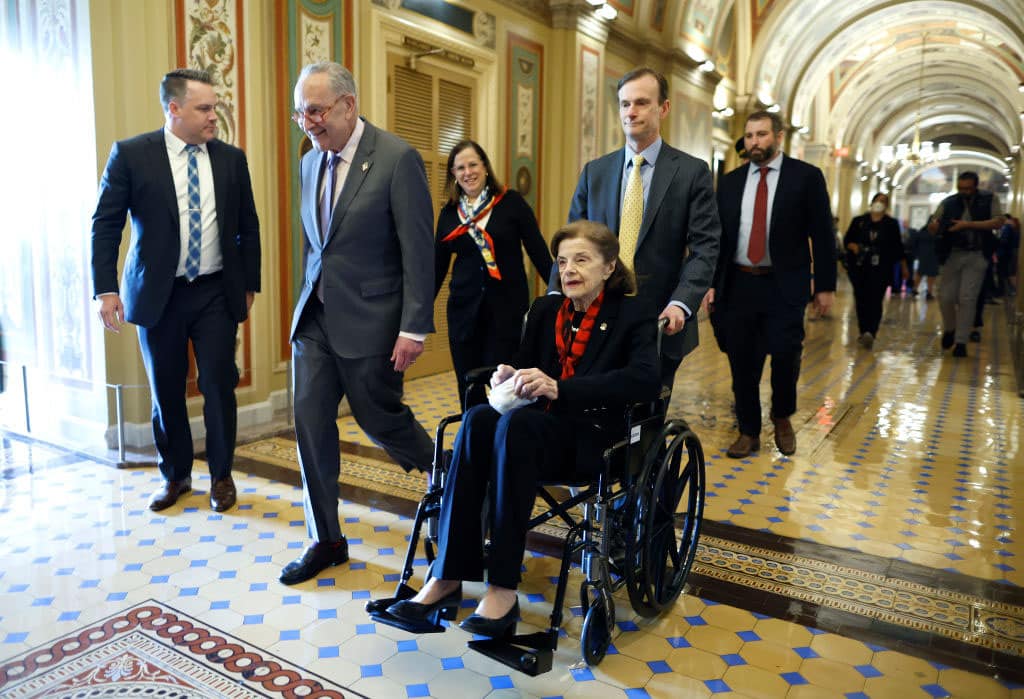
From this distance, it doesn’t appear that Dianne Feinstein has had many good weeks this year, either in terms of her health or her political standing. But her return to Washington last week, which could have been a triumphant moment under better circumstances, had just the opposite effect for both Feinstein and her supporters, who continue to stand behind her in her efforts to remain in office.
Feinstein’s extended absence from Washington this year, as she recovered from a series of health problems that the New York Times detailed in previously undisclosed specificity last week, has been the focus of intense debate and speculation in Washington and California political circles. But for most state residents, who don’t monitor U.S. Senate proceedings on a daily basis, Feinstein’s situation has been a fairly abstract matter. The practical consequences of her inability to vote has caused all sorts of problems for the Biden Administration, as several of the president’s nominees have languished without her support, and the need for her presence in a closely divided Senate has damaged the prospects of other Democratic legislative priorities. But most Californians barely noticed.
The practical consequences of Feinstein’s inability to vote has caused all sorts of problems for the Biden Administration, as several of the president’s nominees have languished without her support.
That lack of awareness from Feinstein’s constituents may have changed dramatically last week, when photos and video of an 89-year-old woman struggling to navigate the halls of Congress made it clear how diminished California’s senior Senator had become. The visuals were stunning – and depressing. This once powerful icon read simple statements from notes given to her by aides, she seemed confused when answering questions from reporters, but most alarming was the dramatic diminishment of her physical condition and appearance. Half of her face was frozen and one eye was nearly shut, providing an uncomfortable visual message about the extent of her health challenges. Feinstein’s condition was now much more tangible – and visceral – and the pressure on her to step down will now grow even greater.
With a few exceptions, most of those Democrats urging her to resign represent the party’s progressive wing and have long been unhappy by her centrist voting record. The question is now whether those public statements will start coming from more moderate and establishment voices, which will indicate that the concerns within her party are spreading beyond her ideological opponents to a broader swath of party leadership. It was notable that Representative Dean Phillips (D-Minn.), who refers to himself on his website as a “radical pragmatist and problem solver”, this week renewed and escalated his calls for his fellow Democrat to step down with an op-ed piece in the online publication The Daily Beast in which he said “it was never a question of her qualifications or character, rather of her competency to serve.”
But Phillips then added a much harsher assessment, suggesting that Feinstein’s decision to retain her seat despite her infirmities contributed to voters’ lack of confidence in the political process. “If elected leaders continue doing what’s politically expedient over what is right, this crisis of confidence and trust will only get worse.”
In an age of COVID and Iraq and Afghanistan in which politics seems hopelessly gridlocked and corrupt, it’s debatable how much Feinstein’s intransigence has impacted overall levels of voter cynicism. But this criticism is not coming from the far left but from another Democratic centrist. So it will be instructive as to whether other nervous members of the party establishment begin to go public with their concerns.
Even Feinstein’s strongest defenders must admit that she is no longer fulfilling most of the functions of her office. While all of us hope that she recovers to a point where she can author and negotiate legislation, meet with constituents and once again become a forceful voice on the issues that are most important for her, the likelihood of that restoration seems to be diminishing with great speed. It’s entirely possible that her determination to remain in office will no longer be sufficient.
I’ve written previously about how California Governor Gavin Newsom would very much want to avoid selecting Feinstein’s successor. The events of last week suggested that he might not have a choice.
Dan Schnur is a Professor at the University of California – Berkeley, USC and Pepperdine. Join Dan for his weekly webinar “Politics in the Time of Coronavirus” (www.lawac.org) on Tuesdays at 5 PM.
As the Biden Administration prepares to release its long-awaited strategy to combat antisemitism, ensuring that this comprehensive plan is built on a strong and inclusive foundation is crucial. Recent discussions surrounding the inclusion of alternative definitions have raised concerns among Democratic state legislators. We firmly believe that adopting the International Holocaust Remembrance Alliance (IHRA) definition as the exclusive definition of antisemitism is essential to address and counter this pervasive hatred effectively. The forthcoming antisemitism strategy must align with this principle.
The IHRA definition, widely acknowledged as the international gold standard, offers a clear framework to identify and confront antisemitism in all its forms. It has gained support from thirty-nine countries, over 1,000 other global entities, and the overwhelming majority of Jewish community organizations in the United States and globally. As Democratic lawmakers committed to combating antisemitism, we urge the Biden Administration to embrace the IHRA definition as the cornerstone of its strategy, recognizing its efficacy and broad acceptance as an invaluable tool in the fight against antisemitism.
The Biden Administration’s release of the first-ever national plan to counter antisemitism is a significant step forward. However, it is essential to ensure that the plan incorporates the IHRA definition, which the United States State Department has already implemented under previous administrations. The IHRA definition provides a comprehensive framework that can effectively address the complex and evolving nature of antisemitism. The IHRA definition is a powerful tool to identify and combat antisemitism in all its guises. By adopting this definition, we can effectively distinguish between legitimate criticism of Israeli policies and actions and the demonization and delegitimization of Israel, which often employ anti-Semitic rhetoric and tropes.
Antisemitism remains a pervasive threat, manifesting in various forms, including violent attacks on synagogues and Jewish institutions. The Tree of Life synagogue shooting in Pittsburgh that left eleven dead stands as a tragic example of the devastating consequences of this hatred. Sadly, it is far from an isolated example, with other recent incidents, like the 2019 shooting at a synagogue in Poway that killed one worshiper and injured three others, including an eight-year-old girl. Such incidents highlight the urgent need to confront and combat antisemitism in all its manifestations. Across college campuses, there have been concerning incidents where Jewish students have faced discrimination and hostility due to their religious identity. It is disheartening to witness these instances of antisemitism occurring within institutions of higher learning, spaces that should foster tolerance, inclusivity, and intellectual exchange.
Hatred of the Jewish people is not confined to any single ideological or political group. It manifests across the spectrum, including the far right, far left, religious extremists, and even influential public figures. Instances of antisemitism originating from celebrities like Kanye West further emphasize the need for a clear and inclusive definition to address this form of hatred.
Statistics also reveal a disturbing trend. The Anti-Defamamation League (ADL) annual audit found its highest ever total of antisemitic incidents in the U.S. in 2022, with 3,697 reported, a 36% increase from 2021.Additionally, the FBI’s annual Hate Crime Statistics Report consistently demonstrates that Jews remain the most targeted religious group in the United States, with incidents rising by 20% in 2021.
The Biden Administration’s forthcoming antisemitism strategy presents a crucial opportunity to address and combat the growing threat of antisemitism in the United States. By adopting the IHRA definition as the exclusive definition of antisemitism, the administration can demonstrate its unwavering commitment to protecting Jewish communities and promoting a society free from bigotry and hate. As Democratic state legislators, we stand united in urging the administration to embrace the IHRA definition and effectively confront this pervasive hatred. Let us work together to build a future where all individuals, regardless of their faith or background, can live in dignity, safety, and harmony.
Alma (LD20) and Consuelo(LD21) are Democratic members of the Arizona House of Representatives. Both sisters are members of the Arizona House Jewish Caucus.
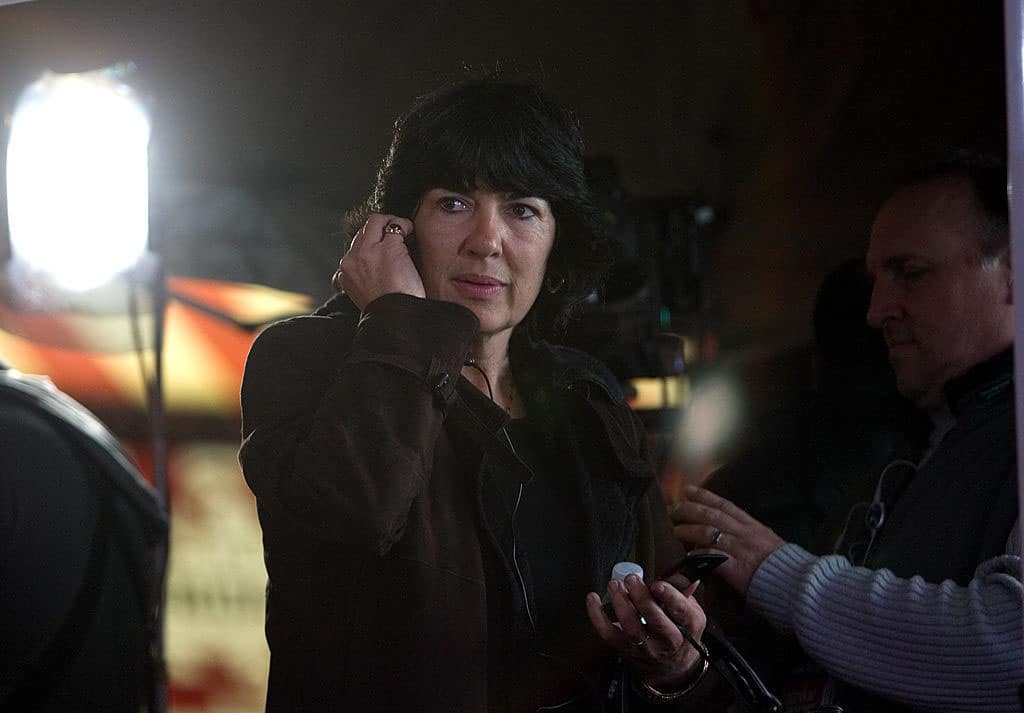
Rabbi Leo Dee, who had threatened a $1.3 million lawsuit against CNN for mischaracterizing the murder of his wife and two daughters, is seeking “reconciliation” with CNN international anchor Christiane Amanpour.
In statement provided to the Journal through a representative, Dee also said he hopes to set up a meeting with Warner Brothers Discovery Chairman and CEO David Zaslav.
Dee reiterated in his statement that at a May 21 event at The Carlebach Shul in New York, he announced that he was considering a $1.3 billion against CNN after Amanpour falsely described the murder of his wife and two daughters in a terror attack as a “shoot-out.” The following evening, Amanpour issued an on-air apology.
“Many in the media are reporting that I rejected her apology outright and some are saying in my name that I plan to continue with my lawsuit, all of which requires clarification,” Dee said in the statement. “I am grateful to Christiane for her apology. It takes courage for a renowned journalist to admit before a global audience that they had uttered such a dishonorable falsehood. But as a grieving husband and father, I must state emphatically that it did not go far enough.”
Dee pointed out that Amanpour said in her apology that she should have referred to the terror attack as a “shooting” rather than a “shoot-out.” “The word ‘shooting’ remains callous when describing a deliberate act of terror that annihilated half our family,” Dee said. “It’s like saying that the victims of 9/11 died in a fire rather than in barbarous act of mass murder perpetrated by al-Qaeda at the Twin Towers.”
Dee added that as a rabbi, he has always sought “peace, harmony and reconciliation” and hopes “to have the same with Christiane Amanpour and CNN. A lawsuit is only necessary when two parties have an unbridgeable divide and one refuses to right a grotesque wrong…But why does it really take the threat of a lawsuit on my part to alert one of the world’s premier news organizations that their reporting of Israel over decades has consistently minimized Israeli suffering?” Dee asked. “Why does it take the threat of legal action to have CNN wake up to the moral equivalency they so often employ between Jewish victims of terror and the terrorist regime perpetrators who are committed to another holocaust of the Jews?”
Dee said he is in the process of scheduling an in-person meeting with Zaslav in New York, calling a Zaslav “a moral man dedicated to the memory of the six million Jewish martyrs” after Zaslav recently participated in March of the Living alongside CNN journalists Wolf Blitzer and Dana Bash, both of whom are Jewish and are the offspring of Holocaust survivors.
“I hope to bring my concerns to [Zaslav] about CNN’s reporting, not just about my own family but about the people of Israel in general, and the more than 100 million Arab slaves in regimes around the middle east that have no freedom of speech, of religion or of voting,” Dee said. “Much as my surviving children need me at their side every moment of every day and night, I am prepared to make a short journey to New York to have this meeting and seek to reconcile my differences with CNN outside a court of law, provided that they are amenable to fair and accurate reporting on Israel and the many decent Arabs in the Middle East.”
Dee concluded his statement by saying that Jews and Arabs are “cousins” who can live in peace, “but the Hamas terrorists, funded by Iran, who murdered my family in cold blood are an abomination to humanity, Islam, and the cause of shalom.”
“These terror regimes with no human rights are the SOLE CAUSE of the sad enslavement of over 100 million good and kind Muslims in the Middle East,” the rabbi added. “We need a worldwide movement to end this injustice and they will require the aid of Israel, the only free country in the middle east to establish free democratic regimes once they topple Hamas, Hezbollah and the evil leadership of Iran and Syria. Israel is the best friend of those 100 million Arabs and we will be showing them that very soon.
“I appeal to Mr. Zaslav and CNN’s sense of decency and humanity to simply report the truth about the State of Israel, the only free democracy in the region, and to support the establishment of the same democratic freedoms and security for over 100 million Arabs that Americans and Europeans take for granted as part of their daily lives.”
The latest version of the Biden administration’s antisemitism strategy, which is expected to be released later this week, reportedly features both the International Holocaust Remembrance Alliance (IHRA) definition of antisemitism as well as an alternative definition, according to Jewish Insider (JI), though JI acknowledged the draft could be subject to further revisions before it’s released.
The alternative definition, which JI described as being “promoted by progressives,” is known as the Nexus Document. It was first conceived in USC’s Knight Program in Media & Religion and is now affiliated with The Bard Center for the Study of Hate. The Biden administration’s reported inclusion of the definition has resulted in Israeli Deputy Foreign Ministry Director Emmanuel Nashon retweeting World Jewish Congress (WJC) President Ronald S. Lauder, who tweeted: “The importance of the IHRA Working Definition of Antisemitism cannot be overstated. It is the most widely adopted and accepted definition by governments, institutions and organizations around the world. It’s essential to effectively combat antisemitism, because it allows policymakers worldwide to identify and respond to all forms of Jew hatred, including those that may be more subtle, but no less insidious. The international Jewish community would be gravely disappointed if the IHRA definition were not exclusively included in any action plan and would see it as not representative of their experiences and the true manifestations of modern antisemitism.” Later that day, the WJC tweeted out a video made in conjunction with the Anti-Defamation League touting IHRA.
The importance of the IHRA Working Definition of Antisemitism cannot be overstated, It is the most widely adopted and accepted definition by governments, institutions and organizations around the world. It’s essential to effectively combat antisemitism, because it allows…
To fight hate, you have to be able to identify it.@TheIHRA Working Definition of Antisemitism does just that. That’s why it’s supported by the vast majority of Jewish communities and organizations & is used by governments, businesses, and institutions around the globe.
— World Jewish Congress (@WorldJewishCong) May 19, 2023
UCLA Professor Dov Waxman, a member of the Nexus Task Force, tweeted in a response to a Times of Israel story on the matter that Nashon and Lauder shouldn’t be opposed to Nexus because “it clearly identifies when criticism of Israel or opposition to it crosses the line into antisemitism. But because it is clearer than IHRA in this respect, it is less susceptible to being misused and weaponized against Palestinians and their supporters.”
There's no good reason why the Israeli government, or Ron Lauder, would oppose mentioning the Nexus definition of antisemitism in the Biden administration's national antisemitism strategy. Nexus clearly identifies when criticism of Israel or opposition to it crosses the line…
Another prominent critic of Nexus is Kenneth L. Marcus, founder and chairman of the Louis Brandeis Center for Human Rights Under Law. He told the Journal in a phone interview that the alternative definition that the Biden administration plans on using in their national antisemitism strategy could provide a “loophole” for antisemites (Marcus wrote in an op-ed for the Journal that Nexus’ “purpose” is to insulate all anti-Zionists from being labeled as antisemitic) and argued that having “two standards only confuses the situation and could undermine efforts to ensure compliance at institutions.”
But Jonathan Jacoby, director of the Nexus Task Force, argued that Nexus and IHRA should be used together as tools to fight antisemitism. “IHRA is like the Mishna and Nexus is like the Gemara,” Jacoby said, referencing the two sections of the Talmud. “Nexus was never meant to be a replacement for IHRA.” He added that it was “an insult” and “inaccurate” for Marcus to suggest that Nexus was meant to protect all anti-Zionists from being labeled as antisemites.
The Nexus website features a white paper defining antisemitism as “a persistent demonization that casts Jews not only as ‘others’ (i.e., as intrinsically different or alien) but also as irredeemably threatening and dangerously powerful.” It later argues that criticism of Israel and Zionism is not inherently antisemitic, and that “paying disproportionate attention to Israel and/or treating it differently than other countries is not prima facie evidence of antisemitism.” “There are numerous reasons for treating Israel differently or devoting special attention to Israel, among them that Israel receives more military aid than any other country or that someone has a special religious connection with Israel,” the white paper states. “Singling out Israel because it is a Jewish state, using standards different than those applied to other countries, is antisemitism.”
In Marcus’ view, the Nexus definition essentially “justifies the use of double standards regarding Israel. Oftentimes, the use of double standards is a telltale sign that criticisms of Israel are not based on human rights concerns and instead have to do with a deeper form of animus. The Nexus definition makes it harder to make that case.” Jacoby, on the other hand, argued that the intent of IHRA was to look at the context of a double standard against Israel and determine if Israel is “being required to do something because it’s a Jewish state … then that’s antisemitic.”
“But there are lots of reasons to treat Israel differently,” Jacoby said. “A policymaker might want to treat Israel differently because Israel gets more aid than almost any other country in the world, democratic or not democratic. Israel is arguably the most important country to the majority of people who practice certainly Western religions in the world. So these are legitimate reasons to have a different standard for judging Israel and there’s nothing antisemitic about that … if Israel’s being judged, it can respond to that judgment on the basis of the substance of the accusation. There’s no need to say, ‘That’s antisemitic, and therefore we don’t need to talk about it.’”
The Nexus white paper later argues that criticism of Zionism and Israel crosses the line into antisemitism when it promulgates “myths, stereotypes or attitudes about Zionism and/or Israel that derive from and/or reinforce antisemitic accusations and tropes,” such as “characterizing Israel as being part of a sinister world conspiracy of Jewish control of the media, economy, government or other financial, cultural or societal institutions” and “holding individuals or institutions, because they are Jewish, a priori culpable of real or imagined wrongdoing committed by Israel.” It also states in part that “attacking a Jew because of her/his relationship to Israel” and “denigrating or denying the Jewish identity of certain Jews because they are perceived as holding the ‘wrong’ position (whether too critical or too favorable) on Israel” are also instances where criticism of Israel and/or Zionism devolves into antisemitism.
Additionally, the Nexus website has a “Guide to Identifying Antisemitism in Debates about Israel,” which states in part that “non-violent actions that press for changes in Israeli policies are not generally antisemitic” and that“boycotting goods made in the West Bank and/or Israel is not antisemitic unless it specifically singles out Israel because of its Jewish character.” Jacoby explained that he thought it was “interesting that the accusations of antisemitism against Ben & Jerry’s persisted even after the founders of Ben & Jerry’s wrote an op-ed for The New York Times saying they are not supporting BDS [Boycott, Divestment and Sanctions], they do not support a boycott of Israel proper. They are supporting a boycott of products in the West Bank. There are plenty of Israelis who feel the same way and they are not called antisemites.” But if there are Israel boycotters who are “either using a trope that’s antisemitic or denying equal rights to Jews, that’s antisemitic,” Jacoby said. “But otherwise, if they use a nonviolent action against Israeli policy … I don’t agree with it. I want to be very clear about this––I do not support BDS. But it’s not constructive to build the case against people who are opposing Israeli policy on the basis of antisemitism unless that’s what they are, and we have very clear criteria for what they are.”
The Nexus guide also states that “even Yitzhak Rabin once warned that maintaining an occupation would lead to apartheid. He certainly wasn’t an antisemite.” Jacoby elaborated that, for instance, he wouldn’t “characterize the Human Rights Watch report as antisemitic. I don’t agree with all of it, but I wouldn’t characterize it as antisemitism and I’d much rather have a debate on what is or isn’t apartheid than start having a debate on whether this is or isn’t antisemitism.” But Jacoby does believe there are instances in which accusing Israel of apartheid can be antisemitic. “If by making a comparison with the Afrikaners regime in South Africa, the suggestion is that Jews don’t have the right to self-determination in Israel, then that is antisemitic,” Jacoby said. “Because Afrikaners didn’t have that right. They may have had the right to live there, but they didn’t have any national rights. But Jews do have national rights, and that’s an important distinction.”
Another one of Marcus’ critiques against Nexus is that “it’s not clear that the Nexus definition wouldn’t provide a loophole for those antisemites who are harassing Jewish students in ways that relate to their Zionist personal commitments,” arguing that Nexus provides exceptions for “harassment of Jewish students that doesn’t rise to the level of physical assault or violence.” Marcus pointed to Rose Ritch being forced to resign from her position as Undergraduate Student Government Vice President in 2020 after facing harassment on social media for being a Zionist as one instance that wouldn’t be considered antisemitism under Nexus. Jacoby disagreed with this interpretation of Nexus, pointing to the line in the white paper that states that “conveying intense hostility toward Jews who are connected to Israel in a way that intentionally or irresponsibly (acting with disregard to potential violent consequences) provokes antisemitic violence” is an instance in which Nexus considers criticism of Israel and/or Zionism to be antisemitic.
According to Marcus, some leftist groups have urged the Biden administration to adopt the “hard left Jerusalem Declaration on Antisemitism, and they apparently failed. The Jerusalem Declaration seems to be too extreme for the Biden administration. The Nexus Document, which is fairly little known, may have been a compromise in an administration that wanted to throw a bone to their far-left supporters.” Marcus said that various mainstream Jewish groups have urged the Biden administration to endorse IHRA and reject the Jerusalem Declaration, “but not enough of them have spoken out against Nexus. It may be that the Biden administration simply hasn’t heard that much about Nexus from mainstream Jewish groups.” Jacoby countered that he doesn’t consider himself to be a “hard leftist” and contended that “if you look at the people who use the Nexus definition, you will find many mainstream Jews.”
Marcus said that the pending Biden administration plan has been a work in progress “for quite some time.” “It is deeply ironic and troubling that in such a document they may be on the verge doing something that actually undermines the effort to fight antisemitism,” Marcus said. “Lots of people will want to support this document and applaud it when it comes out because there will no doubt be many useful things within it. But my goodness how terrible would it be if they use the occasion of this document to weaken policies on antisemitism rather than strengthening them.”
Jacoby’s view? “A strategy that acknowledges multiple tools for combating antisemitism … that kind of holistic approach allows antisemitism to be addressed in a way that’s relevant to the current situation and I think that’s really important,” he said.
Because you have to pick your battles, I ended up bringing kosher marshmallows to Burundi—the least developed country in the world.
We had asked the President of Burundi, His Excellency Evariste Ndayishimiye, to schedule the official ribbon-cutting of the country’s first utility-scale solar field after May 26, since we wanted to be in Israel for the national holidays and Shavuot. This new solar field, which provides 100% of the capital Gittega’s day-time power and over 10% of the country’s, has been in the works for nearly a decade. It now powers 87,000 homes and small businesses, providing green and cheaper power to hundreds of thousands of people.
Sharp-relief after 9 years of development. The next ribbon-cuttings, with some philanthropic support, will be in South Sudan, Kenya, Zambia and Mozambique. (Photo credit: courtesy)
A decade ago we were given a sobering assessment from a respected diplomatic source in Burundi: You have zero chance of success at bringing your Israel-inspired solar fields here and the country is on the verge of a potential civil war or even a genocide.
Fast forward to the need for marshmallows: My secret hope was that the Burundian President would pick June 5th, 2023 for the festive day, which is World Environment Day, and happens to also be the 12th anniversary of the launch of my first of 18 solar fields. That first field, at Kibbutz Ketura and only a modest 4.9 megawatts, was the first in the Middle East, and its ribbon-cutting was so close to Shavuot that we unveiled a statue of Ruth the Moabite next to the panels. Her clay hand still stretches out to welcome the rising sun from the east every morning.
It took our initial team, from Arava Power, five hard and long years to plow through the obstacles standing in our way. On the day of its launch, June 5, 2011, my partners and I announced that the money we make from selling energy from the four corners of the solar field would be donated to charities for two decades, bringing back into history and into the Land of Israel the Shavuot-inspired mitzvah of Peah.
Shavuot, of course, marks the harvest festival as well as the giving of the 10 Commandments on Mount Sinai. I got into pretty big trouble this year when during the United Nations Climate Conference, known as COP27, which took place in Sharm el-Sheik in Sinai, I climbed up Mt. Sinai with partners from Hazon and the Interfaith Center for Sustainable Development and, in an act of defiance against the farce taking place below at the climate conference, smashed two green tablets. The event was dubbed “the most blasphemous act of 2022” on social media, with millions of views worldwide. (Thank you to the Peace Department and the Roadburg Foundation for enabling this action.)
Even so, the Secretary General of the United Nations, Antonio Guterres, echoed our themes in Egypt at the conclusion of the United Nations Climate Conference, that “COP27 took place not far from Mount Sinai, a site that is central to many faiths and to the story of Moses, or Musa. It’s fitting. Climate chaos is a crisis of biblical proportions. The signs are everywhere. Instead of a burning bush, we face a burning planet.”
The truth is that very little was accomplished in Sharm el-Sheik for fighting climate change and especially for the most vulnerable people on the planet.
My earliest consciousness around Africa was famine in Ethiopia via Michael Jackson’s “We are the World,” the rescue of Ethiopian Jewry and being a campus activist against apartheid South Africa, from which I was proudly banned until Nelson Mandela was freed.
Africa as a continent is responsible for less than 4% of the global emissions yet, as I travel from country to country, I see first-hand that they are getting clobbered the most by the adverse-effects of our privileged lives: biblical level droughts that kill off live-stock and crops, flood and cyclones that wash away infrastructure and homes, under-performing hydo-electric power plants that leave grids dry and hospitals powerless because of lack of rains, increased plagues of locusts and more.
When I made aliyah with my family from Boston to super sunny Kibbutz Ketura in the Arava, where I was a Young Judaean volunteer 25 years earlier, the vision that hit me was that Israel could be a renewable light unto the nations. To do so, we would have to lead by example. I knew a lot about beating up governments for good causes, like Soviet Jewry and ending Apartheid. Luckily my partners understood that we would need a business model to realize and scale this vision, which was to create the first region in the world that is 100% solar powered during the day; it would be from the Red Sea to the Dead Sea. It was quixotic, untried and too risky at first. The Eilat-Eilot municipality, however, has great partners from the UJA-Federation of Toronto, who put up $1 million in venture philanthropy to get things started, and lowered the risk for investors.
This Shavuot will mark 12 years not only for the launch of the solar industry in Israel, but also the proof that venture philanthropy can unlock multiples of investment funds to advance green regional development. The area from the Red Sea to the Dead Sea hit our record-breaking 100% day-time solar goal by 2020 (video credit: Gil Kremer) and we received a 1:400 leverage on the philanthropic funds, with $400 million being invested over a little more than a decade. It felt like a miracle cutting that ribbon 12 years ago, which is the only way to explain a sunset rainbow that kissed the top of the mountains behind that first field as the sun dipped in a clear sky.
When my partners and impact investors and I started out in pioneering solar, we flirted with a regional vision to power peace. But in that ribbon-cutting year, people from 58 developing countries came to see us and said, “Hey, Start-Up Nation, please help us.” (Our regional accomplishments are off-the-record.)
My heart broke again and again as people came to see us. I had not known that 600 million people in Africa didn’t have power and that no one had ever succeeded in bringing solar fields to the sub-Sahara region. I didn’t know that 300 million Africans were burning dirty and expensive diesel for their power, dying from its smoke, and that the population of the continent was going to double quickly. The small donations that our Israeli solar field was making suddenly felt so inconsequential.
One of my heroes was a friend and fellow Young Judaean, Anne Heyman, who, instead of being overwhelmed by the nearly one million orphans in Rwanda after the genocide, decided to bring the Israeli model of youth villages there to help the most vulnerable. The Agahozo Shalom Youth Village now houses 500 of Rwanda’s neediest and has brought these young people from vulnerability to being proud African leaders.
Anne invited my family and me to volunteer at the village for two weeks. It was inspiring to witness how they take kids from darkness to light. Toward the end of the visit, she put her arm around me, pointed to the hill behind the school and said, “Yossi, build me one of those Israeli solar fields and let me have some income to help cover the medical costs of my kids here.” No one could refuse the compelling Anne Heyman and luckily I didn’t either.
She died tragically in an accident but the Anne Heyman Solar Field was Africa’s first, and the first win for the Obama-Biden White House initiative called Power Africa. My partner Chaim Motzen was the lead, leveraging what we learned in the Arava and adapting it to Rwanda, where we supplied at the festive ribbon-cutting 6% of the country’s power. Here our philanthropic leverage was 1:25, meaning that for each dollar in de-risking grant money, we brought in $25 of investment. “Gigawatt Global has created a crazy futurist solar field that’s boosted Rwanda’s generation capacity by 6 percent and has basically blown my circuits with its possibilities; this array just has to be seen,” wrote Bono, the U2 front-man after a site visit. “The world ought to put its weight behind risk-takers like Gigawatt and help them scale.”
Yossi Abramowitz, Israel’s leading solar pioneer, celebrating with Bono a “beautiful day” in Rwanda at the Anne Heyman Solar Field. (Photo credit: courtesy)
The world celebrated with us and I mistakenly thought we could now replicate and scale with ease across the continent with a proven hybrid business model for major tikkun olam. We took on Burundi with the hope that if we could do it there, then we would have proven to the world that solar power is advantageous and scalable even in the most fragile of states where the people are the most vulnerable. And it didn’t hurt that I wanted Israel and the Jewish people, as an expression of our covenantal responsibilities, to uplift the most needy, to be part of that story.
It should have taken three years for Burundi to go up and it was essentially ready to do so in 2017. We had raised enough money in our African-related new company, Gigawatt Global, to carry the project and the company to fruition and then scale across the continent. Let’s just say things got worse and worse on the ground—there was a coup attempt, Covid and more. I leveraged everything my family had to keep us going; we just had to prove to the world the dream of green energy for all was possible. In retrospect, we should have pursued at the company level, not just for the solar field, a hybrid financing model of venture philanthropy along with impact investment funds to be able to withstand bad things happening to good people. Luckily, we now have two California-based philanthropic entities in which people can make tax-deductible donations and grants to help us unlock the larger impact funds to help us weather the African storms.
When things finally improved in Burundi, a new President was elected and the solar field was built. My partner Michael Fichtenberg, who led the endeavor, was satisfied, and it was time to schedule the long-delayed historic ribbon-cutting to signal to donors and investors that we, and the world, could achieve the impact we envisioned, fulfilling many of the United Nations Sustainable Development Goals. The President chose May 9th, which happened to coincide with the 33rd day of counting the Omer, a celebratory day on our freedom march from slavery in Egypt to receiving the 10 commandments at Mt. Sinai.
It was a glorious gathering, with a tent set up for dignitaries at the foot of a majestically sloping mountain covered with over 28,000 solar panels. The community, especially the kids, looked on in awe at the field, being so close to their President and having a yarmulke-wearing solar guy from Jerusalem delivering translated words, including that “A New light shall shine forth from Zion.” Our investors were happy, our donors were beaming. It was the Biden-Harris Administration’s first African solar interconnection as well. Now it’s time to replicate and scale across the continent with additional partners so that we can finally fulfill that original Israeli-desert inspiration of becoming a renewable light unto the nations.
The marshmallows? Usually in Jerusalem we roast them on open bonfires the eve of Lag B’omer. This time we did so in Burundi with our local partners. The heavy smell of smoke in the air, however, reminded me of home on this one-day holiday. Across Burundi, every night, they light their fires in order to cook and stay warm; it is the most deforested country in the world. Yet just because the world has abandoned the most vulnerable people on the planet doesn’t mean the people of the Covenant have any excuses.
Condensed Remarks of Yosef I. Abramowitz at the solar ribbon cutting in Burundi on Lag B’omer.
“Amahoro, Shalom
Your Excellency, Your Excellencies, Honorables, leaders, investment partners, and people of Burundi,
It says in the Scriptures that a “New Light Shall Shine Forth from Zion,” and we have come from Jerusalem, the city of Jesus, in partnership and with a spirit of brotherhood and sisterhood to share and bring light.
We are in the season when the Jewish people each year mark 49 days from Passover (and Easter) from leaving a very difficult existence, to our freedom march toward Mount Sinai to receive the 10 commandments, and to become a nation of laws.
It is a solemn time and celebrations are usually prohibited.
Except.
There is one day during these 7 weeks when celebrations are not only encouraged but when there are weddings across the Holy Land and Jewish communities around the world.
That day, the 33 day of our freedom march, happens to be today, lag b’omer.
You picked this date, Your Excellency, perhaps by chance.
But it is a sign of something we felt in our meetings together: that we, and our peoples, are deeply connected spiritually.
Today is a day of celebration for Burundi; and today we affirm a long-term partnership with the people of Burundi.
And in every good marriage, each side looks out for the interests of the other in order to move forward and flourish.
The other spiritual connection we share is that the only two flags in the world that feature the six-pointed Star of David are those of Burundi and Israel.
It is the star of the shield of King David and may God protect and bless the people and leadership of Burundi and Israel.
Ancient kings in the Bible were anointed with holy oil, and the whole world just witnessed King Charles III being anointed with blessed anointing oil from the Holy Land. Your Excellency, I bring to you from the Holy Land our anointing oil, this one is called “Light of Jerusalem.” And we are privileged to be your partners and the partners of the Burundian people in bringing, more and more light, more and more economic and social empowerment, more and more hope—under your leadership.
The people and leaders of Burundi sincerely want social and economic development and this solar field behind the children is a shining example that Burundi can—in partnership—move forward for the betterment of its people.
And because of the Covid lockdown, your Excellencies and the children, this field was built by Burundians for Burundians, with mostly distant supervision from us and our partners at Voltalia. And you thank you, Your Excellency, for supporting the expansion of the field.
I am calling upon the international community to join us and to prioritize Burundi and other Least Developed Countries for blended finance transformative endeavors.
Madam Ambassador of the U.S., I want to thank President Joe Biden and my friend Vice President Kamala Harris for hosting the African Leaders Summit and making an historic commitment to Africa. This field is only the first in what I trust will be many, many projects that we will do together here.
President Evariste Ndayishimiye is demonstrating the sort of leadership that will encourage additional foreign direct investment from us and our investment and development finance partners.
Burundi’s business climate is continuing to improve and we are confident that we can continue to power your growth. And we have a very specific message to some of our international friends:
To The Bezos Earth Fund, the Bloomberg Philanthropies, the Rockefeller Foundation, and others: Gigawatt Global is ready to be your impact platform across the continent in the Least Development Countries to bring social and economic empowerment thru creative green energy impact investments and venture philanthropy.
The proof is right in front of us, and the best determining factor to predict future success is to look at the track record. Globally, this is my 18th solar field. And it is very close to my heart.
In conclusion, I want to thank the talented staff and management and dedicated investors of Gigawatt Global and our Chair Howie Rodenstein, COO Weldon Turner and Chief Strategy Officer Aryeh Green. And our local team. They all deserve a round of applause.
Your Excellency, we do look forward to the day when you and the First Lady will come to the City of David and see the House of Solomon and we are grateful to our friend, Israeli President Isaac Herzog, who has already extended that invitation. Your Excellency, thank you.
What we can see here today, in the eyes of the children and at the foot of this glorious solar mountain, for Burundi, for Africa, and for the world—is hope.
God bless and shine on!
Nominated by 12 African countries for the Nobel Peace Prize, Yosef Abramowitz was named by CNN as one of the world’s leading Green Pioneers and serves as a leader of Israeli President Herzog’s Climate Forum. He is also a recipient of the Covenant Award for Excellence in Jewish Education, was a Wexner Fellow and serves as CEO of impact investment platform Gigawatt Global. He and his wife, Rabbi Susan Silverman, who launched Second Nurture in Los Angeles, raised five children in Jerusalem. “Green Rebel—The Adventures of Kaptain Sunshine,” a feature-impact documentary on Abramowitz’s solar work in Israel and Africa, will premiere this October, 2023. For more info: www.tinyurl.com/greenrebel
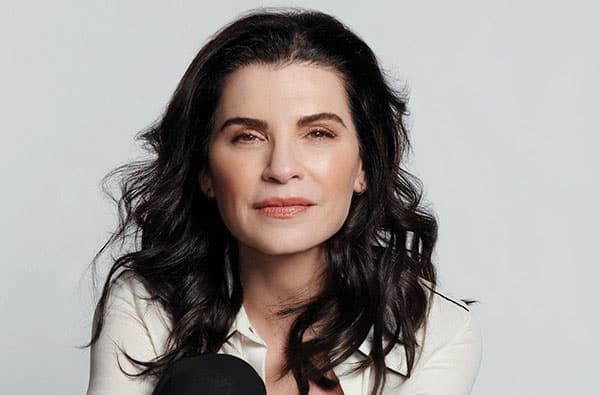
When actress Julianna Margulies was 13 years old, she read “The Diary of a Young Girl” by Anne Frank. While she didn’t quite understand what Frank was going through, she could relate to the feelings the teenager experienced, and the book inspired her to keep a journal.
“I started writing journals,” Margulies, star of “The Good Wife” and “ER,” told the Journal. “It taught me how to express myself, and it taught me that that’s not a bad thing. It put me in someone else’s shoes. Books are supposed to do that, whether they are fun, funny, or sad. You can be in that person’s shoes and experience it. Otherwise, if we don’t have books, we are small-minded people.”
Margulies, who is Jewish, is part of a group of celebrities who are part of the #LetAmericaRead campaign from CAA Foundation, the philanthropic arm of entertainment and sports agency Creative Artists Agency, in partnership with Campaign for Our Shared Future. The celebrities are urging communities not to ban books that deal with issues like race, gender and culture. Julia Roberts, Selma Blair, Sterling K. Brown and Andy Cohen have signed on to keep books like “The Diary of a Young Girl” and “The Handmaid’s Tale” in classrooms throughout the country.
“Our children deserve the freedom to learn about our history, diverse stories and each other,” said Campaign for Our Shared Future Executive Director, Heather Harding. “We must all join together to defeat book bans and keep age-appropriate books in the hands of our students.”
Looking at the banned books, Margulies chose “The Diary of a Young Girl” not only because she related to it, but also because people who read it can see the world through Frank’s perspective.
“The most important thing is for a child to see the world through someone else’s eyes and experiences,” she said. “Books teach us to be compassionate and become humanitarians as we grow up and try to make the world a better place.”
Margulies grew up in England and was only one of two Jews in her school. Her family members were persecuted in Prussia and Romania and escaped just in time. The relatives that stayed behind were killed.
“My family didn’t want to celebrate their Judaism because they were afraid,” she said. “My mother spoke Yiddish at home, but didn’t want to bring attention to herself by celebrating the holidays.”
It wasn’t until Marguiles was 25 and met Rabbi Naomi Levy at the dog park that she embraced her Judaism. She told the rabbi she was Jewish, and the rabbi invited her over for Passover seder.
“She led the seder in such a beautiful and spiritual way that I opened up my arms to Judaism in a way I hadn’t before,” Marguiles said. “I married a Jewish man and we do Shabbat every Friday night. What I love about Judaism is the tradition and this place of belonging I feel.”
Margulies is passionate about ensuring that students are properly educated about history and the Holocaust.
Now, Margulies is passionate about ensuring that students are properly educated about history and the Holocaust. She hosted Holocaust Remembrance Day specials on CBS and MTV last year and discovered that only 19 out of 50 states teach about the Holocaust. After that, she gave a generous donation to the Holocaust Educator School Partnership to teach more students about it.
“We had a session with students in the Bronx, and one eighth grade boy raised his hand and said, ‘Six million Jews died during the Holocaust, so are there any left in the world?’” she said. “To me, that’s heartbreaking.”
Through #LetAmericaRead, Margulies is hopeful that the bans on books will end and students will continue to be able to learn about important topics like the Holocaust in the classroom.
“Who are these people telling us what we can and can’t read?” she said. “It’s unconscionable to me. History repeats itself. I truly believe the rise in antisemitism is due to ignorance. You have to sow the seeds in the young so they become the heroes of the future.”
A few weeks ago, I attended the Coachella Music Festival. The preeminent music festival near Palm Springs, it is one of the most influential in the world, attracting hundreds of thousands of young people to hear, receive and witness the culture, sounds and vocabulary emerging from the music industry today.
At night, watching with thousands of others a show with pyrotechnics, smoke, an AI chatbot and a UFO launch, I felt as if I was witnessing an electronically simulated Sinai.
As Coachella’s first full-force season back in a post-COVID world, record crowds filled the grounds with young people shedding years of loneliness and too much screen time. The past few years have brought a pall of depression and loneliness unobserved in American history, and American youth took to the desert for revelation and rebirth.
But what did they find there? I spent the better part of the last two weeks reflecting on this. And then, in an unexpected place, I found an answer while seeing a movie with my 10-year-old daughter.
The movie was based on Judy Blume’s widely beloved book, “Are You There God? It’s Me, Margaret.” It’s a slim book with a simple theme: a girl of an intermarried family moves from New York City to the suburbs of New Jersey where she meets new friends as she discovers herself through friendship, puberty and religion. It’s a distinctly Jewish film. But beyond the Jewish cliches and bagel humor, the magic lies in Blume’s mystical soul, a call to self-knowing that has influenced generations of artists and writers.
Jewish technologies of connection and self-knowing have evolved for thousands of years. Rituals like Coachella and watching a movie about an intermarried girl are modern equivalents. In a post-COVID world, we are hungrier than ever for connection. And sometimes, that connection can be to something we all possess – the still, small, wise voice within.
The ecstatic longing for revelation and inspiration at Coachella is a post-adolescence desire to fill lonely hearts. But rather thanattend a concert, Blume’s little Margaret filled her lonely and grieving heart by talking to God — a practice known in the mystical tradition as Hitbodedut.
Hitbodedut is a spiritual practice of literally talking to God. Translated, it means “seclusion.” It became popularized through the teachings of Reb Nachman of Breslov who implored us to “talk openly to God everyday.” Hitbodedut is not journaling; it’s not meditating; it’s not liturgal praying and it’s not thinking; it is the active practice of hearing one’s own voice at a time of frustration, bewilderment and even existential crisis (for Margaret, this crisis might be her best friend lying about getting her first period).
Hitbodedut is a spiritual practice of literally talking to God. There can be tears. There can be laughter. There can be a realization that we aren’t where we are supposed to be. But, through talking to God, we realize that we are not alone.
Hitbodedut can be awkward. But like the process of a girl transforming into a woman, the practice of “talking to God” can ripen into something voluptuous and inspiring.
There can be tears. There can be laughter. There can be a realization that we aren’t where we are supposed to be. But, through talking to God – or whatever Higher Force one believes is out there – we realize that we are not alone. And in this reckoning, we find strength, we find hope and most of all, like a wave of humanity seeking revelation in the desert, we find ourselves.
Rabbi Abraham Joshua Heschel wrote that “G-d’s search for man, not man’s quest for G-d, was conceived to have been the main event in Israel’s history. G-d seeks, pursues and calls upon man.”
However, in the aftermath of pandemic, war, economic stress, political upheavals, family struggles and more, this Shavuot, perhaps, rather than God seeking us, it is up to all of us to seek God.
Hitbodedut is one rabbinic response for “Man’s search for God.” It’s the practice towards self-knowing that begins with the soft voice within, a voice that, perhaps, connects us with something larger, akin to what we seek through the lyrics and fanfare of a desert music festival.
“I have been looking for you, God. In Temple. In Church. I didn’t feel you at all. Why, why God, do I only feel you when I am alone.” -Margaret Simon
Sitting in a dark theatre with my daughter, as the credits played while Cat Stevens sang “I listen to the wind, to the wind of my soul…” tears spilled from my eyes onto my cheeks and I thought: “If only we could teach our children to talk to God…while they may never know if there is one, at least that would learn the value of hearing and knowing themselves.” I thought of the technicolor wave of youth in the night standing in the Coachella polo grounds and what they decamped to the desert to find – the voice within, like a Sinaitic reveal for all to hear, connecting us in ways that give hope, purpose and direction to our wayward paths.
Whether standing in a massive crowd at Coachella or sitting in a dark movie house, there are moments in our lives that seem to beckon us back to our essence, reminding us to know our souls, feel how precious life is, and seek connection to something larger than ourselves, connecting all of us in a mysterious oneness.
What would the world be like if every human could reclaim a sense of inner connection and peace through Hitbodedut? What if, this Shavuot, when we all stand sentry awaiting Torah, each of us makes an inner commitment to begin with the most essential part of the spirituality equation: hearing the God in our own voices and actions, one day, one minute at a time.
Few of us are fully aware of the personal impact that pandemic, racial tensions, economic strife, elections, unrest in Israel, the influence of AI technology and more have had on our mental health. But ask any parent at any school “How are the kids doing?” and stories of tiny family struggles come out in whispers and heartbreak. As the world prepares itself for a wave of change through Artificial Intelligence, as the sea of post-COVID young people stand before a Coachella stage longing to fill their lonely hearts, let’s fill our hearts with self-knowing, with the innocence and awe of Margaret, with the simple activity of connecting to something bigger than us.
No chatbot, AI, electronic music, crowd of 600,000 or supernatural act of nature required. All it takes is for each of us to make a little space.
No chatbot, AI, electronic music, crowd of 600,000 or supernatural act of nature required. All it takes is for each of us to make a little space.
This Shavuot, we can seek our revelation by talking to God.
Rabbi Lori Shapiro is the founder and artistic director of The Open Temple in Venice.