
fbpx

January 6, 2023

Biden Admin “Deeply Concerned” By Israeli Minister’s Temple Mount Visit

Members of the Biden administration have expressed concern over Israeli National Security Minister Itamar Ben-Gvir’s recent visit to the Temple Mount and called for the newly formed Netanyahu government to uphold the status quo over the holy site.

Ben-Gvir visited the holy site on January 3 while wearing a bulletproof vest. He tweeted in Hebrew afterwards: “The Israeli government of which I am a member will not surrender to a vile murdering organization. The Temple Mount is open to everyone and if Hamas thinks that if it threatens me it will deter me, let them understand that times have changed. There is a government in Jerusalem!” Currently, only Muslims are allowed to worship freely at the holy site; Ben-Gvir is a longtime advocate of changing the status quo so non-Muslims can worship freely there as well.

State Department spokesperson Ned Price said during his January 3 press briefing that the administration is “deeply concerned” over the visit because it “has the potential of exacerbating tensions and lead to violence.” “The United States stands firmly for preservation of the historic status quo with respect to the holy sites in Jerusalem,” he added. “We oppose any unilateral actions that undercut the historic status quo. They are unacceptable. The president has previously underscored the need to preserve that historic status quo.” United States Ambassador to Israel Tom Nides similarly said in a January 5 radio interview that Ben-Gvir’s actions were “obviously provocative” and reiterated the administration’s support for the status quo “full stop.”

The U.S. was not alone in its criticism of Ben-Gvir’s visit; Britain, France, Egypt, Bahrain, the United Arab Emirates and Turkey also denounced the visit as being provocative. Jordan, which controls the Temple Mount, accused Ben-Gvir of violating the “sanctity” of the holy site. Associate Dean and Director of Social Action Agenda at the Simon Wiesenthal Center Rabbi Abraham Cooper referred to Jordan’s comments as being hypocritical, telling Fox News that when Jordan occupied Jerusalem from 1948-67 they “barred Jews for 19 years from praying at the Western Wall.” Therefore, Jordan is “the last country on Earth to lecture Israel,” Cooper said.

Senator Ted Cruz (R-TX) criticized the Biden administration’s response to the Ben-Gvir visit. “A visit by a minister from Israel’s government to a site inside Israel is not a change in any status quo arrangement, and it should not be controversial for a Jew to visit the holiest site in Judaism,” he said in a January 4 statement.The statements from the Biden White House and State Department, which suggest otherwise, will further destabilize the Middle East and risk inciting terrorism. They convince Palestinian officials that compromise is unnecessary because Democrat administrations will coerce our Israeli allies into making dangerous concessions.” Cruz went on to accuse the administration of undermining “Israel’s security and sovereignty.” “It prohibited even mentioning the ‘Abraham Accords,’ sought to open a Palestinian consulate in Israel’s capital Jerusalem, unleashed the FBI against the Israeli army, and publicly ostracized parts of Israel’s democratically-elected government,” the Texas senator said. “Meanwhile, the administration is pouring over a billion dollars into Palestinian areas and bringing officials from the terrorist Palestine Liberation Organization to Washington, D.C. Now it is doubling down on these disastrous policies.”


Zionist Organization of America President Morton A. Klein similarly wrote in a Jewish News Syndicate (JNS) piece that the administration’s comments on the matter were “akin to accusing Rosa Parks of “provoking violence” by not sitting in the back of a bus.” “Price’s statement also took the same line as the terror-supporting Palestinian Authority, which falsely claimed that Ben-Gvir’s visit was a ‘provocation’ and ‘an attack on Al-Aqsa,’” Klein wrote. “To Arab terrorists, of course, the very existence of Israel is a ‘provocation.’ The U.S. State Department should not endorse this kind of hate.”

J Street, on the other hand, expressed support for the Biden administration’s remarks. “Ben-Gvir’s reckless actions indicate a destructive willingness to escalate tensions in Jerusalem and beyond, without any concern for the potential violence he could provoke,” the organization said in a January 3 statement. “They have already led to a serious diplomatic outcry from the international community, including the United States and Israel’s key Arab partners such as Jordan, Egypt and the United Arab Emirates. We echo the US embassy’s statement that any actions that undermine the preservation of the Temple Mount/Haram al-Sharif status quo are unacceptable.”

In response to criticism over the Ben-Gvir visit, Israeli Prime Minister Benjamin Netanyahu’s office has maintained that the prime minister does not plan to change the status quo and is “committed” to upholding it.

Biden Admin “Deeply Concerned” By Israeli Minister’s Temple Mount Visit Read More »
The Sublimity of Insincerity – Torah Portion Va-yechi 2023

The Sublimity of Insincerity

Thoughts on Torah Portion Vayechi 2023

ZU_09/Getty Images

There is one passage in our Torah portion that has always bothered me. I’d never heard a satisfactory teaching on this passage, until I listened to Avivah Zornberg’s teaching, linked here. (Thank you Sheri Manning for recommending this to me.) I am paraphrasing from Zornberg’s fabulous teaching.

https://www.youtube.com/watch?v=WAbGHlO7AK0&list=PLv2rnAORLiVBR3CtLpbrq-JXwIT9FTVLe&index=17

Here is the backstory, and then I will share with you the offending passage.

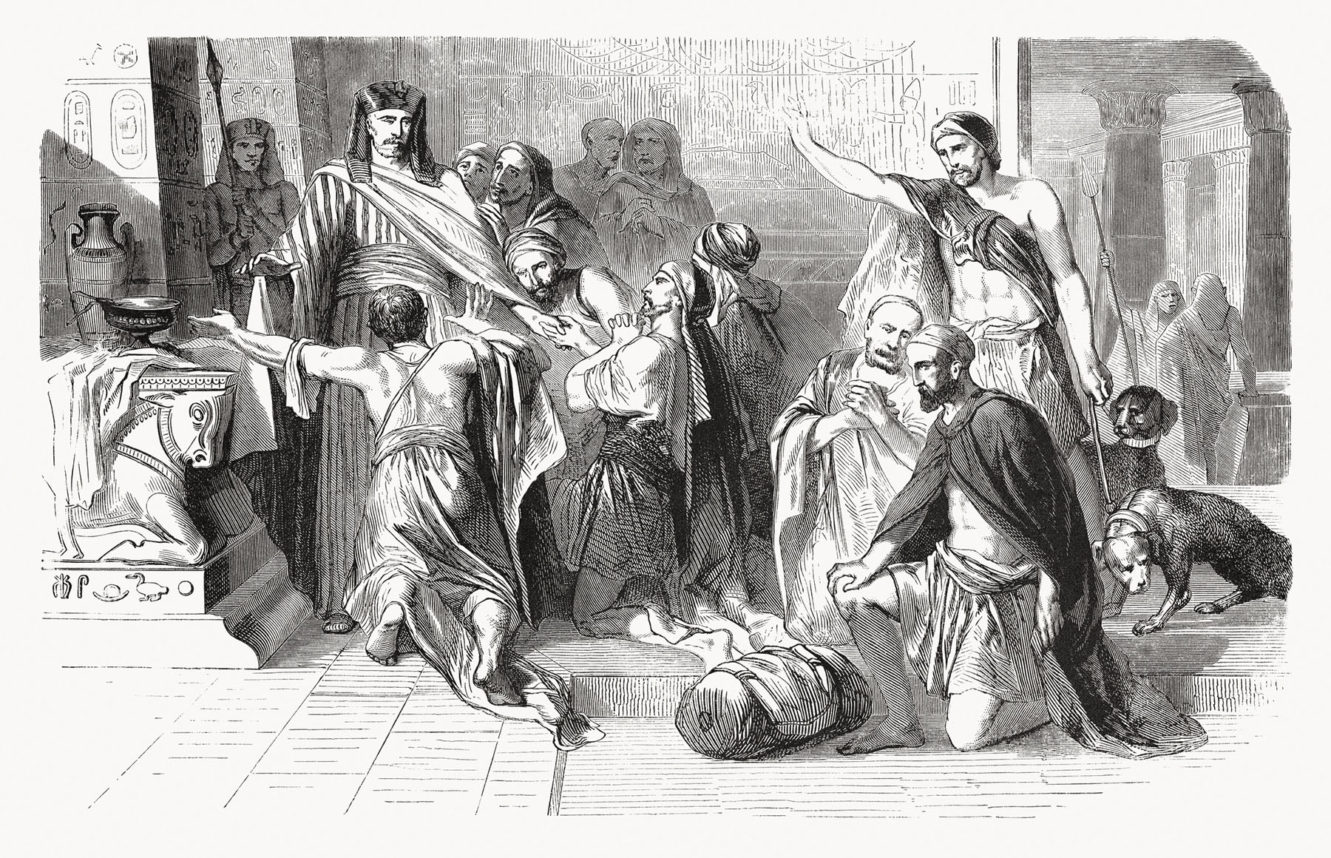
After their father Jacob died, the Joseph’s brothers were afraid that Joseph would now take vengeance upon them. Their solution was to prevaricate:

When Joseph’s brothers saw that their father was dead, they said, “What if Joseph still bears a grudge against us and pays us back for all the wrong that we did him!”

So they sent this message to Joseph, “Before his death your father left this instruction:

So shall you say to Joseph, ‘Forgive, I urge you, the offense and guilt of your brothers who treated you so harshly.’ Therefore, please forgive the offense of the servants of the God of your father’s [house].” And Joseph was in tears as they spoke to him. (Genesis 50:15-17)

There is no record of Jacob ever having given such an instruction. Teachings in the Midrash assume that the brothers made this up, in great fear. Now that Jacob was dead, he could not refute their words. Joseph would be obligated not to take revenge.

Why did Joseph cry when he heard this? According to teachings in the Midrash, he knew they made up this “last will,” out of fear. Joseph cried, according to the Midrash, because even though Joseph and his brothers had reconciled in the previous week’s Torah portion, the reconciliation obviously did not go deep. The brothers did not believe that Joseph forgave them.

How does Joseph console them? Here is the bothersome verse:

But Joseph said to them, “Have no fear! Am I a substitute for God? Besides, although you intended me harm, God intended it for good, so as to bring about the present result—the survival of many people. And so, fear not. I will sustain you and your dependents.” Thus he reassured them, speaking kindly to them. (Genesis 50: 19-21)

Joseph is saying that God will judge them, not he, Joseph. He is also saying that though they intended harm, God intended good, so that in some grand scheme of things sort of way, they are forgiven. What has always bothered me about this verse is Joseph’s palpable insincerity. They meant do evil.

I see a version of that insincerity (sincerity being characterized as speaking without pretense) when people say, “This was meant to be.” I believe people mean well when they say that. We aren’t sure what to say when we see suffering. Saying that something is destined, meant to be, is supposed to take the bite out of the stings of life. I sometimes say what I am thinking: “Meant to be, by whom? Who meant it to be?”

I don’t think, in general, that things are meant to be. I don’t believe in predestination. I don’t think that everything works out in the end. I don’t believe that immoral acts are justified because some good occurs down the line.

The fear of the brothers reveals that the reconciliation with Joseph only went so far. Their fear is matched by a truth in Joseph’s heart:  Maybe God will find a way to forgive them, but he had not. I believe, as Zornberg suggests, that despite Joseph’s saying that ‘it all worked out in the grand scheme of things,’ that Joseph wanted revenge. Not that he would act on it.

A few things here:

The desire for vengeance is natural, or there wouldn’t be a commandment against it. Feelings are involuntary – we must feel our feelings in order to deal with them.

We are not obligated to forgive, especially if someone has not apologized nor offered some kind of compensation, if only an apology. In fact, we are taught, we are to seek justice.

Once one sees in one’s heart a desire for revenge, we must replace that with a desire for justice, instead. First you must know, however, that there is vengeance in your heart, before you can strive to replace the desire for vengeance with the will to justice.

I was relieved by Zornberg’s teaching, because from her I learned that Joseph had decided to be insincere, “sincere” in the sense of being genuine. Insincerity is better than expressing the desire for vengeance, especially in families. Sometimes when one honestly shares their hurt, the other will not apologize. Sometimes the other will find reasons, exculpations, excuses. “It’s your fault I did it.” “Well, I had a bad childhood.” Or just get angry back.

Instead of saying to his brothers, “Your fear is justified, because I would love to take revenge” Joseph goes to the insincere “it was meant to be” bromide. In this case, insincerity is a great moral accomplishment, compared to the next thing – expressing the genuine desire for vengeance. Insincerity helps us bide our time, work things through within, until the time is ripe for working things through with others. Insincerity can be a strategy of patience. Better a banality than a bitter argument.

Thanks to Avivah Zornberg, I am no longer bothered by Joseph’s saying, “It’s okay you tried to kill me and then sold me into slavery. It all worked out in the end!” as opposed to saying what he was really thinking. I am reminded of my 10 Contrarian Commandments for a Good Marriage: “Don’t say what you are thinking. The only thing worse than saying what you are thinking is saying what you are feeling.” These Contrarian Commandments apply, of course, only when your thoughts and feelings are toxic. Calm yourself, find your way to sanity and reasonableness, maybe even to love and empathy, and then share your thoughts and feelings. You might realize, by the way, that you had a part in things, too. Justice might entail your doing a little apologizing on your end.

In the meantime, a little insincerity can go a long way.

The Sublimity of Insincerity – Torah Portion Va-yechi 2023 Read More »

The Purpose of Pessimism, The Practice of Optimism

Complacency has a habit of making intelligent people look like fools. In 1909, Norman Angell published The Great Illusion, which, (to quote John Keegan) “had demonstrated, to the satisfaction of almost all informed opinion, that the disruption of international credit inevitably to be caused by war would either deter its outbreak or bring it speedily to an end.” Five years later, the bloodiest war in world history (until that point) would take place. Yet even the World War was not enough to bring Angell’s thesis into question; in 1933, he would be awarded the Nobel Peace Prize for this book, the only one ever presented to an author. Hope often triumphs over experience.

Angell was a firm believer in progress. But others are far more skeptical of utopian narratives, because life is too unpredictable and human nature too erratic to expect unending progress.

Right now, sunny optimism seems out of touch. The last decade has ushered in extreme political polarization, a new Cold War, a ground war in Europe, and a pandemic; pessimism is beginning to make a lot more sense.  In September 2021, Niall Ferguson challenged Steven Pinker to a wager. Pinker, a cognitive psychologist, had written The Better Angels of our Nature, which argued that humanity has become progressively less violent. Ferguson, a historian, rejected this thesis, and bet Pinker that “by the end of this decade, Dec. 31, 2029, a conventional or nuclear war will claim at least a million lives.” Tragically, Ferguson’s wager doesn’t seem all that ridiculous anymore.

Jews sit uncomfortably at the crossroads of progress and pessimism. Judaism emphasizes hope and the possibility of a better future. It requires one to seek repentance and self-improvement, and believes in the coming of the Messiah and the ultimate redemption of humanity. The continued existence of the Jewish people itself is the product of optimism; as the Talmud points out, having a Jewish baby during periods of persecution was a supreme act of hope.

While optimism is wonderful in theory, Jewish history has repeatedly taught the lesson of pessimism. In the years before the Holocaust, too many Jews took comfort in the status quo and thought they could simply wait Hitler out. A major Jewish charity event took place at Berlin’s Cafe Leon on January 30, 1933, the day when Hitler was appointed Chancellor of Germany. Among all the representatives of Jewish organizations that spoke at the event, only the Zionist Rabbi Hans Tramer spoke about Hitler. Saul Friedlander, in Nazi Germany and the Jews, quotes a newspaper report that Tramer’s “speech made no impression. The entire audience considered it panic-mongering.”

The Jewish leaders at Cafe Leon were blinded by their own optimism, and couldn’t see the danger right in front of them. In her book on Jewish humor, Ruth Wisse relates the following quote: “we used to say that there were two kinds of German Jews: the pessimists who went to Palestine, and the optimists who went to Auschwitz”. There are times when pessimism is important.

Balancing pessimism with hope is the theme of Parshat Vayechi. On the surface, the end of Genesis is upbeat; Jacob’s family is growing by leaps and bounds, becoming wealthier and entrenched, and Joseph is the Viceroy of Egypt. If one could stop right here, the story of the Jews in Egypt would conclude as one of comfort and contentment.

When Jacob passes away, he is mourned for 70 days by all of Egypt, and given a hero’s funeral. The Torah describes at length the scene at Jacob’s burial in order to emphasize the elevated status of the emerging Jewish community. A large leadership delegation, including a military guard, accompanies Jacob’s casket from Egypt into Canaan, (which was presumably an Egyptian vassal state at the time.) Then, “they came to the threshing floor of Atad, which is beyond the Jordan, and they mourned there with a great and very solemn lamentation….and when the inhabitants of the land, the Canaanites, saw the mourning at the threshing floor of Atad, they said, ‘This is a deep mourning of the Egyptians.’ Therefore its name was called Abel Mizraim…” (Genesis 50:10-13) The Egyptian funeral for the patriarch of the Jewish people is so large and dramatic, a city is named for it. Isn’t this the very definition of success?

Yet behind the scenes, there are quiet whispers of skepticism. When Jacob requests to be buried in the family plot in Israel, he adds an additional phrase:  “Please do not bury me in Egypt” (47:29.) Jacob rejects Egypt, even as a place of temporary burial. As the Ralbag points out, Jacob is profoundly disturbed by Egyptian society and wants to disassociate himself from it. At the very end of the Torah reading, Joseph hints more directly at the impending doom, and says “God will surely come to your aid and take you up out of this land…” (50:24) Divine intervention will be needed to return the Jews back home.

A thought-provoking Midrash is cited by Rashi at the beginning of the Torah reading. It notes that Vayechi is the only Parshah that begins in the middle of a paragraph. Rashi explains: “Why is this Parsha totally closed? Because, as soon as our father Jacob passed away, the hearts and eyes of Israel were closed by the misery of the bondage which the Egyptians began to impose upon them. Another reason is: because Jacob wished to reveal to his sons the date of the End of Days (i.e., redemption), but this vision was closed from him.” The middle of a paragraph is all closed up, with no window through which to see anything positive; and that is the ambiance of Parshat Vayechi, in which the gloom of exile slowly descends upon Jacob’s family.

A closer look at the Biblical text uncovers the literary brilliance of this Midrash. The final words of the previous Parsha, Vayigash, are: “And Israel settled in the country of Egypt, in the region of Goshen; they acquired landholdings in it, and were fertile and increased greatly.” (47:27) In a sense, this report of prosperity is “edited out” of the Parshat Vayechi, which begins instead with the following verse that introduces Jacob’s impending death. The starting point of  Vayechi declares: here begins the tragedy. With Jacob’s death, the golden age in Egypt will come to an end.

Jacob’s family in Egypt live a split-screen reality, of outward success and inner fragility.  It is the sort of situation where a pessimist will find plenty to worry about. Jacob’s family has a relationship with Egyptian society that hinges on one man, Joseph; and they are also expanding rapidly, which will test the hospitality of their hosts. Eventually, in a bitter reversal of fortune, these aristocrats will become slaves, and endure exile in their adopted homeland.

So how does one prepare for exile? Jacob chooses an unusual method: He blesses his family. What makes this particularly odd is a fascinating biblical parallel. There are only two times when the tribes of Israel are blessed; once by Jacob before they enter exile, and then again by Moses before they enter the land of Israel.

Moses’ blessing seems to be well-timed; blessings belong to new beginnings, to a people about to return to their homeland. Yet in Vayechi, as his family stands on the threshold of a 400-year exile, Jacob blesses them as well. And that is strange.

But Jacob’s blessings are intended to extend hope. Yes, he recognizes that exile is about to arrive; but it is precisely during times of despair that one must practice optimism.

Jacob wants to offer a preview of the blessings that the twelve tribes will receive before they enter the land of Israel; he wants to ensure that they never forget where their home is, and never forget that they are blessed.

Parshat Vayechi carries a paradoxical lesson: in times of prosperity, consider pessimism, and in times of despair practice optimism. Pessimism is a necessary corrective to the irrational exuberance of heady times; optimism is a spiritual practice, which sustains the soul when one’s blessings have otherwise evaporated.

In Hasidic Tales of the Holocaust, there is a story entitled Fine Generations. It relates an anecdote about Bronia Koschitzki, who together with her two sons, aged six and three, were trapped in the Bochnia Ghetto. There was a Hasidic Rebbe in the ghetto to whom people came at all hours to ask for blessings. Bronia came with her two sons for a blessing as well. Initially, the Rebbe gave them a generic blessing “that God will help.” Bronia pressed for something better, and requested that the Rebbe offer her the blessing of “fine generations in the future.” The other people in the room murmured, thinking Bronia was insane; at a time when children were being rounded up and murdered, she was asking for a future of fine generations!

But the Rebbe obliged, and gave her a blessing for a fine future; and Bronia and her children did survive. As she was interviewed for the book, surrounded by her children and grandchildren, she noted that “in a time of war, one has to organize everything, even a blessing.”

Jacob does this as well. As exile closes in, he organizes a blessing for his family, a beacon of hope that will carry them through a bitter exile. Pessimism has its purpose; but during the darkest of days, one must insistently practice optimism, and never let go of hope.

The Purpose of Pessimism, The Practice of Optimism Read More »

Israel’s New Government Trying To Remain Neutral on Russia-Ukraine Conflict

To read more articles from The Media Line, click here.

Israel’s new government is already being tested by the warring sides in Europe as it continues to maintain a balancing act between Russia and Ukraine.

On Tuesday, Russian Foreign Minister Sergey Lavrov spoke on the phone with his new Israeli counterpart, Eli Cohen. Prior to that conversation, in his inaugural speech at the foreign ministry, Cohen outlined his policy on the conflict.

“With regard to the Russia-Ukraine issue, we will do one thing for certain. In public – we will talk less,” Cohen said.

He vowed to continue humanitarian aid to Ukraine, adding that the ministry he heads will formulate a “responsible” policy on the war.

Indeed, for almost a year in which the war has been raging in Europe, Israel has tip-toed between the sides:  trying to not offend while simultaneously condemning; helping Ukraine, but not giving it all it wants; all while safeguarding Israel’s own geopolitical interests and maintaining its strategic alliances with the United States.

The US understands that there is only so much Israel can say publicly. But, behind the scenes, Israel has increased its assistance to Ukraine.”

Israel denounced the Russian invasion, but did not join the sanctions regime put in place by Western countries.

“Israel’s policy is to sit on the fence,” said Dr. Dina Lisnyansky, an expert on the Middle East and Russia in the Middle East from Tel Aviv University and Shalem College. “It is clear that Israel’s sentiment is with Ukraine. But the reality in the Middle East dictates that Israel has to operate with countries that it disagrees with, Russia being one of the more important ones.”

Cohen’s comment was interpreted by some as a change in Israel’s position to a more pro-Russian stance.

Leading US Senator Lindsey Graham, a Republican, immediately tweeted criticism of Israel’s foreign minister.

“The idea that Israel should speak less about Russia’s criminal invasion of Ukraine is a bit unnerving,” he tweeted. “To stay quiet about Russia’s criminal behavior will not age well.”

Israel cannot disconnect itself from Russia – it has no choice

Caught in the middle, Israel has yet to clearly align itself with either side.

“The US understands that there is only so much Israel can say publicly,” said Dr. Yonatan Freeman of the Department of Political Science at the Hebrew University of Jerusalem. “But, behind the scenes, Israel has increased its assistance to Ukraine.”

When the Russian invasion of Ukraine began, then-Israeli Prime Minister Naftali Bennett made a failed attempt to mediate between the sides.

Bennett was then replaced by Yair Lapid. Lapid, however, spoke repeatedly against Russia’s actions in Ukraine. As premier, Lapid instructed Israel to vote in support of Ukraine and to condemn Russia at the United Nations earlier last year. He took the risk, despite the fact that many of the country’s interests lie with an appeased Russian leadership.

Since the start of the war, Israel has refused requests from Ukraine for weapons. Kyiv is keen to put its hands on Israeli air-defense technologies, an ask that has been too large for Israel.

“Although circumstances could change, it is unlikely Israel will give Ukraine air-defense systems,” said Lisnyansky. “Russia would view this as an unequivocal provocation.”

“It is a very delicate situation for Israel and therefore Israel is being very careful,” she added.

Yet there are small indications that things may be changing.

Israel and Russia both operate in Syria, requiring close military cooperation. Just this week, an attack on the international airport in Damascus was attributed to Israel. For Israel, the freedom of operation it is granted by Russia in Syria is critical in its fight against Iranian-backed militia organizations. Israel is believed to be behind hundreds of strikes in Syria, as a cornerstone of its policy to push back on Iranian influence on its doorstep. Any tensions with the Kremlin could limit Israel’s work in Syria.

Israel’s new government led by Prime Minister Binyamin Netanyahu was sworn in last week. Netanyahu has had a long-time history with Russian President Vladimir Putin and often has taken pride in what he calls their close relationship.

Yet, one of Netanyahu’s first phone conversations with a foreign leader was with Ukrainian President Volodymyr Zelenskyy. Most details of the talk were not released, except a short comment on the Ukrainian abstention on the recent UN General Assembly vote on a resolution to ask the International Court of Justice (ICJ) in The Hague to deliver its opinion on the legal implications of the Israeli-Palestinian conflict, including Israel’s “annexation” of territories and the “legal status” of the occupation.

“This is a signal, that at this point in time, the Netanyahu government is taking a more Ukrainian-oriented stance,” said Lisnyansky. Since his swearing in, Netanyahu has not spoken to Putin and only the two countries’ foreign ministers have spoken, in what could be seen as a diplomatic tip-off.

Netanyahu was at the helm before the Russian invasion and was careful to not criticize Moscow openly. During the last election campaign he said he would consider military aid to Ukraine. It was a change of direction.

So far, Israel is known to have provided Ukraine with humanitarian assistance. It has supplied medical supplies and defensive equipment for Ukrainian troops, such as helmets and protective vests. It is expected to supply electric generators and armored ambulances in the near future.

For Israel, one of the main considerations when making any foreign policy decision is Iran. Iran’s increasing presence in the Middle East together with its increased involvement in the war between Russia and Ukraine have not gone unnoticed.

“Israel cannot disconnect itself from Russia – it has no choice,” said Lisnyansky.  But, she adds: “Already before the war, Israel had a good relationship with Ukraine that includes many bilateral agreements.”

The more Iran is involved, the more Israel will want to be on the side that opposes it

Pulling in the opposite direction is the Russian-Iranian alliance which has been outed in the war. Iranian-made Russian drones have become a go-to tool in the Russian offensive on Ukraine.

“This has increasingly caused Israel to lean toward the Ukrainian side,” said Freeman. “The more Iran is involved, the more Israel will want to be on the side that opposes it.”

Before Ukraine, Israel had already been the target of drone attacks. Unnamed Ukrainian officials have been quoted on various media outlets as saying that Israel has been sharing its drone-thwarting experience with Ukraine.

Another major factor that Israel cannot ignore is the large Jewish community that resides in the Russian Federation.

“Russian Jews are essentially being held hostage as a bargaining chip vis-à-vis Israel,” said Lisnyansky. “Putin may sound irrational to Western ears, but even the smallest threat he makes could easily be materialized.”

Just this week, Moscow’s chief rabbi, who is living in exile outside of Russia, called on Russian Jews to leave the country, citing antisemitism and fear that political instability will make the Jewish minority an easy target. Over the summer, Russia shut down the office of the Jewish Agency for Israel in the country. The Russian branch is in charge of promoting and facilitating immigration to Israel.

According to the Jewish Agency there are approximately 150,000 Jews in Russia, making it the 7th largest Jewish community outside of Israel.

“Jewish communities have always played an important role in Israeli foreign policy,” said Freeman. In the call between Cohen and Lavrov, Israel’s foreign minister “made extensive references to the Jewish community and Russia … and their importance to the relations between the countries.”

Moscow could harm Israel on several levels and is using that leverage against Israel.

As Netanyahu again settles into his office, it soon will become evident whether he can maintain Israel’s precarious position or be forced to finally take a side. The developments in the war could easily influence his decision.

And as long as Israel sees its security interest dependent on its freedom to operate in Syria, it will remain seated on the fence, carefully trying not to fall off on either side.

Israel’s New Government Trying To Remain Neutral on Russia-Ukraine Conflict Read More »

Louisa May Alcott Doesn’t Need to Be Trans To Be a Trans Icon

If Louisa May Alcott, author of “Little Women,” were alive today, would she identify as a trans man? The answer is unknown and unknowable, but this hasn’t stopped author Peyton Thomas from issuing a verdict in a recent piece for the New York Times, in which Alcott, dubbed “Lou,” is referred to with male pronouns.

Thomas is not the first to make this claim—only the most recent and perhaps the most prominent. This isn’t without reason. Louisa May Alcott was famously masculine, once referring to herself as “a man of all work” and “a gentleman at large.” Notably, she once told an interviewer that she possessed “a man’s soul, put by some freak of nature into a woman’s body.”

Is this not a profession of trans identification? And, if so, shouldn’t we, as Thomas suggests, “take Lou at his word?”

Sure, except that we don’t really know what Lou’s word meant. Perhaps she was, as Thomas seems to think, being completely literal and telling her interviewer that she was actually a man, and not a woman. Perhaps, however, she meant something else—more akin to what we mean when we call a young person an “old soul.”

It’s not uncommon for people to speak this way. I have met non-Jews who say they have a Jewish soul. I have met Americans who say that they are Europeans at heart. I have heard straight women say that they are gay men in women’s bodies.

Such statements are an expression of something that is actually a quite common part of the human experience—which is that we don’t always feel a total alignment between who we are and who the world expects us to be.

With this in mind, are we certain that we can know the precise meaning of Alcott’s statement? Certain enough to “assign” her a new gender? For that matter, even if one was convinced that Alcott was trans, why a trans man? Why not nonbinary? Or genderqueer? Why “he/his/him” and not “they/their/theirs”?

Of course, amidst all these unanswerable questions, one might ask why I insist on continuing to refer to Alcott as a woman and using female pronouns when referring to her. Is this not an equally uninformed guess? The answer to this is that we have no good reason not to—and the burden of proof remains with those who want to claim that one of history’s most beloved female writers was actually a man.

The truth is that we don’t, and can’t, know how Alcott, if she lived today, would have understood herself. For that matter, we don’t know how we would have understood ourselves if we had been born in the 19th century, or the 18th, or the 31st. And we have no grounds to say which time period’s array of cultural constructs and paradigms should be taken as authoritative.

The truth is that we don’t, and can’t, know how Alcott, if she lived today, would have understood herself.

The urge to exhume and relabel the dead is a common one. A ghoulish example is the Mormon Church’s practice of posthumously baptizing dead Jews into their faith. In the world of progressive Jewish academia which I inhabit, this takes the form of op-eds, academic papers, and viral tweets claiming that Jesus was a communist or a Palestinian freedom fighter; or that King David was a gay man; or that Ruth was a lesbian; or that Abraham was a Zionist.

In many instances, there is a good reason for the inquiry, but the case is almost always overstated. This is because such inquiries are rarely about the pursuit of truth. As Thomas admits, what’s really at stake is “who gets to claim a hero.”

Fortunately for all of us, we don’t need someone to have batted for our team in order to claim them as a hero. What matters is that they evoke something deep in us that speaks to our own experience of the world. This is in no way diminished by the fact that the feeling might not be mutual.

We can therefore acknowledge that Jesus’ message of egalitarianism and non-materialism might have profound significance to modern-day Marxists, without saying that Jesus was a communist. Because, of course, he wasn’t.

We can look to the story of King David and Jonathan as a poignant portrayal of love between two men that will speak to gay male couples. We need not assert any unverifiable truth claims about King David’s sexuality for this to be the case.

We can see how Abraham’s sojourns in the holy land become a midrashic thread in the Zionist tapestry despite the fact that the biblical patriarch was, obviously, not an adherent of a 19th-century secular national movement.

And we can appreciate how many in the trans community look to Louisa May Alcott’s relationship to her sex and find a deep resonance with their own experience.

After all, we are free to claim anyone we want as an icon for ourselves and our communities. We are free also to ask and re-ask the question about whether or not our icons would claim us back if they had the chance. What we are not free to do, however, is to baptize the dead—changing their pronouns and their names when they can neither protest nor consent.


Matthew Schultz is the author of the essay collection “What Came Before” (2020). He is a rabbinical student at Hebrew College in Newton, Massachusetts.

Louisa May Alcott Doesn’t Need to Be Trans To Be a Trans Icon Read More »