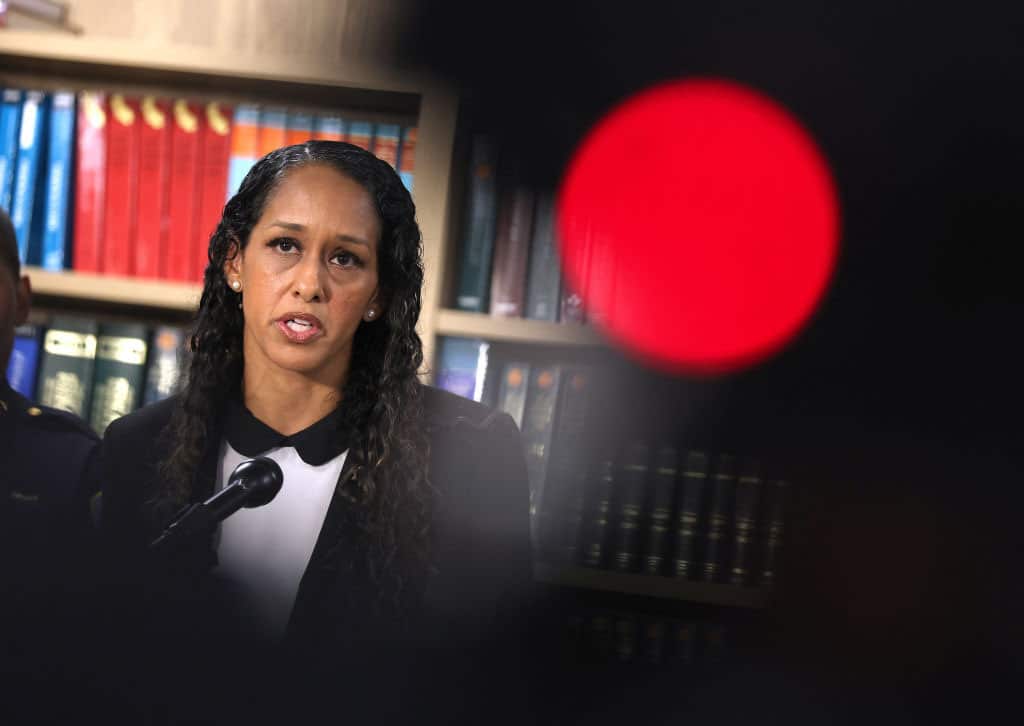
San Francisco District Attorney Brooke Jenkins announced in a December 22 press release that she is charging Eduardo Navarro Perez with a hate crime for allegedly assaulting a Jewish man with a skateboard.
Perez is alleged to have hit the victim after asking if he was Jewish or Black and the victim said he was Jewish. Perez also allegedly uttered “disparaging remarks towards Jewish people” while attacking the victim. He was arrested on December 17; if convicted of a hate crime, he faces up to seven years in prison.
“There’s no place for antisemitism, or any crimes motivated by hate in SF, in our state, or anywhere else,” Jenkins said in a statement. “This prosecution will send a message that our diversity & unity makes us strong – we will not sit idly by & allow anyone to be singled out and victimized b/c who they are.”
1/ Today, District Attorney Brooke Jenkins announced that Eduardo Navarro Perez has been charged w/ assault w/ a deadly weapon in connection to an attack on a Jewish man on Haight St. Prosecutors are alleging this assault is a hate crime & was committed b/c the victim is Jewish. pic.twitter.com/o67G7eaHhb
There's no place for antisemitism, or any crimes motivated by hate in SF, in our state, or anywhere else. This prosecution will send a message that our diversity & unity makes us strong – we will not sit idly by & allow anyone to be singled out and victimized b/c who they are. https://t.co/WrwevVzqmN
Anti-Defamation League San Francisco tweeted, “Closely following this hate crime prosecution for a violent antisemitic assault & hoping for a just resolution for the victim & community. @SFDAOffice& @SFPD stands strong against antisemitism.”
Closely following this hate crime prosecution for a violent antisemitic assault & hoping for a just resolution for the victim & community. @SFDAOffice & @SFPD stands strong against antisemitism. https://t.co/O7a1AI6GWd
There have been jaw-dropping moments, quotable lines and an infatuation with a guilty pleasure: Reality TV. Let’s take a look at the top 10 Jewish stars and what many of them told the Journal in interviews.
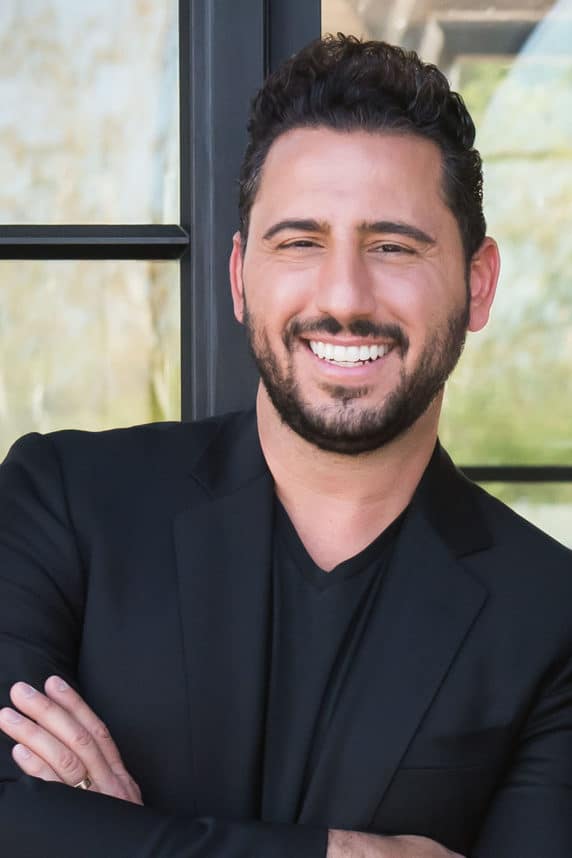
Josh Altman, “Million Dollar Listing Los Angeles” (Bravo)
Josh Altman leads the pack of Jewish Reality TV stars, selling houses to the rich and famous on Bravo
Quite simply, you don’t get more box office than Josh Altman. He has the charm, the swag and an ability to get under the skin of competitors. The cameras don’t lie and there’s never a dull moment watching this former Syracuse University placekicker kick tuchus, selling houses to the rich and famous.
Altman, who works with his brother Matt, bought their parents a home. His wife, Heather, a real estate broker who is now CEO of the company, The Altman Brothers, has brought him the greatest happiness, he said.
“My wedding to my wife was my most favorite moment on the show,” Altman told me. “It has been a blessing. To be able to do what you love with the people you love is a rare opportunity. My son Ace and my daughter Lexi, when they get older, can watch a big percentage of 14 years of their dad’s career. If someone would have told me when we started that we’d be the No.1 team in California and make $100 million a year in sales, my cocky self might have said ‘yeah’ and hoped it would happen. Last year, we did $1.46 billion in sales.”
Altman knows how to throw down in verbal jousts like a medieval knight and while he could easily have his own spinoff show, he did have one with fellow cast-mate Josh Flagg. It was pretty amazing and showed their rivalry.
“When I started on the show, I never imagined it would go so many years,” Altman said, adding that the success resulted in other real-estate-based reality shows. “It’s so unbelievable. I’ve been able to get my clients great exposure and each year, I say, ‘if it ends, it’s been one hell of a ride!’”
If you’re not jealous of Altman, you’re either lying or you’re not trying.
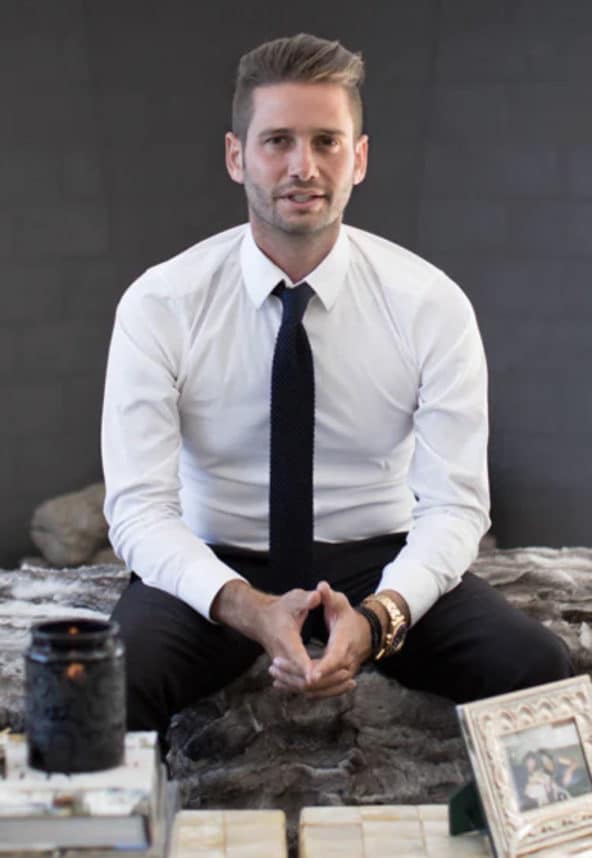
Josh Flagg, “Million Dollar Listing Los Angeles” (Bravo)
As a famed realtor, Josh Flagg shows knowledge of Hollywood history and has a sense of humor people would kill for
Josh Flagg, who was born in Los Angeles, deserves to have a documentary made about him. From his sardonic sense of humor to his exceptional knowledge of Hollywood history, Flagg is one of a kind. Much of the time, Flagg appears to be unflappable, other than his heated fights with Altman.
On a simply emotional level, nothing tops Flagg’s relationship with his grandmother, Edith, a Holocaust survivor who became a tremendous success, being the first to import polyester into America in large quantities. One might not think it’s the coolest thing to show your great bond with your grandmother, but Flagg did it, even from the moment in Season two, episode one when she told him a friend died so he could see if the house was available for sale. You should check out the phenomenal book he wrote called: “A Simple Girl: Stories My Grandmother.” In a time when many in America barely know anything about the Holocaust, having Edith’s humor and knowledge go out to so many people was invaluable.
Flagg told me via e-mail that he loved “spending time with my grandmother and interviewing her on her time fighting the Nazis during the war, as well as her massive success in business.”
He noted that she knew seven languages, saved Jewish lives during the Holocaust, and brought out elements of his personality that might not otherwise be highlighted.
“I would have to say that my grandmother gave me the ability to show a side of me that I was not able to show on the TV program,” he wrote to me, adding that her story is one of the great American dreams.
She passed away in 2014 and the moment on the show where he deals with the loss is a gut punch that made me cry. But we can see her impact on him and how she lives on through him. That Flagg is a great success both in real estate and as a TV personality is no surprise due to his quick wit and ability to educate and bring a smile to people’s faces. He could be a great standup comedian if he wanted to be.
Flagg even served challah for a Shabbat dinner motif when he did an open house for a makeup artist. And he might also be a psychic, as when Josh Altman and Heather first met at an open house on Season four, episode four Flagg proclaimed: “I smell a shittach [match] and he was correct.
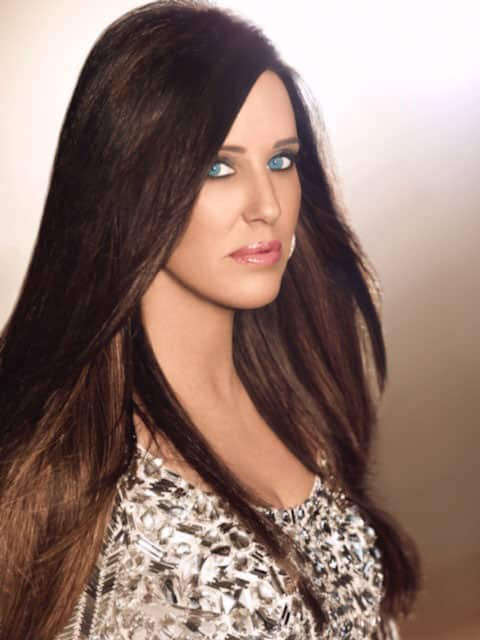
Patti Stanger, “The Millionaire Matchmaker,” (Bravo)
Patti Stanger cut through people’s nonsense and kept it 100, giving good advice and making matches
God has given Patti Stanger many gifts, and among them is a special knife to cut through people’s BS.
“No sex before monogamy” is what she told her clients on her hit show, and she gave them hell if they broke the rule. She’d often ask people: “Why love now?” Hillel Presser from Boca Raton told her in one episode that he wanted someone beautiful but also someone of substance. While he was kind, others didn’t take her suggestions well. She famously threw some people out of her club after they broke the rules.
“I deal with the toughest millionaires/billionaires in the world,” Stanger told me. “Yes, there were extreme cases. But they call me the non-sexual dominatrix. I still get calls from people who found love, thanking me, saying they remembered what I told them, how to treat people the right way.
Stanger said she had to give people the real truth because often, nobody else in their live would and sometimes people overestimate or underestimate themselves, which could keep them stuck in Singlesville.
“We all have patterns that come from childhood,” Stanger explained to me. “We blame others and create a trajectory of what our life path will be. We fall into patterns. You have to break the subconscious programming.”
Stanger said she is proud of being Jewish and hopes that in a world where there is antisemitism, racism and other kinds of hate that are taught, people can somehow educate themselves and unlearn the hate.
Ethan Zohn, “Survivor” (CBS)
The cliche tells us nice guys finish last. But Ethan Zohn, took first place on the fifth season of “Survivor” and got the prize of $1 million.
“I won because I’m Jewish” Zohn told me. “Think about the game itself. Fasting is not a problem, I do that once a year. Eating nasty foods is not an issue. I’ve had gefilte fish, borscht and chopped liver. And I’ve already endured the most grueling test of strength and perseverance known to mankind—my bris.”
Being handsome with great curly hair and a million-dollar smile didn’t hurt, but he said his strategy was to make himself indispensable
“I played the game based on the values I learned growing up Jewish,” Zohn told me. “The most important thing was community. “You’re plopped down with a bunch of strangers and you can’t trust anyone. So my philosophy was to be crucial to everyone’s survival. So, I was the first one up in the morning, last to go to bed, I helped with all the chores, lighting fires getting water, and I did well in the challenges. I consoled my tribe when we lost and I cheered whe we won, and had a personal relationship with each person out there. When he won a challenge to get pork he refused to eat it. Zohn would return to “Survivor: All-Star and Winners at War,” showing endurance. He also appeared on “Fear Factor.” When it comes to role models, you won’t beat Zohn.
He beat cancer twice and co-founded Grassroot Soccer, a non-profit that uses soccer to help educate and inspire communities, while improving awareness about HIV/AIDS. Zohn was a global ambassador for The Leukemia & Lymphoma Society and has done great work with StandUp 2 Cancer.
Jill Zarin, “Real Housewives of New York City” (Bravo)
Jill Zarin, who moved from Woodmere, Long Island, to the Upper East Side of Manhattan made it clear that you don’t want to oppose her in an argument or on the tennis court. Zarin was funny and had a strong personality, letting viewers know the pressures of high society.
“You have to be magnetic and have a big personality,” Zarin told me, when asked what kind of a person it takes to be on such a show. “People will always say things viewers might think are not real. But this was a window of what it really takes to make it in elite society in New York.” It was heartwarming to see her love for her daughter, Allyson. It was greatly due to the popularity of Zarin that the show took off. The author of “Secrets of a Real Jewish Mother” said the cameras can tell who is real.
“Eventually you forget they are there, and you have to be yourself,” Zarin explained. “Of course, heated situations will come up.”
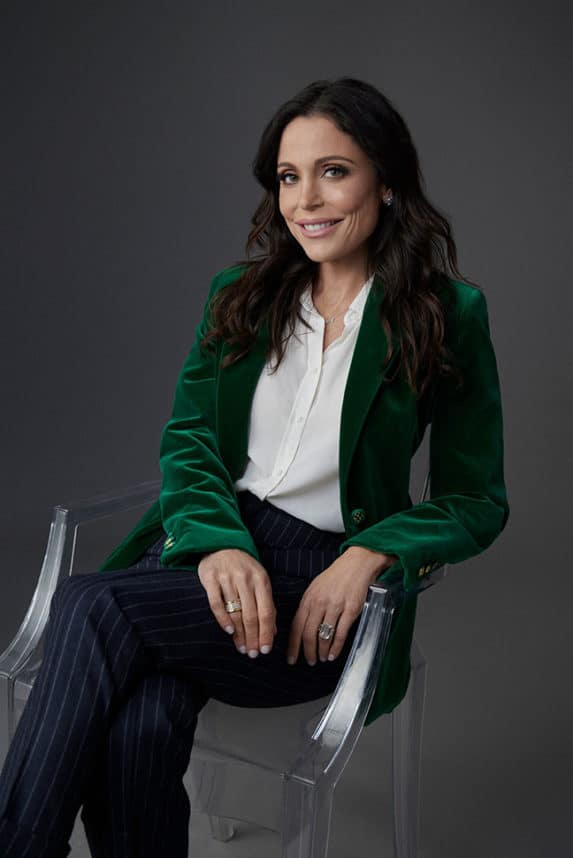
Bethenny Frankel, “Real Housewives of New York City” (Bravo)
On “The Real Housewives of New York City” Frankel was controversial at times and a pleasure to watch. Photo by Celeste Sloman
Bethenny Frankel has never had to mince words. She has glamour, verve and is fearless. She called co-star Jill Zarin’s new place “Liberace, Versace …It’s a shame they had a feus because they are both awesome and on a plane ride appeared to be civil.” The chef, author, and entrepreneur wouldn’t take flack from people. Frankel can be seen on CNBC’s “Money Court” with “Mr. Wonderful” Kevin O’Leary and has proved to be a sharp businesswoman with her beverage Skinnygirl and is a great television personality appearing on multiple shows. She launched the podcast “ReWives” on iHeart Media, which she describes as “the most liberating honest experience in media.” I wouldn’t be surprised to see her in a film. “Diarrhea of the mouth is not a real ailment,” she would say on the show. Via e-mail, Frankel explained that “the hilarious trip to Mexico was Reality TV gold-drama, fun an experience, but ultimately an excellent travel experience.”
What was the biggest lesson she learned from being on the show? “Be yourself at all times,” Frankel wrote. “The audience is smarter than we are.”
As for advice for others, she offered: “Don’t front and stunt. Everything comes out in the wash.”
Rabbi Shmuley Boteach, “Shalom in The Home” (TLC)
The first rabbi to host a reality show, Rabbi Shmuley Boteach said he first refused the offer, fearing the show would be too fake, but the producers assured him he would have control.
“It was difficult to host a show that was ahead of its time,” Boteach told me. “We had family therapy and now there was a much greater realization that therapy was needed, but back then the mentality wasn’t what it is now.”
Boteach said he would live in an RV and it was tough to be away from his family while he filmed the show.
“Where’s your fire?” Boteach ask in one scene to Shane, a father of five who doesn’t quite know what he wants to do with his life.
“When you go through family traumas, you go through the ringer,” Boteach told me. “But it is worth it to give people the tools to empower themselves. I say it not in a Clintonian way, but I really feel their pain. But it was rewarding to help people identify the problem at then get to the net level.”
Julia Haart, “My Unorthodox Life” (Netflix)
Julia Haart’s Netflix show “My Unorthodox Life” now in its second season, got everybody talking. Courtesy of Netflix
No Jewish show rocked people’s world like this one. Hailing from Moscow, then Texas, then Monsey, where I grew up and live, Haart outraged some who felt that her show took unfair shots at Orthodox Judaism. Some wondered if the show had a role in the divorce of her daughter BatSheva and Ben as well her own split from her husband, Silvio. It’s probably something we will never know. Relationships are complex.
In an interview when the first season came out, Haart told me she loves being Jewish.
“The word ‘unorthodox’ bothered people,” Haart told me. “The people who had the most visceral reaction never watched it. It’s because we use the word ‘unorthodox,’ they assume it would be an attack on Judaism.”
It would be an understatement to say she has touched a nerve. The second season, which dropped December 2, is extremely intriguing. It shows Haart trying to start something new, her daughter Batsheva dating new men, her daughter Miriam dating a woman who may have issues with being able to stay in America, her son, Shlomo who is looking to meet a woman, and her son Aron who wants to go to a more religious yeshiva, while his mother isn’t sure that’s a good idea.
People have different journeys in life and many are upset there are not reality stories of people who remain Orthodox, although on the show, her former husband Yosef, remains Orthodox, as does her son, Aron.
Gilbert Gottfried, “The Celebrity Apprentice” (NBC)
The late Gilbert Gottfried said whatever was on his mind and had no filter. When I interviewed him some years ago and asked what penalty presidential nominee Hillary Clinton might get, he said: “The guillotine.” He was kidding and thought the whole thing was overblown. Before he was the President of the United States, Donald Trump scared many contestants. But not Gottfried, who would constantly joke and says things to Trump that nobody else would say. Trump seemed to like Gottfried’s humor and it is an amazing testament that he lasted as long as he did before getting ceremoniously fired.
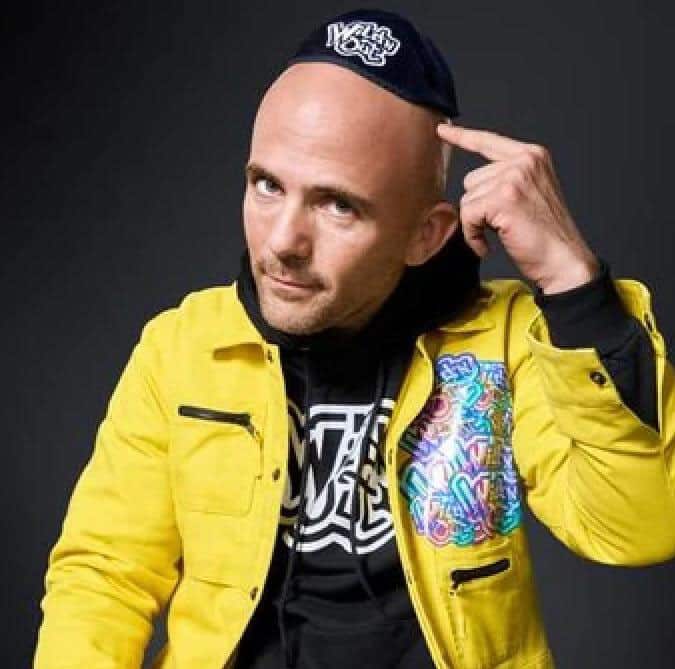
Kosha Dillz (real name Rami Matan Even-Esh), “Wild ‘N OUT” (VH1)
Kosha Dillz, whose real name is Rami Matan Even-Esh showed his quick wit, in a freestyling fury on “Wild ‘N Out.”
Every Jewish boy wishes he’ll grow up to be Sandy Koufax or be able to beat opponents on the streets of New York City or Los Angeles in battle rap. Kosha Dillz has seen some turbulence along the way, but after getting a commercial in The Super Bowl, and performing with Fat Joe, he launched some popping music videos and is known as one of the only Jewish rappers who is fearless and will stand up to people.
“I felt like there was pressure on the show, but your job is deliver,” Dillz told me. “I like being the underdog personally, so no one is expecting me to win by a landslide except me. My job is to make people laugh and go ‘oh’ as much as possible and be true to who I am.”
Dillz, who opened for Coolio a few weeks before he passed away, will be seen on the next two seasons of “Wild ‘N Out.”
The Jewish Federation Council of Greater Los Angeles, in partnership with Outfront Media, has launched a billboard campaign to counter the hate of antisemitism by spreading positive messages of love and hope.
Spearheaded by Rob Goldenberg, Federation’s chief creative officer and his team, 10 billboards with positive Jewish-theme messages have been placed around the greater Los Angeles area including Pico-Robertson, the Valley, Venice, West Los Angeles and downtown.
“Outfront Media called us about six weeks ago aware of what’s happening in our community and said they wanted to work with us to put out positive messages,“ Goldenberg said. “We immediately got to work, selecting sayings that highlight Jewish wisdom and teachings. Some of the sayings were suggested by Rabbi Noah Farkas, President and CEO of the Federation, as well as Rabbi Shlomo Seidenfeld and others. The objective was to show that the Jewish response to darkness is to be a light unto the world because right now we need it.”
Goldenberg continued: “The constant antisemitism that Jews here in Los Angeles and around the country and world are seeing has had a devastating impact on our community. We wanted to push back with love – to counter the hate by spreading love and not only to Jews in Los Angeles.”
Outfront is donating the space for the billboards which will remain up “in perpetuity,” according to Goldenberg. The billboards will move around the Southern California landscape when billboard space becomes available.
While creating the campaign, Federation worked to assure the messages would resonate with all communities, not just in Jewish areas. They worked with an advertising agency that specializes in marketing to Hispanic and African-American audiences to craft the selected sayings so they would have the desired positive impact. In some cases “a word here and there” was changed to better resonate with all ethnicities and religions regardless of their Southern California geography, Goldenberg explained.
The campaign was rolled out on the fifth day of Chanukah to coincide with the concept of spreading light in the face of darkness. Federation noted that a 2021 LA County Hate Crime Report found that in religious-based crimes, the Jewish community has been targeted in 74% of the cases.
Phrases such as “A little bit of light dispels a lot of darkness,” “Change your thoughts and you’ll change the world,“ Any racism diminishes all of us,” and “The world stands on justice, truth and peace,” are just some of the messages that are part of the campaign.
“It has been extremely upsetting to see the recent rise in hateful speech taking place,” Bryan Canley, general manager of Outfront’s Los Angeles office said. “There is no place for that in Los Angeles, or anywhere else. We are all part of one community, and it is important to stand in solidarity with our Jewish Angelenos.”
Playing long-distance granny demands panache. Relieved of mundane activities like after-school pick-ups or dental visits, my role is to sprinkle pixie dust and leave them wanting more—never clinging or crying when it’s time to say goodbye. Now that the children are eight and 10, I’ve cooked up a new angle for their Los Angeles visits. The kids get to stay at our house, where chocolate chip pancakes are served daily and ice cream is on demand, while their parents get to sleep unencumbered at a nearby hotel where they can order breakfast in bed. This way, everyone is happy.
Unless the Internet goes out. Then everyone falls apart, as happened at our house this Thanksgiving holiday—a trauma I’m still sorting out.
I knew something was up when 10-year-old Piper showed up at my bedside at 5:30 one morning looking scared. Clutching her iPad to her chest, she said, “Grandma, the Internet’s not working,” pointing to the tiny red exclamation point at the top of her scroll to prove her point.
I couldn’t believe it. I quickly shuffled into the den, where the modem lives, and disconnected and reconnected twice, counting a minute between re-plugs. This is called rebooting. As the blinking green lights faded out, I frantically tried my phone and TV for a signal. Just like that, our connection to the ether was gone.
Moving into emergency mode, I woke my husband with words he never wants to hear: “The Internet is down. You need to get on the line with AT&T.” Then I cooked up a pile of pancakes while trying to stay calm as I figured out what to do with no television, no Internet, no music, no podcasts, no social media, no gaming—plus two young children!
Our grandkids are no more addicted to digital media than most. While relentlessly campaigning for an iPhone, Piper makes do with a tablet. Since entering pre-adolescence, chatting on a many-tentacled text with her girl’s group is the first thing she does in the morning and the last thing she does at night—seemingly for hours—behind closed bedroom doors. Similar to the way I called my best friend after school in the 1960s to debrief on every detail that had occurred each day, she is connecting with her peers, an age-appropriate rite of passage my son assures me.
Meanwhile younger brother Finn is into gaming, about which I understand next to nothing. All I know is that he was able to continue playing on his portable game unit while the Internet was down, giving him a leg up on his big sister who stopped laughing at his jokes a few months ago.
After hours on the phone, AT&T issued a verdict. The modem was dead. They promised to send us a new one—one that any idiot could connect—in one to three days. Since my son and daughter-in-law had slipped away to Mexico for a few days, we were now on our own with our increasingly anxious grandchildren. I handed my phone to Piper so she could send an alert to her friends saying, “If I’m not responding it’s not because I don’t love you. My (elderly) grandparents don’t have Internet!” Angry face emoji.
Short-circuiting without my daily dose of the New York Times digital edition, I hatched a plan. First, we expressed our emotions in an art project. Their art depicted hair on fire and smoke coming out of red-hot ears. Thinking fast, I carted the kids off to a fine chocolate shop to do a tasting for a project I was working on. In a blind-tasting, comic Finn noted that the very bitter 70% chocolate was sublime. He knows how to make me smile.
After lunch, we gathered around the kitchen table and the four of us played Scrabble. As first-time players they did well, especially when I shared the Scrabble dictionary that lives on my phone. To break-up the afternoon, we went to a real movie theater and saw “Lyle, Lyle Crocodile,” a show I had been embarrassed to go to by myself. Sadly, even with Javier Bardem as Hector P. Valenti, it was no Paddington Bear.
By bedtime, I was beat. Turning to books to bring on sleep, I grabbed the only two cartoon books I could find as we gathered together in bed. One was Roz Chast’s masterpiece about her aging parents and death. The other was a history of the comic strip “Popeye,” where I realized that the skinny sailor was in fact a brute who tossed Olive around like a punching bag. Not age appropriate. We all went to bed that night exhausted, praying for a new modem.
We all went to bed that night exhausted, praying for a new modem.
Rather than wait at the door for FedEx the next morning, we took the dog out for a walk and shot baskets. By then the kids were playing together, making each other laugh and goofing around just like the old days—when everyone wasn’t on a device. They were even snuggling close to us on the couch while we talked about their father’s teen years and my Russian grandma Babushka. She of the homemade lokshen.
By the time the modem arrived around midday, their father had returned. Within 30 minutes he had the new modem working. Everything was streaming again at lightening fast speeds. Life returned to normal.
Grandma went back to listening to podcasts on subjects as diverse as the history of the Cavendish banana and the etymology of the expression “knocked up.” My New York Times habit returned with a vengeance. Grandpa returned to watching whatever tennis/soccer/ball games were on the sports channels in the evenings. And the kids went home with a story to tell about a crazy occurrence at their grandparents’ home one Thanksgiving.
Los Angeles food writer Helene Siegel is the author of 40 cookbooks, including the “Totally Cookbook” series and “Pure Chocolate.” She runs the Pastry Session blog.
To read more articles from The Media Line, click here.
For 12-year-old Yonatan Cohen and his family, this year’s Jewish festival of Hanukkah is truly miraculous. A little over two months ago, he was battling for survival after a serious car accident that left him with multiple life-threatening injuries and facing a long, arduous road to recovery.
Yonatan’s father, Ronen, says that on October 13, his wife, son and daughter had been hiking in the caves in Beit Guvrin National Park in central Israel, while he was visiting his parents in the north of the country. As his family was traveling home to Kiryat Malachi their car was hit by another vehicle. Yonatan, who was sitting in the back seat, was thrown through the side window and out of the car.
The pre-teen sustained multisystem injuries, including damage to his stomach, lungs and kidneys. “Everything stopped working,” his father told the Media Line. “His pelvis collapsed, his spleen ruptured.”
Ronen pauses to bicker with his son, who is still undergoing intensive rehabilitation in Jerusalem and remembers nothing of the accident. The father laughs as he admits that he is enjoying their minor squabble, which was over whether Yonatan could venture out alone.
“This is my second chance to raise him,” Ronen told The Media Line. “I missed the first one because I was always working. Now I have a second chance.”
Yonatan Cohen sits in a wheelchair during his rehabilitation in Jerusalem (Courtesy/Cohen family)
Yonatan lost consciousness due to his injuries, which also included an often-fatal tear in his aorta. “Someone with a torn aorta – in a hospital – has a 50-50 chance,” Ronen said in a tear-filled voice. “Never mind someone who is not in hospital.”
It took 10 minutes for the ambulance to arrive due to the heavy holiday traffic, and the paramedics immediately began emergency treatment. It was another two hours before Yonatan was stable enough to be airlifted from a nearby Israel Air Force base to Hadassah University Hospital in Ein Kerem in Jerusalem, accompanied by a doctor. Once at Hadassah, Ronen says, Yonatan was rushed into surgery where “they saved my child.”
Yonatan was hospitalized for a month, including 16 days in which he was in an induced coma. Before he began his rehabilitation, he struggled to relate to the environment around him, often failing to even respond to his own name. Now with five weeks of therapy, his father says, Yonatan “walks and talks, he listens [and] he learned it all from scratch.”
After two months of grueling operations and challenging rehabilitation, the family is preparing for a lavish bar mitzvah in March, that not so long ago they despaired of ever seeing.
“I am telling you this is a clear miracle,” Ronen said.
And the Cohen family are not the only ones celebrating a marvel this Hanukkah.
On the other side of the world, Jews in the tiny Balkan state of Montenegro are celebrating Hanukkah in a country that asserts it has no antisemitism – another miracle in a world where hatred of Jewish people is once again increasing at an alarming rate.
In vivid contrast to comments by US President Joe Biden, who used his own Hanukkah greeting to condemn the frequency of such “vile and venom,” his Montenegrin counterpart Milo Đukanović marked the festival of lights in the capital, Podgorica, on Wednesday with a celebration of the acceptance Jewish people have found in his country.
Montenegro’s Chief Rabbi Ari Edelkopf listens as President Milo Đukanović addresses the Hanukkah celebrations in Podgorica, Dec. 21, 2022. (Courtesy/Chabad)
Montenegro Chief Rabbi Ari Edelkopf credits the nation’s president as the source of the respect enjoyed by the Jewish population. This is because, in 2012, the Montenegro Jewish community and government signed the Act on Mutual Relations, which recognized Judaism as the country’s fourth official religion.
“I was [talking to] the president while we were celebrating Hanukkah with hundreds of people, Jews and non-Jews, people from government [and] ambassadors,” Edelkopf told The Media Line. “Usually those things in Europe have hundreds of police, security – securing the squares and roads are blocked. Today at our Hanukkah lighting there wasn’t one police officer outside. There is no need. No need. That’s a miracle; that is so special. There is no antisemitism here. The president has a lot of credit for that,” he said.
“We are proud of our multiethnic, multi-religious and multicultural harmony, and the fact that there is no occurrence of antisemitism in Montenegro. Just as we are proud of the fact that Montenegro is one of the two countries in Europe where there were more Jews at the end of World War II than at the beginning,” Đukanović said in his address at the Hanukkah celebration, as he watched Edelkopf light the giant public hanukkiah, surrounded by hundreds of local residents, both Jewish and non-Jewish.
Back in Jerusalem, the surgeon who took care of 21-year-old Islan Shaluf says her recovery from a great fall also is miraculous.
Dr. Josh Schroeder and Islan Shaluf following her spinal surgery at Hadassah University Hospital, Ein Kerem in Jerusalem, in December 2022 (Courtesy/ Hadassah University Hospital)
Islan had gone out to her third-floor balcony to photograph people below this week as they celebrated the outcome of the World Cup final, when she fell three stories to the ground, causing what could have been life-changing breaks to her spine.
But thanks to cutting-edge medical technology and the dedication of her doctors, Islan will be able to walk again.
“She had broken five to six bones and was very lucky because we were able to reduce the fracture using robotic technology,” Dr. Josh Schroeder, senior surgeon and spine specialist at Hadassah University Hospital, told The Media Line.
Islan also is appreciative of the care she received, from a team that included Jewish and Arab medics working together.
“I am so grateful to the doctors at Hadassah for saving my life,” she told Israeli media. “All my dreams were nearly shattered when I realized how serious my injuries were and, thanks to them, I know that I can go back to walking, running and being independent like before.”
Islan’s operation involved the use of Israel’s Mazor X Stealth Edition, an advanced robotic guidance system devised for spinal surgery.
Schroeder says that speed is of the essence in such medical emergencies, “so we don’t lose nerve tissue.” He even compares the handling of Islan’s injuries to the way in which they react when someone has suffered a stroke.
The doctor was initially reluctant to term Islan’s recovery as a miracle. “We are born to be skeptical,” he said. “I’d say she is a very lucky young woman.”
An animated depiction of the Mazor X advanced robotic guidance system in action. (Screenshot)
Yet Schroeder admits that when relating her case to a colleague who asked if Islan was now a paraplegic, he changed his perspective. “No,” he recalls, telling his colleague, “she is walking, and I’d say that is a miracle.”
A technician who also was involved in Islan’s treatment told Schroeder that he has visited dozens of European institutions using robotic technology, and the Mazor X Stealth Edition is the most advanced system he has seen.
Facts have become non-binary, and reducing the choice to ‘true’ or ‘false’ is just old-fashioned. It’s a good thing if you are confused as to which news stories are true, because absolute confusion is the new certainty. My friend Jonny 10-vax was suspended from Twitter for sharing misinformation about the COVID-came-from-a-lab theory, before it became clear that it did come from a lab, and the misinformation was just plain old information. Jonny pretended not to care, and drowned his frustration by learning dance routines on TikTok whilst wearing (Kan)Ye’s “Yeezy” sneakers, although he was soon dancing barefoot since his shoes had just been canceled.
Jonny 10-vax lives in a difficult world. It’s a complicated world, not least because he doesn’t really exist. But as someone once said “just because something didn’t happen, doesn’t mean it isn’t true”. He is in good company, along with Hunter Biden’s incriminating laptop, which is also complete fiction, at least according to CBS, MSNBC and CNN’s reporting during 2019.
Last Thursday, Jonny and his fiancée @chelsearodham had just stepped out of his Tesla on a visit to the Kennedy Space Center en route to see a SpaceX rocket launch up close. He received a text saying that his Twitter account had been reinstated. “Praise the Lord!” he cried, although instead of picturing the one true God, he found himself thinking of a boyish-faced South African billionaire.
“Chelsea! Let’s go to a bar to celebrate,” and before she could respond, he said “Hey Siri, book me a rideshare!” Since his browser was already open on the SpaceX website’s “Rideshare” page (https://www.spacex.com/rideshare/), Siri booked him a rideshare place on the Falcon 9 spacecraft that costs “as low as $275,000.” It was a bit more expensive than an Uber, but he figured that paying for a round-trip rocket journey to the International Space Station would be great for his air miles points.
He decided to cancel it, but at that moment Chelsea took his hand and pulled him towards the shuttle pickup point. Jonny was lost in thought as to what his first tweet was going to be, and now faced “Trump’s Paradox”; you have been kicked off Twitter, invested in Trump’s Truth Social app, and realize that if you start posting on Twitter then your stock in Truth Social could plummet. He briefly considered opening an account on Mastodon, the ‘safe’ social app favored by many Democrats. In the end, he dropped any moral misgivings and opened the Twitter app. The first returning tweet contained just two words; “Jonny’s back,” accompanied by a selfie from last July 4th wearing his MAGBA hat (“Make America Great (Britain) Again”).
As winter brings increased chances of flu infections, Jonny has reversed his personal vaccination policy.He once rushed to get one dose of every available vaccine and booster shots, but more recently got lost in the world of vaccine conspiracy theories, like the Bill Gates microchip theory, the theory that vaccines modify our DNA or RNA using “transhumanism nanotechnology,” the one that young athletes are dropping dead from vaccine-induced myocarditis, and the “infertility” theory. Jonny admitted to being confused, and said to Chelsea that “truth is more fluid than most gender-studies college professors,” at which point she slapped him.
“But seriously, darling, it is unclear. Truths are being overturned every day, and the multi-year claims that ‘Trump colluded with Russia’ turned out to be a Congress-led conspiracy theory once the impeachment failed. We are trapped in a metaphysical pinball machine being bounced between truth and falsehoods.”
Their bus arrived at the LC-39 observation platform to watch the liftoff, and Jonny got ready to take a selfie with his fiancee. His phone buzzed “your rideshare has arrived. The SpaceX Falcon 9 is now at the launchpad. Estimated rideshare fee: $430,000 (could change in the event of a meteor storm)”. He ignored the notification and took the photo with the spaceship in the background. “At least we know that Musk’s rocket is real,” he said. “Unlike the moon landing”.
Marcus J Freed is an actor, writer and Jewish educator. www.marcusjfreed.com and on social @marcusjfreed
In the inner life dimension of the Jewish tradition, we find a focus during Chanukah on the metaphor of the oil lamp, not on the Maccabean Rebellion against the Syrian Hellenists.
The oil lamp has three parts: the oil, the wick and the light. The Hasidic masters use Proverbs 6:23 for their teaching on the oil lamp during Hanukkah. The verse reads, “Ner mitzvah veTorah ohr,” “The mitzvah is the lamp, and the light is the Torah.”
In the Hasidic tradition, the oil stands for the soul, especially the force in the soul that seeks to radiate its light into the world of darkness. The wick of the lamp draws up the oil so that it can radiate into a world of darkness. The potential in the soul to bring light to the world is called the “ohr ganuz,” the “hidden light.” We have to bring forth the hidden light. How?
The mitzvah is the deed that lights the wick and draws the soul’s radiance out. I don’t think of a mitzvah as only being one of the commandments of God given in the Five Books of Moses to the Israelites.
The word “mitzvah” is from the Hebrew word root “tz-v-h,” pronounced as “tzavah,” and has the sense of giving an order. For example, a “tz’va’ah” is a will, as in a “last will and testament.” My favorite rendering of the word “mitzvah” is “a sacred urging from God to think, speak, or act in a certain way.”
We can go from day to day and week to week, and not think about the sacred. You can even be reading scripture, or attending church or synagogue, but not be wired into the holy. Then suddenly, or intentionally, you can feel the Presence flowing into you.
There are other moments when you are not experiencing God’s presence, but suddenly you know, in your soul, that you have a duty to think, feel, speak, and act in certain way.
A duty to think a certain way? Yes. We are commanded in the Torah, for example, not to hate or bear grudges. A duty to feel a certain way? Yes. We are commanded in the Torah, for example, to feel compassion for the widow, poor, orphan, and stranger, to love God and love our neighbor.
We are commanded not to do many things that cause harm, including the commandment not to use language to hurt or disparage others. We are commanded to be fair and honest, and to judge others with righteousness.
Every commandment that we think, feel, speak, and act in a certain way points to the resistance within us to doing the right thing; otherwise, there would be no commandment.
In the inner life tradition, this struggle with what we ought to do and the resistance against that is understood as an inner war, a war between light and darkness that is waged in the deep chambers of every human being.
I might find myself, for example, working with a couple where one person is irascible and functions at a fairly low level with lots of anger and punitiveness. The other person has decided to evolve away from pettiness but starts to resent that they must be the tolerant and understanding one. The tolerant one complains, “It is not fair that my spouse is the angry and mean one, but I have to do most of the work.”
Resentment is a feeling that saps our energy. Someone must do something for us to feel better, and we refuse to feel better until they do. The list of thoughts and feelings that sap our spiritual energy is many cubits long. Each item on the list is waging war against our well-being.
Another person, from teens to elder years, finds their life devoid of meaning. The idea of putting in all the spiritual work needed to find meaning and purpose, and even joy, seems overwhelming. They don’t know where or how to begin.
During Hanukkah, we phrase the question this way: Do we want to rededicate this relationship to what is good and beautiful? Will I do what it takes to fight against the inner darkness?
For those truly dedicated to bringing forth the light, we must find new energy every single day. We might feel we only have enough energy for one day – hence the beauty of “one day at a time.” Light the candle for today.
It might be a while before others join in the struggle against the darkness of relationships wasted away. It might be a while before you wake up one day with your eyes enlightened.
It is true that life is not fair and that we sometimes can’t find the light to guide our path. It is also true that right now, you are capable of the work of driving out some of the darkness in whatever situation you find yourself. Maybe only one single candle in a vast void, but there is a candle waiting to be lit.
In tough moments, we must do two things: First, find the energy within to light the wick and draw up the oil, perhaps only enough for one day. We also must find the way of thinking, feeling, speaking and acting that will light the wick.
Think of someone else, and how you can help them. Forgive someone in your heart. Speak of appreciation and praise to another. Perform an act of service; sacrifice a need of yours for the need of another.
There are countless sacred urgings from the Divine to light the wick, to bring the radiance of the soul into a world of darkness. You have eight days to figure out what you are going to do next.
In this moment we are facing a set of complex realities that will fundamentally recalibrate our society as well as redefine Jewish communal life. As Jews, our historic journey has been defined by change; over time, our destiny as a people has been transformed.
Great civilizations are marked by eight characteristics: complex religious systems, language, literature, governance systems, social service, public works, culture and technology. In each of these, Jews have made profound contributions to Western thought and knowledge, commerce and charity, science and industry, politics and culture. The extraordinary accumulation and distribution of wealth for both religious and secular causes have also uniquely defined this Jewish era.
In analyzing the dominant characteristics of what I call the “Jewish Century” (1918-2018), one might pay specific attention to the element of pride that reflects how Jews have come to see themselves and their achievements in the second half of this hundred-year cycle.
Jewish history provides some framework for helping us to understand our status and stake:
First, throughout history Jews have experienced periods or cycles of political uncertainty. Are we likely to see over these next three decades any degree of upheaval that could impact the welfare and security of Jews?
Second, at different times Jewish personalities have inspired and given leadership to the Jewish people. Will such leadership emerge in the central decades of this century?
Third, Jews have created and maintained internal networks of communication and systems of social invention. How strong will be the “ethnic” bonds among Jews in this century to engage them to be connected to the lives of their co-religionists around the world? In turn, what institutions will define and give meaning to Jewish life in the 21st century?
Fourth, Jews have monitored their past in order to recognize special moments, sanctify losses, to pay tribute to heroes and teachers, but above all to acknowledge that our tradition has sustained the Jewish people. In our time, we memorialize the Shoah, celebrate the founding the State of Israel, and acknowledge such moments as the Sixth Day and Yom Kippur Wars. How will the next generations honor or recall this period of our history?
The quality and depth of Jewish life that has flourished during this cycle serves to further define who and what we have become:
—The emergence of Jewish studies as a distinctive academic discipline.
—The flourishing and promotion of Jewish literature, music and the arts.
—The evolution of Jewish liturgy, spirituality and worship.
—The expansion of both formal and informal Jewish educational programming.
—The growth of Jewish communal life and philanthropic practice.
Possibly because they were denied political access during earlier historical periods, in this age Jews have played a profound role in shaping both global and national politics. Their significant presence in such transformative events as the Russian Revolution, the Spanish Civil War, America’s New Deal and this nation’s Post-War Recovery as well as its Civil Rights Movement is testimony to their evolving and changing status.
In my view, a timeframe of extraordinary creativity and diversity of Jewish expression and activity has served us well. Specifically, out of the trauma and tragedy of the earlier decades of the 20th century, Jews redefined their image and reconstructed their roles in the post-Second World War period. This symbolized a point in time when Jews would be identified as risk takers and core actors in the public arena, just as they would be seen as builders and leaders of institutions representing all segments of society. If Jews were previously identified as marginal to the public square, then in this new construct they have emerged to become the “producers” of great ideas impacting and shaping public discourse, civic action and institutional practice. The phenomenon of a minority people arising out of the ashes of Auschwitz not only to reframe their world but also to also profoundly impact the broader culture, may best summarize this century of Jewish influence.
In my view, a timeframe of extraordinary creativity and diversity of Jewish expression and activity has served us well.
Indeed, during this creative Jewish time frame, Jews seeded two principle contributions, each reflective of different aspects of their historic pathways. The voice of the prophetic tradition, with its call for a socially just world, has been their universal message, while their struggle to achieve Zion, their historic dream of a national Jewish homeland, has served as their particularistic contribution. These two ideas have remained in creative tension with one another, their universalistic mandate in contention with their politics of self-interest.
Is this extraordinary century of the Jewish people coming to an end?
Over time, civilizations are measured by the skill-sets and insights of its leaders, by their capacity to reinvent and grow the intellectual resources of language, culture and religion, and by their innate ability to adapt to changing conditions, taking on threats both external and internal. Has the modern Jewish world been able to achieve the outcomes necessary to sustain and grow its brand? Among the questions before us: Are we becoming a civilization bereft of inspiring, creative and thoughtful leaders and have we become a people who have so blended into Western culture, that we will no longer be able to articulate and advance a distinctive Jewish message? Is contemporary Jewish leadership subject to the same abuses of power and of entitlement that today afflict many of the core institutions within the public square? In this time frame are our leaders able to reflect on the distinctive “Jewish messages” derived from our tradition and melded into our historical journey?
At this point in time, other cultures and civilizations are asserting their presence on the global map. The current reality may be best measured by the loss of peoplehood that has affirmed the Jewish story over these decades. Division and contentiousness have replaced the vision of unity, as this extraordinary moment in Jewish history appears to be setting. Loss and discord define the current mindset of our people. Shared destiny has given way to a splintered and disjointed scenario. Coherence appears to have come undone.
Division and contentiousness have replaced the vision of unity, as this extraordinary moment in Jewish history appears to be setting.
As antisemitism rears its presence yet again, and as Israel is challenged by its enemies and critiqued by its friends, will this next era of the Jewish saga be marked by a period of rejection and the politics of hate, as a war on the Jewish century is unleashed? Just as anti-Jewish behavior defined the formation and evolution of the 20th century, the test here will be how those who reject us will seek to minimize our presence and marginalize our input by seeking to rewrite or cancel this one-hundred-year chapter.
Yet, on the horizon one also finds the sparks of a new era of Jewish inquiry and the potential for a new century of cultural, civic and religious creativity. Might we be witnessing another Jewish renaissance, this time not necessarily framed by great external events that defined the early-20th century but now by new generations filled with an internal vision for how the world and Judaism might look? As some of the legacy models of the communal order recede, and as boutique instruments of Jewish expression are piercing the landscape, what might this next iteration signal? Will this new Jewish age be framed by the emergence of multiple choices of religious and communal practice, as these new actors recalibrate the Jewish experience for a different generation?
Jews have always lived with an abundance of questions. As a result, their unique place in human history continues to be challenged by complexity and uncertainty. At one moment, we are suddenly living through four simultaneous challenges to our lives, institutions, and the communal order: economic uncertainties; cultural wars around identity, gender and race; the impact of health and pandemic challenges; and political divisions and social upheavals.
Each of these external forces contributes to a structural realignment within the Jewish eco-system. These mega-issues are coming face to face with the internal scenarios we identified in the aftermath of the 2008 recession. At that time, the impact of generational and demographical changes, operational/technological challenges, and the new economic realities began to shape changes within the Jewish communal system. The results of that experience remain with us. We are dealing with declining memberships, expanding roles of foundations, the downsizing and consolidating of institutional systems and the growing recognition of distinctive generational affiliation patterns.
The Jewish community, already contending with internal challenges and threats, must also manage the many external factors now in play. An array of contemporary themes such as generational change, public policy considerations around culture, technological challenges, and economic trends will define the future. Among the policy challenges are the major questions before us that involve race and racism, sexual orientation, diversity and inclusion.
Based on my work, I see the “new normal” of the 21st century involving a number of significant developments. The indicators, identified here, are critical to any consideration of the Jewish future. In the second part of this series, we will examine a number of internal factors that are likely to shape the Jewish communal experience moving forward.
Steven Windmueller, Ph.D. is Emeritus Professor of Jewish Communal Studies and Interim Director of the Zelikow School of Jewish Nonprofit Management, Jack H. Skirball Campus, HUC-JIR, Los Angeles.


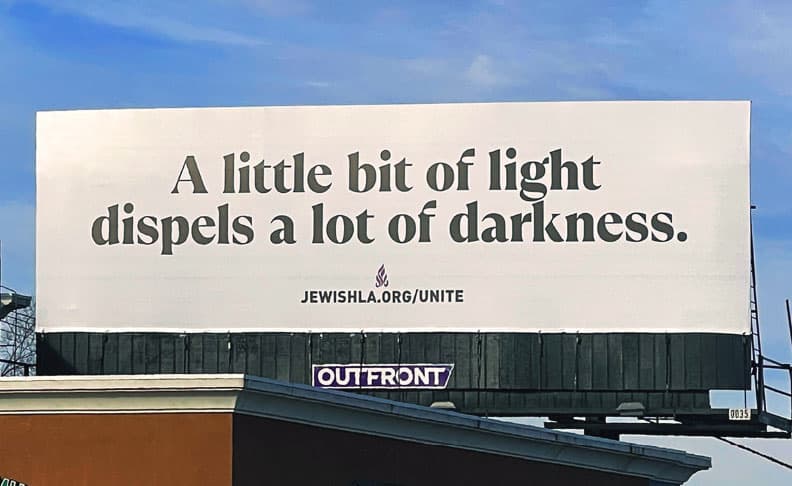
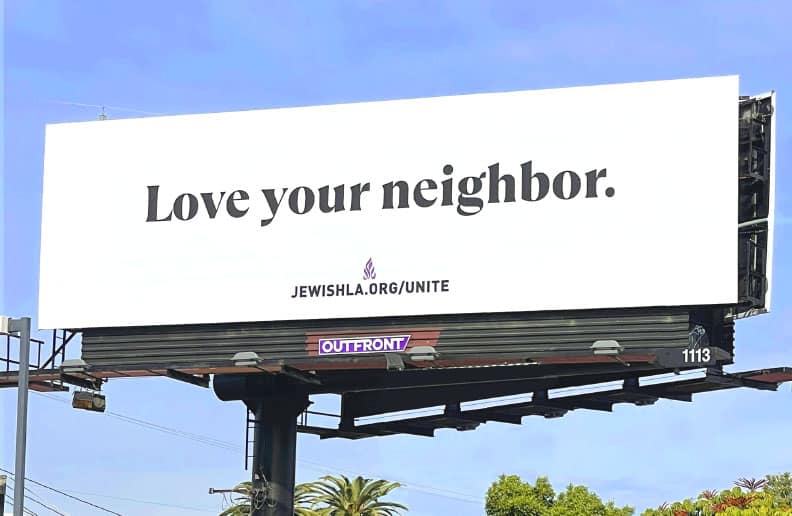
 Phrases such as “A little bit of light dispels a lot of darkness,” “Change your thoughts and you’ll change the world,“ Any racism diminishes all of us,” and “The world stands on justice, truth and peace,” are just some of the messages that are part of the campaign.