fbpx

November 16, 2022

Elections in Israel and U.S. and Parashat Vayera

The past two weeks saw elections both in Israel and the United States. Whether pleased or distressed by the outcomes, we should celebrate the incredible privilege we enjoy of being able to participate fully in our democracy. We know as Jews that this has generally not been the case throughout our history. Despite our quite justified concerns about growing antisemitism in our nation, we musn’t forget how extraordinarily blessed we continue to be here in America and how fortunate we are to live in a time when a strong, vibrant State of Israel exists.

Still, in the wake of such civic moments, with so many candidates and voter propositions in play, there are invariably disappointments as well as victories. Some of the candidates we care about lost. Some of the outcomes of these elections may potentially threaten values that matter deeply to us. Not surprisingly, last week’s Torah portion provides wisdom and comfort in its very first verse: 

“The ETERNAL appeared to [Abraham] by the oak-trees of Mamre; he was sitting at the entrance of the tent as the day grew hot.” (Genesis 18:1) 

Why does the Torah mention these details about where Abraham sat and the temperature at that time? The commentators teach that this displays a core element of Abraham’s character. On a hot day, one would expect him to be inside the tent, enjoying its shade. Instead, he sits at the entrance, looking out. Why? As Rashi, the great medieval commentator teaches: “that he might see whether there were passers-by and invite them in.”

Abraham works actively to remain open to outsiders — to strangers — who might, especially on a warm day, appreciate his hospitality. And that’s just what happens. Three men happen by and Abraham invites them to enjoy a cool drink, a bite to eat, and some shade. Sarah and Abraham together prepare a sumptuous meal for the strangers. The lesson is clear: To be descendants of Abraham and Sarah is to remain open to the Other, welcoming and hospitable to all those we might encounter.

Even — and perhaps especially — in times of heated debate and conflict, we would be wise to follow Abraham and Sarah’s example, remaining open to others with whom we might disagree, treating all those we encounter with dignity and respect while demanding the same in return. 

In a time of deep divisions, it’s easy to retreat to our “bubbles,” to vilify others with whom we disagree, to avoid rather than embrace the stranger. Even — and perhaps especially — in times of heated debate and conflict, we would be wise to follow Abraham and Sarah’s example, remaining open to others with whom we might disagree, treating all those we encounter with dignity and respect while demanding the same in return. If we and all of our fellow citizens and elected officials could emulate these qualities, how much more united would we be as a nation?


Rabbi Yoshi Zweiback is the Senior Rabbi of Stephen Wise Temple in Los Angeles, California.

Elections in Israel and U.S. and Parashat Vayera Read More »

The Chappelle Jewish Dance

It’s been many years since Saturday Night Live was a cultural touchstone in American society, but the show’s Weekend Update skit occasionally still makes relevant points about the news it satirizes.  One of the faux-news items in last weekend’s program related to the recent controversy in which basketball star Kyrie Irving is enmeshed, when he was suspended for several games for tweeting a link to an antisemitic movie. After several false starts, Irving eventually apologized in an Instagram post and it now appears that his suspension will be lifted in the near future.

Anchor Michael Che’s take on the most recent media storm surrounding yet another celebrity attack on Jews was to joke that Irving had met with the Anti-Defamation League and announced that “from now on he would pretend to not be antisemitic.” Which is funny, but it would be much funnier if it weren’t so sad and so true.

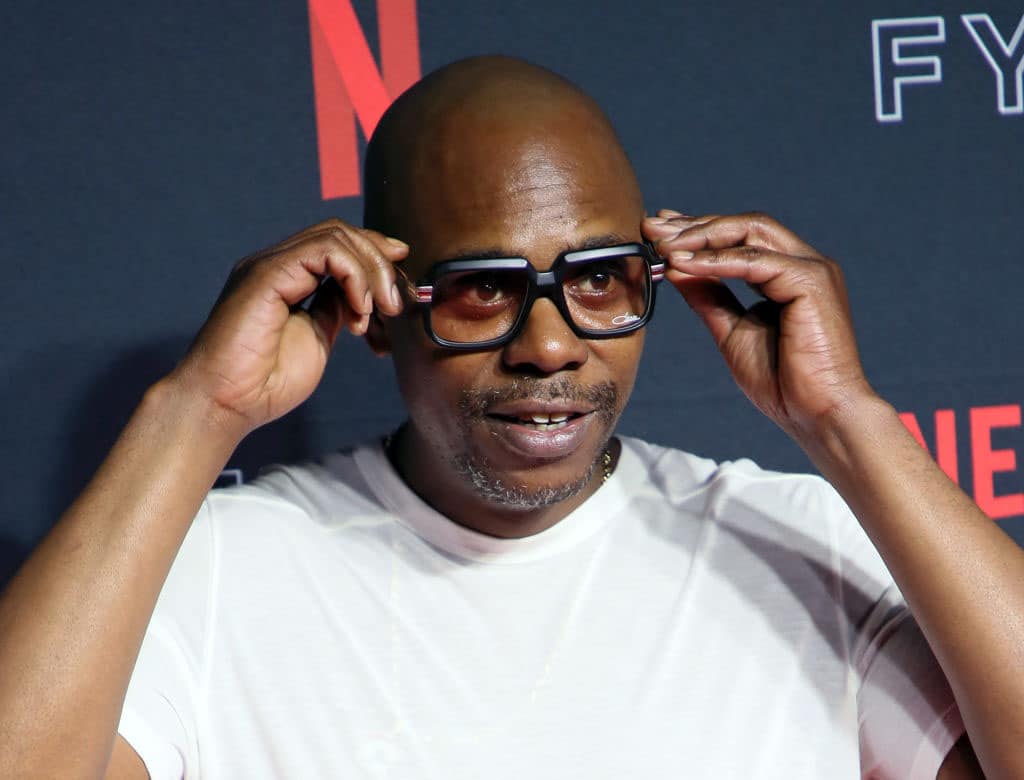
Earlier in the same SNL episode, comedian Dave Chappelle addressed a much more offensive outburst than Irving’s thoughtless re-tweet when he pretended to offer advice to noted rapper Kanye West, who now goes by “Ye.” At the start of the routine, Chappelle read from a piece of paper saying, “‘I denounce antisemitism in all its forms, and I stand with my friends in the Jewish community.’ 

Chappelle then looked to the camera and said: “And that, Kanye, is how you buy yourself some time.”

Less funny. More offensive. But just as true and just as sad.

Chappelle himself has made antisemitic comments in the past, and he added a few more during his monologue. The fact that singers and athletes and comedians make hateful and ugly statements about Jews is nothing new. Plumbers and poets and politicians do it too. But Che’s joke touched on an uncomfortable truth – that society is willing to let these antisemites off with a slap on the wrist at worst as long as they are willing to make even the slightest effort toward faking remorse and offering the barest pretense of regret. Chapelle’s instructions for West made the same point but with less of an effort toward humor. In both cases, we were reminded of an unpleasant reality — that we no longer expect any actual effort toward real reconciliation and are willing to settle for a celebrity reading ghost-written talking points that allow all of us to act like some small amount of healing has actually been achieved.

West and Irving were penalized not for their original transgressions but for their unwillingness to play along with the script that so many others have followed for the sake of their careers.

West and Irving were penalized not for their original transgressions but for their unwillingness to play along with the script that so many others have followed for the sake of their careers. Che and Chappelle pointed out that the performative and hollow apologies that we demand don’t actually accomplish very much at all.

Despite the attention their ill-considered actions have received, I’ve tried to avoid writing about West and Irving. Their musical and athletic skills gain them attention that most equally silly and ignorant antisemites never achieve. But their views on my religion, culture and heritage shouldn’t be taken any more seriously than when the same venom is spewed by those whose day jobs do not bring them fame. Both men have large numbers of followers, though, which makes their outsized platforms more dangerous, since a disconcerting number of their fans may decide that their intolerance is an acceptable part of their performance and an important part of their success. I’ve always thought that giving these haters more attention simply helped them spread their cultural illiteracy to an even larger audience.

But now we must ask ourselves whether our decision to accept these types of empty apologies actually enables them even more, and whether antisemitism is so pervasive and tacitly accepted in contemporary society that we no longer realistically strive to move past it. There’s no real penalty for public displays of anti-Semitism for anyone willing to mumble some type of regret and pledge to learn about the Holocaust. If such a deception is now good enough for us, then there’s even less chance we’ll see any legitimate contrition or reconciliation in the future.


Dan Schnur is a Professor at the University of California – Berkeley, USC and Pepperdine. Join Dan for his weekly webinar “Politics in the Time of Coronavirus” (www.lawac.org) on Tuesdays at 5 PM.

The Chappelle Jewish Dance Read More »

Theodor Herzl: The New Prophet Dies, but His Old-New Message Survives

Editor’s note: Excerpted from the new three-volume set, “Theodor Herzl: Zionist Writings,” edited by Gil Troy, the inaugural publication of The Library of the Jewish People, now available at www.theljp.org. This is 11th in a series.

In 1897, Theodor Herzl essentially described himself when he wrote about a man who once “deep in his soul felt the need to be a Jew,” and who, reeling from Jew-hatred, watched “his soul become one bleeding wound.” Finally, this man “began to love Judaism with great fervor.” In this short story, “The Menorah,” Herzl saluted his step-by-step Judaization and Zionization. Celebrating Hanukkah, he delighted in the “growing brilliance” candle by candle, gradually generating more and more light. 

The “occasion became a parable for the enkindling of a whole nation.” Flipping from the reluctant, traumatized Jew he had been, to the proud, engaged Jew he was surprised to see in the mirror, Herzl admitted: “When he had resolved to return to the ancient fold and openly acknowledge his return, he had only intended to do what he considered honorable and sensible. But he had never dreamed that on his way back home he would also find gratification for his longing for beauty. Yet what befell him was nothing less.” 

Herzl concluded: “The darkness must retreat.”

Seven years later, Herzl spelled out Zionism’s dynamic power, its spillover effects. “For inherent in Zionism, as I understand it, is not only the striving for a legally secured homeland for our unfortunate people, but also the striving for moral and intellectual perfection,” he wrote. This vision made Herzl a model liberal-nationalist. He believed that “an individual can help himself neither politically nor economically as effectively as a community can help itself.” And articulating the faith in farming and physical labor that would animate Labor Zionism, Herzl endorsed “a Jewish physical therapy which we can make available to our masses, particularly to those from areas where they have an abnormal lifestyle. There is no doubt that people who are made to do farm work and physical labor generally become healthier. This health, in turn, has moral consequences.”

Despite his fin-de-siècle European airs and sensibilities, Herzl’s liberal-democratic Jewish nationalism was a far cry from European colonialism. Herzl’s Zionism would turn Palestine’s Jewish settlers “into permanent dwellers on the land, into real freeholders. They shall live on the land and from the land, not like helpless peddlers with an anxious eye on the market prices.” This non-exploitative, non-extractive approach would lay a foundation “for the enduring tranquility so ardently desired by the long-buffeted Jewish people.” 

Herzl explained at another point that “all this beautiful country needs is the industrial skill of our people. The Europeans who usually come here enrich themselves quickly and then rush off again with their spoils. An entrepreneur should certainly make a respectable and honest profit, but after that he ought to remain in the country where he has his wealth.” His Jewish state would be a model for others, which included helping its neighbors. In Cairo, while appalled by the British inability to understand what the fellahin in Egypt were suffering and learning under colonialism, Herzl exclaimed: “I resolve to think of the fellahin too, once I have the power.”

The ongoing breech over whether to focus temporarily on resettlement in Uganda — actually the Kenyan highlands — and not Palestine, rattled Herzl. This time, the movement proved more resilient than the man. A heart specialist, Dr. Gustav Singer, was shocked to see “a pale, tired, sick patient” in December 1903, instead of the delightful bon vivant he thought he knew from the newspaper. “I was soon forced to realize that death was already lurking in the shadows,” Dr. Singer would recall. “His pulse was irregular, the heart output greatly impaired,” and “there were the circles around his once so fiery eyes.” 

On April 30, 1904, after further deterioration, doctors prescribed a six-week retreat at Franzensbad, a mineral springs resort. A week later, Herzl wrote his chief lieutenant David Wolffsohn: “Don’t do anything foolish while I am dead.” 

On July 2, Herzl finally updated his mother about his health crisis. His comrade Reverend William Hechler was the last non-family member to visit him. Hechler, who had written a book in 1884, “The Restoration of the Jews to Palestine,” had bonded with Herzl immediately upon the publication of “Der Judenstaat.” Herzl summed up his differences with his friend by saying, “Hechler declares my movement to be a ‘Biblical’ one, even though I proceed rationally in all points.” The good reverend would record the great Zionist’s last words: “Greet Palestine for me. I gave my heart’s blood for my people.”

He was buried in Vienna next to his father, “to remain there,” Herzl’s will directed, “until the Jewish people will carry my remains to Palestine.”

At five o’clock in the afternoon of July 3, 1904, Theodor Herzl died. Thousands mobbed his funeral four days later. He was buried in Vienna next to his father, “to remain there,” Herzl’s will directed, “until the Jewish people will carry my remains to Palestine.”

Long before Israel reinterred Herzl’s remains on Mount Herzl in Jerusalem, the Jewish people carried his message of peoplehood and statehood, of giving up on Europe because of its antisemitism but not giving up on liberal ideals, European sensibilities, or the world. Demonstrating this global vision, one Herzlian character in “Altneuland” announced that following “the return of the Jews, I would also like to help prepare the return of the Negroes.” The character, expressing Herzl’s commitment to social justice, then explained how national pride engenders world peace: “Every human being should have a home. Then they will be kinder to each other. Then people will love and understand each other better.”

Searing eulogies from Herzl’s followers were expected. The loyal Wolffsohn proclaimed at his funeral that Herzl’s name will “remain sacred and unforgotten for as long as a single Jew lives on this Earth.” 

In Plonsk, Poland, a seventeen-year-old Zionist felt shattered. Back when he was ten, David Green had heard that “the Messiah had appeared in one of the foreign cities … a wonderful man, taller than others, good looking, his radiant face adorned by a black beard.” Now, this teenage Zionist worried about this “great loss to our unfortunate suffering People. There will not arise again in our midst such a wonderful man who combined the bravery of the Maccabees, the purposefulness of David, the strong devotion of Rabbi Akiva who died while reciting ‘God is One,’ the humbleness of Hillel, the beauty of Rabbi Yehudah Hanasi, the fiery love of Rabbi Yehudah HaLevy.”

“And yet,” the man who five years later would change his name to David Ben-Gurion concluded, “here am I today, more than ever, certain of our victory, and certain that there will come a day when we will return to our Land, the Land of poetry and truth, the Land of prophecy of the prophets …”


Professor Gil Troy is the author of The Zionist Ideas and the editor of the three-volume set, “Theodor Herzl: Zionist Writings,” the inaugural publication of The Library of the Jewish People, now available at www.theljp.org. 

Theodor Herzl: The New Prophet Dies, but His Old-New Message Survives Read More »

Will Bibi Rise to the Occasion?

Have you noticed a certain sobriety in Benjamin Netanyahu? Ever since he came out ahead in the recent elections in Israel, we haven’t seen the usual triumphant spirit, the celebration of finally reaching his dream of a broad right-wing coalition.

That’s because he got a lot more than he bargained for. To secure his majority coalition, he must include extremist parties and extremist politicians whose ideas would make any lover of democracy cringe.

“A coalition comprising his own increasingly hawkish Likud, the far-right Religious Zionism, and the two ultra-Orthodox parties Shas and United Torah Judaism does not begin to represent Israel’s diverse constituencies,” David Horovitz wrote in Times of Israel, adding that “many of [the coalition’s] members hold positions and are advocating immensely far-reaching policies antithetical to the fundamental values, interests and needs of a vast number of Israelis.”

Bibi knows all that. He’s a secular Jew who understands very well that many of the policies of his future partners go against “the fundamental values, interests and needs of a vast number of Israelis.” 

Remember the expression, “Be careful what you wish for?” I wouldn’t be surprised if that thought is going through Bibi’s head at the moment.

Of course, Bibi, ever the brilliant communicator, has changed his tune since his big election victory. Now we’re seeing the unity Bibi, not the divisive Bibi who said whatever it took to win.

After receiving the president’s mandate to form the government, Bibi vowed to be “a prime minister for everyone – for those who voted for me, and for those who did not vote for me. It reflects what I believe in and what guides my actions.” 

After receiving the president’s mandate to form the government, Bibi vowed to be “a prime minister for everyone – for those who voted for me, and for those who did not vote for me. It reflects what I believe in and what guides my actions.” 

But when you have indispensable partners whose policies much of the country abhors, it won’t be easy to be a “prime minister for everyone.”

I went looking for a ray of light, and I found one in a piece from Michael Koplow titled “The Case for Optimism Regarding the New Israeli Government.” Arguing that “a sky-is-falling attitude is unwarranted,” Koplow starts with Bibi himself, reminding us that Netanyahu “is a true conservative in the sense of being cautious on policy, and has effectively served as the left flank of Likud for nearly a decade.”  

He adds: “As prime minister, he avoided major wars, pursued Gaza ceasefires and backroom deals to keep Hamas sated and the territory quiet, did not annex West Bank territory or retroactively legalize illegal outposts despite a clamor in his party and coalition to do both.”

He reminds as well that Netanyahu “is the one who ultimately has leverage over his partners in forming the next government rather than the other way around. UTJ, Religious Zionism, and Otzma Yehudit have been insisting that specific agreements on policy priorities must be struck before they agree to form a government, but it is nearly impossible to envision a scenario in which any of them forces a sixth election.”

Finally, he notes that there have been recent “signals from both Religious Zionism and Otzma Yehudit intended to project a more moderate image, from [Itamar] Ben Gvir’s open letter on Monday to his ‘brothers on the left’ in which he pledged protection and security to Israeli Arabs, to Religious Zionism MKs promising that they do not intend to roll back LGBTQ rights.”

He notes that Bibi’s political partners “are at the high-water mark of their leverage now, but as the deadline to form a government gets closer, they have too much to lose by continuing to hold on to their absolute demands.” 

Silver linings aside, this is a difficult moment for people who care about Israel. We don’t want to see an Israel that brazenly annexes territory, makes the Law of Return more restrictive, imposes religious edicts on secular Israelis, overrides the Supreme Court with a parliamentary majority, enables ultra-Orthodox Jews to continue to avoid military service, and so on.

He’s never faced such a challenge, because he could always count on center-left partners to play off against his right flank. Now he’s all alone against tough ideologues for whom the word compromise does not come easily. Even those who hate Bibi should hope he succeeds.

Bibi frowns on all that. He always has. But he’s never faced such a challenge, because he could always count on center-left partners to play off against his right flank.

Now he’s all alone. It’s him against tough ideologues for whom the word compromise does not come easily.

Will he rise to the occasion? Even those who love Israel but hate Bibi should hope he succeeds.

Will Bibi Rise to the Occasion? Read More »

Rosner’s Domain— Another Take on Two Alarming Ministers

We should start with a note of caution: It is early to assume that Haredi Shas leader Aryeh Deri is going to be Israel’s finance Minister. It is early to assume that the quite-radical leader of Religious Zionism, Bezalel Smotrich, is going to be the Minister of Defense. These are currently rumors, spins of negotiations, intended leaks of shrewd bargainers. 

And here is another note of caution: This article is not intended to convince you that Deri at Finance and Smotrich at Defense is a good idea. It is not, for many obvious reasons. Deri is a leader of a specific community. He takes care of his own tribe (Haredi, Sephardic). Smotrich is a leader of many principles, and little tendency to compromise or willingness to be pragmatic. Letting Deri hold the national purse is problematic. Letting Smotrich lead the Ministry of Defense can be dangerous.

Even for those who in the final analysis oppose them, it is better to see the whole picture, and not just part of it.

But having said all that—having stated the obvious—here is the case for letting these two, the staunch right-winger and the ultra-Orthodox have what they wish for, the Ministries of Finance and Defense. As said, this is not meant to convince you that this is the right move; it’s meant to offer an alternative way of thinking about the potential of these appointments to do good. Yes, they have the potential to do good. And even for those who in the final analysis oppose them, it is better to see the whole picture, and not just part of it.

Let’s start with this: There are many more cases where ministries have changed the views and attitudes of their holders, than the opposite cases, where position holders have changed the ministries. The reason for this is simple, almost trivial. A minister must grapple with reality, and this forces adjustments and changes on him. Reality punishes a minister who insists on clashing with it. Netanyahu learned such a lesson when, in his first term as Prime Minister, he opened the Western Wall Tunnel without proper preparation. The result was an outbreak of violence, bloodshed. The opening of the tunnel was necessary, but not done wisely. Netanyahu, a wise leader, learned the lesson of caution.

This is what happens to many ministers in many positions and especially so to those who hold the most senior and influential portfolios, such as Finance and Defense. Making a rush mistake in one of these two ministries could prompt quick, harsh, sometimes fatal outcome. If Deri takes Finance, and after two months Israel’s credit rating drops because of his actions, the price could be heavy. If Smotrich takes Defense, allows construction in problematic areas in Samaria, and the result is a flare-up, the price could be heavy. These are cases where ideology meets reality. These are cases where smart leaders learn a new and important lesson, of modesty and responsibly.

That’s it—that’s the case for Deri and Smotrich as the most senior ministers. It is built on three layers. First, both are smart. Both want to succeed. Second, to succeed, both will have to moderate their objectives, promises and principles, and face a complex reality that requires compromises. Third, and this is the most important layer: If Defense and Finance end up teaching Deri and Smotrich a lesson in modesty and responsibility that would be to Israel’s benefit. Both are leaders of a large public, but both have history of focusing mostly on fighting for their own specific communities—sectoral budgets, sectoral projects, sectoral principles, sectoral ambitions. Major portfolios would enforce on them the need to expand their scope of considerations, to be leaders of the country, not a community.

There is little margin for error in Finance and Defense. There is little margin for tricks and sectoral favoritisms. Deri and Smotrich could understand this in advance, and act accordingly, or be exposed to the cold shower of reality. Naturally, for Israel, the first option is preferable. It would be better for Israel if its ministers understood in advance that statements and actions aren’t the same thing, that principles and reality aren’t always compatible. 

If two sectoral leaders decided to shoulder the responsibility for a national portfolio, the risk is self-evident and clear. But there’s an opportunity not to be dismissed: the opportunity for the ministries to change the ministers, to make Deri and Smotrich true leaders of the State of Israel, rather than leaders of sectorial interests.

Something I wrote in Hebrew

For the new right-religious government, I advised to be cautious with changes to crucial laws: 

Discussion on the Law of Return should be done quietly, patiently, seriously. A new design of the law, if proposed, should be based on broad consensus that will include centrist parties. You might say: This is impossible! True, at the moment it is probably impossible, because the elections have just ended, and any discussion about coalition and opposition cooperation is too early. But maybe in the future it will be possible. That is, if the government will act cautiously when it comes to state-religion affairs. In such case, maybe it’d be possible to find a formula that better balances the purpose of the Law of Return, bringing Jews to Israel, and its actual current implementation: bringing mostly non-Jews to Israel.

A week’s numbers

When the Jewish stream with more children is also the more politically conservative, the trend looks like this (source: J Street post-election survey). 

A reader’s response:

Deborah Krauss writes: “So Bibi doesn’t get to play the Senate against Biden after all”. My response: There’s always the House…


Shmuel Rosner is senior political editor. For more analysis of Israeli and international politics, visit Rosner’s Domain at jewishjournal.com/rosnersdomain.

Rosner’s Domain— Another Take on Two Alarming Ministers Read More »