fbpx

September 22, 2022

Ripping Off the Bandaid – A poem for Parsha Nitzavim

God will once again gather you from all the nations,
where Adonai, your God, had dispersed you.
-Deuteronomy 30:3

I’m a rip off the bandaid kind of guy.
If the bad news is coming, don’t soften it.
I don’t need to schedule a phone call to hear it.

Just tell me.

I also, sometimes, just want to get to the good stuff.
I don’t want a lot exposition, or the slow burn
to the satisfying payoff.

I’m not binging this life.

I like efficiency. I like things to take only
the exact amount of time they should take.
if it’s supposed to take a long time

let it take a long time.

If it should have ended already,
let it end. Come to think of it, I could have
cut the last seven lines of this poem.

Including the last two.

I like to get meta. I can tell that you
are reading this right now. There never was
a fourth wall.

I’ve gotten off track.

So, if You’re going to exile me to the desert
only to bring me back at the end of the Book
what have I learned here?

I’m going to turn this Torah right around.

No, really, I am. We all are.
In just a few weeks we’re going to start over.
Read this whole thing again.

See if we can learn something this time.


God Wrestler: a poem for every Torah Portion by Rick LupertLos Angeles poet Rick Lupert created the Poetry Super Highway (an online publication and resource for poets), and hosted the Cobalt Cafe weekly poetry reading for almost 21 years. He’s authored 26 collections of poetry, including “God Wrestler: A Poem for Every Torah Portion“, “I’m a Jew, Are You” (Jewish themed poems) and “Feeding Holy Cats” (Poetry written while a staff member on the first Birthright Israel trip), and most recently “I Am Not Writing a Book of Poems in Hawaii” (Poems written in Hawaii – Ain’t Got No Press, August 2022) and edited the anthologies “Ekphrastia Gone Wild”, “A Poet’s Haggadah”, and “The Night Goes on All Night.” He writes the daily web comic “Cat and Banana” with fellow Los Angeles poet Brendan Constantine. He’s widely published and reads his poetry wherever they let him.

Ripping Off the Bandaid – A poem for Parsha Nitzavim Read More »

Senator Sydney Kamlager Standing by the Jewish People

Supporting Israel has become more of an issue among segments of the Democratic party — in particular with leftist politicians such as Ilhan Omar (D-Minn.), Alexandria Ocasio-Cortez (D-N.Y.) and Rashida Tlaib (D-Mich.). 

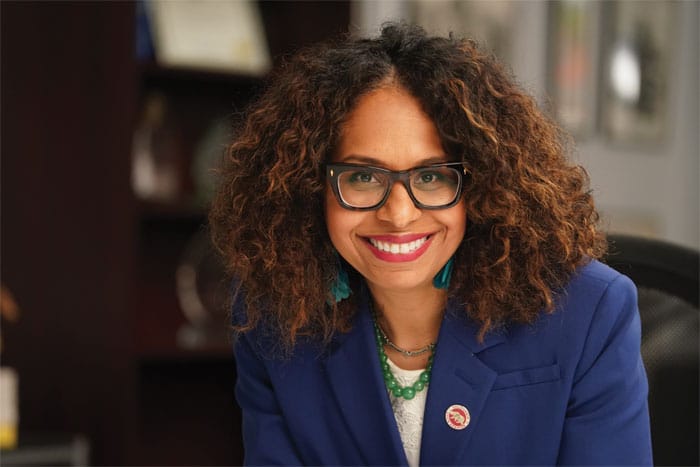
However, many politicians are standing strong in their advocacy for Israel and the Jewish people. Here in Los Angeles, State Senator Sydney Kamlager, who represents the 30th Senate district and is running for mayoral candidate Karen Bass’ congressional seat, has been a longtime friend of the Jewish community.

“I was born to interracial parents in a segregated city,” said Kamlager, a Chicago native whose father is white and whose mother is Black. “Being the product of an interracial marriage really set the tone for how I see people and how I see myself. I’m really curious about other perspectives. I’m centering my work in belonging, and I think that’s what politics and policy should be about. How do we create policies and push discussions so that all people feel like they belong? That’s part of the Jewish-American experience.” 

“I’m really curious about other perspectives. I’m centering my work in belonging, and I think that’s what politics and policy should be about.”

Even though Kamlager isn’t Jewish, her husband, Austin Dove, a criminal defense attorney, had a great-grandfather who was Jewish. The senator supports the legislative priorities of the Jewish Caucus including AB 57, which was aimed at improving the response to hate crimes, as well as SB 693, which strengthens Holocaust and genocide awareness and education.  

“I work with my colleagues on pushing bills that have a positive impact on the world,” Kamlager, who represents areas like Century City, Culver City, Cheviot Hills and South Los Angeles said. “That’s what being an elected official is all about.”

She recently spoke at an AIPAC event, and traveled to Israel with the Jewish Federation for two weeks. The senator supports Israel because of its status as “a democracy surrounded by a legion of actors who don’t believe in it,” she said. “It really works to push the envelope around needed innovations that we are trying to harness right now, like water and drought resiliency and biotech, vaccines and healthcare. It’s an example of what a young, vibrant democracy looks like, and we should be supporting it.”

In recent years, relations between the Black and Jewish communities have been on the decline; most recently, during the Black Lives Matter protests in 2020, people spray painted “F— Israel” and “Free Palestine” on a synagogue in LA – even though the protests had nothing to do with the Jewish state. 

When thinking about a way for the Black and Jewish communities to move forward together, Kamlager recalled her favorite quote from Fred Rogers: “Anything that’s human is mentionable, and anything that is mentionable can be more manageable.” 

“We have to talk about the chasm between the Black and Jewish community and the breakdown in support,” she said. “We need to talk about the past, and how icons and legends and rebels [like Rabbi Abraham Joshua Heschel and Martin Luther King Jr.] came together, and what has happened since then. We can manage our way back to that.”

Kamlager is trying to do her part. Along with supporting the Jewish Caucus, she said she sits down with its members and learns Jewish history. 

“I want to speak out about why it’s not cool to say ‘F— Israel’ and about how all these folks don’t want to go to synagogue, or how a rabbi has to take off his yarmulke when he goes to the grocery store so he doesn’t get attacked.” 

As for anti-Israel extremists in the Democratic party, Kamlager said she doesn’t subscribe to that kind of rhetoric. 

“My district is incredibly diverse,” she said. “It has one of the largest Jewish populations in the country outside of the East Coast, and a very diverse compilation of Jewish values. Who would I be to marginalize an important, vocal, engaged and vulnerable population in my community? I don’t know Ilhan [Omar]’s constituency, but I wouldn’t stand for it. We have an obligation to talk about the consequences of hateful language on all sides within our party, as well as outside of it.”

Kamlager relates the rhetoric from Ilhan Omar and other politicians with similar views to her own life. 

“In my own household, if I want to encourage my husband to think in a different way, should I spew hate?” she said. “I haven’t found that to be productive. It stems from my personal life as someone who is biracial.”

The senator was at college at USC when the 1992 Los Angeles riots broke out. Her father was trying to pick her up from school, and they had a discussion about how to make it happen.

“He was afraid that if he was in the car with me, someone would hurt me,” she said. “What would they do if they saw a Black person and a white person together? There was fear, hate, anger and frustration during that time. I don’t respond well to hate. Anger can drive you to do bad things.”

For now, Kamlager is going to do her part to bridge the gap between different communities and speak rationally, with love, about the issues that are most important to people.

“My dream is to say I was of service,” she said. “I’d like to be able to have a dinner with people from all races, ethnicities and backgrounds, and we come together to create a collective that’s working together for justice. They don’t all have to be friends, but they do have to see each other. It can happen in my lifetime.”

Senator Sydney Kamlager Standing by the Jewish People Read More »

Actor Guri Weinberg on His Father’s Murder in Munich in 1972

When Israeli wrestling coach Moshe Weinberg was murdered along with ten other members of the Israeli Olympic team 50 years ago at the Munich Summer Olympics, he left behind his wife Mimi, and his month-old infant son Guri. 

A few years later, as a kindergartener in Israel in the late 1970s, Guri noticed something was amiss between him and his young classmates. 

“I saw fathers and mothers coming to pick up their kids and realized then that, wait a minute, something’s not right,” Guri told the Journal. “I understood then that I didn’t have a father.”

As Guri started to understand the concept of not just the loss of a parent, but murder and terrorism, he noticed how it affected his widowed mother. 

“I was a kid when this whole thing happened, I didn’t just lose a father, I pretty much lost my mother because it affected her so badly,” Guri said.

Guri is still very much affected by the loss of his father before he was two-months old. 

Today, Guri is a successful 50-year-old actor living in Los Angeles, where he and his mother have lived since 1986. Among his credits are the box office hit “The Twilight Saga: Breaking Dawn — Part 2” and multiple episodes of “NCIS: Los Angeles.” 

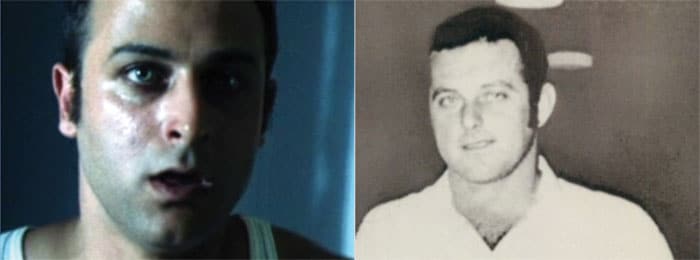
Guri even portrayed his father Moshe in the 2005 Steven Spielberg film, “Munich.” 

“It was one of the things that I had the hardest time with growing up — understanding why he fought instead of maybe trying to wait out the whole situation and see if things didn’t turn out well,” Guri said about considering portraying his father in the film. “And so actually walking through in his shoes helped me have that closure for myself.”

But over the years, there has been much disappointment that Guri and other family members of Munich Massacre victims had for German leaders’ mishandling of the aftermath. 

By the time Guri learned that the families of the victims were invited to a memorial service in Munich on September 5, it was too late for him to travel to Germany. His mother, Mimi, did attend. 

After watching a broadcast of the memorial event, Guri was pleased that the German government accepted responsibility. 

“The thing that surprised me the most and was happiest about is that [the German government] fully condemned the attack,” Guri said. “Instead of playing politics, they said who did it, they said that it was a terrorist attack. They said that it was driven by antisemitism. For many years, the German government didn’t want to call the Palestinian terrorists what they were: Palestinian terrorists.”

Guri laments that these days, he notices a disconnect between the Jewish people and the Munich Massacre. 

Guri laments that these days, he notices a disconnect between the Jewish people and the Munich Massacre. He says that too many Jews see the Munich Massacre as “more of an Israeli thing than a Jewish thing.”

“Munich was chosen as a particular place for a reason,” Guri said. “When people say, ‘this was an attack on Israelis because of an argument about land,’ they’re deeply mistaken. And they have to understand the players behind it and the line of thinking and the decision to choose the Munich Games after World War II was very, very specific, and it was targeted against Jews.” 

Guri still has yet to visit Munich. But in the future he would like to visit the Olympic Village where his father lost his life amongst his countrymen, whose deaths horrified a worldwide audience. 

Even when there aren’t widespread memorial events every year among American Jews, every year on the anniversary of the attacks, Guri says the Kaddish for his father. 

“That’s pretty much all I do because in the U.S., nobody’s holding any special memorial service like in Israel,” Guri said. “But even in Israel, they just send the delegation from the Israeli Olympic committee and all that with flowers and to the grave. I just go to a synagogue, say the Kaddish and that’s pretty much all I can do.”

Actor Guri Weinberg on His Father’s Murder in Munich in 1972 Read More »

Meet the Documentarian Specializing in L’dor V’dor House Calls

“Every family has a story. Preserve it now. Share it forever.” That’s the slogan for a new business specializing in filming family stories.

Founded by documentary filmmaker Rachel Fleischer, Moving Memories creates videos for anyone who wants the sight and sound of a family member preserved deliberately for their youngest descendants. 

Fleischer and her team go to their clients’ homes to interview and film their subjects talking about their lives, providing advice or just retelling a story — all to create a live-action video heirloom. 

While not specifically a Jewish company, Fleischer said that Moving Memories’ services are the embodiment of the Hebrew phrase, “l’dor v’dor” (from generation to generation).

“I have a friend whose mom passed away on the young side and she’s a mother herself now, and she was saying, ‘Oh I wish I had something like that to show my son,’” Fleischer told The Journal. “It doesn’t have to be a grim or sad reason, but I do think that’s part of life, so why not embrace it?”

Fleischer directed the 2011 documentary, “Without a Home” which chronicled four years of life on the streets for six homeless people in Los Angeles. It takes a certain kind of talent to condense a combined 24 years worth of individual journeys into a 74-minute documentary. Those particular talents are what Fleischer is putting to use with Moving Memories.

Most people get overwhelmed at the thought of sifting through the hundreds of videos on their phones for a particular one that will be worth showing to future generations.

Although most people can look on their phone for videos of their aging parents and grandparents, Moving Memories creates high-quality, thoughtful video packages. Fleischer said that most people get overwhelmed at the thought of sifting through the hundreds of videos on their phones for a particular one that will be worth showing to future generations.

“This is one of those things people think about all the time, way deep down,” Fleischer said. “They’re like, ‘Oh one of these days I’ll get to that. And then ten years go by.” 

Fleischer pointed out that preserving these stories before it’s too late can be a fun, joyful thing to do. 

It could be your great-grandparents talking about their memories of their own great-grandparents. It could be advice from your mother about raising a family. It could be your father telling the story about how he and your mother met. It could just be a hilarious story that grandpa tells (over and over again) that nobody else but grandpa can do justice by retelling it. Moving Memories also incorporates clients’ old photographs and decaying film footage into their videos.  

“The interviews that we film serve as the framework for the story that we’re going to tell — that time period and the questions themselves,” Fleischer said. “Depending on the type of person, they can pick their top three questions that they want to be asked. The interview itself is customized to each person. It’s not just a template of like, here’s the 10 questions we’re gonna ask you. We really want it to be personal and speak as much to the person whose story is being told.”

In a sense, Moving Memories isn’t a film production company so much as a journalistic social work company. Fleischer and her team provide comfort in addressing what can feel like the somber task of speaking to a generation that you will never meet. 

When is the right time to do this? Fleischer suggests doing this while you still look happy, healthy and are sound of mind. It’s not just for the elderly. It’s not just for the technologically unsavvy. It’s for anyone who wants to take the initiative while accepting fate.

“If you have to wait until you’re at your edge, you do it, but there’s something nice about being able to speak about your life when you’re still fully thriving.”
– Rachel Fleischer 

“If you have to wait until you’re at your edge, you do it, but there’s something nice about being able to speak about your life when you’re still fully thriving,” Fleischer said. 

Fleischer’s mother Sheryl told The Journal her thoughts after making her own video heirloom with her daughter’s company.

“It was such an unexpected surprise to find how much of an actual story I had to tell about my life,” Sheryl Fleischer said. “As I was being filmed I felt very aware of the importance of just what I was doing in telling my story; that one day my grandchildren and future generations would know who I am and what my life’s journey was like. Moving Memories has created a movie of me telling my life story in a way that will be passed on from generation to generation. Nothing could be more valuable than this.”

For more information on Moving Memories, visit  https://www.movingmemoriesla.com/

Moving Memories Trailer from Moving Memories on Vimeo.

Meet the Documentarian Specializing in L’dor V’dor House Calls Read More »

AFHU Bel Air Affaire, JNF-USA Wine Tasting, iCenter for Israel Education Cohort

The 13th Annual Bel Air Affaire, hosted at the iconic Papillon Estate in Beverly Hills, raised more than $2 million for student scholarships at Israel’s Hebrew University of Jerusalem.

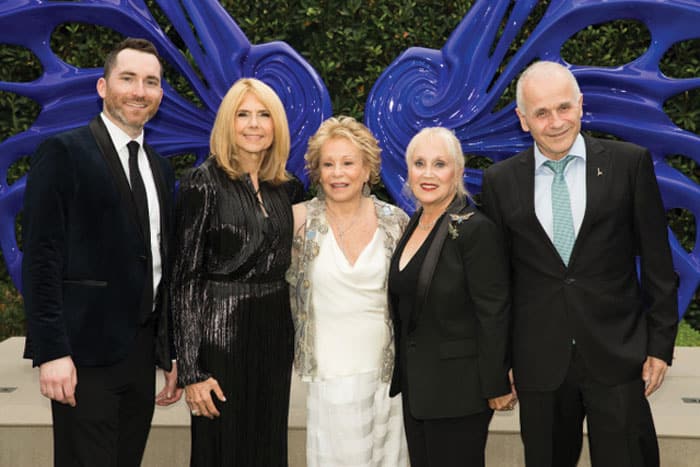
At the Sept. 10 event, presented by the Western Region of American Friends of the Hebrew University (AFHU), AFHU presented two philanthropic Los Angeles couples with the Humanitarian Torch of Learning Award: Dr. Jaye-Jo Portanova and Bruce Cooperman along with Cindy and Gary Frischling.

From left: AFHU honorees Bruce Cooperman and Dr. Jaye-Jo Portanova along with Cindy and Gary Frischling. Courtesy of AFHU

AFHU Western Region President Barbara Natterson-Horowitz called the honorees “two couples who exemplify what it means to be actively and ceaselessly engaged in the philanthropic community. We thank them for their magnanimous generosity in support of scholarships and for continuing to be vibrant members of AFHU.”

Co-chaired by Joyce Brandman, Renae Jacobs-Anson and Helen Jacobs-Lepor, the evening featured remarks by Hebrew University President Asher Cohen and student ambassador Timna Wharton Kleinman, a recipient of a past scholarship and a master’s student in the School of Computer Science and Engineering.

Addressing the guests, Wharton Kleinman discussed the importance of helping her and other students complete their degree studies.

World-renowned illusionist Adam Trent provided the evening’s entertainment, and catering was by Michelin Star chef Curtis Stone.

Honorary event chairs were Patricia Glaser and Sam Mudie along with May and Richard Ziman.


From left: Dr. Shimon Bababeygy, Howard Levkowitz, Alan Gindi and Yoel Zilberman. Courtesy of JNF-USA

On Sept. 6, members of Jewish National Fund-USA’s Real Estate Division leadership and other partners in Greater Los Angeles attended “Safeguarding Israel’s Future,” an exclusive evening hosted by philanthropists Alan and Barbara Gindi. 

Attendees enjoyed culinary delights, live music and an Israeli wine tasting sponsored by the Israel Wine Producers Association. 

From left: Neuriel Shore, Maaya Arfi, Yoel Zilberman, Alan and Barbara Gindi, Sharon Joy, Cynthia Hizami, and Lauren Cohen. Courtesy of JNF-USA

The event featured keynote speaker Yoel Zilberman, CEO of JNF-USA’s affiliate Hashomer Hachadash, who discussed how this partnership helps protects large areas of Israel’s Negev and Galilee regions and instills Zionist values among Israeli youth. 

Hashomer Hachadash empowers 72,000 volunteers annually, defends and cultivates 250,000 acres of land, educates 16,000 young Israelis, and aids more than 250 farmers to ensure their livelihood and smooth operation of Israel’s food production. 

The wines tasted at the event were from regions safeguarded by Hashomer Hachadash-protected farmers.


Cohort member Joshua Losner, a program manager at Hillel International. Courtesy of Edelstein Public Affairs

Members of the latest cohort of the iCenter for Israel Education and George Washington University’s graduate degree of Israel education include Los Angeles-based Jewish communal professional Joshua Losner, a program manager at Hillel International.

Losner was one of 21 in-service professionals, spanning the United States, Canada, and Israel, who were selected through a rigorous screening and admissions process for the program designed to offer inspiration and strategies to place Israel education at the heart of Jewish communal life.

“The cohort model is truly an integral part of our students’ success, with the range of experience and the diversity of institutions, settings, and nations represented in this stellar group,” iCenter Graduate Degree Program Director Erika Vogel said. “Each student in this group brings unique experience and perspective that is invaluable to this program. We are extremely excited to welcome this new cohort, and very proud of Cohort 4 as they move into the second phase of the program.”

AFHU Bel Air Affaire, JNF-USA Wine Tasting, iCenter for Israel Education Cohort Read More »

Some Shriek, Some Shrug at Booking.com Israeli Settlements ‘Warning’

To read more articles from The Media Line, click here.

International travel accommodation giant Booking.com is planning to introduce a warning on listings located in Israeli settlements in the West Bank, saying it is company policy to add such a disclaimer to all areas considered to be a “conflict zone.”

The decision announced this week caused outrage among Israeli politicians, while industry experts in the country were less pessimistic about its impact.

The Booking.com website allows travelers to reserve their own accommodation independently, choosing from what it says are more than 28 million listings in 228 countries and territories around the globe.

Local media reported that beginning on Thursday the website will feature a warning on all accommodations in West Bank settlements, stating that “visiting the area may be accompanied by an increased risk to safety and human rights or other risks to the local community and visitors.”

“Certain areas affected by conflict may pose a greater risk to travelers, so we provide our customers with information that helps them make decisions and encourage them to check their government’s official travel guidelines as part of the decision-making process,” the company told Israeli news outlet Ynet, explaining the rationale behind the move.

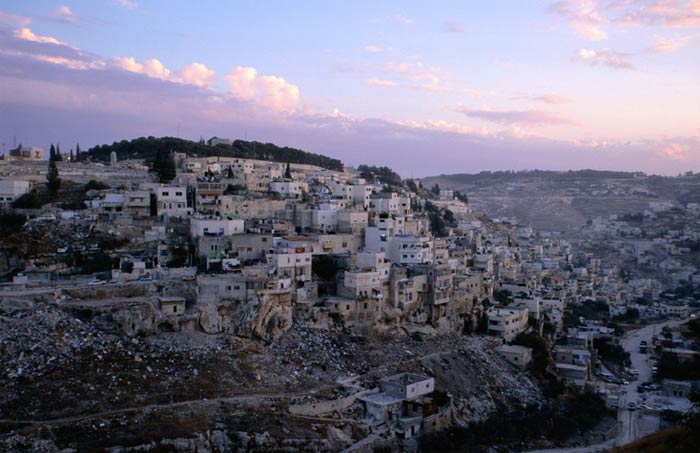
The company said that the warning would also appear for “other conflict zones” around the world. According to reports, the website is also planning to add the alert to accommodations in east Jerusalem, which was annexed by Israel after its capture from Jordan in the 1967 Six-Day War, a move not recognized by the international community.

Tourism Minister Yoel Razvozov told the Ynet news website that he is determined to fight the move. He said the Israeli government will wage “diplomatic war” to overturn what he termed a “political” decision.

Booking.com says it facilitates more than 1,550,000 overnight stays every day. According to respected analytics website SimilarWeb, the travel website has had an average of 675 million visits per month over the last three months.

There are some 140 Israeli settlements in the West Bank, including dozens of tourist sites. Some human rights groups have lobbied for years for websites such as Booking.com to remove their listings.

Airbnb, which allows people to rent out their own homes to guests, introduced a ban on settlement listings in 2018, but overturned it some six months later after Israeli lawyers brought a class action lawsuit.

Israeli tour guide David Ha’ivri, who lives in the West Bank, doubts that the move will adversely affect resorts in the settlements in a significant way.

“I’m skeptical how many such businesses in Judea and Samaria are actually relying on Booking.com for their business,” Ha’ivri told The Media Line, referring to the West Bank by its biblical name.

“It’s really a political thing what they are doing,” he said, pointing out that the controversy surrounding the decision also put a spotlight on the settlement resorts themselves.

“Just by doing it … they are highlighting the fact that there is a tourism industry and tourism services in Judea and Samaria,” Ha’ivri said.

“That being said, I think it’s wrong for Booking.com to jump on the political bandwagon. They should put their focus on promoting businesses and not on boycotting businesses for any political agenda,” he said.

Elias Al Arja, a Palestinian hotelier from Bethlehem, told The Media Line that he supports the decision by Booking.com.

“Hotels in Palestine are good and safe under our government. In the areas where the Israelis built some hotels and try to market it as Judea and Samaria it is something else,” he said.

“It’s not Palestinian, it’s not as safe as the Palestinian areas,” Al Arja added.

Booking.com is “right” to label settlement hotels, he said.

“I am looking for the world to do something like that, not just Booking,” the hotelier told The Media Line.

“Israelis are having subsidies to build in the area like Moscow has done in Donbas, helping the people to build some project and sell it as Russian and that’s what the Israelis do here,” he said, comparing Israel to Russia and the Palestinians to Ukraine. “They are destroying our [industry] and building alternatives in the areas that they occupied.”

Veteran Israeli tourism industry expert Ron Sinai also is unperturbed. This decision has nothing to do with any anti-Israel sentiment, it is purely Booking.com making its policies consistent, he told The Media Line.

“It is not done out of anti-Israel or pro-Palestine [sentiment], but a desire to present the information to their customers,” he said.

“Their approach is that someone who is not familiar with the issue and is looking for a hotel in the area will receive this warning before they make their reservation,” Sinai said.

There are very few settlement resorts that will be affected by the decision, and those that are do not actually rely on Booking.com for their business, he said.

“Almost the only places that could be hurt by this are two kibbutzim, Almog and Kalia, which are over the Green Line” border between Israel and the West Bank, Sinai said.

According to Sinai, these two locations in the northern Dead Sea area are not associated with being in the West Bank – unlike places such as Maale Adumim, Modiin Illit or Kiryat Arba, whose visitors know where they are and do not care.

He reiterated his belief that the step by the travel site is not motivated by any anti-Israel sentiment and posited that the anger expressed by Israeli politicians has more to do with the upcoming Knesset elections.

“This is not just us, [Booking.com] are doing this throughout the world,” he told The Media Line.

“I’m not a victim here,” he said. “You decided this is dangerous? Fine, it’s your prerogative – you’re the one who’s selling it.”

Some Shriek, Some Shrug at Booking.com Israeli Settlements ‘Warning’ Read More »

A Bisl Torah – It Takes a Village

This week we are celebrating the bat mitzvah of our colleague’s daughter. The family hosted an online gathering of the women who have impacted their daughter’s life. Some of the women have known the bat mitzvah girl since her birth, others involved later. Grandmothers, aunts, cousins, rabbis, teachers, and friends each offered the bat mitzvah a special blessing, letting her know how loved she is. Throughout the evening, I realized how grateful I was to be part of her village. And since the gathering, I realize even more…we all need a village.

Years ago, I remember reading an article, “I miss the village.” The author missed the village she never had: the laughing and crying of parents living side by side. The commiserating of people understanding the rigor of busy schedules and hectic lives. The knowing looks of someone who “gets it” and then, volunteers to help with carpool or order dinner. For the author, that kind of village didn’t exist. A community where family and friends blend into one, where everyone feels a sense of responsibility for each other. I finished the article thinking, “But, you have to build the village.”

My friends build their village. They dedicate time to their relationships, near and far. Each person around the screen remarked on our friends’ devotion in keeping up, whether with phone calls, emails, visits, or traditions. And in return, we all feel committed to embracing their daughter—both during this milestone and as well, when times aren’t so celebratory.

In these final days before Rosh Hashana, we take precious moments to evaluate the relationships in our lives. Who makes up our village? Have we taken the time to let each person know the role they play? The role they play for our children? Do they realize how much we care? A new year is the perfect time to let someone else know how essential they are. That they are part of your village.

It often takes a village to raise a child. It often takes a village to support an adult. But we must build, maintain, and take ample time for repair and renovations.

A Shana Tovah to all of you and a Shana Tovah to the village that carries you through.


Rabbi Nicole Guzik is a rabbi at Sinai Temple. She can be reached at her Facebook page at Rabbi Nicole Guzik or on Instagram @rabbiguzik. For more writings, visit Rabbi Guzik’s blog section from Sinai Temple’s website.

A Bisl Torah – It Takes a Village Read More »

A Moment in Time: Shana Tova, 5783!

Dear all,

Sunday evening, Jews around the world welcome the new year on the Hebrew calendar, 5783.

While it’s an opportunity for reflection, it’s also an opportunity to dream into tomorrow.

What are our goals and aspirations?

How will our presence make a difference in the world?

Who will receive a special hug from us?

Will we take a moment in time to be grateful for the incredible gifts in the world?

Ron, Maya, Eli, and I wish you and all you love a healthy and happy New Year!

שנה טובה/ Shana Tova!


Rabbi Zach Shapiro

A Moment in Time: Shana Tova, 5783! Read More »

Print Issue: A Rosh Hashanah Like No Other | Sep 22, 2022

CLICK HERE FOR FULLSCREEN VERSION

Print Issue: A Rosh Hashanah Like No Other | Sep 22, 2022 Read More »

From Cancer Patient to Ironman Champion

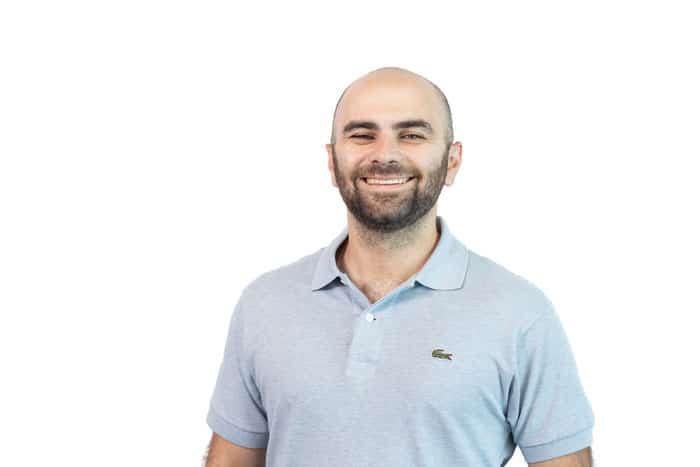
Robert Klein (not the comedian, though I know him too, as it happens) is my lifelong friend. I first met him 39 years ago in Flushing, Queens when we were both only a few months old and in the same playgroup. I’m told we had the same outfit on: diapers. We didn’t yet know how to say hello to each other, but we must have figured it out because the friendship took off, and here we are, still buddies. Even when we don’t see each other in person for a while, since we live 3,000 miles apart, whenever we talk it feels just like old times.

In 2017, at age 35, Robby received a shocking diagnosis: He had cancer. The doctor told him he would have to undergo two surgeries with a recovery time of six months for each. The diagnosis was a wakeup call for him. 

“In the hospital bed, before I went into surgery, I told Emily that I’m going to come back and do the New York City Marathon (NYCM),” Robby said. 

Thank God, Robby got better, and he kept his promise to his wife — and himself. 

He started training. In order to qualify and gain guaranteed entry into the New York City Marathon, he had to run shorter races (5K/13.1 miles) around the city and volunteer for one race. 

“For the next 10 months, I was running these races once every few weeks in order to qualify for the NYCM in 2020,” he said. “I qualified for the race in 2020, ended up doing the Westchester Olympic Triathlon again in 2019 as well and then turned my focus to doubling the Olympic Distance.”

Unfortunately, the pandemic put the fall 2020 NYC Marathon on hold, but Robby was determined to keep on going.

“This did not deter me, at this point I was determined to complete a FULL distance Ironman 140.6 mile race, before I turned 40,” he said. “I had until December of 2022 to do this.”

While everyone was locked down in their homes learning how to bake bread and make desserts, Robby doubled down on his training and began a journey that would result in him being in the best shape of his life. He researched health, fitness, longevity, and diets that could prevent the cancer from returning. He signed up for an online vegan cooking course called “Forks Over Knives Plant Based Cooking Certificate.”

“As I learned more about this lifestyle and became a better cook, my family started to join me in this way of eating,” he said. “I started becoming stronger, had noticeably more energy, and could eat as much as I want, because I understood the important concept of calorie density. Once I felt how amazing this way of eating made me feel, especially recovering from these long workouts I was putting my body through, I was hooked for life.”

Along the way, Robby completed his first 70.3 Ironman in June of 2021. He decided he was going to go for the full Ironman the following summer at Lake Placid, New York. 

“I came up with a training plan with my coach and began the 12-month training program to get me across that finish line at Lake Placid, all while embracing a 100% plant-based diet with minimally processed foods,” he said.

Robby began working with a local nonprofit called Plant Powered Metro New York, mentoring participants transitioning to a plant-based lifestyle. 

“These sessions brought me so much joy and satisfaction, to be able to make such a difference in strangers’ lives just by sharing your story and giving them tips on how to eat,” he said. 

Training for the triathlon was no easy feat. Robby had to learn how to swim, bike and run long distances. 

“Training for an Ironman is one of the toughest feats a person can do,” he said. “This is why less than .01% of the population on Earth has finished one of these races.” 

He had to prepare to swim 2.4 miles around Lake Placid, then bike 112 miles and run 26.2 miles. As a husband, as well as the father of a young daughter, Robby had to carve a lot of time out of his already packed schedule to exercise.

“At the peak of training, I was probably training about 15 hours per week, so it basically become another part-time job,” he said. “The balancing act that you learn to juggle while training is nothing short of a miracle. I changed my work schedule around so I could work longer hours four days a week and have one day in the middle of the week off, Wednesday, so I could do my long training day without interrupting my weekends. At peak training, I was spending seven to eight hours on the bike on Wednesday, and then on Saturday and Sundays, I biked and ran for between three and three and a half hours.” 

This past summer, Robby, who now goes by the nickname Broccoli Rob, completed the Iron Man, fulfilling his dream. He did it in 17 hours, and with the support of 20 people, including his loving wife Emily and his eight-year-old daughter and her friends, cheering him on.

“It was such a pick-me-up when I saw 20 people all wearing Broccoli Rob t-shirts and holding signs and big cut outs of my head as I went out for the second 56-mile loop of the bike,” he said. “It was such a special moment that I will never forget. The cyclist that was behind me actually witnessed the pure joy on my face and all those people cheering. He caught up with me a few miles down the road to tell me that he never saw anything like that in all his years of racing.”

Robby often reflects on his time in the hospital and how far he’s come today. 

“Becoming an Ironman after being on the operating table not knowing if the cancer had spread or not, just five years earlier, was very emotional for me,” he said. “Every start line that I’ve toed since I started doing these races, I get a little choked up. Every time I passed another milestone during training, I kept amazing myself that I can do this. It started to build so much confidence that I really started to believe the Ironman mantra, ‘ANYTHING IS POSSIBLE!’”

I am inspired by his newfound “Anything is possible” mantra. In fact, it’s a great message for all of us to take going into the High Holy Days this year.

I’m so proud of my friend Robby for all he has accomplished and continues to accomplish, but more than that I am inspired by his newfound “Anything is possible” mantra. In fact, it’s a great message for all of us to take going into the High Holy Days this year. We’re all facing our personal challenges that hold us back. But by setting our intentions on achieving our goals and making sure our actions follow, maybe, in our own way, we can all become some form of Iron Man or Woman.  

Personally, I decided a good first step would be to start exercising more and focusing on my health, like Robby did. I started two weeks ago at 5,000 steps a day and now am at 6,200. They are baby steps, but I’m trying. 

I also started making small goals for myself to accomplish each day in a small notebook I carry around with me (my goal today was to write this article). I have accomplished more these past four weeks because of this than I usually do in a whole month! You do the math.

I realized from Robby’s story that I have always set big goals for myself and often fall short of accomplishing them. But by making small manageable goals, I’m accomplishing more and feeling encouraged along the way. Over time, they will add up to big results.

Don’t believe me? Just look at my friend Robby Klein. When I met him, he couldn’t even crawl! And now he’s a genuine Iron Man. 

No one can take that away from him. In fact, no one can take anything away from him. They’d have to catch him to do that, and that’s near impossible these days!

Shana Tova!

From Cancer Patient to Ironman Champion Read More »