fbpx

September 8, 2022

Why Israel Wins and Haters Lose

There are two broad dimensions to life — the theoretical and the concrete.

This column is in the theoretical camp; it’s words and ideas. If you’re hungry or thirsty, no matter how great my words are, it won’t help you. For that you’ll need something concrete, like food or water.

That’s why I don’t get too worked up about those who hate Jews and Israel, especially here in America: Israel wins with the concrete.

Year after year, the haters bang their heads against the wall telling the world that Israel is the worst. But it must drive them nuts to see that after millions and millions of angry words attacking Israel over so many decades, that little Jewish state they dislike so much has been thriving like never before.

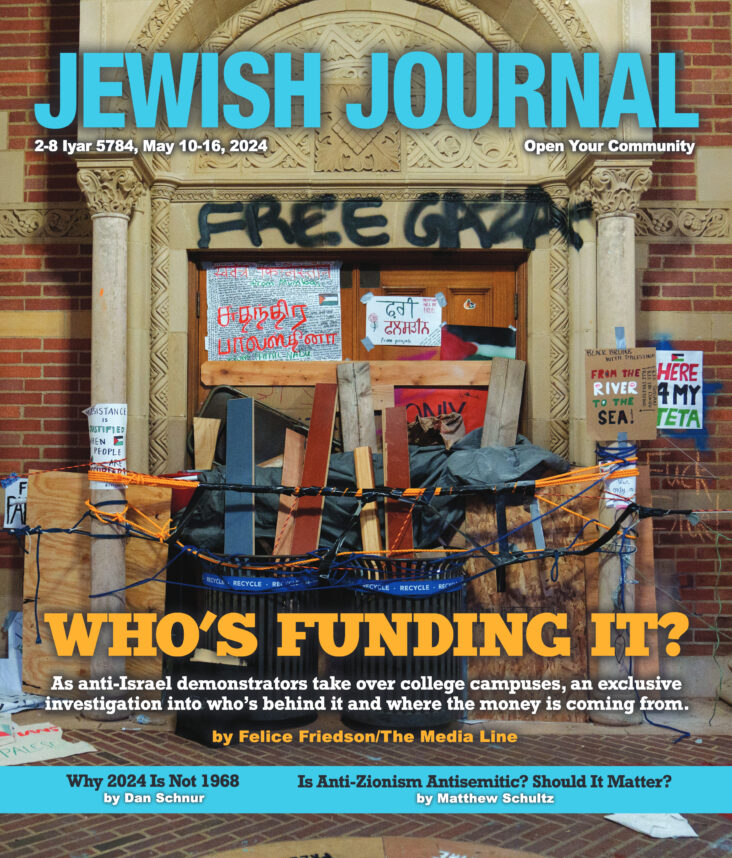
Think of all the BDS activists on college campuses who are literally obsessed with Israel. Year after year, they schlep their apartheid walls and scream to the heavens that “from the river to the sea, Palestine will be free.” And year after year, they don’t get an inch closer to their goal.

Think of the NGOs who’ve been releasing reports for decades singling out Israel for special condemnation, or those hypocrites at the United Nations who will condemn Israel more than they do Syria, Russia, China, North Korea and every other nation combined.

Yes, all those words and lies may hurt and distort Israel’s image, but then what?

None of those words will stop Morocco from accelerating its economic and diplomatic cooperation with Israel, or the Gulf states that are also part of the Abraham Accords from embracing the many benefits of being close with Israel.

More and more countries have caught on that in spite of the propaganda they hear about Israel, it’s in their interest to get along with the world’s only Jewish state. 

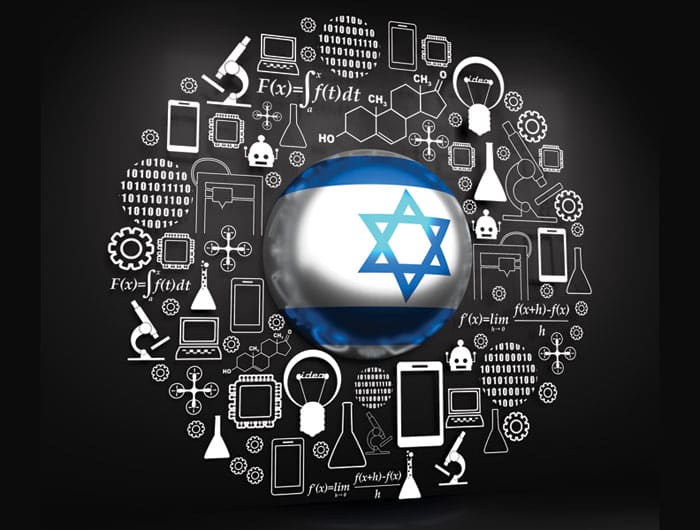
More and more countries have caught on that in spite of the propaganda they hear about Israel, it’s in their interest to get along with the world’s only Jewish state. They can take advantage of Israel’s extraordinary array of innovations in fields like advanced medical care, agriculture, cybersecurity, AI, water technology, food security and much more.

Israel is far from perfect, but it succeeds by staying focused on the concrete, whether it’s to correct or defend itself. To the dismay of its critics, it has become one of the more creative and innovative societies dealing with some of the planet’s most urgent issues.

Antisemitism is indeed troubling; they don’t call it the world’s oldest hatred for nothing. But again, you have to feel a little sorry for the haters. How do you think they feel knowing that no matter how much anti-Jewish venom they spew, Jews continue to thrive and even laugh?

Take those famous “Jews will not replace us” haters from Charlottesville. Instead of writing a column or a Facebook post condemning the haters, as so many others did, proud Jew and comedian Elon Gold used them for one of his funniest bits:

“We don’t want to replace you. We just want to put braces on you … we just want to manage your portfolio … we don’t want to replace you, we want to place you, in a 30-year fixed low interest mortgage … we want to fit you for glasses, heal you, teach you, inspire you, make you laugh, represent you in a divorce, and she replaces you.”

As he built one of the world’s premier emergency services, with ambulance crews that show up in lightning speed, do you think Beer was slowed down in any way by Israel bashers?

Take our cover story this week by Community Editor Kylie Ora Lobell. She profiles Eli Beer, founder and leader of United Hatzalah of Israel. As he built one of the world’s premier emergency services, with ambulance crews that show up in lightning speed, do you think Beer was slowed down in any way by Israel bashers?

There are thousands of Israelis like Beer who wake up every morning hoping to make the world a better place. The haters can’t stop them.

Sixty-two years ago, a few months before he was elected president, John F. Kennedy saw a hopeful glimpse of the future when he spoke at a Zionist convention in New York City. 

“The Middle East needs water, not war. They need tractors, not tanks, and they need bread, not bombs,” Kennedy said. “The people of Israel have brought their blessings to people all over the world … Why should the countries of the Middle East, which need technical assistance, why should they be denied this opportunity to participate in a great source of future wealth for them and their people?”

By all means, let’s continue to fight antisemitism and work to improve Israel. But if it makes you feel any better, despite all the lies, the hate and the ugliness, the reality on the ground is that the Jews and Israel are still winning, and the haters are still losing.

And those aren’t just words.

Why Israel Wins and Haters Lose Read More »

Eli Beer: Saving the World, One Emergency at a Time

When Eli Beer was 5 years old, he was walking back home from school in Bayit Vegan, his neighborhood in Jerusalem. Suddenly, a Number 12 bus blew up in front of him. 

“I was traumatized,” Beer said. “For years, I remembered hearing the people screaming for help. Taxi drivers pulled people into their taxis because they didn’t have ambulances. I don’t know how many people could have been saved if the ambulances were there.”

That incident had a profound effect on Beer. He decided that one day, he was going to become a doctor and save people’s lives. 

At 16, he was too young to go into medical school, but he wasn’t too young to volunteer as an EMT. He started working on an ambulance in Jerusalem, where he would respond to medical emergencies along with his team. 

One day, the ambulance received an alarming call from a mother: her 7-year-old son was choking on a hot dog. 

“We were the only ambulance available in Jerusalem,” he said. “It took us 21 minutes to get there.”

When Beer and his colleagues arrived, the boy’s mother was screaming hysterically. “We were performing CPR on a 7-year-old boy who was completely blue and freezing,” he said. “We knew the chances of saving him were completely low. We were crying trying to save him.”

A doctor who lived next door heard what was going on and rushed over. By that time, 40 minutes had passed. 

“The doctor said to bring a sheet to cover the boy, because there was nothing we could do,” Beer said. “It was the worst sentence I ever heard in my life.”

What if nearby volunteers were alerted when someone was sick or injured? They could surely get there faster. And what if, instead of driving an ambulance, they rode some sort of bike so they could go around the traffic?

In that moment, Beer knew he had to take action. It took too long for ambulances to get to emergencies, he thought. But what if nearby volunteers, like the doctor, were alerted when someone was sick or injured? They could surely get there faster. And what if, instead of driving an ambulance, they rode some sort of bike so they could go around the traffic?

“I said that if I ever choked, I’d call for a pizza,” Beer said. “When we were stuck in traffic in the ambulance, I’d see delivery people zooming by on my left and right.” 

Beer told the head of the ambulance company in Jerusalem his plan to start an emergency response organization. His idea was to have volunteers ride on the same vehicles as delivery people to get there faster. All he needed, he said, was to be able to access the emergency lines. 

“He didn’t like this idea,” Beer said. “He dismissed it. He said we had to have professional people responding to emergencies. I said, ‘What does it matter if someone is not breathing and a person shows up who can help them?’ He wouldn’t listen.” 

Beer didn’t let this stop him. He was going to do it on his own.

With 15 of his friends and a bunch of walkie-talkies, they were going to tune into the emergency lines and hear everything. And they were going to reach emergencies faster than the ambulances. 

Beer needed a name, to start. He thought of the perfect one to describe what he was doing: Chutzpah. With 15 of his friends and a bunch of walkie-talkies, they were going to tune into the emergency lines and hear everything. And they were going to reach emergencies faster than the ambulances. 

“We started responding to emergency calls way before ambulances,” he said. 

On one of his first calls, Beer heard that a car had hit someone, and they were bleeding in the street. When he arrived, he saw it was an older man.

“I used my yarmulke to stop his bleeding,” Beer said. 

The older man went to the hospital, and two days later, he woke up. Beer went to visit him and see how he was doing.

“I found out he was a Holocaust survivor,” he said. “The man said, ‘Thank you for saving my life.’ From that moment, I knew how easy it was to save people’s lives. You just had to get there on time.’”

Today, Beer runs United Hatzalah of Israel, a voluntary emergency response organization headquartered in Israel. When people call 1221, they can receive help in 90 seconds or less 24 hours a day, seven days a week. There are more than 6,200 volunteers around Israel who use GPS technology and ambucycles to get to people fast. Often, they are the first ones at the scene of a major disaster, like a terrorist attack. Since establishing United Hatzalah in 1989, Beer and his volunteers have treated nearly 5.5 million people around the country. 

“All of these people received help for free,” said Beer. “No one got a bill. We do this out of the goodness of our hearts.”

In the United States, places with large Jewish populations, like New York, California, Maryland, Florida and Texas, have their own local Hatzalahs available to residents. 

United Hatzalah is a groundbreaking organization that has sparked the idea for voluntary response teams around the world. In the United States, places with large Jewish populations, like New York, California, Maryland, Florida and Texas, have their own local Hatzalahs available to residents. 

Beer, who travels 200 days a year, goes around the world, helping communities set up their own emergency response systems. When global emergencies happen, United Hatzalah sends volunteers to help out. Just recently, they were the first ones to send volunteers to Ukraine to give out food and medicine. They were there in Surfside, Miami when the building collapsed and in Haiti after the 2010 earthquake. 

“We have an obligation to help every Israeli who needs it, but also, as a Jewish state, to help people in any type of emergency,” he said.

Beer stressed that his organization is not there to replace any emergency services. 

“We are here to fill in a gap that’s missing in most of the world,” he said.

United Hatzalah was the first organization to come up with the concept of peer-to-peer GPS locators on phones. The GPS sends out an alert to the closest five volunteers within three seconds. 

United Hatzalah was the first organization to come up with the concept of peer-to-peer GPS locators on phones. The GPS sends out an alert to the closest five volunteers within three seconds. They put their siren on their car or jump on an ambucycle or run to the scene as quickly as possible. 

The organization also has an arrangement with Israeli ambulance services to provide free ambulances for people who need them. 

“We don’t make money from anything,” he said. “We just save lives.”

Along with the GPS technology, United Hatzalah uses drones to find missing people, like a person with dementia or a lost child. Volunteers in Jerusalem are controlling the drones, which fly all over Israel. They have microphones on them so volunteers can call out people’s names, as well as infrared to spot warm objects at night. 

United Hatzalah also doesn’t discriminate when it comes to whom they help – anyone can receive emergency services.

“Eli has accomplished bridging the gap on religious, secular, non-religious, Christians, Arabs and Muslims.” – Laura Schwartz

“Eli has accomplished bridging the gap on religious, secular, non-religious, Christians, Arabs and Muslims,” said Laura Schwartz, global ambassador for United Hatzalah of Israel, who met Beer in 2016. “This amazing ability of Eli’s has helped to make United Hatzalah what it is today: the Uber of medics.”

There are volunteers from all different types of backgrounds, including 550 Arabs who are working side-by-side with Jewish and Druze volunteers to assist those in need.

Recently, one volunteer, EMT Sanaa Mahameed, was driving her ambucycle in her town, Umm al-Fahm in Haifa. Suddently, a call came in: It was from her own sister-in-law, who was familiar with the organization because of Mahameed’s work. Her sister-in-law’s baby was choking on food and needed help right away. In less than one minute, Mahameed arrived at the home and saved the baby. 

These kinds of miracles happen all the time. 

After 31 years of running United Hatzalah, in 2020, Beer experienced a miracle of his own. He had just wrapped up the 2nd Annual Los Angeles Gala for American Friends of United Hatzalah, an event that Jay Leno and Dr. Miriam Adelson headlined. He traveled to the AIPAC Policy Conference in Washington, D.C. and then London and Miami. 

While he was in Florida, he went to the hospital because he felt terribly ill; it turned out he had a very serious case of COVID, and it got so bad that they put him on a ventilator. He was in the ICU, fighting for his life.

“It was the worst feeling in the world to say goodbye to my kids,” he said. “Some doctors told me I had a 5% chance of survival. I was really in bad condition. But I decided I wouldn’t give up.”

Beer, who is Modern Orthodox, channeled his faith. Instead of asking people to just pray for his recovery – which he said was important – he also encouraged them to perform good deeds in his name.  

For 30 days, Beer was in a coma. He lost 35 pounds. He was so sick that he slept through Passover. But during that time, people everywhere were heeding his request.  

“Millions of good deeds were done for me by honest-to-God people,” he said. 

One of the good deeds he found out about later involved an Arabic United Hatzalah volunteer, Ibrahim. Ibrahim received a call from a 90-year-old woman who needed candles to light for Passover. He decided to buy her candles. He drove his ambucycle to her home and brought her flowers as well. She was shocked to see an Arab volunteer standing on her doorstep, gifts in tow. 

“He found out she was a Holocaust survivor,” Beer said. “He had tears in his eyes when she told him her story. Her parents always lit candles until the Nazis came. When she was liberated, she lit 15 candles for every member of her family who had perished in the Holocaust. This was the first week she didn’t have enough candles. She said, ‘If I don’t get the candles, I’m not going to survive.’ She called Hatzalah and said that they saved her the last time she called when she had a heart attack. Maybe they could save her this time, too.”

The Arab volunteer and the Holocaust survivor celebrated Passover together.

“He stayed in her house for over two hours, sitting with her for the seder,” Beer said. 

After one month in the coma, Beer woke up, looking like a shadow of himself. 

“I said I wouldn’t give up,” he said. “I would keep saving lives.”

Sheldon and Miriam Adelson, longtime Hatzalah supporters, flew Beer to Israel so he could recover with his family. In just two months, he was back to flying around the world, fulfilling his mission of saving others. 

Emergency response is a family affair in the Beer home. Together, with his wife Gitty, they have five children, who aren’t afraid to jump in when they receive an emergency call. 

“Gitty, who is in medical school now, is wonderful, and a volunteer herself,” Beer said. “Three of my daughters are volunteers, and all their husbands volunteer, too. Sometimes, during Shabbat dinner, we all get up to run and help. It’s beautiful to see how my kids are following in my footsteps.”

In the future, Beer hopes to keep expanding United Hatzalah. One of the ways he’s doing that is holding fundraising events around the world – including the 3rd Annual Los Angeles gala, which is coming up on Monday, September 19, and featuring David Friedman, former U.S. ambassador to Israel, Liraz Charhi, star of “Tehran,” Jay Leno and Los Angeles mayoral candidate, businessman Rick Caruso. 

With fundraising and support, Beer is going to work on lowering the response time to less than 90 seconds. 

“I need more volunteers,” he said. “I need to build more technology.”

Though some tragedies cannot be prevented, Beer and his volunteers have done their part in saving the world – one life at a time.

“You see how a little baby stops breathing and you do compressions on their chest to try to revive them. You see them come alive, and it’s unbelievable.” – Eli Beer

“I see miracles all day long,” he said. “It’s hard for me not to believe in God. There’s nothing closer to holiness than bringing someone back to life. You see how a little baby stops breathing and you do compressions on their chest to try to revive them. You see them come alive, and it’s unbelievable. Every time I do something like this, I have all the reasons in the world to believe in God even more.” 


Learn more about the 3rd Annual Friends of United Hatzalah of Israel Gala at https://www.uhlagala.com and sign up online to attend.

Eli Beer: Saving the World, One Emergency at a Time Read More »

The 3 Images – True Stories and Lessons for Introspection

I need to open with a disclaimer. I have not really known the author of this book, Rabbi Zev M. Shandalov, as an adult, other than as a Facebook friend. But when he was a child, his father was the director of Camp Moshava in Wild Rose, Wisconsin, where I spent the most glorious summers of my life. His very kind parents, Rabbi Ben, of blessed memory, and Simmie, may she have long life (who Rabbi Zev calls “The driving force” behind his father), exemplified everything that was good in religion and in Zionism. We would see little Zev and his siblings around camp, and when I was in the older counselor-in-training program, I even babysat for them a few times.  Those summers were among the most significant factors leading to my decision to live in Israel someday.

I tell this story because it is rare that one is witness to the atmosphere in which an author has spent time as a child, and then meets him again as an adult. 

Rabbi Zev Shandalov served as a rabbi for 10 years at the Modern Orthodox Congregation Kehilath Jacob Beth Samuel in Chicago, Illinois. He and his wife Andy and their three daughters made aliyah in 2009 to Ma’ale Adumim, Israel. 

There are 10 chapters in this 100-page book, in which Rabbi Shandalov has compiled 10 years of his Yom Kippur sermons. He imparts his messages through images and imagery, three images in each sermon; 30 in the whole book. 

As you read, you may find yourself inspired to remember your own stories, thus enhancing your personal memories.

The images are sometimes memories of things the rabbi has experienced, and sometimes images that he conjures up in his mind in order to help him get through a difficult experience, or to help him to help one of his congregants.

The images are sometimes memories of things the rabbi has experienced, and sometimes images that he conjures up in his mind in order to help him get through a difficult experience, or to help him to help one of his congregants.

Rabbi Zev Shandalov (Asaf Cohen)

For example, one of the first memories in the book is one that Rabbi Shandalov had when the electricity in the shul, the same shul he would serve in as a rabbi many years later, went out. The chazzan said the Kol Nidrei prayers by candlelight, with the congregants repeating every word after him. He writes, “It was … the most spiritual and special Kol Nidre of my life … I believe it served as a paradigm for what the day is all about. We were all in the dark…our entire kehilla (congregation) banded together…We all approached G-d unified as one people.”

In another chapter, he tells the well-known story of the man who carries two buckets, one with a crack in it, that always arrived back half empty, but in the course of time the man discovers that exquisite wildflowers have blossomed on the side of the road where the water provided a steady drip. Rabbi Shandalov asks, “How do I find a way to serve Hashem with my shortcomings?” It reminded me of when I was teaching Creative Writing in a school for boys with ADHD, in the mid-90s. I said at a fundraising evening, “If I were stranded on a desert island with no way off, I’d want to be there with boys from this school, because they would find a way.” Today, more than 30 years later, one of those students commands an award-winning search and rescue dog unit in Israel.

My one criticism of the book is the image that Rabbi Shandalov cites when describing his visit to Birkenau (Auschwitz II), in Poland. While standing in the guard tower, he imagined the Nazi commanders below deciding who would be sent to their deaths, and who would live. “It was as if I were witnessing a Yom Hadin (Judgment Day),” he writes. “I closed my eyes and … I wondered what must have gone through the minds of the terrified men, women and children …”  But later, he writes “This idea is reminiscent of U’Netaneh Tokef (“Let us speak of the awesomeness”) – one of the most inspiring passages that we read on Rosh Hashanah and on Yom Kippur …” and he continues the analogy that “all human beings pass before God on this day …” I sent the rabbi a voice note that I found that image disturbing, and I could not bring myself to compare the decisions of God to the Nazis, whatever the good intentions of the message, and even though he added in that chapter “l’havdil elef alfei havdalot (‘in total contradistinction’) …” He replied, “I have no problem with someone saying they don’t agree with something I wrote… B’simcha (‘With pleasure’)… I like hearing things like that. It’s very helpful.”

A tense and very Israeli image appears when Rabbi Shandalov writes about the 2006 Lebanon War. After the capture of Gilad Shalit by Hamas in Gaza, and Eldad Regev and Ehud Goldwasser up north, followed by katyushas on the northern border, the IDF entered both Gaza and Lebanon. A short video clip went viral. It was of soldiers inside a tank, reading Tefillat HaDerech (Traveler’s Prayer) by the light of a flashlight. “The soldier … is not reading,” writes the rabbi, “like someone taking off in an airplane … He is reading it with a full heart, knowing that it may be the last prayer he says in this world.” He adds later, “Our prayers on Yom Kippur are the Tefillat HaDerech for the upcoming year.” 

He sees meaning in even trivial items. Yehiel, a child in his neighborhood, suffered a severe head injury. Following a miraculous recovery, Rabbi Shandalov continued to save his visitor’s pass from the local hospital where Yehiel was treated, and writes that he continued to look at that visitor’s pass before every single tefilla. “I reminded myself that we are all given a visitor’s pass when we are born.” And he quotes Rabbi Yaakov who said, “This world is like a hallway leading to the Next World. Prepare yourself in the hallway in order to enter into the Great Hall.”

When David, a friend of his, was considering leaving a job where he was unhappy, he went for a walk and “coincidentally” bumped into another old friend, who told him he had started a new company and asked him to join him. David did, and his friend said he never would have thought of him had he not happened to bump into him. The rabbi concludes, “Hashem is always there. We just need to open our eyes.”

One of his final images is of a star, which is many light years away. He cites metaphors in the Torah that refer to stars, such as when God shows them to Abraham and says He will “multiply your seed like the stars of the heavens.” Rabbi Shandalov reminds us that, like the stars, “we will leave our mark on this world long after we are gone.” 

May we all merit to a healthy and joyful new year, in which we see only images of light and love.

The book can be ordered from: ravzev@gmail.com. It costs $18 plus shipping to USA. It will soon be available via Book Depository and Amazon. The book is also available in Israel at Pomeranz Booksellers located at Be’eri 5, Jerusalem. They can be contacted at 02-623-5559 or at pomeranzbooks@netvision.net.il


Toby Klein Greenwald is an award-winning journalist and theater director and the editor-in-chief of WholeFamily.com.

The 3 Images – True Stories and Lessons for Introspection Read More »

Leonard Cohen Took Judaism Seriously

In 1964, at a symposium For English language Jewish writers, Leonard Cohen delivered a jeremiad against North American Judaism — a Judaism that had abandoned God in favor of bourgeois, assimilationist dreams.

In a recording of this address on YouTube, Cohen’s tone is prophetic, or, as some might interpret it, grandiose. At one point, he breaks off, seemingly distracted by someone in the audience snickering or perhaps rolling their eyes.

“I take this seriously,” he says to the eye-roller, and then he continues where he left off.

On my third listen to this recording, I realized that it was those words, “I take this seriously,” that stood behind my rapt fascination with Cohen’s speech.

For Leonard Cohen, “taking this seriously” means taking God seriously. 

“Judaism,” he states, “is the secretion with which an eastern tribe surrounded a divine irritation — a direct confrontation with the Absolute that happened once in history … Today we covet the pearl, but we are unwilling to support the irritation… and our spiritual life today has the exact consistency of an unclean oyster, and it stinks to heaven.”

“Let us refuse the title ‘Jew’ to any man who is not obsessed by God,” he goes on. “Let that become the sole qualification of Jewish identity.” 

Moreover, “the absence of God in our midst” is “a rotten cavity that has killed the nerve of the people. We are ready to accept psychiatric solutions for our suffering. We are ready to accept ethics instead of sanctity, and we will die very badly for our choice. Our monuments will be new parochial schools; and the state of Israel; and a militant Anti-Defamation League; and maybe even a Jewish president of the United States — well, to hell with these mausoleums.” 

“Taking this seriously” also means taking one’s role as a Jew seriously. “The world is hostile to any man who will hold up a mirror to the particular kind of mindless chaos in which we endure. That is the glory of the poet, that is the glory of the writer, that is the glory of the Jew — that he moves in this mirrored exile, covered with mirrors, and as he passes through the communities where he sojourns, he reflects their condition and his condition … his destiny is exile and his vocation is to be despised.” 

These words are as hard as steel and bound to make many of us feel uncomfortable. His claim, for instance, that “there is greater contact with the spiritual world” in “any junkie’s kitchen” than there is in “any synagogue on the North American continent” seems designed to offend. This becomes clear when the audience is given a chance to ask questions. 

The first to raise a hand demands that Cohen come down to earth and define his terms. After all, if you’re going to prattle on about God and holiness, you should explain what you mean. 

Cohen curtly responds: “I would not blaspheme the Name by giving it a definition at this particular symposium. If your apparatus for comprehending the numinous has collapsed to such a degree where you ask me for a definition of God, then you are beyond my therapy.” 

The next person to stand up assails Cohen’s devotion to Jewish particularism.

To her he responds: “The fact is that Jews are different from other people … The Jew has a particular kind of vocation, [without which] he becomes nothing but a consumer of the world’s goods.”

I, too, find myself challenged by his words. After all, am I worthy of the title Jew? Am I adequately inflamed and intoxicated by God? Am I a sleepwalker through the “mindless chaos” of the world? Has my exile become “meaningless?” Does my spiritual life have the consistency of an “unclean oyster?” Have I let my love of Israel supercede my love of the Creator?

To take Judaism seriously, as Cohen does, is to recognize that there are stakes. We have an important historic mission —which means it’s possible to fail. 

It is good to ask such questions of ourselves. It is good to be challenged. To take Judaism seriously, as Cohen does, is to recognize that there are stakes. We have an important historic mission — which means it’s possible to fail. We are here on earth to represent the “testimony of God,” and thus “the absence of God” in our midst is not just a matter of each Jew’s preference, but rather a grave collective abdication.

I am a rabbinical student, which means that I have been blessed to meet many Jews who also take this seriously, who also understand that there are stakes involved. For whatever reason, however, I rarely see such people speaking from synagogue pulpits, and this makes me wonder if much has changed in the decades since Cohen offered his address. 

What I hear in synagogues varies from place to place. Words of comfort. Political diatribes against the other side. Lovely and neatly constructed Torah morals. References to God as a character in a book, not as a living presence in the world. But never a challenge—never a word that confronts and transforms.

Only a few months ago, at a Shabbat service I attended in Boston, I heard the rabbi tell us to “turn our hearts towards God, or to whatever higher power or higher ideal is meaningful to you.” 

This is nice. This is inclusive language. It will not offend, but it is not serious. It implies that the stakes are low. Believe in God or don’t. It really doesn’t matter. 

We, the representatives of non-Orthodox Judaism, often complain—and complain bitterly—that we are not taken seriously. Orthodox Jews don’t take us seriously. The state of Israel doesn’t take us seriously. The Israeli rabbinate doesn’t take us seriously. 

None of this, however, is material. 

What matters is this: we don’t take ourselves seriously.

As we approach the high holidays, there will be familiar and tired discourses about what rabbis should say to us from the pulpit during the two days of the year that they have our attention. Let us hope they don’t blow it, and let us pray that they challenge us, confront us, wake us up, and impress upon us the urgency inherent in the mystery of our existence.


Matthew Schultz is the author of the essay collection “What Came Before” (2020). He is a rabbinical student at Hebrew College in Newton, Massachusetts.

Leonard Cohen Took Judaism Seriously Read More »

Lindsey Eats—Success Story of A Local Talent

One of the hottest foodies on Instagram and Tik Tok is local talent Lindsey Baruch. Her bright and beautiful Instagram account @lindseyeats has 395,000 loyal followers. It’s filled with mouthwatering images and videos and chock full of outstanding recipes.
Lindsey Baruch

Lindsey comes from an amazing family that continues to leave an imprint on the Los Angeles Jewish community. Both sides of her family originated in Baghdad, Iraq. Her maternal grandmother Daisy was born in Burma. She met and married Lindsey’s grandfather Sassoon Ezra in Calcutta in 1956. In 1958, they emigrated to Los Angeles with their eldest daughter Lulu. Together they founded Kahal Joseph Sephardic Congregation, a local Iraqi synagogue, where Sas served as the Chazan for many, many years. (Both our families have been members there for many years and current Rabbi Natan Halevy is Sharon’s younger brother).

Sas earned his degree at UCLA and for 40 years he was a devoted and much loved teacher and administrator at Harkham HIllel Hebrew Academy. Lindsey’s mom Marlene, aunt Renee and aunt Florette are also dynamic and much loved teachers at Jewish day schools. We reached out to Lindsey and asked her to share her story and some of her favorite recipes.

 —Rachel and Sharon

Cooking was such an integral part of my childhood and so many of my favorite memories growing up revolve around the Shabbat dinner table. Every Friday night, my grandparents would cook an eclectic feast, beautifully combining Indian and Iraqi flavors. Food was their way of expressing love for their family and bringing everyone together.

 My mother is the youngest of five sisters and they are all still incredibly close. This sense of connection within my family made a huge impact on me in so many ways, giving me a special appreciation of the power of food and cooking.

I started my website and Instagram @lindseyeats out of my love for cooking and photography. I share a variety of recipes, but there is one thing they all have in common, they are all approachable. Anyone can make them, even though they might look hard to tackle. There are even videos to follow along with, which makes my recipes even more accessible.

 My hope is to inspire people to cook and to use my recipes as inspiration for connection, because food truly brings people together. 

– Lindsey Baruch

 My hope is to inspire people to cook and to use my recipes as inspiration for connection, because food truly brings people together.

—Lindsey

Chicken Schnitzel

Every year for Rosh Hashanah, I look forward to eating my family’s special chicken schnitzel. In fact, I beg them to make it for every family gathering. 

 This chicken schnitzel is inspired by my Aunt Nina, who shared with me some top tips for the juiciest, and crispiest chicken schnitzel, which I will share here. Please don’t tell her! 

 In the panko mixture, add in fresh herbs: like chopped parsley and basil, which add a really nice freshness to this recipe! Another tip is to shallow-fry in a cast iron, and finish off in the oven, which is not only easier, but it also creates less splatter on your oven and countertops. 

 I love to pair schnitzel with some fluffy rice and a quick salad of chopped tomato, cucumber salad and herbs (such as parsley and dill), dressed with lemon and olive oil. And of course, tons of fresh lemon to squeeze over the schnitzel!

Ingredients

1 lb chicken breast (pounded)
1/3rd cup chopped parsley
1/3rd cup chopped basil
1/2 tablespoon garlic powder
1/2 tablespoon ginger powder
1/2 tablespoon paprika
1/2 tablespoon onion powder
1/2 tablespoon dried oregano
1/2 tablespoon salt
2 eggs, lightly beaten
1/4 teaspoon Dijon mustard
1/2 tablespoon pepper
3 cups panko breadcumbs
2 cups vegetable or canola oil (more if
needed)

Instructions

  • Preheat your oven to 450 degrees.
  • In a bag or bowl, add all your panko mixture ingredients: chopped parsley, basil, garlic, ginger, paprika, onion, oregano, salt, pepper. Set aside.
  • In a bowl, crack 2 eggs and mix with Dijon mustard, water, paprika and salt and pepper. Beat really well and set aside.
  • Flatten and pound your chicken breasts and slice then into super thin tenders (you can feel free to keep them longer if you prefer). Pound until it’s your desired thinness. I like them thin but also like to keep them with a little bit of texture, so I don’t go paper thin.
  • Set up your dredging station by putting the chicken in the egg, then in the breadcrumbs on a plate, coating all around.
  • Pour oil in your cast iron until it fills up less than halfway. Heat on high until really hot, add in your chicken and place immediately in the oven for 10-15 minutes – turning halfway. Remove when cooked through, top with salt and serve!
Caramelized Leek and Cabbage Pasta with Lemon Courtesy of Lindsey Eats

Carmelized Leek and Cabbage Pasta with Lemon

I love this caramelized leek and cabbage pasta! This is a great way to sneak in some veggies, where the leeks and cabbage cook down into this jammy and caramelized mixture, tossed with pasta and parmesan. It’s a great main dish for a weeknight dinner or perfect as a supporting player for fish at a dairy meal.

Ingredients

1 tablespoon olive oil
1 shallot thinly sliced
3-4 garlic cloves thinly sliced
pinch of red pepper flakes optional
1 leek about 3 cups, washed, outside layer
removed, thinly sliced
1 head of cabbage thinly sliced
1/4th cup dry white wine
1/2 pound dry spaghetti you can also use
linguine, or any other type of pasta you
like!
2 tablespoons butter
1/2 cup pasta water adjust more if needed
1/4th cup shredded parmesan adjust more
to your preference and for serving
Juice of 1 lemon
Zest of 1/2 lemon
Salt and pepper to taste
Top with crunchy panko breadcrumbs
optional and thinly sliced chopped
chives, drizzle a tad of olive oil to finish
+ pepper + lemon zest

Instructions

  • Prep all you vegetables and aromatics: slice shallot, garlic, cabbage and leek. Set aside.
  • Bring a deep pot of water to a boil for your pasta. Once boiling, salt and add in your pasta to the desired package instructions, until just before al dente, as we will finish cooking in the sauce.
  • Start your sauce. In a separate skillet in the meantime, big enough to add in your pasta later, heat up olive oil over a medium-low flame until glistening. Add in your sliced shallot and garlic and sweat them out with salt, pepper and red pepper flakes to bloom.
  • Next, add in your thinly sliced leeks and thinly sliced cabbage. Cook down until caramelized on medium, stirring every so often, around 15-20 minutes until the leeks and cabbage have cooked down and taken on a darker color.
  • After that’s caramelized, add white wine to deglaze the pan and to add an extra depth of flavor. Mix and let reduce down, until all the liquid has evaporated, about 5-10 minutes.
  • Once your wine has reduced, and your pasta is ready, use tongs and add your pasta in the leek and cabbage mixture. Add in your butter and pasta water about 2 tablespoons at a time. Season with salt and pepper as needed.
  • Mix well and slowly start adding in your shredded parmesan. Adjusting with more pasta water as needed. When your pasta is all glossy, saucy and cheesy, turn off the heat and finish with a fresh squeeze of lemon juice and lemon zest.
  • Serve in bowls. Top with chopped chives, panko breadcrumbs, a drizzle of olive oil and lemon zest. Enjoy!

Sharon Gomperts and Rachel Emquies Sheff have been friends since high school. The Sephardic Spice Girls project has grown from their collaboration on events for the Sephardic Educational Center in Jerusalem. Follow them on Instagram @sephardicspicegirls and on Facebook at Sephardic Spice SEC Food. Website sephardicspicegirls.com/full-recipes

Lindsey Eats—Success Story of A Local Talent Read More »

The Jewish Origins of Israeli Democracy

Imagine a new state is being established. On the day of its establishment, it will be attacked by all its continental neighbors. It will withstand this attack and maintain its existence and territorial integrity, but it will lose one percent of its population to the war. For at least 30 or 40 years, this country will not know one day of peace, as it will take decades until some of its neighbors reconcile with its existence. From the very beginning, the country multiplies through major immigration, many people arriving from poor countries, either survivors of the Holocaust or those fleeing persecution in neighboring Arab states. To top it off, the country has no significant resources, oil or gas. 

What are the chances this country could maintain a democracy? 

This question is particularly relevant to the time because the world had just witnessed the fall of empires and the birth of nation-states. Post-WWII, almost 100 new countries emerged across the globe: in the Middle East, Asia, Africa, the Caribbean and Latin America. Upon achieving independence, most adopted democratic constitutions based on free elections, a multi-party system and a free press. With a few notable exceptions, India being one, the vast majority of these countries’ democratic institutions failed. They became one-party or authoritarian military dictatorships, turned communist or semi-fascist, and in some cases, a combination of all of the above.

Yet the country in question, albeit its flaws and challenges, grew from 650,000 people, most of them Jewish, to a country of nine million people, 20% of whom are Arab citizens. Against all odds and under far harsher circumstances than any of the other new states, it is somehow this country that maintains its democracy. This country is clearly Israel, but the question is, what is the cause of this disparity? What enabled Israel to maintain a democracy in the face of internal and external pressures that were far more difficult and harsher than any of the other newly established nations?

When you look to the scholars, you will find two answers, both of which have an element of truth, yet both are insufficient in answering this question.

One answer is that there is a tradition of democracy in Judaism. While the notion of human dignity is firmly rooted in the scriptures, any way you look at this theory as a means to explain the resilience of Israeli democracy results in a patently absurd conclusion. When you look at the Holy books, the Davidic and Solomonic kingdoms were neither democracies nor could they be, and the Hasmonean Maccabean Dynasties were Hellenistic tyrannies in one way or another. There is nothing in the text, whether in the Bible, the Mishnah or the Talmud, that codes for democracy. Liberal democracy is a modern post-18th-century development, so it cannot be that in the historical texts of Judaism that one finds the origins and sustainability of Israeli democracy.

The second theory is that the first Jewish immigrants to Ottoman or Mandatory Palestine came from Europe, bringing with them the European traditions of liberal or social democracy. To explain this theory, scholars reference the original settlers of North America, who brought with them the self-governing British parliamentary system, which was later enshrined in the American Constitution. In this view, as in the case of America, the first Jewish immigrants from Europe must have therefore brought with them the European tradition of enlightenment, liberalism and democracy.

This sounds more plausible than the argument of religious text and yet it is still insufficient in answering the question because most Jewish olim who came from Europe did not come from the traditional democracies of Britain, France or Norway. They came from countries that were in no way democratic and left those countries due to the societal oppression they suffered under the very political systems in which they had lived. 

These Jews came from Czarist or communist Russia, from Poland and Hungary, from Romania during the two World Wars, which were Italian semi-fascist dictatorships. And of course, others came from Nazi Germany or countries such as Austria or Czechoslovakia that were occupied by the Nazi regime. 

So, in this case if the founding fathers and mothers of the State of Israel brought with them the political tradition of their birth countries, they would have also brought systems such as the Italian one-party combination or semi-fascist tradition. The notion that Israeli democracy is the sole result of the exportation of European politics into the Jewish state does not stand up to even the slightest scrutiny.

The reason that Israeli democracy developed does have to do with Jewish history, but not because of text or one’s origin but because of historical and social context.

While European Jews may not have had political power in the sense of sovereignty and total self-governance up until 1948, when you look at the way Jewish communities operated in Europe, which constituted almost 85% of global Jewry up until the Holocaust, they had already developed centuries of experience with the principles of self-governance prior to the establishment of the State of Israel. The Jewish community or the Jewish kahal, were solid political entities in a minor but meaningful way.

Whether Jews lived under Muslim or Christian rule, from Spain to France, or later in Germany and Eastern Europe, they 1) desired a place of worship and 2) desired a location where children could learn about Jewish historical norms. They quickly realized that the only way to accomplish this without a state or political power was through a voluntary electoral system. European Jewish communities, some of which were large and some of which were small, were only established when a sufficient number of Jewish people assembled and decided to set up the community by electing some members as chairmen, secretaries or treasurers.

The system was not based on rabbinical authority but on the people’s ability to elect their own leaders. Sometimes the elected leaders were rabbis, and sometimes not. Some communities were more egalitarian, and some were less. Some were more oligarchic and allowed members of the same family to be continually elected and some were less oligarchic and placed limits on members of any family that could be elected at any given time to community leadership. But if you look at the histories of these Jewish communities, each of them operated as a little bit of a city-state, or a polis if you wish.

Jewish people might not have had a state, but they had been adapting community politics in the normative ways of modern elective democracies for centuries.

Jewish people might not have had a state, but they had been adapting community politics in the normative ways of modern elective democracies for centuries. Their electoral systems were not short of political fights or cliques, and there were all the nice and nasty aspects of modern democratic politics that one finds in Israel today. People seceded from a community because they didn’t like the leader or the community rabbi and moved across the street or to a nearby hill and set up a different community. It was through this process that Jews became articulate in their understanding of how to elect, create coalitions, fight the opposition and create a basic consensus of voluntary taxation.

In some countries, such as the Polish-Lithuanian Commonwealth, Jews formed larger regional councils, Va’ad Arba’ Aratzot, or The Council of the Four Lands. The council met once a year in Lublin to discuss the issues of creating political parliaments and community regulations without having sovereignty. They decided, for example, very early on in the 17th century that every young male should have several years of studying in a school so that he would be able to read Hebrew. They decided on voluntary taxation and simultaneously agreed on solidarity. When one community was devastated by natural forces, or by pogroms and wars, other communities set up emergency funds to help them re-establish their communities or join new ones.

By the time the Zionist Movement was established in 1897, they knew exactly what to do. The Jews who established the First Zionist Congress created elections and then held them. 

By the time the Zionist Movement was established in 1897, they knew exactly what to do. The Jews who established the First Zionist Congress created elections and then held them. When the first Jewish olim came to Eretz Yisrael at the end of the 19th century, they established the first agricultural colonies, and then a garden suburb that they called Tel Aviv. They knew how to do these things even before independence of the state because it is how they had been operating for well over a century prior. They first elected some members as secretaries of the first kibbutz or the secretaries of municipal communities like Tel Aviv. They knew how to allocate taxes, and they knew also how to collect those taxes through voluntary means. From very early on, the Jewish community in Palestine, first under the Ottoman rule, and later under the British Mandate established the local basis of self-government.

So, there is a tradition of elective government, of coalition, of very contentious politics, and never in the history of Palestinian Jewry and later in the history of Israel did any political party win a majority. There were pluralities, but never majorities. So, the current status quo of the Israeli electoral system is in fact nothing new.

The Jewish community in the newly established Medinat Yisrael, the State of Israel, didn’t have to invent a political system, the political system implemented was a continuation of how Jews had long operated. David Ben-Gurion, who had been elected the Chairman of the Jewish Agency, became the Provisional Prime Minister of Israel. The head of the treasury department, or the agricultural department of the Jewish community of Mandatory Palestine, became the first ministers in their provisional governments. And the next thing, after declaring independence and then defending the country from an onslaught of attacks, was to set up elections. The political parties already existed; there were a number of labor parties, more liberal, bourgeois parties, and a number of lightroom (left-wing Zionist workers) political parties. The result was a tradition in which Israeli democracy was not an outcome of the constitutional assembly, which just looked at the British or French models, but one that grew organically from the political behavior of the Jewish experience.

The Israeli democratic system is resilient, but not because of democracy, or liberalism, or tolerance or religious meaning; it’s because all those principles are ingrained in the Jewish people, and in their political and social behavior.

The Israeli democratic system is resilient, but not because of democracy, or liberalism, or tolerance or religious meaning; it’s because all those principles are ingrained in the Jewish people, and in their political and social behavior. In truth, looking at the historical norms of Jewish political behavior, the tumultuous and anarchic nature of Israeli politics today is perhaps the greatest guarantee for the resilience of the system tomorrow.


Samuel Hyde is a writer/researcher at The Institute for Monitoring Peace and Cultural Tolerance, based in Tel Aviv, Israel. He is the editor of the book “We Should All Be Zionists” by Dr. Einat Wilf and is currently co-writing a second book with Wilf titled “Political Intelligence.”

The Jewish Origins of Israeli Democracy Read More »

The Treasure in My Black Box

When I couldn’t find the black velvet jewelry box with my diamond earrings, I didn’t worry — not immediately. It was nearly time to light Shabbat candles, so I put on a different pair of earrings and headed to the dining room. As I struck the match, I remembered that the previous week, I had placed my diamond earrings in their box and then hurriedly stuffed the little nest in the middle of a bureau drawer. I’d find it the next morning.

The next morning I did not find it.

I wouldn’t go quite so far as to say that “diamonds are a girl’s best friend,” but I’d be tempted.   

I rifled around in the drawer where I was all but certain I had tucked the goods. I have a jewelry case, but it would be the first place anyone would ransack if our home were burglarized. I grew up in a struggling middle-class home and take great pleasure in wearing the bling my husband has given me. I don’t take for granted either his hard work or his love. I wouldn’t go quite so far as to say that “diamonds are a girl’s best friend,” but I’d be tempted.   

My worry about rising crime led me to adopt a haphazard and dumb method of tucking away my valuables. “Aha! No one would look HERE!” I’d think, secreting my sparkles in a location too clever by half. Causing myself needless anxiety, I’d later paw and sweep my hand underneath, behind, and through various locations while on the hunt. Once, inspired by the arrest of a member of Congress who gave new meaning to the phrase “cold, hard cash,” I stuck my diamonds in the freezer. Sometimes by the time I was reunited with my 14-karat treasure, it was too late to wear it to the wedding or the party. I’d berate myself, “Don’t do that again!” But then I’d do it again. 

This past Shabbat when I again misplaced my jewels, we read the parsha of Re’eh, adding to my chagrin. “Re’eh” means “see!” Moses was warning us before we entered the land of Israel, “See! I place before you today a blessing and a curse,” referring to the blessings that flow from following the Torah’s commandments, and the curses we suffer for discarding them. Throughout the day I asked myself what I was meant to see in this situation.     

I love Shabbat and the peace and tranquility it (usually) brings. I plan for it, cook for it, dress up for it. It is my pleasure to honor this day of kedusha. But as the day went on, my gnawing anxiety mocked my spiritual connection to Shabbat. Distressed and embarrassed, I admitted the situation to Jeff.     

“Don’t worry. We’ll find it after Havdalah,” he said with confidence. 

“How do you know? I’ve already searched everywhere.”

“I need to have a calm wife, so I’ll take the place apart until I find it,” he said. That’s my man. 

Later that afternoon, Jeff convinced me to go with him to a class about Elul. I wasn’t in the mood, but I needed an act of spiritual redemption. During the class I was reminded that Torah represents our true diamonds: brilliant, tough, precious, the source of our eternal wealth and beauty. However, I can multitask both spiritual and materialistic thoughts and continued to pester God — politely — to please help us find the earrings. I really appreciate them! I added for good measure.     

It took Jeff less than 30 seconds of rummaging to unearth the box and ask, “Is this what you’re looking for?” I was gobsmacked. I had thoroughly combed that drawer earlier. Well, maybe not so “thoroughly.” His ability to “see” in an instant what had eluded me for hours made me feel slightly ashamed — I should have had faith that God was in charge and that everything would work out in the end.          

Opening the box, my earrings winked at me, as if to say, “We’ve got to stop meeting like this.” Relief washed over me. The return of my outer sparkle restored my inner calm. It’s easy to get carried away with materialism, but I think it’s also okay to love having “the finer things in life.” They can represent long-term investment of hard work and long-lasting love. They can also capture the light of my Shabbat candles, shining in my window.


Judy Gruen’s latest book is “The Skeptic and the Rabbi: Falling in Love with Faith.” 

The Treasure in My Black Box Read More »

On Doing Shabbat Right

Observing Shabbat means going radically against today’s culture. For 25 hours each week, you’re putting down your cell phone, leaving your car in the driveway and not worrying about money or work. Instead, you’re connecting with your family, yourself, your community and God. You’re taking one day every week to focus on the spiritual rather than the practical. It’s beautiful.

Even though I keep Shabbat, it wasn’t always easy for me. Why? I didn’t do it right. 
I’m an Orthodox convert to Judaism. When I was learning about some of the mitzvot, my attitude at first was, “Wow, I’m going to have to give up so much.” I didn’t see that subtraction could make way for much better things. 

Out of all of the new mitzvot I had to take on, hands down, the hardest for me was observing Shabbat.

Growing up, I loved going to the mall and movies on Friday night, so I missed doing that. I enjoyed Shabbat dinner, but I was sad I couldn’t go out afterwards. 

On Saturdays, I’d look at everyone driving and think about the fun they were having. Were they going to the beach? Heading up to the mountains for a hike? Having friends over for a BBQ? 

And what about work? I was learning that if we didn’t work for one day a week, God would reward us financially. How could that be? If I wasn’t working, how could I earn more money? 

I also struggled with not checking my cell phone. I was afraid I was going to miss some important pieces of news or that my family would call me in an emergency. I was addicted to social media and found it hard to stop checking it. 

It also took me a long time to fully embrace the magic of Shabbat and to get it right. Today, now that I’m married and have two young daughters and work nine-hour days during the week, I appreciate it more than ever. 

When I meet people who don’t enjoy doing Shabbat, I must think it’s just because they’re not doing it right, like I used to. To me, Shabbat is like ice cream. Who doesn’t like ice cream? You just have to find the right flavor.

If you’re struggling to keep Shabbat, here are some ways in which I make it enjoyable. 

First, make or buy food that you love, even if it costs more than you anticipated. The money you spend to make Shabbat special will be returned to you tenfold. 

It’s important to think about Shabbat for at least a few minutes every single day. Plan ahead of time. Do you have to buy a new tablecloth? Do you need to make challah on Thursday night? 

Shabbat is the focal point of the week. It recharges us. I always keep it in the back of my mind so that by the time Shabbat rolls around, I know it’s going to be a special day. 

Of course, being social on Shabbat is incredibly important. Find a synagogue you love, even if you have to hop around and try different ones. The great thing about L.A.f is there are so many wonderful choices. 

While I don’t expect everyone to be as observant as I am, taking a break from driving and using my phone are so refreshing, and I highly recommend trying it. When you do that, time slows down. You’re less busy and less stressed. You can have conversations with family members and friends – and you’re not constantly distracted. Stepping away from the depressing news for a day is also good for your psyche. 

There are activities you can do on Shabbat that you may not get a chance to do during the week, like play basketball or read a good book, cuddle with your spouse or kids or take a long walk in nature. As I learned, you’re adding to your life – not subtracting. 

I also realized that what I was taught about work and money was 100% correct. The more observant about Shabbat that I’ve become, the more money I’ve made. That’s no coincidence. 

I hope that you can fully experience the majesty and holiness of Shabbat. It’s changed my life in incredibly positive ways, making me much more joyful and spiritually connected. Everyone should get the opportunity and privilege to bask in the beauty of the day. You included. 

I’d love to hear from you! Feel free to drop me a line (not on Shabbat, of course). Kylieol@JewishJournal.com.


Kylie Ora Lobell is the Community Editor of the Jewish Journal.

On Doing Shabbat Right Read More »

Rabbis of LA | Rabbi Alan Kalinsky: Imparting Wisdom on the Next Generation

Ever since Rabbi Alan Kalinsky was a child growing up in Mill Basin, Brooklyn, he knew he wanted to make a big impact on the world.

“I had this notion of serving and being part of something bigger than myself,” he said. 

When he was a student at Yeshiva University, he felt compelled to become ordained as a rabbi. He then joined the chaplaincy in the Air Force, and ended up in the reserves and serving Jewish people all over the world. 

“Many of the rabbis that were my mentors at YU had served as rabbis during World War II, and they told very inspiring stories about their service,” Kalinsky said. 

Though his work as a chaplain is very important to him, Kalinsky’s main job for most of his career was with the Orthodox Union on the West Coast. Last year, he officially retired from the OU, his employer for over three decades. 

In his work, he was a liaison to OU member congregations on the West Coast as well as a mentor to other rabbis. Now, he’s still going out as a field representative for the OU Kashrut Division, which means that he visits OU-certified companies to make inspections. 

“There is the old notion that to make something kosher, a rabbi has to bless the food, but that is very far from reality,” he said. “No one is blessing it. We are making certain that all of the ingredients that go into the production as well as the production itself clearly follow all the appropriate guidelines to ensure the kosher status of those items.” 

Kalinsky is also working at Yeshiva University as a rabbinic mentor to young rabbis serving synagogues around the country. 

“We are in the post-COVID moment right now,” he said. “A lot of synagogues have been in a holding pattern, and they’re doing their best via Zoom. The reality now is that we have turned the corner on COVID and people are back into personal interaction, which is so critical. That’s one of the key things I’m strongly recommending to all the rabbis.” 

In his time serving as a congregational rabbi at several East Coast synagogues and locally at Young Israel of North Beverly Hills, Kalinsky learned about the importance of making meaningful connections with people.

“I advise the rabbis to engage with people where they are,” he said. “You cannot connect with people over the phone or Zoom. You connect when you reach out and show your care and concern for them.” 

One of the things that Kalinsky believes is most impactful is staying with a congregation for the long term and forming relationships with families over time.

“That’s one of the greatest signs of Jewish continuity, where a rabbi has been in that close relationship with a family through life cycle events.” 

“If you have the good fortune to serve in a synagogue for many years, you see the birth of a young child, then their bar or bat mitzvah, then their wedding, which you officiate, and then the birth of their children,” he said. “That’s one of the greatest signs of Jewish continuity, where a rabbi has been in that close relationship with a family through life cycle events.” 

Looking back at his career in the rabbinate – which spans more than 40 years –Kalinsky credits his wife for always being there for him. 

“Sandy has been at my side throughout all these experiences, and very supportive of everything I’ve endeavored to do,” he said. 

In his reflective moments, Kalinsky is grateful not only for his wife’s support, but also for the opportunity to give back. Now, he’s hoping to pass along his knowledge and wisdom to the next generation of rabbis.

“I had a good fortune to do what I wanted for my career,” he said. “I’m fortunate to utilize different skills and talent in terms of working day and night on behalf of the Jewish community and people. Even though I officially retired from full-time duties, there are still things I’m able to impart on the next generation, who are eager for advice and assistance.”

Fast Takes with Alan Kalinsky

Jewish Journal: What is your favorite Jewish food?
Alan Kalinsky: Anything we eat on Shabbat has a special taste and aroma. When we share it with family and friends, it adds a whole different dimension to it.

JJ: Who is your superhero?

AK: Rabbi Lau, the former chief rabbi of Israel. He wrote an amazing book about his life journey as a Holocaust survivor called “Out of the Depths.” Rabbi Lau is my Jewish superhero. 

JJ: What’s your perfect Shabbat look like?

AK: After all of the anticipation during the week and stresses and preparations on Thursday and Friday, up until candle lighting time, a total calm sets in as soon as Shabbos begins. Shabbos is really a special time where we have time with family, disconnect with the world around us and utilize the entire day to recharge our batteries and carry forward in the week ahead. 

Rabbis of LA | Rabbi Alan Kalinsky: Imparting Wisdom on the Next Generation Read More »