fbpx

September 8, 2022

A Bisl Torah – Sweeter than Honey

One of our Guzik-Sherman family traditions is displaying our apple and honey dishes. Over the years, we have collected a beautiful assortment—some of which are precious gifts, others our children have created over the years. We take about 20 minutes to determine which dish should go where and marvel over what our now big kids brought home during the preschool years. But always, we ask the question, why do we eat apples dipped in honey?

Rabbi Moses Isserless explains the most well-known answer. He teaches that we dip apples in honey to renew for ourselves a sweet year. And while this is certainly true, why don’t we just eat a sugary dessert to help us bring in the sweetness of the year? There must be something more about the nature of an apple and the specificity of the honey.

I am drawn to the lyrics of Naomi Shemer:

For the sake of all these things, Lord,

Let your mercy be complete

Bless the sting and bless the honey
Bless the bitter and the sweet.

For those that have bitten into a bright green apple, sweetness isn’t guaranteed. Often, the taste is tart, causing a bit of a cringe before the other flavors of apple consume the palate. What we assume might be saccharine, often first presents as sour, reminding us that beginnings do not always start as easily as we might hope. Just like the apple, bitter beginnings hold the potential to transform into something that one day, might even be described as sweet.

And as Shemer indicates, the same bee that we fear will sting is the same bee that brings us the honey that we covet and desire. As we travel through moments that feel impossible, unable to escape pain that clouds our vision, tastes of honey remind us that sweetness may also be attainable. Chapters of our lives containing the sting of the bee do not prevent honey from also dripping on our plates.

Apples dipped in honey, for Rosh Hashana. May we renew for ourselves a sweet year. Amidst trouble and anguish, may the sweetness prevail.

Amen.


Rabbi Nicole Guzik is a rabbi at Sinai Temple. She can be reached at her Facebook page at Rabbi Nicole Guzik or on Instagram @rabbiguzik. For more writings, visit Rabbi Guzik’s blog section from Sinai Temple’s website.

A Bisl Torah – Sweeter than Honey Read More »

A Moment in Time: While Standing on One Foot

Dear all,

This past weekend, Ron and I took the kids to the Santa Barbara Zoo. When they saw the pink flamingos, they both tried to mimic the pose, each attempting to stand on one foot.

The image brought to mind a classic midrash (Jewish rabbinic story) in which an individual who enjoyed annoying scholars asked Rabbi Hillel to teach him all of Torah while standing on one foot.

In that moment in time, Rabbi Hillel could have responded with impatience. But instead, the wise rabbi shared:

”What is hateful to you, do not do to anyone else.

That is the entire Torah.  All the rest is commentary.

Now go and learn.”

If you had just a moment to think quickly about the essential meaning of life, what would you say? What value would you want to hand down, what message? What core belief do you treasure that makes the world a better place?

And most importantly – how are you living that belief each and every day?

With love and shalom,


Rabbi Zach Shapiro

A Moment in Time: While Standing on One Foot Read More »

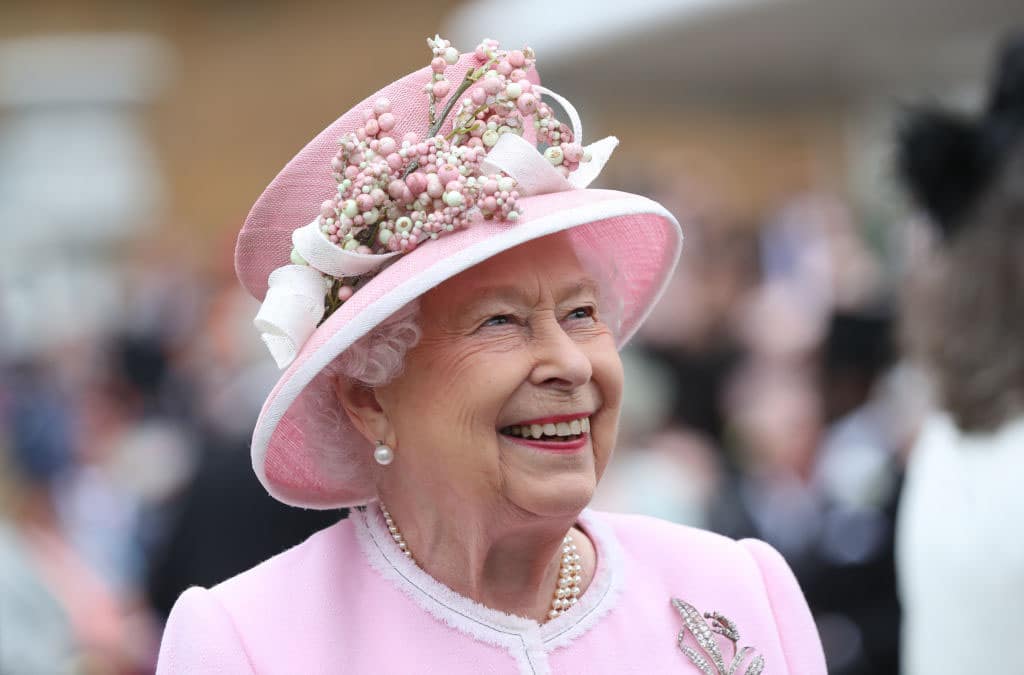
Israeli PM, Jewish Groups Mourn Queen Elizabeth

Israeli Prime Minister Yair Lapid and various Jewish groups issued statements mourning the passing of Queen Elizabeth II.

The royal family announced on September 8 that Elizabeth had died peacefully while surrounded by her family in her home. She was 96 and had been serving as the Queen of England since 1952. The cause of death has not been officially announced. Elizabeth will be succeeded by her son, Charles III, 73.

“On behalf of the Government and people of Israel, I send my condolences to the Royal Family and the people of the United Kingdom on the death of Her Majesty Queen Elizabeth II,” Lapid tweeted. “She leaves behind an unparalleled legacy of leadership and service. May her memory be for a blessing.”

The Simon Wiesenthal Center expressed “deep sorrow” over Elizabeth’s passing in a statement. “At the end of the most horrific war humankind ever experienced, when people the world over, questioned whether there were brighter days in their future, Princess Elizabeth ascended the throne as Queen of England and helped pave the road to a future of hope and decency,” the Wiesenthal Center said. “Ever since, the Queen has dedicated her life to the principles of tolerance and human dignity, helping to preserve and build on the legacies of Sir Winston Churchill and the sacrifice of millions who defeated Nazism.  Throughout her decades of leadership, Queen Elizabeth also displayed great empathy and respect for the Jewish Survivors of the Nazi Holocaust. We remember how moved our namesake Simon Wiesenthal was to receive an Honorary Knighthood from the Queen, shortly before his passing.”

Former Labour Member of Parliament (MP) Joan Ryan, the United Kingdom Director for the European Leadership Network’s (ELNET), said in a statement: “We send our sincere and heartfelt condolences to the Royal Family and the people of the United Kingdom on the passing of her Majesty Queen Elizabeth II. We pay tribute to her profound sense of duty and her unparalleled dedication to her country and her people. May she rest in peace and may her memory be a blessing.”

The Board of Deputies of British Jews also tweeted: “The Board of Deputies mourns the death of Her Majesty, Queen Elizabeth II. No words can fully describe the extent of our nation’s loss; Her Majesty’s wisdom, benevolence and dedication to duty served as an inspiration to generations. May Her memory be for blessing.”

British Chief Rabbi Ephraim Mirvis constructed a prayer commemorating Elizabeth, calling the late queen an emblem of “order and justice,” a “defender of faith” and “a steadfast guardian of liberty.” “In life, she was a most gracious monarch, who occupied a throne with distinction and honor,” the prayer stated. “In death, may her legacy inspire the nations of the world to live in peace.”

The Anti-Defamation League (ADL) tweeted, “We join with millions of people around the world in mourning the loss of Queen Elizabeth II, the longest reigning monarch in Britain and an inspiring and beloved figure who exemplified respect for all people and cultures. May her memory be a blessing.”

The American Jewish Committee (AJC) similarly tweeted: “AJC joins the people of the UK, the Commonwealth, and the world in mourning the death of Queen Elizabeth II. Queen Elizabeth was the embodiment of British resolve and grace for over 70 years and a dear friend to the Jewish people. May her memory be a blessing.”

B’nai Brith International called Elizabeth “an extraordinary woman and a beacon of strength.” “We are greatly saddened by the passing of Queen Elizabeth II, a towering figure who served her country unwaveringly for 70 years,” they tweeted. “As we honor her remarkable life and legacy, our hearts are with her family and the British people.”

World Jewish Congress President Ronald S. Lauder said in a statement that Elizabeth and her family “were beloved symbols of resistance to Nazi tyranny, refusing to leave London during the worst times of the Blitz and standing in solidarity under siege with their compatriots. The young Princess Elizabeth was an inspiration and source of comfort to Anne Frank in her hiding place in Amsterdam, and in 2015, she and her late husband, Prince Philip, visited the former Nazi concentration camp of Bergen-Belsen in northern Germany where Anne Frank died to commemorate its liberation by British troops. Queen Elizabeth’s refusal to flinch in the face of evil, but instead to fight it with every formidable fiber of her character, will be an inspiration for generations to come.” “On behalf of Jewish communities across the globe, I extend our deepest condolences to her family, and to the nation and people of the United Kingdom,” Lauder said. “May her memory and her example be for a blessing.”

StandWithUs also tweeted, “StandWithUs is deeply saddened over the passing of #hermajestythequeen, Elizabeth II. We send our condolences and stand with Her Majesty’s family and all the people across the United Kingdom at this difficult time. May The Queen’s memory be a blessing.”

NGO Monitor Founder Professor Gerald Steinberg tweeted: “Monarchs and monarchies are antiquated and elitist, but they can also provide social and political stability and sanity in an otherwise chaotic and irrational world. #Elizabeth2 did this brilliantly for 70+ years. May her memory be blessed.”

Israeli PM, Jewish Groups Mourn Queen Elizabeth Read More »

One for the Haters – A poem for Parsha Ki Teitzei

You shall not despise an Edomite, for he is your brother.
You shall not despise an Egyptian, for you were a sojourner in his land.

~Deuteronomy 23:8

I once heard the words hate is such a strong word
pass through someone’s lips. Outside of references
to mayonnaise, I tend to agree.

I wish I remembered who said it.
This common sense wisdom has haunted
my sensibilities since I first had memory.

Perhaps they were responding to me
having said I hated someone or something?
Once a rabbi gave a tour of burned Torah scrolls

to the individual who had done the burning.
The man asked for forgiveness and the Rabbi said
we can forgive, but we can’t forget.

I saw the whole thing on TV.
Every human is human, despite the things they’ve done.
Every human had a mother and father.

Every human takes full advantage of
the available oxygen supply.
Despite the lines we’ve drawn on the ground

to indicate what’s mine is mine and
what’s yours is yours, we all have a vested interest
in keeping the rivers flowing.

At least as long as we still have rivers.
At least as long as food travels from
farmers to plates. At least as long as

it takes a certain number of years
before children learn any words
let alone the one hate.


God Wrestler: a poem for every Torah Portion by Rick LupertLos Angeles poet Rick Lupert created the Poetry Super Highway (an online publication and resource for poets), and hosted the Cobalt Cafe weekly poetry reading for almost 21 years. He’s authored 26 collections of poetry, including “God Wrestler: A Poem for Every Torah Portion“, “I’m a Jew, Are You” (Jewish themed poems) and “Feeding Holy Cats” (Poetry written while a staff member on the first Birthright Israel trip), and most recently “I Am Not Writing a Book of Poems in Hawaii” (Poems written in Hawaii – Ain’t Got No Press, August 2022) and edited the anthologies “Ekphrastia Gone Wild”, “A Poet’s Haggadah”, and “The Night Goes on All Night.” He writes the daily web comic “Cat and Banana” with fellow Los Angeles poet Brendan Constantine. He’s widely published and reads his poetry wherever they let him.

One for the Haters – A poem for Parsha Ki Teitzei Read More »

The Queen of England was the Antidote to the Upgrade Generation

In June 1953, when Queen Elizabeth II ascended to the throne of England, gas was 20 cents a gallon and the average home rental was $80. A third of U.S. homes still didn’t own a phone.

But while the world underwent seismic changes during the nearly 70 years of her reign, besides aging she hardly changed a thing. The queen’s affinity for stability is the main theme of the many tributes pouring in after her passing on Sept. 8 at the age of 96.

Her death is a major news event because of her record longevity and her larger than life global presence. She was also widely beloved.

What stands out for me, though, is what the Queen stood for during her seven decades on the throne, and how it contrasted so sharply with the world around her.

It’s hard to think of a 70-year period in all of history that has seen more technological change than between 1952 and 2022. We now hold more information in our smart phones than those huge IBM mainframe computers from the 1950s that would take up a mini-warehouse.

In a world obsessed with upgrading, the Queen was an icon of conserving.

She reminds me of great artists who saw virtually no technological change during their productive lives. Shakespeare’s quill, ink and paper didn’t change much from his first masterpiece to his last. Picasso’s brushes, paints and canvasses saw few upgrades during the eight decades of his prolific output.

The Queen reminded us that while progress is a wonderful thing, some things in life require no upgrades. Creativity and drive are independent of technological progress. Good character traits last forever.

The Queen’s decency, grace and other character traits lasted her whole life, unchanged and unblemished. She was not above adapting to social change, however. As the BBC reports, her reign would “see great change, with the end of the British Empire overseas and the swinging ’60s sweeping away social norms at home.”

In the face of such change, “Elizabeth reformed the monarchy for this less deferential age, engaging with the public through walkabouts, royal visits and attendance at public events.”

But her commitment to the Commonwealth, the BBC adds, “was a constant.”

That’s what the Queen represented for so many and for so long: a constant.

As societal and technological change are sure to accelerate, her legacy will be to remind us that some of the best things in life never change.

The Queen of England was the Antidote to the Upgrade Generation Read More »

TEBH “Billy Joel” Shabbat Gala, Bronfman Fellowship

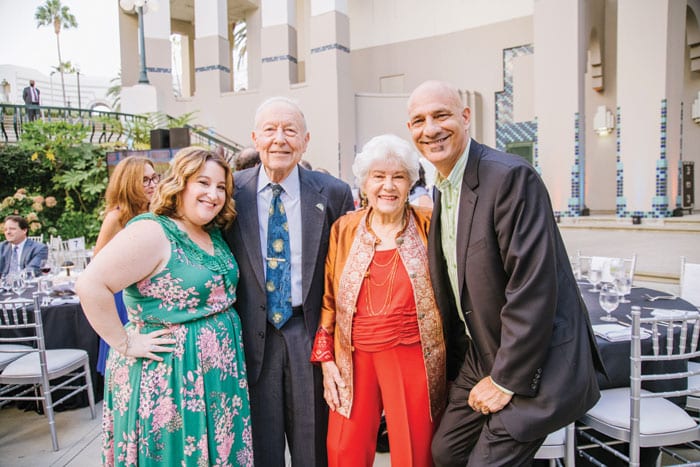
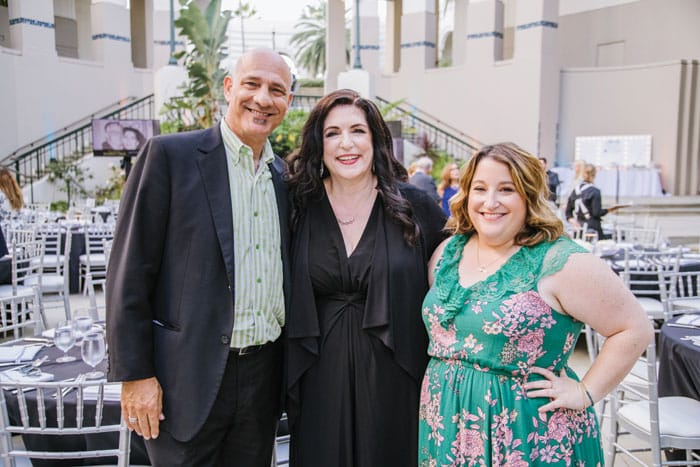
On Aug. 26, Temple Emanuel of Beverly Hills (TEBH) held a “Welcome Back Shabbat Gala,” honoring Lorraine and Jerry Factor and the Factor Family with the Legacy Award and Stacy Kesner with the Community Service Award.

The Factors are longtime members and supporters of the Reform congregation, and Kesner is director of TEBH’s Early Childhood Center. 


From left: TEBH Rabbi Jonathan Aaron, Stacy Kesner and Cantor Lizzie Weiss. Courtesy of Temple Emanuel of Beverly Hills

The Billy Joel-inspired service was held outdoors at the Beverly Hills Civic Center Boat Court. True to the theme, TEBH Cantor Lizzie Weiss, supported by the synagogue backing band, performed V’Shamru to the music of Joel’s “Uptown Girl” as well as Shma/V’ahavta to the “Piano Man’s” ”She’s Always a Woman to Me.” 

Midway through the evening, TEBH Rabbi Jonathan Aaron invited the honorees to the bimah to light the Shabbat candles.

“It was such a wonderful feeling to see everyone together again, celebrating our Temple Emanuel community, and honoring the Factor family and our beloved Early Childhood Center Director, Stacy Kesner!,” the synagogue posted on Facebook, where the video of the event was viewable.

“Next year’s Kiss!” Aaron said at the end of the evening. 

Weiss, however, had other ideas.

“No! Stevie Wonder!” the cantor said.


Bronfman Fellows. Courtesy of Bronfman.org.

The Bronfman Fellowship has announced that it is now accepting applicants for the 37th cohort of its transformative program, which is open to high school students in the U.S. and Canada who self-identity as Jewish and will be in 11th grade in the fall of 2022.

The 2023 fellowship, an all-expenses-paid program, selects 26 outstanding North American teenagers for an intellectually challenging year of programming, beginning with an immersive seminar that includes a five-week summer in Israel between the Fellows’ junior and senior years of high school, followed by monthly virtual experiences and two seminars in the U.S.

“The Fellowship is an opportunity for dynamic personal and intellectual growth in a group of carefully chosen peers,” Bronfman Fellowship Executive Director Becky Voorwinde said. “We seek to increase communication between young people across the Jewish spectrum including fostering bonds between Jews in North America and Israel. This program serves as a creative force that has inspired some of our best Jewish young adults to become leaders in their communities.”

The Fellowship was founded in 1987 by the late Edgar Bronfman, formerly CEO of the Seagram Company and a visionary Jewish philanthropist.

Applications for the 2023 Fellowship are due Dec. 5, 2022 and are available online at bronfman.org.

TEBH “Billy Joel” Shabbat Gala, Bronfman Fellowship Read More »

Memorable TV Quotes on the High Holidays

Back in the 1990s, on some episodes of “The Tonight Show with Jay Leno” on Rosh Hashanah or Yom Kippur, Leno would sometimes tell a joke that would fall flat. He would recover by quipping, “sorry, none of my Jewish writers are here today.”

So as we get ready for 5783, here are some television moments worth rewatching to get into the High Holy Days mindset. 

“Curb Your Enthusiasm”
Season 5, Episode 1: “The Larry David Sandwich”
Available on HBO Max

The Yom Kippur moment occurs when Larry is outside of his synagogue and approaches a High Holidays ticket scalper. 

“The cantor will be practically spitting all over you,” the ticket scalper said to Larry David, making his pitch to sell the tickets.

Although the best parts of the episode have to do with Larry David getting a sandwich named after him at a fictional restaurant called Leo’s Deli (filmed at the now-closed Mort’s Palisades Deli.) David is repulsed by the contents of the sandwich: onions, capers, white fish, sable and cream cheese. 

“The Marvelous Mrs. Maisel”
Season 2, Episode 7: “Look, She Made a Hat”
Available on Amazon Prime Video

One of the best exchanges in this episode occurs between Miriam “Midge” Maisel’s father Abe (played by Tony Shalhoub), her ex-husband Joel (played by Michael Zegen) and Joel’s father Moishe (played by Kevin Pollack). After Midge appeases her hungry son with chocolate as they all attempt to atone …

Moishe Maisel: “That’s his third candybar in case you weren’t counting.” 

Joel Maisel: “He’s four. A four-year-old shouldn’t have to fast. Not ‘till he’s bar mitzvahed.”

Moishe Maisel: “When I was a boy, I fasted. You know why I fasted? Because we had NOTHING! Every day was Yom Kippur!”

Abe Weissman: “Moishe, please I’m atoning.” He continues under his breath, “…for the things I’d like to do to that man, I apologize.”

“Entourage,”
Season 3, Episode 17*, “The Return of the King”

Available on HBO Max

*This was episode 5 in the third season which was broken into two parts. On some platforms, it is listed as episode 17, others as episode 5. 

This episode of “Entourage” shows Ari Gold (played by Jeremy Piven) having to resist the temptation to do business on the holiest day of the Jewish calendar. On the way into shul, Gold, his wife Melissa (played by Perrey Reeves) and daughter Sarah (played by Cassidy Sage Lehrman). 

Melissa: “Sarah, we fast and make other important sacrifices today to show God we’re sorry for our sins.”

Sarah: “Daddy ate a breath mint.”

Melissa: “What?”

Ari: “Now you’re gonna have to atone for ratting Daddy out, baby. What? You think God wants my breath to smell?

In the lobby of the shul, Gold then has a business dispute with acquaintance NIcky Rubenstein (played by Adam Goldberg).  In front of both families, Gold says that will not be using the phone on that day. Gold then, walks a few steps away with his family, turns around, and flashes his cell phone to Nicky, who smiles and nods.

“The West Wing”
Season 3, Episode 4*: “On The Day Before”
Available on HBO Max

*Since the season premiere was a two-part episode, some platforms credit this as either episode four or five of the season. 

Near the end of the episode, it is revealed that a Palestinian suicide bomber killed Israelis in a terrorist act the day before Yom Kippur.

Press Secretary C.J. Cregg (played by Allison Janey) says at a press conference that the President urges both Palestinian and Israeli leadership to abide by a ceasefire.

In the Oval Office with his senior staff, President Jeb Bartlet (portrayed by Martin Sheen) holds a meeting to discuss how to handle his public response.

In a dialogue with Deputy Chief of Staff Josh Lyman (played by Bradley Whitford) and Communications Director Toby Ziegler (played by Richard Schiff), Bartlet takes a long pause before giving his staff some perspective: 

President Jeb Bartlet: “On Yom Kippur, you ask for forgiveness for sins against God. But on the day before Yom Kippur you ask forgiveness for sins against people. Did you know that?”

Toby Ziegler: “Yeah it’s called…I can’t remember.”

Josh Lyman: “Erev.”

Toby Ziegler: “Erev Yom Kippur.”

President Jeb Bartlet: “You can’t ask forgiveness of God until you ask forgiveness of people the day before.

Yeah I’m gonna do this alone. Goodnight everybody.”

The President then places a call to (presumably) the family of one of the murdered Israelis.  

“Transparent,”
Season 2, Episode 7, “The Book of Life”

Available on Amazon Prime

This episode is heavily focused on the High Holy Days, from the character Maura Pfefferman (played by Jeffrey Tambor) performing the ritual of Tashlich, to the family (who is not very religious) breaking the fast together following Yom Kippur services. 

Ari Pfefferman (played by Gaby Hoffmann) speaks to the table of family members about the questioning of her own Jewishness. But in the end, Ari says, “So take a bagel, hold it aloft and… does anybody know the blessing?” 

Ari then says a cringeworthy “Happy Yom Kippur,” before being corrected with a “Good Yontif” as the episode comes to an end. 

“The Simpsons”
Season 5, Episode 19: “Sweet Seymour Skinner’s Baadasssss Song”
Available on Disney+

While the plot of this episode is not of importance for this article, one particular quote may ring of a familiar situation that Jews may have experienced while excusing themselves from work or school to observe the holiest day of the year. 

The Principal of Springfield Elementary School, Seymour Skinner (voiced by Harry Shearer), admits a grave error while on the phone with the superintendent. 

“I know Weinstein’s parents were upset, superintendent, but I was sure it was a phony excuse. I mean, It sounds so made-up. ‘Yom Kip-Pur?’”

The name “Weinstein” could be a nod to longtime “Simpsons” scribe and one of the writers of the episode, Josh Weinstein.


Lou Stone Borenstein, Jeff Hysen, Dylan Hysen and Greg Prince helped contribute to this article.  

Memorable TV Quotes on the High Holidays Read More »

Producer Becky Morrison Looking to Bring ‘Light’ to Show Business

There’s no question that show business is not the healthiest industry. The past few years have shown the world just how harmful it can be to the people working in it.

Becky Morrison, who runs the production company The Light and has worked on Netflix spots, the movie “I Am Legend” and a Lexus commercial starring Duchess of Sussex Meghan Markle, knows the darker side of show business all too well.

“You see all these things as a result of the toxic culture: Me Too, Time’s Up, Oscars So White and what happened on the set of ‘Rust,’” Morrison told the Journal. “They happened as a result of the culture of production, which doesn’t care about people at all. It only cares about profit.”

Morrison is looking to change production culture with The Light. She is committed to four ethos: Inclusion, sustainability, agility and enjoyability. She hires people who don’t normally get the chance to work in production because of the business’ homogeneity, and she wants to change the industry from the inside. 

“Diversity, equity and inclusion often center around hiring, but we’re still bringing them into a system that is toxic,” she said. “What we are looking to do, in addition to bringing underrepresented people into production, is change the way production is done to make it more equitable, inclusive, human-centered and kind.” 

Along with hiring underrepresented people, Morrison strives to create a better working environment for her employees. Her dream is to transform the decades-old model the business was founded on. 

“A few guys with top hats and mustaches created the production process and system we have now over 100 years go,” she said. “By studying the history of production, I became very aware that it’s not only possible, but also probable, that we can create a new way to do production for the next 100 years.”

On The Light’s website, there is a brief history of production, and how it mimicked Henry Ford’s assembly line to churn out movies fast for audiences. This model, Morrison argues, doesn’t work anymore.

“The paradox of our business is that sometimes after a day on set making dreams come true, the crew is left feeling abused and exhausted,” her site states. “The problem is: this process is extractive. By focusing only on efficiency and profit, it ends up depleting our industry’s most valuable resource, creativity.”

Morrison and her team are certainly creative. They’ve made sleek and modern commercial spots for “Star Wars,” JCPenney, BBC America and BET featuring celebrities like Bill Murray, Fred Armisen and Cara Delevingne.  

The producer grew up watching movies with her dad, whom she calls a “cinephile.” He’d make popcorn every night and sit down to watch TV and movies and quiz his daughter on old films. She received her training from New York University, where she studied film and television.

“We were a Hollywood-centric family,” she said. “When I got into NYU, I realized I could have a career in film production.”

While she was attending school and living in the city, she would see productions shooting in the streets and want to be part of them. 

While she was attending school and living in the city, she would see productions shooting in the streets and want to be part of them. 

“It was all around me,” she said. “But I couldn’t figure out how to get in.” 

Then, one day, her friend had a production assistant job she couldn’t take, so she called Morrison. It was Morrison’s first gig as a PA. Since she was always available, she started getting more and more jobs. That was 20 years ago. Job by job, she worked her way up to start her own successful company. 

Entrepreneurship is in Morrison’s blood. Her grandfather owned a very famous New York deli, The Gaiety Delicatessen, which was open for over four decades. 

“When people ask me where I’m from, I say I’m a New York Jew,” Morrison said. “I’m a fourth-generation New York Jew.” 

Morrison, whose family came from Eastern Europe, attended Hebrew school, had a bat mitzvah and went to The Brotherhood Synagogue in Manhattan when she was younger. Today, she describes her religious beliefs as more spiritual than anything else. The spiritual name of her production company, The Light, is no coincidence. 

“The whole goal of life is to bring more light,” she said. “We need to allow the light inside of us to shine. I love the frequency and energy of the light. People say, ‘I work with the Light.’ We really get to be a beacon of light in this industry.”

Producer Becky Morrison Looking to Bring ‘Light’ to Show Business Read More »

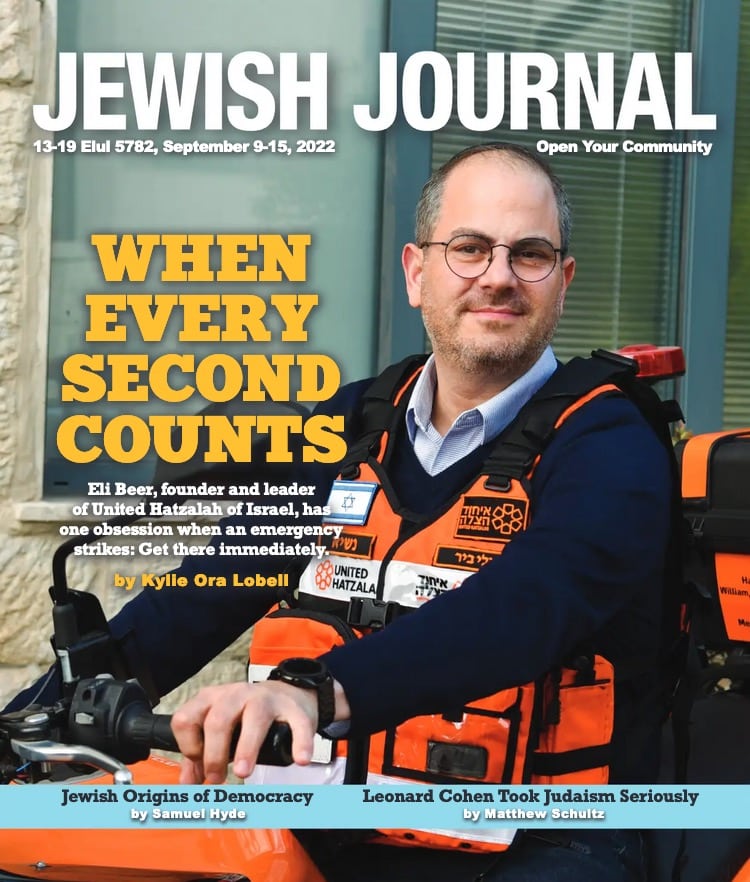
Print Issue: When Every Second Counts | Sep 8, 2022

CLICK HERE FOR FULLSCREEN VERSION

Print Issue: When Every Second Counts | Sep 8, 2022 Read More »

Table for Five: Ki Teitzei

One verse, five voices. Edited by Salvador Litvak, the Accidental Talmudist

You shall not see your brother’s donkey or his ox fallen [under its load] on the road, and ignore them. [Rather,] you shall pick up [the load] with him.

– Deut. 22:4


Miriam Kreisman
President, Tzaddik Foundation

When I made teshuvah (became religious), I tried to pull my sister in. Let’s call me “Ethical” and my sister “Dilemma”. 

Dilemma’s biggest issue was the Torah’s view on homosexuality. We couldn’t agree. So we agreed to disagree. But many years later, the relationship got hairier. Her 4-year-old son decided he was a girl. 

Transgender is so much more complicated than most people understand. Most often, it comes with other social, behavioral, and mental problems. I personally thought the child needed what my family had to offer: Strong borders and rules, loving older cousins, and God. My sister thought he/she needed our adherence to present-day values and modern psychology dictates in order to prevent a potential suicide situation, God forbid. 

We lived practically next door for over six years. Recently, Dilemma and her husband decided to move to another city two hours away. They want to make a new start for their “daughter.” I couldn’t help them pack, hoping they would change their minds. They leave in two weeks. And it hurts so much. 

So what does this have to do with the posuk? When I saw the posuk, I made up my mind. I will surprise them by showing up with my kids to help them unpack. Because when someone has a difficult burden to bear, it’s a big mitzvah to help with the load. Especially when it’s your brother or sister. Pshat. 

Dedicated to my mother, Feigl Rut bas Suzman HaLevy z”l, who always loved a good ethical dilemma.


Rabbi Elchanan Shoff
Beis Knesses of Los Angeles

With him! Pick up the load with him, says the verse. 

We must realize that the true helping of another person is “with them.” One who visits a sick friend, teaches the Talmud, takes away a little bit of that person’s suffering, but only if he is what the Talmud calls “ben gilo,” which Rashi explains, someone with similar mazel. 

This seems to mean that only if you feel similar to that person can you really comfort them. Often one hears that something bad happened to another person and says, “well, he was a smoker,” or “she didn’t exercise like I do.” If we can show a difference between them and us, we can feel safe. But true empathy is when we feel just the same as another person and realize that it could have been us. 

I once had the heart-wrenching experience of attending the funeral of a small baby, just five months old. I recall another couple who were there who had a child just the same age crying such bitter tears. To them, the fear and pain and loss was so much closer to home. 

Looking down on those less fortunate from our own ivory towers is not enough. We must truly feel connected to others if we are to help them. If we have words of constructive criticism for other people or communities, we must clearly communicate that we are together. To truly comfort, heal, help and reach others, we must be “with them.” 


Laya Saul
ChildrensMuseumoftheGalilee.org

Torah teaches and conditions us to be full of chesed (kindness and compassion). It’s such a strong value that the Talmud tells us we can suspect a person who isn’t compassionate is not a Jew (Beitzah 32b). We learn to host travelers, visit the sick, attend funerals, and bring food to mourners. We dance with brides and grooms, feed new mothers, and we generously give our time and money to support great causes. In this verse, we’re commanded to help our brother when his beast of burden falls. 

Our verse gives us a hint in the very last word, “imo” (with him), that there is a boundary to our “chesed.” We are not asked to do our brother’s work for him. We are asked to help with him. If his animal fell, chances are he overburdened or overworked it. Some things you have to learn the hard way. But if our brother is sitting by the side of the road expecting someone else to lift his load, we are exempt from helping. He needs to get up and put in the effort. 

So how good are you with boundaries? Sometimes the boundary is to push ourselves beyond and give more generously; it’s a wondrous thing to give. Sometimes the boundary is to see that we can only truly help others when they are putting in the effort to help themselves. 

Of course, the same holds true for us. If we need help, we’ll work together!


Ilana Wilner
Judaic Studies Teacher & Israel Guidance, Ramaz Upper School

This week’s parsha states if we see a fellow person’s fallen animal we must not ignore it, we are commanded to help repack the load and get the person back on the road. We must be proactive. And we must do so even when we will not be there at the end of the journey to be acknowledged or recognized. 

This is an important idea relevant more broadly in our lives. The Torah is asking us to be observant and support the journey and goals of another, even in those instances where while we may be integral to the success of the journey, our contribution will be unseen and unknown. 

For me, this mitzvah highlights my hakarat hatov for an informal mentor. A woman who coaches and guides me through difficult conversations and choices, and the proactive steps she takes to support me on my professional journey. At the same time she reminds me that these are my decisions, my journey and my accomplishments. In the same way the commentators on this pasuk emphasize that this commandment is not to take on the other person’s burden but work together with them. I am grateful and in awe of her. We all hope to have those people in our lives, those who help and support us on our journey, and we must keep an eye out for ways we can support others, even while knowing it is their journey to take. 


Rabbi Ilana Grinblat
VP of Community Engagement, Board of Rabbis of Southern California, The Jewish Federation of Greater Los Angeles

Recently, I spoke with a chaplain who works at Philmont Scout Ranch in New Mexico, the largest youth scout camp in the world. The camp is named after Waite Phillips, who together with his wife Genevieve, donated 127,000 acres of land to the scouts. 

This camp features one- to three-week backcountry treks where participants carry on their backs 30- to 50-pound packs with all their supplies, including tents, food, water, and clothes. The scouts hike about 10 miles per day. They climb mountains and rappel down rock formations. 

The chaplain recounted that on a recent trek, one scout contracted altitude sickness and was up much of the night vomiting. In the morning, when the ailing scout picked up his pack to start hiking, it was empty. His fellow scouts had divided the contents of his pack among themselves to carry them for him. 

The chaplain also recalled how one scout couldn’t make it all the way back to camp on the last day. He became exhausted shortly before reaching the camp. His fellow scouts carried him the rest of the way. The chaplain was so moved by the kindness of these teens, he fought back tears as he told me these stories. This verse calls on us to lighten each other’s burdens and make sacrifices for one another. 

Indeed! As Waite Phillips of blessed memory said, “The only things we keep permanently are those we give away.” 

Table for Five: Ki Teitzei Read More »