fbpx

September 1, 2022

Voting With Our Feet: The Political Choice We Rarely Talk About

When we talk about political freedoms, we usually talk about the essential freedom to vote. In recent years especially, we’ve heard a lot about “voting rights” and “electoral integrity” as the foundations of democracy.

This powerful right to vote typically refers to the ballot box. But there is another, perhaps even more powerful and democratic way to vote—and that is with our feet. This is our freedom to move to a place, usually another state, that better suits our needs.

Most of us know people who have voted with their feet and moved to another city or state or even country, having lost patience with things like rising crime, high taxes, homelessness, poor education, unaffordable housing and congestion.

Because “voting with our feet” gets so little media attention as a legitimate political choice, it has the stigma of being the atypical, rebellious choice– what people and companies do when they “can’t take it any more” and escape to a friendlier state.

But as more and more people vote with their feet and as this becomes more widespread and mainstream, individual states will have no choice but to aggressively compete for residents. And that will be a good day for our democracy, not least for the poor and disadvantaged.

Yes, it’s our civic duty to vote at the ballot box, but let’s face it: The hard reality is that such individual votes have limited impact.

Ballot box voting has “two severe limitations,” writes George Mason University Professor Ilya Somin, in his book “Free to Move: Foot Voting, Migration and Political Freedom.” One is “the very low odds that an individual vote will make a difference,” and two is “the resulting incentive to make poorly informed decisions.”

In a presidential election, he writes, “the average voter has only about a 1 in 60 million chance of affecting the outcome… in state and local elections, the odds are higher but still generally very low.”

Foot voting is the antidote to this lack of individual impact at the ballot box.

When we do vote at the ballot box, we often vote on emotion or party loyalty. We’re not inclined to do our homework on the many issues. Our decisions are based, as much as anything, on the images we inhale from the media ecosystem. Everything gets slotted into our predisposed binary of good/bad, right/wrong, love/hate.

When we vote with our feet, we’re dealing with a consequential decision that will have a major impact on our lives. So we must do serious homework and seek out more information. This puts us in control. We feel empowered.

Foot voting is especially relevant for the poor and the disadvantaged. Somin quotes research showing that “moving to an area with lower poverty rates can have particularly large benefits for the life prospects of poor children, substantially increasing their incomes and college attendance rates.”

The problem is that our governmental system does little to nourish this fundamental right. If anything, Somin argues, “the enormous size and complexity of modern government” is taking us in the other direction, where “federal regulation now extends to cover almost every major aspect of the economy and society, including health care, education, pensions, consumer regulations, on down to shower head and toilet flows.”

The ironic result is that foot voting becomes most difficult for those who have the most to gain—the working class.

A classic example of an obstacle is the rise of exclusionary zoning, which makes it extremely difficult to build new housing in response to demand. And yet, building affordable housing should be a nonpartisan issue. As Somin notes, this is an area “where there is a strong, even if often unrecognized, common interest between the increasingly Republican white working class and their mostly Democratic Black and Hispanic counterparts.”

Indeed, if foot voting is to be elevated as a prominent democratic right, the working class must be put at the center of the movement.

A crucial step is for the federal government to devolve control over more issues to state and local governments. But our government doesn’t give up control that easily; it prefers to control and regulate the states through its power of the purse.

“Government increasingly regulates through conditions on its largess rather than through law,” Columbia Law School Professor Philip Hamburger writes in his book, “Purchasing Submission: Conditions, Power and Freedom.”

Hamburger’s main thesis is that by using funding as a lever, the federal government implicitly imposes regulations and policies on all states, a process he argues is “unconstitutional” and “threatens people’s freedoms.”

Among those compromised freedoms is the freedom to vote with our feet, which is, ultimately, the quintessential American freedom—that ability to hit the road in search of a better life.

This search for a more hopeful future lies at the heart of the American experience, and it often includes moving to another state. Even with an overbearing federal government, the states must not wait to start competing for residents. There are already many that do. They understand that foot voting is in keeping with the great capitalist notion that competition benefits the consumer– that when states compete with other states for residents, the people invariably win.

I want to know, for instance, that the leaders of my own state are doing everything they can not just to keep me here but also to attract more people here. Are they?

I often wonder to what extent the leaders of declining states like New York and California, which have lost countless residents to other states, are worried about such things.  We can only hope that as foot voting grows and gets more media attention, smarter leaders, both nationally and locally, will wake up and honor this democratic right. We’ll know we’ve made progress when state leaders of both political parties include this commitment at the top of their platforms: “We will make our state more attractive to foot voters.”

That platform would be worthy of support at the ballot box.

Voting With Our Feet: The Political Choice We Rarely Talk About Read More »

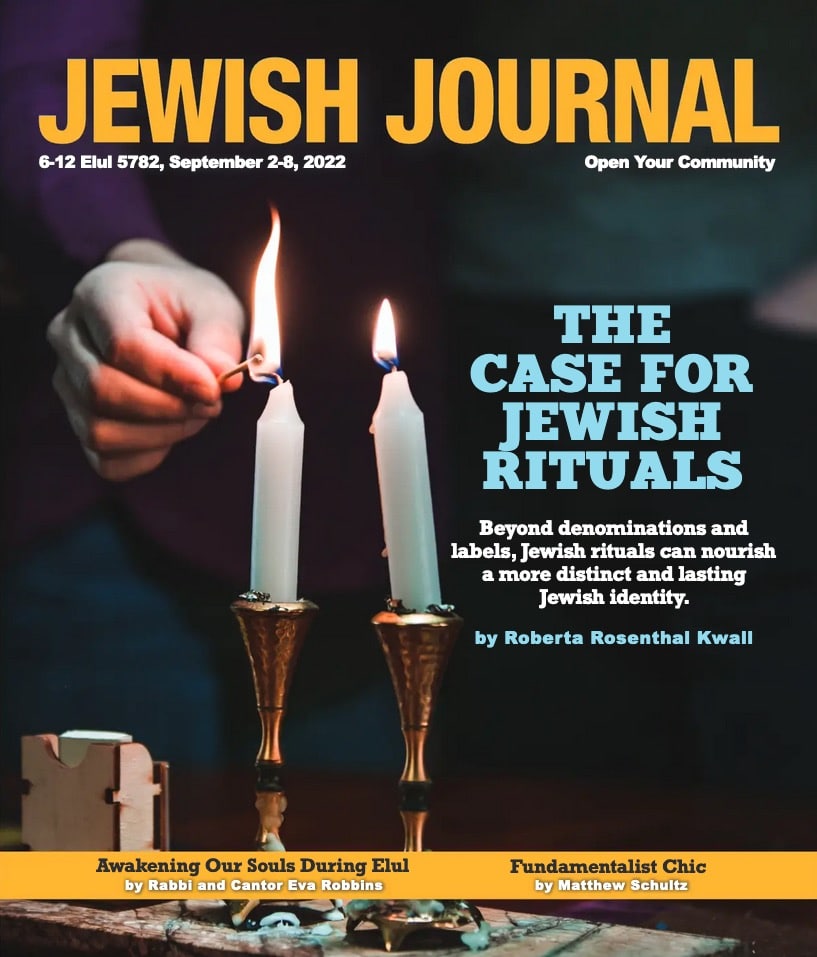
Print Issue: The Case for Jewish Rituals | Sep 1, 2022

CLICK HERE FOR FULLSCREEN VERSION

Print Issue: The Case for Jewish Rituals | Sep 1, 2022 Read More »

Dr. Avraham Perlmutter, 1927-2022

Avraham Perlmutter, Ph.D. passed away peacefully on August 17, 2022, in Pacific Palisades, CA, at the age of 94.

His inspirational life story was featured in the Jewish Journal on April 26, 2017.

Avraham was an award-winning scientist, businessman, author, and public speaker.  He was born on August 28, 1927, in Vienna, Austria to Chaim and Malka Perlmutter. After Nazi Germany annexed Austria in 1938, his parents sent him on the Kindertransport to the Netherlands. During the ensuing war-torn years, Avraham braved harrowing captures, daring escapes, torturous hiding, and heartbreaking losses. Yet he also experienced the goodness of humanity through the strangers who helped him.

He emerged from the Holocaust with a positive perspective on life, choosing to focus on the people who helped him rather than those set on defeating him. Surviving the Holocaust took ingenuity, guts, and sheer determination—all of which he called on again, when he joined the Haganah and then fought to establish the State of Israel during its War of Independence.

Fluent in seven languages, he went on to pursue his education in the United States, earning a B.S. in three years from the Georgia Institute of Technology, a Master’s Degree from Princeton University, and a Ph.D. in Aeronautical Engineering from the University of Pennsylvania. Avraham founded a successful engineering company with two partners, and they developed many innovative products, including the Dynalens, an image stabilization system that won a Scientific and Technical Academy Award.  He subsequently founded several other businesses.

For many years, Avraham shared his extraordinary life story and its universal lessons, including the importance of possessing determination and resilience, of helping others, of having compassion, empathy, and tolerance for all people, and of obtaining a good education. He spoke to thousands of people at museums, schools, and other venues. His inspirational tale was also conveyed by his #1 best-selling autobiography, Determined: The Story of Holocaust Survivor Avraham Perlmutter, and the award-winning documentary of the same name.

Avraham was a very loving, warm, caring, and kind person, and he loved to help others. He enjoyed reading, playing chess, tennis and ping-pong, jogging, and playing cards with his friends.

Devoted to his family, he was a beloved husband, father, and grandfather. He was married to his wife, Ruth (z”l), for 62 years. He is survived by his children, Michael (Pam) Perlmutter, David (Wendy) Perlmutter, Sharon (Andy) Gavin, and Keren Perlmutter, and his grandchildren, Emily, Josh, Zachary, Rachel, and Alex.

A private service was held by Sholom Chapels Mortuary at Hillside Memorial Park. Donations in Avraham’s name may be directed to the American Society for Yad Vashem, the Jewish Federation of Greater Los Angeles, or Chabad North of Montana.

Dr. Avraham Perlmutter, 1927-2022 Read More »

Actor Eric Ladin On the Origins of His Acting Intensity

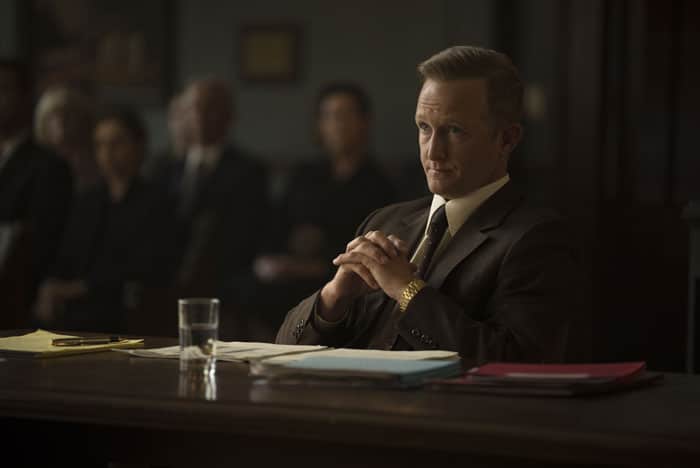
When actor Eric Ladin was only 14 years old, he saw a film that would set him on a life-long mission to be an actor: the 1992 Rob Reiner film “A Few Good Men.” 

Ladin was so inspired by Tom Cruise’s performance as the bulldog of a prosecutor, Lt. Daniel Kaffee, that he went to see the film in the theater ten times.

“I fell in love with watching courtroom stuff as a young adult,” Ladin told The Journal. “I fell in love with movies about trials. I’ve always loved watching litigators work, especially good ones.”

He was barely a year removed from his Bar Mitzvah, but he already had a clear dream to play prosecutor on screen. 

That dream would come true in 2022 with his role as Eric Chastain in the critically acclaimed film, “Where the Crawdads Sing.” In that film adaptation of the bestselling novel, Ladin channeled his Texas roots to play a cunning, smooth-talking southern prosecutor in a murder trial. Any time Ladin’s character speaks in the courtroom, there is little room for doubt in the defendant’s guilt. He performs with a ferocious certainty that can only come from someone who has watched and re-watched Cruise’s captivating scenes in “A Few Good Men.”

“It’s a coming-of-age story about a young girl in the swamps who’s a complete outcast,” Ladin said of the film. “And I think that there’s a little bit of that in all of us. We’ve all found some point of our life where we’re trying to find our people in our community. And woven within that story is a murder mystery, because she’s on trial for murdering another young person in the town. For those who haven’t read the book I think they’ll be taken on a beautiful ride — it’s shot absolutely beautifully.” 

Ladin’s list of roles throughout his acting career is an impressive resume of job titles. He played FBI Director J. Edgar Hoover on “Boardwalk Empire,” and Dr. Roquet Walker in “Big Love” — both on HBO. He also played hard-headed NASA flight director Gene Kranz on the Apple TV+ show “For All Mankind,” as well the role of Jamie Wright, a young ruthless campaign manager in Netflix’s “The Killing.”

One of his most memorable roles was as a foul-mouthed U.S. Marine Corps Corporal James Chaffin in the Emmy-nominated HBO miniseries “Generation Kill.”

“My favorite thing about “Generation Kill” is that veterans come up to me all the time and tell me how much they enjoy that show and how realistic it is to the actual life of a soldier,” Ladin said. “I love that because we really worked hard to make it feel as realistic as we possibly could.” 

Ladin humbly attributes his memorable roles to great storylines, but he has clearly carved a reputation for playing the roles of intense characters. He credits his early theater experiences in Houston at The Kincaid School for forging his ability to impress not only casting directors but audiences. 

Long before starring in several award-winning TV shows and films, Eric Ladin was just a kid in Houston, Texas who loved acting in local theater. 

Ladin said that he loved growing up Jewish and that going to services is still very much part of his life.

When he had his Bar Mitzvah in 1991, he wasn’t the least bit nervous, having prepared for it like a theater performance. After describing his Bar Mitzvah as one of his earliest successful stage/Bimah performances, Ladin discussed why he thinks live theater and in-person synagogue attendance will be returning to pre-pandemic levels soon.

“There’s an energy that’s palpable when you’re in a synagogue … when I want to hear a Cantor sing, I want to hear it — and not out of my computer speakers.”   

“There’s an energy that’s palpable when you’re in a synagogue,” Ladin said. “And I wish I could be in a room with casting directors and directors and work with them for all of the audition processes and not do that over Zoom. There’s just something, the three dimensions of it all that you miss, as opposed to the two dimensions you’re looking at on your computer screen. When I want to hear a Cantor sing, I want to hear it — and not out of my computer speakers.”

“Where the Crawdads Sing” is still in theaters. Ladin also can be seen in the 4th season of “Ozark” on Netflix.

Actor Eric Ladin On the Origins of His Acting Intensity Read More »

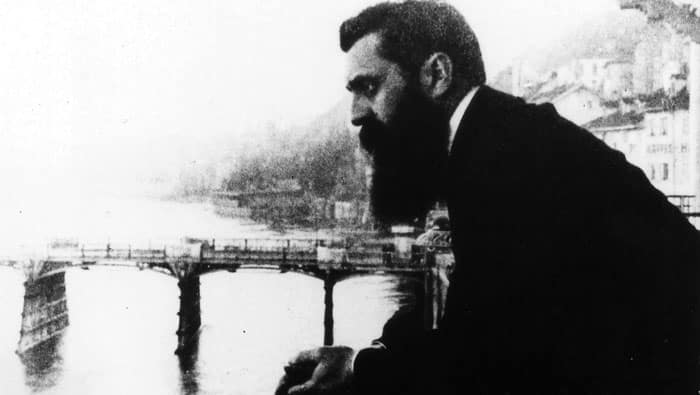
The Real Herzl: Haunted by Jew-Hatred Early On, Like Most European Jews

Editor’s note: Excerpted from the new three-volume set, “Theodor Herzl: Zionist Writings,” the inaugural publication of The Library of the Jewish People edited by Gil Troy, to be published this August marking the 125th anniversary of the First Zionist Congress. This is third in a series. 

In 1866, a young Theodor Herzl enrolled in a Pest Jewish Community primary school, the Pester Israelitische Normalhauptschule. Four years later, he moved to Pest’s Technical School, the Realschule, remaining for the next five years. By 1876, he would be attending a Protestant high school, Evangelische Gymnasium. Along the way, on May 3, 1873, Herzl had a confirmation or bar mitzvah – it remains unclear how Jewishly rich it was – or how Jewishly literate he ended up being. 

Much of Herzl’s adolescent identity crisis was of the usual, bourgeois, “What do I want to be when I grow up?” variety. In 1874, when he founded the “Wir” (We) literary society, he turned from technical studies toward the literary passions that would define his professional life. He was also snarled in a typically Austro-Hungarian dilemma about linguistic identity, apparently switching back and forth between the Magyar and German languages effortlessly. It is significant that Herzl lived in the unstable Austro-Hungarian Empire, with its patchwork quilt identities, as opposed to more monolithic countries such as Germany and France. Subsequently, Herzl would recall encountering Jew-hatred from students and teachers in his overwhelmingly Hungarian technical school. Despite its name, the Protestant high school was filled with Jews like the Herzls, trying to fit in, unhappy standing out, but still consciously, somewhat proudly, Jewish.

Then, in 1878, weeks before turning eighteen, Herzl endured the greatest – and most uprooting – tragedy of his life. His only sibling, his beloved older sister by one year, Pauline, died of typhoid fever days after contracting it. Within a week, the family settled a longstanding debate and moved to Vienna, into an overwhelmingly German-Jewish milieu. This move rushed Herzl away from hard memories – but wrested him away from comforting evocations of his sister too. 

Still grieving, Herzl studied law at the University of Vienna. His choice was practical, ambitious, conventional. While working his way to graduating with a doctorate in law in 1884, Herzl indulged his real passion, writing comedies, essays, poems. 

Herzl was drawn to the world of politics and the realm of the spirit. He wanted to be a man of the world engaging in the creative chaos of turn-of-the-century Vienna as the Austro-Hungarian Empire began to implode. But he also wanted to be a man of letters, floating above daily life in the eternal struggle over the big questions. 

In 1894, watching the French novelist and nationalist parliamentarian Maurice Barrès become increasingly right-wing and aggressive, Herzl would sneer that the “political mendacities of Barrès the politician have effectively killed the artist in him.” Revealing a long-term struggle he resolved in the opposite way, Herzl would conclude that “any ‘artist-politician’ who attempted to make art serve the rebellion against that legal culture, such as Barrès, was in effect committing moral, and hence artistic, suicide.” 

Embracing his German identity, fascinated by the romantic nationalist currents sweeping Europe, Herzl joined the Akademische Lesehalle, a non-partisan student cultural association, shortly after enrolling at the university. In 1880, he joined the German nationalist fraternity, the Akademische Burschenschaft Albia. Both organizational affiliations ended badly – because German nationalism was becoming increasingly addicted to Jew-hatred while morphing into a new, totalitarian, race-based ideology hostile to assimilating outsiders. The Akademische Lesehalle was disbanded after hosting a Jew-bashing speech by an influential German parliamentarian, George Ritter von Schönerer. And Herzl was one of the last three Jews Albia accepted. Shortly after a memorial for the Jew-hating German national composer Richard Wagner, which included a representative of Albia joining in a chorus of antisemitic speeches, Herzl threatened to resign. To his shock, his mates accepted his resignation. Even worse, no other Jews joined his protest.

This growing scourge of Jew-hatred burdened Herzl. In 1882, he read Wilhelm Jensen’s account of fourteenth-century Jew-hatred, “The Jews of Cologne.” He also read Eugen Dühring’s depressingly popular 1881 anti-Jewish screed, “The Jewish Problem as a Problem of Race, Morals and Culture.” Dühring found the Jewish presence so cancerous it had to be removed. Herzl would say that reading it was like getting “a smack” on the head. In 1895, explaining his emergence as a Zionist activist, Herzl wrote, “Thirteen years is my estimate of the period during which this idea took shape in my mind.” Just as the Jew-haters started seeing various unappealing traits as endemic to the Jewish character, Herzl started seeing Jew-hatred as endemic to the European character.

Much of the Jew-hatred Herzl witnessed was intellectual and ideological. Occasionally it was personal. 

Much of the Jew-hatred Herzl witnessed was intellectual and ideological. Occasionally it was personal. In 1888, as he left a pub in Mainz, someone called out “Hep, hep,” the chilling Crusader cry “Hierosolyma est Perdita” [Jerusalem is lost], which inspired German anti-Jewish riots in 1819. One shout led to another, as others in the crowd mocked this proud man – and his Jewish looks. Another time, Herzl would recall, “Someone shouted ‘Dirty Jew’ at me as I was riding by in a carriage.”

Herzl often showed more spine than his peers. He would recall “as a green young writer,” being advised “to adopt a pen name less Jewish than my own. I flatly refused, saying that I wanted to continue to bear the name of my father.” Herzl “offered to withdraw the manuscript.” The editor caved.

Early on, when he was still trying to fit in, there were clear signs that the Theodor Herzl that always was – was the Theodor Herzl he eventually became.


Professor Gil Troy is the author of The Zionist Ideas and the editor of the three-volume set, “Theodor Herzl: Zionist Writings,” the inaugural publication of The Library of the Jewish People, to be published this August marking the 125th anniversary of the First Zionist Congress.

The Real Herzl: Haunted by Jew-Hatred Early On, Like Most European Jews Read More »

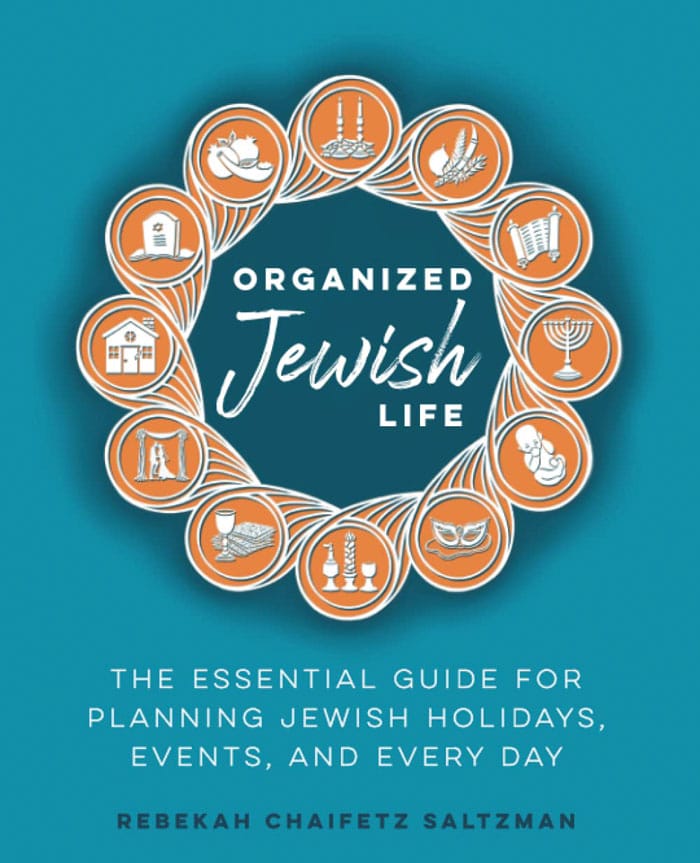
Professional Organizer Transforms Her Skills Into a Book on Jewish Life

Some people give tzedaka or sponsor lectures in memory of their loved ones. The more affluent write Torah scrolls or donate rooms or buildings to hospitals or Jewish Studies programs. After Rebekah Chaifetz Saltzman’s mother passed away, she wrote a book, dedicating it to her mother, Ruth Greenberg Chaifetz (Esther bat Sarah v’Yitzchak), “who always knew what to do, in every situation.” 

And it’s not just any book. Remarkably, only two years after her mother’s death, Saltzman’s 312-page book was on the shelves, beautifully organized and a treasure trove of information, which isn’t surprising since she has worked as a professional organizer since 2012. Saltzman also conducts online group sessions globally in addition to in-person services for central and northern Israel. 

“Organized Jewish Life, The Essential Guide for Planning Jewish Holidays, Events, and Every Day” will guide and inform you on Jewish life. It will even entertain you. There are concise and colorful explanations of every Jewish holiday and life cycle event, for which the author notes basic laws and customs, user-friendly instructions, comprehensive checklists and tips, and short historical backgrounds. Saltzman advises how to declutter your home and your mind, how to “reduce and reuse,” how to manage laundry and food shopping (“how to simplify your life while enhancing and maintaining the joy”), all in the context of Jewish holidays or life cycle events. Among her most important bits of wisdom are: Ask for help when you need it, offer help to others, and know your limits. She also shares personal memories, which makes the book eminently relatable.

Thankfully, she includes Sephardic customs, which was a personal treat for me, as I have several Sephardi or part Sephardi children-in-law. Her section on dinner after the fast cites customs of Jews from France, Morocco, Greece and Bulgaria. 

Regarding laws and customs, Saltzman has several disclaimers that, when in doubt, one should consult one’s rabbi or halachic advisor. The book is clearly targeted to people committed to their Judaism; even if one is not Orthodox, there is a great deal to learn from it. Thankfully, she includes Sephardic customs, which was a personal treat for me, as I have several Sephardi or part Sephardi children-in-law. Her section on dinner after the fast cites customs of Jews from France, Morocco, Greece and Bulgaria. 

Throughout the book Saltzman has scattered “Critical Notes” and tips that often address health and safety issues. She has a note on fire safety, and the chapter on Purim includes a note about alcohol safety. The Yom Kippur chapter includes a note on health issues relating to fasting, in which she also advises readers to consult with their doctors and rabbis. 

Saltzman explains in detail the traditional Jewish wedding, and her wedding chapters include issues relating not just to laws and customs, but also to financial planning and the critical importance of having a halachic prenuptial agreement. “Refusing to sign a halachic prenuptial agreement is a giant red flag,” she says. She advises on the qualities to look for in a kallah or chattan teacher (who discusses the laws of family purity and relevant marital issues with the bride and groom), gift giving and receiving, setting goals with one’s partner and more. There is a very well written chapter on mikvah that explains things in a comprehensive yet engaging way. There are extensive notes on the first year of marriage, where she writes, “For every situation there’s always someone who can help.”

Saltzman advises the bride and groom: “Be kind to your partner during discussions about home life, money, childrearing and the like, they can bring up many old issues.” Their parents will also appreciate these chapters. Her Checklist 19, “Disclosures and Fine Print,” is essential for every potential bride and groom to read before the engagement. 

The author does not shy away from complex subjects. Her book includes chapters on pregnancy and birth, C-sections and multiple births, and breast and bottle feeding. She relates to post-natal depression and includes a very sensitively written chapter on infertility, including male infertility. Her checklist includes difficult issues and asks questions such as: “Will you tell people about your struggle? If so, who will you tell? How much will you tell? When will you start to consider adoption or surrogacy?” Ultimately, she concludes that there “are no wrong choices. Do what feels comfortable for you.”

In her section on baby loss is a section called “Supporting a Grieving Friend.” Saltzman offers rituals for stillbirths and discusses miscarriages and termination. There is also a chapter on adoption.

All Saltzman’s chapters on Jewish celebrations include the financial planning aspect. I smiled at the question on the planning of bar and bat mitzvoth: “Will any grandparents be contributing to the budget?” 

The chapter devoted to Purim also includes advice regarding time management in the kitchen, while her extensive chapter on Pesach, together with a detailed timeline, recounts the story of how her own mother would set the seder table one to two days before seder night. She’ll tell you how to avoid pre-Passover slavery.

Invited to a wedding and can’t afford an expensive gift? Saltzman writes, “Your presence is a present. It’s a mitzvah to gladden the bride and groom, so plan a fun dance or something festive for them. Memories are also gifts.”

She takes us through end-of-life issues, death and mourning, even advising on how to declutter the home of the deceased. And for those engaged in another kind of mourning, she even includes a chapter on divorce, which has a haunting checklist titled: “If you need to leave right away for safety.” It also includes a section called, “There is no shame in being divorced” in which she deals with the problem of get refusal (in which the husband refuses to give his wife a Jewish divorce).

Saltzman will teach you how to save space, take a road trip, stay calm, think ahead and be a part of the community. God is in the details. Her tips are both wise and imaginative. Her comprehensive appendixes include transliterations of blessings, a glossary and three pages of valuable additional resources.

Part three of the book is called “Adulting,” and its topics include shalom bayit (peace in the home), hospitality, gratitude, setting up your home, how to save and be efficient, even how to keep your wardrobe to a manageable minimum. 

In a section that deals with setting up children for success, Saltzman discusses the thorny issue of teaching children organizational skills that will help them in life. She even tackles the daunting issue of how long to keep children’s papers, tests and artwork.

A companion text, “The Organized Jewish Life Shabbat and Holiday Planner,” has menus, recipes, budgets and checklists for preparing for the big days.

This is an extraordinary book and a fitting memorial to Rebekah Chaifetz Saltzman’s mother. At many points in the book, I found myself thinking, okay, that’s something I must do. I also found myself tearing up, remembering our own simchas and other events, and remembering my own mother.

It will take you through the Jewish year and through life, and you will probably end up being more organized, and certainly inspired.

“Organized Jewish Life,” published in 2022 by Balagan Be Gone Press, and “The Organized Jewish Life Shabbat and Holiday Planner” are both available at Amazon. Saltzman’s website is: BalaganBeGone.com.


Toby Klein Greenwald is an award-winning journalist and theater director and the editor-in-chief of WholeFamily.com.

Professional Organizer Transforms Her Skills Into a Book on Jewish Life Read More »

Making the Case for Jewish Ritual

At this time of the year, the portions we read from the Torah center on the uniqueness of the Israelites by emphasizing God’s hopes for them and reiterating the specific practices they have been commanded to follow in their new land. But these readings also underscore the role of ethics, morality and social justice, values that are now seen as universally relevant,

Many modern American Jews embrace these universalized values as the essence of their Jewish identity.  For these Jews, being a “mensch,” and embracing worthy, though largely secular, causes substitute for observing particular Jewish traditions. This reality requires us to think deeply about whether Jewish identity can be successfully transmitted with universalized values at the center rather than the unique rituals that are the hallmarks of Judaism. 

Mark Twain once asked, “What is the secret of the immortality of the Jews?” The best answer was supplied by another writer who lived around the same time, Ahad Ha’am, the founder of the Cultural Zionist movement. Although Ha’am was by no means a religious Jew, his famous insight is something American Jews need to contemplate more today: “More than the Jews have kept the Sabbath, the Sabbath has kept the Jews.” 

Within certain sectors of the American Jewish community, there have been numerous discussions lamenting the low levels of observance among most Jews aside from those living according to Jewish law (Halakha). But we also see an emerging counter-narrative in many Jewish institutional and academic circles, reflected in some media outlets, refuting the need for concern. This position suggests that American Jews are just fine because Judaism is thriving here in new and unexpected ways as more people define Judaism for themselves. Proponents of this view emphasize that Jewish identity and pride remain strong, and the children of the growing number of intermarried parents still largely identify as Jews.  

I want to offer both a reality check on this optimism and thoughts on a future direction. On my last trip to Israel, now over three years ago, Israeli journalist Shmuel Rosner asked me if I was optimistic about American Judaism. Without hesitation, I quipped, “Definitely yes,” emphasizing that I am a “glass half full” type of person. But I am having an increasingly harder time remaining positive about the current trends. 

I have spent the past few years speaking at close to 150 synagogues across the country spanning the religiously liberal denominations. My talks have focused on how non-Orthodox individuals and families can deepen their connection to Jewish tradition and find more meaning in it by practicing a selection of Jewish rituals with greater consistency, intentionality and joy. My typical synagogue audience consists of religiously liberal Jews in their fifties or older. Many are involved grandparents who want to see their grandchildren raised with Judaism, including those grandchildren whose parents are intermarried. 

My audiences vary geographically but not so much from a Jewish standpoint. Mostly they represent a self-selecting group of affiliated, mature Jews who care enough about Jewish ritual to attend my talk. Nearly everyone expresses concern about the current direction. But most people express positive feelings about their own synagogues and clergy. When their rabbis attend, they are largely optimistic at least in terms of their own corners of the world.

Despite the warm receptions I receive, the data and other substantial anecdotal evidence show that Jewish ritual is not high on the radar screen for the majority of American Jews. Many religiously liberal Jews are largely focused on causes and debates other than the state of American Judaism. Others are simply trying to get through their days, with or despite a lingering pandemic, inflation, culture wars and a growing trend of antisemitism.

Those of us who wish to see strong, vibrant communities of religiously liberal Judaism have cause for concern. In decades past, American Jews could sustain their continuity based on pride and other cultural factors. But as cultures in this country continue to blend, it will no longer be so easy to sustain Jewish identity through what many Jews regard as purely cultural elements and ancestry.

If non-Orthodox Judaism is to have a future in the United States, we must put Jewish ritual, namely the norms and practices particular to the Jewish people, at the forefront of our lives.     

If non-Orthodox Judaism is to have a future in the United States, we must put Jewish ritual, namely the norms and practices particular to the Jewish people, at the forefront of our lives. Otherwise, for this group of Jews, there will be no real Judaism to transmit to future generations. Identity and pride, absent substantive Jewish content, can no longer supply the basis for Jewish continuity among the majority of American Jews. 

What Do the Data Show?

In recent years, concerns about Jewish continuity in the United States have been fueled by data, especially the 2020 Pew Study of the American Jewish community and its 2013 predecessor. Both studies divide American Jewish adults into the two main categories of Jews by religion (JBR) and Jews of no religion (JNR). The 2020 report shows that roughly 4.2 million JBR claim that their present religion is Jewish whereas the 1.5 JNR consider themselves Jewish in a cultural or ethnic sense, or through ancestry or upbringing. 

The data also reveal that outside of Orthodox Jews, most JBR are far from religious in the sense of observing Jews laws and rituals. Nearly 40% of this group say that religion is not “too or at all” important to them. Still, being Jewish remains very important to this group. But a careful study of all the Pew data leaves one with little understanding of exactly why being Jewish is so important or what Jewish identity entails for most American Jews.

Equally troubling are the findings regarding the youngest cohort Pew studied. The 2020 Pew Study found that among young Jewish adults between the ages of 18 and 29, “two sharply divergent expressions of Jewishness” are emerging. One involves Jewish practice dictating every aspect of life and the other involves “little or no religion at all.” About 30% of Jews under 30 feel it is not “at all” important for their future grandchildren to be Jewish and this group also has the weakest sense of belonging to the Jewish people. 

A particularly telling Pew data point is that those Jews who are most religiously engaged are also the strongest consumers of cultural activities involving Jewish food, film and literature. Given that Jewish law and culture intersect and reinforce one another, this finding should come as no surprise.

The discussion we desperately need to have now — while we still have enough Jews in the middle space between Orthodoxy and the JNR — is how to elevate Jewish ritual to a prominent place in our busy lives. Implementing this change requires thoughtful contemplation of difficult questions such as: What is so different about our era that requires a greater focus on Jewish ritual? How do we more effectively engage Jewish individuals and families in this enterprise? Why should Jewish institutions buy into this change and how can they participate in creating a more ritually-centered culture?

Why is Today Different?

One Shabbat this past winter, I spent an entire afternoon reading three volumes of the proceedings of the Conservative Movement’s law committee. I came across a paragraph that, though written in 1949, could have been written today. The conversation was about how most Conservative Jews were not observing Shabbat or kashrut, the dietary laws. I was stunned by the contemporary flavor of this discussion.

This experience prompted me to wonder (and not for the first time) whether there is anything new about the lack of observance among American Jews today. If Conservative rabbis worried about the observance levels of their congregants in earlier decades, maybe all the concern today is unwarranted. We have managed to survive and thrive for decades, so why assume that this would not be true going forward? Are the trends we see evidenced in the data and elsewhere really all that unprecedented?

One obvious answer is that unlike today, in the middle of the 20th century over 70% of non-Orthodox Jews were not marrying out. But my sense is that the current escalating rate of intermarriage is more a symptom of a deeper set of problems unique to our times rather than a stand-alone explanation for difference.

I think a more plausible explanation begins with changes in the greater American culture concerning religion. For much of the prior century, religion was seen as a positive social force. But today, many Americans view religion more negatively, and this is particularly true among younger adults. In 2019, a study by the American Enterprise Institute showed how participation in religious activities across the board is falling in the United States. Only slightly more than half of young adults agree that raising children in a religious tradition is important, compared to two-thirds of Americans generally. Gen Z experts have also noted that this cohort, born between 1995 and 2010, largely self-identifies as spiritual but not religious. 

There are also general parenting trends common among millennials and younger Gen Xers that present obstacles to transmission of religion generally, but particularly for minority religions. I hear so many young parents, including those who are raising their children as JBR, say that academics, sports and other activities must take priority so their children do not “fall behind.” In a world where this mind-set prevails, religious education will never get top billing. Plus, since we live in a country where Christianity represents the majority religious culture, American Jews generally do not live according to the Jewish calendar. It takes more effort for parents to locate and carve out time for Jewish choices while our friends and neighbors make other choices and invite us to participate with them. 

Another significant reason for our unique situation today is that sectors of the larger American society are far more liberal on social issues than in prior decades. This trend prompts a disconnect between the tenets of some traditional religions and the beliefs of politically liberal communities. These tensions feed the current climate of polarization, and because most religiously liberal Jews are also politically liberal, they impact the majority of American Jews.

Today, polarization among American Jews also is exacerbated by certain topics related to Israeli politics such as the settlements and gender-related practices pertaining to the Kotel. These issues cause increasing strife among American Jews, resulting in further alienating some Jews from the traditions and rituals practiced by more observant Jews. It is telling that the most recent Pew Study demonstrated that many Orthodox and Reform Jews feel they have little in common with one another. 

Finally, there is an increasing tendency for the discourse in religiously liberal Jewish communities to be dominated by issues that, while important, are not uniquely Jewish. At the top of this list are topics such as the environment, LGBTQ+ rights, abortion and, of course, social justice. Synagogues and other organizations often dedicate a disproportionate amount of programming to these topics as tikkun olam initiatives in the hope they will attract new members and reinvigorate existing ones.

The current way many Jews regard tikkun olam is a recent development in Jewish history, largely characteristic of the United States beginning in the last decades of the 20th century. 

But the current way many Jews regard tikkun olam is a recent development in Jewish history, largely characteristic of the United States beginning in the last decades of the 20th century. As mentioned earlier, many religiously liberal Jews believe these universalized acts of tikkun olam can substitute for the particularities of Jewish practice.  

Establishing Personal and Family Norms of Jewish Ritual

As Ahad Ha’am recognized, the stability of a religious tradition with meaningful content can form the backbone of an enduring Jewish presence. When children grow up in a home that celebrates Jewish ritual in an accessible, joyful, meaningful and consistently observed manner, they are more likely to replicate these experiences for their own families. Both Pew studies demonstrate that JBR still overwhelmingly raise their children as JBR whereas the opposite is true for JNR. 

We need to remember that the same culture many Jews still claim to love, and in which they continue to take great pride, is steeped in the practice of Jewish ritual. When it comes to transmission, there simply is no substitute for the observance of Jewish practices that are unique to the tradition. These practices must continue to be part of the equation for religiously liberal Jews, although the way they practice Judaism will, of course, differ from Jews who live within a halakhic framework. 

Religiously liberal Jews by and large do not function based on a sense of being commanded to observe, and they place a high value upon maintaining their autonomy. But many also value authenticity of tradition, as demonstrated by the popularity of groups such as Chabad among these Jews. For religiously liberal Judaism to thrive, the narrative of Jewish ritual must be moved to the center of the discourse but in a way that strikes a balance between these prized qualities of authenticity and autonomy.

We need to have more conversations about how personal and family Jewish norms can be thoughtfully developed and implemented. Initially, this entails sufficient knowledge acquisition so that people can exercise their autonomy by selecting from our rich Jewish tradition meaningful practices that can be consistently performed. Realistically, these norms should be centered on Shabbat and holidays, as well as the dietary traditions. These pillars of Judaism are still perceived even by non-Orthodox Jews as the most authentic and foundational elements of the tradition. 

I once read a narrative by a young teacher working in New Orleans who was raised in the Midwest in a Reform family. Every week she hosted Shabbat dinners for her friends that included many shellfish specialties popular in that part of the country. The more I thought about this young woman, the more I understood that her desire to mark Shabbat in this way is hugely significant, even though she was serving blatantly non-kosher food. She was exercising autonomy as to what she was observing but she was also making authentic Jewish choices. Plus, her own family served as her inspiration because she grew up in a home where her family enjoyed a huge Shabbat dinner every Friday night, with a recitation of the traditional blessings. 

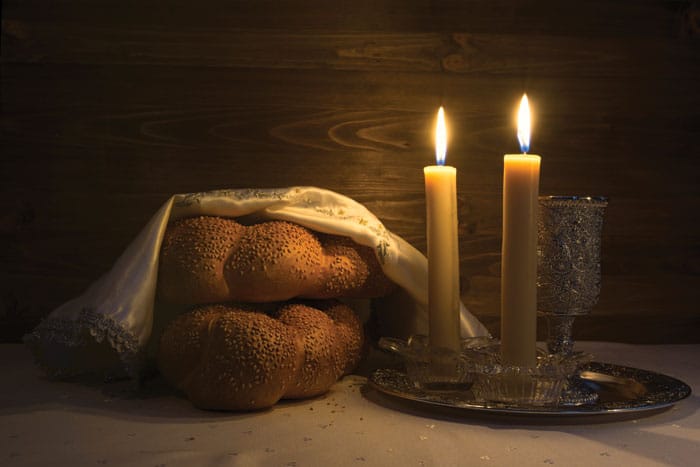
Despite the myriad differences among Jews in beliefs and practices, a core degree of Jewish particularity is found in Shabbat and the other holidays. Think how different the Pew data would look if every Jewish (or partially Jewish) family in the United States carved out just one hour on Friday night for a technology-free Shabbat dinner, preceded by the blessings for the candles, wine and challah. Even better if the meal concluded with at least the first paragraph of birkat ha’mazon (grace after meals), which is tailored made for being chanted in a fun-filled way that is appealing to both children and adults. 

The key to fighting extinction of Jewish tradition in religiously liberal communities is an emphasis by individuals and families on the proactive performance of more ritually-centered Jewish norms. Realistically, these norms will not involve strict observance of Shabbat, the holidays and the dietary laws, but they still must be steeped in the authenticity of Jewish tradition and observed consistently. The key is developing a mindful Jewish ritual practice that is imbued with meaning and filled with joy. 

The Role of Synagogues and Jewish Organizations

Jewish institutions and organizations also play a fundamental role in the successful transmission of Jewish tradition and it is in their best interests to promote observance of Jewish ritual more proactively. After all, the bulk of professionals and lay leaders involved in Jewish organizations such as the Federation system are religiously liberal Jews. Given the current trends, we cannot assume that future generations of religiously liberal Jews will opt for Jewish organizational work rather than other options.

But since synagogues and other organizations do not have unlimited resources, they need to direct their efforts toward individuals who are likely to be the most receptive to their message. This audience represents the “low-hanging Jewish fruit.” 

Exactly who is this audience? To use Pew terminology, they are JBR representing Gen X, millennials and even Gen Z. By and large, they were raised in homes with strong religious norms, even if not with strict observance. Most are not currently observant but many have baby boomer parents who were more fully observant or still are. Although some attended Jewish day schools, many more received part-time Jewish education through a synagogue program.  

Virtually all of this group come from families who were, and often still are, affiliated and for whom it was important their kids celebrate b’nai mitzvah. Many attended Jewish preschool as well as summer camp (or other types of Jewish teen summer programs) and still maintain a close network of friends from these connections. Many belonged to Jewish fraternities and sororities in college. Many are now married and having children of their own. They are often, though not always, in-married. Some identify as LGBTQ+ and some as Jews of Color.  

The Jewish organizational world should prioritize programming that reinforces and supports observance of Jewish tradition in ways that can work for these Jews because they are the most likely to respond to these efforts given their upbringing. Jewish ritual is not quite as hard a sell to this group given their familiarity with the tradition. Even as adults, most of these people have made at least some significant Jewish choices.

The one-hour technology-free Shabbat dinner should become the hallmark initiative for all religiously liberal synagogues.   

Especially for synagogues, it is vital to prioritize strategies for how these JBR can deepen their connection to Jewish tradition. The one-hour technology-free Shabbat dinner discussed above should become the hallmark initiative for all religiously liberal synagogues (just as Chabad’s hallmark is donning tefillin for men and lighting candles for women). Saying havdalah is another Shabbat-centered ritual loaded with the potential for meaningful family time. Synagogues and other Jewish organizations can play a role in encouraging members to perform these rituals regularly and can also provide necessary educational materials. 

The pandemic and the proliferation of Zoom programming is another current challenge that merits discussion for the organizational world. Jewish home rituals are critical but so is a community base. An overwhelming number of religiously liberal synagogues transitioned to technology for services and programming during COVID (if not before), and we now find ourselves in a world where this has become the norm for gatherings, including minyanim.

Intentionality and mindfulness are critical elements of ritual, and these are the very qualities that are most undermined when prayer is conducted in an online format.

But when it comes to communal prayer, technology is a poor substitute for an in-person experience. Intentionality and mindfulness are critical elements of ritual, and these are the very qualities that are most undermined when prayer is conducted in an online format. Although mind wandering is not uncommon in synagogue, online services encourage distraction and multitasking on a much larger scale.  

Plus, Jewish community is based on the very concept of just showing up. Online services are no substitute for putting on your Shabbat or holiday best and making the physical effort to get to your synagogue, whether it is by walking or driving. 

Of course synagogues should continue to provide some type of alternatives for those who simply cannot attend a service in person, especially grandparents and other relatives of b’nai mitzvah. Limiting online options to these groups will require some difficult conversations and choices, but when it comes to modeling the richness of Jewish tradition, returning to an in-person norm is far superior to technology substitutes.

The point is not to create Orthodox Jews but rather to create more Jews who are committed to the practice of vibrant religiously liberal Judaism.

Finally, the clergy of religiously liberal Jewish synagogues and other institutions should not be afraid to articulate and advocate for thicker norms of Jewish practice. The point is not to create Orthodox Jews but rather to create more Jews who are committed to the practice of vibrant religiously liberal Judaism. 

It may be the case that in the long run, an increasing number of Jews will not be persuaded that Judaism is worth their time. But we cannot afford to make this assumption now. Instead, we should focus on bolstering the quality of religiously liberal Judaism, defined as a stronger attachment to the particularities of Jewish ritual. The realization of this goal can provide a foundation for the basis of a transmissible tradition l’dvor v’dor.


Roberta Rosenthal Kwall is the Raymond P. Niro Professor at DePaul University College of Law. She is the author of “Remix Judaism: Transmitting Tradition in a Diverse World” (Rowman & Littlefield, 2020, 2022), “The Myth of the Cultural Jew” (Oxford University Press, 2015) and “The Soul of Creativity” (Stanford University Press, 2010).

Making the Case for Jewish Ritual Read More »

Awakening Our Souls During Elul

The new month of Elul has begun, the month prior to beginning the Jewish New Year, Rosh Hashanah. Elul represents the spiritual alarm clock that reminds us of the period we are entering, the shift from the summer consciousness of being a little more carefree, focused on rewarding and feeding our physicality — through play, relaxation, traveling and exploration, going to the beach or the mountains, having barbeques, basically relishing the outdoors. Elul reminds us to shift our focus from the physical to the spiritual, to our inner life, our soul. 

As Jews we pay close attention to what is demanded of us with each date on the calendar. In spring we pull out our Seder plates, clean out our homes and the crevices of our spirit; in December we set up our Channukiah and celebrate, sharing light and joy with family and friends; and as Fall approaches it is time to take a closer look at our lives and our relationships, take stock of the past year with its ups and its downs, accomplishments and failures. Most particularly, to assess where we’ve strayed, the people we’ve hurt, the errors, omissions, and even the unforgiveable sins we feel we’ve perpetrated on others and God. 

Having strayed, we stand in what seems like a deep cavern, disconnected from God. Perhaps we’ve become lazy, diminishing our attention to the spiritual life, or perhaps religious life has become routine, lacking the spark it once had, or perhaps reducing conversations from our hearts to God. Being shut in, and living in close proximity with family, these last few years may have engendered less patience and more critiques as stressors have mounted. Our nerves have been stretched; we may have unintentionally said hurtful or inconsiderate words. Whether in business, family or friendships, we have not always been our best selves. 

Elul comes as a gift, an opportunity to take a deeper look at all the facets of our lives, especially our relationships and the ways we’ve behaved. Judaism offers an opportunity for ’T’shuvah,’ ‘repentance,’ which literally means to ‘return.’ Our consciousness alights with memories of precious moments in the past when we discovered release and emotional rebirth. It is a beautiful concept to know it is never over in our tradition, we always have another opportunity for change: to remake, rebuild, and renew ourselves, our actions, and our words. These preliminary “days of awe” remind us, the opportunity is still open, a chartered pathway is available once again. God’s forgiveness awaits.

The name of the month is also known by its acrostic, “Ani Dodi V’Dodi Li,” “I am my beloved and my beloved is mine.” This month represents an opportunity for reigniting the beautiful and loving relationship with the Holy One, the very model that the Song of Songs presents, not only as male and female lovers, but as we the people and the Holy One. Sinai was not only the place of creating a covenant between God and the people, it was a symbolic marriage of bride and groom under the chuppah of Torah. Elul encourages reigniting love – love of self, love of others, and love of God.

Over the next month take time to meditate, read psalms, or stand by a tree and speak to God. Rebbe Nachman’s tradition of Hitbodedut was to go out into nature, the place of God’s creation, and pour out his soul’s pain, suffering, guilt, and even anger. Find the words for your disappointments, grief, or sorrow. Identify who you must go to ask for forgiveness. Begin the healing process so you can enter the New Year softer and with more humility. Open the dialogue and ready yourself for the power of change and expansion when you come and surrender to these Days of Elul, whether seated amongst fellow congregants or at home with beautiful words and music before you on a screen. Either way, let these coming High Holy Days be an opportunity to awaken your soul to the potential for transformation. Rekindle a new spirit, new hope, and a new beginning.


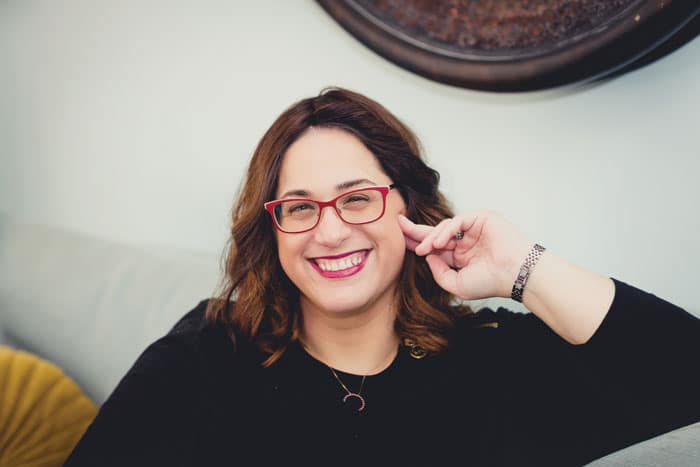
Eva Robbins is a rabbi, cantor, artist and the author of “Spiritual Surgery: A Journey of Healing Mind, Body and Spirit.”

Awakening Our Souls During Elul Read More »

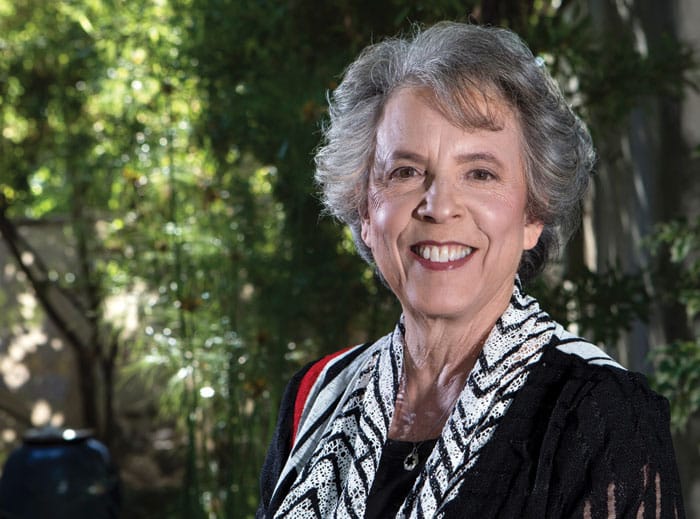
Rabbis of LA | Rabbi Laura Geller: Seeing Everyone in the Image of the Holy One

The beginning of Bereshit teaches us a very powerful lesson: “And God created man in His image; in the image of God He created him; male and female He created them.” 

This is the Torah teaching that guides Rabbi Emerita of Temple Emanuel of Beverly Hills Laura Geller in all of her work. A longtime social justice advocate, Judaism’s emphasis on treating others with respect and dignity is what drew her to the rabbinate in the first place. 

Born just outside of Boston in Brookline, Mass., Geller grew up going to a Reform synagogue.  “Becoming a member of a synagogue was just sort of what you did,” she said. “But I never went to Jewish day school or summer camp. I didn’t have the kind of religious background that many rabbis have.”

At Brown University, Geller’s alma mater, she studied religion and became formally involved in social justice causes. “I began in 1967,” she said. “That was a time of great change in the world and I was very curious to try to understand the connection between politics and social justice and spirituality. I had never seen those come together.”

Geller was part of the feminist and anti-war movements and, at the end of her senior year, she had a light bulb moment when she went to the Southern Christian Leadership Conference convention in Nashville. It was the year after Martin Luther King Jr., one of the group’s leaders, had been assassinated. 

“I remember vividly feeling like I didn’t belong,” she said. “I sat outside under a tree, and a wonderful Black community organizer came out to see how I was doing. I told him I felt that I didn’t belong. He said, ‘You’re right. You don’t. You should be organizing within your own community.’ I realized I needed to bring my social justice and Jewish commitments together.”

Geller spent six months on a kibbutz in Israel and tried to understand what being Jewish meant. She took a college class in Jewish studies and then was part of a committee to search for Brown’s next Hillel director. “We interviewed candidates and I thought, ‘This would be an interesting job: To be a Hillel director and work with young people at this stage of their life,’” she said. 

In 1971, Geller enrolled in rabbinical school at Hebrew Union College-Jewish Institute of Religion in New York. She was the third woman in the Reform movement to become a rabbi. From 1976 to 1990, she was director of Hillel of University of Southern California, and she served as the Pacific Southwest Region’s executive director of the American Jewish Congress for four years. 

During this time, she was interviewed for a prestigious job to lead Temple Emanuel of Beverly Hills. Though Geller hadn’t intended to work at a synagogue, the opportunity seemed appealing.

“For the first time, I imagined myself at a congregation,” she said. “I had two kids, I was divorced, and I wanted a synagogue that met my needs until then. I decided to throw my hat into the ring.” 

In 1990, she made history: Temple Emanuel hired her, and she became the first woman selected to lead a major metropolitan synagogue.

“I took a chance with Temple Emanuel and it turned out to be a really good ride. They were brave to hire me. The news stories said, ‘Rabbi Breaks Stained Glass Ceiling.’” 

“I took a chance with Temple Emanuel and it turned out to be a really good ride,” she said. “They were brave to hire me. The news stories said, ‘Rabbi Breaks Stained Glass Ceiling.’” 

At Temple Emanuel, Geller continued to be involved in social justice causes such as women’s rights and advocating for a two-state solution. Today, she is passionate about senior issues and co-founded ChaiVillageLA, a synagogue-based senior village. She also co-wrote the book “Getting Good at Getting Older” with her late husband, Richard Siegel, of blessed memory. 

“With ChaiVillageLA, we want people to stay in their homes as long as possible,” Geller said. “We figure out what it means to grow older with joy, energy and purpose.”

The rabbi’s main joy comes from doing her part in making the world a better place – whether she’s working with her community, improving the lives of seniors or simply being kind to a stranger she meets. 

“Since all human beings are created in the image of God, that means everyone is equal and has the opportunity to become the best versions of themselves they can,” she said. “There should be equal opportunity and inclusion. The goal of Judaism is to help people create a world where that is true. We need to make it real.”

Fast Takes with Laura Geller

Jewish Journal: What is your favorite Jewish food?
Laura Geller: Challah. Really good challah. I often pick it up from Got Kosher.

JJ: What’s your favorite spot in LA? 

LG: My garden. It’s a meditation space that’s very peaceful and restorative. 

JJ: What do you like to do with your grandkids?

LG: I spend as much time as I can with each of them in different parts of the country. It’s hard on Facetime, but it’s wonderful to see them in person.

JJ: What’s your perfect Shabbat look like?

LG: Having friends for dinner on Friday night and going to shul on Saturday. Studying Torah with my friends every Shabbos afternoon in my garden. 

Rabbis of LA | Rabbi Laura Geller: Seeing Everyone in the Image of the Holy One Read More »

Table for Five: Shoftim

One verse, five voices. Edited by Salvador Litvak, the Accidental Talmudist

By the mouth of two witnesses, or three witnesses, shall the one liable to death be put to death; he shall not be put to death by the mouth of one witness.

– Deut. 17:6


Sarah Pachter
Author and Lecturer

Ramban asks: If two witnesses suffice, of course three witnesses suffice! Why would the Torah state the obvious? He explains that this pasuk warns the court to ask as many witnesses as possible because truth can only be found through multiple investigations. 

Chizkuni states that the Torah does not rely on one eyewitness because sight is subjective. 

In courts today, witnesses have given false testimony by “remembering” details like the appearance of criminals or “seeing” large objects which did not exist. 

Isaac Lidsky lost his vision as a young man. As his sight began to deteriorate, his brain compensated by filling in the gaps, sometimes to his detriment. One day, he dodged what seemed to be a branch flying towards him. Afterwards, he realized there was no branch. His mind had created it. 

Science claims we do not see with our eyes, but rather with our brain. Our eyes intake 2 billion signals per second. The rest of the body inputs only 1 billion per second. The visual cortex of the brain, 1/3 of its mass, uses memory and experiences to interpret signals. This clouds our perception.

We don’t trust the eyewitness account of one person because even someone with perfect vision answering truthfully cannot possibly provide the full picture. The Torah always knew that sight is subjective. We need at least two perspectives to confirm data in a halachic court. There is always another perspective to consider. We should never be in a rush to judge someone else.


Rabbi Shlomo Yaffe
Congregation Bnai Torah

The Torah states that two witnesses are sufficient to establish fact, so why does the Torah mention “Three”? The third adds nothing. Regarding establishment of fact, Rav Safra said (TB Yoma 83A) “two are like a hundred.” 

Once we have two properly vetted and thoroughly examined witnesses, a fact is established. More witnesses add nothing – legally – to the assumption of fact created by the two. 

Why then does the Torah discuss the “Third Witness”? Rabbi Akiva suggests (TB Makot 5B – Mishnah) that where the witnesses are found false and are penalized by having to suffer the penalty they sought to impose on another through their perjury, the third witness is equally liable to this penalty. 

Rabbi Akiva then says (and one can learn a moral from this halakha), “If the verse punished one who associates with transgressors like transgressors, all the more so will God pay a reward to one who associates with those who perform a mitzvah like those who perform the mitzvah.” 

There is an incredibly important lesson here, that humanity has yet to learn: Attaching oneself to evil, benefiting from its practitioners, or simply failing to act against those who do evil makes one a complete partner in that evil – which ultimately consumes both the evildoers, their enablers, and their beneficiaries in the fires they have kindled. 

Conversely, enabling, participating, and supporting even just by advocacy and approval for those who do “deeds of goodness and kindness” makes one a participant and partner in those virtuous acts. 


David Sacks
Host, “Spiritual Tools for an Outrageous World” Podcast

When I grew up, I never associated Judaism with capital punishment. And yet, it seems to be all over the place. It’s kind of scary when you think about it. 

Does Judaism really believe in giving the death penalty for so many things, is that really our religion, or is there something else going on here? The quick answer is that the death penalty was almost never given. The amount of evidence required for it was way too high. In fact, the Mishnah states that a Jewish court that executed one person in 70 years was considered bloodthirsty. 

But if the death penalty was almost never given, then why does it appear in the text so often? 

The simple reason was to create a deterrent. Once people understood the severity of the punishment, they’d be too afraid to commit the act. 

But I think something deeper is going on here. I think G-d tells us about a punishment that He’s unlikely to enact because He wants us to keep the mitzvah… but He wants us to do it from the standpoint of love, not fear. 

Or put another way … our goal is not just to escape punishment. Our goal is to be the best version of the people we were created to be. 

So keep the Torah. Not because something bad will happen if you don’t. Keep it because it’s the Jewish way to come closest to One who loves you the most. 


Rabbi Nicole Guzik
Sinai Temple

I’m always stunned by the following words in airports and train stations: if you see something, say something. Clearly this refers to witnessing deplorable behavior including theft or physical harm. But what if it also meant: say something if you witness verbal or emotional abuse? Or say something when you witness an act of joy or wonder? Our society is not built upon this premise. Rather, we insist that everyone looks down, minding their own business. 

The Torah offers a different perspective. We are meant to testify for and against each other. Not in order to create a culture of mistrust. But rather, to create a culture in which we hold each other accountable. A healthy community notices the harm we enact and should also notice moments of positive impact. 

Sforno, an Italian commentator on the Torah, explains that when even one testimony disqualifies a claim against an alleged perpetrator, the remainder of the testimonies, no matter the number of witnesses, are thrown out. We aren’t looking at each other in order to scrutinize and attack. We should be looking at each other to raise and lift up. But is anyone looking? 

Very few of us live alone. We share synagogues, schools, parks, theaters, places of gathering. All opportunities to raise our eyes and voices in an effort to witness the ways we are trying to thrive in this world. 

See something, say something. Maybe next time, someone will notice you.


Chaya Lester
Psychotherapist and author

Jonathan Swift’s “Gulliver’s Travels” introduces the Houyhnhnm, a race of highly rational, highly righteous, horses. They’re unable to comprehend that one could speak lies, “the thing which was not”. 

Would that we could live in the Houyhnhnm’s world. But the fact is, lies are common fare in our reality; more common than we dare fathom. 

For those of us accustomed to truth telling, lies seem inconceivable. But that is exactly where a liar’s power lies. We get caught off guard by lies’ inconceivability. 

“How could anyone in their right mind make up a thing which is not?!” And yet, the liar is not in their right mind. Their mind has gone wrong. From childhood wounds or genetic disposition, whatever the recipe may be, the liar’s mind has been warped. 

We’re not speaking here of the occasional white lie. We are speaking of those big,hairy, dark lies. The kind that can kill. 

That is precisely what this week’s verse is pointing to; the danger of a lone witness. We must not receive their testimony on the off-chance they may lie. As inconceivable as it may be. We must conceive of it. And guard against it mightily. 

Judaism is skilled at building fences around the things that deserve protecting … like a person’s life. 

To be a Houyhnhnm in a human world is dangerous indeed. Building suspicious fences is an act of righteousness, a guard against the “things which are not.” 

Table for Five: Shoftim Read More »