fbpx

September 1, 2022

Do It All the Time – A poem for Parsha Shoftim

When you have come to the land the your God,
is giving you, you shall not learn to do like
the abominations of those nations.
– Deuteronomy 18:9

The song says do the right thing,
do the right thing, do it all the time

and this is what I tell my son in
almost every situation.

He’s at that age where it’s becoming
a necessity to say these words.

As he gets older and taller
(He’s already taller than our

family scientists thought possible.)
he’s earned the ability to

walk out the front door as
his whims may direct him.

Just the other day he went for a walk
with a red-haired girl he knows from school

who happens to live in our neighborhood.
So that kind of thing is happening now.

He’s the kind of boy who absolutely
knows the right thing to do

but occasionally he misses the mark
and we realize he’s playing on a field

we didn’t know he knew existed.
So out the door he goes and we tell him

to do the right thing. Actually, we’re
a lot more specific but those details

are between him and us.
Like God told the ancient Israelites

we hope we’ve taught him how to
recognize an abomination, and that he’ll

resist its temptations as he walks
on the streets of our promised neighborhood.

God knows I’ve struggled with this and my parents
weren’t on hand to quote an inspirational song.

Doing anything all the time is a struggle,
and I was never as tall as he’s going to be.


God Wrestler: a poem for every Torah Portion by Rick LupertLos Angeles poet Rick Lupert created the Poetry Super Highway (an online publication and resource for poets), and hosted the Cobalt Cafe weekly poetry reading for almost 21 years. He’s authored 26 collections of poetry, including “God Wrestler: A Poem for Every Torah Portion“, “I’m a Jew, Are You” (Jewish themed poems) and “Feeding Holy Cats” (Poetry written while a staff member on the first Birthright Israel trip), and most recently “I Am Not Writing a Book of Poems in Hawaii” (Poems written in Hawaii – Ain’t Got No Press, August 2022) and edited the anthologies “Ekphrastia Gone Wild”, “A Poet’s Haggadah”, and “The Night Goes on All Night.” He writes the daily web comic “Cat and Banana” with fellow Los Angeles poet Brendan Constantine. He’s widely published and reads his poetry wherever they let him.

Do It All the Time – A poem for Parsha Shoftim Read More »

Survivor Guilt and the Atonement of the Innocent

My friend Johnny was lucky. He lived in a Belarussian village near the Lithuanian border, and in 1941, the day before the German invasion of the Soviet Union, Johnny was conscripted into the Red Army. Because of this, Johnny was taken east just ahead of the SS killing machine. He survived the Holocaust, but his father and siblings did not. Until the end of his life, Johnny would wake up in middle of the night, tormented by the question of why he survived to an old age, and his brothers and sister were murdered in their teens.

Survivors’ guilt is so powerful that it doesn’t weaken with the passage of time. Johnny was still grappling with the murder of his family during the Holocaust as a 95-year-old great-grandfather.

Many survivors were burdened by similar feelings. Primo Levi described survivors’ guilt this way: “Are you ashamed because you are alive in place of another? And in particular, of a man more generous, more sensitive, more useful, wiser, worthier of living than you?”

Survivors’ guilt has been the subject of multiple studies. And these types of guilt feelings are not unique to Holocaust survivors; others who experience the deaths of colleagues, such as soldiers or survivors of accidents, experience similar feelings of guilt. Bereaved parents are often afflicted by guilt, wondering why they couldn’t do more for their children. Sometimes it is the innocent who call out for atonement.

Our Torah reading includes an unusual atonement ritual, the Eglah Arufah, which offers insights into the meaning of psychological guilt. A dead body is found, and the murder remains unsolved. The elders of the nearest city then perform a multifaceted ritual in response. First, a calf is decapitated; afterwards, the elders wash their hands and declare “Our hands did not shed this blood, nor did our eyes see it done.” Then the Kohanim call out “Absolve, O Lord, Your people Israel whom You redeemed, and do not let guilt for the blood of the innocent remain among Your people Israel.”

This ritual of Eglah Arufah is extremely puzzling. Why does an unsolved murder require atonement? And why do the elders have to declare their innocence?

Some commentaries see this ritual as a publicity stunt that shapes the communal mood. The Rambam offers the fascinating view that the purpose of the Eglah Arufah “is evident … As a rule, the investigation, the procession of the elders, the measuring, and the taking of the heifer, make people talk about it; and by making the event public, the murderer may be found out, and he who knows of him, or has heard of him, or has discovered him by any due, will now name the person that is the murderer.” This explanation doesn’t see the Eglah Arufah ritual as purposeful in itself; instead, its goal is to draw attention to the unsolved murder, and get people to report any leads they may have to the leaders of the community.

But other commentaries take a very different view. They see the Eglah Arufah as directly related to questions of innocence and responsibility; and they comment on two aspects. First, they analyze what the elders’ statement “Our hands did not shed this blood” might be referring to; as Rashi puts it, “would it enter anyone’s mind that the elders of the court are suspected of bloodshed?”

The Talmud Yerushalmi offers two opinions as to what this declaration means. One opinion is the elders are declaring that they did not let the murderer go free and fail to bring him to justice. This declaration is an acknowledgment of one type of social responsibility for the murder; the elders must promote law and order, and be vigilant in locating and prosecuting criminals.

The other opinion in the Yerushalmi is that the elder’s declaration is about the victim. They are declaring that they did not overlook the victim, and did not fail to offer him appropriate food and protection to embark safely on his journey. It is a communal responsibility to take care of visitors, one that can be a matter of life and death.

A fascinating view is offered by the Malbim and Rashi’s commentary to the Talmud. Both see the declaration of communal responsibility as being about charity; if a community fails to feed the poor, the indigent will be driven by hunger into a life of crime. In order to obtain food, these indigent criminals will be willing to kill or be killed. The dead body is either that of the victim of a crime, or a criminal killed in self-defense; but either way, if the community had provided for the hungry to begin with, this death would never have occurred.

These are three ways that the community could possibly bear responsibility for the victim’s death. But now a far more important question needs to be asked: Is this Eglah Arufah meant as an indictment of the community, or its exoneration? The very ritual of the Eglah Arufah is self-contradictory; the elders wash their hands and proclaim innocence, while the Kohanim pray for atonement, which implies guilt.

Ibn Ezra views the Eglah Arufah as an indictment of the community, for two reasons. First, he says that the community “erred and did not guard the dangerous roads.” And then he adds that the shocking death indicates that God is highlighting a moral failure in the city, “because if the city had not committed a similar deed, then the murder of a person near their city would not have occurred; God’s thoughts are deep and infinitely beyond our comprehension.”

This understanding sees the Eglah Arufah as a response to moral failure. The community might not have committed the murder, but they are still responsible for it; they should have instituted policies that could have prevented this crime.

The community might not have committed the murder, but they are still responsible for it; they should have instituted policies that could have prevented this crime.

Others take a very different view. The medieval commentary of the Minchat Yehuda says the Eglah Arufah ritual expresses the community’s innocence, and they are in effect declaring that “just as the calf is flawless and the ground is flawless, so too we are without flaw and innocent of this sin.” Only the murderer is guilty of this crime.

But this view is puzzling. Ultimately, the Eglah Arufah appears to be a sacrifice, and the Kohanim are asked to offer the community atonement. But if the community is completely innocent, why should they be required to perform a ritual of atonement?

The answer to this question brings us back to survivors’ guilt. Even without guilt, one can have guilt feelings. And for this reason, there is obligation to bring an Eglah Arufah, because even the innocent need atonement.

The purpose of the Eglah Arufah is to bring meaning to those guilt feelings. By killing the calf, the community reenacts the cold-blooded murder, and the initial feelings of failure, shame and guilt are immediately reawakened. The ritual continues with the oscillating inner dialogue of guilt; even though one is innocent, and can wash their hands of this crime, they still choose to pray for atonement, to justify themselves as worthy. The Eglah Arufah is a reenactment of survivor guilt, and by dedicating a sacrifice to it, the Eglah Arufah turns these guilt feelings into something sacred and meaningful.

Eglah Arufah is an atonement for the innocent, a way of recognizing that guilt feelings have profound meaning as well.

This is a very different way of seeing guilt. In general, feelings of guilt have a bad name. Psychologists from Freud onward have seen guilt as an unwanted neurosis to be treated and healed. A Holocaust survivor’s fixation on the fate of lost family members could easily be dismissed as unhealthy guilt feelings, the undesirable residue of years of trauma.

But this analysis overlooks spiritual insights into guilt. Martin Buber wrote an essay “Guilt And Guilt Feeling” to respond to Freud’s views on guilt. He argued that there is a second type of guilt, existential guilt, which is taking responsibility for an “injury” to the world order. In a broken world, ethical people will feel the need to justify their existence. This is exactly what the Eglah Arufah is all about, and this ritual is a way of incorporating “existential guilt” into our lives, making the trauma of an unexpected death into a holy sacrifice, and a way to raise our moral consciousness.

Buber’s insights offer a different perspective on survivors’ guilt as well. After witnessing the death of their friends and family, these survivors felt challenged to prove themselves worthy of being the lucky ones. This existential guilt led many survivors on a quest to rebuild a world that was lost. They would speak to school students about their experiences, and charge them with fighting hatred and antisemitism. They sacrificed in order to rebuild the Jewish homeland in Israel; as one observer noted, survivors “bought a $500 Israel Bond every year even if they didn’t have a dime.” Or, they did simple acts of kindness. Eddie, the “candyman” in my previous synagogue, decided to respond to the bitterness he had experienced by making life sweeter for the next generation.

These survivors were grappling with guilt feelings. They were seeking atonement, even though they were innocent. And their quest continues to impact our community today.


Rabbi Chaim Steinmetz is the Senior Rabbi of Congregation Kehilath Jeshurun in New York.

Survivor Guilt and the Atonement of the Innocent Read More »

Blessing God Not Just for Food

Before we’re taught by Deuteronomy 8:10 that we must bless
God for the food by which our appetites are satisfied,
we ought to bless Him for the land, implying that it is no less
responsible for all the food both providentially provide,
thanks to their partnership, which we appreciate is a great process
that’s no more supernatural than the Torah, and we’re told is not
in heaven but on earth. It’s a text we must interpret as did Moses,
its great prophetic guardian, who unraveled the un-Gordian knot
that binds it to the earth, although its source is high above it,
a combination like the one providing us with food,
for which we bless not only God to show how much we love it,

but earth, His partner, serving Him at a far lower altitude.

Deut. 8:7-10 states:

ז כִּי יְהוָה אֱלֹהֶיךָ, מְבִיאֲךָ אֶל-אֶרֶץ טוֹבָה: אֶרֶץ, נַחֲלֵי מָיִם–עֲיָנֹת וּתְהֹמֹת, יֹצְאִים בַּבִּקְעָה וּבָהָר. 7 For the LORD thy God bringeth thee into a good land, a land of brooks of water, of fountains and depths, springing forth in valleys and hills;
ח אֶרֶץ חִטָּה וּשְׂעֹרָה, וְגֶפֶן וּתְאֵנָה וְרִמּוֹן; אֶרֶץ-זֵית שֶׁמֶן, וּדְבָשׁ. 8 a land of wheat and barley, and vines and fig-trees and pomegranates; a land of olive-trees and honey;
ט אֶרֶץ, אֲשֶׁר לֹא בְמִסְכֵּנֻת תֹּאכַל-בָּהּ לֶחֶם–לֹא-תֶחְסַר כֹּל, בָּהּ; אֶרֶץ אֲשֶׁר אֲבָנֶיהָ בַרְזֶל, וּמֵהֲרָרֶיהָ תַּחְצֹב נְחֹשֶׁת. 9 a land wherein thou shalt eat bread without scarceness, thou shalt not lack any thing in it; a land whose stones are iron, and out of whose hills thou mayest dig brass.
י וְאָכַלְתָּ, וְשָׂבָעְתָּ–וּבֵרַכְתָּ אֶת-יְהוָה אֱלֹהֶיךָ, עַל-הָאָרֶץ הַטֹּבָה אֲשֶׁר נָתַן-לָךְ. 10 And thou shalt eat and be satisfied, and bless the LORD thy God for the good land which He hath given thee.

Gershon Hepner is a poet who has written over 25,000 poems on subjects ranging from music to literature, politics to Torah. He grew up in England and moved to Los Angeles in 1976. Using his varied interests and experiences, he has authored dozens of papers in medical and academic journals, and authored “Legal Friction: Law, Narrative, and Identity Politics in Biblical Israel.” He can be reached at gershonhepner@gmail.com.

Blessing God Not Just for Food Read More »

A Bisl Torah – Getting Ready

Last week, our clergy team stood on the corner of Wilshire and Beverly Glen, filming a pre-High Holy Day message for the community. Rabbi Taff blew the shofar. Loud, piercing, emotional blasts that caused the clergy to pause and stare. Not just us. Car by car, drivers rolled down their windows, unable to turn away, some with looks of awe, others with curiosity. One person yelled out, “Shana Tovah!” And as the blasts continued, I wondered if we are truly ready for Rosh Hashana to begin.

How do we prepare for Rosh Hashana? Some people buy a new outfit. Others plan the guest list for Rosh Hashana dinner. Annual traditions fill the coming days. But what if readying ourselves looked a little different?

Rabbi Hillel Silverman recounts the following story: The Baal Shem Tov recalled a Jew who would always hurry home after services during the month of Elul. The Baal Shem Tov approached the man, confused. “Why are you in a hurry to get home?” The person replied, “I am rushing home to go look at my mahzor (High Holy Day prayerbook). I need to see if the prayers are in the same order.” The rebbe replied, “Don’t worry about the mahzor. The prayers haven’t changed… but you have. Look at yourself. Make sure that you are in order.”

Are you in order? Think about the priorities written in the life book you are creating. Do you spend more time with your family? Keep that chapter. Are you more anxious about something that doesn’t matter in the long run? Take that paragraph out. Is your life in order?

In other words, is the book of your life one that you are proud to read?

We prepare ourselves when we are willing to vulnerably ask, “What personal act was made this year that I’m not thrilled about? Which change was made this year that I must preserve and protect?” Are our pages in order?

Perhaps the secret to Rosh Hashana is never feeling ready. But being open to the tweaking, mending, repairing, and growing that comes when we reread the pages of our soul might be a first step.

And then, determining, there is much more writing to do.

Shabbat Shalom and Shana Tovah


Rabbi Nicole Guzik is a rabbi at Sinai Temple. She can be reached at her Facebook page at Rabbi Nicole Guzik or on Instagram @rabbiguzik. For more writings, visit Rabbi Guzik’s blog section from Sinai Temple’s website.

A Bisl Torah – Getting Ready Read More »

A Moment in Time: Full Circle?

Dear all,

This is the Hebrew month of Elul, the last month in the Jewish year 5782. In these weeks preceding the Jewish New Year, we make time to reflect on our journeys over this past year in hopes to enter 5783 refreshed and repurposed.

We often talk about having completed a cycle, , having come “full circle.”

But is coming full circle really a goal?

In truth, we DON’T want to end up where we began. Rather than finding ourselves back at the beginning of the cycle, our hope is that we will have ascended one rung on a spiral. From this vantage, we can move forward with new perspective – and hopefully additional wisdom.

And so we ask questions:

How have I grown this year?

What experiences have motivated me to act differently?

Where will I focus my energy next year?

Who will be at my side?

When will I nurture a moment in time to recognize God’s voice?

Let’s ascend this circle as individuals and as a community!

With love and shalom,


Rabbi Zach Shapiro

A Moment in Time: Full Circle? Read More »

West Valley Synagogues to Launch New Supplemental School for Teens

Two West San Fernando Valley synagogues are opening a new tuition-based Jewish supplemental school for teens in grades 8-12.

The clergy and educators at Shomrei Torah Synagogue (STS) and Temple Aliyah are the driving forces behind the new Jewish Teens Learning Center (JLTC). Erica Katsel, a non-profit professional and lay leader at the synagogues, helped envision the JTLC, an innovative, experiential program for post-b’nai mitzvah engagement – one open to any Jewish teenager throughout the San Fernando Valley.

STS and Temple Aliyah want JLTC to provide an affordable and easily accessible Jewish education for non-day-school students throughout their teenage years. Families do not need to be members of STS or Temple Aliyah to send their child to JLTC.

The new school will offer two programs – the JTeen Learning Seminar, for eighth graders, and Chadash Teen Leadership Program, for 9th-12th graders. Each includes a variety of engaging learning opportunities, featuring diverse guest speakers, roundtable discussions on contemporary issues and leadership training in a dynamic social environment. 

Eighth-graders enrolled in the JTeen Learning Seminar will be coming together for two-hour seminars held every Sunday during the 2022-23 school year. Students explore topics including Jewish history in America; Jewish civic responsibility; Jewish values; environmentalism; combating anti-Semitism; Israel history and culture; and relationships.

The 9-12th graders taking the Chadash Teen Leadership Program will convene for four three-hour sessions, one each quarter, during the upcoming year. The topics are: “Relationships 101,” “History of Jewish Life in America/Intersection of Jewish Values and Politics,” “Jewish Activism: Combating Bigotry and Antisemitism” and “Israel and You.” Along with the mandatory sessions, there will be optional activities for enrollees. 

The curriculum is designed to appeal to Jews from all the major denominations, according to STS.

Classes are slated to begin either in mid-to-late September or immediately following the High Holy Days and will likely be held at STS in West Hills or Temple Aliyah in Woodland Hills. As of press time, the school’s leadership was still finalizing plans.

The launching of the school is an attempt to fill a void in supplemental education caused by the recent closure of L.A. Hebrew High School (LAHHS). In a May 2022 letter addressed to LAHHS donors, alumni and friends, LAHHS Head of School Amittai Benami and Board President Dan Schechter announced the iconic supplemental school was closing down after more than 70 years of serving the community. The two cited decreasing enrollment, declining donor gifts, a change in LAUSD policies regarding the recognition of courses and credits from tuition-based supplemental schools and sociological changes to the L.A. Jewish community landscape as reasons for the closure.

Gil Graff, executive director of Builders of Jewish Education (BJE), attributed the announcement by LAHHS to the evolution of how Jewish families access Jewish education in Los Angeles. When LAHHS was established in Boyle Heights in 1949, there were no Jewish high schools in Los Angeles. Today, however, with the “emergence of the phenomenon of Los Angeles Jewish high schools,” including Milken Community School and de Toledo High School, there is less of a need for an institution such as LAHHS, Graff, a former associate principal of LAHHS, said. 

Incidentally, Rabbi Richard Camras of STS and Rabbi Stewart Vogel of Temple Aliyah, two of the clergy behind JTLC, are both graduates of L.A. Hebrew High School. Vogel was a student of Graff’s in the mid-1970s. They are, in fact, just two of the many LAHHS alumni who went on to significant Jewish leadership roles — others include Craig Taubman and State Senator Ben Allen.

“Its impact over 70 plus years of service to the community was quite powerful,” Graff said of LAHHS.

Meanwhile, the BJE executive director said it was heartening to see those “who enjoyed what at a certain time was the framework for Jewish education” creating new avenues for teen Jewish learning.

“Heaven knows the teen years are important years in the life of a young person and shape who that person is and how he or she views himself and the world, and to have important Jewish experiences in high school years is something those congregations [STS and Aliyah] understand.” – Gil Graff

“It is wonderful, I’m delighted,” Graff said upon hearing the news about JLTC. “Heaven knows the teen years are important years in the life of a young person and shape who that person is and how he or she views himself and the world, and to have important Jewish experiences in high school years is something those congregations [STS and Aliyah] understand.“

Those interested in enrolling in JLTC or in obtaining additional information about the school may contact the STS office at (818) 854-7650 or ctassa@stsonline.org.

West Valley Synagogues to Launch New Supplemental School for Teens Read More »

Shabbos House LA Welcomes Young Jews for Shabbat and Holidays

During the initial stages of the pandemic, young Jews were suddenly faced with a new challenge: They weren’t sure how they would celebrate Shabbat. Many of them didn’t know how to cook since they were used to going to their families’ homes for meals. Would they have to spend the day alone? 

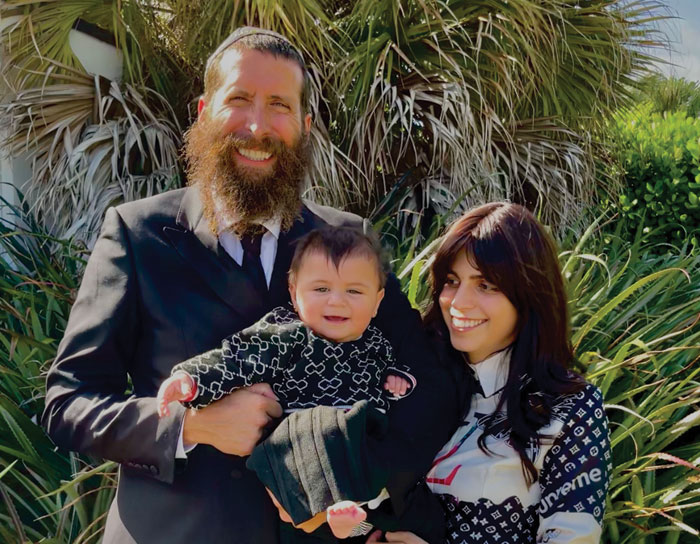
Avi Climo, a Chabad Hasidic Jew in Pico-Robertson, along with his wife Miquela, had an idea. They would provide young Jews with kosher food and fun experiences on Shabbat and the holidays. 

“Some of these young people didn’t have a place to go, and for the most part, Shabbos House LA was a non-judgmental space, where everyone knew they could go for something to eat,” Chabad Israel Center Rabbi Asher Yemini said.

Even as pandemic-related restrictions have lifted, the Climos have continued to host Jews on Shabbat.  “It’s a place that’s welcoming [and] inviting,” said Avi. “If someone needs a meal during the week or wants a place to go for Shabbos, my wife and I have been blessed with the opportunity to provide that for young Jews in the community.”

So far, Avi and Miquela have engaged over 500 Jews of all ages and backgrounds, hosting more than 150 Shabbat dinners and lunches, festivals, holiday get-togethers and seders. Shabbos House LA has also served approximately 4,500 free kosher meals. While it’s not an official Chabad house, the Climos also offer Torah and Hasidic classes, celebrations with live music, mitzvah campaigns and one-on-one counseling.

When Jews in their 20s and 30s visit Shabbos House LA, located near S. Bedford and Pickford Streets, they enjoy challah, cholent, singing and good company. They experience a homey, late-night vibe or an afternoon schmooze. Most importantly, they spend quality time with the Climos, who are devoted to Yiddishkeit — and each other.

“It’s important that young Jews, especially singles, see what an observant couple looks like,” Climo told the Journal. “It’s something they aspire to be, married with happiness – to have a kosher marriage – and they see how this is a recipe for success for a Jew.”  

“It’s important that young Jews, especially singles, see what an observant couple looks like.” -Avi Climo

Because of growing demand for their services, Shabbos House LA recently launched a campaign via causematch.com to raise funds for the High Holy Days. Donated funds will support meals for those in need. The Climos are attempting to move to a larger apartment to host its programs, and the campaign is financing that effort. 

Avi hopes the future headquarters of Shabbos House LA will be located in the Pico-Robertson/Crestview area and will be able to accommodate more than 100 Shabbat guests.  If all goes as planned, there will be spaces to learn and lounge, an extensive Jewish library, regularly scheduled live music, women’s classes and a meditation garden. 

“We’d live there and we’d also use it for these functions,” Climo said.

As of press time, the Shabbos House campaign had raised more than $27,000 toward a $300,000 goal.

The husband and wife team are immersed in the local observant community. The couple are ba’alei teshuvah — meaning Jews who returned to Orthodoxy or have become Orthodox for the first time. After briefly dating, the two were married in the summer of 2019 and then embarked on their honeymoon. Each Shabbat, they stayed at a different Lubavitch-Chabad home across the United States. 

The hospitality of those who hosted them inspired the couple to do the same, ensuring any Jew who wanted a home for Shabbatwould have one.

Avi said, “It’s a place where every Jew is welcomed and loved.”

Shabbos House LA Welcomes Young Jews for Shabbat and Holidays Read More »

Zusha Goldin: From Crown Heights to Celebrity Photographer

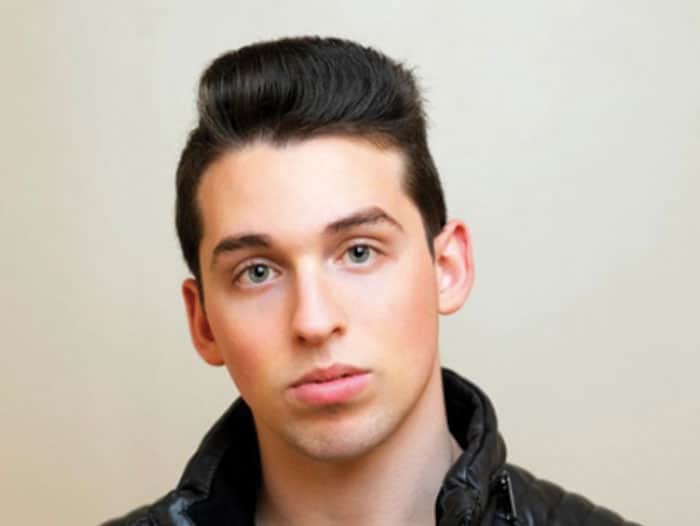
When Zusha Goldin was 18 years old, he purchased his first camera. He’d loved taking pictures ever since he was a child, growing up as the youngest of 10 in a Hasidic family in Crown Heights, Brooklyn. 

“I always was a photographer, not in the professional sense, but in the hobbyist and interest way,” said Goldin. “When the time came for me to choose a career path, it only made sense for me to choose to do the thing I love.”

On March 1, 2020, just before the pandemic hit, Goldin moved to Los Angeles, fulfilling his dream to live here. 

“Something about this city has always drawn me in,” he said.

Now, after being in LA just over two years, Goldin, 23, is an established celebrity and headshot photographer who has taken photos of Courteney Cox, Patrick Stewart, Billy Crystal, Selena Gomez and Ben Stiller. His photos have appeared in Deadline Hollywood, Variety, Business Insider and Yahoo, and he’s worked on more than 600 projects – taking over 80,000 shots and counting.  

He credits his success at such a young age to building up a solid portfolio of portrait work, spending years perfecting his craft and networking.

“There’s always the stroke of luck needed. You can’t take all the credit.“ – Zusha Goldin

“There’s always the stroke of luck needed,” Goldin said. “You can’t take all the credit. God and luck have to play a big role in making everything happen in the right timing.”

The photographer has built a large following online as well – he has 2.1 million likes on TikTok and nearly 10,000 followers on Instagram. In his posts, he takes fans behind the scenes of his photo shoots, discusses his Jewish identity and makes funny videos about doing business with his clients.

In one TikTok, labeled “When you give a client the edited photos and then they go post with an Instagram filter slapped on,” he lip-syncs a track that says, “I’m sorry, and I loved you, but what you did is so low and unforgivable. Be ready.” He called it, “A photographer’s pet peeve.”

Another TikTok features Goldin and a friend lovingly poking fun at being chased around by Chabad shaliachs, who ask random men on the street if they are Jewish to get them to wrap tefillin. He captioned it, “Chabad can do no wrong” and wished his followers a good Shabbat. 

“Judaism plays a role in my day-to-day life in every way,” Goldin said. “Aside from just the observance and lifestyle, so much of the dogma is internalized in my belief system, and it affects how I live on the daily.” 

Though he’s a New Yorker, Goldin plans to stay in LA, continue to add to his portfolio and hopefully take photos of his dream clients, Emilia Clarke and Kit Harrington from “Game of Thrones.” “I really loved that series and their performance in it,” he said. 

He’s optimistic about what lies ahead in his career. “My ultimate goal is to live my authentic life, build upon my dreams and goals and make the world a better place all whilst telling amazing stories via my photographs,” he said. “There are many blessings.”

Zusha Goldin: From Crown Heights to Celebrity Photographer Read More »

Jewish Google Employee Quits, Claiming Retaliation for Speaking Against Google-Israel Partnership

A Jewish Google employee announced her resignation from the tech giant in a public letter, claiming that Google retaliated against her for speaking out against Google’s partnership with Israel.

The former employee, Ariel Koren, wrote in an August 30 Medium post that she was opposed to Project Nimbus, which she described as “a $1.2 billion dollar contract between Google, Amazon, and the Israeli government and military.” “Due to retaliation, a hostile environment, and illegal actions by the company, I cannot continue to work at Google and have no choice but to leave the company at the end of this week,” Koren wrote. “Instead of listening to employees who want Google to live up to its ethical principles, Google is aggressively pursuing military contracts and stripping away the voices of its employees through a pattern of silencing and retaliation towards me and many others.”

Koren then turned to “Jewglers,” a group representing Jewish employees at Google, claiming that they are advancing “right-wing ideologies under the guise of promoting diversity.” As an example, she pointed to the Jewglers pressuring Google to apologize to donating to the Movement for Black Lives (M4BL) organization in June 2020 because of their “alignment” with pro-Palestinian groups. M4BL’s 2016 platform called Israel an apartheid state and accused Israel of committing genocide against the Palestinians, though their updated 2020 platform did not mention Israel at all. Koren also accused the Jewglers of censoring viewpoints critical of the Israeli government’s military action in the Gaza Strip during the May 2021 Israel-Hamas conflict.

As for the retaliation, Koren alleged that in November 2021, Google had forced her to either relocate to Brazil or be terminated when she came back from disability leave; Koren went on leave after dealing with an executive who she claimed was using “hateful slurs” toward other employees. A month before Google’s ultimatum, Koren helped launch a petition lobbying Google to cease their involvement with Project Nimbus and she publicly criticized the tech giant over the project. Koren filed a complaint against Google over their ultimatum; the human resources (HR) team concluded that the ultimatum was “improper and harmful” but didn’t amount to retaliation. When Koren asked why, they said the issues stemmed from miscommunication.

“I have made the difficult decision to leave the company as a result of all of this,” Koren wrote. “I have borne constant witness to a pattern of retaliation against workers who stand up for Palestinian rights and for holding the Israeli government and military accountable. Google has consistently sustained a culture of silencing anti-Zionist Jews, and creating toxic and unjust conditions for Palestinian, Arab, and Muslim workers at Google, all while ignoring the widespread internal and public dissent against the company’s complicity in Israel’s apartheid violence via Project Nimbus.”

A Google spokesperson told Business Insider that a company investigation concluded that no retaliation occurred against Koren, and that a government agency also investigated the matter and came to the same conclusion. “We are proud that Google Cloud has been selected by the Israeli government to provide public cloud services to help digitally transform the country,” the spokesperson added. “The project includes making Google Cloud Platform available to government agencies for everyday workloads such as finance, healthcare, transportation, and education, but it is not directed to highly sensitive or classified workloads.”

Pro-Israel influencer Emily Schrader noted in a tweet that Hamas had praised Koren’s open letter. “When a terrorist organization is applauding your stance you’re doing something wrong,” Schrader wrote.

UPDATE: The Palestinian feminist group Falestiniyat Seattle announced on Twitter that they would be holding a protest at Google’s Seattle campus on September 8 to protest Amazon and Google’s “contract with the Zionist Israeli military.”

Jewish Google Employee Quits, Claiming Retaliation for Speaking Against Google-Israel Partnership Read More »

USC Report Addresses Antisemitism on Campus

The Advisory Committee on Jewish Life at USC released a report on August 23 addressing antisemitism on campus, and USC President Carol Folt endorsed its findings.

The committee chair, Dean of Religious Life at USC Varun Soni, wrote that the need to fight antisemitism on campus is “urgent and ongoing … As a result, the committee recommends the establishment of a standing Advisory Committee on Jewish Life that continues to meet regularly to discuss critical issues regarding Jewish life, oversee the implementation and assessment of this report’s recommendations, and offer additional suggestions to promote and support Jewish life at USC,” Soni continued. “The committee’s remit, term limits, and scope will be more specifically detailed upon implementation, in consultation with the current members of the advisory committee.”

The committee could not reach an agreement on endorsing a specific definition of antisemitism, so the matter is being punted to the future standing committee, Soni stated. But the committee did agree that “that anti-Zionist rhetoric sometimes employs antisemitic tropes, stereotypes, and caricatures, including Holocaust denial and inversion.” “Such rhetoric might also argue against the existence of a Jewish homeland or the right of Jewish self-determination,” the dean added. “As a result, many Zionist students, faculty, and staff feel attacked, targeted, and dehumanized on the basis of religion as their view of Israel as the ancestral homeland of the Jewish people is inextricably linked to their Jewish religious identity. Additionally, students report that they have been excluded from student government leadership and social justice opportunities on campus because of their Zionist identities, and that they have been bullied and doxxed online because of their Israel advocacy.” Consequently, the committee recommended that the university issue a statement acknowledging that anti-Zionism can sometimes be antisemitism.

Other recommendations from the committee included a fast public response from the university when antisemitic incidents occur, continuously declare the university’s opposition to the Boycott, Divestment and Sanctions movement, establish a kosher station on campus, and ensure that Jews are represented in the university’s Diversity, Equity and Inclusion (DEI) programming.

“We are so grateful to you for convening us and giving us the opportunity to present recommendations for your consideration,” Soni wrote to Folt. “We also very much appreciate the chance to work at a university that has so many resources, programs, and opportunities for Jewish students, faculty, and staff, as well as strong existing relationships with external partners.”

Folt tweeted that the recommendations put forth by the committee “provide great direction in a number of areas. I look forward to working with them on the next important phase – implementation.”

Folt tweeted that the recommendations put forth by the committee “provide great direction in a number of areas. I look forward to working with them on the next important phase – implementation.”

Anti-Defamation League (ADL) Los Angeles Deputy Director Ariella Loewenstein, who serves on the committee, said in a statement: “I am honored to serve and be ADL’s voice on the Advisory Committee on Jewish Life (JLAC). The release of this committee’s recommendations and President Folt’s acceptance of the final report is a strong first step toward ensuring the safety and well-being of Jewish life at USC. Now the hard work of implementation begins.”

She added: “We look forward to continuing to serve on JLAC, as a standing committee, to make certain that the recommendations are executed swiftly and effectively. Jewish and Zionist students, faculty, and staff need to be protected from bullying, harassment and intimidation on campus. We must ensure that the campus and broader community understand that denying the right of Israel to exist is negating a core part of many Jews’ identities and is antisemitic at its core. We also look forward to helping integrate Jewish culture and identity into university programs, as well as making sure future DEI initiatives include Jewish voices and perspectives.”

Judea Pearl, chancellor professor of computer science at UCLA, National Academy of Sciences member and Daniel Pearl Foundation president, tweeted that the report’s recommendations are “better than expected, for it mentions anti-Zionism 12 times.” However, he lamented that “instead [of] declaring anti-Zionism an unacceptable form of hate, it recommends: ‘Acknowledge explicitly that anti-Zionism can sometimes be experienced as antisemitism in responding to issues and incidents.’ In other words, the committee acknowledges explicitly its commitment to remaining as vague and inexplicit as possible in order to keep the ‘committee’ in session, and resist defining anti-Zionism as an assault of one’s identity. Sad.”

USC Report Addresses Antisemitism on Campus Read More »