fbpx

November 30, 2021

Good Luck with that Resurrection, Brother!

About two thousand years ago a Jewish comic used graffiti
in a Jewish catacomb by illustrating, with religious circumspection,
Jewish humor, drily writing for the dry bones this entreaty
in Greek that is still legible: “Good luck to you regarding resurrection!”
Although of resurrection he was probably a whimsical denier,
for me his most amusing mural message is a great mechayeh,
confirming Qumran’s ripped description in the ‘Pseudo-Ezekiel’ fragments
regarding resurrection of the righteous from Death Valley’s bony fragments:
Down with the Sadducean disbelief! reflected in the first Book of the Maccabees,
and Up with it! as in the second version, following the Pharisees.

Inspired by a description of graffiti in Beit Shearim by Karen Brown (Writing on the Wall: Graffiti and the Forgotten Jews of Antiquity) and a discussion of Qumranic Pseudo-Ezekiel Quran fragments by Devorah Dimant in “The Valley of Dry Bones and the Resurrection of the Dead,” thetorah.com:

“Good luck on your resurrection!” So a passerby wrote in the grave complex at Beit Shearim, in fairly messy (although still legible) Greek in the ceiling and entryway wall of catacomb 20 (p. 92). This somewhat cheeky greeting is one among many charming, intimate moments Karen Stern catalogues in her 2018 monograph, Writing on the Wall: Graffiti and the Forgotten Jews of Antiquity (Princeton University Press).

Daniel Schwartz in https://www.thetorah.com/article/judea-versus-judaism-between-1-and-2-maccabees writes: “Judea versus Judaism: Between 1 and 2 Maccabees”:

A well-known theological divide between the Pharisees and the Sadducees was the belief in resurrection: the Pharisees believed in it, and the Sadducees did not. This divide is reflected in the two books.

In 2 Maccabees, Judah raises money to bring sacrifices on behalf of dead soldiers to ensure their future resurrection and the author approves quite emphatically.

In contrast, 1 Maccabees makes no reference at all to belief in resurrection.


Gershon Hepner is a poet who has written over 25,000 poems on subjects ranging from music to literature, politics to Torah. He grew up in England and moved to Los Angeles in 1976. Using his varied interests and experiences, he has authored dozens of papers in medical and academic journals, and authored “Legal Friction: Law, Narrative, and Identity Politics in Biblical Israel.” He can be reached at gershonhepner@gmail.com.

Good Luck with that Resurrection, Brother! Read More »

A Bisl Torah — Candle by Candle

There is an ancient debate as to how one should light the Hanukkiah. The House of Shammai says one should initially put all eight candles on the Hanukkiah and each night, take one candle off. The House of Hillel says the opposite. We should add candles as we celebrate each night of the holiday, increasing the light. The explanation given: as the week continues, we should ascend in holiness. Hillel’s tradition holds.

I would like to offer another reason. Often, when something is beautiful or wondrous, we see the glory of the entire picture. A perfect meal. A fantastic view. A kind person. A great event. But we sometimes forget that each moment is made up of hundreds and thousands of little moments building up to the experienced blessing. I remind each bnai mitzvah student that they are an accumulation of the people that came before them: relatives, teachers, strangers that enabled them to reach this occasion and shape them into the person they are today.

A brightly lit Hanukkiah dissociates the mind from the separated candles that together, creates warmth and hope. But each candle has its place. Each candle adds its own spark, allowing the Hanukkiah to combat the darkness with a combined strength and might. A candle is added each night of Hanukkah to remind us, our unique spirit joins another to offer an eternal, holy, extraordinary light.

One can look at the entirety of the Hanukkiah and be wowed by the awesome nature of a light display. But tonight, look at candle by candle, remembering that our internal light is nourished by an amalgamation of sparks. And moreover, God’s light is fueled by each of ours.

Candle by candle…that is how God’s light comes into being.

Shabbat Shalom


Rabbi Nicole Guzik is a rabbi at Sinai Temple. She can be reached at her Facebook page at Rabbi Nicole Guzik. For more writings, visit Rabbi Guzik’s blog section from Sinai Temple’s website.

A Bisl Torah — Candle by Candle Read More »

A Different Kind of GivingTuesday Pledge

We just celebrated Giving Tuesday, a time when Americans of all backgrounds—including the Jewish community—donate to the nonprofit and charitable organizations that uplift and enrich their lives. It’s a way to show appreciation for the causes we cherish and organizations we admire.

Amid the ongoing pandemic, and economic recession, many Americans find themselves facing new challenges this holiday season. But even if you were not in a position to donate this year, you can still honor the GivingTuesday spirit. You can take the Jewish Future Pledge.

The Jewish Future Pledge is a worldwide movement that works to secure funds to perpetuate Jewish giving and ignite intergenerational conversations around giving back to Jewish causes. The Pledge is a commitment that from the funds you leave to charity at your passing, at least half will be earmarked to support the Jewish people and/or the State of Israel. It’s not a fundraiser for any one organization, nor does it collect or disburse funds. Rather, it is a vehicle for spurring important discussions about investing in the Jewish future and ensuring that we sustain the Jewish organizations we love for generations.

A moral commitment for every generation.

“Whether you leave $10 or $10 million to charity in your will, taking the Pledge gives each and every Jew an opportunity to write their chapter in our people’s remarkable story,” said Jewish Future Pledge Founder Mike Leven.

Leven learned this lesson from his grandparents, immigrants who didn’t have much but taught him “that everyone has a role to play in strengthening the Jewish people.” He vividly recalls watching them drop pennies into their pushka every Shabbat, a memory that inspired him to start the Jewish Future Pledge.

And that’s why taking the Pledge is a truly meaningful gift—because it inspires future generations.

Jodie Kaufman Davis and Jaimie Davis, pledgers from Birmingham, Missouri, summed this up when they explained why they took the Pledge: “As we were inspired by the generations before us who gifted us with incredible opportunities and a strong, vibrant Jewish community, it is our wish and we believe, our responsibility, to perpetuate this for those who come after us.”

Or as Dr. Sol and Lauren Lizerbram from San Diego, California noted: “It is our responsibility to educate every generation about our proud heritage.” The coming decades will be pivotal for the Jewish people. Antisemitic incidents have reached record highs in the United States. Anti-Zionism has flourished on college campuses. Young people are increasingly walking away from Judaism. The Jewish organizations equipped to address these concerns face perpetual funding deficits.

No matter your net worth, we all have something to give.

This is not inevitable. Together—as a Jewish community—we can reverse these trends.

Over the next 25 years, it is estimated that Jewish donors will allocate in their wills approximately $1.26 trillion to charitable causes. The Jewish Future Pledge strives to ensure that at least half of this sum—roughly $630 billion—makes its way to the Jewish organizations, summer camps, schools and synagogues that form the backbone of our community.

GivingTuesday is a day to express our gratitude for all our blessings in life. But this year, make a different kind of pledge – a moral commitment to the Jewish People. Let’s head into the lights of Hanukkah by blazing a trail forward to a stronger, brighter future for us all.

Go to www.jewishfuturepledge.org to take the Pledge today!


A Different Kind of GivingTuesday Pledge Read More »

The Meaning of Light

Lights! Camera! Action! In Hollywood as in human history, first came light. Illumination. Vision. Clarity. That was a necessary start for life to exist and to flourish. Light was God’s first assault on chaos. Light allowed us to move through the world without constant fear of stumbling.

In our infancy, most of us learn to feel comforted by light and to feel insecure in darkness. That same pattern seems to continue into adulthood. The darkest months of the year in which the days are short and sunlight is rarest evoke feelings of unease and melancholy in people across the globe. Humans, like houseplants, apparently thrive in sunlight.

Light changes our perceptions of reality. 

My wife and I recently did a scuba dive at night. We jumped off a boat and descended into the inky darkness of the ocean with only flashlights for illumination– narrow beams of white light in a sea of charcoal blackness. We carried light to the depths where it could not exist and what that light illuminated was breathtaking.  Even in daylight, the colors of coral, countless fish and giant sea turtles were muted because the ocean absorbed light and muted color. But when we took light to the depths and explored a sunken ship, home to so much sea life, we saw exquisite, vibrant shades of green, blue, red, purple and orange. Rainbow parrot fish were actually vividly rainbow colored. 

Are we living through Dark Ages again?

I recently read a theory that held that the so-called Dark Ages, the period from the end of the Roman Empire in the year 476 to around the year 1000, was so named because of the literal darkness that hung over most of Europe for those centuries. Imagine that. Centuries of real darkness. The theory held that the darkness was a result of a prolonged and devastating volcanic eruption in Iceland. 

Sociologists say that the term Dark Ages was not related to daily darkness but rather to a prolonged deficit of cultural and scientific advancement. By that criteria, we are currently in an age of bright, almost blinding light. Our advancements in the sciences and in the arts are staggering.  Our heads are spinning with all that we humans are creating and achieving.

By the criteria of achievement, we are without question not living through Dark Ages II, but let’s consider a second definition of Dark Ages that the Cambridge English Dictionary offers and ask ourselves if we are indeed living through a second period of dire darkness: 

“A time… when people were unwilling to accept the beliefs or opinions of others.”

That light means looking at every person we meet as a teacher, as our equal with the same rights to good and bad opinions and ideas. Even those with whom we passionately disagree. 

In a sermon I gave a few years ago, I cited the Dunbar Theory that holds that each American impacts approximately 18,000 people in a lifetime. At the time, I calculated that our congregation could impact 36,000,000 people. Count the zeros.  Think about our individual impact and that of our families. Think about our potential for being light bearers, for taking our flashlights to dark places, for shining light on beauty. That light means looking at every person we meet as a teacher, as our equal with the same rights to good and bad opinions and ideas. Even those with whom we passionately disagree. They, you and I are all processing information and trying to arrive at understanding. 

Let. There. Be. Light.

Light came into being with four simple words: Let there be light. What a powerful mantra. What a prayer. What a challenge in every encounter in our lives. Imagine how these four basic words can transform relationships. Imagine the light that mere words can pour out into the world if we take them to heart and take our own impact seriously.

On the first night of Hanukkah, we recited three blessings (l’hadlik ner, sh’asah nisim, and shehecheyanu). The first makes us conscious of the power and beauty of light. The second reminds us that miracles happened and can happen again, what I call Hanukkah’s hope clause. And the third blessing awakens us to the extraordinary light, the miraculous gift, of being alive.

Happy Hanukkah.


Rabbi Ron Li-Paz is the senior rabbi of Valley Outreach Synagogue & Center for Jewish Life, Calabasas. VOSLA.ORG.

The Meaning of Light Read More »

Antisemitic Flyers Found in Beverly Hills

A series of flyers stating that “every aspect of the COVID agenda is Jewish” were found in Beverly Hills on November 28.

According to the Beverly Hills Police Department, the police found that the flyers were “enclosed in plastic bags” and “distributed to homes in several blocks in the northeast area of the City.” They are investigating the matter.

LAist linked to a tweet showing the flyer in full.

Beverly Hills Mayor Robert Wunderlich said that the flyers “were connecting Jews with the spread of the COVID pandemic and falsely trying to create the association that Jews are responsible.” 

Beverly Hills Mayor Robert Wunderlich said that the flyers “were connecting Jews with the spread of the COVID pandemic and falsely trying to create the association that Jews are responsible.” He also said that all hate crimes are “unacceptable” but that the flyers are “particularly egregious it is during this time of year, when it should be the community coming together.”

Representative Ted Lieu (D-CA) also denounced the flyers in a statement. “I am disgusted by the anti-Semitic flyers distributed in Beverly Hills and I urge law enforcement to do everything they can to find the culprit,” he said. “The fact that these flyers were distributed at a time when many Jewish families in our district are celebrating Hannukah is especially despicable. As a Co-Chair of the Bipartisan Anti-Semitism Task Force, I am committed to rooting out the kind of intolerance and bigotry that leads to these kinds of hateful acts, and will continue to work with local Jewish leaders, elected officials and law enforcement to address anti-Semitism in our community.”

Anti-Defamation League Los Angeles tweeted, “Outrageous to see antisemitic fliers dropped in Beverly Hills, especially on 1st night of #Hannukah. @LA_ADL has engaged @BeverlyHillsPD to address the situation. The persistence of this hatred is why @ADL is committed to #ShineALight on #antisemitism.”

American Jewish Committee Los Angeles Regional Director Richard S. Hirschhaut tweeted that the flyers were a “disturbing act of antisemitic hate speech targeting Beverly Hills residents on the eve of Hanukkah.” He lauded Lieu, Wunderlich and the police for their statements and actions on the matter. “Bigotry is indivisible and this is exactly how we push back against the haters.”

NBC Los Angeles reported that Chabad California West Coast Director Rabbi Shlomo Cunin led a public menorah lighting at Beverly Hills City Hall on November 29 as a response to the flyers. During the lighting, he said that “the message of Hanukkah” is that “a little bit of light, with a lot of joy, dispels tons and tons of darkness.” 

Antisemitic Flyers Found in Beverly Hills Read More »

University of Toronto Student Union Resolution Bans Kosher Food That Normalizes “Israeli Apartheid”

The University of Toronto Scarborough Campus Student Union (SCSU) passed a resolution on November 26 that supports the Boycott, Divestment and Sanctions (BDS) movement and aims to restrict the selling of kosher food that normalizes “Israeli apartheid.”

The resolution states that “efforts should be made to source Kosher food from organizations that do not normalize Israeli apartheid” but allows for exemptions “if no alternatives are available.” It also states that the union will “refrain from engaging with organizations, services, or participating in events that normalize Israeli apartheid” such as speakers who represent the Israeli Defense Force (IDF) or “support the military occupation of Palestine.” The SCSU will also urge the university to divest from businesses that “fund the occupation of Palestine.”

University President Meric Gertler said in a November 26 statement that the resolution is “specifically focused on Israel in a way that is troubling to many members of the community” and that “it is not acceptable to impose political tests on the recognition of Jewish student groups on any of the University of Toronto campuses.  It is unacceptable to impose political tests on suppliers of Kosher or any other type of food.”

B’nai Brith CEO Michael Mostyn said in a statement that Gertler was right to denounce the SCSU resolution, but argued that such a resolution was possible “because the [University of Toronto] administration has failed, time and again, to end antisemitism on campus.” He called on the university to withhold funding from the SCSU until it rescinds the resolution.

Other Jewish groups condemned the resolution. The American Jewish Committee tweeted that the resolution is “directly targeting Jewish students. Preventing access to kosher food is antisemitism, plain and simple.”

The Simon Wiesenthal Center also tweeted, “Warning to @Unilever + others considering #BDS – it’s not about helping Palestinians only about destroying Israel/Jewish people. BDSers now demand Jews only eat food from anti-Zionists. #Antisemitism doesn’t get more blatant or insidious. #NeverAgain!”


The SCSU released a statement on November 29 addressing the matter, saying that the kosher provision was addressing “a request for specific language on this necessity” and that they’re glad that the university has committed to providing kosher options for students. “We apologize for the distress that our miscommunication has caused the Jewish community on campus, and we understand their concerns.” The SCSU said they would be proposing exemptions on the matter at an upcoming Board of Directors meeting.


View this post on Instagram


A post shared by SCSU (@scsuuoft)

Jewish on Campus tweeted that SCSU passed a resolution on November 29 protecting Jewish students on campus only after removing provisions that “include protecting the recognition of Jewish groups on campus, refraining from restricting which organizations Jewish groups can affiliate with, and defending academic freedom relating to Israel.” “This resolution only serves to enable the student governments’ own antisemitic behavior (attempting to place restrictions on Kosher food) while ignoring the requests of Jewish students,” they wrote in a subsequent tweet.


University of Toronto Student Union Resolution Bans Kosher Food That Normalizes “Israeli Apartheid” Read More »

TikTok-ing with Gratitude: Niver’s News: Nov 2021

Nov News 2021 with Lisa Niver & We Said Go Travel:

Happy Thanksgiving and Happy Chanukah! I hope you are able to safely celebrate with family and friends. I wish you warmth, light, support and that all your dreams come true!


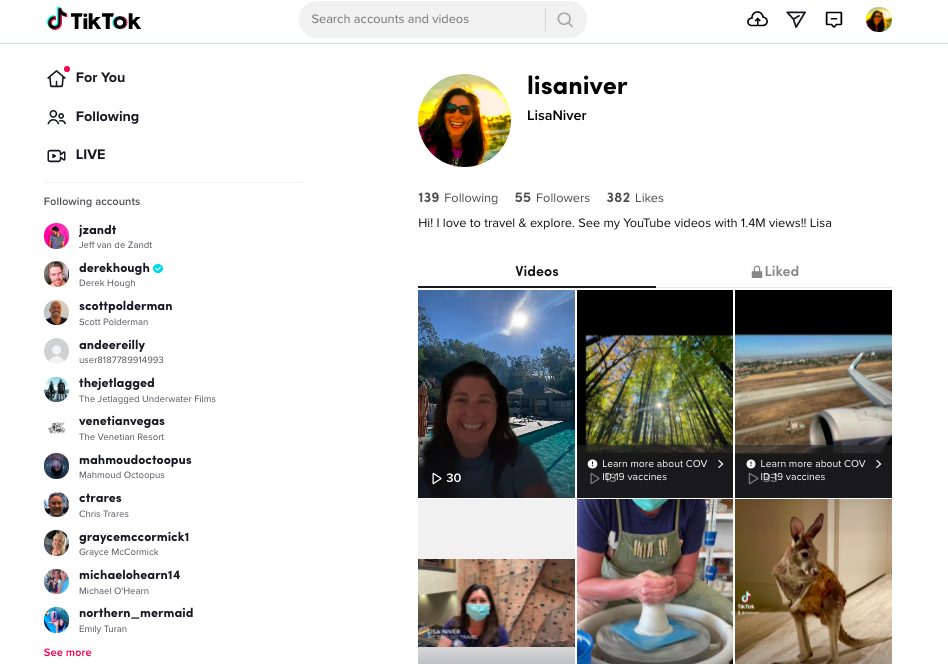
Last month, I shared how I won an award for technology reporting and had my first story in WIRED! This month, I was back in Vegas at the DEMA scuba show and started working on a social media challenge: 5 videos a day for 30 days! Click here to see my first tik tok dance and here to see my dad and his brother carving the turkey.


I have more than 60 videos so far on Tiktok, Instagram Reels, Facebook Reels and YouTube Short Video! Please comment, like and share on your favorite platform! I appreciate all of your support. After the first 12 days, I had over 50,000 new views! I am going for 100k and then 1 million.

I have three articles from when I was in Vegas in Sept 2021 for IPW Travel Conference. You can read about my stay at the Venetian, the BrandUSA conference and all my fun from climbing walls, driving bulldozers and landing in the Grand Canyon by helicopter–17 videos of all my adventures in the playlist above:

Luxury Las Vegas: My Stay at The Venetian Resort

Thank you IPW 2021 Resorts World Las Vegas

What happens in Vegas? EVERYTHING

After Vegas, I went hiking in Park City, Utah! It was GORGEOUS!

Thank you to Carolann and Macrae for celebrating my birthday with me in Toronto! We went hiking on Bruce’s Trail which was founded in 1967 just like me! Watch it here!

Thank you Margo for inviting me back on her podcast: Her Business Her Voice Her Conversation. Listen or read about both episodes here.

WHERE CAN YOU FIND MY TRAVEL VIDEOS?

Here is the link to my video channel on YouTube where I have over 1.4 million views on YouTube! (Exact count: 1,403,961 views)

Thank you for your support! Are you one of my 3,264 subscribers? I hope you will join me and subscribe! For more We Said Go Travel articles, TV segments, videos and social media: CLICK HERE

Find me on social media with over 150,000 followers. Please follow  on TikTok: @LisaNiver, Twitter at @LisaNiver, Instagram @LisaNiver and on FacebookPinterestYouTube, and at LisaNiver.com.

My fortune cookies said:

“It’s time to treat yourself to something special.” Did you buy yourself a holiday gift? Wait until you see what I got for my CAR!! I will share on social as soon as it arrives!!

“Use Your Abilities at this time to stay focused on your goal. You will succeed!” I know you can do it! I believe I can make it to DAY 30 of this social media challenge too!

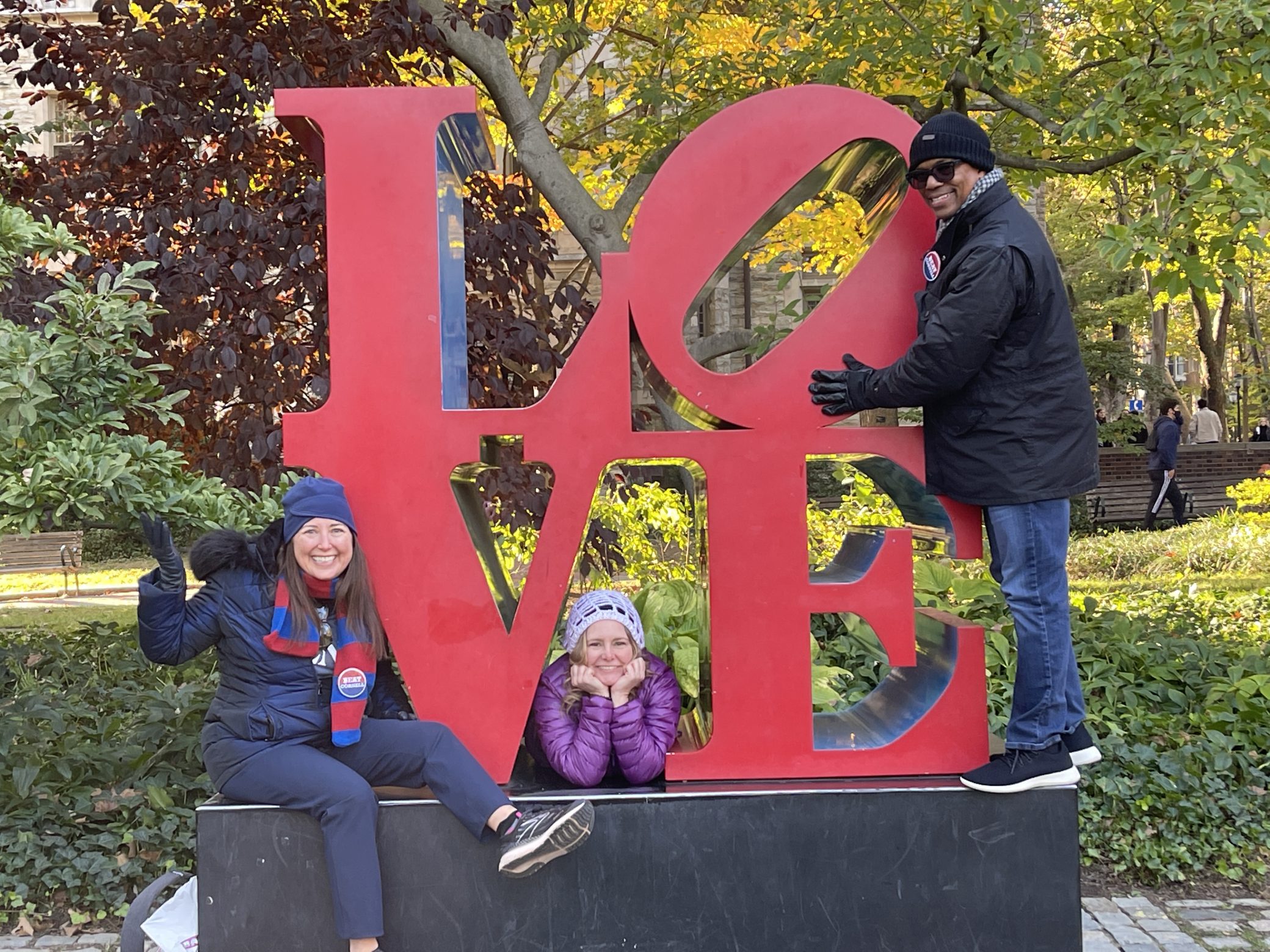
Being at PENN for Homecoming 2021 was PERFECT and full of LOVE! Lisa (1989), Heather (1991), Carl (1987)

TikTok-ing with Gratitude: Niver’s News: Nov 2021 Read More »

Solidarity with the Palestinian People Includes Being Honest

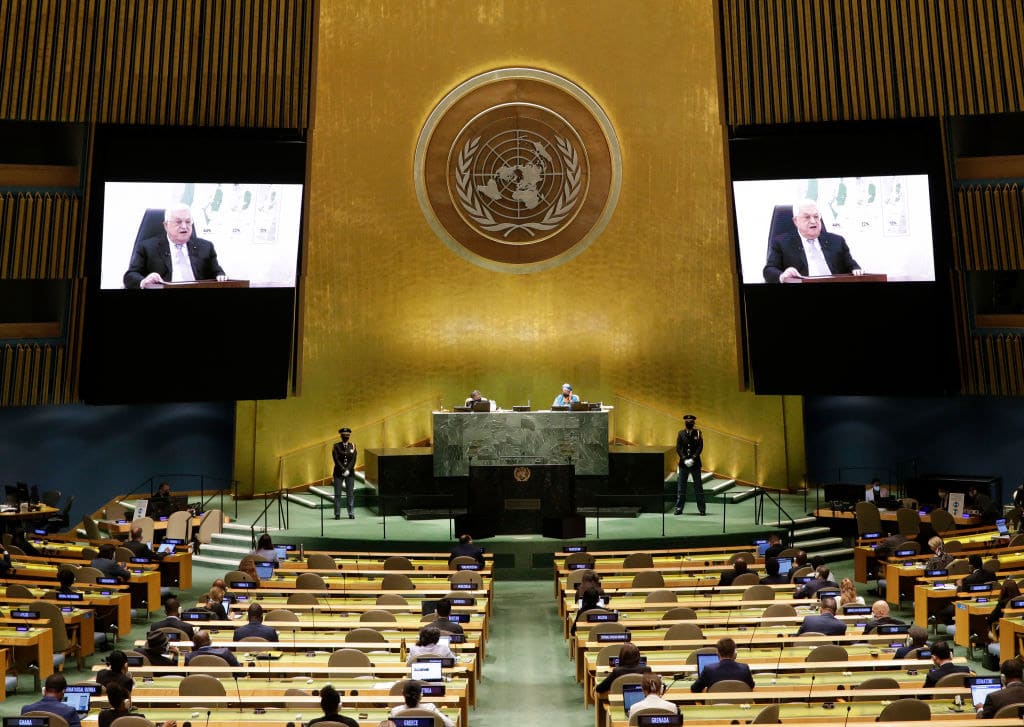
On November 29, the United Nations celebrates its International Day of Solidarity with the Palestinian People. Established in 1977, it commemorates the anniversary of the General Assembly passing Resolution 181, the United Nations Partition Plan for Palestine, which called for the area to be divided into two independent States: one Arab and one Jewish.

In his official message, Secretary General Antonio Guterres noted that the situation in Palestine “remains a challenge to international peace and security,” and called for the international community to “reaffirm our unwavering commitment to the Palestinian people in their quest to achieve their inalienable rights.” He also referred to the “Occupied Palestinian Territories” and called for a two-state solution “based on the 1967 lines.”

It is incredibly odd but unfortunately telling that neither his nor any of the other UN statements commemorating the day even mentioned the very relevant fact that on Nov. 29, 1947, the Arab world rejected the UN’s Partition Plan.

Rather than declare a peaceful Palestinian State, the Arabs chose to instead declare a genocidal war—which they then lost. The rejection of the Partition Plan (and the ensuing decision to attack) is one of the main reasons why the Palestinian question remains unresolved.

Real solidarity with the Palestinian cause would include being honest about the full history of Nov. 29, and acknowledging the real-world consequences of decisions made that still affect the Middle East today. At the time, the UN blamed the Arabs for the violence and aggression that was clearly meant to undermine the Resolution and forcefully take land. Two of the five armies that invaded Israel, Jordan (in the West Bank) and Egypt (in Gaza), illegally occupied territory that they had taken through aggressive action expressly forbidden under international law. In 1967, Israel regained those territories in a defensive war under Article 51 of the UN charter. Ironically, to give meaning to the “1967 lines,” as the Secretary’s statement does, is to retroactively ratify aggression against the UN’s mandate and support illegal occupation.

The United Nations fails the Palestinian people every time it emptily reaffirms its commitment to their national aspirations while ignoring the missteps their leaders have taken on the path to its achievement. Today should be a time to take serious stock and recognize what is and is not possible. It is not possible to turn back the clock to November 29, 1947, and to completely erase the bloody effects of some very bad decisions. But it is still possible to fulfill the spirit of the UN Partition Plan—two nations, Israel and Palestine, living peacefully side by side.

The United Nations fails the Palestinian people every time it emptily reaffirms its commitment to their national aspirations while ignoring the missteps their leaders have taken on the path to its achievement.

To that end, Israel has repeatedly offered plans for division of the land, some of which were even supported by much of the Arab world. Israel has already given back over 87 percent of the territory it regained in 1967, and at various times in recent history has offered up to 99.3 percent of the remaining disputed territory, plus tens of billions of dollars, all in exchange for peace. Some of the Israeli plans even called for the division of Jerusalem. Each time, however the Palestinians refused, for the same reasons they rejected the Partition Plan—they do not recognize Israel’s legitimate and historical claims to these same areas, and they are thus unwilling to share.

Part of that unwillingness relates to a fundamental misunderstanding that many people have about Israel, the Mandate, and the events of November 29. To be clear Israel’s legitimacy is not rooted in the beneficence of others. The Jewish people’s rightful claims predate the League of Nations, and precede the horrors of the Holocaust. In the early 20th century Jewish people came from around the world to buy and cultivate land in order to further expand the existing Jewish communities that had remained in Israel as a continuous presence since Biblical times and throughout all their exiles. As Winston Churchill, then secretary of state for the colonies, explained, “When it is asked what is meant by the development of the Jewish National Home in Palestine, it may be answered that it is not the imposition of a Jewish nationality upon the inhabitants of Palestine … but the further development of the existing Jewish community … [I]n order that this community should have the best prospect of free development … it is essential that it should know that it is in Palestine as of right and not on sufferance.”

This year, November 29 also happens to fall on the first day of Hanukkah, when Jewish people around the world commemorate the Maccabean victory over the Seleucid Empire in 164 BCE and the rededication of the Temple in Jerusalem. Later, when Antioch VII demanded the return of land the Maccabees had won back in their defensive conquest, Simon, the last remaining brother of Judah Maccabee, responded: “We have not taken strange lands, nor are we ruling over foreign territory. We have returned to our ancestral inheritance.” (1 Maccabees 15).

As King Solomon, the Jewish king who ruled that same territory roughly 700 years before the Hannukah story, famously said, there is nothing new under the sun. While Jewish leaders celebrated Nov. 29, 1947 as the day that the world again recognized those claims, no one gave Israel to the Jews, and therefore no one has the right to ever take her away.

While Jewish leaders celebrated Nov. 29, 1947 as the day that the world again recognized those claims, no one gave Israel to the Jews, and therefore no one has the right to ever take her away.

The real lesson of November 29th is that the Arab world made a critical mistake in rejecting the UN’s Partition Plan and ignoring the Jewish people’s legitimate and indigenous claims. But that does not mean there cannot be hope for a better future. Standing with the Palestinian people does not mean offering empty platitudes. Real solidarity requires being honest about hard truths and competing but legitimate claims, so that the same mistakes are not repeated over and over again.


Dr. Mark Goldfeder is an international lawyer and Director of the National Jewish Advocacy Center


Solidarity with the Palestinian People Includes Being Honest Read More »

Getting to Know Your Candles – a Hanukkah Writing Workshop with Emily Stern – NIGHT 3 2020

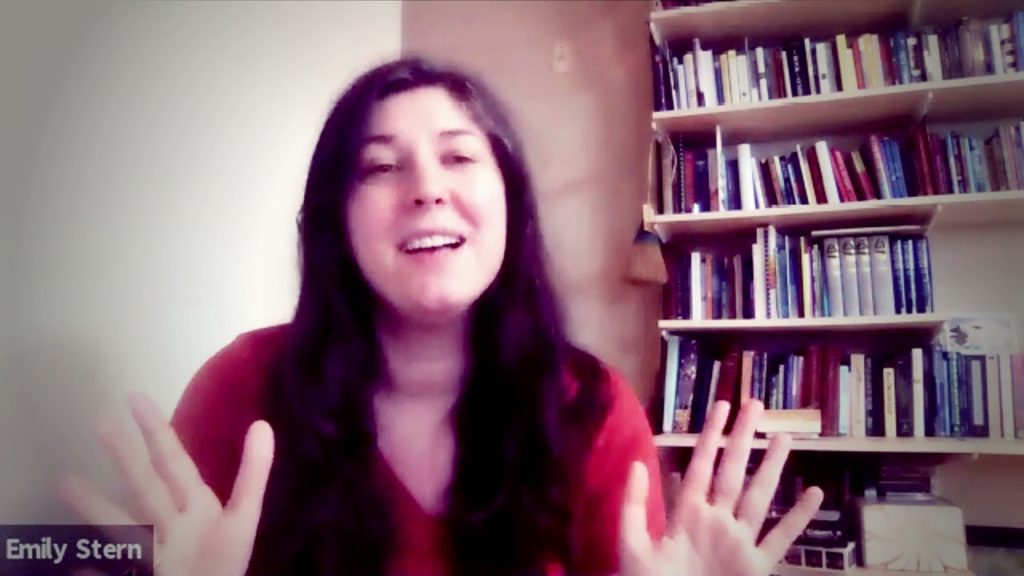
Try this before you light your candles tonight! In this series of videos for Hanukkah, Emily offers a different teaching and writing exercise for “getting to know your candles” before lighting Hanukkah candles each night. Corresponding to the number of candles we light each night, these teachings and writing prompts are to help you get in touch with your personal intention and cultivate a unique relationship with your candles each night. In 2020, the third night of Hanukkah came after right after Shabbat ended, but it can be used any year. Join Emily in lighting three candles with this two part writing prompt that brings us to the Garden of Eden.

Getting to Know Your Candles – a Hanukkah Writing Workshop with Emily Stern – NIGHT 3 2020 Read More »

Getting to Know Your Candles – a Hanukkah Writing Workshop with Emily Stern – NIGHT 2 2020

How do you relate to the sensations and experiences of giving and receiving? In this series of videos for Hanukkah, Emily offers a different teaching and writing exercise for “Getting to Know Your Candles” for lighting Hanukkah candles each night. Corresponding to the number of candles we light each night, these teachings and writing prompts are to help you get in touch with your personal intention and cultivate a unique relationship with your candles each night. All videos are based on teachings given in the year 2020. Shabbat fell on the second night of Hanukkah in 2020, so this is a meditation for the combined 2nd night and Shabbat. The prompt would be: HOW DO I RELATE TO THE SENSATIONS AND EXPERIENCES OF GIVING AND RECEIVING?

Getting to Know Your Candles – a Hanukkah Writing Workshop with Emily Stern – NIGHT 2 2020 Read More »