
fbpx

October 21, 2021

A Moment in Time: The Impact of a Kindess

Dear all,

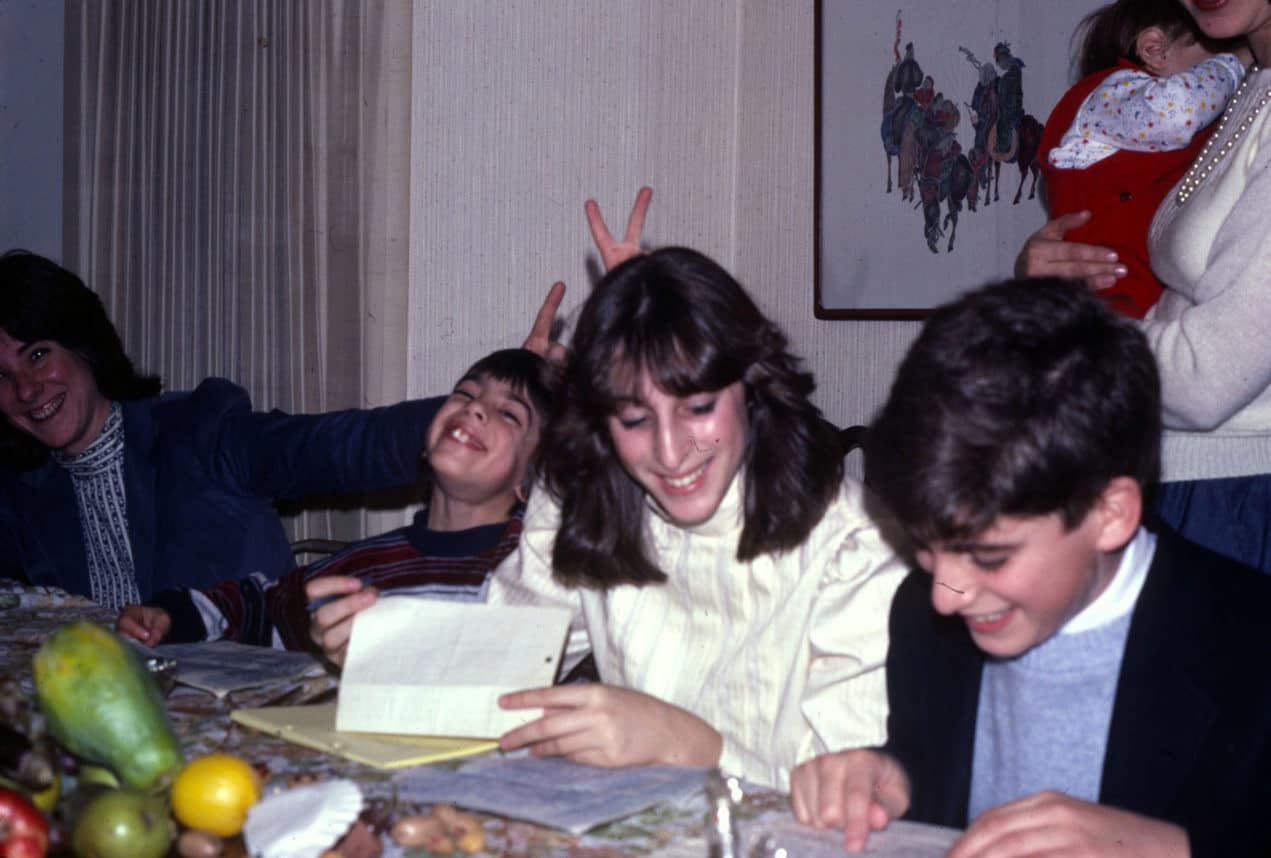
”The last time I saw you was when you were 10 at a Rosh HaShanah dinner.”

This is what the voice on the call said the other day when a stranger phoned me out of the blue. My first instinct was to pull up one of those old awkward photos of myself at 10 at Rosh HaShanah (and yes, I found one!)

But the stranger had a story. It turns out he interviewed with my father while looking for a job. He mentioned that both his parents had died at a young age. It was a week before the Jewish New Year, and my father invited him to be with our family for services as well to dinner.

That’s the only time our paths crossed. But he called me to share how at that moment in time in his life, some 40 years ago, my father’s kindness made a difference that left a lasting impression.

Friends, we never know how our actions will impact others. What we do today really and truly makes a difference, and the opportunities are endless!


With love and shalom,

Rabbi Zach Shapiro

A Moment in Time: The Impact of a Kindess Read More »

A Bisl Torah: Start Tuning Out

At a recent holiday celebration, while praying and sermonizing, I noticed the loud raucous noise of a construction site. In between my page calling were sounds of drilling, humming of excavators and beeping of bulldozers moving backwards and forward. I was appalled. How could the congregation possibly concentrate as we were pulled towards noise outside of prayer?

In a moment of exasperation, I leaned into the microphone and muttered, “I guess this is symbolic of life. How many sounds are we challenged to tune out?”

At the service, I was tasked to tune out the construction site. But every day, we face the seemingly impossible task of weeding through noise: the voices of those that deserve to be heard and the voices we give far too much attention. We hold the ability to train our minds and teach our ears to listen better, improving the skill of tuning out.

Rabbi Adin Steinsaltz teaches that God’s voice on Mount Sinai never stopped. The same Godly voice that gave the Ten Commandments and Shema continues to speak. Steinsaltz explains that there is a clear divine message always being transmitted but sadly, we are no longer listening.

Authentic listening may start with deciphering between noise and sound. Noise is that which distracts us from living with purpose and intention. Beyond the noise, we may be able to hear the sounds of God’s creations unfolding. The sounds of miracles. The sounds of wonder. The sounds of awe.
Perhaps, to really listen, the time has come to start tuning out. In doing so, God’s voice is waiting just for you.

Shabbat Shalom


Rabbi Nicole Guzik is a rabbi at Sinai Temple. She can be reached at her Facebook page at Rabbi Nicole Guzik. For more writings, visit Rabbi Guzik’s blog section from Sinai Temple’s website.

A Bisl Torah: Start Tuning Out Read More »

Offering Support for Alzheimer’s, With a Side of Hilarity

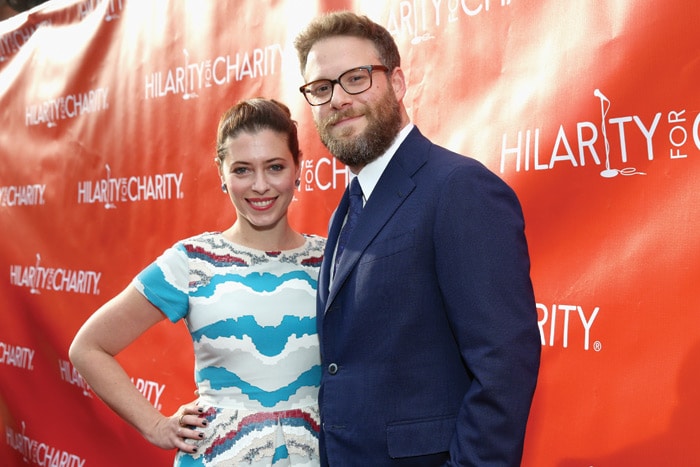
“Forget Seth. I’m more interested in you,” I told Lauren Miller Rogen a few weeks ago.

I didn’t really mean those (first) words. Seth Rogen is a famous actor, writer and filmmaker, but his wife, Lauren, is a formidable writer, director and producer. And as soon as I met Lauren, I knew she had a story to tell. 

As it turns out, Lauren is a mensch who tells great jokes and loves pretzels and pottery. She and Seth co-founded a wonderful cause called Hilarity for Charity in 2011 to support families affected by Alzheimer’s disease and to educate about brain health.

Hearing Lauren’s poignant story was a reminder that behind every comedic mind, there is a heart once broken by pain. 

When she was just 20 years old, her mother, Adele, was diagnosed with Alzheimer’s. “I was not at all equipped emotionally to handle it,” Lauren said. Both her maternal grandparents had suffered from Alzheimer’s and dementia. “Alzheimer’s is slow and cruel,” she observed with an air of graceful, compassionate honesty. 

Lauren grew up in Lakeland, Florida. She recalled her family’s amused bewilderment upon seeing a visitor’s pamphlet from the local Chamber of Commerce that listed: “Churches: 300; Jewish churches: One.” 

“That about sums up my religious upbringing,” she said. “But having grown up in a small town where I had to hold on to my Jewish identity because there were so few of us, it’s something I feel very connected to personally.” 

In January 2004, Lauren moved to Los Angeles and worked as an assistant. The following summer, in 2005, she met Seth. “For the first time,” she said, “I said the words aloud: ‘Something’s not right with my mom.’” 

She spoke those words to Seth, whom she describes as “an amazing partner,” and who, in 2014, testified before Congress during a Senate committee hearing about the high cost of caring for Alzheimer’s. Only two senators were present at the hearing, despite the fact that 6 million Americans suffer from the disease (according to the Centers for Disease Control, that number is set to triple by 2060). 

“I was really depressed and angry, and it certainly affected my work,” Lauren recalled about her mother’s Alzheimer’s diagnosis at age 55. She quit her assistant job and started to write films. “But writing was hard,” she admitted, “because I was angry and just wanted to look on the internet for a cure for Alzheimer’s.”

“We assume only elderly people have this disease, and that their children and caretakers are older as well.” – Lauren Miller Rogen

That’s when Lauren realized a mistaken narrative about the disease: “We assume only elderly people have this disease, and that their children and caretakers are older as well,” she said. But Adele was in her 50s; Lauren was in her 20s, and she needed to access support for young people affected by Alzheimer’s. 

With Seth’s encouragement, Lauren joined a support group for young people with parents suffering from the devastating disease. In 2011, Matthew Bass, a comedy writer and friend of the couple, offered to host an event, which came to be called “Hilarity for Charity,” to raise funds for the Alzheimer’s Association. The event resulted in feedback from young people who reiterated that they didn’t have voice or a space with a disease like Alzheimer’s, which is primarily focused on an older generation. 

Hilarity for Charity, which started as a fund within the Alzheimer’s Association, became its own independent non-profit organization in 2017 and changed its name to HFC (its events are still run under the original name). A staff of four oversees two main programs, which include virtual support groups and grant assistance. There’s also a team of devoted volunteers, including Seth, Lauren, Matthew and several other friends. 

The virtual support groups are run by a trained therapist and attract attendees from all over the country. The groups met online years before the COVID-19 pandemic, beginning in 2014.  

HFC also offers In-Home Alzheimer’s and Dementia Care Grants through a partnership with Home Instead to provide three to six months of free, professional, in-home care for those who take care of loved ones at home, but who can’t afford care for themselves. To date, the program, which helps those in the United States and Canada, has awarded over 350,000 hours of respite-relief for non-professional caregivers (grants are not in the form of cash, but respite hours). “We just want people to have a human moment,” Lauren said.

For the Millers, dealing with Alzheimer’s was truly a family affair.

For the Millers, dealing with Alzheimer’s was truly a family affair; Lauren’s father, Scott, retired early to care for Adele, and her brother, Dan, serves as chair of the HFC board. The organization will celebrate its tenth anniversary this year on November 10, with a virtual game show called “Head to Head.”

Since its inception, HFC has focused on a critical, but often missing puzzle of Alzheimer’s education: brain health. HFC hosts brain health education events such as dinners that include healthy foods and question-and-answer sessions with neurologists. It will soon launch HFC Universe, a website that will teach about brain health and include coursework for students in high school, college and medical school. The educational tool will work in partnership with Dr. Richard Isaacson, founder of the Alzheimer’s Preventative Clinic at Weill Cornell Medicine and New York-Presbyterian. 

In February 2020, just one month shy of the pandemic, Adele passed away after a 16-year battle with Alzheimer’s. 

“It sounds crazy to say, but in my experience, with a disease like Alzheimer’s, death was the easiest part,” Lauren said. “The hardest part was the 16 years leading up to it: watching her be immobile and unable to speak. It was much more brutal to have been witness to that than to death.” She paused for a moment, and then reflected, “I actually lost my mom many years ago.”

For more information about HFC, visit https://wearehfc.org/

Offering Support for Alzheimer’s, With a Side of Hilarity Read More »

“A Mouthful of Air” Movie and Book Dive Into the Pain of Postpartum Depression

Nationwide, about 1 in 8 mothers suffer from postpartum depression. While some may naturally feel a lack of energy or trouble concentrating when they’re in that newborn fog, others experience a much more dangerous form of it. 

For Julie Davis, the main character in “A Mouthful of Air,” a novel and new movie by the same name, postpartum depression is all-consuming, and it’s threatening to destroy the world she’s built for herself. 

Though things looks perfect from the outside – she has a beautiful baby, she lives in a nice home and her husband is successful – it is anything but. Right before her son’s first birthday, she slits her wrists in a suicide attempt. She survives but struggles with her mental illness every waking moment.

Amy Koppelman wrote “A Mouthful of Air” and directed the movie version, which is coming out on October 29 and stars Amanda Seyfried as Julie. The author, a mother of two, also experienced depression, shame, self-doubt and fear, but was mainly inspired to write the book after putting, “Can a mother hurt her child?” into a search engine.

“A fairly rudimentary website came up,” she said. “I clicked on it and there was a letter a mother wrote to her daughter who had recently taken her own life and the life of her child (the woman’s grandchild). It was the first time I ever saw the words ‘postpartum depression.’ There was a butterfly or an angel on the top left of the screen and I remember reading the letter and crying. The loss was so devastating. And I remember knowing – somehow in that moment – that this was a story worth telling.”

“A Mouthful of Air” follows Julie as she goes through the everyday motions, from caring for her baby to accompanying her husband to a sports game and seeing her doctor. When it seems like she’s on the mend, she becomes pregnant again and has to go off her antidepressants. At the same time, her husband buys a house on Long Island, so Julie becomes even more isolated.

Even though postpartum depression used to be a taboo topic, Koppelman said that now, people are talking about it more than ever before. Still, it’s not an easy discussion.

“The most important thing to me is that this movie helps – even in some small way – destigmatize mental illness and motherhood.” – Amy Koppelman

“Many of us we were taught – since we were little girls – that our worth is inextricably tied to our ability to reproduce and nurture. If we feel dead inside, fearful that we aren’t equipped, unsure if we have the tools to be a mom, then we are of no value. And that’s not true. Asking for help doesn’t make you weak. Expressing your insecurities doesn’t make you a bad mom. The most important thing to me is that this movie helps – even in some small way – destigmatize mental illness and motherhood.”

To cope with her depression, Koppelman said she sees a therapist, takes medication and spends “as much time as possible with my little family. I hunt for the tiny moments of beauty that make life worthwhile and try hard not to think about the inevitable goodbye.”

Depression is a common theme in her work; she also wrote “I Smile Back,” a novel and movie starring Sarah Silverman that follows a housewife who is addicted to drugs and alcohol. Like “A Mouthful of Air,” it is painfully truthful, depicting what it’s really like to struggle. 

When adapting “A Mouthful of Air” for the screen, Koppelman said she wrote the movie specifically for Seyfried. “She’s been my partner in every step of the process, down to where I put a period versus a comma. There is no better collaborator. She’s as smart as she is pretty and one of the most genuine and kind people I have ever met.”

With the movie and the book, Koppelman hopes they not only shine a light on postpartum depression, but also encourage struggling mothers to find the help they need to heal.  

“Suicide is never the answer,” she said. “Your kids are never better off without you. They need you. Everyone who loves you needs you. Postpartum depression is treatable. If you are suffering, please ask for help and get better.”

“A Mouthful of Air” Movie and Book Dive Into the Pain of Postpartum Depression Read More »

Can Jews Keep Their Sense of Humor?

As much as fighting Jew-hatred is a deadly serious matter, maintaining our sense of humor as we engage in that fight is an equally serious matter.

This is not simply because laughter helps us maintain our humanity, which is important enough. Laughter is also a source of power. 

None of this feels self-evident. After all, how can anything connected to laughter be that serious? Isn’t the whole purpose of laughter to give us a whimsical break from the drudgery of reality? And who wants to laugh about things that threaten us? Isn’t that kind of frivolity dangerous?

So, where does laughter gets its power?

In the case of the Jews, comedy has a long and rich history.  Perhaps no ethnic group has been as equipped, willing and eager to make America laugh as the Jews. I’ve often argued that Jewish comics have done more than any other Jewish group to create bonds of affection with our fellow Americans.
Funny people are usually more likeable and popular—especially those who can poke fun at themselves. Jewish comics have been poking fun at themselves and others for well over a century, with an incredibly broad diversity of humor, from vaudeville to Borscht Belt to political and social satire to observational humor to squeezing big laughs out of the utterly trivial.

The old cliché of laughter being the best medicine has always contained a deliciously human idea—it feels really, really good to laugh. Jews have been brilliant at milking that medicine.

But in today’s ultra-serious and sobering times, laughter can  trigger a twinge of guilt. Who feels good about cracking up when everything around us is cracking? Who feels like laughing when we must fight the existential danger of climate change or the multiple threats to our democracy or a nasty virus or the evil of antisemitism?

Jew haters would love nothing better than to take our story away from us, to define us on their terms, to lower us into a mud fight. Nothing would make them happier than to see Jews lose their sense of humor. We must, of course, avoid that trap.

And yet, somehow, since time immemorial Jews have found the time and the chutzpah to laugh. Beyond the organic truth that laughter helps us cope with the pains of reality, Jews have also understood the connection between humor and empowerment.

As Monica Osborne writes in her deep dive in this week’s cover story: “Making a joke about something dark or something about which we’re self-conscious puts us in a position to own the story, rather than allowing the story to own us.”

Laughter has helped Jews own our story. I’m sure our comics never set out with that abstract goal in mind, but over the decades, millions of hours of Jewish comedy have empowered the Jews to own their story. All that laughter adds up.

Jew haters would love nothing better than to take our story away from us, to define us on their terms, to lower us into a mud fight. Nothing would make them happier than to see Jews lose their sense of humor. We must, of course, avoid that trap.

The confidence of owning our story while making America laugh has helped us build a fortress of affection that no hater can breach. It’s not a coincidence that despite the eruptions of Jew-hatred and Israel-hatred we’ve seen in recent years, according to the latest Pew survey Jews remain the most popular religious group in America.

We can jeopardize that affection if we morph into a serious, scolding bunch and downplay our funny gene.

Humor is a unique weapon that charms and disarms. It conveys strength and confidence. It can ridicule our enemies. And Jewish comics, these blessed heroes in our endless fight against hate, are seriously good at it.

Even at a time when self-righteous woke mobs are trying to spook comics into silence, lest the comics offend the wrong groups, Jews must continue to make America laugh. This is especially needed when millions of Americans are still feeling  the isolation and mental strain of a staggering pandemic.

We also must lead the way in showing how to take a joke. Not every joke about Jews must harken back to “antisemitic tropes” from the Nazi era. When we go shpilkes over every poke, all we do is look weak. If comics want to play off the stereotype that Jews are successful, my instinct is to think, “Hmm, as far as stereotypes go, is that one so bad? And how will whining help?”

By all means, let’s continue to fight the Jew-haters with everything at our disposal, let’s condemn them and call them out, let’s push back on hate speech, but let’s not lose our sense of humor in the process.

Humor is a unique weapon that charms and disarms. It conveys strength and confidence. It can ridicule our enemies. And Jewish comics, these blessed heroes in our endless fight against hate, are seriously good at it.

Can Jews Keep Their Sense of Humor? Read More »

Fuente Latina Provides Accurate Information on Israel to Spanish-Language Media

When Leah Soibel left her position at The Israel Project in Jerusalem in 2012, she knew her next adventure had to include her two passions: pro-Israel advocacy and the Spanish-language media.  

“I looked around and saw that the Spanish-language media was basically ignoring Israel and the Jewish community,” Soibel said. “Their coverage of Israel and Jewish issues wasn’t necessarily negative, it was simply non-existent. However, at the same time, I saw anti-Israel forces making an effort to reach out to them. I knew the Latino community had to hear both sides.”

That’s when the St. Louis-born Latina founded the nonprofit Fuente Latina (Latin Source). After creating the nonprofit in Jerusalem, she moved to Miami in 2018 to grow it. She chose Miami because it is the crossroads between the U.S. and Latin America, and it’s a major Spanish-language media hub with a large concentration of Hispanic media influencers.

“Eleven percent of the total US Jewish community identify as Latino. It is a population that can’t be ignored.” — Leah Soibel

“I immediately knew we also needed a strong presence in Los Angeles, and thanks to the Jewish Community Foundation of Los Angeles, we were able to open our second U.S. office in LA,” Soibel, who is Fuente Latina’s founder and CEO, said. “More Latinos live in Los Angeles County (4.9 million) than any other ethnic group. Further, Los Angeles County is home to America’s second largest Jewish community (530,000). Eleven percent of the total US Jewish community identify as Latino. It is a population that can’t be ignored.”

Today, the nonprofit has offices in Miami, Los Angeles, Tel Aviv, Mexico City and Madrid. Its mission to engage the Spanish-language media by providing them with 24/7 content to cover local stories about Israel and the Jewish community positively and accurately. 

Over the last nine years, Soibel said Fuente Latina has facilitated 6,000+ interviews resulting in 65,000+ accurate news stories, published 200+ opinion pieces in top Spanish-language outlets and published 350+ videos/visual content. She estimated that this work has resulted in informing more than 800 million Latinx news consumers worldwide. Its accolades include two TV Emmy wins and several nominations for major U.S. Hispanic network coverage and an Associated Press Broadcasters Award.

According to Soibel, it’s crucial to engage the Spanish-language media about Israel and Jewish issues because, “Many issues important to the Latinx community resonate with the Jewish community and vice versa. Further, Israel and the Jewish community need to ensure that the massive Latinx community has an accurate understanding of the facts when they form opinions of the Jewish community. They are not getting that with the mainstream media. Worse, they are getting misinformation, fed to them by anti-Jewish forces.”

Soibel said that during the Operation Guardians of the Wall conflict in the spring of 2021, Fuente Latina’s Los Angeles Media Associate Daniella Schwartz facilitated interviews and provided facts to local Spanish-language media to ensure they were reporting on recent antisemitism in LA. Her work resulted in several balanced stories on the Telemundo 52 network about the antisemitic attack at Sushi Fumi, and coverage on Univision, the most widely watched Spanish-language television network in the country.  

Fuente Latina also brings journalists to Israel so they can see Israel firsthand and up close. To date, they have brought 330 journalists from 12 countries (10 from Los Angeles).

Soibel said she believes it’s important that people know that Fuente Latina is a women-led, JOC (Jew of Color) organization. Six of the eight board members and all 10 staff members are Hispanic Americans, originating from Mexico, Colombia, Puerto Rico, Argentina and Spain, reflecting the diverse Latinx populations they serve. 

The nonprofit seems to have carved out a niche that was unfilled. “We are a non-partisan, nonprofit organization,” Soibel said. “Our only objective is to provide the facts to the large and growing Hispanic population so they can make informed decisions when it comes to Israel and the Jewish people.”

Fuente Latina Provides Accurate Information on Israel to Spanish-Language Media Read More »

16 Things I Forbid You to Say at Work

A leader at a startup recently came to me with a problem: the team had just brought their first woman onto the leadership team (don’t even get me started on that…) and she was absolutely fantastic.

So, what was the problem?

Even though she was consistently making the most compelling points in every meeting they held, she was constantly putting herself down before and after raising those points with statements like: “you’ve probably already thought of this” or “I’m no expert.”

Could he give her feedback, he wondered? Should he give her feedback, he asked me? My answer was yes and yes!

But my bigger concern was that this remains all too common for women at work. Even for women in positions of leadership — if they can make it that far without these self-sabotaging bad habits holding them back — as he was observing first-hand.

That’s why I’ve compiled this list of 16 things I absolutely, positively forbid you to say at work.

Forbidden when sharing your ideas:

1. You’ve probably already thought of this…

2. Maybe I’m missing something…

3. This might be a dumb idea…

4. You all know more about this than I do…

5. Have we thought about….? (PRO TIP: phrasing your awesome idea as a question is like passing the ball to let somebody else score a slam dunk off your shot)

6. I’m no expert but…

7. Using “we” instead of “I”

8. You all have been working on this longer than I have….

Forbidden crutch words:

9. Just

10. Actually

11. Maybe

12. I wanted to…. [your actual action item or point here]

13. Sorry

Forbidden when receiving praise:

14. It was nothing

15. Just happy to help

On emailing back 1 hour (or even one day—gasp!) later: 

16. Sorry for the delay

So, does it actually matter? 

Yes, so (so) much. Every email matters. Every conversation matters. Every word matters.

As research by Jessica Nordell demonstrates, women’s contributions are often valued 3% less than their male colleagues. As we look at the future of gender equity in the workplace, we’re not dealing with the blatant, macro-level “you can’t do it” discrimination of decades past, but unconscious bias: the micro-level, insidious discrimination of the present and future.

As Nordell explains in her recent New York Times article, This Is How Everyday Sexism Could Stop You From Getting That Promotion, even a “tiny” increase in gender bias, “leads to dramatic discrimination over time.”

That 3%, she explains, has a compounding impact. These micro gaps don’t just contribute to gender-based gaps in leadership scope, title and compensation, but actively create a drastic delta over time between men and women’s promotion potential and earning potential. Critical gaps that we know widen significantly for women of color.

UNFORTUNATELY, MILLIONS OF WOMEN GO TO WORK DAILY ON AN UNFAIR PLAYING FIELD. THAT’S WHY WHEN WOMEN STEP UP TO THE PLATE, I WANT TO MAKE SURE WE CAN SWING FOR THE FENCES.

Using hedging and crutch language is like intentionally hitting a single when our ideas and contributions could be a grand slam—or at least a double.  Here are a few suggestions to help break bad habits:

  • Just blurt: Seriously, I want you to practice just blurting your ideas. That means in a meeting, you can drop your disclaimers and just share your perspective. In an email you can get to the point with “I’m writing to follow-up on….” vs. “I just wanted to check in to see how things were going with….” Or, you can share your ideas in a statement instead of couching them in a question, which somebody else can scoop up and score points with as their idea.

  • Hit the delete button: Especially around your hedge words like “just,” “actually” or whatever softening crutch word is your personal kryptonite. In email, don’t send your note until you review it and actually hit that delete button on those hedges and crutches. In meetings, practice speaking up intentionally with a focus on (mentally) deleting these words from your talk track.  You can even try jotting down your talking points in advance if it helps or find a trusted ally in the room who can listen to you speak up and share feedback on how you sounded.

  • Say thank you: Had a great idea and got some recognition? Hallelujah! Now just say thank you. Don’t tell them it was nothing. Don’t use “we” instead of “I.” Simply say these two words: thank you.

  • Save sorry: For when you actually mean it (more on that here). Every time you say sorry when it’s unnecessary you are cutting yourself down. As Nordell’s research shows, this bad habit can limit your promotion potential and earning potential. Instead, you can say “thanks for your patience” or simply say nothing at all: seriously, 9 out of 10 times it’s a total nothing-burger that you responded to the email a little later than intended.

Final thought: don’t overthink it, rethink it.

We often overestimate the cost of our ideas being wrong, which is why we hedge or soften, and underestimate the cost this hedging does to our reputation and people’s perceptions of our competence, capability, and leadership. Our words matter, so use them wisely.


Randi Braun is an executive coach, consultant, speaker and the founder of Something Major.

16 Things I Forbid You to Say at Work Read More »

A Great Phone Call

The afternoon before the erev Rosh Hashanah 5782, I got a phone call from my fifth-grade buddy David Dibo. David is one of those guys that every time we talk, it’s fun. I kicked off the conversation by telling him that one of the kids from our old class died. Now in our late sixties, these things happen more and more. Almost always better to be the one spreading that news as opposed to the one it’s being spread about. 

When we were around 12 years old, David and I were leaving my apartment building when I teased him by singing, “David loves Marva. David loves Marva.” Marva was a girl in our 5th grade class. David shot back that he did not love Marva. I sang it again but this time louder. Since David was twelve, his only recourse was to chase me yelling “take it back”. Running after me at full speed, he ran smack into the 2-inch-thick glass entrance door to the building. He was immediately knocked semi-unconscious. 

Now mumbling like a wino coming off a 40-year wine habit with blood pouring out of his nose, I walked him back home and handed him over to his mom. Freaking out at the sight of the blood, she asked him “what happened?”  David mumbled back to his mom, “Who are you? Where am I?”  We soon found out that besides a busted nose, David also had amnesia. This was especially bad for me since he was one of the kids I used to cheat off on school tests. After a week or so, David, thank God, was back to normal. 

A few years later he was voted most popular boy in high school even with a bent nose. We both still talk to Marva.

So, it’s now 53 years later and after a few minutes of catch-up, David says, “Some years back I told him that when he and the other kids would choose sides to play ball that it was painful for me that I was almost always chosen last or not at all.”  When you are a kid, that is a big deal. When choosing sides, I was what you call “What about him?”  When everyone else was picked, they would look at me and say, “What about him or who wants him?” Many times, I would be completely left out and walk home kicking the dirt, always mad, sometimes crying or sometimes both. Always feeling very alone. 

To be quite honest, to some degree, I deserved some of this treatment, but that’s for another time. So, David continued, “You know Mark, I just want to say I am sorry if I was one of the kids that hurt you. Because if I did, I really didn’t mean to.”  This happened 53 years ago. Wow. I can only tell you when he said those things to me, I felt an almost immediate release of pain I had been carrying around the whole time. I felt lighter, happier, and it brought a big smile to my face. Jokingly I fired back, “Thank you David. I have waited 50 years to hear that.”  We both laughed.  

The power of a simple “I am sorry” even five decades later can have tornado power impact uprooting ancient wounds.

The power of a simple “I am sorry” even five decades later can have tornado power impact uprooting ancient wounds. I have told the story of being left out many times to many people but until David’s call, I only had a sad ending to the story. It always ended with how much it hurt to be left out and forgotten. 

I also realized, for the first time, we were all just kids groping around in the dark hallways that housed our feelings and emotions. Thank you, David for the call, and thank you God for giving us the power of Teshuva (repentance) and the ability for us to accept a heartfelt “I’m sorry” when it’s handed to us. 

Recently I was tossing a baseball around with some neighborhood 12- and 14-year old’s when they then decided instead to play football. I asked if I could play, and they said no.  I look forward to that call in 50 years.


Mark Schiff is a comedian, actor and writer.

A Great Phone Call Read More »

The Greatest Jewish Joke Ever

In 1893, Rabbi Hermann Adler, the Chief Rabbi of England, wrote an essay about Jewish humor for The Eclectic Magazine of Foreign Literature, Science and Art. He was responding to comments made by two prominent intellectuals, Ernest Renan and Thomas Carlyle, suggesting that Jews completely lack a sense of humor. (They probably were projecting a medieval caricature of the rigid Pharisees onto their Jewish contemporaries.) Rabbi Adler wrote a lengthy essay in response, in which he collected examples of Jewish humor from the Tanakh down to Moses Montefiore. Rabbi Adler himself had a sharp wit, and in his essay, he makes it clear that he took great pride in the Jewish sense of humor.

One might find it difficult to believe that anyone could accuse the Jews of being unfunny. Steve Allen, in his 1981 history of American humor “Funny People,” labeled comedy as a “Jewish cottage industry,” and observed that 80% of the comedians in the U.S. at that time were Jewish. The association of Jews with humor is so strong, that in the 2013 Pew study, 42% of American Jews responded that having a sense of humor was an essential part of what being Jewish means to them. (Of course, one wishes that contemporary Jews were as devoted to Shabbat as they are to sitcoms.) There are many, many books of Jewish humor, numerous studies analyzing Jewish humor, and multiple types of Jewish jokes. There are jokes about antisemites, foolish Jews and rabbis, off-color jokes and witty jokes, jokes about business, family and Judaism itself.

Jewish humor is not a religious tradition. In fact, rabbinic literature is ambivalent about comedy, and there are frequent condemnations of “leitzanut,” mockery, in ethical guidebooks. Many rabbis condemned the folk tradition of a “Purim Rav,” a comedian who would parody the local rabbi on Purim, mimicking the rabbi’s mannerisms and ridiculing his idiosyncrasies. Some rabbis found the lampooning they received on Purim difficult to take; there is a legend that Rabbi Shimon Sofer, the Chief Rabbi of Krakow, died right after Purim due to the grief caused by a particularly irreverent “Purim Rav.” At the same time, jokes are recognized as being a valuable psychological tool; the Talmud tells of one rabbi who would always tell jokes before he taught, to get the students to relax and focus. In another passage, Elijah comes from heaven to tell a local rabbi that two jesters in his neighborhood have an honored place in the world to come, because their jokes cheered up the depressed. Humor can certainly be a spiritual tool, but there is no commandment to be funny.

Jewish humor is not a religious tradition. In fact, rabbinic literature is ambivalent about comedy, and there are frequent condemnations of “leitzanut,” mockery, in ethical guidebooks.

So why are Jews so funny? Sigmund Freud, in his 1905 essay “Jokes And Their Relation To The Unconscious,” devotes an unusual amount of space to Jewish jokes; it is clear that he believes Jewish humor is remarkable. In a time when Jews were extremely discreet in what they wrote about their compatriots, Freud features some unflattering jokes Jews would tell about themselves. He repeats a joke about Galitzianer Jews that pokes fun at their reputation for rarely taking baths:

“Two Jews met in the neighbourhood of the bathhouse. ‘Have you taken a bath?’ asked one of them. ‘What?’ asked the other in return, ‘is there one missing?’” (This is one of four different jokes about Jews and bathing that Freud repeats.)

Ruth Wisse, in her book “No Joke: Making Jewish Humor,” points out that Freud’s contemporary Arthur Schnitzler criticized Freud for publishing these jokes, which Schnitzler said made Freud sound more antisemitic than antisemites. However, Freud was unconcerned, and saw these jokes as depicting a positive side to Jewish culture. He explains that these Jewish jokes aremeant to portray the democratic mode of thinking of Jews, which recognizes no distinction between lords and serfs, but also, alas, upsets discipline and co-operation.”

Jews certainly know how to laugh at themselves, and to make fun of their failings. There is a joke about three Jews who are about to be executed by firing squad. The sergeant in charge asks each one whether he wants a blindfold. “Yes,” says the first Jew, in a resigned tone. “OK,” says the second Jew, in a quiet voice. “And what about you?” he enquires of the third Jew. “No,” says the third Jew, “I don’t want your lousy blindfold,” followed by a few choice curses. The second Jew immediately leans over to him and whispers: “Listen, Moshe, take a blindfold. Don’t make trouble.”

This joke is mercilessly self-critical and funny at the same time; but laughter helped Jews contend with a hostile environment, and cope during the most difficult of times. There was an entire genre of jokes created by Jews from the Soviet Union; and several books have been written about Jewish humor during the Holocaust. One would think that there are times and places where humor is impossible; but actually, that is where humor is most needed. Comedy is a refuge, a shelter for the heartbroken. One excellent example of this, from an obituary in Canadian newspaper, tells of a Holocaust survivor returning to visit the concentration camps:

“When, in the 1980s, Celine returned to Theresienstadt with her husband Maximilien, they were stopped at the ticket counter. ‘Last time I was here,’ Celine told the ticket vendor, ‘I got in for free.’”

I had heard a similar anecdote about another survivor who returned to Auschwitz. At the ticket counter, he rolled up his sleeve, showed the number tattooed on his arm, and asked, “do I get an alumni discount?” Laughter offers ready relief for the persecuted.

Laughter offers ready relief for the persecuted.

Some Jewish jokes wield ridicule as a weapon. The Midrash tells the story of a young Avraham breaking his father’s idols, and then claiming that the largest idol was angry, and broke the others; this is pure satire, a joke about the silliness of paganism. (And the Talmud makes clear that one is entitled to mock paganism, even in an extreme fashion.) In response to antisemitism, Jews mocked their boorish and barbaric enemies. One example of this is the joke that Joseph Telushkin retells in his book “Jewish Humor”:

“During the Second World War, a southern matron calls up the local army base. ‘We would be honored,’ she tells the sergeant who takes her call, ‘to accommodate five soldiers at our Thanksgiving dinner.’ ‘That’s very gracious of you, ma’am,’ the sergeant answers. ‘Just please make sure they’re not Jews,’ the matron adds. ‘I understand, ma’am.’ Thanksgiving afternoon, the woman answers the front doorbell and is horrified to find five black soldiers standing in the doorway. ‘We’re here for Thanksgiving dinner, ma’am,’ one of the soldiers says. ‘Bu … bu … but your sergeant has made a terrible mistake,’ the woman says. ‘Oh no, ma’am,’ the soldier answers. ‘Sergeant Greenberg never makes mistakes.’”

Mockery was a weapon, a way for Jews to belittle and diminish those who mistreat them.

But there is no purer form of Jewish humor than the absurd. A classic example is a joke told by Leo Rosten in “The Joys of Yiddish.”

A man posed a riddle to his son: “What’s purple, hangs on the wall and whistles?”

When the son gave up, he answered: a herring.
“A herring?” his son said. “A herring isn’t purple.”
“Nu,” replied the father, “they painted the herring purple.”
“But hanging on a wall? How does a herring hang on a wall?”
“Aha! You nail the herring to the wall.”
“But a herring doesn’t whistle,” his son shouted.
“Nu, so it doesn’t whistle.” 

This joke is actually a joke about jokes, a riddle that fails to add up; it absurdly ends up with a “nu” for a conclusion. And it is here where the Jewish love for humor begins. Let me explain why.

The name of the second Jewish patriarch is Yitzchak; the root word of his name is tzachak, which means laughter. In our Parsha, the root tzachak is employed several times; almost all are in relation to the birth, naming and raising of Yitzchak. They indicate the joy and shock Avraham and Sarah have when learning they will have a child in old age. The root word is also used when Lot tells his sons-in-law that their home city of Sodom is about to be destroyed. They do not believe him, for his words are “like a joke [kimitzacheik] in their eyes.”

The double reference to laughter highlights that both events are improbable to the point of being funny. And indeed they are. To an observer at the time, the possibility that a major city like Sodom will disappear, or that a childless, wandering, elderly couple will be the progenitors of a great civilization seems ludicrous. The funny thing is, this strange outcome is precisely what occurs; and it is here that the Jewish love for humor begins.

It is difficult to write a short article on Jewish humor; there are only so many jokes that you can tell, and so many others that have to be left out. But the greatest Jewish joke is ever-present: that am yisrael chai, that a small nation beat ridiculous odds time and time again. Just like the elderly couple Avraham and Sarah, Jews were expected to disappear; instead, they continue to thrive, year after year. Isn’t that laughably absurd?  Yes, it is; and that’s why the first Jewish child was named Yitzchak.


Rabbi Chaim Steinmetz is the Senior Rabbi of Congregation Kehilath Jeshurun in New York.

The Greatest Jewish Joke Ever Read More »