fbpx

September 22, 2021

John Legend Says Israel Needs to Be Held to a “Higher Standard”: “What They’re Doing to the Palestinian People Is Not Fair”

Singer John Legend called for Israel to be held to a “higher standard” in a September 20 appearance on MSNBC, arguing that Israel’s treatment of the Palestinians is “not fair,” The Algemeiner reported.

Mehdi Hasan, host of “The Mehdi Hasan Show,” pointed out that Legend had tweeted “Palestinian Lives Matter” in May during the Israel-Hamas conflict and asked Legend how he became an advocate for Palestinian rights. Legend responded that he learned “what justice meant” through reading the works of civil rights leader Martin Luther King Jr. and writer James Baldwin.

“When I see what’s happening in Palestine, to the Palestinian people, where they’re clearly not being able to experience [the] full rights that they deserve, it’s an extremely unfair and difficult life they’re forced to live,” Legend said. “I had to say something. It’s not fair, it’s not just, and given that Israel is the recipient of so much American aid and support and named as one of our strongest allies, we should hold them to a higher standard, and what they’re doing with the Palestinian people is not fair and it shouldn’t be done in our name and with our resources contributing to it.”

Some Jewish groups criticized Legend for his remark. Stop Antisemitism tweeted to Legend that “Egypt is the recipient of nearly the same amount of aid as Israel and controls Gaza’s southern border. Why are you speaking only of Israel and ignoring Egypt??”

They added in a follow-up tweet: “Why did @johnlegend make no mention of the 4500 terror rockets blast into Israel in 11 days from Gaza?  Those rockets were also made ‘in your name’ and with your tax dollars.  Again why is your grievance only with Israel?”

B’nai Brith International similarly tweeted that they were “disappointed” with Legend’s remarks.

“Legend falsely accuses #Israel of ‘unjust’ treatment of Palestinians, while failing to mention the Hamas terror threats Israelis face every day,” they wrote. “We urge Legend to apologize for his anti-Semitic remarks.”

On the other hand, Jewish Voice for Peace, an organization that supports the Boycott, Divestment and Sanctions (BDS) movement, tweeted in support of Legend. They argued that he was “speaking out for Palestinian rights and the need for the US to finally hold Israel accountable.”


Hanan Ashrawi, former member of the Palestine Liberation Organization Executive Committee, similarly tweeted that Legend’s comments took “courage, empathy, & moral clarity.”


John Legend Says Israel Needs to Be Held to a “Higher Standard”: “What They’re Doing to the Palestinian People Is Not Fair” Read More »

Two Men Charged With Hate Crime in Sushi Fumi Attack

Two men have been charged with a hate crime in connection to the antisemitic assault that took place outside of the Sushi Fumi restaurant in May.

According to a press release from the Los Angeles County District Attorney’s office, the two men have been identified as Xavier Paybon, 30, and Samer Jayylusi, 36. Both are being charged with two counts of felony assault and a hate crime.

“A hate crime is a crime against all of us,” District Attorney George Gascón said in a statement. “My office is committed to doing all we can to make Los Angeles County a place where our diversity is embraced and protected.”

On May 18, members of a pro-Palestinian caravan attacked several patrons who were eating outside of Sushi Fumi, which is located in the Beverly Grove area, after throwing bottles at them and asking if they were Jewish. Three of the victims were Iranian Jewish men. Another was an Armenian-Lebanese Christian man who tried to defend the Jewish diners from being attacked.

The Armenian-Lebanese Christian man, who identified himself as “Mher,” told the Journal’s Tabby Refael, “The way those guys approached us…throwing glasses at us…if you’re in a war zone, that’s a different story. But we were having dinner. We weren’t harming them. Why were they kicking us in the head? I had to do something.”

The Los Angeles Police Department is still investigating the matter.

Two Men Charged With Hate Crime in Sushi Fumi Attack Read More »

Sukkot Special: It’s Up to Us Now

With Sukkot upon us, Jews around the world are celebrating the end of the season’s agricultural harvest and the 40 years of protection from the harsh desert conditions God provided the Israelites while trekking through the Sinai Desert after they fled Egypt. For seven days and nights Jews commemorate the holiday by living in semi-exposed greenery-covered booths called sukkot (singular; sukkah), shelters that God facilitated the Israelites to dwell inside.

However, based on the grammatical scripture, there are some rabbinic scholars who interpret the story differently, suggesting God did not provide physical structures but rather divine clouds to shade and shield the Israelites from the relentless conditions of the desert. Regardless of the exact nature of God’s protection, the Israelites reached their destination while exposed to the natural elements.

If we look at this story from an environmental perspective rather than a biblical one, what can we take away from it? While it was God who protected the Israelites from suffering through the unforgiving droughts and heatwaves of the desert, today, it is now up to us to provide our own protection from these extremities and others around the world, and in light of the IPCC’s latest report, we are dangerously running out of time to do so. What can Israel and the rest of the world do to protect ourselves from a climate crisis of our own making?

It is Unequivocal

Thanks to the efforts of 234 scientists spread across 60 countries, the Intergovernmental Panel on Climate Change (IPCC) has released their Sixth Assessment Report regarding the most up-to-date and most alarming status of climate change yet.

Firstly, the IPCC can now say with absolute confidence that human activity is “unequivocally” causing the rapid changes we are witnessing to the global climate. These changes include the rising sea levels, melting glaciers, and the sheer frequency and escalated intensities of heatwaves, floods, and droughts. And it is without question that humanity’s main contribution to destabilizing our climate is a direct result of burning fossil fuels—coal, oil, and natural gas—a process which now emits an unprecedented 40 billion tons of carbon dioxide into the atmosphere each year.

Due to unceasing industrial greenhouse gas (GHG) emissions and the deterioration of the world’s natural carbon sinks, like forests and coral reefs, the rate of global temperature rise is increasing to a point in which we may very well cross the lower warming threshold set by the Paris Agreement (1.5°C above average pre-industrial levels) as early as the next decade. If this indeed comes to pass, the consequences will be a shameful reflection of our unwillingness to act urgently. Heatwaves, droughts, and wildfires are all expected to become even more frequent, and winter precipitation events are projected to become much larger and occur over shorter durations creating more floods. Additionally, if we fail to keep global temperature rise below the 1.5°C threshold, our ability to produce food agriculturally will be put in serious jeopardy thereby kickstarting an indefinite age of widespread food insecurity.

Limiting global warming to less than 2°C, to which the countries of the world have committed themselves to by signing the Paris Agreement, requires an immediate halt to the increase in GHG emissions and reach a zero balance of emissions by 2050. That is to say, balancing the volume of emissions to equal the planet’s absorption capacities where a net addition of GHGs into the atmosphere will be zero.

Achieving 100% Capacity 

After years of stagnancy, the Israeli government finally approved a state budget allocating NIS 625 million to a program entirely devoted to combating the climate crisis. According to Israel’s Environmental Protection Minister, Tamar Zandberg, the program is intended to promote renewable energies and other environmental technologies, facilitate the transition to green transportation, update waste infrastructure, and initiate a reduction in pollutive carbon emissions.

It is no big secret that the State of Israel has historically lagged behind in its transition to renewable energies. According to a report by the Knesset Research and Information Center, the rate of renewable energy production only made up about 5% of the country’s total electricity consumption in 2019, and in 2020, it only grew by an additional 1%. This, of course, failed to meet the Ministry of Energy’s target of achieving a 10% threshold by 2020.

Last year, the Ministry updated its 2030 renewable energy targets to 30% generation, but it is still a relatively low target compared to the rest of the world. For instance, Germany’s renewable energy supplied 46% of electricity production by 2019—9 times greater than that of Israel. Even more impressive is Scotland where 90.1% of all electricity in 2019 came from renewable sources, and they are attempting to reach a renewable energy capacity of 100% within the next few years.

But for a country so rich in sunshine and technological development, why is Israel’s use of renewable energies so low?

“The main problem is that this is a long-term investment. You have to spend a lot of money today to see the benefits that come many years in the future,” says researcher Miki Arzuan of Afeka College of Engineering. “It is difficult for governments to make such moves because they are often not the ones benefitting from the result. However, it is a responsible decision that must be made now for the future of us all.”

According to Arzuan’s research colleague Nitzan Ben Mocha, one of the reasons why the state has not taken more ambitious steps is because of the country’s current investment in natural gas.

“The discovery of Israel’s large Mediterranean gas fields has lowered the country’s motivation to make massive investments in renewable energies,” he says. “The burning of natural gas still pollutes and emits carbon dioxide, and in the process of producing it, methane gas is emitted into the atmosphere.”

Beyond the environmental and economic aspect, the transition to renewable energies would enable Israel to truly become energetically independent.

“Before natural gas was found in Israel, the state had to rely on other countries to sell it coal or oil to generate electricity,” says Ben Mocha. “Even today, if God forbid the gas rigs are damaged, we will be in serious trouble.”

Presented at the 49th Annual Conference for Science and the Environment, a new Israeli study has put forth a plan detailing how Israel can improve its renewable energy infrastructure. According to the researchers, following the outlined roadmap could enable Israel to achieve 100% electricity generation from renewable sources by 2030.

Enough Space, Sun, and Wind

According to Arzuan, Ben Mocha, and Dr. Moshe Tzuva from the Department on Power and Energy Engineering at Afeka College of Engineering, reaching 100% electricity production from renewable sources is within the realm of possibility for Israel. The researchers claim there is enough space, sun, and wind to achieve such a feat and that the transition of energy would become economically viable within a few years.

Wind and especially solar energy are the prime sources for generating the intended amount of electricity because they hold the greatest potential within Israel’s landscape as the country receives an average of nine hours of sunlight per day. Because the production technology of solar and wind energy is modular, it is possible to set up facilities of different sizes as needed.

The researchers recommend dividing Israel into 5 distinct areas according to the existing IEC districts and establishing an independent microgrid within each of them: meaning an electricity system operating completely autonomously from the central grid. Managing the energy grid in this way will make it possible to achieve greater efficiency, savings, and reductions of many other costs.

According to the researchers’ calculations about 300 square kilometers of land would be needed in order to reach the 100% renewable energy goal. However, the vast majority of the intended area is currently designated for agriculture.

“The state has to decide that it is sacrificing many areas that are designated for agriculture in order to establish renewable energy infrastructure in them,” says Arzuan. “Although this is a painful move, there is no choice.”

However, it is hoped that technological solutions will enable the dual use of agricultural land. For instance, solar panels could be placed on an elevated frame allowing agricultural cultivation to still be possible beneath them with the proper mechanization needed. Doing so would avoid the need to give up so much agricultural land because maximizing private and public solar roofing alone will not be enough.

Furthermore, due to the fact that the sunny and windy conditions are not always constantly available, the study considers the widespread use of energy storage facilities as well.

Costly but Affordable

According to the study, the cost of the project is estimated at no less than NIS 250 billion—more than half of the state budget for 2021 that was recently approved by the government, about NIS 432.5 billion.

While this may seem like an excessive financial burden, researchers Arzuan and Ben Mocha see it differently. If you deduct the cost savings of setting up power generation facilities from polluting fossil fuels, the savings in the fuels themselves, and the value of the pollutant emissions they will save from the total state budget, it will actually cost NIS 106 billion and be spread over 10 or 20 years.

“In the past, the costs of generating electricity from renewable energies were very high, but over the years they have dropped significantly, and we have reached a point where they are even lower than those of electricity generation from fossil fuels,” says Arzuan. “The decision to transfer the entire country’s electricity generation to renewable energies can cause the cost of electricity in Israel to fall, end air pollution, lower the rate of respiratory illnesses, and over the years, we will even make money back thanks to the savings it allows.”

According to IPCC scientists, we still have a chance to limit global warming at the end of the 21st century to less than 2°C if we urgently and drastically reduce our GHG emissions by 2050. Even though it is now almost unrealistic, there is still a chance we can stay below the 1.5°C threshold.

If we continue on business as usual, we can expect our planet to become 5°C warmer on average compared to pre-industrial temperatures by the end of the century. That’s the reality. If this comes to pass, life as we know it now will become practically impossible across many regions including the Middle East and unbearable in many others. And unlike the story of Sukkot, it’s up to us to protect ourselves from the bitter weather conditions that we have carelessly spiral out of control.

In collaboration with Amnon Direktor and Dr. Adi Levi, Scientific Director of the Israeli Association of Ecology and Environmental Sciences and Head of the Division of Environmental and Sustainability at the Achva Academic College.

ZAVIT – Science and the Environment News Agency

 

Sukkot Special: It’s Up to Us Now Read More »

What Did We Learn From Six Fugitives?

Three weeks ago, six Palestinian prisoners fled from an Israeli prison in a daring escape through a tunnel. The instinctive tendency of many of us, when we witness such audacious move, is to root for the fearless prisoners. But the adults among us were quick to return to their senses. The fleeing prisoners aren’t innocent prisoners of conscience. They are bad people. They are extremist zealots. They are murderers. Most are members of Islamic Jihad—a groups whose ideology would give most of us the chills. 

And they are also the enemy. Sometimes, it is important to remember to applaud your friends, not enemies.

The prisoners were all captured after several days and will go back to where they belong. Their adventure seemed dramatic for a while, and ended unceremoniously in an anti-climax, reminding us that a media hype should always be taken with a grain of salt, and that expert warnings about what awaits us ahead should always be re-assessed in light of new information. On Sunday morning, in the very early hours, the last two were captured not far from the Palestinian city of Jenin. There was no fight; they had neither intention nor desire to become martyrs. Israel wanted to catch all of them, preferably alive, to avoid complications and a violent outbreak. It managed to do it, without much fanfare. No live broadcast of the pursuit, no car chase on busy highways, no exchange of fire in the central square, no sweaty reporters running for cover. 

What did Israel learn from this event? We learned that the prisons in Israel are guarded by an organization in urgent need of improvement. Hopefully, the investigation of the escape will lead to such reform. Israel’s Prison Service is usually out of the limelight and seems to suffer from the institutional diseases of politization, corrosion and corruption that can inflict un-scrutinized organizations. The newly-demanded scrutiny could be good for it. 

We also learned that Israel is quite efficient in its ability to chase, search for and catch escaping prisoners. The six didn’t manage to go very far and didn’t manage to hide for very long. That’s encouraging and could deter other prisoners from even trying.  

And we learned that some Israelis refuse to grow up and insist on irritation. If you want to know why the Israeli left has no prospect of getting back its groove, just look at these provocateurs. A columnist at Haaretz (where else) cheered the victory, if temporary, of the admired “freedom fighters.” More warrying, a Tel Aviv high school principal, seemed concerned about the plight of people who murdered Israelis, or planned to murder Israelis. He was worried that those who initiated suicide bombings at shopping malls, busses and cafes will be “hunted” by the security forces that guard his life. And then, there is the Member of Knesset from the leftist Meretz who tweeted in support of the police efforts to catch the fleeing prisoners and then deleted the tweet—following a barrage of attacks from Israelis, supposedly her loony constituency, who didn’t find the support of police action agreeable. 

So, we learned something about these Israelis too.

We learned that Arab Israelis, generally speaking, do not wish to assist Palestinian murderers.

We learned—and that’s much more important—that Arab Israelis, generally speaking, do not wish to assist Palestinian murderers, and do not treat the escape of Islamic Jihad radicals from an Israeli prison as something that ought to be celebrated and aided. Some of the escapees were caught thanks to information that was volunteered by Arabs. Police officers who arrested two of the prisoners were Arabs. When they were interviewed about the arrest they were completely unapologetic about their actions. “Had Jewish prisoners escaped, would Jewish policemen not arrest them?” they rhetorically asked. Of course they would, and so would we, Arab policemen, arrest Arab escapees. 

And we learned that Palestinians in the West Bank are not as eager to realize the projections of experts, who warned that the escape is likely to ignite a wave of violence. True—the level of violence in the days following the escape was somewhat higher than usual, but as I write this column, we see no great “wave” of violence and there is no “third Intifada” on the horizon. The grim warnings of the post-escape days were just routine spasms of contagious expertise.

Something I wrote in Hebrew

Here I will share paragraphs from what I write in Hebrew (mostly for themadad.com). Last week, I wrote on the first 100 days of the new government:

After a hundred days, can it be said to be a success? Obviously, it’s too early, but it can be said that at this point it no longer appears to the public as a passing curiosity. It looks like something reminiscent of a government. A similar share in the two polls assumes that the coalition survives, at least until the autumn of next year. Who still thinks the coalition will fall apart? Mostly right-wing voters. This is called “wishful thinking.” But of course, the fact that they hope that the coalition will crumble does not mean that they are necessarily wrong. 

A week’s numbers

Most Israelis believe that the government is going to hang around until the next Jewish year. Those who think otherwise are mostly rightwing voters, as you can see in this graph of prediction game participants (the game is run by themadad.com, the graph is based on the first 500 participants). 

A reader’s response:

My column on Bennett and the Shabbat from last week—arguing that the new PM is the first leader who must reconcile his wish to observe the Shabbat with the pressures of a modern PM—drew some fire, mostly from Orthodox Israelis. Eli Frenkel wrote: How can Bennett decide “for himself (without sufficient knowledge) and especially without guiding principles?” Frenkel is not necessarily displeased with the way the PM acts. Because everything he does is precedent, “Bennett has a lot of influence here. It is somewhat good that on the one hand he is not strict 🙂 and on the other hand he is subject to criticism…”


Shmuel Rosner is senior political editor. For more analysis of Israeli and international politics, visit Rosner’s Domain at jewishjournal.com/rosnersdomain.

What Did We Learn From Six Fugitives? Read More »

On Living and Dead Jews

Before last summer, I could have readily given you the names of three death camps. I could not, however, have given you the names of three Yiddish authors, masters of the Yiddish language, speakers of which constituted more than 80 percent of those who perished in said death camps. Dara Horn ponders this discrepancy of knowledge in her latest book “People Love Dead Jews,” asking “What was the point of caring so much about how people died, if one cared so little about how they lived?”

Horn’s point is an uncomfortable one, as it’s an indictment of the Jewish institutions and organizations that seek to serve as the glue of our community. In the reform Jewish world in which I grew up, many young Jews are secularizing, and by recognizing how many of them know the words “Auschwitz,” “Treblinka” and “Sobibor,” instead of, rather than in addition to, Aleichem, I.L. Peretz, and Mokher Seforim, clearly the ways in which our Jewish education has been constructed to emphasize victimhood over peoplehood have not been productive. 

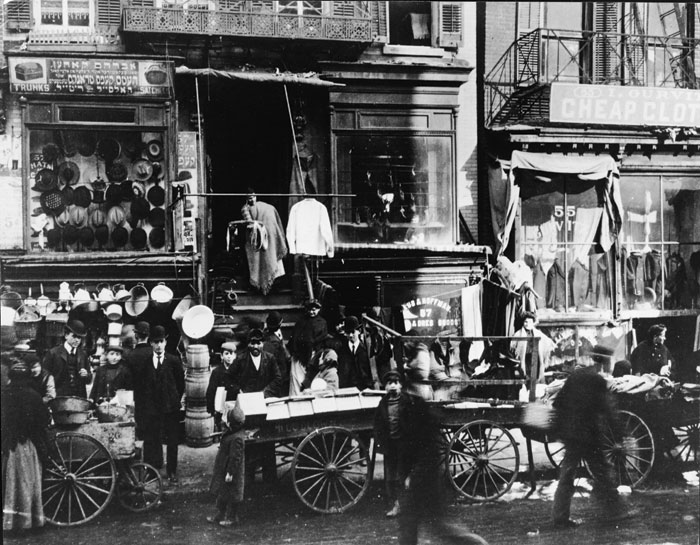
To illustrate this problem, this summer I picked up a copy of “Call It Sleep” by Henry Roth, a 1934 novel that tells the story of David, an eight-year-old Jewish boy living in the immigrant slums of the Lower East Side at the turn of the twentieth century. Throughout the novel, David is forced to contend with a variety of challenges: an abusive father, a secretive mother, a strict rabbi at his local cheder, and the general rough and tumble of early Jewish life in New York tenements. And yet still, I put down Roth’s book unsatisfied, a tad disappointed that this particular work of fiction did not bring the bravado and profound meaning that the Jewish books I’m comfortable with are notorious for providing. The book has anything but a Hollywood style beginning, middle, and end—David’s life is told more in the form of episodes or snapshots, without any clear universalist message to offer readers. Little did I know, this was far from abnormal in Jewish literature. 

One of the sections of Horn’s book that struck me as most interesting is her analysis of the separation of norms between Jewish authors and Christian authors. Whereas writers in the Christian world are more focused on crafting their tales with coherence and meaning, Jewish authors have often tended away from providing fully-realized endings or redemptive storylines, opting instead to paint the world as it truly is: nuanced and complex. Much of Jewish literature, including works such as Sholom Aleichem’s “Tevye and the Dairy Man” stories, have to be dramatized into separate scripts such as “Fiddler on the Roof” simply because, for those of used to a more contemporary mode of storytelling, the characters do not offer us satisfying moments of grace and instead live their lives as any normal Jew would: trying to stay out of trouble. 

As I read “Call it Sleep,” I expected David to encounter antisemitism and prejudice in New York, to find a grand connection between Talmud and his family, or for his life to be revealed as a fantastic metaphor. But Roth offers none of this. The novel is less about being a Jewish immigrant than it is about simply being an immigrant: a stranger in a strange land. A New York Times review of “Call It Sleep” from 1964 notes that the book’s critics “must have felt that the severe detachment with which Roth presented the inner life of a Jewish immigrant boy between the ages of 6 and 8 was an evasion of the social needs of the moment,” later adding that the novel “ends without any explicit moral statement … one has lived through a completeness of rendered life, and all one need do is silently to acknowledge its truth.”

Our greatest literary writers, instead of polishing their tales with life lessons and conclusive endings, have historically preserved Jewish life in its truest sense.

Our greatest literary writers, instead of polishing their tales with life lessons and conclusive endings, have historically preserved Jewish life in its truest sense. They offer us a yiddishkeit that portrays Jews, rather than what happened to Jews. A great deal of our understanding of Jewish culture comes from what happened to the Jews, abandoning the most important aspect of our faith—the ritual, day-to-day life of our ancestors who sustained our traditions for millennia. 

Many of us have been conditioned to perceive this as boring and meaningless, as I did reading Roth, and many of our teachers have decided that reading Dershowitz and watching “Schindler’s List” is more constructive to forming a Jewish identity than discussing the Mishnah or the meaning of Chagall’s paintings. This is a mistake, for a sense of identity solely built upon conflict, tragedy and politics cannot withstand. 

Perhaps this is the genesis of the rising anti-Zionist and even anti-Jewish attitudes among young Jews today, a backlash against the lack of cultural literacy that come with the American Diaspora experience. If we perceive ourselves as victims first, Israel as only a resolution to the Holocaust, Shabbat prayers as only an exercise in muscle memory without any historical knowledge of the weight of the words, the once thought to be everlasting light of Jewish life in America will dim.


Blake Flayton is New Media Director and columnist at the Jewish Journal.

On Living and Dead Jews Read More »

A Valued Customer

When I was growing up, every business answered their phone. Not so anymore. Some businesses don’t seem to even have a phone. Eventually even the Suicide Hotline might start putting people on hold. “Please hold, we have two jumpers in front of you.”  

Recently my internet went down so I called AT&T. A recording told me that there were no outages in my area, and I should go to the internet for more information. But I didn’t have internet to go to. So, for the next 40 minutes, before I got to speak to a real live person, I was bombarded with different recordings. Over and over, I heard that I’m a valued customer and how much they appreciated my business. 

They asked if I would take a brief survey at the end of the call and tell them about my experience with AT&T. Does a call to AT&T really qualify as an experience? What about AT&T helping me out with my own survey? I would love to hear from them what they really think of me. They could let me know if I’ve been rude or overly aggressive with their honored team members. They could tell me if they are upset with me because of my two late payments. I opted out of their survey.

I was then told they were recording my call for quality control. I have seen enough people dragged away in handcuffs on lawyer TV shows to see how phone recordings come back to haunt even the best of us. Then they said their prompts have recently changed, and I should listen carefully to the new menu.  

Next, I hear, “Due to an overwhelming number of calls, this call will take longer than usual to answer,” but that someone will be with me as soon as possible. No one will be right with me. They know it and I know it. It’s a lie. Think of your own family. Has anyone who has ever told you they would be right with you ever been right with you? NEVER.

“Hold” is like having a big fish on the hook and you almost pull them in but at the last moment they get away. “Please hold” means they will now totally forget about you. “Please hold” usually means you have a few minutes left before the call is potentially dropped. 

When they finally do pick up, the worst is when you hear “please hold.” “Hold” is like having a big fish on the hook and you almost pull them in but at the last moment they get away. “Please hold” means they will now totally forget about you. “Please hold” usually means you have a few minutes left before the call is potentially dropped. And then the phony typing clicking sound begins where they are making believe they are typing away as you speak.

So now, after 35 minutes of this torture, I have been pushed to the Tourette’s syndrome point of the call where I start yelling the word “operator.” Nonstop into my mouthpiece I yell “operator, operator, operator!” No matter what they ask me from then on, I cannot stop yelling “operator, operator” into the phone.

Eventually after 45 minutes, this one time, someone from AT&T picked up. When he did, I immediately begged him to take my phone number in case we happen to get disconnected. They always take the number and promise to call you back, but rarely ever do. 

Finally, I got Eddie in India. I know that’s not his real name. I explained my situation to Eddie. He could not have been nicer. A good listener. A compassionate young fellow. Dopey me, I thought now we were getting somewhere. After hearing me out for more than five minutes, Eddie said, “I am so sorry for your issue and that you can’t get on the internet. You are a valued customer. You have been with AT&T since 1981 and we appreciate it. Unfortunately, you have reached the wrong department.  You need to speak to technical. I’m in sales. I’ll switch you right over.” “No Eddie, don’t switch me, please.” Too late, he hit a button and bingo, disconnected me. 

I then went back to my computer and figured I’d give it a try and hit the link to Amazon. Bingo, I was back on the internet. A modern-day miracle. Nothing better than being a valued customer.


Mark Schiff is a comedian, actor and writer.

A Valued Customer Read More »

A Decade Later, Hope

During this pandemic, I’ve stopped reading insights from happiness gurus. Instead, I’ve turned toward ordinary people who have survived darkness and, yes, even unimaginable pain, as purveyors of how to be happy and, even more important, resilient. 

Last week, I was deeply moved by news of the wedding of a young woman named Tamar Fogel in Israel. Her last name might sound familiar: Late one Friday evening in March 2011, two young Palestinian cousins, Hakim Mazen Awad and Amjad Mahmad Awad, broke into the home of Ruth and Ehud Fogel, and their six children, who had recently settled in the small town of Itamar. I cannot bring myself to tell readers exactly how these savages murdered three children—four-year-old Elad, eleven-year-old Yoad, a three-month old baby named Hadas—and their parents. Suffice it to say, to the horror of Jews worldwide, the attack became known as the “Itamar Massacre.”

Tamar, the Fogels’ then-twelve-year-old daughter, was at a youth meeting that night and returned home after midnight. One cannot even imagine what this little girl must have seen when she opened the door, but a neighbor, Rabbi Ya’akov Cohen, who later entered the home, said that Tamar’s two-year-old brother “was lying next to his bleeding parents, shaking them with his hands and trying to get them to wake up, while crying.”

If you can’t read beyond these words, I don’t blame you. I could barely get through researching the Itamar Massacre to write this column. I found myself in the same throes of shock, revulsion, pain, and weeping I first experienced when I heard about the murders ten years ago. I also found myself thinking about Tamar, just as I did in March 2011. 

The three surviving Fogel children, Tamar, Ro’ie (then eight years old), and Yishai (then two), were put in the care of their grandparents. At the time, Tamar told her family, “I will be strong and succeed in overcoming this. I understand the task that stands before me, and I will be a mother to my siblings.”

As for the terrorists, they were each sentenced to five consecutive life sentences. In court, Amjad told reporters, “I don’t regret what I did and I would do it again. I’m proud of what I did and I’ll accept any punishment I get, even death, because I did it all for Palestine.”

In the past decade, the Fogel children were raised by their maternal grandparents, Rabbi Yehuda and Tali Ben Yishai. There have been happy occasions, including the boys’ bar mitzvahs. These days, Tamar, 22, is studying social work in Jerusalem. A few weeks ago, Chana Jenny Weisberg, a Baltimore native and mother of eight who now lives in Jerusalem and runs the popular blog, jewishmom.com, shared that Tamar recently got married (to a young man named Shir Weiss). According to Weisberg, Israeli press hasn’t reported about the wedding (only the engagement) and the family has asked that no photos be shared publicly.

I immediately thought about the Jewish belief that, during a chuppah ceremony, the souls of the bride and groom’s departed loved ones are present alongside them beneath the chuppah.

I immediately thought about the Jewish belief that, during a chuppah ceremony, the souls of the bride and groom’s departed loved ones are present alongside them beneath the chuppah. I thought about Tamar’s mother, father, two little brothers, and her baby sister, Hadas, who, had she survived, would have turned eleven this year. 

In awe of Tamar, I wanted to embrace her and ask this extraordinary young woman a few questions: How do you continue to forge a path toward healing? What is it like to spend a day in your shoes? And what can I learn from you about resilience … and faith?

I once heard a rabbi remark that Jewish weddings are about love, but they’re also about something bigger: Jewish continuity. The thought of Tamar under the chuppah, surrounded by her remaining family, but also by the holy souls of her departed siblings, and the two people who loved her more than anyone in the world—her mother and father—is a source of hope, strength, and light to every Jew in the world, especially during this season of holy days known as z’man simchateinu (“the season of our happiness”). Mazal Tov, Tamar.


Tabby Refael is a Los Angeles-based writer, speaker, and civic action activist. Follow her on Twitter @RefaelTabby

A Decade Later, Hope Read More »

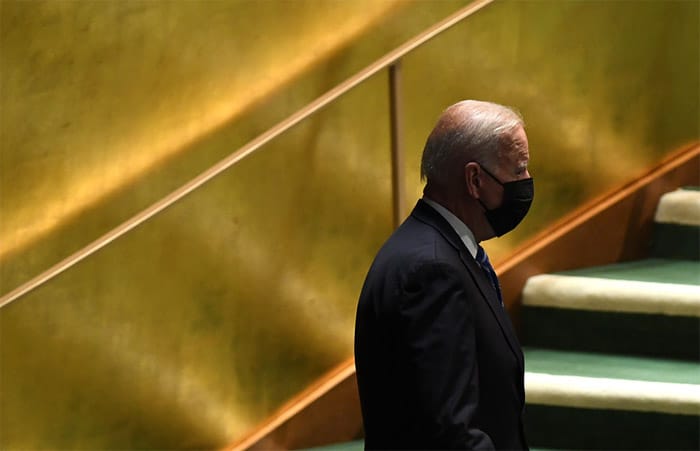
Biden Must Be Held Accountable for His Errors

Is it possible to criticize Joe Biden without being a pro-Trumper? If not yet, will it ever be?

Donald Trump inspires such strong feelings from both supporters and opponents that he may be the most polarizing political figure in American history. Such unprecedented levels of fervor were a major contributor to his election in 2016 and his defeat four years later, and it has shaped the political landscape on which his successor operates. Nine months into Biden’s term, he is constantly navigating the hyper-partisan environment left to him by his predecessor.

That Trump’s most loyal supporters have fiercely opposed Biden from the beginning is no surprise. And despite some occasional threats from progressives in Congress, most of Biden’s fellow Democrats have been equally zealous in their defense of him. But large numbers of Americans voted for Biden not out of party allegiance, but because of Trump’s temperament, conduct or character. They supported Biden’s COVID relief and economic stimulus, and were grateful for his return to a less erratic approach to leadership.

Biden has hit a rough patch and many of those swing voters who elected him last November have noticeably cooled on him.

But more recently, many of the swing voters who elected Biden last November have noticeably cooled on him. Much of this discontent is COVID-driven: the Delta variant’s impact on the economy and national psyche have dragged the president’s poll numbers down to their lowest levels to date. But Biden has also faced a difficult stretch on the international front. While a majority of Americans support his decision to withdraw from Afghanistan, the mishandling of the exit has called many to question his broader claims of government experience and foreign policy savvy.

These problems are fixable. Every presidency has its ups and downs, and Biden is simply experiencing the first of several difficult stretches he will face in office. But it is apparent that even when Biden faces deserved criticism, his allies are quick to dismiss it as predictable attacks from the most fanatical of Trump acolytes. 

In recent days, Biden’s administration has stumbled on several fronts. The most visible of the mishaps is how the U.S. embarrassed and enraged our nation’s most long-standing international ally, when the White House announced a new defense agreement with Great Britain and Australia that humiliated the French by undermining that nation’s largest military contract. While the deal between the U.S. and Australia will be of great benefit to both countries by increasing security against potential Chinese aggression, it was clear that Biden’s advisors had at worst lied and at best willfully misled their French counterparts. President Emmanuel Macron was so outraged that he ordered the withdrawal of his country’s ambassador to the U.S. for the first time in history.

This affront followed closely on the heels of Biden’s unilateral decision to withdraw from Afghanistan, infuriating many European allies for the lack of coordination on such a decision. Prior to taking office, Biden had pledged to rebuild our international relationships with longtime partners. But in both cases, our friends were left fuming.

When the Pentagon announced that the U.S. military had mistakenly killed several Afghani civilians and children with a recent airstrike, it directly contradicted previous assertions that the drone attack had successfully eliminated Islamic State terrorists. This type of operational blunder took place far below the level of Commander in Chief, but Biden was noticeably silent in the aftermath of this tragedy, as he was when U.S. troops hurriedly abandoned the strategically critical Bagram Air Force base prior to the full pullout this summer. 

Finally, Biden was silent when the FDA rejected his call for widespread COVID booster shots last week—the latest episode in an ongoing Administration struggle to articulate a consistent and understandable message, which has drawn criticism from even longtime Biden supporters.

Much of the electorate is still in deep relief that Trump is no longer president. But holding Biden responsible for his errors is not an effort to overturn the last election. It’s simply an example of representative democracy working the way it was designed, and should be treated as such.


Dan Schnur is a Professor at the University of California – Berkeley, USC and Pepperdine. Join Dan for his weekly webinar “Politics in the Time of Coronavirus” (www/lawac.org) on Tuesdays at 5 PM.

Biden Must Be Held Accountable for His Errors Read More »