fbpx

September 22, 2021

Two Jews Escape Auschwitz to Warn World

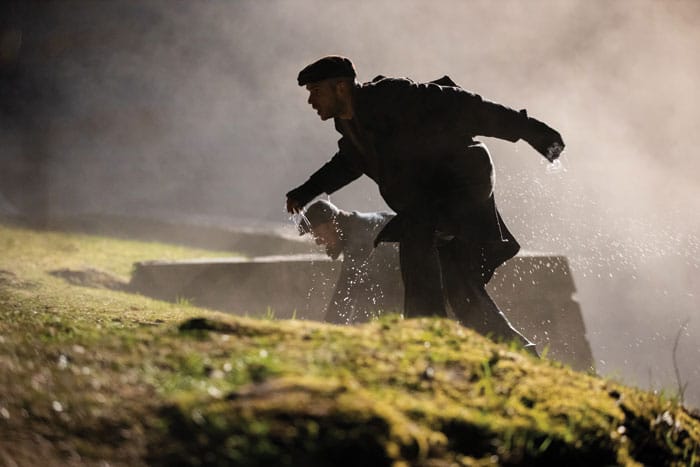
In early 1944, two Slovakian Jews made good on their escape from Auschwitz, determined to reach the outside world and report on the mass extermination inside the death camp.

The camp commander had assigned the two Jews, Alfred Wetzler and Rudolf Vrba (born Walter Rosenberg), to work as scribes, which gave them access to the precise reports on daily killings and other revelations the Nazi regime tried to keep secret. 

The next morning, when the count of prisoners showed that two men from Barrack 9 were missing, the commander put his guards on full alert, telling them, “These two Jews have seen more than you have—they must not escape.”

Thus opens the haunting Slovak film, “The Auschwitz Report” which opens Friday (Set. 24) at the Laemmle Town Center in Encino.

From its opening, the film gives us a tour of the death camp, from petty insults to new arrivals (“Forget your names, just remember your numbers—you Jews know something about numbers”) to the sight of hung bodies twisting in the wind.

Following their orders, the guards search all possible hiding places and fan out across the nearby woods.

When the guards discover that some other prisoners knew of the escape plan, they try to pry out information through torture (25 lashes to start with) and persuasion (“Don’t sacrifice yourself for a couple of Slovak Jews.”).

The film is based on the book by escapee Alfred Wetzler, with the esoteric title “What Dante Didn’t See.” 

As any student of 14th-century Italian literature knows, the title refers to Dante Alighieri’s epic poem, “Divine Comedy,” which follows the author’s journey through the various levels of hell.

Meanwhile, the two escapees, after a harrowing journey, freezing and hungry and barely a step ahead of their pursuers, make it to the West and eventually present their 32-page report on Auschwitz to a representative of the British Red Cross.

This gentleman listens patiently but with growing skepticism, as the escapees cite figures and names of the victims listed precisely by the Nazis.

Finally, he interrupts the grisly recitation, observing skeptically that “the German Red Cross assures us that all of these people died in the camp due to a typhoid epidemic.”

His reaction seems outrageous now but wasn’t particularly surprising at the time. It took the world several decades to grasp the enormity of the Holocaust, and even now there are those who can’t believe it happened.

There were some questions the Journal wanted to ask Pete Bebjak, the film’s director, but the attempted interview foundered on linguistic difficulties. 

However Bebjak responded promptly to a number of written questions, with some of the answers shortened for space reasons.

Jewish Journal (JJ): How close does the film reflect the actual happenings or does it include aspects added for dramatic effect?

Bebjak: We went to each of the locations where the film takes place, all the way from Auschwitz to Slovakia. We had long and detailed discussions with historians and experts and some women who were in Auschwitz as young girls. Talking to them had meant a lot to us—not only to describe the camp but feel and understand the experience of someone sitting next to you. The story is so strong it does not need anything added to make it more dramatic.

JJ: Much of the movie shows the main figures in semi-darkness. Is that to reflect the “darkness” of existence in Auschwitz or even of the Holocaust as such?

Bebjak: This is the situation when metaphor and reality overlap. It represents the darkness of that period of history, but at the same time that was the reality of their escape.

JJ: The report on Auschwitz conditions by the two escapees is credited with saving 200,000 people. Where did this figure come from and on what is it based?

Bebjak: You can find this number in the works of various historians on the average daily number of people murdered in Auschwitz-Birkenau (plus the impact on subsequent events in Europe, especially the rescue of much of Hungarian Jewry).

JJ: What accounts for the continuing production and audience for Holocaust-themed stories?

Young people in Slovakia hardly know what happened 80 years ago. For them this is so long ago that they don’t feel any connection to it. It’s important to remind them that there is a continuity in our lives and that something like this can happen any time if we lose interest in public life and in policy.

Bebjak: Young people in Slovakia hardly know what happened 80 years ago. For them this is so long ago that they don’t feel any connection to it. It’s important to remind them that there is a continuity in our lives and that something like this can happen any time if we lose interest in public life and in policy—if we let other people make decisions about our lives.

Two Jews Escape Auschwitz to Warn World Read More »
StandWithUs Airing Jewish-Christian Unity Concert on Sept. 26

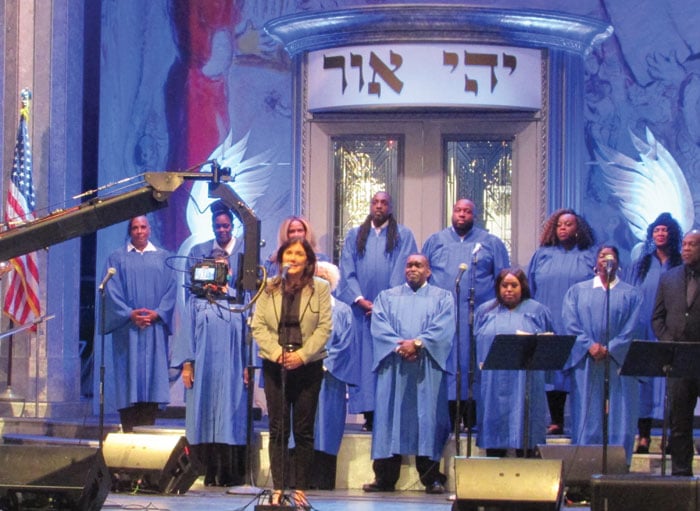
Israel education organization StandWithUs is presenting “Melody-Harmony-Unity, A Christian-Jewish Musical Celebration of Israel,” which will air online and on the Christian Broadcasting Network (CBN) and Jewish Broadcasting Service (JBS) on Sept. 26 at 6 p.m. in all time zones.

CEO and Co-founder of StandWithUs Roz Rothstein will host the event, which is the first project of the new StandWithUs Interfaith Alliance. It was modeled after years of interfaith partnerships by StandWithUs chapters around the globe. 

The free concert is going to bring together rabbis, pastors, cantors, gospel choirs and singers that feel a connection to Israel and stand up against antisemitism. Parts of the program were already filmed at the Saban Theater, the gates of Jerusalem and the Benedictine Monastery in the Arab town of Abu Gosh.

“This production is a labor of love and fellowship, bringing Jews and Christians together to support Israel now and in the future,” said Rothstein, who co-founded StandWithUs 20 years ago. “Through the new StandWithUs Interfaith Alliance, we hope to energize participants to become more engaged.”

The co-host is Carly Gammill, director of the StandWithUs Center for Combating Antisemitism. During the program, she’s going to introduce a campaign that encourages greater adoption of the international consensus definition of antisemitism that the International Holocaust Remembrance Alliance developed. 

Gammill said that as a Christian, she’s “proud to be counted within the tent of those who love Israel and the Jewish people.”  

“Melody-Harmony-Unity, A Christian-Jewish Musical Celebration of Israel” is going to be full of performances from Rabotai Jewish, an a capella group singing “Hatikvah” at the gates of Jerusalem and Cantor Ilysia Pierce and the Spirit of David Choir of City of Refuge Church in Gardena performing Leonard Cohen’s “Hallelujah,” along with songs by the Beatles and Celine Dion. The Hebrew Project is singing their new song, “Oh Jerusalem,” and Brother Olivier of the Benedictine Monastery in Abu Gosh and Cantor Martin Katzauer will hold the stage as well.

“A musical project that celebrates Israel seemed like a perfect way to bring people together who care about Israel or are interested in learning more.” — Roz Rothstein

“Music touches the soul and lifts the spirit,” said Rothstein. “A musical project that celebrates Israel seemed like a perfect way to bring people together who care about Israel or are interested in learning more. It’s inviting, positive and generates a sense of commonality and community. At a time when the world is so politically divided and so many around the world are so hurt and isolated by the pandemic, music brings healing and a sense of togetherness.”

Rabbis speaking at the event include Rabbi David Baron of Temple of the Arts, Rabbi Pini Dunner, senior rabbi of Young Israel of North Beverly Hills, Max Webb Senior Rabbi at Sinai Temple Rabbi David Wolpe and Rabbi Marc Schneier, who is the president of The Foundation for Ethnic Understanding. Other speakers featured are Bishop Robert Stearns, who founded Eagles Wings Ministries, Pastor Dumisani Washington, founder of IBSI (Institute for Black Solidarity with Israel) and Olga Meshoe Washington, a regional director and educator at Club Z.

“Because of our shared history and the fact that the Christian faith would not exist without the Jewish faith, Christians should always be first to join with our Jewish friends.”
— Pastor Dumisani Washington

“Because of our shared history and the fact that the Christian faith would not exist without the Jewish faith, Christians should always be first to join with our Jewish friends,” said Dumisani, who wrote “Zionism and the Black Church: Why Standing with Israel Will Be a Defining Issue for Christians of Color in the 21st Century.” “Jesus was born in Bethlehem, raised in Nazareth, began preaching in the Galilee, and regularly made pilgrimage to Jerusalem. Christians can only visit all of those places today because the State of Israel allows people of all faiths to make pilgrimage of their own. As great Christian men and women have said, we owe the Jewish people a tremendous debt of gratitude—on many levels.”

The pastor continued that as a Black American, solidarity with Israel and the Jewish people is part of a deep and rich legacy. 

“From the Negro spirituals written during the slave past, to the work of Booker T. Washington and Julius Rosenwald in the early 1900s, to the civil rights era of the 1950s and 1960s, to today, Black and Jewish Americans share close ties that bind us together for generations,” he said. “Despite challenges those ties have faced, they will remain for generations to come.”

For the past seven years, Dunner has worked with pastors and communities across the U.S. and beyond, and he said he’s seen their love of Israel close up, and their eagerness to right the wrongs of the tragic history of Jewish and Christian relations.

“In the United States, the U.S.-Israel alliance has benefited immeasurably from the deep love for Israel by millions of Christians, whose faith is boosted by the miraculous rebirth of the Holy Land and its incredible success on the world stage,” he said. “Together, Jews and Christians should pray and work for Israel’s success, and for its victory against those who seek to destroy it.”

By holding the unity concert, Rothstein said she hopes that it will “open a door to greater partnership and ongoing, positive collaboration for Israel. We are so grateful to our Christian brothers and sisters for standing by our sides.”

Register for the concert online here: https://www.standwithus.com/interfaithalliance

StandWithUs Airing Jewish-Christian Unity Concert on Sept. 26 Read More »

A Moment in Time: Your Life Canvas

Dear all,

Maya and Eli recently spent part of the morning painting. I marveled as I watched how they approached their canvasses. They would step back and gain perspective. They would lean in and smile at the colors. They would walk to each other’s pictures and observe. And yes, they would fight over brushes as well.

Of course, many thoughts entered my mind. Every day, we have the opportunity to paint a new life canvas. And with that opportunity, we have options:

What will we create?
When do we step back and observe?
What causes us to step away, and when do we return?
Will we make time to appreciate what someone else is doing?
How will we engage others in our lives?
Are we able to take pride in what we are doing?
Will other’s get in our way or broaden our focus?

Go out and paint your life canvas! Chose colors you love, allow your choices to expand, and anticipate that your creation will change with each moment in time you harness!

With love and shalom,

Rabbi Zach Shapiro

A Moment in Time: Your Life Canvas Read More »

A Bisl Torah: Spiritual Guests

The holiday of Sukkot provides a directive for hospitality. But not just the welcoming of friends and family in the here and now. There is an ushering of spiritual guests from the heavens above.

The Zohar, the central Kabbalistic text explains that when the Torah states we should dwell in booths for seven days, the word “dwell” is used twice. Once inferring the guests that sit around the table to eat; the other mention of “dwell” to invite figures from the past to inspire the start of the calendar year.

If Yom Kippur was a reenactment of our deaths, then perhaps, Sukkot resembles shiva, a seven-day period of sharing memories. Inviting those in our lives we desperately miss, those whose presence will offer comfort and bring us ease.

Whose memory graces your sukkah? May their spirit be as bright as the stars that appear overhead and linger with you, bringing you joy.

Chag Sameach and Shabbat Shalom


Rabbi Nicole Guzik is a rabbi at Sinai Temple. She can be reached at her Facebook page at Rabbi Nicole Guzik. For more writings, visit Rabbi Guzik’s blog section from Sinai Temple’s website.

A Bisl Torah: Spiritual Guests Read More »

Twenty Years after Durban, What We Still Get Wrong About Leftwing Antisemitism

Twenty years ago, the World Conference against Racism, Racial Discrimination, Xenophobia and Related Intolerance took place in Durban, South Africa. The goal of the landmark conference was to explore effective methods to eradicate racial discrimination and promote awareness of the global fight against intolerance. The conference, however, immediately descended into an anti-Jewish, anti-Israel hatefest, prompting both Israel and the United States to pull their delegations. Some conference participants renewed the slanderous charge of “Zionism is Racism.” The Arab Lawyers Union passed out booklets at the conference containing antisemitic images of Jews with blood-dripping fangs. Friends of mine who were part of various Jewish delegations from the U.S. were completely shell-shocked and felt threatened by participants shouting them down at every turn.

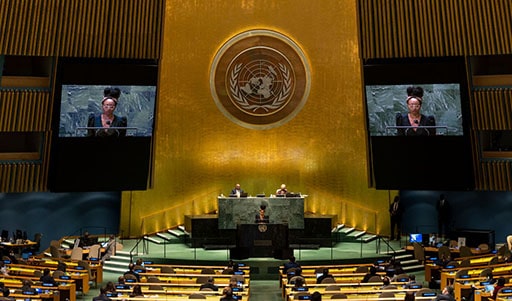
The UN will mark the twentieth anniversary of this disgraceful episode on September 22, not to express the requisite remorse, but to celebrate its supposed achievements.

The Durban conference was a watershed moment for Jews around the world, a stark reminder that the deliverance from the forces of history was not yet in the offing. The world’s oldest hatred was alive and well, not just in the remnants of an unreconstructed Eastern Europe or the aggrieved masses of the Third World, but among the cosmopolitan classes of the West. Yet few people addressed a basic question about this revival of antisemitism: What was the underlying ideology driving the Jew-hatred at Durban? And, twenty years later, with a resurgence of leftwing antisemitism in the U.S. and Europe, many still haven’t figured out how a variant of that same virus generates antisemitism today.

In the wake of the Durban conference, journalist Jonathan Rosen wrote a widely-circulated essay in New York Times Magazine about the “New Antisemitism,” which captured the sentiment of many Jews, including myself. “I have been reminded, in ways too plentiful to ignore, about the role Jews play in the fantasy life of the world,” he stated. “Singling out Israel made of a modern nation an archetypal villain—Jews were the problem and the countries of the world were figuring out the solution.”

There was, however, nary a word in Rosen’s article or anywhere else about the underlying ideology plaguing the Durban conference, one with which many of the Westerners and even Jews in attendance no doubt sympathized. The debacle at Durban was an expression of postcolonialism, a critical academic study turned dogma highlighting the legacy of colonialism, focusing on the human consequences of the exploitation of colonized people and lands. Postcolonialism came to be regarded by an activist community as a complete and inviolable explanation for why some countries flourish and others languish. The haves caused the conditions of the have-nots. Full stop. Any other explanation, particularly those focused on cultural differences of various countries and regions, came to be regarded as racist and beyond the pale.

The “Declaration and Programme of Action” of the Durban conference made its ideological orientation clear:

“We recognize that colonialism has led to racism, racial discrimination, xenophobia and related intolerance, and that Africans and people of African descent, and people of Asian descent and indigenous peoples were victims of colonialism and continue to be victims of its consequences … We further regret that the effects and persistence of these structures and practices have been among the factors contributing to lasting social and economic inequalities in many parts of the world today.”

Of course, no other factor for disparity is ever entertained.

For good measure, the Declaration, in addressing the Israel-Palestinian issue, added “We recognize the right of refugees to return voluntarily to their homes and properties in dignity and safety, and urge all States to facilitate such return.” Such a policy, if adopted, would lead to the eradication of the Jewish state.

Like all intellectual monopolies, postcolonialism denies the validity of other explanations and in its certitude becomes an illiberal and dangerous source of extremism and hate. Of course, the ideology contains a modicum of truth—the horrors of colonialism do explain some of today’s global disparities. The proponents of postcolonialism, however, completely paper over the highly-successful Asian countries that were once colonies and what that says about the long-term impact of colonial rule. In simplistically dividing the world into oppressors and oppressed, postcolonialism holds successful nations morally culpable and struggling nations morally pure. And in insisting on this perverse binary, the ideology enables the expression of the usual resentment and ill-will toward Jews and Israel, both of which have succeeded in their respective environments.

In simplistically dividing the world into oppressors and oppressed, postcolonialism holds successful nations morally culpable and struggling nations morally pure.

Talking about the antisemitism at Durban without reference to postcolonialist ideology is like talking about the attacks of September 11th without reference to extreme Islamist ideology. We should have grasped it then. “It’s the ideology, stupid.”

Fast forward twenty years, and we see the same political dynamic not in a remote international conference of NGOs and diplomats, but in myriad mainstream American institutions, including higher education, K-12 schools, corporations, the law, medicine, nonprofits and even scientific research. Woke ideology is postcolonialism applied to the domestic scene in Western countries, dividing people neatly into victimizers and victims. And just like the post-Durban reckoning, those concerned about the resurgence of antisemitism today largely fail to understand and name the animating ideology.

About five years ago, it became apparent that woke ideology and its concomitant antisemitism, once confined to the margins, was gaining ground. Then CEO of a national Jewish advocacy organization dedicated to engaging progressives, I wrote that “the growing acceptance of intersectionality arguably poses the most significant … challenge of our time (to the Jewish community). Ultimately, how popular—and threatening—intersectionality becomes depends on the degree to which the far left … is successful in inculcating its black-and-white worldview … with the mainstream left.”

I thought at the time that Jewish organizations could best protect the community by positioning ourselves as members in good standing of the intersectional club. Such progressive certification would, I and others surmised, prevent the lion’s share of the left from fully embracing antisemitic and anti-Israel perspectives. I thought that these forces had a long way to go before gaining mainstream currency. Boy, was I wrong.

In the wake of the George Floyd murder in the summer of 2020, many American institutions went through a swift “racial reckoning.” They conducted, however, not just a much needed soul searching, but bought the only socially acceptable explanation of racial disparities off the shelf: woke ideology. They literally purchased, read, distributed and canonized books like “White Fragility” and “How to be an Anti-Racist,” which asserts the one and only acceptable way to think about race and racism. Given the ascension of this ideology in our institutions, it’s not the least bit surprising there is also a rapid escalation in antisemitism on the left. This upsurge in Jew hatred became undeniable during the conflict between Hamas and Israel last May when Jews were verbally attacked and several were beaten on the streets in major cities. The new wokeness permeated mainstream media narratives of the conflict, often altogether leaving out Israeli perspectives.

As in the aftermath of Durban, many inside and outside the Jewish community either still don’t recognize or cannot bring themselves to name the toxic ideology at the root of this wave of antisemitism.

As in the aftermath of Durban, many inside and outside the Jewish community either still don’t recognize or cannot bring themselves to name the toxic ideology at the root of this wave of antisemitism. And it’s no wonder: some of them have bought into it. Sadly, prominent anti-hate groups, well-meaning though they are, have too often advanced wokism through their diversity programs and anti-bias trainings. They draw no connection between an ideology that enthrones the one and only explanation for disparity, and the same dogma that enthrones the one and only explanation for the Israel-Palestinian conflict. They ignore any connection between a rigid hierarchy of privilege and increasingly common accusations of “Jewish privilege.”

These voices speak about the growth of antisemitism on the left as the same hatred “cloaked in anti-Israel garb.” True enough. But they miss the fact that this eruption in hate is fueled by wokism. Opponents continue to fight Jew-hatred on the surface like an endless game of whack-a-mole, never acknowledging the root cause: a sanctimonious and dogmatic ideology that many in our own community continue to champion.


David Bernstein is the Founder of Jewish Institute for Liberal Value (JILV.org). Follow him on Twitter @DavidLBernstein. 

Twenty Years after Durban, What We Still Get Wrong About Leftwing Antisemitism Read More »

Stuffed Artichokes for Sukkot — The Sephardic Spice Girls Way

My son Ariel called me from Jerusalem this week. He told me that he and his wife Rachel had booked a Sukkot meal at the Sephardic House Hotel. The memories came flooding back. Memories of the luncheon celebrating his bar mitzvah after the Torah reading at the Kotel HaMa’aravi, the Western Wall. Memories of my brother and sister-in-law’s gorgeous sunset wedding reception in the exquisitely tiled Spanish Courtyard. And memories of the sumptuous Israeli style breakfasts and lunches enjoyed in the Sukkah there. 

Stepping into the Jerusalem stone of the Sephardic Educational Center Campus in the Jewish Quarter of Jerusalem is like stepping back into history. The vaulted ceilings, the Persian rugs, the Spanish tile, the stone courtyards and the views of the Old City evoke the mood of a bygone era. 

The original section of the building was built in the early years of the 19th century and it served the Spanioli Jews as a place of study, with hundreds of students at the Sephardic Talmud Torah and the prestigious Yeshiva Tiferet Yerushalayim. And reflective of the harsh conditions of life in the Old City, the courtyard level was a place of refuge for widows and orphans. Towards the end of the 19th century, one wing of the building served as the official residence of the Rishon Le’Zion, the Chief Rabbi of Israel. 

Nowadays, the place bustles with Rabbinical Programs, teens from the Hamsa Israel Trip, people coming for Sephardic lectures and it is the official Old City residence for the soldiers of the IDF and the Israeli Police. 

Best of all, are the luxurious guest rooms of the Sephardic House Hotel. For me, the vaulted ceilinged rooms with their tiled floors and plush Persian rugs, Persimmon colored cushions and Arabesque furnishings evoke a peaceful, serene feeling of coming home. It’s the closest I’ll ever get to my inherited Levantine dreams.

Sukkot is our favorite time of the year to be in Israel. We love the joyful, festive feeling in the streets.

Sukkot is our favorite time of the year to be in Israel. We love the joyful, festive feeling in the streets. We love running into friends on Ben Yehuda Street. We love the serendipity of sitting for breakfast in a Sukkah on Jaffa Street and seeing our table expand as my cousins who just happen to be walking by decide to join us. We love the Machne Yehuda Shuk and all the eclectic stands filled with ruby red pomegranates, abundant produce, salty herring, creamy cheeses, fresh baked bread, burekas and rugelach, halvah and tehina, barrels overflowing with intense, earthy spices.

This year we will celebrate Sukkot with our wonderful friends and family here in Los Angeles. We will bring the flavors of the Shuk into the kitchen. My daughter Alexandra will bake fresh challah and my daughters Gabriella and Elisheva will be chopping fresh salads with me. We will indulge with fresh baked apple cake and pavlova drizzled with Silan and topped with halvah and glistening pomegranate.

We will make Stuffed Artichokes, a very middle eastern dish for dinner in the Sukkah. An ode to the all the Jewish women who cooked in the Old City for centuries and a labor of love for my family, especially my Dad and my brother’s father in law Elie, both lovers of anything with ground beef and tomatoes. 

Moroccan Stuffed Artichokes are traditionally served for Passover and other festive meals. First they are fried and then simmered in a lemony, saffron sauce. Rachel makes them like that and they are absolutely incredibly delicious. But here we have modified the recipe, to make it simpler and healthier. We took out the frying step. We replaced the traditional matzo meal with potato starch in the meat stuffing. We added lots of garlic and onion and an Iraqi twist to the spice profile. We simmered our stuffed artichokes in a flavorful sweet and sour lemony tomato broth. 

We hope you give our recipe a try for one of your Sukkot meals!

Chag Sameach! Mo’adim l’Simchah!

Stuffed Artichokes

2 14ounce bags of artichoke hearts

Meatball stuffing

2 pounds ground beef
1/2 cup parsley, finely chopped
2 large eggs
1/2 cup potato starch
1/2 teaspoon coriander
1/2 teaspoon cumin
1/2 teaspoon nutmeg
1/2 teaspoon allspice
Salt and pepper

Tomato Broth

1/3 cup avocado oil
1 large onion, diced
3 stalks celery, finely chopped
8 cloves garlic
1 lemon, washed and quartered
1 cup water
1 14.5 ounce can of chopped tomatoes
1 tablespoon sugar
1 teaspoon turmeric
1 teaspoon paprika
1 teaspoon kosher salt
1/2 teaspoon freshly ground black pepper

  1. Let artichokes thaw on paper towel, then lay artichokes on a baking sheet. 
  2. In a large bowl, add the meat, parsley, eggs, potato starch and spices and gently combine ingredients.
  3. Roll meat mixture into 3 inch balls and place inside the artichoke hearts, making sure that the meat filling forms a 1 inch dome over the artichoke.
  4. Over medium heat, warm the oil in a large frying pan, then sauté the onion until it is golden. Add the celery and garlic and sauté for two minutes.
  5. Lightly squeeze the lemon into the sauce and place rinds inside sauce, then add water, chopped tomatoes, sugar and spices and stir well. 
  6. Bring to a boil, then cover the pot and lower heat and simmer for 30 minutes.
  7. Pour all the sauce into a deep ovenproof dish, then place the stuffed artichoke hearts into the sauce, making sure not to submerge the meat in the sauce.
  8. Heat oven to 350°F and bake for one hour.

Makes approximately 18-20 artichoke hearts. Suitable for freezing.


Rachel Sheff and Sharon Gomperts have been friends since high school. They love cooking and sharing recipes. They have collaborated on Sephardic Educational Center projects and community cooking classes. Follow them on Instagram @sephardicspicegirls and on Facebook at Sephardic Spice SEC Food.

Stuffed Artichokes for Sukkot — The Sephardic Spice Girls Way Read More »

I Am From — A poem

I am from the long answer to the question where are you from.
I am from moving from New Jersey, to Fort Lauderdale, to Syracuse to Los Angeles.
I am definitively from Los Angeles.

I am from the view of the mountains that catch fire
I am from the flames that never reach my house
I am from the earth that shakes just to remind me it’s in charge.

I am from used to go fishing on the Erie Canal to
weeping when I see a fish’s face.

I am from the new golden age of teevee

I am from not drinking for thirty years for no particular reason
to exploring the artistry of a well stocked liquor cabinet.

I am from my mother smoked while she was pregnant and
I got to join the world six weeks early because of it.

I am from skipping Sunday school one year to
being called a Jewish Zealot a couple decades later.

I am from Cheese, the stinkier the better.
I am from cats, the more the merrier.
I am from poetry.

I am from realizing at thirteen all I needed was love
I am from finding that love long after I was thirteen
and never letting go.
I’m from never letting go.


God Wrestler: a poem for every Torah Portion by Rick LupertLos Angeles poet Rick Lupert created the Poetry Super Highway (an online publication and resource for poets), and hosted the Cobalt Cafe weekly poetry reading for almost 21 years. He’s authored 25 collections of poetry, including “God Wrestler: A Poem for Every Torah Portion“, “I’m a Jew, Are You” (Jewish themed poems) and “Feeding Holy Cats” (Poetry written while a staff member on the first Birthright Israel trip), and most recently “The Tokyo-Van Nuys Express” (Poems written in Japan – Ain’t Got No Press, August 2020) and edited the anthologies “Ekphrastia Gone Wild”, “A Poet’s Haggadah”, and “The Night Goes on All Night.” He writes the daily web comic “Cat and Banana” with fellow Los Angeles poet Brendan Constantine. He’s widely published and reads his poetry wherever they let him.

I Am From — A poem Read More »

Love and Adventure in “Riding The Edge”

This is a story of love and adventure to touch your soul.

Michael and Deborah Tobin have been practicing psychologists in Jerusalem since 1988. They arrived there the first time around at the end of a six-month bike trip that took them through France, Greece, Italy, Cyprus and war-torn Lebanon. Michael began writing a book about their saga, a colorful and heart-wrenching search for identity and meaning, more than 30 years ago. The book went through periods of starting and stopping, sometimes with years of drought in between. 

In 2019, Michael picked it up again and decided to rewrite and complete it. What changed?

In November 2018, at the age of 68, Deborah was diagnosed with Alzheimer’s Disease.

Michael told this writer that in December, 2019, “I started writing and didn’t stop. I was a man possessed. I would write a chapter and read it to Deborah, and it was a beautiful experience watching her reactions and her memories and talking about it. She was more communicative then and I thought, whether this book is ever read by anyone else other than my dear wife, it’s already a success.”

The story begins in 1980; the place, Middlebury, Vermont. Deborah and Michael had burgeoning practices and an exquisite rustic home.

Deborah was an Arab American, of Christian Lebanese descent, raised, as Michael writes, “in the Arab sub-culture of Charleston, West Virginia.” He grew up in Roslyn Heights, Long Island, in a family that were, for the most part, non-practicing Jews, though his mother was president of Long Island Hadassah and badgered politicians about supporting Israel. She died of breast cancer when Michael was 19.

Sparks flew when Michael and Deborah met in 1974, when they were graduate students and he was mesmerized, watching as she “spun around the Antioch dance floor like a God-intoxicated whirling dervish.” They began professional and personal lives together, but in 1980 they felt the need to take a break from their intense career paths for a path of uncertainty, in which they would open themselves to whatever might happen.  

What unfolds in “Riding the Edge, A Love Song to Deborah” is a journey of adventure, of love, and of discovery, of culinary experiences that will have you salivating and of biking escapades.

The core of the book is the lessons they learned along the way. The most deeply moving experiences were their encounters with people who had suffered and survived.

But the core of the book is the lessons they learned along the way. The most deeply moving experiences were their encounters with people who had suffered and survived. 

Michael spoke with us about some of those who they met. 

 There was Simone, whose father, a doctor, hid Jews in Rouen during WWII, but couldn’t save her two brothers from burning to death, “when a British bomber, prior to D-Day, accidentally dropped a bomb on their home…She grew up in a home where they could not laugh or play because it would be disloyal to her brothers. But she eventually found humor and learned to laugh.” 

While in Paris, they visited a photo exhibit on the Holocaust at the Pompidou Center. A man named Jacob pointed himself out to them in a photo of male inmates in Theresienstadt.

“He shared his story with us,” says Michael, “about his extended family of 50 from Amsterdam who were all wiped out. How do you recover from something like that?” He did, one day at a time. He married a survivor, built a family and a successful business. “Jacob said, ‘The Nazi’s will not destroy me. They can take everything from me but they can’t take away my freedom to choose; I will rebuild my life from ashes.’” 

They met a clown who had been a partisan in WWII; he lost his brother and his mother in the war and became a genius at blowing up things and killing Nazi’s. Later he was struck with a profound sense of loss at all the young soldiers he had killed, saw beggars and little children, homeless, and became like the Pied Piper, “He threw away his weapons and became a medium for joy and laughter.”

A wrenching yet heartening encounter was in Lebanon, in Kab Elias, a small village in the Beqaa valley, and birthplace of Deborah’s maternal grandmother. After a crazy cab ride along a dangerous road, hoping to find the one relative they were aware of, “We found an entire extended family, religious Christians who had lived peacefully side by side with the Moslem population until the civil war in 1975. One of the boys in Deborah’s family died fighting with the Christian militia and others had left Lebanon for Australia or elsewhere. 

“They taught me the value of family as a source of resilience. They said, ‘We have one another.’” 

In Israel, Michael and Deborah met kibbutzniks, artists, soldiers and scholars, each with their own story, up north, in Safed, and in Jerusalem. The couple’s soul-searching culminated in Michael becoming a “ba’al teshuva” (Orthodox Jew) and Deborah converting to Judaism.

What did he learn from these encounters? 

“As a psychologist for 47 years, I’ve dealt with people going through multiple difficulties in life and helped them find the resources to get through them, so they won’t succumb to despair.” A big hit for him was when he had major spinal surgery on his neck, and it ended his “career” as a serious climber, runner, and CrossFit enthusiast. 

“But the biggest challenge is the one with my beloved wife, my life partner since our 20’s. She was diagnosed with Alzheimer’s Disease right after we came back from climbing up to the Everest Base Camp. I have been learning to deal with her diminished capacities and cognitive decline. She had been the most emotionally attuned person I ever knew in my entire life. I lost my best friend and someone who I imagined I would grow into old age with together…”

He refers to Viktor Frankl’s book “Man’s Search for Meaning.” “I was deeply influenced by his experiences in the camps, and how he was able to identify, even in the most horrific circumstances, that what makes us most human is our ability to choose …that is what makes us free. I choose to be happy, to be positive, to not complain. I choose to be alive. 

“In 1980, we felt that to discover ourselves we had to leave home, our families, our attachments to our professions. [Like] Avaham Avinu (Abraham) leaving Haran, leaving his birthplace, when God says, “Lech lecha,” (“Go!”) almost erasing personal history in order to really discover oneself.

“Fast forward 46 years later, we have four children and 17 grandchildren… 

“Our family is so important and such a source of love and care, emotionally and physically. But that’s not where we were when we started this journey. We acquired a greater sense not only of who we are as individuals but a greater sense of family.”

The Tobin’s saga will have you sometimes at the edge of your seats, sometimes howling in laughter, and sometimes in tears. 

“Riding the Edge” was published by River Grove Books and is available on Amazon and other venues. It is a recent Silver Medal Winner of the Non-Fiction Authors Association.


Toby Klein Greenwald, an award-winning journalist and theater director, was co-founder with Dr. Michael Tobin of WholeFamily.com, and saw this book evolve, starting more than 30 years ago, until the present time. 

Love and Adventure in “Riding The Edge” Read More »

Rabbis of LA | Rabbi Lori Shapiro: Almost an Actress

Before I could ask the first question, Rabbi Lori Shapiro was already emotional. 

She had just gotten off the phone with a special Yom Kippur hire who had come down with a trenchant case of COVID-19 and likely needed to be hospitalized. This was days before Yom Kippur, and this person was a contributor to services at Open Temple, the experimental community Shapiro founded in Venice Beach in 2012 and where she serves as rabbi — even though she still can’t get used to the title.

“I never think of myself as a rabbi,” Shapiro, 50, told me. “When people say ‘rabbi’ I always look around, like ‘Who?’”

That’s probably because Shapiro has deep roots in the theater and was shaped in some essential way by growing up on stage. She has an appetite for the avant-garde and the unconventional.

Back in May, Shapiro appeared on a panel during the inaugural Jewish Psychedelic Summit (yes, you heard that right), and ever since, I’ve wanted to talk to her about why she supports the use of psychedelics in Jewish ritual. But one thing you quickly learn in conversation with Shapiro is that trying to lead her in a specific direction is like trying to herd cattle without a handler. Impossible.

Chalk it up to her theater background — Shapiro attended Stagedoor Manor, one of the most rigorous theater camps in the country as a teenager and was later accepted into NYU’s Tisch School of the Arts — because I barely got past question number one before Shapiro launched into a dizzying and dazzling monologue that spanned four decades, her unlikely, denomination-hopping journey to the rabbinate, her three years living Sfat, her favorite Jewish philosophers, the challenges of dating when she was single, the happiness she found with her husband, Joel, and two children, and even included Kerouac-style tales from the road about their pandemic-era hobby traversing American backcountry in their new family airstream. 

It’s easy to imagine that Shapiro’s effervescent, 100-mile-per-minute storytelling is a hit on the bimah. But although it is theatrical, it doesn’t come off as performed. Shapiro’s style is instead quirky and authentic. Over the course of our conversation, she laughed, she cried, she quoted Buber and Kaplan with as much zeal as she crooned Nina Simone, alternating seamlessly between vulnerability and confidence during an hour and a half that left me with a transcription of 4,000 words.

When I finally got to psychedelics, I was surprised to learn that Shapiro, though a supporter of the nascent movement to integrate psychedelics into Jewish ritual practice, has never actually tried them. She took a puff of pot once, only to discover, six hours later, it wasn’t all that different from her normal orientation.

“I dwell naturally in a very alternative place,” she said. “I was always, just, weird.”

I asked her to describe “weird.”

“I just did what I wanted: I wore different colored sneakers. I auditioned for Punky Brewster. I have no inhibitions,” Shapiro said. “There’s no shame in my life. At performing arts summer camp, I introduced myself as ‘Harmony Sunshine.’”

Her journey from theater to Judaism is as much an adventure story as any other, catapulting her from the Five Towns of Long Island to the Ba’al Teshuva Haredi community in Sfat where she said her “neshama was born.” 

“I didn’t grow up with Judaism,” Shapiro confessed. “I knew nothing. Every Friday night [of my childhood] Shabbat passed by, waiting for me to join her.”

Shapiro said the Judaism she inherited from her parents was “discontinuous,” perhaps the result of an intermarriage on her father’s side and her maternal grandmother’s experience in foster care. As a result, she grew up in an environment that sometimes felt lonely and isolated. “I never learned community,” she said. “I got nothing by default. Neither family system brought with it a sense of Jewish continuity, ritual or identity.”

It wasn’t until she discovered the world of theater that she found a portal to her calling.

“I found in theater the aesthetic, the beauty of life. It’s so in-the-moment. That’s why I wanted ‘Open’ Temple to break down the fourth wall.” 

“I found in theater the aesthetic, the beauty of life,” she said. “It’s so in-the-moment. That’s why I wanted ‘Open’ Temple to break down the fourth wall. I wanted to see Judaism turned into a non-proscenium experience, taking what’s esoteric in the Hasidic world and making it exoteric so that everyone can access it. Theater was my pathway.”

She never aspired to pursue theater professionally because, as she put it, “I never met a woman in her 40s who was happy as an actress.” Shapiro ultimately dropped out of Tisch and began a spiritual journey that led her to India, then Israel, then back to the U.S. where over the course of 13 years she matriculated at three different rabbinical schools until earning ordination at the Academy for Jewish Religion. The rambling journey also exposed her to every denomination of Judaism which, in turn, she rejected for a more inclusive, open-hearted Judaism.

“Denominationalism is a 19th-century Jewish innovation,” she said. “We’re just Jews. I feel like Judaism is a journey of understanding our place, like the Vetruvian Man, in the cosmos. And for whatever reason, I found the most beautiful expression of that journey through Torah, and it continues to inspire me and light my path towards whatever revelation I am supposed to experience and help bring forth next. I want to help people access that place I always dwell in. Because then we take our last breath and it’s done.”

Fast Takes with Rabbi Lori Shapiro

Danielle Berrin: What’s currently on your night table?

Lori Shapiro: “Wonderworks” by Angus Fletcher. 

DB: Last show you binge-watched?

LS: “The Queen’s Gambit.”

DB: Your day off looks like…

LS: Take our airstream to New Mexico and visit Meow Wolf. 

DB: Favorite thing to do in Israel?

LS: Visiting the James Turrell skyspace, “Space That Sees” at the Israel Museum in Jerusalem. I go there on Shabbat and daven in the space and look at the sky til sunset. Then I do Havdalah and walk home. It’s my kotel. 

DB: Something about you most people don’t know?

LS: I came in 8th in my age group in the New York City Marathon.

DB: Most essential Torah verse?

LS: Lo tachmod — You should not covet. It’s about no attachment. It’s the closest we get to Buddhism in Judaism. We usually translate tachmod as covet, but really it’s the same root as hemda, desire. It’s about not attaching to something that isn’t a part of you and it’s the Tenth Commandment because it’s the key to life.  

DB: Biggest challenge facing the Jewish world?

LS: I don’t think the Jewish world has any different challenges than the ones facing the greater world. We are in galut. We’re in exile from compassion, connection, humility and love.

DB: Guilty pleasure?

LS: Watching movies with my girls on Shabbes. My children are gonna grow up thinking, dafka, Friday is the only night you’re allowed to watch a movie. 

DB: Favorite Jewish food?

LS: Open Temple’s latke lady. She’s this beautiful woman who cooks latkes for us every year on Hanukkah. They melt in your mouth. You know, my secret for when a woman is pregnant is  “eat like your ancestors.” Because it worked for them.

DB: If you weren’t a rabbi you’d be…

LS: I’d just be a chick who loves Torah. 

Rabbis of LA | Rabbi Lori Shapiro: Almost an Actress Read More »

Table for Five: Special Sukkot Edition

One verse, five voices. Edited by Salvador Litvak, the Accidental Talmudist

God, please, crown this year with blessing, and hear my words as I pray, on the day of Hoshana, save please, save us please!

-—From the Hoshana Rabbah prayers
(seventh day of Sukkot)


Denise Berger
Freelance writer

Known also as zman simchateinu, time of our happiness, Sukkot carries a Torah commandment to rejoice throughout these seven days. The Torah also tells us that during this week we are to remember our experience in the desert, characterized by vulnerability and Divine protection. In just a few words, this prayer for the final day of Sukkot encapsulates its essence, along with a profound message that carries us forward. 

The idea of crowning suggests royal status — the ultimate compliment in ancient times. Throughout Rosh Hashana, Yom Kippur, and the days in between, we refer to G-d as our all-powerful King. Now, rather than pleading as peasants at the palace gate, there’s an assumption that we too are royal, as a result of our prayers having been accepted. This is definitely cause for joy, along with relief, gratitude, and a sense of excitement for the year of blessings ahead. 

Then practically in the same breath, there’s an urgent, almost desperate, request for salvation. The contrast feels jarring. One moment is a coronation and the next is a supplication. 

Modern thinkers are only beginning to understand what was obvious to the sages who wrote this verse. In the words of Brené Brown, “joy is the most vulnerable emotion we experience”. As soon as we are aware that something (or someone) is precious, fear of loss kicks in. According to Brown, acceptance of vulnerability is the key to lasting joy — just as this prayer articulates. 


Lt. (res) Yoni Troy
Israel Defense Force

Given the whole process we go through starting in Elul, the month before Rosh Hashanah, why have Hoshanah Rabah’s heaviness? Have we not done enough? We have spent 40 days of repentance, reflection and spirituality. We finally arrived at Sukkot,the holiday of happiness. Yet, why do we have to bitter up the end with yet another trying day of repentance? Is this what Judaism is about, constantly feeling bad? 

Judaism is goal oriented. We were all created to generate goodness in the world. Deviation from that mission triggers the need for repentance. A philosophy that does not acknowledge failure also lacks the power to create change. 

Research conducted by Strava using over 800 million user-logged activities in 2019 predicts that most new-year’s resolutions fail within 19 days. This mind-boggling statistic is painfully familiar. Changing our habits is very hard. 

That’s why on Hoshanah Rabah, 21 days after Rosh Hashanah, we may find ourselves discouraged. We worked so hard to repent – yet we feel like we failed. 

We shouldn’t despair. Rav Kook taught that the desire to repent itself is a huge step. Any failures balance the empowered and arrogant feelings of holiness our prayers might cause within us. Instead, we find ourselves realizing our own inadequacies. That self-insight gives us no choice but to beg the Lord, our G-d, “crown this year with blessing” and “save us, save us please!” 

Ultimately, on Hoshanah Rabah we recognize that without G-d’s help we are sure to fail. 


David Porush
davidporush.com

On its surface, Sukkot seems like the most primitive of holidays. We wave exotic produce and live in a hut, re-living our legacy as both desert wanderers and farmers in ancient Israel. 

But the many repetitions and urgency of save us – “hoshea nah” – throughout Hoshanah Rabbah signals we’re at an awesome, salvational moment in the Jewish year. Divine judgement may be sealed on Yom Kippur, but the envelope isn’t delivered until this seventh night of Sukkot. Redemption is still possible. 

So we make seven circuits with the Torah, invoke all our prophets and heroes, implore God to save us from every imaginable peril to nature, and sing mystical poems, many attributed to the son of Rabbi Shimon bar Yochai in the 2nd century. Here’s one excerpt: 

“Man and beast Body, spirit and soul…. Heal with powerful rains. Elevate the thirsty earth, Suspended on nothingness.” 

What a prescient vision of our forlorn planet hanging in empty space! 

The supplication is for “powerful rains.” Like “Save Us!”, rain falls verbally throughout the night, evoking the next day, Shemini Atzeret, when our daily prayer for dew changes to one for rain. Its very word in Hebrew, “geshem” implies physicality itself, “gashmiyut.” It heals, sustains, and slakes our thirst for salvation. It elevates the material earth and our material being, bringing down a transcendent lesson of Sukkot: living literally inside this mitzvah reveals our physical need for metaphysical salvation.


Kylie Ora Lobell
Community and Arts Editor, Jewish Journal 

“Save please, save us please!” These words ring especially true this year. 

Throughout much of the pandemic, I’ve said something similar to God when I daven Shema every night, “Please God, save us from coronavirus. Let it all be over soon.” I’m sure many others have done the same. 

The holiday of Hoshana Rabbah is our final chance to appeal to God before He seals our fate for the upcoming year. If our davening is genuine on Hoshana Rabbah, then God can still change His mind and switch an unfavorable judgment to a favorable one. This proves that we have free choice and are in control of our own destiny. As long as we want to change, God will answer our prayers. 

Over the past year and a half, we may have lost sight of that. Everything seems so drab and depressing right now. Life is tough. But I’m hopeful that if enough of us sincerely pray for God to save us, salvation will come. May 5782 be our best year yet. 


Dini Coopersmith
Trip Director, Speaker, reconnectiontrips.com

Hoshana Raba is the sealing of our fate for the new year. As long as a contract is not signed, both sides are not obligated to follow through with their commitment. Once we sign on the dotted line, God will commit to grant us a year of blessing and bounty. 

As a result the power of the day is immeasurable – it is a “Hoshana raba” – a great salvation. In the prayers we ask Hashem to save us and save us, as if we are saying, wait, I need you to save me some more, again and again because I am your child. And a child can ask for anything. 

After the work of the High Holidays in awe and repentance, and then in love and joy during the holiday of Sukkot, we feel that we truly are so close to God, and therefore we can keep asking God for all the blessings in the world. 

“Netivot Shalom” brings an analogy to a prince who left home and joined a commune of coarse and lowly people and soon learned their behavior and habits and forgot his princely origins. One day the King sent his servant to check up on his son and see how he was doing. The servant asked the prince if the king can help him with anything. The prince said, “my work boots are torn, can he send me a new pair of boots?” 

What a shame if we did not appreciate the incredible opportunity on Hoshana Raba to ask The King to bring us back home, crown our lives with blessing and treat us like the princes we are. Chag Sameyach!

Table for Five: Special Sukkot Edition Read More »