fbpx

July 12, 2021

Media Continues to Go After Orthodox Jews With New Netflix Show “My Unorthodox Life”

As an Orthodox Jew, I’m always learning something new about myself thanks to the media. I’m a fundamentalist who is insular, backwards, stuck in the past and, of course, because I am a woman, I am oppressed. I am so oppressed I don’t even know I’m being oppressed. I can’t hear all the horrible things these terrible male Orthodox rabbis are saying to me beneath my head covering.

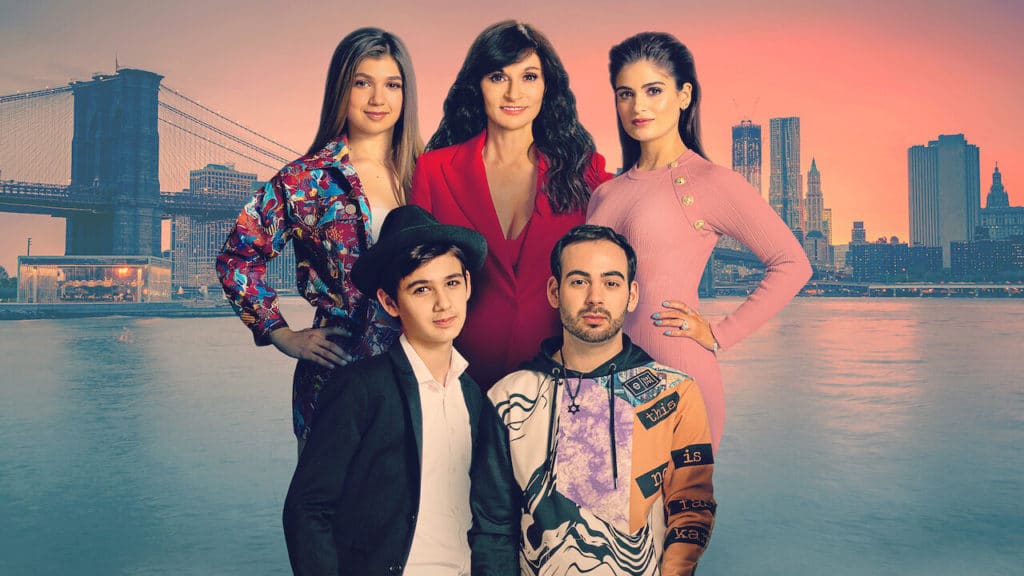
I’ll have another opportunity to educate myself when “My Unorthodox Life” premieres on Netflix this month. This show is about a 40-something woman, Julia Haart, who lived in an Orthodox community and decided to stop being religious. As we say in our community, she “went off the derech,” or “went off the path.” Now, she is a successful CEO who is the star of a new Kardashian-esque reality show. In the trailer, she says, “It takes time to deprogram yourself.”

Media outlets are reporting that the show “takes a strong stance against fundamentalism” and they’re praising her for “escaping” the grasp of her ultra-Orthodox community in Monsey, New York.

This is a story we’ve heard over and over again. A person grows up in an Orthodox community, they claim the community treats them so badly that they have to leave, and then they write a tell-all memoir that bashes everyone they used to know. If they’re lucky, they’ll get to appear in a documentary or get a show on Netflix. Usually, the word “unorthodox” is involved.

If there is one thing I want readers to take away from this article, it’s this: Stop using the word “unorthodox” when you go off the derech. Pick a new word. We get it!

In all seriousness, most of these stories involve individuals that either have some type of mental illness, were abused by their families, had spouses who didn’t understand them, etc. Somehow, though, the Orthodox lifestyle and/or community are to blame for all their troubles. And when they bring up shocking stories about their communities, nobody bothers to look into them to see if they are true. Everything is taken as truth, when much of it has actually been debunked. The Orthodox perspective is almost never taken into account.

These salacious stories are actively making people hate Jews. And Orthodox Jews usually don’t speak up because they are too busy living their lives and not paying attention to what the media has to say. If they do take a stance, mainstream publications typically won’t publish their responses. The media doesn’t want to hear it. And so we just get pummeled over and over again.

These salacious stories are actively making people hate Jews. And Orthodox Jews usually don’t speak up because they are too busy living their lives and not paying attention to what the media has to say.

Of course, there are people who have legitimate grievances with their Orthodox community and they feel the need to be true to themselves and leave. I am not talking about those people. As a community we are, like every other community, far from perfect; we are comprised of flawed human beings. Still, I can’t help but notice what seems to be a distressing media obsession with us.

So who am I to say all this? Well, I had the typical secular American life growing up. I wasn’t born a Jew; my background is English, Irish, Scottish and German. After meeting my Jewish husband, I learned about Judaism, and specifically Orthodox Judaism. We went to beautiful Friday night dinners at our local Chabad House, which is run by Lubavitch Jews, a sect of Hasidim that mostly live in Crown Heights, Brooklyn. I thought the long-bearded rabbi in a black hat was going to dislike me because I have blonde hair and blue eyes and I was clearly not born Jewish. I was wrong. He and his family welcomed me in and made me feel like a part of the community right away.

I had never experienced such warmth. Once I began studying the Torah and going to an Orthodox synagogue, I began a five-year conversion journey. At the end of it, I converted through an Orthodox beit din (a Jewish court of law consisting of three rabbis) and today, I observe Shabbat, keep kosher, pray every day, cover my hair, and send my child to an Orthodox school.

What astounds me is the difference between what the media reports and what I’ve experienced in my life. Orthodox Jews are some of the friendliest people I’ve met. And, yes, even the “ultra-Orthodox” ones are nice. My husband and I used to live in Williamsburg, Brooklyn and buy our food at the Satmar Hasidic grocery stores, and they were lovely, too. One time we were in a rush to shop for food before Shabbat and a Hasidic man offered us a ride to the store. Because of him, we made it there in time. I couldn’t believe he would let random strangers into his car, especially when we weren’t Hasidic. But he did.

When I gave birth to our daughter, our Orthodox community here in Los Angeles organized a meal train for us. We ate a homemade dinner every night for a month. Sometimes, we got food from people who didn’t even know us. They simply heard that someone had a baby and they wanted to help out.

I could provide countless examples of how wonderful Orthodox Jews are, but when it comes to Netflix, the media and the publishing houses, that’s not what sells.

When “My Unorthodox Life” comes out, I anticipate it’ll get a lot of praise. Reviewers will say the star of it is bold and brave, and they will continue to bash Orthodox Jews.

While it may be easier to sit back and angrily read these headlines or try to ignore them, I encourage my fellow Orthodox Jews to push back against these harmful, degrading stereotypes. They are hurting us more than we think. Yes, ultimately, God is there for us, and he will protect us and sort everything out in the end. But it doesn’t mean we shouldn’t let our voices be heard.

It’s time to stop hiding and to show the world who we really are. No one else is going to; that’s for sure.


Kylie Ora Lobell is a writer for the Jewish Journal of Los Angeles, The Forward, Tablet Magazine, Aish, and Chabad.org and the author of the first children’s book for the children of Jewish converts, “Jewish Just Like You.”

Media Continues to Go After Orthodox Jews With New Netflix Show “My Unorthodox Life” Read More »
Holocaust Survivor Recalls Atrocities and Reflects on Current Antisemitism

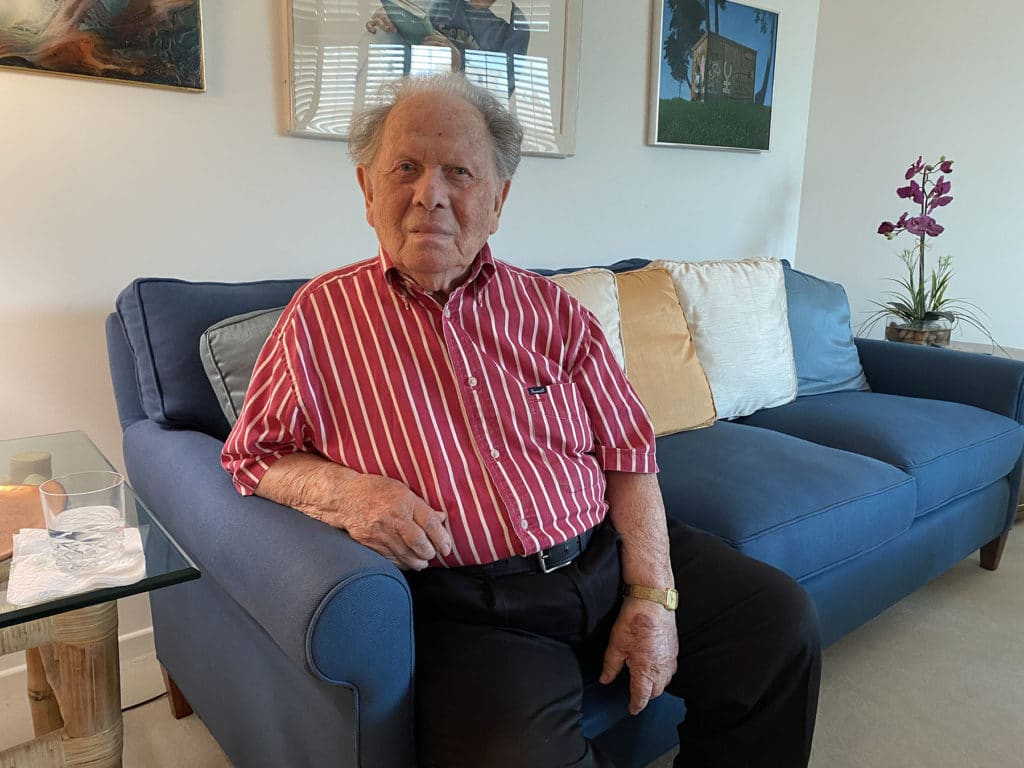
Ernest Weiss, a Holocaust survivor, recalled his experiences during the Holocaust in a sit-down interview with the Journal.

Weiss, 94, was born in Munkacs, Czechoslovakia. “Under the Czechs, we didn’t feel the antisemitism,” he said. “It’s not that it was not there, but the Czechs did not allow it.” But when Nazi-allied Hungary took control in 1938, “you are beginning to feel the antisemitism.” “Children … got beaten up on the street. Even if you go to school, you get beaten up because you were Jewish.”

Eventually, Nazi soldiers entered the city and began implementing discriminatory measures against the Jews, such as forcing them to wear the yellow Star of David badge. “We felt discriminated, but we had no choice. But we were still doing our things.”

Weiss recalled his oldest brother’s (Weiss had two older brothers) love for the United States and how he dreamed of going there with Weiss and starting their own business. But that dream was never fulfilled, as Weiss’s brother was conscripted into the Hungarian army; Jewish members of the army were put into forced labor. Weiss’s brother was never seen again after he was sent to the army and his body has never been found.

The Nazis later turned Munkacs into a ghetto and forced all the Jews to move into it; groups of Jews were moved to a brick factory on the outskirts of the ghetto, where there were railroad tracks for cattle cars to take them to the Auschwitz death camp. At Auschwitz, when Weiss was 16, he was sent to the workforce with his father and other brother. Weiss was lucky because he looked young. If he had been sent with the children, Weiss would have gone straight to the gas chambers.

Weiss was later sent to the Warsaw Ghetto to clean up what remained in the ghetto after the Nazis “bombed and bombarded the entire ghetto” after the Jews imprisoned in the ghetto launched the uprising against the Nazis. “Nothing was standing,” Weiss said. “Everything was leveled.” He recalled a day where there was “extra-heavy” rain at the ghetto, causing him to break down and cry. The man standing next to Weiss said to him, “Hey kid, now you listen to me and listen to me good. Someday, we’ll be free again, but if you’re gonna cry, you’re not gonna make it. You will die. You gotta be strong, and you will make it.” Weiss stopped crying and never cried again throughout the duration of the Holocaust.

At one point, Weiss was sent to one of the Nazi doctors because he had come down with typhoid fever. “We were afraid to see a doctor because most of the time, you don’t come back.” Weiss has no recollection about what happened while he was with the Nazi doctors or how long he was there––“I was completely out of it,” he said––but was eventually released by the Nazi doctors and sent back to forced labor.

Shortly thereafter, the Nazis announced that they would be leaving Warsaw for a march––“It was a death march,” Weiss said––with transportation provided for those that couldn’t make the march. One of the Nazi officials noticed that Weiss didn’t want the transportation option despite just being released from the Nazi hospital and asked Weiss if he was sure he wanted to do to the march on foot; Weiss answered in the affirmative. “Needless to say, those who stepped out … nobody ever saw them again,” Weiss said. “All those that remain at the hospital are poisoned.”

Weiss marched with the prisoners to the Germany-Poland border, a 1,800 mile walk. “A lot of people died,” he said. Those that survived the march were put on a train to the Dachau death camp in Bavaria in 1944; by this point, Weiss had been separated from his father and brother, as the Nazis didn’t like Jews staying together with people they knew and would assault those that did. From Dachau, Weiss was sent to Muhldorf, one of Dachau’s satellite camps, where the Nazis were building an underground airport. “To build an underground airport takes cement and takes a lot of cement,” Weiss said. “That’s we had to do: carry cement. As weak as we were, we managed to do that … it’s unbelievable, but we did it.”

A new group of Hungarian Jews were taken to Muhldorf and Weiss noticed that they had given up hope. “Once you give up hope, you die. And a lot of them died,” he said. “They got weak, they got sick, and they died.”

“Once you give up hope, you die.”

The Nazis later put those remaining at the satellite camp into cattle cars with the intent of killing them at the mountains, but couldn’t follow through with their plans because the railroad tracks leading to the mountains were occupied by the United States. Consequently, the Nazis changed course and instead stopped at a small village. Those inside the cattle cars were told that the war was over and they were free to leave. But they soon learned that it was a ruse for the Nazis to shoot at them in an open field.

“Oh my God, machine-gun fire,” Weiss said. “We ran back to the train, and so could everybody else who didn’t get killed or wounded.”

The train started up again for another day, and stopped so that the Jewish prisoners on the train could be given a bowl of soup. Overhead, American planes saw the Nazi soldiers and began bombing the train, thinking that it was filled entirely with Nazis. The Jewish prisoners on the train began opening the boxcars so they could run for cover; the Nazis noticed this and began firing on them. “We got it from both sides,” Weiss said. “I saw a couple people going right underneath the train, so I did the same thing.” The American planes eventually saw the prisoner uniforms and ceased the bombing, allowing the Nazis to restart the train.

When the train stopped again, Weiss noticed that the Nazi guards were older; previously he had seen younger Nazi guards, prompting Weiss to surmise that the war must be close to being over and the younger guards had escaped to avoid capture. Weiss also saw a couple of prisoners sneaking away from the Nazis, and he followed them; he eventually ran into a military truck and hid behind a tree, but the soldiers assured him that they were American.

“Oh my God,” Weiss said as his eyes teared up. “I’m free I’m free I’m free!”

Weiss was temporarily housed with other freed prisoners in an abandoned Hitler Youth Camp, where the Americans provided them with food, shelter, medicine and entertainment. Eventually, the Americans gave them the opportunity to return to their hometowns, and Weiss was reunited with his brother.

After the war, Weiss immigrated to America, first residing in Pittsburgh before moving to Los Angeles; today, he lives in West Los Angeles. Weiss’s brother immigrated to Israel, then known as Palestine.

The recent rise in antisemitism “is not good,” Weiss said. “I never thought it would happen this bad over here.”

However, he remains optimistic that the recent antisemitism will eventually be curbed, noting that the various Jewish organizations that exist today weren’t around during the Holocaust. “Between the American government and the Jewish organizations, they’re going to quiet it down. At least I hope so.”

Holocaust Survivor Recalls Atrocities and Reflects on Current Antisemitism Read More »

Antisemitic Crimes in L.A. Increased Nearly 60% in 2021

Recent data from the Los Angeles Police Department (LAPD) shows that antisemitic hate crimes have increased by nearly 60% thus far in 2021.

According to a July 12 report from Crosstown, a nonprofit organization analyzing Los Angeles data, 43 antisemitic hate crimes have occurred in Los Angeles in 2021, a 59.2% increase from 2020. Antisemitic hate crimes also comprised 14.6% of all hate crimes in Los Angeles in 2021, and Jews have been the most-targeted population behind Blacks and Latinos; in total, there have been 295 hate crimes in Los Angeles.

“Over the last four years, and leading into 2021, we have seen an emboldenment of extremists,” Anti-Defamation League Los Angeles Deputy Regional Manager Ariella Loewenstein told Crosstown. “A central part of conspiratorial views that fuel extremist violence is antisemitism.”

City Council candidate Sam Yebri, an attorney, also told Crosstown that there has been a spike in antisemitic activity on social media over the past couple of years, but “what’s been especially troubling is the frequency, intensity and brazenness of the antisemitic hate crimes recently.” In May, a caravan displaying Palestinian flags from their vehicles attacked Jewish patrons outside of the Sushi Fumi restaurant in the Beverly Grove area.

Yebri also praised the police for being “incredibly responsive” to antisemitic incidents but noted that “their resources are spread thin.”

ADL CEO Jonathan Greenblatt wrote in a July 9 Newsweek op-ed that the ADL has recorded 251 antisemitic incidents since May 11, a 115% increase over the same timeframe a year ago. Greenblatt attributed the recent spate of antisemitic incidents to “anti-Israel sentiment” that “is not limited to the halls of Congress. It is spreading. And it is dangerous.”

Antisemitic Crimes in L.A. Increased Nearly 60% in 2021 Read More »

The Multicultural Jew’s Genizah

A Jew writes with a Jewish pen
and sees with Jewish eyes,
until he intermarries when
the Jewish spirit dies.
Yet lots of Jews would like to think
a Jew will always be
a Jew, regardless of his link
to lifestyles that are free.

Most sadly, this is hardly true,
for once homogenized,
the Jew no longer is a Jew
except when fictionalized,
described by someone who is trying
to find a pintel Yid
in those whose Jewishness is dying,
extinguished, God forbid,
but resurrects when he discovers
in a forgotten freezer
between old volumes’ dusty covers,
his genius’s genizah.

Lives based on Jewish intellect,
revealed on rotuli,
in documents whose dialect
is multicultural, can be
found not in a dry genizah
but in the big wide world,
where they in freedom – in no freezer
where time’s frozen – unfurled,
and, blowing east into the west,
combine as on rotuli,
and multi-culturally live as Fest-
ive schriften, lively, bodily.


In “Waste not, want not: A lively study of Cairo state documents preserved by their use as scrap paper,” TLS, 7/2/21,  Christian Sahner, Associate Professor of  Islamic history at the University of Oxford, reviewing “The Lost Archive: Traces of a caliphate in a Cairo synagogue” by Marina Rustow, writes:

………. The documents at the heart of Rustow’s book are hardly unknown to Geniza scholars. Yet most have been studied only with an eye to their Jewish contents. Rustow’s revolutionary proposal is literally to flip over these documents and look at the other side. For on the back of countless paper fragments bearing lines of Jewish liturgical poetry, sermons, or passages from the Bible is the discernable scrawl of Arabic-speaking Muslim bureaucrats. How decommissioned state documents found their way from the chancery to the synagogue is the central question of this superb study.


Gershon Hepner is a poet who has written over 25,000 poems on subjects ranging from music to literature, politics to Torah. He grew up in England and moved to Los Angeles in 1976.  Using his varied interests and experiences, he has authored dozens of papers in medical and academic journals, and authored “Legal Friction: Law, Narrative, and Identity Politics in Biblical Israel.” He can be reached at gershonhepner@gmail.com.

The Multicultural Jew’s Genizah Read More »

Islamic Jihad Teen Soldier: “We Asked Hitler Why He Left Some of You Alive”

A teenager attending a Palestinian Islamic Jihad (PIJ) training camp in the Gaza Strip can be seen in video footage saying that they believe Adolf Hitler left Jews alive “in order to show us how wicked you are.”

The Middle East Media Research Institute (MEMRI) reported that the attendee told Al-Quds Al-Youm TV on June 29, “We did not come here to enjoy ourselves, or to play, or anything like that. We came with our souls, our blood, our martyrs, and our wounded to sacrifice ourselves for Palestine and for our people.”

He then stated: “We asked Hitler why he left some of you alive. He did so in order to show us how wicked you are.” The attendee vowed to “tear your bodies apart with our rockets. Scram into the shelters, you mice, you sons of a Jewish woman!”

Abu Omar, a training commander at the PIJ camp––called the “Sword of Jerusalem” camp––then told the network that the child soldiers attending the camp are “lion cubs” who will “follow in the footsteps of their fathers and take up arms, Allah willing.” He added that “the children of Palestine will sacrifice their blood and their body parts, just like they did during the [Battle of the] ‘Sword of Jerusalem.’”


As previously reported by the Journal, the International Legal Forum, a human rights legal group based in Israel, sent a letter to the United Nations Children’s Emergency Fund (UNICEF) to investigate and take action against Hamas and PIJ’s training camps for child soldiers. “This is an abhorrent form of child abuse, that exposes these children to violence, exploitation and potential death,” the letter stated.

A Hamas spokesperson has defended the terror group’s use of training camps. According to Long War Journal, the spokesperson said during a press conference that Hamas has “the right to self-determination, self-defense, and resisting the occupier by all means available, including armed resistance.”

Islamic Jihad Teen Soldier: “We Asked Hitler Why He Left Some of You Alive” Read More »

Harold J. Masor Named New Chair of American Jewish University’s Board

American Jewish University (AJU) today announced that Harold J. Masor will take the helm as the new Chair of the University’s Board effective immediately. Masor will succeed outgoing Board Chair Virginia Maas, a board member of American Jewish University since 1986.

Masor, who previously served as Vice Chair of the University’s Board and chair of its Audit Committee, is a retired partner of the international accounting and business advisory firm of Ernst & Young. Masor also was a founder and past president of de Toledo High School and past president of Adat Ari El synagogue. He is a board member of the Jewish Federation of Greater Los Angeles, Jacob Jonas the Company, and president of the Seymour & Elaine Masor Foundation, a support organization of the Jewish Community Foundation (JCF).

“For decades, AJU has served as a portal to Jewish connection, understanding, and spiritual growth, evolving to meet the needs of the Jewish community,” Masor said. “I look forward to working closely with my colleagues on the Board and with University leadership to continue this evolution to support and sustain talented and dedicated vibrant Jewish life in Los Angeles and across the country,”

Outgoing Chair Virginia Maas will continue to serve on the Board. During her time as Board Chair and throughout her years as a Board member, Maas has been committed to advancing AJU’s mission of meeting the needs of a rapidly changing Jewish community.

“Throughout the years, our Board chairs have built meaningful legacies at American Jewish University,” said AJU President Dr. Jeffrey Herbst. “We are proud to add Virginia Maas’s name to this esteemed list and are deeply grateful for her leadership and dedication. Harold Masor’s expertise and passion will be invaluable to our Board as we continue our work to advance ideas, dialogue, and Jewish wisdom.”

Harold J. Masor Named New Chair of American Jewish University’s Board Read More »

There’s No Cure for Antisemitism, But There is a Vaccine

Antisemitism ebbs and flows, but it never goes away. When it rises, as is happening now, Jews tend to react with alarm, condemnations and even rallies. We mobilize the troops, we call out, we speak out, we often freak out.

We also use the language of solutions, such as “end the hate” and “stop antisemitism,” hoping perhaps for a time when the world’s oldest hatred will finally come to rest.

But on this point history is clear: That won’t happen. No one has found a cure for Jew-hatred.

Historian Paul Johnson has called Jew-hatred “an intellectual disease, a disease of the mind, extremely infectious and massively destructive. It is a disease to which both human individuals and entire human societies are prone.”

This disease transcends the boundaries of space and time. As Johnson writes: “Anti-Semitism is very ancient, has never been associated with frontiers, and, although it has had its ups and downs, seems impervious to change.”

My friend and author Gil Troy calls antisemitism “the most plastic hatred—ever-malleable, endurable, artificial, and toxic.” It can go left, it can go right, it can go wherever it needs to go. In recent years, it has gone especially hard against the Jewish State of Israel, which is routinely demonized and singled out for condemnation unlike any other nation.

It’s ironic that the rise of Jew-hatred has coincided with another epic and global disease—COVID-19. For those who don’t believe in coincidences, maybe this moment can offer us a lesson: Instead of agonizing over a cure for antisemitism, we might want to look for a vaccine.

A vaccine doesn’t pretend to cure anything. Instead, it inoculates us, so when the disease shows up, our bodies are better prepared to fight it.

What kind of vaccine can protect us against Jew-hatred? One is obvious: beefed up security in synagogues, Jewish neighborhoods and other places to prevent physical harm, and maximum use of the legal system that provides consequences for hate crimes. That goes without saying.

But there is a deeper, more personal vaccine that can fortify us against the malignancy of hate. That vaccine is Judaism itself—the nourishing of our minds, hearts and souls with the many wonders and delights of our ancient tradition. This spiritual medicine wards off the toxins of hate while reinforcing the elixir of positive and meaningful connections in our lives.

That vaccine is Judaism itself—the nourishing of our minds, hearts and souls with the many wonders and delights of an ancient tradition.

We can see it in the Chabad movement. No matter how bad things get, they always respond by including the energizing rituals of Judaism, whether it is Friday night Shabbat, learning Torah or building a Succah. They fight darkness with light, fear with joyful pride, antisemitism with prosemitism.

This approach is not a linear response to Jew-hatred, which is why most of us prefer the direct approach—we see a problem, we want to fix it. But Jew-hatred is more than a problem, it’s a condition. It’s like the weather; it’ll be there no matter what we do.

We shouldn’t wait for the storms to arrive in order to wake up. Fighting only against storms can be draining and exhausting. It’s more energizing and empowering to stay continually connected to the enduring wisdom of our tradition. This reminds us of what we’re fighting for in the first place. We don’t just stand up against something, we also stand up for something.

As we fight the hate, let’s not forget the love—the love for a tradition that has sustained us through countless storms for more than 3,300 years.

By all means, let’s continue to fight Jew-hatred wherever and whenever it rears its mean and ugly head, with all the tools at our disposal. But as we fight the hate, let’s not forget the love—the love for a tradition that has sustained us through countless storms for more than 3,300 years. That tradition is the real source of our strength, and just like Jew-hatred, it isn’t going anywhere.

There’s No Cure for Antisemitism, But There is a Vaccine Read More »

Who Will Replace Garcetti Until the Next Election?

As Eric Garcetti prepares to head off to India as the U.S. Ambassador to that country, Los Angeles is still almost a year and a half away from its next scheduled election. While several potential candidates are lining up for that race, the city’s economic, housing, public safety and transportation crises are not going to fix themselves over the next eighteen months. The temptation among many local political leaders will be to defer significant action on these policy fronts and simply maintain the status quo until LA voters select our next chief executive, but this path of least political resistance ignores the urgency that these challenges require.

Further complicating matters is the possibility that several members of the City Council, who are entrusted with the decision regarding who will serve as mayor until Garcetti’s term expires may be running for the job themselves. So they are unlikely to select a replacement who will seek re-election, since running against an incumbent would put those council members considering the race at a decided disadvantage. So what type of individual can be found who could capably fulfill the responsibilities of the office, help get the city on the track toward meaningful change, and then step aside by the end of next year?

So what type of individual can be found who could capably fulfill the responsibilities of the office, help get the city on the track toward meaningful change, and then step aside by the end of next year?

The answer: someone who is smart and experienced enough to understand the intricacies of local government, the complexities of public policy and the broader needs of a sprawling megalopolis. Even more importantly, that ideal leader would be less concerned with currying favor and image-burnishing than an elected official whose success depends on public support. Because this appointee will not be seeking re-election, she or he will be largely freed from the unyielding pressures of popularity, fundraising and other demands of the next campaign. Rather, LA could have a leader able to make necessarily unpopular decisions to break the gridlock that has slowed progress on so many of the city’s policy goals over the years.

Two people in particular immediately come to mind, both of whom possess the knowledge, the character and the vision to fill this breach. The first is former Deputy Mayor and former Los Angeles Unified Superintendent Austin Beutner. The other is former City Councilmember and City Controller Wendy Greuel. Both have extensive experience in the public, private and non-profit sectors. Both are smart, tough, and principled leaders who know how City Hall works but also understand what must be done outside its walls. Both know the city and its people. Both have the courage to make the difficult choices, to push beyond traditional boundaries, and to be willing to offend powerful constituencies to lay the groundwork for their successor to take over a city much further along the path to success.

None of this is intended as criticism of Garcetti, who has served the city commendably for two decades in elected office, including the last eight years as mayor. But by definition, politicians must be responsive to political pressures. Addressing seemingly intractable policy and community challenges often requires administering short-term pain, which is inherently difficult for elected officials who rely on those same public interests for support. A mayor who is not seeking re-election could have the leeway to use a few less carrots and a few more sticks.

Rather than appointing a temporary mayor, the City Council has the ability to call a special election to fill the office. But this option makes little practical sense, given the tremendous cost involved for an election that would take place only one year before the regularly scheduled vote. (And those Council members considering their own run for mayor would have little interest in complicating their own upward path with an officeholder who had just been elected by the people of the city.)

LA is blessed with several longtime public servants who could fill this position admirably. Longtime budget chief Miguel Santana, now the head of the Weingart Foundation, would make for another solid choice, as would former Mayor Antonio Villaraigosa, State Senator Bob Hertzberg, former Council President Herb Wesson, former Deputy Mayor Renata Simril and former County Supervisor Zev Yaroslavsky.

But even among these impressive options, Greuel and Buetner would be especially strong choices. Under other circumstances, either or both might have been elected to this office. But stepping in as our city’s mayor at this critical moment would provide Los Angeles with strong leadership that it needs, and a bridge to take us forward into the city’s future.


Dan Schnur teaches political communications at UC Berkeley, USC and Pepperdine. He hosts the weekly webinar “Politics in the Time of Coronavirus” for the Los Angeles World Affairs Council & Town Hall.

Who Will Replace Garcetti Until the Next Election? Read More »

Redefining Contemporary Hate

We are in a new era of antisemitism. Multiple expressions of hate have converged to create a different and more dangerous scenario. Whereas antisemitic attacks in our era have typically been more indiscriminate, they have recently become more blatant and violent.

A number of traditional ideas, values and practices have come undone at once. Our streets and urban centers have become sites of random violence in some cases. The civility that once defined our conversations has clearly broken down. Once identified as a society that valued faith and freedom of religion, the U.S. has lost its faith-based identity. Along with these phenomena, a number of contemporary elements contribute to this new environment of hate that is suddenly directed toward Jews in new and insidious ways.

This contemporary war against the Jews is being waged on a number of different fronts. The correlation of six critical forces in play simultaneously becomes the perfect “trigger” moment for an assault on Israel and Jews.

First, the pandemic has revived the historic mythology of Jewish-led catastrophic events. Throughout history, Jews have been accused of causing pandemics or in turn benefiting from such conditions. The Black Plague of Europe during the Middle Ages, for instance, was identified by church and public officials as instigated by “the Jews.”

Second, facts have become subjective and negotiable. In the aftermath of the recent Gaza conflict, Israel was accused of being the party responsible for the violence—an accusation that discounts the fact that rockets were fired first from Gaza into Israel and is an alternative fact. When facts and evidence are no longer prioritized, space is created to frame new beliefs and mythologies about groups. The presence of alternative facts can be highly problematic for minority communities in particular. Their “truths” can be overshadowed and lost amidst the rise of alternate beliefs that ultimately drive much of this hate rhetoric. The internet is a breeding ground for alternative facts about Israel and Jews, particularly via social media. The exploitation of this tool is an efficient and effective weapon in this war against Jews, Israel and Judaism.

The internet is a breeding ground for alternative facts about Israel and Jews, particularly via social media. The exploitation of this tool is an efficient and effective weapon in this war against Jews, Israel and Judaism.

Third, economic discord drives hate toward Jews, as once again we face accusations of Jewish economic domination over the marketplace. In an economy where many have lost their jobs, businesses have been forced to close, and an increasing number of people face homelessness and food insecurity, pushback against minority communities who are seen as having significant influence and control is at an all-time high. Jews remain the most targeted group in this scenario.

A fourth factor involves the case against Israel and its image in connection with the treatment of Palestinians. Israel becomes a stand-in for all Jews, even those outside of Israel: a pariah state. Israel, falsely defined as a colonial power structure, becomes an oppressive force, or, for some, the new Nazis.

Fifth, “whiteness” is a new measure of standing and power. For the political left, Jews are seen as the ultimate purveyors of influence and power, and for the right, Jews are seen as pretenders seeking to replace the authentic white establishment in decision-making roles.

Sixth, the rise of American nationalism along with the left-wing progressive response has created a political environment rife with anger and hate, driven from both extremes. Deep political divisions are always particularly dangerous for minority and immigrant communities. In a divided society, the absence of a vocal, visible and vibrant political center can be particularly problematic to the welfare of minority communities. In democracies, centrists hold space and in theory defend the interests of these communities. When political extremists dominate and define the political rhetoric, the credibility and well-being of racial, ethnic, and religious communities is often compromised.

Today, Jews are seen as central players in three primary areas: politics, finance, and culture. Some respond unfavorably to the high number of Jews in these professions, and respond in ways designed to minimize and marginalize the Jewish presence. Jews, like white males, are identified as privileged and falsely accused of holding a disproportionate amount of influence and power. For some, this alone is reason enough to oppose them.

As hatred toward Jews grows, so does the simultaneous acceleration of violence on our nation’s streets. This moment presents a new and dangerous challenge.

In the decades following the Shoah, it seemed that we were mostly protected from pervasive Jew-hatred, given that most people saw the Jews as a people who had been systematically oppressed and exterminated, a people who needed protection. We are now 75 years past the Shoah. The generation of people who experienced the atrocities is coming to a close. We are past the period of personal recall, remembrance and historic regard. Memory has but a certain life expectancy, and time has a way of warping the lessons of the genocide of the Jews. Without living witnesses to offer personal testimony, the protection offered by the memory of the Shoah is diminished. As survivors become fewer and fewer, our enemies can more comfortably apply the “Nazi” label both to Israelis and Jews around the world.

Examining the confluence of all of these social forces coming to bear on our society, it seems that a different and less friendly environment is the new political condition. This moment raises a number of pressing challenges for America’s Jews. How we as a community determine how best to respond to these threats will define the future status of Jewish life on this continent.


Dr. Steven Windmueller is Emeritus Professor of Jewish Communal Studies at the Jack H. Skirball Campus of HUC-JIR, Los Angeles. His writings can be found on his website, www.thewindreport.com.

Redefining Contemporary Hate Read More »

I Love You, But I Lust Her: My Journey to Health

“I love you, but I lust her.”

I’m so glad he said it on the phone so he couldn’t see my face.

I was stunned. I had finally decided, after five years of his attention, compliments and declaration of love, to step outside the friend zone and explore a relationship.

The week prior, we scheduled a romantic weekend together. We’re busy professionals, so we set a date on the calendar. He said he’d plan something special. He had been asking to take me away somewhere for years. I was excited and hopeful.

Saying yes to him was the first small step of opening my heart after choosing to take a year off from dating or intimacy with anyone. Why? I needed time to reset myself after a three-and-a half-year relationship that was so good, but so wrong.

During that relationship, I gained 30 pounds of sadness and frustration, lost in a co-dependent maze I could not escape. Once I found my way out, I needed a year to cleanse my heart, mind and body before I could be open to love again. I knew dating would only distract me from my journey back to myself.

After 11 months, I had made a great deal of emotional and physical progress, but I was stuck. The only progress I could measure was weight loss, so I obsessed on the scale number.

As I faced losing the last ten pounds, I started to crack from my self-imposed solitary confinement. I thought I was strong enough to stand on my own, and so I once again desired someone to stand by my side. I yearned to once more have a lover and best friend.

I looked for signs from the universe that love was on the horizon. Just a month before, he had come to my home, and, quietly, just the two of us chanted the Shabbat Kiddush blessing over the wine and Eshet Chayil, the ancient poem that a Jewish man sings to his bride to praise her as his woman of valor on Friday nights.

It begins with, “A woman of valor, who can find? Her worth is far beyond that of rubies. Her husband’s heart trusts in her, and lacks no treasures.”

The Eshet Chayil is my love Achilles heel. Hearing him chant it to me, while looking into my eyes, inspired the idea of possible love.

So when he called, I thought it was to plan details around our romantic weekend. Instead, he called to say he was no longer interested. He had learned days before that my slim, sexy friend was suddenly single and he would pursue her instead.

Now they’re dating. They asked and I gave them my blessing. I came to accept that it’s all G-d’s plan. If he and I were meant to be together, something would have transpired to allow that to happen. He did nothing wrong. He spoke his truth.

But it hurt. I thought it would be emotionally safe to open my heart to a man who I knew loved me.

But love is never safe; if you choose to be vulnerable, you risk getting hurt. An important component of our character is how we respond to disappointment.

But love is never safe; if you choose to be vulnerable, you risk getting hurt. An important component of our character is how we respond to disappointment.

So when he chose her over me, I fleetingly thought of ordering a pizza and downing a bottle of Prosecco. But this time, after a year of learning to cope with sadness and stress, I instead embraced it as the kick in the a– to finish my journey to the best version of myself.

With ten pounds to go and a bruised ego to overcome, I shifted gears. First, I amped up my weight loss program and went from the up and down past year of losing two and a half pounds a month, to losing two and a half pounds a week and gaining muscle. (See below for how.)

Now a month later, ten pounds lighter and leaner, I’m on vacation in Hawaii with a girlfriend and I feel healthy, happy and radiant.

But what I also feel is desirable.

Why? Not because I’m the “perfect” weight and shape, but because since I reached my weight loss goal, I’ve given myself permission to turn my sexual energy back on. It’s been off for an entire year.

Maybe the reason he lusted after her and not me was because she feels attractive in her own skin and I didn’t. In terms of the energy I sent out, I wasn’t desirable. You are what you feel. I didn’t yet feel desirable.

Now on holiday on a tropical island that’s vibrant and lush with beauty, I’m pausing to reflect on my past year of journey to health. I want to celebrate and cement the good habits I created to ensure a lifetime of health, passion and joy.

Here are the ten tools that have empowered me to work toward lasting health:

  1. Stress management
    Stress eating had to stop. Daily meditation, prayer, journaling and walking my dogs make every day stress free.
  2. Emotional healing
    Triggering emotional landmines led to binging. After a few powerful energy healing sessions plus a year of therapy and EMDR treatment around specific traumas, my subconscious is calm and clear.
  3. Track all food, drink and exercise
    MyFitnessPal app became the mirror to reflect on all my daily choices of what and how much I ate, drank and exercised. The tracking made me mindful of how much I put in and out of my body.
  4. Move and lift more 
    I had to find the exercise I love and incorporate it into my life. I was most happy when I did daily yoga in the morning and ran or danced on the beach a few times a week. What accelerated the weight loss was weight-lifting a couple of times a week with a trainer.
  5. Intermittent fasting
    I read the book “Fast This Way: How to Lose Weight, Get Smarter, and Live Your Longest, Healthiest Life with the Bulletproof Guide to Fasting” and loved the science about the health benefits of fasting. I now eat daily within eight-hour periods and start my day with bulletproof coffee.
  6. Keto diet
    After research, and trying expensive multi-level marketing powders and bars, I chose instead to follow a low carb, high fat, and moderate ketogenic (keto) diet, which aligns well with intermittent fasting.
  7. Water
    Not until I began to drink 10 to 12 eight ounce glasses of water a day did I see the weight really come off. Simple and powerful!
  8. Sleep
    Only when I bought a Fitbit watch and began to track my sleep was I able to correlate good sleep to weight loss. I created new sleep habits to ensure better sleep: shower before bed, lavender spray, and read from a physical book before turning off the lights. I finally fall asleep by counting daily mitzvot (acts of kindness), thanking G-d for my blessings, saying the Shema prayer, and ending with 4-2-4-2 box breathing.
  9. No alcohol
    I love wine and mojitos. But with the Fitbit sleep analysis I saw how alcohol destroyed my sleep quality. It also made my face and mind puffy. Eliminating alcohol intake is difficult, but I had to cut it out to reclaim my health.
  10. Have an accountability partner or weight loss buddy
    Thank you Tina Bernard! This is the most important element of all. Having one person—not a Facebook support group or a big group text, but one person with whom you are lock-step together—along with you on the journey to health is the lynchpin of success. I didn’t want a health coach; I wanted a friend who also needed a health reboot, and together we created healthy habits for life.

I wish you much success in your journey to health. Embark on it with a partner, and look for the teachings in every stumbling block along the way.

As Tina tells me every day, “You’ve got this!”


Audrey Jacobs is a financial adviser and has three sons. 

I Love You, But I Lust Her: My Journey to Health Read More »