fbpx

May 20, 2021

What You Miss When You Talk During Shul


I spent Shavuot in another part of town and therefore missed being in my neighborhood shul to celebrate the holiday. The two shuls where I am most active have excellent decorum during services. One of the shuls has earned a reputation as overly strict in their no-talking during services policy, which sometimes turned off newcomers.

But I like it that way. It’s not always easy to focus on a prayer in practice. There is an architecture to each service, poetry in the Tehillim and a backstory to the prayers. It has taken me many years to earn the level of appreciation I now have for davening, and I still have a long way to go. A quiet shul provides the spiritual space to focus on furthering my connection to prayer without being distracted by other peoples’ irrelevant conversations.

On the second day of Shavuot, I missed my shul even more when a woman sitting two rows in front of me began talking to the woman next to her and wouldn’t stop. She kept it up even as the Torah was being read — and here we were, celebrating the gift of the Torah itself. How does someone just talk over God like this? It felt like the height of insensitivity.

I understand that there is an important social aspect of going to shul, and talking is that social glue. I love seeing my friends at shul and chatting with them during kiddush, too. Maybe this woman felt starved for the connection she had missed for so long during the pandemic. But honestly, when is it ever okay to talk during a time carved out for us to talk to Hashem? To talk when Hashem is speaking to us?

Naturally, there are people who disagree with me. One friend defended talking in shul as adding to a feeling of vibrancy in a community. But we Jews are already a talkative people. We may be accused of many things, but a lack of vibrancy isn’t one of them. In a world where talk has become so cheap and incessant, the quiet in shul really is holy and necessary space. And when our voices rise together in sincere, communal prayer, at the right moment and at the right time, it is beautiful.

It was hard for me not to feel angry at this chatterbox, but I know that anger is one of the most destructive of all character traits. If I gave in to it, it wouldn’t stop the talking; it would only bring me down emotionally and spiritually. I tried to give her the benefit of the doubt, as the Torah requires me to do. But this was a tough one. If she was discussing something of substance, wouldn’t she take that conversation elsewhere? If her conversation was time-sensitive and urgent, why did her expression remain so casual? She gestured with her hands, and her numerous diamonds sparkled. She had certainly dressed with care to go to shul. Even as I kept my eyes focused in my chumash, I saw her disrupting motions in my peripheral vision.

We sat in shul as Israel was under attack from thousands of rockets fired from Gaza. With my phone and computer off for Yom Tov, I had no idea what news there might have been about the fast-moving and heartbreaking developments. I was worried about our people, our land, about the war spiraling out of control, about rising anti-Semitic violence and anti-Semitic political talk, now even coming from some in Congress. Lies about Jews and about Israel were being shot out in the media faster than the rockets. Shul is one of our only refuges, where we can hear truth in our prayers and from the Torah. We dare not drown it out.  It shocked me that given all we have been through in the past year, with the Meron tragedy so fresh and now with more war, this woman had not been humbled into at least a temporary ceasefire of words.

Fortunately, I realized I felt more pain than anger at her. It can be hard to understand or feel the relevance of each Torah chapter — maybe reading just one article a week on any of the terrific Jewish content websites about the parsha could help her feel more connected. We cannot connect without understanding, and understanding takes effort.

But Torah is our life force. Without Torah we are not a people. Without it, we are lost.

Many people are uncomfortable with silence. We are so used to sensory overload that when silence descends, we may rush to fill it with our own noise. But sitting in shul can become a mindfulness exercise. If you don’t know how to pray, breathe mindfully. Focus on one prayer or one sentence of one prayer that speaks to you and reflect on it. Sit in quiet solidarity with the congregation; pray for healing for the sick. Offer silent prayers from the heart, for your family, for the Jewish people, for peace for all of humankind. Every sincere prayer matters.

Sitting in shul can become a mindfulness exercise.

The Haftarah reading that day included a vision by Habakuk of our exile from our land. At one point the man chanting it was overcome with emotion and had to stop to compose himself: “Oh Hashem, I have heard Your news of impending exile, and I was afraid; O Hashem, during those years, keep Your accomplishment alive; during those years, make it known, amid rage —remember to be merciful.” 

This happens so often — the Torah or the Haftorah reading exactly mirrors what is happening in our lives at that very moment. God is talking to us through these holy writings. It is riveting, sometimes spine-tingling, when we read and hear its relevance to our lives. Listening to the emotion in the man’s voice, followed by his silence, and then his continuation of the reading, was one of those unforgettable and poignant moments of connection that I believe I will always remember.

It would have been such a shame to have missed it.


Judy Gruen is a writer and editor. Her books include “The Skeptic and the Rabbi: Falling in Love with Faith.”

What You Miss When You Talk During Shul Read More »

The Total Collapse of Jewish and Israeli PR

From the beginning of my Rabbinic career I focused mightily on public relations and disseminating the Jewish message to the world. I was accused of being publicity hungry, but I knew that the one area where Jews have failed significantly was in public relations. And this is true throughout the centuries.

Only one nation has ever been accused of murdering god. The Jews. And our inability to properly respond to so heinous a charge — how can anyone murder an infinitely power being? — brought centuries of devastation to our people. Then they accused us of being vampires, of murdering Christian children to suck out their blood. No other nation has faced a similar blood libel, which led to the spilling of countless quantities of Jewish blood.

Now Israel is fighting a genocidal enemy in Hamas, a bloodthirsty death cult with a genocidal charter calling for the extermination of Jews wherever they may be found, including in the United States, Europe and Australia. Hamas aids and abets honor killings of Palestinian women, whose only crime is having a boyfriend. They slaughter LGBTQ Palestinians. They are ruthless and brutal to the wider Palestinian population, robbing them of the international funds sent to give them a better life and using those funds instead to fire rockets at Jews to murder as many of them as they can.

You would think that the choice here between good and evil would be stark and direct and the world would stand with Israel. But precisely the opposite has occurred, as Israel is now being portrayed as trying to “erase” the Palestinian people.

Take the example of Mohamed Hadid, the multi-millionaire father of supermodels Bella and Gigi Hadid, all of whom are vilifying Israel with gusto to their tens of millions of followers on Instagram. Last week Mohamed actually wrote, “No one should be allowed to erase a race… you can’t close your eyes… the Pope did in WW1 and WW!! And the rest of the world stood by silently….”

This is the ultimate blood libel, falsely accusing Israel, the only free society in the Middle East, of genocide. Hadid shockingly compared the Holocaust of six million Jews to Israel fighting back against Hamas rockets intent on murdering children. It takes incredible audacity to accuse the Jews of pursuing a genocide against the Palestinians, and this antisemitic blood libel about the Jewish people should be rejected by all people who value truth and human rights.

Instead, the blood libel is spreading.

Mohamed’s daughters, Bella and Gigi, joined by the singer Dua Lipa (purportedly dating their brother), have become an unholy trinity of Hamas terror-splaining It-girls engaged in the outright demonization of Israel and the Jewish people.

Speaking to their nearly one hundred million followers on social media, they have vilified the Jewish State with an all-consuming hatred.

They accuse Israel — a nation built in large part by Holocaust survivors — of ethnic cleansing, even as millions of Jews in Israel descend from refugees savagely forced out of every Arab land. They condemn Israel for the military checkpoints that were erected only after 700 innocent Israeli Jews and Arabs were blown to bits by suicide bombers on buses and cafés, many of them sent by Hamas. They call Israel an apartheid state, even as it is the only country in world history to airlift Africans into freedom and sets the standard for multi-racial and multi-cultural coexistence, with millions of Christians, Muslims and Jews living side by side as doctors, teachers and soldiers.

If Bella, Gigi, and Dua cared about Palestinians, they’d condemn Hamas and demand it stop its use of Palestinian children as human shields, cease its murders of LGBTQ Palestinians and reverse their denial of the Palestinian people’s right to elections after fourteen autocratic years. But those demands don’t fit into a campaign that’s solely about hating and defaming Jews.

Worst of all, in defending the Hamas terrorists, Bella, Gigi and Dua make themselves apologists for the genocidal aspirations of Hamas, whose charter calls for the murder of Jews “wherever they are found.” Hamas seeks nothing less than a second Holocaust: 1,800 shrapnel-packed rockets should be more than enough to prove they mean it.

Americans are used to seeing shallow celebrities peddling scams like FYRE festival, as Bella and Gigi infamously did, or embarrassing themselves with their political ignorance. But serving as apologists for genocidal terrorists takes celebrity abasement to a whole new level.

Serving as apologists for genocidal terrorists takes celebrity abasement to a whole new level.

But that’s my whole point. The Jewish state is the only nation on earth of whom it is acceptable to falsely malign as genocidal murderers, even as Israel is the easily the most righteous nation in the entire Middle East and one of the most humane on Earth.

Why is this happening? It’s easy to simply blame antisemitism, and no doubt that is a big part of it. But the truth is that Jews have never believed in the importance of public relations and getting the truth of our message out. While Hamas arguably has hundreds of celebrity social media influencers with hundreds of thousands of followers who peddle their lies, Israel has virtually none.

Witness where we are now, where even Gal Gadot, the world’s most famous Israeli actor, will write on Instagram of how her family is under attack and suffering but will still not come out with a full-fledged defense of Israel as a righteous democracy fighting a terrorist tyranny.

And then there is the fact that for four years the Trump administration personalities were were so effective at defending Israel — from Mike Pence to Mike Pompeo to David Friedman to Nikki Haley to Jared Kushner to Ivanka Trump to Jason Greenblatt and more — that the Jewish community got lazy about doing it ourselves. Now that they are not in office, Israel is being vilified in the media with few to defend her.

If we are to win this public relations battle, the Jewish community has to make public relations a priority. We have to win over celebrity influencers to the justice of our cause. We have to learn how to master the levers of television, op-eds, broadcasting and social media, not to manipulate the truth, but to establish it: Israel and the Jewish people are a moral and righteous light unto the nations, and Hamas and the other Islamist terrorists are a cancer to freedom and a threat to the entire civilized world.


Rabbi Shmuley Boteach, “America’s Rabbi,” is the best-selling author of 30 books and recipient of the American Jewish Press Association’s Highest Award for Excellence in Commentary. He has just published “Lust For Love” with the actress Pamela Anderson. Follow him on Twitter @RabbiShmuley.

The Total Collapse of Jewish and Israeli PR Read More »

Should Israel Apologize for Its “Place of Power”?

Here we go again. Israel is at war, and young American Jews are having an “identity crisis,” if one is to believe a recent report by the New York Times. Ten years ago, such stories seemed fresh. The old Israel-Diaspora relations is making room for new Israel-Diaspora relations. Today, it is an old story. Old and tired. A few prospective rabbis can no longer tolerate Israel’s actions. They wrote a letter. It convicts Israel, among other things, because “Israel’s choices come from a place of power.”

Maybe they aren’t quite familiar with the Zionist idea or with Israeli spirit. Yes — this country’s choices come from a place of power. That’s the whole idea. When Israel is attacked, it doesn’t write letters. It has means of defense. Means of power. If this makes the rabbis uncomfortable, I have no remedy for them. None other than writing letters.

The rabbis are an outlier for now. The Pew Center study from last week proved, and not for the first time, that the more observant Jews are, the more connected to Israel they are. Thus, I found the following paragraph in the NYT story amusing:

Alyssa Rubin, 26, who volunteers in Boston with IfNotNow, a network of Jewish activists who want to end Jewish American support for Israeli occupation, has found protesting for the Palestinian cause to be its own form of religious observance.

Religious observance. What is religious observance? Here is another opportunity for Jews to debate: For some, it is the synagogue, for others, lighting candles, for yet others, trying to convince the American government to reduce its support for Israel. Maybe that’s the source of the growing demand for young rabbis who can write letters.

To be somewhat more serious, the support of American Jews is important for Israel. It is important as long as it is support for policies that Israelis see as necessary. This doesn’t mean that all Israeli policies should be supported by every American Jew. It does mean that at some point the price of support could become too high for Israelis to still want it.

If gaining the support of some rabbis and activists means that Israel must disarm, or become weaker, or take risks with the Palestinians that they deem unworthy, then Israel will not do it. Neither religious observances, nor provocative letters, not even articles written by important figures, such as Senator Bernie Sanders, are going to change that.

If gaining the support of some rabbis and activists means that Israel must disarm, or become weaker, or take risks with the Palestinians that they deem unworthy, then Israel will not do it.

You may ask, but what if the articles, the letter, the observances, lead to a weakened American support for Israel? That’s a good question to which I have four answers:

  1. Israel did not always have the support of the United States, and cannot presume to always have it in the future. That’s one reason why it has to be powerful, and not weak.
  2. I am old enough to know that political trends come and go, that social trends go in one direction and then reverse. If America is to remain a superpower, the nonsensical trends that sometimes make life difficult for those wanting to support Israel aren’t going to be the dominant culture of the land. And if American does not remain a superpower, then Israel can no longer rely on it anyways.
  3. I have faith in the American people. Most Americans still support Israel. Most of them still understand that surviving in the Middle East is slightly different than surviving in New Jersey.
  4. I have faith in the core of the American Jewish community. Those who have it in their guts. Those who care in easier and more difficult times.

Shmuel Rosner is an Israeli columnist, editor, and researcher. He is the editor of the research and data-journalism website themadad.com and is the political editor of the Jewish Journal.

Should Israel Apologize for Its “Place of Power”? Read More »

Hundreds Show Support for Israel Amidst Pro-Palestinian Protests

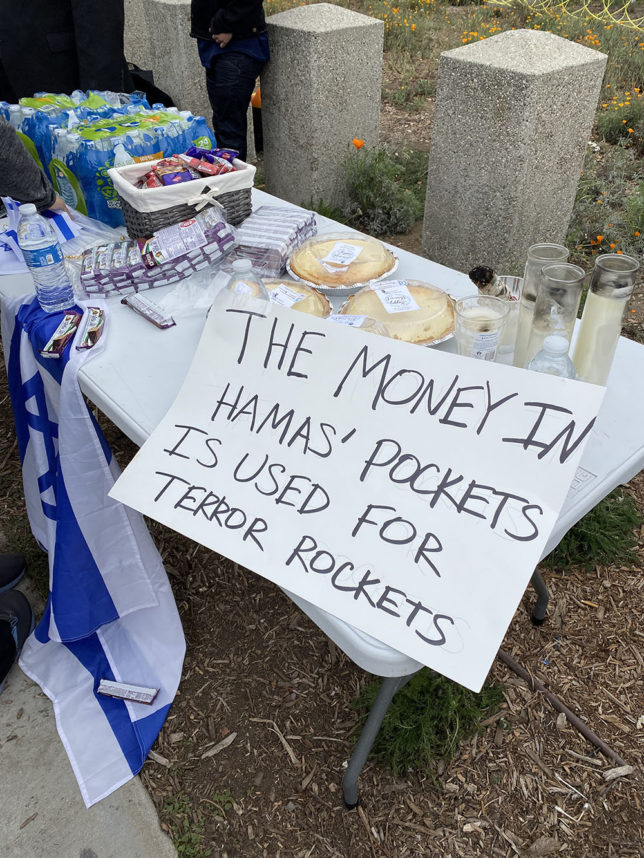
Around 700 people showed up to a pro-Israel rally in front of the Federal Building in Westwood on May 16, the day after a large pro-Palestinian protest at the same location.

The May 15 protest, “Nakba 73: Resistance Until Liberation,” featured more than 1,000 pro-Palestinian protesters, which included chants of “Free Palestine.” The May 16 “Rally for Israel” was essentially a response to the Nakba protest and a show of grassroots support for Israel.

Mati Geula Cohen, who helped organize the pro-Israel rally, told the Journal that the initial plan was to counterprotest the May 15 rally, but changed the rally to May 16 after talking to the police about it. “We were working on a counterprotest for like three days for [May 15] and we decided that we’d stop doing that because it would be too crazy because they had a ton of people,” Cohen said.

He called the May 15 pro-Palestinian protest “a bit wild” because “they shut down Wilshire Boulevard and had people flowing throughout Westwood and… you had them shouting ‘Intifada intifada’… they were saying things I would not expect them to be saying in a very public forum.”

Jonathan Bar-El, Israel’s Consul for Public Diplomacy in Los Angeles, told the Journal that he wished that the pro-Palestinian protesters would “come here and protest together with us against Hamas,” arguing that Hamas is responsible for the loss of life in the recent escalation between Israel and the Gaza Strip. “If [the pro-Palestinian protesters are] not condemning Hamas, they’re supporting Hamas.”

Photo by Aaron Bandler

The May 16 pro-Israel rally featured Israel supporters dancing, waving Israeli flags and holding signs stating, “Free Palestine from Hamas,” “Hamas, Stop Using Gaza As a Launching Pad” and “Israel Has a Right to Defend Itself.” A DJ also blared Israeli music throughout the rally.

“As an American and an Iranian Jewish refugee to this country, I feel it is incumbent upon me and others like us to reject the moral equivalence of what’s happening in Israel right now,” Sam Yebri, who is running for the Los Angeles City Council, told the Journal during the rally. “Hamas is responsible for starting these hostilities and the tragic deaths of both Israelis and Gazans, and it’s time for the world to reject the lies and misinformation that’s being shared widely as Israel tries to do what any government would do to defend its citizens from indiscriminate bombing and terrorism.”

Odin Pinhas Ozdil, the Los Angeles regional director for the Zionist youth organization Club Z, lauded pro-Israel teenagers involved with the organization for standing up for themselves and being able to talk about the Israeli-Palestinian conflict, although they’re still “being shut down.” “Today is a place for families to come out and show their support for Israel and to be proud of their heritage… just to be a part of that helps me deal with my emotions and what’s happening to my family in Israel,” he told the Journal during the rally.

Siamak Kordestani, West Coast director for the Friends of the European Leadership Network (ELNET), also told the Journal that the rally is “a message of support for peace between Israelis and Palestinians, and I’m proud to be here with my fellow Los Angeles Jews to put that out there, and I want the people of Israel to know that we’re with them during this very difficult time.” He added that he has family in Israel that had to take shelter in a stairway because they didn’t have bomb shelters. “This affects us in Israel, this affects in Europe, this affects us in the United States, and we’re here to show our solidarity and… support for the Jewish people and the state of Israel… we’re not anti-Palestinian, we’re pro-peace.”

Bar-El said that it was “warming to the heart to see all the support” for Israel at the rally. “Nothing is more important right now than to go outside, to go to the streets, to go on social media and to tell the truth and to advocate for the truth of Israel” as well as the Middle East.

Cohen said the turnout at the rally was around what they were expecting and is hoping that they will get an even bigger turnout for their next rally in the same location on May 23. “I would like to see people protesting in LA and around the world until Hamas is demilitarized or moved because until that happens, Palestinians and Israelis are going to be targeted by Hamas and Hamas militarism.”

This article has been updated.

Hundreds Show Support for Israel Amidst Pro-Palestinian Protests Read More »

Stephen Wise Temple Updates Resignation of Cantor Lam

On May 19, Stephen Wise Temple sent an email to its membership explaining that it recently received a letter from a former student of the Academy of Jewish Religion California (AJR) alleging that Cantor Nathan Lam, former cantor of the Temple who also served as dean of the AJR Cantorial Program, had engaged in a sexual relationship with the person filing the complaint. Cantor Lam had earlier this year informed the Temple of the relationship, after which he resigned his position from Stephen Wise and the AJR.

The Temple said it recently learned that some of the alleged actions occurred on the Temple campus and that it was unaware of that when Cantor Lam announced his retirement earlier this year. The AJR informed the Temple that it conducted an independent investigation which concluded that Cantor Lam’s relationship with the student violated its institutional standards. The AJR also said that had Cantor Lam not resigned, he would have been terminated.

The email also informed its congregants that as a result of this new information, it has retained independent counsel to conduct a “complete, fair and impartial” investigation of the allegations and “any other misconduct that may be disclosed or discovered in the process.” It said it will undertake a review of its policies and procedures related to such matters.

“Stephen Wise Temple has a zero-tolerance policy regarding behavior as described here,” the email, which was co-signed by Senior Rabbi Yoshi Zweiback, President Janine Kolodny and Executive Director/COO Sharon Spira-Cushnir, stated.  “We take allegations of misconduct by a member of our Clergy very seriously, and we are disheartened by any actions that violate the sacred trust placed in our institution and our leaders.”

The Temple asked recipients to reach out to Spira-Cushnir with any information related to this investigation or other situations.  The Temple leadership stated that they “are committed to ensuring that Stephen Wise Temple is an inclusive environment,” and that they have “an obligation to model how a sacred community responds to misconduct, regardless of when it occurred.”


Harvey Farr is a local community reporter for the Jewish Journal.

Stephen Wise Temple Updates Resignation of Cantor Lam Read More »

Daughter Explores Her Partisan Fighter Father’s Life in “And You Chose Life”

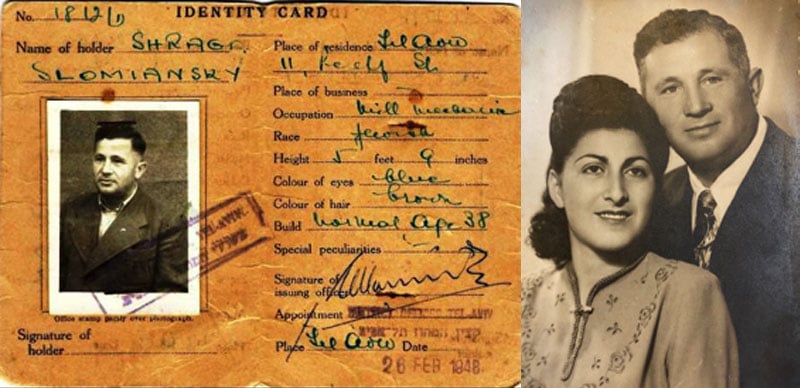
Shraga Dgani (Feivel Solomiansky) was a fighter. When the Germans invaded his town of Ilya, Belarus, during World War II and killed his wife and three-year old son, he hid in the snow for 24 hours to escape a similar fate. He then fled to the forest, where he joined the partisans. He eventually liberated 70 Jews in the Myadel ghetto in a daring rescue. For this, B’nai B’rith International awarded him posthumously with the Jewish Rescuer’s Citation award in 2019.

Although Dgani faced anti-Semitism from the Belarusian and Soviet partisans, as well as a difficult journey trying to get to Israel after the war, he eventually reached the Holy Land and rebuilt his life. His tale of courage and survival is the focus of a new documentary, “And You Chose Life,” which his daughter, Orna Shuman, produced.

“My vision was to create a memory in honor of the Jewish fighters during World War II based on my father’s story of survival,” said Shuman, who is based in Ra’anana, Israel.

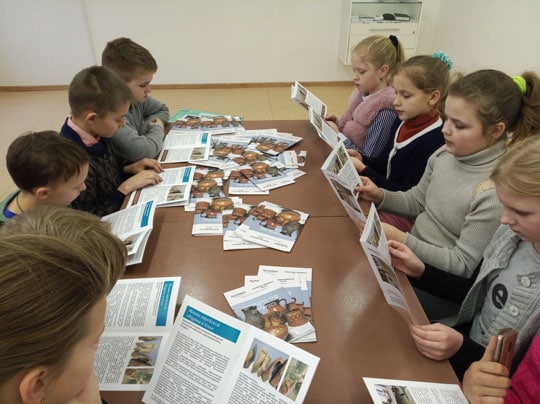
At the time of the German invasion, there were 1,500 Jews in Ilya; they had lived there since the seventeenth century. Today, there are no Jews left in the town. Shuman had visited her father’s birthplace a few times and was in close contact with the school there prior to making the film. Now, thanks to a historic memorial room Shuman designed, the schoolchildren learn about the Jewish history of their town and what happened.

Schoolchildren in Ilya. (Courtesy Orna Shuman)

“The documentary was a project [that involved an] intense six months and was launched in Israel on the eve of Memorial Day, on May 7, 2021,” she said. “My intention is to create more launching events around the world and eventually to send it to museums, schools and younger generations.”

The 30-minute film has three versions: Hebrew, English and Russian. It features rare archival footage, photographs and audio recordings of Dgani and interviews with people familiar with his story, including  Shuman; Zeev Rubin, the son of David Rubin, another partisan who escaped with Dgani and joined the partisans; and Tzipora Blizovski, the only survivor of the Myadel ghetto still living in Israel.

There are also interviews from Dr. Abraham Huli, former vice president of B’nai B’rith International; Dr. Tamar Ketko, the curator of Haim Herzog Museum of the Jewish Soldier in World War II; Zvi Kan-Tor, the general manager of the museum; and Dr. Howard Shuman, Dgani’s son in law, who served as a doctor in the Israeli Evacuation & Rescue Unit.

Dgani’s story of survival appears in the Chaim Herzog Museum of the Jewish Soldier in World War II in Israel, the Museum of Jewish History and Culture in Minsk, The Holocaust Museum in Minsk and Yad Vashem in Jerusalem.

Along with covering Dgani’s life during wartime, the film shows how he tried to escape to Israel on the La Negev ship. The British captured the ship and imprisoned Dgani in Cyprus with the other illegal immigrants for more than a year. Once Dgani finally got to Israel, he was drafted into the IDF and fought in the War of Independence and Operation Kadesh. He found love again when he met and married Geula, a widow with a small child. Together, they had a son, Elihu, and Orna. Sadly, Elihu died fighting in the Yom Kippur War.

Although parts of Dgani’s life were tragic, “And You Chose Life” ends on a positive note, showing Shuman’s and Dgani’s children and grandchildren, who are alive today because of his bravery.

Shuman said she hopes her film will help educate people about the resistance fighters and change their views about the position of Jews during the war. “I also hope it will fill them with the sense of pride [that they are] part of the Jewish nation.”

As for non-Jews, Shuman hopes her film “will bring another perspective about Jewish bravery in World War II and about the basic right for freedom for every nation, regardless of their belief, religion or gender.”

She also wants to ensure that kids today find out about what happened during the war so they will be inspired by their ancestors’ acts of courage.

“It is important to connect the young generation to these heroic stories,” Shuman said. “They must realize that they are the continuation of these heroic deeds. And in them, there is that spark of light. They too can continue to be fighters for freedom.”

Watch the trailer for “And You Chose Life” here.


Kylie Ora Lobell is a writer for the Jewish Journal of Los Angeles, The Forward, Tablet Magazine, Aish, and Chabad.org and the author of the first children’s book for the children of Jewish converts, “Jewish Just Like You.”

Daughter Explores Her Partisan Fighter Father’s Life in “And You Chose Life” Read More »

Table for Five: Naso

One verse, five voices. Edited by Salvador Litvak, the Accidental Talmudist

They shall confess the sin they committed, and make restitution for the principal amount of his guilt, add its fifth to it, and give it to the one against whom he was guilty. – Num. 5:7

Rabbi Ilana Grinblat
VP of Community Engagement, Board of Rabbis of Southern California

This verse contains a glaring grammatical incongruity. It starts in the plural: “They will confess their sin” but continues in the singular, “he will make restitution.”

In Iturei Hatorah, this explanation is given. “There are many people who are willing to confess to having taken money” (so that part of the verse is plural), but few are willing to pay back what they stole (so that part of the verse is singular).

This teaching reflects a deep truth.

Many are those who are willing to complain about a problem, but few are those who volunteer to work on resolving the issue. Our culture is infatuated with self-revelation, but this verse reminds us that telling one’s story alone is insufficient. After acknowledging the depth of a difficulty, the painful work of repair must begin.

As I write this column, I am about to attend the zoom of the funeral for a beloved mentor, Rabbi Morley Feinstein, of blessed memory, who served as rabbi of University Synagogue and president of the Board of Rabbis of Southern California. Rabbi Morley’s love of people was evident in his every word and action. He was a master of the arts of schmoozing, teaching, living, activism, mentorship, music, Torah, family, friendship, community, menschlekeit, and love. Few souls reach his level of righteousness. I only wish there were many more souls like him.

In a world where many give lip-service but few roll up their sleeves to do the work, let’s aspire to be among the few.


Dini Coopersmith
Torah Teacher, Women’s Trip Director, www.reconnectiontrips.com

The pasuk reads: “they shall confess their sin, and make restitution for the guilt of his head(principal amount)”. A chassidic commentary “megaleh amukot” quoted by the Shvilei Pinchas says the following: the Talmud (Shabbat 156a) explains the reason for a head covering (a yarmulka), that the Shechina, the Divine Presence rests above one’s head and in order to show respect/fear of God, one should cover one’s head. Furthermore, the Zohar says that the Shechina is also represented by the last letter “heh” of God’s name yud, heh, vav, heh. When someone sins, he causes the Shechina to depart from above his head, effectively damaging the “heh” from Hashem’s name. (When Adam sinned, Hashem approached him with the word: “Ayecha”, which can be read “Eich” how did you damage and remove the “heh” from above your head?)

Now we reach our verse: If one should sin, they should at first confess the sin, start the process of teshuva, make restitution for the guilt of his head, that he caused Hashem to remove His Divine Presence from his head. By doing teshuva, one “adds its fifth to it”, meaning brings back the “heh” which has the numerical value of 5, the divine Shechina to rest upon his head again, as it was before the sin.

This is also a way to read the word “teshuva”: tashuv heh. The heh shall return. When we repent, the Shechina returns to its rightful place above our heads.

May we always merit to feel the Shechina upon our heads!


Dr. David Porush
Student, teacher, and writer at davidporush.com

Americans jail far more of themselves per capita than any other nation in the world, including El Salvador, Rwanda and Cuba, so it’s hard for us to imagine a criminal justice system without jails. Yet Torah does just that. It prescribes all sorts of penalties – repayments and fines, Temple sacrifices, flogging, and four terrible forms of capital punishment. If you rob me, confess your guilt, pay me back, then add another 20% to quell my desire for revenge and as a token for heaven. But you’re not going to jail.

It’s not as if the Torah didn’t know about jails. It mandates detention for some but only before trial or eventual punishment. Joseph languishes for years in Pharaoh’s dungeon. But Torah envisions a system of justice founded on a radically new vision of human nature, one that newly freed slaves might especially appreciate. Jail takes away the most basic right to freedom while nurturing the evil instinct for revenge. Jailing the guilty, as much as we dress it up as constructive, is fundamentally punitive, retaliatory, and hopeless. If the body remains free in society, without coercion the soul can learn to choose good over evil.

The Lubavitcher Rebbe zt’l advocated for national prison reform in America impelled by this insight. Justice succeeds only when it has a chance to rehabilitate the individual soul. After all, what a waste of time to rot in jail like Joseph when we can work to bring this world closer to the next.


Rabbi Nicole Guzik
Sinai Temple

Many of us use the words guilt and shame interchangeably. They are actually very different concepts. Guilt is the emotion we feel when we perceive we have done something wrong. When we treat someone improperly. Guilt is something we put on ourselves.

Shame is the emotion we feel when someone else determines we have done something wrong and leads us to see a lesser version of ourselves. Shame often occurs when we are nudged into a corner, causing us to feel inadequate, powerless, small.

It is easy to see where the two concepts blur. And yet, sometimes, feeling guilty can be healthy. A guilty conscience may encourage someone to choose a wiser path. But a shameful persona encourages inward burrowing, dissociation from reality, the creation of thick walls that prevent discovery, revelation, understanding and growth.

Interestingly, the Torah in this context speaks about the self-realization of one’s mistakes. Recognizing the distancing a person causes between themselves, God, and others when they enact a wrongdoing. A distancing that is repaired when the person analyzes their behavior and knows they have tripped somewhere along the way. A conclusion that involves both soulful introspection and remorse.

But shaming someone into remorse is for naught. Teshuvah occurs when a person is enticed with “sin” and intentionally turns the other way. Shame is a negative psychological tool that allows one human to gain stature over another. For this rabbi, a guilty conscience wins every time.

Shame just doesn’t belong in this blessed world.


Rabbanit Alissa Thomas-Newborn
BCC / B’nai David-Judea Congregation

In the Hebrew, our verse begins in the plural (“they shall confess the sins they committed”), and then shifts midway into the singular (“and he shall make restitution…and he shall give”). Or HaChayim explains the intention behind this grammatical change. He teaches that the plural is used with regard to the confession of sin because everyone confessing sin is equal. How so? The confessors are coming from the same emotional place– shame, guilt, sorrow, fear– from a rupture in a relationship. But this is not the case with repairing and making restitution.

Each wrong is unique, each pain is specific and should not be dealt with in the plural, but rather in the singular. To me, a detail as small as this grammatical shift reveals immense sensitivity and moral clarity in our Torah and, in turn, what it means for words to be Divine.

To be in the shoes of the confessor is to be held accountable in the context of a forgiving and principled community. And to be in the shoes of the receiver is to be fully seen in concrete losses suffered as well as in the need for objective and subjective atonement.

What if we approached our interactions, verbal and nonverbal, with such attention to detail, with such simultaneous spiritual resolve and vulnerability? Jewish tradition requires partnership between words and deeds. Our text invites us to internalize both the plural and the singular in the process of repair– challenging us to bring our words to fruition.

Table for Five: Naso Read More »

Haifa Biotechnology Company is Finding Hope In Humans Cells And Israeli Minds

The seaside tech hub of Haifa is home to a biotechnology company where a microcosm of Israel’s diverse population works together on innovations that save lives, showing Israelis what they can achieve by looking beyond religious and ethnic divisions.

Pluristem Therapeutics is committed to treating seemingly incurable medical conditions while providing a model for cooperation between Jews and Arabs at a time when productive coexistence is vital for both Israel and its neighbors.

CEO & President Yaky Yanay is committed to providing hope for all Israelis. “Tell your friends on the phone, on the internet about your Jewish friend that you really love; tell your friends about the Arab friend who works with you on the team, that you live together, eat together and dream together,” Yanay recently told his employees.

He knows his team is a powerful example of the innate potential of their mission to help fellow humans with their most fundamental medical needs. Working with the building blocks of life at a cellular level has given the staff at Pluristem a perspective on life that many don’t get to see.

“How hard it is to build. Who like us at Pluristem knows how much trust and faith it takes to build,” Yanay reminded his talented team. “We people who build, work, nurture family, try to do good and love our country and our lives in different ways, in different languages. We have nowhere to go but to learn to live and love each other.”

Their effort to advance medical technology is poised to launch Pluristem on a lucrative path. According to one report, the global research cell therapy market is expected to reach $23 billion USD by 2028. 

The global research cell therapy market is expected to reach $23 billion USD by 2028.

Pluristem’s team of Arab, Christian, Druze and Jewish scientists and staff is currently celebrating their latest scientific breakthrough: a successful clinical study in hematology, using placental cells to help bone marrow regenerate blood cells. The cells are sourced from placentas donated by women who have just given birth. These cells have the potential to treat complex medical conditions by the secretion of therapeutic proteins in response to signals received from the patient’s body. These cell therapy product candidates are manufactured in Pluristem’s proprietary facility in a unique Placental Expanded (PLX) 3D bioreactor system.

Pluristem is at the forefront of this rapidly growing market, with its groundbreaking scientific innovations and focus on ethical coexistence. They are reimagining how medicine can be practiced in the twenty-first century by offering a successful model for others to replicate.

Not only are they fearless in their fight against disease, they are also intent on providing a reason for optimism in the midst of the Arab-Israeli conflict.

Haifa Biotechnology Company is Finding Hope In Humans Cells And Israeli Minds Read More »