fbpx

May 12, 2021

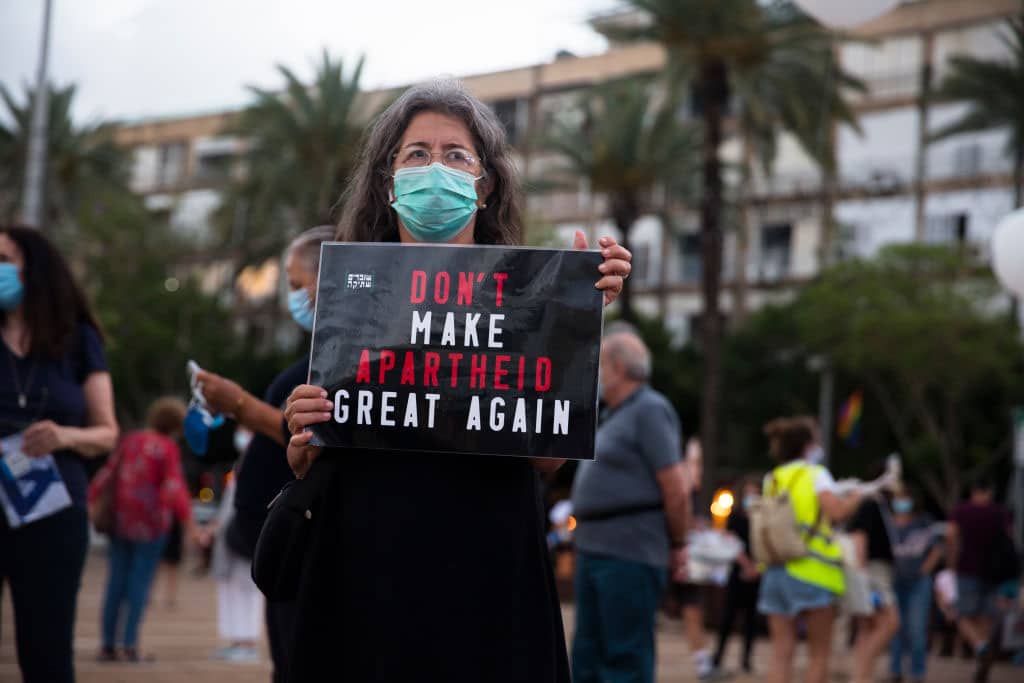
Israel Apartheid: The Big Black-and-White Lie

What is it about Jews and race? In the 1930s, Hitler and others on the racist right demonized European Jews for being racially inferior. Today, Human Rights Watch (HRW) and others on the anti-racist left demonize Israeli Jews for acting racially superior. But injecting “race” into discussions about Jews is perverse. It clarifies nothing — and inflames everything.

Admittedly, Jews are confusing: not just members of a religious community, not solely members of a nation. But the Jewish people are by no means one race nor share a racial mindset. And because you can join the Jewish people by converting into the Jewish religion, Jews became one of the least biologically-based, blood-driven people — and one of the most permeable nations racially, especially after millennia of wandering.

These nuances are missing from Human Rights Watch’s recently-released hatchet job against Israel, titled “A Threshold Crossed: Israeli Authorities and the Crimes of Apartheid and Persecution.” The report garnered headlines globally because, like the UN’s dastardly Durban conference, it accused the Jews — victims of the most racist crime in history, the Nazi genocide — of being racist themselves by practicing apartheid. The 213-page report mentions the “A-word” nearly 200 times. Nevertheless, it fails to make the case for Israel’s guilt on that score.

Apartheid and racism have specific meanings.  All nations draw boundaries, distinguishing between foreigners who are “out” and those who are “in” — whom democracies call citizens. That’s legitimate. Following the Nazi’s systematic war against the Jews from 1939 to 1945, racism was deemed particularly pernicious and deserving of the harshest penalties, including regime-change. Half a century later, white South Africa’s many race-based crimes against Blacks, “coloreds” and whites who dared dissent added “Apartheid” to the list of national crimes deserving of ostracism and ultimately elimination.

HRW, therefore, was wrong to claim that “The international community has over the years detached the term apartheid from its original South African context.” That term’s potency, and its sting to Israelis and Jews, stems from the South African analogy: From the oppressive, anti-democratic mechanisms required to enforce the crime to the regime’s well-deserved end.

While promising “detailed legal analysis” of the apartheid charge, HRW actually proved Israel’s innocence. According to the report, “The crime of apartheid under the Apartheid Convention and Rome Statute consists of three primary elements: an intent to maintain a system of domination by one racial group over another; systematic oppression by one racial group over another; and one or more inhumane acts, as defined, carried out on a widespread or systematic basis pursuant to those policies.”

Nowhere does HRW prove that either Israeli Jews or Palestinians constitute a “racial group.” HRW simply assumes that in a world obsessed with race, those who seem weak and popular are “Black” or “Brown” while those who seem strong and unpopular are “white.” Yet Israel has never promulgated a law, regulation or military decree that defines people by the color of their skin or their blood or any way that constitutes “racial groups.” Moreover, Israel is at peace with some Arabs and at war with others, while granting full citizenship to some Palestinians (meaning Israeli-Arabs who live in, say, the Galilee) but not to others who live in an independent Gaza or an autonomous Hebron.

It took many Israelis years to acknowledge Palestinian nationalism. Suddenly, that characterization is politically incorrect. HRW treated this national conflict as a racial conflict. The only possible motivation is to besmirch Israel while clumping Palestinian nationalism with other race-based causes.

HRW’s failure to make the racism case proves its unfair motives. The late Senator Daniel Patrick Moynihan (D-NY) called the “Zionism is Racism” libel the Big Red Lie — emphasizing how the Soviets took the old Nazi Big Lie that Jews are inferior to accuse them of acting superior. This apartheid libel is the Big Black-and-White Lie.

When you racialize everything, you explain nothing — and distort a lot. This new blood libel isn’t really about race and apartheid, it’s simply the slur-du-jour, deployed to make Israel look bad in the eyes of the world. To prop up their false charge, HRW’s authors had to treat all Palestinians as one, minimizing the differences between Israeli-Arabs, who are citizens in a democratic Israel, Gazans, who are subjected to the Hamas regime, and West Bank Palestinians, most of whose day-to-day lives are controlled by Mahmoud Abbas and the Palestinian Authority. Highlighting the absurdity is HRW’s invention of a fake group — “Palestinian Bedouins.” Most Bedouins would find that characterization not only inaccurate but also offensive.

This new blood libel isn’t really about race and apartheid, it’s simply the slur-du-jour.

By racializing this conflict, HRW sidesteps the awkward fact that its target audience — the other countries of the world — make many parallel distinctions, generating various criteria and special categories when drawing up immigration laws and citizenship processes, incentivizing different groups to live in different places or letting in some people and not others. More broadly, when others, from Durban anti-Racism conference attendees to some Black Lives Matter activists, treat this national conflict as racial, they distract from the broader fight against racism and diminish the particular dishonor genuine racists deserve.

While detailing all kinds of allegations against Israel — some admittedly disturbing — the report ignores the most basic context. The report never acknowledges that many Palestinians call regularly for Israel’s destruction, which encourages other Palestinians to target Israeli citizens at home and all Jews abroad. Overlooking those terrifying facts makes every action Israel takes in self-defense seem pointless and spiteful, which is how racists act. A more nuanced analysis would have acknowledged that the conflict involves many different actors, multiple forces and is most often, from the Israeli perspective, about a beleaguered democracy defending itself and managing impossible dilemmas, not a bunch of racists seeking to torture their neighbors.

Like any country, Israel makes mistakes. Reasonable critics could use many different words to denounce Israel. But accusing Israel of racism and apartheid fails the anti-Semitic smell test. Jews have long proved to be a most convenient target, making anti-Semitism the most plastic of hatreds — adaptable but artificial and often toxic. During the Middle Ages, in Christian and Muslim worlds obsessed with religion, Jews were the ultimate heretics. In the nineteenth century, in a Europe obsessed with the class struggle, Jews were the worst Marxists to the capitalists and the worst capitalists to the Marxists. Today, in a world obsessed with race, it’s convenient to make Jews “white” and “racist.” Ultimately, however, these charges say little about Jews (the accused) but much about the Jew-haters (the accusers), even when some of those flinging the Black-and-White blood libel are themselves Jewish.


Gil Troy is a Distinguished Scholar of North American History at McGill University, and the author of nine books on American History and three books on Zionism. His book, “Never Alone: Prison, Politics and My People,” co-authored with Natan Sharansky, was just published by PublicAffairs of Hachette.    

Israel Apartheid: The Big Black-and-White Lie Read More »

Not Taking Yes Or No As An Answer

Not taking yes as answer, Naomi
was teaching Ruth how to be Jewish. Jews
with strangers feel great solidarity,
but aren’t enthusiastic when they choose
to join a people who were so unwilling
to accept the Torah that God had
to threaten that Mount Sinai would be killing
them all if they refused. They were not glad
when offered Ten Commandments. “Far too many!”
they must have thought, but didn’t have a choice.


Each one of them came with a catch, catchpenny,
but they were not allowed by God to voice
dissent. Why then should strangers want to join
the Jews, considering that even those
genetically connected to Abe’s groin
were threatened by the mountain He’d bulldoze
on them unless they all converted? He
demanded Jews’ conversion, treating “No”’ as
no less acceptable than Ruth, who thus would be,
though coming from left field, the wife of Boaz,
and ancestress of David who acquired
Jerusalem, establishing a dyn-
asty which till today has not yet sired
a messiah promised from his line.


God’s refusal to take no for an answer when offering the Torah to the Israelites can be read in the story recorded in the Babylonian Talmud, Sabbath 88a. God threatened to cover them with Mount Sinai if they refused.


Gershon Hepner is a poet who has written over 25,000 poems on subjects ranging from music to literature, politics to Torah. He grew up in England and moved to Los Angeles in 1976.  Using his varied interests and experiences, he has authored dozens of papers in medical and academic journals, and authored “Legal Friction: Law, Narrative, and Identity Politics in Biblical Israel.” He can be reached at gershonhepner@gmail.com.

Not Taking Yes Or No As An Answer Read More »

Skirball Cultural Center Names Three Executives to Key Roles

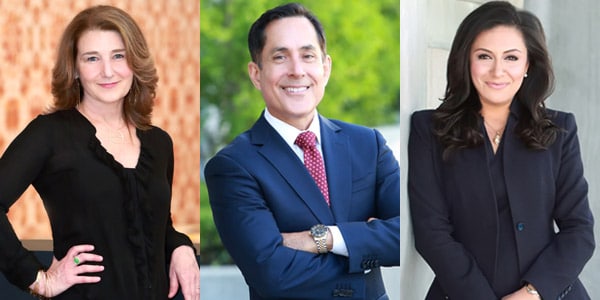
LOS ANGELES, CA—The Skirball Cultural Center announced that Sheri Bernstein has been named museum director starting July 21, 2021. Bernstein formerly held the position of vice president of education and visitor experience and served as project director of the children’s and family destination Noah’s Ark at the Skirball. She succeeds Robert Kirschner, who served as director since 2008.

The Skirball also announced that Reuben J. Sanchez has been named chief financial officer. He will be responsible for developing and leading financial and investment management strategies for the center. Most recently, Sanchez served as regional vice president of finance at Live Nation (North America Concerts Division).

Additionally, Pamela Kohanchi has been named senior vice president, general counsel and secretary. She will  oversee and advance the institution’s legal and governance framework, government relations and talent and culture. Kohanchi joins the Skirball after twelve years at the Los Angeles County Museum of Art (LACMA), where she was deputy general counsel. Sanchez and Kohanchi assumed their Skirball positions on April 26.

“As we celebrate our twenty-fifth anniversary and look to the challenges and opportunities before us, I am thrilled to welcome [these] brilliant talents to leadership roles focused on deepening our commitment to the community,” Jessie Kornberg, Skirball president and CEO, said.

The Skirball Cultural Center is a place guided by the Jewish tradition of welcoming the stranger and the American democratic ideals of freedom and equality. They welcome people of all communities and generations to participate in cultural experiences that celebrate discovery and hope, foster human connections and build a more just society.


Harvey Farr is a local community reporter for the Jewish Journal.

Skirball Cultural Center Names Three Executives to Key Roles Read More »

Blundstones, Bombs and the Reality of a New Olah

I remember when I got my first pair of Blundstones. I was overcharged by the salesman at Mamilla Mall, but the extra hundred shekels seemed worth it. I couldn’t wait to have them. My friends congratulated me on the boots, as now I was “a real Israeli” — and I believed them.

Being an olah is a difficult thing. I was born to Israeli parents and my childhood was filled with El Al flights to visit Sabba and Safta, but I’m still woefully American. My Hebrew is broken, and I have yet to get used to waiting for hot water in order to take a shower. The shoes felt like a step toward my complete initiation as an Israeli citizen.

The past nine months in Israel have been filled with these small steps. Hebrew conversations with my family, learning to navigate the eged buses, holidays in the Old City. I felt like I was really starting to internalize the culture. I didn’t realize how much I was missing.

My Aliyah advisor called me while I was on the bus into town. I asked her to call me back tomorrow because I was meeting up with friends for Yom Yerushalaim. We were there to have conversations with passers-by about the holiday and the situation at Shimon HaTzadik/Sheikh Jarrah. We met up by the steps to Mamilla and watched as hundreds of Jews sang “Yerushalaim Shel Zahav” and waved the Israeli flag. My heart swelled with joy at the sight. It felt like such a blessing to be surrounded by visibly observant Jews who were able to sing proudly about their holy city and its reunification. I thought about every group that had tried to destroy us and of the resilience of the Jewish people. By all logic, we should have died out thousands of years ago, yet we have achieved the impossible. Against all odds, we survived and returned home.

My friends and I then went to the grassy area outside Damascus Gate and started our conversations. It was interesting to listen to different takes on the situation. I spoke a lot with a leftist Israeli who said that the Yom Yerushalaim celebrations were provocative. She said we must be better at not setting off our Arab neighbors. We went back and forth about it for over an hour. And then…

It didn’t feel real at first. It was a sound I’d only heard coming from my phone’s speakers. I thought it was a sound that only existed in the coastal cities of Ashkelon and Ashdod. I didn’t know what to think. I turned to one of my friends to ask what was going on and saw that he started running. I chased after him. We all did.

It was loud. There was no bomb shelter. We’re huddled outside against a short stone wall. Someone screamed at me to get on the ground and cover my head. I couldn’t breathe. I couldn’t think. I was never prepared for this. I looked at the sky. I assured myself that I was looking at birds, not rockets. Birds, not rockets. Birds. 

It suddenly occurred to me — maybe this is how Moshiach comes. Perhaps they’ll hit the Temple Mount. Either way, it felt like the end of the world as we know it. At least the end of the world as I know it.

It felt like the end of the world as we know it.

Inside I was screaming at myself to pray. Say the Shema! Say it! But if I said it, is that accepting death? I can’t die. My mom would kill me.

I was shaking. I still couldn’t breathe. Pray, damn it! I could only mumble two words: “Hashem Yishmor,” G-d, protect us. My friends were telling me it’s okay, but how can they know? The woman I was just debating with was now my sister, calming me down, helping me through my first siren. And just like that, the walls between us fell down.

Megillah 14a of the Talmud states that the act of Achashverosh removing his ring (thus giving Haman the power to issue a decree to kill every Jew) was more effective than all forty-eight prophets and seven prophetesses of Israel at unifying the Jewish people. It was only when faced with their destruction that they could come together again as they did at Mount Sinai. Even today, as Israel struggles to appoint a government, our Jewish leaders only divide us. Hamas is able to succeed where we fail. The siren, like a Heavenly Voice, calls out to us to come together.

The past month has been almost too much to process. The wounds of the tragedy at Meron are still fresh. The loss of 45 tzadikim on such a holy day still seems unfathomable. And now, just as the mourners have ended their shivas, we are under attack. The threat of war looms over us. Israel is different all of a sudden. Being Israeli is suddenly real, palpable. Brown boots seem so silly now. My initiation came at a much greater loss than the extra hundred shekels.

The prophets compare the times before Moshiach to the labor of a woman about to give birth. It cannot be coincidence that my first real contraction came after almost exactly nine months of living here. At least that’s what I tell myself. Trust in G-d. Trust in His plan. Try to make sense out of what seems to be senseless.

I think about that woman. In a split second we went from rivals on opposite sides of an argument to family. She hugged me after it was over. I hugged her back. I wish that we didn’t need Hamas rockets to come together. I wish it was more simple to love our neighbors. I pray we all remember the camaraderie that tragedies force to feel. I pray this is the last wakeup call we need to realize that we are all brothers and sisters.

Shavuot is almost here, the anniversary of the giving of Torah on Mount Sinai when we first see every Jew as one man with one heart. Perhaps Meron and Hamas were meant to bring us back to that state. Please, G-d, let us not need any more reminders and may Jerusalem, Israel and the whole world be blessed with peace soon and in our days.


Hila Oz moved to Israel nine months ago from Los Angeles after graduating from UCLA, and she’s currently an activist and educator. Follow on her Twitter @toteskosh.

Blundstones, Bombs and the Reality of a New Olah Read More »

Israel Under Fire: Biden’s Test

Here are three things to know about the current situation in Israel:

  1. Israel doesn’t want to cease fire

Not yet. Not when Hamas can still claim that it has won this round. Think what you want about the root causes of the disease. Think what you want about the connection, real or made up, of Hamas’ decision to escalate and Israel’s policies in East Jerusalem. In the Middle East perceptions count, and Israel cannot afford to be seen as weak, not because of Hamas (Hamas is not a real threat) but because of Iran and its allies.

In other words, Israel must make it clear to all those who entertain violent ideas that the price they will pay for their aggression is going to be high. Those who preach to Israel a “proportional response” do not understand this region’s game of power. If the response is proportional, Hamas has an incentive to relaunch a violent attack — it gains as much as it loses. If it is disproportional, Hamas would have to reconsider next time. And have no doubt: There will be next time.

  1. Gaza isn’t necessarily the main story

The world is more focused on Gaza and the rockets flying, but many Israelis are more concerned about the violence in mixed Arab-Jewish cities such as Lydia and Acre. In the last couple of days, an Arab mob threatened, attacked, burned and rioted in Lydia, to the point that the city was put under emergency rule.

Why is this more concerning than Gaza? Because Gaza is there — an outside power, without much power — and Israel is here. Unlike Gazans, to which Israel said a sort-of goodbye and good-luck when it withdrew from the Gaza Strip in 2005, Arab Israelis are fellow citizens. They are here, running hospitals, building houses, writing software, teaching at universities.

It could take a week or two to set the clock of Jewish-Arab relations a few years back.

The political and social honeymoon of recent months between Jewish and Arab Israelis — the novel situation that enables mainstream and even right-wing parties to consider a coalition with Arab parties — is fragile. It took the last two years to inch toward possible cooperation. It could take a week or two to set the clock of Jewish-Arab relations a few years back.

  1. Biden eyed with suspicion

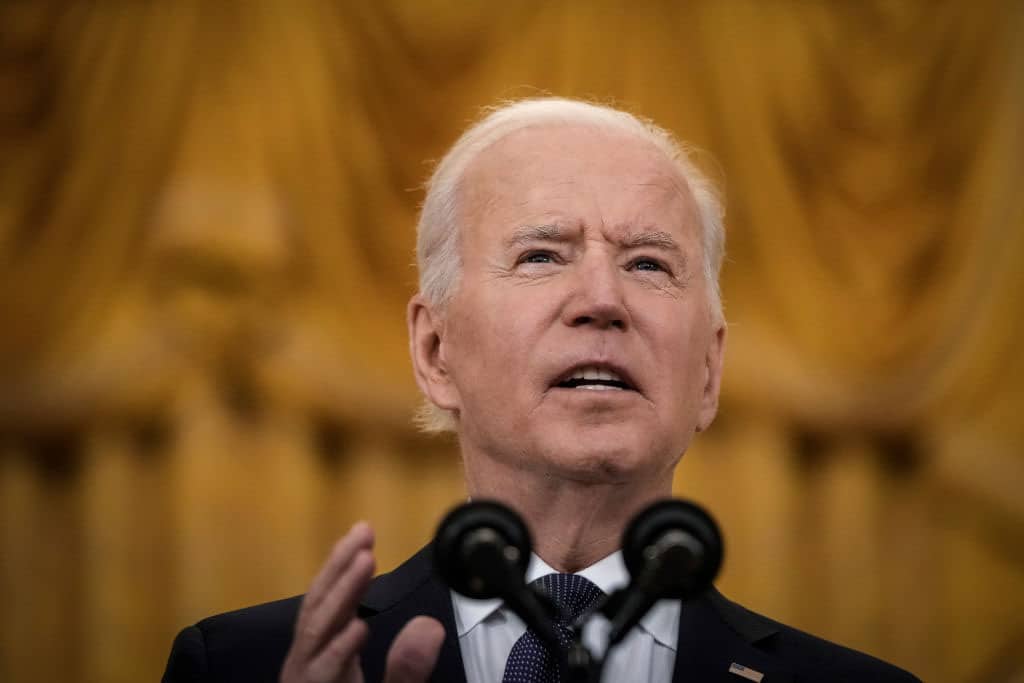
The Gaza eruption is the first test of Israel’s relations with the new U.S. administration, and many Israelis (I’d say more than half) are already feeling that the Biden team is not exactly what they have in mind when they think about a friendly administration.

For example, some Democratic activists are pointing a finger at Israel — as if its actions in Jerusalem are the detonator that prompted escalation. Most Israelis do not think that’s the case. Not all of them would be overly sympathetic to the eviction of families from Sheik Jarrah (although the eviction is mandated by the court who ruled against the Palestinian residents).

And yet, the Biden administration does not see a connection between Hamas firing rockets at Israel in response to an internal political battle. (Could you imagine Mexico bombing the United States when it feels that a U.S. court was unjust to claims of Mexican-Americans?)

The administration then continues with the call for restraint by Israel and Hamas, as if both parties share the responsibility for the escalation. “Israel does have a right to defend itself,” State Department spokesman Ned Price stated (the obvious). But after four years of Donald Trump, in which the United States deferred to Israeli policy, the Biden team seems more willing to consider intervention, which usually means pressure on Israel, the stronger party, to tame its response to belligerent attacks.

“Under Biden,” Trump tweeted, “the world is getting more violent and more unstable… and lack of support for Israel is leading to new attacks on our allies.” You might think that Trump was the worst U.S. president ever — but even the worst president ever could be right sometimes. Yes, Hamas is testing the waters. Yes, Hamas hopes that under Biden, Israel would have to be more careful. Yes, Biden’s hesitant support contributes to the notion that maybe now is the right time to be violent.


Shmuel Rosner is an Israeli columnist, editor, and researcher. He is the editor of the research and data-journalism website themadad.com and is the political editor of the Jewish Journal.

Israel Under Fire: Biden’s Test Read More »

Table for Five: Special Shavuot Edition

One verse, five voices. Edited by Salvador Litvak, the Accidental Talmudist

Wherever you go, I will go, and wherever you lodge, I will lodge; your people shall be my people and your God my God. -Ruth 1:16


Sara Brudoley
Torah Teacher and Lecturer

Rabbi Zeira said, “The scroll of Ruth has neither impurity nor purity, neither prohibition nor permission. And why was it written? To teach you the good rewards of those who perform acts of lovingkindness.” We do, however, learn several laws and commandments from this scroll: laws of converts, laws of gifts to the poor, laws of modesty, laws of property, and more, all from Ruth and her refined actions, and you say, “Why was this scroll written?”

What the sages meant is that if Ruth did not possess a unique character trait, one that everyone needed and that all should learn from her, then all other the good traits you find in her would not have existed. Ruth had a trait that was missing in Israel during that time. The trait of chesed, lovingkindness. Ruth accepts the yoke of mitzvot out of her loyalty to her husband, her mother-in law and HaShem, and she does not ignore the suffering that awaits her.

Ruth’s brave and sensitive behavior towards her mother-in law is a model for accepting responsibility, love and loyalty towards HaShem. Ruth demonstrates how a person can ignore his ego for the sake of a relationship, even when it’s not logical, and against his own interest. She teaches us how to cling to HaShem. The reward for charitable, philanthropic acts is “Kingship.” Ruth the convert became the “Mother of the Monarchy” – the matriarchal ancestor of of King David and Mashiach.


Nina Litvak
accidentaltalmudist.org

Every year on Shavuot when I read this passage, I get teary-eyed. Ruth is the Biblical character with whom I most identify on a personal level. Unlike Ruth, I was born to Jewish parents, but my family was thoroughly assimilated and I came to Jewish observance as an adult like Ruth. I am the first woman to light Shabbat candles in my family in almost 100 years. A convert is known as a “Jew by Choice,” and a returnee to Judaism is also a kind of Jew by choice. Embarking on a life guided by Torah meant rejecting the secular values that have guided my family for a century. Ruth too rejected the values with which she was raised.

Being a Jew by Choice is not an easy path. Ruth traded the elevated status of a Moabite princess for a lowly existence as a pauper dependent on charity. My status as an educated, worldly adult means nothing when I can’t help a second grader with her Hebrew homework. Why did Ruth and I turn off the path we were on and follow the road less traveled? Because it’s the road we were meant to be on all along. The path of three millennia is longer and deeper than the path of a century. Ruth pleaded with Naomi to let her join the Jewish people because she already felt part of the Jewish people. Ruth said “Your God shall be my God” because she knew that Hashem was her God all along.


David Brandes
Writer, producer

Why has Ruth’s statement to Naomi endured through the ages? To be sure, it is a stunning declaration of love and loyalty, reassuring Naomi that she will not abandon her spiritually, physically or tribally. As Rabbi Levi Meier (z”l) writes in ‘Second Chances,’ his profound book on Ruth, “Ruth rises to the challenge of being there for Naomi during Naomi’s most difficult hours. Specifically, because ‘God’s hand is directed against Naomi’, Ruth’s hand ‘reaches out’ to Naomi. By helping Naomi, she is also extending her hand out to God.”

Remember, Naomi has lost everything – her husband, her sons, her money. This is abandonment in its rawest incarnation. Naomi is depressed and hopeless. Who wouldn’t be? Ruth’s genius is that she realizes that Naomi doesn’t need cheering up or empty promises of a better tomorrow. She needs to be seen and she needs to know that her tragic period of abandonment is over. She, Ruth, will stay with her in every way. She gives Naomi hope and infuses her life with a sense of optimism for the future. As Rabbi Meier puts it, “In staying with Naomi, Ruth shows a nobility of character far greater than the nobility she was born into.”

Years ago, I visited patients at Cedars-Sinai for, and sometimes with, Rabbi Meier. It was a revelation. With deep compassion behind the simple phrase, “I am here with you,” Levi gave patients strength and optimism to face the dark unknown. May his memory be a blessing.


Rabbi Elchanan Shoff
Beis Knesses of Los Angeles

Ruth chose to link herself with the Jewish community and our destiny. When a person becomes part of the Jewish people, he or she leaves one world and enters a foreign one. Our community thus becomes extremely responsible to embrace them.

The Torah constantly repeats the command to “love the convert.” But when Ruth goes on to say, “only death will separate me and you,” the Midrash Rabbah records that Naomi replied, “indeed, death will separate us, and each person will be responsible for her own actions. So be charitable and do good deeds of your own. That is all that you’ll have!” This Midrash then goes on to express how no person can aid another person in the world to come. The great Rabbi Yehuda HaNasi assured someone “I will take care of you in the next world,” but he was corrected by a colleague’s wife, “No person can help another in the next world!”

Have you ever met a person disillusioned after they have chosen to join the Jewish community? “I expected more. More honesty, more embracing.” Indeed let’s take this to heart. We can improve. But what brought our leader King David out of the great Ruth was the lesson that she embodied. The community can’t do it for me. I must do this myself. It’s my personal responsibility to be great; at some point, my actions will be all that I have. As we receive the Torah as a nation, with a united heart, don’t forget: take responsibility for yourself.


Yehudit Garmaise
Reporter and Freelance Writer

“Ruth happened upon the field that belonged to Boaz,” we read in Megillat Ruth.

But we know from Parshas Vayikra that “vayikar” does not mean by chance, but rather, Hashem uses this word when He engineers the places we find ourselves.

Ruth had faith that everything she was experiencing was part of a much greater plan. For this reason, she was sure of her path. Ruth was confident and comfortable with herself.

When I wandered into Meah Shearim many years ago, for instance, I knew I had walked through a portal and climbed a ladder to an infinite, starry night sky that I had only previously intuited in my dreams.

Several months into the pandemic, I started writing remotely for a Boro Park news website. After a year of lockdown, the day I got my first vaccination shot, I bought a ticket to work in the Brooklyn office for a week that ended with a friend’s joyous wedding.

Although thrilled to be out and about, and in a such a beautiful, Chassidish neighborhood, I felt slightly unsure. At one point, I said something that conveyed insecurity about not being sufficiently “heimish.”

A colleague bluntly responded: Brooklyn-style, “Don’t have a complex.”

“Be really proud and joyful in being a baalas teshuva (returnee to observant Judaism). Hashem put us each on our journey, from the day we were born: and before. And He continues to guide us at every moment. Let’s all be comfortable in our own skin and feel joy about what we choose.”

Table for Five: Special Shavuot Edition Read More »

The Book of Ruth: A Zionist Story For Shavuot

The duality of Shavuot is undeniable: On the one hand is its status as an agricultural festival, marking the wheat/barley harvest and the celebration of the precociousness of the land of Israel, and on the other hand is its historic commemoration of the most remarkable event in the origin story of the Jewish People — the Revelation of the Torah at Mount Sinai.

Passover and Shavuot are connected by family ties — Nachshon, a hero of the Seventh Day of Passover, and Ruth’s husband Boaz, who we read about on Shavuot in the Book Of Ruth, are grandfather and grandson. As the ancient Midrash on Exodus revealed, before G-d split the Sea, saved the Jews and drowned the Egyptian soldiers, Nachshon showed his faith that G-d would keep His word by walking into the Sea up to his nose. In the book of Ruth, which takes place during the Era of the Judges, Boaz led the Jewish people through a time of famine and related unrest, which ended when he met and married the widow Ruth.

The duality of Shavuot is prominent in the Book of Ruth. The story of Ruth and Boaz occurs during the harvest, and Ruth’s decision to accept the Torah as law parallels what the Jewish People did at Sinai on the first Shavuot in our history.

What is more, Passover and Shavuot are connected not only by, but through Jerusalem. Shavuot is one of the three pilgrimage holidays named in the Torah, where the Jewish People are directed to travel to Jerusalem and offer sacrifices in the one location on Earth where G-d decreed that sacrifices be made to Him — the Holy Temple. And who built that Holy Temple? Boaz’s great-great-grandson, King Solomon (Shlomo HaMelech). Solomon, the direct male descendent of Nachshon and the son of King David.

Unfortunately, the rich meaning of Shavuot has degenerated over time to cheesecake and confirmations, unseen even by those who more traditionally observe the Yom Tov. Of course, the Shavuot tradition of studying Torah all night long is a good and a beautiful thing. But there is much more to Shavuot for us in our time.

In order to properly internalize the full context of Shavuot, we must look at what made the men of Nachshon’s and Boaz’s family so distinctive. The most distinguishing trait of this family was the ability to show complete disregard for their own individual wellbeing and step forward into the face of danger.

Consider Judah, the son of Jacob, who stepped forward when no one else would and saved the life of his brother, Joseph, when his other brothers planned to murder him. Nachshon, Judah’s descendent and a prince of his tribe, stepped forward when no one else would and entered the Red Sea, demonstrating a genuine faith that we still recall today. Boaz stepped forward when no one else would and took responsibility for Ruth, a convert from Moab, when it was known that Jewish women were prohibited from marrying Moabite men. David, while still a boy, stepped forward when no one else would, and faced Goliath.

And in the Book of Ruth, we find out how other members of this family who did not step forward suffered. Ploni Almoni, Boaz’s kinsman, who would not take responsibility for Ruth, loses his place in Jewish history, and we do not even know his name from the Book of Ruth. (“Ploni Almoni” is Biblical Hebrew jargon for “so and so.”)

Ruth’s first father-in-law, Elimelech, fares far worse than Ploni Almoni. When a drought occurred in Israel, Elimelech took his wife, Naomi, and his sons and chose exile rather than providing our people with leadership. He never returned to Israel. Elimelech and his sons died in Moab, and no future generations would come from their family line.

The lessons are clear. First: Those who are blessed with the talent and fortitude to do what is necessary to help a fellow Jew must heed the call. And second: The Land of Israel is precious and must be treasured. This is not just a Zionist belief — it’s a Jewish imperative. This is Shavuot. This is Judaism. This is Zionism.

Those who are blessed with the talent and fortitude to do what is necessary to help a fellow Jew must heed the call.

When Theodor Herzl stepped forward and initiated the Zionist movement, he heard the call.

When Ze’ev Jabotinsky stepped forward and proclaimed it was time to leave behind the character of the ghetto Jew and showed young Jews it was far better to take a stand, he heard the call.

When the resistance fighters in the Warsaw Ghetto stepped forward to battle the Nazis, they heard the call.

When the soldiers of the various Zionist undergrounds and militias stepped forward to defend the new Jewish State in 1948, they heard the call.

When the Refuseniks and the Jewish activists of the 1960s, 1970s and 1980s stepped forward against the totalitarian Soviet Union, they heard the call.

When Israeli intelligence operatives in the 1980s went into the heart of Africa and covertly evacuated Ethiopian Jewish refugees to Israel, they heard the call.

This is Zionism. This is Judaism. This is the love of a brother being responsible for a brother. This is beautiful and it is eternal. Let us be worthy of listening for today’s calls and step forward.

This is what Shavuot demands of us. And the rewards are far sweeter than cheesecake.


Moshe Phillips is national director of Herut North America’s U.S. division. Herut is an international movement for Zionist pride and education and its U.S. website is https://herutna.org/

The Book of Ruth: A Zionist Story For Shavuot Read More »

Plan B and the Second Tablets

Have you ever experienced a situation where things did not go according plan? At first, we might experience disappointment and sadness, but after some time passes, we may feel blessed to be on the unexpected adventure of Plan B. The holiday of Shavuot is one such celebration when a sequence of events did not unfold according to plan. In fact, it was a total and complete deviation from what was “supposed” to occur.

This coming Sunday, May 16th marks the anniversary of when our ancestors were given the Torah at Mount Sinai over 3,000 years ago. Upon arriving at the Sinai desert, Moshe Rabbeinu ascended Mount Sinai. God told Moshe that if Bnei Yisrael obeys Him and keeps his brit, we will be to Him a “treasured possession among all the peoples,” and a “kingdom of priests” and a holy nation (Shemot, 19:5-6).

Upon hearing what God had told Moshe, the people unanimously accepted the Torah and answered, “Naaseh Venishma,” — “everything God has said we will do.” After three days of preparation, preceded by smoke, thunder, lightning, quaking, fire and a loud Shofar blast, God proclaimed the 10 commandments. Moshe ascended the mountain again, this time for 40 days and 40 nights, to receive the luchot, the tablets, containing the ten commandments and the entire Torah, which he then imparted to the Jewish people.

During this time on the mountain, God taught Moshe the entire Torah and gave Moshe the luchot, which were “written with the finger of God” (Shmos 31:18). As Moshe prepared to descend the mountain, God informed him that the people built and were worshipping a Golden Calf. The pesukim relate that Moshe descended the mountain carrying the luchot, and upon seeing the idol worship, threw them to the ground, breaking them.

The sin of Golden Calf was not part of God’s plan when He redeemed us from slavery in Egypt, and it set a new course of history into motion. Following the sin of the Golden Calf, Moshe begs for God’s forgiveness took place. Eventually, God forgives us and Moshe hews a new set of luchot to replace the original broken set.

The Bais Halevi, in drush 18 in his Sefer on Torah, explores the intriguing variations between the first luchot and the second luchot and the impact of the Golden Calf on our nation. Torah — specifically the Written Torah and the Oral Torah, would be forever changed to accommodate the needs of our people, who were now routed to a new and different path of galus, or future exile. Rav Solovieitchik analyzes the striking differences between the luchot; while the first set of luchot were “God’s work” (Shemos 32:16), the second set of luchot were written by Moshe after God commanded, “Inscribe these words for yourself” (Shemos 34:27). On the first set of luchot, the words were “inscribed from both their sides” (Shemos 32:15) on the second luchot, the commandments were only inscribed on one side. The words on the first set were engraved, while the second set was not.

The Yalkut on Parsahat Ki Tisa elucidates how Moshe could have “flung” the luchot upon observing Bnei Yisrael engaging in idol worship. The Medrash shares that when Moshe descended the mountain and observed the sin, the letters flew off the tablets, causing the luchot to become heavy and fall out of Moshe’s hands and break. The Bais Halevi explains that once the sin of the Golden Calf occurred, future exile was decreed on our people. It was known that the other nations would one day rule over us and attempt to take the Torah from us. Therefore, once the sin had been committed and exile was decreed, the first tablets broke and God decided to not give us all of the Torah in written word. Instead, God kept parts of the Torah oral, so that we would be protected and distinguished from the other nations during exile.

This interpretation is further supported by the fact that ten commandments were engraved on the first tablets, or charut, which is translated as “free.” At the time the first tablets were given, prior to the sin, all of Torah could have been written down, and we would have been free from exile. When the letters flew off the luchot, according to the Medrash, the luchot became heavy because the letters contained the Oral Torah. The Oral Torah is critical to understanding, observing and fulfilling the Written Torah. Without it, the Torah can’t be “held” or observed.

The Oral Torah is critical to understanding, observing and fulfilling the Written Torah.

The Bais Halevi explains the significance of another intriguing difference between the first and second luchot: Only by the second tablets is Moshe’s skin and face described as being “radiant” (Shemos 34:35). Once it became a reality that the Oral Torah was not to be written on the second luchot, Moshe himself became the klaf, or parchment that held all of Oral Torah following the sin of the Golden Calf, to prevent shichecha, or forgetfulness, of the Oral Torah. This explains why the Pesukim state that Moshe’s skin and face were radiant. God’s change of plan in giving us the Torah, from Written to Oral, enables us to reach an even higher level of spiritual achievement and closeness to God.

When we left Egypt, we were saved not due to our own merit, but because God Himself extricated and freed us. Because it was a redemption that we did not work for or earn, we had not grown enough to be able to sustain being free. We quickly fell from these heights with the sin of the Golden Calf. Once the sin occurred, our future path was forever altered. With the second set of luchot, toil in learning was introduced. The first luchot, because it included the Oral Torah, ensured there was no forgetfulness and distraction in learning Torah. But the second set required us to add extra effort daily so as not to forget Torah. Torah learning after the sin of the Golden Calf requires daily exertion, ameilus v’yagea yomam v’laila. It is through this constant learning of Torah that we are able to connect and grow closer to God.

At times, we may find ourselves in situations where life has not gone according to plan. But with the understanding gained from studying the second luchot, we can see that pursuing new, unexpected paths leads us to achieve even loftier heights and provides for a more rewarding journey. It is times like these that give us the greatest opportunities for growth. That is the lesson of the second luchot: we can take the very things that were once perceived as setbacks and harness them to embark on new untried paths that bring us closer to God and to living the life we wish for ourselves. With the insights learned from second luchot, we discover that Plan B really is more desirable than Plan A and paves the way for even greater fulfillment.


Alanna Apfel is the founder and patient advocate at AA Insurance Advocacy, which helps therapy patients, individuals, couples, and children save thousands of dollars annually on their out of network mental health therapy bills.

Plan B and the Second Tablets Read More »