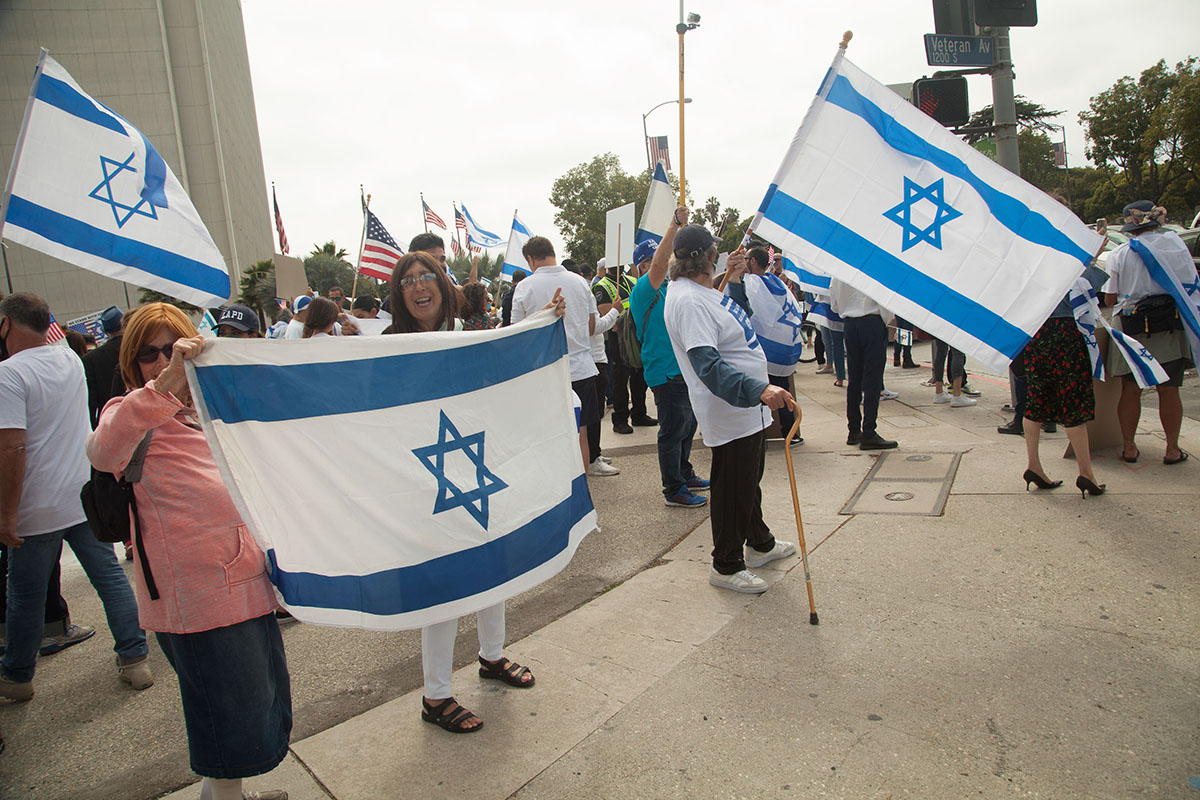
More than 600 pro-Israel demonstrators gathered Wednesday at the Federal Building in Los Angeles to show their support for Israel in the midst of the worst Israel-Palestinian confrontation since 2014. The rally was one of 18 held simultaneously across the United States.
The rally drew supporters from all parts of Southern California who gathered to show their support for Israel and voice concern for what many see as Israel under siege from Hamas based in the Gaza strip. In the past four days, over 1000 rockets have been launched by Hamas and Islamic Jihad into Israel.
“We need to be more proactive, not reactive. We should be showing up in every situation.” said Guy Bachar, IAC Los Angeles Council Chairman. “We can’t be quiet because we won’t be able to walk down the street with a kippah. We are here for Israel’s right to defend itself. We are here to say no to terror. We will stand united in support of Israel.”
Added Roz Rothstein, CEO of StandWithUs, “Ever since Hamas took over they have used Gaza as a launching pad to terrorize Israeli civilians and this has to stop. They are missing an opportunity to build a beautiful state. Instead they have to destroy Israel.”
Demonstrators ranged widely in age, with each expressing similar reasons for attending the rally.
Galina Blank, 50, attended to “show my unwavering support for Israel… she (Israel) is not alone. We are with her and will support her until the end.”
A group of students from Sinai Akiba Academy were present, holding and waving Israeli flags. “I just want to support Israel. My family lives there, my parents grew up there and it’s been really scary with my cousins stuck in shelters,” Tamar Koren, 11, said. “My grandfather told me he was across the street when a bomb went off.”
Echoing Tamar’s sentiments, fellow student Ido Shalev, 12, said, “I am here to protest and stand with my country. I don’t think what Hamas is doing is right. They are firing rockets into the heart of Israel. I am here to assure that the United States stands by Israel as its big brother.”
Los Angeles resident Yehuda Jian, 20, added: “I am here to support Israel, where my parents grew up and where I want to live one day. We’re under attack and everybody needs to know that.”
Amid the cacophony of honking horns, waving of Israeli and American flags, loud Israeli music, dancing and singing, the crowd was united in its show of support and solidarity for Israel.
Amid the cacophony of honking horns, waving of Israeli and American flags, loud Israeli music, dancing and singing, the crowd was united in its show of support and solidarity for Israel.
The crowd filled the front of the corner of Wilshire Blvd. and Veteran Ave., where the Federal Building is located. At one point a number of flag-waving protestors poured onto adjacent corners but were soon escorted back to the Federal Building. No counter-protestors were seen or Palestinian flags waved from the many passing cars on Wilshire Blvd.
Harvey Farr is a local community reporter for the Jewish Journal.
In this latest (still undeclared) war between Israel and Hamas, which began in 2005 when Israel voluntarily withdrew from Gaza in hopes of bringing about a de facto peace, we have reached Round 4. After just a few days, the casualty count is 67 Palestinians (which includes 16 Hamas commanders) and 8 Israelis (2 IDF soldiers) dead. Those numbers, and that ratio, are sure to increase.
Welcome back to the same war, recycled and renewed every few years, where a lone Jewish nation, surrounded by 22 massively large Arab states, is under rocket attack—over 1,500 and counting since Monday—from a genocidal terrorist group armed by Iran. (Yes, Hamas is a proxy of Iran, too, along with the Houthis in Yemen, Hezbollah in Lebanon, and Shiite terror groups in Syria and Iraq.)
Meanwhile, that embattled Jewish state is already being second-guessed about whether it is fighting fair and showing proper restraint in responding to those rockets. No other nation is so unfailingly scrutinized for how it defends itself in wars not of its own making. There is even the casual suggestion to lay down its weapons until the body count and death toll is equal. Others say that Israel should apologize for its lightning strike capabilities and superior anti-missile system (“Iron Dome”).
Finishing off its enemy is never an option with outside nations shouting “ceasefire”—ironically, the same people who cheered the flattening of Hiroshima and Dresden at the end of World War II.
We are already seeing this play out in real time. After just two days of escalating clashes, the members of Congress who make-up the Squad have already accused Israel of “terrorism,” “ethnic cleansing” and “apartheid.”
Such loaded language is propagated without reprieve on the campus green, but we are now hearing it uttered in the public square—by elected officials! Expect more original surprises from the progressive plank of the Democratic Party, with its outsized influence in the Biden administration, as many voters of Biden, this one included, had feared.
This misapplied language is dangerous because these words, in particular, have very specific meaning intended to worsen tensions and even incite violence. And, more importantly, they don’t accurately reflect the conflict between Israel and the Palestinians.
There can be no ethnic cleansing when the Palestinian population has more than doubled since the “Occupation” began. For genocide to occur, a population must be drastically reduced by mass murder. Adding numbers to the population is not part of the calculus.
Apartheid is inapposite when Arab Israelis participate fully in representative democracy, vote for their own political parties, seat judges on the Israeli Supreme Court and where Jews and Muslims travel together on public transportation and eat in the same restaurants.
While we’re on the subject of misused words intended to stir mischief, an “occupation” is not in progress if no sovereign country called Palestine ever existed. Without a preexisting Palestinian state, this ongoing conflict is a stubborn land dispute with both sides claiming a right to territories on which both peoples always lived. Israel is not a foreign power lawlessly occupying another nation.
What set off this latest installment? Skirmishes during Ramadan at the Al-Aqsa Mosque with rocks thrown at Israeli security forces and rubber bullets, stun grenades and gas bombs returned against worshiper-protestors? The impending eviction of six Palestinian families from their homes in an East Jerusalem neighborhood, after years of proceedings in Israeli courts?
The response from Hamas—its coordinated, multi-varied attack, including rockets aimed at Jerusalem, which had never before been targeted, in spite of its large Muslim population and sacred Dome of the Rock—couldn’t have spontaneously arisen from just two days of civil unrest. This campaign had to have been planned.
After nearly seven years of relative calm, what motivated Hamas to unveil its newest Iranian weaponry and stand ready to receive Israel’s counterstrikes?
Perhaps it was a White House that indiscreetly gave them the green light.
The Biden administration has yet to appoint an Ambassador to Israel or a Middle East envoy. They have found time, however, to restore $290 million in funding to the Palestinians, more than half of which earmarked for UNRWA, infamous, among other things, for spreading anti-Semitism among Palestinian school children, and perpetuating the canard that Palestinians are, in fact, refugees from places like Haifa and Tel Aviv. President Biden is getting dangerously close to violating the Taylor Force Act.
Donald Trump eliminated all this funding because he assessed the Palestinian leadership honestly and saw corrupt terrorists rather than potential peacemakers and nation builders. Now that it has been reinstated, rest assured that little or any of it will ever be spent on schools or hospitals. Palestinian infrastructure, especially in Gaza, always has a more murderous end.
Plans are also underway to reopen the PLO Mission in Washington, D.C., which the prior administration had unceremoniously shut down.
The terrorists who command Hamas have notoriously bad judgment, but they do have eyes and ears. Muslim congresswomen with access to the Oval Office are trumpeting Israel as terrorists. Sizable checks are once more being cut for the benefit of Palestinians. Shuttered offices reopening.
The Biden administration seems to be reverting back to the foolish policies of the Obama playbook—ingratiate Iran, be more “even-handed” with Israel and romanticize the Palestinian struggle for self-determination. It doesn’t matter whether Palestinians remain more committed to violence than statehood.
The Biden administration seems to be reverting back to the foolish policies of the Obama playbook—ingratiate Iran, be more “even-handed” with Israel and romanticize the Palestinian struggle for self-determination. It doesn’t matter whether Palestinians remain more committed to violence than statehood.
After four years in which Israel signed historic normalization agreements with several Gulf countries and the Palestinians were given the stark choice—statesmen or terrorists, which do you want to be?—the United States is resuming bad habits and sending the altogether wrong message.
What’s more, they may have set Hamas’ renewed gumption in motion.
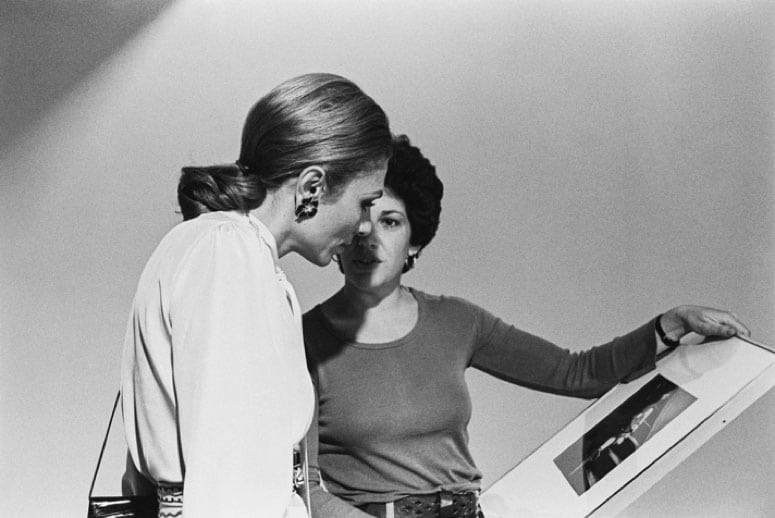
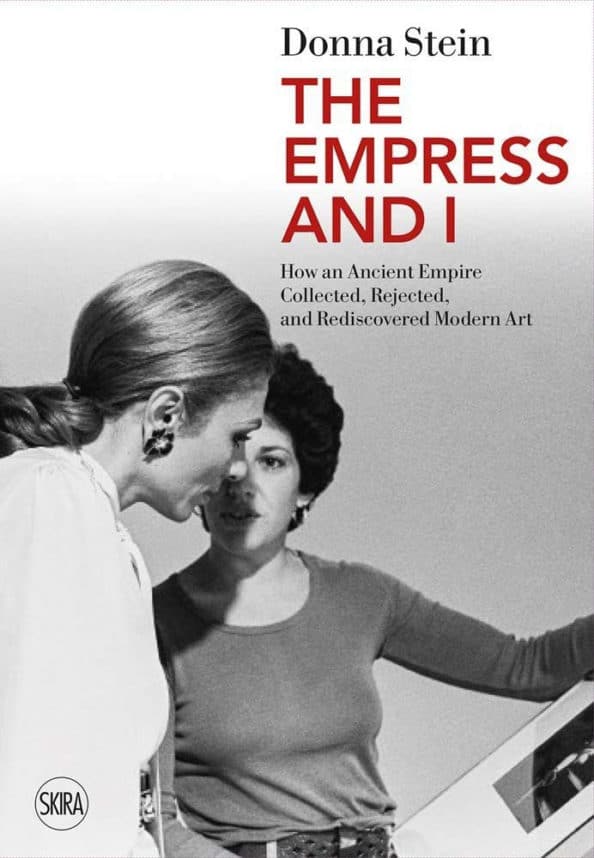
One doesn’t often think about the imaginative Cubism of Pablo Picasso or the textural richness of Jackson Pollock when thinking about Iran, but in her vivid new memoir, “The Empress and I: How an Ancient Empire Collected, Rejected and Rediscovered Modern Art” (Skira, 2021), revered art historian, curator and critic Donna Stein reveals how one of the world’s finest collections of contemporary art came to life in Tehran in the late 1970s, during the last years of the Pahlavi dynasty.
From 1975-1977, Stein served as art adviser on western modern art for the secretariat of Her Imperial Majesty, the Shahbanou of Iran (also known as Empress Farah Pahlavi, the last wife of the Shah, who died in 1980). Stein helped secure the acquisition of priceless art for the Tehran Museum of Contemporary Art (TMoCA), which houses the most valuable collection of Western modern art outside of the United States and Europe (featuring artists such as Picasso, Monet, Pollock, Van Gogh, Gauguin, Warhol and others). The museum opened in 1977, just 15 months before the 1979 Islamic Revolution drove out the royal family and turned the country into an official Shi’a theocracy.
For two decades after the revolution, the art collection, which was originally purchased for $100 million, was hidden in a concrete basement. In 1999, Iran permitted some initial exhibitions (Warhol’s portrait of Empress Farah Pahlavi, however, was slashed by vandals decades ago). The Islamic Republic finally allowed the first comprehensive exhibition of the Western art collection in 2005. Today, its estimated worth is $3 billion, and its crown jewel, Pollock’s “Mural on Indian Red Ground” from 1950, is still part of the permanent exhibit.
“Have you heard there’s this American girl who’s going to start a new museum in Tehran?” The question became ubiquitous in 1974, when news spread that Stein, then a young assistant curator at New York’s Museum of Modern Art (MoMA), had formed an alliance with Empress Farah Pahlavi to collect modern masterpieces.
But Stein doesn’t believe she received proper credit for her indispensable role in acquiring and assembling the national collection (which explains why The New York Times rightly refers to her new book as a “score-settling memoir”).
The Journal asked Stein, who lives in Altadena and is the retired deputy director of the Culver City-based Wende Museum of the Cold War, to reflect on her important contributions to bringing modern Western art to Iran (and about the time she attended Rosh Hashanah services in a Tehran synagogue):
Jewish Journal: You’ve published numerous articles about the art of Iran and the Middle East, including Islamic architecture. You also were the first American scholar to study nineteenth-century photography in Iran. What draws you to the art and cultures of this region of the world?
Donna Stein: During my years in Iran, I learned that the royal court, and especially Nasir al-Din Shah (1848-1896), were early practitioners of photography. The Golestan Palace Library in Tehran has a massive collection of early photography by members of the royal court as well as foreign photographers, who were travelers in Iran and taught photography to some of the court members, including the Shah. I met several collectors who owned albums of early photographs.
In the years after I returned from Iran, while working on my PhD at the Institute of Fine Arts, New York University, I chose a minor in Islamic Art and was a student of Dr. Richard Ettinghausen, the Islamic Curator at the Metropolitan Museum of Art and an advisor to the empress. When I had the opportunity to select a topic to write about in my graduate studies, I chose early photography in Iran and searched American sources for nineteenth-century photographs at various museums, libraries, private collections, auction archives, …building a substantial image archive.
JJ: Why was it so important for Empress Farah Pahlavi to establish a museum of modern art in Iran? And what were your primary goals curating a national collection of modern art?
DS: In the late 1960s, artists such as Iran Darrudi and Kamran Diba were looking for dedicated spaces to show their art and suggested to the empress that a modern and contemporary art museum would fill an important void in the cultural environment of Iran. The empress knew from living in France and traveling the world that museums were important educational institutions, and [she] decided to develop numerous museums to show the treasured art forms native to Iran — Luristan bronzes, glass, carpets, Qajar art, etc — as well as a museum dedicated to modern and contemporary art by international and Iranian artists. She envisioned the museums as lively educational centers, a place where people would attend lectures, hear music and see films.
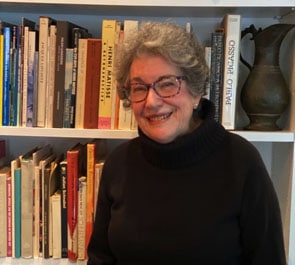
Donna Stein (Photo credit: Sophie Gallagher)
Like the Empress, I believe the arts are unifying. They bring people together and open minds. The arts can move you, inspire you, inform you, make you think and see things from different points of view. Art can be a tool for social change because of its ability to stimulate conversation. What I tried to do was create a representative history of modern art — via all media — of the major artists, art styles and techniques that would inform people in the broadest possible sense with ideas, theories and philosophy in order to advance the development of contemporary perspectives. My job was to guide the selection process and establish a high standard of quality. In the collections and exhibitions I organized, I always tried to provide a context from which an uninitiated audience as well as art lovers could learn about Western art.
JJ: What were your first impressions of Iran in the mid-1970s?
DS: During my first visit to Iran in January 1973 on a National Endowment for the Arts Grant for Museum Professionals, I was impressed by the sprawling capital city. In its center the architecture seemed Westernized, and the well-paved streets were wide. The oldest buildings dated from the nineteenth century, but most structures looked like they had been constructed during the past five years. I was surprised to learn that there were more than four million people living and working in Tehran, and its infrastructure was clearly inadequate for such a substantial population. Instead of sewers, for example, the masses depended on jubes, a system of deep open channels on each side of a road.
When I moved to Tehran full-time in June 1975, I discovered what it was like to be a feminist in an all-encompassing Islamic cultural environment. Although I had never expected that a daily existence in the Near East would be simple, life in Iran proved much more difficult than I ever anticipated. My previous visits to Iran had been during the winter months, and I was utterly unprepared for the shock of the intense heat as well as the complexities that life would arouse.
JJ: Did you meet any members of the Iranian Jewish community during your time in Tehran?
DS: I attended High Holiday services in Tehran in 1975. I called the American Embassy to inquire where I could go and attended [services] with a Christian American friend, who had never been to a Jewish service. The Rosh Hashanah services were held in a school in a large room, [with] the men and women were seated separately…. In the book, I write, “Despite the solemnity of the occasion, everything was very casual and some women were dressed in jeans. A few older women wore chadors. Most female worshippers didn’t have their heads covered and only a few held prayer books, although many participated in the service by reciting from memory. Most of the congregation gave me a warm welcome but some asked uncomfortable questions about my ethnic background.”
I was raised in an Ashkenazi religious environment, and this synagogue was clearly Sephardic in its orientation and practices. It was unfamiliar and somewhat uncomfortable. I remember at the end of the service, wine and dried fruit was passed around for everyone.
JJ: The museum was the brainchild of the empress, but given the time you spent in Iran and the country’s fierce embrace of its ancient art (and ancient past), do you believe that the average Iranian was drawn to modern art? Was there any concern (whether from the empress or any of her aides) that modern works wouldn’t interest Iran’s non-elite classes?
DS: The museum program was considered an educational program, and every effort was to make it accessible to all people, [by] placing the Museum of Contemporary Art in the middle of Tehran in Laleh Park (then called Park Farah), next to the carpet museum and near Tehran University. Today, even if some Iranians don’t like modern art, they know it’s valuable. That’s why it’s still there.
Today, even if some Iranians don’t like modern art, they know it’s valuable.
JJ: In the book’s foreword, you write, “Because I was a foreigner working largely in secret, my leadership role in the formation of the National Collection has never been fully acknowledged.” At the time, did you know that you were essentially being robbed of any credit in creating such an impressive national collection? If so, would you have been able to express your grievances to the Empress or anyone in her close circle?
DS: I worked in a cloak of secrecy, and it became increasingly clear to me that the work I was doing was not being acknowledged but co-opted by others. When I finally was officially introduced to the empress, a year-and-a-half into my tenure, she told me that she was surprised I was young, stylish and attractive and had thought I was an older woman who wore glasses, which reinforced my perception of this issue. But there was little I could do.
JJ: What was the state of modern art in Iran before the museum opened?
DS: During my years in Iran, several new galleries opened to show Iranian as well as international artists. Many Persian contemporary artists were admired, and their works sold well in Iran, although some of them did not have an established international market. In 1976, the Private Cabinet of Her Imperial Majesty, in cooperation with the Committee for Modern Iranian Art, sponsored an exhibition of 35 artists at the Basel Art Fair, as a way of introducing Iranian contemporary artists to international dealers as well as a way for Iranian artists to develop a truer perspective of the financial structure of the global marketplace and how their art fit within the current scene.
JJ: Did the museum inspire a modern art movement from Iranian artists themselves, and were Iranian artists included in the collections?
DS: A modern art movement started in Iran in the 1940s after World War II, long before I arrived in Tehran. Many artists had opportunities to study abroad in Italy, France, Germany, Great Britain and the United States, [and they] returned to Iran filled with information, technical expertise and ideas. They had seen original works of art by significant Western artists and knew about and understood the various stylistic trends. Artists like Jalil Ziapour, Marco Grigorian, Parviz Tanavoli and Monir Shahroudy Farmanfarmain realized that their own history provided rich opportunities to develop a unique modern art based on traditional Iranian imagery and techniques.
Initially, TMoCA was envisioned as a center for Iranian contemporary work. But the empress felt it should also include international artists, which would broaden the mandate and enliven the program. She requested that the collection begin with nineteenth-century Impressionism. At the same time that Western art was being acquired, efforts were made to purchase important work from contemporary Iranian artists. I often accompanied the head of the Department of Art and Culture in the secretariat to gallery exhibitions in Tehran and had a hand in choosing Iranian acquisitions as well.
JJ: How did you fare as an American feminist in Iran, even before the 1979 revolution?
DS: Generally, I was treated very well during my time in Iran and made many friends who I am still in touch with today. I had one anti-Semitic incident, and there were several occasions when anti-American sentiments were expressed towards me. My cleaning lady called me “the woman who lived alone,” an unfortunate phrase used to describe women of questionable virtue, as it was inconceivable that a woman would live by herself, and anyone who lived apart from their families was clearly an outcast. The people who worked in my apartment complex were amazed to eventually learn I worked for the empress.
JJ: In the empress, did you see a feminist such as yourself?
DS: I never thought about it at the time. However, I was aware of the meaningful number of women in government, directing social welfare and educational programs, etc. and thought Iran was extremely progressive for its inclusion and support of women, providing significant opportunities for them to contribute to their society.
JJ: During your time in Iran, did you ever feel the rumblings of societal unrest that preceded the 1979 Islamic Revolution and targeted the Shah, whether from your interactions with average Iranians (especially younger ones) or in messages (such as demonstrations or even graffiti) on the street?
DS: I did take some street photographs as I traversed Tehran and other cities of graffiti. One I recall had “Black Sabbath” in large letters that probably referenced the British heavy metal band but may have also been a religious allusion.
JJ: What were your first thoughts when you learned, in January 1979, that the Shah and his family had fled the country, and later, when the Islamic Revolution had taken hold with Ayatollah Khomeini’s return in February (and culminated in the raid on the American Embassy in November)?
DS: In January 1979, I was working in Europe and assiduously followed the global response to these events. I had been in regular contact with friends and colleagues who wrote candidly to me about the hostility and difficulties in Tehran. Even though I wasn’t shocked by the rise of fundamentalism, my family and friends, Iranian and otherwise, talked of nothing else. I feared for my friends and colleagues left behind in Iran and sympathized with others who were forced to make a new life as displaced persons in Europe and America.
With each nasty development, I kept thinking of other missteps the American government had made in South America and Southeast Asia by misreading the situation and backing authoritarian regimes, and I wondered why the State Department and the CIA apparently failed to understand the threat to international stability that Iran’s theocratic revolutionaries clearly represented.
JJ: Why do you believe that the theocratic regime didn’t destroy more (or all) of the works after the revolution?
DS: During the revolution, the people of Tehran encircled TMoCA and protected the collection. As far as I know, only two works were destroyed at the onset of the Revolution: a painted portrait of the empress by Andy Warhol and a sculpture by Bahman Mohasses. A third painting by Willem DeKooning, Woman III, 1952-53 was exchanged for a rare and beautiful Shahnameh by Ferdowsi, one of the most famous illuminated manuscripts of the national epic poem of Greater Iran, detailing the ascension of Shah Tahmasp to the Persian throne. The Ferdowsi Shahnameh originally contained 258 miniature paintings. By the time it was exchanged for the DeKooning there were 120 miniatures left. Houghton had given 78 to the Metropolitan Museum of Art and sold others at auction.
Fortunately, there is at least one other example of Warhol’s painting, which was included in a recent retrospective of the artist at the Whitney Museum of American Art in New York. Also, at least one painting by Mohasses and one by DeKooning are still in TMoCA’s collection.
The leadership of the Islamic Republic understands the economic value of the artworks and that the collection is now part of their heritage, even though it is the legacy of the Pahlavi Dynasty.
JJ: The museum is working on its own study of the collection, which it claims will be published in a six-part volume. Has anyone from the museum contacted you about this project?
DS: No, but I am delighted to hear that they are publishing a six-volume corpus on the collection. I recently learned that my files from the secretariat were transferred to the museum archive and accessible for research.
Tabby Refael is a Los Angeles-based writer, speaker and activist. Follow her on Twitter @RefaelTabby.
For decades, the Jewish American community has built strong relationships with the Black American community. Lately, however, it seems as though tensions between the two communities are at an all-time high.
Last Wednesday night, the popular audio chatroom app, Clubhouse, hosted a conversation titled, “Did the Minister Farrakhan Tarnish His Legacy by Being Antisemitic?” The conversation quickly descended into anti-Semitic hate speech, and the room was shut down by the moderator. Right away another session was created, titled, “Someone Ended the Room about Farrakhan.” This second session went viral and was attended by one of us (Noam).
Noam could not put the phone down. He heard talk about “the Jews and the slave trade,” “the Jews” creating pornography, “the Jews” controlling the media, the Jews not being “the real Jews,” why the media is so “pro-Israel,” a smattering of praise for the Former Head of the PLO Yassir Arafat and some strange debate about Hitler’s character.
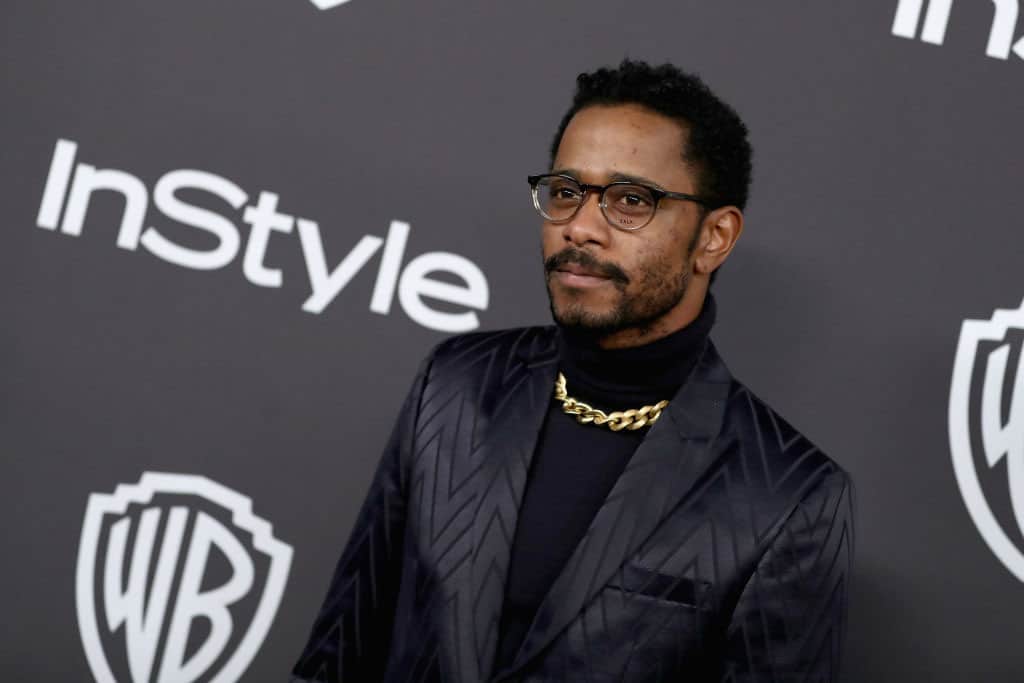
At some point the Academy Award-nominated actor, LaKeith Stanfield (“Straight Outta Compton” and “Judas and the Black Messiah”) entered the room and was made a moderator (Clubhouse assigns the moderator role to the most high-profile individual in the room). When a Jewish woman reprimanded Stanfield for not shutting down the antisemitic conversation, Stanfield explained that he was merely there to listen, and it was not his place to limit people’s ability to express their opinions.
As news of the event went viral in the Jewish world, backlash against Stanfield grew. On Friday, Stanfield apologized for the antisemitic remarks made in that Clubhouse conversation, saying, “At some point during the dialogue the discussion took a very negative turn when several users made abhorrent anti-Semitic statements, and at that point, I should have either shut down the discussion or removed myself from it entirely. … I unconditionally apologize for what went on in that chat room, and for allowing my presence there to give a platform to hate speech.”
It was a strong statement. The kind of statement the Jewish world has increasingly witnessed.
This event is the latest in a series of Black celebrities apologizing to the Jewish community for antisemitic remarks. Although these apologies have happened in the past, their growing frequency is a new phenomenon, the result of our new digital lives bringing down the conversational barriers created by a history of urban politics, mistrust, white flight and division.
Jews and Blacks often celebrate how our communities joined the fight against segregation. But this celebration often hides a larger story of two communities living apart from one another, increasingly divided politically and geographically. That means that while some Black Americans harbor anti-Semitic prejudices, it has historically been very hard for Jews to actually hear such prejudices enunciated.
In 1959, Elijah Muhammad, the early leader of the Nation of Islam and mentor of Malcolm X, came to Newark, New Jersey, to give a speech. In an attempt to learn what Muhammad was saying about Jews, the American Jewish Committee mobilized the Newark Mayor’s office and the local chapter of the Urban League to send two Black undercover “agents” to the event. While in this instance there was no anti-Semitic rhetoric reported, the event reveals how difficult it was for Jews to access Black intra-communal dialogue. Bringing together multiple organizations and political powers was made possible only because Muhammad had come in close proximity to an established Jewish community.
But with Jews moving to the suburbs and urban school districts becoming increasingly de facto-segregated, the second half of the twentieth century saw fewer opportunities to hear one another. More often than not, the only thing Jewish Americans heard from the Black American community were comments made by Black Nationalists about “the Jews.” As public anti-Semitic remarks by the leaders of the Nation of Islam, such as Louis Farrakhan, became all too common, Jewish Americans were, of course, unable to hear what ordinary Black Americans were saying about Jews in private conversations.
One rare and significant example of a private conversation going public was a 1984 conversation between the Reverend Jesse Jackson and the Black Washington Post reporter, Milton Coleman. In that conversation, which eventually became public knowledge, Jackson referred to Jews as “Hymies” and New York as “Hymietown.” It took Jackson over a month before he officially apologized to a group of national Jewish leaders at a synagogue in New Hampshire.
But the internet, modern media, and social media have completely rewritten the rules on private and public dialogue.
the internet, modern media, and social media have completely rewritten the rules on private and public dialogue.
In July 2020, Jews were in uproar over antisemitic tweets by Philidelphia Eagles wide receiver DeSean Jackson. Jackson’s soulful apology video went viral in the Jewish world.
A few days later, actor/comedian Nick Cannon engaged in a “private” conversation with Richard Griffin on Cannon’s podcast in which he “promoted anti-Semitic conspiracy theories and praised Nation of Islam leader Louis Farrakhan.” Cannon initially refused to apologize until he was fired from his own TV show. After that, Cannon went on the record apologizing for his comments, admitting he had much to learn and saying that he would be “the sacrificial lamb as a member of the entertainment community” in an effort to bring Black and Jewish communities closer together.
And then there was this Clubhouse conversation.
The increased frequency of these controversies reflects the extent to which private dialogue is now publicly accessible. Cannon’s personal conversation on his podcast, which was geared towards a niche audience, made him and his guest feel comfortable saying things that in previous decades would not have been meant for public consumption. And the echo chamber of social media creates an environment that makes people feel safe sharing thoughts that may be offensive to some people outside their “feed.” Dialogue that may be thought to be semi-private and intended for the “in” crowd can quickly become public. And the power of every word said on these platforms are amplified by the introduction of celebrities to the conversation.
While these events may be a cause for concern, they also reveal tremendous opportunities for inter-communal dialogue. First, the ease with which intra-communal dialogue becomes inter-communal dialogue can result in greater accountability and education. Nick Cannon’s unintended inter-communal dialogue resulted in not just a backlash but also his commitment to learning about antisemitism. Secondly, interactions between community members are no longer limited by shared, physical geography, which creates more opportunities for dialogue and understanding one another.
The question is, to what extent these platforms, these shared spaces, are being used for constructive inter-communal dialogue. Cannon’s continued dialogue with the Jewish community and Stanfield’s followup call with Jewish educators are conscientious uses of these platforms for inter-communal dialogue. But how do we use the platforms to bring more than just celebrities into the conversation?
Ultimately, the answer comes from embracing these platforms as a shared space. This means individuals from both communities, whether leaders or ordinary people, should attempt to make their Facebook, Twitter and TikTok feeds diverse by following individuals (leaders, celebrities and ordinary people) from other communities. Jewish Americans should be watching Netflix’s “Kevin Hart’s Guide to Black History” and Black Americans should be subscribing to our YouTube channel, where we explore Jewish history and culture. And, of course, Jews of Color can play a critical role in bridging the divide and serving as a model of diversity, inclusion and acceptance.
It then becomes our responsibility to expand the borders of our shared space by liking posts, commenting on posts and retweeting posts. This will compound the number of those who can be a part of the inter-communal dialogue, disrupting the negative cycle of the echo-chamber. With a focus on respect and seeking to understand one another, these platforms can become the new community centers of cooperation between and amongst our people.
We all have the opportunity and therefore the responsibility to learn from each other, grow and ask questions. There is no more pressing need in the world than good education. And historically, there has never been a more powerful tool than digital media to ensure we all construct the necessary education we need.
Micah Smith is an award-winning filmmaker and senior vice president of film and television at OpenDor Media. Dr. Noam Weissman is senior vice president and head of content at OpenDor Media and Unpacked for Educators. OpenDor Media is a Jewish educational non-profit company that creates videos, podcasts, articles and films that are animated by a nuanced educational approach.
I prefer to send videos of young people speaking out against violence.
I have always tried to speak the words of peace and reconciliation.
But we might have reached a turning point in Israel.
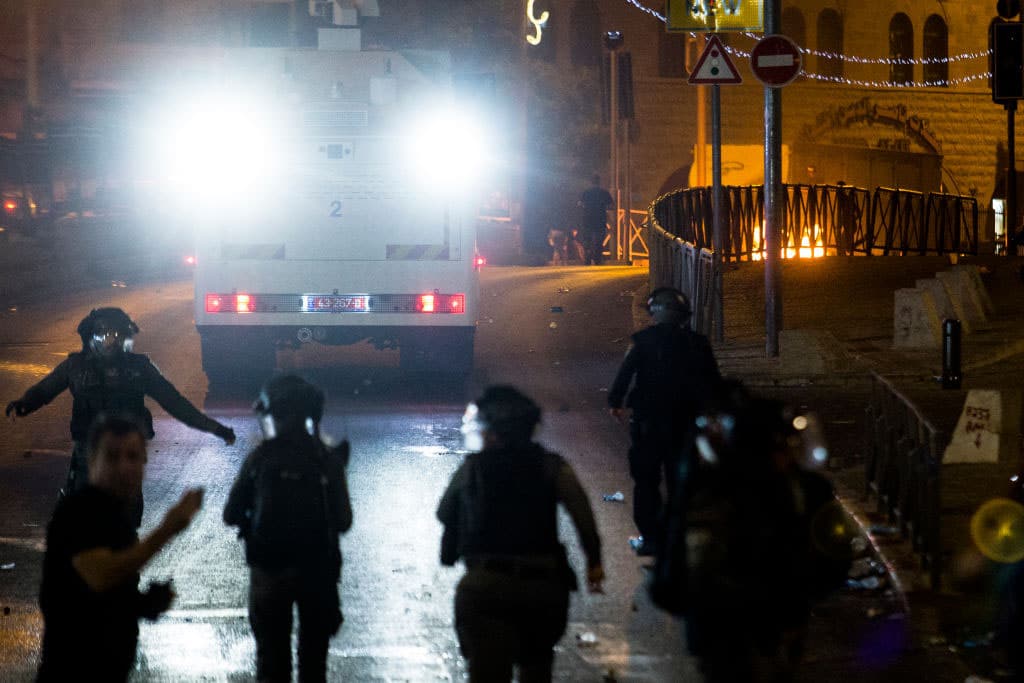
There is violence on the streets of Israel. Mobs are attacking people in their homes in the mixed towns of Israel. In Akko, in Haifa, in Lod. My guess — and it is only a guess — is that the rioters are a minority and that the majority of Israeli Arabs and the majority of Israeli Jews are looking on at this, horrified.
But the danger is that we only need one or two additional deaths to go down a path too painful to imagine.
Israel is doing the only thing it can do right now in Gaza — I hate to write these words — and that is to launch a ferocious attack on Hamas and the Islamic Jihad in Gaza. And many people will die; many innocent people will die. And many of you will be horrified (as all decent people should be) by the photos which will come out of Gaza (and possibly from within Israel, too).
We have to make it clear to both the Hamas and to the Islamic Jihad that we are not ripe for the picking. That the internal political weakness they saw in Israel — how we are tearing each other to pieces here because of disgusting political manipulations — is not an invitation to them to carry out their ultimate fantasy, destroying Israel and murdering its Jews.
How did we get here? Are we partly to blame for where we find ourselves? Has Bibi played a role in where we find ourselves? Is this the obvious outcome of the occupation? Racists being elected to the Knesset? A new U.S. administration?
There are so many questions, so many possible depths of focus, historical debates. But they are for another time.
Sadly, the only relevant question now is what has to be done to get beyond this moment of terrible existential threat. It is clear that the IDF will be a crucial player in this awful moment and that it will use all the power at its disposal.
The only relevant question now is what has to be done to get beyond this moment of terrible existential threat.
Will Akko be Akko again?
Will Lod be Lod again?
Will Jafa be Jaffa again?
Will Jerusalem be Jerusalem again?
I find myself clinging desperately to the knowledge I have from my years guiding all the wonderful people I have met: Jews, Muslims, Christians. But are we just a small number of people able to appreciate and acknowledge the other; the truth of the other’s narrative, of their pains and joys; that we need to share this wonderful/difficult place?
I think of people such as Mazen from Daheishe, Eman from Iksal and Muhammed from Akko and just how lovely it has been to work with them over the years. I think of the host families from Galilee Eats. I think of Riman and of Rami. I know that my words about what the IDF needs to do might cause them pain, and this makes using these words even more difficult. But ultimately this is my commitment.
Many years ago I used a quote from Brecht in an essay for university, and it worries me that it might be relevant right now, “What a time it is when to talk of trees is a crime because of all the crimes it leaves unsaid.”
Julian Resnick made Aliyah to Israel in 1976 and works as a guide in Israel and around the world.
Now the two Jewish celebrities are taking their friendship to the big screen in a buddy comedy called “Here Today.” The first trailer for the movie, out May 7, was released Thursday, and it includes a shot of Crystal and Haddish taking part in a massive hora, the traditional celebratory Jewish dance.
The trailer offers a snapshot of a heartfelt plot: Haddish’s character reluctantly goes to lunch with Crystal’s character, a past-his-prime version of himself, after her husband purchases the date for $22 in a charity auction. There, she has an allergic reaction to her food, requiring a trip to the emergency room that bonds the pair tightly. Over time, Haddish’s character learns that Crystal’s character is losing his memory because of dementia, and he invites her to help him complete his life’s work before it’s too late.
The on-screen relationship follows a longstanding offscreen one for the duo, in which their shared Jewish identity is a bonding force. Crystal, who attended Hebrew school as a child in Long Beach, New York, has spoken frequently about his deep love for Jewish music. Haddish worked as a bat mitzvah performer but did not learn about her own Jewish heritage until she was 27, when she met her father, an Eritrean Jew. She studied Hebrew in advance of her bat mitzvah, celebrated in December 2019, and explored her Jewish identity in a comedy special, “Black Mitzvah,” released the same day.
(JTA) — Oscar-nominated actor Lakeith Stanfield apologized for moderating a room on the audio app Clubhouse in which participants made a slew of antisemitic remarks.
“I entered an online chat room on Clubhouse about the teachings of Louis Farrakhan,” Stanfield, who was nominated for an Academy Award this year for his role in “Judas and the Black Messiah,” said Saturday on Instagram, referring to the antisemitic Nation of Islam leader.
The room in question, titled “Someone Ended The Room About Farrakhan,” had split off Wednesday from another one shut down titled “Did Min. Farrakhan Tarnish His Legacy By Being Antisemitic?”
“When the room’s participants noticed me, I was quickly made a moderator of this room,” Stanfield said in his Instagram post. “At some point during the dialogue the discussion took a very negative turn when several users made abhorrent anti-Semitic statements and at that point, I should have either shut down the discussion or removed myself from it entirely.”
The Daily Beast first reported last week about the antisemitic tropes, which included themes that Farrakhan has peddled, among them conspiracy theories about Jews controlling the media and the slave trade, and comparisons between Jews and termites. Stanfield did not make any of the antisemitic remarks.
“I was hearing a lot of antisemitism,” one Jewish woman in the room who remained anonymous told the Beast. “People were just allowed to go on and on.”
On Instagram, Stanfield said “I condemn hate speech and discriminatory views of every kind. I unconditionally apologize for what went on in that chat room, and for allowing my presence there to give a platform to hate speech. I am not an anti-Semite nor do I condone any of the beliefs discussed in that chat room.”
(JTA) — The Jewish Story Partners foundation, which Steven Spielberg and wife Kate Capshaw helped found to fund Jewish-themed documentary films, announced its first slate of grantees on Wednesday.
The 10 projects received a total of $225,000 from Jewish Story Partners, which has received its initial funding from Spielberg’s Righteous Persons Foundation, the Maimonides Fund and the Jim Joseph Foundation.
The film follows Israeli comedian Noam Schuster, who is bent on using her standup routine to get Israelis to question their biases.
“The Conspiracy” – Directed by Maxim Pozdorovkin
The film looks at the history behind the lie “that a dangerous cabal of powerful Jews controls the world.”
“Meredith Monk: Dancing Voice, Singing Body” – Directed by Billy Shebar and David Roberts
The groundbreaking composer and choreographer, who has won the National Medal of Arts and a MacArthur grant, gets her own film. The pop legend Bjork is a co-producer.
“Rabbi” – Directed by Sandi DuBowski
“Rabbi” chronicles the story of pioneering Rabbi Amichau Lau-Lavie “from drag queen rebel to rabbinical student to founder of Lab/Shul, an everybody-friendly, God-optional, artist-driven, pop-up experimental congregation.”
“South Commons” – Directed by Joey Soloway
The Jewish creator of “Transparent” takes a hard look at the racial tensions in the Chicago community in which they grew up.
“Untitled Spiritual Care Documentary” – Directed by Luke Lorentzen
Mount Sinai hospitals in New York appoint interfaith chaplain residents each year — this film follows four of them.
“The Wild One” – Directed by Tessa Louise Salomé
It’s the story of Jack Garfein, an Auschwitz survivor who went on to play a key role in the Actors’ Studio group and taught the craft to some of the last century’s biggest stars.
“Heroes” – Directed by Avishai Mekonen and Shari Rothfarb Mekonen
The tale of a group of Ethiopian-Jewish activists who fought to keep their community alive in the 1970s to 1990s, a time of harsh dictatorship.
“Joyva” – Directed by Josh Freund and Sam Radutzky
The 100-plus-year-old Joyva company is among the most recognized Jewish-American candy companies, whose delicacies often end up at holiday celebrations such as Passover. The film focuses on the founder’s great-grandchildren, who are fighting to keep the business afloat.
“Walk With Me” – Directed by Heidi Levitt
Levitt tracks her husband’s battle with early-onset Alzheimer’s disease.
The periodic explosions of Palestinian violence in Jerusalem, accompanied by manipulated media campaigns and international condemnations of Israel, have a depressing predictability. Since the first riots during Passover in 1920, the event has repeated many times (1929, 1947/8, 1967, 1990, 2000), and the script is basically unchanged. The Palestinians’ battle cry focuses on the supposed threat posed by the Jews or Zionists to the Al Aqsa mosque located on the Temple Mount — erasing 3,000 years of Jewish history — and demands exclusivity for Muslims.
The timing is important — many of the clashes take place during Ramadan, often when it coincides with a Jewish holiday, creating the conditions necessary for whipping up the religious emotions of the masses and turning them towards violent attacks. This is also the situation now.
The latest set of clashes began with a campaign over homes in the Sheik Jarrah neighborhood of Jerusalem. Sheik Jarrah isknown in Hebrew as Shimon HaTzadik, named after the Second Temple High Priest who is buried there. The Israeli Supreme Court was scheduled to issue a decision on the 40-year-old property dispute involving Palestinians living in buildings that had been purchased by Jews in the 19th century. In the 1948 war, the Jews living there were expelled by Jordan, who gave the homes to Palestinians. Although the area was recaptured by Israel in 1967, Arab residents were allowed to stay as long as they paid rent. But they refused to pay or recognize Jewish ownership, and lower courts ruled that the legal owners had the right to reclaim the property. The final court decision was expected to authorize evictions.
A network of influential political NGOs groups, acting under the facade of human rights, predictably twisted the facts beyond recognition and labeled the expected court decision as Israeli “apartheid” and a “war crime.” The Palestinian Al Haq organization (largely funded by European governments) launched a major and successful propaganda campaign to manipulate journalists, diplomats, the U.N. and the International Criminal Court.
A network of influential political NGOs groups predictably twisted the facts beyond recognition.
In parallel, under the rallying cry of “Al Aqsa is in danger” (although Sheik Jarrah is outside the Old City walls and not in the immediate area of the Temple Mount), mobs attacked Jews on their way to pray at the Western Wall, as well as the police assigned to protect them. Young Israelis then came out to confront the Palestinians, and the injuries increased. The combination of violence and the “eviction” narrative became headline stories in the international media, and governmental officials, including in the Biden Administration, issued the standard calls for restraint by all sides.
In order to lower tensions, the Israeli government took the unusual step of asking the court to delay its decision, and the judges agreed. But Palestinians, perhaps interpreting the Israeli caution as weakness, added more fuel to the conflict. Piles of rocks, molotov cocktails and other weapons were stockpiled in mosques, ready for use against Jews.
Monday, May 10, was Jerusalem Day on the Israeli calendar, marking the annual celebration of the re-unification of the city during the 1967 war. The events included a mass march with Israeli flags through the Old City (perceived as a provocation by Palestinians) and ended with an event in the Western Wall plaza. The anniversary coincided with the last days of Ramadan — in other words, a “perfect” Jerusalem storm.
Recognizing an opportunity to exploit the explosive situation, Hamas leaders in Gaza jumped in as the self-proclaimed protector of Al Aqsa. After planned Palestinian elections were cancelled, largely for fear that Hamas would win and take control over the West Bank, this was a chance for Hamas to gain more public recognition and support. Doing what Hamas does best, they fired some rockets at the Israeli communities along the Gaza border and announced that unless their demands were met by 6 PM, they would launch large-scale missile attacks, including at Jerusalem.
Monday morning thus began with a number of clashes in the Old City and on the Temple Mount, accompanied by one-sided images of wounded Palestinians, further inflaming passions. Seeing this, the Israeli leadership belatedly ordered a change in the route of the flag march to avoid the Arab sections of the Old City, signaling further de-escalation efforts.
But the stage was set for another full-fledged conflict. At 6 PM, Hamas launched seven of its largest Iranian-supplied missiles in the direction of Jerusalem, followed by hundreds of rockets aimed at southern communities in the next 24 hours. The sirens went off, and hundreds of thousands of Israelis ran to shelters. A number of Israelis were killed and more injured.
How far this round of fighting will go and how it will end remains to be seen. Many Israelis from left, right and center are calling for a full-fledged military operation to destroy the thousands of missiles stockpiled in Gaza. They are aware of the damage that Hamas could cause by firing these weapons and by killing Israeli soldiers if a ground war becomes necessary. And even if this happens, it will not end the manipulation of the Jerusalem issue. But if a major operation silences the rocket attacks for a number of years and restores deterrence, Israelis will see this as a successful outcome.
Gerald Steinberg is emeritus professor of political science at Bar-Ilan University, and heads the Institute for NGO Research in Jerusalem.