fbpx

April 5, 2021

Toronto Student Communist Group Tweets “Death to Zionism” Graffiti

Canadian Jewish groups have condemned a Marxist student group over multiple instances of graffiti, including graffiti stating “Death to Zionism!”

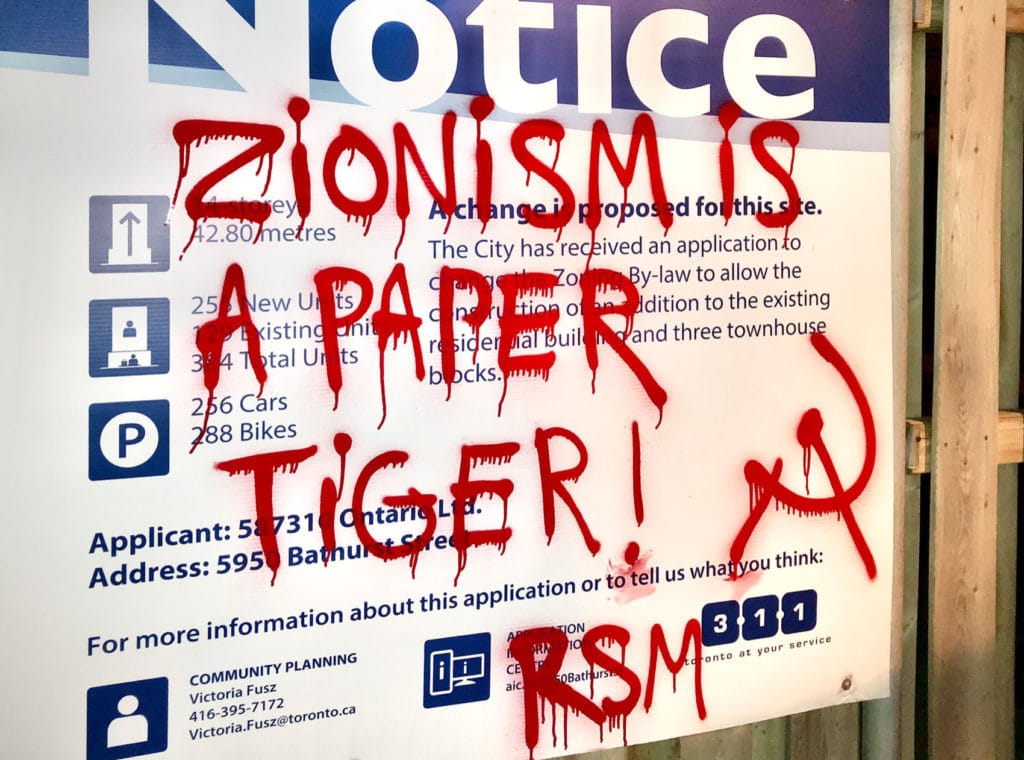
The Toronto chapter of the Revolutionary Student Movement (RSM), whose constitution says they’re “guided by communist principles,” tweeted out photos of “street art” on April 3. The “street art” consisted of the words “Zionism a paper tiger!,” “Freedom for Palestinian students!” and “Freedom for Ahmad Sa’adat! Death to Zionism!” Sa’adat is the general-secretary of the Popular Front for the Liberation of Palestine terror group and is currently serving a 30-year prison sentence in Israel for directing civilian killings.

https://twitter.com/TorontoRSM/status/1378436280174981133?s=20

The student group had also posted photos on March 31 of graffiti calling to “smash imperialism and Zionism” and claiming that Canada and Israel were “guilty of genocide.”

https://twitter.com/TorontoRSM/status/1377354444459798529?s=20

https://twitter.com/TorontoRSM/status/1377363722788691968?s=20

B’nai Brith Canada CEO Michael Mostyn said in a statement, “Sadly, Canada’s Jewish community continues to face threats from both the far-right and the far-left. We are working with our partners in law enforcement, and are confident that this terrorist-admiring cell will eventually be brought to justice.

“Harassing a Jewish community’s neighbourhood with hostile messages is clearly antisemitic. Those who have attempted to justify attacks on Canadian Jewry, from whatever source, should hang their heads in shame. Neither the left nor the right has a monopoly on antisemitism, and no excuses should ever be made for it.”

Michael Levitt, president and CEO of Friends of the Simon Wiesenthal Center, similarly said in a statement, “We know that acts of hate can escalate and spread when left unchecked. These acts of vandalism are troubling and ominous and clearly an effort to intimidate members of the Jewish community in areas where they live, work and play. We expect this group to be held to account for the property damage it has committed, not to mention for the disturbing antisemitic messages it has promoted.”

The RSM Toronto chapter responded to the accusations of anti-Semitism on Twitter by noting that B’nai Brith Canada had focused on graffiti opposing the International Holocaust Remembrance Alliance (IHRA) definition of anti-Semitism, which states that the demonization and delegitimization of Israel is anti-Semitic.

“This absurdity is exactly what the IHRA [definition] aims to enable,” they tweeted. “We reply with more paint.” The “more paint” was graffiti stating, “Combat Zionism and anti-Semitism inseparably!”

https://twitter.com/TorontoRSM/status/1378472933073551362?s=20


B’nai Brith Canada also noted that in June 2020, RSM’s Vancouver chapter tweeted that “supporters” had sent them photos of “Free Palestine!” graffiti outside of a “Zionist synagogue” to protest the Israeli government’s potential annexation of the West Bank.

Toronto Student Communist Group Tweets “Death to Zionism” Graffiti Read More »

Jerusalem Drama: Netanyahu Faces the Court – and the President

It is a strange morning in Jerusalem. The temperatures are rising to become a spring heat wave, and the temperatures in the political oven are rising too: On one side of town, the president is now accepting delegations of political parties, who must tell him who — in their view — should get the mandate to form a new coalition. On the other side of town, the man fighting for the mandate — and who is likely to get it — is facing the court for the important part of his trial. Tomorrow the headlines speculating about Netanyahu’s near-term prospects will compete with the headlines describing what witnesses have said about him — with an eye towards his long-term future.

It is a strange morning in Jerusalem. A day with the sound of drama but very little dramatic substance. We already know what most parties will tell the president, and we know that Netanyahu does not have the 61-seat coalition he needs. His expected attempt to get to 61 by recruiting the Islamist Raam party was killed by the right-wing Religious Zionist Party.

Political science Professor Gayil Talshir, of Hebrew University, joined Rosner’s Podcast to discuss Israel’s political developments. When we taped our conversation, Talshir said that those who ride with ideologues must be prepared to pay the price for it. And the Religious Zionist Party is staunchly ideological. Netanyahu helped it rise because he needed to maximize the right-wing vote. But now he must watch with frustration as this party blocks his main path to a viable coalition.

Netanyahu’s other path — convincing New Hope (and its leader Gideon Saar) to “rejoin” his camp — also suffered a blow. On Sunday evening, Saar made a statement that left no room for speculation. He refuses to sit under Netanyahu in a coalition. The Likud Party now toys with the only possibility that’s still available for Netanyahu: identifying members of other parties that would defect to “save the country” from a fifth election and, as a side matter, secure a cushy job.

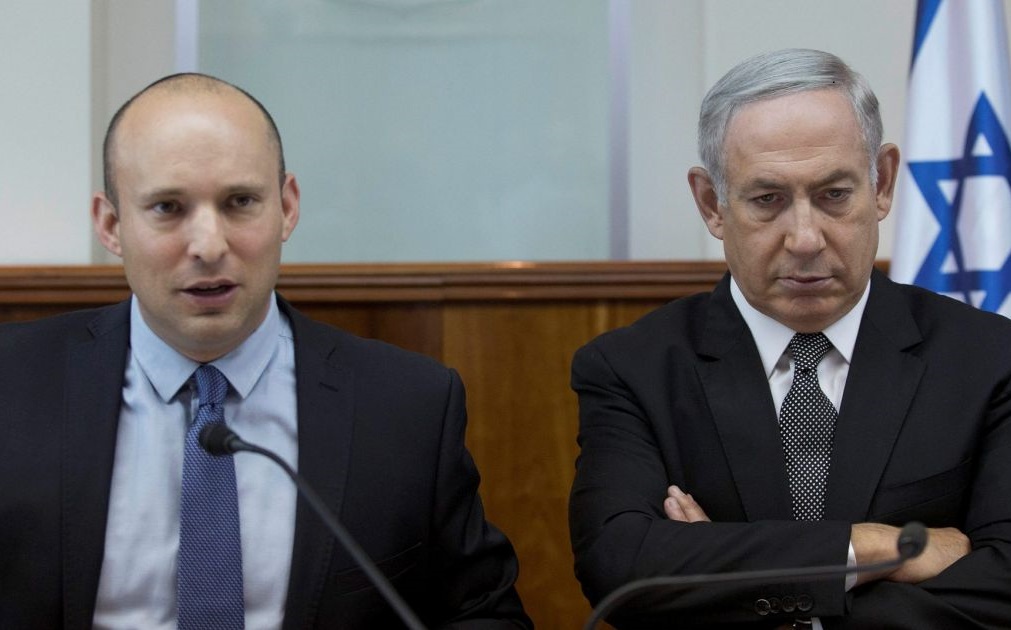
Netanyahu will have 52 MKs who want him — or at least say they do — as prime minister. Opposition leader Yair Lapid will have fewer recommendations. And Naftali Bennett of the Yamina Party, the person with the highest chances to form a coalition, will have the least number of recommendations. But there still is a path to a coalition and a government for him. Not an easy one but still a path. For him to succeed, three things must happen.

First, and most important, Bennett has to decide to form a coalition. He has to make a leap with no safety net to ensure his survival. That Bennett wants to wait until the last minute and verify his chances of success is understandable. And yet, at some point, he will have to risk his political future to show that he has the guts to be a king slayer. A right-wing leader, with a bright and long future before him, must take on the old lion and bear the consequences.

A right-wing leader must take on the old lion and bear the consequences.

Bennett will also need to ensure that his partners, namely Yair Lapid, are ready to pay the price to be his supporting cast. With 17 seats, and as the clear head of the opposition, Lapid will be asked to accept reality of an opposition boss with seven seats. It seems as if Lapid had already made his decision. Lapid is willing to let Bennett be the PM to see Bibi fall. But for how long, under what conditions and with what arrangements?

Other parties must also decide what to do. This is especially true for the ultra-Orthodox parties, Shas and United Torah Judaism, who show loyalty to Netanyahu but at some point must decide if loyalty goes as far as sitting in the opposition for who knows how long. Bennett and Saar, as they plot a way forward, would like to form a coalition that the Haredi parties can still join, if not at the outset, then at least a few months later. This means a coalition with Bennett (7), Saar (6), Lapid (17), Blue and White (8), Labor (6), Shas (9) and UTJ (7). That’s 61 seats. That’s a fragile government that is going to be challenged, time and again, by Likud and Religious Zionism. Expect many state-religion legislation attempts by Religious Zionists to embarrass the Haredi parties or make them vote in a way that embarrasses Lapid. Expect provocations aimed at exposing the radical leftism of certain Labor MKs to embarrass Bennett and erode his credentials as a right winger.

Can a coalition withstand such attacks? Here’s where events at the other side of Jerusalem could provide Bennett with a remedy: Bennett forms a coalition, Likud members begin to grumble in the opposition, Netanyahu’s trial drags on, the former PM loses his magical hold on his party, and he is challenged or forced to leave. Bennett invites Likud, without Netanyahu, into his fragile coalition and stabilizes it.

Sounds like a path too risky to take? Sounds like too many ifs and buts? Then a fifth election is probably the remaining option. Or something so wild we can’t even see it.

Jerusalem Drama: Netanyahu Faces the Court – and the President Read More »

The Absurdity of Boycotting Georgia

Since when did a government-issued ID come to represent a return to Jim Crow and, even more absurdly, the kind of mental challenge that would have stumped Albert Einstein?

Georgia’s new Election Integrity Act of 2021 unravels some of the modifications to the state’s election laws that were implemented in response to the emergency circumstances of a pandemic. Georgia was not alone. Many battleground states did the same thing, all without legislative approval. These changes undeniably influenced the presidential election.

Now, as a result of this legislative act, Georgia is having its own George Floyd moment. There is a groundswell of protest—this time from corporate America. Major League Baseball (MLB) is demonstrating that it knows how to swing away at the latest political trend by removing its All-Star game from Atlanta’s Truist Park. It is an unfortunate and unwise decision, a woke wild pitch that the league won’t be able to take back.

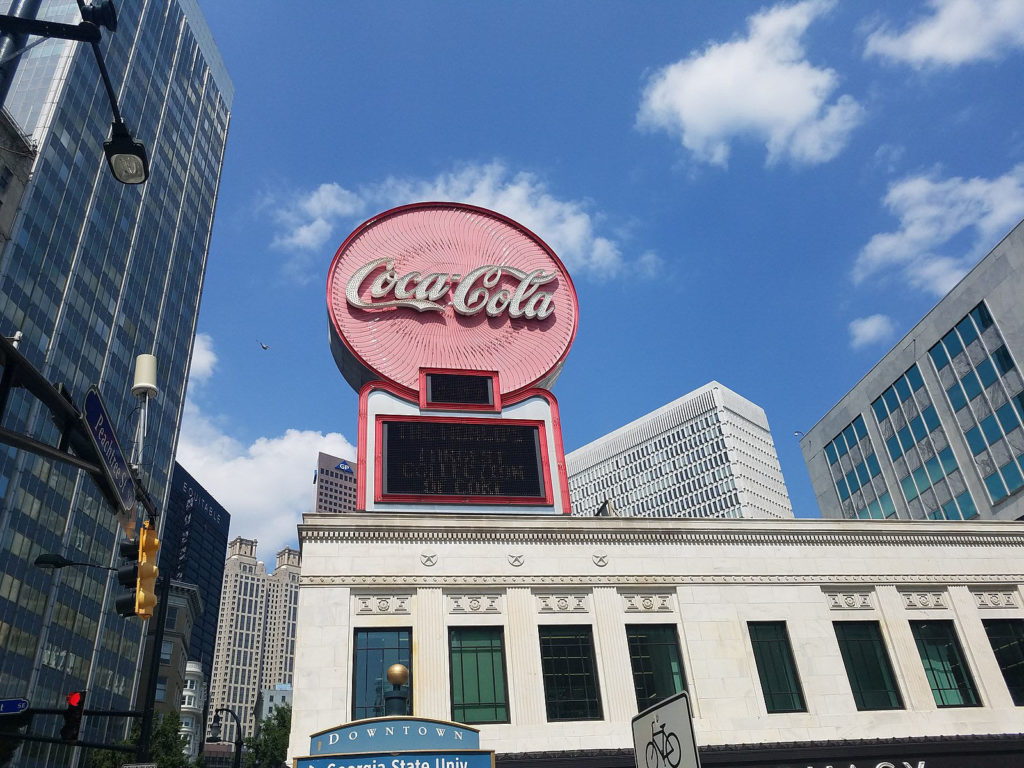
Delta Airlines and the Coca-Cola Company, both headquartered in the Peach State, have made it known that they, too, denounce Georgia for its alleged “racism.” Other multinational corporations, wishing to showcase their ersatz multiculturalism, are speaking out as well, while the progressive usual suspects fully support boycotting the beleaguered state. Progressive Georgians, like Stacey Abrams and Senator Jon Osoff, applaud the political stance but lament the economic harm the boycott will bring.

President Joe Biden has called the Georgia measure, “Jim Crow on steroids.”

Come, on, Man!

Georgia hardly seems to be motivated by the “Big Lie,” or asserting false allegations of widespread voter fraud. This legislative measure, similarly contemplated by many other states, is simply and appropriately bringing election laws more in line with constitutional standards, and, in the process, protecting the integrity and security of federal elections.

This legislative measure, similarly contemplated by many other states, is simply and appropriately bringing election laws more in line with constitutional standards, and, in the process, protecting the integrity and security of federal elections.

Changes to election laws are not, per se, tantamount to voter suppression.

Here is what Georgia is doing: Expanding early voting, and weekend voting, including two Sundays, for a total of 17 days. New York, by comparison, only provides 9. Allowing the continued use of absentee ballots without having to explain why the voter can’t vote in person at the polling precinct. New York provides no such courtesy. And enabling each county to have a dropbox, located inside a government building and subject to proper monitoring.

President Biden incorrectly reported that the Georgia law would close the polls on election day at 5 PM. Polls were open until 7 PM before; and they remain so now.

And, finally, the new law divests power from local counties and shifts it back to state legislatures, ensuring that election laws operate according to uniform guidelines. This was a problem that was first identified by the Supreme Court in Bush v. Gore, and was clearly present in this past election, where voters in one precinct adhered to a different set of rules than what was applied to voters in other counties. Such disparities violate the Equal Protection Clause of the Constitution.

I’m missing the voter suppression. That’s because there isn’t any.

It all comes down to one electioneering legerdemain: the presence of freewheeling absentee, mail-in balloting without voter verification. Normally, if you vote in person you must show ID, then sign your name, which must match the ID. This past election introduced a far more accessible, but less verifiable feature—one that seemed at the time to be temporary, but progressives wish to make it permanent: ballots sent out with all the carelessness of insert renewal cards in magazines.

Georgia is reestablishing the old law and principle. It requires that ballots be requested, along with a valid driver’s license number or a state ID number. It can be photocopied and electronically uploaded. And the signatures must match.

That’s what President Biden is calling Jim Crow, the sequel—no lynching, literacy tests or poll taxes–but authenticated ballots?

We are reaching a new low. The demand to possess and show an ID before voting, essentially a driver’s license, is now the latest testament to white supremacy. Apparently, whites have such documents; blacks don’t. Instead of giving them equal access to self-identification, progressives cynically want to dispense with the requirement altogether.

But since when do African-Americans not have ID? How do they drive? How do they rent apartments? How do they get into R-rated movies? The insinuation that African-Americans are walking around without IDs because they can’t figure out how to get one is brazenly insulting and infantilizing. I can’t believe Democrats aren’t being castigated for racism and outright condescension.

So what’s really going on?

Everyone by now knows a majority of Americans voted by absentee ballot in this past election. Over 70% of those ballots were cast for Joe Biden. Lucky absentee balloting—some unrequested, unexamined, missing information, unverified, duplicated and unsigned—proved to be the winning ticket.

That’s what many people who protested peacefully on January 6th at the National Mall were, among other things, trying to say.

Georgia is being boycotted because it wishes to assure its electorate that while absentee-voting may now forever be standard practice, one should not doubt the integrity of the outcome.

Given this nation’s racist history, any state from the former Dixie Deep South that changes its election laws should be scrutinized. Abundant caution, however, is not the same as guilt. After all, one person’s charge of voter suppression is to another a precautionary measure to eliminate voter fraud.

Here, however, the charge is being levelled by corporations. Since when did a company that adds sugary syrup to soda water become an authority on election law? And as for MLB, they should be careful poking into laws. After all, they enjoy a wholly unjustified exemption from antitrust scrutiny—their monopoly power shielded—something Congress should now, finally, reconsider.

Proving who you say you are is not a suppression of voting rights. It is a basic and common sense obligation, one that is not very difficult to do.


Thane Rosenbaum is a novelist, essayist, law professor and Distinguished University Professor at Touro College, where he directs the Forum on Life, Culture & Society. He is the legal analyst for CBS News Radio. His most recent book is titled “Saving Free Speech … From Itself.”
The Absurdity of Boycotting Georgia Read More »

Our Post-Passover Challenge: Splitting our Own Red Seas

One of the great and fascinating Jewish themes is the interplay between the communal and the personal, between yearning for the collective good and seeking the individual good.

We just commemorated during Passover a classic example of the collective good, when God saves the Jewish people by splitting the Red Sea. The Jews were fleeing the Egyptians who had enslaved them. Seeing that they would soon drown in the raging sea, as the biblical story is told, God parted the waters and allowed our ancestors to march to freedom.

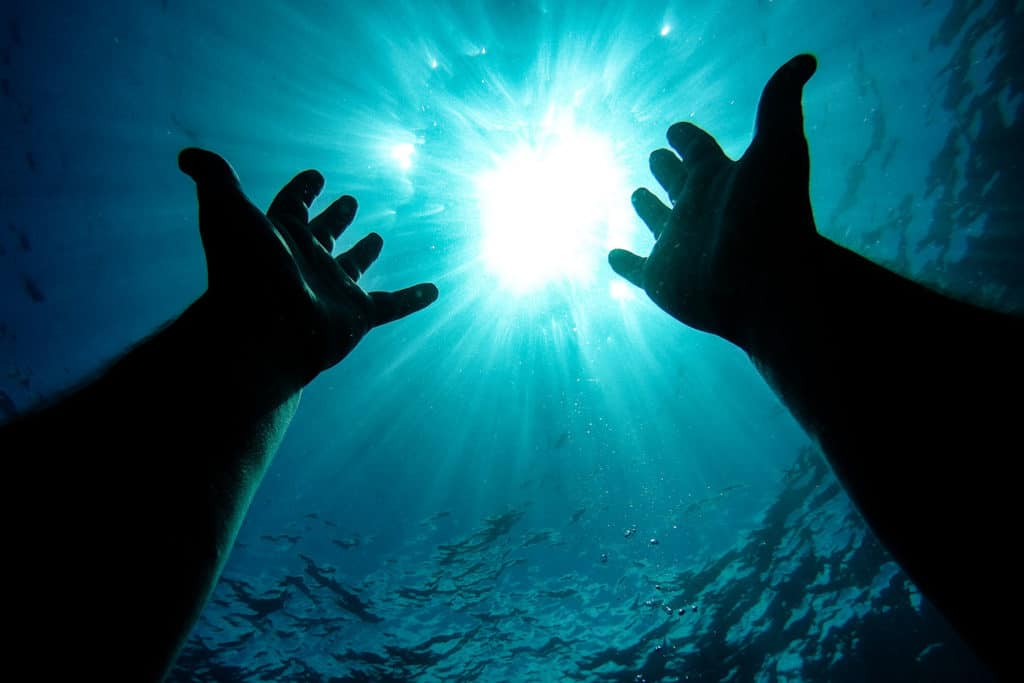
But as often happens in Jewish thought, collective ideas have a personal dimension. I heard an interesting one recently from my friend Rabbi Mordecai Finley on one of his Facebook talks. Here’s the basic idea, which Finley attributes to the mystical school of Chassidut: As important as the splitting of the Red Sea was to our collective survival, so is the splitting of our own individual seas. We all have raging waters that threaten to drown us. We all have a sea we can “split” to chart a better course.

We all have raging waters that threaten to drown us. We all have a sea we can “split” to chart a better course.

The raging waters represent our ego selves which bring us “ego pleasures” rather than a deeper, more meaningful existence. These fleeting pleasures cater to our primal appetites and make most of the noise in our minds. They drown out our divine souls. When we’re made acutely aware of their power over us, we feel close to drowning, just like the Jews facing the Red Sea.

At that moment, we have a unique opportunity to access a Divine energy and garner the strength to split our own sea and march to our own liberation. Freed from the bondage of our egos, our liberation takes us on a journey of renewal toward a more meaningful life.

What are the raging waters that stand in our way? For some it may be uncontrolled anger, for others self-absorption and unbridled material ambition, for others arrogance, undue fear, envy or a chronic lack of empathy. Whatever they are, we must confront these obstacles so honestly that we can feel their ability to overwhelm our better selves. Only then can we nurture the will to take radical action and forge new paths.

The 49 days between Passover and the festival of Shavuot—also known as the days of counting the Omer—represent an ideal time to engage in this difficult work. Having just commemorated a communal miracle, we are ready to work on our own individual miracles.

The 49 days between Passover and the festival of Shavuot—also known as the days of counting the Omer—represent an ideal time to engage in this difficult work.

It’s telling that the 49 days culminate in another classic communal moment, when Jews received the Torah at Mount Sinai more than 3,300 years ago. After our liberation from slavery, we needed time to prepare ourselves spiritually to receive the divine Book that has sustained us for millennia.

This interplay between the communal and the personal reminds us that “saving the Jewish people,” as dramatic and fundamental as any idea in Jewish history, is still contingent on another idea.

We also must save ourselves.

Our Post-Passover Challenge: Splitting our Own Red Seas Read More »

For First Reform Rabbi Parliamentarian, Environmental Action is a Faith-Based Initiative

(The Media Line) Gilad Kariv, who will become the Israeli legislature’s first-ever Reform rabbi when the recently elected lawmakers are sworn in on Wednesday, is the left-wing Labor party’s environmental point person. For the history-making rabbi, unlike his counterparts in the Haredi (ultra-Orthodox) parties, action against global climate change is a faith-based initiative.

“Reform Judaism and Progressive Judaism in general are working very hard now to shape a Jewish response to the environmental crisis,” he told The Media Line. “It’s part of our theology that emphasizes ethics, moral behavior, a sense of social and communal responsibility. …

“Here in Israel, we have an opportunity to use the role of Jewish tradition in Israeli discourse to strengthen the awareness of the larger public audience to the environmental crisis,” he continued.

“Our ability to use a Jewish narrative … mitzvot, in order to promote awareness to the climate crisis is a tool we should use,” Kariv said. “For example, next year is a shmita [sabbatical] year,” the last year of a seven-year agriculture cycle where the land is left fallow, “so, we have a unique educational opportunity, and not only a halachic debate on how you observe shmita in modern Israel. This is something that I am bringing with me to the Knesset.”

Kariv also cites the concept of bal tashchit, where one should not destroy things, and the Jewish calendar, which is connected to the seasons and agricultural growth, as some of numerous examples within Judaism that show the necessity of taking care of the planet.

“It’s true there is a huge gap between the traditional language and the scientific language of today, which is something that is natural because we are talking about an ancient tradition, but when you look at the mitzvot in the written Torah, you see that there is a very strong awareness to the duty that human beings in general and the Jewish people must carry to care for the divine creation and those elements exist in our tradition,” he said.

All of this shapes Kariv’s environmental point of view and Labor’s environmental platform, which includes conforming to the Paris Agreement on climate change, of which Israel is a signatory, sourcing half of the country’s energy needs from renewable sources by 2030, and being completely independent of fossil fuels by 2050.

Environmentalism generally cuts across the ideological spectrum in Israel.

While the right-wing Yamina is more in favor than its left-wing counterparts of exporting the natural gas found off Israel’s shores, it is strongly supportive of improving public transportation.

For Jeremy Saltan, director of English-language operations for Yamina, Judaism also shapes his beliefs, including regarding the environment.

“Considering God created the world, that means the environment is his creation and therefore needs to be looked after. There is the issue of bal tashchit that you can’t destroy unnecessarily and the agricultural nature of the three pilgrimage holidays that focus on the connection between man and the land, ” he said, the latter referring to Passover, Shavuot and Sukkot.

Victor Weis, co-head of the Vote Green initiative and former head of the Tel Aviv-based Heschel Center for Sustainability, said Israel’s Haredi parties − United Torah Judaism and Shas − are more reluctant to act on climate change.

“The environment is not at the forefront of the religious parties’ policy priorities,” Weis told The Media Line. “The cities are very crowded and, looking forward to 30 years from now, they are going to grow and so is the environmental problem in those sectors.”

Kariv said the Haredi parties’ lack of environmental platforms is part of a broader societal problem.

“I’m not so sure the ultra-Orthodox parties have any platform; they are very sectorial parties, they don’t bother to present a clear platform, including on the environment. Unfortunately, not all Jewish denominations identify environmental issues as Jewish issues and they emphasize other parts of the Jewish tradition and Jewish law. … The more traditional Orthodox and ultra-Orthodox ignore environmental issues about the same as they ignore social issues,” he said.

“Do you know any decision of the Chief Rabbinate about domestic violence, the level of poverty among children and senior citizens in Israel?” Kariv asked.

“It’s part of their lack of understanding we have a duty not to minimize Judaism only to ritual and mitzvot. … We have a Zionist opportunity here… to once again apply it to the land, to the air, to social issues, and this is something Reform Judaism is committed to,” Kariv said.

For First Reform Rabbi Parliamentarian, Environmental Action is a Faith-Based Initiative Read More »

Red Sea on the Brink of Environmental Catastrophe

[CAIRO – The Media Line] The Red Sea has been flirting with environmental disaster for six years, ever since Houthi rebels seized control of the FSO Safer, a floating storage and offloading vessel for petroleum moored north of the Yemeni port city of Hodeidah.

Last year it began to leak.

Mohammed Ali al-Houthi, the de facto president of Yemen, in a tweet congratulating the Egyptian government on the reopening of the Suez Canal last week, warned of a greater crisis if the deteriorating 44-year-old vessel loses hull integrity.

Rachel Shelley, a senior environmental science research associate at the University of East Anglia and a longtime South Sinai resident, told The Media Line: “The Safer contains 1.1 million barrels of oil [one barrel is 42 US gallons]. This is nearly four times the volume of oil spilled by the Exxon Valdez, a disaster which devastated Price William Sound, Alaska in 1989.”

Nadine Wahab, founder of Eco-Dahab, a sustainable destination management organization based in South Sinai, Egypt, told The Media Line: “During the Mauritius oil spill last year, emergency forces managed to pump out the majority of the oil on board MV Wakashio, but unfortunately 1,000 [metric] tons [approximately 7,330 barrels] spilled into the ocean, killing local corals, mangroves, dolphins and whales.

“BP only managed to recover 25% of the [4.9 million barrels of] oil spilled into the Gulf of Mexico after the Deepwater Horizon oil spill in 2010. And only 10 to 15% of the [260,000 barrels of] marine oil was recovered after the Exxon Valdez oil spill,” Wahab added.

The Red Sea is home to five of the world’s endangered marine species: whale sharks, mantas, dugongs, Napoleon wrasses and turtles, as well as countless other species such as sharks, dolphins and migratory birds.

Karine Kleinhaus, from the School of Marine and Atmospheric Sciences at Stony Brook University, told The Media Line: “The importance of the Red Sea ecosystem cannot be overstated. The coral reefs of the northern Red Sea and Gulf of Aqaba are understood to be among the last reef ecosystems in the world that will thrive beyond the middle of this century.

“Coral species of this region are surprisingly resilient to the global climate change effects of rising sea temperatures and ocean acidification. They are able to withstand, indeed thrive in, waters + 6-7° C warmer than the current summer maximum and a decrease in pH (ocean acidification),” Kleinhaus said.

Houthi, in his tweet, said, “… we call on the United Nations to implement the Safer agreement [to inspect and repair the tanker]. If an environmental catastrophe occurs with the explosion of the Safer vessel, the world will stop not for a week as happened with the Suez Canal, but everything will stop for a considerable period of time, and it will halt the navigation of military and other ships. We hold them [the UN] accountable.”

On January 28, UN spokesperson Stéphane Dujarric said the oil tanker inspection would be delayed until March, adding, “Sticking to the new inspection timeline would depend on the cooperation of the Houthis.”

After the UN committed $3.35 million to purchase materials and prepare for the deployment of personnel, Houthi officials recommended that the United Nations halt the preparations.

Mark Lowcock, the UN undersecretary-general for humanitarian affairs and emergency relief coordinator, said in a briefing to the Security Council on February 18: “Ansar Allah [Houthi authorities] recently announced plans to ‘review’ their approval for the long-planned mission and advised the United Nations to pause some preparations. They have now dropped this review. Unfortunately, we only heard that they dropped the review after a key deadline had passed to deploy the team in March.

“It is now difficult to say when exactly the mission might go. Ansar Allah have recently made several new requests that the UN can’t meet. Mission preparations can’t be finalized until these issues are also resolved,” Lowcock said.

Dr. Abdulqader Mohammed al-Kharraz is an environmental assessment professor at the College of Marine Sciences and Environment at Hodeidah University and a former chairman of Yemen’s Environmental Protection Authority. He discussed the consequences if the FSO Safer broke apart.

“Pollution will reach all countries bordering the Red Sea, and the impact will be greatest on Yemen. Ports in Yemen will stop operating, especially the port of Hodeidah, and international navigation through Bab el-Mandeb will stop,” Kharraz told The Media Line. “The spill will destroy marine life in the Red Sea or it will migrate beyond the Red Sea.”

Kharraz estimated the cost of trying to repair the damage to biodiversity in the event of a spill at $51 billion, in comparison to the $12 million it would take to siphon the oil from the vessel and move it to a dry dock.

“Over the next several decades the damage would be very great for the environment and also for the people and the agricultural soil in the coastal areas,” he said.

“The immediate risks of a large-scale oil spill such as this for human populations would be: air contamination; contaminated, tainted seafood; and contamination of fresh water (as desalinated water is the main source of fresh water in this region),” Kharraz said.

Shelly said, “In addition, the coral reefs and associated ecosystems (mangroves, seagrass beds and sandy bottoms) would be severely damaged. This would impact all marine life and place extreme pressure on those who make their livelihoods from the sea, whether through artisanal fishing or tourism or by other means. Coming at a time when these populations are already suffering hardships resulting from the lack of tourist revenue due to the COVID-19 pandemic, the timing could not be worse.”

Wahab said, “Dahab is a small diving community. People travel from across the world to visit its reefs. The Red Sea and specifically its marine ecosystem are vital to many communities’ survival, especially those that depend on diving and water sports like Dahab.

“The spill could affect Egypt’s tourism revenues, 12% of the national GDP prior to the COVID-19 pandemic, for years to come. We are watching an environmental catastrophe in slow motion that would affect the livelihoods of 28 million people.”

Red Sea on the Brink of Environmental Catastrophe Read More »

US Expresses ‘Full Support’ for Jordan’s King Abdullah Following Alleged Coup Attempt

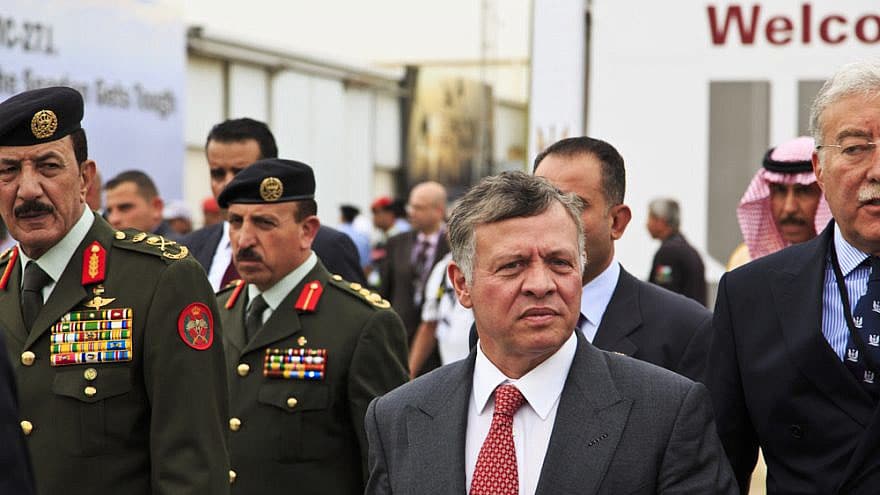
The United States is “closely following” the situation in Jordan following reports of an alleged coup plot involving the former Jordanian crown prince, U.S. State Department Spokesperson Ned Price said on Sunday.

“King Abdullah is a key partner of the United States, and he has our full support,” tweeted Price.

Jordan’s official media outlet on Saturday denied reports that Prince Hamza bin Hussein, King Abdullah II’s half-brother, had been arrested, claiming that the prince had instead been asked to stop “movements and activities that are used to target” the kingdom’s stability and security. According to the Jordan News Agency, the warning was part of “joint comprehensive investigations undertaken by security agencies,” leading to the arrests of royal family member Sharrif Hassan bin Zaid, former Finance Minister Basem Ibrahim Awadallah and others.

In a video statement released to the BBC by his lawyers, Prince Hamza denied involvement in any conspiracy and claimed that he “was not allowed to go out, to communicate with people or to meet with them.”

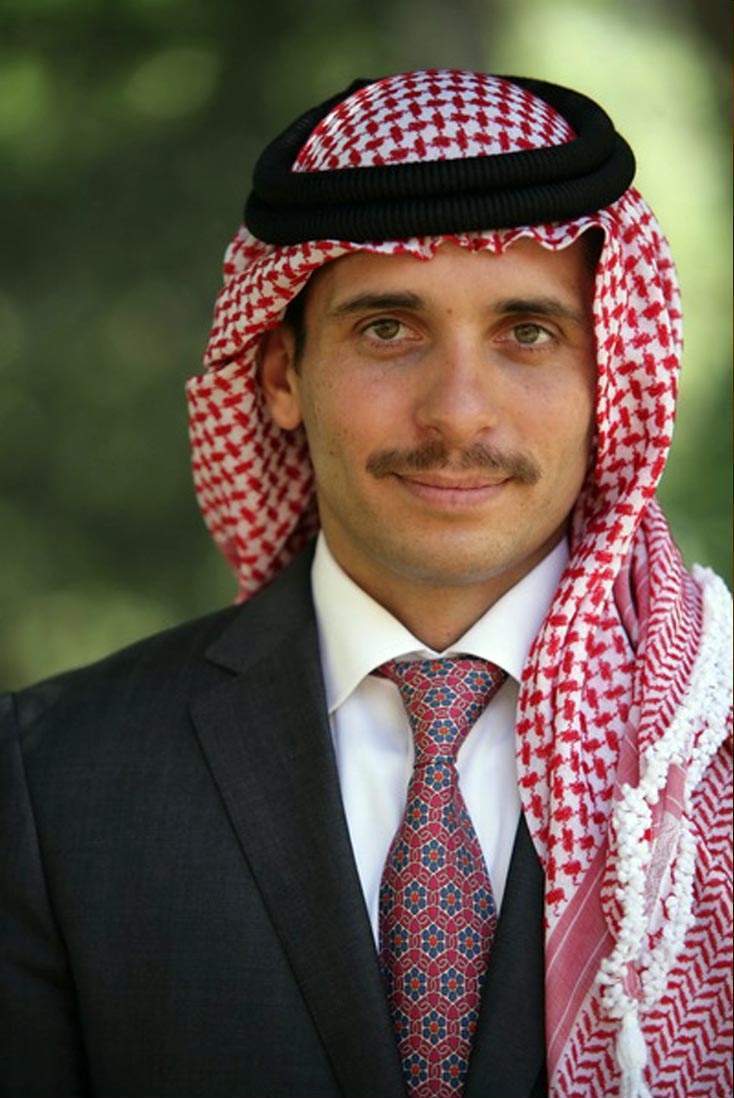
Jordanian Prince Hamza bin Hussein, April 5, 2017. Credit: Abd Alrahman Wreikat via Wikimedia Commons.

Prince Hamzah said he had been informed that this was a “warning” related to meetings he had attended, during which the government and king were criticized, as well as connected to social media posts about those meetings.

The prince said that friends of his had been arrested, his security detail had been removed and his Internet and phone lines had been cut. The video message, he said, had been sent via a satellite Internet connection that would also be cut soon, meaning that this would possibly be his last communication.

Prince Hamza then went on to say that he was not the one responsible for the “breakdown in governance, corruption and incompetence” from which the country had suffered over the past two decades.

Jordanian Joint Chiefs of Staff chairman Maj. Gen. Yousef Huneiti indicated that the investigations were ongoing, and that the results would be announced “with full transparency and clarity,” according to the Jordan News Agency.

“No one is above the law and Jordan’s security and stability take precedence over any consideration,” said Huneiti.

US Expresses ‘Full Support’ for Jordan’s King Abdullah Following Alleged Coup Attempt Read More »