fbpx

February 15, 2021

The Power of Soup : Iraqi Chicken Shorba

What is it about friendships that intertwine and connect generations?

As a young man, my grandfather was sent from the bustling city of Baghdad to the sleepy village of Al-Azair, the mystical burial place of the prophet Ezra. A pilgrimage site that is holy to both Jews and Muslims, the large compound sits on the Western bank of the Tigris River, shaded by many palm trees. It was there that he met and married my grandmother and started his teaching career. He reminisced that on the day he arrived, all the students gathered to greet him with cheers. One of those students was my grandmother’s cousin, Yehezkel Avrahamy.

When the Iraqi Jews were transplanted to Israel in the early 1950’s, my grandfather was a headmaster of schools in Kiriyat Ono, Zichron Yaakov and Benyamina. The Avrahamy family settled in Jerusalem. Yehezkel got a job working in a shoe factory, where he met his wife Esther. A sabra, she also spoke Arabic because her parents hailed from Aleppo. The two families maintained a devoted friendship and my mother remembers that as a young girl, she thought that Yehezkel and Esther were the most romantic couple that she had ever met.

My grandparents emigrated to Australia in 1967. In 1973, Yehezkel and Esther and their three children, Ronit, Yigal and Yosi, moved to Los Angeles, where they joined his eldest sister Meda Jacobs and her family. Three of my uncles moved to Los Angeles in the seventies and my family joined in 1981. My grandparents spent months at a time in Los Angeles and always spent time with Meda, Yehezkel and their sister Shula. Over the years there were bar mitzvahs and weddings and we always celebrated together. Yosi was in my grade and it was was almost as though our generation inherited the friendships of our parents. Neil, Rachel’s husband was also very close to Yosi. When Yosi found his own Esther, Rachel and I fell in love with her too. And now the fourth generation are friends too!

Over the years, whenever I ever saw Yehezkel, he always gave me the biggest smile and always managed to express his gratitude that my grandfather was his “mo’allem” his teacher.

When Yehezkel was in the hospital about six years ago, Rachel and I felt pretty helpless. But we knew the one thing we could do to show our love and support was to show up. And of course, bring some home-cooked food.

Rachel brought burekas and Arroz con Pollo.

I knew exactly what I would bring: my grandmother’s shorba, an Iraqi tomato chicken soup with rice.

Shorba is the hearty soup you make when the weather outside is cold and grey. Shorba is the smooth creamy soup you make when someone is sick and you want to nurse them back to health. Shorba is the soup you make when you want simple home cooked goodness.

Shorba is the hearty soup you make when the weather outside is cold and grey.

Shorba has the soothing flavor of chicken, the comfort of rice, the cooling menthol of cardamom, the brightness of tomatoes and the healing power of onion and garlic and spices.

I had never cooked Shorba before and I didn’t have a recipe. But the flavors were so engrained in my brain and tastebuds that I managed to make a delicious pot of soup.

Yehezkel loved it. And so will you and your family.

Iraqi Chicken Shorba

5 tablespoons olive oil
1 large onion, diced
6 tomatoes, diced
10 cardamom pods, gently crushed
1 teaspoon sweet paprika
1 teaspoon turmeric
1 teaspoon allspice
2 large chicken breasts with bones
8 cloves of garlic, chopped
2 medium potatoes, diced
6 tablespoons tomato paste
2 cups of jasmine rice, rinsed and soaked for one hour
8 cups water
Sea Salt
Fresh ground black pepper

Fry onions in olive oil over medium heat, until they are transparent.

Add tomatoes and spices and sauté for 3 minutes.

Add chicken breasts and sauté for 5 minutes.

Add garlic, potatoes and tomato paste and sauté for 5 minutes.

Add rice and water, stir well and bring to a boil.

Add salt and pepper to taste.

Reduce heat, cover tightly and let simmer for 45 minutes.

Shred chicken and serve in the soup.


Rachel Sheff and Sharon Gomperts have been friends since high school. They love cooking and sharing recipes. They have collaborated on Sephardic Educational Center projects and community cooking classes. Follow them on Instagram @sephardicspicegirls and on Facebook at Sephardic Spice SEC Food.

The Power of Soup : Iraqi Chicken Shorba Read More »

New Report by Human-Rights Group Responds to Anti-Israeli Bias at UNHRC

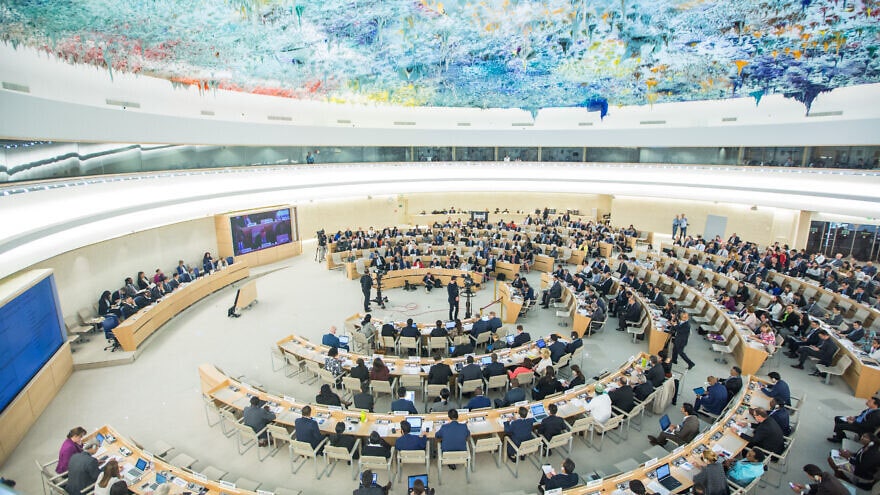
Geneva-based independent human-rights group UN Watch published a detailed report in advance of the 46th session of the U.N. Human Rights Council, which is scheduled to open this month on Feb. 22 in Geneva and run until March 23. The study debunks more than 20 different major accusations leveled by numerous different countries—accusing Israel of violating Palestinians’ religious freedom, damaging their health and practicing racism.

In its first-ever report that thoroughly fact-checked and responded to the UNHRC’s anti-Israel claims, UN Watch released its 58-page “Agenda Item 7: Country Claims & UN Watch Responses” examining 23 accusations made by various countries under Agenda Item 7 against Israel in the period covering the six UNHRC sessions held in 2019 and 2020.

According to report researcher and writer Dina Rovner, legal adviser of UN Watch, the paper sets the record straight regarding distorted statements, including: “Israel hinders the Palestinian fight against COVID-19;” “Israel has occupied Palestinian territory for 70 years;” “Israel commits apartheid against the Palestinians;” “Israel damages Palestinian holy sites” and “Israel’s blockade of Gaza is illegal.”

“The truth is very different from what is being put on the record at the United Nations,” she told JNS. “When Israel is accused of hindering the Palestinian fight against COVID-19, it is actually helping and coordinating with the Palestinians. When Israel is accused of violating the rights of Syrians on the Golan, the opposite is the case—the Golan Syrians have more rights and freedoms than their counterparts in Syria, and are flourishing economically. Israel damages Palestinian holy sites? No. History shows that only under Israeli control are the holy sites of Jews, Muslims and Christians fully protected.”

According to Hillel Neuer, UN Watch executive director and editor of the report (with contributions from managing editor of UN Watch Simon Plosker), it is being sent to all U.N. ambassadors in New York and Geneva “to make clear to all delegates who tell lies that, from now on, their countries will be called out by name before the international community and refuted with the facts.”

UN Watch has also submitted several written statements that will be circulated to delegates as official U.N. documents of the session, calling out the lie that Israel’s vaccination campaign—one of the best-run in the world—is “racist”; exposing UNRWA teachers’ incitement to terrorism and anti-Semitism; and documenting the Palestinians’ illegal use of child soldiers.

“Israel has become a convenient punching bag and scapegoat for non-democratic states—many of them members of the UNHRC, such as Cuba, Pakistan and Libya—to divert attention away from their own gross and systematic human-rights abuses,” Neuer told JNS.

“Israel has become a convenient punching bag and scapegoat for non-democratic states to divert attention away from their own gross and systematic human-rights abuses,”

Agenda Item 7 is the only debate concerning a specific country, which takes place three times a year pursuant to the Palestinian Authority, Syria, North Korea and dozens of other council members and observers that routinely accuse Israel of numerous crimes and human-rights violations, while making no mention of Hamas, Islamic Jihad or the Palestinian Authority.

There is no special agenda item on Iran, Syria, North Korea or any other country in the world, noted Neuer. While all 193 countries of the world are addressed under Agenda Item 4, only Israel gets its own special treatment under Agenda Item 7.

‘It’s important to educate them on the facts’

In recent years, nearly all Western democracies have joined Israel in declining to participate in the Item 7 debate, citing the selectivity of the proceedings.

“It makes sense for democracies not to legitimize discrimination, but the problem is that many spurious claims go on the record at the United Nations with no fact-checking or accountability,” explained Neuer. “This report provides the first examination of claims made under Item 7, using detailed analysis and citing sources of fact and international law. It’s time to confront the toxic brew of hate and misinformation at the UN.”

“When it comes to voting—both at the UNHRC and at the General Assembly—most countries vote to condemn Israel, including European democracies that support about 70 percent of the biased resolutions,” he said.

Though many wonder how the change in U.S. administration might affect the discussion of Item 7, Neuer maintained that America, “whether under Republican or Democratic administrations, has always been a fierce opponent of Agenda Item 7 and anti-Israel discrimination at the U.N. generally.”

However, he added, “they never had anywhere near the majority to remove it.”

“We expect the Biden administration to continue to oppose the demonization of Israel at the United Nations,” he said. “We applaud Biden’s U.N. envoy Linda Thomas-Greenfield for saying recently that she looks forward to “standing with Israel” and “against the unfair targeting of Israel” at the United Nations.

The Biden administration recently announced that it will rejoin the UNHRC as an observer state, with the goal of fully rejoining the council next year.

If the U.S. rejoins the Human Rights Council, we trust that it will continue to demand the elimination of Item 7 from the agenda. But it’s far from clear that they will make any progress, given the automatic majority that still applies when it comes to anything targeting Israel.”

For the ambassadors who don’t attack Israel under Item 7, he continued, “many of them are nevertheless influenced by the proceedings, and so it’s important to educate them on the facts.”

At the upcoming debate, UN Watch plans to take the floor and speak on a full range of human-rights issues and conduct online side events, including one on anti-Israel bigotry in the halls of the United Nations, and a high-level panel on the gross abuses committed by Venezuela’s Nicolás Maduro regime.

Rovner said “we hope this report will be one more step in encouraging countries to consider the facts, and to stop voting for skewed texts. These lies go on the record at the United Nations, and are never refuted on the merits because Israel and nearly all Western democracies rightly boycott the Item 7 debate as a matter of principle, as it singles out Israel for discriminatory treatment. The purpose of this report is to fill that gap by providing the first-ever examination of claims made under Item 7, and to provide a detailed analysis, citing sources of fact and international law.”

She also voiced her hope that the report will influence diplomats to be more vocal during the session in speaking out against the injustice of Agenda Item 7, and that it will bolster their campaign to persuade countries to stop voting for anti-Israel resolutions, of which there are expected to be five in the upcoming session.

New Report by Human-Rights Group Responds to Anti-Israeli Bias at UNHRC Read More »

Biden Not Calling Bibi: Big Mistake

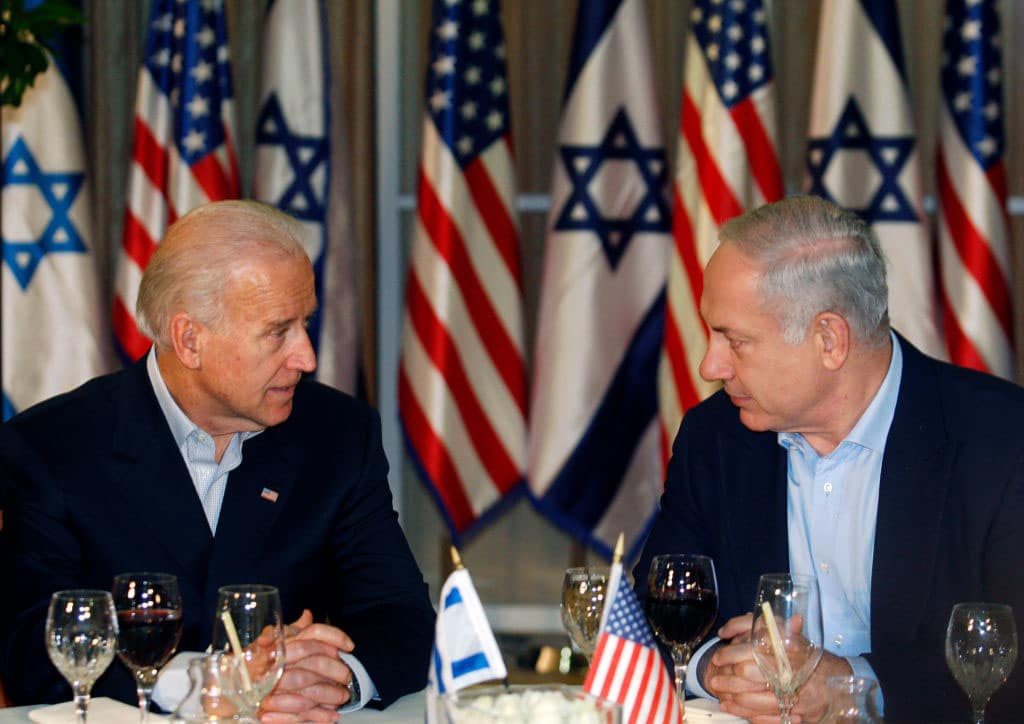
Israel should not be sitting by a telephone awaiting the first call from President Joe Biden.

Israel is a busy country. It has policies to implement, wars to fight, vaccines to distribute, agreements to sign, visitors to welcome, critics to reject, elections to hold. Sitting by the phone is a luxury it cannot afford, an indulgence as far from its character as can be imagined.

And yet, it gives the impression that it is sitting, biting its nails, awaiting Biden’s call.

This is pathetic and harmful. Let Biden bite his nails. Let him be the one waiting to make the call. In 1981, Prime Minister Menachem Begin pointedly asked U.S. Ambassador Sam Lewis, “Are we a vassal state of yours? Are we a banana republic?” The implied message was that Israel is no such thing. Well, if it isn’t – and this could be a matter for a more elaborate discussion – why is it waiting with such impatience for “the call”?

Of course, there is a flip side to this story of Biden not yet calling Netanyahu. To understand this side, it is useful to go back a decade, and be reminded of a president’s decision not to visit Israel as he was traveling to the Middle East. It was Barack Obama, who visited Cairo and Riad, Turkey and Iraq, and yet avoided Israel. As his defenders were quick to point out, Obama was hardly the first president to not visit Israel (he did visit, eventually). But that was beside the point. A first impression was made. A great suspicion took hold. Obama’s relations with the Israeli government – and the Israeli public – never really recovered. That is to say, first impressions matter.

For Obama, the “daylight” strategy for dealing with Israel – that is, to keep it at some distance – was by design. Was it a wise strategy? I think Obama’s record in the Middle East speaks for itself. He achieved little. His effort in the Israeli-Palestinian conflict came to nothing. You cannot advance peace for Israel when you do not have the trust of Israelis. His effort in taming the threat of Iran resulted in a flawed agreement that was ripped apart by the following administration (among other things, because Israel was vehemently against it). Donald Trump, as flawed a president as he might have been, achieved in one year more than Obama achieved in eight. Why? Because Israelis, Saudis, Emirates and others trusted him and agreed to cooperate with him.

Enter Joe Biden. He was Obama’s VP, but vowed to be his own man. He is the candidate Israel felt most comfortable with, because of his record of support and friendship. True, no one expected Biden to follow Trump and be as supportive of Israel as his predecessor. And yet, Israelis expected – they were told to expect – a president unlike Trump but also unlike Obama. If they begin to have doubts, you cannot blame them for having doubts. Two weeks and no call? Three weeks and no call?

Biden’s defenders tell us – like they did when Obama snubbed Israel – that this is nothing, that it’s not a snub, just his busy schedule. To which the only response is one given by Jerry Seinfeld in one of my favorite episodes of the show (watch it here).

“I thought he liked me, I thought he liked me, we were getting along”, says Jerry.

“Maybe he is busy, maybe he’s been out of town”, answers Elaine.

Jerry: “What, they don’t have phones out of town? Too busy? Pick up a phone, it takes two minutes. How can you be too busy?”

Biden is not too busy. Biden is deliberately not calling Netanyahu. Maybe he wants to teach him a lesson. Maybe he wants to signal that Israel is not a top priority. Maybe he wants to clarify that there is a new sheriff in town, unlike the old one. It is also possible that he, or his advisors, do not understand how much not-calling is going to cost him. Maybe he doesn’t understand that even though America is the strong ally and Israel the weaker one, there is a price for him to pay if Israel’s trust in him is lost.

Maybe Biden doesn’t understand that there is a price for him to pay if Israel’s trust in him is lost.

It is somewhat sad to see Israel in such state of eagerness to get a phone call.

It is also sad to see the President of the United States repeating mistakes that should not have been repeated.

He should have made the call long ago. And this can no longer be corrected.

Biden Not Calling Bibi: Big Mistake Read More »

At the ICC, Hypocrisy and Anti-Israel Bias Reach New Heights

Now that the Senate impeachment trial of Donald Trump has ended in an acquittal that left many feeling that justice was undone, we can get back to actual courtrooms where judges are wise, attorneys are honest, witnesses are truthful and jurors are always unbiased.

You know . . . the way legal systems operate ordinarily.

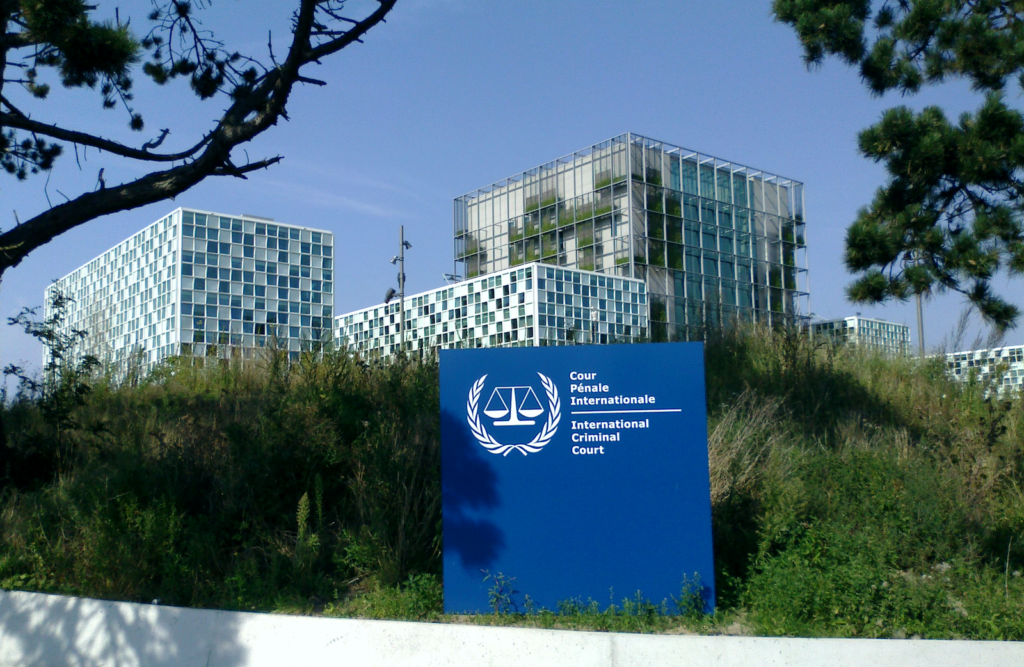
Like, for instance, the recent decision by the International Criminal Court (ICC) that it has jurisdiction over the West Bank, East Jerusalem and the Gaza Strip for the purposes of adjudicating war crimes purportedly committed by Israel against the Palestinians. (Theoretically, this jurisdiction also extends to violations committed by Hamas in firing rockets indiscriminately at Israeli civilians. But the chances of that investigation occuring are lower than President Trump acknowledging that he didn’t really win this past election in a landslide.)

Remember the ICC? It was established in 1998 to prosecute heinous atrocities committed by individuals living in lawless, anti-democratic societies where genocide and crimes against humanity go unpunished. Initially, the Clinton administration voted against its formation, and ultimately refused to seek Senate ratification, a policy that his successor, George W. Bush, continued.

The United States was not alone in severing any affiliation with a court that even kangaroos have the good sense of hopping away from. Among superpowers, Russia and China have declined membership. And Israel, along with 16 other countries, decided that there are more fruitful ways to kill time whenever the ICC is in session.

Given its mandate to prosecute individuals, there was little doubt that it was yet another biased, politicized body dominated by dictators and despots who wished to haul American and Israeli presidents, prime ministers and military leaders before the dock, holding them to legal standards none of these other nations would ever insist upon for themselves.

The court was located at The Hague, but the justice it would dispense there better resembled the contorted courtrooms of Kafka’s hellish dreams.

Think I am exaggerating? Well, the ICC has refused to investigate the Chinese persecution of Muslim Uighurs, the ISIS bloodlust of beheadings, and the genocide in Syria. The 22 prosecutions the ICC has thus far undertaken has resulted in just six convictions. In 2020, ICC judges called for an investigation into the alleged war crimes by the United States in Afghanistan. The Trump administration laughably denounced the Court and revoked the visa of its prosecutor.

This latest injustice against Israel was inevitable. Judging by Israel’s treatment at the United Nations, had the Jewish state accepted the jurisdiction of the ICC, all other investigations would have been dropped and the docket cleared for a continuous deluge of indicted Israelis.

As of 2016, the United Nations Human Rights Council has condemned Israel with 68 resolutions out of 135 in total. Since the Council’s creation in 2006, actions taken against Israel exceed all the world’s nations combined.

Since the Human Rights Council’s creation in 2006, actions taken against Israel exceed all the world’s nations combined.

In the United Nations General Assembly, from 2012 through 2015, 97 resolutions were adopted, 83 of which against Israel. In 2017 alone, 21 out of 27 resolutions denounced Israel. In 2016, 20 out of 26. Iran, Syria, North Korea, Myanmar, Crimea—all just once.

UNESCO passes ten resolutions a year criticizing Israel. Among its many denunciations is that Jews have no ancestral, historic connection to the Holy Land. Other than Syria, just once in 2013, no other nation has been the subject of a condemning resolution.

And you thought the Senate impeachment trial was political?

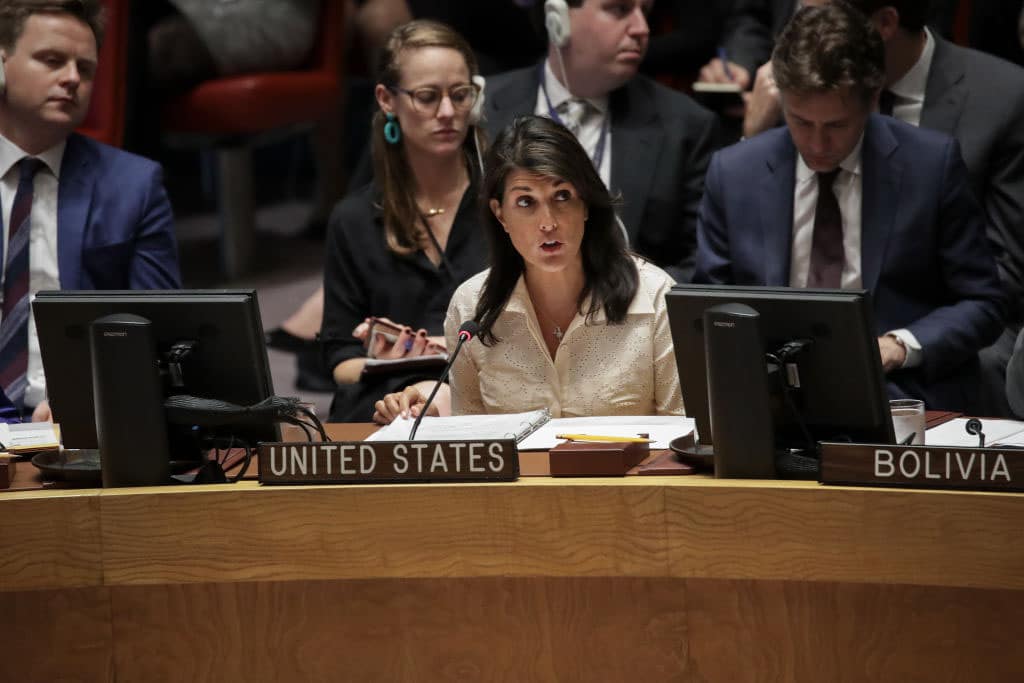
Recognizing this chronic anti-Israel bias for what it was, former UN Ambassador for the United States, Nikki Haley, called the Human Rights Council and UNESCO “corrupt cesspools,” and withdrew American financial support and membership—a demonstration of moral clarity and solidarity with the lone democracy in the Middle East.

Then U.S. Ambassador to the United Nations Nikki Haley speaks at a UN Security Council meeting concerning the violence at the border of Israel and the Gaza Strip, at United Nations headquarters, May 15, 2018 in New York City. (Photo by Drew Angerer/Getty Images)

The Biden administration has already announced that it plans to rejoin the Human Rights Council.

Either a court is authorized to adjudicate claims against an individual, or it isn’t. The Trump impeachment trial involved this procedural question, which the Senate decided in its favor.

Israel is not a signatory to the ICC. The Palestinian Authority joined the ICC in 2015 as a nonstate member—even though the jurisdiction of the ICC extends only to member states. Palestine, for the time being, is not and has never been a state. Moreover, jurisdiction does not apply to nations that have independent judiciaries capable of prosecuting atrocities.

No honest broker of peace can say that the Palestinians—led by terrorists and not statesmen—have proven themselves ready for statehood. Israel’s never-ending defense against Palestinian terror is, most assuredly, not a violation of international law. ICC intervention was always meant to investigate atrocities, not acts of lawful national defense. Finally, with a fully functioning and independent judiciary that has convened court martials since Israel’s inception, the ICC’s mandate has no role in Israel’s affairs.

Member states of the ICC, such as Germany, Hungary, Canada, the Czech Republic, Austria, Australia, Brazil and even Uganda, informed the court that it has no authority to intervene in the Arab Israeli conflict.

Palestinians have always been playing the long game: The world will one day hand all of Israel over for its homeland. No reason to engage in direct negotiations. In due time, global anti-Semitism, the moral bankruptcy of the Boycott, Divestment and Sanctions movement, the shameless hypocrisy of the United Nations, and the toothless legal might of the ICC, will combine to do all the work for them. No need to renounce terror or announce that it is prepared to be a good neighbor of Israel.

All that inestimable Palestinian patience, and the naive expectation that their fate is in the hands of nations that hate Jews even more than they do, will not be rewarded by this ICC ruling. After all, most people realize that the United Nations is just a glass slab on the East River of Manhattan filled with make-believe diplomats whose only accomplishment is far too many unpaid parking tickets. And the ICC at The Hague are just jurists speaking double Dutch, their courtrooms given over to con games.


Thane Rosenbaum is a novelist, essayist, law professor and Distinguished University Professor at Touro College, where he directs the Forum on Life, Culture & Society. He is the legal analyst for CBS News Radio. His most recent book is titled “Saving Free Speech … From Itself.”

At the ICC, Hypocrisy and Anti-Israel Bias Reach New Heights Read More »

Book Review: The Story of Esther Meets the Story of America

For Rabbi Stuart Halpern’s commentary on “The Enduring Story of Esther in America,” click here.

The year is 1853, the place is a Women’s Rights Convention in New York City, and the speaker is Sojourner Truth, a woman who has escaped from enslavement in the South.  She is illiterate, but she knows her Bible stories.

“Queen Esther come forth, for she was oppressed, and felt there was a great wrong,” she told the crowd, “and she said I will die or I will bring my complaint before the king. Should the king of the United States be greater, or more crueler, or more harder?”

No other biblical text is richer with meaning for American Jews than the Book of Esther, as Rabbi Dr. Stuart W. Halpern points out in his introduction to “Esther in America: The Scroll’s Interpretation in, and impact on, the United States,” a co-publication of Maggid Books, an imprint of Koren Publishers Jerusalem, and the Zahava and Moshael Straus Center for Torah and Western Thought at Yeshivah University.  As editor of the book, Halpern assembled two dozen essays from an impressive roster of accomplished scholars, each of whom offers a modern midrash on the meanings of Esther in the American Diaspora.

“Sojourner Truth’s usage of Purim as a prism through which to view her fight for equal rights was no anomaly,” Halpern explains. “Throughout our history, Americans have turned to the Scroll of Esther, the megilla, as they navigated their liberties, morals, passions, and politics. These recurring references are no accident. Rather, they reflect an appreciation of a story whose themes – freedom, power, fraught sexual dynamics, ethnicity, and peoplehood – continue to define American identity to this day.”

“Throughout our history,” Halpern writes, “Americans have turned to the Scroll of Esther, the megilla, as they navigated their liberties, morals, passions, and politics. These recurring references are no accident.”

Thus does Halpern set the table for a banquet of rich and varied scholarship.  We learn that Esther attracted the attention of Christian leaders in America as far back as the colonial era, including Anne Bradstreet, the first published poet in America, and Cotton Mather, the prolific author and fiery sermonizer.  Early advocates of American independence likened George III to Ahasuerus, thus shifting the blame for British oppression to the royal counselors rather than the king himself.  An early abolitionist named Angelina Grimké, addressing a pamphlet to “the Christian women of the South,” asked: “Is there no Esther among you, who will plead for the poor devoted slave?” And Rabbi Tzvi Sinensky, one of the contributors to “Esther in America” who seeks to understand and explain Esther’s “inner experience,” argues that we should “turn to an unexpected source: Hester Prynne, the central character in Nathaniel Hawthorne’s nineteenth-century classic ‘The Scarlet Letter.’”

Esther, as the various contributors concede in one way or another, is a problematic role model.  She came to be the queen of Persia through a kind of beauty contest.  She concealed her Jewish identity and her Jewish name, which is why the title of the scroll in which her story is told identifies her as Esther rather than Hadassah.  Above all, she succeeded in saving her fellow Jews by imploring the Persian king to rescue them, a role that casts her as a pleader rather than a leader.  Yet the essayists in “Esther in America” agree that Esther deserves to be regarded as heroic.

“Esther went from being an object to having subjects, from a vulnerable orphan in exile to a position of prestige in Ahasuerus’ vast empire, a position that materially elevated her life but one that initially accorded her little power,” argues Dr. Erica Brown in a contribution titled “Finding Her Voice: Black Female Empowerment and the Book of Esther.”  Enslaved black women “heard in Esther a female voice of heroism worthy of emulation.” And Brown concludes: “Unlike Esther, these women would not live to see their battles won, but, in speaking out, they added important and critical voices to the American annals of emancipation. Inspired by a woman they never met, these abolitionists paradoxically influenced generations of women they never met, reminding us that ‘history is not of such a black and white character.”

Some of the contributors find moments of ironic humor in the saga of Esther.  Dr. Shaina Trapedo, for example, calls our attention to the “Queen Esther contest” that was held in 1933 to crown the “Prettiest US Jewess.”  (The prize was a trip to Palestine, but the winner was accused of being secretly married and thus ineligible to wear the crown.)  Trapedo insists that the biblical Esther was a “reluctant contestant” in the beauty contest that brought her to the attention of the king, and she observes that “the Talmud suggests that her character was more lovely than her countenance,” which prompts her to quip that “a more fitting title might have been Miss Congeniality.”

Above all, Trapedo argues that Jews in the modern Diaspora found in Queen Esther a source of Jewish pride, and even the beauty contests can be seen as “acts of self-preservation and aspiration” rather than debasement.  “Being placed on a pedestal seems like the last thing the biblical heroine would have wanted,” Trapedo writes, and yet, “[u]nlike any other biblical narrative, the Book of Esther offers a model of a people who do not have the luxury of relying on God’s presumed favor and instead shape their own destiny based on merit, ingenuity, and self-reliance consistent with the American dream.”

Above all, Trapedo argues that Jews in the modern Diaspora found in Queen Esther a source of Jewish pride.

Trapedo is alluding to another awkwardness in the Book of Esther, where God is not mentioned. But Halpern himself points out that the only words attributed to Mordecai allow us to conclude that God is present even if not named.  By doing so, he joins the other contributors in elevating Esther to the lofty stature that she plainly deserves, not as a figure on a pedestal but as a human role model.

“Do not imagine that you, of all the Jews, will escape with your life by being in the king’s palace,” says Mordecai. “On the contrary, if you keep silent in this crisis, relief and deliverance will come to the Jews from another quarter, while you and your father’s house will perish. And who knows, perhaps you have attained to royal position for just such a crisis.”


Jonathan Kirsch, author and publishing attorney, is the book editor of the Jewish Journal.

Book Review: The Story of Esther Meets the Story of America Read More »

Will the Dems Use the 14th Amendment Against Trump?

Now that we’ve watched the Republican Party sacrifice their principles for the sake of political expediency, let’s see if the Democrats do any better.

Both the GOP’s abdication of moral obligation and the Democrats’ upcoming test are both directly related to Donald Trump’s conduct leading up to last month’s Capitol riots and the appropriate response to that behavior. Few Republican Senators bothered to defend Trump’s incendiary statements that led to the violence of January 6. Instead, most hid behind the ostensibly undecided constitutional question of whether a former president could be impeached as justification for their votes for this former president’s acquittal.

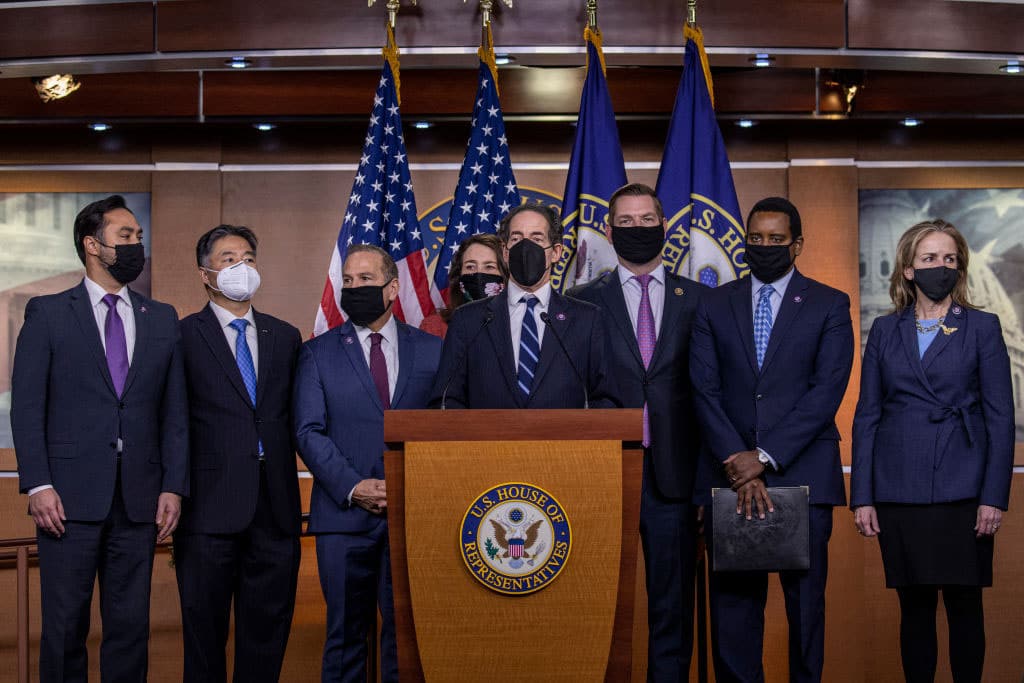
The Democratic House impeachment managers argued as to the importance of not only convicting Trump but banning him from running for public office in the future. They warned that allowing Trump to run again would likely lead to a similar insurrection if he were defeated in a 2024 campaign. Representative Ted Lieu (D-CA) spoke for his colleagues when he said, “You know, I’m not afraid of Donald Trump running again in four years. I’m afraid he’s going to run again and lose. Because he can do this again.”

Lead impeachment manager Jamie Raskin (D-MD) put the question even more starkly. “Is there any political leader in this room who believes that if he is ever allowed by the Senate to get back into the Oval Office, Donald Trump would stop inciting violence to get his way?” Raskin asked. “Would you bet the lives of more police officers on that? Would you bet the safety of your family on that? Would you bet the future of your democracy on that?”

Forty-three Republican Senators apparently are willing to take that bet. But we’ll now see if Democrats will take additional steps to prevent such a wager from being necessary, or if they are satisfied that a good faith effort was sufficient. Because there may be other ways to prevent Trump from running again.

Many constitutional scholars believe that a provision of the 14th Amendment, passed in the aftermath of the Civil War primarily to ensure that former slaves can not be deprived of their citizenship, could be used here. A lesser-known portion of the amendment bars anyone who has “engaged in insurrection or rebellion” against the United States or who has given “aid and comfort” to its enemies from holding office. This language was drafted to apply to former Confederate leaders, but the impeachment charge against Trump cites his alleged “incitement of insurrection” for his role in the events of January 6. Though the impeachment has concluded, Democrats could now move on to this alternative approach.

The question is whether they will. Public opinion polling shows that while large and growing majorities of Americans strongly disapprove of Trump, they are not nearly as vehement on his impeachment or conviction. These are swing voters who want to see Democrats focus their attention on matters of public policy rather than on an already-disgraced former president. (This is essentially Joe Biden’s position.) By voting to prohibit Trump from running for office again, the Democrats might be sending a message to a key segment of the electorate that revenge against Trump is more important than fighting Covid, promoting job creation and other kitchen-table issues that occupy the attention of most Americans.

Public opinion polling shows that while large and growing majorities of Americans strongly disapprove of Trump, they are not nearly as vehement on his impeachment or conviction.

One added consideration for Democrats considering this move is the Senate filibuster, which requires sixty votes to cut off Senate debate and pass most legislation – including this one. But while convincing 17 Republicans to vote for Trump’s conviction is a very tall order, getting 10 to side with Trump’s critics to allow the vote to proceed seems much more plausible. Seven GOP Senators voted to convict Trump and two others are retiring next year. Several Republicans publicly excoriated Trump even while hiding behind the question of constitutionality, a shield which would not be available on the 14th Amendment question. So getting to 60 votes is entirely plausible.

Democrats have made it clear that they want Trump barred from office for the good of the nation. Soon we’ll see whether the possibility of political backlash has any impact on their resolve to make another attempt to preserve our safety from the potential danger he represents.


Dan Schnur teaches political communications at UC Berkeley, USC and Pepperdine. He hosts the weekly webinar “Politics in the Time of Coronavirus” for the Los Angeles World Affairs Council & Town Hall.

Will the Dems Use the 14th Amendment Against Trump? Read More »

Drinking on Purim (or not)? Read This First

As someone who is Jewish, has family members in addiction recovery and now works for a treatment center for alcoholism and addiction, I wanted to learn more about Purim and the commandment to drink. How serious is this commandment, and what does it mean for the recovery community and their loved ones?

Fortunately, I had the opportunity to learn from Rabbi Dr. Chaim Meyer Tureff, the founder and director of STARS in Los Angeles, which helps individuals struggling with addictive behaviors. He is also the school rabbi for Pressman Academy and a spiritual guide on the Soberman’s Estate team, where I work.

What is the Essence of Purim?

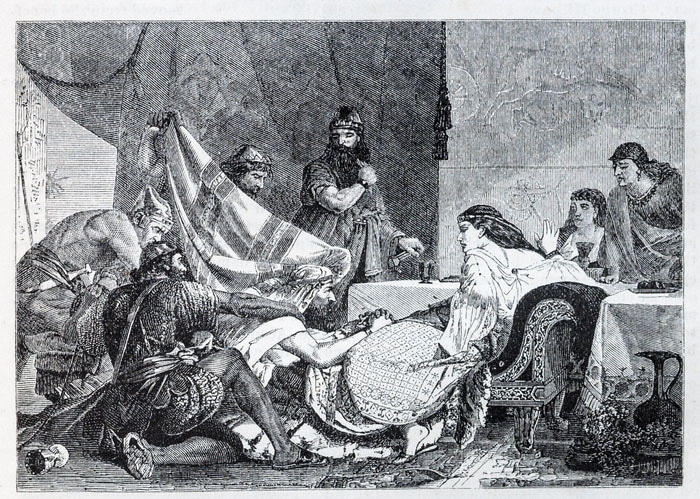
Purim is one of the they tried to kill us; we won; let’s eat holidays. We learn the Purim story from the Megillah, also known as the Book of Esther, recorded around the fifth century BCE. In short, King Achashverosh of the Persian Empire had a secondhand man, Haman, who initiated a decree to eliminate the Jewish people. Meanwhile, Queen Esther’s religious identity was hidden throughout her marriage to Achashverosh, but she realized that courageously revealing her Jewish faith just may save her people. When she told the king she was Jewish and that Haman’s plan would result in the demise of herself and her people, the king sentenced Haman to death. Although the king could not annul Haman’s original decree, he let Esther and her cousin Mordechai write a new decree of their choice, allowing the Jewish people to fight back and defend themselves.

In remembrance of this salvation, we feast and celebrate different activities specifically from the Megillah. Mordechai charged the Jewish people to observe the 14th and 15th of Adar every year as days of feasting and merrymaking, of sending gifts to one another and the poor (Esther 9:22). The word מִשְׁתֶּ֣ה (feast) can also be translated as drink, drinking, banquet or board. Based on this, in the Babylonian Talmud, Megillah 7b, Rava said: A person is obligated to become intoxicated with wine on Purim until he is so intoxicated that he does not know how to distinguish between cursed is Haman and blessed is Mordecai.

This obligation excludes individuals with the disease of addiction, which was recently proven to be 12.7% of American adults. For those who avoid drinking — because it can progress their disease or simply because they don’t enjoy it — this obligation may negatively distract from the core of the holiday, which is, according to Tureff, “unity, salvation, connection and giving back, which is why we give gifts to the poor and give gifts to friends and acquaintances; it’s about showing gratitude.”

He continued, “The Rambam codified laws for everything. In the Mishneh Torah, he’s got a whole section on Purim and Chanukah. He says any holiday that you’re celebrating where you are not giving back, that is not a real celebration.” “If you’re only thinking about the food or the fun you will have, rather than what you can give back to others, you’re not really celebrating correctly.”

The Commandment to Drink

How significant is the obligation to drink, anyway? It is debated whether or not drinking is a minhag or a halacha. A minhag is a communal practice or a custom. Minhagim are different than Halacha, which is Jewish law grounded in Torah or later rabbinic rulings. However, all agree that if drinking will make you sick or cause danger, you should not do it.

“I would say drinking falls into a strong category, and it’s codified that we drink, but it’s not if you don’t drink, you’re breaking a mitzvah. For example, not eating pork is a commandment; drinking doesn’t fall into that category at all. Neither is it one of the four mitzvot that are specific for Purim,” Tureff said.

“When I go to Purim meals, I don’t drink; some people do. Some people will just drink more than they normally do. If they’re not drinkers, they might have a drink; if they normally have a drink, say at a Shabbat meal, they’ll have two; some get drunk. I’ve been to places where people drink quite a bit. They don’t get in a car and drive or anything like that, but they definitely drink a lot. Depending on where you’re at, some people encourage you to drink, and some people don’t.”

Outcomes of Drinking

Jewish teachings provide contrasting opinions on alcohol consumption. On one hand, there is a Yiddish saying that Jews don’t get drunk. Yet another concept is a farbrengen. “I remember in Yeshiva they would have farbrengen, which is a Chabad gathering where you learn deep mystical things, and many of the people would do shots of vodka. The idea is sometimes, when we have physical constraints, we don’t allow ourselves to hit a certain element spiritually because sometimes spiritual elements are [harder to connect with]. You have to be in a certain frame of mind. Drinking was a way to open up your portal or open up your soul,” said Tureff.

Jewish teachings also recognize the risks and consequences of taking alcohol consumption too far. Eighteenth-century codifier R. Abraham ben Yehiel Michal Danzig said it is better not to get drunk on Purim if one knows it will lead to the likeliness of them acting in a lightheaded way or neglecting other mitzvot, such as praying and hand washing. In fact, Megillah 7b states, “The Gemara relates that Rabba and Rabbi Zeira prepared a Purim feast with each other, and they became intoxicated to the point that Rabba arose and slaughtered Rabbi Zeira. The next day, when he became sober and realized what he had done, Rabba asked God for mercy and revived him. The next year, Rabba said to Rabbi Zeira: Let the Master come and let us prepare the Purim feast with each other. He said to him: Miracles do not happen each and every hour, and I do not want to undergo that experience again.”

Jewish teachings recognize the risks and consequences of taking alcohol consumption too far.

As Jeffrey Spitzer said, a car can be like Rabba’s sword, and one cannot count on a miracle. Tureff volunteered as an EMT for Hatzalah, a Jewish volunteer emergency ambulance organization, and remembers materials sent out for Purim reminding people, especially young people, to drink responsibly. “You’re supposed to be having this good time and happiness, and then it gets marred by alcohol poisoning or somebody having a drunk driving accident, passing out or worse.”

Rabbi Dr. Abraham Twerski (z”l), world-renowned addiction expert, doctor and author, said, “Experience shows that particularly young people who drink to excess on Purim are likely to engage in shameful and dangerous behaviors. Hatzalah cannot keep up with the calls to take these young men to hospital emergency rooms! Can anyone conceive that this is a mitzvah?”

How to Celebrate Purim Without Drinking

If you are one of the many people choosing not to drink — whether based on recovery or personal preference — on Purim, you can still celebrate the holiday with full meaning and joy. Here are a few of Tureff’s tips to celebrating a sober Purim:

  1. Go somewhere that fits your ideology.

“There are a number of shuls in Los Angeles that do not allow alcohol on the premise for Purim and Simchat Torah, another drinking holiday, and value being a model for the community’s young people. There are other synagogues you go to, and when you walk in, you can smell the alcohol,” Tureff said. For those not drinking, the latter “wouldn’t be the one you necessarily should go to. You can hear the Megillah and be part of the festivities, and not put yourself in a situation fraught with danger.”

Tureff noted, “It can be tough, when you see other people, as recovering addicts, sometimes doing things, things that are legal, and all kinds of people are doing it, you might think why can’t I do that? … Why put yourself in that situation? You can focus on the wrong thing about the holiday. The holiday doesn’t need to be about drinking at all. Like a Bar or Bat Mitzvah, the party is great, but it’s not the essence of the event.

You can find a synagogue where the spiritual practice lines up with your own spiritual practice, where the essence is about the strength of Purim and not necessarily about how many shots you can do or how drunk you can get,” said Tureff.

  1. Celebrate in a sober way.

“It depends on where somebody is at in their recovery, but I would always encourage a sober Purim. There’s no reason not to have a sober Purim. There are specific mitzvot for Purim, including giving gifts to the poor, sending gifts to friends or acquaintances, eating the Seudah (Purim feast) and hearing the Megillah reading. These are the four commandments of Purim. Drinking is not included in this category. [Drinking] is like a side dish. Without that side dish, it doesn’t mean I can’t enjoy the meal,” said Tureff.

  1. Advocate for yourself.

“If you’re invited somewhere to a meal, I think it’s a fair thing to ask [about the alcohol]. Maybe it’s a Los Angeles thing, but people have no problem when they’re invited to a meal to say if they are vegetarian or gluten-free. Nobody’s embarrassed to say that at all, so what’s wrong with saying, ‘Thank you so much for inviting me to Purim; I’m so excited. I just want to know is there going to be drinking and, if so, what does that look like?’ That’s advocating for yourself,” said Tureff.

I wish you a meaningful, joyful and safe Purim; Chag Sameach!


Hannah Prager is the Community Relations Specialist for Soberman’s Estate, and a volunteer for Moishe House. Soberman’s Estate is a treatment center for men with alcoholism, substance use disorders and co-occurring issues, and provides kosher food accommodations and rabbinical support. To learn more or for personalized resources, call the Admissions Director at 480-595-2222 or visit www.SobermansEstate.com.

Drinking on Purim (or not)? Read This First Read More »