fbpx

February 3, 2021

McCarthy Won’t Remove Greene from Committee Assignments

House Minority Leader Kevin McCarthy (R-Calif.) issued a statement on February 3 stating that although he condemns Representative Marjorie Taylor Greene’s (R-Ga.) past social media posts, he doesn’t support removing her from her committee assignments.

Greene’s past social media comments have included accusing the Rothschild family of starting the 2018 California wildfires with a space laser, alleging that the 2018 Parkland shooting was a false flag operation and liking a post that called for executing Speaker of the House Nancy Pelosi (D-Calif.).

“Past comments from and endorsed by Marjorie Taylor Greene on school shootings, political violence, and anti-Semitic conspiracy theories do not represent the values or beliefs of the House Republican Conference,” McCarthy said. “I condemn those comments unequivocally. I condemned them in the past. I continue to condemn them today. This House condemned QAnon last Congress and continues to do so today.”

He added that after he met with Greene, she seemed to understand how she needs to hold herself to a “higher standard” as a member of Congress than she did as a private citizen. “I hold her to her word, as well as her actions going forward,” McCarthy said.

The House GOP leader then turned to the Democrats, accusing them of raising the temperature with their plan to vote on a resolution on February 4 stripping Greene from her committee assignments.

“While Democrats pursue a resolution on Congresswoman Greene, they continue to do nothing about Democrats serving on the Foreign Affairs Committee who have spread anti-Semitic tropes, Democrats on the House Intelligence and Homeland Security Committee compromised by Chinese spies, or the Chairwoman of the House Financial Services Committee who advocated for violence against public servants,” McCarthy said, referencing Representatives Ilhan Omar (D-Minn.), Eric Swalwell (D-Calif.) and Maxine Waters (D-Calif.), respectively.

“In the end, this resolution continues to distract Congress, especially given the limited time that Speaker Pelosi and the Democrat leadership want the House to debate and work, on what it needs to focus on: getting Americans back to work, getting kids back to school, and providing vaccines to all Americans who need it.”

Pelosi responded with a statement accusing McCarthy of being “cowardly” and designated him as “(Q-CA),” an apparent reference to the QAnon conspiracy theories that Greene has supported in past social media posts.

“The House will continue with a vote to strip Greene of her seat on the esteemed House Committee on Education & Labor and House Committee on Budget. McCarthy’s failure to lead his party effectively hands the keys over to Greene — an anti-Semite, QAnon adherent and 9/11 Truther,” the statement read.

Some Jewish Twitter users voiced displeasure with McCarthy’s statement.

“[Representative] Greene does not represent your values so…you went ahead and blamed Democrats and shifted your statement to indict them?” a user with the pseudonym Claire tweeted. “The party of personal responsibility is absolutely taking no damn responsibility for their own members.”

Israel-based writer Hen Mazzig also tweeted, “All the Republicans who are refusing to punish Marjorie Taylor Greene have no right to ever speak about antisemitism on the left again.”


Republican Jewish Coalition Executive Director Matt Brooks, on the other hand, praised McCarthy’s statement for “strongly condemning comments by @mtgreenee and noting they have no place in the GOP.”

McCarthy Won’t Remove Greene from Committee Assignments Read More »

Prayer Facing Imminent Death

Momentarily distinct
with our own bodies and our own consciousness,
we are blessed to risk love,
to parent new life,
to create and innovate,
to strive and to rest.

And then, finally, to return to You.

Knowing that the tasks are never completed,
the relationships never simple,
the twists life takes often surprising,
at last we rest in You,
as we once rested in our parents’ loving arms
so long ago.

Oneness from Whom we emerge at birth,
we know that all life flows back to you,
once more united
after the struggles, bruises and delights,
the challenges and aspirations,
the loves, betrayals and affirmations
that make life complex and maddening and sweet.

Grant that our rest be serene.
May our lifelong harvest of love bring You — and those we love — joy.
May our persistent efforts to nurture sustain those we have guided on the way,
and may the sweet scent of that sacrifice please You too
as You gather us in.

Thanks be
for this beautiful planet and our moment awake on its surface,
for life’s fleeting pleasures and abiding connections,
for a heritage wise, ancient and abiding,
for the tasks we completed and for those attempted,
for the loves sustained and ruptured and our friends — whether remembered or forgotten.

For it all — thanks, praise, shalom.


Rabbi Dr Bradley Shavit Artson (www.bradartson.com) holds the Abner and Roslyn Goldstine Dean’s Chair of the Ziegler School of Rabbinic Studies and is Vice President of American Jewish University in Los Angeles. A member of the Philosophy Department, he is particularly interested in theology, ethics, and the integration of science and religion. He is also dean of the Zacharias Frankel College in Potsdam, Germany, ordaining Conservative rabbis for Europe.

Prayer Facing Imminent Death Read More »

Where Things Stand with California’s Ethnic-Studies Curriculum

For more than a-year-and-a-half, StandWithUs has worked tirelessly together with concerned citizens and partners to remove anti-Semitism, anti-Israel bias and other destructive ideas from California’s draft Ethnic Studies Model Curriculum (ESMC). At the same time, we have pushed for the inclusion of positive education about anti-Semitism and the Jewish people. The stakes are extremely high because California public schools serve 6 million students, and the ESMC is likely to be used as a model in many other states as well.

As the ESMC receives increased national attention, we are providing an update about this critical challenge for California and the nation as a whole.

It is important to put this issue in context.

We face a massive statewide and nationwide threat: Extremists are shamelessly exploiting ethnic studies to promote hate and one-sided political agendas. We cannot allow hatred and ignorance about Jews and Israel to be institutionalized in American public education.

At the same time, we have a huge opportunity: The subject of ethnic studies is meant to give marginalized communities better representation in the classroom. The bill that led to the creation of the ESMC envisioned a “culturally meaningful and relevant curriculum,” educational standards guided by “equity, inclusiveness and universally high expectations,” and an “objective of preparing pupils to be global citizens with an appreciation for the contributions of multiple cultures.” These are goals we fully support for other communities and for our own. We can counter anti-Semitism and ignorance by teaching millions of high school students about the struggles and successes of the Jewish people.

The threat is amplified by the fact that a significant faction in the field of ethnic studies, represented by the Critical Ethnic Studies Association, institutionally promotes anti-Zionism and discriminatory boycotts against Israel. Too often, this faction engages in outright anti-Semitism by framing Jews as “white, privileged, colonial oppressors.” This is why, in September 2020, a program within San Francisco State University’s College of Ethnic Studies hosted an anti-Semitic event shamelessly glorifying convicted terrorist Leila Khaled. It is also why the first draft of the ESMC was so deeply problematic.

The opportunity is illustrated by the fact that there are major school districts with inclusive ethnic-studies curriculums that reject one-sided political agendas and promote critical thinking.

Since the first draft of the ESMC was released in August 2019, StandWithUs staff, students, community activists and partners across the state have fought tooth and nail to counter the threat and seize the opportunity.

Together, we have persuaded California education officials to make significant positive changes. These include the removal of much anti-Israel and anti-Semitic content, the addition of guidance promoting critical thinking, and the inclusion of material about Jews and anti-Semitism. For example, thanks to a lesson plan submitted by our friends at JIMENA, the IHRA Definition of Antisemitism is currently included in the ESMC. Additionally, Californian Gov. Newsom vetoed a bill that would have made ethnic studies a graduation requirement, demanding a more balanced and inclusive curriculum. We should acknowledge what all of us have accomplished and be proud of it.

At the same time, there are still significant problems with the ESMC, and anti-Israel extremists are actively trying to reverse the progress we have made so far. For example, the latest draft includes a lesson plan that celebrates numerous prominent figures who have promoted anti-Semitism and other destructive ideas. In multiple areas, the ESMC does not live up to its own requirements calling for balance and critical thinking. If we become satisfied or complacent, California will approve an ethnic-studies curriculum and graduation requirement that may cause significant harm across the state and beyond.

Where do we go from here?

Education officials are reviewing a massive number of critical comments they received prior to Jan. 21, including thousands we submitted together. This review will result in recommended changes to the curriculum, which will be sent to the State Board of Education for a vote on March 17. StandWithUs will engage with relevant leaders and share additional calls to action with the public throughout this process.

In the meantime, we encourage you to review our detailed analysis of the ESMC and share it with your California state legislators (find their contact information here).

Bigger picture, we are using all the lessons we have learned since August 2019 and preparing to tackle this challenge as it spreads to California school districts and across the country. We are in this for the long haul and will never stop fighting for your children and ours.


Roz Rothstein is the co-founder and CEO of StandWithUs, an international, nonpartisan Israel education organization.

Where Things Stand with California’s Ethnic-Studies Curriculum Read More »

2021 NAACP Image Awards: The Jewish nominees, from Daveed Diggs to Doja Cat

(JTA) — Several Jewish stars are among the nominees for the 2021 NAACP Image Awards, which celebrate Black achievement in movies, television, music and literature.

The list announced Tuesday features a mix of familiar Jewish names, such as the often-awarded rapper Drake and TV star Tracee Ellis Ross, along with rising artists like actress Jurnee Smollett and rapper Doja Cat.

The ceremony will air virtually on March 27. Here are the Jews to know.

The stars

Jurnee Smollett in “Lovecraft Country” (HBO)

Jurnee Smollett received a nomination for her breakout role as Leti in “Lovecraft Country,” the HBO horror drama that received eight nominations, including for outstanding drama series. Smollett last won a NAACP Image Award for her role in the 2008 film “The Great Debaters.”

“Black-ish,” which stars Tracee Ellis Ross, leads the TV categories with 11 nominations, including for outstanding series. Ross was tapped for the sixth consecutive year as outstanding actress in a comedy series — she’s won four times. Ross tacked on another nomination, as outstanding actress in a motion picture for “The High Note,” and now has 16, bringing her career total to 16.

Multi-hyphenate star Daveed Diggs, whose 2020 included an instantly iconic Hanukkah song and a viral dig at Donald Trump, was nominated for his portrayal of Marquis de Lafayette/Thomas Jefferson in the filmed recording of the musical “Hamilton,” the Broadway sensation that was released on Disney+ last summer. The musical film received a total of four nominations. Diggs is up against his fellow “Hamilton” star Leslie Odom Jr.

The shows

Rashida Jones as Joya in an episode of #blackAF (Gabriel Delerme/Netflix)

The Netflix sitcom “#blackAF,” starring Jewish actress Rashida Jones alongside creator Kenya Barris, was nominated for outstanding comedy series, as was “The Last O.G.,”which stars Jewish actress Tiffany Haddish alongside Tracy Morgan.

“Bridgerton,” the hit Netflix series based on the series of the same name by Jewish romance author Julia Quinn (nee Julie Cotler), received three nominations: for outstanding drama series, for Rege-Jean Page’s star turn as the Duke of Hastings, and for Adjoa Andoh’s portrayal of Lady Danbury.

Missy on “Big Mouth” as voiced by Jenny Slate. (Netflix)

“Big Mouth,” the very Jewish animated Netflix show about puberty in suburban Westchester, received a nod for outstanding animated series. The series made waves after it recast the voice of the character Missy, a Black Jewish tween, after Jewish actress Jenny Slate stepped away in June.

“At the start of the show, I reasoned with myself that it was permissible for me to play ‘Missy’ because her mom is Jewish and White — as am I. But ‘Missy’ is also Black, and Black characters on an animated show should be played by Black people,” Slate wrote in a statement posted by Instagram.

Toward the end of last season, Missy’s voice changed to from Slate to Ayo Edebiri, a writer on the show.

Music

Doja Cat attends the 2020 MTV Video Music Awards broadcast, Aug. 30, 2020. (Frazer Harrison/Getty Images for RCA)

Breakout rapper Doja Cat, real name Amalaratna Zandile Dlamini, was nominated for best new artist for her record “Say So.” Doja Cat also garnered many nods at the 2021 Grammys.

Drake, real name Aubrey Drake Graham, received three nominations: for outstanding male artist, and two for outstanding hip hop/rap song, for the tracks “Laugh Now, Cry Later” and “Life Is Good.”

Jhené Aiko, a singer-songwriter with Jewish heritage, received two nominations for her song “B.S.” feat. H.E.R., and a nomination for her album “Chilombo.”

Literature

Author Walter Mosley, who recently was honored with the National Book Foundation’s lifetime achievement award, was nominated in the outstanding literary work, fiction category for his novel “The Awkward Black Man.”

Laura Freeman, a children’s book illustrator, received a nomination alongside author Nikki Grimes for their children’s book “Kamala Harris: Rooted in Justice.”

2021 NAACP Image Awards: The Jewish nominees, from Daveed Diggs to Doja Cat Read More »

Canadian Navy Releases Sailor With Neo-Nazi Ties

The Royal Canadian Navy announced on February 2 that they released a sailor that had ties to a neo-Nazi organization.

Royal Canadian Navy Commander Craig Baines said in a statement that the sailor, Boris Mihajlovic, was being let go after initially being reinstated in June. Mihajlovic used be an administrator on a neo-Nazi forum called Iron March and was a member of Blood and Honor, a neo-Nazi group that the Canadian government has designated as a terrorist organization.

Baines acknowledged that there were “deficiencies” in how Mihajlovic’s case was initially handled and that steps are being taken to improve how the Navy handles such cases going forward.

“I cannot state clearly enough that the Canadian Armed Forces and Royal Canadian Navy have zero tolerance for racist and discriminatory behaviour in our ranks,” Banes said. “Canada is an inclusive and diverse country, and we must strive to ensure that the Forces respect and reflect our nation and its values.”

Canadian Jewish groups praised the Navy for severing ties with Mihajlovic.

“We commend Minister Sajjan, the Navy and the Canadian Armed Forces for coming to the decision to release this sailor,” Jaime Kirzner-Roberts, director of policy at the Friends of the Simon Wiesenthal Center, said in a statement. “Military members who engage in hate activity bring shame upon our Armed Forces, our veterans and our country. There are real reasons for optimism that we have turned an important corner and that those who espouse hateful or extremist ideologies will find no sanctuary in our military.”

B’nai Brith Canada similarly tweeted, “We commend @RoyalCanNavy for taking strong action by severing ties with a sailor with a white supremacist past and committing to fight hateful conduct.”


Mihajlovic had said in December 2019 when his past neo-Nazi ties came to light that “he regretted his actions and had turned his life around,” according to the Canadian Broadcasting Corporation. He was suspended but then later reinstated after claiming that his views had changed.

Canadian Navy Releases Sailor With Neo-Nazi Ties Read More »

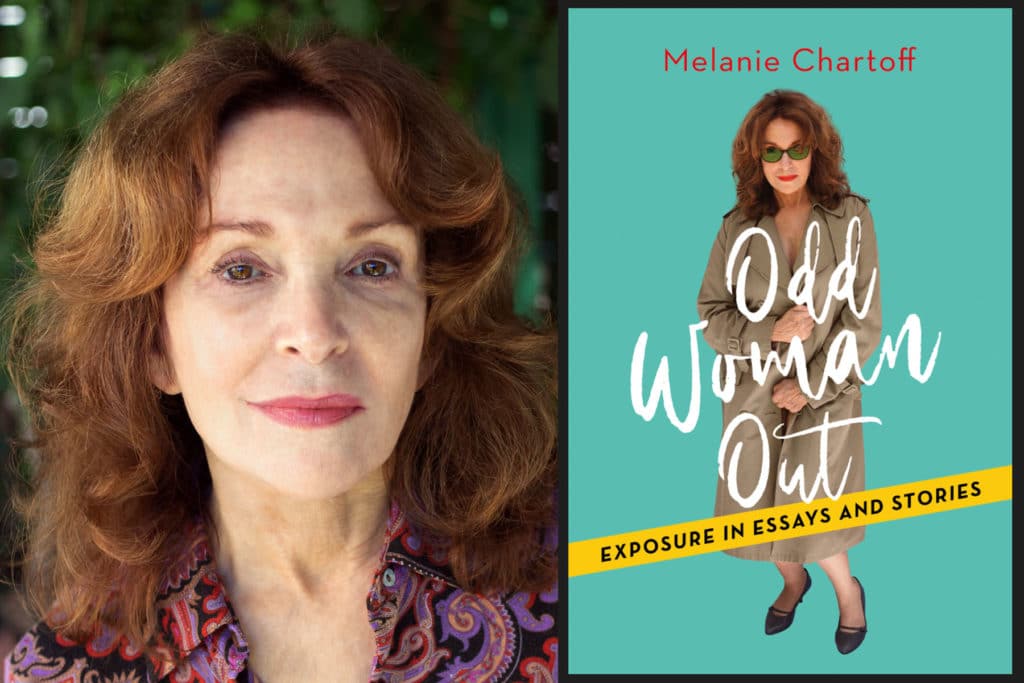
Melanie Chartoff Exposes Herself in Debut Memoir ‘Odd Woman Out’

Melanie Chartoff never intended on writing a book. With a multi-decade career as a voice-over, TV, film and stage actor, writing her life’s journey on a page felt unnecessary. But after performing a musical memoir four years ago at Joshua Tree Comedy Festival —that included songs and a bit about sexual awakenings at the gynecologist— she realized her musical stories were merely essays waiting to be organized.

She took a few of those stories on the road to Comedy Central’s “Sit n’ Spin” show, and Jewish Women’s Theater, now The Braid. Now newly published on Feb. 2, “Odd Woman Out: Exposure in Essays and Stories” (Books Fluent) is on bookshelves everywhere.

In her debut memoir, Chartoff discusses her Broadway and television careers, which led to her roles on “Fridays,” and “Rugrats,” to name a few, and the neuroses that come with navigating the spotlight. She also exposes her family stories, sexuality, feminism and finding love in her 60s. For the self-described, “lapsed Ashkenazi Jewess who loves the culture (and people) but doesn’t love the religion,” the book is also filled with Jewish anecdotes and life lessons learned, including some from a guru she met in the Catskills.

Chartoff spoke candidly with the Journal via Zoom about the book. This interview has been edited for clarity.

Jewish Journal: When did you start writing this book?

Melanie Chartoff: I actually sat down and decided to write the book two years ago. Then it took me around a year to finish. I had a couple of different publishers here and there. The pandemic slowed things down. It’s nice to have something I can hold onto.

Most of my work is so ephemeral. It goes out over the television airways or it goes out to the audiences in the theaters, but here’s a tangible thing I can hold in my hands.

JJ: The book is very sexual. It’s great. Can you talk about why you wanted it that way?

MC: It’s bizarre. That’s why I called it “Exposure in Essays and Stories” because I talk a lot about the undercurrent of sexuality. I was thinking sub-textually in terms of when the pill came in, I wasn’t really ready for it morally. I wasn’t ready to be so promiscuous morally. So, I talk a lot about that in the book, how confusing that was for me, a nice Jewish girl from New Haven. It used to be frowned upon to not be a virgin at marriage during my parents’ day, and then when the pill was suddenly widely accepted it was suddenly okay to have lots of sex before you got married, and it was a freedom that we should have all valued, but there was another part of me that feared it. It took me a long time to take responsibility for myself as a woman.

JJ: Why do you think that is?

MC: I kind of came out in this book as a person who doesn’t have it all together, who went through a lot of confusion, and the chapters in the book are turning points in my thinking, where I got a more solid idea of this is who I am.

Every role I’ve ever played is still with me in some way, and it’s interesting because I’m kind of a character actress who started out as an ingenue. The sweet, innocent, perfect little girl. Then I did shows like “Fridays,” which focused more on my femaleness. I had to come out of the closet as a real woman who had cravings and desires and compulsions just like everybody else, and little by little I came to accept these conflicting facets of myself and make a whole human being, but it took me a while. This is my coming out of the closet book.

I had to come out of the closet as a real woman who had cravings and desires and compulsions just like everybody else.

JJ: You are so vulnerable in this book. Which chapter do you think was most challenging to write?

MC: I think the chapter where I start seeking help from spiritual people. I take the trip to the Catskills to meet with a guru, which is where my career started as a comedian, and one of the same clubs I played that was a hotel resort had now been turned into an ashram. It was wacked. I had a very difficult chapter there where I talk about nearly having a breakdown and how that helped or hurt me going to that spiritual retreat.

JJ: You talk about religion in a spiritual sense and also in a Jewish cultural sense. Has that always been your relationship with Judaism?

MC: When I was a kid my parents were very anti-religion. They said I could believe whatever I wanted. I’d go to [B’nai mitzvot] and I’d also go to my girlfriend’s Christmas mass.

[My dad’s] attitude was we should accept all the religions; So they kind of became “Jewmanists.” I was too busy singing, dancing and acting to really pay much attention or have a need for religion until I came to New York and began to grapple with a lot of issues about this dream of mine to be an actor. Was this God’s will or was this my need for attention? It’s hard for me to tell the difference between the two. I questioned myself a lot about that in the book, and I came to need an inner voice, an inner God, so since I was in show biz I knew I needed to have a Jewish God because they were so much more show biz.

And as I grew older I would go different places on the Jewish spectrum. Later on I played Didi Pickles and her mother [on “Rugrats”], who was a very conventional Old-World-Russian peasant looking woman, and I steeped myself more in the Jewish culture and religion, the aspects of it that I could accept and sort of dismissed the stuff that was dogma that didn’t suit me.

When I married my husband I [became more observant]. He knows Hebrew, he’s been bar mitzvah’d. He lived in Israel on a kibbutz for a year. And getting closer with his family has brought me closer to the culture and the religion.

JJ: I love that chapter, Love At First Seder. You fell in love with your husband’s kids instantly and debated whether you wanted to stay with him or if you wanted to stay with the kids. That was so inherently Jewish and wonderful.

MC: He has a wonderful family, warm and wonderful family. I have a whole mishpocheh now. We see them as much as we possibly can, and their kids. There’s always family milestones, which in my family we didn’t really have. My dad didn’t celebrate Hanukkah specifically. He celebrated Christmas and Hanukkah and Halloween. He celebrated everything, but there was no real emphasis on Judaism as a religion to study. Now I feel much more like myself than I ever had before.

JJ: What about Stan was different from the other experiences? How did you know he was the one?

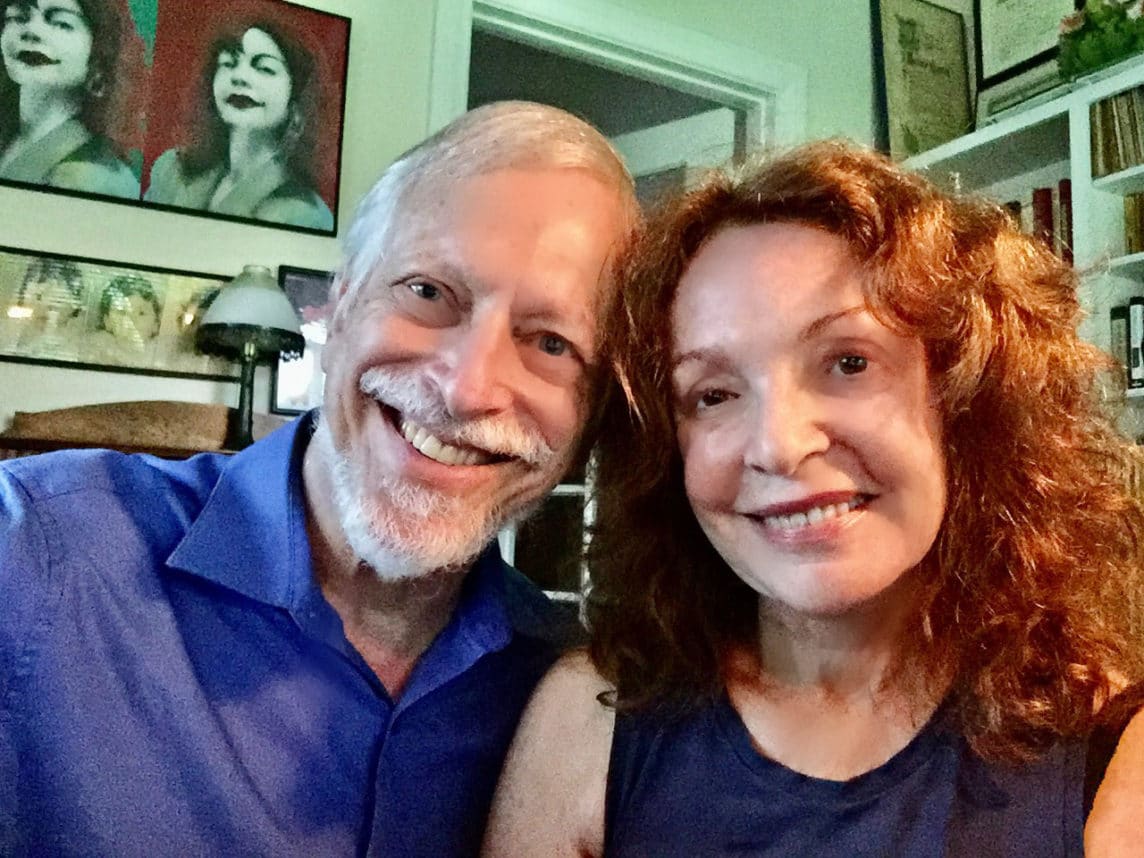
MC: Well, he’d been a father. That was very important to me. I wanted someone who had grown kids since I missed the first go round and didn’t have any of my own. He was very emotional. I think on our first date we came to tears and laughed in equal measure for about four hours. He has, like me, this residual low self-esteem, a great deal of humility, doesn’t feel like he needs to be the biggest money-maker as a therapist in a very big therapist town. I think we both wanted a relationship, which was Jewish but not too Jewish where we could have a good life. We both wanted to travel, and in our first years together we had some amazing trips. I hope we have more. I never traveled very much until I met him. We have a similar sense of humor. We felt like family at the first dinner. It wasn’t a very exciting sexual kind of adventure. It was exciting in the sense of our conversation being very far ranging and original. He has a very original way of expressing himself and he felt I did, too. There were just so many things that meshed finally, and it became very clear we were on some serious path very quickly.

JJ: How old were you when you got married?

MC: Sixty-five. It was sort of like I got menopause, got Medicare, got married, a very unusual order of business.

JJ: What was the most valuable thing you learned from waiting?

MC: That I’m really fine on my own. I didn’t dread Saturday nights anymore. I love my alone time. I like my time with my friends. I had a real rich hunger for theater and I went alone sometimes.

We heard each other’s love call. One of the reasons I wrote this book was that I wanted to give other women hope. When I told other women I was marrying at 65 for the first time, younger career women would say, “Oh, you give me hope.” I hope younger women will read it and keep the hope alive because it’s never too late to find one to love and to love yourself.

JJ: I love that. Throughout your book, you narrate as an outsider. You were the odd woman out. Do you still feel like that? Did art help you feel less of that?

MC: In a way, and I didn’t realize it until the last 10 to 20 years. Performing estranged me more from people, and fame also did that. It really separated me further from people. And now that I’m less recognizable because mostly what I’ve done is voiceover in the last few years, a few stage readings of plays, people accept me at face value, and I know I’m being liked for who I am, not because of some gloss I have on me from a television show or something else I’ve done that’s controversial.

I feel less odd now, although I think we all feel a little bit odd. John Goodman read the book and he said, “Well, I felt just as odd as you in different ways. I still do.” I think a lot of us actors do feel like we’ve got some extra channel, some extra pressure that forces us to be different and to be noticed.

JJ: You discuss being a feminist throughout the book. How has your view on feminism changed?

MC: I was very pro ERA [Equal Rights Amendment]. That was the biggest part of my feminism. I was in a lot of marches, I burned my bra. I really espoused that philosophy that was very intense when I first when to New York in the ‘70s.

In terms of feminism now, I think feminism is just coming into its own now. So many more women in office, so many more young women in positions in Congress taking the lead in so many dialogues. I think Black Lives Matter has been wonderful for feminism because Black women are strong women, I mean stronger than white women have ever had to bear. I know it goes in waves… As I was coming to consciousness in the 70’s, white women seemed the primary force behind feminism, and black women were on a separate track rightly protesting their lack of inclusion. In this millennium, more females of color have come into prominence —in politics, producing, publishing [and] the arts than ever before. It’s looking more like the America I prefer.

JJ: You talk about your commercial voice over work in the book. Was it an interesting transformation to go from acting on a set to character acting for “Rugrats?”

MC: It’s actually my mother’s voice that I’m using. When I read the description of this character it was my first cartoon audition. It said she was an anxious mother but very intent on doing the right thing. That felt so much like my mom and I got called back for it. They had an improvised scene between myself and Jack Reilly who played Stu Pickles. At one point Didi just loses her temper and gets upset. So I just did. Apparently they thought it was very funny so they hired me to do that.

When I saw my voice from my mother’s voice coming out of this creature, it was just shocking and bizarre and strange and wonderful. That was the first cartoon character I ever created. After a while she did seem to become a separate creature from me. I hadn’t been able to watch my own body that objectively, my own face that objectively. I’d been criticizing everything. But I thought the animation was great and it began to look more like me over the years: higher forehead, using my facial expressions, the things I would do with my mouth. It was a thrilling amalgamation. I just loved it. I loved the recording sessions. It was always just me and Jack and Michael Bell who played Boris, the Jewish grandpa in the booth together.

JJ: You write about it a lot. Especially the “Rugrats” Hanukkah special. What an amazing thing to be a part of.

MC: It was wonderful, and the Passover special also. They rerun them at this time of year, and the Hanukkah special in particular, which Minka narrates the wonderful story of Judah, the Macababy. I thought that was so clever. It was really the first animated Jewish special or Passover special.

JJ: They’re many Jews in Hollywood but Jews don’t always talk about their Jewishness or show it on screen. You do on [Jewish streaming service] ChaiFlicks.

MC: I’m in a couple of things the Jewish Women’s Theater [now The Braid] has sold to ChaiFlicks, things that I wrote and performed. In fact, the first chapter of my book was done as a stage play. How did this happen to a nice Jewish girl caught in a Hustler store buying a dildo? I performed it with other people. It was hilarious, and so they have that on ChaiFlicks now.

JJ: Going back to your mishpocheh, this book is dedicated to your mom. How did she help model what love looked like?

MC: My mother fell in love while she was with my father, and none of us ever knew this. It was a man at work who she’d known for many years. Then she was 64 and he made a move. So she was in love and finally left my father at 65 and was deeply in love for the first time and wanted to talk about it all the time. I was a little bit put off by the details. She wanted to share the details with a girlfriend and there was nobody her age that wanted really to hear about it, and unfortunately her daughter really didn’t want to hear the details either. But I saw what she was like when she was in love. She and my father, I guess it was one of those appropriate marriages. They had about the same level of commitment to the faith. They were young, but there was not a great deal of love in the household. I saw my mother become another person when she was over 65. She’s 96 now and she’s still learning; she’s still open to learning about herself and the world.

It was just very suspiciously symmetrical when my mother divorced at 65 and I got married at 65. I kept thinking that there was some quiet, repressed urge in me not to marry until my mother was happy because I thought it would hurt her to exemplify a beautiful marriage when she didn’t have one. She didn’t get to have a beautiful marriage, but she did have a beautiful relationship for a short time until the man passed away. It was really sweet. She became selfless with him… She really came into her own in her 70s, and I’m hoping that’s going to happen for me, too.

JJ: What do you hope people take away from this book?

MC: It’s never to late to learn to love…yourself and, if you’re lucky, somebody else, too.

“Odd Woman Out” is now available wherever books and audiobooks are sold.

Melanie Chartoff Exposes Herself in Debut Memoir ‘Odd Woman Out’ Read More »

Let My People Go

Fifteen years ago, I spent a year studying in Israel. Gershom Sizomu was my chavruta — my study partner. We laughed together, we ate together, we danced together, we cried together, we mourned together. We became rabbis together.

Gershom was enrolled at a rabbinical seminary in Los Angeles, and I in New York City, but Jerusalem brought us together. Our initial divide was far greater than higher education on parallel coasts of the United States. I was a 20-something from New Jersey. Gershom was already a leader of the Abayudaya Jewish community of Uganda — a homegrown, century-old African Jewish community with a volatile history of persecution and rejection. But Gershom’s desire to enhance his studies and bring back deeper Jewish learning to his community brought him to our shared table of discourse at the Schechter Institute of Jewish Studies in the Neve Granot neighborhood of Jerusalem.

I remember when we studied the Talmudic tractate of Shabbat with great detail. Gershom was astounded that I had never experienced separating the wheat from the chaff or slaughtering or milking an animal. In fact, he often laughed at how different our upbringings were — not judging me, but allowing me to learn from him (and he from me).

Gershom taught me about his nineteenth-century ancestor, Semei Kakungulu, and shared with me the entirety of his Jewish community’s history through Ugandan President Idi Amin’s tyrannical reign. I was thrilled to learn of this incredible Jewish community, which evolved perhaps the same way our biblical ancestors and early rabbinic Judaism evolved.

Gershom and I became brothers, and following the completion of his rabbinical studies in Los Angeles, Gershom returned home to serve as the first native-born Black rabbi in Sub-Saharan Africa — the first chief rabbi of Uganda. One of his initial acts was to conduct an official conversion ceremony for 250 people at the village of Nabogoya, with converts coming from all over Uganda, Kenya, Nigeria and South Africa.

Gershom has spent numerous shabbatot here in the Twin Cities, bringing the music, culture and brotherhood of the Abayudaya Jewish community to our Minnesotan communities. He is recognized not only as a communal Jewish leader but also as a leader who brings people of all faiths together, having received his BA from the Islamic University in Uganda and serving as a Member of Parliament for the past five years.

Our friendship alone would provide for a lovely story of brothers in the study of Torah — but that is not why I share this with the world today. I share this story because I am distressed and mourning collective Jewish peoplehood.

I celebrated several years ago when the Jewish Agency for Israel formally recognized the Jewish status of Gershom’s community — I called him elated and overjoyed. But then, last week, in response to a member of the community’s request to immigrate to Israel, Israel’s Interior Ministry announced that they do not consider the Abayudaya as a “recognized Jewish community” and do not honor any of the non-Orthodox conversions in which its members have participated. They were overturning the Jewish Agency’s recognition.

I have not yet called Gershom. Because I am ashamed. I am grief-stricken. And I am angry. The response is solidly grounded in either racism or Ultra-Orthodox hegemony — or, sadly, both. This ruling means that members of the Abayudaya community cannot make aliyah — immigrate to Israel — under the Law of Return.

In 1950, Israel’s Knesset passed this extraordinary law, defining for generations to come one of Israel’s chief goals, that “every Jew has the right to immigrate to this country.” And yet now the doors are closed, part of a larger winnowing of pluralism in Israel.

For nearly thirty years, the Ultra-Orthodox have held disproportionate influence within the government even though they only have about 10-15% of Knesset mandates. In fact, Ultra-Orthodox parties have controlled the Interior Ministry for years, which allows them to oversee the rabbinate, determining policies around Jewish lifecycle events, such as marriages, funerals/burials, conversions and divorce. Ultra-Orthodox hegemony over the recognition of conversion (and immigration) has led even to bitter infighting within the Orthodox community, with Orthodox rabbis in Israel not recognizing Diaspora Orthodox conversions, not recognizing those in Israel altogether and, of course, calling into question the conversions of Conservative, Reform, and Reconstructionist denominations.

The Law of Return has indeed, in many cases, fulfilled the Jewish utopian ideal of a Return to Zion — but in many cases, because of this Orthodox hegemony, it has failed. The rejection of Abayudaya Jews is just the latest example.

The rejection of Abayudaya Jews is just the latest example of how the Law of Return has failed to fulfill the Jewish utopian ideal of a Return to Zion.

I remember when Gershom described to me his memories of the heroic raid on Entebbe Airport. On July 4, 1976, Israeli commandos carried out Operation Thunderbolt, a daring hostage rescue mission. The unit’s leader was the team’s sole casualty — Yonatan Netanyahu, brother of current Israeli Prime Minister Benjamin Netanyahu. Even though Israel was unaware at the time of Gershom’s fledgling, persecuted Jewish community, decades later, Gershom worked to honor Yoni’s memory. And indeed, Israel committed to Israeli-sub-Saharan African bilateral relations in 2016.

Certainly, Israel has gone to great lengths to rescue Jews from Africa. In 1991, Minnesota Senator Rudy Boschwitz was President George H.W. Bush’s emissary to Ethiopia. His work led to Operation Solomon, which rescued and airlifted the Ethiopian Jewish community to Israel.

But such openness seems reversed today, as the Israeli government focuses less on what it means to build and embrace a global Jewish community and more on how to define Jewishness. To be clear: the Abayudaya have no desire, nor any need, to be “rescued.” Nor do they need anyone else to affirm their Judaism or confine it to categories they do not use, such as denominations. Their community is burgeoning and inspiring the growth of other Jewish communities across the African continent. But those Ugandan Jews who dream about immigrating to their adopted ancestral homeland should have an opportunity to do so.

Our rabbis teach us that the collective fate of all Jews is intertwined, that we are responsible for one another — kol yisrael aravim zeh lazeh. Israel’s Interior Ministry’s decisions this past week suggest otherwise.

On February 3, Israel’s High Court of Justice will hear the full case, their decision serving as the final determination for Abayudaya Jews. Indeed, this decision will have much broader consequences for the relationship between Israel and the Diaspora.

Often the feedback from those in Israel to those of us “outside” is if you really want to weigh in on the “situation” here, then move here. Some are trying to — so it is high time to let them.


Rabbi Avi S. Olitzky is a senior rabbi at Beth El Synagogue in St. Louis Park, Minnesota.

Let My People Go Read More »

All the Jewish Nominees for the 2021 Golden Globes

(JTA) — “Schitt’s Creek” is trying to pick up in the Golden Globes where it left off in the fall with its historic Emmys sweep.

The show about a wealthy interfaith Jewish family was nominated Wednesday for five awards, including four for the main actors and one for best series.

There are plenty of other Jewish nominations, too, notably “Mank,” the acclaimed film on the story of Jewish screenwriter Herman Mankiewicz, with six.

The Golden Globes, taking place virtually in the new pandemic normal, will be held Feb. 28 and hosted for the fourth time by comedians Tina Fey and Amy Poehler. This time they’ll be on different coasts.

Unlike the Oscars, the Globes divide their film categories into musical or comedy and drama, allowing for a wider range of actors and actresses to be nominated. The television categories are divided, too, similar to the Emmys.

Check out all the Jewish nominees below.

Television

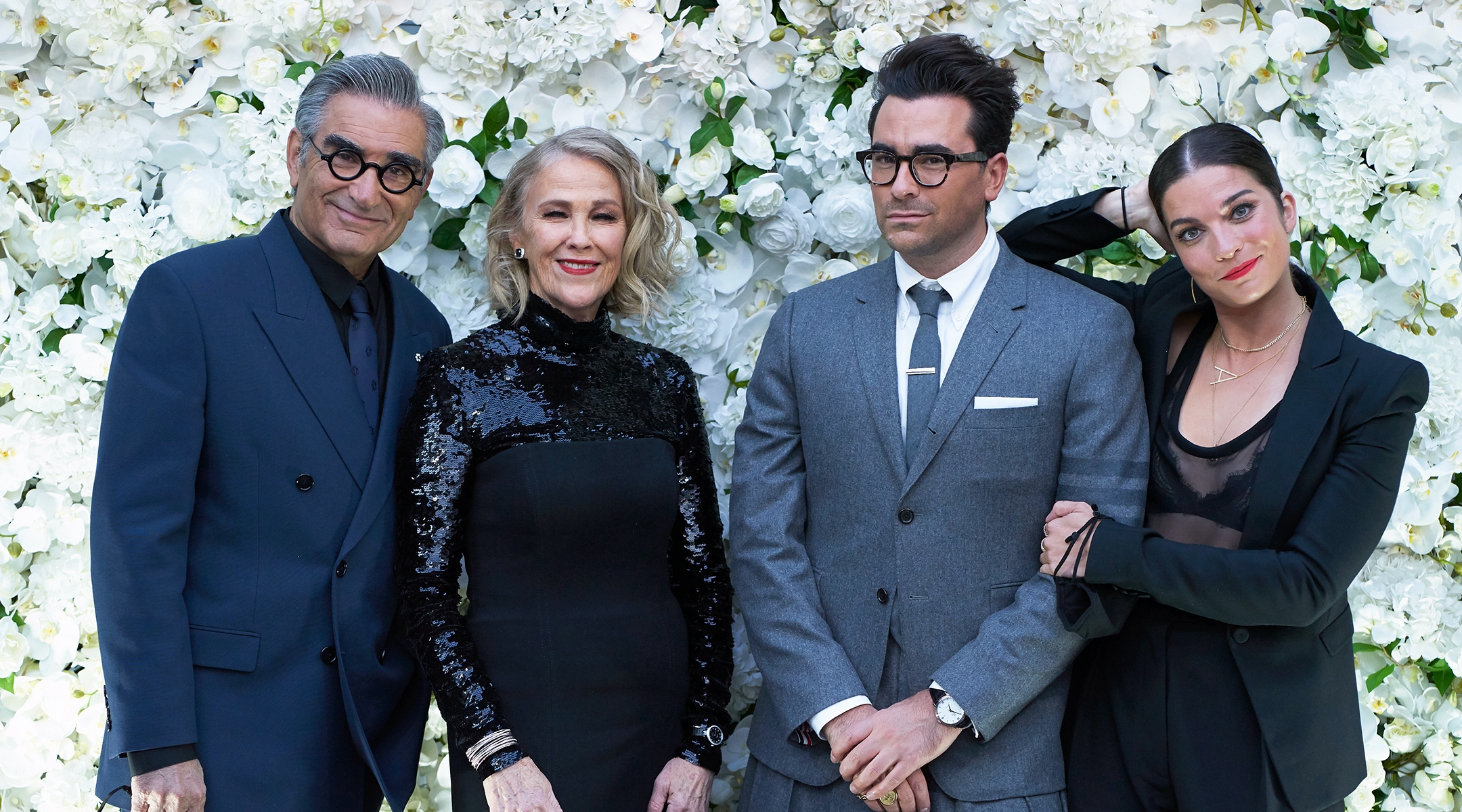
The “Schitt’s Creek” cast at a pre-Emmys party, Sept. 21, 2020. From left: Eugene Levy, Catherine O’Hara, Dan Levy and Anne Murphy. (“Schitt’s Creek”/Instagram)

“Schitt’s Creek” is up for best series and Eugene Levy, Dan Levy, Catherine O’Hara and Annie Murphy are all nominated in the best television series, musical or comedy categories. The show follows the well-to-do family that loses its money and is forced to live in a small town they once bought as a joke.

“Unorthodox,” the hit Netflix drama based on Deborah Feldman’s memoir of the same name about a young woman leaving the haredi Orthodox world, is nominated for best limited series. The Israeli star of the show, Shira Haas, is also nominated for best actress in a limited series.

Up against “Unorthodox” in that category is “The Undoing,” a not-very-Jewish HBO miniseries adapted from Jewish author Jean Hanff Korelitz’s novel “You Should Have Known.”

Jane Levy, a Jewish actress, is nominated for her role in “Zoey’s Extraordinary Playlist,” a musical NBC comedy.

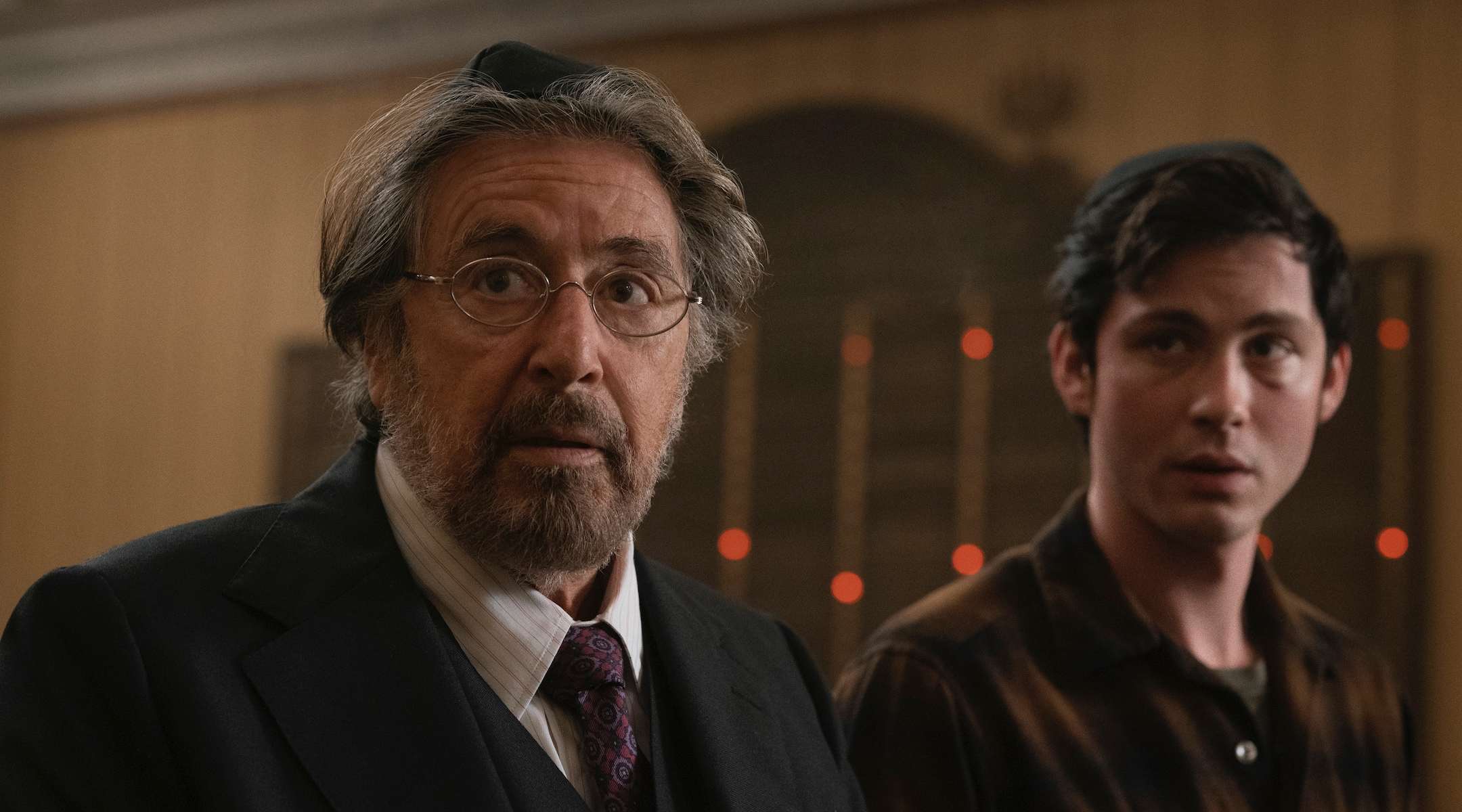
Al Pacino, left, and Logan Lerman are Jews out for revenge in Amazon Studios’ “Hunters.” (Christopher Saunders)

Last but not least: Al Pacino is nominated for his role as Meyer Offerman, a Jewish Nazi hunter with a Yiddish accent in the Amazon Prime show “Hunters.”

Movies

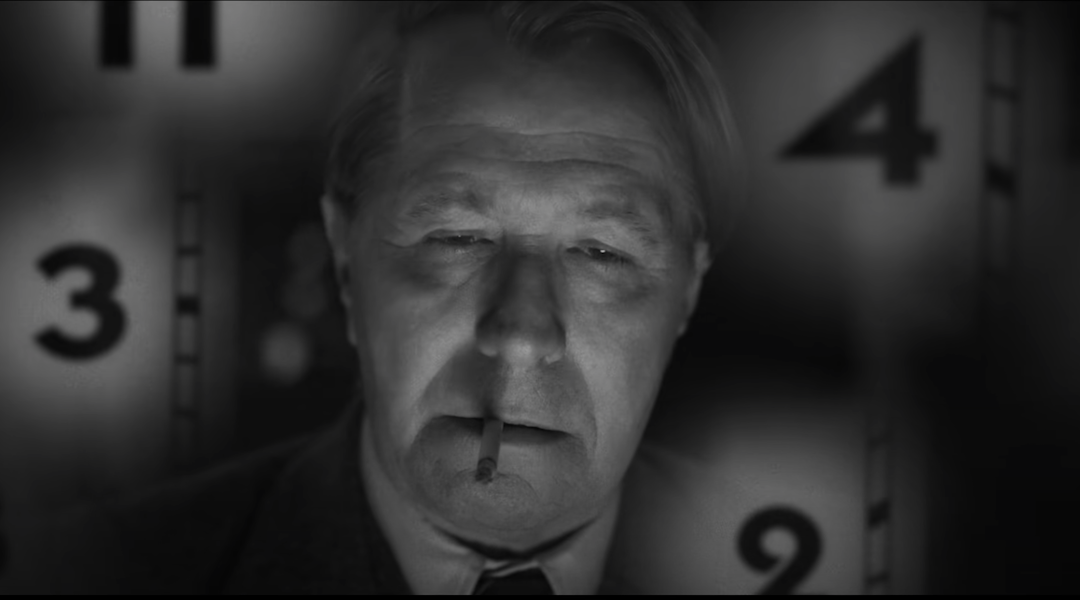
Mank,” starring Gary Oldman (in a controversial casting decision), leads the pack with its six nominations: for best motion picture, drama, best screenplay, best supporting actress, best actor (drama), best original score and best director.

Gary Oldman plays Herman Mankiewicz in “Mank.” (Screenshot from YouTube)

“Borat Subsequent Moviefilm,” starring Jewish actor Sacha Baron Cohen as Borat, a fictional journalist from Kazakhstan, was filled with Jewish moments and timely commentary on anti-Semitism. It received three nods from the Globes: for best motion picture, musical or comedy, for best actor in the musical or comedy category (Cohen) and best actress in the same category. Maria Bakalova, the Bulgarian actress who plays Borat’s daughter in the film, delighted viewers with a wacky breakout performance (and a memorable scene with Rudy Giuliani).

Borat Sagdiyev returns to America in the sequel to a 2006 movie about the fictional Kazakh journalist. (Amazon Studios)

“Palm Springs,” the “Groundhog Day”-style time-loop comedy from Hulu starring Jewish actor Andy Samberg, is up for best motion picture, musical or comedy. Samberg also notched a best actor nomination in the comedy category.

“The Trial of the Chicago 7,” also starring Sacha Baron Cohen, is the story of Jewish anti-war activist Abbie Hoffman from Jewish writer-director Aaron Sorkin. The film is up for five awards: for best motion picture, drama; supporting actor for Cohen; best director and best screenplay for Sorkin; and best original song for “Here My Voice.”

Sophia Loren‘s Holocaust film “The Life Ahead,” which tells the tale of survivor and former sex worker Madame Rosa, is up for two awards — best motion picture and best original song.

Jewish actress Kate Hudson was nominated for her role in “Music,” the musical drama film from singer-songwriter Sia.

All the Jewish Nominees for the 2021 Golden Globes Read More »

Israel’s Middle Class Slides Into Poverty

(The Media Line) — Out of work and burdened with soaring expenses, a growing number of Israel’s middle class are plunging into poverty.

Roughly 800,000 Israelis are out of work, figures from the Israeli Employment Service published earlier this week show. Of those, 150,000 lost their jobs in the past few weeks alone after the start of the third nationwide lockdown due to the coronavirus pandemic.

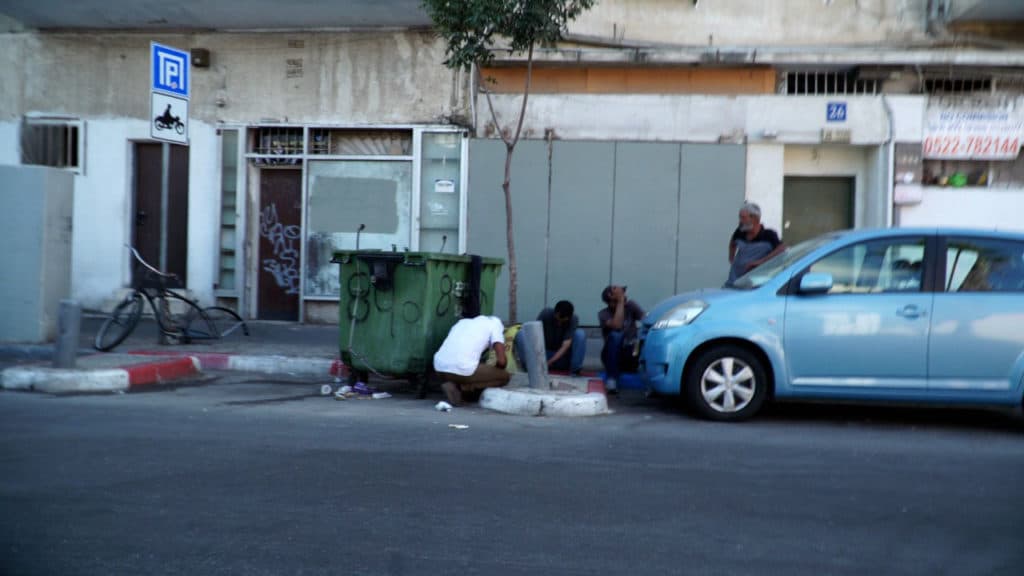
Andrey Bozhko is the director of the House of Andrey organization. With the help of Leket, Israel’s national food bank, Bozhko runs eight homeless shelters in south Tel Aviv and feeds 50 people each day.

“During the pandemic, I’ve been receiving requests from average people who just simply haven’t received a salary for a long time and are unable to pay their rent,” Bozhko told The Media Line. “We’re not able to help families because we don’t have apartments for couples. We house men and women separately.”

In recent months, a growing number of Tel Aviv residents have reached out to Bozhko for help. Some have been out of work for months due to COVID-19 restrictions and were simply unable to make ends meet. Many were hoping that financial assistance from the government would be enough to keep them afloat, but soon discovered that they could no longer afford to pay the sky-high apartment rents in Tel Aviv.

“There’s been a big change since the pandemic,” he said. “People who’ve simply collapsed are coming now. Too many were depending on the state to help them and ended up falling apart financially.”

Nearly two million Israelis are living below the poverty line, according to a new report by Israel’s Bituach Leumi, or National Insurance Institute, that was published late last week. That number represents 23 percent of Israeli citizens overall and about  30% of children.

More pointedly, the report revealed that Israeli families’ standard of living dropped considerably in 2020, with the median economic income decreasing by 22.7%. The main victim of this drop was the middle class.

At House of Andrey, the shelters are nondescript. Each house has eight residents on average and the so-called “house manager” ensures that things are kept neat and tidy.

Those who end up living in the shelters come from a wide variety of socio-economic backgrounds: Some are former convicts that have recently been released from prison and others are regular citizens who have simply fallen on hard times.

Lev Mordechai, a 57-year-old building contractor, is one of the latter.

“The crisis has really hit homeless people,” Mordechai told The Media Line. “Those who have a place to live might be suffering from some losses but people here have hit bottom and need the most help. We’re really feeling the effects of the crisis here.”

In the past, Morchecai said, an abundance of food donations would make their way to the residents of the House of Andrey on a daily basis. When restaurants and hotels were forced to shut due to the spread of COVID-19, those donations began to run dry.

“Before the pandemic I was working non-stop,” Mordechai said. “I would also find work for my friends. But nowadays I’m always trying to find ways to make a living and to hold on for one more day.”

It’s people who have never in their lives stood in line at a soup kitchen looking for food. It’s people who were working in high-tech and they got put on furlough. All of a sudden, they couldn’t feed their kids

Mordechai is not alone in his struggles.

“When you go visit the nonprofits, which I do a lot, the nonprofits say that the population has just completely changed,” Shira Woolf, public relations and marketing coordinator at Leket Israel, told The Media Line.

“It’s people who have never in their lives stood in line at a soup kitchen looking for food. It’s people who were working in high-tech and they got put on furlough,” Woolf said. “All of a sudden, they couldn’t feed their kids.”

Another major Israeli aid organization – Latet – also is witnessing a worrisome surge. Founded in 1996, the NGO relies on donations from Israelis for the most part; however, it also receives contributions from abroad.

A report Latet released last month showed that poverty rates in Israel rose by 9 percentage points since the start of the pandemic and the ensuing economic recession, currently standing at 29.3% in comparison to 20.1% prior to the outbreak. Furthermore, the number of families living below the poverty line jumped from 582,000 families in 2019 to 850,000 families during 2020.

Significantly, the organization also found that the country’s middle class shrank by 15.5%.

Latet used to feed 60,000 families each month but that number has jumped to 72,000 families in the past year. People who never needed help before are relying on their food bank to stave off hunger.

Some of the requests have come as a shock, according to Gabrielle Pittiglio, Latet’s director of International Resource Development.

“The whole art sector is out of work for so long and they started requesting help,” Pittiglio told The Media Line. “We could not believe what we were hearing. It’s just outrageous.”

Latet’s food bank and warehouse in Tel Aviv in a photo taken on Jan. 7, 2021. (Raymond Crystal/The Media Line)

To cope with this new reality, Latet enlisted the help of volunteers to assist with everything from donations to packaging to distribution. At a recent packaging drive in the organization’s Beit Shemesh-based logistics center, dozens of young volunteers were on hand to pack boxes with goods such as rice, canned tomatoes, cereal and other staples.

“I think it’s important to volunteer in general right now, especially because of the pandemic,” Gaya, an 18-year-old volunteer from Mechinat Alma, a pre-military academy that promotes young women’s leadership, told The Media Line. “Everyone is in need of food and it’s really sad.”

One of the biggest challenges for organizations like Latet and Leket at the moment lies in not knowing how the crisis will unfurl. Pitttiglio, of Latet, believes that the true socio-economic impact of COVID-19 and the full extent of the damage to Israel’s middle class remain unknown.

“Things may get worse even when the health crisis gets better,” Pittiglio warned. “People that start being poor now may be drawn into a cycle that they will not be able to get out of unless we help them or unless someone does something.”

Israel’s Middle Class Slides Into Poverty Read More »

Unscrolled: A Rabbinical Student’s Take on Parashat Yitro

In cultures steeped in the spiritual influence of Taoism, a master work of art is one which expresses impermanence and emptiness. Its prized forms are simple and naturalistic — the uncarved block (pu) and the swath of unbleached silk (su). In the words of scholar Alan Watts, the Taoist aesthetic reminds us that “everything is change, and nothing at all can be held onto or possessed.”

If we can borrow this set of principles and transpose it across geography and time, we find it perhaps fitting to describe the aesthetic and spiritual ethic of the Israelites’ sojourn in the Sinai wilderness, a place of shifting sands and stark natural beauty.

In Parashat Yitro, the Israelites are transient wanderers in the liminal space of the desert. As they ready themselves to receive the Torah, God instructs Moses to make a firm boundary around the base of Mount Sinai, which the Israelites are not to cross. “Whoever touches the mountain,” God warns, “shall be put to death.”

It is a firm prohibition, repeated twice for emphasis, but it is nonetheless provisional, in force only within a limited window of time. “When the ram’s horn sounds a long blast, then they may go up on the mountain.”

This sunset clause is a curious elaboration, marking the holiness of the mountain as a fleeting condition of becoming rather than an eternal state of being. Lifted momentarily into a holy relationship with God and the people of Israel, Mount Sinai is destined to revert to an unmarked feature of the vast wilderness.

This is a stark contrast to the treatment of the Jewish people’s other sacred mountain: Mount Moriah in Jerusalem, where the Holy Temple once stood. Unlike Sinai, the holiness of Mount Moriah has no expiration date. As such, the prohibition against ascending to the site of the former Temple remains intact to this day.

But such deification of place and trust in eternity would be unbecoming in the wilderness, where the lives of an entire generation of wanderers will soon pass into death like sand through an hourglass.

When the people are gathered about the base of the mountain, God speaks His ten utterances. “You shall not make for yourself a sculpted image, or any likeness of what is in the heavens above, or on earth below… you shall not make any gods of silver, nor shall you make for yourselves any gods of gold.”

In forbidding sculpted images, God articulates a vision of the divine that cannot be bound up and kept but must rather be apprehended like music — lived like life itself.

In forbidding sculpted images, God articulates a vision of the divine that cannot be bound up and kept.

In hearing these commandments, we can begin to understand why God has refrained from dedicating Sinai as an eternal monument. To do otherwise would have been to plasticize the revelatory event — to make it into an idol.

After the ten utterances are spoken, the parasha comes to a close with the image of a humble earth altar: “If you make for Me an altar,” God commands, “do not build it of hewn stones; for by wielding your tool upon them you have profaned them.”

At first listen, this commandment seems to be a rebuke of violence. As Rashi writes, “The altar makes peace between Israel and their Father in Heaven, and therefore there should not come upon it anything that cuts and destroys.” But we can also hear in this commandment a critique of the Temple that God’s children will someday build for Him on that other sacred mountain in Jerusalem, which will be a place of hewn stone and pounded gold. It would seem from Parashat Yitro that God prefers the uncarved block of Taoism.

Indeed, Mount Sinai is itself an uncarved block – beautiful in its imperfection, holy in its ephemerality. It is a temporary abode but no less sacred for being so. That its location has been lost to time only serves to remind us the important truth that “nothing at all can be held onto or possessed.”


Matthew Schultz is the author of the essay collection “What Came Before” (2020). He is a rabbinical student at Hebrew College in Newton, Massachusetts.

Unscrolled: A Rabbinical Student’s Take on Parashat Yitro Read More »