fbpx

December 30, 2020

Being Unharmed By Chopped Liver

Just thinking of our ethnic dishes
can make digestive juices run
and Jewish holidays such fun––
chopped liver and gefilte fishes.

Gastronomy will save the Jews
until they’ve earned another treat,
Leviathan, which they will eat
with recipes that God will choose

when He rewards them for the fact
that they eat fish and liver chopped
until their Jewish hearts have stopped,
their coronaries no more intact.

Cognate Akkadian implies Jacob
believed his liver badly harmed
by Levi, Simeon, in their armed
attack on Shechem, which caused the break up

of friendship with the Palestinians.
Liver made by my good wife
has never harmed my longish life
but since I share Jacob’s opinions

concerning importance of the liver,
it isn’t awful that I’m served
this offal by her, while preserved
by God as well as my caregiver.

According to bBaba Batra  75a, God will serve the righteous the Leviathan when the messiah comes.

Gen. 49:6 states:

ו  בְּסֹדָם אַל-תָּבֹא נַפְשִׁי, בִּקְהָלָם אַל-תֵּחַד כְּבֹדִי:  כִּי בְאַפָּם הָרְגוּ אִישׁ, וּבִרְצֹנָם עִקְּרוּ-שׁוֹר. 6 Let my soul not come into their council; unto their assembly let my glory not be united; for in their anger they slew men, and in their self-will they houghed oxen.

Professor Edward (Ed) Greenstein of Bar-Ilan University, in his 3/2020 RBL review of Robert Alter’s English translation of the Hebrew Bible, writes:

Both Alter and Fox resist reading kəbēdî, “my liver, i.e., myself,” in the first line, for kəbōdî, which is necessitated by the feminine singular verb tēḥad. In Akkadian, and here in archaic Hebrew, the feminine term for liver, Akk. kabattu, is often used metonymically as a person, like napšî, literally “my throat,” in the first line.

Ed Greenstein’s observation provides a wonderful explanation for the common answer to the question, “Is life worth living,” which is, of course, “That all depends on the liver.” I had anticipated this information in 2010 in my book Legal Friction, where I point out that when God made Pharaoh’s heart כבד, heavy, He was trying to influence his personality. The good professor thus provided a depth to this poem which I had not intended when I composed it in 1998, even though when I worked as a physician I specialized, when not eating my dear wife’s chopped liver, in hepatology.


Gershon Hepner is a poet who has written over 25,000 poems on subjects ranging from music to literature, politics to Torah. He grew up in England and moved to Los Angeles in 1976.  Using his varied interests and experiences, he has authored dozens of papers in medical and academic journals, and authored “Legal Friction: Law, Narrative, and Identity Politics in Biblical Israel.” He can be reached at gershonhepner@gmail.com.

Being Unharmed By Chopped Liver Read More »
Four Brooklyn Synagogues Vandalized

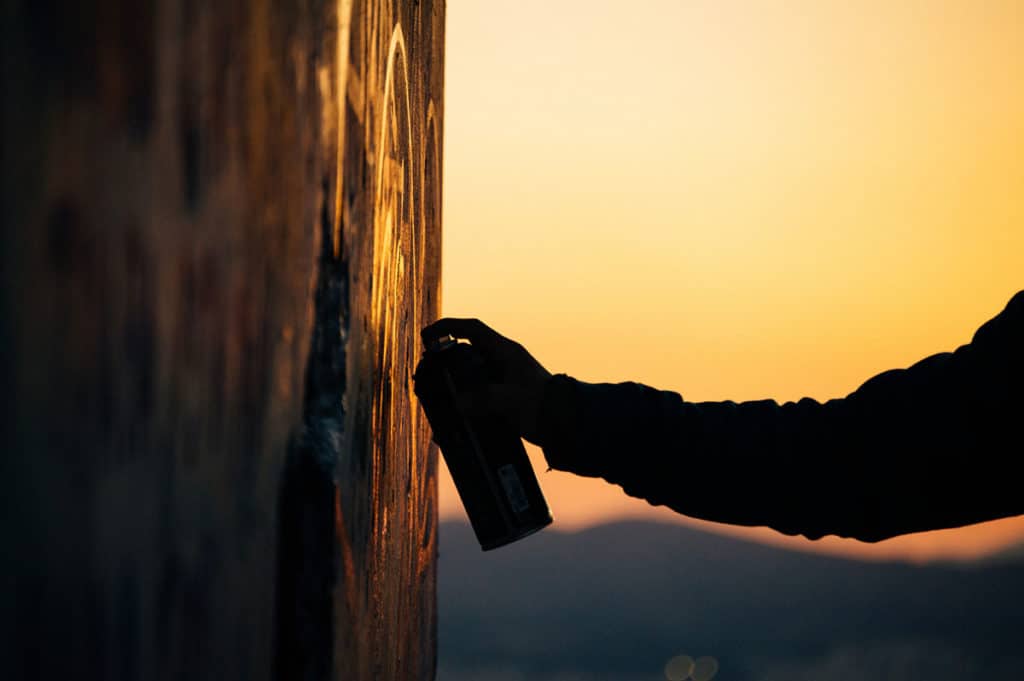
Four Brooklyn synagogues were vandalized on December 26.

PIX 11 reported that the synagogues – none of which have been publicly identified – were all spray-painted with “derogatory messages.” One of the synagogues was also burglarized, with the perpetrator stealing $20, damaging cabinets and spraying graffiti inside that synagogue.

The suspect, who police believe is connected to all four incidents, can be seen on surveillance footage in front of one of the synagogues:

New York Governor Andrew Cuomo, a Democrat, condemned the vandalism in a statement.

“I was disgusted to my core to learn of the anti-Semitic acts of vandalism that occurred in Brooklyn over the weekend,” he said. “Let us remember, hate, in any of its forms, will not be tolerated in New York and we will always stand united against the cowards who seek to sow division and attack people for who they are or what they believe.”

Anti-Defamation League New York / New Jersey tweeted, “Truly disturbing & shocking incidents. Yet another sober reminder that we must do everything we can to stop #hate in its tracks. We have reached out to @nypdhatecrimes & encourage anyone with information to reach out to @nypdtips.”

Four Brooklyn Synagogues Vandalized Read More »

The Van Helping UK Survivors Tell Their Stories

(JTA) — As one of the youngest Holocaust survivors, Eva Clarke has spent years telling the story of how her mother, weighing just 68 pounds, gave birth to her inside a concentration camp just a month before it was liberated.

But this spring, as COVID-19 shut down public life, Clarke’s visits to schools and community centers in the United Kingdom “came to a screeching halt, indefinitely,” she recalls.

Earlier this month, she got a fresh audience when an RV pulled into her driveway in Cambridge.

Inside was Antony Lishak and a retrofitted interior that would allow her to tell her story safely, and for posterity, during the pandemic.

Lishak has spent years teaching about the Holocaust to young audiences using the real-life testimonies of Holocaust survivors and rescuers. Even before the pandemic, time was not on the British educator’s side.

First-person accounts, delivered live, have the strongest effect on the students Lishak is trying to reach, he said. But survivors are dying and the ones still alive find it more difficult year each to deliver the talks that he organizes for them at British schools.

The pandemic put these interactions on pause, costing him time that he “couldn’t afford to lose,” Lishak said.

Finally, months into the pandemic, Lishak came up with a way around the impasse.

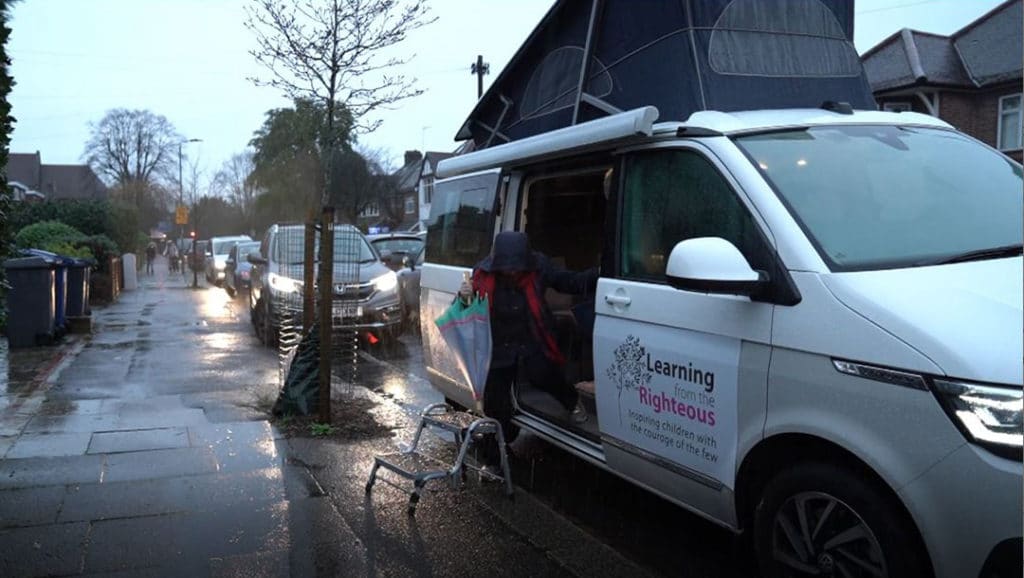
In recent weeks, he has been traveling across the United Kingdom in an RV that he turned into a coronavirus-proof mobile studio for Holocaust survivors whose testimonies he films right outside their homes.

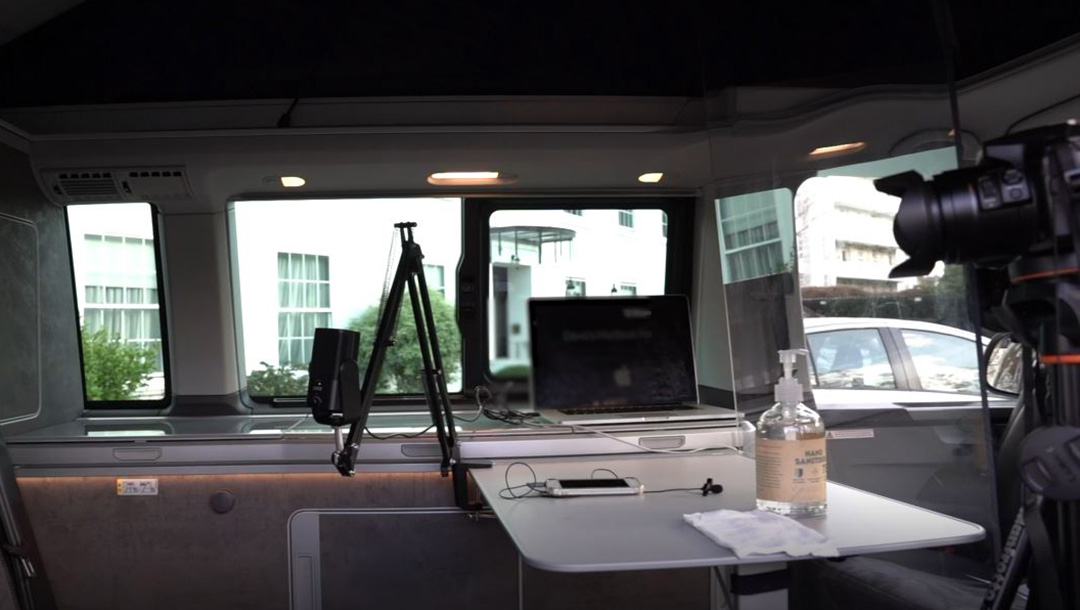
The interior of the Learning from the Righteous mobile studio in London, UK in December 2020. (Learning from the Righteous)

A look inside the interior of the Learning from the Righteous mobile studio in London. (Learning from the Righteous)

“I can’t tell you what it looks like on the film, but it’s an ingenious idea,” said Lili Pohlmann, a 90-year-old Jewish woman from London whom Lishak also interviewed this month.

Pohlman survived the Holocaust in Lviv, in what is now Ukraine, thanks to the bravery of Andrey Sheptytsky, a senior priest, and Imgard Wieth, a German civil servant. Pohlmann and her mother were the only members of her nuclear family who survived.

“In these circumstances, of course, I couldn’t have done it now at all,” she said about the testimony she gave recently in the mobile studio. “I unfortunately can’t go out. So I’m at home and I can’t have anybody come in.”

“It’s outside the box, but it means the work can go on,” Lishak told the Jewish Telegraphic Agency earlier this month about the studio as he prepared to drive to interview Clarke inside his rented Volkswagen California Ocean camper, which he had fitted with a Perspex divider to keep the interviewees safe.

The van has heating, a pop-up coffee table for the witnesses, revolving front seats and enough space for Lishak to comfortably record with a wide-angle lens, he said.

Lishak, CEO of the Learning from the Righteous educational nonprofit, needs a portable studio because videoconferencing is logistically difficult for many elderly witnesses.

Some chroniclers of the Holocaust, including the U.S. Holocaust Memorial Museum, have turned to videoconferencing to record interviews during the pandemic. But Lishak said in-person interviews are preferable.

“A live Zoom event is difficult to set up” for many survivors, he said. But the real problem is that the medium isn’t conducive to the content for the student audiences he aims to reach

An edited video testimony is a superior medium for “a generation who are used to TV-quality presentation,” he said.

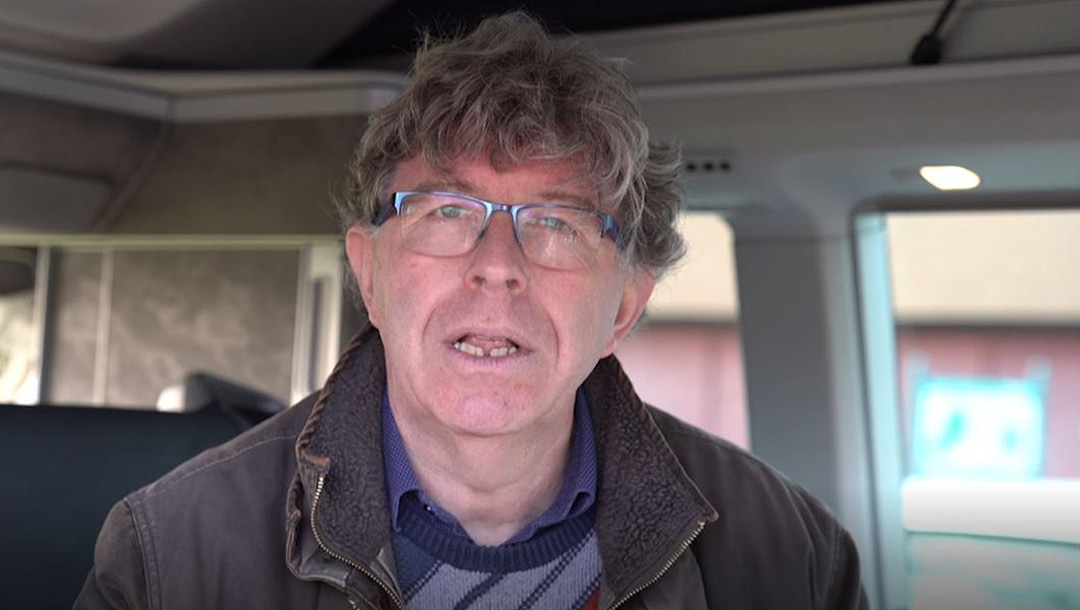
Anthony Lishak interviews a survivor of the Holocaust inside the Learning from the Righteous mobile studio in London, UK in December 2020. (Learning from the Righteous)

Antony Lishak interviews a survivor inside his van studio, December 2020. (Learning from the Righteous)

In January, ahead of International Holocaust Remembrance Day, Finchley Reform Synagogue, a funder of the mobile studio initiative and one of London’s largest Jewish congregations, will host Lishak’s interviews on its website, ensuring they will reach thousands of viewers.

“You can record Zoom sessions, but I doubt people will sit down and watch them as they would a well-edited testimony video,” Lishak said.

Giving survivors a voice on International Holocaust Remembrance Day is a “duty,” he said. It’s theme this year in the United Kingdom is “Be the Light in the Darkness.”

Clarke, a retired university administrator, is comfortable using videoconferencing software. But the interview she gave Lishak in her driveway in Cambridge on Dec. 14 was “much more intimate, which of course helps tell the story.”

Lishak said the intimacy that sets in during encounters with Holocaust survivors and high school students is “a crucial factor” in making them interested in the Holocaust. It made all the difference during his work at schools in impoverished neighborhoods in Manchester, he said.

Recorded interviews will not be as powerful as real-life encounters but are more effective than “chaotic Zoom meetings,” Lishak said. “It’s the best option we have right now.”

In the future, he is planning to complement testimonial videos with a live video Q&A session. Lishak said he’s also looking into expanding the studio into a larger mobile classroom that can stage face-to-face encounters with survivors and take them to relevant memorial sites in the United Kingdom and Europe.

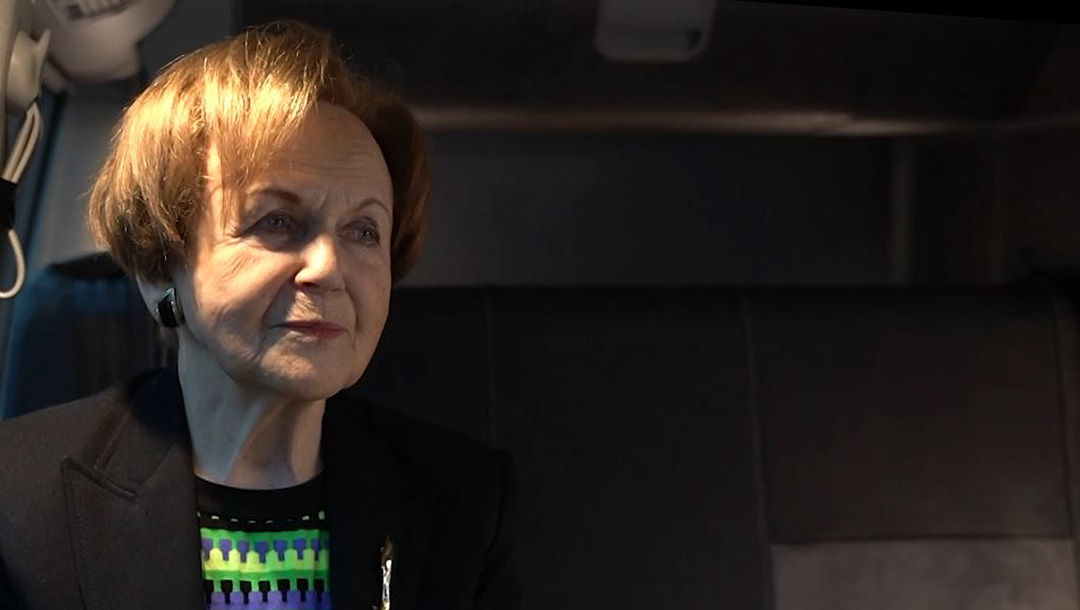
Mala Tribich tells about her survival of the Holocaust inside the Learning from the Righteous mobile studio in London, UK in December 2020. (Learning from the Righteous)

Tribich, inside the van, offers her story of Holocaust survival, December 2020. (Learning from the Righteous)

That way, he said, “the bus would drive up to the witness’ home instead of the other way around and visit a Holocaust heritage or memorial site during the same trip.”

Clarke, 75, has spent the past 15 years telling her story and that of her mother, Anka Kaudrova, who died in 2013. Clarke weighed just 1 1/2 pounds when she was born at the Mauthausen death camp in Austria, where the Nazis had killed some 90,000 people, just one week before its liberation by the U.S. Army.

“I find it extremely important to tell that story, which I’ve sort of taken on after my mother died,” Clarke said.

“I tell my family’s history out of a sense of commitment to her and to our society, to warn others of where racism can lead,” said Clarke, who has visited hundreds of schools across the United Kingdom. “It means so much to be able to carry on her work.”

The Van Helping UK Survivors Tell Their Stories Read More »

Satirical Semite: Heading Back to the Future

Many people have complained about the trials of 2020. Personally, it has been full of valuable lessons that offer a sense of perspective to our woes. Here are just a few:

When you meet a beautiful woman who you are seriously interested in, dont take her to a graveyard on a first date.Also, dont invite her to your COVID-19-compliant outdoor birthday hike, where the other attendees are some of your oldest friends, one of whom misreads the tone and begins the evening with a filthy joke that makes you immediately regret planning the event.

In retrospect, I should never have invited her but saved our first date for another occasion. To misquote Steve McQueen in The Magnificent Seven,”I knew a man who once took off all his clothes and jumped on a cactus. I asked him, why? He said, it seemed like a good idea at the time.

The evening seemed like a great idea at the time. It was an outdoor, socially-distanced Historic Legends Birthday Adventure” walk in the town of St. Albans, just northwest of London. The area still has Roman ruins, a clocktower from the 1100s and a medieval cathedral. Our evening was supposed to include a treasure hunt, ghost stories and Chassidic tales. But when I played Michael Jacksons Thriller” on a Bluetooth speaker as we walked on the trail that went through a graveyard, my date was scared rather than amused. It happened to be the site where Britains first-recorded martyr was killed.

By sheer coincidence, my date later made an excuse and had to leave early. Some say that romance is dead, but I unintentionally ensured it was crucified, executed and buried. I would say to her that next time, we would stick to drinks via Zoom, but for some reason, she politely declined any further dates.

Some say that romance is dead, but I unintentionally ensured it was crucified, executed and buried.

2020 has been challenging, but comparing experiences can help us realize how fortunate we are. One friend lamented that his family had to forgo their annual Passover vacation abroad and instead stayed at home. I shared that at the start of quarantine in Los Angeles, I spent 33 consecutive Shabbat and festival meals on my own, including every meal on Pesach. On some level, we both probably thought the other person had the better deal. I would say that the grass is greener on the other side, but in England, the grass is green everywhere because of plentiful rainfall. If you stop and smell the flowers, there is a good chance youll get wet.

One birthday gift I received was Michael J Fox’s recently released biography, No Time Like the Future — An Optimist Considers Mortality.” With all of the death we have heard about during 2020, it was sobering to read Fox’s contemplations on the transience of life through the perspective of his own health issues. In the mid-1980s, he had the career that every young actor wanted, but now, at the age of 59, he has spent three decades with Parkinsons Disease. Like so many other kids in 1985, I took up skateboarding after watching him in Back to the Future.” Frustratingly, my father never allowed me to hold on to the back of his car while he drove, towing me on my skateboard. I thought that it seemed like a great idea at the time.

Now, Michael J Fox can barely walk without extreme difficulty, and he recounts how he nearly had to have a finger amputated after falling over; he recently had a tumor removed from his spine; and when he fell over and broke an arm, he had a stainless-steel plate and 19 screws installed to keep the bones together. Yet he works hard to remain optimistic, recalling his 2009 documentary on Bhutan, the country whose king famously declared in 1972 that Gross National Happiness is more important than Gross Domestic Product.”

Another 2020 lesson has been learning about the work of Operation Underground Railroad, an organization dedicated to rescuing children from sex trafficking and sexual exploitation. They aim to permanently end this form of modern slavery. Today there are an estimated 40.3 million people in slavery around the world. How is this even happening? A martial arts teacher once told me to go and look online at disadvantaged and poor youth, saying they would love to have your problems.” Perspective is everything.

2020 may have been a challenging year, and getting a bigger frame of reference can minimize our biggest problems. I am still a little disappointed about messing up the date, and moving forward, I will avoid romantic trips to crypts, morgues and mausoleums. Perhaps there is a chance I can revive her interest if I master the technique perfected by another seasonally-relevant Jew: resurrection.


Marcus J Freed is an actor, filmmaker and marketing consultant. www.marcusjfreed.com and on social @marcusjfreed.

Satirical Semite: Heading Back to the Future Read More »

2020 in Pictures

(JTA) — For the Jewish community, 2020 has been historic, turbulent and revelatory. The year began with 25,000 people, Jews and non-Jews, marching across the Brooklyn Bridge to take a stand against anti-Semitism, and it seemed this could be a year of growing awareness of the fight against Jew hatred — a year of possibility during which America’s political landscape could change.

Then COVID-19 hit and the community moved indoors. By April, most colleges and synagogues were closed. By June, Zoom had become a staple for most Jewish households. By September, some rabbis were doing High Holiday Services on Zoom, while others were praying alone in their homes.

In spite of everything, Jewish life continued. Here’s what the year looked like in photos.

January

(Ira L. Black/Corbis via Getty Images)

Before the COVID-19 pandemic prompted citywide shutdowns, some 25,000 people marched across the Brooklyn Bridge to protest rising anti-Semitism in and around New York City. It was a historic march that symbolically started in Lower Manhattan and crossed the bridge.

February 

(Steve Granitz/WireImage)

At the Oscars, one of the last big events before social gatherings became verboten, Maori Jewish director Taika Waititi won best adapted screenplay for “Jojo Rabbit,” his film about a boy growing up in Nazi Germany with Hitler as his imaginary best friend. Jewish actors Natalie Portman and Timothée Chalamet presented Waititi with the award.

March 

(Lev Radin/Pacific Press/LightRocket via Getty Images)

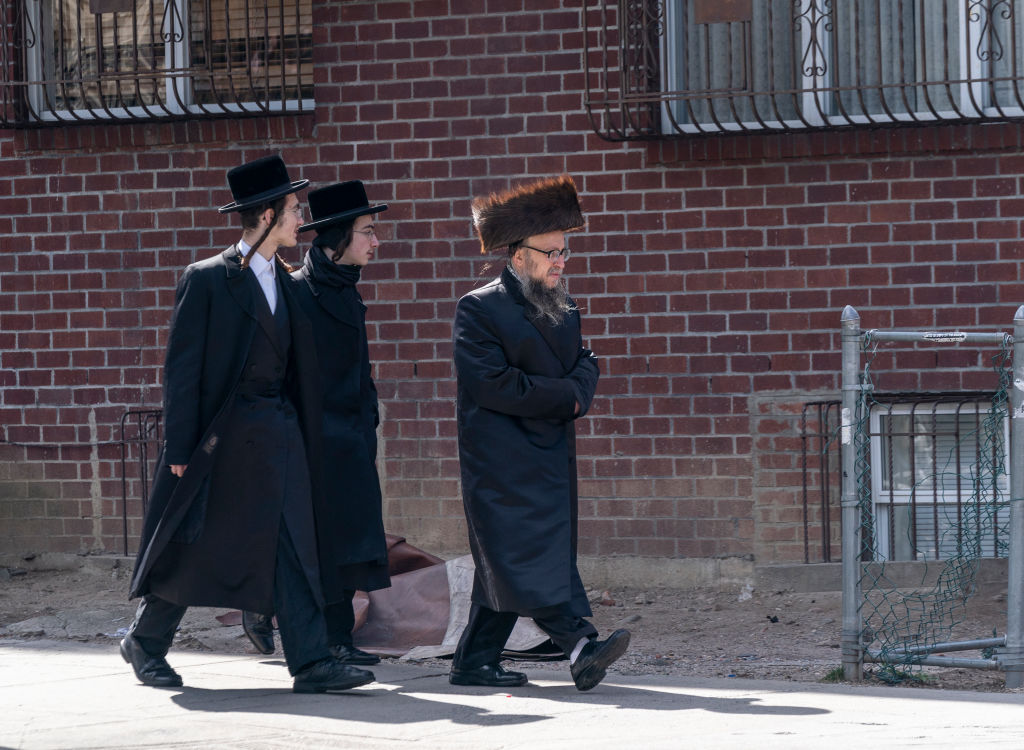
As the number of COVID-19 cases rose, some members of the haredi Orthodox community flouted social distancing rules, walking on the streets of Williamsburg without masks. The ensuing criticism caused some friction between the Hasidic communities and Mayor Bill de Blasio. Pictured above are two Satmar Jewish men walking in the Brooklyn neighborhood on March 21.

April

(Ilia Yefimovich/picture alliance via Getty Images)

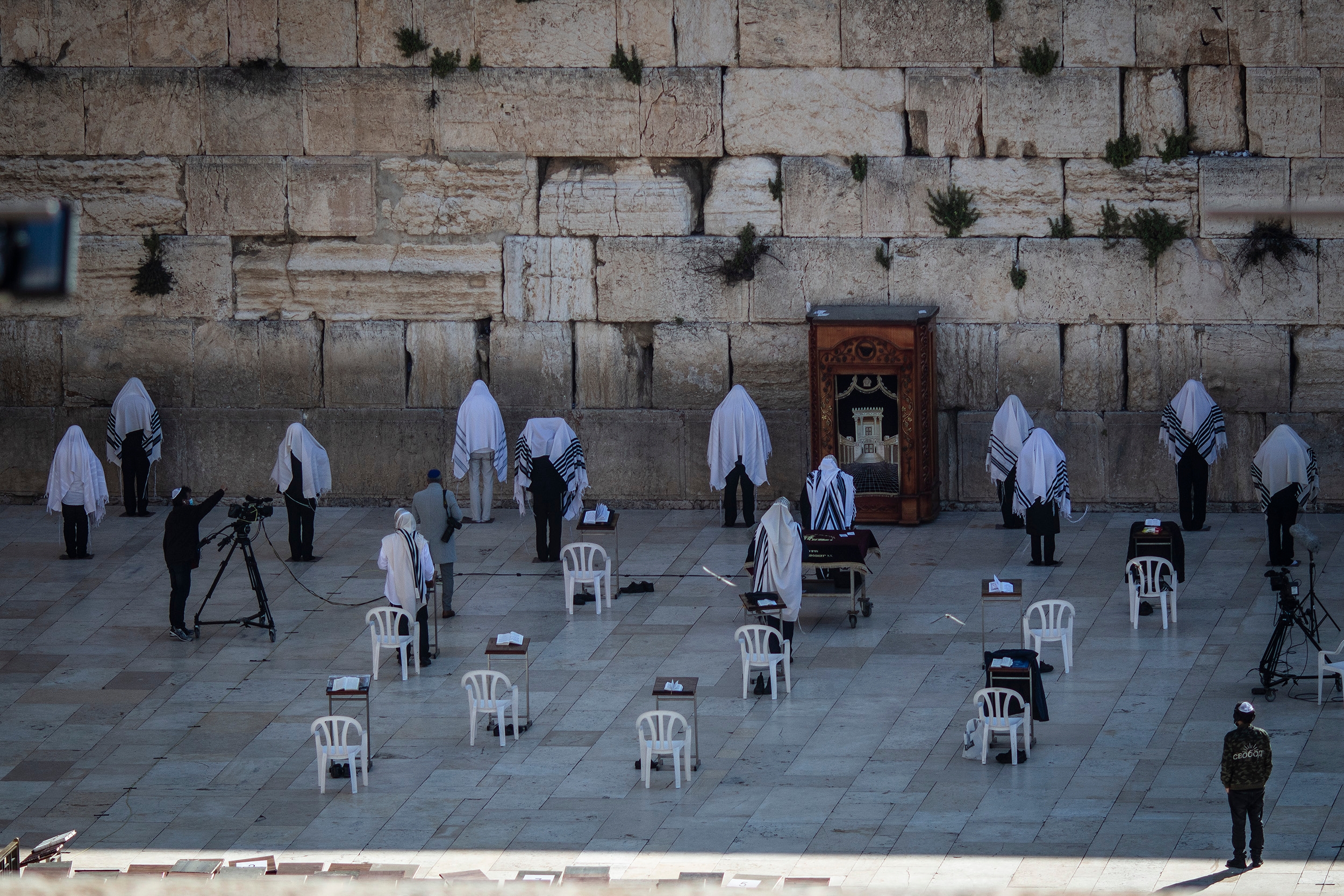
In April, Jews around the world planned for a Passover they never expected. The holiday saw a new range of small, virtual and solo Seders, and in Israel, socially distanced Passover prayer at the Western Wall.

May 

(Alexi Rosenfeld/Getty Images)

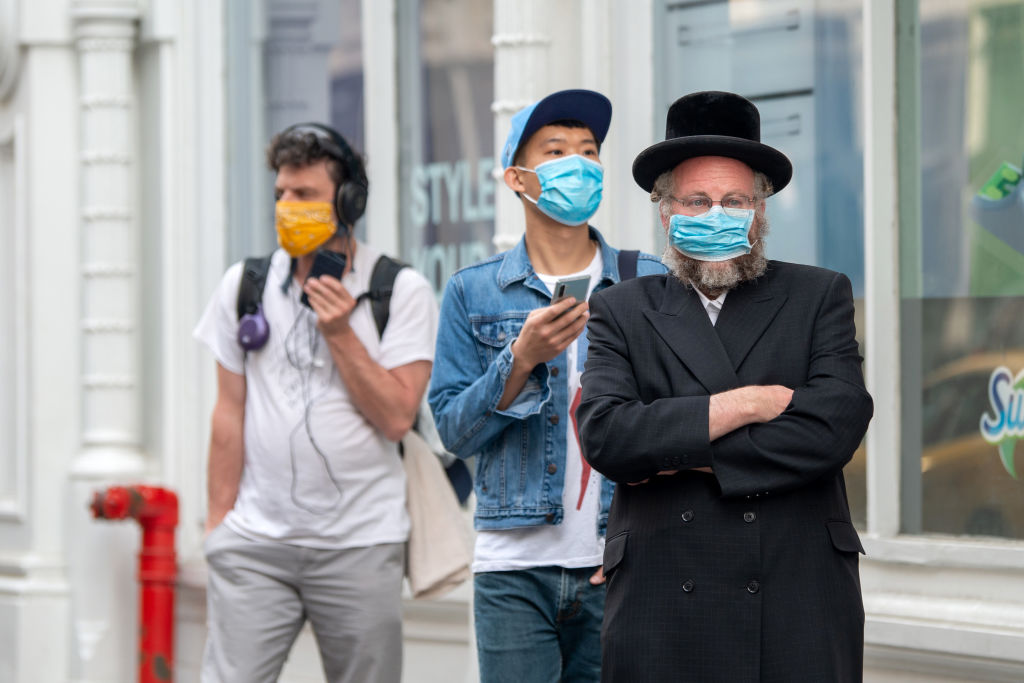
By May, parts of New York and other cities had begun to reopen. Jewish life resumed, with people in masks going outside, attending synagogue and even going to small, socially distanced gatherings. Here, New Yorkers wait in a line on May 18.

June

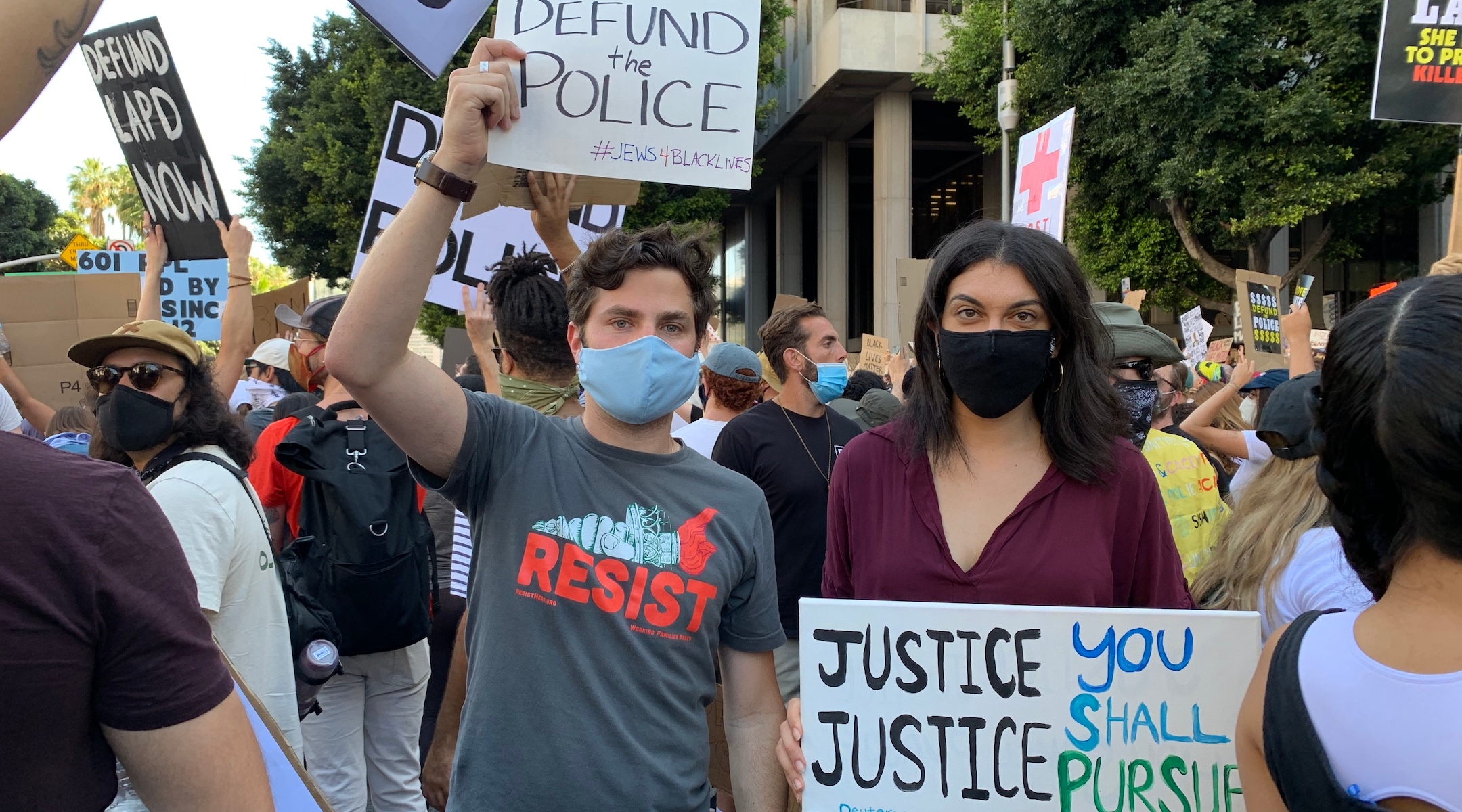
In June, a wave of protests over the death of George Floyd swept across America, and many Jews joined the millions protesting racial injustice. “We understand the urgency of the moment and stand against police brutality and white supremacy, and silence is not OK right now,” said Rachel Sumekh, pictured above, who marched on June 3.

July 

Alexa Rae Ibarra is all smiles after finishing her conversion. (Courtesy of Ibarra)

As COVID-19 began to spread, those who planned to complete their conversion to Judaism with a ceremonial dunk in the mikvah realized doing so indoors would be impossible. So Alexa Rae Ibarra, a 29-year-old yoga instructor, traveled to Camp Ramah in the Berkshires to finish her conversion. 

August 

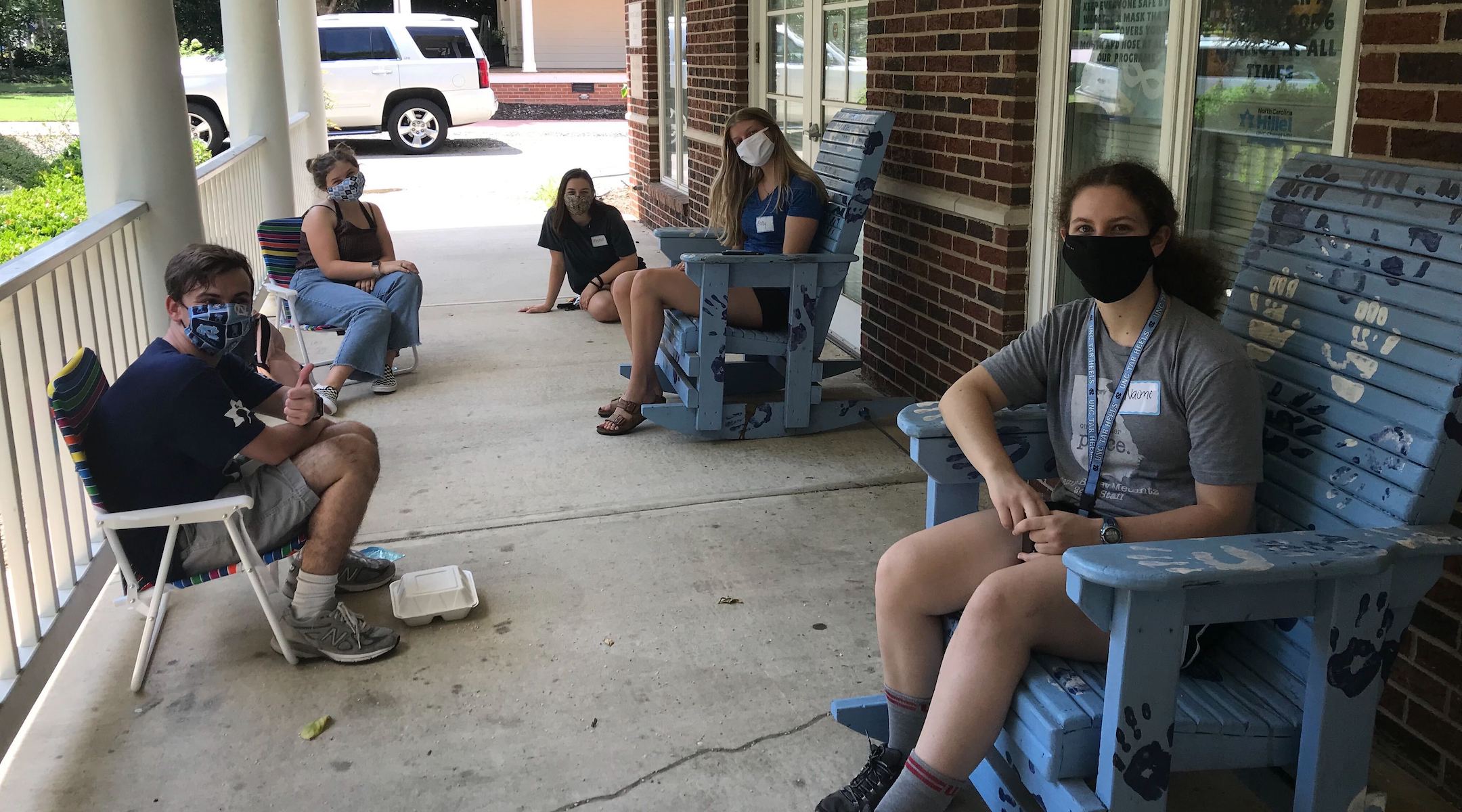
(UNC-Chapel Hill Hillel)

By August, many colleges and universities had gone completely virtual, taking Jewish campus life with it. “It’s definitely not the same because we’re not having one-on-one and smaller conversations,” student Abigail Adams said. Pictured above is the last in-person Hillel event at the University of North Carolina-Chapel Hill before the school went all virtual.

September

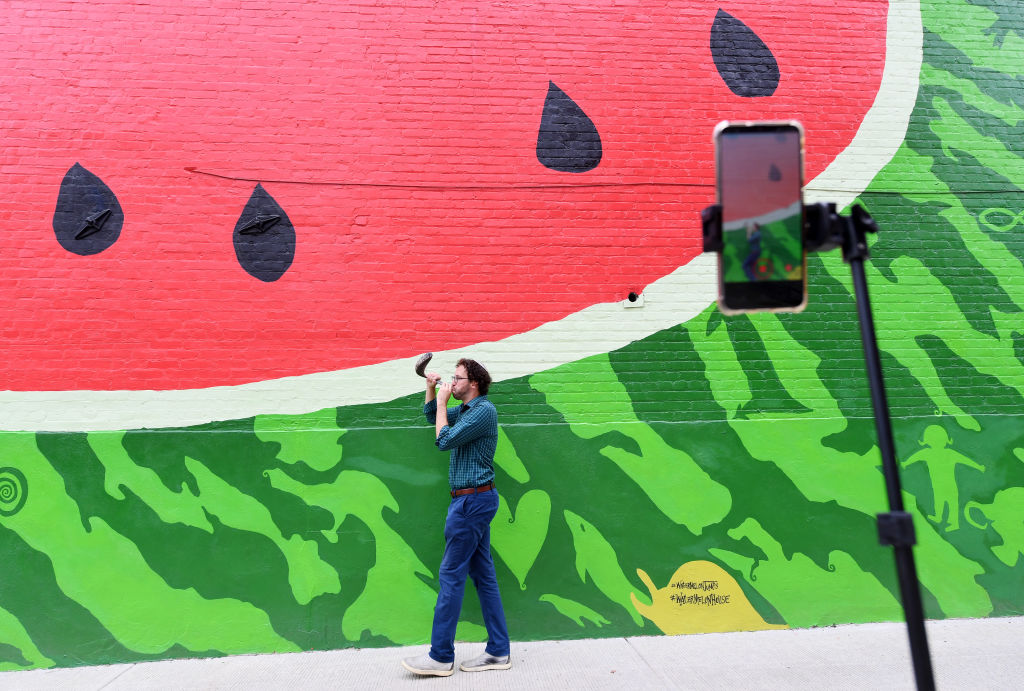
(Matt McClain/The Washington Post via Getty Images)

As the weather cooled, it became clear the pandemic would upend traditional holiday services, leaving rabbis to find other, virtual ways to connect with their congregants. Some rabbis, like Rabbi Aaron Potek, even took to TikTok for their daily shofar-blowing.

October 

(David Perlman Photography)

In 2020, more Orthodox rabbis began officiating same-sex weddings, signaling a growing acceptance of LGBTQ Jews, as well as a sea change in Orthodoxy. “Clearly some in the Orthodox community are ready for this,” said Jeremy Borison, who married his husband in 2020.

Nadiv Schorer, above on right, married Ariel Meiri in 2020 with Orthodox Rabbi Avram Mlotek officiating.

November 

(Mark Makela/Getty Images)

In November, Kamala Harris made history as both the first woman and the first woman of color to be elected vice president, and her husband, Doug Emhoff, made history as the first Jewish “second husband.” Together they presented to the public a picture of what a prominent interfaith family could look like.

December 

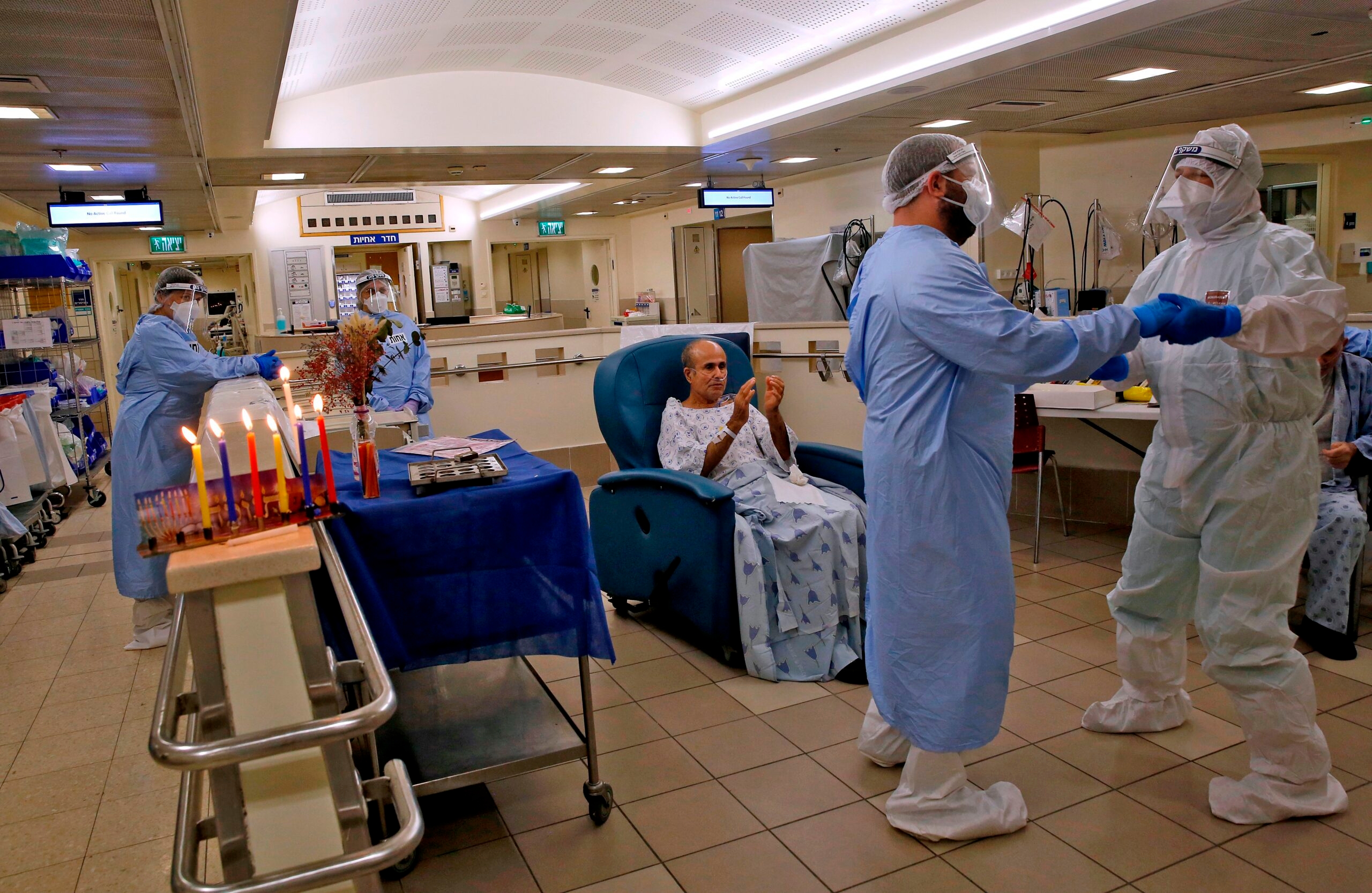
(Gil Cohen-Magen/AFP via Getty Images)

For Hanukkah, people celebrated by lighting menorahs in hospital wards, on Zoom and outdoors in places as varied as Dubai, Australia and Casablanca. In Tel Aviv, at the Ichilov Hospital’s COVID-19 isolation ward, medical staffers lit Hanukkah candles.

2020 in Pictures Read More »

UC Merced Announces Investigation Over Professor’s Anti-Semitic Tweets

UC Merced Chancellor Juan Sánchez Muñoz and Executive Vice Chancellor and Provost Gregg A. Camfield announced in a December 29 statement that the university is launching an investigation into Engineering Professor Abbas Ghassemi’s tweets that “crossed the line” into anti-Semitism.

Some of the tweets in question included an image of “The Zionist Brain” featuring a “Holocaust Memory Centre” and a tweet stating that “the Zionists and IsraHell interest have embedded themselves in every component of the American system.”

“The opinions presented in this Twitter account do not represent UC Merced or the University of California,” Muñoz and Camfield said. “They were abhorrent and repugnant to us and to many of our colleagues and neighbors; they were harmful to our university, our students, and our years of work to build an inclusive and welcoming community.”

They added that Ghassemi’s dean and department chair will be working “with the Office of the Vice Provost for Academic Personnel to conduct an inquiry into potential violations of our standards, the UC Faculty Code of Conduct or other policies of the university, to determine what consequences are appropriate.”

Additionally, the university will “develop programming for the spring semester that addresses free speech, hate speech and anti-Semitism in academia and promotes ways to challenge discriminatory insinuations when and wherever they emerge within the university community,” according to Muñoz and Camfield.

They concluded, “We must not let anti-Semitism or any form of bigotry or hate toward any group take root in the UC Merced community.”

UC Board of Regents member Jay Sures echoed Muñoz and Camfield’s remarks in a statement to the Jewish News of Northern California (the J). “I stand by Chancellor Munoz’s statement that the Professor’s words on Twitter are ‘abhorrent and repugnant,” he said, adding that he won’t comment further until the inquiry is complete.

Jewish groups praised the university for launching an inquiry into Ghassemi.

“Thank you, @ChancellorMunoz, for your unambiguous condemnation of anti-Jewish bigotry,” the American Jewish Committee tweeted. “It is gratifying to see your commitment to @UCMerced’s Jewish community, to reviewing relevant policies, and to developing campus programming about antisemitism.”

StandWithUs CEO and co-founder Roz Rothstein similarly said in a statement to the Journal, “We are pleased to hear that UC Merced administration is responding to hateful bigotry espoused by one of its professors. Antisemitism must not be tolerated on campus, and we have seen campus leaders at Rutgers University and Oberlin College discipline and even terminate faculty with who have expressed similar biases. We are hopeful that Merced administration follows precedent in handling this blatant act of dangerous hatred and adopts the IHRA [International Holocaust Remembrance Alliance] definition of antisemitism.” StandWithUs had sent a letter to UC Merced on December 24 urging the university to take action against Ghassemi.

Liora Rez, director of the Stop Antisemitism.org watchdog, said in a statement to the Journal that the university needs “to take a firm stand when dealing with antisemitism and fire Abbas Ghassemi. Someone with such hatred in his heart for a group of people needs to be kept far away from young impressionable students.”

According to the J, which first reported on Ghassemi’s tweets, Ghassemi has hired First Amendment attorney Michael DeNiro to represent him in the matter.

UPDATE: UC Board of Regents Chair John A.  Pérez and President Michael V. Drake said in a statement that while they support the First Amendment, Ghassemi’s tweets “were not only narrow-minded and abhorrent, but also undercut the UC’s firm commitment to diversity, inclusion and respect for all individuals and backgrounds. We fully support UC Merced’s inquiry into the facts of this matter, which will take time as governed by the University’s policies and procedures. The University community will continue working to support one another and to create inclusive and welcoming spaces, while demonstrating that healthy, robust disagreement and exchanges are possible without attacking others’ dignity and sense of belonging.”

This article was updated on December 30.

UC Merced Announces Investigation Over Professor’s Anti-Semitic Tweets Read More »

In 2020, We Discovered the 365-Day News Cycle

Until the pandemic crisis hit us earlier this year, it was fashionable to mock the “24-hour news cycle,” the fact that people have such short attention spans that news stories can’t stay hot for more than 24 hours. The media dutifully led the way, serving up a continuous flow of hot breaking news to replace yesterday’s hot breaking news.

This year, however, in an extraordinary shift, the same breaking news story has stayed red hot day after day, month after month. The COVID-19 pandemic was the story that refused to go away, the story that cracked through our diminished attention spans and challenged us not to turn away.

Of the many unprecedented aspects of this pandemic year, let us not forget that one: Wherever we turned, wherever we looked, we were forced to confront an all-consuming crisis.

Wherever we turned, wherever we looked, we were forced to confront an all-consuming crisis.

It was a story with a million offshoots — fatalities, lockdowns, quarantine living, economic meltdowns, loneliness, social distancing, etc. — but at heart, it was one epic meta story. A story that grabbed us and never let go.

In that sense, the pandemic made me think of ancient history. All of these biblical stories we grew up with… weren’t they also meta stories that grabbed us and never let go?

Thousands of years later, we still gather around Seder tables and recount the story of our ancestors’ journey to freedom. We still light Hanukkah candles to recall the fight of the Maccabees. Indeed, every Jewish holiday commemorates an ancient “breaking news story” that never stopped breaking.

The clash between history and the news is a clash between the timeless and the timely. In recent years, with the exponential growth of technology and social media, the latter has crushed the former. When you’re checking your Twitter news feed every minute, who’s got time to contemplate the lessons of the past?

The COVID-19 pandemic gave us time to contemplate. It forced us to stay home. It forced us to slow down. Our restless minds didn’t suddenly morph into those of Greek philosophers, but unlike any year in recent memory, the never-ending pandemic gave our shrinking attention span a run for its money. It gave us a chance to go deeper and see what’s there.

You can feel it especially now, as the year comes to an end. People are looking back. Media companies are doing retrospectives. We’re all in a contemplative mode, reflecting on the one story that dominated all of humanity.

2020 will go down as the year when history caught up to the news, the year when the stunning power of the timeless entered our fragile lives.

In 2020, We Discovered the 365-Day News Cycle Read More »

US Poised to Take Custody of Alleged Killer of Daniel Pearl

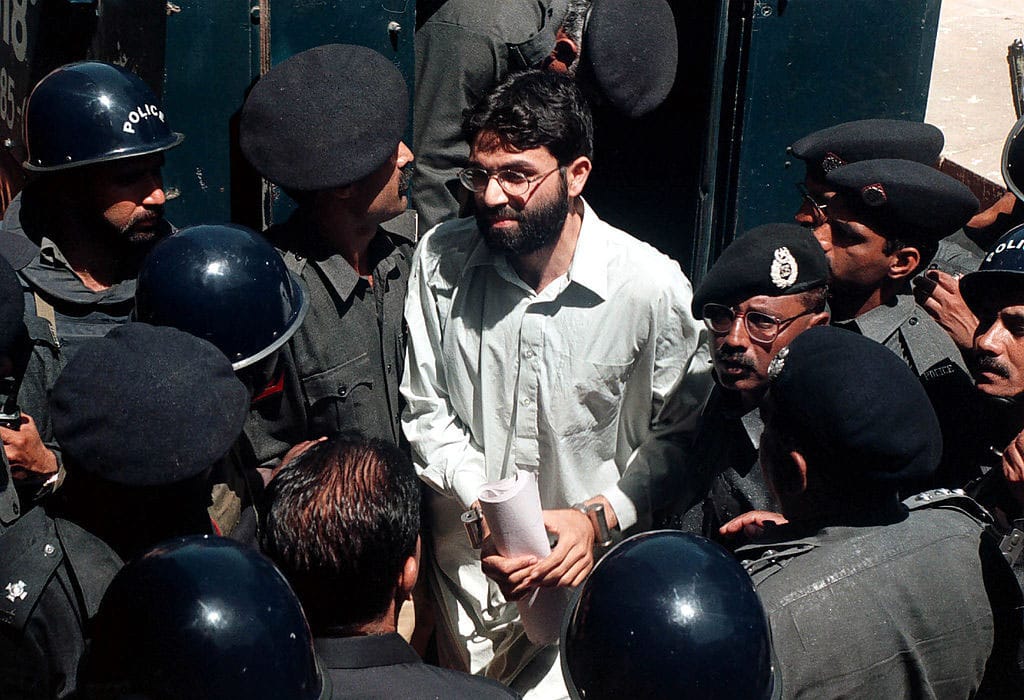
The Media Line — The United States “stands ready to take custody” of Ahmed Omar Saeed Sheikh, the prime suspect in the kidnapping and murder by beheading of US journalist Daniel Pearl in February 2002.

Jeffrey A. Rosen, acting US Attorney General, said in a statement Tuesday that the United States will put Sheikh on trial if an appeal to reinstate his murder conviction in a top Pakistani provincial court fails.

Sheikh, a British national of Pakistani origin, was convicted and sentenced to death for killing Pearl, but his conviction was overturned by a Pakistani court in April.

Pearl, The Wall Street Journal’s South Asian bureau chief, had been investigating a story about the alleged financing of al-Qaida via Pakistan-based militants. Pearl disappeared in Karachi on Jan. 23, 2002, on the way to what he believed would be an interview, and was decapitated by his captors nine days later. Video of Pearl’s murder by beheading was sent to the U.S. consulate.

The National Movement for the Restoration of Pakistani Sovereignty extremist group claimed responsibility for abducting Pearl, but Pakistani security officials said the kidnappers were members of Lashkar-e-Jhangvi (LeJ), a banned al-Qaida affiliate.

Karachi police arrested the four men in February 2002. In June 2002, a counterterrorism court sentenced Sheikh to death by hanging. The three others were sentenced to life in prison.

An appeals court in Karachi overturned Sheikh’s murder conviction in April, ruling that he was guilty only of kidnapping Pearl. The court commuted Sheikh’s death sentence to seven years in prison and acquitted his three accomplices.

Sheikh has already spent 18 years on death row, which the court said would be counted as time served toward his seven-year sentence, paving the way for his release. As of Tuesday , however, he remained in custody.

“We understand that Pakistani authorities are taking steps to ensure that Omar Sheikh remains in custody while the Supreme Court appeal seeking to reinstate his conviction continues,” Rosen said in Tuesday’s statement.

The statement also said that: “The separate judicial rulings reversing his conviction and ordering his release are an affront to terrorism victims everywhere. We remain grateful for the Pakistani government’s actions to appeal such rulings to ensure that he and his co-defendants are held accountable.”

“If, however, those efforts do not succeed, the United States stands ready to take custody of Omar Sheikh to stand trial here. We cannot allow him to evade justice for his role in Daniel Pearl’s abduction and murder,” Rosen concluded.

On December 24, a top Pakistani  court ordered the immediate release of Sheikh and his three alleged co-conspirators in Pearl’s murder.

US Poised to Take Custody of Alleged Killer of Daniel Pearl Read More »

What I Have Seen During the Pandemic

It is Wednesday at 1 P.M., and I log in to the weekly Loan Committee meeting of the Jewish Free Loan Association (JFLA), where I am executive director. My staff and I will spend the next two hours on screen, going through interest-free loan applications that put names and faces to COVID-19, devastation that most people only see on the news. If this week is like any other in the last several months, I know this routine meeting will haunt me.

With as much equanimity as I can gather, I ask the Loan Analysts to begin presenting this week’s cases.

The first story is about Jose, a typical Angelino who is hard-working and dedicated to his family. He was an Uber driver, and his wife, Natalie, worked in retail. When the pandemic hit, she lost her job immediately. Jose could have continued driving, but his daughter is in remission from cancer, and he was afraid of getting her sick. Suddenly, there was no money coming in to support the family. As the Loan Analyst presented the case, I could almost hear Jose’s voice quivering as he struggled to figure out where the rent money was going to come from.

Next, I hear about Tom, who worked three part-time jobs to support himself and his elderly parents. Money was tight, but he made it work. In March, however, Tom was let go from his job as a waiter; a few days later, he was also let go from his main gig working as a receptionist in an office. Tom often spent his weekends as a checker in a grocery store, and that job saved him. But the risk it brought as a first-line responder terrified him and stopped him from seeing his parents. Yet, Tom recognized that he was fortunate to still have any income and that he could pick up extra shifts.

The next Loan Analyst looks pale and shaken. She quietly begins describing Deborah, who was pregnant when she found out she was sick with COVID-19. As the days went by and she became sicker, it turned out that her parents, her spouse, her aunt and her uncle had contracted the virus as well. In what can only be described as a horror story, one by one, they each were admitted to the hospital.

Deborah, burning up with a fever, gave birth to a healthy baby, who was quickly whisked away from her to ensure the child did not contract coronavirus. Because everyone in the extended family was in the hospital, the baby spent the first month of her life in foster care. But even after the baby was finally reunited with her mother, the family did not have enough paid sick leave to cover their absences from work. They quickly fell behind on rent, and buying food and diapers became a problem.

After hearing countless sad stories over the past months, the baby from this story shook us all. But we had to continue.

Next came Susan, a single mother of five, who worked in retail. Money was always tight, but she managed. When she contracted COVID-19 in July, she was forced to take unpaid leave, and she fell behind on her rent and utilities. She worried about feeding her kids and making sure they had the supplies they needed for school. Susan never imagined being in this situation. The fear and isolation were worse than the disease.

Proving that COVID-19 does not discriminate, the committee next met Danny, a rising star in Hollywood. He could feel his big break coming. But when the world closed down in March, all of Danny’s dreams shut down with it. He had no income coming in. He had no projects on the horizon. He was devastated and depressed. He knew he needed to find work fast, but where could he turn?

It was clear that the toll of hearing stories was growing among the JFLA team. But we had to get through one last case. I began to hear about Amanda, who had a loving husband, two adorable children and even a minivan. She had just been promoted to head nurse. But her mother contracted COVID-19, and in a matter of days, she died in the same hospital where Amanda worked. The family was left in a state of shock and despair.

These people are the faces who turn to Jewish Free Loan. We do what we can to help them with rent, medical and dental expenses and other life necessities. But no matter what size loan they receive, their stories stay with us. It is not hard to see ourselves in their shoes.

These are the faces who turn to Jewish Free Loan.

These are people who, like us, did all the right things. They worked hard. They saved what they could. They played by the rules. Overnight, everything changed. The fear, anxiety and shock amidst the social isolation are devastating. This is the story of COVID-19.

Another week goes by, and the Loan Committee meets again. The familiar rhythm of my week begins. The fear and the torment surface once more, as we begin the process of helping another group of people whose lives have been pummeled by the pandemic. In hearing their stories, we can begin to bring them strength and see the personal toll of the pandemic on our community.


Rachel Grose joined JFLA in 2001, became executive director in 2017 and began changing lending policy to make it easier to all Angelinos to qualify for zero-interest loans. Names in this article have been changed due to privacy.

What I Have Seen During the Pandemic Read More »

Pollard in Israel: Four Comments

1.

At 3am Wednesday morning, Jonathan and Esther Pollard landed in Israel. Their arrival was a surprise. Not surprise in the metaphysical sense – we all knew they intended to come. It was a surprise in the operational sense – we did not know it was coming today. Very few Israelis had prior knowledge that they were coming today.

Thus, Israel did not prepare for the event. And of course, this is by design. No preparation means no festival of media attention and public gatherings, no live coverage, no flags on roadsides, no bombastic speeches. A surprise enabled Israel to keep Pollard’s aliya a low-key event. As it wanted it to be. As it needed it to be.

2.

Why did it happen now? Because Esther Pollard, whose health is not well, was able to travel. Because Israel wanted to wrap up this drama before the change of administration in Washington. It is good for the Trump administration to be seen as the one who gave Pollard and Israel this last gift before its departure. It is good for the Biden administration not to have this hot potato complicating its relations with Israel. It is good for Israel to get this issue off the main road of US-Israel relations when a new chapter is about to begin.

It is good for Israel to get this issue off the main road of US-Israel relations when a new chapter is about to begin.

Netanyahu was still there, at the airport, to say hello, to recite a blessing, to issue a press release. One might ask: If Israel wanted this to be low key why wake the PM up so early in the morning and have him travel to the airport? The answer is twofold. One – because low key is one thing and a complete silence is quite another. Israel is walking a fine line here. It does want to communicate its appreciation for Pollard and its remorse for all that he had to suffer and its responsibility in cooking this sorrow event of many years ago. Two – there is an election coming, and the release of Pollard is still an asset for the PM. So, as he balanced all the reasons for keeping this a low-key event and all the benefit he could gain from still taking credit for Pollard’s coming – he chose a middle road.

4.

This is an old and tired and sad story. There is no point rehashing it. We should all let the Pollards be. We should let them enjoy the time they still have under Israel’s sun. We – Americans and Israelis – should forget, and, if possible, also forgive. It is time.

Pollard in Israel: Four Comments Read More »