fbpx

November 8, 2020

UAE Hopes Rights Legislation Will Bring in Workers, Investment

The United Arab Emirates plans to ensure harsher punishments for so-called honor killings, allow unmarried couples to live together and decriminalize the use of alcohol in the coming months to attract more international employees and foreign investment.

Until now, honor killings, in which males slay female relatives deemed to have brought dishonor to the family for such offenses as relations with men outside marriage, have brought light punishments or none at all. Under proposed laws, these crimes will be treated harshly.

However, many of the new regulations will be aimed solely at foreign workers, notes Ibrahim Al Hosani, an Emirati lawyer and chief executive officer of iLAW legal services. Foreigners from about 200 different nations make up at least 85% of the UAE’s population of more than 9.9 million.

“The broadening of personal freedoms,” Hosani told The Media Line, “reflects the UAE’s continuous efforts to keep pace with a rapidly changing society and establish itself as a global capital for tolerance and a land of opportunity to attract new talent and contribute to the growth and development of the… national economy.”

“The broadening of personal freedoms reflects the UAE’s continuous efforts to keep pace with a rapidly changing society and establish itself as a global capital for tolerance and a land of opportunity to attract new talent and contribute to the growth and development of the… national economy.”

He adds that the reforms have been percolating since 2010.

The UAE is also introducing tougher penalties for harassing and assaulting women,   and is letting married couples divorce in accordance with the laws of their home country rather than with Islamic law.

The new laws will also decriminalize suicide. In addition, anyone tried in an Emirati court who does not speak Arabic will have access to translators, and evidence in cases of indecent acts will not be made public.

While Islamic law is the rule in the Emirates, in practice there has been some flexibility. The legal change would bring laws in line with this.

“Within the previous regulatory environment, there was a slight gap between policies and legislation, but now, the laws [will] allow the UAE to focus on the diversity of its population and create an attractive and convenient regulatory framework for the appropriate segments of the society,” Dr. Majid Al Sarrah, a public policy adviser, told The Media Line.

“Within the previous regulatory environment, there was a slight gap between policies and legislation, but now, the laws will allow the UAE to focus on the diversity of its population.”

The changes, which will take effect in the coming months, will help attract more direct foreign investment, Hosani says. Bringing in investments and quality talent, especially amid a pandemic, remains key for the UAE.

The reforms might also benefit the wider region, he said, suggesting that “other countries across the GCC [Gulf Cooperation Council] are likely to follow suit, especially those with the highest expatriate populations.”

The GCC has six member countries, including the UAE.

The changes will not be welcomed by everyone, says Michael Kortbawi, a corporate lawyer who is a partner at BSA Ahmad Bin Hezeem & Associates LLP.

“We believe the reaction across the Gulf/Middle East will be mixed,” he told The Media Line.

“Some will see the move as [an] impetus to incorporate similar [measures locally], whereas some may look upon these changes as negative and harmful to their cultural values. Others might take a‘wait-and-see approach and, depending on how the UAE fares with these changes, choose to do the same or refrain,” Kortbawi said.

“These changes are likely to be frowned upon by those with staunch conservative beliefs,” he added.

“These changes are likely to be frowned upon by those with staunch conservative beliefs.”

Hosani feels that tolerance is a core value in Islam. Therefore, he is confident that religious leaders will welcome the reforms.

“The values of coexistence and openness to different cultures will reflect positively on the whole world by promoting tolerance as a universal concept,” he said. “This is a testament to the UAE’s commitment to advancing international efforts that ensure all people live in peace, security and welfare.”

“The values of coexistence and openness to different cultures will reflect positively on the whole world by promoting tolerance as a universal concept.”

Kortbawi agrees, singling out the new treatment earmarked for honor killings and related crimes.

“Now these crimes will be treated harshly under the law, giving women equal protection,” he stated. “Further, to protect the rights of minors and people with limited capacity, the rape of such victims will be punishable by death – a serious deterrent to such crimes.”

UAE Hopes Rights Legislation Will Bring in Workers, Investment Read More »
Israeli Lawmaker: US Election a Blow to Prime Minister

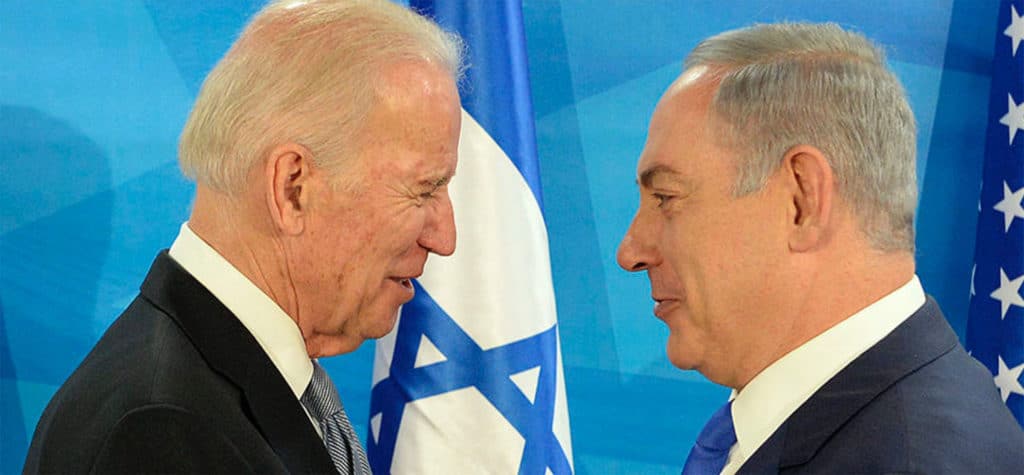
After what has amounted to an almost four-year honeymoon with US President Donald Trump, Israeli Prime Minister Binyamin Netanyahu will have to adjust to a new White House under President-elect Joe Biden.

Waiting more than 12 hours – conspicuously longer than most other world leaders – Netanyahu tweeted that he was looking forward to working with both Biden and Vice President-elect Kamala Harris “to further strengthen the special alliance between the US and Israel.” The prime minister then quickly added his thanks to President Trump for the friendship he had shown “the State of Israel and me personally.”

Since January 2017, the American leader has seemingly aligned US policy with Israeli interests.

He pulled out of the Iranian nuclear deal signed by former president Barack Obama in 2015, turned a cold shoulder toward Palestinian demands in the West Bank, and in January of this year introduced a peace plan that heavily favored Israeli interests. He also brokered or accelerated normalization agreements between Jerusalem and three Arab states.

Ram Ben Barak, a member of the opposition in the Knesset, Israel’s parliament, and a former deputy head of the Mossad, claims that under President Trump, the US alliance with Israel was based on personal interests, while under a Biden administration, cooperation will be based on shared values.

“There is no doubt that a big change is coming in US policy toward Israel,” Ben Barak told The Media Line.

“There is no doubt that a big change is coming in US policy toward Israel.”

“It won’t be for the worse – just different. We won’t be dealing with a president that is a fan of the prime minister, and vice versa, and they won’t be part of a mutual survival pact for their own personal reasons. Rather, it will be based on both countries’ shared values,” he explained.

Ben Barak adds that the outcome of the US presidential election will certainly have an impact on Israeli politics.

“Netanyahu suffered a serious blow…” he said. “Losing his American friend might dampen his rush to call for elections. He’ll be more hesitant. But either way, [Israeli] elections are near. [They will] be called in February at the latest.”

He was referring to a caustic relationship between Netanyahu’s right-wing Likud and the other component of Israel’s so-called unity government, the centrist Blue and White party.

Eldad Shavit, a retired colonel and currently a senior research fellow at Tel Aviv University’s Institute for National Security Studies, believes the changes on the Israeli political scene will be much more nuanced.

“Basic policy won’t shift,” he told The Media Line.

“Biden is willing to continue [Israel’s] normalization process [with Gulf nations]. The question is whether he is willing to pay the price,” the analyst said, referring to what this might cost the American taxpayer in inducements.

Similarly, Shavit, who until recently served as head of the Research Division in the Prime Minister’s Office, suggests tempering expectations regarding peace talks between Israel and the Palestinian Authority.

“I don’t think we’ll see something anytime soon, especially with the current Palestinian leadership,” he stated.

“Washington will manage the situation to prevent any violence from erupting, maybe reopen the [US] Consulate [in east Jerusalem] or get back to funding some [Palestinian] institutions that Trump defunded,” he said. “But not much more.”

“Washington will manage the situation to prevent any violence from erupting, maybe reopen the US Consulate in east Jerusalem or get back to funding some Palestinian institutions that Trump defunded. But not much more.”

Ben Barak speculates that the Palestinian-Israeli dispute will indeed return to the front burner.

“The two-state solution will definitely be more present,” he stated. “It will receive a different kind of focus. I believe Trump’s policy will, in a way, have assisted that: His four years gave the Palestinians some perspective.”

“The two-state solution will definitely be more present. It will receive a different kind of focus. I believe Trump’s policy will, in a way, have assisted that: His four years gave the Palestinians some perspective.”

Heather Stone, chair of Democrats Abroad-Israel, says that overall, a Biden-Harris administration will be beneficial for Israel.

“President-elect Biden and Vice President-elect Kamala Harris are committed to restoring much-needed peace, stability and unity to America, as well as to its relationships with traditional American allies, including Israel,” she told The Media Line.

“They will strengthen America and its alliances, which will directly benefit Israel’s stability and security,” she added.

Another pressing issue for Israel is the nuclear aspirations of Iran.

Two years into his term, President Trump announced he was withdrawing from the 2015 Joint Comprehensive Plan of Action (JCPOA), aimed at limiting Iran’s nuclear capabilities in return for the lifting of international sanctions. In the past few months, Washington has steadily increased economic pressure on the Islamic Republic.

Ben Barak and Shavit both predict that the new administration will try to rejoin the JCPOA, the former estimating that the conditions of the agreement will have to change, the latter assessing that not all sanctions will be removed.

“[President-elect Biden] will try to get back in the [accord] with European consent,” Ben Barak said. “It won’t be the same agreement exactly. Here also, the Trump years will prove to have helped. The Iranians suffered severely and are willing to reach some understandings.”

“President-elect Biden will try to get back in the accord with European consent. It won’t be the same agreement exactly. Here also, the Trump years will prove to have helped. The Iranians suffered severely and are willing to reach some understandings.”

Says Shavit: “I think [Biden] will use this leverage created by Trump to try and renew the agreement. They won’t remove all sanctions; you can’t turn back the clock. But maybe a Biden administration will be more open to giving the Iranians something [although] that may not be enough.”

Following the US election, Iranian Supreme Leader Ayatollah Ali Khamenei took the opportunity to criticize President Trump, tweeting: “The situation in the US and what they themselves say about their elections is a spectacle… Regardless of the outcome, one thing is absolutely clear: the definite political, civil and moral decline of the US regime.”

Israeli Lawmaker: US Election a Blow to Prime Minister Read More »

Biden Victory Could Affect Intra-Palestinian Reconciliation

THE MEDIA LINE — Palestinian Authority President Mahmoud Abbas on Sunday congratulated US President-elect Joe Biden and Vice President-elect Kamala Harris, expressing hope that their administration will work to strengthen Palestinian-American relations following three years of diplomatic gridlock – not only with the United States, but also with Israel.

“As well as working for peace, stability and security for all in our region and the world, we hope that the new American administration will work on a serious political path based on international legitimacy and the two-state solution,” Abbas stressed.

With efforts toward reconciliation between the two main Palestinian movements – Fatah, the ruling party in the West Bank, and Hamas, which controls the Gaza Strip – once again stalled, along with attempts to schedule long-overdue Palestinian Authority elections, analysts have been questioning whether the factions have been dragging their feet, waiting for the results of the American vote.

A statement issued by the Fatah Central Committee on October 1, after senior delegations from Fatah and Hamas met in Istanbul, did not indicate when elections would be held or when Abbas would issue a presidential decree in this regard.

Abdul Haj Ibrahim, former chairman of the Department of Political Science at Birzeit University near Ramallah, told The Media Line that with confirmation of the results of the US presidential race, the intentions and seriousness of both Palestinian parties regarding achieving reconciliation and holding elections will become clear.

“It’s a real test of the Palestinian parties involved in the division and the coup [Hamas’ June 2007 seizure of the Gaza Strip], as a presidential decree still hasn’t been issued regarding the scheduling of elections, which are overdue,” Ibrahim said.

According to Ibrahim, it will become clear either this week or next as to whether the PA is “just buying time in order to return to futile negotiations – and there are signs indicating just that – or whether it will allow the people choose and hold elections, in order to… exercise their right to self-determination.”

Ibrahim doubts that there is a real intention to end the Palestinian division.

“The PA always bets on the American mediator to make the peace process succeed. It can’t see that the Americans are a party to the dispute, and not an objective mediator,” he complained.

“The PA always bets on the American mediator to make the peace process succeed. It can’t see that the Americans are a party to the dispute, and not an objective mediator.”

The Palestinian Authority imposed a boycott on the Trump Administration after the US recognized Jerusalem as Israel’s capital in December 2017.

In its statement, the Fatah Central Committee said understandings with Hamas had been ratified although it did not clarify their nature. The communique included general expressions devoid of any time frame, such as “The path of national partnership is an irreversible strategic choice” and “We work to develop this partnership through free and fair elections.”

Nabeel Shaath, an adviser to Abbas on international relations, denied to The Media Line that the Palestinian leadership was waiting until the results of the American presidential contest. He added, however, that “Palestinian elections require further understandings with Hamas.”

Shaath says the PA leadership is determined to achieve reconciliation and hold elections, and it is Hamas that must put forth a clear position.

“The idea is to form a Palestinian government of reconciliation prior to holding the elections, and in order to form that government, we need to reach an agreement with Hamas,” he explained.

“The idea is to form a Palestinian government of reconciliation prior to holding the elections, and in order to form that government, we need to reach an agreement with Hamas.”

When Abbas met with the World Jewish Congress President Ronald Lauder in Ramallah on October 10 following a call by Lauder for Palestinians to revive peace talks with Israel, the businessman advised the Palestinian leader to wait to schedule elections until after the American presidential vote.

Hazem Qassem, a Hamas spokesperson in Gaza, told The Media Line that the group categorically rejects linking Palestinian reconciliation and elections to changes in the region or at the international level, especially in terms of the American presidential vote and Biden’s electoral victory.

“The path of reconciliation must remain purely Palestinian,” he said.

“The path of reconciliation must remain purely Palestinian.”

“Whatever these changes may be, we must continue on our path, as our people suffer from the division…” Qassem elaborated. “We must now reunite our position and rebuild the Palestinian enterprise so as to represent all segments of the Palestinian people.”

When asked about the timing of the elections, he affirmed that Abbas was the only one authorized to issue decrees in this regard, although he added: “Conducting general elections for the Legislative Council, the [PLO’s Palestinian] National Council and the [PA] presidency must not be delayed or affected by any changes [in the region or abroad].”

Qassem says Hamas is pushing hard to achieve this and to allow the Palestinian people to choose their representatives.

Mustafa al-Sawaf, a Gaza-based writer and political analyst, also suggested to The Media Line that the delays in issuing a decree scheduling elections and in conducting more meetings between Fatah and Hamas were linked to the American political process.

“It [the US election] concerns the whole world, not only the Palestinians, and its results have to be clear to everyone, it doesn’t detract from the [importance of] negotiations between the two [Palestinian] parties, Sawaf said.

“The US election concerns the whole world, not only the Palestinians, and its results have to be clear to everyone, it doesn’t detract from the importance of negotiations between the two Palestinian parties.”

Nevertheless, he indicated that there had been an affirmation by both sides that efforts toward reconciliation would continue regardless of the results of the US presidential contest.

“Jibril Rajoub [of Fatah] and Saleh al-Arouri [of Hamas] confirmed that they will end the division, whether or not Biden emerges the victor because, regardless of who is in the White House, this shouldn’t affect Palestinian unity, where neither [Biden nor Trump] will change the American position that fully adopts the Israeli narrative,” Sawaf said.

“Hopefully both sides will reach an agreement during the next meetings,” he added.

PA Prime Minister Mohammed Shtayyeh expressed hope in a report published on Sunday that the new US administration would “recognize Palestine and prioritize the Palestinian issue on its agenda.”

Biden Victory Could Affect Intra-Palestinian Reconciliation Read More »

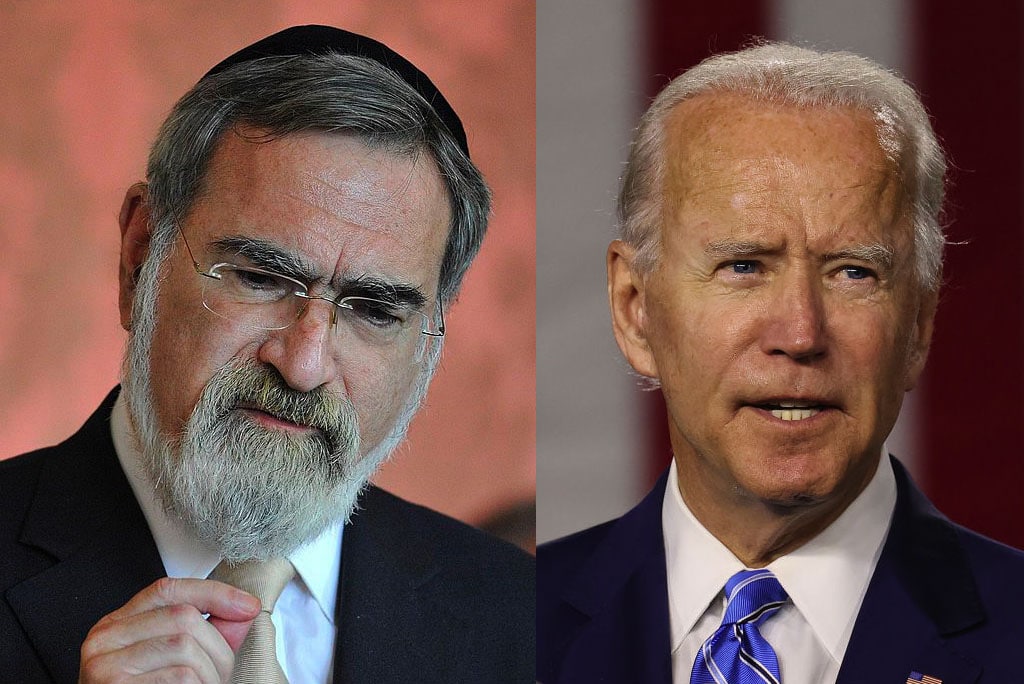
Jewish, Gentile Worlds Mourn Former UK Chief Rabbi Lord Jonathan Sacks

THE MEDIA LINE — Rabbi Lord Jonathan Sacks, former chief rabbi of the UK and recipient of the 2016 Templeton Prize in recognition of his “exceptional contributions to affirming life’s spiritual dimension,” died on Saturday morning.

In October, Sacks revealed that he had been diagnosed with cancer. He was 72 at the time of his death.

From 1991 to 2013, Sacks served as the chief rabbi of the United Hebrew Congregations of the Commonwealth. His erudition and moral thinking was evident in the more than 30 books, including prayer books, that he wrote and edited during his career.

Upon becoming chief rabbi in 1991, Sacks called for a “Decade of Renewal” based on five central values: “love of every Jew, love of learning, love of God, a profound contribution to British society and an unequivocal attachment to Israel.”

In his role as chief rabbi, he became an ambassador for the Jewish community in the UK and beyond. British and world media often sought out his opinions.

In 2009, Sacks was recommended for a life peerage with a seat in the House of Lords. He took the title “Baron Sacks, of Aldgate in the City of London.”

Rabbi David Rosen, international director of interreligious affairs for the American Jewish Committee, told The Media Line that Sacks was “probably the most significant exponent of Judaism in our time to the world at large.

“People knew him as the unique Jewish voice to the gentile world,” said Rosen.

British Prime Minister Boris Johnson offered his condolences. “I am deeply saddened by the passing of Rabbi Lord Jonathan Sacks. His leadership had a profound impact on our whole country and across the world,” he said.

The archbishop of Canterbury, Justin Welby, noted, “He devoted so much of his life to reflecting on God at the most profound level, and we are all the beneficiaries of his wisdom. Rabbi Sacks was always someone who you could relate to instantly. It was that rare combination – profound depth, and equally profound commitment to relating to others – that made the leadership he offered possible.”

Sacks was instrumental in creating and maintaining a deep relationship between the Anglican Church and the Chief Rabbinate of Israel, Rosen noted.

As an architect of the Anglican-Jewish Commission of the Archbishop of Canterbury and the Chief Rabbinate of Israel, Sacks developed a special relationship with the archbishops of Canterbury. Said Rosen of Sacks: “If you build a deep relationship with different religious communities,” as he did, “then you can position to achieve much more than mere advocacy.”

Rabbi Daniel Epstein, rabbi at London’s Cockfosters and North Southgate Synagogue, stated, “Rabbi Sacks has played an integral part in maintaining that covenant [between God and the Jewish people for eternity] from humanity’s perspective with his words, his erudition and, above all, his love of the Jewish people. Our greatest testament to him is to continue on the path that he held so dear and to be exemplars in Judaism and to all of society.”

Israeli President Reuven Rivlin, mourning the loss of Sacks, wrote, “We will always remember his warning against violence in the name of God and his belief that we can heal a fractured world.”

In 2017, Sacks very publicly offered his thoughts on “Facing the Future Without Fear, Together” to millions of viewers of the popular TED Talks video series.

Here he taught his audience: “When we move from the politics of me to the politics of all of us together, we rediscover those beautiful counterintuitive truths that a nation is strong when it cares for the weak, that it becomes rich when it cares for the poor, it becomes invulnerable when it cares about the vulnerable. That is what makes great nations.”

Rabbi Sacks leaves his wife of 50 years, Elaine, a son and two daughters, and numerous grandchildren.

Jewish, Gentile Worlds Mourn Former UK Chief Rabbi Lord Jonathan Sacks Read More »

Israel Needs to Watch Biden’s UN Pick

THE MEDIA LINE — US President-elect Joe Biden reflects the orthodoxy of the “two-state solution” to the Israeli-Palestinian dispute. He is a committed, enthusiastic proponent of this idea as a way forward in the Middle East.

There is a competing political paradigm – “racial-justice politics” – that has gained, if not dominance, at the very least great influence with liberal and left-wing thinkers in America. This new politics, with its ideological base anchored in postmodernism and neo-Marxism, is powered by intersectionality and identity politics.

Inside the Democratic Party, it has garnered considerable authority and leverage. It has also made its way into mainstream American culture: From Hollywood to Twitter and Facebook, it is simply swimming in the American social and cultural mainstream.

Racial-justice politics has a particular Israel problem, and its Israel problem is expressed openly. It presents Israel through an ideological prism, arguing that it is a colonial enterprise, an outpost of Western imperialism in an overwhelmingly Muslim Middle East.

The prominence of the new political paradigm presents a difficult problem for President-elect Biden. Historically, he has rejected this reference system. But as president, he will feel intense pressure to please his left wing and gratify its convictions about Israel.

The prominence of the new political paradigm presents a difficult problem for President-elect Biden. Historically, he has rejected this reference system. But as president, he will feel intense pressure to please his left wing and gratify its convictions about Israel.

The question for Israel and today’s Israeli leaders is how well a President Biden manages the pressure coming from adherents of the new politics.

As the Democratic Party’s nominee, he was successful in rebuffing the new-politics radicals who wanted an anti-Israel statement in the 2020 Democratic Party Platform. His two-state views prevailed, and the platform calls for the creation of a “viable” Palestinian state and explicitly opposes “unilateral action” from either side.

The UN will be a significant test as to how well he continues to juggle the demands of the new politics, for the person President Biden appoints as ambassador will give us a clue.

If he were to appoint say, former two-term mayor of Los Angeles Antonio Villaraigosa, a popular, highly regarded and nationally prominent Latino leader, the news would be extremely well received in Israel. Villaraigosa knows Israel and is an outspoken friend.

A good choice for Biden. Works for Israel.

A good choice for Biden. Works for Israel.

But what if Biden were to choose Pete Buttigieg? The first gay UN ambassador checks some boxes.

Israeli leaders might find Mayor Pete credible. Buttigieg has been to Israel a number of times. In the past, he spoke favorably about the Jewish state. During the campaign, he became wobbly, striking out at Bibi.

But still, he’d likely be satisfactory. Good for Biden. Okay for Israel.

Or, Biden could choose Susan Rice or, say, Stacey Abrams. That would send a negative signal.

How well will a President Biden stand up to the radical pressure? Keep an eye on what happens with the UN appointment.


Michael Fenenbock is an American political strategist in a career that spans over four decades of providing tactical expertise to major campaigns.

Israel Needs to Watch Biden’s UN Pick Read More »

A Messy Transition Lies Ahead

“Now this is not the end. It is not even the beginning of the end. But it is, perhaps, the end of the beginning.”

These are Winston Churchill’s words, uttered at the end of another decisive but not seminal battle almost eighty years ago. But they are just as useful today, as our country has taken important but not yet final steps in this presidential transition.

Saturday morning marked an essential threshold for the nation, when most leading media organizations made an important but unofficial decision to project Joe Biden as the next president. Another important but unofficial milestone was reached that night, when Biden addressed the country as the widely recognized president-elect.

But another traditional turning point, a concession speech from the defeated candidate, had not yet occurred as of this writing. There are more than ten weeks before Biden will be sworn into office, and we have many miles – and many lawsuits and many recounts – to go before we sleep. Donald Trump promises to employ all means at his disposal to contest the election’s outcome. While his chances of success are exceedingly slim, Trump’s actions and statements over the next two-plus months could ease the path for a traditional peaceful transition, or alternatively leave the country in an unprecedented state of confusion as the incoming administration struggles to prepare to take office.

The vote-counting is over. But the legal fights, the political maneuvering and the veiled (and not so veiled threats) have barely begun. The good news is that we pretty much know where we’re going to end up on January 20. But the path to getting there could be difficult and painful.

Throughout his pre-presidential life, Trump’s reaction to unwinnable challenges – whether bankruptcies, divorces or casino closures – have taken on a recognizable pattern. First, he refuses to acknowledge likely defeat. Then he looks for scapegoats to blame for his loss. Finally, he simply walks away and reinvents himself for his next endeavor. That final step will be much more difficult, because walking away from 1600 Pennsylvania Avenue – willingly or otherwise– will be impossible without attracting a great deal of unflattering attention.

Several of Trump’s advisors have reportedly told him that the election is lost, and have attempted to convince him to at least allow for a low-drama transition (even without ever making a formal concession). He has resisted those efforts to date, but as the days and weeks pass and the lawsuits do not bear fruit, he will be forced to begin considering an exit strategy that allows him to leave office on terms that he can at least potentially present as his own.

Trump still publicly argues that he received more votes than Hillary Clinton in 2016, so it’s hard to imagine him ever publicly conceding this election to Biden. But the most important questions over the next several weeks are not about his words but his actions, because an outgoing president can still create a great deal of havoc before his successor is sworn into office.

The most important questions over the next several weeks are not about his words but his actions, because an outgoing president can still create a great deal of havoc before his successor is sworn into office.

In the last days of Watergate, a delegation of senior Republicans, led by Senator Barry Goldwater of Arizona and Representative John Rhodes of Ohio, went to the White House to tell Richard Nixon that is was time for him to go. It’s implausible to think of Mitch McConnell and Kevin McCarthy having the same type of conversation with Trump, and even harder to imagine Trump taking such advice from them or any other politician. But should the current situation still exist a month from now, it is possible to envision Wall Street titans who Trump still admires, such as Jamie Dimon and Steven Schwartzman, having a similar conversation with him.

It is widely assumed that Trump may decide to seek the presidency again in 2024. Thus, some of the president’s political advisors may decide that the best way to persuade him to stand aside is to suggest that a dramatic and defiant exit would be a better way to lay the groundwork for that potential comeback than a petulant and sullen departure.

But predicting Trump has always been hazardous duty. At noon on January 20, America will have a new president. What happens between now and then is anyone’s guess.


Dan Schnur teaches political communications at UC Berkeley, USC and Pepperdine. He hosts the weekly webinar “Politics in the Time of Coronavirus” for the Los Angeles World Affairs Council & Town Hall.

A Messy Transition Lies Ahead Read More »

On Leadership, Rabbi Sacks Has Plenty to Share With President-Elect Joe Biden

Rabbi Lord Jonathan Sacks died on Saturday, just as Joe Biden was declared the President-elect of the United States. An intellectual and spiritual giant leaves us, while a new global leader emerges. Is it possible to connect the two? Can a future leader learn from a Jewish master?

Well, Rabbi Sacks did have much to say about leadership. So, to honor his memory and keep Biden’s future leadership in mind, I thought I’d review the rabbi’s “Seven Principles of Jewish Leadership” which I found on his website.

The first principle is that “leadership begins with taking responsibility.” Sacks contrasts the opening of Genesis with the opening of Exodus. In Genesis, biblical characters are constantly blaming others. In Exodus, Moses takes responsibility and establishes an enduring Jewish value. “At the heart of Judaism,” Sacks writes, “are three beliefs about leadership: We are free. We are responsible. And together we can change the world.”

The second principle is that “no one can lead alone.” The phrase “not good” appears only twice in the Torah, one of them when Moses is rebuked for leading alone. Leadership, the rabbi writes, is “teamsmanship.”

But Sacks adds the important corollary that “there is no one leadership style” in Judaism. During our wilderness years, Moses led by being close to God, Aaron by being close to the people and Miriam “led the women and sustained her two brothers.”

During the biblical era, “there were three different leadership roles: kings, priests and prophets. The king was a political leader. The priest was a religious leader. The prophet was a visionary, a man or woman of ideals and ideas.”

In Judaism, Sacks writes, “leadership is an emergent property of multiple roles and perspectives. No one person can lead the Jewish people.”

The third principle is that “leadership is about the future.” Before you can lead, “you must have a vision of the future and be able to communicate it to others.” Moses had a vision and a destination— leading his people from slavery to freedom and to a land flowing with milk and honey. But before he could finish his task, he had to level with his people about the challenges they’d face in the Promised Land. “He gives them laws,” Sacks writes. “He sets forth his vision of the good society.”

The fourth principle is that “leaders learn.” Without constant study, “leadership lacks direction and depth.” The Torah says that a king must write his own Sefer Torah which “must always be with him, and he shall read from it all the days of his life.”

Citing secular examples from Gladstone and Disraeli to Churchill and Ben Gurion, Sacks writes that “Study makes the difference between the statesman and the politician, between the transformative leader and the manager.”

The fifth principle is “leadership means believing in the people you lead.” Moses was punished by God for casting doubts on the Israelites. The profound principle Sacks cites is that “Judaism prefers the leadership of influence to the leadership of power. Kings had power. Prophets had influence but no power at all.”

“Judaism prefers the leadership of influence to the leadership of power. Kings had power. Prophets had influence but no power at all.”

Whereas power “lifts a leader above people, influence lifts the people above their former selves. Influence respects people; power controls people.”

One of Judaism’s greatest insights into leadership is that “the highest form of leadership is teaching. Power begets followers. Teaching creates leaders.”

The sixth principle is that leadership involves a sense of timing and pace.” One of Moses’ deepest frustrations “is the sheer time it takes for people to change.” But in the end, Moses comes to realize the “delicate balance between impatience and patience.”

“Moses is saying two things about leadership,” Sacks writes. “A leader must lead from the front: he or she must ‘go out before them.’ But a leader must not be so far out in front that, when he turns around, he finds no one following… He must go at a pace that people can bear…Go too fast and people resist and rebel. Go too slow and they become complacent. Transformation takes time, often more than a single generation.”

The seventh and final principle is that “leadership is stressful and emotionally demanding.” Moses cried out: “I cannot carry all these people by myself; the burden is too heavy for me.” Similar sentiments can be found in the words of Elijah, Jeremiah and Jonah. “All at some stage prayed to die rather than carry on,” Sacks writes.

Why do transformative leaders feel, at times, burnout and despair? Because they see “the need for people to change. But people resist change and expect the work to be done for them by the leader. When the leader hands the challenge back, the people then turn on him and blame him for their troubles.”

Great leaders don’t lead “because they believe in themselves. The greatest Jewish leaders doubted their ability to lead. Moses said, ‘Who am I?’ ‘They will not believe in me.’ ‘I am not a man of words.’ Isaiah said, ‘I am a man of unclean lips.’ Jeremiah said, ‘I cannot speak for I am a child.’ Jonah, faced with the challenge of leadership, ran away.”

Great leaders don’t lead “because they believe in themselves…they lead because there is work to do, there are people in need, there is injustice to be fought.”

But leaders persevere and still lead, Sacks writes, “because there is work to do, there are people in need, there is injustice to be fought, there is wrong to be righted, there are problems to be solved and challenges ahead. Leaders hear this as a call to light a candle instead of cursing the darkness.

“They lead because they know that to stand idly by and expect others to do the work is the too-easy option. The responsible life is the best life there is, and is worth all the pain and frustration.”

There will surely be plenty of pain and frustration in the years ahead for president-elect Joe Biden. But this is the role he chose. May he be inspired by the words of a man who understood well that for great leaders, no matter the pain, “the responsible life is the best there is.”

On Leadership, Rabbi Sacks Has Plenty to Share With President-Elect Joe Biden Read More »

The Israel File Appendix: Joint Decline

We send The Israel File every Sunday, and that’s a good way for you to know everything you need about Israel’s coming week in just five minutes of reading. Thank you for signing up.

Oftentimes, we also post an appendix to the File, to update you on the political situation with more detail and nuance. Our update follows the updated table of poll-averages. Note that the table includes both a simple average of the last 10 polls, and a weighted average that takes into account the time of the poll, it’s sample size and other things. So, first let’s look at the table:

What do we see here? Here are five comments:

  1. For now, the only feasible combination of parties that gets more than 60 seats is the classic coalition of right-religious parties.
  2. To imagine an alternative coalition one has to believe in one of two scenarios: a dramatic change in the polls (or a discovery that the polls were way off), or a coalition that includes parties who currently seem unable to sit with one another (for example, a Bennet coalition supported by the Arab Joint List).
  3. Apropos Arab voters: the downward trend of seats for the Joint List continues. In the last three polls in was 12, 12, 13. You’d have to go about one month back to find a poll where it gets 15 (that’s its current number of seats). Enthusiasm among Arab voters for the party – that is torn by internal debates – seem to be low.
  4. Likud’s decline was halted at about 28 seats. Yamina’s rise was halted at about 22 seats. With such numbers, Netanyahu is still the likelier candidate to get the mandate to form the next coalition.
  5. We don’t yet know if other parties will be joining a new race, or if notable personalities who hinted that they intend to run (such as the Mayor of Tel Aviv) will be joining existing parties. If it’s the former, there is a risk of decline for all parties of the center-left and possibly Yamina too).


The Israel File Appendix: Joint Decline Read More »