fbpx

October 29, 2020

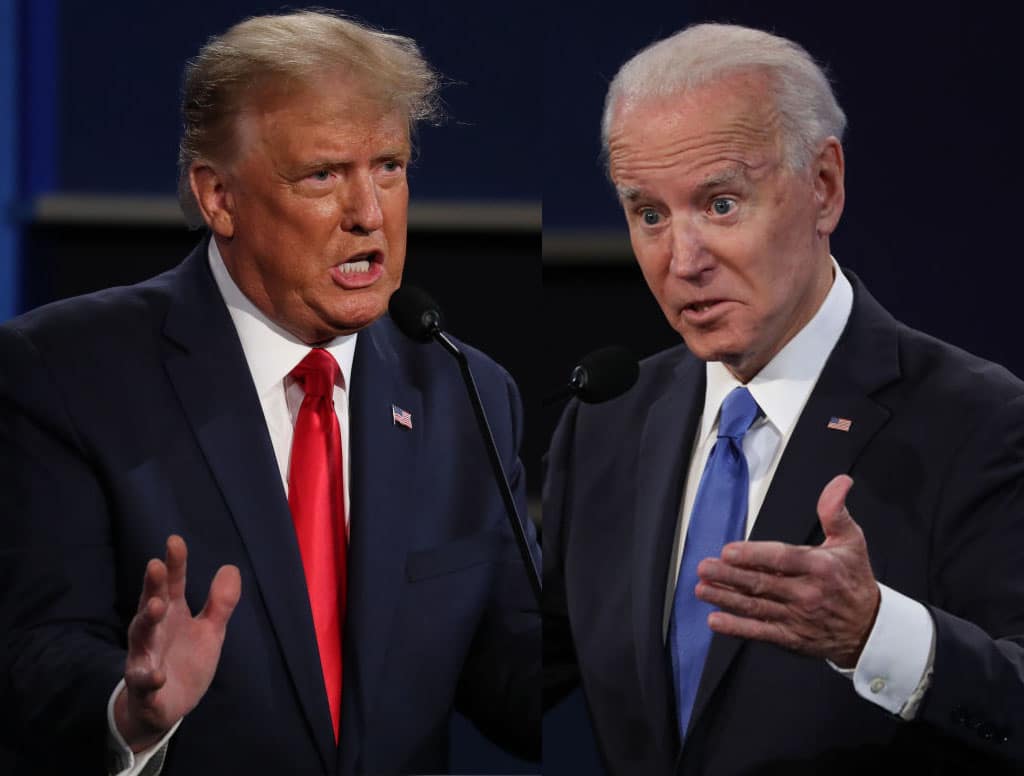
Trump vs Biden: Vote Your Conscience, Veto the Hate

The nerves are fraying. We are days away from the moment of contact, the climax after years of trash talking, when one political tribe finally clashes with the other, and, hopefully, a winner emerges.

I have dear friends who think the world will end if Trump wins; I have dear friends who think the world will end if Biden wins. I try to never invite them to the same Shabbat table. (The lockdown has helped.)

In conversing with both sides over recent months, I did notice one thing in particular many of them have in common: Both sides can’t stand what they call the idiots and fools who support the other side.

That anger, that condescending rage directed at the opposing tribe, is as important to their vote as the candidate himself.

Remember those warrior movies where two armies face each other on a huge field, each one pumped up for battle with their spears or swords or whatever weapon was fashionable?

This is how it feels right now: two political armies facing one another, ready for their final battle, but instead of weapons, they’re flashing their middle fingers. Come election day, it won’t be enough for their side to win; they want the other side to lose. They want to crush them. The middle finger wraps up all those sentiments in one economical gesture.

Among my friends who are Biden voters, there is some concern that he won’t have the fortitude to fend off the far-left wing of his party, and that his advanced age and polite demeanor will be used against him to push through an extremist agenda.

But their hatred for the Trumpian universe is too deep to consider any other choice.

Among my friends who are Trump voters, there is some concern that his reckless style will go too far in a second term, when he doesn’t need to be re-elected, and that he’ll never figure out how to conquer COVID-19 and rebuild the economy.

But their hatred for the Democrats’ universe is too deep to consider any other choice.

Why are we so focused on our opponents? For one thing, because they’re so darn visible, especially in these days of ubiquitous social media. The snarky Twitter putdown of your ideological opponent has become the weapon of choice in today’s political warfare.

We also associate opposing tribes with broad, distasteful stereotypes, which makes it easier to hate. If you’re a Trump voter, your enemies are coastal elites who look down on you and send American jobs overseas. If you’re a Biden voter, your enemies are gun-toting white folks who go to Trump rallies and wear MAGA hats.

We also associate opposing tribes with broad, distasteful stereotypes, which makes it easier to hate.

We’re way past the point of engaging in any type of constructive argument. We can wax aspirational about “civil dialogue” and all that, but let’s not kid ourselves. The divisions are real. The contempt is real. Trump voters despise Biden voters; Biden voters despise Trump voters.

There is, I confess, something liberating about no longer pretending that one side can get along with the other, about looking reality straight in the face. Yes, as they say, it is what it is.

I have only one wish: if one must hate, then let’s hate quietly. Hate is a bad enough feeling without needing a verbal echo. Your vote is more important than your mouth. Vote your conscience, keep fighting for your cause, but veto the hate.

If your side wins, don’t crow. If your side loses, don’t cry. Whatever you do, hate quietly. Our country is going through a divisive and traumatic period, but we’ve seen worse and we will muddle through. At this point, I’m just hoping that a clear victor will be decided next week — and that we can put at least that decision behind us.

If your side wins, don’t crow. If your side loses, don’t cry. Whatever you do, hate quietly.

Which side am I on? On the side of keeping the struggle but losing the hate. The less hate we put on display, the better our chances of returning to a semblance of our better selves.

And God, whichever side you’re on, please don’t forget to bless America.


Trump vs Biden: Vote Your Conscience, Veto the Hate Read More »

Birthday Wishes We Said Go Travel News Oct 2020

Oct News 2020 with We Said Go Travel:

Due to COVID-19 pandemic, I have been in Los Angeles since March 9, 2020. That is 234 days. I have to say that my birthday this month was much better than I expected. Thank you to all of the friends and family who called, sent text messages and shared their love on social media.

Lisa Niver on her birthday Oct 18, 2020 at Hotel Erwin

I have a birthday wish! Please watch, comment and like my videos and subscribe to my YouTube channel! I now have over 1.25 million views and my next goal to have 3,000 subscribers! On my birthday, I had only 123 to go! Thanks for making my wish come true!

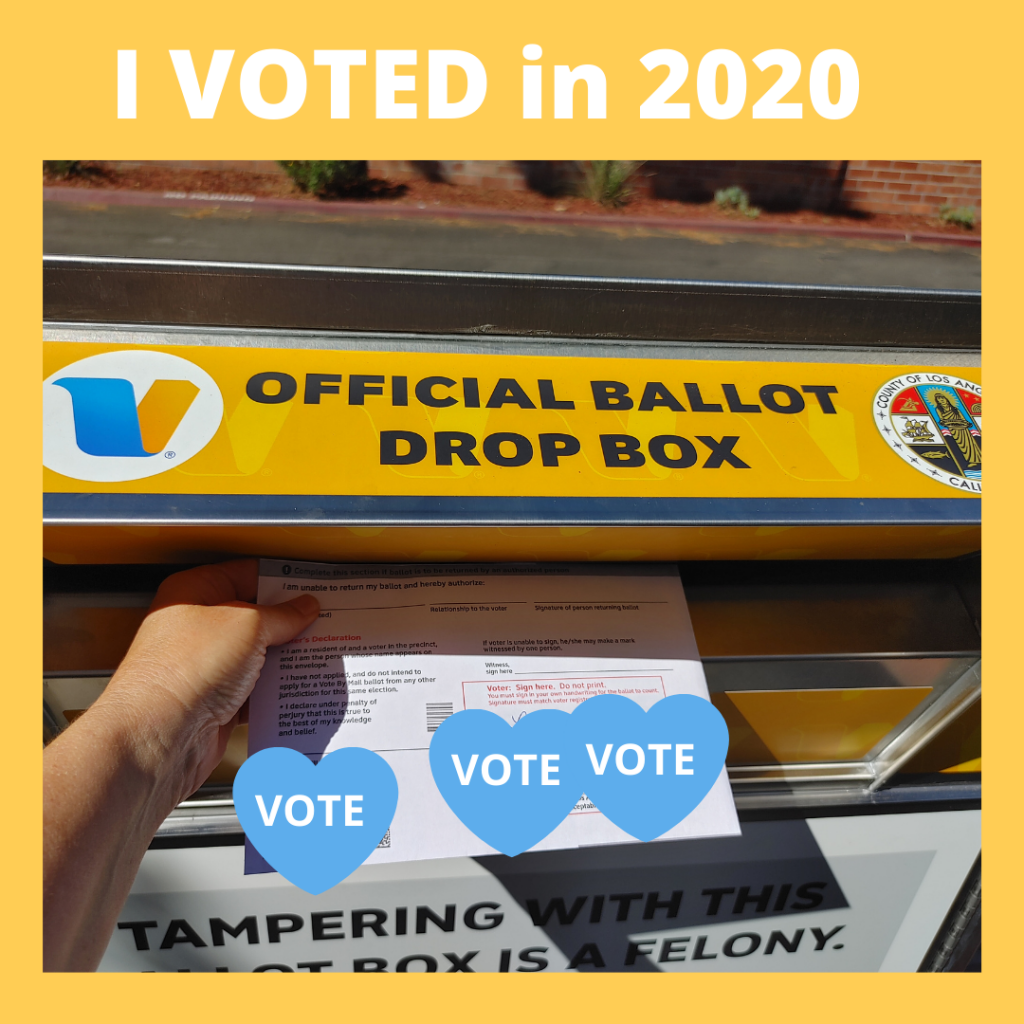
My second wish is for you to VOTE!

Thank you to the Jewish Journal for putting my column IN PRINT twice recently! Special thanks to Brett Barenholz for always looking out for me and saving me print copies!

My comments about Elul leading up to Rosh Hashannah were in print on page 28 of the Oct 2-8 edition.

“During the month leading up to Rosh Hashannah and Yom Kippur, I think about what has happened in the year that is ending. As I have this chance to reflect on what went well and what I want in the new year, I set goals. During the pandemic, I have had to pivot and write more about books as I have not been traveling. What will you focus on?”

My article about Los Angeles Teens Changing the World: Tikkun Olam was in print on page 26 of the October 9-15 edition. I was honored to be a mentor in The Julie Beren Platt Teen Innovation Grants which are part of the ​Jewish Federation of Los Angeles’ LA Jewish Teen Initiative (LAJTI).

Thank you to Canadian Affair for interviewing me about my experience on Rocky Mountaineer.

Lisa from We Said Go Travel explained how she learnt a lot about the history of the railroad on her train journey: “While travelling in luxurious comfort on the Rocky Mountaineer train between Vancouver and Banff, I loved learning the history of the railroad and seeing the spiral tunnels, Hells Gate and the last spike of the Canadian Pacific Railway (CPR) at Craigellachie, British Columbia from November 7, 1885.”

Enjoy my video journey on Rocky Mountaineer

Enjoy my video of the waves at Santa Monica Beach. I filmed with my new LGV60ThinQ phone. I took many videos of my recent stay at Hotel Erwin at Venice Beach. New videos coming soon!

THANK YOU Twitter! I love getting balloons on my birthday!

WHERE CAN YOU FIND MY TRAVEL VIDEOS?

Here is the link to my video channel on YouTube where I have over one and a quarter million views on YouTube! (Exact count: 1,262,264 views) Thank you for your support! Are you one of my 2,892 subscribers? I hope you will join me and subscribe!

For more We Said Go Travel articles, TV segments, videos and social media: CLICK HERE

Find me on social media: InstagramFacebookTwitterPinterestYouTube, and at LisaNiver.com.  My social media following is now over 160,000 and I am verified on Twitter.

Thank you to Larry and Dolly Parton for my birthday card and song!

My fortune cookies said:

You are an Adventurer: Travel the Highway of Life”

“You are headed in the right direction. Trust your instincts!”

Stay safe and healthy! We will travel again….

Lisa

Birthday Wishes We Said Go Travel News Oct 2020 Read More »

The Certainty of My Vote for Joe Biden

The American people are in a strange place this fall, days before election day.

We are living through five crises simultaneously. A health crisis. An economic crisis. A social justice crisis. A climate crisis. And a leadership crisis.

But we are failing at all five, pulling apart rather than together, muddling through without direction, with indecision. We have failed as a nation to rise to the occasion — in fact, we aren’t going higher and higher, but lower and lower.

I simply do not believe that President Donald J. Trump can handle any of these interrelated crises. That alone would disqualify him for another four years.

I keep returning to this one Chasidic Story: A disciple came to his master and said, “Rebbe, the water in our town is poisoned; whoever drinks from the water will go mad. Yet if we do not drink from the water, we shall die. What, Rebbe, are we to do?”

The Rebbe instructed the student to bring some paint and make a mark on his forehead. And then the Rebbe made the same mark on his own forehead. “When you look at me and see the mark, and when I look at you and see the mark, Remember we are mad.”

The worst thing is to accept madness as normalcy and not know it. We, as a Jewish community, should dare not accept our current situation as the “New Normal.”

The worst thing is to accept madness as normalcy and not know it.

We have already lived through enough madness. Witness, for instance, the rise of anti-Semitism. Anti-Semitic incidents have risen to the highest levels in the four decades since the Anti-Defamation League (ADL) started counting them. In the last two years, anti-Jewish killings have been unprecedented for the American Jewish community.

American Jews are rightfully concerned about the growth of anti-Semitism. In a climate in which the expression of hatred is venerated as authenticity in some circles, we are not the only target of this venom — not even the primary target — but we are most certainly a target.

The rise in anti-Semitism has occurred when all sorts of hatreds are on the rise. Those who hate feel empowered to express their hatred. And a society moving from crisis to crisis likely feeds this hatred, as large segments of the population feel insecure. But we have to turn toward one another and not against each other. Polarization divides and excludes. Jews have traditionally thrived in a stable society — but this society, under the leadership of this president, is anything but stable.

And despite not being an anti-Semite personally, President Trump has fueled the flames of anti-Semitism. Anti-Semites feel vindicated, empowered, even called upon to act. He has reinforced basic anti-Semitic stereotypes of Jews:

  • Jews control by their money: In an address to the Republican Jewish Coalition in 2015, Trump said: “I don’t want any of your money….This room negotiates perhaps more than any room I’ve spoken to, maybe more.”
  • Jews have dual loyalty: In a conversation with American Jews in 2019, he referred to Benjamin Netanyahu as “your prime minister.” That same year, he accused Jews who vote Democrat of “great disloyalty,” although he did not say to whom. Trump did not clarify or double back on any of these comments, causing many to note that Trump was reinforcing the anti-Semitic trope of dual loyalty.
  • He has engaged in conspiracy theories singling out Jews. Remember how Trump insinuated that George Soros was funding the caravans of migrants invading the United States just prior to the 2018 midterm election? Do a Google search of QAnon to discover the multiplicity of conspiracy theories.
  • On the debate stage, with tens of millions of Americans watching, he said, “sure,” he was “prepared” to call out white supremacy but did not actually say the phrase “I condemn white supremacy.” After asking the moderator “who would you like me to condemn,” Trump stated, “The Proud Boys — stand back and stand by.” (After the debate, on October 2, Trump stated, “I condemn the KKK. I condemn all white supremacists. I condemn the Proud Boys.”) The ADL regards white supremacy as the biggest threat to Jewish security in the United States, and the FBI calls it a persistent, pervasive threat facing the United States.

To be fair, President Trump has been an ardent supporter of the Israeli government. Trump’s long overdue proclamation moving the American Embassy to Jerusalem and facilitating diplomatic relations between Israel, the UAE, Bahrain, and Sudan are welcome.

But the United States has become weaker in the region and in the world, with fewer allies and no articulated strategy. And I agree with those who believe that if Israel is to remain a Jewish democratic state, the two-state solution is the only viable path. Were Israel to absorb the territories, the Arab minority would constitute approximately half of the population and they would either be granted citizenship or secondary — and inherently undemocratic — status. The Palestinians have to be brought into the equation. It may not be able to happen with them — their leadership is weak and corrupt — but it cannot happen without them and without American leadership. Israel suspended annexation — which was part of Trump’s original peace plan — as quickly as it embraced it. American policy must clearly embrace a two-state solution, an essential part of Biden’s commitment.

I have known former Vice President Biden for years. He is an honorable, decent, and compassionate man, with empathy for others and the emotional stability that comes with maturity, loss, and perseverance. He knows Jews well and knows Israel well; his record is one of unblemished support for Israel, so I trust him completely to protect Israel’s security and to once again provide stability and strength to America’s relationship with the world. But frankly, that is the minimum I expect and peripheral to what is endangering this country.

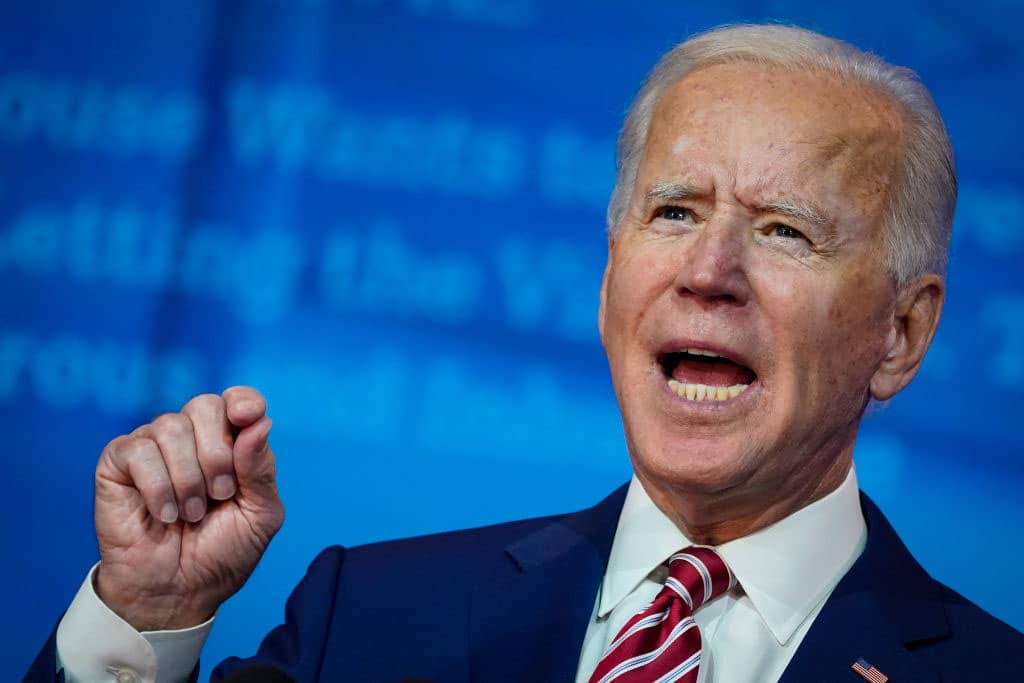
More importantly, I trust Biden to handle the multiple crises besetting our nation, turn the American people one toward another, and begin the long process of repairing our nation. Former Secretary of Defense Jim Mattis said, “Donald Trump is the first president in my lifetime who does not try to unite the American people — does not even pretend to try. Instead, he tries to divide us.”

Why is some semblance of unity essential?

We are in this together and can only grapple with these crises together.

You wearing a mask protects my health, my wearing a mask protects your health. We cannot get out of the health crisis alone; we are responsible for one another, and we need to be responsible for one another.

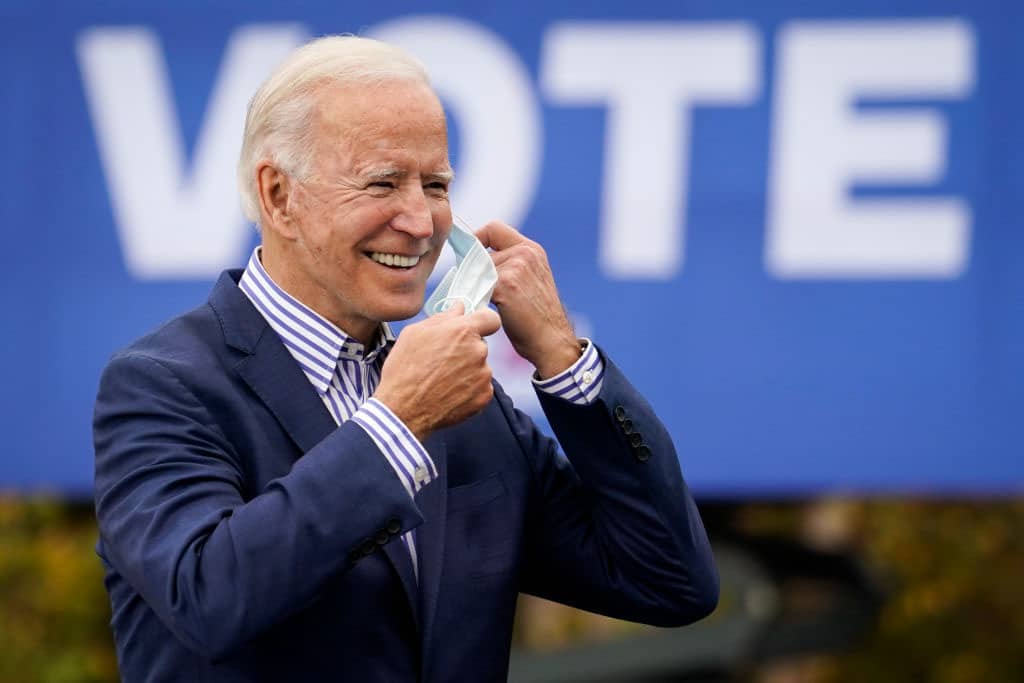
Democratic presidential nominee Joe Biden takes off his face mask to speak during a drive-in campaign rally at Bucks County Community College on October 24, 2020 in Bristol, Pennsylvania. (Photo by Drew Angerer/Getty Images)

And if we cannot get out of the health crisis, we cannot get out of the economic crisis.

If a vaccine, please God, is developed, we need to trust the science — apolitical, peer-reviewed science uncompromised by politics — to help us get to a post-COVID-19 world. So any politicizing of science and any muzzling of scientists will only prolong the health crisis.

Without dramatically slowing the spread of the disease, we cannot open up as a society and thus restore some economic normalcy. Children cannot get back to school, parents to work, employees to their stores, people to travel and socialize, Christians to their churches, Muslims to their mosques, Jews to our synagogues.

Joe Biden is committed to national unity. He is committed to reducing the polarization that is tearing our nation apart. He is committed to social justice for all Americans. He is compassionate by instinct. He offers stability, not discord, decency and empathy, not hatred and divisiveness.

Ronald Reagan asked in 1980, “are you better off than you were four years ago?” In 2020, as a Jew, the answer for me is emphatically: No!

Can we see a path going forward under this President?

No!

I have never been as certain of the vote I just cast.


Michael Berenbaum is director of the Sigi Ziering Institute and a professor of Jewish Studies at American Jewish University.

The Certainty of My Vote for Joe Biden Read More »

A Glimpse Into a Second Trump Term

WASHINGTON DC (Israel Policy Forum) — With the presidential election five days away and the polls heavily tilted toward Joe Biden, the air is thick with prognosticative takes about what policies a Biden administration is likely to pursue. But President Trump has not gone anywhere and may very well remain in the White House come January 20, and this week gave us a preview of what a second Trump term will bring. While we have a demonstrative four year record on Israel, the Palestinians, and the wider Middle East that will not shift course, there are a few elements of a second Trump term that will be different than the first, with the groundwork now beginning to be laid.

The first way in which a second Trump term will differ – though not diverge – from the first is that the annexationist policies that the Trump administration in varying measures actively pushed, acquiesced to, and winked at – most clearly seen in the annexation component of the Trump plan – but did not ultimately execute will be definitively carried out. The theme that has run through the first Trump term with regard to Israel has been a series of American policy decisions that fulfill Israeli requests with no strings attached or without concurrent Israeli policy decisions that meet other American interests. This overall frame has been so comprehensive that nothing conceivably remains on the Israeli government’s wish list save a clear American greenlight for annexation, which Prime Minister Netanyahu has said multiple times is a requirement for Israel to move forward with official changes to the status of West Bank territory.

The theme that has run through the first Trump term with regard to Israel has been a series of American policy decisions that fulfill Israeli requests with no strings attached or without concurrent Israeli policy decisions that meet other American interests.

While I have long been confident that such approval will be granted by the end of a second Trump term, on Wednesday the yellow light began to noticeably turn green with the signing of a bilateral U.S.-Israel agreement to extend scientific, academic, and commercial projects between the two countries to the West Bank and Golan Heights. The old agreement, signed during the Nixon administration and left unchanged by every subsequent administration until yesterday, stated that these projects, which are taxpayer funded, “may not be conducted in geographical areas which came under the administration of the State of Israel after June 5, 1967, and may not relate to subjects primarily pertinent to such areas.” While this may be seen by some as little more than a logical follow-on to American recognition of Israeli sovereignty over the Golan Heights and the new State Department legal opinion declaring settlements to no longer be per se inconsistent with international law, it is actually a much bigger step. 

Not only in word but in deed, the U.S. is now treating the West Bank as no different than Tel Aviv or Haifa. This is not the same thing as treating Israelis who live in the West Bank no differently than those who live inside the Green Line, which is something that should be unobjectionable unless you advocate boycotting settlers. This is treating the territory itself as different, and while prior to yesterday there was – appropriately in my view – nothing preventing an Israeli living in Bat Ayin from participating in a U.S.-funded joint scientific project, today there is nothing preventing the project itself from taking place in Bat Ayin. However you feel about this, it is not only a de facto recognition of annexation but a de jure one, and better than anything else it reveals the purposeful dissembling involved in insisting that annexation is somehow different than applying sovereignty or extending Israeli law. Those who claim that these distinctions are in any way meaningful, with the Israeli government leading the charge over the past few years in insisting that annexation not actually be called annexation and pretending that “extending Israeli sovereignty to settlements” is somehow less and qualitatively different, have to now contend with the fact that the Trump administration just collapsed these categories. Tel Aviv (undisputed Israeli territory), East Jerusalem (part of Jerusalem’s municipal boundaries and thus effectively annexed), the Golan Heights (Israeli law and jurisdiction have been applied), and the West Bank (either disputed territory or belligerently occupied territory depending on whom you ask) are now all treated identically when it comes to American funding for cooperative projects. By the end of a second Trump term, a large portion of the West Bank will undoubtedly move into the annexed/extension of sovereignty and Israeli law category, and yesterday’s announcement is only a preview of coming attractions.

The second way in which a second Trump term will be different than the first will be in the realm of regional proliferation. The groundwork for this was established with the signing of the Abraham Accords and the concurrent pledge from the U.S. to sell F-35s to the United Arab Emirates, but the concrete foundation was poured one week ago when Israeli Defense Minister Benny Gantz and U.S. Defense Secretary Mark Esper signed a joint statement reaffirming the American commitment to maintaining Israel’s qualitative military edge in the Middle East. Gantz flew home and confirmed that Israel was not going to object to the F-35 sale, and this set the stage for what will be an unprecedented weapons flow to a host of Middle Eastern states. The details of the U.S.-Israel agreement that allowed Israel to drop any objections to the Emirati F-35 deal are not public, but it is a commitment to sell more and likely new weapons to Israel in order to offset what the UAE will receive.

If that were the entire story, it would not be terribly noteworthy, particularly as the Emirati F-35s are out of range of Israel’s borders without external fuel tanks or refueling tankers, which are unlikely to be part of the package, and there are a host of ways in which the F-35s themselves can be fitted so that they do not create an insurmountable obstacle to Israel’s security in the event of a future hostile government. But this will not be the end of the story, as now that the UAE will be getting F-35s, the Saudis, Qataris, and Egyptians will want them too. If they don’t get them, the U.S. may provide them with other advanced fighters such as F-16s, or they may look to purchase alternative systems and equipment from Russia or China. This will create a rapidly spiraling escalation, and while Israel may be able to keep pace in some ways, the more advanced weaponry there is scattered throughout the Middle East, the harder this becomes. It also makes it trickier to determine to what extent Israel’s QME has been protected or eroded since that requires quantifying and measuring relative gains rather than absolute ones, a harder task when everyone’s capabilities are shooting upward. Weapons sales are the lubricant that the Trump administration has used for normalization agreements between Israel and other states, and may be an end in themselves given Trump’s oft-stated desire to sell more American-made weapons, and a second Trump term will see this dynamic further accelerate.

One week from now, we will hopefully (though not definitely) know which man will be sitting in the Oval Office for the next four years. Should it be Trump, look for more of the same but taken to extreme conclusions.


Michael Koplow is Israel Policy Forum’s policy director, based in Washington, DC. To contact Michael, please email him at mkoplow@ipforum.org.

A Glimpse Into a Second Trump Term Read More »

Oscar Isaac to Play Jewish Superhero

Oscar Isaac, who portrayed an Israeli Mossad agent in “Operation Finale” in 2018, will star in the Disney+ series “Moon Knight” as a Jewish superhero, based on a Marvel comic series.

Isaac’s lead character, Marc Spector, is a rabbi’s son who leaves Judaism to become vigilante for justice, tracking down and punishing anti-Semites.

Although Isaac was born in Guatemala and raised evangelical Christian in Miami, he does have some Jewish roots on his Cuban father’s side.

Known for playing Poe Dameron in the “Star Wars” franchise as well as roles in “Ex Machina,” “Inside Llewyn Davis,” “A Most Violent Year,” and “Life Itself,” Isaac has several projects coming up.  He’ll portray Duke Leto Atreides in the “Dune” remake next fall, voice Gomez Addams in the animated “Addams Family 2,” and star opposite Jessica Chastain in the HBO miniseries “Scenes from a Marriage.”

“Moon Night” is expected to debut next year.

Oscar Isaac to Play Jewish Superhero Read More »

The Statesman We Lost 25 Years Ago

More than half a century ago, at the Israeli Air Force Academy, I received my wings from General Yitzhak Rabin, then Chief of Staff of the IDF. Soon after, he became the hero of the Six Day War, then Ambassador to the United States, Prime Minister, and then Defense Minister under the National Unity Government. I watched him from afar, being busy with my own military career.

In 1992, after Rabin returned to the Prime Minister’s office, he appointed me Director of the Government Press Office. Thanks to this surprise, I was privileged not only to be privy to history in the making but also to work for a leader who was a statesman — not a politician.

A leader who was a statesman — not a politician.

What is the difference between the two? The statesman thinks about his country’s future, while the politician thinks only about the coming elections.

A case in point was Rabin’s decision to embark on the Oslo process. In 1993, like the rest of the aides around Rabin, I was parroting the party line: we would neither speak with the PLO nor accept a Palestinian state. When the news about Oslo broke, we were first stunned, then puzzled: Had Rabin the hawk turned into a dove?

He had. On September 13, 1993, on the South Lawn at the White House, I watched Rabin say, “We who have fought against you, the Palestinians, we say to you today in a loud and clear voice: Enough of blood and tears. Enough.” Millions of Israelis, watching this with awe on their television screens, knew perfectly well that this wasn’t only rhetoric: Rabin, the soldier, who had sent the Israelis to die on battlefields, expressed a quest for peace. At the same time, the way Rabin halfheartedly shook Arafat’s hand conveyed to  Israelis a parallel message: I’m willing, reluctantly, to give part of the Land of Israel and agree to a two-state solution because I don’t have a better option. I simply don’t want to turn Israel into a bi-national state, where we have to choose between our Jewish character and our democracy.

By pursuing Oslo, by doing what was right and not what was popular, Rabin distinguished himself as a statesman rather than a politician. Unknowingly, he was following the dictum of Kemal Atatürk, the founder of modern Turkey: “I don’t care about what the people want, I know what they need” — with the Rabin caveat, of course, that “If they disapprove, let them kick me out on Election Day.”

What a far cry from our situation today, when Israel is facing the worst crisis in decades — COVID-19. Prime Minister Netanyahu has refused to hand over the management of the pandemic to the only body capable of doing it — the Ministry of Defense — because it might benefit Netanyahu’s rival Naftali Bennett, who was Defense Minister at the start of the pandemic. Netanyahu has also caved to the pressures of the Ultra-Orthodox by not treating their coronavirus-infected communities with differential lockdowns, thus exacerbating the pandemic. This is the work of a politician, not a statesman. Not a Rabin.

In 2000, I wrote Rabin an imaginary letter. “My daughter called. She received an invitation to the ceremony marking the fifth anniversary of your assassination, and she’s very proud. She is one of those kids whose life had changed overnight on November 5, 1995. From a carefree student, she became an involved, caring citizen, who believes in understanding and tolerance among Israelis. Hardly a week passes by without us talking about you. However, she can’t make it to the ceremony because she is due to give birth to our first grandchild, probably on the same day. Life goes on in Israel.”

My granddaughter Maya is twenty now, finishing her army service soon. Her Israel seems to have lost direction, is confused, and is lacking leadership. I keep returning to the closing words of my letter to Rabin. “We miss you, Yitzhak. More than ever.”


Uri Dromi was the spokesman of the Rabin and Peres governments, 1992-1996.

The Statesman We Lost 25 Years Ago Read More »

Rosner’s Torah Talk: Lech Lecha with Dvir Cahana

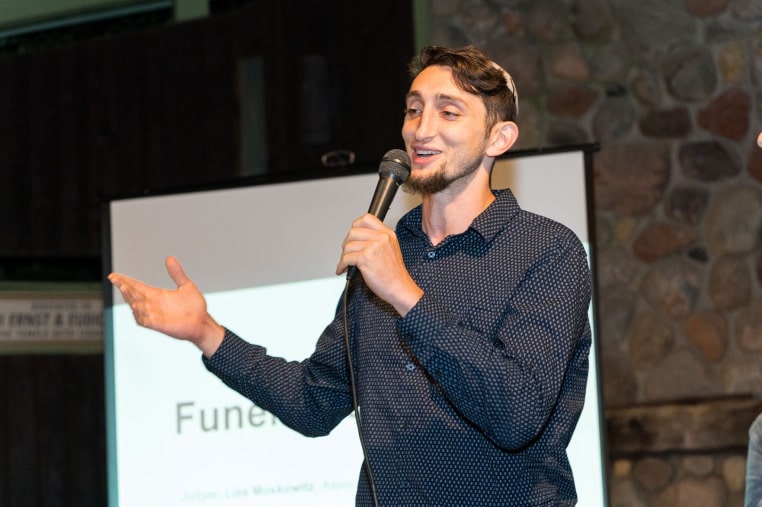
Dvir Cahana is a rabbi in training at Yeshivat Chovevei Torah and began performing Jewish hip hop with his high school group, Les Miz-R-Achim, in 2009. In 2010, he began writing Jewish themed battle raps and in 2011 one of his Torahps was featured on Radio Shalom. He released his first album, @étude in 2012. Read more about him here and more from him here.

Our parsha is Lech Lecha in which God speaks to Abram, commanding him, “Go from your land, from your birthplace and from your father’s house, to the land which I will show you”. Our conversation is about the person Avraham, his wife, Sarah, and the land, Canaan.


Previous Talks on Lech Lecha

Rabbi Mathew Marko

Rabbi Avi Weiss

Rabbi Alissa Thomas-Newborn

Rabbi Avram Mlotek

Rabbi Michelle Dardashti

Rabbi Hyim Shafner

Rabbi Danya Ruttenberg


Rosner’s Torah Talk: Lech Lecha with Dvir Cahana Read More »