fbpx

October 27, 2020

Jon Stewart to Return to TV in Apple TV+ Series

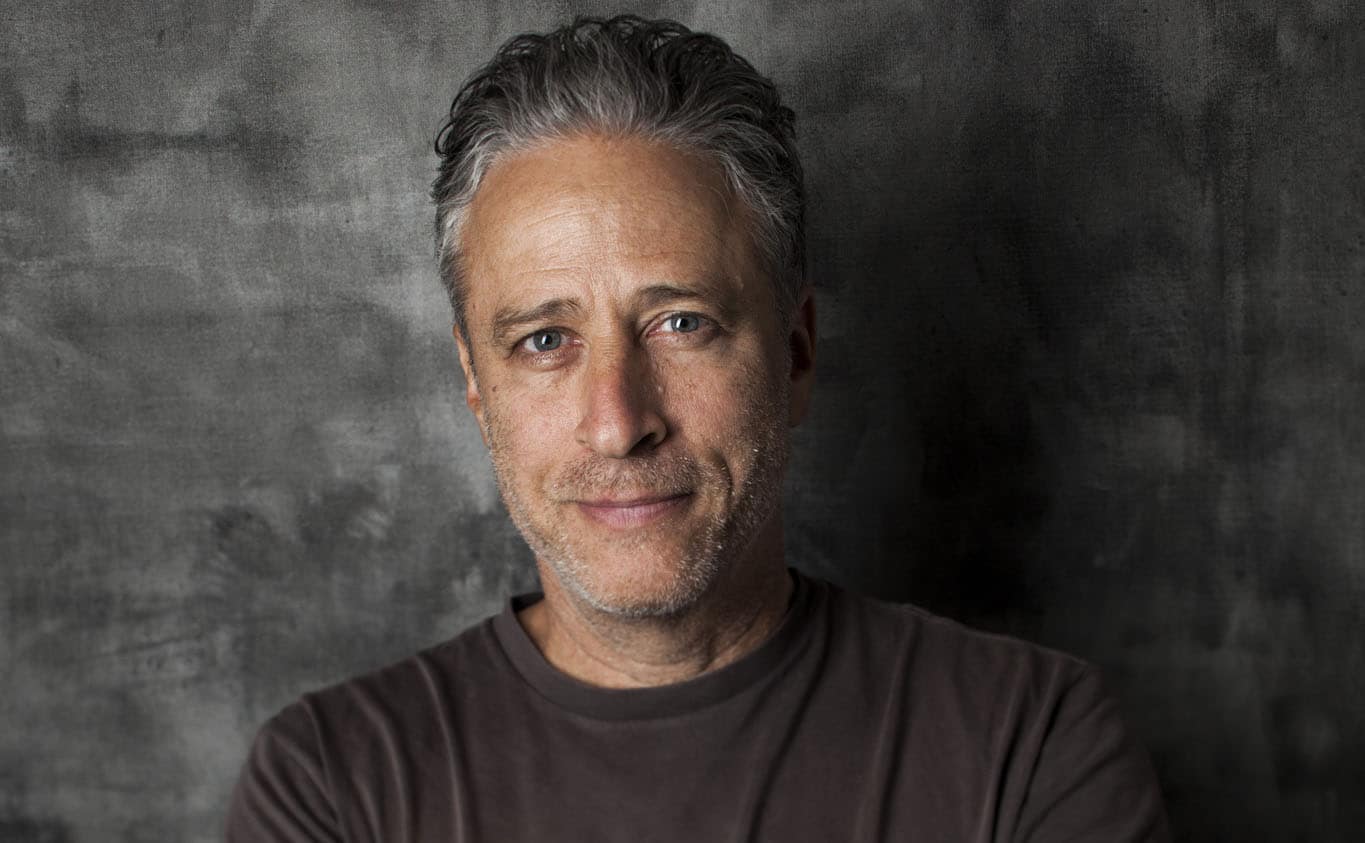
Emmy-winning writer producer, director and “Daily Show” host Jon Stewart will return to television with a new one-hour, multi-season current affairs series for Apple TV+ that will focus on current national issues and topics aligned with his social activist work for wounded veterans, first responders, and others. He will also create a companion podcast to the series.

Stewart’s deal with the streaming service includes a first-look production deal for other projects he will develop and produce through his company, Busboy Productions.

Stewart and “The Daily Show” received two Peabody Awards and a collective 56 Emmy Award nominations, winning 20 times. Their 10 consecutive wins for Outstanding Variety, Music, or Comedy Series represent the category’s longest streak in Emmy Awards history. He hosted the Emmys in 2001 and 2002 and the Academy Awards in 2006 and 2008.

Stewart wrote, directed, and produced his debut feature “Rosewater” in 2014, and most recently directed Steve Carell and Rose Byrne in “Irresistible,” released in June of this year.

Jon Stewart to Return to TV in Apple TV+ Series Read More »

Adam Sandler Goes to Space in Netflix Film

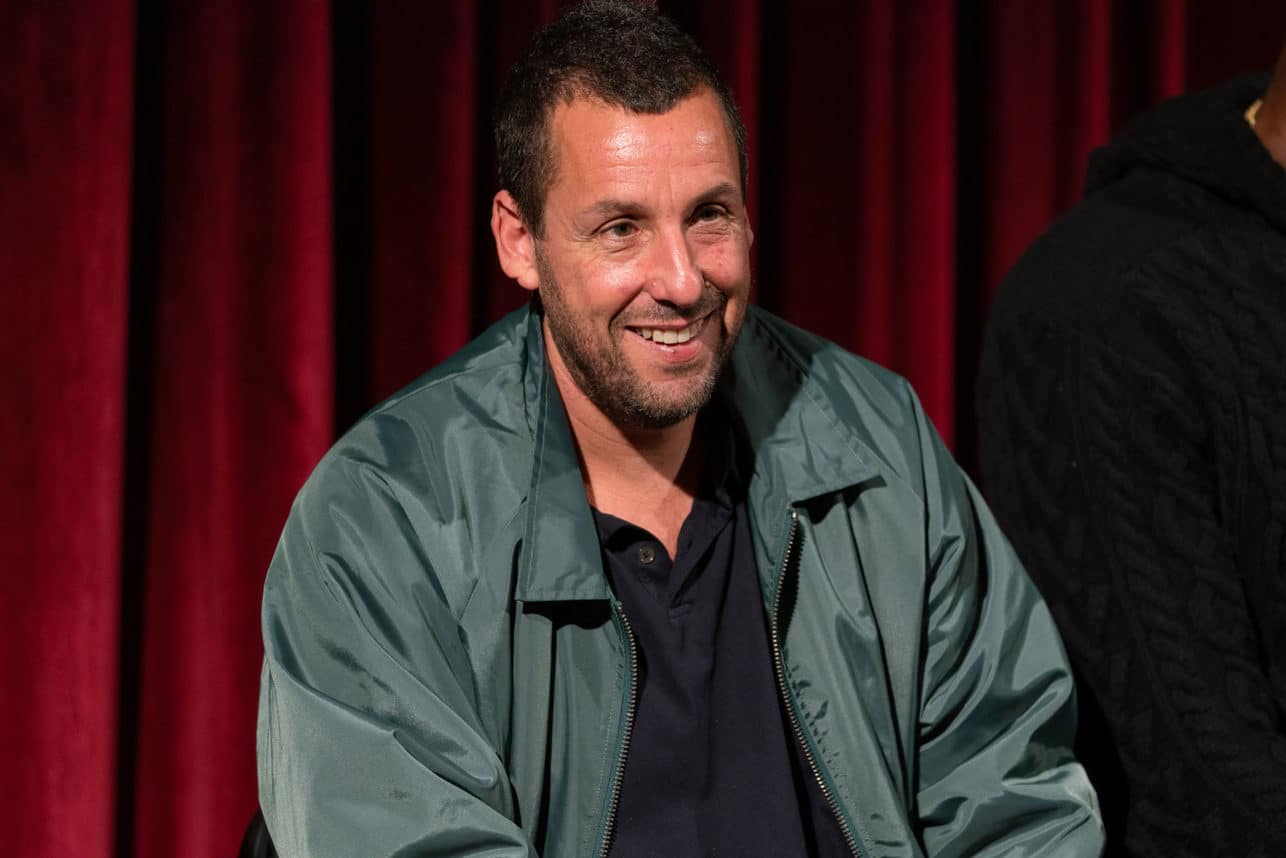
Adam Sandler, now starring in “Hubie Halloween” for Netflix, is going to space in his next movie for the streamer. He’ll play an troubled astronaut who befriends an alien creature in the drama “The Spaceman of Bohemia,” based on a novel by Jaroslav Kalfar. Johan Renck will direct from a screenplay by Colby Day.

“As we prepare for our voyage to Chopra, I couldn’t be more pleased to have found the perfect partner in Adam,” Renck said. “And now, with the support of the brilliant Netflix family, I am profoundly excited to set off on our impossible journey.”

The more serious-minded film will be a departure from the comedies he’s made under his deal with Netflix, including “Murder Mystery,” “The Week Of,” “The Do-Over,” The Ridiculous 6,” and “Sandy Wexler.”

The sports comedy “Hustle,” in which Sandler plays a washed-up basketball scout, is now in production for Netflix, and he’ll voice Dracula in the animated “Hotel Transylvania 4.”

Adam Sandler Goes to Space in Netflix Film Read More »

Those Shtiebel Moments

A dear congregant gifted me a beautiful memoir about her father growing up in Poland during the Shoah. Prior to the onset of the war, her father described the ways in which religious men would frequent the “shtiebel.” He explained that although the shtiebel was a place for prayer, it was also a place where men flocked to schmooze, eat, give and take advice, and listen to each other.

I miss the idea of the shtiebel. In a more mundane sense, I miss the coffee room at work, the lounge or lobby in office buildings, a place where people congregate to just be with each other. The in-person gathering space where people feel seen, heard, recognized, and counted.

While our present-day circumstances may inhibit our congregating in-person, the challenge is figuring out how to recapture a sense of belonging when many feel so incredibly estranged. “Showing up” used to be the big step forward. But zoom fatigue and technological difficulties sometimes impede the desire to turn on the video screen.

Reading about the shtiebel reminded me that in creating new avenues of connecting, we do not need to eliminate others. Meaning, for just one day, what would it look like to step away from the computer and pick up the phone? Or is it possible to send a handwritten letter to someone that we know who especially misses “the place” where they used to feel a sense of comfort?

The evolution of technology has lifted our community in ways we could only imagine. But we must continue to stretch our capacity to reach the other. To uncover and rediscover ways to “catch up,” “check-in,” and feel valued.

Our eyes may be tired from the glare of the screen, but our hearts are wounded in the continued absence of spontaneous human connection. Missing the informal moments where sparks fly, opinions exchange, jokes are offered, and friendships form.

When we feel noticed, we transform into willing, eager partners in the building of a better world.

May the shtiebel moments re-enter our lives. Our lives depend upon it.

Shabbat Shalom

Those Shtiebel Moments Read More »

Former IDF Chief Medical Officer To Lead Israel’s COVID-19 Fight

THE MEDIA LINE — One of Israel’s top public health experts is praising the decision to name Prof. Nachman Ash to lead the country’s coronavirus efforts following Prof. Ronni Gamzu’s prescheduled departure.

Prof. Nadav Davidovitch, director of Ben-Gurion University of the Negev’s School of Public Health, called Ash an “excellent candidate” for the position of national coronavirus project coordinator, in an interview with The Media Line on Tuesday.

Earlier in the day, the Prime Minister’s Office and Health Ministry issued a joint statement announcing the appointment of the 59-year-old Ash, who is director in the Division of Medicine at Maccabi Healthcare Services, the second-largest health fund in Israel, and a professor in the Health Systems Department at Ariel University.

Gamzu had agreed from his start as coronavirus czar in mid-July that in November he would return to his job as CEO of Tel Aviv Sourasky Medical Center. The transition begins on Wednesday, with Gamzu officially leaving the project coordinator on November 13.

Davidovitch said that he had worked closely with Ash on several issues.

“He was always very broad-minded, attentive, a person who was always willing to hear criticism but also to make decisions,” Davidovitch remarked.

The father of twin boys and a daughter, married to pediatric oncologist Dr. Shifra Ash, Nachman Ash brings wide-ranging experience, according to Davidovitch, who singled out his four years as head of the IDF Medical Corps, particularly his handling of the 2009 swine flu pandemic.

While IDF chief medical officer, then-Brig. Gen. Ash was also in charge of deploying field hospitals to Haiti in 2010 and Japan in 2011 in response to natural disasters.

His educational background includes an MD degree from Sackler School of Medicine, Tel Aviv University in 1986 and a master’s degree in medical informatics from the Harvard-MIT Division of Health, Sciences and Technology in 2001. Ash also has a master’s degree in political science from the University of Haifa.

“Of course, he will be under lots of pressure like Gamzu and other people in the Health Ministry because of the politicization of the decision-making,” Davidovitch said. “And there will be lots of media attention. But I know him, and I’m sure he will work together [with others] with all confidence and will listen and integrate [their efforts and ideas].”

Gamzu’s tenure was notable for an increase in coronavirus infections, leading to the nation’s second lockdown, from which Israel is now gradually exiting.

Udi Qimron, professor in the Department of Clinical Microbiology and Immunology, Sackler Faculty of Medicine, Tel Aviv University, is critical of Gamzu’s time at the Health Ministry.

“I believe that Prof. Gamzu was forced to implement a policy that he did not completely support, as he himself admitted. Some of his initial steps were, in my opinion, correct, but some of the measures he implemented, including the lockdown, were completely wrong,” Qimron told The Media Line.

“I believe that overall, his actions did not follow through on his initial speech on ‘signing a new agreement of trust’ with the Israeli public,” continued Qimron.

But Ash is entering into a much better situation compared to Gamzu, according to Davidovitch, in terms of hospital and community preparedness and the systems put in place to break the chains of infection, such as through contact tracing.

“He’s not coming to implement a revolution,” Davidovitch said. “He wants to create a system that is well organized and balanced and, especially now with winter coming, preventing a second wave and especially preventing another lockdown.”

Former IDF Chief Medical Officer To Lead Israel’s COVID-19 Fight Read More »

Prop 14: “Don’t Stand Idly By”

At the very heart of our Biblical tradition is this commandment from the Book of Leviticus: “You shall not stand idly by the blood of your fellow.” (Leviticus 19:16)

If we see our sisters or brothers in danger, our job is simple: provide that help, come to their aid, do what is in our power to protect them and save them.

In the midst of a global pandemic, we feel the call to protect and promote the health and well-being of others even more urgently. Right now, we hear the call to uphold the ultimate Jewish value of pikuach nefesh (saving a life).

Sometimes, we live out that value in an immediate way. We donate blood today, which can save lives in real time. We provide support for basic needs to ensure that people in our community have enough to eat right now. But if we truly wish to move the needle in the work of pikuach nefesh, we must also provide resources to fund research over many years, even decades, that will, ultimately, yield dramatic results.

To truly make a difference, to be God’s partners in bringing healing to the world, we must “not stand idly by” in both immediate and long-term ways.

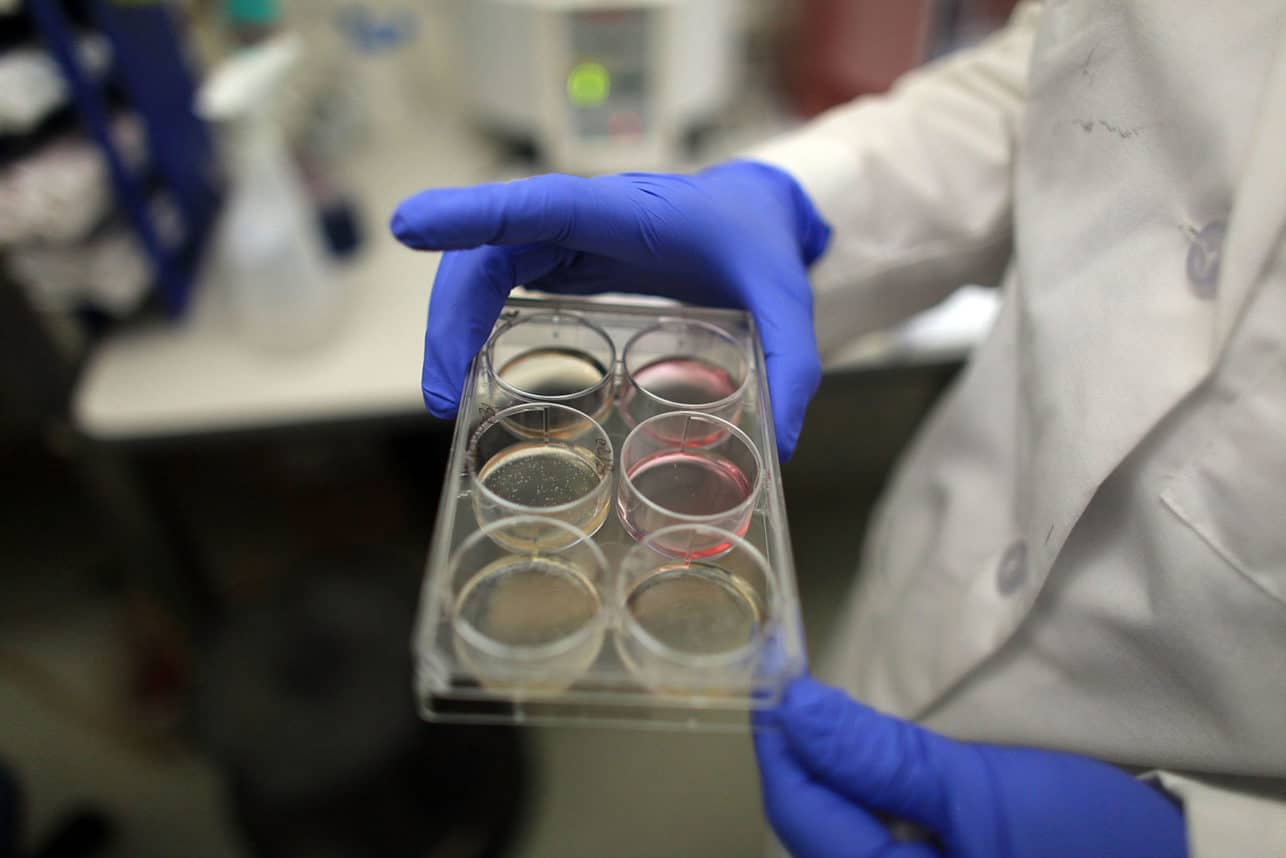
California voters have an opportunity to do just this by voting Yes on Proposition 14, which will advance the California Institute of Regenerative Medicine’s stem cell research to help those who are affected by ailments including heart disease, diabetes, Alzheimer’s, Parkinson’s Disease, sickle cell disease, spinal cord injuries, COVID-19, and so many other chronic illnesses and injuries.

Funding for this important and vital medical research help save lives, and it will provide immediate economic stimulus as well. Even as it funds long-term strategies to alleviate human suffering, Proposition 14 will create jobs during this challenging time. Recent studies suggest that Proposition 14 would generate approximately $20 billion in increased economic activity in California, yielding more than 100,000 new jobs at every level. This far surpasses Proposition 14’s estimated cost of $5.5 billion in bonds.

Critics of the proposition question the need for such funding on a state level today. They argue that Proposition 71, the initiative that originally created the California Institute of Regenerative Medicine, was passed in 2004 only because President George W. Bush had banned federal funding for stem cell research. Now that federal funding for stem cell research is allowed, the critic charge, it’s no longer California’s responsibility to fund such research; private and federal funding be used to continue this important work.

However, relying on federal and private funds is too risky. Many in our country wish to stifle and limit stem cell research on religious grounds. Far more importantly, Jewish law on this matter is unequivocal: stem cell research is not just permitted, but, arguably, required as a matter of pikuach nefesh. Numerous halakhic authorities have made this clear. It should, therefore, come as no surprise that some of the most exciting work in stem cell research is currently being done in Israel.

Medical experts agree that stem cell research and therapies will save lives and alleviate human suffering. In fact, it already has. One example is the stem cell Dr. Donald Kohn at UCLA conducted to cure ADA-SCID — “bubble baby disease.”

This work is too important for us to leave it to chance or to allow it to be cut-off or limited. We see Proposition 14’s opportunity to provide such resources for life-saving research as a blessing, the fulfillment of core Jewish values. Just one chapter before the commandment to “not stand idly by,” our Torah reminds us that the purpose of mitzvot, the very goal of Judaism, is to enhance life. We are commanded: “in the pursuit of My laws and statutes you shall live (וָחַי בָּהֶם).” (Leviticus 18:5) The Rabbis of the Talmud interpret this verse to mean that the ultimate value, above all else, is life itself.

To be sure, it will take many years to realize the promise of current research. But like the well-known story of Honi, who came upon an old man planting a tree that would not bear fruit for another seventy years, we recognize that our efforts are not for ourselves alone. Just as our ancestors sacrificed so that our lives would be better, we commit ourselves to doing the same for our descendants.

The voices of our sisters and brothers cry out to us: friends and family members with diabetes; co-workers fighting against cancer; loved ones slipping away due to the cruel ravages of Alzheimer’s. They call out to us in their pain. They are searching for hope. We cannot stand idly by. We must generously sacrifice so that they and subsequent generations might חַי בָּהֶם, live and be well.

There are quite literally lives to be saved. Join us by voting Yes on Proposition 14 on November 3rd.

To learn more, visit www.YesOn14.com


Rabbi Sydney Mintz is the Senior Associate Rabbi of Congregation EmanuEl in San Francisco.

Rabbi Yoshi Zweiback is the Senior Rabbi of Stephen Wise Temple in Los Angeles. (Rabbi Zweiback’s spouse, Jacqueline Hantgan, is a staff member for Prop 14.)

Prop 14: “Don’t Stand Idly By” Read More »

Lost Bob Dylan Interviews Share Musician’s Concerns of Anti-Semitism

Transcripts and notes from a long-lost interview with singer-songwriter Bob Dylan have found their way to a Boston auction house.

Globally recognized auction site RR Auction is set to auction off Dylan memorabilia as part of its “Marvels of Modern Music” auction, including 37 rare notes written by the legendary performer to his close colleague, the late American blues artist Tony Glover.

The writings reveal stories about the 1965 Newport Folk Festival in Rhode Island, Dylan’s thoughts on folk musician Woody Guthrie and Dylan’s Judaism.

Born Robert Zimmerman on May 24, 1941 in Duluth, Minn. to Jewish parents, Dylan had a lot to say about his Jewish identity including changing his name because he was concerned about anti-Semitism.
Dylan had a lot to say about his Jewish identity including changing his name because he was concerned about anti-Semitism.

“I mean it wouldn’t have worked if I’d changed the name to Bob Levy. Or Bob Neuwirth. Or Bob Doughnut,” the multi-award-winning artist told Glover during the interview on March 22, 1971.

Throughout his multi-decade career writing American folk rock and blues, Dylan has received numerous accolades, including an Academy Award for Best Original Song in 2001 for his song “Things Have Changed,” from the movie “Wonder Boys,” three Golden Globe awards, four Grammys, five Grammy Hall of Fame awards, the Presidential Medal of Freedom, a Pulitzer Prize Special Citation and the 2016 Nobel Prize for literature, making him the first musician to receive the award.

According to RR Auction, Glover was set to use the interview to write a piece on Dylan for Esquire magazine in 1971 but was never published.

According to the Associated Press,  Glover’s widow Cynthia Nadler arranged the archival material for the “Marvels of Modern Music” auction. Online bidding starts Nov. 12 and runs through Nov. 19.

To learn more about the auction, visit RR Auction’s website.

Lost Bob Dylan Interviews Share Musician’s Concerns of Anti-Semitism Read More »

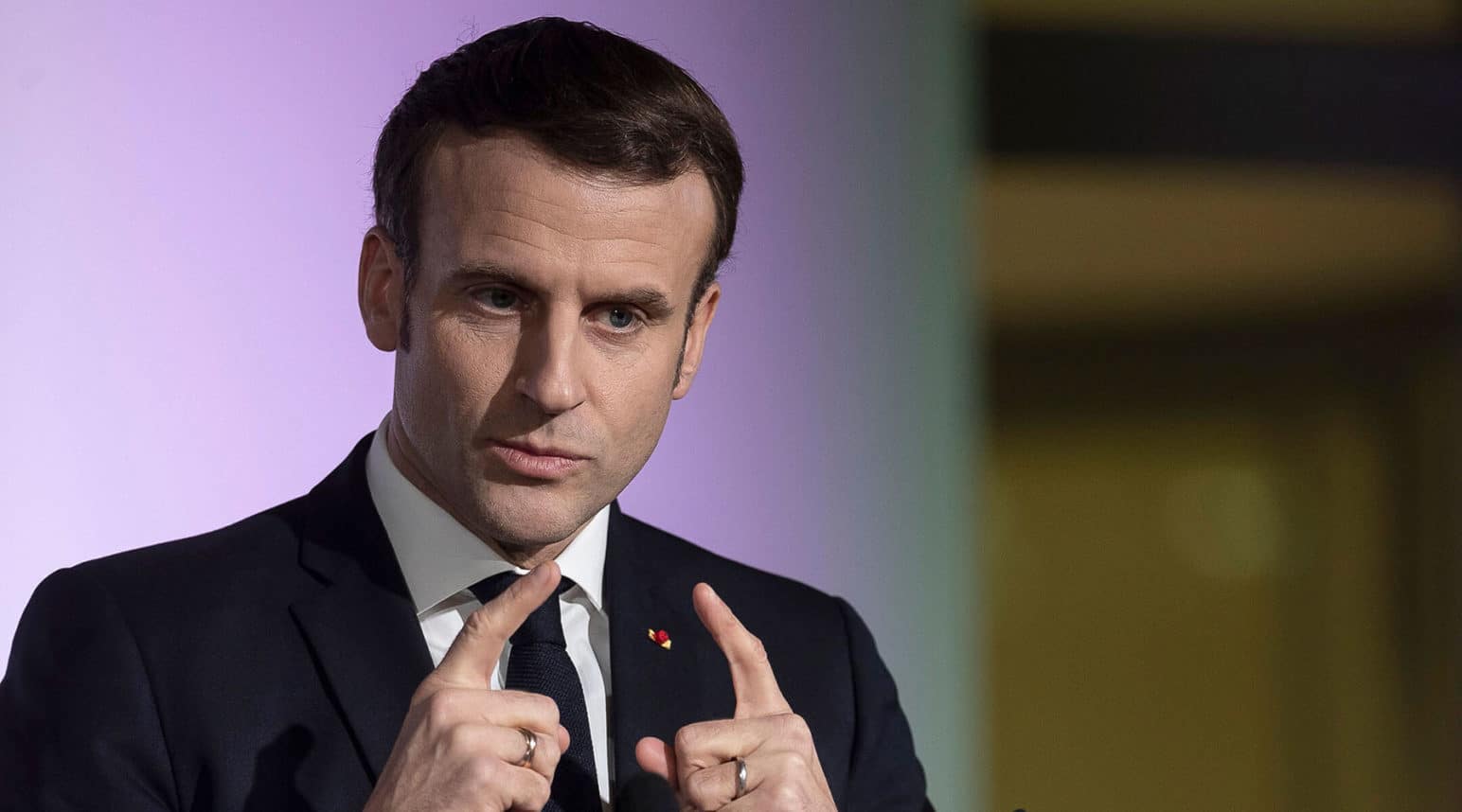
France is Cracking Down on Radical Islam – With the Blessing of its Jewish Minority

(JTA) — As the French government rolls out a controversial plan that amounts to its most robust crackdown on religious activity in decades, it is enjoying broad support from at least one of the country’s faith communities: French Jews.

Jewish community leaders have applauded President Emmanuel Macron’s effort to counter what he calls “Islamist separatism” with a plan that would require children to attend state-recognized schools from the age of three, effectively barring the practice of Muslim home-schooling, and mandate an oath of allegiance to the state from religious associations.

The new plan would also increase oversight of foreign funding for mosques and end a program that allows the children of immigrants to receive subsidized lessons in their parents’ native language. While the new measures do not explicitly target French Muslims, which would be barred by the French constitution, Macron has made clear that they are aimed at “isolating radical Islam.”

“We need to reconquer all that the republic has ceded, and which has led part of our youth and citizens to be attracted to this radical Islam,” Macron said in an Oct. 2 speech near Paris.

“We will act starting today, with a lot of force and determination on the ground. It’s underway,” he said.

The plan, which is scheduled to be brought before the National Assembly later this year, has been widely condemned by Muslims, both in France and beyond, as an attack on their faith. In Gaza, protesters burned posters of Macron, and in Turkey, President Recep Tayyip Erdogan described the plan as part of a legacy of European crimes against religious minorities that includes the Holocaust. Erdogan’s comment last week that  Macron needs “mental treatment” prompted France to recall its ambassador from Ankara.

In France, some left-wing Jews oppose the plan for similar reasons. Maxime Benatouil of the Jewish-French Union for Peace, which supports a blanket boycott of Israel, said in a statement that the plan is motivated by racist hatred, juxtaposing it with what the Nazis and their collaborators did to French Jews in 1940.

But among the mainstream of French Jewry, Macron’s plan enjoys broad support, which only grew following the gruesome murder on Oct. 16 of a high school history teacher who had shown his students caricatures of Mohammed first published in France by the satirical magazine Charlie Hebdo — which was also the target of a 2015 attack by jihadists murdered 12 people at the magazine’s office. Two days later, an accomplice murdered four Jews at a kosher supermarket.

“Bravo for having the courage to call things by their name and charting a course for ensuring the strength of the republic, the mother of all its children who love and respect the values of France,” Gil Taieb, the vice president of the CRIF umbrella of French Jewish communities, said on Twitter.

Taieb’s sentiment reflects a widely held fear that the wave of jihadist attacks that have claimed hundreds of lives in France since 2012 are merely a symptom of an even greater problem than terrorism: The ceding of whole neighborhoods and cities to parallel Islamic education, justice and moral systems. French-Jewish historian Georges Bensoussan, in an influential 2002 book, called these areas “The Lost Territories of the Republic.”

While the fear of radical Islam is self-explanatory, French Jews have their own religious associations and schools. Are they not worried of suffering collateral damage as the country cracks down on Muslim groups?

“Not at all,” said Bruno Benjamin, the president of the CRIF branch of Marseille, home of the second-largest Jewish community in France.

“French Jews as a community have accepted the values of the republic. Their communal organizations observe its laws. So there is no reason for Jews to oppose the application of those same laws on Muslims,” he told the Jewish Telegraphic Agency.

Benjamin is considered a conservative. Previously he led the Marseille branch of the Consistoire, an Orthodox organization that organizes Jewish religious life in France. But his views on the Macron plan are a matter of consensus for mainstream Jews, according to Delphine Horvilleur, a Reform rabbi at Paris’ MJLF Beaugrenelle congregation.

French Jews, who are high on the list of targets for radical Islamists, have much to gain and little to fear from the plan because their education system conforms — and for the most part belongs – to the public school system, Horvilleur said.

“The demands being made in the plan are largely ones that the Jewish community has accepted a long, long time ago,” she said.

Accepting those demands goes back to the core of what it means to be Jewish in France, she added.

“Crudely put, in America people are assured freedom of religion, whereas in France people are assured freedom from religion,” Horvilleur said. “That’s why most Frenchmen, including its Jews, support the president’s plan.”

Leaders of French Jewry have at times shown tolerance for measures aimed at curbing radical Islam, even if it impairs Jewish religious life. In 2016, Moshe Sebbag, a senior rabbi at the Grand Synagogue of Paris, came out in support of a controversial ban — largely repealed later in court — on wearing the full-body swimsuit known as a burkini in public. Even though Jewish religious women wore similar garb, he supported the ban because the Muslim variant was “a statement as to who will rule here tomorrow,” he told JTA at the time.

But in the case of Macron’s school reforms, which aim to eliminate a network of underground Islamic schools that provide little in the way of secular education, Jewish institutions would likely not be very affected. Only about 50 of France’s 200 or so Jewish schools operate privately under the supervision of the French Education Ministry, according to a 2018 report by the municipality of Lyon. Clandestine schools, of the sort that Macron says indoctrinate thousands of Muslim children, are virtually nonexistent among Jews, Benjamin and others interviewed for this article said.

“Typically, when you enter a French Jewish school, there is a French flag at the entrance and a plaque reading ‘liberty, equality, fraternity,’ because French Jews not only respect those principles, but love them,” Benjamin said.

The embrace of republican values by French Jewish schools has been so successful that some of the strictest Orthodox schools in the country have been ranked among France’s top secondary education institutions.

One of them, Paris’ Lucien de Hirsch Orthodox Zionist high school, a private school with some government funding, was ranked by Le Parisien as the city’s best last year, with a perfect matriculation score among its graduates. Another Jewish Orthodox high school, Yabne, is ranked fifth. Ozar Hatorah, a Chabad-affiliated school, was ranked eighth.

This is the case even though the national mandatory curriculum requires the teaching of evolution, sexual education and diversity – including gender — that often clash with traditional Jewish teachings. But at state-funded Jewish schools, Jewish and secular studies are separated by a firewall.

“There are teachers for secular studies, and there are teachers for Jewish studies. They take place on different hours and different faculty. But they both take place,” Benjamin said.

Jewish schools in France have also sidestepped many of the challenges that have plagued state-funded Jewish schools in other European countries in recent years.

In the United Kingdom, several Jewish schools have flunked government inspections for separating boys and girls or their alleged failure to teach “tolerance.” In Belgium, the government in 2013 introduced a reform that threatened Jewish schools with closure if they refused to teach certain subjects. And in the Netherlands, Jewish schools last monthlost public subsidies because they collected money from parents for specific communal needs.

Still, the escalating measures against Muslim isolationism in France do sometimes lump Jews into the equation, making some French Jews uncomfortable.

One example occurred on Oct. 20, when Interior Minister Gerald Darmanin said he was “shocked” by supermarket aisles dedicated to ethnic foods, suggesting shop owners do away with them “to be patriotic.” He added that he nonetheless supports the right to operate kosher or halal supermarkets.

Philippe Meyer, president of the France branch of B’nai B’rith, said Darmanin’s comment was “astonishing.”

The minister must “not conflate communal isolationism, which we need to fight, and the freedom of worship that we must guarantee,” Meyer wrote on Twitter.

Another example came in 2016, when Francois Fillon, a former presidential candidate for the center-right Republicans, equated the fight against Islamic extremism with past efforts to resist Jewish and Catholic sectarianism. He later apologized.

“There are these transgressions that occur from time to time,” Horvilleur said. “But they are minor, and mostly verbal. French Jews overall have confidence in their contract with the French state. And they fear radical Islam much more than they fear this kind of spillover.”

France is Cracking Down on Radical Islam – With the Blessing of its Jewish Minority Read More »

US to Extend Bilateral Agreements with Israel into Judea and Samaria, Golan

The United States and Israel will eliminate territorial restrictions for bilateral agreements in a ceremony on Wednesday.

The move will build upon a policy shift made by U.S. Secretary of State Mike Pompeo this past November, in which America no longer recognizes Israeli settlements in Judea and Samaria as illegal under international law.

Israeli Prime Minister Benjamin Netanyahu and U.S. Ambassador to Israel David Friedman are slated to participate in a signing ceremony at Ariel University in Samaria.

The agreement will immediately expand scientific and academic cooperation to include projects within Judea and Samaria, and the Golan Heights—disputed territories under Israeli control. The United States recognized Israel’s full sovereignty over the Golan Heights in March 2019.

Israel captured Judea and Samaria, in addition to the Golan, from Jordan and Syria, respectively, during the defensive Six-Day War in 1967.

Israel formally annexed the Golan Heights in 1981. Judea and Samaria remain disputed territories and were divided into non-contiguous zones (“Area A,” “Area B” and “Area C”) of varying Israeli or Palestinian administrative and security control under the 1993 Oslo Accords.

US to Extend Bilateral Agreements with Israel into Judea and Samaria, Golan Read More »

The Jewish Faucis: Orthodox Doctors Battle COVID — and Disinformation — in Orthodox Communities

(JTA) — The doctor burst into public view in the pandemic’s early days, vaulting from behind the scenes to the front lines of a crisis bringing his community to its knees. Community members hung on his every word and changed their behavior because of him.

Seven months later, he still has his adherents, but he also knows that weighing in about ways to curb the spread of COVID-19 comes with a cost — from being dismissed at best to facing violent threats from people who are tired of restrictions as the pandemic wears on. He’s still speaking out, but increasingly to a smaller group of people who hardly need to be reminded to wear masks and socially distance while those who have relaxed their behavior are no longer listening.

It’s not just Anthony Fauci. It’s Aaron Glatt, Avi Rosenberg, Stuart Ditchek and others — doctors in Orthodox Jewish communities across the New York region and beyond who emerged as beacons of science and sanity at a terrifying time, and now face a community where resistance and disinformation are becoming more prevalent just as cases are rising to record numbers across the country.

Ditchek said he’d heard people refer to him and several other Orthodox doctors as the “Jewish Faucis,” though he was a bit sheepish about the comparison.

“I assure you that my qualifications and intellect are not on a level anywhere close to Dr. Anthony Fauci,” he said, noting his admiration for the infectious diseases expert. “We are just fulfilling our responsibilities to help save lives.”

Orthodox doctors living in Orthodox communities have served in a number of new roles over the course of the past six months — providing medical guidance to COVID patients far beyond the confines of their day jobs, advising on quarantine procedures and shaping policies for camps and schools to reopen. And now they’re dealing with a threat nearly on par with the threat posed by the disease itself: the spread of disinformation and distrust of the medical establishment in a community that is ready for a return to normality.
For Orthodox doctors, it’s not uncommon during normal times to get calls or a knock on the door on Shabbat from a community member with a medical question.

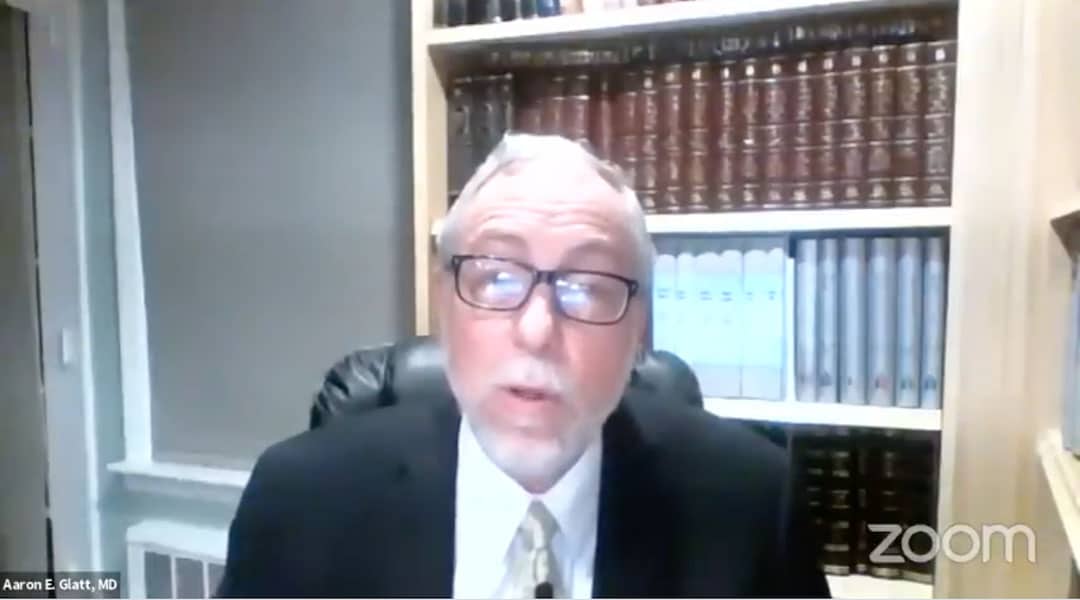
But the requests for advice skyrocketed this spring, as the pandemic descended on the United States. By how much? “Certainly a hundred-fold would not be incorrect,” said Dr. Aaron Glatt, the chief of infectious diseases and hospital epidemiologist at Mount Sinai South Nassau on Long Island and an assistant rabbi at the Young Israel of Woodmere, a large Orthodox synagogue.

As the calls and emails increased, Glatt said, community members and local rabbis asked him to provide regular updates to his community in the Five Towns on Long Island, one of the largest Orthodox communities in the New York area. Soon he was giving weekly Zoom updates on Saturday nights that attracted as many as 1,000 people, with thousands more watching on YouTube, and sending out written updates and guidance to a listserv.

Glatt, who is both a rabbi and a doctor, frequently lamented that his COVID updates drew greater attendance than a Torah class would.

“If a vaccine comes out, then b’ezras hashem [with God’s help] I’m out of business on these Saturday nights,” he said in his Sept. 5 update. “I would like to reserve it to give a shiur [class] instead on some wonderful Torah subject and would love to see a thousand people come in for that rather than the numbers that we’ve had for some other shiurim [classes,] but that’s a wishful thought.”

But around the same time as that address, pushback against Glatt’s recommendations began brewing in his community. Weddings were being held with long guest lists again and shared shabbat meals were resuming. A group of 100 doctors in the Long Island community, including Glatt, published a letter asking the community to continue placing their trust in the local doctors after they noticed the widespread relaxing of mask wearing and social distancing. At the time, one of the initiators of the letter cited local influential people who were fomenting anti-mask resistance in the community.

Then in late September, an anonymous letter circulated on social media accusing Glatt of promoting masks as “magic” and of leading a “cult.”

“We are upset because you only seem to care about Covid itself and the elderly and vulnerable,” the anonymous authors wrote. “Much the same way that Fauci espouses policy based upon Covid public health alone, you too seem to ignore many aspects of the effects of Covid and government lockdowns on our lives.”

To Glatt, the personal attacks on him are not what worried him the most. It was the message the letter sent to community members who were trying to follow public health guidance. “I’m more upset about that than anything else, that they’re convincing people unfortunately who are otherwise doing the right thing to now do the wrong thing,” he said.

On Sunday, local activists gathered for a rally advocating for religious freedom and in support of Donald Trump. Speakers advocated for hydroxychloroquine, a drug that was used earlier in the pandemic to treat COVID but was later found to be ineffective, and questioned the efficacy of masks and COVID testing.

“I would say 99% of the people have been very kind, they’ve been very nice and they have expressed thanks and just been very nice, that’s the vast vast majority,” Glatt said. The anonymous letter, he said, “was the first time of anything of that nature.”

Dr. Stuart Ditchek, a pediatrician in Brooklyn’s Midwood section, said he was appalled by the letter attacking Glatt but noted that many of the critics of Orthodox doctors have chosen to remain anonymous.

“Every frum physician has to do this, they have to engage locally,” said Dr. Stuart Ditchek, an Orthodox pediatrician in Brooklyn.

“Those voices are few…they’re never with names,” Ditchek said. “I will tell you that all of the frum [observant] physicians I know…they all put their names to whatever advisory we put out.”

Ditchek also began giving video updates on the threat of COVID and the steps needed to prevent its spread in the Orthodox community back in March. He issued early warnings in New York City, urging schools and synagogues to close before Purim, the holiday in March when many in New York’s Orthodox communities celebrated and likely contracted the virus.

To the pediatrician, who formerly had little public profile beyond his own practice and the nonprofit he runs benefiting children with life-threatening or life-shortening illnesses, it was important to have local doctors speaking to community members with whom they already had a high level of trust.

“Every frum physician has to do this, they have to engage locally,” he said. “The only way to solve this problem within the communities is to educate within our own communities because they trust us and we have so many relationships.”

For Dr. Avi Rosenberg, a renal pathologist at Johns Hopkins University in Baltimore, Maryland, one of the most important reasons to have Orthodox doctors advising Orthodox communities was to ensure culturally appropriate guidance was given. When it came to advising camps and schools on how to reopen safely, that knowledge of the Orthodox community was key.

“There were a lot of nuanced questions that were well beyond the cultural resonance of guidelines from the CDC and local DOH,” Rosenberg said, noting the unique circumstances of how yeshiva students study in pairs, often arguing loudly over a gemara, or the fact that an infection in one large Orthodox family with many children could easily cause closures in multiple schools.

“I’ve worked with DOH’s around the country at this point and they’ve all been tremendously appreciative to have grassroots physicians involved in designing strategies for environments that they can’t fathom,” Rosenberg said.

Early on in the pandemic, he started a WhatsApp group for Orthodox doctors in his community in Baltimore that quickly became a place to share information about transmission of the disease in the local community. He also became active in another group — called OrthoDOCS, with more than 150 doctors across the country — where physicians shared information about the disease, how to treat it and what was working to contain the spread in their communities.

“Why should we all be remaking the wheel every single time?” Rosenberg asked. “I think it’s pretty unique to what we as a community have done and I wouldn’t even know how you would organize this outside of a community setting.”

But just as in Glatt’s community, Rosenberg, too, started noticing a diminished level of trust in Orthodox doctors among the people he was advising toward the end of the summer. Whereas people who would call him with questions about COVID had previously accepted his advice almost without question, suddenly he was getting pushback from people who were basing their skepticism of medical guidance on unreliable sources or hearsay.

“There were a lot of nuanced questions that were well beyond the cultural resonance of guidelines from the CDC and local DOH,” said Dr. Avi Rosenberg, a renal pathologist at Johns Hopkins University. Rosenberg advised a number of camps and schools on how to reopen safely during the pandemic.

To Rosenberg, the breakdown of trust in scientists and doctors came because of the quiet summer when there were few new COVID cases in many Orthodox communities. That lull took place while politicization of the virus in America increased.

He said the annual period of ritual mourning over the summer called “the three weeks” was the “reset switch” that led to new outbreaks in Orthodox communities up and down the East Coast beginning in mid- to late August. “The amnesia was incredible,” he said.

“People were starting to celebrate their simchas [celebrations] in full fashion and there were those of us who said it’s a bad idea, and people looked around and said but there’s nothing, look there’s nothing. And as the political tone shifted up in the country, it all coalesced into the situation that we saw,” he said.

Ditchek noticed the change, too, and attributed it to the evolving medical guidelines as the scientific and medical community’s understanding of COVID developed. Even people who would normally have listened to the doctors’ advice were confused by the frequently changing advice.

“People misunderstand changes, changes in the direction of the science of COVID, with some kind of scientific error,” Ditchek said. “What we failed to explain as a physician community was that because the scientific discoveries were taking place at such rapid sequence, it was inevitable that we would have to change directions at some point and I think the masks were a perfect example.”

Now that treatment has improved for COVID patients, the protocols have changed again. Unlike at the beginning of the pandemic when some hospitals were overrun and doctors were ill equipped to treat people for a new disease for which there were few known treatments, doctors are now advising COVID patients to go to the hospital immediately if their situation deteriorates.

While Ditchek himself was a proponent of keeping people at home earlier in the pandemic when hospitals had fewer therapies to offer — he helped arrange oxygen concentrators for people to use at home so they could avoid going to the hospital for as long as possible — he believes it’s now critical to make sure people know about the new protocol, even if it is confusing and time-consuming.

“It’s very reflective of what we’ve struggled with, but I’m not embarrassed about having to modify my opinion,” he said. “Because I know it’s going to save lives.”

The Jewish Faucis: Orthodox Doctors Battle COVID — and Disinformation — in Orthodox Communities Read More »

Jewish Groups React to Amy Coney Barrett’s Confirmation to US Supreme Court

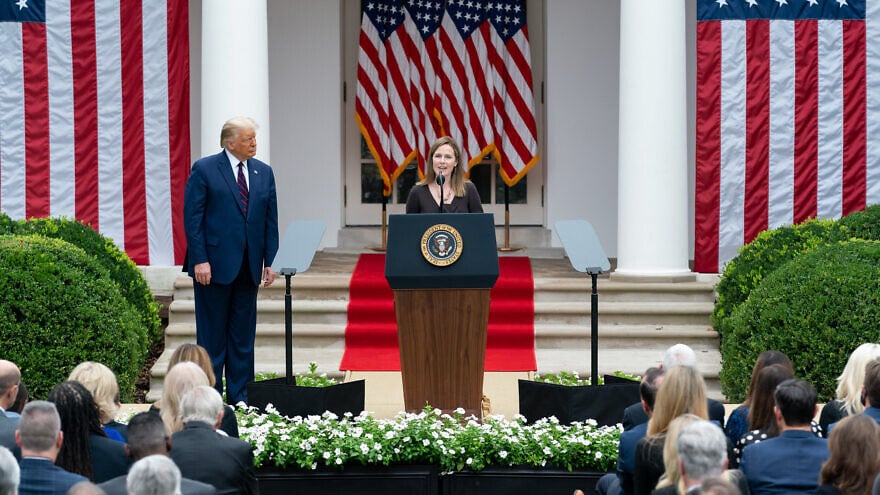
Jewish groups reacted immediately following the U.S. Senate confirmation on Monday of Amy Coney Barrett as the 115th U.S. Supreme Court justice a week before the Nov. 3 election.

Barrett, previously a judge on the U.S. Seventh Circuit Court and a professor at Notre Dame Law School, her law school alma mater, was confirmed 52-48. All but one Republican, Sen. Susan Collins (R-Maine), voted in favor of her nomination, while all Democrats voted against it.

She succeeds the late Ruth Bader Ginsburg, a heralded liberal judicial, feminist and Jewish icon who was the second woman to serve on the nation’s highest court. Ginsburg died on Sept. 18 at the age of 87 from “complications of metastatic pancreas cancer,” according to a statement from the Supreme Court shortly after her death.

In her opening statement on Oct. 12 in front of the U.S. Senate Judiciary Committee, Barrett paid tribute to Ginsburg.

“When I was 21 years old and just beginning my career, Ruth Bader Ginsburg sat in this seat. She told the Committee, ‘What has become of me could only happen in America,’ ” she said. “I have been nominated to fill Justice Ginsburg’s seat, but no one will ever take her place. I will be forever grateful for the path she marked and the life she led.”

The Republican Jewish Coalition welcomed her confirmation.

“Amy Coney Barrett is highly qualified, fair-minded and dedicated to the law,” said RJC chairman and former Sen. Norm Coleman (R-Minn.). “President Donald Trump made a wise choice in nominating her, and we are pleased that the Senate moved swiftly to confirm her to the court.”

“Having a full complement of nine justices on the Supreme Court is very important to the smooth and effective working of our constitutional system,” he continued. “The president and the Senate appropriately carried out their duties in putting forward and confirming this nominee.”

The Jewish Coalition for Religious Liberty and its general counsel, Howard Slugh, applauded the confirmation of Barrett.

“This year, the Supreme Court will hear cases that could have a substantial impact on Americans’ religious liberty,” JCRL and Slugh told JNS. “We hope that Justice Barrett brings to those cases the same dedication to the Constitution that she has exhibited in her legal writings, time on the 7th Circuit and at her confirmation hearings.”

Rabbi Aryeh Spero, president of the Conference of Jewish Affairs, told JNS that Barrett’s jurisprudence is to be lauded.

“I approach the Constitution as I do the Torah, as an Originalist. Decisions should be based on and then applied based on the original intent and meaning of the text,” he said. “Both are here to inform and shape our views and decisions, not overlooked and stretched in favor of a particular political agenda or used as a convenient expedient toward pre-determined outcomes.”

Rabbi Dov Fischer, western regional vice president of the Coalition for Jewish Values, told JNS that Barrett “is an exceptionally qualified jurist with a family commitment, lifestyle and value system that should inspire all Americans. Barrett is quite worthy of a seat on the United States Supreme Court.”

‘Cynically clinging to power’

The Jewish Democratic Council of America, Democratic Majority for Israel and Bend the Arc: Jewish Action objected to her confirmation, as have Democrats in the U.S. Congress.

“Jewish Dems see the confirmation of Amy Coney Barrett for what it is—a partisan power grab by President Trump and Senate Republicans, which violates the will of the American people, Justice Ginsburg’s dying wish and the standard Republicans set themselves for Supreme Court nominations in a presidential election year,” said JDCA executive director Halie Soifer in a statement. “This confirmation will impact generations of Americans, and it’s a shande—a shame to our democracy and judiciary.”

“Judge Barrett has demonstrated a total disregard for legal precedent on critical issues such as the Affordable Care Act, equality in marriage and reproductive freedom, and her views on the law are far outside the mainstream of public opinion,” continued Soifer. “She has also refused to commit to recusing herself from cases involving an election dispute and may serve as the swing vote on the Court deciding the outcome of our presidential election.”

DMFI president and CEO Mark Mellman told JNS, “With the confirmation of Judge Barrett, President Trump and Republicans come ever closer to achieving their long-desired goals for the Supreme Court: eliminating the Affordable Care Act and its protections for those with preexisting conditions; overturning Roe v. Wade and outlawing all abortions; and undermining democracy by deciding Trump is ‘re-elected,’ regardless of how Americans vote.”

Bend the Arc: Jewish Action Stosh Cotler told JNS, “Amy Coney Barrett’s confirmation represents the culmination of the years-long effort of President Trump and Republican senators to stack our courts with ideologues who are only interested in protecting the rights of people who look and think like them.”

“The GOP Senate that confirmed Barrett actually represents a minority of Americans, and five of the nine current Supreme Court justices have now been appointed by presidents who lost the popular vote,” she continued. “This type of minority rule is fundamentally undemocratic and goes against every ideal our government supposedly stands for.”

Cotler also said, “The rights of millions of women, immigrants, LGBTQ people and people of color are threatened by a Supreme Court that cannot be trusted. The deeply hypocritical actions of Trump and the Republican Senate have nothing to do with guaranteeing equal justice under law, and everything to do with cynically clinging to power.”

Certain Jewish organizations, including the Orthodox Union, the Rabbinical Assembly, the Jewish Council for Public Affairs, National Council of Young Israel, B’nai B’rith International, Women’s League for Conservative Judaism, declined to comment.

Jewish Groups React to Amy Coney Barrett’s Confirmation to US Supreme Court Read More »