fbpx

October 23, 2020

Israel and Sudan Normalize Relations

Sudan is the latest country in the Middle East to normalize ties with Israel.

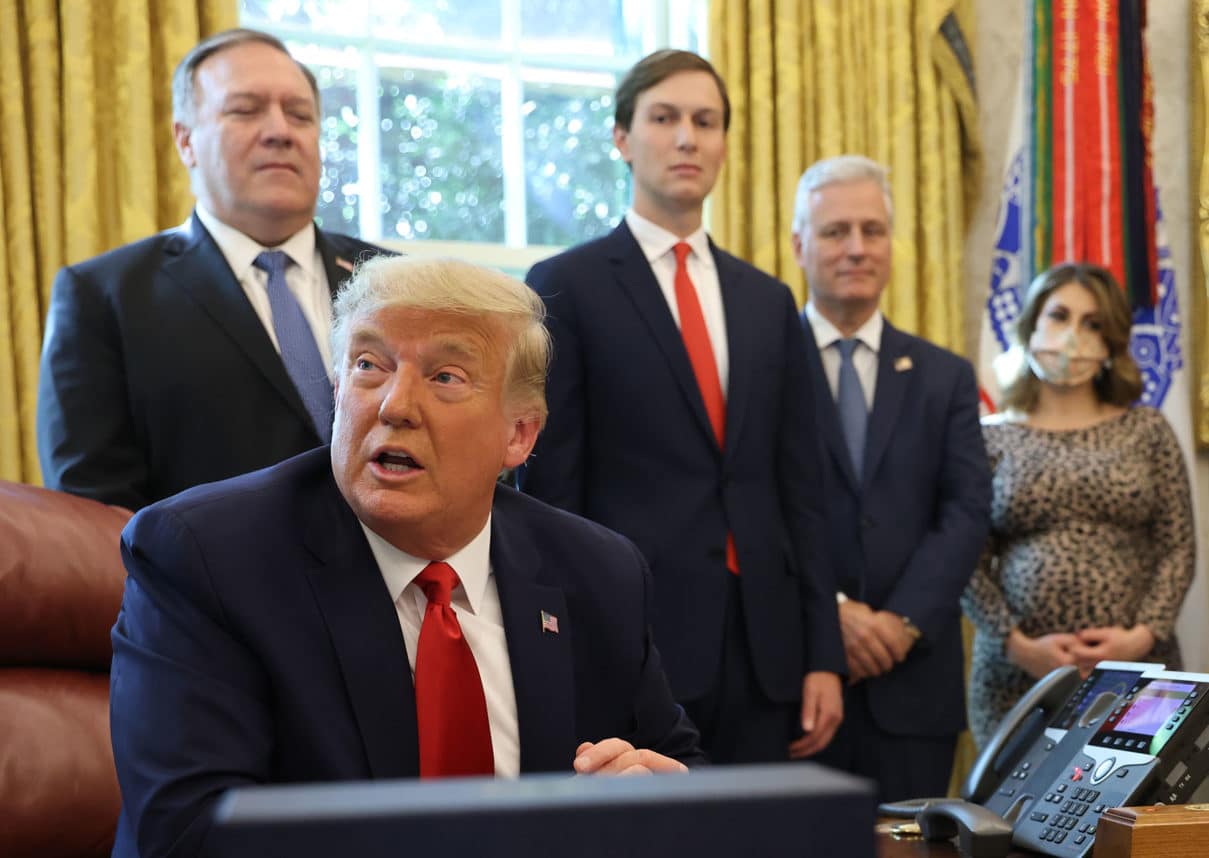
In a joint statement from the United States, Israel, and Sudan, the three countries noted that Sudan’s current transitional government has shown a “commitment to combating terrorism, building its democratic institutions, and improving its relations with its neighbors.” Consequently, the Trump administration decided to remove Sudan from the State Sponsors of Terrorism list.

“The United States will take steps to restore Sudan’s sovereign immunity and to engage its international partners to reduce Sudan’s debt burdens, including advancing discussions on debt forgiveness consistent with the Highly Indebted Poor Countries Initiative,” the statement read. “ The United States and Israel also committed to working with their partners to support the people of Sudan in strengthening their democracy, improving food security, countering terrorism and extremism, and tapping into their economic potential.”

As part of the normalized ties, Israel and Sudan will “end the state of belligerence between their nations” and establish “economic and trade relations.”
“The leaders also agreed that delegations will meet in the coming weeks to negotiate agreements of cooperation in those areas as well as in agriculture technology, aviation, migration issues and other areas for the benefit of the two peoples,” the statement added. “The leaders also resolved to work together to build a better future and advance the cause of peace in the region.  This move will improve regional security and unlock new opportunities for the people of Sudan, Israel, the Middle East, and Africa.”

Jewish groups lauded the normalization of ties between Israel and Sudan.

“Today’s announcement is indicative of a very positive trend, a change of heart, among Arab leaders across the region regarding Israel,” American Jewish Committee CEO David Harris said in a statement. “In this peacemaking endeavor, Prime Minister Netanyahu’s vision and President Trump’s dedication to advancing Arab-Israeli peace have been transformative.

“Sudan is returning to its values of openness, and thereby increasing its ability to exercise leadership in the region. We recall with deep appreciation in 1979 when there was such a virulent reaction to the Egypt-Israel peace treaty, Sudan was one of only two Arab states that stood with Egypt and supported its brave decision.”

The Simon Wiesenthal Center similarly tweeted, “Huge development, #Sudan, former host of Bin Laden and sworn enemy of #Israel is making peace with Jewish state. Kudos to President Trump, @SecPompeo for being catalysts for historic breakthroughs for Arab-Israeli peace accords.”

Christians United for Israel founder and chairman Pastor John Hagee also said in a statement, “We are thrilled to see yet another country end hostilities with Israel. Those who would attack, demonize, or boycott the Jewish state have lost. The Palestinian Authority should take note, normalization is the new normal. Peace is on the march.”

Tablet senior writer Yair Rosenberg tweeted, “In 1967, the Arab League convened in the capital of Sudan and passed a famous resolution declaring ‘no peace with Israel, no recognition of Israel, no negotiations with it.’ Today, Sudan agreed to normalize relations with Israel.”

https://twitter.com/Yair_Rosenberg/status/1319678098305155072?s=20

Senior Palestine Liberation Organization official Wasel Abu Yousseff, on the other hand, called Sudan’s peace agreement with Israel “a new stab in the back of the Palestinian people and a betrayal of the just Palestinian cause.”

Israel and Sudan Normalize Relations Read More »

US Ambassador to Israel: Change of Administration Can Damage Abraham Accords

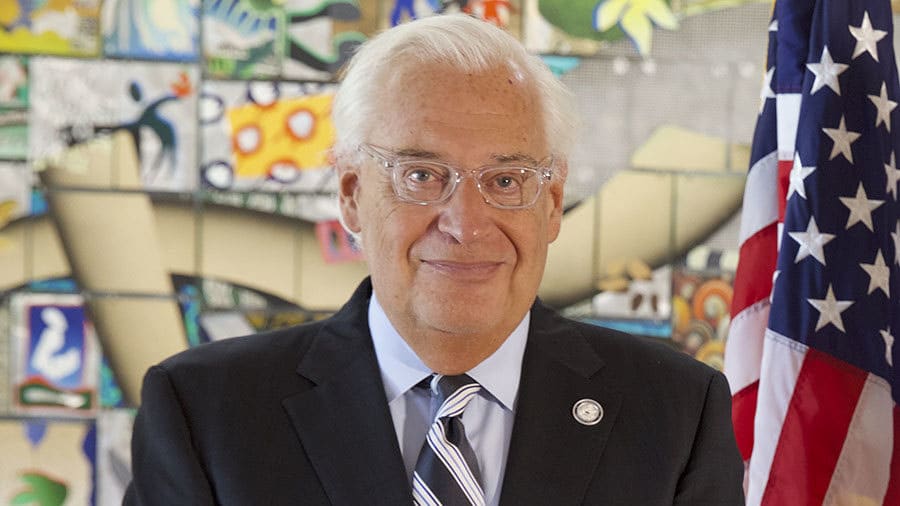
THE MEDIA LINE — Ambassador to Israel David Friedman has represented the United States through a period that belies the Middle East’s reputation for stagnation and intransigence. Not without controversy, the region emerged as what is arguably the Trump Administration’s strong suit as a series of “impossibilities” fell by the wayside. The Media Line’s Felice Friedson sat with the ambassador at his residence in Herzliya where they discussed the issues and events that define the Trump term to the Middle East.

Felice Friedson and US Ambassador to Israel David Friedman at the ambassador’s residence in Herzliya. (Raymond Crystal/The Media Line)

The Media Line: Mr. Ambassador, so much has happened in the Middle East on your watch. The Middle East has long been seen as immune to diplomatic progress. Enter the Trump Administration, and we’ve seen a remarkable change that most recently includes the Abraham Accords – peace agreements between Israel, and now two Gulf states. What was the single significant factor that had turned things around?

Ambassador Friedman: Well, first Felice, thank you for having me and I’ll give you the answer in one word: trust. The president established trust with the players in the region; restored trust with Israel. That relationship had been to a significant extent fractured over the prior eight years. And he established trust with many of our allies in the Gulf as to which the same phenomenon was true. He kept promises that he had made. I think the single, most important thing he did to make peace counter-intuitively was moving the embassy to Jerusalem because it showed that he could keep a promise. It showed that he stood with allies and that he didn’t flinch from rogue states that were making baseless threats. I think when people saw that, they said, “Well, this is somebody that we can trust. This is somebody that we can make a deal with.” His word is his bond and that made a huge difference going forward.

TML: So, let’s go through those decisions. We’re talking about the Golan Heights as well. We’re talking about the decisions to recognize Israel’s sovereignty. There is an endless list of voices warning that the region is going to erupt in violence. Why didn’t it?

Ambassador Friedman: I think the region is … it’s certainly volatile, but all the work that we did, all the conversations we had, you know, we didn’t just do this on the fly. We did a lot of work. We did a lot of studying. We spoke to a lot of people, and our conclusion was very different from many of the experts. We just did not see that level of hostility to these decisions. I think, frankly, most people knew, they’ve known for years and years and years, that Jerusalem was the capital of Israel. They’ve known for years, that as between the State of Israel and either Hafez Assad, or Bashar Assad, there’s no question as to where the equities lied on the Golan Heights, or the security imperatives. They knew that after the debacle with the evacuation of Gaza, they knew that Israel wasn’t going to go through another one of those self-inflicted wounds that could result in potentially all this internal discord. So, I think people understood all these things [that] for some odd reason prior administrations decided to indulge Palestinian fantasies about what could happen that were totally out of touch with reality, but the rest of the world, was not driven by those fantasies. They were driven by reality as we were, and as we started to kind of actualize that reality, not surprisingly we just didn’t see that much reaction.

TML: Palestinian Authority President Mahmoud Abbas had declared that the Palestinian Authority would have nothing to do with the American initiatives and they ended cooperation with Israel. Then peace between Israel and the United Arab Emirates was announced. How did it come together?

Ambassador Friedman: Well, look, it may look somewhat truncated based upon, you know, from an outside view. But remember, what was the first thing the president did in terms of international diplomacy? He went to Saudi Arabia. He spoke to, I think more than 50 Arab leaders. He explained the new view of the United States that there was no longer going to be any indulgence of terrorism and that these countries had to take the hard steps internally that they needed to take to make this region a safer place. That was his message. And first of all, it resonated. And second of all, over the next three something years, three-and-a-half years until we got to the peace with the Emirates, this has been an ongoing goal of the Trump administration. It’s not as if we were heading down a path, one path with the Palestinians. We hit a closed door. We were always looking to create greater regional stability, as well as a peace with the Palestinians, but not one at the expense of the other.

TML: The ceiling has been broken and bilateral agreements are in hand; presumably the sky is the limit. So what can we expect next? You know, we’ve seen agreements signed in technology, moving ahead, [and in] banking. It’s quite interesting and quite phenomenal. What can you share?

Ambassador Friedman: Well look, I spent most of yesterday in meetings, closed door meetings, with [U.S. Treasury] Secretary Mnuchin, Prime Minister Netanyahu, the finance minister of the United Arab Emirates, [and] some of the other high-ranking officials of the UAE. Here’s what struck me because I’m not an expert in finance or transportation or overflights. I am pretty good at reading people. You remember the look on Yitzchak Rabin’s face, alav hashalom [peace be upon him], shaking hands with Yasser Arafat. Now that was, that was not a look of someone who had unbridled happiness or optimism or trust in his counterpart. I mean, I think he did what he thought was the right thing to do, and I think many people agree, and I’m not here to judge that decision, but that was not a peace of warmth or of mutual respect.

That’s exactly the opposite of what we have here. I’m in the room and I’m seeing people that really, really want to advance the ball as far as it will go. Yesterday, they put in a formal request already to open up a formal embassy in Israel. We’re talking, I don’t know, maybe every few hours there is going to be a flight back and forth from Tel Aviv to Dubai or Abu Dhabi. They are going to work on, I think, a lot of supply chain issues that I think we’ve all now focused on post-COVID. Nobody wants to rely upon a supply source halfway around the world, so working on vaccine technology to make sure that there is that resource that exists right in the region. All kinds of things, but they were almost, if I can say, tripping over each other to come up with more and more ideas about what could be done. The sky is truly the limit, and it’s fun to watch, because again, we’re not, we don’t need to police this or oversee it; they’re doing that on their own.

TML: How do you feel that this helps the American people, because they’re seeing it as sort of a regional thing? And then yesterday, Secretary of State [Mike] Pompeo of course talked about some of the declarations of things that are going to happen between the United Arab Emirates and America, between Saudi Arabia and America, which people need to realize [that] they’re almost two tracks going hand in hand.

Ambassador Friedman: Well, look, America has been in the Middle East since the days of Thomas Jefferson, since they were fighting pirates on the Barbary coast. You know, we get drawn into the Middle East. It’s something that we need to do for our national security. Now, I don’t think it even matters who is in the White House. I think there is a trend that America’s footprint in the Middle East is going to shrink over time, shrink responsibly, shrink in a way that is in America’s best interest, but the footprint’s going to shrink. And as the footprint shrinks, it doesn’t necessarily mean that the threats shrink correspondingly so as the footprint shrinks and the threats remain, you need allies. Now Israel has been the gold standard of allies for America and this region for many, many years, but the UAE has been an enormous ally of the of the United States as well.

Having the Emirates partnering with Israel in this region, – remember, Israel has incredible intelligence capabilities and defense capabilities and is a great partner of the United States – but the Emirates is right across the Straits of Hormuz from Iran, and the threat is identical. And to have a really strong, reliable ally in that region, it makes the US safer, it makes it less reliant upon its own blood and treasure, and it at the same time it keeps US interests safe. So, it’s very much within keeping with US policy.

TML: I want to go back for a moment to the treaties that were brokered between Jordan and Israel, and of course, Egypt and Israel. Can the Abraham Accord have an impact on the people-to-people aspects with the Jordanians and the Egyptians watching what’s happening with the people of the United Arab Emirates and Bahrain?

Ambassador Friedman: I think it’s already having an effect. I’m looking at some polls. Again, I don’t, I can’t vouch for them, but the polls, even in Egypt and Jordan, which I think, I think most people would say the peace has not trickled down to a warm view among the people. I think people seem to think it’s changing. I think there’s a… You know, when we said that this was an icebreaker, we had that, those relationships in mind as well. Obviously, there already exist peace agreements between Israel and Egypt and Israel and Jordan, but what it does is it just opens up people’s imagination as to what can be, and I think it does have a positive effect.

TML: The strong announcement of the visa waiver plays into this. Now here, with the UAE, that’s the first signing of that kind of agreement.

Ambassador Friedman: Yes!

TML: Do you feel it’s going to happen in Bahrain? And then let’s look further, what’s the next step that you envision?

Ambassador Friedman: Well, look, it’s really a big deal, right? Israel has a visa waiver program with an Arab country. It’s function, obviously more than anything else of security considerations, and it gets handled by the professionals, so I wouldn’t put this in the category of a political move, because the politics is driven a lot by professional security assessments. Now they got comfortable with the UAE. How they will get comfortable or not with other countries? I couldn’t predict, but I think directionally we’re heading there, certainly, and I think, I wish we could have done more over the last few years with the United States and Israel. We got kind of waylaid by a much bigger problem with regard to closing our borders to protect people from getting sick. When that’s over, I think we’ll revisit that as well.

TML: Sudan, off the terrorist list right now. Do you think it was the right move? Do you think it’s going to lead to normalization with Israel as well?

Ambassador Friedman: I think it was the right move because I think we need to be encouraging Sudan. They moved mountains to get to a much better place, a much less threatening place, and of course, they’ve now come up with an amount of money that was acceptable to I believe a lot of the lawyers who represent the victims, or the victims themselves. I don’t want to get ahead of anyone else on normalization, but I think I’m sure we’re heading in that direction at some point.

TML: Saudi Arabia, nods and winks, lots of things have happened with the Saudi okay, [which] are not public, but you see a big change even in what’s happening in their newspapers. It’s talking about Israel, which never happened six months ago. What’s happening?

Ambassador Friedman: Well, you know, the press is incredible, right? I mean, there was a well-known Saudi lawyer who I think has more than a quarter of a million followers on Twitter. He really, really gave it to the Palestinians for the way they treated the Emiratis who went to visit the Al-Aqsa mosque. I mean, just, I think, kind of disgusted by the treatment, which was… I think he was absolutely right to feel that way. Look, whether it’s that, whether it’s other Saudi leaders, whether it’s the airspace, whether it’s Bahrain joining the circle of peace, the Saudis have made enormous strides. Now, I think you know, they should follow their own internal timeline. We’re not pushing. This is all organically going forward. Let’s see how this develops, but I can tell you, we’ve all been extremely grateful to the contribution that the Saudis have made to this overall process.

TML: The Abraham Fund that was just announced. Will that trickle down to the small businesses, because really the entire Middle East is made up predominantly of the small business owners?

Ambassador Friedman: Well, I think that the answer is, I’m not sure because this is just getting started, how the projects will be funded. But look, if you run a small business, this is sort of, if you run a small business whether it’s in Judea and Samaria or in Israel or in Jordan, you need to be able to move goods freely. You need to be able to move people freely. That’s perhaps the most important component of it. Now, you heard yesterday that one of the things that’s going to happen is the modernization of the checkpoints between the West Bank and Israel. It’s a very big deal. I mean, you’ve seen what the old-fashioned checkpoints look like, and there already are some modern checkpoints. The modern checkpoints, it takes you, it’s like going through a toll booth. I mean, you put your ID card, they scan your face, you put your bag on the detector and you go through. It’s very, very quick. And I think that that will certainly trickle down to small businesses because it’s very important. Beyond that, I mean, a lot of infrastructure is contemplated by this, all those things, whether it’s energy, whether it’s electric, water, [etc.]. I think these things are all going to be very important to small businesses.

TML: Many people say water is the next war. Do you feel that there are particular countries that Israel should be aligning with in terms of development of water technology? The UAE has been involved in that.

Ambassador Friedman: Look, Israel is, I think, the world leader, or one of the world leaders in water technology. They have a lot to offer, especially in arid places like the Middle East and Africa. They’re doing it already, but I think that they are going to… I would see that, again, that’s one of those technologies that everybody wants, and I think Israel is delighted to export that technology wherever people wanted it. It is completely benign to give people drinking water.

TML: Is it accurate to say that the game plan of the Trump Administration was to reach agreements with the Sunni states first and then bring the Palestinians back? Is that possible still?

Ambassador Friedman: I think it’s possible. I think the Palestinians are sort of in one of those final stages of denial. It’s hard to watch. It’s completely self-defeating. There was a leadership problem. There was significant corruption at the top. I’ve said this many times, one of the things to me that tells the whole story is [that] I’ve traveled with Prime Minister Netanyahu to the United States. I’ve been on his plane a few times. He sits in a seat with maybe a couple of seats separate from everybody else, but now more seats with the COVID virus, but he flies like a regular commercial passenger. And Mahmoud Abbas, whose…where the Palestinian GDP per capita is maybe 1/15th that of Israel, he flies around in a $75 million Boeing business jet.

To me, that kind of tells you all that you need to know about the leadership. The Israeli leadership, whether it was Ben-Gurion, Begin, the early years of Israel, the leaders on either side, Ben Gurion, Begin, Golda Meir, these people lived extremely, extremely, modestly. As they were trying to build a state, they were full of self-sacrifice. Now, you can debate their policies, but they had all this thing in common, which is they were not going to spend precious funds on their own luxuries. Well, it’s not the Palestinian way, and you’ve got a lot of concentration of wealth among the upper elite and a lot of people are really unhappy about it. The other typical Palestinian.

Felice Friedson speaks with US Ambassador to Israel David Friedman at the ambassador’s residence in Herzliya. (Matty Stern/US Embassy Jerusalem)

TML: The people suffer at the end of the day, because what we see is a break in dialogue between the Americans and the Palestinians. They’re trying to get water and find creative ways. They’ve actually looked at Israel to create desalination plants and now US aid money has dried up as well so they can’t get that money. So, what would you say to the average Palestinian saying, “Help! I need the help the Americans were giving me, but it’s not coming?”

Ambassador Friedman: Well, I think, first of all, America has provided the Palestinians with more financial, humanitarian assistance per capita than any other place in the world by far. And we have given more money to the Palestinians compared to any other nation by a power of at least five compared to every other country. So, we’ve got nothing to apologize for in terms of our assistance to the Palestinians. But it just can’t be a bridge to nowhere, and that’s what it is right now. It is a bridge to nowhere. The Palestinians want to take, but they’re not willing to really engage in a serious way, and not only that, but it’s almost embarrassing the way in which they insult the United States. They express no appreciation for the help that we’ve, by the way, in which we continue to provide under the radar.

So, it’s really a leadership problem. We really do want to reach out to the Palestinians. We’ve messaged them and I’m happy to do it right now. We want to help the Palestinian people. By the way, the State of Israel wants to help the Palestinian people. It is in Israel’s interest for the Palestinian people to be healthy, to be prosperous, to have hope and optimism about their lives. It’s in everybody’s interest, but we have to break this, this log jam of this. The Palestinian business plan has been for a generation a narrative of victimization, and they would rather that their people suffer in order to maintain a political edge in order to go run around the Gulf and fundraise off of their people’s suffering. They really take concrete steps just to make everybody’s lives better. Even if we, you know, we’ve been saying from the beginning, let’s take concrete steps to improve the quality of life and then we will see where the politics go. Obviously, if people are happier, the politics can only get better. We got massive resistance. We’re not taking help unless we have a political solution first. You saw that in Bahrain. They boycotted Bahrain. There were people there with checkbooks, massive checkbooks, billions of dollars, no, no, financial assistance without a political solution.

TML: So [Palestinian] Prime Minister [Mohammad] Shtayyeh has recently said that “it is regrettable that our brothers are no longer a help to us.” Do you have any reason to believe that the Israeli-Palestinian track is any less intractable as a result of the Abraham Accords?

Ambassador Friedman: I think that there is a huge peace dividend that will come to the region and I believe the Palestinian people are well-educated, well-informed, and well-meaning, and I think that as they see that peace dividend, I believe like all other people, they’re going to want a part of it. They’re going to want better education for the kids. They’re going to want better healthcare. They’re going to want better opportunity, better flow of goods and services, better energy. It’s all there. It’s all there. They just have to sit down and act in a way which is serious, nonthreatening. Enough of the histrionics. Enough of the tantrums. Just sit down and have civilized discussions on serious issues and there’ll be progress.

TML: Where does this all leave the Israeli plans for annexation?

Ambassador Friedman: Well, look, I think you know I don’t like that word.

TML: What word would you use?

Ambassador Friedman: I think annexation connotes a circumstance where the only basis you have to take territory is that you took it in a military conquest, meaning you have no rights independent of your military conquest. I think even before the Six-Day War, I think that Israel had the best rights to that territory legally of any of the litigants. And that was the view, not just my view in 2020, but if you have a, the Undersecretary of State Eugene Rostow in 1967, former Dean of the Yale Law School represented the United States in negotiating UN [Resolution] 242, so he’s a pretty serious guy, and that was his legal analysis. So, I think Israel’s rights predated 1967, and I think when they captured Judea and Samaria from Jordan, nobody accepted Jordan’s rights to that territory at all. And Jordan has since renounced its rights in 1995. So, for all those reasons, I don’t, I’m sorry to go off on that tangent, but annexation would not be my choice of words.

But look, the issue of sovereignty is one that we see being an aid of our vision for peace. We think it’s important for Israel to actualize that vision and to recognize its sovereignty over the communities that none of us think, nobody, nobody in the whole world thinks, that Israel is ever going to stand up and abandon any of these territories. I mean, these have enormous biblical significance – Shilo, Beit-El. They’ll never own, I mean, no one is expecting Israel to give that up.

So, we think it’s a step forward in the president’s vision for peace, but again, it’s part of a vision for peace and now we have this opportunity to actually achieve peace, with a bunch of countries as to which the sovereignty declaration I think would be a distraction right now and it would create a certain amount of friction that I don’t think anybody needs. So, look, the joint communique from Israel, the Emirates and the United States when we announced this on August 13th, was that it was suspended. Suspended is by definition temporary. So, it is temporary, which means that will eventually come back onto the table and it will come on the table after we’ve kind of exhausted all the opportunities for peace. I wouldn’t venture a guess as to how long that’ll take, but it will come back on the table at that point, and it will be done in the context, I think, of the president’s vision for peace.

TML: Ambassador Friedman, there are those who suggest that the UAE and Bahrain agreements were made possible by the president’s promise to sell F-35s – the fighter jets. In fact, some critics of the administration have called the peace agreements “arms deals.” Are the arms part of the agreement?

Ambassador Friedman: No, and I don’t know why anybody would say that; they have no basis to say that. I was in a room yesterday with lots of people on both sides. That issue never came up. Look, I think people need to understand on the issue of F-35s or any other weaponry, we are committed to Israel’s qualitative military edge, even if we weren’t, we have to be because that’s the law of the United States.

TML: But is there an issue here in terms of losing that military edge?

Ambassador Friedman: No! There’s no issue whatsoever. Look, we cannot, as a matter of law, we are a nation of laws. We cannot, as a matter of law, sell weaponry, in a manner that jeopardizes Israel’s qualitative military edge. We’ve been clear on that since the beginning. And look, the reality is that this issue of the QME is something that exists. It’s a constant dynamic process that exists behind the scenes, not with the politicians, but with the experts, the pilots, the military experts, the engineers. There’s a robust discussion that takes place in Washington. Everybody who sits around the table, be they Israeli, be they American, all want to get to the same place, which is to make the right decisions to preserve the QME. And whatever weaponry is sold to the Emirates will be sold in conformity with the QME, that the details of that, the technical aspects of that, number one, I’m not an expert, [and] number two, if I was, I wouldn’t tell you because it’s not appropriate for public discussion, but I have sat in on discussions and I can tell you that sitting in those discussions, I learned a lot and I took away from it one thing which is that everybody’s on the same page, Israeli and American to preserve the QME.

TML: Is Iran the catalyst to the Abraham Accords. Are they really the reason?

Ambassador Friedman: Well, they certainly are a reason. Look here, common enemies have always been a factor in diplomacy, but I’ll tell you, and this is why I’m so optimistic about this. Iran is a factor. It’s not the only factor, and I don’t even think it’s the major factor. I think as I’m talking to some of my counterparts from the Emirates yesterday, we were looking at each other and it was sort of why didn’t we do this long ago? I mean, this is so obvious. The people of the Emirates and the people of Israel [have] so much to gain from each other and they like each other, and they’ve never been at war with each other. There is no reason why the Emirates should have this kind of Arab League reflexive, condemnation of Israel. For what?

Israel has relations. I don’t think that Israel and the Emirates see everything eye to eye with regards to the Palestinians or otherwise, but by the way, neither does Canada see eye to eye with Israel. Neither does the UK. I mean, you don’t have to be aligned on every single issue in order to have wonderful diplomatic relations. So I think, yeah, sure Iran is a factor, but I think that the mutual respect that these countries have for each other and the mutual recognition of what they can do together as being sort of exponentially more than they can do independent of each other [which] is probably the highest, the greatest factor.

TML: American polling raises the specter of a change in US administrations. There’s concern that these achievements we’ve discussed could be walked back. And in particular, pressure on Iran might be lifted. Can the achievements in the Middle East survive a change of a US administration?

Ambassador Friedman: Well, look, I think an administration with a different approach could do huge damage. No question about it. The most obvious area would be with regard to Iran. Iran is on the ropes. They are weakened. They’re far weaker now than they were before we let them off the hook with the JCPO, right? If you let them off the hook again, we will all have to answer to our children and grandchildren as to how we created a terrorist nuclear power, which is what we will do if we let Iran off the ropes right now. So, I don’t want to predict what will happen in the future with regards to a new administration. I frankly don’t think there’ll be a new administration, but look, it’s a big risk. I think it’s important because I think people do tend to politicize this too much, whatever we’ve done with regard to the Middle East has been done because we thought it was in the best interest of the United States.

That’s always been the lens that we’ve looked at everything, what’s in the best interest of the United States? Not what’s on anyone’s political wish list. I would hope that because of that, all the things that we’ve done would be enduring, would stand the test of time. I’ve heard already that there’s no desire to move the embassy back from Jerusalem. Well, of course there shouldn’t be, that’s the national wellness, the Jerusalem Embassy Act. Why would anybody want to do that? Why would anybody want to talk about giving the Golan Heights to a butcher, like Bashar Assad and threaten Israel’s security? I mean, why would anybody want to undo that? By the same token, why would anybody want to take the most threatening malign sponsor of terrorism in the world and fund them? To me, these are easy things that should be perpetuated because they’re great for America, but I do worry.

TML: From your perspective, as one deeply involved with the regional players, what would you tell your successors that would transcend politics and address prospects for peace in the Middle East?

Ambassador Friedman: Well, like the first thing I would do would be to tell my predecessors, without being critical of anyone in particular, some of them have violated this, this rule, which is get to know Israel better, get to know the people better. And don’t think that you understand Israel better than they do. And don’t think that your job is to save Israel from themselves. Israel is a mature country. It’s older than more than half the countries in the United Nations [which] are younger than Israel. Israel has, with all [of] its political dimensions, Israel has a pretty advanced view, a pretty developed view of, of what it can and can’t do, what it’s prepared to do and not do in terms of diplomacy, in terms of trade, in terms of commerce. I mean, they are real first world country and there’s been a lot of paternalism that I’ve seen in the diplomatic outreach of my predecessors.

We’re going to help you. I never did that. I came in here and had great respect for the Israeli people and came to understand that they really know what they’re doing, and just as every other ally that we have in the world, we listen to them and we tend to respect their views if they’re made in good faith. We do that here too, and I think that the notion that anyone other than the Israeli people know what’s best for Israel, is a pretty insulting view, and we’ve really tried very hard not to take that view.

TML: Ambassador Friedman, I sat with you before you were sitting in the seat of ambassador. Looking back at these years, what do you think you did best? What do you think you would have done differently?

Ambassador Friedman: Well, look, I hate looking back, I just am not a look back kind of person. I mean, maybe one day, you know, I can’t get any grayer, but maybe when I’m older I’ll look back at those things, but it’s not… Looking back, sort of, to me, makes it feel like, you’re done. I don’t ever want to be done, whether I have this job or not. I never want to be done with the job of advancing the US-Israel relationship. Look, the one thing that advantaged me more than anything else was [that] I had a deep, long relationship with the president of the United States. I had a relationship of trust with the president of the United States. I respected him. I understood his way of approaching a problem.

I wanted to advance US policy in a way that was good for America, good for the president, good for the Israeli people. And I think over time, a relatively short amount of time, that the entire body politic of America, the government, even the swamp as they say, kind of was willing to…because they saw that relationship and how strong it was and how much trust there was between the president and me. And of course, Jared, who I also know, [and] knew, long before the administration. I think that we gained a lot of respect within the US establishment, the State Department establishment, the policy establishment that we were working closely to fulfill an American agenda, but I really attributed it all to the trust that the president had placed in me; the authority he gave me. It starts with that and it ends with that, frankly.

US Ambassador to Israel David Friedman and Felice Friedson at the ambassador’s residence in Herzliya. (Raymond Crystal/The Media Line)

TML: And on the flip side, is there something looking back you would’ve done differently, or maybe you regret?

Ambassador Friedman: Look, I worked 18 hours a day for four years. I am sure I could have done things better. You can always do things better. I’ll do that post-mortem, probably down the road a little bit, but sure. I mean, look, you do the best you can, but you always make mistakes. The key, I think, is not to be afraid to make mistakes, which I don’t think I was.

TML: Ambassador David Friedman, the American ambassador to the State of Israel. Thank you so much for the time.

Ambassador Friedman: My pleasure, Felice. Thank you.

US Ambassador to Israel: Change of Administration Can Damage Abraham Accords Read More »

Biden and Trump’s Character and Record Prominent in the Final Debate

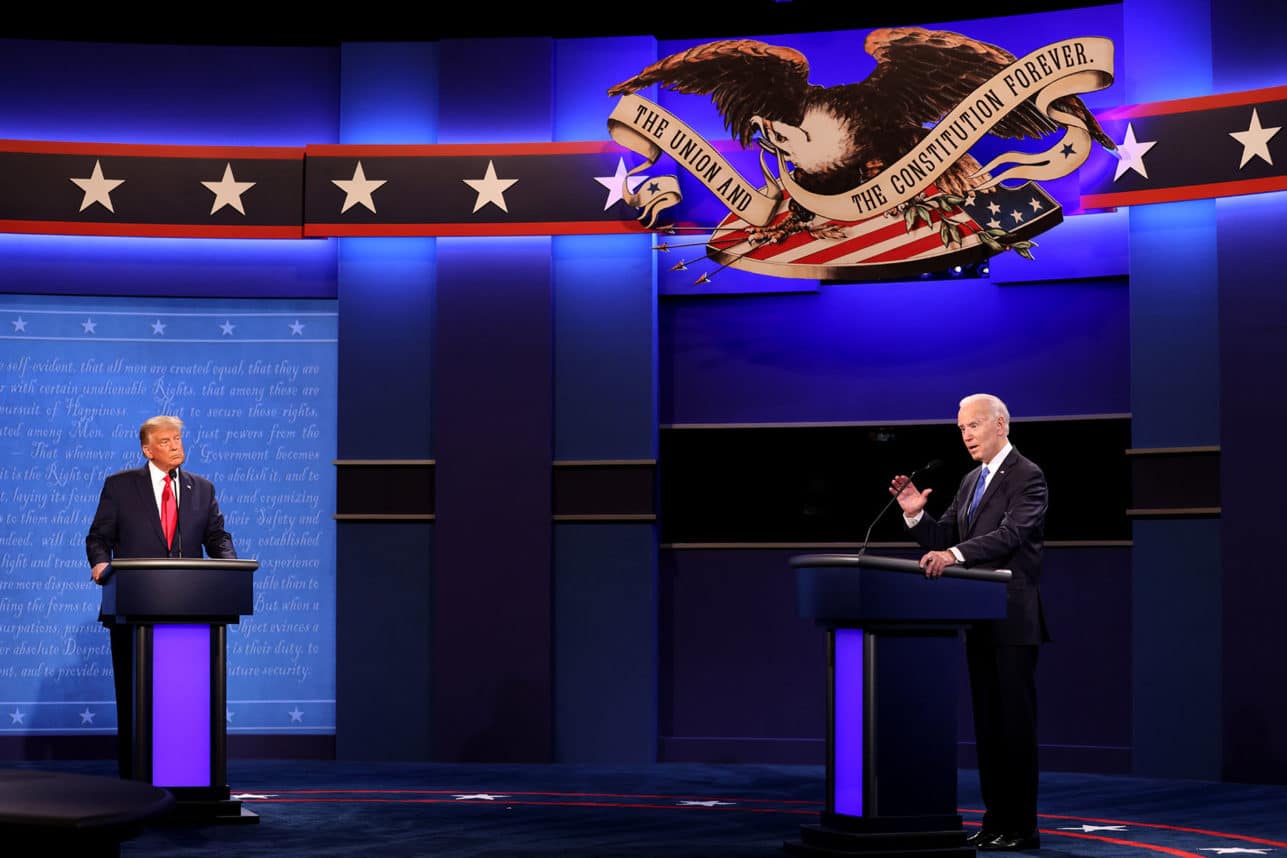
To America’s great relief, the final presidential debate was civil, thanks to the new format of the Commission on Presidential Debates, each man having a clock to watch, a reasonable opportunity to respond, and receiving the message that the first debate was an international embarrassment. Although there were no personal greetings or congenial elbow bumps, there was none of the first debate’s absolutely ugly hostility.

Each came prepared for the other’s weaknesses. And surprisingly, perhaps because the president’s weaknesses are so thoroughly known, it seemed as if the vice president was playing defense. The president, of course, best plays offense.

Although the primary debate categories included the coronavirus, national security, health care, minimum wage, immigration, race, and climate change, the debate often focused on the accomplishments and failures of the Trump versus Obama administrations. Trump repeatedly turned to attack the vice president’s character by referencing recent Biden family financial allegations. And when the president was attacked on policy, he questioned why the Obama administration hadn’t addressed whatever the policy issue was.

the debate often focused on the accomplishments and failures of the Trump versus Obama administrations.

The candidates often returned to character. Biden’s charges against Trump were easy and well known, from lying to the country in January about the coronavirus’s seriousness to concealing his tax records. But Trump had a counterattack, given the recent news involving the financial dealings of Hunter Biden in Ukraine and China, and the purported links to the former vice president. It took some time for Biden to make a forceful denial, finally asserting that the allegations were “garbage” and a “Russian plan” and that “nobody believes it except him.” Trump responded, “You mean, the laptop is now another Russia, Russia, Russia hoax? … You have to be kidding here.” Looking at the camera, Biden concluded, “You know his character, you know my character…the character of the country is on the ballot.”

When moderator Kristin Welker turned to the topic of Russian, Iranian, and Chinese efforts to interfere in our election, it didn’t stay long in focus. Biden said any state that interferes “will pay a price,” and then turned the attack on Trump, claiming that Trump never discussed election interference with Putin and that the Russians had put a bounty on American soldiers in Afghanistan. Trump turned the table, arguing that Russia had wanted him to lose, that he had extracted additional funds from NATO allies, and that he had sold tanks to Ukraine while Obama had done nothing to defend it. Trump then reiterated that Biden’s family took from Ukraine and got rich off of foreign money. But in perhaps the best one-liner of the evening, Biden went back to character, saying, “It’s not about his family and my family.” Biden then looked straight at the camera: “it’s about your family, and your family is hurting badly.”

The topic of race in America followed the same plotlines. Biden began by saying that although we’ve gotten better, there is “institutional racism” in America, and turned to drug sentencing as an example. Trump responded by noting that the Obama administration had “put tens of thousands of mostly Black young men in prison,” and Ms. Welker pointed out that Biden supported crime bills that had jailed people for having small amounts of drugs. Biden apologized — “It was a mistake.” But Trump demanded, “why didn’t you [deal with this problem] four years ago?” Trump said that he had “great relationships with all people,” listed what he said were accomplishments of his administration (including prison reform and long-term funding for Black colleges), and concluded that “no one has done more for the Black community than Donald Trump with the possible exception of Lincoln.” Biden retorted, “Abraham Lincoln here is one of the most racist presidents in modern history.”

The president similarly turned the table on immigration. Trump argued that under the Obama administration there were record deportations, and the administration built the “cages” for children separated from their parents. On the defensive, Biden apologized, saying it “took too long” to get it right, noted that five hundred children were still not reunited with their parents, and argued that detained families should be released because they always showed up for their hearing dates. Trump responded (after clearly arguing with himself as to whether he should say it) that the only persons who showed up for their hearing dates were those with “the lowest IQ.”

Foreign policy, however, mostly addressed whom the Russians favored and how the Biden family prospered. But when the spat turned to North Korea, it again devolved into an Obama-versus-Trump-administration quarrel. Biden said that Obama would only have met with Kim Jong-un if North Korea agreed to give up its nuclear weapons. Trump said that Obama had told him that North Korea was the world’s biggest problem, and that Obama/Biden had left him a “mess.” But under Trump, we now have a “good relationship” with North Korea.

The healthcare discussion followed a similar pattern. Trump suggested that Biden’s running mate, Kamala Harris, favored socializing medicine and that she was “more liberal than Bernie Sanders.” (In a June 2019 debate, Harris indicated that she would abolish private health insurance in favor of a government-run plan, but she later walked back the claim.) Biden said healthcare wasn’t a socialist idea—it was a “right.” Biden added that he didn’t want to eliminate private insurance, which was why he fought “with 20 candidates” for the Democratic nomination. Again Trump asked, why didn’t Biden accomplish his plan when he was vice president?

On the coronavirus, Biden went on the attack. He asserted that the president has no plan, dithered in his early response, encouraged the lack of masks, and falsely claimed there was no reason to worry. With no prospect of a vaccine until the middle of next year, Biden noted that 200,000 more deaths are expected. “I will make sure we have a plan,” Biden said, and emphasized relying on scientists. When the president said, “We’re learning to live with it,” Biden had the quick response, “Learning to live with it? … We’re dying with it.”

When Trump argued that the closed economy was harmful economically and psychologically, that New York had become a ghost town, that closed states were also experiencing high mortality, and that schools should be reopened because young people are safer, Biden responded that opening the economy required fast testing, tracing, safe commercial environments, and new ventilation systems in schools. All of this, Biden asserted, required funding (some of which had been approved but not used), and that the president was opposing new money. The reference to government funding was left unexplained.

The candidates also sparred on the minimum wage. Trump argued it should be a state option because different states had different needs. Biden said that first responders needed $15 an hour, and there was “no evidence” that raising the minimum wage would put any small company out of business. Trump warned that moving our economy toward alternative sources of energy would eliminate jobs, but Biden retorted that we have a “moral obligation” to deal with climate change and that climate-change industries would create millions of new jobs.

At the end, Ms. Welker asked what each candidate would say in their inaugural address. Both said they would bring the country together, but with different emphases. Trump said he would make the country as successful as it was before the coronavirus, and that creating more jobs for everyone will bring Americans together. Biden combined optimism with an attack, saying “I represent all of you,” and that he will trust “science over fiction,” deal with “systemic racism,” create “hope over fear,” and give everyone an “even chance,” because “you haven’t been getting it the last four years.”

In the end, Trump remained Trump, the self-proclaimed “Lincoln,” who could bring people together through prosperity, and Biden remained Biden, who could bring people together through a generous spirit, but had few specifics to articulate.



Gregory Smith is an appellate lawyer at Lowenstein & Weatherwax LLP.

Biden and Trump’s Character and Record Prominent in the Final Debate Read More »

Poem: Noach

It’s not a good sign when
already in chapter two
everything gets destroyed.

It’s the same way with my son
and the instructions-less Lego sets.
He builds and builds
and soon isn’t happy with
how it is all going, and then
a flood of disassembled bricks.
He knows no righteous playmate
among playmates. Takes it upon
himself to rebuild
and vocalize the narrative.
He is creator and protagonist.
As far as two by two goes
he couldn’t be happier.
That’s not what the text actually says.
Gathers all twelve of his bears
for the ride.
He’ll decide which
gets to be the dove.

Rick Lupert, a poet, songleader and graphic designer, is the author of 23 books including “God Wrestler: A Poem for Every Torah Portion.”

Poem: Noach Read More »

The “Borat” Sequel Returns to a Divided America and Struggles to Adapt

“Borat” was, to say the least, very much a product of its time. The 2006 satirical shockumentary aimed to mock the rampant xenophobia and cultural taboos that dominated the post-9/11 American landscape. Its titular protagonist, an oafish and anti-Semitic journalist from Kazakhstan, played by Jewish writer-actor Sacha Baron Cohen, traversed the most prejudiced and populous pockets of the United States with the hope of capturing the so-called “American way of life.”

While the film was frequently funny, occasionally sharp, and a successful cinematic social experiment (it earned over $200 million worldwide and an Oscar nomination), it failed to incisively condemn the very people and ideologies it targeted. “Borat” certainly exposed the regressive social attitudes sowed deep in our nation’s fabric, but truly effective satire goes beyond revealing intolerance and indifference through cringe comedy and provocative gross-out gags. Satire is supposed to help us reassess our own biases and commit to changing ourselves for the better, which “Borat” arguably did not seem to achieve. At the time, the Anti-Defamation League (ADL) expressed concern that some audiences may have missed the irony baked into the film’s irreverent DNA.

Fourteen years following “Borat”’s release, the United States has made notable—albeit imperfect social progress—but bigotry has remained consistent. It’s been stoked and normalized tenfold under Donald Trump’s administration. Following Trump’s election in 2016, there has been a large uptick in hate crimes in the United States, and although there’s no direct correlation that Trump’s racist rhetoric led to this surge, it has clearly validated a widespread bigoted sentiment (just look at Charlottesville in 2017). Meanwhile, Baron Cohen has become a much more outspoken activist, using his celebrity status and partnering with the ADL to call out social media giants like Mark Zuckerberg for enabling the spread of harmful propaganda and hate online. However, he hasn’t completely retired his incendiary antics. The comedian reprised his role as Borat in “Borat Subsequent MovieFilm: Delivery Of Prodigious Bribe To American Regime For Make Benefit Once Glorious Nation Of Kazakhstan,” a sequel to the 2006 film that both revives its predecessor’s subversive edge and slightly tweaks its humor to fit a 2020 mold, often leading to mixed results.

Shot in secret at the beginning of this year, “Borat Subsequent MovieFilm” catches us up to speed on the Kazakh reporter. After Borat became a recognizable fixture in pop culture, Kazakhstan punished the hapless foreigner to a life of hard labor for bringing shame and humiliation to his country. But he’s offered a chance at redemption when he’s told to deliver an unusual bribe to the U.S. government in order to rectify Kazakhstan’s reputation. As Borat sets off to America, determined to make things right, his homely 15-year-old daughter Tutar (Maria Bakalova) unexpectedly joins him, and the two don a series of amusing disguises during their quest to avoid rabid Borat fans. Together, they infiltrate the Conservative Political Action Conference, a Southern debutante ball, and an anti-mask rally, providing equally awkward and guffaw-inducing bits that highlight the utter absurdity that can be found in those spaces.

Although it retains the original’s episodic structure and unscripted, “real-world” scenarios, the “Borat” follow-up is already a significant comedic and narrative improvement. Borat and Tutar’s misadventures in trying to reach the U.S. leadership make for a more cohesive and surprisingly heartfelt story. Their hysterical attempts to stir commotion and embarrassment among everyone they encounter—from phone salesmen to pro-life pastors to Mike Pence—are matched by a crisis of character, in which they both confront the dangerous lies they’ve been fed for years about minorities. Tutar, in particular, wrestles with the autonomy afforded to women in America, having been told by Borat that women can’t drive or own businesses. But thanks to the help of a woman who briefly babysits her, Tutar awakens to the possibilities of her independence and challenges the submission imposed upon her by her father. This experience of cognitive dissonance not only generates some of the film’s most comically inspired scenes, but also reflects a progressive shift in Baron Cohen’s gotcha comedy: even the most backward of people are capable of change (with the right support, of course).

That being said, “Borat Subsequent MovieFilm” doesn’t always hit the mark when calling attention to pervasive misunderstandings around marginalized groups, especially Jews. About an hour into the film, Borat learns from Facebook that the Holocaust never happened, a pretty unsubtle reference to Baron Cohen ridiculing Zuckerberg’s complicity with his website’s misinformation. (Facebook recently announced a ban on Holocaust denial content on its site.) Borat then ventures to a synagogue to wait for “the next mass shooting,” since he can’t buy a gun to off himself, and dresses up as “a typical Jew,” wearing a stereotypical get-up consisting of a plastic 8-inch nose, devil wings, payos, and a sack full of money. It’s an initially shocking moment that evokes the opening of the first “Borat,” which featured a Kazakh festival where grotesquely anti-Semitic puppets chase villagers down the street. Here, however, Baron Cohen’s distressing prank is quickly diffused when he approaches two Jewish women sitting in the synagogue.

“Borat Subsequent MovieFilm” doesn’t always hit the mark when calling attention to pervasive misunderstandings around marginalized groups, especially Jews.

Rather than respond with anger or panic by Borat’s costume, the two women appear undisturbed and nonchalant by his presence. One of the women, a Holocaust survivor named Judith Dim Evans, makes an effort to welcome Borat and hugs him to show that she means no harm. After some more chatting, the three eat soup together. It’s a nice, oddly heartwarming moment, but one that undercuts the satire and instead panders a bit to the audience. This is made all the more complicated by the apparent fact that Baron Cohen broke character and stopped filming when he entered the synagogue in order to reduce Evans’s concern about the anti-Semitic comments that Borat was making.

As uncharacteristic as breaking character was, it represents the limits of satire in the era of Trump, in that our reality has become increasingly so dangerous (witness, for instance, the rising incidents of anti-Semitic violence) that Cohen couldn’t advance some of the very damaging ideas he was commenting on. At the same time, Baron Cohen’s identity as a devout Jew does make this moment more complex. His background allows him to critically engage with the monstrous iconography that has historically oppressed the Jewish community. Although his intentions to provoke make sense in this context, the ultimate outcome leaves something to be desired.

With this in mind, Baron Cohen’s approach becomes a bit of a paradox: How can he expose negative cultural stereotypes, most prominently anti-Semitic ones, by embodying them without inherently reinforcing them? Moreover, how convincing is the satire if the audience is already in on the joke? Who’s watching this thinking that the Holocaust didn’t exist? It’s likely that Baron Cohen’s real-life commitment to combat the division brought on by the Trump administration speaks to this ambivalence. His genuine earnestness in healing the heavy wounds of our polarized society directly conflicts with the characters he inhabits in “Borat” and the intentionally misguided worldviews they espouse. This method of prodding by way of performance is definitely funny and intriguing in execution, but it’s not particularly thought-provoking or galvanizing in effect. Even if that’s the point—to elicit laughter but not contemplation—why make it now and why push to release it directly before the election?

How convincing is the satire if the audience is already in on the joke?

This problem extends to the film’s climax, where Tutar, now an emerging journalist, “interviews” top Trump adviser and former New York Mayor Rudy Guiliani. The scene has already caused controversy—Giuliani appears to undo his pants in a hotel bedroom in front of Tutar, while still believing her to be 15 years old—but the incident doesn’t generate anything profound beyond disgust. Seeing him in this exposed capacity won’t have much of an impact on those who aren’t already against him and everything he stands for. And it won’t convince anyone who does support him or Pence or Trump to reconsider their views. If the past four years have proven anything, it’s that corrupt people in power will tell on themselves regularly, and their followers won’t care otherwise.

For what it’s worth, though, “Borat Subsequent MovieFilm” is still worth the watch, if only to see the insanity that is America in 2020 through the eyes of Borat. A good chunk of the film takes place during the early days of the pandemic and witnessing how Borat and Co. managed to construct an entire story around it, all while keeping the production hush-hush, is a remarkable achievement in and of itself. But where 2006’s “Borat” felt radical in its button-pushing, groundbreaking vulgarity, this sequel falters in engendering any major, long-lasting insight. It may not have the same level of massive cultural influence, but fourteen years from now, perhaps it might be looked back on as a definitive capsule of our quasi-apocalyptic time.


Sam Rosenberg, a University of Michigan alumnus, is a screenwriter and freelance writer.

The “Borat” Sequel Returns to a Divided America and Struggles to Adapt Read More »

The Supreme Court’s Environmental Legacy Was Tarnished Even Before Barrett

The death of Supreme Court Justice Ruth Bader Ginsburg and President Trump’s nomination of Amy Coney Barrett as her successor have raised anxieties about a reconfigured court’s impact on U.S. environmental laws. During her confirmation hearing, Barrett’s refusal to answer questions on climate change only increased worries about the future of climate legislation and environmental protection if she joins the court.

Her predecessor’s “green” legacy, however, is far from perfect. In a 2007 case, Ginsburg joined a bare majority enabling the regulation of greenhouse gas emissions under the Clean Air Act. But she also authored a unanimous opinion in 2011 preventing lawsuits against private power companies for their greenhouse gas emissions.

More broadly, since the 1970s, the Supreme Court has often proven an unsteady ally or antagonist in environmental protection, even as lower courts supplied many environmental victories. Barrett’s record in environmental cases suggests that her joining the Court will only add to its already blunted ability to contend with environmental realities.

The Supreme Court has often proven an unsteady ally or antagonist in environmental protection.

Like in so many other areas of law, conservative judges have steadily stripped away environmental regulation, not so much by blasting environmental policy from the top but instead by gradually eroding its scope and impact. They’ve done so quietly, through court decisions asking whether the EPA “acted reasonably” in its efforts to regulate tailpipe emissions or arguing that “reasonable regulation” requires a consideration of cost. Significant limitations on environmental protection get reframed as “efforts” to ensure agencies behave reasonably.

That was Justice Antonin Scalia’s playbook: he shifted the Court’s focus from environmental impacts to discussions of administrative procedure, property rights, or standing (the right to seek redress for a harm in court). Justice Scalia’s rare concern with issues of impact appeared most prominently in Michigan et al v. EPA et al (2014), in which he argued that the EPA should have balanced the financial costs involved in regulating power plants against the environmental consequences in their decision-making. Barrett’s limited environmental jurisprudence — and her tutelage under Scalia as his clerk— suggests that she will do the same.

U.S. Supreme Court Associate Justice Antonin Scalia (Photo by Alex Wong/Getty Images)

Current cases winding their way through the federal courts may provide the perfect opportunity for Barrett and the Supreme Court to curtail environmental laws. Suits over the Trump administration’s proposal that the National Environmental Protection Act (NEPA) be “modernized” offer a case in point. NEPA, signed into law in 1970, sought to find a “productive harmony” between humans and nature that would govern federal projects. In practice, the law came to require that federal agencies conduct an environmental and health investigation on proposed projects. NEPA required that the agency consult scientific experts, publish an Environmental Impact Statement, and allow the public to weigh in before beginning an action.

In early 2020, the Trump administration’s Council on Environmental Quality officially curbed NEPA’s environmental impact reporting requirements and allowed agencies to treat distance from population centers as an exemption to protection requirements. As a result, when the government builds a highway, it no longer needs to assess the potential environmental harm caused by increased traffic and roadside developments. Over twenty environmental groups and many states have already sued over the new NEPA regulations, and the Supreme Court may well be tasked with deciding this case.

Should it weigh in on NEPA, the Court’s decision follow decades of Court decisions that have already limited NEPA’s role to merely a “procedural hurdle.” In 1989, the Supreme Court unanimously decided that NEPA longer required agencies to pursue projects that best achieved “productive harmony” with the environment; it instead simply mandated that agencies demonstrate they had thoroughly considered options and impacts. In 2010, a majority concurred with Justice Samuel Alito that agencies could skip NEPA procedures when environmentally risky projects will only cause “possible” and not “likely” irreparable environmental harm — a decision that limited lower courts’ ability to temporarily halt potentially damaging projects. Justice John Paul Stevens, who authored the 1989 decision, dissented, insisting that courts should consider scientific evidence and not solely administrative process.

But the die was already cast: accumulating decisions like these had chipped away at environmental governance, slyly constricting environmental policies without overturning the law. The Supreme Court reduced NEPA to a procedural hurdle, forced Clean Air Act regulation to balance environmental protection against cost considerations, and limited where the Clean Water Act can be applied  — all decisions that opened the door for the Trump administration to dismantle bedrock environmental laws.

Supreme Court nominee Judge Amy Coney Barrett (Photo by Sarah Silbiger-Pool/Getty Images)

It is tempting to see a shift from a 5-4 to a 6-3 conservative majority on the Court as an existential threat to environmental protection, but in truth, many of the Court’s legal impediments to meaningful environmental action have been building for decades. Environmentalists’ worries about the 48-year-old nominee Barrett are indeed justified. Yet, her arrival on the nation’s highest bench will likely only reinforce the Court’s growing inclination to treat environmental matters as merely administrative and procedural, without regard for the science and substance of what is at stake.

Addressing the already present harms and looming damage from climate change requires more than just contesting one appointment. It demands hard, science-based, and democratic discussions about when environmental protection should supersede considerations of economic growth and what a “productive harmony” between people and nature might mean. Starting with the coming election, we need to elect leaders willing to broach these difficult questions by crafting new laws and entertaining reforms to the Supreme Court. Barrett’s nomination is just the beginning.


Keith Pluymers is Assistant Professor of History at Illinois State University. Sarah Lamdan is a Professor of Law at City University of New York School of Law. Christopher Sellers (@ChrisCSellers) is a professor of History at Stony Brook University. All authors are members of the Environmental Data and Governance Initiative.

The Supreme Court’s Environmental Legacy Was Tarnished Even Before Barrett Read More »

david suissa podcast curious times

Pandemic Times Episode 98: Who Won the Final Debate?

New David Suissa Podcast Every Tuesday and Friday.

Reflections on the presidential debate and the rhythms of the Jewish tradition.

How do we manage our lives during the coronavirus crisis? How do we keep our sanity? How do we use this quarantine to bring out the best in ourselves? Tune in and share your stories with podcast@jewishjournal.com.

Pandemic Times Episode 98: Who Won the Final Debate? Read More »

The Bagel Report

Bagels Subsequent Podrecord

Does Sacha Baron Cohen traffic in satire or stumbling blocks? Anticipating Borat 2, Erin and Esther puzzle over the line between deception and shining a light on bad behavior. The Bagels then scratch their heads over the epidemic of TV casts reuniting to save democracy, specifically in Wisconsin (and Texas); say goodbye to “Away”‘s Jewish astronaut, and meet “Grand Army”‘s Jewish character who doesn’t know where she belongs. The Chicago 7 had much Sorkinating but taught us a lot, and Erin shares her feelings about the political split among members of the original Beach Boys.
Follow ErinEsther and The Bagel Report on Twitter! 

Bagels Subsequent Podrecord Read More »

Jewish Students File Dept. of Education Complaint Against UIUC for Handling of Anti-Semitism on Campus

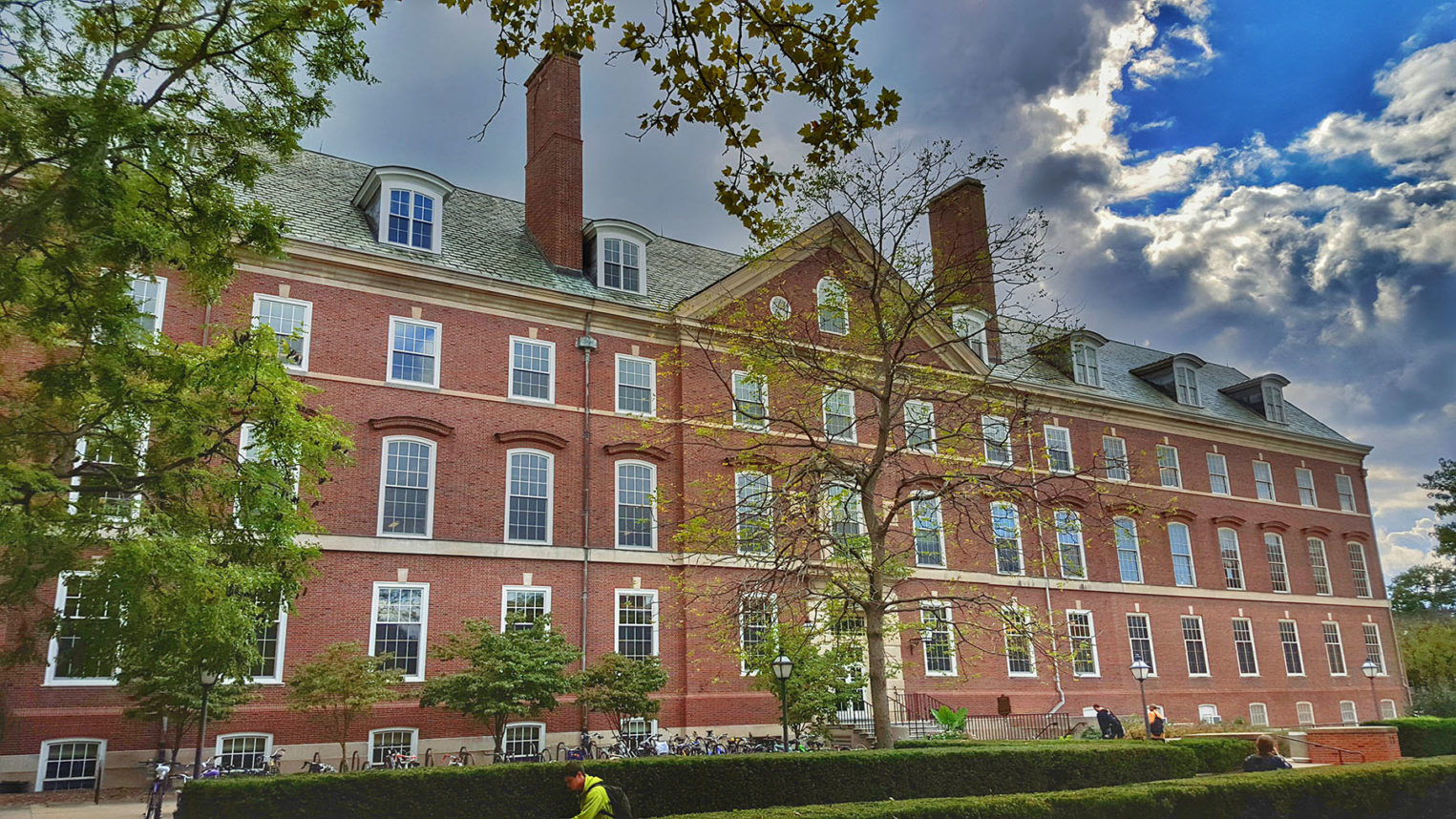
Jewish students filed a complaint to the Department of Education’s Office of Civil Rights (OCR) against the University of Illinois Urbana-Champaign (UIUC), accusing the university of failing to properly combat anti-Semitism on campus.

The complaint, a copy of which was obtained by the Journal, was filed in March by Arnold & Porter Kaye Scholer LLP in conjunction with the Louis D. Brandeis Center for Human Rights Under Law. A supplemental memorandum was submitted in June and a supplemental letter was submitted in October.

“We gave UIUC seven months since the complaint was filed to address the ongoing harassment,” Brandeis Center President Alyza Lewin said in an October 23 statement. “In the face of continuous stall tactics and almost no action from the university, we decided to publicize our efforts. We hope public awareness of this dire situation will prompt the university to finally acknowledge and address the egregious anti-Semitic harassment it has swept under the rug for far too long.”

The complaint argued that Jewish and pro-Israel students have been subjected to a hostile campus climate over the past five years from anti-Semitism on both the right and the left. The complaint alleges that while the university has taken some action to address the campus climate, their “efforts have been wholly inadequate. In fact, in some cases, UIUC staff members were complicit in fostering this hostility and discrimination.”

The complaint argued that Jewish and pro-Israel students have been subjected to a hostile campus climate over the past five years from anti-Semitism on both the right and the left.

The complaint proceeds to list 23 anti-Semitic incidents that have occurred on campus since 2015. Among the incidents were several instances of swastika graffiti, the UIUC Chabad Center for Jewish Life’s menorah being vandalized four times between 2015-17, and rocks being thrown at the window of a UIUC Jewish fraternity in 2017. In the latter incident, the police said they couldn’t do anything because there weren’t any suspects.

Anti-Semitic incidents related to Israel included a UIUC vice chancellor removing a Jewish student from the Student Elections Commission during a 2017 campaign for a Boycott, Divestment and Sanctions (BDS) resolution; per the complaint, the vice chancellor said, “She’s Jewish, I had to remove her because she’s biased.” Additionally, in September 2019, a UIUC Multicultural Advocate gave a presentation on “Palestinian Resistance to Israeli Terror” that glorified Popular Front for the Liberation of Palestine (PFLP) member Leila Khaled. After UIUC Chancellor Robert Jones condemned the presentation’s “anti-Semitic content,” Students for Justice in Palestine (SJP) succeeded in passing a student government resolution the following October defending the presentation. according to the complaint, During that meeting, students held signs stating “Free Palestine, F— Zionists” and “F— Nazis, Support Palestinians,”

More recently, a Jewish and pro-Israel Illinois Student Government (ISG) Senator resigned on October 14, stating in a resignation letter that her ISG colleagues have frequently harassed her because of her Zionist identity, according to the complaint.

More recently, a Jewish and pro-Israel Illinois Student Government (ISG) Senator resigned on October 14, stating in a resignation letter that her ISG colleagues have frequently harassed her because of her Zionist identity, according to the complaint.

“I have come to understand that this is not a place where any of you really care about human rights, fairness, no hate having a home here, because none of you are willing to take a chance and listen to what I have to say because you are jaded by your hate of Jews and Israel,” she wrote. “Unfortunately, it is clouding your ability to represent all students on campus.”

The complaint noted that under Title VI of the Civil Rights Act, universities are required to take action against a hostile climate on campus toward students who are being discriminated against due to their ethnicity or religion. But UIUC has not been not effective in combating the hostile climate against Jewish and pro-Israel students on campus, the complaint argued, in some cases campus officials have emboldened the hostile campus climate,

“First, in the face of most instances of anti-Semitism and anti-Zionism, the University simply did nothing,” the complaint alleged. “Second, in response to other incidents, UIUC took actions that were obviously inadequate on their face. Third, in some instances, UIUC took steps that might in other contexts have been sufficient, but—as indicated by the continuing anti-Semitic and anti-Zionist incidents—were insufficient in UIUC’s particular case.”

The complaint proceeded to contrast the university’s response to anti-Semitism with its reaction to a noose found hanging in a residence hall elevator in September 2019. The noose prompted an immediate police investigation, and Chancellor Jones sent an email to the community a few days later condemning the act.

“UIUC’s swift, immediate, and unequivocal response to this racist incident contrasts greatly with its deficient responses to the anti-Semitic and anti-Zionist incidents on its campus, as outlined above,” the complaint stated.

The complaint concluded with an acknowledgement that while protecting free speech is important, “the First Amendment would not prevent UIUC from condemning SJP’s repeated rhetoric that Zionism is a form of racism, akin to a Nazi or white supremacist ideology. It would also not prohibit UIUC from releasing a statement recognizing that, for most members of the UIUC Jewish student body, Zionism is an integral part of their Jewish identity, and constitutes a Jewish “ancestral or ethnic characteristic.”

“The purpose of this complaint is not to ‘shut down’ anyone’s speech,” Lewin said. “To the contrary, its goal is to protect Jewish pro-Israel students at UIUC who are being discriminated against, harassed and excluded on the basis of their identity, behaviors not protected under the First Amendment, and to ensure that they can participate in campus life on an equal basis with other students.”

Jewish students also spoke out against the university.

“Once I became a leader in the pro-Israel Jewish community on campus, I was immediately targeted,” student Lauren Nesher said in a statement. “I was even publicly singled out by a professor on social media.  While there are faculty who are supportive, it can be really hard to be publicly Jewish. I constantly worry about how people will react when they find out I’m Jewish or that I support Israel.”

Another Jewish student, Ian Katsnelson, also said in a statement that as an ISG senator he has “been called a genocide supporter, a white supremacist, and harassed; all for being publicly Jewish. And all of this in front of the administration—who did nothing.”

Another Jewish student, Ian Katsnelson, also said in a statement that as an ISG senator he has “been called a genocide supporter, a white supremacist, and harassed; all for being publicly Jewish. And all of this in front of the administration—who did nothing.”

He added that has many Jewish friends who are afraid to publicly wear Jewish paraphernalia in public.

“This is my third year at U of I and I can tell you . . . it’s exhausting,” Katsnelson said.

UIUC Associate Chancellor for Public Affairs Robin Kaler told the Journal that OCR hasn’t contacted the university yet but the lawyers did also file a complaint to an organization responsible for accrediting the university, and the organization concluded that the allegations didn’t warrant further review.

“Throughout this time, the university has been engaged in a long, meaningful and what we believed was a collaborative discussion about the concerns raised by the involved parties, so it is very disheartening that they chose to stop engaging with us,” Kaler said. “We are disappointed with the approach this group has taken to move our conversation to the media, but we are absolutely committed to an inclusive university community where everyone feels welcome.

“One of our core institutional values is ensuring that people of all faiths, ethnicities, national origins and viewpoints can live, learn and thrive. We will never tolerate bigotry, racism or hate, and we condemn acts and expressions of anti-Semitism.”

Jewish Students File Dept. of Education Complaint Against UIUC for Handling of Anti-Semitism on Campus Read More »