fbpx

October 2, 2020

Letters: Ethnic Studies Curriculum, Putting Distance Between Practice and Faith

Ethnic Studies Curriculum

Many goals, like those of the Ethnic Studies Model Curriculum (ESMC), are presented in a manner that suggests they are “worthy” in order to cover an underlying political agenda. ESMC drafts make it clear that curricula will be determined by the political ideology of Critical Ethnic Studies, which maintains that society consists of oppressed and oppressors (“The Anti-Zionism of Critical Ethnic Studies,” Sept. 25, online).

The amorphous ESMC goal of preparing students “to be global citizens” isn’t required in order to develop an appreciation for the contributions of multiple cultures. The best way to be a good “global citizen” is to continue to be the kind of country that people choose to immigrate to, and to provide excellent basic education so all have an opportunity to develop their potential.

Even if the ESMC prohibits K-12 teachers from using their classrooms to advance political causes, it is impossible to effectively monitor what goes on in all classrooms. The prohibition against politicizing the classroom will be a toothless, ineffective and misleading prohibition.

AB 2016, the bill mandating the creation of the ESMC, empowers the entry of the Critical Ethnic Studies agenda into our schools. As Tammi Rossman-Benjamin pointed out in her online story, this will have a divisive impact on all students and is particularly threatening to Jewish students.
Julia Lutch, Davis, Calif.

Putting Distance Between Practice and Faith
I gave up on organized Judaism because I couldn’t find a rabbi who didn’t want to dictate to me his or her politics and became dismissive at my politically conservative approach to fixing the world and respect for human life. I spent 1964 to ’70 in the United States Navy, with two of those years as the Jewish lay leader on a ship with a crew of 950 men. 

When I returned from overseas duty in 1968, the reception from the average citizen on the streets of Seattle was horrible, but the reception and reaction to my service to this country from the Jewish community was far worse. I could not find a date because a friend told me that when women found out where I had been the previous two years, they didn’t want to date me.

I didn’t give up, and persevered for many years, sometimes turning my back on the rabbi and walking out of services. This led to some heated debates but I always stood my ground and the rabbi and I remained opposed in our beliefs but always respected each other. When a new rabbi came along, he opened his first service with “Dear friends …” — that’s when I knew he wasn’t. I could see he was artificial, but exceptional at glad-handing and schmoozing. 

I have so many stories but my life now at age 73 is tranquil and enjoyable because the closest temple and synagogue are an hour away and I don’t attend. My grandfather, who I never met because he died six years before I was born, was a highly decorated infantry sniper in the czar’s army in the Russo-Japanese War before immigrating to the United States. He received the czar’s highest award for valor in two tours at the war front.

I decided to follow his lead by joining Naval aviation at age 17. I felt that because my uncles were too young for World War I and too old for World War II, and my father was 4-F during World War II, I was the one to pay off our family’s debt to this country.

This was the long way of thanking the Journal for David Suissa’s column “Politics at Kol Nidre: Yes or No?” Sept. 27, online). It was truly a breath of fresh air.
Robert “Bob” Shay, via email 

Cardboard Cutouts

I watch my sports on TV.
We cannot see it live.
We are told that we must do this,
In order to survive.
We notice in the stadiums
As the camera slowly pans,
There are only cardboard cutouts,
No actual, reactional fans.
They even have fake cheering,
To simulate the crowd.
How stupid do they think we are?
For crying out loud.
The owners of the teams think,
“What difference does it make?
All fans are oblivious
To what is real and what is fake.”
The fans should be resentful.
Their value to the game
Is more than cardboard cutouts.
Without the fans — it ain’t the same.
Alan Ascher, via email

For Ruth Bader Ginsburg

You were our national treasure
You improved women’s lives beyond measure
Your intellect, brilliant
Your nature, intent
On making the world better
You were heaven sent.
Your strength made us proud
Of all you could do
Both physical and mental
Your vision was so true.
You left us a legacy
We will try to uphold
To be fearless and honest,
Just and bold.
Ruthe Berkus, via email

Honey Cake Haikus
All neighbors await
Grandma waves her magic spoon
Golden loaves, sweet year.
Honey, oil, intent
Like manna for Israel
Sweets for protectors.
Healers saving lives
Gifts of sweetness delivered
Grandma is smiling.
Mina Stern, via email


Now it’s your turn. Don’t be shy, submit your letters to the editor! Letters should be no more than 200 words and must include a valid name and city. The Journal reserves the right to edit all letters. letters@jewishjournal.com.

Letters: Ethnic Studies Curriculum, Putting Distance Between Practice and Faith Read More »

Trump, COVID-19 and the Limits of Hate

Our limits are tested by extreme events. I will never forget seeing the reaction of a right-wing hawk in 1995 when he heard that Israeli Prime Minister Yitzhak Rabin had been assassinated. Because this person hated Rabin’s policies, his reflexive reaction to Rabin’s death was…yes, positive. Even though he quickly caught himself and put on a sad face, it was too late. His truth had sneaked out.

I’m seeing similar reactions from Trump haters in the wake of the news that the president and the first lady have been infected with the COVID-19 disease. Without getting into unsavory details, I saw more than a few “positive” reactions on social media. Some said he had it coming; others prayed it would signify his exit from the public stage.

One person, apparently in regret, deleted a “let’s hope he perishes” Facebook post after receiving a backlash.

The tumultuous events of 2020 have tested us like nothing we’ve experienced before. This dark, crazy, maddening year has put many of us on edge; we seem on the brink of a national nervous breakdown.

When we are tested by extreme events, our humanity should always come first.

Trump’s illness is a huge test. So forgive me for being so blunt: If you hate Trump so much that you rejoiced at the news of his illness, you failed the test.

I get that politics is about the fight over raw power. I get that the stakes are especially high this year. I get that you would be pleased by anything that might help your team.

But there are limits — and a candidate falling ill ought to be that limit.

This feels like a mystic Hollywood script to me. Our desire to win at all cost drives us all year…until the very end, when a potential human tragedy reminds us that we are all human. It reminds us that no matter how much we may despise an individual, when that person’s health fails, it’s OK to tap into our compassion gene.

Maybe that is the simple message that we have been given just before an election that is ripping the nation apart: When we are tested by extreme events, our humanity should always come first.

Shabbat shalom.

Trump, COVID-19 and the Limits of Hate Read More »

The Auschwitz Hug That Brought Teens and Survivors Together

Picture a Holocaust survivor and a German embracing in, of all places, Auschwitz.

All journeys have to start somewhere.

Through Holding Hands, a program that connects Holocaust survivors with teens, I befriended an inspirational survivor named Eva Perlman, whom I check in with every Friday.

Like others dealing with the stifling boredom and unyielding isolation from COVID-19, 88-year-old Perlman juggles her innumerable Zoom calls and business meetings in her small room inside the Jewish Home, a retirement oasis in Los Angeles.

Although Perlman’s life is filled with many impressive feats — she did, after all, survive Hitler’s reign of terror — she has found purpose and solace through the March of the Living, an annual program that brings 18-year-old students from 40 countries to Israel and Poland to learn about the Holocaust. The event is a reciprocal response; students learn as much from Holocaust survivors as survivors learn from students.

While growing up, Perlman developed an inferiority complex that she carried with her throughout her adult years. Her deep-rooted insecurities can be wholly attributed to the fact she rarely experienced physical love and affection from her parents. Perlman’s parents undeniably loved her, but aside from perfunctory kisses in the morning and occasional pats on the head, there was no display of tenderness in her house. Such was that era.

Perlman describes her mother as very authoritative and headstrong, and said that her father rarely hugged his daughter. Despite not finding the March of the Living until she was a senior citizen, the organization helped Perlman overcome her inferiority complex as the students inundated her with love and affection. Perlman felt that although the students had no obligation to love her, they fully accepted and appreciated her, enabling her to feel like she truly had a purpose in life.

Although Perlman always had juggled her family and various occupations, she never felt like she had anything to give to the world. However, after students reached out to her after the march and explained how she left an indelible mark on their lives, Perlman finally felt like she had a purpose. The march is such a pivotal aspect of Perlman’s life, not only because it connects her with the students and the staff she loves, but also because it has helped her heal.

Even before introducing herself, one German woman, Rose, tightly hugged Perlman and thanked God for preserving her.

After the war, Perlman developed intense hatred toward anything German — and transmitted these feelings to her three children. She couldn’t even hear someone speak German without cringing, and adamantly refused to buy anything made in Germany. Although she understood the Germans of today are not the perpetrators of the Holocaust, she still couldn’t fully overcome her hatred toward the Germans. However, these feelings finally dissipated after being introduced to a group of German women on a march. These women learned about the crimes their fathers committed, and with a German-Christian organization advocating for Israel, they made it their mission to educate people on the injustices inexorably linked to the Holocaust.

The march is such a pivotal aspect of Perlman’s life, not only because it connects her with the students and the staff she loves, but also because it has helped her heal.

Even before introducing herself, one German woman, Rose, tightly hugged Perlman and thanked God for preserving her. A Jew and a German embracing in Auschwitz — something so thoroughly unconventional. Perlman and her family also befriended another German woman, Sigrun, who also advocates for Israel. They became fast friends; Sigrun even invited Perlman to Berlin. Although Perlman was reticent because she hadn’t been to Berlin in over 80 years, after much goading from her new friend, she made the trip. The trip was a walk down memory lane as Perlman visited the school where her grandfather taught and the local university her mother attended. Ironically, Perlman became moderately proficient in German by the end of the trip. She credits her ability to coexist with Germans to the march and specifically to that enduring, cross-cultural, cross-generational hug.

From childhood through the Holocaust, Perlman fervently believed in God, and her beliefs were unwavering. She believed there was a higher power but that was the extent of her beliefs. No one ever questioned her opinions, and she ostensibly had no Jewish education until after the war, so she never explored her relationship with God. It wasn’t until the March of the Living when she was confronted with questions from students and fellow survivors that Perlman began to question her own way of thinking. This opened the door to interesting discussions about God’s role in our lives, which helped shape Perlman’s beliefs.

Perlman believes God gave each person a healthy mind, a healthy body and the opportunity to choose between good and evil. However, God, as she believes, doesn’t pull all the strings in life. Instead, the path we choose to take, and the ramifications of our actions, are our doing, and our doing only.

Much to her disappointment, this year’s March of the Living was canceled because of COVID-19. However, Perlman still reflects on the profound effect the march has had on her life. From giving her a sense of purpose in life to helping her overcome her hatred toward German people to fueling her love for God, it is unambiguous that the march plays a seminal role in her life.


Ava Lifton is a member of the Remember Us Teen Board and a rising senior at New West Charter High School. Lifton was a Diller Teen Fellow 2019-20 and is a member of the Wilshire Boulevard Temple community.

The Auschwitz Hug That Brought Teens and Survivors Together Read More »

The Charedi Mother of 7 Who Moved to Israel on a Whim

At Pesach, Yisroel Yitzchok Cohen was praying in the backyard of his home in Gateshead-Upon-Tyne in the U.K. because the unfolding pandemic meant the synagogues were shut. He gestured to the blue skies — a rarity in northeastern England’s brisk spring climate — and said to his wife, Judy, “Imagine we lived in Eretz Yisrael; every day would be like this.” Their eavesdropping children exclaimed, “Yes, let’s move to Israel!” It wasn’t an idea the couple had seriously entertained. They were just about to buy a house. 

Four months later, the family made aliyah to the Jerusalem satellite town of Ramat Beit Shemesh. “I feel like HaShem just picked us up and brought us here,” Judy Cohen said. “There was no reason to move apart from the fact that we felt it was the right thing to do.”

After Pesach, Cohen injured her back and was bedridden for 10 days. With nothing else to do, she began researching moving to Israel — just to pass the time more than anything else, she said. They were very happy in Gateshead, she stressed. But she added that the local school wasn’t the right fit for all of her children. 

Gateshead’s 8,000-strong Charedi community is clustered in a tiny area of less than a dozen streets, which also houses several large seminaries and yeshivot. At 18, Cohen had moved to Gateshead from London to join one of the seminaries. In Gateshead, the only child met her future husband, who had 18 siblings. (For their own family, the couple have settled on a happy medium of seven children — so far.)

 “Had it not been for corona, we would not have had the time and space to ask these questions about where we’re at.”

Cohen took care to play devil’s advocate with each of her children, whose ages range between 10 months and 16 years, about the potential move. She cast Israel in a harsh light to see how they would respond. But her words did little to diminish their excitement. 

She credits the coronavirus pandemic with playing a large part in the family’s decision to move. “Had it not been for corona, we would not have had the time and space to ask these questions about where we’re at,” she said. “And to realize that we have no control, that it’s all an illusion — only He (God) is in control.” 

In addition, Cohen believes the virus marks the birth pains of the Messiah’s imminent arrival. “We want to be [in Israel] when He gets there,” she said, “so we figured let’s get ahead of the curve.”

Charedi families are the rarest of animals in the aliyah industry. According to Cohen, many are nervous about having to go into the army or being able to support their families in Israel. Fortunately for the Cohens, Yisroel Yitzchok was able to keep his U.K.-based businesses running by working remotely for a couple of hours a day. He spends the rest of the day learning Torah. 

“That’s the most important thing to me,” Cohen said. “And I don’t take any of it for granted. I realize we’re very, very lucky to be able to do this.”

The Charedi Mother of 7 Who Moved to Israel on a Whim Read More »

House Overwhelmingly Passes Resolution Condemning QAnon, Including for Its Anti-Semitism

WASHINGTON (JTA) — The U.S. House of Representatives overwhelmingly condemned the QAnon conspiracy theory, citing among other reasons its anti-Semitism.

The nonbinding resolution passed 371-18, with all but one of the no votes by Republicans. The other was Rep. Justin Amash, I-Mich., who routinely votes against declarative resolutions.

Reps. Tom Malinowski, D-N.J., and Denver Riggleman, R-Va., sponsored the measure, which “condemns QAnon and rejects the conspiracy theories it promotes.” Its preamble says that “many QAnon followers express anti-Semitic views, and the Anti-Defamation League has said that the movement’s central conspiracy theory includes anti-Semitic elements.”

Conspiracy theories “have been a central driver of anti-Semitism for centuries,” the preamble adds, “and QAnon conspiracy theories are fanning the flames as anti-Semitism is on the rise in the United States and around the world.”

QAnon advances a baseless theory that President Donald Trump is seeking to rout a network of pedophiles deep inside the government. Trump has not denounced the theory.

Malinowski has been targeted for death threats by QAnon followers based in part on a false claim that he once advocated for pedophiles. An ad by the National Republican Congressional Committee made the false claim.

Riggleman, a moderate Republican, was ousted this summer in a primary by a conservative challenger who made an issue of Riggleman’s support for gay rights. The passage of this resolution will be one of his final acts in his two years in Congress.

A number of Republican congressional nominees have been identified with the theory and one, Marjorie Taylor Greene of Georgia, is guaranteed election in her deeply conservative district.

House Overwhelmingly Passes Resolution Condemning QAnon, Including for Its Anti-Semitism Read More »

Small Business Rises Out of the Ashes

On Sept. 21, 81-year-old Nedjatollah “Ned” Harounian hoped he could sell some boots outside his Doc Martens store on Melrose Avenue. 

Young shoppers, crushed-ice drinks in hand, perused the stores in search of trendy clothes and vintage finds, occasionally stopping at outdoor cafés. They seemed unaware of the havoc unleashed on the iconic shopping district four months earlier in the wake of the death of George Floyd in police custody on May 25 in Minneapolis. Although most of the protests were peaceful, over the course of several days, many stores were looted and vandalized.

However, when the shoppers passed the Doc Martens store on Sept. 21, they stopped. The entrance, which had been boarded up since early June, was now open. The sight was jarring: hundreds of burned shoes and leather jackets strewn across the ash-covered floor, twisted columns of melted metal and, in the center, a caved-in roof.

These charred remains are etched into Harounian’s memory.

As the Journal previously reported, Harounian was at home on May 30 when he received a call from his son, Ebbi, who had seen the live news footage of looters breaking into their store. “They looted it and then they set it on fire,” Harounian said. “When I got here, fire trucks were everywhere. I never imagined that hell would look like this. I felt like my entire life was slipping away. If you tried entering the store from the back, the flames would erupt. From the sides and the ceiling, there were flames. I just kept wondering, ‘What was I going to do after this was all over?’ ” Unfortunately, he was not insured.

“What can I say? Like these jackets, my whole life was reduced to smoke.”
— Ned Harounian

A place of purpose

Harounian came to the United States in 1985 as a refugee. Born in Isfahan, Iran, he spent his childhood in the city’s Jewish quarter (Joo-bareh) before moving to Tehran at 22 to open a fabric store with his uncle and brother.

 Harounian said he believes he spent his best years in Iran during the reign of the secular, Western-oriented Shah Mohammad Reza Pahlavi, who was overthrown in the 1979 Islamic revolution. Soon after, anti-Semites targeted Harounian’s store and in one instance, he said, almost killed his brother before the two escaped. They returned to the store to find that everything had been stolen.

Harounian said his teenage son, Ebbi, repeatedly was harassed by local officials, occasionally for wearing short-sleeved shirts. Harounian found a way to smuggle Ebbi out of Iran through Afghanistan. “Right before my son was smuggled, the authorities arrived. I pushed him down a well so they wouldn’t find him,” he said.

Iran’s closed-border policy meant that Harounian couldn’t secure a passport for his wife, Yafa, and their two daughters, Firoozeh and Farnaz. They were smuggled out of the country with the help of HIAS (formerly the Hebrew Immigrant Aid Society), to Austria. “We risked death,” he said. “There are many who tried to be smuggled out of the country and are still missing.” 

Harounian was forced to stay behind in Iran. Two years later, he finally was reunited with his family in Los Angeles in 1985. At the airport, Yafa jumped into his arms. “I hugged my son and my daughters,” Harounian said. “We cried tears of real joy. You can’t even imagine such reunification.” 

Harounian and Yafa were married for over 50 years, until she died three years ago from complications of pancreatic cancer. “I have so many good memories with her,” he said. “My wife really wanted to spend more time alone with me. She used to say, ‘Nedjat, let’s go away together for a few days,’ but I never made time for it.”

After Yafa’s death. Harounian sold his house and moved into an apartment. “Before my wife passed away, I was in much better spirits,” he said. He kept her wedding band and heirloom jewelry at the store, where he believed they would be safe, but now, amid the store’s ashes, he doesn’t know whether the items were burned or stolen. 

In the 1990s, when he opened his first store on Melrose, it was Yafa who helped him. Back then, “I didn’t even speak enough English to say, ‘yes’ or ‘no,’ ” he said. But he had a knack for engaging customers, even if his children had to act as translators. “I became so friendly with the customers. I learned about their lives,” he said.  “They’d give me their phone numbers and ask to stay in touch with me. Some of them would say, ‘We love, you, Ned.’ Especially the women.” 

Celebrities also came to his store to buy his designer goods including Bruce Willis, Sylvester Stallone and Arsenio Hall. 

After Yafa’s death, Harounian found the store provided him with a sense of solace and purpose and he continued to come to work, until the pandemic forced him to close in the spring. “I still came to the store,” Harounian said, “even if it wasn’t open to the public. I just wanted to be here, so I sat and watched TV all day. I was here every day until I received that call from Ebbi.”

Survival and redemption

These days, Harounian returns to the store to clean debris and salvage some merchandise. Sometimes he stands outside and tries to sell shoes that have remained intact. On May 31, the day after his store was destroyed, the family launched a GoFundMe campaign. To date, it has raised almost $97,000.

“I don’t want to solicit anyone, but if people can help, it would make things much better, so I can start all over with the store, and with life,” he said. “If you’re not working, you’re not being useful. From the time I was 5 or 6, I started working. I worked my entire life to get here.” He picked up the burned remnants of leather jackets and said, “What can I say? Like these jackets, my whole life was reduced to smoke.”

Nevertheless, Harounian remains optimistic, envisioning a grand re-opening. His daughter, Farnaz, who owns the ethical fashion brand Sprezzatura, hopes to create art installations out of the decimated jackets.

This Sukkot, Harounian, the eternal optimist and self-made businessman, will find himself surrounded by his store’s four flimsy walls and a roof that’s partly open to the sky. It won’t be a sukkah but it will hold in its fragile space the dreams and prayers of survival and, he hopes, redemption.

 To contribute to Harounian’s GoFundMe campaign, click here


Tabby Refael is a Los Angeles-based writer, speaker and activist.

Small Business Rises Out of the Ashes Read More »

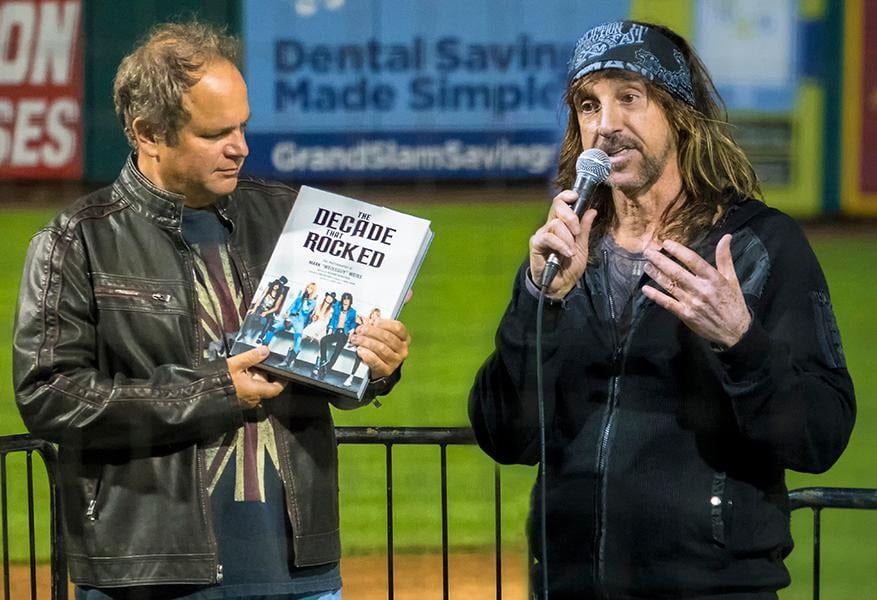
Iconic Photographer Mark ‘Weissguy’ Weiss On His New Book ‘The Decade That Rocked’

Mark “Weissguy” Weiss got his start in photography as a teenager in the 1970s in Matawan, New Jersey. After getting his first camera in trade for mowing a neighbor’s lawn for the summer, Weiss began sneaking into concerts, and the rest is quite literally rock history. He has traveled the globe photographing countless legends, including Van Halen, Ozzy Osbourne, Aerosmith, Mötley Crüe, Metallica, Guns N’ Roses, Bon Jovi and KISS.

Weiss documented historic events (e.g. US Festival, Live Aid, the Moscow Music Peace Festival, the PMRC hearings in Washington, D.C.). His photographs have been published in thousands of magazines worldwide. He is responsible for two of the hard rock’s defining album covers, Bon Jovi’s “Slippery When Wet” and Twisted Sister’s “Stay Hungry.” And if all that isn’t enough, Weiss is who introduced Ozzy Osbourne to long-time guitarist Zakk Wylde and Skid Row to singer Sebastian Bach.

Weiss’ latest book is “The Decade That Rocked “ – as featuring a foreword by Judas Priest’s Rob Halford and an afterword by radio favorite Eddie Trunk – which currently has an associated exhibit at the Monmouth Museum in Lincroft, New Jersey. Like the book, his “The Decade That Rocked” exhibit showcases onstage and backstage moments and never-before-seen images from hard rock’s most historic concerts, tours and multiplatinum album covers, all captured through Weiss’ lens. The exhibit also features memorabilia from his private collection and will take visitors through Weiss’ journey on his path to becoming one of the most iconic and celebrated photographers in rock.

On Sept. 29, I had the pleasure of interviewing Mark “Weissguy” Weiss via phone about his past, present and future, as embedded below. Among other topics, we spoke about Weiss’ Jewish roots, photographing David Lee Roth and Van Halen over the years, Ronnie James Dio’s “Hear ‘n Aid” project, Weiss’ plans for future books, the differences between photographing musicians in the early 1980s versus modern day, and plenty more.


More information on Mark Weiss and “The Decade That Rocked” can be found here and here.

Iconic Photographer Mark ‘Weissguy’ Weiss On His New Book ‘The Decade That Rocked’ Read More »

Maya Kadishman on Her Late Father’s Exhibit at the Jerusalem Botanical Garden

In an unprecedented collaboration, the Jerusalem Botanical Garden has teamed up with British-based Outset Contemporary Art Fund, British Friends of Israeli Museums, the Jerusalem Foundation and others to create an open-air exhibition titled “Returning to Nature.”

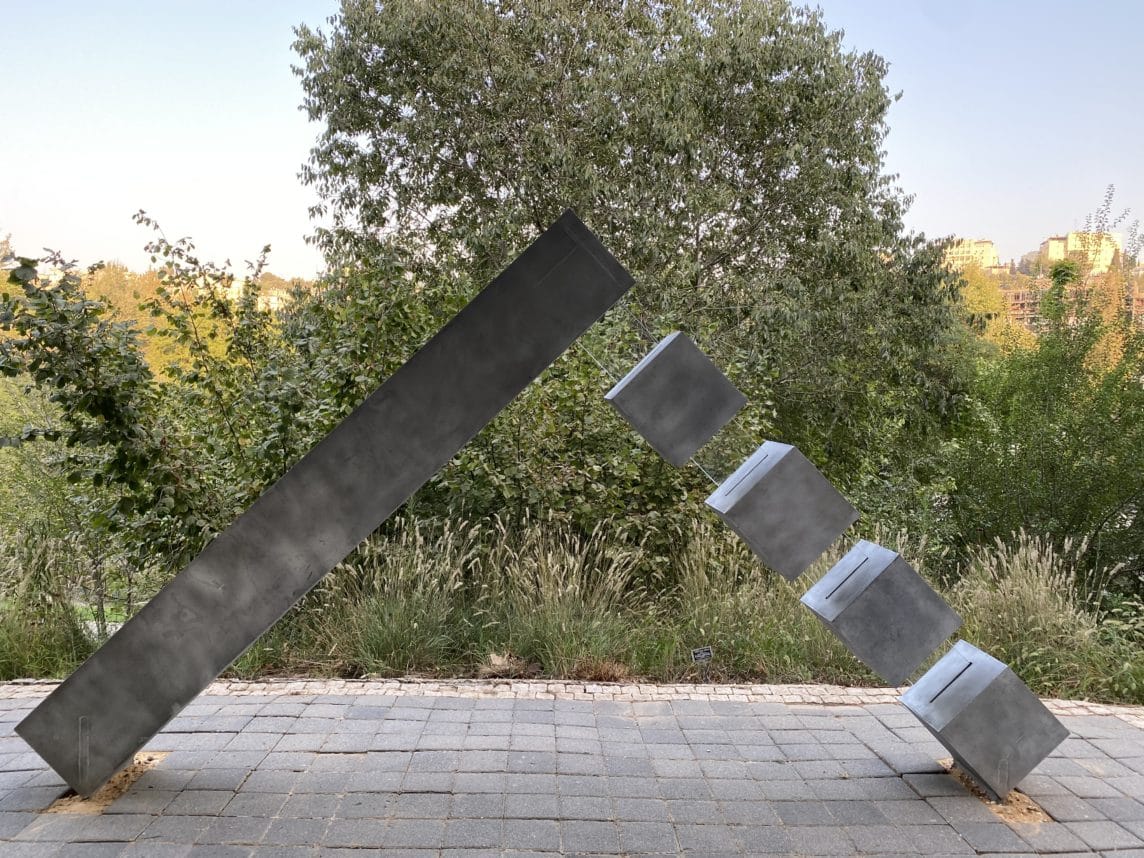
Currently on display, the exhibition highlights diverse Israeli works that populate the landscape along a winding self-guided path. Within this junction of art and nature, one particular piece offers inspiration for those weary of the coronavirus. Like a talmudic phoenix rising from the ashes, a broken sculpture by the late celebrated Israeli sculptor and painter Menashe Kadishman (1932-2015) has been expertly restored and installed high above the garden’s majestic lily pond.

Copyright Maya Kadishman

Kadishman is strongly associated with sheep in the Israeli public’s imagination. His paintings of the farm animals surged in popularity when Kadishman revealed them in the early ’80s. In 1995, he won the renowned Israel Prize for sculpture. Five years after his death, Kadishman’s “Segments II” now is installed in the botanical garden, which is slated to reopen after the current lockdown lifts. In addition, the “Return to Nature” exhibition may be extended beyond its scheduled run through November. Meanwhile, a Wix-sponsored website, which will launch during Sukkot, offers a virtual tour, online catalog and educational videos.

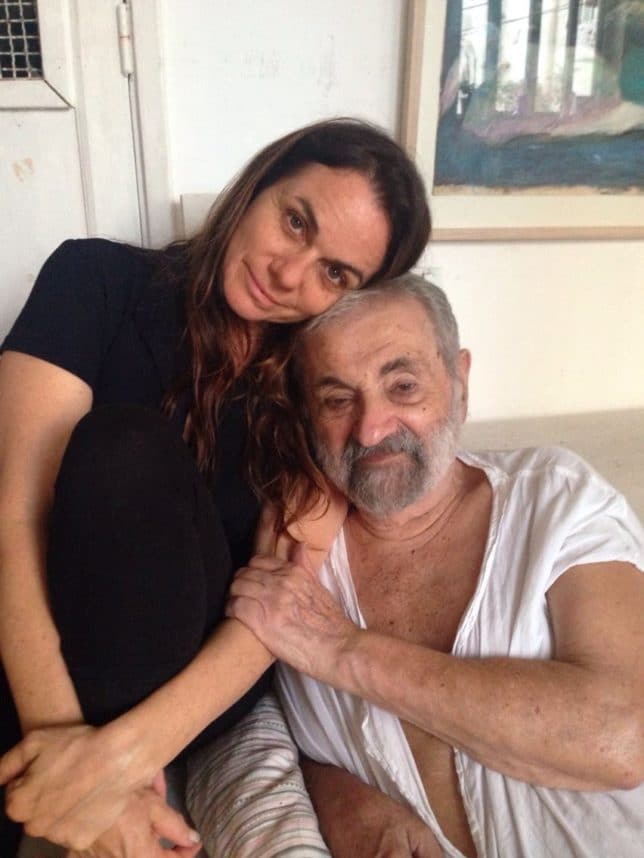
The Journal spoke with actor/curator Maya Kadishman, Kadishman’s daughter, during a sneak peek at the exhibition before the country’s latest lockdown. 

Jewish Journal: What can you tell us about the meaning of your father’s “Segments II” sculpture?

Maya Kadishman: “Segments II” is part of a larger series my father created as a leader in the international geometrical/antigravity movement in the early 1960s in London and the U.S. The works defy gravity and show the background through glass with the sculptures as part of the environment. Examples are found at New York MOMA (Museum of Modern Art), the president’s house in Jerusalem and Storm King Art Centre in upstate New York.

JJ: Given its installation on an east-west axis, this piece suggests the kinetic energy or waves of Tel Aviv meeting the more strictly defined “foundational stone” of Jerusalem. What might your father say about that? 

MK: My father would have loved that interpretation.

JJ: What does the piece represent to you?

MK: Playfulness, daring, seeing the world from an all-inclusive point of view, yet keeping one’s individuality — and also my childhood. My father’s sculptures were placed in our garden in London and they became my childhood playground. I climbed, slid and hid in them. I absolutely love them.

JJ: How did “Segments II” join the exhibit? 

MK: Curator Hadas Maor requested an early piece. It was in special storage. One of the glass pieces had to be mended …. I am thrilled to have been able to bring it back to life. One of the major themes of the anti-gravity movement is that one can defy the impossible. Nothing can stop us being who we are. We can always find a way to grow above, beyond. Even in the pandemic, we do not give up our true selves, our individuality. The environment is seen through us but is not us. We stay strong.

JJ: How do you feel about its placement in Jerusalem? 

MK: There is a very important work from the same era on permanent display in the Israel Museum and so it is, in a way, returning home. It is iconic in its own right and so the lily pond was an obvious place to exhibit: an icon reflecting an icon. I’d like it to stay there for as long as needed. Unless it is transferred to another important exhibition, it’s hard to hide it away again. It is a constant reminder of my father’s great mind, spirit and art/heart.

Copyright Maya Kadishman

JJ: What are some of your other treasured pieces?

MK: The ones that were in my childhood garden. The one called “OM” is incredible. It was in the collection of a great man and collector, a very close friend of my father, Jerome Stern.

JJ: Your father worked as a kibbutz shepherd as a teen. How did sheep recur in his work?

MK: The “Flock of Sheep” in Venice was an early live installation and the inspiration for the paintings. Some of the first sheep were painted on photos of sheep from the Biennale.

Copyright Maya Kadishman

JJ: Your father’s use of sheep took on political significance, protesting the loss of life in war as sacrificial lambs. Could you tell us more about that?

MK: He was an artist of the people’s pain, not the politicians’. His art was used in political contexts but came from the pain of the individual and the collective, which he felt personally, deeply and managed to transfer into images in such a touching, powerful manner.

JJ: How has your father’s work impacted your identity?

MK: I was included in my father’s art from birth and extremely close to him. His art was him, and his life, and I was by his side any possible moment. I traveled with him all over the world and attended all his major exhibitions. I grew up in the hallways of the Jewish Museum in New York and the Israel Museum in Jerusalem. I walked the streets of Venice as a young girl, while my father was walking the sheep in the Biennale. I was present by his side as he curated the curators in his exhibitions, and so my experience of his art, his mind, his creation is immense. He treated his works as his children and, to me, they are like my brothers.

As a curator now myself, I see his “Beyond Limits” mind present in my decisions; my own creations. It’s like tapping into the source of creation, which is where his work came from, which is why it is so powerful.


Lisa Klug is a freelance journalist and the author of “Cool Jew” and “Hot Mamalah: The Ultimate Guide for Every Woman of the Tribe.”

Maya Kadishman on Her Late Father’s Exhibit at the Jerusalem Botanical Garden Read More »

Jewish Actor Rick Moranis Assaulted in New York City

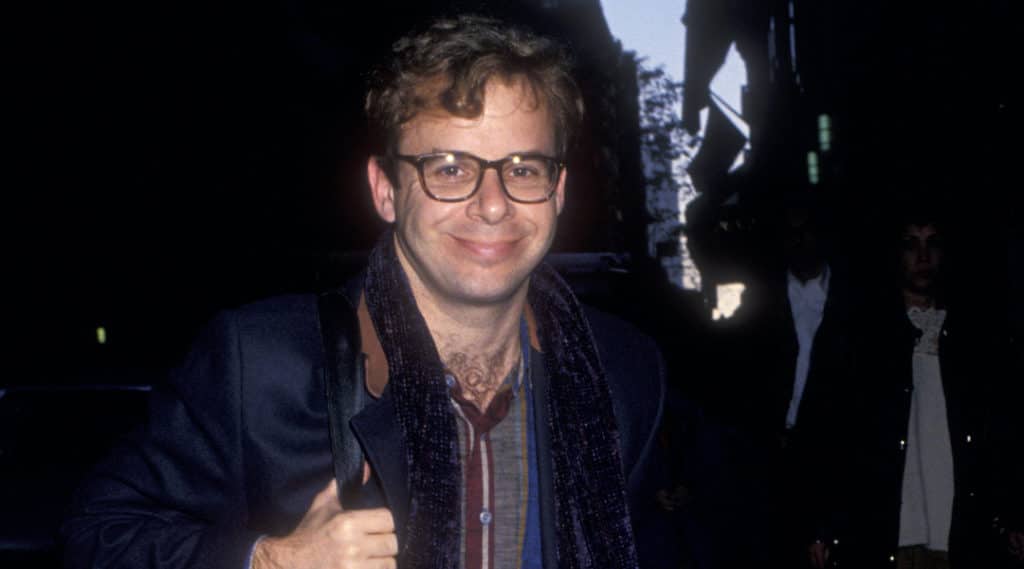
(JTA) — Jewish actor and comedian Rick Moranis was the victim of an assault in New York City, police said.

On Thursday, media outlets reported that someone punched an unnamed 67-year-old man in the head on the Upper West Side of Manhattan.

Police said the following day that Moranis visited the hospital for pain in his head, back and hip and then reported the crime. A video shows Moranis falling down after being punched. The assailant has not been caught.

The Toronto native is known for his roles in comedy films such as “Spaceballs,” “Little Shop of Horrors,” “Honey, I Shrunk the Kids” and “Ghostbusters.”

In 2013, he released a number of songs about his Jewish background, including a track titled “My Mother’s Brisket & Other Love Songs.”

Jewish Actor Rick Moranis Assaulted in New York City Read More »

Harvey Weinstein Facing 6 New Sex Assault Counts in Los Angeles

Los Angeles County District Attorney Jackie Lacey announced on Oct. 2 that film producer Harvey Weinstein has been charged with six additional forcible sexual assault counts involving two victims stemming from incidents that allegedly occurred more than a decade ago.

Case BA483663 was amended to add three felony counts each of forcible rape and forcible oral copulation.

Weinstein, 68, now faces a total of four counts each of forcible rape and forcible oral copulation, two counts of sexual battery by restraint and one count of sexual penetration by use of force, involving five victims for crimes that span from 2004 to 2013.

“I am thankful to the first women who reported these crimes and whose courage have given strength to others to come forward,” Lacey said in a statement. “The willingness of these latest victims to testify against a powerful man gives us the additional evidence we need to build a compelling criminal case.”

It is the second time the criminal complaint against Weinstein has been amended to include additional counts. If convicted, Weinstein could face up to 140 years to life in state prison.

The new charges include an incident that occurred sometime between September 2004 and September 2005 where Weinstein allegedly raped a woman at a hotel in Beverly Hills. He also is accused of raping another woman on two separate occasions in November 2009 and November 2010 at a hotel in Beverly Hills.

Weinstein was originally charged in January with sexually assaulting two women during separate incidents in 2013. The complaint was amended in April to add a charge that he allegedly sexually assaulted a woman at a Beverly Hills hotel in May 2010.

Prosecutors are seeking temporary custody of Weinstein from New York. An extradition hearing is set for Dec. 11 in Buffalo, N.Y.

The case remains under investigation by the Los Angeles and Beverly Hills police departments and the District Attorney’s Bureau of Investigation.


Harvey Weinstein Facing 6 New Sex Assault Counts in Los Angeles Read More »