fbpx

September 26, 2020

Israel File Appendix: Numbers Under Lockdown

The weighted average below takes into account the timing of the poll (more recent, more important); the number of people surveyed (more people, more weight); the average error for each party in the last three rounds of elections.

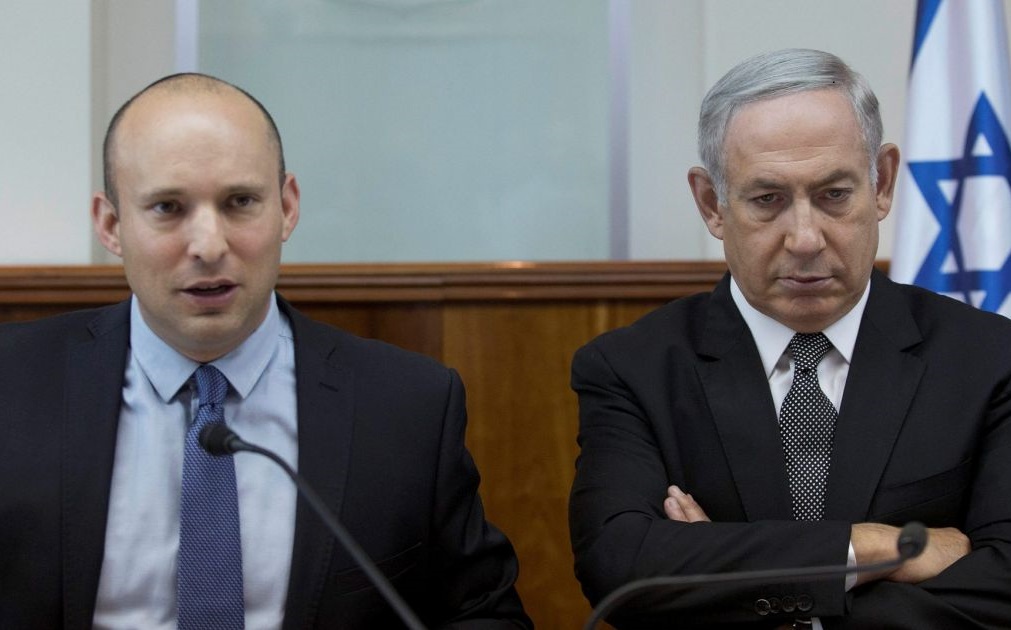
The right is getting stronger, even though Likud is getting weaker, thanks to the rise of rightwing Yamina. Its leader, Naftali Bennett, is focusing on the fight against the coronavirus, and is seen as an adult in a field of juveniles. He attracts voters from Likud, but also from Blue and White and other parties.

Netanyahu is getting weaker. While his weighted average here (Likud) is still above 30 seats, his average in the last three polls is below 30. If he wants new elections before next September (when Benny Gantz is slated to replace him as prime minister), there is a huge risk involved because he will be totally dependent on Bennett, whom he greatly dislikes.

Blue & White is on the way to disappearing. With less than 10 seats in the last four polls, it is easy to see how this party — a three-time contender for taking the lead — could disintegrate before the next election. The decline from 30 to nine was fast; the one from nine to less than four could be faster.


Israel File Appendix: Numbers Under Lockdown Read More »

It’s Time to Look at Palestinian-Israeli Conflict With Fresh Eyes

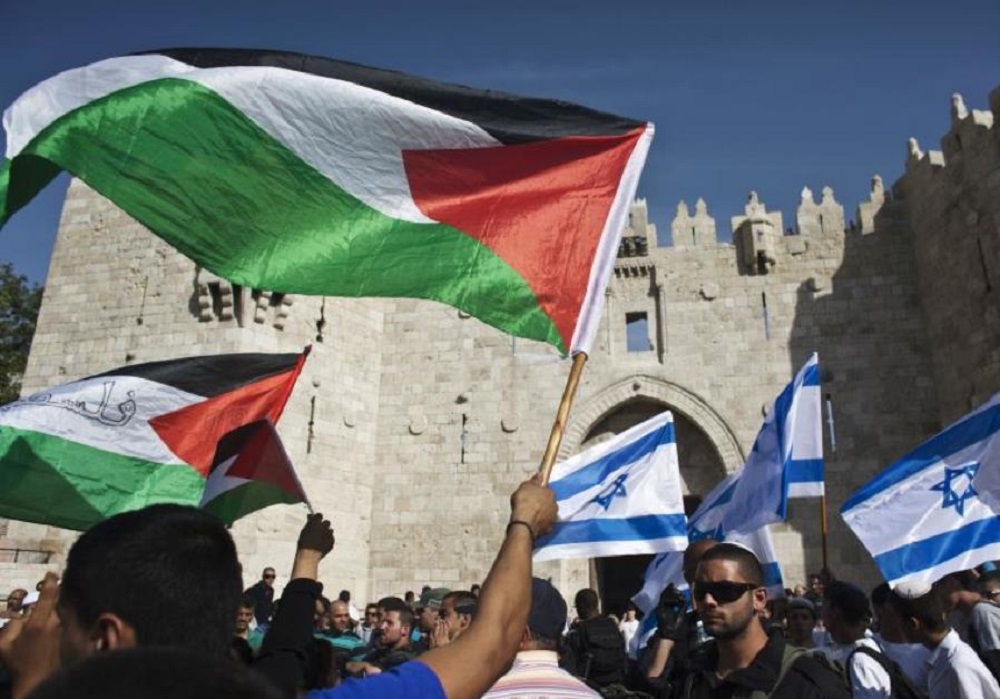
(JNS) Before there was a Palestinian-Israeli conflict, there was an Arab-Israeli conflict. Last week, on the White House lawn, that older conflict was put to rest.

In normal times, we’d agree that the president deserves a Nobel peace prize, and that the Palestinian-Israeli conflict should be next up on Washington’s diplomatic to-do list.

But these are not normal times. Prior to the ceremony, I received an email announcing: “Over 50 Organizations/Groups to protest the UAE and Bahrain Normalization with Israel During Deal Signing at the White House.”

Would I and others exiting the White House grounds and emerging on the mean streets of Washington, D.C., be harassed or even attacked by members of the anti-peace wing of the peace movement? As it turned out, the protestors awaiting us were more Code Pink than Antifa, more annoying than threatening.

Many in the media have been reluctant to acknowledge the significance of what President Trump, assisted by Jared Kushner, his adviser and son-in-law, have achieved. The ho-hum headline in The Washington Post: “Israel signs deal establishing formal ties with two Arab states at the White House.”

What really happened: The United Arab Emirates and Bahrain normalized relations with Israel, accepting Israel as their neighbor, implicitly acknowledging that the Jewish people have a right to a nation-state in part of their ancient homeland.

Neither would have taken this step without the tacit approval of Saudi Arabia. Other Arab nations could soon be exchanging ambassadors with Israel as well.

Most telling: The Palestinian Authority asked the 22-member Arab League to condemn the deal. The Arab League declined. This is the same Arab League that after the second Arab war against Israel, in 1967, issued the “three nos”: “No peace with Israel, no recognition of Israel, no negotiations with Israel.”

Until now, the only Arab nations that had made peace with Israel were Egypt and Jordan, and only after losing three wars. That led them to conclude that another war against Israel would be disastrous, whereas peace would mean the return of the Sinai to Egypt and essential security assistance for Jordan.

For decades, a herd of experts, diplomats, academics, journalists and politicians insisted that a deal such as Trump and Kushner facilitated was out of the question. In 2016, John Kerry, glasses perched haughtily on the tip of his nose, both index fingers jabbing the air for emphasis, pontificated to an elite audience:

“There will be no separate peace between Israel and the Arab world. I want to make that very clear to all of you. No. No, no and no. There will be no advance and separate peace with the Arab world without the Palestinian process and Palestinian peace. Everybody needs to understand that. That is a hard reality.”

Actually, Kerry deserves credit for contributing to this outcome, albeit unintentionally. His negotiations with Javad Zarif, the shrewd foreign minister of the Islamic Republic, ended with the Obama administration sending billions of dollars to Iran’s rulers, funds that have helped them more effectively threaten Arab states that refuse to kowtow.

Secretary Kerry and President Obama also convinced Arab leaders that Washington can be fickle. Israel, by contrast, is the one nation with the motivation and the means to frustrate the Islamic Republic’s imperialist ambitions.

Why couldn’t the UAE and Bahrain have just continued to develop amicable relations with Israel discreetly? Why go formal and public, and why now?

Because the Israelis were planning, with the Trump administration’s blessing, to extend sovereignty, call it annexation if you like, over a large swath of the West Bank. That would have been a serious setback for the “Palestinian cause” (more on that in a moment) and embarrassing for Israel’s Arab friends. The Israelis had a chance to change facts on the ground. They needed a good reason not to. The Emiratis offered one.

Palestinian leaders ought to be grateful. They aren’t, which only demonstrates that while times have changed, Palestinian leaders have not.

They continue to tell credulous audiences that the “Palestinian cause” is to establish a Palestinian state in the West Bank and Gaza. More sophisticated audiences understand the goal is for a Palestinian state to replace the Jewish state. That’s what is meant by the chant: “Palestine will be free, from the river to the sea!”

Hamas, Hezbollah and Tehran vow to achieve that goal through terrorism and warfare. The Palestinian Authority prefers ambiguity, in particular the demand that Palestinian “refugees” be granted a “right of return” to Israel. As many as 800,000 Arabs fled during the Arab-Israeli war of 1948-9. Perhaps 30,000 are still alive. But the demand is for all those claiming to be their descendants—about 5 million people—to “return.”

Israeli Jews, a majority of whom are from families driven out of such formerly diverse cities as Baghdad, Cairo and Damascus, know only too well what would happen were they to become a minority in Israel, ruled by people taught to despise them.

As Kushner looked at the Palestinian-Israeli conflict with fresh eyes, he undoubtedly came to realize that P.A. leader Mahmoud Abbas, pushing 85, would never make peace. Abbas wants to be remembered as a lifelong leader of the resistance, like his predecessor, Yasser Arafat, not as an Arab Zionist who, in his final days, shook hands with Benjamin Netanyahu on the White House lawn.

Could Abbas’s successor decide to pursue peace and prosperity, accepting if not embracing Jews as neighbors? We don’t know who will follow Abbas. Establishing the institutions necessary for a functioning state, including a reliable mechanism for succession, is one of many missions Abbas never regarded as essential to the Palestinian cause.

Clifford D. May is the founder and president of the Foundation for Defense of Democracies (FDD), and a columnist for “The Washington Times.”

This article was first published by “The Washington Times.”

It’s Time to Look at Palestinian-Israeli Conflict With Fresh Eyes Read More »

Can We Forgive Each Other in the Midst of a Tribal Culture War?

(JNS) It was something that happened on the margins of one of those viral videos that have sparked outrage during the past few months. A group of Black Lives Matter demonstrators was marching down a street in St. Petersburg, Fla., and paused in front of a restaurant serving patrons sitting outside, which has become the norm as pandemic-stricken businesses seek to survive. The marchers congregated in front of them and began chanting about the death of African-American Breonna Taylor, (who was shot and tragically killed by police in her apartment in Louisville, Ky., when defending themselves against gunfire from her boyfriend) demanding that their now captive audience “stand up, fight back!” But that was not enough for some of the young “mostly peaceful” protesters who chose, seemingly without provocation, to commandeer a table where a pair of elderly diners were seated and proceeded to yell, curse and threaten them for having the temerity to complain about their right not to be accosted in this manner.

Unlike many other such confrontations, this one didn’t end in violence. But it was an ugly scene that illustrated what happens when mobs form. People who think that their beliefs are more important than other people’s rights are liable to do anything—most of all to treat people they perceive as foes as lacking good motives, the right to voice their opinion or even just to be left to eat in peace.

Towards the end of the video, something happened that was particularly alarming. While the demonstrators were harassing the couple, another young white male stepped towards the table wearing a tallit and proceeded to blow the shofar at the objects of the marchers’ fury.

Wrapped up in what he thought was the justice of the cause for which he was demonstrating, the sight of people simply going about their normal lives might have seemed intolerable. At a time when BLM protestors are demanding a “revolution” that will transform the nation, he likely thought it was right to blow the shofar and insist that these people also “wake up” and join him, even if they, like many Americans, take a dim view of the Marxist extremism that is driving the BLM movement.

Blowing a shofar directly at older persons—or anybody for that matter—in the middle of catastrophic pandemic is also a shameful act of reckless endangerment.

Injecting Judaism and Jewish symbols into an act of blatant thuggery is indefensible, as is the appropriation of Jewish sacred symbols for this secular and highly debatable premise.

It’s also bad to treat Jewish identity as merely a prop to pull out when useful in order to make some political point.

It’s also disgraceful when someone who is Jewish only speaks of his background in order to make some point, either against Israel or to claim the right to speak for Jews on secular issues. That’s what happened this week, when Donny Deutsch, a public-relations flack and commentator on MSNBC’s “Morning Joe” program, lectured Jews who were thinking of voting for President Donald Trump that they were abandoning their heritage. That he said there was no difference between Trump and Adolf Hitler is a bad joke. The problem is that Americans are so badly divided that many on the left actually believe this absurd lie. To be fair, some on the right are as convinced that those who oppose Trump are equally bad.

It’s also terrible when Jewish religious groups or rabbis cross the line with politicized sermons and endorsements that sound like papal bulls and leave no room for debate or disagreement. Blurring the distinction between political disagreements and religious obligations, whether you’re for Trump—as in the case of some Orthodox groups—or against him is irresponsible.

The 10 days that encompass Rosh Hashanah and Yom Kippur are a period of introspection in which each of us must conduct a cheshbon hanefesh, an “accounting of the soul.” The concept of teshuvah (“repentance”) is at the heart of this process. If you’ve wronged someone in your life, this is the moment to sincerely ask for forgiveness and, in turn, to forgive those who might have wronged you.

While most think this solely applies to interpersonal conduct, it has a particular relevance to intense political polarization.

Unlike the sort of bad behavior decent people know to be ashamed of, contempt for our political foes and the deep anger that lies behind it is something many of us are only too eager to parade before the world. Many have come to believe that attacking or shaming those who disagree with us is the right thing to do. Rather than apologize, we pat ourselves on the back for denouncing those who oppose our views, sometimes in the most uncivil terms imaginable. And we count on our “friends,” both virtual and real, to cheer us on.

You can blame this on social media, which has made it so easy to insult both public figures and people you don’t know or have never met. But we can’t just blame this on Facebook, Twitter and Instagram. The fault is ours.

Regardless of whether you attend synagogue, watch a service at home this year or pray alone on Yom Kippur, when you get to the Al Chet prayer in which Jews confess their sins and ask God for forgiveness, read the text carefully. We should think seriously about how much of our public and social-media exchanges fall into the categories of conduct for which repentance is required. Behaving with contempt, offensive speech, scoffing, slander, passing judgment and groundless hatred are just some of the sins that are staples of political discourse that now resembles a tribal culture war more than a democratic election.

The answer from some will be that the awfulness of the objects of our anger justifies these tactics. This an excuse used both by opponents of Trump, as well as by those who support him. Moreover, so deep is each side’s conviction that they are right and the other side is wrong that every exchange is invariably filled with self-righteous contempt. The only consensus that stretches across the partisan gap is one that holds that the loss of the election for your side will end life as we know it. Perhaps that is true; still, that doesn’t excuse attacking our friends, relatives or neighbors who disagree with us in ways that only further alienate them. “Cancel culture” is not only undemocratic and promotes fear, it also persuades no one.

So rather than think back on these debates with embarrassment, we arrive at the Al Chet convinced it is only for others to apologize, not us.

That’s a terrible mistake. The Days of Awe are a moment in time when we should focus on finding the courage and the moral strength to forgive and to apologize. We should remember that none of us are in possession of faultless truth. And we should be able to say we are sorry for offending others, forgiving those who have done the same to us and resolving to conduct ourselves, even on issues we feel the strongest, with more restraint and civility.

That doesn’t mean that we should stop voicing our opinions on critical issues. But it should motivate us to recognize that no-holds-barred contemporary political combat is not only coarsening and corrupting our country, but also our souls.

Can We Forgive Each Other in the Midst of a Tribal Culture War? Read More »

150-Year-Old Time Capsule Found in a Wall of Oldest Synagogue in British City

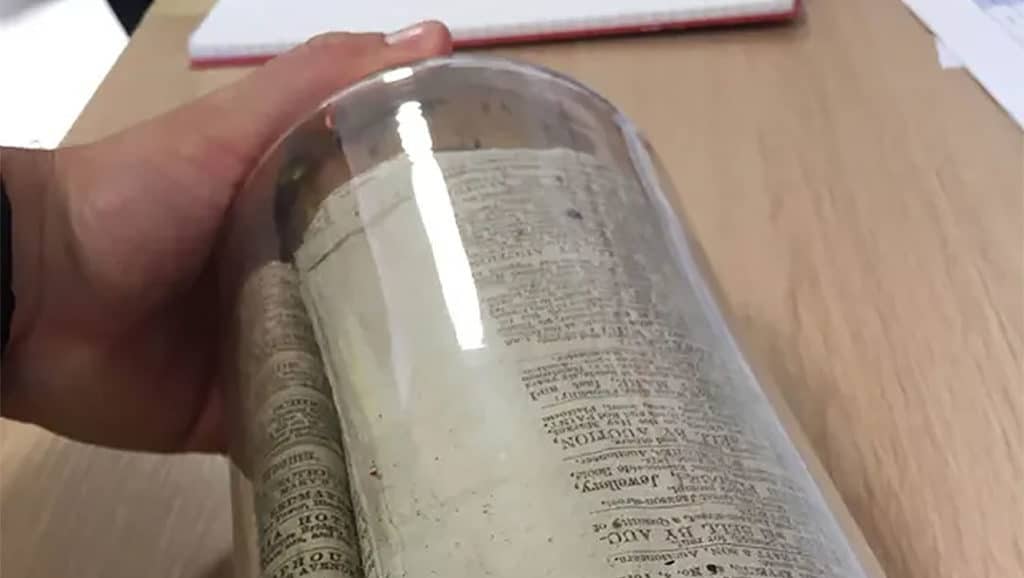
(JTA) — Construction workers at the site of a former Spanish and Portuguese synagogue in Manchester, England, found a time capsule from the 1870s.

The glass jar was extracted recently from a wall of what is now the Manchester Jewish Museum, The Guardian reported Thursday.

It contains newspapers, synagogue documents and a handful of coins and will go on display as part of the museum’s permanent collection chronicling the lives of Manchester Jews through the ages.

The building was erected in 1874 and is now closed for a major renovation project, according to the Jewish Chronicle of London. It’s also the oldest surviving shul building in Manchester.

The museum is expected to reopen next spring thanks to a subsidy of about $3 million from the U.K. national lottery.

Its chief executive, Max Dunbar, said the team was “thrilled and overwhelmed” by the discovery, the Chronicle article said.

150-Year-Old Time Capsule Found in a Wall of Oldest Synagogue in British City Read More »

What Does it Mean to Have a Deeper Yom Kippur?

In my 40 years of leading High Holy Days services, many people have given me reasons for why they were at Yom Kippur services, even though they are nonbelievers. Each year, congregants approach me and tell me they are excited for Yom Kippur because it is “the annual meeting of the Jewish people.” Some congregants say they enjoy “being in the presence of their community.” Others tell me they “don’t believe in God, sin or a God who punishes,” but they “still belong at services.”

We may have been deceiving ourselves these past 40 years — and possibly much, much longer. Yom Kippur isn’t the annual meeting of the Jewish people. We don’t sit around tables and decide policy; we typically sit quietly with books in our hands and listen. Nor is God the entire reason for being there; if that were the case, then why would nonbelievers bother to show up? And if we celebrated Yom Kippur just to be around other people, then is the day canceled for those of us quarantining? What, then, is the point of participating in Yom Kippur services?

I think the answer lies in the vast number of ways people have experienced the recent shutdown. We have not only distanced, we have also experienced inwardness: People have learned new skills and practiced old ones, read and reread great books, watched amazing TV shows and movies, and created great work with podcasts, YouTube, TikTok and other platforms. We have scheduled time to talk in groups and one on one with our friends. There have been Zoom minyans, Zoom weddings, Zoom study groups and Zoom counseling. People have told me they are amazed at the depth of the other people in their online groups, whom they never would have met had it not been for social distancing.

We also have become much closer to Judaism. I’ve heard only a few people say they won’t attend an online High Holy Days service. Instead, many of us are turning inward — as we have in our day-to-day lives — to the High Holy Days. We don’t want a screen-sized version of services; we want services that will match our deep experiences from these past months.

Most of us know we belong at services, even from a distance. Even if we are not sure what to believe, we are drawn there. Because so much of the familiarity of Yom Kippur is not there — the physicality, the immediacy — it seems we are more ready than ever to experience the true meaning of Yom Kippur. We are prepared to seek depth.

What are those depths? If we take into account the power of the liturgy, the Kol Nidre, the many confessionals, the constant sense of urgency to do teshuvah, we see an insistent push to face the parts of us that hide and resist change. We see a push to go deep.

On this deepest day of the Jewish year, at the core of our souls, we seek to confront our inner disruptions — the darkest, scariest parts of ourselves — and carve paths to truer, authentic selves. The High Holy Days are what set us on the path to do the digging.

Rosh Hashanah begins the work. Yom Kippur seals it. But only if you are willing to go deep.

‘Deeper’ is different for each person

A deeper Yom Kippur depends on how honest and courageous we can be with ourselves. For each person, a deeper Yom Kippur will look different. We all have depth, and we all have distinct things in our depths: brilliant coral reefs but also stark, lonely sunken ships; prayers never uttered; lives yet to be lived; words we can’t take back, tossed into the deep. These depths are unavoidable. If not salvaged, they will haunt us.

For me, the basis of Yom Kippur is that the day assumes things are hiding in your depths. Maybe you know what they are, and maybe you don’t. One of God’s names on Yom Kippur is “Chacham Ha-Razim,” “Wise to the Secrets.” Even if you don’t believe in God, you can suspend your disbelief for a moment and know God is on to you. On this day, there is nowhere to hide.

Consider Jonah, the book we read on Yom Kippur. Jonah took a ship to run from God, and a storm threatened to sink the ship until the sailors threw him overboard. Eventually, Jonah ended up in Nineveh, whether he liked it or not.

Even if you don’t believe in God, you can suspend your disbelief for a moment and know God is on to you. On this day, there is nowhere to hide.

We are not as lucky as Jonah. God will not chase us down. We can avoid our spiritual work, shut our ears, avoid the voice, close our eyes and not see the truth. I have — and I’m sure you have — met people like that. Those who are not wise to the truth of who they are. Other people, however, can see through them. Other people can see through you, too.

On Yom Kippur, imagine God sees you. You show up to services, physically or virtually, to be seen. We belong to people who, at least once year, agree not to hide, not to run, but rather, to go deep.

Digging for true depth

Yet feeling deeply on Yom Kippur is not the same thing as depth. We all feel things deeply. We are deeply angry, afraid and confused, and maybe feel some dread about the things going on outside of us. There truly are great problems to solve, social justice issues to work out and political agendas to pursue.

I can tell you, though, what every counselor knows about these difficult times: People are suffering, and politics play no favorites. I counsel people of just about every mainstream political view. Their opinions on how to repair the world differ, but their suffering is pretty much the same: trouble in relationships, especially spouses and teenagers; internal senses of anxiety, fear, hatred, anger and resentment; alcohol and drug abuse; severe domestic strife — the list goes on. And even if these issues are not happening to you, they are happening to someone close to you, and we seek the wisdom to help. We have a day for that.

The issues you are passionate about will continue to go on, even if you think about something else for the 24 hours of Yom Kippur. There are things at stake within us that will determine our well-being until we change. Ignore what is happening in you at your peril.

Perhaps start by focusing on your family or friends. Maybe you don’t quite know what they’re thinking or feeling. Maybe you close your eyes or shut your ears because if you really knew what they are going through or how they perceive you, you’d have to change your life. Or maybe you’d be grateful for the opportunity to change. The Jewish tradition has a day for that.

Someone once asked me how they can indulge going in deep with all the dreadful things going on out there. I instructed this person to imagine they are walking a scabrous path through the time and terrain of our lives. Under this terrain, though, miners are digging a shaft deep inside of you — and they have found a precious stone. Astonishingly precious. With this stone, you can see the secret of your soul and see into the Heart of the Universe. Through this precious, crystalline quartz, the Heart of the Universe makes its love known to you, and knows you have arrived.

How do you find this mineshaft? You start by creating a clearing. Our lives are full of debris and clutter. Misspent emotions of anger, resentment and fear pile up. Debris consisting of lack of empathy, resistance to grieving and moving on, not forgiving or forgiving too quickly. Stubbornness and procrastination. Taking on irrational obligations. Giving in to destructive guilt. Being an addict or an enabler. Not holding back your tongue. There is litter of being needlessly hurt and defensive because others are needlessly insensitive and hurtful. But look over yonder — you might see someone else making a clearing on Yom Kippur, too.

Many people don’t want to call these inner disruptions “sins” because, they tell me, “Jews don’t believe in sin; just in missing the mark, missing the target.” But just because someone doesn’t believe in something doesn’t make it untrue. If we don’t face our disruptions, they can make our relationships with others and ourselves toxic. Our paths to transformation begin by clearly identifying our disruptions and marshaling up a tenacious and unremitting will to change our lives.

Let’s take God out of the equation for a moment. Even without an idea of God, imagine there is the most authentic version of you just beyond the horizon. It is a version living your deepest values — not just having them, but being them. It is a you beyond the horizon, without excuses. Clear — with integrity, humility, wisdom and depth. Now list what stops you from becoming that person you have yet to become. We gather on Yom Kippur — physically or virtually, but certainly spiritually — to share our lists, share our sadness, and share our hopes for the future.

Try to identify what stops you from being your authentic self. It probably seems like bad habits. But when you attempt to change those habits, you will find they have dug in deep into “the shadow of yourself,” as Jungian tradition would say.

“Go ahead, try to change your habits,” a voice from the shadow laughs. Your bad habits will fight back. They don’t want to be changed. They’d rather destroy you, or at least your potential for becoming your authentic self. You are not just missing the target; something inside you is tearing apart that target.

A deeper Yom Kippur involves confronting your resistance to moral and spiritual excellence. With a deeper Yom Kippur, you will understand those obstacles as not just bad habits, but instead as an organized alienation from your true potential as a human being. In Judaism, we call that alienation the yetzer harah. The word “yetzer” is from the Hebrew word “to make” or “shape.” The yetzer harah, then, is a pattern with a will of its own, defying and resisting our highest values. It is an inner entropy, waiting for us to fall apart.

How to dig

How do we dig and find our true selves on Yom Kippur? One way is the confessional. Every speaker at a 12-step meeting begins with a confession: “I am an alcoholic”; “I am a drug user”; “I am a gambler.” It takes some courage to do that. Now imagine your own meeting: “I am a hater.” Liar. Poser. Bully. Coward. Confused. Victim. Unorganized. Mean Spirited.  Whatever your demons are, do you have the honesty and courage to say it? Out loud to yourself? Yom Kippur has a confessional for that. Several of them.

The confessional, though, is only a verbal prompt. The confessional requires you take these words seriously and intend these words to pierce your avoidance. You must intend the words of the confessional so strongly that they break your heart, causing you to mourn the wasted time, the wasted energy of excuses. And out of the depths of this brokenness, a new will and new self shall appear. The will to change, and the self who will lead you beyond the horizon.

Now, let’s put the idea of God back into our thinking. Consider not only the most authentic versions of ourselves that exist beyond the horizon, but also a Divine who is seeking you, calling you — a God who is seeking your heart of truth. Even those who don’t believe in God can find sacredness in the depths of the broken heart. It does not matter what you call the sacredness of that experience. The main thing is that you have arrived.

A deeper Yom Kippur is a moment of truth — a day to be truthful with yourself. It is as if this is your only life; as if you don’t have all the time in the world to get it right; as if you have debris of regret and needless pain littered behind you; as if you desperately want to create a clearing ahead of you, to dig down, break through the resistance and find your heart of truth.

These piercing calls into our depths are not unique to this year’s Yom Kippur. Perhaps, though, on this Yom Kippur, when our lives are shorn of attractions to the nonessential, we can be especially tilled for the “light that is sown to the righteous.”

Find the Heart of the Universe, who is waiting for your arrival and readies you for the next mine to dig. That is a deeper Yom Kippur.


Rabbi Mordecai Finley is the spiritual leader of Ohr HaTorah and professor of Jewish Thought at the Academy of Jewish Religion, California.
What Does it Mean to Have a Deeper Yom Kippur? Read More »