
fbpx

July 3, 2020

Another Place: The Place of Blessing and Love

In early June, at one of his nightly press briefings, Mayor Eric Garcetti introduced Capri Maddox who is the first executive director of the newly created Department of Civil and Human Rights. She began her remarks by saying.

I stand before you first of all as a wife, married to an African-American man, and the mother of an African-American teen male, and I stand before you feeling the pain that so many of our community-members have felt over the years, decades and centuries

She then talked about how traumatic it was “to see George Floyd, begging for his life, with a knee on his neck. He was calling for his mother as he slipped away to the other side.” She spoke about having to have “the talk” with her children.

It’s been nearly a month now since I heard her remarks, and her words have stayed with me.  As I watched my teenage son swimming in the ocean the next day, I thought about the fears that I don’t carry for him. I don’t worry about whether he’ll be confronted by police or shot when he is walking down the street. When my husband goes out on his walks every night, I don’t worry whether he’ll come back.

Over the last year and a half, I had to grapple with my daughter’s fears of being shot in synagogue after the Pittsburgh synagogue shooting and then in Poway six months later. I had to deal with her fears of being shot when we go to the Kosher grocery store, after the Jersey City shooting. I had to deal with my fears after a social media post last fall threatened a shooting at my son’s school the next day; I had to decide whether or not to send him to school that day after spending a sleepless night worrying. I worry about Coronavirus, but I don’t need to worry about my son or my husband walking down the street because of the color of their skin. I don’t need to have “the talk” with my son about police and racism, as Capri needed to have with her son. I don’t need to worry, as Capri does, when in a store carrying a large purse whether I will be perceived a shoplifter. White privilege can sound like an abstract concept, but listening to Capri made it concrete, as she described the fears she has to bear because of the color of her family’s skin. As she said, “Unfortunately, still, your skin color speaks before you do in America.”

I worry about Coronavirus, but I don’t need to worry about my son or my husband walking down the street because of the color of their skin. I don’t need to have “the talk” with my son about police and racism.

On the week of Capri’s remarks, my son was completing his tenth grade world history course. I overheard his teacher’s video lecture where he described how the Nazis understood the Jews as a race defined by certain facial characteristics. I grew up in the shadow of the Holocaust, as my father served as the project director of the U.S. Holocaust Memorial Museum. The museum and I grew up together in Washington DC — as the museum developed from an idea on a piece of paper, when I was five, to a building that opened when I was twenty. Our home was an extension of the museum; people and artifacts related to the museum were often in our home. In our garage, we literally had canisters of Zyklone B (the gas used to kill the Jews) next to our bicycles.

As versed as I am in Holocaust history, I had always thought of the Holocaust as an expression of Anti-Semitism (since Jews were targeted). Listening to the history lecture during the protests against racism, I realized the Holocaust was also an expression of racism (since the Nazis considered Jews to be an inferior race to be exterminated). Listening to the lecture, I realized that I had a much more personal connection to racism than I thought.

Perhaps, that’s the truth that Balak understood. This week’s Torah portion from Numbers recounts how a king named Balak hired a wizard named Balaam to curse the Israelites, who he perceived as a threat. Although Balaam was hired to curse the Israelites, he blessed them instead. Balak felt very frustrated that Balaam wasn’t following his instructions to curse Israel. Balak told Balaam, “Come with me to another place from which you can see them – you will only see the edge of them, you will not see all of them, and you can curse them for me from there.”

Balak knew that seeing people from a distance can lead to misunderstandings and hatred.   But seeing someone up close leads to blessings. Seeing the color of a person’s skin means only seeing the edge of them. Hearing their stories helps to see so much more. Despite Balak’s repeated pleas, Balaam chose to look more closely and bless the people instead, and so can we.

Balak knew that seeing people from a distance can lead to misunderstandings and hatred.   But seeing someone up close leads to blessings. Seeing the color of a person’s skin means only seeing the edge of them. Hearing their stories helps to see so much more.

This July 4th, may we, as a nation, resolve to leave the place where the color of one’s skin, gender, sexual orientation, economic status, or disability, speaks first – for this is the place of cursing and hatred. May we move to the place where we listen to each other’s stories – and see all of a person in the totality of their humanity – for that is the place of blessing and love.

Rabbi Ilana B. Grinblat is the vice president of community engagement for the Board of Rabbis.

Another Place: The Place of Blessing and Love Read More »

david suissa podcast curious times

Pandemic Times Episode 65: Do Jewish Comics Fight Anti-Semitism?

New David Suissa Podcast Every Monday, Wednesday and Friday.

In honor of comedy legend Carl Reiner, we talk about the art and unique power of comedy.

How do we manage our lives during the coronavirus crisis? How do we keep our sanity? How do we use this quarantine to bring out the best in ourselves? Tune in every day and share your stories with podcast@jewishjournal.com.

Pandemic Times Episode 65: Do Jewish Comics Fight Anti-Semitism? Read More »

The Time Capsule

When we were kids, my siblings and I created a time capsule. We put in pictures of ourselves, favorite phrases and sayings of 1989, magazines and newspapers, and a list of the books we enjoyed reading. And we included letters to ourselves, declaring what we wanted to be when we grew up and grand plans for the future.

Who knows exactly where that time capsule is now. I am not sure if it even matters. It feels special looking back, remembering what felt important to freeze in time, wondering what our 30-something-year-old selves would say to their childlike counterpart.

Imagine speaking to your 8-year-old self. What would you say to describe this time, where you are in life, who you’ve become? Would you try to explain the oddities and tragedies of 2020? Warning yourself about what’s to come? Sharing the happiness, sorrows, unimaginable events, major life transitions or pivotal moments?

I don’t think I would share any of that. Instead, I would look at the child and let her know, “Many moments will be hard, many will be filled with unbridled joy. But most of all, I want you to know, you will get through this. You may see only a mountain before you. But I promise, you’ll climb to the top. One step at a time.”

If my 80-year-old self could reveal my future, I don’t think I would want to know many details. Rather, I would hope to hear the exact same sentiments of, “You’ll swim this vast ocean, you’ll leap over the mountain, you’ll walk through the valley. You will get through this. One step at a time.”

Rabbi Yochanan told his students, “Go out and discover what is the good path which one should adhere to in life.” Meaning, keep walking in this world, discover goodness, follow it and live life built on a foundation of blessing. But don’t let the bumps in the road or even the wells that may seem indeterminably confining hold you down. Keep walking.

I see visions of myself as a little girl and again, as an older woman. And it fills my heart with a palpable peace knowing that the advice and guidance is the same. No major revelations of the future. Just a bit of wisdom, a sweet reminder that we will get through this, all of this, together.

Shabbat shalom.

The Time Capsule Read More »

The Needs of Jews in Eastern Europe in the Age of COVID-19

BY SEAN SAVAGE

While the coronavirus pandemic showing no signs of slowly down globally, most of Europe appears to be heading in the right direction with cases dropping across the continent and economies either starting to or in the midst of reopening. However, unlike its counterparts in Western Europe, many Eastern European countries, with the exception of Russia, were largely spared the worst of the pandemic thus far.

In Eastern Europe, it appears that the early shutdown of many countries across the region could have played a role in the virus’s slow spread. As a result, Jewish communities there, although small, have been spared some of the worst effects of the pandemic that their brethren in the West, such as in the United States, the United Kingdom, and France, which have seen a very high proportion of its Jewish community die as a result of the virus. While Italy and Spain have been hit the hardest, their Jewish populations are simply smaller—approximately 30,000 and 60,000, respectively.

“It varies from country to country and how quickly they recognized the challenges that were before them. Some acted early on and have control of the situation. Also depends on the level of openness of the government and the accuracy of cases reported,” said Mark Levin, executive vice chairman of the National Coalition Supporting Eurasian Jewry, which mainly serves the Jewish community located in the former Soviet Union.

Levin told JNS that the Jewish communities in these countries largely face the same challenges as the larger population, with some exceptions such as the Jewish population skewing older, and in some countries in the region, more impoverished.

“The impact on the Jewish community mirrors that of the larger population. Depends on the size of the community. We know that there are distinct challenges in each of these countries. What is consistent is a strong community attempt to helping as many people as they can,” he said.

Russia and Ukraine represent the two largest populations, and ones with rabbis and thriving Jewish infrastructure in place (at least, until Russian and rebel troops invaded eastern Ukraine in the summer of 2014), with coronavirus cases increasing daily in Russia, putting it in the top five most affected countries.

“They feel like they are assisting all of the people who need to be helped,” said Levin. “Obviously, it’s easier in Latvia and Lithuania, where the population is below 10,000, than Russian and Ukraine, where the population is in the hundreds of thousands.”

What is especially interesting is that a signification proportion of Jewish life, services, learning opportunities, and holiday and other celebrations are spearheaded by the Chabad-Lubavitch movement—namely, Chassidic rabbis creating religious experiences and involvement for largely secular Jewish communities.

‘Working on programs to engage people after the pandemic’

And then, of course, there’s Poland. Like many other countries in Eastern Europe, it began to shut down non-essential services such as schools, shopping centers, stores and restaurants early in the outbreak. Houses of worship were also severely restricted to only up to five people at a time.

Rabbi Michael Schudrich, the chief rabbi of Poland, told JNS that the Jewish community, similar to the country as a whole, has fared well so far during the pandemic. According to Johns Hopkins University, Poland has 35,146 cases with 1,492 deaths, and as of early July has already opened up its borders to neighboring E.U. countries. Compare that to Russia, which is one of the top five nations with the most COVID-19 cases—as of July 2, some 661,165 reported cases and 9,683 deaths.

“Poland in general has a limited number of infected and dead, although many are all concerned that the worse may still be ahead of us,” he said.

As a result of the restrictions, even as they have been easing up, Schudrich said that he has been conducting classes and other Jewish services online as much as possible, and in accordance with Jewish custom and law.

Rabbi Michael Schudrich, the chief rabbi of Poland, conducting a virtual service during the coronavirus pandemic. Source: Screenshot.

“All of our classes now take place on Zoom. All of our tefillot [‘prayer,’ three times a day] and Havdalah [after Shabbat on Saturday night] take place on Facebook Live. In addition, I have added three new daily classes [six times a week] on Facebook Live [15 minutes each so that more people would join and it works],” he explained.

Beyond the online courses, he said rabbis throughout the country have also been reaching out to families with young children and the elderly, especially those who may not be able to participate in online services.

“We are starting a daily bedtime story for children told by a different rabbi every night. Our rabbis are also calling all of members just to check up on them to see how they are doing. Our social-work department is in contact with our elderly almost every day to see how they are and how can we help. We are also sending food to their homes,” he said.

Prior to the pandemic, Poland had continued to make international headlines in regards to certain stances on historical references to World War II and the Holocaust. In 2018, the Polish government backed down from its controversial Holocaust Law that sought criminal penalties for any accusing the Polish nation of complicity in the Holocaust. The law was widely condemned by the U.S. Jewish community and Israel, and led to ruffled feathers. Geopolitics between Poland, Russia and Israel prompted Polish President Andrzej Duda to skip Yad Vashem’s Holocaust Forum in Jerusalem marking the 75th anniversary of the liberation of Auschwitz in January of this year after he was not invited to speak.

At the same time, there were also growing concerns over the rise of far-right anti-Semitism in the country.

Schudrich says that despite the pandemic, “we have seen no increase in anti-Semitism in Poland. There were a few instances of anti-Chinese hatred.”

Schudrich said he is focused on the full reopening of the economy and helping those in the Jewish community who have been impacted by the economic fallout from the pandemic.

“No one knows what the long-term effects will be. We are certainly concerned that some of the Jews have lost their jobs, and we need to find ways to help them. There is a concern on how will people react when we can return to ‘normal’ living … how quickly people will be comfortable returning to shul for prayers and for classes,” he said.

“On the other hand, we are now in contact with hundreds of people who were not connected previously. How do we build on this virtual relationship to bring this relationship into a real world contact? We are now working on programs to engage people after the pandemic.”

‘Many elderly without food and medicine’

Poland’s neighbor to the east, Ukraine, has also largely been spared the ravages of the virus thus far. The country has seen 45,887 cases with 1,185 deaths so far.

Rabbi Yaakov Bleich, who serves as chief rabbi of Kyiv and Ukraine, told JNS that his government’s decision to shut the country down early, when there were only a handful of cases, has largely led to success in keeping infections and deaths low (although the country has seen a renewed spike recently).

“This allowed Ukraine to really achieve what many Western countries tried—and that is to flatten the curve. Even though [coronavirus] has been spreading, since the country is basically still on lockdown, it is spreading very slowly and in a relatively controlled way,” he said.

Bleich noted that many of the communities in Ukraine have begun assistance programs to help members of the community, especially the elderly.

“Many families who were working and supporting themselves nicely are now without work. This has caused a tremendous strain on these families,” he explained. “Many elderly are finding themselves without money to buy food and medicine. This is being addressed by local communities. There is an initiative to try and bring together the communities to address this problem along with other issues that may come up during and after the lockdown.”

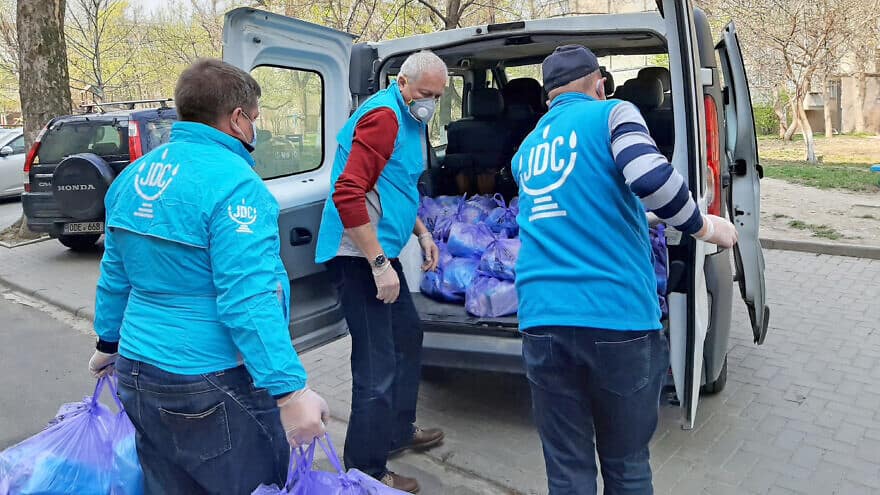
JDC staff and volunteers delivering food to elderly Ukrainian Jews during the coronavirus pandemic. Credit: JDC.

While Ukraine has also not seen a spike in anti-Semitism, there was an incident in mid-May when a police official in the country’s western city of Kolomyya requested a list of all Jews with addresses and phone numbers. This prompted a large international outcry and an investigation by the national police.

Bleich said he has had a good working relationship with the government during the pandemic.

“We are in touch with the government. There have been a number of Zoom meetings with government officials, especially for religious organizations and groups. This allows them to impart the information that they have to us and allows us to discuss with them the issues facing the religious communities.”

Of course, COVID-19 has come after much of the Jewish community, including its rabbis, moved westwards towards Dnipro (until 2016 known as Dnepropetrovsk, a sister city to the Boston Jewish community) as a result of tensions in heavily Jewish areas closer to the Russian border, including Kiev, Donetsk and Lugansk. In the past six years of a conflict that has ebbed and flowed, many single Jews and families also fled the country to places like Israel and the United States, leaving the elderly in place.

‘Part of a wider circle’

Meanwhile Hungary, home to the third-largest Jewish population in Eastern Europe behind Russia and Ukraine, has largely been spared the worst with 4,166 cases and 587 deaths as of early July.

Prime Minister Viktor Orbán, whose Fidesz Party holds a supermajority in the Hungarian parliament, moved early on to grant himself sweeping emergency powers to handle the pandemic. While critics contend that he used the crisis to further erode Hungarian democracy, the country has been able to keep the spread of the virus at bay so far. In late June, as the pandemic situation continued to improve throughout the European Union, the government moved to end Orbán’s emergency powers.

Despite the low infection rates, Chabad Rabbi Slomó Köves, who serves as head of the Jewish Communities Association of Hungary (EMIH), acknowledged that it has been difficult to cope with COVID-19.

“We quickly transformed our physical classrooms where there is social interaction to remote and virtual classrooms. The same has applied for the routine Torah lessons we hold,” he told JNS.

But he said that many in the community have lost their livelihoods due to the strict lockdown.

Hungarian Rabbi Shlomo Koves. Credit: Wikipedia.

“Unfortunately, we are still dealing with members of the community who lost their livelihood in one fell swoop and went from being donors to needing support themselves. This has of course given rise to an ongoing necessity for social and mental support, which we are also dedicated to help provide for our community.”

Like other Jewish communities throughout Eastern Europe, the community in Hungary has a large amount of elderly, including Holocaust survivors, who have been particularly vulnerable to the virus, in addition to feeling the affections of isolation from the lockdown.

“It cannot be overly emphasized that our community consists of elderly people, many of whom are Holocaust survivors whose ability to communicate on social-media platforms and other online sources of communication at this time is severely restricted. It is our obligation to continue to care for them and maintain as close contact with them as possible,” he said.

Similar to Jewish leaders in Poland and Ukraine, Köves said he has been in close contact and cooperation with the government. He noted in particular that early on in the pandemic, the government worked closely with Israel to facilitate the repatriation of citizens from each country.

One silver lining Köves noted is that the pandemic has emphasized the value of communal life.

“As a rabbi of an active Jewish community, communal life is no stranger to me given its key role in participatory events and prayers. However, when the coronavirus pandemic broke out, I initially felt a sense of loneliness,” he said.

But as they have produced content online and offer services to the community, many residents who had not been involved previously turned the Jewish community for support.

“We noticed that Jewish residents in the city who are not full members of our community have expressed interest in becoming active as they find themselves in need of support and luckily feel that they are part of a wider circle,” said the rabbi. “I believe the understanding that there is great value to social circles, as well as to communal benefits provided by the Jewish community, are phenomena here to stay.”

‘Identify tech-based solutions to manage loneliness’

Michal Frank, regional director for the American Jewish Joint Distribution Committee’s (JDC) former Soviet Union Operation, told JNS that the Jewish communities across the 11 countries in the former Soviet Union (FSU) where they operate were disproportionately affected due to their age and socio-economic status.

“Economically, the Jewish community is impacted like the general population. Our clients, however, are some of the poorest Jews in the world, often living on $2 a day, and the virus-propelled economic downturn hits them very hard. In Ukraine, for example, the cost of basic food stuffs has increased by 60 to 100 percent. In Russia, the ruble has devalued. Our clients are very poor to begin with, and this makes life even more difficult than it was previously, especially as many struggled to make ends meet,” she said.

Nevertheless, JDC said they quickly adapted their responses to the countries they serve.

“We began our response earlier than most other organizations or governmental bodies because we were seeing the impact of the virus on Israel and Jewish communities in the U.S and beyond, and knew we needed to act quickly to safeguard those in our care,” she said.

Staff and volunteers with the Joint Distribution Committee (JDC) distribute food packages to the Jewish community in Ukraine. Credit: Courtesy.

Indeed, the coronavirus pandemic has disproportionately affected the poor and elderly across the world. For JDC, this meant working with local and national partners to provide life-saving services like food, medicine, home care, basic health care and other relief.

This included expanding the hotlines to all Hesed social-welfare centers, working with JDC volunteers to continue the delivery of food and activity sets, such as special holiday packages for Passover and Shavuot, and deploying digital resources like video calls to seniors. They also partnered with an Israeli firm, TechForGood, to “identify tech-based solutions to manage loneliness and social distancing among seniors; monitor the activities, needs and emergency alerts from elderly; and ensuring efficient management of caregivers.”

Despite the challenges facing the Jewish communities in the FSU, Frank said the pandemic has also opened up new outreach to those they serve.

She specifically cited how digital programming and assistance from young volunteers has created new avenues of assistance and connection that didn’t exist just three months ago.

“We have discovered new opportunities for online community programming that is educational, cultural, as well as a powerful engagement tool. For example, through digital programming, our network of JCCs is seeing previously uninvolved community members joining online activities,” she said.

Additionally, she said they were also surprised by how many elderly Jews embraced technology during this time stuck at home.

“We’ve discovered that our elderly clients are more enthusiastic about and desire these kinds of offerings than we anticipated,” said Frank. “We need to ensure they can have access to technology, working within the challenges in the region regarding Internet and mobile connectivity, and continue to adapt content for their needs.”

“While we hope one day to return to in-person activity,” she continued, “we know that the initial work we have made in adapting to digital content and programming for the wider Jewish community needs to now be.”

While it’s impossible to predict how the pandemic will continue to unfold both globally and within Eastern Europe, Levin said that Jewish organizations operating in the region have been working hard to ensure that the most vulnerable are protected, and that Jewish life continues. “The bottom line is the leadership in all these countries, along with the assistance of international organizations like the JDC, European Jewish Congress, World Jewish Congress, the Jewish agency. They believe they have the situation under control as much as they can control it.”

The Needs of Jews in Eastern Europe in the Age of COVID-19 Read More »

German Lawmakers Denounce Israel’s Annexation Plan, Say ‘Silence Is Not an Option’

(JNS) It was a rainy first of July in Berlin, and a protest was expected outside of the Reichstag, Germany’s historic house of parliament (Bundestag) with its famously post-war transparent dome above the parliament that tourists can alight for a view of the capital and of modern Germany’s democracy in action.

For the handful of protesters on the wet stone near the neo-Baroque edifice, it was a day of shame for Germany democracy. An hour later, the “grand coalition” consisting of the Christian Democratic Union/Christian Social Union (CDU/CSU) and the Social Democrats (SDP), along with the Free Democrats (FdP) from the opposition, would vote on a non-binding resolution to condemn Israel over plans to extend sovereignty over Israeli-controlled areas in the West Bank/Judea and Samaria, a moved often dubbed “annexation.” The debate was symbolically timed on the day from which Israel could execute the move (but hasn’t yet) and in which Germany assumed the presidency of the Council of the European Union.

The protest, which essentially turned into a one-man show, starred its initiator, Marcel Goldhammer, a journalist with both German and Israeli citizenship.

“Germany killed 6 million Jews in World War II, in the Holocaust, and now Germany wants to tell Israel how to defend its security,” Goldhammer told JNS, holding an Israeli flag which he proudly waved to passersby, at one point breaking out in Israel’s national anthem “Hatikvah.” He also slammed Germany’s alleged funding of NGOs that support or excuse Palestinian terrorism, saying, “Shame on you!”

The only political opposition came from the right-wing Alternative for Germany (AfD), which abstained from the motion largely on the grounds that Germany shouldn’t tell Israel what to do. The populist party, which has been embroiled in controversy over statements believed to minimize the Holocaust, is largely shunned by the mainstream German Jewish community.

Marcel Goldhammer, a journalist with both German and Israeli citizenship, holding a demonstration against German lawmakers for condemning Israel. Photo by Orit Arfa.

One pro-Israeli activist, who asked to remain anonymous, came to the protest and then left when she noticed AfD affiliates; still, she expressed dismay at the lack of any organized Jewish-German opposition to what she considered a vote against Israel. The Central Council of Jews officially representing Germany Jewry and the Israeli embassy in Berlin declined to comment on the motion.

Goldhammer, who is politically independent, does not believe that the AfD is an anti-Semitic party but a legitimate opposition force.

In the name of ‘friendship’ …

At the plenary debate, all parties aside from the AfD expressed, in varying degrees, their opposition to annexation, in the name of upholding international law, the diplomatic process, regional stability, the “two-state solution”—and Germany’s friendship with Israel.

“Germany feels an obligation toward Israel, as part of our historical responsibility,” said the first speaker Foreign Minister Heiko Maas (SPD), who proudly noted that Israel was the first country he visited post-coronavirus lockdown, in part to stop Israel from executing U.S. President Donald Trump’s “Peace to Prosperity” Mideast peace plan on which sovereignty is predicated. He also lauded Germany’s continued financial contributions to the Yad Vashem Holocaust museum. “That also applies to the observance of international law, however. And if those two come into conflict, we must face up to that. Silence is not an option.”

Unlike the other parties signing onto the motion, the FdP levied criticism at the Palestinians. “It must be pointed out here that the so-called Palestinian leadership has not shown any willingness to compromise in recent years. The permanent ‘no’ attitude of the Palestinian leadership is not a policy,” said FdP’s Bijan Djir-Sarai.

Following the debate, the FdP told JNS that it nevertheless seeks to enforce new Israeli-Palestinian talks within the European Union.

“We will continue to use the special relationships and contacts to express our existing concerns and our urgent request to the Israeli government to refrain from annexing parts of the West Bank and from further expanding the settlements,” said FdP’s Benjamin Strasser.

AfD’s Dr. Anton Friesen doesn’t buy the “friendship” argument. “The invocation of Germany’s special relationship with Israel is an old rhetorical phrase. It is often used to justify an essentially anti-Israeli policy that is hidden behind it,” he told JNS.

AfD’s Dr. Anton Friesen speaking at the Bundestag debate on Israeli annexation. Source: Screenshot.

Representing the AfD at the debate, Friesen said at the podium: “Now, we can stand off to one side, shouting, ‘bad, bad, bad!’—the kindergarten style of international affairs we have come to expect from Germany, the world power of hyper-moralizing—or we can accompany this process reasonably and rationally, giving new initiatives the chance they deserve, possibly as part of a Middle East Peace Conference, as the Alternative for Germany supports.”

For the Greens and Die Linke (“The Left”), the motion was too easy on Israel in part because it deemed sanctions against the Jewish state as “unproductive.”

Die Linke’s Dr. Gregor Gysi called for an arms embargo in the event of annexation and suggested Israel would bring upon itself violence and anti-Semitism. “Israel’s reputation will become much more negative worldwide if the annexation plans are implemented. This also affects Jews everywhere. Neither they nor Israel will be safer. On the contrary.”

Parliamentarians from the SPD, Die Linkie and the Greens were among the 1,080 lawmakers from 25 European countries to sign a letter expressing grave concern over annexation moves. The E.U.’s High Representative, Josep Borell, published similar statements.

A history of mixed signals

Despite numerous claims by politicians (including at the July 1 debate), particularly from German Chancellor Angela Merkel’s CDU/CSU, that Israel’s security is Germany’s “reason of state,” Israel’s voting records in the Bundestag have trended towards “Israeli-kritik” (a term often used to describe disproportionate criticism of Israel) since 2010. That’s the year when all parties condemned Israel for its interception of the Gaza Strip-bound Mavi Marmara flotilla.

In May 2019, the Bundestag passed a resolution that deemed the BDS movement an anti-Semitic endeavor to the applause of the Israeli government. In December 2019, it voted to ban Hezbollah. (Both motions came on the heels of AfD’s more strident, rejected versions against BDS and Hezbollah.) However, in March 2019, the ruling coalition voted against FdP’s motion to change Germany’s anti-Israeli voting patterns at the United Nations. In 2018 alone, Germany voted 16 out of 21 times for anti-Israel resolutions while abstaining from four, prompting the human-rights organization, the Simon Wiesenthal Center (SWC) to name Germany’s Ambassador to the United Nations, Christoph Heusgen, one of 2019’s top 10 list of worst anti-Semitic outbreaks.

“Other than mouthing ‘Never Again’ on Holocaust Memorial Day events, has there been any wall-to-wall consensus in the Bundestag to sanction the Ayatollah [Iranian Supreme Leader Ali Khameini] for his genocidal, Holocaust denying regime?” said Rabbi Abraham Cooper, associate dean and director of global social action at SWC. “How about a national consensus to actually combat growing anti-Semitic hate and extreme anti-Israel rhetoric from the far-right, far-left and Islamists beyond just tabulating the numbers?”

He said he would leave it to Israel to decide on annexation, but added “since Germany continues to fund UNWRA’s anti-peace curriculum, continues to send checks to corrupt pay-to-slay Palestinian Authority, continues to overwhelmingly vote against Israel during the Merkel Administration at the U.N., Germans will have to excuse us if we don’t embrace such blatant hypocrisy and double standards.”

Following the vote, some pro-Israel activists grew more vocal in their condemnation of the condemnation. “It is absolutely disgusting for the German Bundestag to have held this role,” said Sacha Stawski, president of the German-based Israel advocacy organization, Honestly Concerned. “If you listen to the speeches held by the different parties, there was not a single speech in my opinion, even from our supposed friends, that didn’t have some problems in it. Most of the [pro-Israel] NGOs are literally in a state of shock in many ways.”

German Lawmakers Denounce Israel’s Annexation Plan, Say ‘Silence Is Not an Option’ Read More »

ADL CEO Under Fire for Partnering With Sharpton in Pressing Facebook Boycott

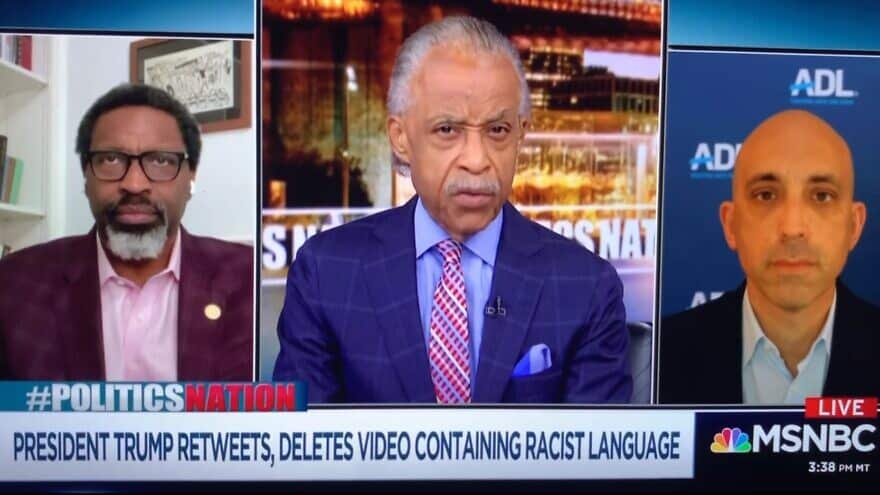
Anti-Defamation League national director and CEO Jonathan Greenblatt has come under fire from Jewish groups for appearing on the MSNBC show “Politics Nation With Al Sharpton” on Sunday to promote the ADL’s call for corporations to boycott Facebook in July over its unwillingness to ban hate speech on the social-media giant’s platform. While the message seems on target with ADL’s work, the idea of partnering with someone like Sharpton, who has a history of anti-Semitism and other bigotry, is hypocritical, if not counterproductive, they say.

Rabbi Abraham Cooper, the Simon Wiesenthal Center’s associate dean and director of global social action, suggested that it was wrong of Greenblatt to appear the show since the well-known reverend, who these days makes more television appearances then leads a congregational flock, has never apologized to the Jewish community for his words and actions.

In addition to anti-Semitic rhetoric Sharpton has spewed over the years, his instigating violence during the August 1991 riots in the Crown Heights neighborhood of Brooklyn, N.Y., against the Chassidic Jewish community remains etched in history.

Cooper insisted that boycotting Facebook isn’t the answer. The approach, he said, should be to get social-media companies “to do more because they can.”

“No one’s going to keep” the boycott, he noted, adding that the Wiesenthal Center will not be part of it.

Cooper suggested that these online companies be threatened with government regulation, which he called “the real cudgel.”

During the appearance, Greenblatt criticized U.S. President Donald Trump for retweeting a video of a Trump supporter in Florida riding in a golf cart and responding to a protester calling him a racist with, “White power! White power!” (Trump later deleted the retweet.)

Greenblatt said that Trump is “only able to divide and not unite.”

In June, the ADL joined with several other groups, including the National Association for the Advancement of Colored People (NAACP), Sleeping Giants, Color of Change, Free Press and Common Sense, to target Facebook. They placed a June 17 full-page ad in The Los Angeles Times alleging that it has not done enough to combat hate and disinformation.

“We have long seen how Facebook has allowed some of the worst elements of society into our homes and our lives,” said Greenblatt in a statement. “When this hate spreads online, it causes tremendous harm and also becomes permissible offline.”

Facebook CEO Mark Zuckerberg has faced continued criticism for not doing more to police his platform for false or misleading statements, including from the president himself. Instead, the company has launched a massive drive to boost voter registration across its platforms as part of a “Voting Information Center” to help educate voters on how to register, find polling places or send ballots in by mail.

The campaign launched by the ADL and others to target hate groups on Facebook is being met with concern that it could encroach on issues of free speech and lead to the censoring of political ads by conservatives.

Greenblatt, a veteran of the Obama and Clinton administrations, has also been criticized for moving his organization away from a nonpartisan stance and embracing the politics of the Democratic Party.

Sharpton, host of the weekly one-hour show on the left-leaning cable-news network since 2011 (he had a failed run in 2004 for the Democratic presidential nomination), has long been embraced by Democratic politicians.

‘Fighting an uphill battle’

Former Democratic New York State Assemblyman Dov Hikind, founder of Americans Against Antisemitism, did not hold back in rebuking Greenblatt, calling the ADL leader’s appearance with Sharpton “pathetic,” “sickening” and “the worst hypocrisy in the world.”

“How in G-d’s name isn’t the ADL ashamed of themselves?” posed Hikind. “They need to explain to the public and their supporters why it is OK to align yourself with Al Sharpton, a race-baiter and inciter of violence in the Crown Heights riots.”

Referring to the ADL’s moniker, Hikind retorted: “What about Sharpton’s defamation of the Jewish people?”

Liora Rez, director of StopAntisemitism.org, told JNS that while her organization supports any “attempt to help put a stop to the endless hate content taking over social media,” Greenblatt’s appearance with Sharpton, whom Rez called “an individual that perpetuates such hate,” is an “extremely troubling” matter.

Nonetheless, she expressed a willingness to support the boycott.

“We have been endlessly fighting an uphill battle of anti-Semitic hatred on Facebook since our inception; if a July boycott of the social-media giant will result in a decrease of bigotry and hatred, regardless of its origin, we will 100 [percent] back it,” said Rez.

Mort Klein, national president of the Zionist Organization of America, told JNS that the ADL should not align itself with Sharpton to combat hatred.

The social-media site, said Klein, “should remove hateful sites and posts, such as those promoting [Palestinian] ‘Days of Rage,’ Islamist groups, hate group [Students for Justice in Palestine], and anti-Semitic, anti-Israel BDS and demonization of Israel and Jews.”

Bryan Leib, chairman of HaShevet, a new alliance of young Jewish American leaders that was formed amid dissatisfaction with mainstream Jewish advocacy organizations such as the ADL, echoed Klein as it pertains to Greenblatt and Sharpton, though questioned the Facebook boycott.

“We are committed to dialogue that unites communities rather than divides, like Reverend Al Sharpton has done for decades. It is hypocritical for the Anti-Defamation League’s head to work with someone who has long defamed Jews—and put on Congressional Record for references to ‘Bloodsucking Jews’ and ‘Jew Bastards’—without apologizing,” said Leib. “Surely, Mr. Greenblatt can find more a suitable partner in policing hate speech than someone whose rhetoric once fueled a targeted, lethal attack on Brooklyn’s Jewish community.”

Simultaneously, Facebook shouldn’t be the “the only social-media company to be targeted in this boycott led by the ADL,” said Leib.

He noted “a tremendous amount of hate speech on Twitter, Instagram and TikTok,” saying those sites should also be boycotted.

ADL CEO Under Fire for Partnering With Sharpton in Pressing Facebook Boycott Read More »

Can the ADL ‘Stop the Hate’ by Embracing Al Sharpton?

 Is there any red line that the Anti-Defamation League won’t cross in order to pursue its current agenda that prioritizes partisan politics over combating anti-Semitism? In the five years since Jonathan Greenblatt succeeded longtime ADL leader Abe Foxman at the helm of the anti-Semitism monitor, the answer to that question has always been clear. But by openly allying itself with Al Sharpton—the man who helped incite the Crown Heights riots in the summer of 1991—the ADL has not just abandoned its core mission in favor of partisan politics, but has utterly disgraced itself in a manner that ought to shame its staff and donors.

Greenblatt, a veteran of the last two Democratic administrations, moved the group away from its nonpartisan stance into one in which it has become a faithful auxiliary of the Democratic Party. That has been made painfully obvious repeatedly as Greenblatt has taken openly partisan stances on issues like Supreme Court nominations and consistent attempts to link President Donald Trump to anti-Semitism. But while the group’s championing of the “Stop the Hate” campaign, which aims to pressure Facebook to begin censoring content, sounds like it is reverting to its job of bearing witness against anti-Semitism, that’s not true.

That has been made painfully obvious repeatedly as Greenblatt has taken openly partisan stances on issues like Supreme Court nominations and consistent attempts to link President Donald Trump to anti-Semitism.

The #stophateforprofit campaign claims that its goal is to mobilize the country to force Facebook to cease allowing its platform to be used to promote hate. That sounds laudable. It is represented by its principle advocates, such as Greenblatt and actor Sacha Baron Cohen, as merely a request that Facebook CEO Mark Zuckerberg stop serving as an enabler of neo-Nazis. And if it were that simple, who would oppose it?

In practice, that means setting up a system to censor political ads subjectively so as to treat those from conservatives as inherently hateful or untrue while giving a pass to the left. Under any circumstances, that would be questionable. But in the context of a presidential election being contested in an environment in which many, if not most, Americans get their news from their social-media feeds, pushing Facebook to censor or tag ads and posts in this manner is an outrageous form of political cheating.

As I’ve previously noted, the ability of Internet giants like Facebook, Twitter and Google to use their enormous power to control the information superhighway is a clear and present danger to democracy. While Trump’s critics treat his bluster and coarse language as evidence of incipient authoritarianism, it is the potential for social-media giants to tilt the scales for or against certain politicians and ideas that constitutes the real possibility of establishing authoritarian rule.

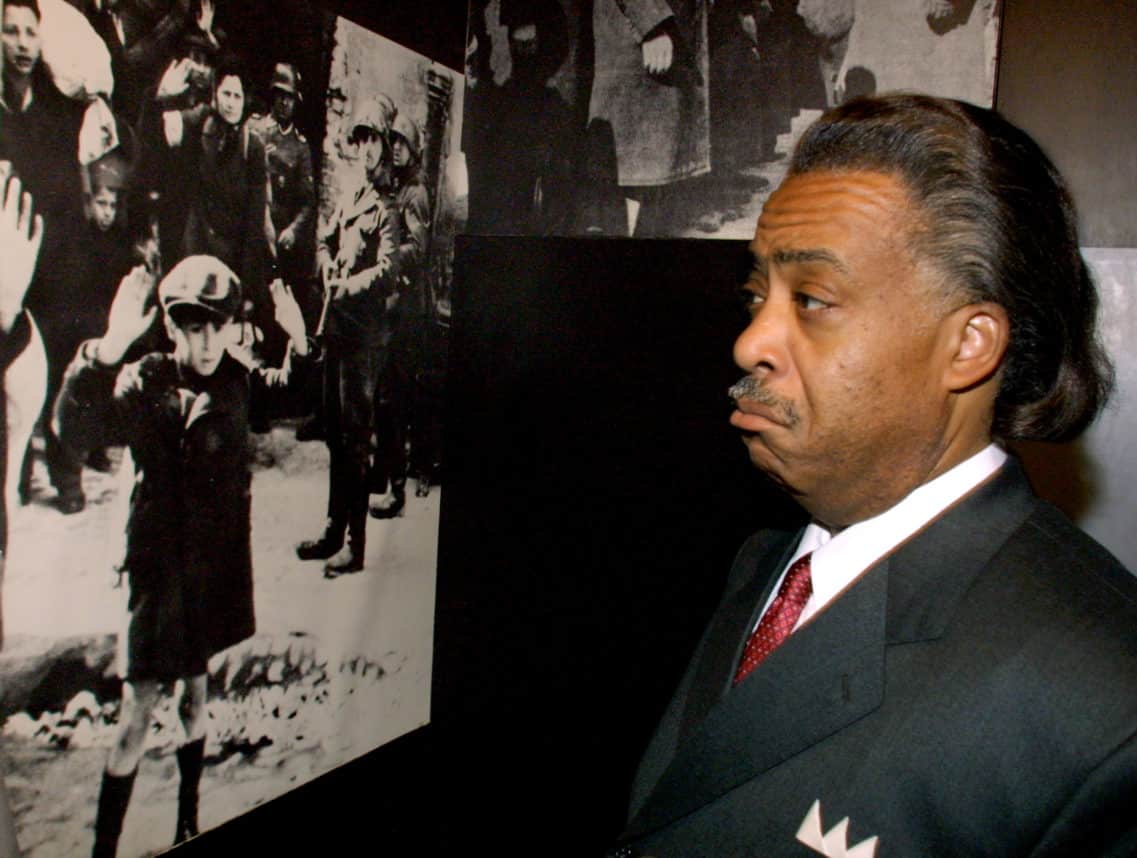
Rev. Al Sharpton outside of the New York City Police Department Headquarters in 1999. Credit: Robert Swanson via Wikimedia Commons.

Google’s attempts to deny the use of its ad revenue to conservative websites are deeply problematic, as is the decision of Twitter to dabble in censorship. But Facebook, with its billions of users, is in a unique position to ensure that its platform, which is so successful because it is so ubiquitous, to mute or silence views its left-wing staff doesn’t like. While Democrats have mythologized the activities of Russian bots on Facebook into an excuse for Hillary Clinton’s defeat in 2016, the point of this campaign is to weaponize the same forum to aid former Vice President Joe Biden.

Though his motives have more to do with profit than principle, Zuckerberg has deserved some credit for resisting this pressure. But last week, it took the first step down the slippery slope towards censorship by agreeing to label posts from politicians that it deems an effort to “incite violence” or to “suppress voting.”

In a political environment in which liberal journalists are treating any call to enforce the rule of law against rioters as inciting violence, Facebook’s adoption of such vague language is ominous. The same is true with talk of voter suppression, which is the way some on the left define any attempt to ensure the integrity of elections.

But the interesting thing about ADL’s decision to partner with Sharpton is that it illustrates how such partisan goals have now superseded its task of monitoring Jew-hatred.

But the interesting thing about ADL’s decision to partner with Sharpton is that it illustrates how such partisan goals have now superseded its task of monitoring Jew-hatred.

Greenblatt’s predecessor Foxman was a child survivor of the Holocaust, and he took the job of granting absolution to those who were guilty of anti-Semitism in the past seriously. Those who would seek his blessing actually had to repent of their hate and behave in a manner that wouldn’t embarrass their sponsor.

Greenblatt, however, hasn’t required Sharpton to fully confess his role as a race-baiting inciter of anti-Semitic violence. Instead, he treats Sharpton as a valuable political ally whose support for ADL’s ventures is a gift for which he is truly grateful.

To be fair to Greenblatt, he’s not alone in this respect. Last year, the Union of Reform Judaism played the same game with Sharpton when its Religious Action Center granted its seal of approval to him. That was particularly painful for many in Crown Heights and the Chabad-Lubavitch movement, whose adherents were the victims of what can only be described as a modern-day pogrom that Sharpton helped start.

In that case, as with this one, both groups judged politics—in the form of an anti-Trump alliance—as having far greater importance than holding Sharpton accountable for his past.

To be a foe of Trump and an ally of the Black Lives Matter movement, which at this moment has become the most powerful force in American public life, is to grant a person a lifetime get-out-of-jail-free card. It is deeply ironic that this is happening at the same time that BLM advocates and the social-media outrage mobs that enforce adherence to the movement’s catechism are canceling people left and right—both ordinary citizens and celebrity hypocrites alike—for the sin of opposing any part of the group’s radical agenda.

Greenblatt has already so trashed ADL’s reputation in his pursuit of a liberal political agenda (and perhaps a post in the next Democratic administration) that it may be hard to gin up much outrage about his embrace of a figure as disreputable as Sharpton. But it is no less outrageous for being so predictable and servile.

Jonathan S. Tobin is editor in chief of JNS—Jewish News Syndicate. Follow him on Twitter at: @jonathans_tobin.

Can the ADL ‘Stop the Hate’ by Embracing Al Sharpton? Read More »

French Court Rules Painting Looted During Holocaust Belongs to Jewish Collector

A French appeals court ruled against an American couple that sought to get back the 1887 painting called La Cueillette des Pois (“Picking Peas”) by Camille Pissarro that was looted from a Jewish collector during World War II and the Holocaust.

The court upheld an earlier ruling that the painting should be returned to the family of the collector, Jewish businessman Simon Bauer, according to the text seen by AFP on Wednesday.

Purchasers Bruce and Robbi Toll of the Philadelphia area, who are also Jewish, claimed that they didn’t know the painting was stolen when they bought it in New York for $800,000 back in 1995.

Toll is a partner in the luxury home-building company Toll Brothers. He also serves as chairman of Philadelphia Media Holdings, which owns The Philadelphia Inquirer and the Philadelphia Daily News newspapers.

The Vichy regime in France during the war collaborated with the Nazis and stole 93 paintings from Bauer, according to the report. Some of the paintings were returned to him after the war, though died in 1947, before he was able to retrieve La Cueillette.

Pissarro was born on Nov. 13, 1903 on St. Thomas in the Caribbean. His father was of Portuguese Jewish descent and held French nationality; his mother was from a French Jewish family from the island of St. Thomas. Few of Pissarro’s paintings sold during his lifetime.

French Court Rules Painting Looted During Holocaust Belongs to Jewish Collector Read More »

Jimmy Carter Speaks Out Against Israeli Sovereignty Plans, Touts Former Accords

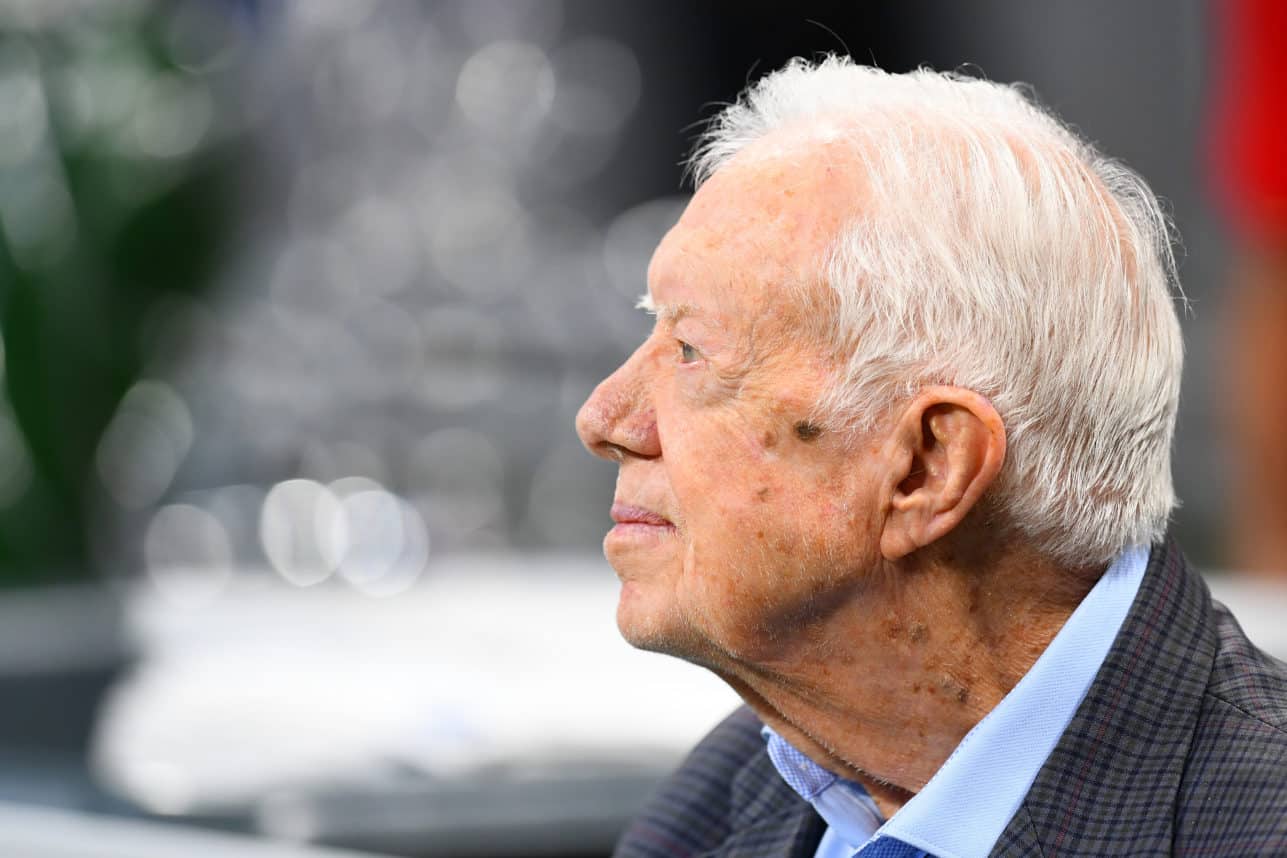
Former U.S. President Jimmy Carter has criticized Israel’s plans to annex to parts of Judea and Samaria, more commonly known as the West Bank.

“Israel’s planned annexation of up to 30 [percent] of the West Bank as early as today would violate international laws prohibiting the acquisition of territory by force and changing the status of occupied territories,” said Carter in a statement on Wednesday. “The planned move would violate the Oslo and Camp David accords, and jeopardize Israel’s peace treaties with Jordan and Egypt.”

“For decades, Jewish settlements in the West Bank have expanded, jeopardizing any possible establishment of a sovereign Palestinian state alongside Israel,” he said. “Formal annexation will signal the end of the internationally agreed-upon two-state framework for peace, and with it the possibility for a just solution to the conflict.”

Carter, 95, concluded, “The envisioned annexation would amount to a massive, illegal expropriation of Palestinian territory. Annexation must be stopped, and the Israelis and Palestinians should return to meaningful negotiations based on U.N. resolutions and previous bilateral agreements.”

Jimmy Carter Speaks Out Against Israeli Sovereignty Plans, Touts Former Accords Read More »

Rival Palestinian Factions Declare Unity: ‘We Have No Enemy Except for Israel’

Representatives of rival Palestinian factions Fatah and Hamas on Thursday united against Israel’s plans to extend sovereignty in Judea and Samaria.

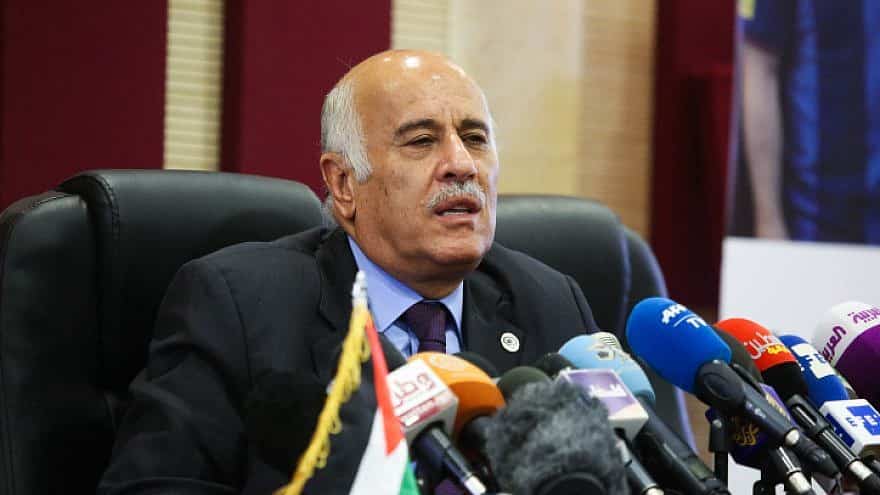
At a press conference in Ramallah, senior Fatah official Jibril Rajoub declared, We are now talking about a joint struggle, a campaign on the ground. We call on all Palestinian factions to see cooperation between Hamas and Fatah as a historic opportunity for a joint fight to establish a Palestinian state and oppose the Israeli occupation.”

“We have no enemy except for Israel,” Rajoub added, according to Ynet.

Rajoub called Hamas a “complete partner” in the battle against Israel’s intention to extend sovereignty.

“We are leaving this meeting under one flag, with which we oppose annexation,” he said. We want to open a new page [in Hamas-Fatah relations] and set an example for the people, prisoners and martyrs.”

Addressing the gathering online from Lebanon, Hamas deputy chief Saleh al-Arouri declared that “if Israel annexes part of the territory in the West Bank, no matter which one, it will continue to annex more. This indicates that Israel perceives the West Bank as an essential part of Israel. We are ready to fight the Israeli occupation on the ground as well [as on the political arena], in villages and towns. Our message to Israel is that the annexation plan will not be implemented.”

Rival Palestinian Factions Declare Unity: ‘We Have No Enemy Except for Israel’ Read More »