fbpx

June 12, 2020

Chaos, Moping and Mopping – Comments on Torah Portion Beha’alotekha

Chaos, Moping and Mopping 2020 (adapted from 2019)
B’ha’alotekha

The brilliance of the Torah as “Literary Philosophic-Psychology” is evident in this week’s Torah portion, “Be’ha’aloteka.” We see here an interplay of anxiety and fear, an inner chaos, that turns into a fixation on food and then into general dysthymia – a profound lack of well-being.

After about 13 months at Mt. Sinai, the Israelites are to break camp and begin their trek to the ancient homeland in Canaan. Within just a few verses, the people become “k-mit’onenim” – “like moaners.” Hebrew linguists place this word, “mit’onenim” “moaning”, somewhere between “mit’lonen” “complain” and “mit’abel” “mourn.” I think of “moping” (not mopping) as a dejected state, sunk in despair, irritable, and usually looking for someone to blame. Why the moaning and moping? What just happened?

Reality. Perhaps they had been under the illusion, a futile hope, that they could just stay at Mt. Sinai. Maybe the God of the Universe wouldn’t notice, would forget them there. Like a person who procrastinates responding to a legal summons, they hoped against reality. I actually had a counseling case like that – a man who angrily threw away a court order to appear – “Shtuyot!”, he explained to me, “ridiculous.” Now, this fellow knew in his rational brain that the court would not eventually just lose interest in him. Some other part of him was testing what he knew.

We all have some weird part of our thinking that is entirely disconnected from the real world, some imaginative tree in Meinong’s jungle (it’s a thing; you can look it up), that loves to test reality. Maybe reality – and God – are not as firm as they appear. Kids often operate under the assumption, often correctly, that parents forget, overlook, or lose interest in something. Maybe reality is like a distracted parent? Test it, and find out.

And then reality hits, and sometimes hits hard. Show up to court or we will arrest you. Inexorable consequences. Act out and then get a dose of the truth. The Israelites received a final order to quit the premises and move on to the next part of their lives. They moped, moaned, complained and then – (and this is brilliant!) got really, super hungry for meat, a craving, a “ta’avah” (just how Eve saw the Tree in the Garden of Eden). Then they went on a roll. They suddenly remembered the all-you-can-eat fish they ate for free in Egypt! And the free salad bar! “Cucumbers, melons, leeks, onions and garlic”, the Torah lists for us.

The inconvenient fact that the food was not free – they had been brutalized slaves – was obscured from memory. This is, indeed, part of the human condition – in the ego self, we sometimes remember the past in a particular way in order to justify our current state of thinking and feeling. Instead of working things through in the painful process of confronting reality with wisdom, we come up with slogans – “free fish and salad bar!” and God and Moses become the enemy with this newly discovered (false) history.

The Torah at this point digresses and reminds us that they had the manna from Heaven to eat – coriander seed that looks like bdellium (which grew on the river of Havilah, that flowed out of the Garden of Eden). Once prepared, we are told, it tasted like dough kneaded with oil. Small sweet cakes.

Effectively, God is leading them away from Sinai toward Canaan through the reconstituted Garden of Eden – they had water, milk from their animals, and cookies. But, like Eve and Adam, they had a craving, a chaos within, that they thought could be treated by going back to Egypt “where they ate for free.” At some level, they hated freedom and yearned for jail.

There is a two-fold response to this crisis – I’ll just discuss one here. God instructs Moses to gather 70 elders into the Tent of Meeting. There, God would descend upon Moses and increase the spirit on Moses, and emanate it among the 70 Elders, who then prophesied.

Not prophecy, as in telling the future, but prophecy in its original sense – be filled with and communicate the spirit of God. In our language: to counter chaos with meaning and purpose, with duty and dignity, with virtue, wisdom and connection to the soul.

The depth of this cannot be overstated. We all at times feel an inner chaos that manifests into a craving – power, fame, possessions, control, money, addictions, gratification of desire. At other times, that inner chaos has us scan our environment to find or impute chaos to others – we have to criticize and correct them, often in a way proportionate not to what they did, but to the degree of chaos within ourselves. Some people in a particularly low spiritual state attack anyone convenient – even and especially the innocent.

What we do with the chaos – in ourselves and in others – defines our character. I will give you a real life, personal example. Many years ago, we had an event at the Sophos Café. We had the perfect of storm of way more people showing up than had signed up, on one hand, and kitchen staff hired for the night not showing up, on the other. We were suddenly short of kitchen crew and waiting staff. I was dividing my time between be an affable host and washing dishes; Meirav was busy trying to bring some order to the chaos. People began to complain, and we put the word out: We are in a tight spot.

Most responded quite generously. Patiently waiting for their orders, enjoying the musical program and the endless procession of bread with za’atar and olive oil flowing from the kitchen while the food orders were prepared one by one. Several took up the challenge and put on an apron, helped out it the kitchen, grabbed a mop or waited tables. Mopping, not moping.

Others chose to grumble and complain. A few walked out in a huff.

We are all walking this rocky path together toward our inevitable deaths, without enough wisdom or time. Let’s at least not make it harder on each other.

Chaos, Moping and Mopping – Comments on Torah Portion Beha’alotekha Read More »

Toronto Shul Zoombombed With Shout of ‘More of You Should Have Been Killed’

A Toronto shul’s virtual Kiddush on June 5 was disrupted with an individual shouting that Adolf Hitler should have killed more Jews.

Toronto Village Shul Rabbi Tzvi Sytner said in a June 9 Facebook video the Zoombombing happened at around 1 p.m. EDT during the shul’s pre-Shabbos Kiddush; several individuals began shouting anti-Semitic, racist and lewd remarks, including the N-word and people yelling “Hitler!” and “more of you should have been killed!”

“It was a disgraceful, cowardly act of hatred that I hope we will never, ever experience again,” Sytner said. “It was especially disheartening seeing this taking place while the world around us is all focused on equality.”

He added: “It wasn’t only emotionally disturbing but it was a critical reminder to all of us that if you don’t stand up against racism and hatred when it’s someone else’s race, then don’t be surprised when it comes your way next.”

https://www.facebook.com/villageshul/posts/3640783085936260


According to the Friends of the Simon Wiesenthal Center (FSWC), 150 people were on the virtual Kiddush at the time of the Zoombombing. The FSWC has reached out to the Toronto Police’s Hate Crime Unit about the matter.

“As the coronavirus pandemic has forced us to take our community events online, we have seen a growing and disturbing effort by anti-Semites to target the Jewish community with online expressions of hate and Zoombombing attacks,” FSWC Director of the Campaign Against Anti-Semitism Jaime Kirzner-Roberts said in a statement. “We ask Jewish community organizations to implement all possible precautions to ensure the online security of their members, and we urge police to take appropriate actions when online anti-Semitic attacks occur in order to bring perpetrators to justice.”

“Zoombombing” is the term used to describe video conferences being disrupted by anti-Semitic and racial slurs as well as pornographic imagery. In April, the Toronto synagogue Shaarei Shomayim was Zoombombed with anti-Semitic messages such as “Hitler was right!” A Holocaust survivor was on that Zoom call.

According to B’nai Brith Canada, there was an 8% increase of anti-Semitic incidents in Canada from 2018 to 2019.

Toronto Shul Zoombombed With Shout of ‘More of You Should Have Been Killed’ Read More »

Just Listen

When we watched the rocket launch last week, my son remarked, “I wonder if the rocket is going to meet God.”

His curiosity has been with me all week. From beyond our own atmosphere, what kind of view does God have of Earth? A blurring of reality, unable to differentiate between those who hate and those who are hated or a world in which human beings speak so loudly over one another that it’s impossible to identify anything past the buzzing of ego and self-righteousness. I am not sure which view is better. My sense is that if God is watching, the Lord is disappointed, crying, praying that we will somehow discern a way forward without pushing back others.

So many people have mentioned that they wish they were the astronauts, given the gift of leaving this Earth. While the sentiment resonates, we have been given the greatest blessings of all time: the gifts of life in this world, living with and learning from one another.

When I asked black faith leaders what we should be doing right now, the response has been hard to hear: stop jumping to words like harmony and tranquility. Stop pretending that by next week, everything will be OK. Just stop.

Instead, Sh’ma. Just listen.

Some of us have forgotten or perhaps never learned how to listen. Not listening for the purposes of waiting to speak. That’s not listening. That’s waiting. Rather, listening in an effort to better humanity. Listening with the intent of being malleable, open, pliable enough to admit where we are wrong and whose voices deserve amplification.

Sh’ma. Listen to the struggle. Sh’ma. Listen to the pain. Sh’ma. Listen to the anger. Sh’ma. Listen to the cries. Sh’ma. Listen to a story that looks so vastly different from your own. Stop talking. Sh’ma. Just listen. And listen in a way you never have before. Know that listening doesn’t mean inherent agreement. Listening conveys a willingness to hold someone else’s truth with consideration, thoughtfulness and a realization that someone else’s truth impacts your own.

Maybe in listening with wide-open, broken, jagged hearts, we might gain a semblance of a world in which we are worthy to dwell.

My son wondered if the rocket was going up into space to meet God. But now, I wonder, do I live in a world in which God still wants to meet us?

Just Listen Read More »

Better to Have Enemies Than Friends

Having been a subscriber to The New Republic (TNR) for many years, I recently received an appeal for a donation to “help support TNR’s award-winning independent journalism.”

The letter, marked “URGENT” in boldfaced capital letters, sounded a familiar tone when it stressed that under President Donald Trump’s administration, “We’re facing the most dangerous challenges to our democracy in history.”

To my surprise, however, the letter went on to stress that TNR is waging a lonely battle: “As the velocity of insults against our democracy continues to accelerate, TNR is doubling down on our mission to report what the mainstream media won’t tell us.” My donation, I was informed, would give TNR’s journalists “the power to uncover the real news behind the fog of lies, evasion and spin that passes for journalism in the corporate media.”

The same day I received TNR’s warning of the deceptive evils of “corporate media” journalism and its cover-up of Trump and his administration, a front-page story in the Los Angeles Times was headlined “Trump’s Plan of Attack: Distract, Deceive.” The sub-headline was “White House steps up its campaign of disinformation about perceived enemies and COVID response.”

The Los Angeles Times certainly is “mainstream” and “corporate media.” So are The Economist and The Wall Street Journal, to which I also subscribe. None of these publications seems to be pulling its punches with respect to the present administration. Nor do The New York Times or The Washington Post. TNR didn’t identify the “real news” about the Trump administration that these various outlets of mainstream corporate media were hiding.

So I began to wonder why TNR was making its appeal in these alarmist and obviously groundless terms. I wasn’t surprised by TNR’s attack on Trump as the embodiment of evil. But why this identification of a new enemy: all other mainstream media? Why not just extol its own journalism? 

Why is identifying a common enemy so effective in gathering support?

TNR, of course, is not alone. Identifying an enemy — even an improbable one — is far more likely to be an effective organizing — or in TNR’s case, promotional — tool than aligning oneself with friends. As professors Greg Lukianoff and Jonathan Haidt write in their 2018 book, “The Coddling of the American Mind,” expanded from their 2015 essay of the same name in The Atlantic, Americans “take part in political action not by love for their party’s candidate but by hatred of the other party’s candidate …. Please tell me something horrible about the other side, I’ll believe anything.”

That’s what TNR seems to be counting on. As Jews, we also are guilty of this, finding our unity best when fighting against anti-Semitism and anti-Israelism, and least in attempting dialogue and cooperation between our various brands of Judaism.

Why is identifying a common enemy so effective in gathering support?

It would appear the human mind is hardwired to be tribal, a necessity from our earliest history. Tribes have always fought over resources. Once, that meant fertile land; today, in America, it primarily means the distribution of economic resources and benefits.

But whatever the tribe is gathered around — whether land, resources, religion — if the “other” appears to be the same as you, with the same needs and aspirations, it is harder to maintain a fighting spirit. And so the “other” must be deprived of positive qualities, and life becomes a battle between good people and evil people. That’s why enemies are better than friends. Hitler knew this; he had the Jews. Stalin knew it; he had the capitalists and the kulaks. TNR knows it; it now has a new enemy — competing media — all of which, without exception, are purveyors of lies and distortions against which TNR does a lonely battle that requires us to send it money lest evil prevail.

Our best response is to reject this dichotomy. While there is evil, we should not confuse it with honest disagreement. We should not be so easily manipulated by a willingness to believe anything and everything “horrible about the other side.” Although TNR’s fundraising might be a little less successful, we and our political lives would be better for the effort.


Gregory Smith is an appellate attorney practicing in Century City.

Better to Have Enemies Than Friends Read More »

Far-Right Spreads Anti-Semitic Conspiracies About COVID-19 and George Floyd’s Death

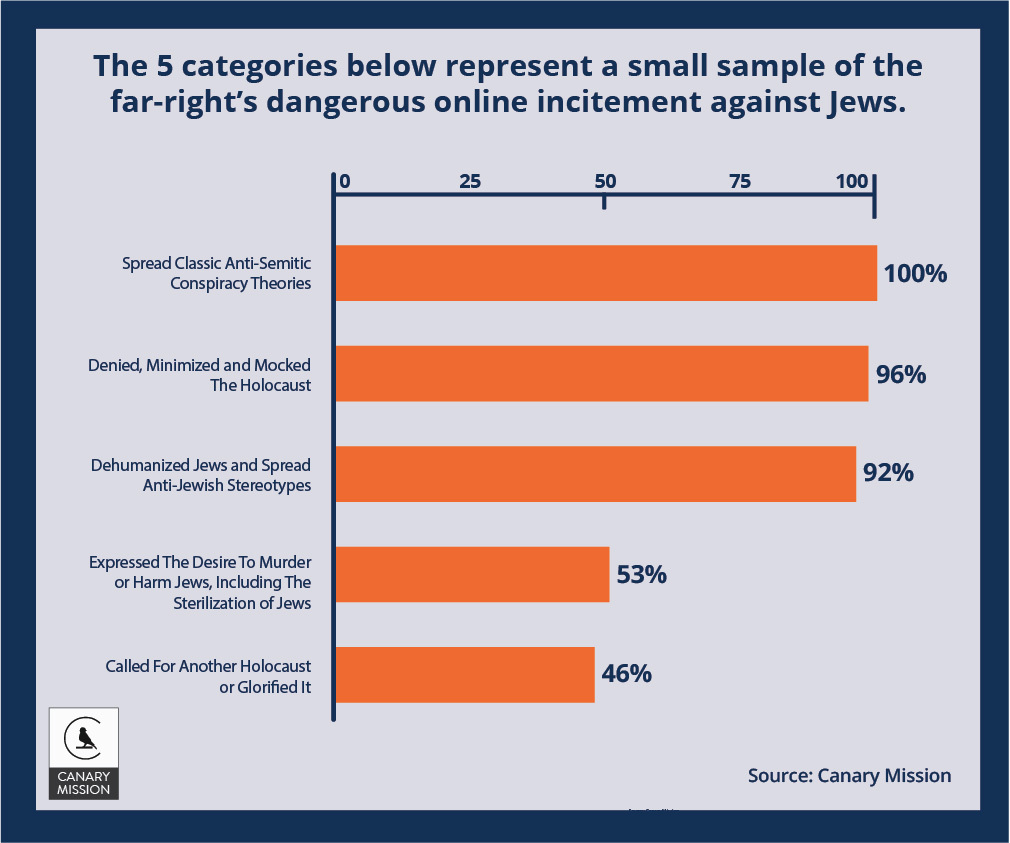
Far-right anti-Semites have been active online in spreading coronavirus conspiracies, according to a new report by the watchdog Canary Mission.

Since the 2017 Unite the Right rally in Charlottesville, Va., which was marked by violence between far-right parties and protesters that led to the death of 32-year-old Heather Heyer after a 20-year-old man from Ohio rammed into a crowd of people with his car, the extreme right, including 26 white-supremacist and far-right activists highlighted in the report, has utilized alternative social-media platforms since traditional ones have cracked down on their accounts.

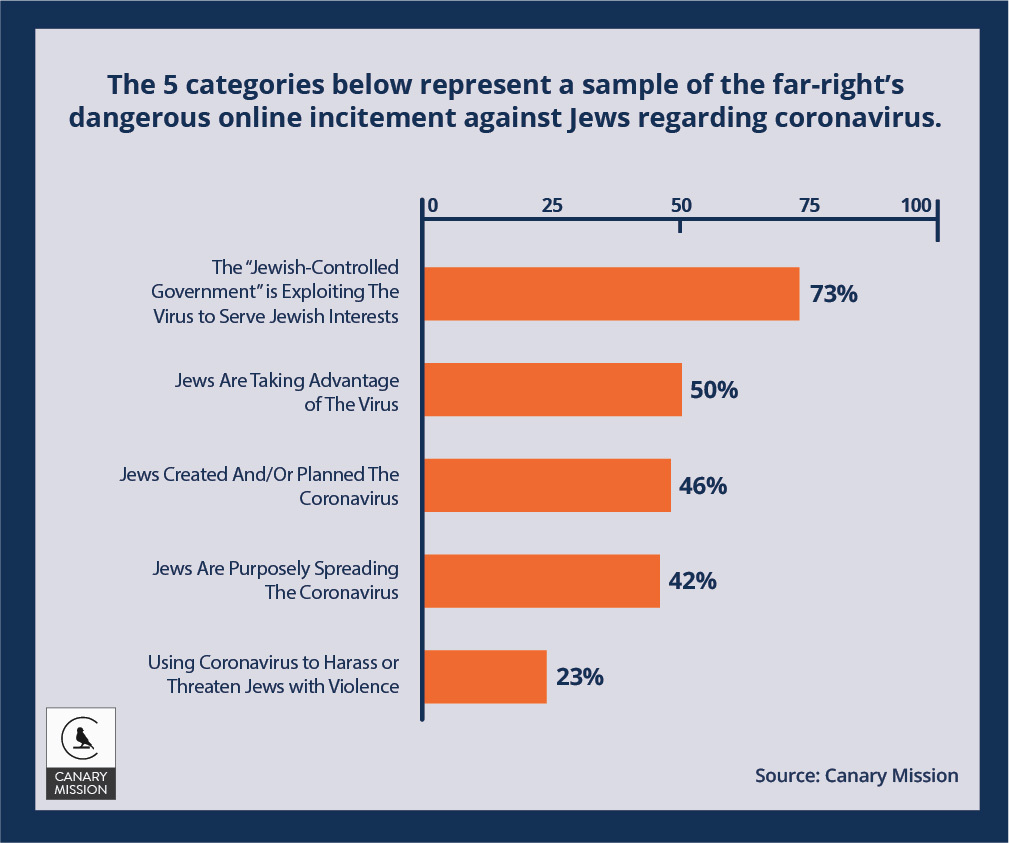
According to the report, 73 percent of the 26 far-right activists profiled blame a so-called “Jewish controlled government” for exploiting the pandemic to serve Jewish interests.

Examples of alternative social-media accounts include, but aren’t limited to, Gab, BitChute, vk and DLive. According to the Simon Wiesenthal Center’s recent digital terrorism and hate report card, those first three sites have failed to combat bigotry on their platforms (SWC’s report card did not mention DLive).

Additionally, Telegram has risen in usage for the same purpose, according to the Canary Mission report.

Far-right activists also use podcasts to promote anti-Semitic and other bigotry surrounding the coronavirus pandemic, according to the report, which mentioned, “While it has become harder for them to host their podcasts on social media, many have widened their reach through their own websites.”

Courtesy: Canary Mission.

The far-right individuals mentioned in the report include Adam Green, who said, “Rothschild stepped down last year from his Rothschild investment company, as well. Are they trying to get out? Insider trading? …They didn’t wanna be responsible for this big collapse they knew, that was planned. I’ve heard the term ‘Plan-demic.’ ”

The Rothschilds are an iconic Jewish philanthropic family from the United Kingdom that has been a common target of anti-Semitic conspiracies.

Another far-right activist mentioned in the report, Lee Rogers, said, “In other words, we have to roll out this intrusive surveillance technology on to your smartphones so government lockdowns can be lifted. That’s what they’re really implying. These large Silicon Valley tech companies are nothing more than extensions of this evil ZOG [Zionist Occupation Government] beast system.”

Courtesy: Canary Mission.

Finally, the report highlights anti-Semitism by far-right activists amid the backlash over the killing of George Floyd, 46, who died on May 25 in the custody of Minneapolis police.

Andrew Anglin, editor of the far-right website The Daily Stormer, wrote that Jews are to blame for the riots that have occurred in response to Floyd’s death.

Anglin wrote that “this is what the Jews want to do: they want to implant everyone with computer chips and run a world government out of Jerusalem where they do satanic sacrifices at their temple they’re going to build.”

Rogers accused Jews of funding the protests in response to Floyd’s murder and slammed former U.S. National Security Advisor Susan Rice: “No Susan, the riots are funded by wealthy Jews like George Soros and are being carried out by anti-fascist terrorist groups who are agitating blacks to go ape.”… “I do know one thing that is most definitely not a conspiracy theory, and that’s the fact that Susan Rice is an uppity, stupid a**n*****. That is a fact and not a conspiracy theory. F*** you Susan you ugly poop-skinned piece of s***.”

Rogers also wrote that Jews and African-Americans should “just f*** off to Israel and enjoy your Jewish supremacist state. You can take your beloved colored pets with you too.”

Far-Right Spreads Anti-Semitic Conspiracies About COVID-19 and George Floyd’s Death Read More »

Jewish Cultural Center 92Y to Host Imam Who Defended Calls for Israel’s Destruction

The prominent New York Jewish cultural center the 92nd Street Y, now known as 92Y, is scheduled to host a virtual event on June 18 featuring an imam who has defended the call for the State of Israel to be destroyed.

The event features Rabbi Peter Rubinstein of New York’s Central Synagogue, a Reform congregation, and Imam Al-Hajj Talib Abdur-Rashid of the Mosque of Islamic Brotherhood Inc., in New York. They plan to discuss how society can move forward amid the hardship of “recent events,” though the event description doesn’t specifically mention such events, including the death of George Floyd, 46, who died on May 25 in the custody of Minneapolis police.

Abdur-Rashid visited the White House twice—in June and July 2010—during the Barack Obama administration, according to White House visitor logs. In 2006, he defended then-Iranian President Mahmoud Ahmadinejad’s call for Israel’s destruction.

While Abdur-Rashid acknowledged the Holocaust as “one of the great tragedies of humanity, along with slavery, Hiroshima, Nagasaki, Bosnia and Rwanda,” he said that Ahmadinejad’s call for Israel’s annihilation echoed a “sentiment born of the legitimate anger, frustration and bitterness that is felt in many parts of the Muslim world.”

In 2005, he defended Rafiq Sabir, an American doctor who was convicted two years later for agreeing to be a medic for wounded Al-Qaeda members abroad. Sabir was sentenced to 25 years in prison.

“Dr. Sabir was well-known here in Harlem and known, really, as a humanitarian physician,” said Abdur-Rashid.

The imam has made other controversial remarks, including accusing Muslims of conspiring with law enforcement, such as the NYPD, and the American government of “the way that it does things and sets people up.”

92Y and Rubinstein did not immediately respond to a request for comment.

Jewish Cultural Center 92Y to Host Imam Who Defended Calls for Israel’s Destruction Read More »

The Dirty Science of The Holocaust Poses Lingering Questions Regarding Medical Ethics

At a German physician’s conference held in Bad Krynica in occupied Poland in October 1941, amid a raging spotted fever epidemic in the Warsaw ghetto that was spreading beyond the ghetto walls, the head of the German Public Health Division of the General Government, Dr. Jost Walbaum, suggested to his colleagues:

    One must … be clear about it. There are only two ways. We sentence the Jews in the ghetto to death by hunger or we shoot them . … We have one and only one responsibility, that the German people are not infected and endangered by these parasites. For that any means must be right.

His audience of 100 German physicians reacted with resounding applause, as detailed in Christopher Browning’s article, “Genocide and Public Health.” Sometimes, a physician’s work can have an enduring impact on society.

During the 12-year reign of the Nazi regime, many German and Austrian physicians and scientists found themselves increasingly free to pursue their research liberated from societal moral restraints. Guided by Nazi-inspired complete disregard for the humanity of their subjects, they engaged in torture, murder and experimentation aimed at improving or saving the lives of Germans and of the so-called Aryan race. And this research was not always secret; it was often presented at seminars and conferences and even published.

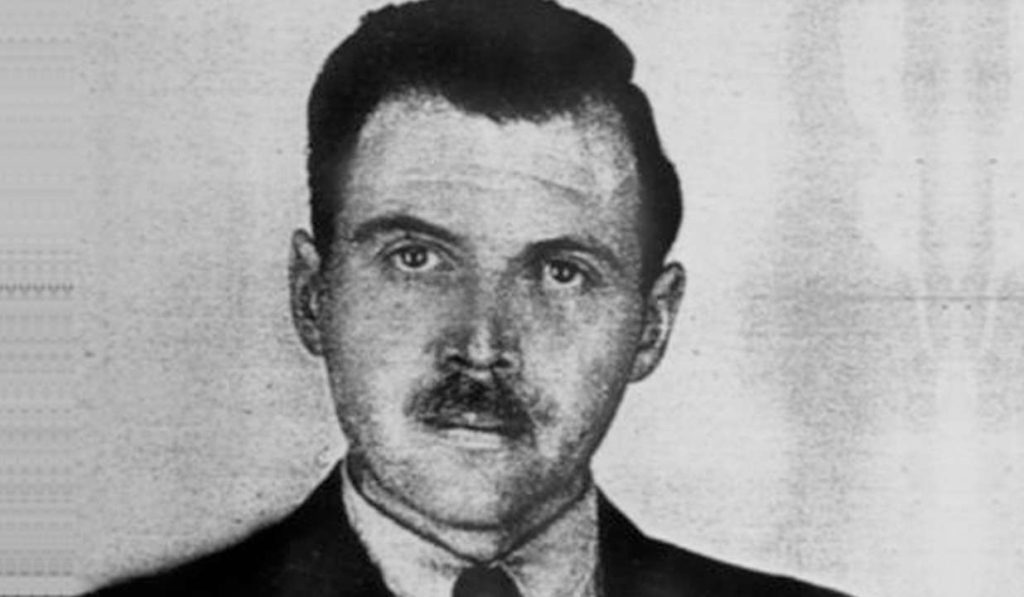
We have all heard of the infamous Dr. Josef Mengele and his experiments on prisoners, mostly Jews, at Auschwitz-Birkenau. Perhaps his most notorious research was his experiments on identical twins. But Mengele worked within accepted scientific frameworks in Germany. He applied for research grants from highly reputable foundations; his applications were peer-reviewed; his former Ph.D. adviser, Professor Othmar von Verschuer, supervised his research; and he presented his research at seminars and conferences. The German medical and scientific community was complicit.

Photo from Wikipedia

Following on his career trying to help infertile women bear children, the gynecologist Dr. Carl Clauberg experimented on sterilization of women in Block 10 at Auschwitz. Drs. Ernst Holzlöhner and Sigmund Rascher engaged in hypothermia experiments at the Dachau concentration camp in the hope of finding ways to save German pilots shot down over the icy Baltic Sea. In 1942, Rascher presented a paper based on this research that had killed hundreds of prisoners in Dachau at an academic conference on “Medical Problems Arising from Sea and Winter.”

Other physicians conducted experiments on bone, muscle and nerve transplantation; malaria; immunization; high altitude; blood coagulation; and many more topics. This was done for the “good of the German people,” and to the detriment and often death of the thousands of prisoners on whom they conducted these experiments.

This brief overview points to two troubling questions. First, “How could mainstream German medicine and science have included and promoted such people, even after the war?” And second, “What if this research yielded results that could benefit humanity? Can the results of such deeply tainted, murderous research be used today?”

What if this research yielded results that could benefit humanity? Can the results of such deeply tainted, murderous research be used today?

The unapologetic attitudes of physicians tried after the war for their crimes, such as at the Doctors’ Trial conducted in Nuremberg by the Americans December 1946 to August 1947, further highlights these questions. At that trial and in other trials, as well as in other contexts, doctors argued that there was no international law regarding medical experimentation during the war.

Some doctors also openly espoused Nazi racial doctrine regarding the Jews and claimed that their work had benefited the world. And recently, the case of confirmed Nazi Dr. Eduard Pernkopf and his highly esteemed textbook Atlas of Applied and Topographical Human

Anatomy has been in the news, following groundbreaking surgery to improve the life of a handicapped patient in Israel. This poses, 75 years after the Holocaust, the ethical question: Can photos and diagrams from the bodies of Nazi victims be used to teach anatomy or conduct life-saving surgery? The very fact that this ethical question is still debated today reflects the ongoing relevance of the Holocaust, and in this case, in the realm of medical ethics.

During the Holocaust, other physicians had a different lasting impact. For example, in his article “Jewish Medical Resistance in the Warsaw Ghetto,” which appeared in Michael Grodin’s book Jewish Medical Resistance in the Warsaw Ghetto, Dr. Myron Winnick has described the research on hunger disease conducted by physicians in the Warsaw ghetto in 1942 as: “the most extensive investigation of starvation ever carried out. … The physicians described the clinical findings in such detail that their description remains the clearest to date. … [It] remains a major building block in our understanding of the effects of severe malnutrition on both adults and children. But it is more than that. It is a glimpse into the character of some of the physicians in the Warsaw ghetto.”

The research was initiated and led by Dr. Israel Milejkowski, a physician who headed the Warsaw ghetto’s health department. It is instructive to contrast his and his colleagues’ legacy with that of the Nazi physicians mentioned above.

In their efforts to live up to the moral undertakings of their professions, Jewish medical personnel also often faced impossible dilemmas. The gynecologist Gisella Perl relates her work in Auschwitz-Birkenau saving the lives of pregnant Jewish women by performing abortions, or of new mothers sometimes even killing their newborn infants. Other physicians relate similar stories regarding saving lives at a terrible cost in the unprecedented conditions into which the Nazis had thrust them. Human life was their guiding ethical light.

Warsaw Ghetto Wall; Photob from Wikipedia

The enduring questions regarding medicine and medical practitioners during World War II and the Holocaust still haunt us on the one hand, as we continue to grapple with the difficult ethical questions posed by the actions of Nazi physicians. Yet, on the other hand, the actions of many Jewish and other prisoner medical practitioners continue to inspire, and the beneficial results of their work endures.

David Silberklang is a senior historian at Yad Vashem’s International Institute for Holocaust Research. He lectures on Jewish history at the Rothberg International School at the Hebrew University of Jerusalem and at the Weiss-Livnat International MA Program in Holocaust Studies at the University of Haifa. His book, “Gates of Tears: The Holocaust in the Lublin District” was a finalist for the National Jewish Book Award and the Yad Vashem International Book Prize in Holocaust Research.

The Dirty Science of The Holocaust Poses Lingering Questions Regarding Medical Ethics Read More »

Recommended Children’s Books About Little-Known Jewish Heroes

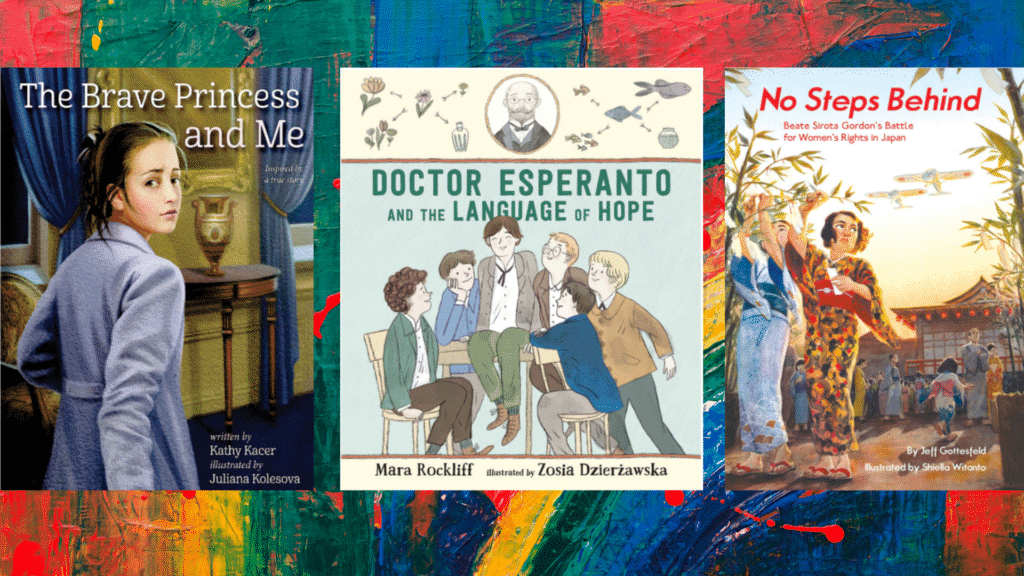
Young readers often love to read about things that really happened, and those who read biographies of admirable people learn a great deal about the values of society while enjoying good stories. They may feel encouraged to read about other famous people or learn more about a historical period that catches their interest. These four new books are great places to begin:


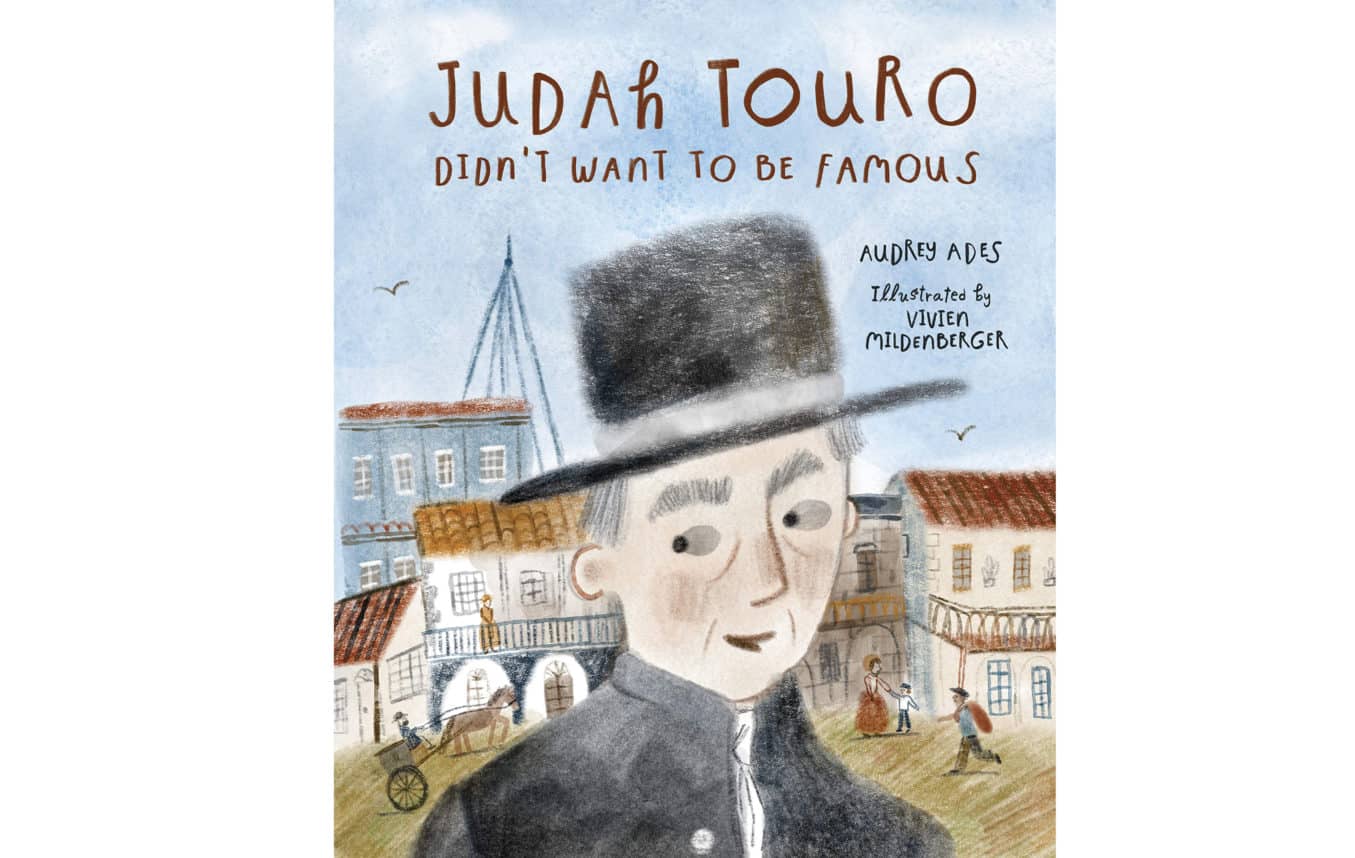
“Judah Touro Didn’t Want to be Famous” by Audrey Ades; illustrated by Vivien Mildenberger. Kar-Ben, 2020.

Most children have never heard of Judah Touro and likely neither have their parents − unless they are well-versed in American Jewish history. This picture-book biography of the noted Jewish philanthropist is particularly welcome because it illuminates the motivations often felt by wealthy individuals who feel gratitude and humility in relation to their riches and thus choose to help others less fortunate.

In 1801, Judah Touro, of Sephardic descent, sailed from Boston to New Orleans to open up a dry-goods store. He established a successful business, but 11 years later, became gravely wounded in the War of 1812. Upon recovery, he reconsidered his purpose in life and concluded he was not saved by God just to be a businessman making more and more money. His eyes opened to the poverty and disease of his adopted city, and he spent the remainder of his life building hospitals, orphanages, housing, schools, libraries, churches and synagogues.

He was particularly moved by the slave auctions he witnessed, and he began to pay off their masters in order to free enslaved people — often giving them money to start businesses. The book’s title refers to his desire to donate anonymously. The author states, “Over the course of his lifetime, Judah gave away more money than any other American of his time. But he was not famous. And that’s just the way he wanted it.” His is a true role model for young readers.


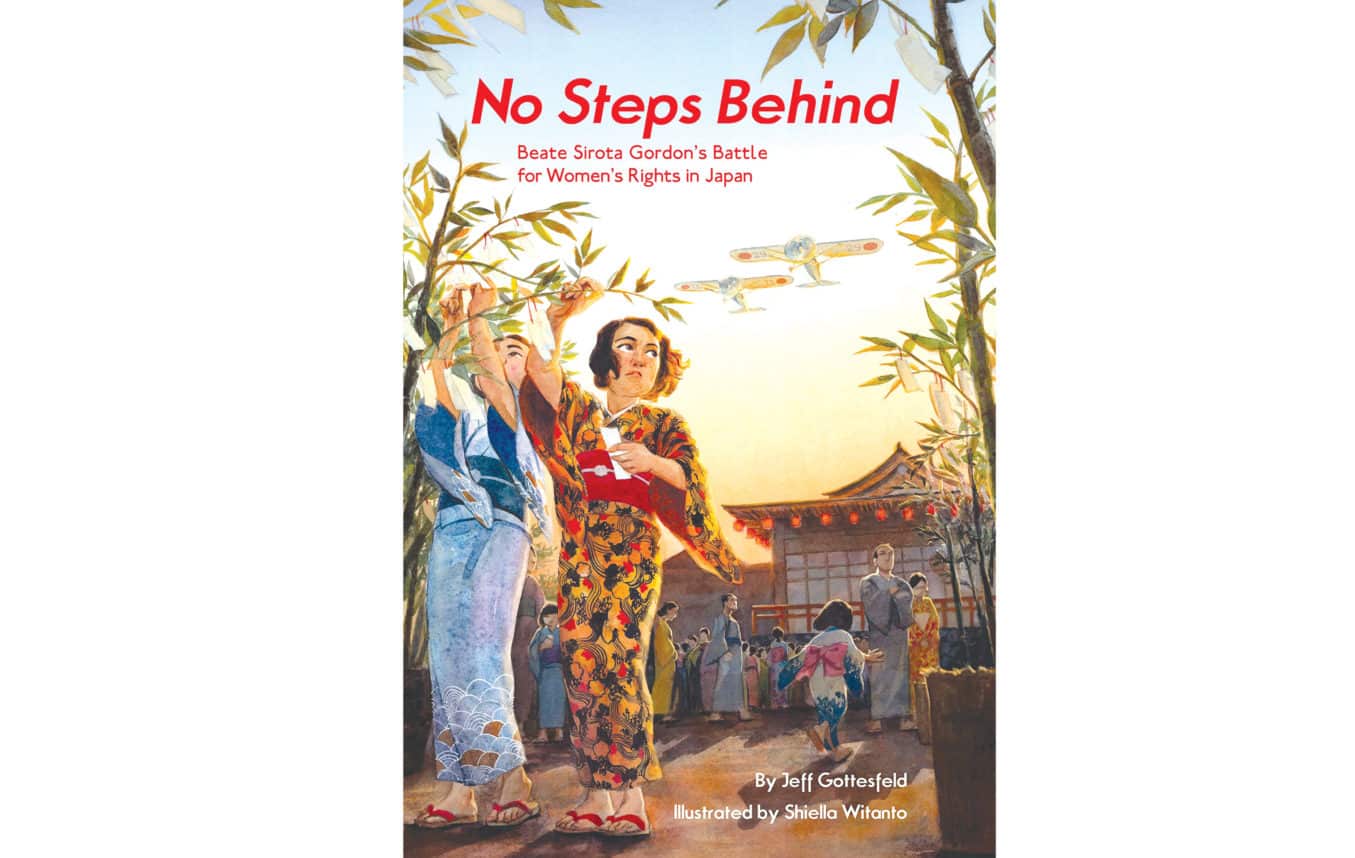
“No Steps Behind: Beate Sirota Gordon’s Battle for Women’s Rights in Japan” by Jeff Gottesfeld; illustrated by Shiella Witanto. Creston, 2020.

The unlikely story of Jewish woman named Beate Sirota (considered a hero in Japan, yet hardly known by Americans) is told well in this picture book for older readers. Six-year-old Beate and her family moved from Vienna to Japan in 1929. By 1947, she played an integral role in writing Japan’s post-war constitution, making certain it included clauses pertaining to equal rights for women. She was influenced by growing up in Japan at a time when “fathers could sell daughters to strangers” and women walked steps behind their husbands. As a teenager, Beate left Japan to study at Mills College in Oakland. While she was there, the Japanese attacked Pearl Harbor. Separated and unable to contact her parents, she supported herself by using her language skills to monitor Japanese radio and eventually got a job with the occupying American army. She then reunited in Japan with her now-impoverished parents and was assigned to help write Japan’s new constitution. She was the only woman in a room full of bickering men, but she insisted on the inclusion of an equal-rights clause for women, thus changing Japan’s history in one paragraph. Considering that the United States has never approved the passage of the Equal Rights Amendment, Beate Sirota is revered throughout Japan as a trailblazer. She died in 2012, and her personal archive recently was opened at Mills College.


Doctor Esperanto and the Language of Hope” by Mara Rockliff; illustrated by Zosia Dzierzawska. Candlewick, 2019.

A universal language for all humankind is the dream imagined by a young Layzer Zamenhof when he was growing up in Bialystock in the 1860s. He thought up an entire system of fitting together parts of words to form a new language, and it became his obsession. However, his father thought it was nutty, threw all Zamenhof’s research in the fire, and told him to go to university to study medicine. As an adult, Zamenhof and his wife, Clara, redeveloped the language and called it “Esperanto” — “one who hopes.”

Surprisingly, interest in the language spread around the world, and many speakers with the same hopes as its inventor met yearly at special conventions. Zamenhof once said, “My Jewishness is the main reason why, from my earliest childhood, I gave myself wholly to one overarching idea and dream, that of bringing together in brotherhood all of humanity.” Zamenhoff died in 1917. Although his children and many Esperanto speakers died in Nazi camps, Esperanto has never disappeared: There are two million Esperanto speakers worldwide today. This hopeful and beautifully illustrated book will inspire children to dream of how their own special ideas may have the power to influence the world.


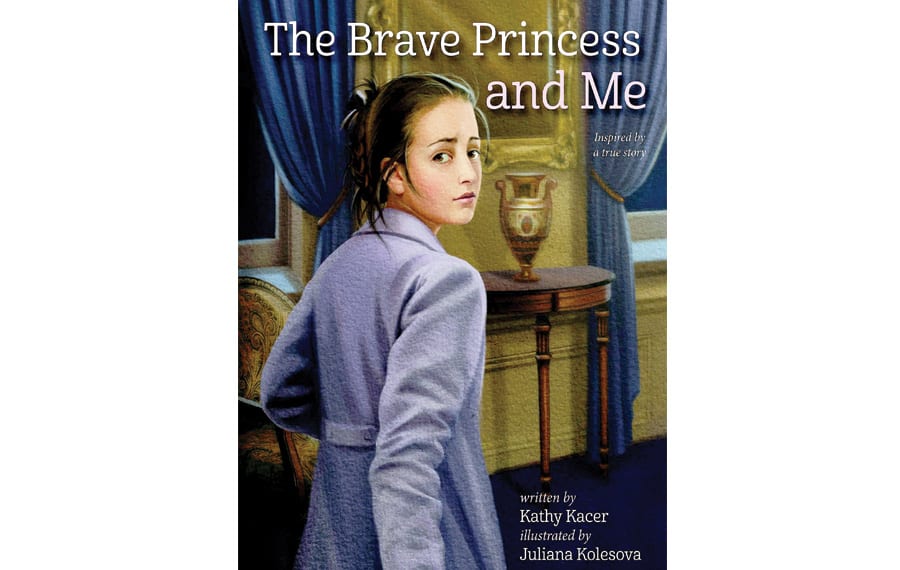
“The Brave Princess and Me” by Kathy Kacer; illustrated by Juliana Kolesova. Second Story Press, 2019.

This realistically illustrated true story for older readers opens with the sentence, “There once was a princess who lived in Greece.” The author, well known for her historical works about the Holocaust, tells the story of Princess Alice of Battenberg, the great-granddaughter of Queen Victoria and wife of Prince Andrew of Greece. Her personal bravery saved an Athenian Jewish family from the Nazis; she hid them inside her well-appointed house on an upper floor. She was deaf and read lips to communicate, so every time the Gestapo questioned her about her activities, she pretended not to understand until they finally left her alone. This provides the suspense and action in the book that will appeal to young readers.

In 1949, Alice became a nun and devoted the remainder of her life to helping the poor. She was buried in east Jerusalem according to her wishes in 1969, and 20 years later, she was granted the title of Righteous Among the Nations, which was accepted by her son, Prince Philip, husband of Queen Elizabeth. This compelling book illuminates the inspiring story of a non-Jewish hero who stood up for her beliefs during turbulent times, and should be shared widely.


Lisa Silverman is the director of the Burton Sperber Jewish Community Library located at American Jewish University.

Recommended Children’s Books About Little-Known Jewish Heroes Read More »

Thinking About My Mom and Mah Jongg to Get Through COVID-19

Mah Jongg is my escape. I love the way it takes my mind off the world around me requiring my undivided attention. The concentration during the game reminds me of practicing yoga–the focus, the strategy, and the speed, although some games are slower than others.

I think Mah Jongg was my mom’s escape, too. Since my father passed away in August, after a quick and devastating bout with pancreatic cancer, I found it to be something we could still do that actually made her smile, which wasn’t that easy. My parents, high school sweethearts in the 1960s, had just celebrated their fiftieth wedding anniversary, and suddenly my father was gone.

Maybe it was the combination of focusing on the game and the joy of being together that did it. But, I guess that’s what Mah Jongg is all about.

As a child, I remember my mom playing Mahj, as she always referred to it, with her friends, mostly in the evenings. I would sneak half-way downstairs in my nightgown, sit on the landing, looking through the slats in the banister watching and listening to the ladies playing with the tiles, laughing, and of course gossiping. I also remember my mom yelling up to my dad to put me to bed, which is pretty ironic. Now I do the same thing to my husband when my friends come over to play and my kiddos keep appearing at my side, wanting to “help.”

Over the past few years, my mom made certain everyone in my circle knew how to play Mah Jongg. She taught my 10-year-old son (when he was about 6) and has since taught my daughter, who is now 6. You should have seen the nachas in her eyes when my 10-year-old son declared “Mah Jongg” and proudly displayed his tiles for all to see.

A few years ago, my mom began suggesting (nagging) that I start a game with my friends. She said I was the right age, whatever that means.

I would tell her my friends and I were too busy. We had small children, husbands who worked late, some worked full-time, it was just too hard to organize and none of them knew how to play.

A few years went by, my mom’s nagging continued, and I finally caved.

I asked a few close friends if they would want to learn to play, and looking back, I’m so thankful I did.

After my dad passed, my mom spent most of her time schlepping to South Florida from her home in Daytona Beach to be with me and my children. “D” as they lovingly called her, short for Diane, just couldn’t get enough of her grandchildren.

When she drove down, we played a lot of Mah Jongg. We played with my friends, we played with my kids, we laughed and we genuinely enjoyed those moments.

This past February, just before Coronavirus came into play, my mother died suddenly during a heart procedure. Within a span of six months, both of my parents were gone and I was orphaned at 40. The rush of déjà vu flooded my older brother and me, from the first phone call to the rabbi, to planning the shiva, writing the obituary, and so on.

Then came Coronavirus.

The funeral, the shiva, the walking around the block signifying the end of the shiva, everything is a blur. It was all too soon and too familiar. The constant phrases of “I can’t believe this” and “It’s so surreal,” felt like slaps in the face, even though I knew friends meant well.

The past few months have definitely been a strange time to be in mourning, especially when I can’t go to synagogue. I’m doing my best to recite virtual Kaddish whenever I remember it’s Friday. And, I have found that staying busy has been the best thing for me, which brings us back to Mah Jongg — my escape.

With COVID-19 restrictions in place, friends were too worried about germs to play in person, and suddenly, on top of all of the changes taking place, my coping mechanism was taken away too. No more Mah Jongg night, no schmoozing with my friends. My distraction from this horrific year was simply whisked away.

With some time on my hands and my desire to keep busy so as not to think about the loss of my parents or COVID-19, I had an idea. I quickly did an online search for a product to clean my Mah Jongg set.

Just as I suspected– nothing. Not on Amazon, not anywhere. Of course, you could grab any old schmatte or Clorox wipe (should you be lucky enough to possess them) to polish your racks, but with all this talk of germs related to COVID-19, I knew this idea had some value.

After all, when we play, all my friends and I do is nosh and touch our tiles — not a good combo these days. I had come up with something cute and portable to use to clean your set—some “SOAP” to wipe your “CRACK.” Those familiar with Mah Jongg lingo will quickly realize that “soap” and “crack” are both names of tiles. Adorable, right? I wanted something fun that would appeal to a new generation of players.

I realized that for me to find the motivation to launch this business, it needed meaning, and I knew what that was. I wanted to pay homage to parents– my roots. My mom was quite the Mah Jongg maven, so the connection to her was a given, but I needed a component for my dad.

My father’s decline was so fast. There wasn’t time for trials or traveling around to test out treatment plans. If only there was more to do, a way to save him. Would that have saved my mom too? Part of me will always think she died of a broken heart.

In the future, I pray there will be more treatment options, and someday even a cure for this devastating disease. A portion of each purchase of my wipes will be donated to pancreatic cancer research in honor of my dad. I found something positive to focus on during this strange time in everyone’s lives.

On April 1, we launched MahJonggWipes.com. Players can now protect their sets and themselves by keeping their tiles clean and germ free. The mini canisters of antibacterial wipes are adorable and people “crack” up when they read the label.

I often think about how my mom would be handling this pandemic. I know her anxiety would be through the roof. But would she adapt to playing online mahj and attempting zoom meetings? I know she would be calling me for tech support. Or would we just stick to playing with my kids in real life? Even though she’s not with us anymore, I think of her whenever I play.

A few words I spoke at my mom’s funeral come to mind.

“I know she will always be right there with me, telling me which hand to play and whispering in my ear never to pass a flower.”

Now, I can whisper back to her that my crack will always be clean.

Thinking About My Mom and Mah Jongg to Get Through COVID-19 Read More »

Leader of Major Jewish Coalition Condemns Sexual Misconduct but Stops Short of Policy Barring Harassers

The incoming head of a major Jewish leadership alliance said sexual harassers should be barred from leading Jewish organizations.

But Dianne Lob, the incoming chair of the Conference of Presidents of Major American Jewish Organizations, did not pledge to exclude them from her coalition.

Lob made the statement in response to a letter signed last month by more than 250 Jewish leaders calling on her umbrella group, which represents many of America’s largest Jewish organizations, to bar any leader who has committed sexual harassment or assault.

In response, Lob wrote that she agreed with the letter’s values and “will take your questions under further advisement,” but said it was up to individual organizations to set policy regarding sexual harassment.

“We believe that people who are known to have committed sexual harassment and sexual assault should not serve in leadership positions in the Jewish community,” Lob wrote. “It is incumbent upon our member organizations to have their own sexual harassment policies and procedures for enforcement that comply with federal, state and local laws, and suggest that you may want to contact these organizations directly as well.”

Lob did not outline any steps the Presidents Conference would take to exclude those who have committed sexual misconduct. Neither she nor the initial letter set out criteria for what would constitute sexual harassment or assault.

The Jewish Telegraphic Agency emailed Lob for further comment and has not received a response. Lob was elected recently as the Presidents Conference chair in a tumultuous process.

The letter requesting the ban was written by the Committee on Ethics in Jewish Leadership, a group founded by four Jewish academics. The group aims to promote “the values of accountability, transparency, democracy and fairness in American Jewish organizations and institutions.”

“We are gratified to learn that Ms. Lob shares our conviction that people known to have committed sexual harassment, abuse, or assault should not serve in leadership positions in the Jewish community,” the group said in a statement responding to Lob’s statement. “It is equally important that such a policy govern the Conference of Presidents itself and that abusers not be permitted to take part in Conference meetings or decision making.”

Since the #MeToo movement gained momentum in 2017, a range of Jewish public figures have been accused of sexual harassment or assault. Public figures in the Jewish community, such as journalists Leon Wieseltier and Ari Shavit, and sociologist Steven M. Cohen, have faced accusations of sexual assault or inappropriate conduct and been ousted from their positions. None of the leaders of the Presidents Conference member organizations have been disciplined for sexual misconduct.

The organization has faced drama in other areas this year. A group of conservative members unsuccessfully tried to block Lob’s election because she is the former chair of HIAS, a Jewish group that aids immigrants and refugees that they charged was too far to the left. This week, the leader of that push, Zionist Organization of America President Mort Klein, faced calls for his group to be expelled from the Presidents Conference in part because of tweets he wrote vilifying the Black Lives Matter movement.

Leader of Major Jewish Coalition Condemns Sexual Misconduct but Stops Short of Policy Barring Harassers Read More »