
fbpx

June 1, 2020

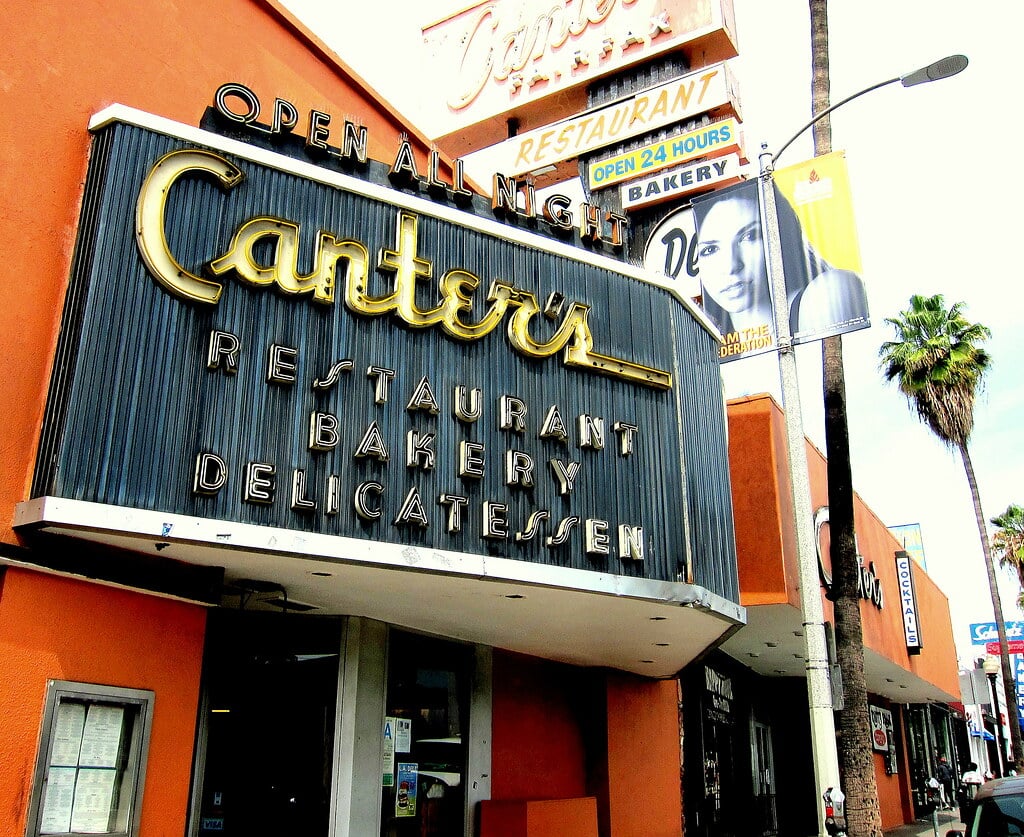
Canter’s Deli Declares Black Lives Matter, Gives Water to Protesters and Police

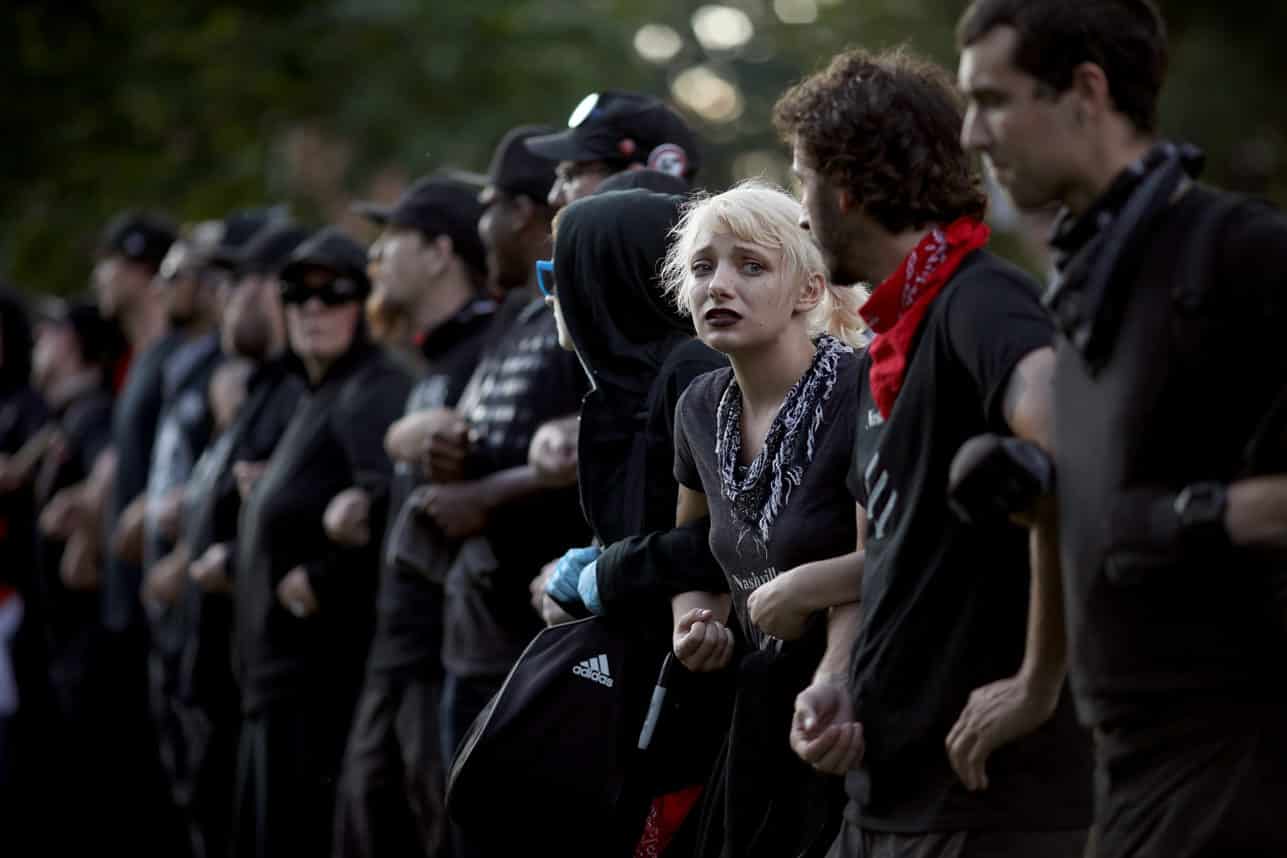
On May 30, Los Angeles protests against police brutality centered on the Fairfax district, a historic Jewish neighborhood, and home to an iconic Jewish restaurant: Canter’s Deli.

After his dining room was closed for two months, Marc Canter opened the delicatessen’s doors during protests decrying the death of George Floyd. He and his employees posted a sign in solidarity with the Black Lives Matter movement in the windows of the nearly 90-year-old restaurant. They also took to social media, tweeting, “Canter’s believes that black lives matter. In support of the Black Lives Matter movement, we are putting out free bottles of water for protestors. Please stay safe.”

By the end of the day, Saturday, Canter’s had distributed 25 cases of water bottles, to both protesters and police. They allowed both parties to use their restrooms and order food.

“We support free-speech and anything that’s peaceful,” Canter told the Journal. “There are people coming out of the woodwork that are trying to blend in with the real protesters that are just troublemakers looking to take advantage of the situation and not very interested in what is being protested.”

Supporting both police and protesters may seem like a tricky business for some, but Canter said playing peacekeeper was not difficult. “We have always had a great relationship with the LAPD (Los Angeles Police Department) and Sheriff’s Department. The police were here to protect and keep the peace during a demonstration.”

However, he added, he understood why the marches escalated. “Tensions have been very high since COVID-19 and a lot of people are out of work, so it’s hard to do peaceful demonstration with so much going on at the same time.”

While many of the neighboring businesses were heavily vandalized and looted, Canter’s remained untouched, save for some minor graffiti. However, the deli’s long history may have prepared it for the uprisings. During the Rodney King Riots in 1992, Canter’s remained open, feeding Angelenos when supermarkets closed.

“We actually learned from the ’92 riots to not leave your property alone without security while you are closed,” Canter said. He advised other small businesses to follow suit. “Businesses that have security have a better chance of not getting vandalized,” he said.

And with the recent lift on COVID-19 restrictions for restaurants, Canter’s Deli, Canter said, will remain open, riots or no riots.

Canter’s Deli Declares Black Lives Matter, Gives Water to Protesters and Police Read More »

Singer Dua Lipa Shares Instagram Post Calling the Israeli Gov’t Fake Jews

British singer Dua Lipa shared a now deleted Instagram post on May 31 calling Israeli government officials fake Jews and accusing the United States and Israel of creating Hamas.

The Jerusalem Post reported Lipa, 24, shared the post from Vin Arfuso, a U.S.-based director. The post showed various Israel Defense Forces soldiers surrounding a blindfolded Palestinian.

“While everybody’s in the mood to talk about human rights, this is what happens EVERYDAY in Palestine, paid for by our tax payer dollars,” the post read. “The big bad tough guys of the #IDF thoroughly enjoy beating and shooting children. They even have shirts that depict a pregnant Palestinian woman with a sniper scope on her stomach that reads ‘1 shot two kills.’ But don’t worry, they’re all terrorist (sic) so it’s all good. We totally understand.”

The post then argues that the term “Free Palestine” is just a call for the Palestinian people to have their freedom and sovereignty.

“The only ‘justification’ as to why they don’t deserve freedom is because ‘Hamas calls for the destruction of Israel,’” the post reads. “Which is utterly HYSTERICAL [because] the United States (fake Christians in the Midwest) and Israel (fake Jewish [people] in the Israeli government) created Hamas SIMPLY for all of you geniuses to believe that Hamas is the reasons for the decades worth of occupation, oppression, ethnic cleansing, and MURDER.”

Arfuso’s post goes on to state that he’s not against the Jewish people or Judaism as a religion, he just wants the Palestinian people to be free.

“For years, the Palestinians have recognized Israel’s right to exist in peace/security and only ask for their independence. If wanting equality and justice is ‘anti-Semitic,’ then we all have way bigger problems.”

The post came under criticism on social media.

“Hey @DUALIPA you shared a post calling *over SIX MILLION Jews* ‘fake Jews’ & supports the genocide anti-Semitic organization Hamas, calling for the murder of my entire family,” Israel-based writer Hen Mazzig tweeted. “When the next synagogue shooter googles ‘Zionist temples’ and ‘fake Jews’ we will remember your part.”

Israellycool blogger David Lange wrote, “It would be naive to think her sharing such a post will not have an impact in terms of influencing many of her 46.4 million followers. Just like it would be naive to think we could say anything right now to make her realize the error of her ways. We can only hope there are other influential celebrities out there with huge followings willing to post the truth about Israel and even call Lipa out for sharing this post.”

Representatives for Lipa did not respond to the Journal’s request for comment.

Lipa is a two-time Grammy Award winner. Her hits include “Don’t Start Now,” “One Kiss,” and “New Rules.”

Singer Dua Lipa Shares Instagram Post Calling the Israeli Gov’t Fake Jews Read More »

AIPAC Announces Cancellation of 2021 Policy Conference, Citing COVID-19 Concerns

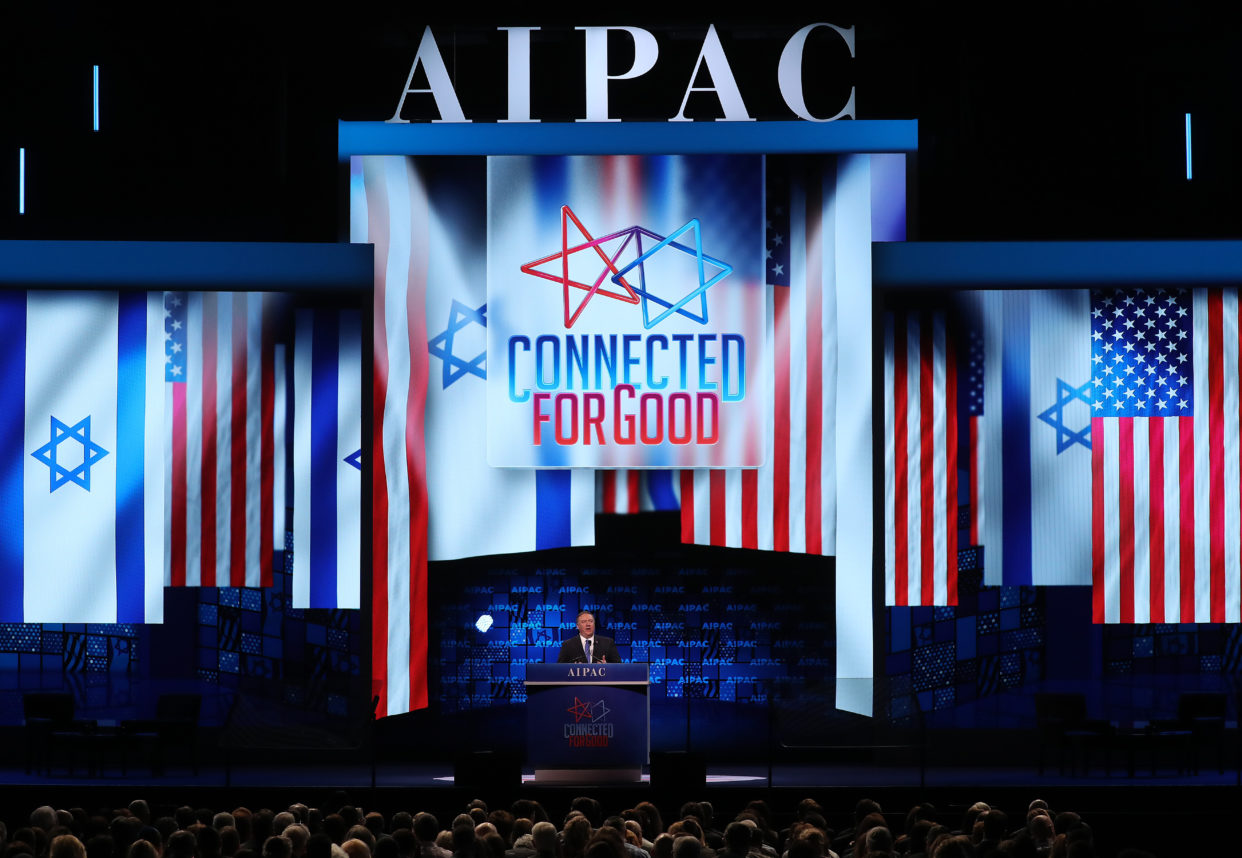
The American Israel Public Affairs Committee (AIPAC) announced on May 31 it is canceling its 2021 Policy Conference due to the COVID-19 pandemic.

AIPAC President Betsy Korn said in a statement posted to Twitter, “Given the continued uncertainties surrounding the COVID-19 pandemic, and without a predictable avenue to safely bring together thousands of pro-Israel Americans, we have been forced to cancel the 2021 AIPAC Policy Conference.”

She added AIPAC is working on ways to connect the pro-Israel community virtually until the pandemic ends.

“COVID-19 is one of several areas where the partnership between the United States and Israel is critical, and our job is to ensure that America continues to stand shoulder-to-shoulder with the Jewish State,” Korn said.

Korn concluded the statement with a call for the pro-Israel community to expand and ensure that bipartisan support for Israel is maintained in Congress.

“The impact of COVID-19 will make this a different and challenging year,” she said. “But we are confident that the AIPAC community will continue to overcome any obstacle and rise to the occasion.”

Several attendees at the AIPAC Policy Conference in March, including a Los Angeles County resident, tested positive for the virus after the conference ended. George Washington University placed Jewish students who had attended the conference in quarantine for 12 hours on March 6.

AIPAC Announces Cancellation of 2021 Policy Conference, Citing COVID-19 Concerns Read More »

david suissa podcast curious times

Pandemic Times Episode 49: Civil Unrest Takes Over the Pandemic News

New David Suissa Podcast Every Morning.

Reflections on the violent protests that have swept the nation in the wake of another police killing.

How do we manage our lives during the coronavirus crisis? How do we keep our sanity? How do we use this quarantine to bring out the best in ourselves? Tune in every day and share your stories with podcast@jewishjournal.com.

Pandemic Times Episode 49: Civil Unrest Takes Over the Pandemic News Read More »

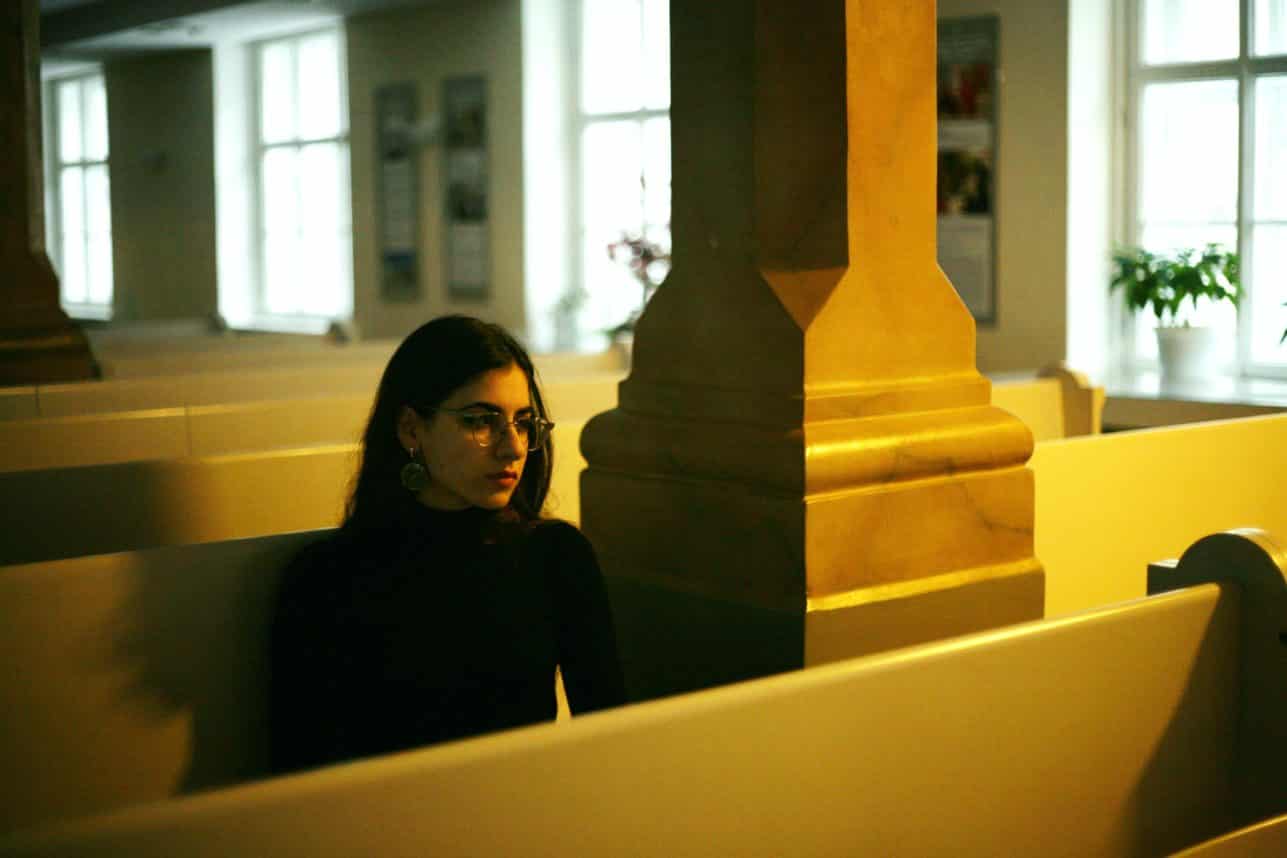
When A Jewish Girl Enters a Church

When I was a young girl, Jesus scared the daylights out of me.

Or not Jesus himself but more looming, bloody statues, paintings and depictions of him on the crucifix, dripping blood from the places where the nails went in.

When we lived in North Carolina, the year I turned 10, I was the only Jewish girl in my class at school.

And my Girl Scout troupe held meetings at a Catholic Church.

Once my mom picked me up late, so I had to wait in that big, dark church alone. Just me and the massive, bleeding Jesus statue, his eyes rolled way back in his head. Was he judging me? Could he tell I was an interloper, trespassing in this Christian space?

I burst into tears when my mom finally pulled up in the station wagon.

I told her I didn’t want to go to Girl Scouts anymore.

Considering how terrifying I found images of Jesus, it was interesting that images of Mary produced a different reaction in me.

Maybe unconsciously, it was a solidarity thing?

From one Jewish girl to the next, like, hey girl, I see you. I thought she looked like a nice lady. Like she had a warm, safe lap, like her arms would be soft if she held you.

She looked like she would smell of jasmine, or maybe freshly baked bread.

***************

It is one of those unseasonably hot Provencal mornings, right after the cherries have shed their confetti petals and the fruit is getting to be that dark red color.

Such a dark red, almost black.

The same exact color as the first lipstick I ever bought for myself in Grade 7.

I am about to meet my neighbor Julie for a social-distancing walk.

“Meet by our house?” she had texted me earlier.
“We live next to the church.”

“Church?” I never noticed a church on our street.

But when I arrive I crane my neck and look up, and I can see a pale, hint of a crucifix, right on the building next to hers.

It’s almost impossible to see from the cobblestone street if you aren’t looking for it.

Really more like a whisper of a crucifix.

“Is the church still in use?”

We are strolling now along the red dirt through the cherry orchards.

“Sometimes. But usually, it’s locked. You have to ask a certain monsieur for the keys.”

Ask a certain monsieur for the keys? To an abandoned, hidden French chapel that for some reason was kept locked up and hidden from view.

What were we, living inside the Da Vinci Code? But I forget about it until a week later when my friend, Samara texts me.

Samara asks whether I might be interested in singing Schubert’s Ave Maria for the upcoming episode of The Righteous Conversations Project. The Righteous Conversations Project is a collaboration between Holocaust survivors and teens.

Each week they have a theme and feature short, award-winning films made by their teens and conversations with inspiring folks.

This episode, Samara, explains, is going to feature a French Holocaust survivor in her 90’s. Her life was saved by nuns as a young Jewish girl in France, during the war. They’d hidden her in a convent.

I say yes. Maybe Ruth can even join me on the cello! But it isn’t until the next day I remember the church.

Maybe, I think, getting excited, maybe we could record Ave Maria in that very French chapel! To honor the Holocaust survivor whose life had once been saved by French nuns.

The hairs on my arm stood up thinking of it.

So I ask my other neighbor, Marie-Claude, if she knows who this Monsieur Sebastian is.

“Monsieur Sebastian? He lives in the next village of Les Fevriers. La-bas!”

“La-bas?”

“Oui, la-bas.”

I frown. La-bas means “over there.” La bas isn’t very specific.

So I ask another neighbor, Amandine.

“Monsieur Sebastian, oui, oui. He lives la-bas, just up the mountain.”

“Do you have a house number? A last name?”

“La-bas.”

I am skeptical. Was I supposed to climb that great mountain of a hill with a giant bull-horn and just shout  “Hear ye, hear ye, if there is a Monsieur Sebastian amongst thee, make yourself known so I can pretty please borrow the keys to the hidden chapel?” Evidently yes. So I march up the mountain in my shorts and sports bra.

Jacques comes too because he comes with me everywhere. After about 15 minutes of sweating, we arrive at the village of Les Fevriers to find a man smoking a cigarette.

The man is very suntanned. He has a shaved head and wears a gold chain around his neck. He looks sporty, like a football coach. Not at all what I expected from a man who was the steward of keys to a secret chapel.

“Might you be Monsieur Sebastian?”

“Oui.” He eyes me suspiciously.

“Parce-que….moi, je m’appelle Sara? And je suis Americaine but I got stranded here because of Covid-19? And I’m an opera singer? And I heard you might have the keys to the locked-up chapel of Les Baux, and I wondered if I might go in to, sing. To sing Ave Maria, specifically?”

He inhales the cigarette, coughs a bit, puts the stub with his shoe. “Quand?”

“Tomorrow at 5:00 p.m.?”

“Oui. I will come find you.”

Now I look at him dubiously. Come find me? What does the Provencal have against concrete directions?

“Perhaps it would be simpler to text each other. Shall we exchange numbers?”

Monsieur Sebastian looks at me like I just suggested we get married.

“Or not.” I say quickly. “ You could also just come find me.”

*******************

The following day the three of us, Monsieur Sebastian, Ruth and I meet at the chapel door.

“I have to stay with you. There is a very precious work of art in here. I am not permitted to leave you alone with it.”

He opens the door with a creak, and a rush of cool air blows over us. I blink in surprise. I had figured that chapel would be shadowy, medieval, gothic. Like that terrifying Catholic Church in North Carolina where the Girl Scouts met.

Instead, it is airy and luminous. The colors are white, yellow and pink. It is soft, comforting, almost maternal. It almost feels like the colors and textures that would be in a child’s nursery.

It’s a room you could sing in or also curl up on a pew and take a peaceful nap in. Ruth sits on the altar, puts her cello between her knees and starts to tune. Monsieur Sebastian sits in the last pew, folds his arms over his chest, taps his foot.

The acoustic is a singer’s dream, so damp and live it could be a shower.

Where you just let out the smallest, quietest ping of sound, and it ripples back at you like sunlight on water. We repeat it a couple times, trying to get the best version, and soon the neighbors start filing in.

They sit in the back pews, about 7 of them,  all dressed up in their Sunday finest. I’ve only ever seen them out working on their cars or gardening, in dirty jeans, in work clothes. Now they have on long skirts. Their hair is slicked back, they wear dresses. They are clean, freshly showered, even perfumed.

Ruth had mentioned earlier to them we would be making music in the church. I guess nobody had done that in a long time. Or maybe ever? And the fact that the neighbors dressed up to hear us play a two-minute song is so sweet I almost want to cry.

But it’s not until our very last take that I notice her.

Way up in the corner of the church, in white marble, a beautiful, angelic statue of the Virgin Mary. There is stained glass behind her and light is pouring through.

From where I stand on the altar it seems like light is coming out of her head.

So this time, on our last take, I sing to Mary.

I am very clearly not Christian but I figure it can’t hurt. I ask her to help us, to heal us, to lend us her safe lap, her warm arms. To deliver us, to bring us all health and relief from Covid-19, to keep us safe, to bring us comfort.

And a part of me knows she hears me, because she is bigger then just Christianity.

She happens to be the Christian face of the Divine Feminine but the Divine Feminine belongs to everyone. She is our Jewish Shekina, she is the Buddhists Tara and Quan Yin, the Hindus Lakshmi. When we finish the take, Ruth whispers, “That was the one. That was our final version.”

And we both look up.

Monsieur Sebastian, who until this minute has been silently brooding in the last pew, is now openly weeping.

“You have transported me to the heavens.  Look, look, at me, you have moved me to tears.”

Ruth and I blush and murmur a duet of grateful thanks.

“You said you were musicians but I didn’t know you meant like this.”

Monsieur Sebastian blows his nose, puts his hands over his heart, dabs at his eyes with his sleeves.

The neighbors burst into applause.

We all laugh happily, Monsieur Sebastian is glowing.

Afterward, we invite the neighbors for a social-distancing get-together outside my house.

Everyone brings their own glass, Ruth pours the rose wine that she cleverly thought to chill in my fridge.

“To music,” we say.

“To music!” they say.

And we laugh and chat boisterously and try to keep the social-distancing up, and the children and dogs run around the fig tree all twisted up with the honey-suckle and Jacques barks happily.

For two musicians who’ve been under lockdown, with no audience in months, and maybe even for the neighbors, it is like we’ve been handed a small miracle.

And that is very, very fine.

When A Jewish Girl Enters a Church Read More »

Why Does The US Government Consider Antifa Terrorists, But Not The KKK?

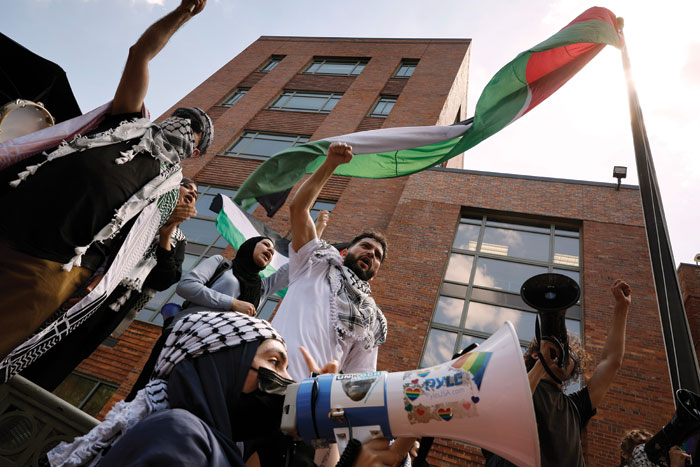
“The United States of America will be designating Antifa as a Terrorist Organization,” President Donald Trump tweeted on May 31, the morning after American cities were engulfed with protests decrying the death of George Floyd. In major metropolises including  New York, Pittsburgh, Minneapolis, Dallas and Los Angeles, the demonstrations spiraled out of control, devolving into looting, vandalism and arson. 

Trump declared the lootings were “being led by antifa,” a decentralized movement threaded together by its militant, sometimes violent opposition to fascism and the far-right. 

Pittsburgh’s chief of police agreed. Attorney General William Barr also pointed his finger at the group, saying the protesters were using “antifa-like tactics.” However, acting Homeland Security Secretary Chad Wolf said, “A number of different groups are involved in these whether it’s antifa or it’s others, frankly.”

Whether you agree with antifa’s ideology or approach, the president’s announcement is shocking, given that many of the most violent hate groups in the United States aren’t designated as terrorists. One notable example is the Ku Klux Klan, which for decades has used bloodshed, intimidation and crime to terrorize Americans.

Whether you agree with antifa’s ideology or approach, the president’s announcement is shocking, given that many of the most violent hate groups in the United States aren’t designated as terrorists.

“White supremacist extremism is currently the most lethal form of extremism in the U.S.,” American University professor Cynthia Miller-Idriss told Congress in September. According to the Anti-Defamation League, the far-right was the source of 73% of domestic extremist-related slayings from 2008 to 2019. 

However, Trump has been much more hesitant to declare these menacing groups as terrorists.

The first time the U.S. labeled a white supremacist group as a terrorist organization was in April. However, the Russian Imperial Movement was not American-based. The ultra-nationalist organization is widely known for plotting bomb attacks on asylum seekers in Sweden. Meanwhile, countless other home-grown neo-Nazi, Holocaust denial, neo-Confederate and Skinhead organizations remain undesignated. 

When the United States labels a group as “terrorist,” it is not a symbolic gesture. If the State Department designates antifa as such, the Treasury Department will freeze any American property or assets the group has. It will be illegal for Americans to deal financially with antifa, plus facilitate a ban on its members from traveling into the United States.

Members of the National Socialist Movement, one of the largest neo-Nazi groups in the US, hold a swastika burning after a rally on April 21, 2018 in Draketown, Georgia. (Photo by Spencer Platt/Getty Images)

Terrorist groups are under the purview of terror-related intelligence bodies such as the National Counterterrorism Center (NCTC), which is uniquely suited to handle these deadly organizations. Right now, the NCTC is prohibited from preventing violent anti-Semites like the Pittsburgh and Poway, Calif., shooters. Trump’s National Strategy for Counterterrorism includes preventing terrorists from acquiring weapons. However, known neo-Nazis still are able to obtain firearms.

Unlike white supremacist groups, which explicitly call for victimizing racial and religious minorities, antifa’s mission is not inherently violent. One could argue that by opposing fascism, the group seeks to prevent mass violence. Antifa’s rampages normally end in property damage. It’s hard to argue that the group is lethal; the only recorded death related to antifa was in January 2019 when member Charles Landeros fired at police while being arrested. He missed and was killed by returning fire. Compare that to self-described white supremacist Robert Gregory Bowers, who is charged with walking into the Pittsburgh Tree of Life synagogue in October 2018 and killing 11 Jews. That incident was not isolated. Patrick Crusius is charged with killing 23 people at an El Paso, Texas, Walmart in August, leaving behind a white nationalist manifesto. 

Crusius had posted about his intent to kill on the website 8chan. If white nationalists were considered terrorists, the NCTC might have been able to track and potentially stop the deadliest attack on Latinos in modern American history. 

Trump isn’t only ignoring white supremacist terrorism but actively pushing American institutions overlook it.

However, Trump isn’t only ignoring white supremacist terrorism but actively pushing American institutions overlook it.

According to Reuters, Trump attempted to rename the Countering Violent Extremism program to “Countering Radical Islamic Extremism” — erasing white nationalist violence from its mission entirely. Under the current administration, federal prosecutors are limited in how they can bring white nationalists to justice. 

“White supremacy is a greater threat than international terrorism right now,” David Hickton, a former U.S. Attorney, told Time. “I’d have to pursue a white supremacist with hate crimes, unless he interfaced with al-Qaeda. Does that make any sense?”

One thing that certainly does not make sense is cracking down on antifa instead of more pernicious groups. 

Whether you approve of antifa’s message or tactics, it is not nearly as consequential a threat to Americans as the vast number of white supremacist groups in this country. Although it might be more politically advantageous for Trump to rail against the anarchy-loving movement, he is driving this nation, and his blind spot endangers all Americans in his backseat.

Ariel Sobel is the Journal’s social media editor. 

Why Does The US Government Consider Antifa Terrorists, But Not The KKK? Read More »

The Case for a New Jewish-Arab Alliance in Israel

Many of the Israelis who have voted for Blue and White and Labor, are furious at what they perceive as the betrayal and vote-stealing by Benny Ganz and Amir Peretz. However, instead of crying over spilt milk, they should rather take a fresh look at the Israeli society and search for new allies with whom they could secure a better future for Israel.

In his memorable speech at the Herzliya Conference in 2015, President Reuven Rivlin divided the Israeli society into four “tribes”: Seculars, Orthodox, Ultraorthodox and Arabs, calling for the creation of a new “Israelihood” which will be inclusive of all four. IDC Herzliya, the host of the conference, stood up to the occasion, and established “The Center for Shared Israelihood.”

However, a survey held soon after poured cold water on the enthusiastic founders. “The majorities in the four tribes,” lamented the new director of the Center Prof. Alex Mintz, “don’t believe that it is possible to create an Israeli society, Jewish and democratic, which will contain them all.”

Except that David Ben Gurion would have never founded Israel if any time he bumped into harsh reality he would give up. In that spirit, believers in a progressive, Jewish and democratic Israel, should seek potential allies to this vision, and join them through uneasy compromises, without giving up the ultimate goal.

The Orthodox would have been the natural allies, had they not been obsessed half a century ago with settling in Judea and Samaria, which is indeed the cradle of the Jewish People but today is densely populated by Palestinians. More settlements, and now annexation, might doom Israel either to lose its Jewish character or to become an apartheid state. The Ultraorthodox are not partners either, because most of them prefer to remain in their close-knit communities. We are left, then, with the Israeli Arabs.

No doubt that an agreement between secular Israeli Jews and Israeli Arabs about a shared Israelihood is a formidable challenge. In their book Limited Partnership: Jews and Arabs, Prof. Tamar Herman and her colleagues from the Israel Democracy Institute found that the majority of Israeli Jews (68%) believe that one can’t feel part of the Palestinian People and yet be a loyal Israeli citizen. On the other hand, most of the Arab interviewees (67%) said that Israel shouldn’t be defined as the nation-state of the Jewish People.

David Ben Gurion would have never founded Israel if any time he bumped into harsh reality he would give up. In that spirit, believers in a progressive, Jewish and democratic Israel, should seek potential allies to this vision, and join them through uneasy compromises, without giving up the ultimate goal.

A dead-end, you may say, but going back to the survey of the Center for Shared Israelihood, we surprisingly discover the full half of the glass: In stark opposition of what the Orthodox and the Ultraorthodox say, 49% of the Israeli Arabs and 47% of the Israeli seculars believe that living together is possible. Another survey, taken by the Jewish People Policy Institute, showed that this year there was a sharp increase in the number of Arabs who define their main identity as “Israeli”, rather than “Arab” or “Palestinian”. And finally, another look at the data of Limited Partnership reveals that an overwhelming majority (89.5% of the Jews and 95% of Arabs) who have met at work define the relationships as good and very good. Needless to say that the Covid-19 crisis has surely contributed to this trend, with so many Arab doctors and nurses fighting on the frontline of the plague.

From this starting point, we can proceed towards full equality, by amending the recently legislated Nation Law, by introducing an equality article in the spirit of the Declaration of Independence. In the meantime, on the hard, national issues, we will have to agree to disagree.

Embarking on this path, which would augment the prospect of Israel to remain a progressive, Jewish and democratic state, Arabs and secular Jews will have to make painful compromises, change worldviews, get rid of old habits and elect different leaders.

If such a move happens, secular Jews and Israeli Arabs can lean on their next generation. According to the Central Bureau of Statistics, in 2024 the schools in Israel will include 879 thousand secular pupils, 437 thousand Arabs, 279 thousand Orthodox and 384 thousand Ultraorthodox. Seculars and Arabs, then – the two groups more believing in coexistence than others – have impressive human reservoir. Imagine the potential of these numbers when the children get from their parents and teachers messages of mutual respect, equality and democracy.

Embarking on this path, which would augment the prospect of Israel to remain a progressive, Jewish and democratic state, Arabs and secular Jews will have to make painful compromises, change worldviews, get rid of old habits and elect different leaders. In doing so, they should embrace the only aphorism I remember from a course in Arabic I took ages ago: Bidak einab v’la tkatel alnator, you want to eat grapes or fight with the guard?

The Case for a New Jewish-Arab Alliance in Israel Read More »

‘Believe Us’: Black Jews Respond to the George Floyd Protests, in Their Own Words

(JTA) — As Enzi Tanner participated in an online havdalah ceremony marking the end of Shabbat Saturday night, his city — Minneapolis — was being torn apart during a fifth night of unrest following the death of George Floyd, a black man, in police custody there last week.

Tanner, a social worker who supports LGBT families experiencing homelessness, said the ceremony — hosted by Jewish Community Action, a local social justice group, Jews for Racial and Economic Justice, a national organization and Edot Midwest Regional Jewish Diversity Collaborative — conveyed a powerful message for black Jews like him.

“As the Jewish community reaches in and says how do we support their cause and how do we support the black community, it’s really important that people reach in to black Jews and other Jews of color and realize that we’re here,” Tanner said. “And we need our community.”

We reached out to black Jews like Tanner to understand their feelings at this wrenching moment and what their message is for the broader Jewish community. Here’s what they told us.

Answers have been lightly edited for length and clarity. We will add more as we hear from more people.

April Baskin is a diversity consultant and racial justice director of the Jewish Social Justice Roundtable.

Personally in terms of my energy right now, I’m just exhausted. Just seeing all the suffering particularly in light of the people going out into the streets without a plan or adequate protections in place (friends, march marshalls, legal aid contact info, etc.), the poignancy of people whose politics otherwise have them mostly sheltering in place during the worst pandemic we’ve seen in over a hundred years, that they are compelled to take action — at their and our own peril. But it seems their thought is, “How can we not stand up?” As a Jewish social justice leader, I have a visceral, fundamental concern for people’s well-being in this moment — that people are very triggered and that this is all in the context of pre-existing heightened anxiety and stress because of the pandemic. And for black folks, whether it’s conscious or not, the sense of terror we feel for when is the shoe going to drop for someone we know, someone in our town, for us?

I am experiencing more white Jews sending me private messages. A lot of them are saying “What can we do?” and in time I hope we can advance our collective knowledge and education enough so it can become more of “I’ve been proactively learning from people of color and here is what I am doing,” or “These are the things I’m considering. I’m mostly leaning towards this one, does that sound like it’s in alignment with your vision?”

That said, it’s a step forward and it’s good, but it’s asking more of us as Jews of color to not only figure out how to maintain our jobs and do additional leadership and activism in this moment, but then also being asked to support and manage white Jews’ work during a time in which many of us are traumatized and heartbroken. But this is progress, and I would rather people reach out, however they best know how, than apathy and not doing anything or paralysis from fear.

Ginna Green works in the Jewish community and the progressive movement, and sits on the boards of the Jews of Color Initiative, the Jewish Social Justice Roundtable, and Political Research Associates.

The current moment, for me, is one of numbness. I rejoined the rest of the world in grief and rage a little bit late, as I was scrambling toward Shavuos as things in Minneapolis and all over were reaching a flashpoint on Thursday. I went into lighting candles that evening with a sense of weight and trepidation, because I did not know what would be true come motzei Shabbat two days later. I was on edge the entire chag. Listening to my 16-year-old black Jewish son leyn Megillat Ruth and playing Shavuot Spot-It with my 5-year-old daughter brought me moments of joy, but not enough to ease my spirit. I knew it would come, but how I had not imagined.

I am deeply appreciative of the fact that when Shavuos ended, I was overwhelmed by texts from white folks — Jewish and not — offering support, and checking in. The last several days have been exhausting, but the truth is that the last five years have been exhausting, and the last 400 years have been exhausting. Every black person is tired.

What I need from white Jews and white people is yes, please keep calling, keep texting and asking how I am, and all the other black people you know. And also call and text your fellow white Jews and people: Ask them what they did today to dismantle white supremacy. Give them three places to donate, three black people to learn from; three new classes to take or books to read. The work of beating back the white supremacy is a burden that can’t be left to black folks. We all need all of us. And every black person is tired.

I also want to see the Jewish community embrace radical possibility. A month ago, folks were pointing out the major change a pandemic had made possible. Radical shifts in work. Expectations. Air quality. But racism has been an American epidemic for 400 years, and it is against the backdrop of this transformational pandemic — and one that is taking black lives disproportionately — that we see the grief and rage and impact reach epic proportions. And there are solutions of varying radicalness that black folks have been proposing for years to right the systemic wrongs of a nation that black people built: reparations; universal basic income; mass decarceration; defunding police. Hammers and nails won’t be enough to build what must come next for us all to thrive — we need bulldozers and forklifts. Embrace the radical possibility, and help make it true.

At the risk of belying the danger and concern and fear and worry that are real and present, I am also hopeful. The United States is breaking, painfully, visibly but not irreparably. The cracks have always been there for us to study. Perhaps now we can create the place that holds us all.

Yitz Jordan is the founder of TribeHerald, a publication for Jews of color, and a hip hop artist also known as Y-Love.

What am I feeling? Anxiety. That’s what I’m feeling. I had an anxiety attack on Friday. I live in the ‘hood, I live in Bushwick, so I’m not really geographically in the Jewish community, but I know that somebody on Friday for instance was shot not too far from me and I was terrified as to what the response to that was going to be, were cops going to respond and was rioting going to happen in my neighborhood?

And in the Jewish community, this is the kind of fight that I’m having: “This didn’t happen after the Holocaust, why are black people acting like this?” It’s that role of explaining over and over again to people who quite often don’t want to listen.

I feel like there’s the same split that’s going through America in ideological lines, is going through the Jewish community … whatever percent of Orthodox Jews that support Trump, you see it more from these people. When we say the Jewish community in general that also consists of people like JFREJ [Jews for Racial and Economic Justice] and Jewish Voice for Peace and these other organizations, but in the Orthodox world, the pro-Trump wing is where I’m hearing these types of conversations. And I’m seeing this, ranging from lack of knowledge to callousness regarding people of color. There are some people who genuinely don’t know, and to whom a lot of these issues are very new. Especially Hasidish people, for instance, this just isn’t part of the Shabbos-table conversation — police brutality, inequality, systemic racism. But you have some people who just show callousness.

Gulienne Rishon is a diversity expert and chief revenue officer for TribeHerald Media.

I am thankful for true allies, who understand that this is not the time to center their own experiences. I am thankful for true allies, who understand that the experiences they and their ancestors have had are to be used in this moment as empathy, and that no one is denying them their experiences in asking them to listen and learn.

But mostly, if one more white-presenting Jew tries to tell me today that they don’t have white privilege (not that they aren’t White, but that they don’t have white privilege) because they’re Jewish/the Holocaust/Jews got kicked out of schools, I might lose my mind. I should not have to deal with people telling me that my story (the Black part) doesn’t exist because my story (the Ashkenazi experience) exists. But I do. And I am confident that part of why G-d put me in the skin of a biracial Jewish woman descended from a kindertransport survivor, a WWII veteran who was kicked out of his Hamburg Gymnasium for being Jewish, and two Southern Black Virginians, is to help us as a people face our sinat chinam and take responsibility for being the light unto the nations by helping, not closing our ranks and denying the pain others feel because of the freshness of ours.

Facilitating difficult conversations about race is literally my profession. Yet, some days, I’m just a person behind a keyboard on Facebook who came out of our day of rest hearing that the world erupted in flames, and I look at the beautiful brown skin of my daughter and her parents, and I’m angry and afraid. I’ve worked so hard to have these conversations with grace when you’re caught up in your feelings about the complexity. On a day when it’s not about the complexity, but processing and mourning actual death, can you please give the same grace to mine?

Isaiah Rothstein is a multiracial rabbi who serves as the rabbi-in-residence at Hazon.

Both sides of my ancestry hold a lot of pain of being othered and being oppressed. During these moments it’s sometimes hard to process and it’s a lot to integrate, but it’s a time where we’re expected to stand up and to speak up so I’m trying to find my voice every single day.

On the one hand, I feel restless and frustrated and fed up. On the other hand, I think that like anyone who’s reading or seeing the headlines, I feel frustrated because so many people don’t care enough, or they care adjacently or from the outside. So there’s those emotions but then on the flip-side, I think that this moment is calling on all of us as Americans to stand up.

If I could say in short what do I think the Jewish community should be doing, I would want every community to have an educational platform for communities to contextualize discussions around race, specifically as it relates to the Jewish community. I would want to have platforms, summits, days of learning. I would want every community to sign on to have educational campaigns around racial equity and racial awareness and racial sensitivity, so that we could find a bridge to understanding and perspectives through history, through knowledge of the past, so that we could better create a stronger, healthier bridge for the future.

Anthony Mordechai Tzvi Russell is a musician who blends traditional Yiddish and African-American music.

Let’s get real here, American Jews: You are living in an Old Country, whether you choose to recognize it or not. The state-sanctioned violence visited upon Black communities happens in ghettos you can easily pronounce, in towns you visit without the aid of a tour guide and cities you reside in without a granted law of return.

So, who are you in this narrative, this country from which there is no real option of flight, this century which is your own, your heartless ruler, hands slick with the blood of children and refugees, the cavalries, maintaining “order” on your behalf over a people whose mere existence for centuries has been deemed disorderly?

Solidarity with Black people doesn’t require a radical act of historical imagination. You are here. We are here. You know what to do. Do it. Now.

Tema Smith is a writer and the director of professional development at 18Doors, an organization for interfaith families.

I’m deeply upset about George Floyd and also that he is not the first and not the last, and that it’s taken a murder so egregious to really get people out into the streets in this way, and get a lot of people to wake up to what happens unfortunately too frequently.

I also have deep gratitude for the moment that we’re in, for so many people who hadn’t previously spoken out are speaking out.

As far as the Jewish community, the number of people who either have spoken out publicly or who have reached out privately as people who just care and want to make sure that me and other Jews of color are feeling OK right now — and I think most of my friends who are Jews of color are experiencing similar things from their friends — is huge. Frankly, I’ve gotten messages from people who I’ve never corresponded with beyond public tweets, just reaching out saying ‘Are you OK?’ and a recognition that is in many ways at a new level.

This isn’t the first time that something like this has happened. This is the first time I’ve received messages from so many people and that makes me hopeful for that grassroots community level being there to support each other, and that is huge. And the fact that there is a growing chorus of voices in the Jewish community speaking up, that’s huge, and that people are showing up at protests, I can’t say enough of how meaningful it is to see that.

Enzi Tanner is a social worker in Minneapolis and works with LGBT families experiencing homelessness.

Yesterday we hosted a havdalah with JCA [Jewish Community Action] and JFREJ and I did a little talk and for me the thing that is really real for me is black Jews and Jews of color all across the country during this time have been incredibly supportive and amazing and just speaking for me, it has made this time so much more doable and bearable.

I also say that because at this time, it’s also important that as the Jewish community reaches in and says how do we support their cause and how do we support the black community, it’s really important that people reach in to black Jews and other Jews of color and realize that we’re here. And we need our community.

And the other thing is: believe us. When George Floyd said I can’t breathe, he was not believed. When black women tell doctors and nurses during childbirth that they’re in pain, they’re not believed which is why they die at a higher rate. We don’t want to have to give a dissertation when we say we’re experiencing racism in our communities. We want to be believed. And in this moment now, it’s really important that, in those situations, that we’re able to be believed.

When we say our elected officials aren’t doing the best job they could be, we want that to be believed, we don’t want to be told that they’re doing the best they can because we’ve been here for far too long and our cities are literally burning and we just need folks to believe us and to support us.

And to reach out to the Jews of color, the black Jews within the community as well as reaching out and being in it for the long haul. This isn’t about just one person, this is about all these different people and different things. And it’s hopefully not just about right now, it’s so that a different world will be possible.

Evan Traylor is an educator, activist and soon-to-be rabbinical student at the Hebrew Union College — Jewish Institute of Religion.

Right now, Black Jews are grieving. We’re grieving for George Floyd, Breonna Taylor and Ahmaud Arbery. But we’re grieving for so many more lives, Black lives, that have been taken from this earth far too early because of brutal, systemic racism. And that pain isn’t going away tomorrow, or next week, or next month. It’s going to last for generations to come. And, if we want a better world, we have to change the system.

I’m grateful for so many white Jewish allies who have reached out, comforted me, supported me not just over the last week, but for years now. And right now, we need more from our white Jewish siblings, and more from our Jewish institutions — we need support, allyship, resources, and strategies to confront racism in our community, and in our world. We are all created in the image of God — it’s time to build the Jewish community and world that makes our Torah true in this age.

‘Believe Us’: Black Jews Respond to the George Floyd Protests, in Their Own Words Read More »