The Israeli Defense Ministry announced on May 26 that the Israeli Institute for Biological Research (IIBR) has determined that two drugs used for Gaucher’s Disease also can treat COVID-19.
The Times of Israel reported the drugs — Cerdelga and Venglustat — were tested on mice and stopped the virus from replicating in the animals’ cells within 24-48 hours of treatment. Both drugs would need be to taken together to treat the virus.
“Antiviral treatment using both drugs led to a significant reduction in the replication capacity of the coronavirus and to the destruction of the infected cell,” the ministry said in a statement. “The decrease in virus replication prevents further cell damage following infection.”
The IIBR also found that the drugs worked in treating other viruses, including West Nile virus, Sindbis virus and Influenza A. “This indicates their potential in treating various viral diseases effectively — including future outbreaks of new viruses — once they are clinically approved,” the ministry’s statement read.
The IIBR’s research has yet to be peer-reviewed. The Food and Drug Administration has approved Cerdelga for use with COVID-19 patients and is in the process of fast-tracking Venglustat.
The IIBR has also completed testing of its COVID-19 vaccine on mice and is testing it on other animals. The IIBR also has developed multiple antibodies that can be used to treat the virus.
When I was nine years old my family moved to Israel.
I was your quintessential Jewish American girl suddenly living in Beer Sheva, a small city in southern Israel.
I couldn’t be further from belonging in that setting. It took me years to figure out my identity in a place where people were not like me.
I swiftly got rid of my accent so I would sound like everybody, but you can sound and look like everyone and still feel alienated, as if you don’t belong.
The fact that I was taller than everyone and had a face full of freckles didn’t help.
In the end, those kids who I was trying to belong to turned into my best friends. They are the people I know I can always count on to be there for me.
Belonging is a tricky thing, because it really has less to do with the people around you and everything to do with you, what you think others think of you, and how much you care about that.
When my children were born, I worked, and took very little time off to be with them. That made me different from other moms around me, not to mention that these moms wanted to talk endlessly about their new babies.
There I was with a new baby, but also, a job I loved and wanted to talk about as well. I felt incredibly disconnected from the other moms. I felt judged by them. I recently found out from one of those moms that I was respected and admired by them, but I did not feel that at the time, at all.
I watch my Homies struggle to belong in a world that couldn’t be further away from the world that they came from. They do it with grace and grit. They do it with struggle and perseverance that has taught me more than anyone or thing in my life.
I moved back to the United States from Israel 14 years ago, once again not finding my place. Ironically, in America now I was too Israeli. This was after years in Israel being too American.
Where did that leave me to belong?
When my first student who had been released from incarceration got into college, she felt extremely lonely, alienated, and could not find her place. She complained that she did not belong there. No matter how hard everyone around her tried to convince her, it really didn’t help. She did not feel that she was in her place. She could not find her people.
I tried to tell her to be patient. Belonging is a curious seed. It can sprout immediately, but sometimes more than others it needs a while to grow. Most times you need to work on belonging, it usually is not easy.
My student told me she is too different from the people in the community college she was at. I told her you don’t have to be like them to belong. Your people can be your people, even if they are different from you. She told me “Nobody sees me.”
I remember my heart sank when she said that.
“Nobody here likes me. They all hate me,” she added.
“That’s ridiculous,” I told her. “Have you spoken to everybody to know that they ALL hate you?”
“No,” she said, “but I just feel it. I can tell they all look at me and judge me for being incarcerated.” I remember saying, “Nobody knows that you were incarcerated. It is not written on your forehead.” She answered, “It is in my heart. I can feel it.”
There wasn’t a lot I could do about that.
I realize now that belonging is really so much more about us and not about the people we are trying to belong to.
I also realized then that she needed so much more than we had thought about. And that we did not set her up for success.
She eventually left that college. This was an important lesson for me moving forward and learning how to support our students who get into college.
This past weekend I experienced an epic moment of belonging.
I never doubt that I am respected or loved. But there is always a part of me that doesn’t belong. It’s that half breed American-Israeli thing I have going on, the workaholic, and the over-extended thing about me as well.
Then came this quarantine and in it my youngest child’s Bat Mitzvah.
The outpour of love we received was beyond anything I could ever imagine: encouragement, flowers, edible fruit enragements, gift cards, care, generosity, and the spectacular venue on the beach where we held her Bat Mitzvah via Zoom.
The gentle, delicate love of our clergy.
The Bat Mitzvah teacher, who observes the Sabbath, yet early Saturday morning walked over to wish my child good luck.
Hundreds of people on Zoom and Facebook live. Over 700 comments on the feed. All this and more was 50 tons of belonging hitting me on the head.
I have spent so much time focusing on others accepting me, when it really is about me accepting them. When you are the outsider, you want people to see you, but actually the job is on us to see them.
My student was so sure everyone knew she had been incarcerated. She never saw their story or the things they were carrying on their back or in their heart. I am sure they had things going on in their life, and that most of the time, they were not thinking about her at all.
We need to learn that our difference is not a weight pulling us down, but can be a wind that pushes us forward.
A different student of mine who is now in college talks endlessly about the fact she was incarcerated and uses it to her advantage.
That choice is on us, not on the other.
This weekend I was struck by the dozens of people who stepped up and hugged our family, reminding us how deeply we are loved and how profoundly we belong.
I know that my compassion for those in the margins is because I have been the different one so many times in my life.
I know how it feels.
It is time to rearrange the narrative. We don’t need to fit in by being like everyone around us. We simply need to learn to be comfortable being different.
My beautiful daughter had a Bat Mitzvah that was different from any other.
It will make her unique and special and she probably will belong more than if she had the one we had planned.
Larry Kramer, one of the most important figures in the history of LGBTQ activism and a writer, died on Wednesday.
Kramer, who wrote the semi-autobiographical play “A Normal Heart,” died in Manhattan of pneumonia, his husband, David Webster, confirmed to The New York Times. He was 84.
He had undergone a liver transplant after contracting liver disease and was infected with HIV, the virus that can turn into AIDS.
Kramer was a co-founder of the Gay Men’s Health Crisis, now one of the biggest AIDS service organizations in the world, but was forced out because of his outspokenness and went on to found the AIDS Coalition to Unleash Power, or ACT UP, a more militant group that took to the streets to protest for more AIDS drugs research and an end to discrimination against gay men and lesbians.
His worldview was shaped by his Jewish identity, the Jewish Telegraphic Agency wrote in 2016.
“In a way, like a lot of Jewish men of Larry’s generation, the Holocaust is a defining historical moment, and what happened in the early 1980s with AIDS felt, and was in fact, holocaustal to Larry,” Tony Kushner said in 2005.
Kramer and Dr. Anthony Fauci, director of the National Institute of Allergy and Infectious Diseases, crossed paths as the AIDS crisis continued to kill gay men, with Kramer calling him a killer. Fauci told The New York Times that Kramer spurred him to break through the slow federal bureaucracy that held up AIDS research. They later became friends, according to the report.
In March, Kramer told a Times reporter that he emailed Fauci to tell him he was sorry for how he is being treated as the public face of the efforts to combat the coronavirus.
Kramer wrote books, plays and screenplays, many with gay themes and some autobiographical. He was a Pulitzer Prize finalist for his play “The Destiny of Me,” which picks up where “The Normal Heart” leaves off. His book “Reports for the Holocaust: The Making of an AIDS Activist,” is a collection of his essays on AIDS activism and LGBT civil rights.
In the weeks before his death, Kramer had started to write a play in response to the COVID-19 outbreak.
He was a graduate of Yale University and enlisted in the Army. He began working for Columbia Pictures in the early 1960s.
WASHINGTON (JTA) — On Tuesday, Twitter instituted a practice of offering fact checks of tweets that include misleading information. Two of President Trump’s tweets yesterday were labeled with the new fact check button, which links to news stories about the topics.
There is NO WAY (ZERO!) that Mail-In Ballots will be anything less than substantially fraudulent. Mail boxes will be robbed, ballots will be forged & even illegally printed out & fraudulently signed. The Governor of California is sending Ballots to millions of people, anyone…..
Twitter’s integrity chief, Yoel Roth, wrote a post that explains the policy will be applied mostly to tweets involving false information about COVID-19.
But Kellyanne Conway, a top adviser to the president, wasn’t happy with the move. On Wednesday she warned Roth in an appearance on Fox News that he was about to get plenty of new followers.
“He’s the head of integrity and his name is Yoel Roth, he’s @yoyoel,” Conway said on the morning show “Fox and Friends,” which Trump monitors closely and has promoted to his followers. “Somebody in San Francisco, go wake him up and tell him he’s about to get a lot more followers.”
On Fox & Friends, Kellyanne Conway appears to direct online harassment at Twitter's head of site integrity, Yoel Roth: "Somebody in San Francisco will wake him up and tell him he's about to get a lot more followers." pic.twitter.com/H9ceUu6Ezv
She noted tweets in Roth’s feed from several years ago that attack Trump, Republicans and Trump voters.
The night of Trump’s presidential victory in November 2016, Roth, then part of Twitter’s design team working on its privacy protections, tweeted, “I’m just saying, we fly over those states that voted for a racist tangerine for a reason.” On Jan. 22, 2017, the day after the first Women’s March and two days after Trump’s inauguration, Roth tweeted that there were Nazis in the White House.
Trump is threatening to take action against Twitter and other social media platforms because of the action.
“We will strongly regulate, or close them down, before we can ever allow this to happen,” he said Wednesday on Twitter, without explaining what tools he had to carry that out.
Since 2018, Roth has been the head of Twitter’s integrity team, which his LinkedIn page describes as being “responsible for policy development, implementation, and investigations for spam, data privacy and security, information operations, election security, and misinformation.” It also directs “Twitter’s efforts to combat information operations and suspected state-backed activity.”
Roth, who is Jewish, has led efforts to address the recent surge of anti-Semitic harassment on Twitter. He said in 2018 that a focus was on bot networks spreading anti-Semitism.
“We’ve expanded our policies, built our internal tooling, and tightened our enforcement against coordinated platform manipulation, including bot networks — regardless of the origin,” he told NPR for a story written just after the massacre of 11 Jewish worshipers in Pittsburgh.
Some of Roth’s lighter tweets include Jewish content, including describing in 2017 a children’s book in Hebrew that his sister, Maayan, bought about a cat who sits on a rug and abides while other animals join it. Eventually it’s too much for the cat, who hisses at the other animals, scaring them away.
“So basically, this book is the most concise possible explanation of my personality,” Roth said.
So basically, this book is the most concise possible explanation of my personality.
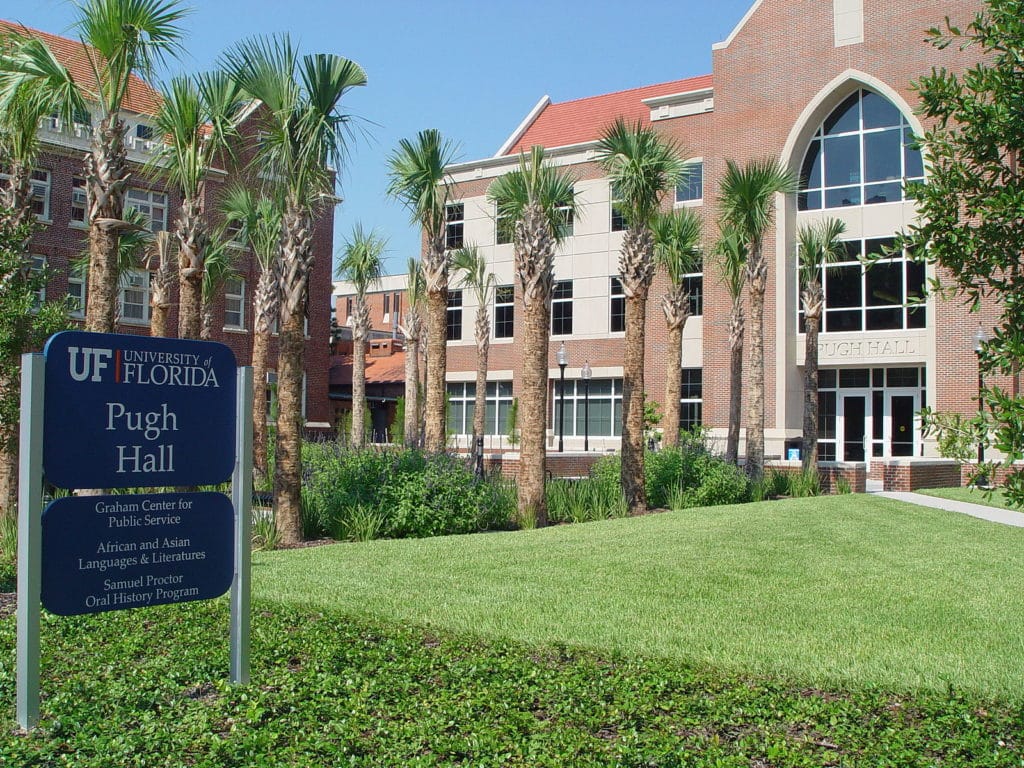
University of Florida’s (UF) Students for Justice in Palestine (SJP) chapter took down a cartoon from its social media platforms that Jewish groups have criticized as anti-Semitic.
The cartoon, which was posted to UF SJP’s Facebook and Twitter accounts to commemorate Nakba Day on May 15, depicts an Israeli soldier with a sinister grin and hooked nose opening a window. The Twitter account BDS Report described it as “depicting Jews as a vampire-like creature. Their image is eerily similar to Nazi-era cartoons.”
University of Florida SJP posted an antisemitic cartoon depicting Jews as a vampire-like creature. Their image is eerily similar to Nazi-era cartoons. Tell @UF to condemn @SJPUF's vile antisemitic posts. pic.twitter.com/ztYw7ING2b
On May 26, UF SJP announced on Facebook and Twitter that they were going to use a different graphic from the same cartoonist.
“The original featured a cartoon by the Palestinian artist Naji al-Ali, most famous for the Handala character,” the student group wrote. “Naji al-Ali was a direct victim of the ethnic cleansing campaign of 1948, being expelled from his home village at the age of 10. He drew both Arab Palestinian and Jewish characters in a similar style as can be easily seen throughout his work.”
UF SJP added: “Without such context, the cartoon was misunderstood in a way that detracted from the message of our post, which is to commemorate the beginning of the Nakba, show its continuation today, and promote awareness of Palestinian history and culture.”
Nakba Day is a reference to the displacement of Arabs during the 1948 War for Independence; “nakba” is Arabic for catastrophe or disaster.
Al-Ali, a Palestinian cartoonist was shot in the neck in 1987 outside his office in London. He lapsed into a coma and died a month later. Officials have long thought his murder to be politically motivated, but no suspect has ever been arrested.
Some Jewish groups didn’t think that UF SJP’s statement addressing the matter was sufficient.
“The original graphic was a classic example of how SJP spreads anti-Semitism and misinformation about Israel,” Carly F. Gammill, director of the StandWithUs Center for Combating Anti-Semitism, said in a statement to the Journal. “Worse, the follow-up statement was not an apology but a shameless attempt to defend the creation and dissemination of such images, as if they are capable of having merit if properly ‘contextualized.’ UF-SJP’s statement makes clear that it is not sorry for promoting hatred against Jews.”
She called for the university to “strongly condemn both the dehumanizing graphic and the non-apology that followed.”
Tammi Rossman-Benjamin, director of the nonprofit AMCHA Initiative, similarly said in a statement to the Journal, “If I had a penny for the number of times SJP and its supporters claim their intolerant behavior is not anti-Semitic, merely anti-Zionist. Yet the meaninglessness of this claim was clearly demonstrated today when SJP used a disturbing classic anti-Semitic image to commemorate Nakba. Far too often university administrators fall into SJP’s trap, though, excusing Israel-related anti-Semitism as motivated by politics.”
She added: “With SJP members involved in more than one-quarter of the incidents of anti-Semitic intolerance that directly targeted Jewish students for harm on campuses last year, including assaults, harassment, and vandalism, it is critical that university administrators address all intolerant behavior equally, regardless of the identity of the victim or the motivation of the perpetrator. Today’s post is evidence that Jewish students will be best protected when university leaders begin enforcing that rule across the board.”
The university did not respond to the Journal’s request for comment.
The tradition of staying up all night on Shavuot to study Torah (Tikkun leil Shavuot) is getting a multi-track makeover this year with the resurrection of DAWN: An All-Night Cultural Arts Festival Celebrating Shavuot, created by Jewish arts and culture nonprofit Reboot. This year’s festival is being run in association with the Jewish Emergent Network (JEN).
Conceived in 2004, DAWN ran through 2010, until its founders became busy with other projects. But when the coronavirus hit, DAWN reemerged.
Before the pandemic, Reboot and JEN had planned big, non-Shavuot-related, in-person gatherings. Reboot was slated to run its Jewish Ideas Festival in March and JEN, its biennial (RE)VISION gathering, in June.
The DAWN festival, which will run from 7 p.m. May 28 through 6 a.m. May 29, (PDT), will be hosted on the live-streaming video platform Twitch. Participants can cross back and forth among the three tracks: Arts & Culture (curated by Reboot), Torah (curated by JEN) and an innovative musical track featuring musician John Schott. Each session reimagines one of the Ten Commandments.
As of the Journal’s press time, the list of sessions had not yet been finalized, but local presenters include writer/director Jill Soloway, comedian Moshe Kasher, actress Michaela Watkins, saxophonist Steve Berlin of Los Lobos, writer/director Rachel Fleit, singer Sally Dworsky, Nefesh Rabbi Susan Goldberg, writer/illustrator Christopher Noxon, comedian Heather Pasternak, musician Duvid Swirsky, and IKAR Rabbis Sharon Brous, Ronit Tsadok, Keilah Lebell and David Kasher.
Reboot Executive Director David Katznelson told the Journal that DAWN originated in a conversation with Reboot cofounder Rachel Levin, about how some Jewish holidays are highly celebrated, while others aren’t.
One panel at DAWN: An All-Night Cultural Arts Festival Celebrating the Jewish Holiday of Shavuot features IKAR Rabbi Sharon Brous in conversation on “You Can’t Love God While Trampling God’s Image,” with Bishop Gene Robinson and Lisa Sharon Harper.
“I thought, we live in this Burning Man generation and what would it look like to celebrate Shavuot with people who might have never thought of it before — putting together a program that’s as much fun as you can have and [explores] the stories and themes of Shavuot at the same time? You’d have an amazing experience and be enlightened.”
He added that Francine Hermelin, Reboot’s chief network officer, suggested they bring DAWN back. “In this moment in time, when there are so many people at home looking for some sort of connection to a core and inspiring moment, the Jewish tradition has this incredible event that celebrates the Ten Commandments, Ruth, women’s empowerment, social justice, environmental justice,” Katznelson said. “Why not put something together that kind of dives into that, using arts and culture to shape this moment?”
JEN had been simultaneously discussing its Shavuot plans, said Jessica Emerson McCormick, director of JEN’s rabbinic fellowship. She added that partnering with Reboot on DAWN was “a great way to bring us together immediately to work on collaborative, text-driven content.”
Reboot defines itself as an “R&D platform for the Jewish world” and a network catalyst to “evolve the Jewish conversation and transform society.” One recent Reboot-powered experience was this year’s April 11 Saturday Night Seder, which raised more than $3 million for the Centers for Disease Control and Prevention Foundation’s Coronavirus Emergency Response Fund. JEN is a collective of seven path-breaking U.S. Jewish communities that work collaboratively with IKAR in Los Angeles, Kavana in Seattle, The Kitchen in San Francisco, Mishkan in Chicago, Sixth & I in Washington, D.C. and Lab/Shul and Romemu in New York.
Arts and culture track sessions include music, yoga, a Shavuot cooking class, a sunrise sound bath, meditation, a live episode of the “Kasher vs. Kasher” podcast and “jokes, stories and commandments” from Carl Reiner and Normal Lear, produced by Silver Screen Studios.
Over on the Torah track, JEN’s rabbis and leaders will present various text-based sessions including the commandments to not murder or commit adultery, McCormick said. The rabbinic fellows also will offer short sessions including “palate cleansers to refresh and stretch, and bring in their own fun talents,” she said, as well as bullet journaling, learning about coffee from a Jewish perspective, poetry, breathing and cocktails.
“We live in this Burning Man generation and what would it look like to celebrate Shavuot with people who might have never thought of it before — putting together a program that’s as much fun as you can have and [explores] the stories and themes of Shavuos at the same time?” — David Katznelson
Another JEN session features a conversation with Priya Parker, author of “The Art of Gathering,” and Rabbi Shira Stutman (of Sixth & I).
Katznelson, a Grammy-nominated producer and former vice president at Warner Records who still owns his own record label, admits he’s most excited for the musical performances. They include the track devoted to Schott performing “Eight Hours ’Round Midnight,” a piece Katznelson commissioned in 2004.
Invoking the Jewish practices of textual commentary, interpretation, midrash and intertextuality, Schott will use Thelonious Monk’s 1944 composition, “Round Midnight,” as the basis for an all-night improvisatory “study session.” Katznelson also highlighted the forthcoming new score to accompany producer-director Cecil B. DeMille’s “The Ten Commandments” (1956) being created by Berlin, Steven Drozd of the Flaming Lips and musician Scott Amendola.
Kasher, who was on the Reboot faculty for a few years and attended past DAWN events as a participant, told the Journal, “We who are immersed in rich contemporary culture want our Jewish offerings to feel exciting, beautiful, hip and stylish in the way that the rest of our cultural artistic lives do. Reboot is amazing with aesthetics and we could always use some more of that sensibility in the Jewish world.”
In addition to co-hosting Reboot’s “Kasher vs. Kasher” podcast, he also is presenting with Rabbi David Ingber of Romemu on the commandment of “Thou shalt not covet.”
Although both organizations have had to go online because of the pandemic, their respective leaderships share the desire to move back to offline events when it’s safe.
“Folks all over the country are going through new collaborative processes,” McCormick said. “I think this kind of content will not just fill a need in the immediate future, but will lead to long-term innovation in the Jewish learning space. There’s an exciting element to that, even though it’s born out of crisis.”
Because technology is so integral to gathering in the COVID-19 era, “Physical and online content will be forever merging and evolving,” Katznelson said. “The future is unwritten. The best we can do is seize the moment in the best way we can and learn from our successes and failures.”
Historically, the popular perception of people who buy up housing developments for low income renters is not often favorable. Picture the faceless slumlord who lines his pockets while he allows his poverty-stricken tenants to live in squalor.
But at the Santa Monica-based company Lincoln Avenue Capital (LAC), founders Eli and Jeremy Bronfman are trying to develop and promote their new vision for developers of affordable housing — a vision built around improving tenants’ lives and, by extension, impacting communities. That philosophy was a significant part of what sold Oren Gabriel on LAC when he joined as the company’s director of strategy and operations in 2019.
“Philanthropy and tikkun olam can come in so many different ways,” Gabriel told the Journal. “I know the Bronfman family has given a lot of philanthropic dollars to a lot of different causes. I kind of look at this as a new model, where Jeremy and Eli and our team are taking a more scalable and sustainable approach to tikkun olam and to an issue that I think will be one of the biggest of our generation.”
A view of the grounds at Logan Heights Apartments in Sanford, Fla., one of Lincoln Avenue Capital’s properties. Photo by Gerardo Mora/Getty Images for Lincoln Avenue Capital LLC
Industry watchers say the numbers bear this out. According to data collected by the National Low Income Housing Coalition (NLIHC), the United States has a shortage of 7 million rental homes that would be considered affordable and available to extremely low-income renters — people living at or below the poverty line. For every 100 extremely low-income renter households, there are 36 affordable and available homes.
This holds true across the country. As the organization highlights every year in its Gap Report, there is no state with an adequate supply of affordable rental housing. West Virginia’s gap is the smallest in the nation, with 62 units for every 100 people. In California, the dearth is much larger at 23 per 100.
“Most of these renters are either in the labor force or they’re seniors or people with disabilities,” said Adam Aurand, vice president of research for the NLIHC and one of the authors of the annual Gap Report. “When you break it down, you can see how the demographics of these families sort of explain their situations. So many of the workers are working in low-wage jobs that just don’t pay enough for their full-time employees to afford housing in their areas.”
The United States has a shortage of 7 million rental homes that would be considered affordable and available to extremely low-income renters — people living at or below the poverty line. For every 100 extremely low-income renter households, there are 36 affordable and available homes.
On May 28, the NLIHC published a report on the importance of preserving units that can be used for low-income housing. Much of the existing stock of housing often used for low-income occupants is older and often not in good shape. Developers who buy these properties, if they choose to do renovations, often bump up the rental prices, making them no longer affordable to low-income men and women.
“When affordability restrictions expire, how do we get owners to keep their units affordable either through reinvesting in the property, through tax credits or some other mechanism?” Aurand said. “We have such a big shortage that we can’t afford to lose any of the stock we have.”
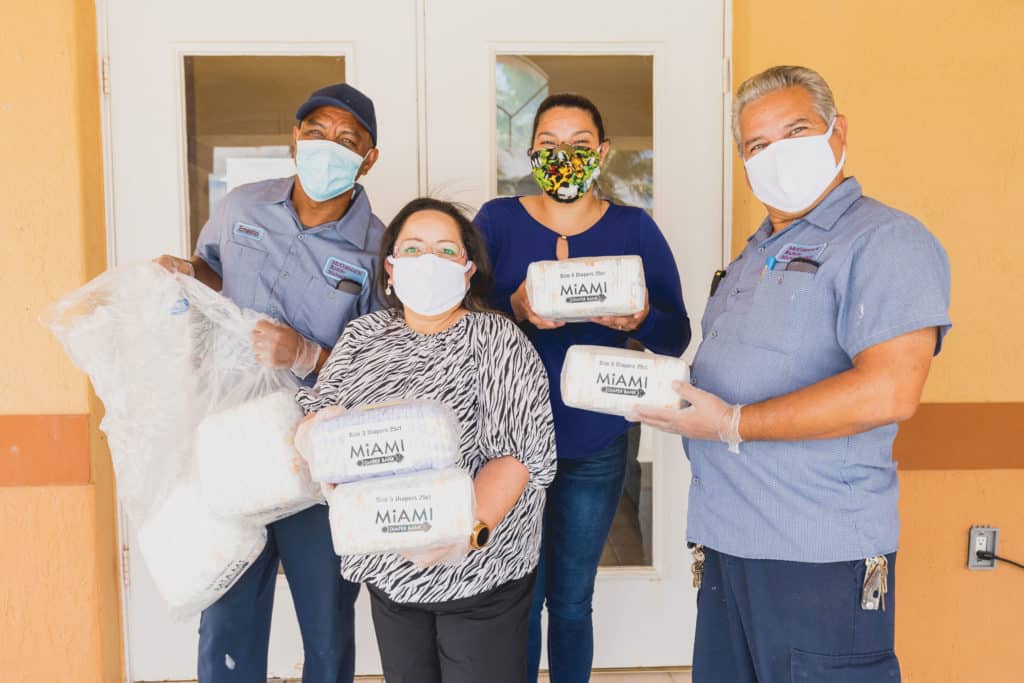
A Lincoln Avenue Capital team member donates diapers to resident families in Miami, Fla.
Those kinds of challenges are precisely what LAC embraces. New though it may still be to the arena, the company views itself as a disruptor — a business that can forge strategic community partnerships, create opportunities, be financially viable and also effect positive social impact in the communities it enters. Given how much of an impact the company has already made, their slogan “investing in our communities” seems apt.
The LAC impact can take the form of dispatching members of the company’s resident services team to the site to get a feel for the types of services the residents and the surrounding community may need and connecting them with resources. In Florida, home to several LAC communities, the company offers a program that gives financial assistance to long-term tenants when they leave to become first-time homebuyers.
Since the onset of the COVID-19 pandemic, the team has sought out more creative ways to be helpful. In Miami and Orlando, Fla., the company bought 10,000 pounds of fresh produce from a local grower, which they donated to residents. They also have given large quantities of diapers, hand sanitizers and personal protective equipment to the majority of their properties.
“We think that by doing right by your tenants provides you a better tenant base, and the better the tenant base, the better they take care of your building and the more they care about the community,” Eli Bronfman said.
The brothers “gathered” separately for a Zoom interview with the Journal. Although they both grew up in New York City and maintain a New York office, they moved LAC to Santa Monica in the fall of 2017. The move was a homecoming for Jeremy’s wife, Stephanie, whom he met as an undergraduate at Stanford. The West Coast time zone suits Jeremy, who professes he likes working early hours. In addition, the competition for financial talent on the East Coast is higher.
“We found that the overlap of financial talent and people who care about having an impact, there was a little bit more out here,” Jeremy Bronfman said. “We still go back and forth to New York a lot and Florida is our biggest market, but we really do think there’s a shift from an Atlantic-driven economy to a Pacific-driven economy over time. So being ahead of that is something that I’m excited about.”
“So many of the workers are working in low-wage jobs that just don’t pay enough for their full-time employees to afford housing in their areas.” — Adam Aurand
Since its establishment by the brothers in 2016, LAC has acquired 50 properties in 10 states, accounting for more than 9,000 units that house 30,000 residents. Their hope is to shoot past 100 properties by 2021. “It’s become a pretty meaningful business,” Jeremy said, “both from a financial and an impact perspective.”
And if those two outcomes are to be associated with members of the Bronfman family, it certainly wouldn’t be the first time. From family patriarch Samuel Bronfman, who built an empire on the Seagram distillery, to Eli and Jeremy’s father, Matthew Bronfman, the main shareholder in IKEA Israel and Shufersal, multiple generations of Bronfmans have worked across a variety of industries in the United States and Canada and have, in the process, given hundreds of millions of dollars to Jewish causes around the world.
Jeremy and Eli have worked with their family’s office, but through LAC they also want to forge their own path.
“I think it’s important for Jeremy and I to build a business that is distinct from the broader family, that has significant support and affiliation with the family and my father’s financial resources but that really stands on its own two feet,” Eli said.
As the oldest sons of Matthew Bronfman and the grandsons of Edgar M. Bronfman Sr., Eli and Jeremy witnessed the financial success and philanthropic activities of their families from an early age. Whether they were attending an event at the 92nd Street Y, learning about the Shoah Foundation or hearing about the activities of the World Jewish Congress (WJC), they found that philanthropy and the values of tikkun olam were ever-present “I really didn’t know any different,” Eli said. “I thought that’s what everyone did.”
As a high school student, Jeremy recalls Thursday night dinners with his grandfather (“we called them chili night”), during which Jeremy would hear about the work of the WJC, which Edgar M. Bronfman Sr. led for 28 years. As the longtime president of Seagram’s, Edgar Bronfman was financially successful and generous, but Jeremy said he recognized his grandfather’s contributions in different ways.
Photo courtesy of Lincoln Avenue Capital
“In my opinion, the majority of his impact came from his political work at the World Jewish Congress rather than just writing a check,” he said. “That was both with regards to the rights of Jews to leave the former Soviet Union and the Swiss bank reparations. Obviously, his philanthropic work with Hillel was very impactful as well.
“Now that I reflect on Lincoln Avenue Capital, it makes me proud we are having such a big impact not just by writing a check, but through other means,” he continued. “[Edgar Bronfman Sr.] had more resources than Eli and I do, and even with those large resources, he was able to magnify that impact through political and business work. That was really inspiring for me with regards to what we’re doing now.”
“We think that by doing right by your tenants provides you a better tenant base, and the better the tenant base, the better they take care of your building and the more they care about the community,” Eli Bronfman
Eli also cites a recent set of kudos that the brothers received from another prominent family member: their great-aunt — Edgar Sr.’s sister — Phyllis Bronfman Lambert, one of the most prominent conservationists, preservationists and philanthropists in the architectural community in Canada.
“We were talking about what we were doing and she sent me an email in which she said, ‘I’m very proud of what you and Jeremy are doing and I’d like to learn more about how you do it,’” Eli said. “Coming from Phyllis, that someone like her would be so proud of what we’re doing, that’s why we started this business.”
Both brothers had previously worked in various branches of finance; Jeremy in hedge funds, private equity and running a computer software company, and Eli with Goldman Sachs and serving on the equities team at Ice Farm Capital and Arrow Capital. The death of their grandfather in 2013 inspired the brothers to work for the Bronfman Family Office, which provides growth capital and liquidity to entrepreneur and family-owned businesses in North America and Europe.
When a friend pitched him the idea of bidding on an affordable housing project, Jeremy found the prospect complicated yet intriguing.
“I really didn’t know anything about the industry, but for a variety of reasons, the deal piqued my interest,” he said. “I thought there would be a positive impact and attractive financial returns. Then we started looking for the right team so we could put together our own affordable housing business, scale it up and build what has become a pretty meaningful business from both a financial and an impact perspective.”
Aligned though they are on the mission of their company, the brothers describe themselves as different personalities who are able to take a “divide and conquer” approach to working together. Eli, the company’s managing partner, is often the one seeking out the properties while CEO and managing partner Jeremy figures out how to put the deal together.
“There’s a little bit of a yin and yang to them,” said fellow LAC partner and managing director Yoni Gruskin. “They’re both incredibly smart and they both have a strong drive to succeed in whatever it is they’re applying themselves to, but they go about it in slightly different ways. Jeremy is the guy who can do obscure mental math in his head and Eli is the kind of guy who won’t sleep until things are done exactly the right way to make sure we’re building the organization in a sustainable way and making sure we’re looking at every single opportunity.”
In assembling their team, the Bronfmans gathered a mix of industry veterans and individuals who previously had little or no experience in the housing arena. The brothers said they benefit from the diversity and from the range of personal and professional experiences that their staff members bring.
Gruskin, who has been with LAC since the outset, is one of the employees who came to the business with some knowledge and experience in the industry. Having served as an affordable housing analyst in the New York area before helping launch LAC, Gruskin could see immediately that the Bronfmans were looking to take a different approach. According to Gruskin, many of the people who have worked in affordable housing have been in place since the late 1980s and early 1990s. That entrenchment doesn’t necessarily fuel creativity.
“There hasn’t been a lot of competition or a need to innovate,” Gruskin said. “Jeremy and Eli felt that by outworking the competition and also bringing in a group with different backgrounds, we would be able to come up with strategies and executions that would allow us to truly innovate the industry. We don’t look at this as just a staid set approach to investing or doing development deals. We really try to push the envelope, ask questions and understand if there are new and unique ways to structure deals.”
The proof is in the properties, which many residents say are unrecognizable from what they once were after undergoing improvements at the hands of LAC. In Jacksonville, Fla., the Monaco Arms apartments are nearing the end of their rehabilitation that saw the company spend $36,000 per unit of a 156-unit Section 8 development.
“That’s significant,” said Mark Hendrickson, financial adviser to the Jacksonville Housing Finance Authority, which funded a $16 million bond to acquire the property. “You basically had an almost 50-year old Section 8 family development, and oftentimes those are not in very good condition. Sleazy developers buy old Section 8 deals and they don’t fix them up. People are willing to live there because of the rent structure even if the place is a dump.
“You don’t want to be involved with that,” Hendrickson continued. “You want financing where there is a substantial difference being made in what’s being done to the units so they end up significantly improved from a physical standpoint so you’re not only improving the development, but it’s part of a neighborhood revitalization as well. This deal fits into that category.”
Gruskin and Jeremy Bronfman point with particular pride to the Spanish Park Apartments, a 350-unit complex in Arlington, Texas, that LAC acquired in 2019 after working out a property tax exemption with the City of Arlington. By structuring the deal such that the Arlington Housing Finance Corp. owns the land, LAC does not have to pay property tax. As a result, the company is doing a more substantial renovation than it might otherwise be able to do.
“We think that by doing right by your tenants provides you a better tenant base, and the better the tenant base, the better they take care of your building and the more they care about the community,” Eli Bronfman
The property was not in great shape when LAC put in a bid and the city had tried to work with other partners on the project before without success. According to Mindy Cochran, executive director of housing for the city, the partnership will end up being beneficial to the developers, to the residents and to the overall community. Gruskin and other LAC officials took input from the Arlington Neighborhood Association and from Mission Arlington, a church and nonprofit that has conducted Bible studies and after-school programs. Mission Arlington administrators ended up writing a letter to the city in support of LAC’s proposal. The rehabilitated and newly christened Paddock at Park Row is scheduled to be completed in late 2020.
Jeremy and Eli Bronfman; Photo courtesy of Lincoln Avenue Capital
“They’re going to rebrand it to really give it a new image so it doesn’t carry the old baggage that Spanish Park had carried for so many years,” Cochran said. “This could be a big lift for the neighborhood as well.”
“Seeing the before and after pictures on that particular project, we are literally transforming the interior units, all the community spaces. We’re adding a lot of amenities and we’re transforming the neighborhood,” Gruskin added. “A project like that was not going to be successful by our taking out our old playbook.”
Community outreach and connecting with area nonprofits is every bit a part of the LAC playbook. Last September, the company hired Victoria Whittaker as the company’s director of resident services. Whittaker — like Gabriel — had not previously worked in affordable housing or finance. But she had experience both in nonprofit work and in education. A classmate of Jeremy’s at Stanford, Whittaker also had grown up in a low-income community in San Bernardino, and was quickly sold on the idea of working for an organization that could make money while also helping communities thrive.
“I started to think about what does it mean to work across sectors,” Whittaker said. “As a preschool teacher, I had families coming to me with all sorts of different needs, whether that be health needs or assistance with their rent. I truly believe that it takes both the public, the private and the government sector to come together to uplift communities.”
Since joining LAC, Whittaker has crossed the country several times, visiting properties in Florida and Nevada, interfacing with community nonprofits and interacting with residents.
Brianna Cambra of the Reno-based nonprofit The Children’s Cabinet, told the Journal she had a positive experience with LAC staff. LAC consulted with the children and family services nonprofit on what sorts of programs and services might be useful for the tenants in their Zephyr Pointe and Whittell Point communities in Reno.
“As they opened up these properties, it was important that they have these conversations and identify resources so they could provide as much information on how to connect their families with things that they need,” said Cambra, quality program manager for early education and development with The Children’s Cabinet. “I think that speaks to a level of wanting to do good and to give back to the community.”
“It’s become a pretty meaningful business, both from a financial and an impact perspective.” — Jeremy Bronfman
Whittaker is especially pleased that the company laid the foundation for its programs and resources even before the COVID-19 pandemic hit. “Jeremy and Eli really wanted to react very quickly and make sure that our property managers were prioritizing the health of our residents,” she said. “My team was able to circulate lists of social service nonprofits that we had been building relationships with so we were able to do some warm handoffs to resources that our residents could use, but then we wanted to give a little deeper. We know that food insecurity is a huge issue for our families right now, so by donating fresh produce we can help create a little more stability for them.”
As they look to the future, the Bronfman brothers say they want their organization to continue to grow and for other developers to use the resources they have put in place and potentially partner with LAC on deals. Having such a foundation in place and setting a precedent for new and equally innovative deals would be more impactful, Eli contends, than “cutting a check.
“With the millennial generation, you’re seeing people moving around more and caring a lot about what they do,” he said. “So, they’re always evaluating, ‘Am I having an impact? Is my job enhancing the greater good?’ We’re seeing a huge number of people who I don’t think would join our organization if we were not mission aligned. That’s becoming so important.”
“I don’t think anybody necessarily expected us to scale the business so quickly or have the impact that it did, which is a nice surprise,” he added. “But it’s so wonderful to be in a business that is so positive.”
Correction: A previous version of this article incorrectly stated that Jeremy Bronfman met his wife, Stephanie in graduate school.
How do you cope with both the death of a parent and the artifacts she left behind, while preparing to become a mother yourself at 50?
For documentary filmmaker Judith Helfand (“Blue Vinyl”), the answer was clear: make a movie. Incorporating 25 years of family footage chock-full of Jewish life and ritual, Helfand’s “Love & Stuff” is a very personal journey that further explores the mother-daughter relationship that she documented in her 1997 Peabody Award-winning film, “A Healthy Baby Girl.” As it revealed, Helfand was diagnosed with cervical cancer and had a radical hysterectomy as a result of her mother taking the drug diethylstilbestrol (DES) during her pregnancy.
With a crew on hand to document the Herculean and emotionally difficult task of sorting the belongings of a mother who saved everything, Helfand made a short version of “Love & Stuff” in 2014 to “combat the feelings of loneliness, fear and feeling alienated,” she told the Journal. “Making art out of pain and grief is always cathartic.”
It also provided an opportunity to shine a light on the importance of family and Jewish celebrations in her life. “Being able to go back and forth between the past and the present through old footage and past movies that I made with my mom and dad that are mostly connected to ritual — the seder, Hanukkah, the food, all the moments I had in my childhood home — speak to the importance of ritual and why we need it,” she said.
Although Helfand regrets that she didn’t take the time to sort through her mother’s things with her when she was alive, filming together over the years gave them the opportunity “to explore and understand some really painful things,” she said. “My mother didn’t really want to make those movies, but she was really happy that I did and she wanted to be present for me.”
Being present for her 6-year-old daughter, Theo, whose adoption is chronicled in the film, is the driving force in her life and prompted her decision to have bariatric surgery to lose weight and be healthier. “I am 50 years older than my kid and I have spent a lot of time worrying about how many years we would have together. How old will I be when she has her bat mitzvah? How old will I be when she goes to college? I really should be counting my blessings that I am here with her right now, to listen, feed her imagination and be as present as I possibly can.”
Doing that during a pandemic, however, is a challenge. Helfand admitted to “stress eating” while trying to home-school Theo and maintain some sense of community in a world that has gone virtual. “It’s a big part of my commitment to her, to bring her up with Jewish social justice values at the core of our life. We’ve been going to shul together since she was born. We belong to the Workmen’s Circle, which celebrates Yiddish culture and Jewish culture and all the holidays, and I realize how much I’d been leaning on that community. Without Zoom it would be a lot harder.”
“I’m still waiting for Pesach, Rosh Hashanah and Yom Kippur to feel like they did with my mom and my dad. I’ve realized that I have to embrace the fact that I’m in charge of that now.” — Judith Helfand
As seen in the film, New York City native Helfand grew up in an Ashkenazi Jewish family, celebrating all the holidays with her extended clan. She finds that without her parents, those holiday celebrations don’t feel the same. “It’s a struggle for me to create that in my home. I’m still waiting for Pesach, Rosh Hashanah and Yom Kippur to feel like they did with my mom and my dad,” she confided. “I’ve realized that I have to embrace the fact that I’m in charge of that now.”
Theo, whose birth mother is Jewish, has a mix of African, East Asian, European and Native American ancestry, which Helfand explored in her short documentary “Absolutely No Spitting.” In it, having their DNA tested provided Helfand with an opportunity to teach her daughter about the cultural aspects of her diverse heritage.
Another film, made in 2018, has taken on new relevance during the pandemic. “Cooked: Survival by Zip Code,” “explores the long-term impact of structural racism, inequity and health disparity through the lens of a terrible heatwave that took place in Chicago in 1995. Seven hundred and thirty-nine people died in one week,” Helfand said. “The city map showing those deaths is the same map of where the COVID-19 deaths are.” PBS will broadcast it on July 13.
She’s currently planning to make new short films “that take a deep dive into different topics” while setting up virtual appearances and workshops for her current releases. She hopes that “Love & Stuff” viewers take away “the importance of trying to be completely present: for your parents, for your children, for yourself and not being so afraid of the future,” she said.
“The story is personal yet absolutely universal,” Helfand summed up. “It speaks to how important it is to be close to your loved ones at the end of their lives, to be by their side and hold their hands,” as so many families affected by the coronavirus crisis have not been able to do, she pointed out. “Whether it’s in person or by Zoom or Facetime or WhatsApp, use that time to talk about stuff. Find a way to be present. And cherish the time you have.”
“Love & Stuff” is available to stream May 28-June 25 here.“Absolutely No Spitting” is available to watch here.
Numbers have always held significance in Jewish culture, but without purpose, they can be harmful. This was borne out in a May 17 eJewish Philanthropy article, subsequently republished on The Forward’s website, titled, “How Many Jews of Color Are There?”
Written by American Jewish Year Book editors Arnold Dashefsky and Ira M. Sheskin, the article drew ire from Jews of Color (JOC) and Jewish social justice groups for reducing Jews of Color to a statistic, as opposed to seeing them as valued members of the community.
In response, activist April Baskin launched the hashtag #JOCsCount. By May 19, she, together with Ginna Green, Shahanna McKinney-Baldon and Abby Levine had created a sign-on letter opposing the article. The letter quickly went viral. To date, more than 2,500 American Jews and 200 organizations have signed the petition.
“Jews of Color count — not because of our numbers, but simply because of our divinity and humanity,” Baskin, a diversity, equity and inclusion consultant and former executive vice president of Audacious Hospitality at the Union of Reform Judaism, said in a statement to the Journal. “Now is the time to double-down on efforts to advance our vision of a vibrant, equitable, multiracial Jewish community.”
According to the American Jewish Population Project, Jews of Color make up at least 12% of the total Jewish population in the United States. Green, a political strategist, told the Journal that Dashefsky and Sheskin’s article was harmful because it included incomplete information and “cherry-picked” data.
“It would be great if we were counting all diversity,” she said. “What was so bothersome to me was that we don’t have an accurate count because the vast majority of studies that came before, over the last 30 years, have failed to ask the question in such a way where we can count on the data. The authors’ analysis was problematic from start to finish.”
“I want every person of color to walk into a Jewish setting and it’s assumed that they are Jewish. That’s what we would do if a white person walked into a Jewish setting. Right now it’s the opposite and that’s the problem.” — Marissa Tiamfook
Green referenced a May 2019 report by Ari Y. Kelman titled, “Counting Inconsistencies: An Analysis of American Jewish Population Studies With a Focus on Jews of Color,” which documents the many ways surveys have failed to ask Jews about race, ethnicity and language in order to create a well-rounded count of American Jews. Leaving out inquiries sways the number of Ashkenazi, Sephardi and Mizrahi Jews, Kelman wrote. In his rebuttal on eJewish Philanthropy, Kelman’s analysis “revealed that only 41% of Jewish community studies (36 of 89) conducted since the year 2000 even included any questions about race and ethnicity in the first place.”
Green, who converted in her early 20s, grew up in South Carolina and became interested in Judaism after learning about the Jews involved in the Civil Rights movement. She said she wants her four children to feel safe, seen and proud in their Jewish spaces because she knows they will experience hardships because of the of the color of their skin. “I knew that for a Jewish person of color, it isn’t a matter of if you encounter racism in the Jewish community, it’s when,” Green said.
McKinney-Baldon, director of EDOT, the Midwest Regional Jewish Diversity Collaborative and #JOCsCount co-organizer, works to promote racial and ethnic diversity in Jewish spaces and to disprove the stereotype that Jews live only in big cities.
“I’ve met a lot of People of Color who used to be Jewish but are not anymore because of the racism they faced in Jewish spaces,” McKinney-Baldon said. “What I’ve found over the years is folks do engage when we set up spaces that align with their priorities and contradict the ways they’ve felt marginalized in the past.”
Los Angeles resident Marissa Gee said that while she and her family have found a Jewish community to thrive in at IKAR, she remembers facing racism at her religious day school growing up. She signed the letter for her two black Jewish children so they can live in a more inclusive future.
“My goal is for me, my children, my friends, Jews of Color everywhere to walk into a synagogue, a Jewish organization or a Jewish event and it’s totally normal,” Gee said. “I want every person of color and families of color to walk into a Jewish setting and it’s assumed that they are Jewish. That’s what we would do if a white person walked into a Jewish setting. Right now, it’s the opposite and that’s the problem.”
Political activist and writer Carly Pildis signed the letter as an ally to JOCs.
“The [Jewish] communities need to be willing to take on the hard work in addressing inequity and institutionalized racism,” Pildis said. “[It’s] looking at our structure and asking ourselves at every level, ‘How do we be more actively anti-racist every day?’ If we don’t acknowledge where we are failing, we can’t move forward.”
The #JOCsCount initiative is not the first group to advocate for Jews of Color. Ilana Kaufman, who has done JOC advocacy work for decades, is the executive director of the Jews of Color Field Building Initiative and recently launched the Jews of Color Initiative COVID-19 Emergency Relief Fund for Individuals, which offers support to those experiencing financial hardship during the coronavirus pandemic.
Audrey Sasson, a Mizrahi Jew originally from Montreal, is the executive director at New York-based Jews for Racial and Economic Justice (JFREJ) and has been fighting on behalf of Jews of Color for many years. She signed the letter in solidarity.
“Especially in a time of crisis, it is not time to retreat into what is comfortable,” she said. “We know the people who are most disproportionately impacted by COVID-19 and we’re not seeing them. This week alone, with what happened in Minneapolis [where a white police officer was recorded using his knee to pin a black man to the street by the back of his neck; the man later died] Jews of Color in our community are grieving and in deep pain. We have to be showing up far more collectively to really build a multiracial, multi-ethnic community that can withstand the assaults on all of us.”
Multi-denominational temples, Bend the Arc, Hebrew College, HIAS, MAZON: A Jewish Response to Hunger, RespectAbility, T’ruah: The Rabbinic Call for Human Rights, and the Union for Reform Judaism are among the many Jewish organizations that also signed the letter.
“There are Jews of Color who are in spaces where we were not and we are not going anywhere,” Green said. “I think we will also be able to transform Jewish institutions. Part of transforming the Jewish community is two-fold. One of them is white Jews who really take on the task to be anti-racist and also Jews of Color being able to step into leadership roles and visibility in Jewish institutions.”
An earlier version of this story used the maiden name of Marissa Gee. It has been updated to include her married name.