fbpx

May 27, 2020

A Prayer for my Father

This is the eulogy that Rabbi Shmuley Boteach delivered May 27 for his father, Yoav Botach, on the Mount of Olives in Jerusalem, at a funeral service over which he presided.

It was nearly 26 years ago, also on a summer day, that my father called me from Israel to tell me the impossible news that the Lubavitcher Rebbe had died. I was living in Oxford, England at the time, serving as rabbi to the students, and was meant to travel to Israel that very day to visit my father in Jerusalem. The news shocked me to my core. The Rebbe was larger than life. He was going to usher in a Messianic era. He could not die. My plans changed immediately as I traveled to the Rebbe’s funeral in New York.

And now, more than a quarter of a century later, I have traveled in the right direction, to the Jewish homeland, but for another impossibly sad occasion, the funeral of my own father. And as with the Rebbe, I never believed this day would come.

My father, too, was larger than life. Always the most charismatic personality in the room, he was a force of nature, a magnet that drew everything to him, a planet that forced all that surrounded him into his orbit. He could neither be avoided nor ignored. Even as his health deteriorated over the last few months, his broken body always fought back and rallied in a way that had agnostic doctors using the words “miracle.” Even when the hospital told us on several occasions — including at the Passover seder — that we had to say goodbye as he had hours to live, he miraculously pulled through. Sickness and illness could never defeat him.

My father was a giant of a man, a business titan who bestrode the streets of Los Angeles like a colossus, a real estate genius with the charisma and good looks of a Hollywood star. My friend Kevin writing from Australia, summed it up best: Yoav was a legend.

His struggle never to quit and always prevail were his defining characteristics. Born in abject poverty as the second child in a family of 13 in Iran in 1932, he was selling carpets and fabrics in the markets of Isfahan — the ancient Persian capital – from the age of 10 to help support his brothers and sisters. Reaching out to aid his many siblings in every way possible would be an act he would continue for the rest of his life, along with charitable acts to complete strangers who approached him in dire straits.

He had only minimal schooling and was proud that he spent most of it not reading books but fighting anti-Semitic Muslim teachers and pupils, and organizing the Jewish children in Isfahan into street fighters. At a Shabbat dinner that I spent alone with him when I was 14 and living in a Los Angeles Yeshiva dorm, he regaled me with tales of the non-stop Jewish wars in Iran and proudly moved my hands over the battle scars in his scalp. “Feel here, under my hair, at the holes I still have from rocks that nearly cracked my skull,” he said with a huge grin. He would later show my children the same wounds. “They tried to break me with sticks and rocks,” he said, “but I’m the one who always beat them up.”

Always the most charismatic personality in the room, he was a force of nature, a magnet that drew everything to him, a planet that forced all that surrounded him into his orbit.

He was a Jewish lion, a mighty warrior, a living incarnation of his namesake, King David’s general-in-chief Yoav, instilling fear in all who would do harm to his people. He oozed Jewish pride from every pore of his being. David Suissa was one of the last non-family members to visit my father in the hospital. He told me after he met my father for the first time, “Your dad is the original Mesopotamian man. He has a powerful, leathery hand.” And yesterday, my former student at Oxford and now Los Angeles’ Mayor, Eric Garcetti, summed up my father beautifully in a text: “He was a heroic figure to me and I saw such a fire and a love in him. His memory is such a blessing to our city of Angels and to this world.”

This defiance of standing up, of being a proud Jew, ready to battle our people’s foes in every arena, constituted my father’s irreducible essence. Rarely has a man stood so straight. Rarely has a person walked so tall. Rarely has a Jew born in a Muslim country carried himself with such utter disregard for his hostile surroundings. To say that my father could not give a damn what anyone thought of him is to offer an unimpressive understatement. Once, when we flew from Los Angeles to Miami for a grandson’s bris, he pulled out a cooked duck with his bare hands and tore it apart, offering me a leg dripping in grease, oblivious to everyone staring at him. And why would he care? If they could not appreciate that a Jew only eats kosher, and if the airline forgot to board the meals we had ordered, that was their problem.

My grandfather Ezra, an ardent Zionist, moved his large brood to Israel where my father spent his late teenage years and met my mother Eleanor when she, as a young American tourist, asked a handsome local for the city’s best falafel in Beer Sheva. They married and began a family in Israel where my sister Sara was born, and, a few years later, moved to my mother’s native New York, where Bar Kochva was born, and to Los Angeles thereafter, where the twins,  Chaim Moishe and Ateret, and then me, the youngest, followed.

My father arrived in America not speaking a word of English. He was sometimes looked down upon and degraded, with his dark, Middle Eastern complexion and the broken English of an immigrant. That he would go on to build a large business and out-maneuver those with the impeccable college degrees he lacked should surprise no-one. Few were as dedicated. Few worked harder. Few were as sharp.

My father rose at the crack of dawn every morning until he was felled by a catastrophic stroke last December on the night before Hanukkah. And over the next five months he waged a ferocious battle for life that electrified and astonished all who witnessed it.

He would often tell me stories of his work ethic. He drove from Los Angeles to the various swap meets and flea markets to feed his family. “I was so tired, I took the scissors that I used to cut the fabrics because I was falling asleep at the wheel. I started to poke my legs until blood flowed. But,” he said with his eyes open wide as saucers, “I didn’t miss the market.”

He never missed synagogue on any morning, either. In his last years, he would drag his broken frame day after day at 5 a.m. and put on his tefillin, eschewing the help of other worshippers that in his later years he was finally forced to accept.

He believed in strength. He never showed weakness. After his first stroke nearly a decade ago, he would become visibly upset with me and my siblings as he pushed his walker to shul. I would bend to help dislodge it from a crack in the sidewalk or the roots of a tree. I would put my arm out to help him climb the stairs. He would never accept. It might take three times as long, but he would get to the top on his own. He had made his way through life on his own two feet, and his struggle to survive became symbolically solitary in the last weeks as the COVID-19 pandemic closed the hospitals to visitors and we children who were at his side were reduced to watching him on an iPad until he came home to my sisters’ care for a final 10 days.

Death to him was a curse, an aberration never to be discussed, an unacceptable tear in the glorious tapestry of nature – “the green” as he called it – whose pristine beauty he loved so much. In his hospital bed at Cedars-Sinai, he would hold my hand so utterly tight. He held on for life itself as he entered his final battle, attended with unequaled care by my sisters Sara and Ateret who never left his side, my brother Bar Kochva, and my brother Chaim who crossed the country from Miami constantly to visit his sick father.

I was moved to my core when, on the last Shabbat that we spent together, he struggled in semi-consciousness to move his unresponsive body and even to breathe. He grabbed my hand, first with his almost useless left arm, and then, moving his entire frame, with his right hand as well, seizing me with a ferocious grip. My wife, Debbie, stood by watching with tears in her eyes as I sang to him the melodies of Havdallah that he so loved.

He adored Debbie ever since I brought her from Australia to obtain his blessing for our marriage 32 years ago. Characteristically, he stared her down. “Where do you want to live?” Debbie, not missing a beat, replied, “Wherever Shmuley wants to live.” And he lit up like a Hanukkah menorah, as Debbie passed his test. “Uuuhooo,” he laughed, giving us his blessing, knowing that he had successfully teased this Ashkenazi woman about being the perfect Persian wife.

Such displays of love and tenderness were not foreign. My father had tremendous sensitivity to those in need. At the end of a long summer fast day in Los Angeles, when I was driving home from synagogue with him to eat our meal, we saw a confused, elderly woman in the middle of the street, nearly killed by passing cars. My father picked her up, saw the address of her nursing home and drove her there, all while his famished teenage son prayed that he would just leave her so we could eat. The owner of the nursing home told my father to butt out. “It’s none of your business.” “None of my business?,” my father hollered. “If ever I come back and see this woman in danger, I will teach you a lesson about respecting the elderly that you will never forget.”

My father loved music and loved to sing. Every Friday night he raised his voice to God like an ancient Hebrew prophet. He made the words of the Bible come to life and elongated the pronouncement of every syllable, doing impossible musical summersaults with his vocal cords.

Shabbat was especially dear to him. He loved going to synagogue and loved having his children and grandchildren around him singing at the Sabbath table. At family celebrations, he would suddenly stand in the middle of the guests and cry out in lyrical praise to the Creator. As I was conducting my daughter Shaina’s wedding, he rose under the chupah, in the middle of the ceremony, and began to sing the eternal words of the prophet Isaiah: “And Kings and queens will serve you and care for all your needs. They will bow to the earth before you and lick the dust from your feet. Then you will know that I am the Lord. Those who trust in me will never be put to shame.” As he did so, he swung his hips into a Middle Eastern belly dance, scandalizing the serious, black-clad, Chasidic crowd who looked at him in shock. He gave a mischievous laugh and twisted his waist again. He loved every minute of it. And so did I.

This defiance of standing up, of being a proud Jew, ready to battle our people’s foes in every arena, constituted my father’s irreducible essence. Rarely has a man stood so straight. Rarely has a person walked so tall.

When hundreds of thousands of Iranian Jews began fleeing Khomeini’s brutal regime in 1979, my father was already an established Los Angeles business figure. He saw it as providential that he had come to L.A. some 15 years earlier so that he could assist so many Iranian refugees and get them back on their feet. He became a patriarch to the Iranian Jewish community and is respected as such till today. Around1980, I was with him in downtown Los Angeles when he took an Iranian immigrant to a meeting to try and help him close on a business. My father told the cynical American owner who listened half-heartedly to the refugee’s business pitch, “He may have nothing now, but in Iran this man had a huge business. Big. Like an elephant,” almost screaming the last word as he so hated seeing people’s dignity compromised.

A man as large as my father was never going to be a saint and would have been a bore had he not also possessed the flaws that accompany men of biblical proportions. He could be stubborn, uncompromising, and, as a son who loved him and always sought his approval, at times distant. After my parents’ divorce, I grew up on the other side of America and missed him every moment. When he visited he could see my pain and I once heard him tell his brother Shlomo that he thought that I, as the family’s youngest, was especially wounded by the divorce. And that is how I felt too.

Which is why no global pandemic, no world-wide malady, was ever going to stop me or my beloved siblings who are here with me, from burying our father in the city that he loved so much, Jerusalem, and where he wished to live in his last years, as did his mother, Eshrat, to whom he was especially devoted. And we are joined today by my children Chana and Mendy, who also made the trip from the United States during the pandemic, and my nephew Aaron, all three of whom my father took such pride in as they served as soldiers in the IDF.

It would be the will of God that my father would not ultimately inhabit the home that he bought at the foot of the Old City. But interred here as he is at Judaism’s holiest burial site on the Mount of Olives, just steps away from his great hero Menachem Begin, and the founder of the modern Hebrew tongue, Eliezer Ben Yehuda, my father has finally come home. He will now be, as Jewish tradition maintains, the first to greet the Messiah and the first to rise in the resurrection of the dead.

In the same way that my father always kept his faithfulness to God, I know that the Creator will likewise fulfill his promise to his people, spoken through Isaiah, that in the end of days “Death shall be swallowed forever,” and through Daniel, that “Multitudes who sleep in the dust of the earth will wake again.”

And at that time I will be reunited with my Rebbe and with my father, both of whom died on a Saturday night just as the holy Sabbath went out, making a world without them a little bit darker, and a world into which they will eventually re-awaken shine with particles of everlasting light.

A Prayer for my Father Read More »

Man Who Held Anti-Semitic Sign at Ohio Protest Wanted to Target Jews at Kent State, Report Says

A man who held an anti-Semitic sign at an April rally in Columbus, Ohio, reportedly sought to target Jews at Kent State University.

The Cleveland Jewish News reported that the Cincinnati Jewish Federation’s Jewish Community Relations Council Director Jackie Congedo said during a May 21 webinar that the man told a convenience store clerk on May 3 that “he was an Aryan Brother, for those of you who may not be familiar with the Aryan Brotherhood, which is a Nazi organization, and he said that he intended to go to Kent State to find Jews.”

The man also wore a shirt with a swastika on it and was armed with a machete and hatchet when he was at the convenience store. He wanted to target Jews at Kent State on May 4, the anniversary of the 1970 Kent State shooting. Three of the four students killed in that shooting were Jews. The man was subsequently arrested for disorderly conduct and posing physical risk of harm.

Kent State University Hillel Executive Director Adam Hirsh said in a statement to Cleveland Jewish News that law enforcement had notified them about the situation and beefed up security on campus.

“There is a lot of unfounded hate in the world,” he said. “Hillel works to build relationships and hold conversations about issues that divide us. There are also some people that refuse to talk and operate with levels of hatred that we will never understand. That is scary.”

The Simon Wiesenthal Center tweeted, “Hatchet and axe bearing Jew-hater is clear and present danger to Jewish community, #FBI should investigate — this anti-Semitic ticking time bomb must be stopped.”


The Maccabee Task Force similarly tweeted, “This is incredibly distressing, we are appalled that the safety of our students on campus has been threatened.”


During the April 18 protest in Columbus against Ohio’s shelter-in-place restrictions, the man held a sign stating, “The real plague” with a rat wearing a kippah and Star of David. Ohio Gov. Mike DeWine, a Republican, condemned the sign in a subsequent statement.

“I am deeply concerned by the anti-Semitic sign at Ohio’s Statehouse during a recent protest rally. The sign was vile and disgusting,” he said. “While even disgusting speech is constitutionally protected, it still demands condemnation.”

The sign-toting man also had been pictured with a man who was arrested in March for allegedly plotting to blow up a hospital, according to Congedo.

Man Who Held Anti-Semitic Sign at Ohio Protest Wanted to Target Jews at Kent State, Report Says Read More »

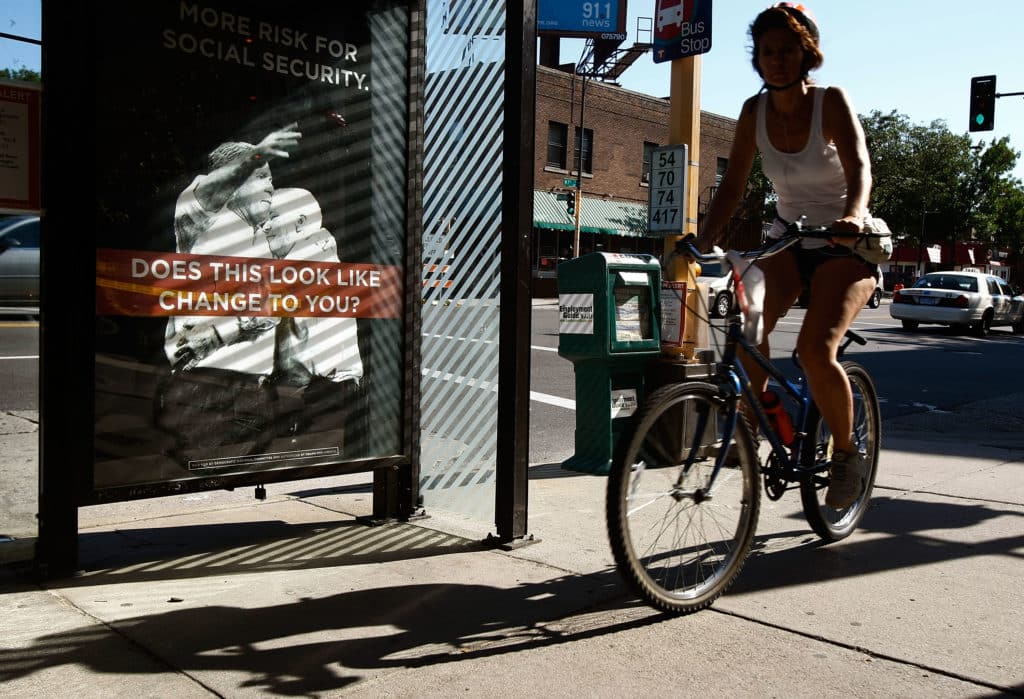
Bench Near Minneapolis Synagogue Vandalized With Swastikas

(JTA) — A bus stop near a synagogue in Minneapolis was vandalized with swastikas.

The graffiti was discovered Tuesday on a bench outside Shir Tikvah Congregation. Across the street, “Seig Heil, Heil Hitler, Trump 2020” was written on a traffic utility case, the synagogue said in a message to congregants.

Neighbors discovered the vandalism and reported it to the police and the Jewish Community Relations Council. No graffiti was found on the synagogue building.

“We are grateful to these neighbors who, with love and pain, brought these to our attention (and one went home to get electrical tape to cover what he saw, before calling in the incident),” the message from the synagogue’s leadership said.

A local Jewish activist and member of the synagogue wrote on Facebook about learning of the incident as she was leaving a protest against the death of George Floyd, an African-American man who died in police custody. Video showed an officer with his his knee on Floyd’s neck while Floyd complained that he could not breathe. Four officers have been fired in the aftermath of the incident.

“[I]f I could tell white Jews one thing, it’s this: Ask yourself what you would do if you found antisemitic graffiti at your shul, or if you felt afraid,” wrote Carin Mrotz, who leads Jewish Community Action, an organization that promotes racial and economic justice in Minnesota.

Mrotz continued: “Who would you call? If your first impulse, if your reflexes say ‘police,’ I want you to spend some time thinking about that, how the very thing you might instinctively seek out to feel safer has the potential to cause fatal injury to someone else. And grapple with that.”

Bench Near Minneapolis Synagogue Vandalized With Swastikas Read More »

ADL Report Highlights ‘Significant Trend of Anti-Semitism’ in ‘the Anti-Israel Movement on Campus’

The Anti-Defamation League (ADL) released a report on May 27 highlighting how anti-Semitism permeates “the anti-Israel movement on [college campuses].”

The report acknowledged that although the majority of criticism against Israel on college campuses is legitimate criticism, and most Jewish students don’t face anti-Semitism on college campuses on a daily basis, there is a growing trend of instances in which Israel and Zionism are demonized on college campuses.

“Anti-Israel student activists and professors expressed anti-Semitic ideas in a variety of ways, including through the denigration of Zionism, the idea of Jewish nationalism in the land of Israel,” the report stated. “This demonization and negation sometimes took the form of equating Zionism with racism, Nazism, or white supremacy. Often ‘Zionism’ was conflated with critiques of Israeli policy or Israeli leaders. This contributes to the movement to delegitimize Israel as a sovereign state.”

The report noted that Students for Justice in Palestine (SJP) is the most active group on college campuses against Israel.

“They are a leading campus organizer of Boycott, Divestment, and Sanctions (BDS) campaigns against Israel and specialize in using confrontational tactics such as disrupting student-run pro-Israel events and constructing mock ‘apartheid walls’ and distributing fake ‘eviction notices’ to dramatize what they consider Israeli abuses of Palestinians,” the report stated. “They believe that Zionism is an inherently racist ideology. As proponents of ‘anti-normalization’ between pro-Palestinian and pro-Israel advocates, they make it more difficult for groups with diverging views on the Israeli-Palestinian conflict to work together and achieve mutual understanding.”

Jewish Voice for Peace (JVP) is another leading proponent of BDS and anti-Israel activity on college campuses, the report stated, noting that JVP also “views Zionism as fundamentally racist and rejects the view that the Israeli-Palestinian conflict is a tragic dispute over land which has been perpetuated by a cycle of violence, fear, and distrust on both sides in favor of the belief that Israeli policies and actions are motivated by deeply rooted Jewish racial chauvinism and religious supremacism.”

Both SJP and JVP frequently promulgate rhetoric equating Zionism to racism and white supremacy on college campuses, with some examples highlighted in the report including JVP at Portland State University handing out T-shirts in April 2019 that stated, “Israel is a garbage country that’s only loved by garbage people. It was founded on ethnic cleansing, apartheid, and settler-colonialism. Its flag is a symbol of white supremacy.” The group also handed out shirts saying, “All Zionists are racists. Every single one.” Additionally, SJP at Cal State Fullerton built mock apartheid walls in April and November 2019 that had “Zionism = racism” scrawled on it.

There also have been various attempts to exclude Zionist and pro-Israel students from campus spaces, including when students blocked a reporter from a Jewish publication from accessing a mock apartheid wall at the University of Houston in March 2019. The report also highlighted a UC Berkeley student government meeting in April 2019 during which a student said that being friends with a Zionist is the equivalent of being “complicit in the prison-industrial complex and prison militarization and modern-day slavery.” A Jewish student at the meeting said that he or she was “told to move to the back of the room because I was Jewish.”

The report went on to highlight instances in which SJP has glorified terrorists, pointing to a December SJP display at UC Berkeley honoring Popular Front for the Liberation of Palestine (PFLP) terrorists Leila Khaled, Rasmea Odeh and SJP Chicago holding a “die-in” in November to honor 36 Palestinians killed in Israeli strikes in the Gaza Strip. Among those killed were members of the Islamic Jihad.

The report concluded with a call for university leaders to condemn anti-Israel activity from groups like SJP and JVP that cross the line into anti-Semitism and to hold the groups’ donors accountable.

“A significant trend of anti-Semitism exists within the anti-Israel movement on campus that must be confronted,” the report stated. “Norms of the academy such as freedom of speech and the exchange of ideas are sacrosanct and must be preserved. Yet left unchecked, this strain of anti-Semitism will continue to create an environment of fear and intimidation for many Jewish students.”

ADL CEO Jonathan Greenblatt tweeted, “We anticipate a significant uptick in anti-Israel activity once students return to campus, and our goal is to keep legitimate criticism from becoming #antisemitism. @ADL’s new report shows the extent of anti-Israel activity on campus — & what can be done if it crosses that line.”

ADL Report Highlights ‘Significant Trend of Anti-Semitism’ in ‘the Anti-Israel Movement on Campus’ Read More »

A New Relief Fund Is Providing Aid to Jews of Color Who Are Struggling Due to Coronavirus

A new relief fund is providing financial aid to Jews of color who are struggling economically due to the coronavirus pandemic.

The Jews of Color Field Building Initiative announced the launch of an emergency relief fund on Tuesday. The San Francisco-based group will be providing aid of between $250 and $2,500 on a rolling basis to individuals struggling with basic necessities, such as rent, groceries and medical bills.

The organization has received two application since launching yesterday, said Angel Alvarez-Mapp, who serves as the initiative’s director of programs and opperations.

“What happens in the general U.S. community happens to the Jews as well. We don’t live in an isolated little bubble,” he said. “So we’ve been able to see that the impacts of COVID-19 not only are affecting people of color in the United States, but they’re also also affecting Jews of color in ways that are similar to the people of color community.”

African-Americans have been affected by the coronavirus and face economic struggles due to the pandemic at disproportionately high rates.

Jews of color as well as people of color working for or affiliated with Jewish organizations are eligible to apply.

“We were thinking about synagogues and JCCs and these massive buildings that run usually because there’s a staff of people behind the scenes that nobody really sees, who generally are not Jews, and those people are suffering right now,” said Alvarez-Mapp.

A New Relief Fund Is Providing Aid to Jews of Color Who Are Struggling Due to Coronavirus Read More »

david suissa podcast curious times

Pandemic Times Episode 47: The Value of Storytelling

New David Suissa Podcast Every Morning at 11 a.m.

A conversation on the unique power of storytelling with Rutger Bruining in London, founder of Story Terrace.

How do we manage our lives during the coronavirus crisis? How do we keep our sanity? How do we use this quarantine to bring out the best in ourselves? Tune in every day and share your stories with podcast@jewishjournal.com.

Pandemic Times Episode 47: The Value of Storytelling Read More »

Obituaries: May 29, 2020

Beth Abramowitz died May 12 at 54. Survived by mother Barbara; father Abraham; brother David. Hillside 

Louis Bauman died May 7 at 84. Survived by wife Myrna; daughters Cindy (Gary Frischlina), Carla (Lukas Schenck); 4 grandchildren; sister Susan Gellman. Mount Sinai

Ernest Braunstein died March 27 at 96. Survived by wife Ida; daughter Gilda Evans; 3 grandchildren; sister Simona (Hart) Hasten. Chevra Kadisha

Jean Cohen died May 11 at 99. Survived by daughter Marcia; brother Sheldon; 1 granddaughter. Hillside

Samuel Cohen died May 11 at 92. Survived by wife Renee; daughter Shelly (Rick) Rossignol; sons Alan, Marc (Cheryl); 5 grandchildren; 8 great-grandchildren. Mount Sinai

Susan L. Diamond died May 9 at 75. Survived by son Scott (Lisa); 1 grandchild; brother Joel (Deborah) Burdman. Mount Sinai

Julia Donzis died April 29 at 87. Survived by daughter Sharon (Jon); son Paul (Robin); 4 grandchildren; sister Paula. Hillside 

Janette Goldberg died May 6 at 93. Survived by daughters Rosanne, Barbara Schay; 1 grandchild. Mount Sinai

Herbert Goldman died May 11 at 98. Survived by daughters Donna (Wayne), Joanne (Robert). Hillside

Arkady Goldstein died May 8 at 91. Survived by wife Tonya; daughter Elena; son Boris. Mount Sinai

Roberta Gould died May 6 at 86. Survived by husband Donald; daughters Linda, Pamela (David), Jodi. Hillside

Lucita Greenberg died May 9 at 92. Survived by daughters Susan (Larry) Slonim, Eileen (Barry) Horowitz; son Bruce (Maria); 4 grandchildren; 1 great-grandchild. Mount Sinai

Robert Kalmansohn died May 2 at 95. Survived by daughter Jeanne; stepdaughter Heidi; sons Mark, Alan. Hillside

Arthur A. Karasick died May 9 at 93. Survived by wife Gloria; daughter Nancy Birnie; 1 grandchild. Mount Sinai

Zvi Klatchko died May 13 at 94. Survived by sons Dan, Ron. Mount Sinai

Alex Koss died May 3 at 94. Survived by wife Nancy; daughters Caron, Jennifer (Gil); brother Martin. Hillside

Shirll G. Lerner died May 9 at 89. Survived by daughter Baila Kohos-Steinberg; sons James (Pamela) Bond, Howard (Andrea) Kohos, John Kohos; 13 grandchildren. Mount Sinai

Saul “Steve” Levy died May 14 at 96. Survived by daughter Stephanie Bowker. Malinow and Silverman

Sharon Lew died May 8 at 76. Survived by daughter Stacy (David); son Michael (Chloe); 2 grandchildren. Mount Sinai

Diane Liberman died May 13 at 59. Survived by husband Roberto; daughters Kathleen, Natalie; brother Gregg (Susan) Rapoport. Mount Sinai

Danny Litt died May 1 at 75. Survived by wife Karen; daughters Denise, Nicole; sons Michael, Matthew; sister Nancy; brother Alan. Hillside

Edmund Mandel died May 11 at 98. Survived by daughter Agi; 2 grandchildren. Hillside

Rhoda Pomerantz died May 10 at 80. Survived by husband David; daughter Deborah (Boris); son Jeff (Debi). Hillside

Louise Riceberg died May 8 at 96. Survived by daughters Gail (Lloyd), Diane (Harry); 1 grandchild. Hillside

Brian Robbins died May 2 at 73. Survived by daughter Annie; son Daniel; sister Jerrie; brother Alan. Hillside

Debra Robbins died May 12 at 69. Survived by husband Gene; sons Adam, Matthew, Jeff, Steve; brother Mark. Hillside

Harvey Rubinstein died May 13 at 97. Survived by wife Susan; daughters Melani (Andrew) Rude, Erica (Paul) Ferreira; 6 grandchildren. Mount Sinai

Ephriam Sando died May 6 at 86. Survived by nephew Anthony “Tony” (Karla). Malinow and Silverman

Norman Samuel Sewitz died May 12 at 88. Survived by wife Samole; daughter Francine Levine; sons David (Robyn), Michael. Mount Sinai

Alan Siebler died May 10 at 89. Survived by daughter Robyn; 4 grandchildren; 3 great-grandchildren. Mount Sinai 

Jerome Snyder died May 8 at 90. Survived by wife Joan; daughter Wendy (Toshi); sons Lon (Linda), Bill; 2 grandchildren. Hillside 

Joseph Waldman died May 7 at 92. Survived by daughters Amy (Alex), Julie; son Thomas. Hillside

Judith Wasserman died May 12 at 85. Survived by husband Joseph; daughter Janice (Wayne); son Eric. Hillside

Jeanne Weiss died May 14 at 87. Survived by sons Richard, Steven.
Hillside

Carol Winston died April 30 at 78. Survived by husband Seymour; daughters Laura (Kenny), Andrea. Hillside

Simon Zafrani died Feb. 20 at 92. Survived by wife Rosaura; daughters Linda Rambis, Debbie Fogel; 4 grandchildren; 2 great-grandchildren. Chevra Kadisha

Obituaries: May 29, 2020 Read More »

Letters: Jewish Virtual Weddings, Masa Israel’s Legacy 

Prager’s Lockdown Story

Dennis Prager’s “The Worldwide Lockdown May Be the Greatest Mistake in History” (May 8) validly complains that the left too often dismisses concerns over social distancing’s cost to the economy as putting money over lives, when economic damage has such destructive potential.

Yes, ignoring the cost of social distancing is potentially very deadly. But ignoring the clear consensus of experts (including those who take these costs into account) is even deadlier. Therefore, what we need is social distancing but with everything we can do to control the practical, psychological and economic costs of isolation.

It is beyond high time to provide medical care of all types, food and shelter to all those who need it. The resources exist but how can they be marshaled most fairly and effectively, regardless of financial or political pressures? That is where the debate should truly lie.
Michael Feldman, Pico-Robertson

Jewish Weddings

Seeing not one, but two stories recently about two Jews marrying (“A Social Distance Wedding Brings Together Hearts,” “Just Happy to Marry Even in a Parking Lot,” (May 8), especially in these difficult times, brought much joy and inspiration not only because it gives hope for the future Jewish community (as opposed to intermarriages, in which 90% of the children of such marriages intermarry and are lost to assimilation) but also because it was refreshing to see that these couples understand that the priority is the mitzvah of getting married, not postponing it for many months so they can have a big party.
Jason Kay, Los Angeles 

Israel and the Coronavirus

I enjoyed Shmuel Rosner’s column “Israel and the Virus: Hitting the Play Button” (May 8). I like the way he relates how major segments of Israeli society are affected by the virus, including the government, working-class citizens needing to go back to work and the elderly, who are especially vulnerable to severe complications of the virus.  He also makes a good point with his comparison of Israel’s population of 9 million, of whom 200 died of complications from the coronavirus, to Belgium’s 11.5 million, with 8,000 virus-related deaths.

I would like to respond to his question regarding the timing of the opening of the economy. I feel that Israel is still in a risky situation. By opening its economy at this time, with the epidemic still in its early stages, there could be a second wave of cases and possible deaths if the population were to return to normal activities too soon.
Reuven Feinstein, Beverly Hills

Nursery Rhymes

I enjoyed reading Tabby Refael’s column about COVID-19 nursery rhymes (May 8). I’d like to add my own:

Humpty Dumpty sat on some bricks
Exhausted from watching hours of Netflix
Wishing to go out in the sun to bask
While desperately adjusting her ill-fitting mask
Waiting to return to work was this Ms. Dumpty
And waiting for more help from President Trumpty.
Richard Katz, Los Angeles 

Masa Israel’s Legacy 

In “Staying in Israel to Give Back During Crisis” (May 15), Benjamin Raziel talks about a program called Masa Israel. The entire world currently is going through a difficult time and, as a result, almost everything has been put on hold. All organizations that bring young Jews and non-Jews to visit and work in Israel have been stopped in their tracks. They have been forced to send home all participants except for one: Masa Israel, despite the coronavirus, has continued to operate.

As the Masa acting CEO stated, “We are working closely with Israel’s prime minister’s office and the Ministry of Health to ensure the well-being of our fellows in Israel.”

Masa Israel is inspiring young Jews in Israel while keeping them safe at the same time. This is only one example of Jews and Zionists never resting. No matter the circumstances, they continue to pass down our legacy and inspire young Jews.
David Abraham, via email

Jerusalem Day

Gil Troy’s story “Shout for Joy on Jerusalem Day” (May 22) speaks about how the feeling of this great day should live within every Jerusalem lover. Jerusalem Day is an Israeli national holiday commemorating the 1967 Israeli control over the Old City and regaining access to the Western Wall.

I agree with Troy: No matter where you live, this special day should be celebrated. While here in the U.S., private Jewish schools celebrate Jerusalem Day with special rituals like any other holiday, there are many that are not aware of this day of celebration. Surprisingly, a lot of the Hebrew calendars in Los Angeles don’t include this holiday on its given date. Like Troy, I feel that Jerusalem Day needs to be properly ritualized. If we abandon Jerusalem, we will lose sight of ourselves and our ancient identity.
Dylan Nassir, Beverly Hills

Women Always Had a Seat at the Table at Home

Susan Sloan implies in her story “More Seats at the Table” (May 15) that the “modern woman of valor” should use her talents as a biological woman in competitive pursuit of leadership positions in corporations, governments and other public bureaucracies in order to empower herself and her society. But does power really come from above, and do women really bring more compassionate and intuitive traits to the table than men solely because of their gender?

In Judaism, the traditional “woman of valor” construct, which is relevant to all generations and cultural milieus, views the family unit as the nucleus of a successful society and the woman as the matriarchal leader of this unit. Her power is solidified because, in authentic Judaism, a child is considered Jewish if he or she has a Jewish mother.

Just as a solid foundation is a necessary prerequisite for a solid building, the family unit must be solid in order to maintain a successful society.

Our society Is crumbling from within. Life expectancy is declining because of the opioid crisis, suicide and depression. Divorce rates are high. It has taken this pandemic for many of us to realize that the family and the home are the most important building blocks of our society.

Young women are enslaved by the perception that they are not powerful if they choose to raise families, work on familial relationships and develop personal characteristics instead of “break glass ceilings.” Power doesn’t come from above or below but from inside each human being.

It’s false to believe that women in positions of power are more compassionate and sensitive than men because of their gender. Moreover, men and women have feminine and masculine traits to varying degrees.

When gender, race and other stereotypical categories become goals of inclusion, and power is perceived as flowing from above, the individual loses his or her merit and the entire structure loses its relevance.

What we need is more “humans of valor” such as Miriam Peretz, a Moroccan Israeli woman who lost two sons to war and a husband to a broken heart, who speaks to audiences all over the country with optimism and grace about the importance of family and, during the pandemic, tweeted a picture of her Shabbat table with only one plate to highlight the importance of social distancing. From the ground up.
Mina Friedler, Venice

CORRECTION

A story about Joe Biden (“‘Jews 4 Joe’ Targets Young Jewish Voters,” May 15) suggested AIPAC endorsed Biden for president and attributed a quote to the organization that was from the Jewish Democratic Council of America’s endorsement letter.


Now it’s your turn. Don’t be shy, submit your letter to the editor. Letters should be no more than 200 words and must include a valid name and city. The Journal reserves the right to edit all letters. letters@jewishjournal.com.

Letters: Jewish Virtual Weddings, Masa Israel’s Legacy  Read More »

American Jews, This Shavuot It’s Time to Rededicate Ourselves to Social Justice

In April, we celebrated Passover during a modern-day plague. Over the past two months, the world has seen the horrors of that plague unfold. While the incredible suffering caused by the coronavirus has been heartbreaking, this pandemic has highlighted and exacerbated the many underlying inequalities and injustices that exist within American society. Now, as we celebrate Shavuot, states around the country are beginning to reopen. Our society is looking for a way to begin again after such great loss.

Shavuot is about new beginnings. In addition to recognizing the beginning of the summer harvest season, it commemorates a foundational event in Jewish history: the Israelites receiving the Torah and the Ten Commandments on Mount Sinai.

Shavuot reminds us that this covenant is ongoing. The Book of Ruth, traditionally read aloud during Shavuot services, tells the story of Judaism’s first convert. The Book of Ruth ends by enumerating Ruth’s descendants, ending with the great King David — one of the most celebrated rulers of the ancient Jewish people.

That Ruth, a convert, can, through her dedication to living a life of Jewish values, become the matriarch of one of the most celebrated lineages in ancient Jewish history shows us that our covenant with God is an active commitment. The Book of Ruth, in connection with the story of Moses receiving the Commandments on Mount Sinai, tells the story of a Jewish people defined not just by our heritage, but also by the values we choose to embody.

On Shavuot we are reminded not only of the commitments of our ancestors, but also of our ongoing obligation to lead lives of compassion and justice, to love our neighbors and to repair our world. We are empowered to rededicate ourselves to these Jewish values as if we had been redeemed from slavery in Egypt, as if we had wandered through the desert and as if we were standing on Mount Sinai ready to begin a new life.

This year, in light of the public health and economic crises the world now faces, the opportunity to begin anew and to rededicate ourselves to the values we want to guide our lives is, perhaps, unprecedentedly real. Our world has been put on pause over the past few months. Our schools closed, our businesses shut down, our Shabbat services moved to Zoom.

This Shavuot, we have a unique opportunity to rededicate ourselves, as American Jews, to the values of social justice that guide Jewish life and fight for a nation that similarly exemplifies those values. We have an opportunity not just to return to pre-pandemic life, but to define a new normal that more perfectly embodies the values that we wish to uphold.

How can we claim to love our neighbors when so many around us lack access to basic human necessities such as food, housing and healthcare? How can we be pursuing justice when we ignore anti-Semitism when it is politically inconvenient or when Ahmaud Arbery and George Floyd are killed because of the color of their skin? How can we begin to repair the world when our government does not take the threat of climate change seriously and when our president propagates lies, fear and division nearly every day?

As we reflect on the injustice, the suffering and the loss of life that have defined our world over the past few months, we have the opportunity to recommit ourselves to the values of love, justice and compassion that define our commandments. We have the chance to care for our neighbors, to pursue meaningful justice and to repair our damaged world. And we have an obligation to fight for a country and a world that will live up to our covenant. It’s time for a new beginning.


Jonathan Schwartz is a senior at Yale University studying economics and statistics & data science.

American Jews, This Shavuot It’s Time to Rededicate Ourselves to Social Justice Read More »

Holidays and the Environment: From Shavuot to Dairy to Desalination

To prevent public gatherings during COVID-19, Lag BaOmer took place without bonfires, resulting in a significant reduction in air pollution. Now, Shavuot will be the first holiday to be celebrated after most restrictions have been lifted in Israel

Shavuot, meaning “weeks” (in reference to the seven weeks between Passover and Shavuot), will begin at sundown this Thursday. Shavuot was celebrated as an agricultural holiday during Biblical times, where the ancient Israelites completed the harvest of wheat and offered two loaves of bread from the grains that they had harvested that season.

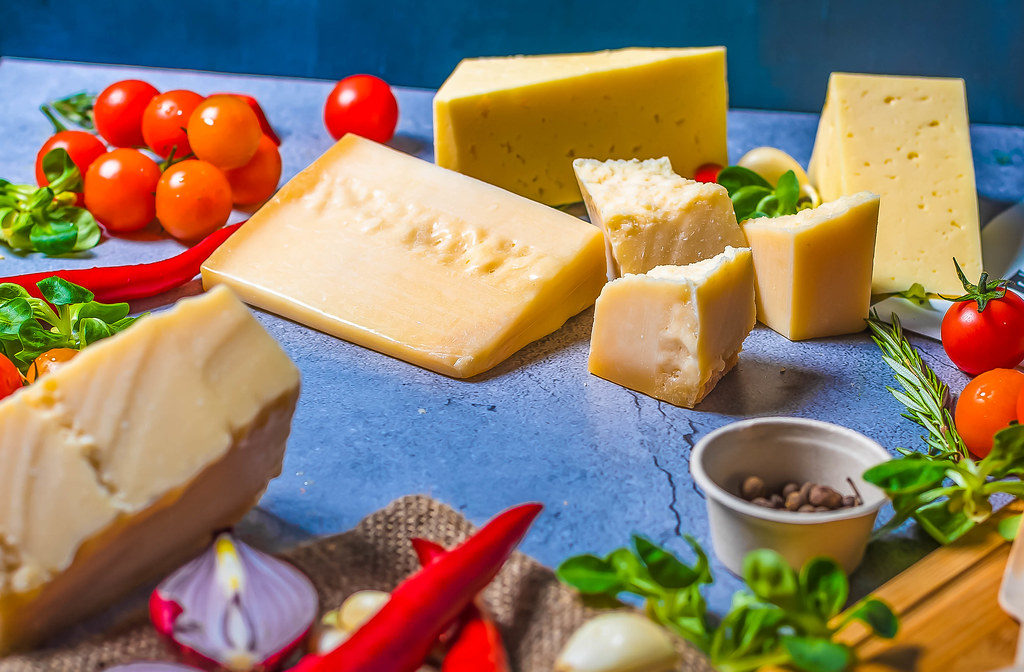
Over the centuries, a custom of eating dairy products emerged amongst Jewish communities around the world. While there are many reasons for this peculiar custom, some say that it originates from a verse in Song of Songs where the Bible is compared to milk and honey. As Shavuot is also considered to be a celebration of the Israelite nation receiving the Torah, it would seem appropriate to include a dairy-based meal as part of the celebration.

52 liters of water for a single liter of milk

Did you know that the dairy industry is quite notorious for its contribution to greenhouse gas emissions, groundwater contamination, inefficient land use, and the overuse of antibiotics? Or that the production of milk requires significant amounts of water? Researchers found that 52 liters of water are needed to produce just a single liter of milk. In light of climate change and the continual depletion of natural water resources, this would seem like a potential issue for water scarce countries and regions.

Luckily, Israel no longer suffers from water deficits since it began implementing technological solutions to its water management program in the early 2000s. Since then, through the use of desalination and wastewater recycling technologies, Israel currently supplies approximately 50% of its water needs from both of these inventions, thus, no longer solely relying on its natural resources.

Today, Israel is producing more than 604 MCM of desalinated water every year and treats 93% of its 500 MCM of annual sewage, which is primarily used for irrigation in agriculture.

This has reduced the amount of stress placed on natural water resources, which were mainly supplied by the Kinneret, and the mountain and coastal aquifers. No longer having to extract from natural supplies has also enabled environmental rehabilitation of water resources that had been exploited for decades.

The Cost of Water

However, these technologies do not come without a cost. While desalination has been supplying Israel with approximately 25% of its water demand, it is an energy-intensive process and produces harmful byproducts that affect marine life.

On average, for any amount of water entering a reverse osmosis desalination facility, half of it is turned into potable (drinking) water, while the other half is turned into a hypersaline brine that gets pumped back into the ocean. This hypersaline brine affects ocean environments in two ways – by reducing oxygen levels and increasing salt content. Since hyper saline brine is highly concentrated, it is denser than seawater and sinks to the bottom of the seafloor, disrupting marine ecosystems.

For now, Mekorot, Israel’s national water company, is redirecting some of the hypersaline brine from some of the seawater desalination plants into evaporation pools to produce salt. However, the costs of doing so are relatively high. They are also in the process of “examining innovative technologies for the treatment of the brine.”

Recycled wastewater also comes with its own challenges. While it is cheaper than desalination and prevents some sewage from otherwise being dumped into waterways, concerns have been raised about the potential contamination of microorganisms and traces of pharmaceuticals that have not been filtered out of the treated water. Due to these concerns, recycled water is only permitted for agricultural use in Israel. However, researchers have shown that eating produce irrigated with recycled water, has led to elevated levels of carbamazepine – an antiepileptic drug – in urine samples.

Israel has definitely solved its water crisis for the time being through the use of innovative water technologies. However, it must continue to develop novel solutions to address the challenges of desalination and wastewater reclamation.

Isaac Misri, ZAVIT* Science and Environment News Agency

Holidays and the Environment: From Shavuot to Dairy to Desalination Read More »