fbpx

April 28, 2020

Hidden Treasures in the Coronavirus

COVID-19 has become the most influential entity of our time. We experience its hidden presence personally, physically, emotionally, spiritually and financially. The virus, even for those who call it a hoax or political ploy, are forced to witness its influence and impact even as they deny its reality.

The country is at the mercy of leadership (federal and in some states) blinded by personal, egotistical and narcissistic goals affecting life and death. State leadership that follows science and medicine as a guidepost, give some of us a chance to fare well.

All that being said, what is real is real, even if doubters try to change people’s perceptions. The larger question, for me, is what are the hidden secrets, wisdom or seeds that are being planted in such challenging times? What is discovered for those of us who see opportunity and possibility for psychological and spiritual growth during this pandemic? How will our work, our relationships and our values shift and be allowed to flower in new ways?

The Torah portion Metzorah reminds us that in biblical times, there were diseases that afflicted many. Tzaarat, likened to leprosy, was seen as one of these. The Torah spells out the process of healing from such an illness, including separation from the community (sound familiar?), shaving facial hair, sacrificial offerings, sprinkling of blood and oil, and immersion, (both clothes and body).

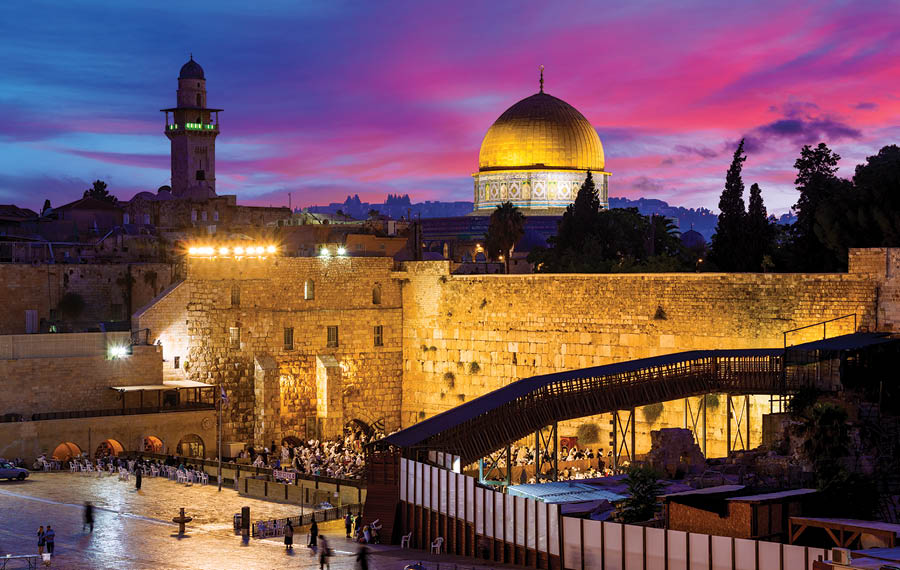
Torah acknowledges what we now know, that separation is essential for the healing process, as well as ancient rituals believed for their power of transformation. The rabbis teach that this illness is the result of lashon harah, the evil tongue. The power of the word, “God said … and it was,” is believed to alter not only the Universe but the human being as well. One of the greatest weapons is the mouth and its ability to destroy another. This disease was believed to spread, as well, onto the walls of houses. If the affected areas did not improve, the house was destroyed, the “walls were brought down.”

Rashi, the great medieval commentator, responds to this catastrophe in a way that should teach us all about understanding tragedy. Based on a midrash that suggested the Amorites hid gold in the walls of their homes before the Israelites entered and conquered the land, Rashi suggests that when the walls fell, to the surprise of the Israelites, it revealed hidden treasures. Often in life’s hardships we find a hidden gift.

The walls have come down in our world with chaos, confusion and uncertainty left in its wake. We huddle in our homes, for some not so lucky living in tents or makeshift housing, forced to spend a lot of time alone, or with our partners and children. Old ways of passing one another, rushing, quick meals and distractions have been ripped to shreds. Separate has taken on new meaning. Commercials remind us “we’re not in this alone.” The Universe has become one, and each person is an important part of the whole, so important, that keeping physical distance offers the gift of life.

The walls have come down in our world with chaos, confusion and uncertainty left in its wake.

Yet soul connection has become front and center. Friends, family, community and fellow students and colleagues are but a click away. Most importantly, we’ve come to meet our soul, a blind date for some.

There are treasures in this pandemic — newfound values, newfound fellow travelers, inner strength, hope and resilience teaching us what we are made of. The facades are cracked and, as Leonard Cohen sang, “that is how the light gets in.” Nature, beauty, music, reading, resting and conversing have come to life in a wholly/holy different way. Time has become, as Abraham Joshua Heschel describes Shabbat, a palace to enter and embrace.

Everything has been reduced to what is truly necessary and what is truly good. The wave of kindness, generosity, respect and care flows through our society. At their peril, so many do what is right, fulfilling the necessary work that feeds and heals so many. Offerings on the internet now abound sometimes with overwhelming abundance. With mask in place, friendly eyes connect and share a hello as never before.

Yes, gold is hidden in the walls that have come down and hidden treasures now are ours.


Eva Robbins is a rabbi, cantor, artist and the author of “Spiritual Surgery, Journey of Healing Mind, Body and Spirit.” 

Hidden Treasures in the Coronavirus Read More »
Palestine: The History of the Word Will Surprise and Liberate You

In 1937, Secretary of the Arab Higher Committee to the British Peel Commission, Awni Abd al-Hadi stated: “There is no such country as Palestine. ‘Palestine’ is a term the Zionists invented.” I came across this quote at a Club Z session. We were learning how to confront the deceptive map called “The Shrinking Map of Palestine,” a crafty piece of propaganda used in anti-Israel campaigns.

It has now become commonplace to encounter maps of the Middle East where the modern country of Israel is labeled as “Palestine” in numerous textbooks at schools. It is disturbing that even after seventy-two years since the Jews declared statehood and thousands of years of persecution, Jews today must fight for basic recognition of Israel.

It is disturbing that even after seventy-two years since the Jews declared statehood and thousands of years of persecution, Jews today must fight for basic recognition of Israel.

We are constantly bombarded by news stories about conflicts in “Palestine,” and often hear slogans such as “Free Palestine” at anti-Israel protests. Knowing this, a central question arises: how is it possible that the word “Palestine,” which today is associated with the Arab’s desire for an Arab state, was called an invention of the Zionists by an Arab leader less than a century ago?

The word Palestine originates from the term “Syria Palaestina,” given by Roman Emperor Hadrian in 135CE, who renamed the land of Israel after crushing the last Jewish rebellion against the Roman occupation and expelling the Jews from their homeland in 136CE. “Palaestina” was named after the Philistine people, a long-standing enemy of the Jewish people. And this was no accident: Roman Emperor Hadrian purposefully renamed the Kingdom of Judea after the Jews’ greatest foe to not only eradicate all evidence of a Jewish presence there, but to humiliate them as well.

Roman Emperor Hadrian purposefully renamed the Kingdom of Judea after the Jews’ greatest foe to not only eradicate all evidence of a Jewish presence there, but to humiliate them as well.

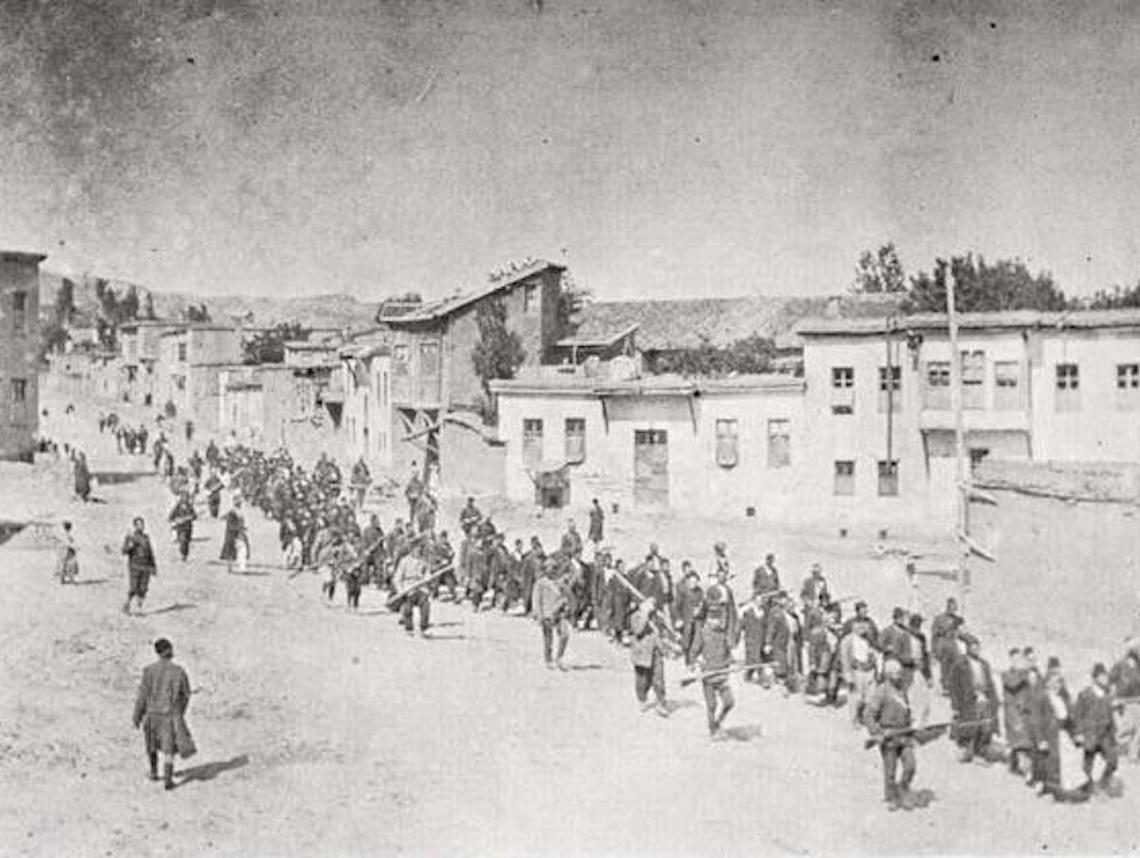
Armenian civilians are marched to a nearby prison in Mezireh by armed Ottoman soldiers. Kharpert, Ottoman Empire, April 1915. Photo from Wikipedia

For two millennia, as Jewish people lived throughout the diaspora, the ancient Jewish homeland of Israel fell under the control of foreign empires — the Byzantine empire, the European Crusaders, the Ottoman Empire, and the British Empire. With the dawn of the modern Zionist movement and the increased virulence of pogroms at the turn of the 20th century, many Jews began to immigrate to Israel. In 1917, when Britain acquired the territory of what is now Israel from the Ottoman empire post-World War I, they renamed it the British Mandate of Palestine. To encourage more Jews to make Aliyah (returning to Israel), Zionists created posters titled “Visit Palestine,” as Palestine was the common term for Israel at the time. Despite its Roman origins, Jews adopted Palestine with pride.

And thus, in the beginning of the 20th century, Palestine became closely associated with Zionism— a cause of great fury for Jew-hating Arab leaders. In a desperate attempt to make certain Jews would not be granted a country of their own in response to the 1937 Peel Commission, Anwi Abd al-Hadi tried to deny all Jewish ties to the land of Israel by (accurately) denying the existence of a nation called Palestine.

But as the State of Israel blossomed into reality in 1948, there was no more use for the secular word Palestine to refer to the Jewish homeland. But as Jews stopped using the word “Palestine”, Arab Muslim leaders seized the word to describe an Arab entity that never existed. They rebranded it. Inverted it. Flipped it inside out. The word that spoke of the dreams of the Jewish liberation became repurposed as the narrative of an Arab nation unjustly oppressed by the Jews.

As Jews stopped using the word “Palestine”, Arab Muslim leaders seized the word to describe an Arab entity that never existed.

And when we Americans think of their narrative, of a minority suffering, of being deprived of their right to self-determination, we so desperately want to help them–the tired, the poor, the huddled masses yearning to breathe free–that we don’t see the flaws in their narrative. Israel did not even have possession over Judea and Samaria (known today as the West Bank) until 1967; the Arabs had close to twenty years to create their own state, yet did nothing of the sort.

“From the river to the sea, Palestine will be free!” This phrase, which is ubiquitous among “Palestinian Rights” activists, sums it all up: the goal of the Palestinian movement is not to form a separate Arab state to coexist alongside Israel, but rather to obliterate the entire Jewish State of Israel from the Jordan river to the Mediterranean Sea.

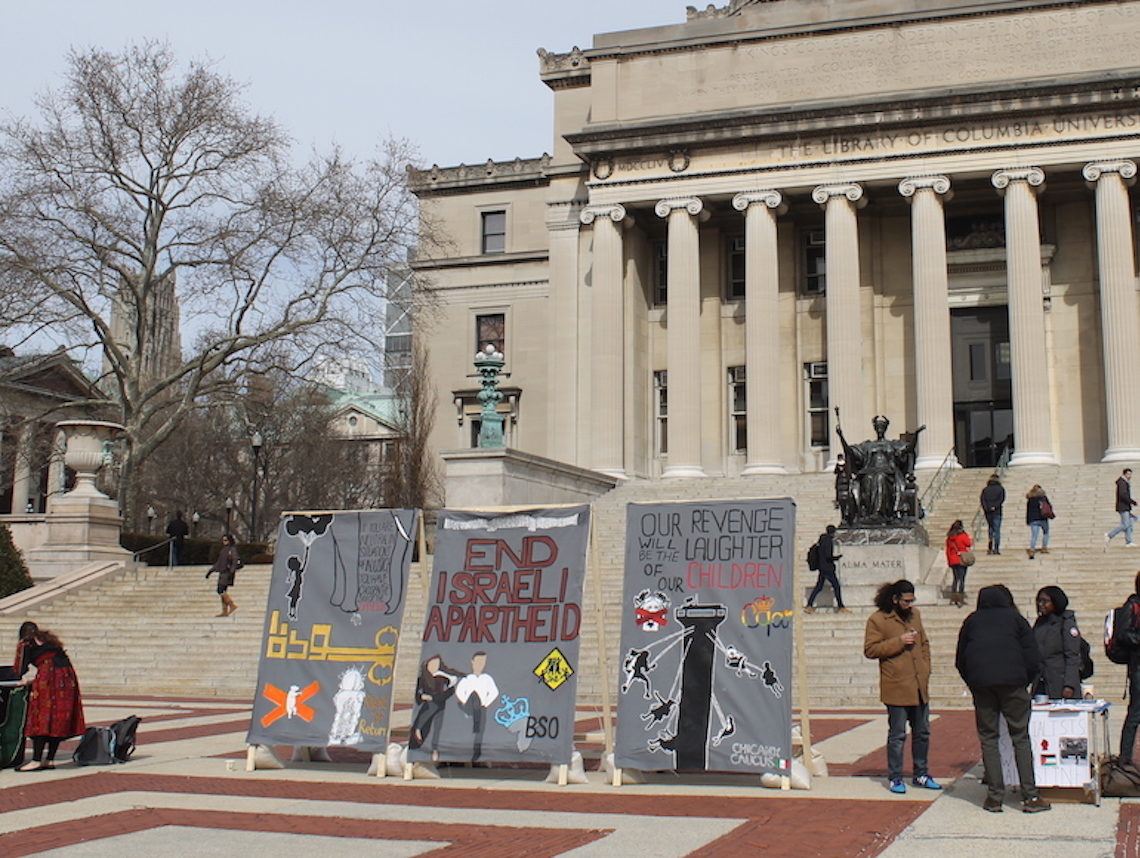
BDS protesters at Columbia University.

And yet, despite there never being an Arab Palestinian sovereign state, Arabs living in Judea Samaria today identify as Palestinian. It would be unfair and cruel to outright deny their identity. Despite the fact that today’s Arab Palestinians have no historic or ethnic ties to the Philistines who lived during the Roman occupation of Judea, I choose to accept the Arab identity as “Palestinian” and their rights to live in the ancient homeland of Judea and Samaria, with just one small requirement: that they recognize the rights of the indigenous Jews to live and thrive in the land of Israel.

That’s it. Because I firmly stand by the notion that everyone has the right to their identity. But when the very identity of a people is rooted in the rejection of another people’s right to a national homeland, that identity is hypocritical and undermines the very concept of justice.

Everyone has the right to their identity. But when the very identity of a people is rooted in the rejection of another people’s right to a national homeland, that identity is hypocritical and undermines the very concept of justice.

We cannot let our Jewish brothers and sisters become caught up in the tempting social-justice sounding fervor of the free Palestine movement when we know it is a fictitious story rooted in the desire to completely and utterly destroy our people.

And so, the next time you hear someone say something about freeing Palestine, tell them Awni Abd al-Hadi’s quote. You never know, you may save someone’s Jewish identity — or maybe even the future of the Jewish people.

Jennifer Karlan is a Club Z teen and a high school student in Los Angeles.

Palestine: The History of the Word Will Surprise and Liberate You Read More »

A Twitter Call to Send Kosher Pizza to Hospitals Feeds Thousands Nationwide

Donors are sending kosher food to thousands of hospital workers nationwide

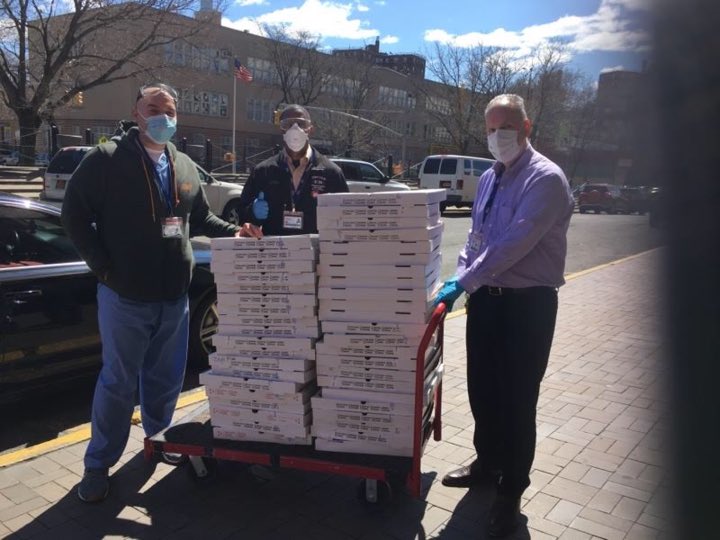
Bethany Mandel put out a call on Twitter for people to send kosher pizza to healthcare workers battling in hard-hit metropolitan areas.

Mandel had no idea that her idea would send so much love and so much food to hospitals. Her idea for sending pizza developed into a full-fledged organization called Kosher19 in a matter of days.

Kosher19 is now run by a small group of volunteers placing orders around the country. Doctors, nurses and other healthcare professionals get fresh and free kosher food delivered during their shifts. The project simultaneously helps local kosher restaurants stay open during to COVID-19 crisis.

All Volunteer Effort

The organization is making sure thousands of healthcare professionals of all backgrounds can continue saving lives, while staying appreciated and nourished. More than 10,000 healthcare workers at nearly 200 hospital units nationwide received meals in the last month.

Organization volunteer Dave Weinberg mentioned that, “We’ve received more than $75,000 in grassroots donations but the need is only growing.”

After hearing reports of hospital workers going without food, Kosher19 hopes to raise more than $250,000. Additional funds says Weinberg, “will help ensure healthcare heroes around the country can be nourished while saving lives.”

Feeling the Love

Kosher19 Founder Bethany Mandel shared with this letter she recently received from a Chief Resident at a major metropolitan New York Hospital:

We are extremely appreciative of the food that you have sent over to our staff. The delicious pizza and French fries go a long way in making us feel cared for and in physically repleting us as we serve on the front lines. We hope to eat and share in good health.

Kosher19 has other social media stars helping raise awareness and funds for the project. Dani Klein, an influencer on Instagram and publisher of the Kosher restaurant website YeahThatsKosher is helping direct people to Kosher19.

“I initially jumped on because I wanted to find a way to give back to those that are helping save peoples lives. I am not in a position save lives, but I wanted to find a way to do help. Through [Kosher19] I could both support front line health care workers and the small businesses in the kosher restaurant industry. Many of these owners I know personally through my work. It’s important we support the kosher restaurant industry so there is are kosher restaurants when this crisis is over.”

Kosher19 Coming to LA

Kosher19 will soon be delivering food to area hospitals in Los Angeles. If you are interested in helping launch Kosher19 in Los Angeles, please enter your information on the icanhelp.site and indicate on the form that you want to help with Kosher19.

Los Angeles Kosher restaurants, including Bibi’s, Pizza World and Psy Burger have organized their own food donations to area hospitals. They have sent breakfasts and lunches, depending on the hospitals and requests.

I spoke with local restauranteur Dan Messinger who runs Bibi’s Bakery and Cafe on Pico. Messinger has been active and creative in finding ways to donate food and stay in business though this crisis.

“Together with Pizza World we did a big delivery to Kaiser. We have sent muffins, cookies and bagels to Cedars. Some hospitals will take family style food like pizza, other’s have asked for individually portioned meals. Feeding hospital staff helps to replace the void of kosher catering orders, which was an impart revenue stream,” said Bibi’s owner Dan Messinger.

What inspired me about the Kosher19 initiative is that it takes the burden off the Kosher restaurants to collect the donations. Using donation platform Givebutter, you can easily make a tax-deductible donation of your cell phone to help hospital staffs and local kosher restaurants.

If you are able to make a donation — it costs about $13 a meal — and/or help fundraise for this cause, visit LA Kosher19’s page on Givebutter.

A Twitter Call to Send Kosher Pizza to Hospitals Feeds Thousands Nationwide Read More »