fbpx

April 28, 2020

Genesis Was Right: We Need to Subdue, Not Worship, Nature

A statement widely attributed to the great British thinker G. K. Chesterton describes the modern period as perfectly as any single idea can: “When people stop believing in God, they don’t believe in nothing; they believe in anything.”

One of these substitute gods has been nature.

Indeed, of all the false gods, nature is probably the most natural for people to worship. Every religion before the Bible had nature-gods — the sun, the moon, the sea, gods of fertility, gods of rain and so on.

That is why the farther Western society gets from biblical, i.e., Judeo-Christian, religions, the more nature is worshipped.

Everyone on the left and right cares about the environment. But caring about the environment is not the same as environmentalism. Environmentalism, for most of its adherents, is a secular religion. These people, many of whom refer to, and truly regard, the Earth as a goddess (Gaia, the name of the ancient Greek Earth goddess) worship the environment.

The man who, more than any other, started the modern environmentalist religion was James Lovelock, who developed the “Gaia hypothesis” in the 1970s. Almost 50 years later, in 2014, Lovelock told The Guardian newspaper, “Environmentalism has become a religion.”

New York Times columnist Ross Douthat described the 2009 James Cameron blockbuster film, “Avatar,” as “Cameron’s long apologia for pantheism, a faith that equates God with Nature, and calls humanity into religious communion with the natural world.” That equation of God with nature was a major reason for the film’s popularity.

Douthat, one of the only religious (as in believing in and practicing a religion) columnists at The New York Times, added, “The threat of global warming, meanwhile, has lent the cult of Nature qualities that every successful religion needs: a crusading spirit, a rigorous set of ‘thou shalt nots,’ and a piping-hot apocalypse.”

When you ask atheists, as I have for decades, what they believe in, the most common answer is “science.” There is nothing higher than science for an atheist because the natural world is all there is. So, worship of the Earth, the environment, or nature is almost inevitable in a secular world.

The Torah takes an entirely different view. As explained at length in my Torah commentary, “The Rational Bible,” the first verse of the Bible — “In the beginning God created the Heavens and the Earth” — contains the most radical idea in history. It stated, for the first time in history, that God created nature and is not part of nature. It is one of the reasons I believe the Torah is God-given. No human beings 3,000 years ago in the late Bronze Age would have come up with an idea so opposed to the way the human mind naturally works — to regard gods as part of nature.

From the point of view of the secular, Gaia-worshipping world, Genesis gets even worse when, 27 verses later, God tells human beings to, “Be fruitful and increase in number; fill the earth and subdue it.”

Both instructions infuriate Earth-worshippers. Regarding being fruitful, they oppose people having more than one child, and many advocate having no children so as to have minimal human impact on Mother Earth. But the second part — ruling over nature — is what really angers them.

Nature, it turns out, is not our friend, let alone a god. If it were up to nature, we’d all be dead.

Maybe the coronavirus will awaken young people, who have been taught by nature-worshipping teachers and raised by nature-worshipping parents, to the idiocy of worshipping nature rather than subduing it. Nature, it turns out, is not our friend, let alone a god. If it were up to nature, we’d all be dead: Animals would eat us; weather would freeze us to death; disease would wipe out the rest of us. If we don’t subdue nature, nature will subdue us. It’s that simple.

Nature is beautiful and awe-inspiring. It’s also brutal and merciless. “Nature, red in tooth and claw,” as Alfred Tennyson aptly describes it. Nature follows no moral rules and shows no compassion. The basic law of all biological life is “survival of the fittest,” while the basic law of Judaism and Christianity is the opposite: the survival of the weakest with the help of the fittest. Nature wants the weakest eaten by the strongest. Hospitals are as anti-natural an entity as exists.

Only human beings make hospitals. We do so not by worshipping nature but by subduing it.

If the COVID-19 virus destroys the foolish veneration of nature and leads more people, especially the young, to a new respect for the biblical worldview, it might be the one silver lining in this catastrophe.

Copyright 2020 creators.com. Dennis Prager is a nationally syndicated radio talk show host; president of PragerU, which has 1 billion views a year; and author most recently of volume two (Genesis) of the bestselling Torah and Bible commentary in America, “The Rational Bible.” Reprinted with permission.

Genesis Was Right: We Need to Subdue, Not Worship, Nature Read More »

Seth Rogen Dresses Up As 1920s Jewish Pickle Maker for New Film

The Seth Rogen Jewish immigrant pickle movie is still happening, and we now have some striking photo evidence.

If you missed the news from a year and a half ago, Rogen plays a Jewish immigrant in 1920s New York City who gets trapped inside a pickle vat for a century in the upcoming film “An American Pickle.”

On Monday, Rogen posted a photo of his character, Herschel Greenbaum, on Instagram — and the historical accuracy is shocking. Rogen points out that it’s an “actual Tin Type photo,” meaning it was taken with a device of the kind used from the 1800s into the early 20th century.

The beard, the hat and the shading produced in the tintype transport the viewer back to the early 20th century Lower East Side.

https://www.instagram.com/p/B_fqqEZhlp8/

The other news about the film from Monday is that it will now be released through HBO Max, not in theaters, at a date to be determined — because who is going to a movie theater for the foreseeable future?

Seth Rogen Dresses Up As 1920s Jewish Pickle Maker for New Film Read More »

Beverly Hills Police Chief, Who Allegedly Made Anti-Semitic Remarks, Retires

The city of Beverly Hills announced on April 25 that Police Chief Sandra Spagnoli is retiring. Her last day will be May 15.

Beverly Hills City Manager George Chavez said in a statement, “During the chief’s tenure, crime was reduced while the department increased diversity, public outreach, best practices and advancements in technology. We thank Chief Spagnoli for her service to our community and her three decades of public service in law enforcement.”

Spagnoli said in a statement, “I am grateful to have served Beverly Hills and proud of the accomplishments over the past 4 years to keep this world-class community one of the safest in the nation.”

According to the Los Angeles Times, Spagnoli will be on vacation for an unspecified amount of time before the May 15 date.

Spagnoli has been the target of several allegations of making anti-Semitic and racist comments toward her employees since she became Beverly Hills’ first female police chief in February 2016. Among the allegations are that Spagnoli referred to yarmulkes as “funny little hats” and that she told Beverly Hills Police Captain Mark Rosen, who is Jewish and has since retired, that it’s “sacrilege for your people not to invest money.” Spagnoli also reportedly said, “Ew, gross” when learning that one of her employees is a lesbian and asked if she had to “dress Mexican” when she was invited to a Latino employee’s home.

BEVERLY HILLS, CALIFORNIA – APRIL 22: Campaign banners to prevent the spread of COVID-19 are seen on a deserted Rodeo Drive during the COVID-19 lockdown on April 22, 2020 in Beverly Hills, California. COVID-19 has spread to most countries around the world, claiming over 175,000 lives with infections over 2.5 million people. (Photo by Frazer Harrison/Getty Images)

There were also allegations that Spagnoli had sexual relations with two subordinate employees who later were rewarded with promotions over more qualified officers.

More than 21 current and former employees filed lawsuits and complaints regarding these allegations, resulting in the city of Beverly Hills paying $7.3 million in settlements, according to Los Angeles Magazine.

Spagnoli accused those making the allegations of launching a smear campaign against her.

“When you implement change, you create some waves within an organization, which is what has happened here,” Spagnoli told the Los Angeles Times in January 2019.

The city has defended Spagnoli from the allegations, although a report from NBC Los Angeles stated that Spagnoli was told that she had to step down by April 24 or else she would be removed from her position as police chief.

Attorney Brad Gage, who has represented several people who filed lawsuits against Spagnoli, told the Los Angeles Times, “To me, any employer who retains someone as long as they did in the face of so many different lawsuits from so many different long-term employees who had never brought claims of discrimination, retaliation or harassment ever in their long careers is very telling. Why did it take so long to get rid of the chief?”

Beverly Hills Police Chief, Who Allegedly Made Anti-Semitic Remarks, Retires Read More »

david suissa podcast curious times

Pandemic Times Episode 28: Remembering the fallen on Yom Hazikaron

New David Suissa Podcast Every Morning at 11am.

On this Israeli Memorial Day, a reflection on how we honor those who fell, including a short story and selected poems.

How do we manage our lives during the Coronavirus crisis? How do we keep our sanity? How do we use this quarantine to bring out the best in ourselves? Tune in every day and share your stories with podcast@jewishjournal.com.

Pandemic Times Episode 28: Remembering the fallen on Yom Hazikaron Read More »

Reboot Launches Quarantine Podcasts With a Jewish Slant

Jewish arts and culture nonprofit Reboot has launched several new digital programs, including a pair of thought-provoking podcasts focusing on Jewish life during COVID-19.

Emmy and Peabody Award-winning writer and TV producer Steve Bodow (“The Daily Show”) brings his gift of gab to “In Quarantine,” a 15-minute interview podcast that posts twice a week. “I’m a social person. I like and miss talking to people,” he told the Journal. “The podcast is a different way to keep that in my life, to scratch my itch and maybe help others as well. I thought, since this pandemic was going to be such a life-changing thing, maybe I could have some conversations about it and hear how other people are contending with it and how their lives are adjusting. Everyone’s lives and careers are affected in some way. We’re all in this together.”

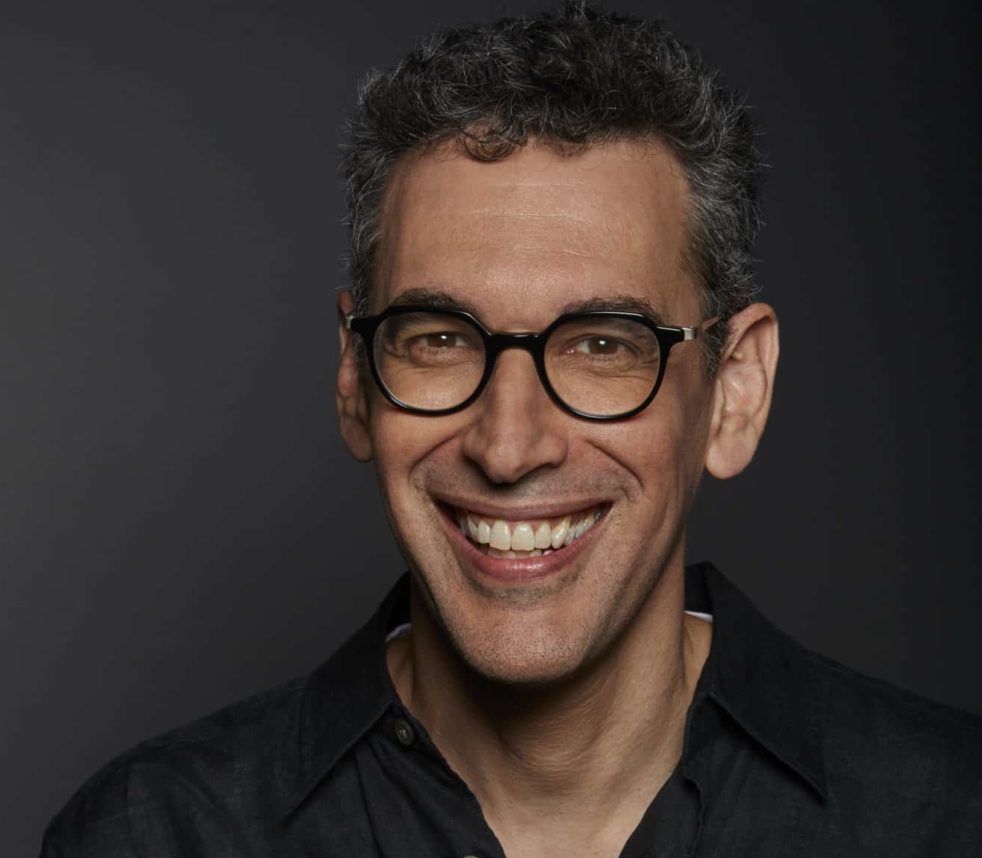
Steve Bodow; Photo by Sean Gallagher

So far, Bodow has discussed germaphobia with author A.J. Jacobs; moving the American Jewish Historical Society’s exhibits online with its director Annie Polland; and restaurant closures with chef Jessica Koslow (Silverlake’s Sqirl), who is providing meals to furloughed restaurant workers. “We talk about Jewish identity, if it has played any role in the quarantine,” Bodow said. “It’s not focused on religion, but it’s the spice, the accent that runs through it.”

Bodow, who was raised in a Conservative home in Rye, NY, “kind of dropped” Judaism after his bar mitzvah. “I always felt Jewish, but it wasn’t an active part of my life,” he said, noting that having children — he has two, one studying for her bat mitzvah — and being part of Reboot has reconnected him. He and his family are quarantining in his parents’ home north of New York City. “We have more space and it’s a little easier to maintain the isolation,” he said. “Between working on scripts for new projects and having kids at home, the days tend to go pretty fast.”

Rabbi David Kasher and comedian Moshe Kasher explore life in coronavirus times through a Jewish lens with humor and brotherly banter. In their podcast “Kasher vs. Kasher,” they take potshots at each other while providing provocative insights into the issues currently dominating our lives.

“Right now, there’s really only one topic. Everyone is thinking about the same thing,” David Kasher, an associate rabbi at IKAR, told the Journal.

Recording separately as social distancing requires, “We talk about the aspects of our reality that Judaism might provide insights to.”

So far, the brothers have compared the COVID-19 crisis to the plagues of Exodus in the Passover podcast, and weighed in on the biblical preoccupation with cleanliness and how it has served us well historically and continues to do so during the present outbreak. The third podcast’s theme is about “hermits, loners and living the cloistered life, and self-imposed isolation in Jewish tradition,” Kasher said.

“I want people to see that Judaism is fascinating and relevant, but also through our debates and banter, I want them to see that part of what it means to engage with Judaism is to debate and question and disagree.” — Rabbi David Kasher

“It’s difficult to find ways to share Jewish ideas through entertainment media,” he noted. “What we’re trying to do is find that sweet spot that is ‘edutainment.’ Part of a rabbi’s job is to show how the tradition can speak to our current reality, whatever it is. In this moment, the tradition really does have something to say, in some really surprising ways that people haven’t thought about.

“It’s a little tough to talk about purity rituals in Leviticus on a podcast, so having a comic there and a lively conversation creates an ease and enjoyment that allows us to talk about these things without hitting you over the head.”

Kasher doesn’t mind playing straight man to Moshe, who is three years younger and is a podcast veteran, currently participating in another with his wife, comedian Natasha Leggero. “Any opportunity to work with my brother is a lot of fun,” he said, noting “Kasher vs. Kasher” is an expanded version of a previous Reboot podcast. “We get along really well, but there’s an argumentative streak in our family that we both share. It’s natural for us to be debating and borderline insulting to each other, but it’s all in love. It’s a family dynamic but also a Jewish dynamic.

“I want people to see that Judaism is fascinating and relevant, but also through our debates and banter, I want them to see that part of what it means to engage with Judaism is to debate and question and disagree,” he continued. “You can be an active interpreter of information, not just a passive receiver of it.”

For Kasher, the most difficult part of the pandemic “is the fear of what might happen. I’m fortunate to be working and haven’t lost anyone close to me. But I live with the fear that someone I love might get sick,” he said. “People I know are already experiencing economic hardship. We’ll all have to deal with the economic collapse that will follow this. We’re all trying to make the best of it. But I’m worried for the people I love. The dread is with me all the time.”

And in his job at IKAR, he has had to adapt to the new normal. “We’re not meeting in person, and the whole rhythm of our communal life has drastically changed,” he said. “The day-to-day looks very different, but the bottom line is the same. We do a lot of classes online, services online. I call people to check in on them. We’re just trying to keep people connected and cared for.”

Kasher is not surprised both he and Moshe entered professions in which communication is key, and he credits that to growing up as sons of deaf parents. “You do a lot [of] interpreting and talking for them, so we got used to it at an early age,” he said. “We had a deep understanding of what it means to communicate not only through words but gestures, tone of voice and expressions. We owe a lot to our parents for deepening our toolbox of communication skills.”

After the Kashers’ parents’ marriage ended, their father, who was raised in a Chasidic family, married a woman from the ultra-Orthodox Satmar community. “It’s a huge part of what shaped me as a child,” Kasher said. “My encounter with that community when I was young was on the one hand strange and uncomfortable, but also very compelling and alluring. It was rich and profound but also mysterious. When I finished college, I went to yeshiva to figure all of it out. One thing led to another and I’m still trying to figure it out.”

Kasher, a New York native who has degrees from Wesleyan University and Berkeley Law, was ordained in 2007 and served as an educator at Northern California’s Berkeley Hillel and the nonprofit Kevah there before joining IKAR two years ago.

“A religious life is constantly evolving. If we’re on a spiritual journey, the whole point is that we don’t have all the answers. The search never ends,” he said. “I had become more progressive, and when the opportunity arose, I found, to my delight, that my journey matched what IKAR stood for: trying to strike a balance between a traditional Jewish service and practice and the modern world and its values, and trying to embrace the past in the medium of the present. Judaism has always tried to figure out how we can carry this tradition forward, be rooted in the past but also respond to the challenges and opportunities of the moment. That’s what Judaism is and what the podcast is.”

Thinking about the lessons the coronavirus crisis has taught him, Kasher said, “I feel incredibly grateful for my relationship to God, to Torah and to my people. Those are the things that are carrying me. My spiritual life, my intellectual life and my connection to my community make this strange isolation meaningful and tolerable.

“What this pandemic is making so clear is it’s not about what we ought to do, but we have to do. We have to care for each other because our lives depend on it. To care for everyone is to care for yourself. I hope that will stay with all of us.”

“Kasher vs. Kasher” streams here and “In Quarantine” streams on here.

CORRECTION: Annie Polland is the director of the American Jewish Historical Society.

Reboot Launches Quarantine Podcasts With a Jewish Slant Read More »

Musings from the Bunker #46

A couple of folks commented that in my list of 20th century genocides, I failed to list Mao’s Cultural Revolution or the 30-40 Million killed by Stalin in the 1930s. My apologies; it was not my intent to create an exclusive list of ignominy. There is a long list and no shortage of candidates. But for a great movie on Uncle Joe Stalin, there are few movies quite as entertaining as The Death of Stalin. Here’s a trailer:


A PARABLE

There are those who maintain that the lock-down is all an overreaction. They base this in large measure on the reported death toll being below initial estimates. Of course, they fail to acknowledge that the shutdown itself was a huge factor in keeping people safe. Here is a parable provided by Afshine Emrani, that helps articulate the stupidity of this position:

A car is headed towards a cliff.  A man screams “slow down.”  He yells “stop.”  He jumps in front of the car and finally brings the vehicle to a halt.  The driver gets out looks around and is angry at the man for scaring him when he’s totally fine. The man points to the cars that didn’t stop and fell off the cliff, to the wreckage and to the dead bodies.  The driver refuses to listen because he is fine and his car is fine.  The man says now that you’re safe, you can start driving; but go slow and in a new direction.  The driver is pissed for having listened to this fear mongering idiot in the first place, rolls his eyes, and drives away slowly and in a new direction.

Hopefully we are wise enough to drive away slowly and carefully and avoid the next possible catastrophe.

In another act of sophistry, some find an explanation for the criticism of the administration’s failures to date by saying it’s “perfectly natural” to have feelings of anger with government for the situation in which we find ourselves. This recharacterization gives a free pass to the administration by suggesting that we all just “feel bad” or “feel frustrated” (as if the repeated lies, delays in taking action, lack of appreciation of the gravity of the situation, propounding dangerous therapies, and sheer ineptitude aren’t enough reason to be angry). It’s sort of like when people get in a fight and say “I’m sorry you feel that way.” By deflecting a discussion of real substantive concerns and instead focusing on the “feelings” of the observer, one removes agency from the actors and excuses their failures in leadership.

INSIDE THE LIBRARY—SORTED BY BOOKS FOCUSED ON PROMINENT YEARS (PART II)

Welcome back to my library! As I related last week, everyone organizes their library a different way (or not at all!). Few are as clever as the one above, created by librarians with too much time on their hands.

I organize my non-fiction around broad topics, (e.g., words and grammar, science, medicine/disease, economics, politics, sports, etc.). One such categorization is books about specific eras or events. Basically, how a particular event or movement was an inflection point between what was and what would come. The Sack of Rome, Constantine’s conversion, the Spanish Inquisition, the discovery of the new world, the American Revolution, and the Industrial Revolution all are seminal events. But these cover pretty broad periods. Sometimes it’s a year or a month that is the fulcrum of past and future. Here are some of the books I’ve enjoyed based on a particular year and that year’s effects on the world:

  • 1603, The Death of Queen Elizabeth I, the Return of the Black Plague, the Rise of Shakespeare, Piracy, Witchcraft, and the Birth of the Stuart Era, by Christopher Lee. The title really describes the contents well. A plague, a complete upending of government, and the end of medievalism. Sounds familiar (well, at least two out of the three).
  • 1688, a Global History, by John E. Wills, Jr. This is a great survey of the world at a pivotal time. The chapters are short, so whether you enjoy just a little history lesson a day, or are using these brief chapters as a soporific, it’s a great book. Truth in advertising: John was my Chinese history professor in college. Notwithstanding that I only got a B+ in his class, he was a great professor and I harbor no ill will (well, maybe a bit…).
  • The Scratch of a Pen, 1763 and the Transformation of North America, by Colin G. Calloway. Americans tend to think of 1776 as the beginning of the American experiment. But the case can be made that it began as soon as the Seven Years’ War ended. The Treaty of Paris established British hegemony over the eastern seaboard from Canada to Florida and pushed the French and Indians away. The war is where Major George Washington got his inauspicious start.
  • 1831, Year of Eclipse, by Louis P. Masur. Covers an important year in American history—Nat Turner’s rebellion, de Tocqueville’s Democracy in America, Jackson’s America, Indian Removal Acts, and other events presaging the Civil War. And, of course, a total eclipse…
  • April 1865, by Jay Winik. Okay, so it’s a month, not a year. This widely acclaimed book covers the month when the Civil War ended, President Lincoln was assassinated, and the beginnings of the messy attempts toward reconciliation.

At some point in the not too distant future, I’m confident we will be reading a book entitled, “2020: The Year of the Pandemic.” Let’s hope it isn’t entitled “2020-2021: The Pandemic that Kept Returning…” Last group of books by year coming next week…

IF YOU REALLY NEED SOMETHING TO DO

Believe it or not, some who have joined us late have asked for access to the earlier Musings. The Musings from the Bunker since the beginning are saved as a blog.

MUSEUMS ON LINE, REDUX

From Keenan Wolens, here are a few more museums that can be visited on line, compiled by Christie’s:

Art Institute of Chicago

Visit an interactive online version of the current exhibition El Greco: Ambition and Defiance.

The Frick Collection

Take a virtual tour of the museum’s historic home before they temporarily move out for renovation.

The Getty

Visit the Getty’s blog, the iris, for a list of the many ways you can explore the museum’s programs and collections online.

Guggenheim Museum

Listen to a tour of the museum’s Frank Lloyd Wright-designed building and watch videos from behind the scenes at the museum.

LACMA

Visit LACMA @ Home, the museum’s updated homepage showcasing digital media for those at home looking for things to watch, listen, read and learn.

MELLISSA ETHERIDGE IN CONCERT—EVERY DAY

Melissa Etheridge promises to perform live from her home every day until this is over (like the Musings!): https://www.youtube.com/melissaetheridge. There’s a lot of chat but you can skip around to the songs. The first song is “Pulse.”

AN ARTIST ON ISOLATION 

If isolation tempers the strong,

It is the stumbling block of the uncertain

–Paul Cezanne

Enjoy the day,

Musings from the Bunker #46 Read More »

einat wilf and adi schwartz

Dr. Einat Wilf and Adi Schwartz: The War for the Palestinian Right of Return

Einat Wilf and Adi Schwartz return to discuss the english edition of their book “The War for the Palestinian Right of Return.”

Einat Wilf is a writer and a politician who served as a member of the Knesset for Independence and the Labor Party.

Adi Schwartz is a journalist and academic. A former staff writer for Haaretz, he currently works as a freelance journalist for Israeli and international newspapers and magazines.

Dr. Einat Wilf and Adi Schwartz: The War for the Palestinian Right of Return Read More »

Will There Be Camp This Summer? Three Jewish Camps Will Decide This Week, and Likely Delay.

(JTA) — Thousands of parents and children have been asking the question for months, with increasing anxiety: Will the coronavirus cancel summer camp?

Three Jewish overnight camps, from the Conservative Ramah movement, are set to announce their decisions this week. Ramah in Wisconsin, Colorado’s Ramah in the Rockies and Ramah Darom in Georgia are scheduled to start camp in early to mid-June.

By Friday, they all plan to say whether that will actually happen. And the answer is probably going to be no.

It’s premature, camp directors say, to set a policy for the whole summer. But due to the continuing risks of the coronavirus pandemic, and the corresponding social distancing measures designed to slow its spread, camp is likely to at least be postponed, if not canceled outright.

“There’s a very high likelihood that there won’t be camp early [in the summer] for those who open early,” said Rabbi Mitchell Cohen, director of the National Ramah Commission, which coordinates 10 camps.

“There’s a lot of risks associated with opening camp this summer, obviously, and every camp and every movement is going to have to make a decision as to whether the risks are smart,” he said.

Whether camps can open has been the subject of emotional debate and intense stress for parents and children for whom the prospect of a summer at camp has been a beacon in a dark time. Shut down and thousands of children miss out on a highlight of their year, one that studies show is crucial to the formation of long-term Jewish identities. But staying open means potentially contributing to the spread of a disease that has already killed hundreds of thousands of people around the world.

Camps are awaiting guidelines on summer camp from the Centers for Disease Control and Prevention that are due out this week. Then, camp directors said, they will need to see what state and local social distancing regulations will look like for the summer. Only after that will they be able to confer with their boards of directors and medical advisers before making a decision.

Ramah in Wisconsin, which has operated every summer for more than 70 years, is potentially facing its first shutdown ever, said Executive Director Jacob Cytryn. Each season, the camp serves 550 kids in third through 11th grade. It is scheduled to open June 16.

“The status quo right now in terms of governors’ stay-at-home orders in the Midwest, and the county situation up in the Northwoods [where the camp is located] would make it very difficult to open on time,” Cyrtryn said. “We remain hopeful and really want to figure out how to provide as much of a camp experience as we can.”

Cytryn will announce a decision on postponing by the end of the week. But, he said, “We’re not at a 50-50 coin flip. We’re far enough into this that we have a pretty good sense of the immediate decisions.”

(Full disclosure: I attended Ramah in Wisconsin as a camper while Cytryn was a counselor there.)

Ramah in the Rockies, which is scheduled to open June 9, is also facing state and local regulatory hurdles that would be difficult to surmount, said Executive Director Rabbi Eliav Bock. Bock also will announce a decision by the end of the week.

“At this moment, the regulations are such that there is no way that we could open based on what they are saying right now,” he said.

The camp, which was among the first nonprofits to receive a federal grant shoring up funding, will issue a final decision on the entire summer by June 1.

“Do we think that we, Ramah in the Rockies, can operate a community that provides for the safety of our campers and staff?” he asked. “If the answer is yes, then we go down one road. If the answer is no, we go down a different road.”

Ramah Darom’s director, Geoffrey Menkowitz, referred questions to Cohen.

Several other Ramah camps, including those in New York and Massachusetts, are set to open their summer sessions in late June. Their websites promise decisions about whether to open between mid-May and June 1.

The Ramah camps are among the largest and most established Jewish camps in the United States, but they are far from the only ones grappling with the question of whether to operate this summer. The Union for Reform Judaism operates 16 camps across the country, and there are also dozens of Orthodox, Reconstructionist and nonaffiliated Jewish camps.

Even if camps are able to operate this year at all, they will confront a whole different set of questions. Cytryn listed a few: Will the camp have sufficient medical staff? Can it purchase enough cleaning supplies? What about flour? Will it be able to bring in the traditional contingent of Israeli emissaries or hire European kitchen workers?

“We’re also imagining a world where we can’t run camp at our camp, but maybe we can do other in-person activities in our major cities,” he said. “We’re also holding open the possibility that camp as we know it, with the numbers we know, can’t happen.”

Both Cytryn and Bock expect their camps to weather the year financially, even if they can’t operate this summer. Both have committed to refunding tuition if camp is canceled. And both said their minds are on their campers, who will be missing even more time with their peers.

“Who are the teenagers this year who might be missing out on that experience if we don’t open?” Bock said. “That’s what makes me most sad.”

Will There Be Camp This Summer? Three Jewish Camps Will Decide This Week, and Likely Delay. Read More »

Woman, 62, Stabbed In Apparent Terror Attack In Central Israel

JERUSALEM (JTA) — An Israeli woman, 62, is in serious condition after she was stabbed several times in front of a mall in the central Israeli city of Kfar Saba.

The stabbing took place on Tuesday morning, shortly after a two-minute siren brought the country to a standstill as Israelis observed the country’s Memorial Day. It is being investigated as a terrorist attack.

The 19-year-old assailant is from the West Bank Palestinian city of Tulkarem. He was shot by a security guard and lightly injured, then taken to a hospital for his injuries and is reported to be in police custody.

Police and the Israel Security Agency are investigating whether the teen was in Israel illegally, Israel’s Channel 12 reported.

Woman, 62, Stabbed In Apparent Terror Attack In Central Israel Read More »

Lost Jewish Children’s Poems Set to Music in ‘I Never Saw Another Butterfly’

From 1941 to 1945, 15,000 children were imprisoned in the Terezin concentration camp in what is now the Czech Republic. Fewer than 150 survived. But a rescued cache of poems and drawings, discovered after the camp’s liberation, was displayed at the Jewish Museum in Prague and some were published in 1959 in the book “I Never Saw Another Butterfly.”

Sixty-one years later, it’s the title of a jazz album based on several poems from composer and vocalist Dana Sandler, commemorating International Holocaust Remembrance Day and the 75th anniversary of the liberation.

Sandler recalls reading the book at 14 after her mother brought a copy of it back from a visit to Terezin. “It left a big impact on me,” she told the Journal. Now, as an adult and a mother who is troubled by the rise in anti-Semitism and the plight of detainees and their children at the southern border of the United States, Sandler believes the modern-day parallels make its messages more relevant than ever.

“This was meant to preserve the memory of those whose voices were silenced too soon. But with events that have been happening in recent times it’s important to keep the conversation going,” she said. “Poems and drawings from the detention centers have been eerily similar. If we don’t tell these stories, we’ll see more atrocities like this.”

Before crafting her compositions, Sandler did research about Terezin, the young poets and Friedl Dicker-Brandeis, the art teacher who taught them there and who perished in Auschwitz (the album is dedicated to her). It’s written for a chamber jazz ensemble in a song-cycle in four sections, blending instrumental and vocal elements that convey the heartbreak, sadness and defiance of the writers.

“Obviously, it’s a very dark subject. We know the fates of the children. But to capture their innocence was really important to me,” she said. “I didn’t want it to be disturbing. I wanted it to be light and beautiful, something people could connect to and something my children could relate to and sing.” Toward that end, she didn’t write on dreary days or when her “mindset wasn’t in the right place.”

“Each section has its own character, but I tie them together by sneaking earlier parts into later compositions, weaving them throughout so it becomes this cohesive piece,” Sandler said. The last track is up-tempo and uplifting, reflecting hope, peace and the beauty of nature. Her husband, Austin McMahon, is the ensemble’s drummer, and their 10-year-old daughter, Rory, contributes vocals to two tracks.

Currently dealing with the challenges of home-schooling Rory and her brother Tyler during the COVID-19 pandemic, “We’ve figured out ways to make the best of it, but we’re exhausted,” Sandler said. “But at the same time, I’ve seen goodness and creativity and the community coming together.” Like many Jews, she held her Passover seder virtually. Her  husband played the piano and the kids sang the Four Questions.

“In a time when Holocaust survivors able to share their stories are dwindling in number, I truly hope that this music serves as a way to keep their stories alive for generations to come.” — Dana Sandler

Of Ashkenazi, mostly Lithuanian heritage, Sandler was raised in a Reform Jewish home in Miami. The highlight of her bat mitzvah was singing a duet with the cantor who later would officiate at her wedding and her daughter’s baby naming. After her confirmation, she lost touch with Judaism until she met McMahon in college, became engaged and realized how important being Jewish was to her. McMahon didn’t convert, “But we’re raising our children Jewish and he’s been a very active part of our Jewish life.” Since 2003, they have lived in the Boston area, where Sandler moved to study for her master’s degree at the New England Conservatory of Music (NEC).

Sandler’s musical aptitude was evident by the time she was 4, when she’d watch “My Little Pony” on TV and toddle over to the piano to play its theme by ear. With her parents’ encouragement and support, she took piano and voice lessons, attended music camps and appeared in musicals there and at school. After getting foundation in classical music, she delved into other styles, playing in a klezmer band with other NEC students. Then, after her graduation, her focus pivoted: She decided to become a physician’s assistant.

“Someone very close to me got sick and I became one of her caretakers. I had always enjoyed the sciences in school and I took some classes and enjoyed it. I felt it was worth exploring,” she said. She worked in the rheumatology department at Boston Children’s Hospital until January 2019, when she began working on the album.

“I listen to it and I see my entire training — classical, musical theater, Judaica, klezmer. It’s all in there. It encompasses everything that I am at this stage of my life,” Sandler said, noting that music, “at this point, is where life is leading me, and I’m devoting myself to it fully and wholeheartedly.”

Her plans for live performances and appearances now derailed because of the coronavirus, she is investigating other means to spread the word, including livestreams, lectures and other presentations. In a virtual engagement, she spoke to middle school students about the history behind the album and played selections for them, with the help of her daughter.

She’s gratified that she was able to perform at a Yom HaShoah concert at a synagogue in her community. “In a time when Holocaust survivors able to share their stories are dwindling in number,” she said, “I truly hope that this music serves as a way to keep their stories alive for generations to come.”

“I Never Saw Another Butterfly” is available for free streaming on YouTube, Apple Music and download purchase at iTunes and Bandcamp, coming soon to Spotify.

Lost Jewish Children’s Poems Set to Music in ‘I Never Saw Another Butterfly’ Read More »