fbpx

April 8, 2020

My Four Questions: Why Is This Year Different Than Any Other

On the night of April 8, we come together to celebrate the story of Passover and the freeing of the Jews from Egypt. In the Torah, God has always done things to cleanse the world. I wonder if the fact that the world is in the midst of the coronavirus during this year’s Passover is some sort of sign.

Every year, families sit at the Passover seder and the kids ask the “Four Questions.”  This year, I have my own four questions.

1.  Why is this year different than any other year?

Many of us are used to having a large seder with extended family and friends. This year, we are having virtual seders online.  Also, this year, we may want to add the coronavirus as one of the plagues we dip our finger into the wine for.

In the Passover story God inflicts 10 plagues upon Egypt for keeping the Jews enslaved. Over the past several years, the modern world has see its share of “plagues” that in many ways resemble the plagues that God sent to Egypt when he was trying to get Pharaoh to listen and change his ways. The plagues continued because Pharaoh wouldn’t given in, even after multiple plagues.

Maybe God been trying to send us a modern-day message. There have been major floods, hurricanes, earthquakes and other natural disasters throughout the world in recent years. For a short period of time after each disaster, parts of the world would come together to help. However everyone soon went back their normal way of living. Maybe God kept sending more and more natural disasters, hoping that we would wake up, but realized it wasn’t enough to get the world to change its ways permanently.

Now, like the horrific 10th plague of the killing of the firstborn males in Egypt, we have a virus that has affected every person on the planet. This might be the only time in modern history that the entire world has literally been stopped in its tracks.

Before the coronavirus, our world was out of control in many ways. People were constantly running in circles, too busy for their families, fighting each other over politics and religion. Racism is on the rise and we have been hard on the environment. Children have been over programmed, often focused on meaningless drama and meaningless things in general, and not appreciative of the little luxuries in life. Could the coronavirus be God’s eye opener for our world?

2.  Will good things come out of this situation?

We have seen throughout history that there can be light at the end of the tunnel. At the end of the Passover story, we were given the Ten Commandments.  At the end of the Holocaust, the State of Israel was born.

Maybe this worldwide pandemic will result in the re-set button the world needs. In the Torah, there are mandatory re-set buttons such as Shabbat. There is even the shmitta rule where we need to let the land and animals rest every 7th year.

The world has literally stopped in many ways. People are slowing down, reconnecting with their immediate families. Neighbors are helping neighbors, pollution is clearing up (this week in Los Angeles the air quality has been better than it has been in many years), the entire planet is working together and we are learning to appreciate the little things in life such as the ability to give someone a hug or to go to school, which we all complained about and took for granted. Now, when we go back to school, many will be grateful for the privilege of learning and being with friends every day.

3.  Will our worldwide bonds be strengthened? 

I can’t think of another time in history that the entire world was fighting towards one goal. It’s almost as if aliens invaded, yet this alien is microscopic. Countries are helping each other by sending ventilators and other life-saving equipment. Doctors worldwide are sharing their findings to help people who are sick with the virus, and world leaders are mostly supporting each other’s efforts. This virus does not discriminate, and it seems like people are now realizing that we are all in this together. We are now one race – the human race.

4.  Will our religious faith be strengthened during this challenging time?

The world has always seen tragedies, but this time it has affected the entire planet.  Many people are anxious and afraid. Some teens have lost faith, or their faith is now shaken, asking why God isn’t intervening and making things better. Others, however, are finding strength in God and their religion. Hopefully, this will pass soon, and we will all be stronger for it.

My Four Questions: Why Is This Year Different Than Any Other Read More »
Italy Approves Experimental Israeli Drug to Treat COVID-19 Patients

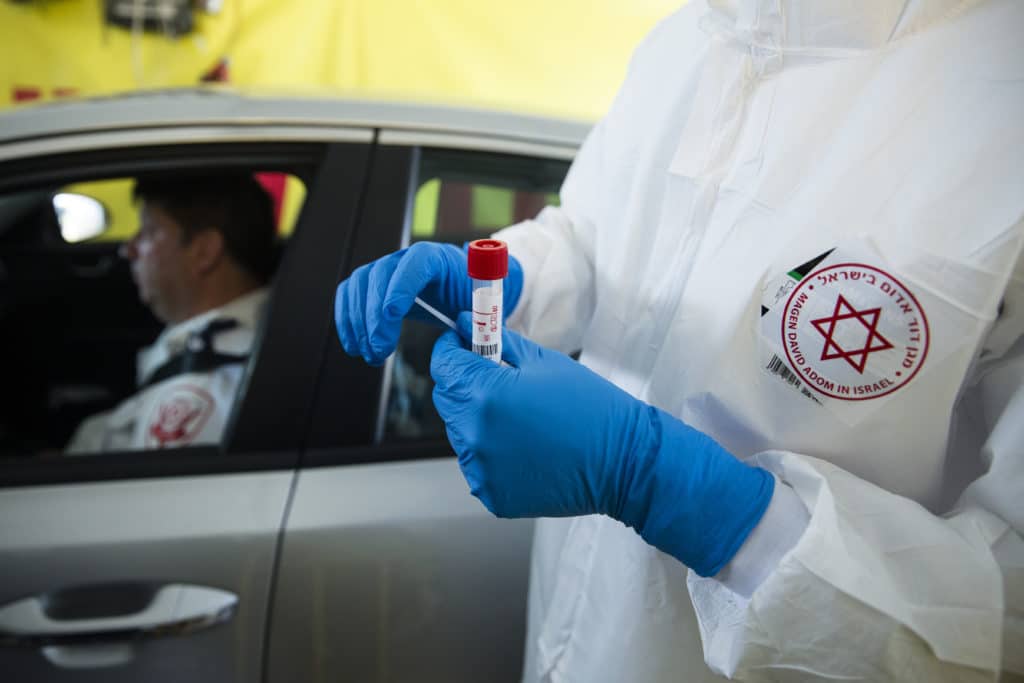
The Israeli biopharmaceutical firm Redhill Biopharma has treated a coronavirus patient in Israel with an experimental drug that aims to lessen symptoms, following Italy’s approval of its use, The Jewish Chronicle reported on Tuesday.

A coronavirus hospital patient with respiratory complaints was given the drug following approval from Israel’s Health Ministry under a compassionate-use program, which is when medical professionals treat patients with experimental drugs not as part of clinical trials, under special circumstances and with the approval of medical authorities.

The drug, called opaganib, has undergone testing, but has yet to be approved for general use. It was designed to have anti-cancer, anti-viral and anti-inflammatory properties.

Opaganib is expected to be used on additional patients in Israel in the coming days and has already been tested on 131 people in the United States. Italy approved the use of the drug for approximately 160 patients across three hospitals in the northern part of the country, which has been particularly hard-hit, according to The Jewish Chronicle.

Dr. Mark Levitt, Redhill’s medical director, noted that the compassionate-use program allows doctors in Italy “to treat patients at high risk of developing pneumonia and those with pneumonia, including acute respiratory-distress syndrome, secondary to SARS-CoV-2 infection.”

He added that “RedHill is working diligently to evaluate the potential of opaganib as a treatment for COVID-19 to help patients worldwide in urgent need of a treatment option.”

Italy Approves Experimental Israeli Drug to Treat COVID-19 Patients Read More »

Winner of $1 Million Genesis Prize Donates Award To COVID-19 Aid

Human-rights activist Natan Sharansky, the winner of this year’s $1 million Genesis Prize award, has asked the Genesis Prize Foundation to donate the money to help organizations and individuals impacted by the coronavirus, the foundation announced on Monday.

Sharansky was named the recipient of the 2020 Genesis Prize in December in recognition of his “extraordinary lifelong struggle for human rights, political freedom and his service to the Jewish people and the State of Israel.”

The former Soviet prisoner and chairman of Israel’s Jewish Agency for Israel said in a video message released by the Genesis Prize Foundation on Monday that this Passover, as many families celebrate without their loved ones due to coronavirus-related lockdown orders, gives Jewish people “a great opportunity to feel connected.”

He discussed once having his Passover seder in a “punishing cell,” where he was served nothing but three pieces of dry bread and three cups of hot water per day.

He discussed once having his Passover seder in a “punishing cell,” where he was served nothing but three pieces of dry bread and three cups of hot water per day.

He recalled, “I decided my three cups of water would be my wine, and my three pieces of dry bread would be my matzah. And my salt would be my maror.”

“And I found out that this is the great place to feel the unique struggle of the Jewish people—to be connected with every Jew in the world,” he added, “and to enjoy thinking that this year we are slaves and next year we are free people in Jerusalem.”

Sharansky urged people to “think about our great journey together and about new challenges which we face together, and that we will win together.”

Winner of $1 Million Genesis Prize Donates Award To COVID-19 Aid Read More »

Tonight, Let’s Also Tell Our Family Stories

One of the running themes in these pandemic times is that everything has changed — from how we approach life to what we talk about to how we practice our Judaism.

So, how should our seders be different tonight, besides the fact that they will be significantly smaller?

For most of us, we will continue to recount the master Jewish story in the haggadah, we will ask questions and discuss meanings and draw lessons for our own lives.

That is all well and good, but we do that every year! What can we add this year that is different?

My suggestion: Let’s add some of our own family stories.

If we are going to go deeper and higher during these unprecedented times, we need to get more personal, too. We need to dig deep and share the stories of our bubbes and zeides, as well as those of their parents and grandparents.

I know, many of these stories have been lost. But which ones are still in our memory banks, lying silent and dormant, just waiting to be told?

We’re all living through an epic crisis, when we need to hold on especially tight to our human connections. Our family stories can provide that much needed nourishment.

The seder table offers a unique opportunity for storytelling.  As we go through the haggadah, we can enrich the collective Jewish story with our own. What is the collective Jewish story, in fact, if not the accumulation of millions upon millions of individual family stories?

On my podcast this morning, the CEO of the Central Conference of American Rabbis, Rabbi Hara Person, shared the story of her great-grandmother, who suffered hardships when her family immigrated to New York and eventually became a feminist and social activist.

I shared a story of my grandfather who left a thriving tea business in Casablanca, moved to Israel in the early 1950s with his large family, and, despite living in a ramble shack home, kissed the ground in gratitude that he had come home.

In his remarkable cover story in the Journal last week, my friend Noam Weissman reflected on the kind of stories that build resilience.

There are three kinds of narratives: Ascending, descending and oscillating. It’s the latter, he writes, that builds resilience:

“The oscillating family narrative vacillates between the two previous narratives. That’s when we say, ‘Dear, let me tell you, we’ve had ups and downs in our family. We built a family business. Your grandfather was a pillar of the community. Your mother was on the board of the hospital. But we also had setbacks. You had an uncle who was once arrested. We had a house burn down. Your father lost a job. But no matter what happened, we always stuck together as a family.’”

In other words, the power of real, authentic family stories is that they include the good, the bad and the ugly. They give us a framework by which to handle life’s ups and downs.

Considering we’re going through one of humanity’s biggest “downs” right now, our family stories can be a valuable asset to help us weather the storm.

So, what are your family stories? You may think you know them all, but are there any hiding in someone’s memory? If you’re blessed to have a grandparent or great-grandparent at your seder, live or on Zoom, give them a chance to share their stories.

May we all see better days, and may we all continue to contribute to the great Jewish story.

Chag sameach.

Tonight, Let’s Also Tell Our Family Stories Read More »

Uber Eats Delivers Passover Food to NYC Holocaust Survivors

The Met Council for Jewish Poverty and Uber Eats have teamed up to deliver kosher-for-Passover food to Holocaust survivors in New York who are staying home amid fears of contracting the coronavirus (COVID-19).

Uber Eats delivery staff picked up 500 seder boxes on Monday and Tuesday from the Met Council distribution center in Brooklyn, N.Y., and delivered them to Holocaust survivors across the borough, reported amNY. Met Council volunteers will be packing and loading the boxes of food.

Passover begins on Wednesday evening, April 8.

“In light of COVID, it’s not safe for those over 70 to be outside,” said Jessica Chait, managing director of the food program for Met Council. “We are particularly concerned with those who are frail. Importantly, we include for the holiday kosher meals, and we are in the business of making sure that those who need it most will get it. Our plan between now and the holiday is to do more than 500 deliveries in partnership with Uber and another 100 more seniors and survivors in Queens [N.Y.].”

Uber Eats driver Sheldon Samuels told amNY that it feels “good to give back to the community.”

He said, “I just want to do my part to help people, it’s very compelling to help people from the Holocaust.”

Met Council, America’s largest Jewish charity dedicated to serving the needy, provides food and delivers to 30 food pantries and kitchens around New York.

Uber Eats Delivers Passover Food to NYC Holocaust Survivors Read More »

Israeli Company Says Its Cell Therapy on Severely Ill Coronavirus Patients Has Seen Initial Success

The Israeli medical company Pluristem Therapeutics announced on April 7 that its cell therapy treatment has been successful in its preliminary trials on patients who are severely ill with coronavirus.

The Jerusalem Post reported that the treatment uses placental expanded cells (PLX) to scale back an overactive immune system response that results in pneumonia. The PLX treatment was used on seven patients who were suffering from Acute Respiratory Distress Syndrome (ARDS). Six of those patients have completed seven days of treatment; four of those patients saw improvement in their conditions, one remains stable and another’s condition worsened.

Additionally, three of the patients with improved conditions are almost at the point where they no longer need to be on a ventilator.

“It seems to be like a perfect fit,” Pluristem CEO and President Yaky Yanay told the medical news website BioWorld. “We are very confident in the safety profile of the product.”

Yanay added that the firm hopes to move toward clinical trials in the United States and Europe soon.

As of this writing, there are 9,404 confirmed COVID-19 cases in Israel and 73 deaths, including a 37-year-old with several underlying conditions. He is the youngest Israeli to have died from the virus thus far.

Israeli Company Says Its Cell Therapy on Severely Ill Coronavirus Patients Has Seen Initial Success Read More »

“As If” – Passover Teaches Empathy

The sages teach, “In every generation every individual must feel ‘as if’’ s/he came out of Egypt.” Two little words, ‘as if’, which are the hallmark of what this upcoming holiday is about, being able to imagine, to feel, to identify, with others. As we all huddle in our homes, this year, friends and family, just a click away on Zoom, it is easy to imagine, and feel, ‘as if,’ we too must come out of Egypt. The word Mitzrayim literally means ‘from a troubled, tight and narrow place.’ Just as our ancestors were surrounded by the thick darkness of the ninth plague and hearing the sounds of death around them, so we too are enclosed by an amorphous and invisible darkness, one that threatens not only those in far off lands but indiscriminately reaches out to each and every individual in the world, no matter age, sex, color, or religion.

And if you imagine ‘as if’ you were those manning the corridors of our hospitals, makeshift healing centers, or even hotels for convalescing, you would hear the cries, the suffocating sounds, and even the last breaths of our fellows. You would feel the exhaustion and the frustration of limited supplies, the unending days of surrendering to the needs and the calls of their responsibility. You would feel the exasperation and the horrific thoughts and fears of deciding who gets the ventilator and who does not. Yes to allow our selves to feel ‘as if’ we too were those on the front lines who sacrifice, make offerings, korbanot, of themselves so ‘some will live and some will die.’

As we sit in gratitude being spared to live another day, to appreciate those with
extraordinary talent who hurriedly search for cures, to honor those who man the
grocery stores and create meals for pick up, the selfless first responders willing to
save another life though theirs is compromised, to imagine those saying goodbye to
their families, perhaps not being able to return if they too have succumb to ‘test
positive,’ – yes in every corner of this vast country there are those we must feel,
imagine, and empathize with. This Passover every individual must feel ‘as if’’ s/he is connected to the past, the ancestors who awaited a journey of liberation, to the present, our neighbors who serve and protect, and the future, those who will have left this earth after returning their last breath and those who survive holding inconsolable grief.

“In every generation every individual must feel ‘as if’ he came out of Egypt – the
restricted spaces so many of us confront knowing that true freedom surpasses
physical limitations but is the soul’s journey to awakening, to new understanding,
growth, expansion, and a gratitude for hope and life like we never felt before.

“As If” – Passover Teaches Empathy Read More »

The Timetable for Ending the Quarantine

A Harvard white paper from the Safra Center for Ethics reminds us that the Italian word quarantine refers to 40 days.

The social distancing stay-at-home orders, the lockdown-in-place, and the enforced collective self-isolation must be reviewed frequently by public officials, and must be justified by ethical and practical considerations of their societal cost in order to maintain public approval and support.

U.S. deaths due to the COVID-19 infectious disease are not close to the originally predicted 1.5 million to 2.2 million by the famous Imperial College report (if we failed to mitigate the risk by social distancing).

The final count of lost souls, and the final mortality rate from the invisible enemy is still undetermined, but it is not likely to be much higher than many other infectious diseases.

It does appear however that COVID-19 is more contagious than prior viral epidemics, and as a new strain, it caught the world off-guard without defensive therapies and vaccines.

Those with preexisting conditions (co-morbidity) are sadly the most vulnerable. There are some reports of faulty death counts as cardio-deaths, for example, among victims carrying the virus, are reportedly all being labeled as COVID-19 deaths.

Annual influenza deaths in the USA have reached upwards of 80 thousand in a given year.  Deaths from other diseases and from accidents like car crashes do not invoke the sentiment “if we can just save one life it’s all worth it.” If that were true, we would not have speed limits above 20 miles per hour.

Clearly, saving some lives by costing many more lives is not an ethical outcome.

Suicide rates, medical deaths from lack of health care services due to hospital prioritization of COVID-19 patients, depression, divorce, poverty, and spousal and child abuse are all skyrocketing. Prisoners are being prematurely let out of jail and innocent Americans are losing civil rights and liberties. The quality of life around the globe is declining dramatically.

We are witnessing the further rise of the surveillance state. Freedom is a victim, big time.

The economic cost of the shutdown of the global economy will be potentially long-lasting and possibly far more deleterious to human flourishing than advocates for mitigation have acknowledged.

The cost of the cure may prove to be far higher than the results of the awful disease. Government spending and extraordinary public debt has again been a feature of yet another crisis in which short-term considerations will cost future generations, likely quite significantly.

The major reason for the extreme government mandates was the appeal by the health care industry to flatten the curve and avoid overwhelming our hospitals, which were under-prepared for a surge in cases (ICU beds, ventilators, respirators, masks, protective equipment for health care workers, gowns, etc.).

Fortunately, we are witnessing many noble acts of extraordinary public service by healthcare workers, businesses, average citizens, and tireless public servants.

We root for surging medical capacity and potential drug therapies and bio-medical testing, patents, and production of effective vaccines.

There are 3 models suggested for moving forward as a society.

First, freeze in place.  We simply sacrifice our economy to crush the virus.  The social costs of this are unimaginably massive, and it isn’t clear the virus still won’t continue to spread.

As long as the food supply remains robust, we could likely survive this extended period of social isolation, but one cannot discount the risks of public rioting and looting.

Second, mobilize and transition.  We fight the virus and open up the economy in stages, using best practices to reduce risk while practicing wise public healthcare measures.

The goal of this middle path is nothing less than avoiding the bankrupting of our nation and our citizens. Key features of this strategy include massive testing and contact tracing, and the isolation of vulnerable populations to reduce their risk exposure to the pathogen.

Third, we simply surrender to the virus, sadly accepting increased numbers of victims, and we move forward rapidly to recover our economy and societal progress.

We might still delay school re-openings until the fall, and require temperature taking to send sick kids home.  But we all soldier on and try to save our GDP to avoid extreme poverty and its own foreseeable massive healthcare crises.

Policy makers will need to consider the following questions in organizing the path we will take:

1) What is the scientific clarity about the incubation period for the virus and what is the actual transmission path, such that we better understand containment & mitigation going forward ?  Will we be wearing masks in public for months?

2) WIll the virus continue to infect masses of people, even during pandemic deceleration, as we re-open the economy ?  What is the true reproduction rate, and case fatality rate, and will these numbers decline as more and more Americans become exposed and therefore potentially immune to a possible return of the virus in the fall or winter ?

3) Will we have enough on-demand testing to allow citizens with anti-bodies to re-enter the workforce and social living ? Can we leverage the plasma from those with anti-bodies to inoculate or assist others facing infection?

4) Will relatively inexpensive and available hydroxychloroquine or other medicines prove quickly effective in saving lives?

5) Will vaccines arrive in time to avoid an economic Depression?

6) Will corporate revenues and government funds to individuals allow businesses to survive in large numbers until earnings recover based on rising consumer confidence?

The federal and state governments and the banking system have so far responded with aggressive efforts at both medical and economic rescue. Lessons have been learned about China’s nefarious role and we will likely seek to bring our medical and manufacturing supply chain back to the USA.

At a minimum, we now face a new world of mask wearing, thermal scanners, and perhaps the end to the culture of handshakes.

Our policy makers have some serious decisions to make about what to do after our first 40 days of quarantine conclude.


Larry Greenfield is a fellow at The Claremont Institute for the Study of Statesmanship & Political Philosophy

The Timetable for Ending the Quarantine Read More »

david suissa podcast curious times

Pandemic Times Episode 18: Can family stories nourish us during pandemic times?

New David Suissa Podcast Every Morning at 11am.

As we prepare to tell the Passover story, a refection on the value of our own family stories. Special guest: Rabbi Hara Person, CEO of the Central Conference of American Rabbis.

How do we manage our lives during the Coronavirus crisis? How do we keep our sanity? How do we use this quarantine to bring out the best in ourselves? Tune in every day and share your stories with podcast@jewishjournal.com.

Pandemic Times Episode 18: Can family stories nourish us during pandemic times? Read More »

A Moment in Time: Embracing the Angels of Life this Passover

Dear all,
I’m certain that as we observe the Seder rituals this year, the joyful reading of the Haggadah will be tempered by the realities of our day. And I would imagine that when we get to the section of the Ten Plagues, we will not be quite so cavalier when we read about the Angel of Death and the slaying of the first born.
It’s as though the Haggadah were written for our own time. Yes, we all recognize the Angel of Death today.
But are we also recognizing the Angels of Life?
During this week of Passover, please be in contact with those putting their lives on the line to help keep us safe.
Reach out to those in the health care field – who are on the front line.
Reach out to those working in essential businesses.
Reach out to elected officials and their staff.
Reach out to firefighters EMTs and police officers.
These are the Angels of Life.
These are the ambassadors of tomorrow.
These are the people who we celebrate at this incredible moment in time.
Ron, Eli, Maya, and I wish you and your loved ones a happy, healthy, and safe Passover.
L’shalom,
Rabbi Zach Shapiro

A Moment in Time: Embracing the Angels of Life this Passover Read More »