fbpx

February 26, 2020

The Gay Rights Movement Has an Anti-Semitism Problem

My identity as a Jew and my identity as a gay man are inseparable. Contrary to traditional beliefs regarding religion and sexuality, I believe these two parts of myself enhance each other rather than compromise each other. The LGBTQ Jewish community carries a long history of excellence. We are writers, activists, artists, politicians, academics and teachers. The convergence of identity and the greatness that has been born from this community are special to me. From Rabbi Sandra Lawson to Troye Sivan to Efrat Tilma, queer, Jewish expression seems to be stronger than ever.

Yet, despite this representation, blatant anti-Semitism currently wreaks havoc in the LGBTQ community. 

The first time I heard the word “pinkwashing” was when I mentioned to a friend that I was interested in attending the Tel Aviv Pride Parade last summer. My friend supported me but warned me against posting any photos of the parade online, as I would be accused of pinkwashing. I asked her what she meant. “Pinkwashing?” she said. “When Zionists pretend that Israel is the pinnacle of human rights because of how they treat gays? To distract from the way they treat Palestinians?”

This was the first time I heard this term, but it certainly was not the last. 

The “anti-pinkwashing” movement is gaining traction in the gay community. My friend was correct in her description: Its mission is to end government-sponsored exploitation of gay constituents so as not to distract from inexcusable corruption or wrongdoing. On paper, the movement seeks to separate nationalism from queer liberation and to honor the voices of queer, oppressed people worldwide. But in reality, the movement tethers the identities of gay Israelis to the Israeli-Palestinian conflict and undermines their autonomy simply because they are citizens of the Jewish state. To the devout gay rights activist, any display of Jewish gay pride is now conditional; it must totally and officially distance itself from the Jewish state to be valid.

Consider the controversy surrounding the 2019 D.C. Dyke March. This event was a unique opportunity for the queer women of Washington to display their solidarity with one another, but under one condition: Jewish queer women could not display any “nationalist iconography,” meaning the Star of David, if it resembled an Israeli flag. At a similar event in Chicago, Jewish women carrying rainbow Star of David flags were forced to leave. In New York, Israelis participating in a gay pride parade were surrounded by protesters shouting, “No pride in apartheid!”

Imagine if you were an American marching in a European pride parade and suddenly you were isolated from the crowd and intimidated with chants of “Screw Donald Trump!” simply because of your nationality. That, of course, wouldn’t happen. The queer liberation movement does not hold a queer person responsible for the actions of their government — unless of course, they are Israeli.  

To make matters worse, more and more LGBTQ organizations are openly supporting boycott, divestment and sanctions (BDS) resolutions.

To make matters worse, more and more LGBTQ organizations are openly supporting boycott, divestment and sanctions (BDS) resolutions. How can this movement, which emphasizes the rights and dignity of all people, support BDS, an initiative that constantly discriminates against both Israeli and Diaspora Jews in academic, artistic and political spaces? 

The antagonism is finding its way to universities. An organization on my campus at George Washington University that markets itself as “here to work toward building a happy, healthy and equal environment for the LGBTQ community” published a political platform of its own in 2019. The organization wrote, “In recognition of the struggles of LGBTQ+ Palestinians living under occupation, of the fact that settler-colonialism will always hurt our LGBTQ+ siblings, and in recognition of the pinkwashing done by the Israeli state to justify occupation requires combatting by the LGBTQ+ community, we commit ourselves to the cause of anti-settler colonialism. Additionally, we refuse to endorse or work with organizations that stand in support of settler-colonialism states.”

It’s important to note that nowhere in the platform is there any other condemnation of a foreign power or its government’s policy. The only regional conflict recognized is the Israeli-Palestinian conflict. After I filed a complaint with the university, the platform was amended to remove specific mention of Palestinians and Israel. Regardless, this organization will refrain from partnering with Jewish groups if they have any connection to the Jewish state. 

I serve on the board of an LGBTQ Jewish organization on campus and last year, I sought to partner with other LGTBQ groups for programming. When speaking with another student, I was advised against this. According to this student, Jewish pride could be “triggering” to certain gay students who are passionate about the Palestinian cause. The student then added that some would be massively uncomfortable with the presence of “organized religion” in queer spaces. When I responded that Jewish life on campus has nothing to do with the Israeli-Palestinian conflict, and that Judaism wasn’t merely a religion but a prominent ethnic and cultural identity among many LGBTQ students, the conversation quickly ended.

Our religious and ethnic identities are being subjected to political litmus tests in order to be accepted in queer spaces. “Bigotry” is too genial a word. One might think to themselves, “If gay Jews have a problem, they should find another movement to rally behind.” That is a valid sentiment when analyzing specific populations and policy preferences — but being Jewish is not a policy preference. It is overtly anti-Semitic to expect Jews to shed part of their identity to conform to a movement they agree with politically.  

Why should I have to give up my Jewishness to oppose LGBTQ employment discrimination? Why should I give up my Zionism to support transgender people? Why must I disavow any celebration of queerness in the largest Jewish community on Earth, simply because I disagree with Prime Minister Benjamin Netanyahu’s policies?

My response to all these questions is simple: I shouldn’t have to, and I will not. 

It is my hope that more folks who feel the sting of anti-Semitism in these supposedly progressive spaces join me in standing up for Judaism — no matter what the cost.


Blake Flayton is a student at George Washington University. 

The Gay Rights Movement Has an Anti-Semitism Problem Read More »

Forward Op-Ed Alleging Jewish Day Schools Encourage Dual Loyalty to Israel Is ‘Shocking,’ Says ADL CEO

Anti-Defamation League (ADL) CEO Jonathan Greenblatt called a Feb. 21 op-ed in The Forward that alleges Jewish day schools encourage dual loyalty to Israel “shocking.”

The op-ed, credited to an anonymous writer, states that the author has worked at six Jewish day schools in New York City and has seen these schools adorned with Israeli flags, the Israeli national anthem “Hatikvah” sung more frequently than “The Star Spangled Banner,” and students being taught that Israeli Prime Minister Benjamin Netanyahu is “our prime minister.”

“Are we really to blame non-Jewish staff if they leave campuses thinking that American Jews are more loyal to Israel than to the United States?” the writer asserts. “Perhaps we tell ourselves that they just don’t understand the incredible, mystical nuance that underpins the relationship between Judaism and Zionism. That while it sometimes looks like we’re supporting a foreign government, it’s really about our hopes, dreams and historical identity.”

The op-ed went on: “The jingoism around Israel and its military goes beyond any possible doctrinal link between Judaism and Zionism. There is no similar enthusiasm for the Torah in these schools. On the contrary, there was an understanding at all the schools in which I have taught that we don’t push religion, that we must teach about religion in a detached way. So while we may teach what the Torah says, we are pretty much forbidden from actually saying the key point — that ‘as Jews we have to do what the Torah says.’ It’s like a very lame, extremely limited, comparative religion class. But when discussing Israel and Zionism, there is rarely room for leniency, disagreement, or apathy.”

Greenblatt responded in a Feb. 25 Forward op-ed that the anonymous writer’s piece “likely delights anti-Semites from all sides of the spectrum. Whether they hate the Jewish people and/or the Jewish state, they undoubtedly will hold up this op-ed long into the future as the basis for their bigotry.”

He argued that the writer’s refusal to provide his or her or the name of the schools in question makes it impossible to rebut any of the allegations in the op-ed. More importantly, Jewish day schools tend to celebrate Israel as part of Jewish “personal identity,” Greenblatt argued.

“Celebrating the miracle of the creation of the Jewish state after 2,000 years of yearning to return to Zion is foundational to the teaching of Jewish history and identity,” Greenblatt wrote. “It links the Jewish people of the present to the ancient Jewish people of the past. After millennia of persecution and pogroms, of marginalization and murder, the miracle of Israel cannot be understated.”

The ADL CEO then wrote that that Jewish day schools teach American values and history and instill a sense of patriotism in students for the United States. The dual loyalty trope, Greenblatt wrote, dates back centuries against Jews.

“From the Dreyfus affair in 19th century France to the Farhud in 20th century Iraq to the singular tragedy of the Shoah, dual loyalty has been used to rationalize the irrational hatred of Jews and the most horrific crimes,” he wrote.

Huffington Post Senior Video Producer Isaac Himmelman echoed Greenblatt in a Feb. 22 Forward op-ed, arguing that his Jewish day school taught him to be proud to be an American.

“I attended school every day with the grandkids of Holocaust survivors liberated by American troops, kids whose parents fled Soviet tyranny, and kids who themselves fled the tyranny of the Islamic Republic of Iran,” Himmelman wrote. “My own grandfather was a proud Jewish Marine. We didn’t need a teacher to intellectualize ‘one nation under G-d’ for us in a classroom. Our patriotism, like our connection to Judaism, was a lived experience, something true and sacred that we held inside us every day.”

Forward Editor-In-Chief Jodi Rudoren tweeted that the author remained anonymous because “there is a clear danger of the author losing his job if identified.” She said in separate tweets that they verified the author’s employment at Jewish day schools and that The Forward is happy to consider running other perspectives and experiences with Jewish day schools.

“When someone has an interesting story to tell and reasonable fear of repercussions to livelihood or safety, it’s worth it,” Rudoren tweeted.

Forward Op-Ed Alleging Jewish Day Schools Encourage Dual Loyalty to Israel Is ‘Shocking,’ Says ADL CEO Read More »

Sanders Says He Would Consider Moving U.S. Embassy Back to Tel Aviv

Sen. Bernie Sanders (I-Vt.), the Democratic presidential candidate front-runner, said during the Feb. 25 Democratic candidates’ debate in South Carolina that he would consider moving the United States Embassy from Jerusalem back to Tel Aviv, its original location, if he is elected president.

CBS News reporter Major Garrett, one of the debate moderators, asked Sanders: “Would you move the U.S. embassy back to Tel Aviv?” Sanders replied, “It’s something that we would take into consideration.”

The question also was posed to former New York City Mayor Michael Bloomberg and Sen. Elizabeth Warren (D-Mass.). Bloomberg said that the embassy move should have happened only if Israel had agreed to a concession as part of a peace process with Palestinians, but now that the embassy has moved to Jerusalem, “you’re going to have to leave it there.” Warren said that the Israelis and the Palestinians should determine their respective capitals.

The American Embassy’s move was controversial from the outset. It had been located in Tel Aviv since the 1960s. In December 2017, President Donald Trump announced the United States’ recognition of Jerusalem as Israel’s capital. Soon afterward, then-Secretary of State Rex Tillerson walked back the president’s declaration. The embassy’s move to Jerusalem took place in May 2018.

Jerusalem is home to sacred sites for Jews, Muslims and Christians. The Knesset and prime minister’s residence are in West Jerusalem, which Israel has controlled since 1949. Israel captured East Jerusalem in 1967 and annexed half of the city. The international community considers East Jerusalem occupied territory.

The Palestinians want to officially divide the city and make East Jerusalem the capital of a Palestinian state.

In January, Israeli Prime Minister Benjamin Netanyahu said that the U.S. peace plan, unveiled that month, envisions the proposed capital of the Palestinian state to be in Abu Dis, on the outskirts of Jerusalem.

Sanders said during the debate that he views Netanyahu as “a reactionary racist.” When Netanyahu was asked about Sanders’ remarks during a Feb. 26 Israeli Army Radio appearance, he said that while he won’t intervene in the election, Sanders “is definitely wrong. No question about it.”

Sanders also said that it’s important to ensure Israel’s safety and security while also addressing “the suffering of the Palestinian people.”

The Vermont senator has been under fire from various Jewish groups since he announced in a couple of Feb. 23 tweets that he will not attend the American Israel Public Affairs Committee (AIPAC) Policy Conference from March 1-3 in Washington, D.C. Nearly 350 rabbis signed a letter condemning Sanders’ decision.

“The AIPAC Policy Conference may be the largest political gathering of Democrats and Republicans in the entire country,” the letter stated. “We’ve seen presidents and prime ministers, members of Congress and members of Knesset, policy analysts and military experts, religious leaders and cultural icons, from across the political spectrum address the conference. We embrace the opportunity to be challenged to think constructively, and appreciate that people on the other end of the political divide are doing this sacred work alongside us.”

The U.S. Embassy was officially opened in Jerusalem in May 2018; that day, Israeli forces killed more than 55 Palestinian protesters and wounded thousands of others protesting the move in Hamas-led riots in the Gaza Strip.

American Jewish Committee CEO David Harris tweeted that he had been hoping that one of the Democratic presidential candidates would say regarding the Jerusalem embassy, “As President, I’ll keep our embassy there. Like every other nation, #Israel has a right to choose its capital, all the more so when rooted in 3000+ yrs of history. No, it doesn’t prevent 2-state deal w/ Palestinians.”

Sanders Says He Would Consider Moving U.S. Embassy Back to Tel Aviv Read More »

Point-Counterpoint: How to Vote on Measure R

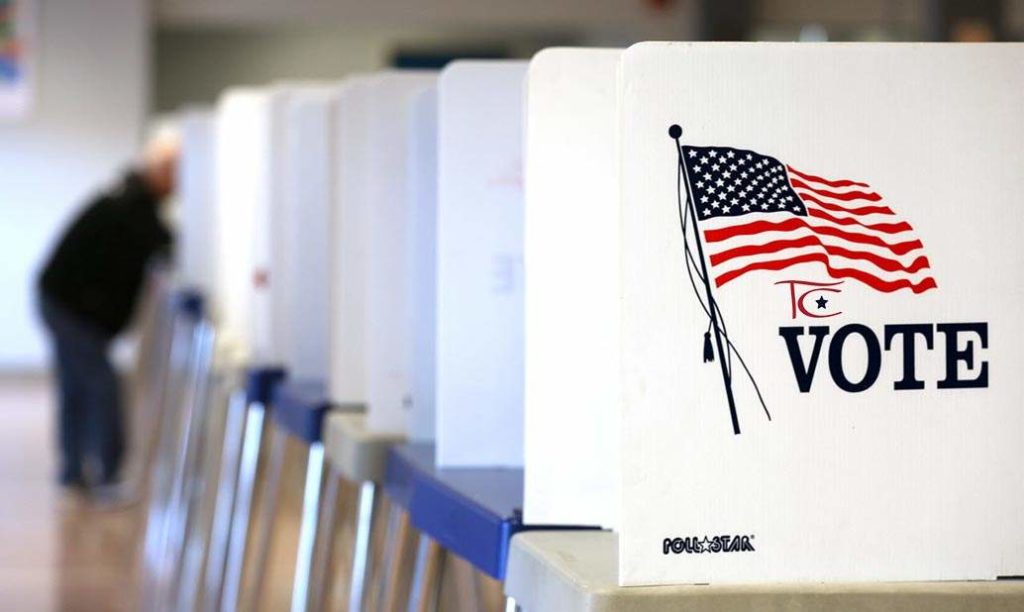
Measure R, which will be on Los Angeles County voters’ ballots in the March 3 election, is a proposal to expand the powers of the Sheriff’s Civilian Oversight Commission. What follows is a point-counterpoint on the measure by Benjamin Kersten and Larry Greenfield.


VOTE YES

By Benjamin Kersten

“Liar! You tell our children of freedom / while day and night you lock them in chains and cells.” These lines come from a 1931 Yiddish poem titled “Scottsboro” by Betsalel Friedman (born 1897, Brisk-Litovsk, Belarus; died 1941, New York), written to advocate for nine young African American men who were unjustly incarcerated in Alabama. Friedman immigrated to New York in 1922 and taught at the Workmen’s Circle and Yiddish schools. He was active in the International Workers Order, which focused on cultural awareness, anti-fascist activities and supporting the rights of African Americans.

Friedman’s words continue to resonate, particularly in Los Angeles County, home to the largest jail system in the United States. L.A. County incarcerates massive numbers of people rather than seek sustainable, care-based solutions for those experiencing mental health issues, drug dependency and homelessness. Friedman points out the hypocrisy of the United States’ founding mythology of equal opportunity and calls us to identify the places where the promise of freedom rings hollow, as when people are sent to jail instead of being provided with the resources necessary for them to live as they choose.

At Bend the Arc, a progressive Jewish social justice nonprofit, we know that we must join the fight to oppose violent policies and institutions that continue to fracture our communities. Like Friedman, we lend our voices to liberation, and so we write now in support of Measure R, that will pave the way for L.A. County to hold the Sheriff’s Department accountable, reduce recidivism, prevent crime and redirect resources to social services.

Powered by Black Lives Matter, community organizations and citizens working at the grass-roots level, the movement that put Measure R on the ballot extends an invitation to foster compassion instead of relying on cages. Measure R will grant subpoena power to the Sheriff’s Civilian Oversight Commission, enabling it to more effectively investigate the corruption that plagues the Sheriff’s Department, including cases of a deputy trafficking drugs, a deputy raping female inmates, continual mistreatment of inmates and the death of  inmates who allegedly were under careful supervision. With subpoena power, the Civilian Oversight Commission can better improve transparency and accountability. Subpoena power will enable the commission to procure witness testimony and full evidence when investigating misconduct. Subpoena power, in other words, is a tool that the commission requires in order to do the job it has been tasked to do.

Secondly, Measure R advocates for alternatives to incarceration. A commission will develop a Comprehensive Public Safety Reinvestment Plan and Feasibility Study to reduce jail populations and redirect savings to services such as youth programs, public education and housing. These are the steps necessary to decenter incarceration in a society that continues to overwhelmingly punish people of color, people with mental illness, drug users and people experiencing homelessness.

At Bend the Arc, we understand the importance of standing together to build a more just society. We see how institutions such as jails rip apart families, subject many of those around us to ruthless living conditions devoid of adequate safety and health care and encourage us to view ills in our society through a lens of criminality.  As Jews, we know that ideas of criminality get attached to people who fall outside of the national ideal along axes of race, class, gender, sexuality and ability rather than to the state institutions that deem some lives less worthy than others.

Our heritage is filled with courageous individuals who organized with their neighbors to fight lynching, to call for better working conditions and to build a society that would treat all people with dignity and respect. At various points in our history, it has been difficult to imagine a society without slavery, without lynching or without legal segregation. Although we have addressed some of these problems formally thanks to leaders like Ida B. Wells, white supremacy endures. As thinkers like Angela Davis and Colin Dayan have shown, white supremacy, and the legacy of slavery in particular, manifest in a system of punishment that camouflages its racist dimensions with the language of criminality. The Civilian Oversight Commission’s plan will go beyond thinking about how to merely improve the prison system and lay the groundwork for a future that prioritizes care over incarceration.

Today, we see people from communities of color and poor communities tracked toward jail, which has proven ineffective in addressing crime and is staggeringly expensive: California has persistently high recidivism rates, but when we invest in things like housing, 86% of people stay out of jail. Accordingly, we support an initiative that would uplift all of us precisely by helping those most in need. Friedman and other poets who were associated with left-wing groups in the 1930s fought against racism and xenophobia, violent political regimes and war with a vigor that should inspire all of us to have conversations with loved ones, march in a crowd, write a poem  and vote Yes on R in March.

Voting Yes on R moves our society a step closer to decarceration. It will help prevent the expansion of jail populations and advocate for housing, mental health services and greater access to drug programs. Community-based alternatives to incarceration help keep people safe. In addition to bringing about much needed change locally, a substantial reform in the L.A. County jail system could pave the way for further reform around the country. Because the jail system here is the largest — and supremely broken — a reduction in incarceration and redirection of funds toward social services in L.A. will demonstrate that such changes also can take place elsewhere. Voting Yes on R is fundamentally a vote for care instead of cages and an expression of hope for a better world.

VOTE NO

By Larry Greenfield

Jewish Tradition balances important principles of justice, including protecting communal security on the one hand, and caring for all of God’s creation, even criminal perpetrators, on the other.

A tradition of laws, Judaism teaches through detailed legal codes that citizens must act to avoid harm to other individuals, and to seek penance, for violations, including repair of serious harm caused.

Punishment is part of the Jewish tradition, promoting deterrence and retribution. So, too, opportunities must be given for perpetrators to be welcomed back into the community after appropriate rehabilitation and restitution to victims.

In the United States, there have been two long-standing “movements” related to the urban criminal justice system, both of which have merit.

First, the Victims’ Rights Movement, which grew out of the civil rights era in part to respond to women seeking prosecution of fathers who did not pay child support.

A U.S. presidential task force and congressional and state laws developed many important policies that seek to care for victims and honor their surviving families, including witness protection and the right to privacy.

California voters, too, have passed two major modern Victims’ Bill of Rights laws. Proposition 8 (1982), which prioritizes public safety in the setting of bail, and Proposition 9 (2008), Marsy’s Law, which establishes that victims are entitled to legal case information, to be heard at criminal justice proceedings, and to financial recompense for losses suffered as a result of a crime.

Californians also have imposed mandatory minimum sentences for violent criminals and three-strikes laws and other measures to increase liability and enhance sentencing in order to protect the public.

Voters also passed Megan’s Law (1996), which mandates the California Department of Justice to notify the public about specified registered sex offenders.

Second, the Criminal Justice Reform Movement, frequently a bipartisan coalition of taxpayer advocates, religious leaders and community activists, all seek to reduce the financial costs of our public and private prison industry and its unions, and to encourage efforts to reduce recidivism among the prisoner population upon eventual release from incarceration.

In 2014, California voters passed Proposition 47, which converted many nonviolent offenses, such as drug and property offenses, from felonies to misdemeanors and freed thousands of criminals from state prison.

Critics of this law suggest it is now more difficult to move drug offenders into treatment programs without the threat of incarceration. Los Angeles Mayor Eric Garcetti and many others have blamed Prop. 47 for subsequent increasing crime rates.

At the federal level, in 2018, pleasing conservatives and liberals, President Donald Trump’s administration signed the First Step Act  (2018), which finally offers long-sought meaningful sentencing reforms to reduce the prison population, especially for nonviolent drug offenders.

This major legislation builds on previous efforts rooted in the faith-based community to promote the moral and practical education of prisoners, preparing them for parole and release.

Unfortunately, the advocates of Measure R don’t advocate for criminal responsibility or for more crime victims’ rights.  Instead, they offer rhetoric, which characterizes perpetrators as victims in support of a political agenda.

Measure R has two main sections which purport to respond to community concern over deputy-involved shootings or other law enforcement incidents.

1) The measure calls for the public release of protected “personnel” information that L.A. County Sheriff Alex Villanueva maintains cannot be released as a matter of employment privacy law.

Recently, the L.A. Board of Supervisors gave the Sheriff’s Civilian Oversight Commission subpoena power. Measure R makes that power permanent, and not subject to a reversal due to department political change.

But, the sheriff has explained he already has ordered all records to be placed online, except for confidential personnel records, victim and witness information on certain crimes and information on active criminal or administrative investigations.

The measure is merely setting up expensive lawsuits. “No matter if you have a subpoena or not, (some information requests) are not going to be honored,” Villanueva said. “Taxpayers are going to foot the bill. I guess it’s good job security for attorneys.”

2) The measure also calls for a study on alternatives to jail construction and incarceration, calling for a diversion of funds to county agencies and community organizations.

But, again, the Sheriff’s Department and the County Probation Department already are working on plans to reduce the county’s jails by 1,000 beds, after the Board of Supervisors canceled a $1.7 billion contract to replace the Men’s Central Jail with a mental health treatment program. The cancellation, Villanueva said, cost an $80 million penalty to taxpayers.

“Even if they come up with a plan, we’ll say, ‘Great,’ ” Villanueva said. “The county has no legal obligation to do anything with their plan. The whole point is to make people feel better to make them feel they are pushing their agenda.”

Furthermore, the L.A. County Office of Diversion and Reentry (ODR), created in 2015, has as its mission to develop and implement countywide criminal justice diversion for persons with mental and/or substance use disorders, and to provide reentry support services based on individual need, especially to reduce youth involvement with the justice system.

The advocates of Measure R therefore fail on three levels.

They fail to express sensitivity to the broad range of our Jewish tradition’s values and they selectively put their thumb on the scale of justice in advocacy of only one side of the criminal justice equation.

They fail to respect the existing robust federal and state criminal justice policy record and voter history, which balances not only the interests of the accused and the incarcerated but also their victims and public safety as well.

And finally Measure R proponents are simply virtue signaling, inviting lawsuits over protected information and promoting a public campaign to achieve goals already being pursued through the county law enforcement and judicial system.

Benjamin Kersten Responds:
The Torah does not normally include incarceration as a method of punishment in its judicial system. When biblical characters do end up in prison, in the cases of Joseph and the prophets Jeremiah and Micaiah, the Torah clearly supports the prisoners. We cannot turn to the Torah or the Talmud to understand the Los Angeles County jail system, but it does teach us to be concerned with the dignity of humanity. Current jail conditions prevent inmates, over 60% of whom experience mental health issues, from living with dignity. Moreover, jails weaken our community rather than strengthen them because of a lack of accountability. Voting Yes on R begins to fix these problems.

The prison industrial complex, which includes the jail system, maintains the authority of people with proximity to racial and economic privilege while labeling people of color, poor people, immigrants and others as criminals. Los Angeles has no doubt made progress, for instance by creating an Office of Diversion and Reentry. The L.A. County Board of Supervisors has thus shown that they have it within their power to help our communities by addressing people with needs that cannot be addressed in cages.

In order to keep improving our society, we need accountability and, in turn, the Civilian Oversight Commission needs subpoena power. The Civilian Oversight Commission is the only external body that the Sheriff’s Department must answer to, but they must be able to access records and compel testimony from agency officials in order to do their job. Villanueva has built  a wall of secrecy around the department through actions like curtailing the inspector general’s ability to access records and scaling back background checks for incoming deputies. It is no surprise that he would balk at the idea of answering to the people. At the end of the day, this is about keeping people safe.

The study for reducing the jail population that would result from Measure R will focus more on public needs than past efforts. The Mental Health Treatment Center that was canceled was simply a jail by another name, especially because it positioned health services under the purview of the criminal legal system. The contract signed with McCarthy Building Companies Inc. would have repurposed the site of the Men’s Central Jail, creating a centralized site that would have isolated people from their support systems. While Villanueva unsurprisingly called the cancellation expensive, it is in fact the jail system that costs taxpayers money. In 2017, the Sheriff’s Department spent $798 million, or 24% of its $3.32 billion budget on jail — money that would be better spent on alternatives to imprisonment. Support for Measure R is not about rhetoric but rather a challenge to think about sustainable, community-based solutions to economic, social, and political problems.

Larry Greenfield Responds:
“Justice, justice, shalt thou pursue, so that you may live.” (Deuteronomy 16:20).

Measure R rejects the wisdom of our tradition, which seeks balance between community safety and reasonable care for prisoners.

Polls repeatedly have shown that Americans overestimate the number of prisoners in the United States who are incarcerated for nonviolent drug offenses.

The real number of nonviolent offenders is 20%. Some 40% of prisoners have committed violent crimes like murder, robbery or assault, for whom the public does not favor early release.

Liberals and conservatives generally agree on making room for more violent prisoners but California’s political leadership has not invested in new prisons for decades, and the county also recently has rejected building additional beds as well.

In response to “overcrowding” in the California prison system, the U.S. Supreme Court, in 2011, ordered California to reduce its incarcerated population. But instead of building more state prisons, former Gov. Jerry Brown’s response was a policy of “realignment,” which pushed ever more responsibility for incarceration onto the county jail system.

Along with Proposition 47 (2014), which gave thousands of state prisoners early release, three other factors have increased our urban crime and disorder.

State and local “sanctuary” policies for undocumented immigrants, the rise of homelessness because of attractive weather and lenient policing of tent cities, and a culture of increased permissiveness of drug use have contributed to a deteriorating urban environment in downtown Los Angeles, San Francisco and elsewhere.

Overwhelmed, the county offers drug treatment and diversion programs, especially for nonviolent, first-time youthful drug offenders.

Instead of offering support to already extremely liberal public policy, Measure R’s advocates pile on with an ever more radical agenda, revealed by their calling jails “cages” and their rhetoric against “racial privilege.” This is reminiscent of New York City, where police officers feel targeted by Mayor Bill de Blasio’s campaign of demonization.

L.A. County counsel Mary Wickham says: “The Office of the Inspector General (OIG) believes the current investigative model works well, making the initiative unnecessary. … Collaboration between the OIG and Civilian Oversight Commission (as well as the Los Angeles Sheriff’s Department) has been instrumental in effectuating reform in such areas as body cameras, compliance with the Prison Rape Elimination Act and identification of secret societies within the Los Angeles Sheriff’s Department.”

Nuanced public policy is not advanced by a campaign of signature gathering that then thrusts upon the voters little understood public policy, resulting in more lawsuits, not more justice.

Our elected officials have failed to prevent mass homelessness, an affordable housing crisis, middle-class flight and increasing risks of public health challenges. California ranks at the bottom in public education and business climate. Our law enforcement and judicial systems already are overwhelmed.  Where is the accountability for all of that?

Measure R is an ideological stunt, not a thoughtful policy solution to jail overcrowding, a growing crime wave and the rapid decline of our county’s public health and welfare.


Larry Greenfield is a Fellow of The Claremont Institute for the Study of Statesmanship & Political Philosophy. Benjamin Kersten is a doctoral student in UCLA’s Department of Art History, where he studies modern art and Jewish politics. He organizes with Bend the Arc: Jewish Action around criminal justice.

Point-Counterpoint: How to Vote on Measure R Read More »

Jersey City’s Kosher Supermarket to Reopen After Shooting

Two months after his wife was murdered in the attack on this city’s only kosher grocery store, owner Moshe Ferencz was back behind the counter this week.

The store, which has partially reopened in a new location, still doesn’t have regular hours. But the reopening signals an important moment for Jersey City’s small but growing community of Orthodox Jews.

“Everyone was shocked beyond belief,” said Chesky Deutsch, a member of the local Hasidic community who acts as an informal spokesman, describing the atmosphere following the shooting. “For the first few weeks there was a little paralysis. They lost a friend, the kids were under trauma, the grocery was not open. But now life goes on.”

JC Kosher, which caters to the 100 or so Hasidic families who have moved to the Greenville neighborhood here in recent years, was the site of a shooting on Dec. 10. The two assailants killed a police officer nearby before riding in a van to the store, where they killed Leah Mindel Ferencz, who ran the store with her husband. They also shot dead Douglas Miguel Rodriguez, an employee, and Moshe Deutsch, a customer.

The attackers, who were not from the neighborhood, also died in a shootout with police that lasted for hours. Police discovered a powerful bomb in the shooters’ van and believe they targeted the store in an anti-Semitic attack. JC Kosher was adjacent to a yeshiva for the neighborhood’s Jewish children.

Now the market is beginning to reopen two blocks from its original location on the same side of the same street, Martin Luther King Jr. Drive. It’s not fully stocked and caters only to kosher-keeping customers based on necessity. Deutsch said it will be open fully in the coming weeks.

On Monday, the store was bright and clean while still a work in progress. The shelves were stocked with food — with canned goods on one aisle, refrigerated products such as hummus in another and bags of pretzels piled in another display — but open boxes, a ladder and unassembled racks also dotted the space.

Deutsch said that Ferencz had been planning to relocate anyway, squeezed by his original store’s tight quarters. Because he would have needed to do a full renovation after the shooting, he decided it was time to move to a new space, Deutsch said.

(Ferencz, who is grieving his wife, asked not to be interviewed or photographed.)

“It’s such a necessity for people over here,” Deutsch said. “They can’t wait until it’s fully, fully stocked. So what he did is he opens it and he’s still unpacking it.”

The original location has been closed since the shooting, its shuttered doors now covered by a mural of a bridge over a heart and three roses. An artist who goes by True Heart Art on Instagram painted the mural shortly after the shooting and titled it “Bridging Worlds.”

At the base of the closed doors are a row of cut-out five-pointed stars featuring a smiley face, an American flag, a heart, a peace sign and an inspirational quote from Albus Dumbledore, the Hogwarts headmaster in the “Harry Potter” series.

https://www.instagram.com/p/B6O4cVNJrPu/?utm_source=ig_embed

While the store was closed, this city’s Hasidic community received twice weekly free deliveries from Peppermint, a kosher grocery store in the upstate New York Hasidic town of Kiryas Joel, more than an hour’s drive away. People also would trek to Brooklyn and other Jewish neighborhoods for food.

Deutsch is happy to have a local grocery and community hub open again.

“You’re used to a lifestyle of buying every day, every few days,” he said. “It’s not like we live in a desert, but we’re spoiled in that way. All of us are used to having our basic necessities handy, close by.”

Jersey City’s Kosher Supermarket to Reopen After Shooting Read More »

347 Rabbis Slam Bernie Sanders About AIPAC

In the wake of Bernie Sanders’s decision to not attend the AIPAC Israel lobby’s annual conference for what he called the organization’s support of “bigotry,” a group of 347 rabbis signed an open letter to Sanders supporting AIPAC’s role in advancing the U.S.-Israel relationship.

Sanders, now the frontrunner in the race for the Democratic presidential nomination, said AIPAC provides a “platform” for “leaders who express bigotry and oppose basic Palestinian rights.”

“As strong supporters of the U.S.-Israel relationship and AIPAC’s role in advancing it, we reject Senator Bernie Sanders’ outrageous comment accusing AIPAC of fostering bigotry. AIPAC’s mission is one that we and our congregants care deeply about,” the rabbis, who are from Reform, Conservative and Orthodox denominations, wrote in the letter.

“AIPAC is one of the last remaining vehicles in American politics that proactively seeks to bring Americans from across the political spectrum together to achieve a common goal. The AIPAC Policy Conference may be the largest political gathering of Democrats and Republicans in the entire country,” the rabbis added.

During Tuesday night’s candidates’ debate in South Carolina, Sanders responded to a question about U.S. support for Israel, saying “our foreign policy in the Mideast should be about is absolutely protecting the independence and security of Israel.”

But, he added, “you cannot ignore the suffering of the Palestinian people.”

347 Rabbis Slam Bernie Sanders About AIPAC Read More »

For God’s Sake (and Mine), Signal!

It’s one of the most startling and frightening things than can happen. You’re driving in the neighborhood, you stop at a stop sign, and then begin a left turn. To your horror, you suddenly see a pedestrian or jogger entering the crosswalk. Thank God, you hit the brakes in time and tragedy is averted. After you calm down, you wonder how such a close call could have happened. Perhaps the pedestrian was distracted by his or her phone. Or perhaps it was something else. 

Perhaps you forgot to signal your intention to turn.

Everyone who drives, walks or bikes knows that signaling to turn is a lost art.  As a person who walks to work, I’ve been in those crosswalks often as my friends and neighbors were turning left because I thought that they intended to continue straight. Because there was no signal to the contrary. 

Here’s another common scenario. I’m riding a bike on your right. You don’t see me, but I’m there. We both stop at the stop sign, and then both start to move again. You turn right, forcing me to slam on my brakes, hoping I don’t fly over the handlebars. I didn’t know you were turning because you didn’t signal. 

On numerous occasions, I’ve narrowly escaped biking into your car as you were pulling away from the curb without signaling. And on many other occasions, I performed a quick avoidance maneuver after we had stopped at stop signs while traveling in opposite directions, and you suddenly turned left into the intersection … without signaling.

I am not angry. I just don’t want you to hit anyone. And all I’m asking is that we all do that simple thing that, if we had forgotten to do it on our driving test, we would have failed automatically. For good reason. 

I don’t think that this plea really requires the citation of a talmudic source, but I’m a rabbi, so here goes. Mishnah Bava Kamma 3:5 describes the following situation. You’re walking in the public domain carrying a wooden beam over your shoulder. I’m walking behind you carrying an earthenware barrel in front of me. If my barrel strikes your beam and breaks, you are not liable for the resultant damages, because you have every right to be carrying your beam in the public domain, and it’s my responsibility — as the person in the rear — to maintain a safe distance from you. But what if you rest for a moment and you stop walking, and at that point my barrel strikes your beam and breaks? The Mishnah’s answer is, “It depends.” If you’d turned back and said, “I’m stopping for a second,” then you’re exempt from liability. You signaled what you were about to do, and thus fulfilled your ethical responsibility toward me. But if you stopped without warning me, so that I had no idea of your intent, then you are liable for the resulting accident. The accident is your fault, as you were the one who did something that was unexpected. 

I don’t think that this plea really requires the citation of a talmudic source, but I’m a rabbi, so here goes.

The Mishnah’s case is one in which the damage is purely financial. When we’re driving, the potential damage is, of course, far more tragic than that. If I told you that if you were to signal consistently for the next 25 years, you would avoid hitting one pedestrian, one biker or one stroller, would you do it?

And I don’t mean to exempt cyclists. We should signal, too. Drivers need to know what to expect as well. 

My friends and neighbors behind the wheel: I know it sounds platitudinal to cite the mitzvah to love one another as we love ourselves, and to remind us that Rabbi Akiva declared this to be the Torah’s central mitzvah. But as platitudinal as it may sound, it truly pertains here. The opportunity and obligation to fulfill this mitzvah present themselves each time we approach a corner. 

For God’s sake, for one another’s sake, for our own sake, let’s signal.


Rabbi Yosef Kanefsky is the rabbi of B’nai David–Judea Congregation.

For God’s Sake (and Mine), Signal! Read More »

Harvey Weinstein Guilty Verdict Is Victory for #MeToo and a Warning to Hollywood

The guilty verdict delivered on Feb. 24 in the Harvey Weinstein trial is a resounding victory for the #MeToo movement that was ignited in the wake of sexual assault survivors coming forward after decades of silence.

The accusers giving voice to their traumatic sexual encounters with the once-unassailable Hollywood producer — and finally confronting him in a court of law — provided its own catharsis.

But there was a palpable fear that the accusers would not be believed by a 12-person jury, as Weinstein is alleged to have told victim after victim in private encounters. Day after day on Twitter and other social media platforms, there was evident anguish among women whose lives were negatively impacted by Weinstein (there are about 80 accusers in all, and we can only guess how many others have never spoken out).

It will be instructive to hear from the jurors. But for weeks, legal experts had warned that the he-said, she-said nature of this trial could doom chances for any guilty verdict. The lack of physical evidence and the fact that at least one woman accusing Weinstein continued to have a relationship with him after the alleged rape fit a pattern that our culture has until now been reluctant to condemn.

In the end, the jurors found Weinstein guilty of third-degree rape and a first-degree criminal sexual act, not the most serious charges against him, but nonetheless a condemnation of his behavior and a validation of the testimony of the survivors. He was found not guilty on the two most serious charges, of predatory sexual assault.

The verdict will buoy the battered but proud women of the #MeToo community, who continue to raise their voices and sustain a support network that goes beyond entertainment.

The convicted mogul — whose reign of power over the entertainment industry lasted for three decades, who was once synonymous with quality filmmaking and winning Academy Awards — now becomes an everlasting symbol of the worst behavior toward women chronicled in the annals of modern entertainment.

But it also sends a message to other abusers in Hollywood, dozens of whom have been drummed out of top positions of power in the industry and who now live in an odd purgatory of pariah status. They are neither able to work in the industry nor are they going to be prosecuted, in most cases. (At the Chateau Marmont recently, I spotted Kevin Tsujihara, who was ousted as CEO of Warner Bros. last year amid accusations that he helped an actress with casting opportunities while in a sexual relationship with her. That’s very far from the rape accusations leveled at Weinstein and a sign of Hollywood’s new sensitivity.)

As for Weinstein, we know his lawyers will appeal the conviction. But he also faces a separate set of criminal charges in Los Angeles.

It is quite hard to imagine him accepting going to jail. Ever. Still, the convicted mogul — whose reign of power over the entertainment industry lasted for three decades, who was once synonymous with quality filmmaking and winning Academy Awards — now becomes an everlasting symbol of the worst behavior toward women chronicled in the annals of modern entertainment.

It is a cautionary tale of the most unlikely kind. The women — the voiceless and the powerless — prevailed in court. It’s the kind of underdog story that Harvey Weinstein, once upon a time, would have loved.


Sharon Waxman is editor of The Wrap. Reprinted with permission of The Wrap. For more WaxWord and Wrap reporting on the Weinstein verdict, subscribe to The Wrap. 

Harvey Weinstein Guilty Verdict Is Victory for #MeToo and a Warning to Hollywood Read More »

Sorry, Israel Is Complicated

Throw 25 rabbinical students from the major streams of Judaism on an Israeli tour bus for a week, and what do you get? A complicated situation. This is exactly what the AIPAC Lefell Fellowship aims to accomplish: bring together future rabbis in a space that permits discussion, disagreement and love for the Jewish state. 

 As a recent rabbinic mentor on the Fellowship, I witnessed firsthand the intricacies, nuances and sensitivities of America’s future rabbis; different political, religious and social backgrounds, all with a distinct view on the land of Israel.

The terms apartheid state, colonialist, and BDS are thrown about by the media to describe the Jewish democratic state. To the rest of the world, it appears black and white. While it’s easy to stand on a pulpit and shout platitudes to a congregation, how do you speak about Israel when you witness the complications of daily life?

Just several examples I experienced, and you too will quickly understand: It’s complicated. 

At the Wolfson medical facility in Tel Aviv we met Ahmed, a young boy from the Palestinian town of Nablus who has a heart defect and, as a participant in the Save a Child’s Heart program, is treated by top Israeli cardiac surgeons. The doctor explained the first meeting between Ahmed’s family as tense. Yet, when asked to now describe their relationship, Ahmed’s father exclaimed, “We love you, Dr. Ilana!” 

It’s complicated.

An hour later, we met Chen, from Kibbutz Kfar Aza, located one mile from the Gaza border. Before she began her tour, she laid out the safety precautions we must take if a siren sounded: Run to the closest safe room within six seconds. Standing in her lush, green backyard, she opened a closet, expected to be full of lawn toys for her grandchildren. Instead, she pointed to different items that regularly land in her yard: Qassam rockets, shrapnel, incendiary kites and balloons, all which continue to fall. Finally, she took out a board game called Makom Bituach (Safe Place). It looked like Chutes and Ladders, but had a different twist. It was a game allowing children to express their feelings after going through a “red alert,” when they are required to hide under a desk as a rocket flies overhead. As we left, Chen nonchalantly remarked, “By the way, yesterday, two families applied for membership to our kibbutz. It’s a great place to live.” 

It’s complicated.

The next day, we sat in the Millennium Palestine Ramallah hotel and met a top Palestinian Authority official, who critiqued Israel and the United States. A credible Palestinian pollster explained that the young population feels as if they have only two choices in this conflict with Israel: violence or boycott, divestment and sanctions.

It’s complicated.

Later, we sat with Mayor Oded Revivi of the West Bank settlement of Efrat. He shared his pride in the friendship he has built with his Arab neighbor, Raji. At that moment, Raji called to let the mayor know of an attempted stabbing at the Gush Etzion junction.

The one guarantee is that tomorrow will be more complicated than today. 

Later that day, we learned that the soldier who intervened in the attack was the American brother-in-law of our tour guide. The injured terrorist was transported and treated at a Jerusalem hospital. Who was his doctor? The wife of our tour guide — the sister of the soldier who injured him. 

Simply put, it’s complicated.

I have visited Israel more than 20 times — as a child, as a student and as a rabbi. Each visit is more complicated than the one before. 

While I arrived at the Fellowship as a teacher, I left as a student. 

At our final banquet, I shared a simple teaching: 

Israel will always be complicated. The one guarantee is that tomorrow will be more complicated than today. And that is why we must continue to love Israel more tomorrow than we do today.

 Am Yirsael Chai!


Rabbi Erez Sherman is a rabbi at Sinai Temple.

Sorry, Israel Is Complicated Read More »

Gilad Shalit: Why His Engagement Means So Much to Jews

Oct. 18, 2011, was one of the best days of my life. It was the day Gilad Shalit, the Israel Defense Forces soldier abducted by Hamas in 2006 and kept in captivity in Gaza, was released.

It must have been one of the best days of Shalit’s life, too, until recently. On Valentine’s Day, he became engaged to his girlfriend, Nitzan Shabbat.

For millions of Jews who kept a daily tally of his abduction, attended rallies and prayed for his release, it felt as though we had a stake in the trajectory of Shalit’s future, including his getting married and pursuing a career as a sports reporter after his military discharge.

A picture of the radiantly smiling 33 year-old Shalit, and his fiancée brought back a poignant image of Shalit in 2011 — thin and pale, saluting Prime Minister Benjamin Netanyahu upon his release. He appeared weak and broken, but he was home.

If Shalit had grown up in the past decade, so had I.

In June 2006, I was a recent college graduate with my first “real world” job: director of academic affairs at the Consulate General of Israel in Los Angeles. The work was meaningful but explaining Israel on campus wasn’t easy; my experience coincided with a slew of gray hairs that inexplicably sprouted all over my head.

On the morning of June 25, I received a text message from a colleague with the ominous words, “Hamas just attacked and abducted a soldier.”

Hamas terrorists infiltrated Israel via border tunnels near Kerem Shalom and attacked an IDF post, killing two soldiers and injuring three, including 19-year-old Shalit. 

On July 12, Hezbollah ambushed two armored Humvees in northern Israel, killing three soldiers and abducting Ehud Goldwasser and Eldad Regev, taking them into Lebanon.

For the next month, Israel faced a two-front war as it fought Hamas to the south and Hezbollah to the north. Nearly 200 Israelis were killed and up to 500,000 were temporarily displaced.

Like many Jews, I primarily viewed Israel through a lens of miraculous prowess. Think Israeli Air Force fighter jets flying over Auschwitz. For me, Israel was completely indestructible, which is why Shalit’s capture shattered my perceptions about Israel’s invincibility.

Fourteen years after his capture, why are millions of Jews still invested in Gilad Shalit?

I grew up a lot that summer. I realized that Israel wasn’t invincible, that the world will still condemn the Jewish state even as it fights a two-front war, and that some of Israel’s worst critics are Jews.

From the consulate’s former location in Miracle Mile, I heard the angry chants of daily protesters as they accused Israel of war crimes in Gaza and Lebanon. On most days, those protesters were local Jews who belonged to organizations espousing peace.

It was disheartening. There were many days when the consulate was forced to close early and I had to restrain myself from confronting the protesters and asking why they weren’t holding signs featuring the abducted soldiers’ faces.

The only thought that helped mute the hateful reality of the protesters was a grain of hope that Shalit, Goldwasser and Regev were still alive. I held onto that hope through the quiet whisper of a daily prayer: Please, God, free these boys from their captors and bring them home safely.

Five years later, Shalit returned to Israel in exchange for 1,027 Palestinian prisoners, who were collectively responsible for the deaths of 569 Israelis; Goldwasser and Regev returned home in coffins draped with the flag of the Jewish state.

Fourteen years after his capture, why are millions of Jews still invested in Gilad Shalit? The easy answer is that Judaism is obsessed with life. Yes, but it is equally obsessed with the fruits of life — with what we do with our lives. Shalit’s journey reminds us of a painful question we often ask about casualties of war: What if the soldier had lived?

After five years in isolated captivity, Gilad Shalit is now enjoying one of life’s ultimate fruits: love. I won’t be invited to the wedding, but it’ll still be one of the best days of my life.


Tabby Refael is a Los Angeles-based writer and speaker.  

Gilad Shalit: Why His Engagement Means So Much to Jews Read More »