South Bend, Ind. Mayor Pete Buttigieg and Sen. Amy Klobuchar (D-Minn.) are the latest Democratic presidential candidates to announce that they won’t be attending the upcoming American Israel Public Affairs Committee (AIPAC) Policy Conference in Washington, D.C. March 1-3.
A spokesperson for the Buttigieg campaign told Fox News that the South Bend mayor won’t be attending the conference “due to a traveling conflict surrounding Super Tuesday.” Jewish News Syndicate asked Klobuchar after the Feb. 25 Democratic presidential debate if she would be attending the conference and she replied, “No.”
Super Tuesday, which is also on March 3, will feature 14 states holding their primaries for the Democratic presidential nomination, including California and Klobuchar’s home state of Minnesota. The AIPAC conference overlaps with the primary voting day.
The progressive Jewish group IfNotNow, which has been pressuring Democratic presidential candidates to boycott the conference as part of their #SkipAIPAC campaign, issued a statement celebrating Buttigieg and Klobuchar’s absence from the conference.
“Even moderates in the Democratic Party are now refusing to attend a conference by a right-wing lobby that allies with bigots just to shield the Israeli government from any conference denying the Palestinian people freedom and dignity,” the statement read. “It is time to end the blank check and for our tax dollars to stop funding the Israeli occupation.”
Pro-Israel activist Arsen Ostrovsky argued that Buttigieg and Klobuchar are skipping the conference because of Super Tuesday.
“Stop twisting this into something it’s not,” he wrote. “You guys know very well that #AIPAC also falls during #SuperTuesday and therefore their attention most likely to be elsewhere. But don’t let facts and reality get in your way.”
Stop twisting this into something it's not. You guys know very well that #AIPAC also falls during #SuperTuesday and therefore their attention most likely to be elsewhere. But don't let facts and reality get in your way. #AIPACProud
Sanders sparked headlines when he announced via Twitter on Feb. 23 that he wasn’t going to attend the AIPAC conference, accusing the pro-Israel lobbying organization of providing a platform “for leaders who express bigotry and oppose basic Palestinian rights.” Scores of Jewish groups, including the Anti-Defamation League and American Jewish Committee, defended AIPAC and condemned Sanders’ remarks.
“We fully agree with AIPAC’s response to Senator Bernie Sanders. His shameful attack against AIPAC stands in stark contrast to his silence as dozens of Palestinian Islamic Jihad rockets rained down on Israeli playgrounds and homes from Gaza during the last two days,” StandWithUs said in a statement. “StandWithUs is proud to have a large delegation attending and participating in AIPAC Policy Conference, as we have done each year since our inception. We look forward to joining activists and leaders of all backgrounds from across the political spectrum to advocate for a strong U.S.-Israel relationship.”
Sen. Elizabeth Warren (D-Mass.) has also said that she isn’t attending the AIPAC conference. Former New York City Mayor Michael Bloomberg, on the other hand, is scheduled to speak at the conference.
Shabbat and Soviet Jewry Anniversary Valley Beth Shalom celebrates Shabbat and the anniversary of the free Soviet Jewry movement. Displaying the traveling Soviet Jewry exhibition titled, “Power of Protest,” the gathering features three speakers offering perspectives on the movement, which helped Soviet “refuseniks” who were denied their right to live freely, practice Judaism and leave the country. Speakers are Janice Kamenir-Reznik, Ed Robin and Jeff Levine. Cantors Herschel Fox and Phil Baron perform “Music of the Movement.” 7 p.m. gallery, dessert reception. 7:30 p.m. Shabbat service. 8 p.m. program. Free. Valley Beth Shalom, 15739 Ventura Blvd., Encino.
SAT FEB 29
Special Macabees You have heard of the Special Olympics. Now there is a basketball program for Jewish special needs athletes called the Special Macabees. The season ends tonight with “Saturday Night Lights,” a contest between the Special Macabees and the Special Olympics. It is the highlight of the Special Macabees season, and the public is invited to come and cheer for special athletes, enjoy a dunk contest and join all players for a pizza party after the game. 7:45 p.m. Free. Westside Jewish Community Center, 5870 W. Olympic Blvd.
Nefesh Mountain
Bluegrass, Jewgrass, Newgrass Eclectic musical ensemble Nefesh Mountain, where country music meets Jewish heritage, performs an evening of “Bluegrass, Newgrass and Jewgrass.” The group’s husband-and-wife band-leading team of Doni Zasloff and Eric Lindberg are pioneering a new world of American culture that seeks to seamlessly blend American and Western musical forms with their Jewish backgrounds. 7:30 p.m. $25 general admission, $10 Temple Israel of Hollywood members, UCLA students and faculty. Temple Israel of Hollywood, 7300 Hollywood Blvd.
“Duet of Remembrance” The New West Symphony and conductor Michael Christie remember the Holocaust and honor the 75th anniversary of the liberation of concentration
camps with “Duet of Remembrance,” featuring two concerts. The first is “Dreams.” Among the pieces is “Brundibár” (Czech for “bumblebee”), which was performed in 1942 by children at the Jewish orphanage in Belgicka Street in Prague before the Nazis began shipping Jews to the Terezin camp. 6:30 p.m. pre-concert talk. 7:30 p.m. program. $30-$120. Thousand Oaks Civic Arts Plaza, Fred Kavli Theatre, 2100 Thousand Oaks Blvd. Sunday at 3 p.m. $30-$96. Rancho Campana Performing Arts Center, 4235 Mar Vista Drive, Camarillo.
Yuval Ron Ensemble
Yuval Ron Ensemble The Yuval Ron Ensemble, known as “The Soul of Spain,” returns to the stage with guest flamenco artists Manuel Gutierrez and Jose Tanaka in Topanga Canyon. The Ensemble brings together seldom-heard melodies exploring Jewish and Gypsy Andalusia sounds. 9-10:30 p.m. $20. Corazon Performing Arts, 125 S. Topanga Canyon Blvd., Topanga.
SUN MARCH 1
American Jewish Music Festival The all-day UCLA American Jewish Music Festival, titled “Music Crossing Boundaries,” offers nine hours of diverse styles from the American-Jewish experience and songbook. Concerts and workshops include classical, klezmer, jazz, Broadway and bluegrass. Additionally, artists talk about their influences and how their music reflects their Jewish identity. Performers include the Chloe Pourmorady Ensemble, Nefesh Mountain and Asher Shasho Levy. 11 a.m.-8 p.m. $10-$20. Schoenberg Music Building, 445 Charles E. Young Drive East.
Boyle Heights Tour Join Shmuel Gonzalez, aka Barrio Boychik, on his three-hour tour of the original Jewish neighborhoods of East Los Angeles. From the “Hotel Mariachi” to the 111-year-old craftsman Max Factor House, the walking tour brings to life how and where Jews lived and worked. Noon-3 p.m. $25. Children 13-and-younger free. Meet at the Mariachi Plaza, 1817 E. First St., near the corner of Boyle Avenue, at 11:45 a.m.
Jewish Genealogical Society Wondering how to gain more information about your family background? Stop by this meeting of the Jewish Genealogical Society of the Conejo Valley and Ventura County. Ellen Kowitt, a professional genealogist, discusses “Comparing Jewish Resources on Ancestry, FamilySearch, Findmypast and JewishGen. 12:30-2:30 p.m. Free. Temple Adat Elohim, 2420 E. Hillcrest Drive, Thousand Oaks.
The Climate Crisis Drawing on the work of Al Gore’s Climate Reality Project, professor Jeremy Kagan presents a slide and video presentation titled “The Climate Crisis … What Is Real? What Can We Do?” Kagan demonstrates where we are on the planet confronting global warming, what the actual problems are, what current and future solutions exist and what we can do as individuals and community to confront this challenge. 4-6 p.m. Free. IKAR, 1729 S. La Cienega Blvd.
“Leaving Home, Staying Jewish” For students leaving for college, a gap-year or travel, Temple Emanuel of Beverly Hills’ fair brings together 17 organizations to show how to retain and strengthen your commitment to Jewish life while away. 5-8 p.m. Free. Temple Emanuel of Beverly Hills, Greer Social Hall, 300 N. Clark Drive, Beverly Hills. RSVP at the link above.
TUE MARCH 3
“Cooking in Hebrew” Congregation Kol Ami continues its “Cooking in Hebrew” series. Israeli-born food artist Sharon Shalom leads the hands-on experience organized by the World Zionist Organization. At the end of the evening, everyone sits around the table and feasts. 6:30-9 p.m. $40. Congregation Kol Ami, 1200 N. La Brea Ave., West Hollywood.
WED MARCH 4
“Planet Purim” Sinai Temple holds its “Planet Purim,” including a puppy party, go-karts, karaoke, mega slides, DJ and live entertainment, Xbox sports games, prize booth and more. Adults and children are encouraged to arrive in their favorite costumes. 3:30-7 p.m. All-inclusive game wristbands are $39 through March 1, $50 day of event. Free for children up to 12 months and adults. $15 kosher BBQ meal. Sinai Temple, 10400 Wilshire Blvd.
THU MARCH 5
Rabbi Ed Feinstein
A Schulweis Conversation Rabbis Ed Feinstein and Bradley Shavit Artson, who knew the late and legendaryRabbi Harold Schulweis, talk about Feinstein’s new book, “In Pursuit of Godliness and a Living Judaism: The Life and Thought of Rabbi Harold M. Schulweis.” 7:30 p.m. Free. Valley Beth Shalom, 15739 Ventura Blvd., Encino.
The State of Israel and Judaism Rabbi David Golinkin, who has authored 38 books on Jewish law and eight volumes on Midrash, speaks to the Men’s Club of Sinai Temple on “What to Do About the State of Judaism in the Jewish State?” 6:30-9 p.m. Free and open to the community. $10 at the door for dinner after the program. Sinai Temple, 10400 Wilshire Blvd.
Muslims and Anti-Semitism The latest event in Wilshire Boulevard Temple’s ongoing series, “Global Briefing on Anti-Semitism,” focuses on “Anti-Semitism and the Muslim World.” Held in partnership with the American Jewish Committee, the program explores conspiracy theories, the political dimension of Islam and the potentially explosive status of Iran. 7:30 p.m. Free. Wilshire Boulevard Temple Irmas Westside Campus, 11661 W. Olympic Blvd.
Have an event coming up? Send your information two weeks prior to the event to ryant@jewishjournal.com for consideration. For groups staging an event that requires an RSVP, please submit details about the event the week before the RSVP deadline.
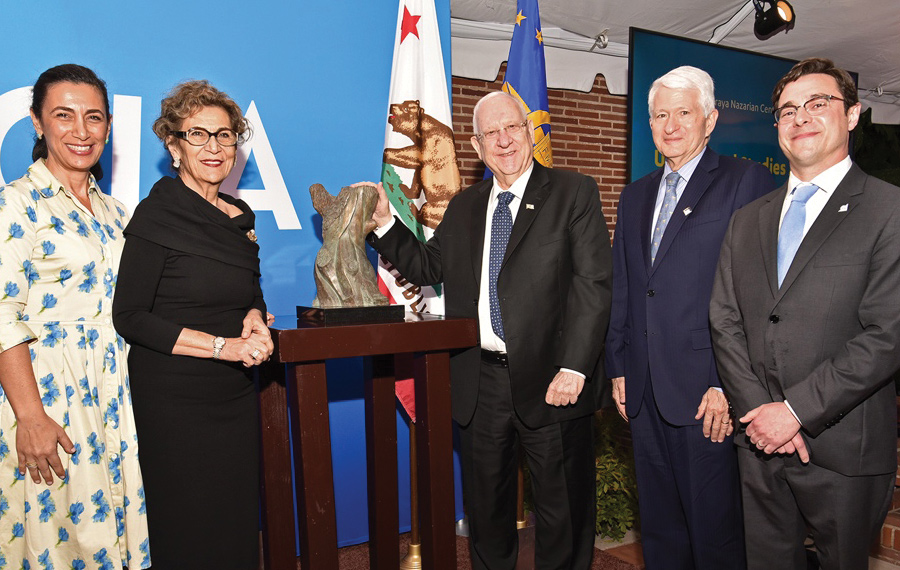
Israeli President Reuven Rivlin accepted the UCLA Israel Studies Award on Feb. 18, presented by the UCLA Younes and Soraya Nazarian Center for Israel Studies.
UCLA Chancellor Gene Block presented Rivlin with a sculpture designed by artist and Y&S Nazarian Center co-founder Soraya Nazarian, who attended the award ceremony with her daughter, Sharon Nazarian, also a co-founder of the center.
Accepting the award, Rivlin spoke about the inclusive work he is pursuing in Israel to bring together all of Israel’s citizens, including the Charedim and Arabs.
“Israel is not a democracy only to the Jewish people,” he said. “Israel is a democracy to all its citizens, and all the people who are living along with us in Israel.”
He emphasized the importance of Jewish unity and the State of Israel’s commitment to working with Diaspora Jewry. He also highlighted how Israel has grown from a fledgling state to a global “success story. We have gone from a developing country to a world leader in innovation. But if we want to preserve this miracle, we must keep Israeli society united. There is no other way. We have to keep the whole Jewish people united.”
Expressing concern about the rise of anti-Semitism, he denounced the boycott, divestment and sanctions (BDS) movement as well as the vandalism in December at Iranian Jewish congregation Nessah Synagogue in Beverly Hills.
Rivlin appeared at UCLA during a stopover in Los Angeles. He was en route to Fiji and Australia, where he was to make his first official visit.
Consul General of Israel in Los Angeles Hillel Newman, who was among the attendees at the UCLA ceremony, told the Journal that prior to appearing at UCLA, Rivlin met with Beverly Hills City Council members at the Waldorf Astoria.
Rivlin’s visit took place amid political uncertainty in Israel as the country prepares to hold its third election in less than a year on March 2.
The gathering in Westwood, a tented reception at Block’s residence, began with remarks by Block and Dov Waxman, director of the Nazarian Center.
“UCLA is proud to have numerous relationships with Israeli educational and cultural institutions, and we are honored to have President Rivlin visit our campus,” Block said. “I am especially proud that the Nazarian Center is a vital presence at UCLA, helping us all understand the depth and complexity of Israel’s history, society and culture.”
Introducing Rivlin to the crowd of approximately 120 people, Waxman said Rivlin has elevated the presidential role in Israel above its traditionally symbolic status.
“In a period when Israeli society is facing numerous challenges and Israeli democracy is under stress, President Rivlin is the leading voice in Israel calling for shared citizenship, social inclusion, civil discourse and respect for democratic norms,” Waxman said.
Many leaders from the local Jewish community turned out, including Jewish Federation of Greater Los Angeles CEO Jay Sanderson, husband-and-wife philanthropists Naty and Debbie Saidoff, UCLA professor Judea Pearl, American Jewish Committee Los Angeles Director Richard Hirschhaut, Los Angeles City Controller Ron Galperin, UCLA Hillel Executive Director Rabbi Aaron Lerner, attorney Sam Yebri, UCLA senior Justin Feldman and Journal contributor Tom Teicholz.
The program included a screening of a short film produced by the Israeli government.
Rivlin, a lawyer by training, has served as president of the State of Israel since 2014. He also has served as the Speaker of the Knesset and as a Cabinet minister.
He is the third individual to receive the UCLA Israel Studies Award, which “recognizes individuals of extraordinary character and merit in their chosen fields,” according to a UCLA statement. Previous recipients are former Chief Justice to Israel’s Supreme Court Aharon Barak and the late Israeli author Amos Oz.
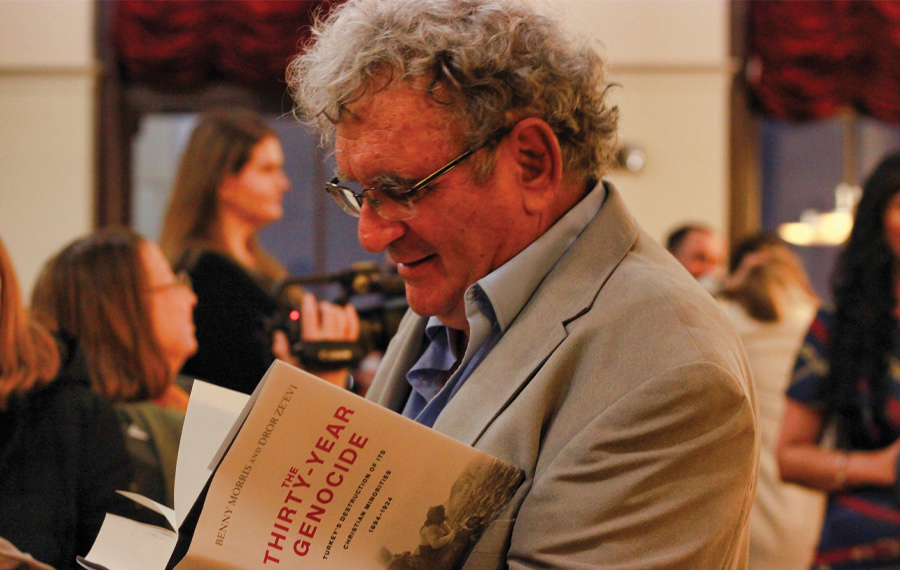
Israeli author and historian Benny Morris appeared at L.A. City Hall to discuss his book, “The Thirty-Year Genocide.” Photo courtesy of Jackie Danicki
A strong turnout of local Jews and Christians came together for an event with Israeli historian and author Benny Morris at Los Angeles City Hall on Feb. 17.
The discussion examined Morris and co-author Dror Ze’evi’s recently published book, “The Thirty-Year Genocide: Turkey’s Destruction of Its Christian Minorities.”
“This cross-cultural conversation is a meaningful opportunity to bring together Jews and Near Eastern Christians,” said Philos Project co-founder and Executive Director Robert Nicholson, whose organization partnered with the Armenian National Committee of America, the American Hellenic Council and the Assyrian American Association of Southern California for the occasion.
More than 100 people attended the event, including local Jews who were interested in learning more about the decades of ethnic cleansing that inspired Adolf Hilter, who was quoted as having said in 1939, “Who, after all, speaks today of the annihilation of the Armenians?”
The conversation with Morris covered the less well-known fact that Assyrian and Greek minority groups also were affected by this sustained genocide, which was officially recognized by the U.S. House and Senate in 2019.
Attendees at the Tom Bradley Tower Room event included Los Angeles Deputy Mayor Nina Hachigian, Andreas Spyrou from the Consulate General of Greece, California State Sen. Anthony Portantino, Assemblymember Laura Friedman and L.A. City Councilman Paul Krekorian.
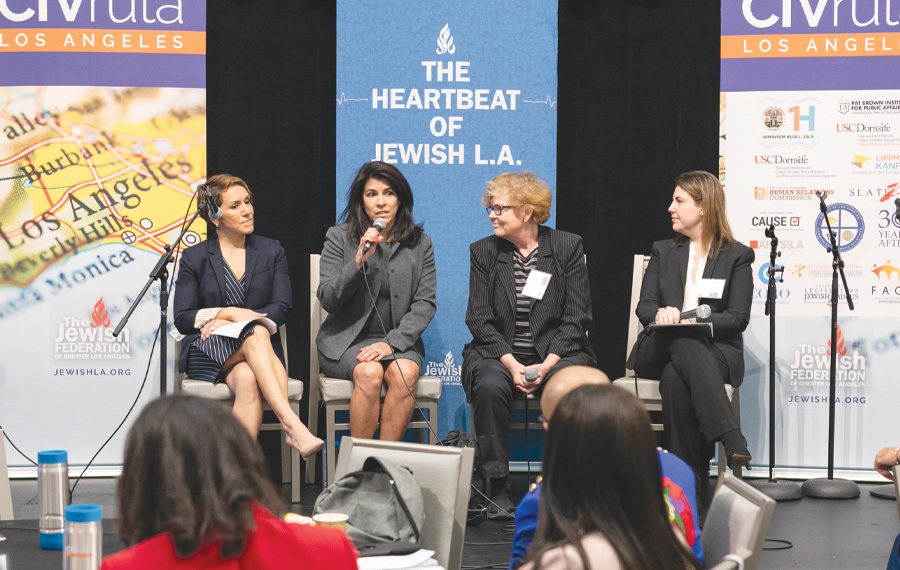
From left: Ana Guerrero of L.A. Mayor Eric Garcetti’s office; Cathryn Rivera-Hernandez of the Office of Governor Gavin Newsom; Torie Osborn of the Office of L.A. County Supervisor Sheila Kuehl and Samantha Millman of City of L.A. planning commission. Photo by Josh Krause.
On Feb. 20, The Jewish Federation of Greater Los Angeles held CIVruta,
a daylong event that convened emerging leaders from across Los Angeles for
civic learning about how to bring democratic values to public boards and commissions.
Held at the Japanese American Cultural and Community Center, the gathering explored how to lead through equitable and inclusive inquiry, how to prepare for and seek appointment to a public board or commission, how to respond to bias and incompetence in public meetings and how to succeed in a public service role.
Speakers and trainers included L.A. County Supervisor Hilda Solis; Kelli Bernard, a commissioner for the L.A. Homeless Services Authority; Aziza Hasan of L.A.’s Civil and Human Rights Commission; and Raphael Sonenshein, executive director of the Pat Brown Institute of Public Affairs at Cal State Los Angeles.
According to the Federation, “CIVruta aims to equip civic volunteers to be in productive public service relationships with people from across the rich diversity of L.A.’s ethnic and religious communities.”
Supporters of Friends of Sheba Medical Center gathered at the home of Sharona Veiseh for a culinary medicine workshop. Photo courtesy of Friends of Sheba Medical Center
Earlier this month, Friends of Sheba Medical Center (FSMC) held three culinary medicine cooking workshops featuring Dr. Rani Polak, founding director of the Center of Lifestyle Medicine at Sheba Medical Center in Israel.
Over two days, Polak led 50 supporters of FSMC in three workshops on how to prepare and cook Mediterranean dishes and the health benefits of cooking at home.
The Feb. 4 workshops were held at the homes of Sharona and Dr. Afshin Veiseh and Judy and Aron Shapiro, and the Feb. 5 workshop was held at the home of Rosanne Ziering.
FSMC raises funds and awareness for Sheba Medical Center, located in Tel HaShomer, near Tel Aviv, the
largest hospital in the Middle East. According to the organization, “Culinary medicine is a new evidence-based field that blends the art of food and cooking with the science of medicine.”
Want to be in Movers & Shakers? Send us your highlights, events, honors and simchas. Email ryant@jewishjournal.com.
Jews have always loved a good argument. From the oral teachings to the Talmud, the culture of arguing, making a point and then a counterpoint – is deeply rooted within the Jewish tradition.
Maybe that’s the reason that in recent years, under the radar, Israel has become an international juggernaut in the debate world. The debating clubs are thriving, and in international debating competitions, Israel is winning big prizes.
Yoni Cohen Idov is the world debate champion for 2019. He’s a debate coach and currently works in Israel, USA and China. He joins us to discuss the art of debating, so that hopefully, we’ll be a bit better at it.
There has been much agitation about the perceived exclusivity of the contemporary Tikkun Olam movement. The complaint is that Orthodox Jews — especially ones who lean conservative politically — do not feel welcome at the table when issues of social justice are discussed.
Whether that’s because of the red lines we draw around certain criticism of Israel, or because of our adherence to Jewish customs that create friction with social norms, it seems safe to say we’re not happy about being left out.
But I’m starting to wonder how it looks from the outside looking in at our Orthodox bubble. I met with a representative from an organization that fights for one segment of society’s vulnerable, who was hoping that I would write about some of the work their nonprofit is doing in the Los Angeles area. They demonstrated the merits of the organization’s cause at great length, describing its historical importance both to the United States and the Jewish people. They offered statistics indicating the issue’s bipartisan appeal. Finally, they rattled off a list of local Jewish institutions that had taken up the cause.
“Any Orthodox?” I asked.
The representative said that was a much shorter list. They explained that while they work with Orthodox synagogues, many others were skeptical of the cause. The nonprofit’s presence also was limited in L.A., and most of this organizer’s connections were with Conservative, Reform or nondenominational Jewish institutions. Moreover, I was informed that the majority of Jews in the Los Angeles area are not even members of a synagogue. From a purely numerical standpoint, it did not make sense to heavily invest in outreach to Orthodox shuls. Already spread thin, and with no shortage of other groups that wanted to partner with the nonprofit, why bother barking up the Orthodox tree?
When we talk about “the radical middle,” the radical part is us meeting our end of the bargain by extending our arms and welcoming in the stranger.
That wasn’t all. They conceded that taking only the low-hanging fruit was just one factor. They also had personal reasons for staying out of shul. “We’re talking about going into a place where I’m not considered a real Jew, where my marriage isn’t recognized nor where I could be considered Jewish enough to become a rabbi,” they said, “because I’m gay.”
Mind you, that’s not because of this person’s politics — which our community already is at one another’s throats about — but because of their religious choices and sexual orientation. The skepticism of an Orthodox audience about the topic was just a layer on top of its palpable suspicion about the speaker.
I identify as an Orthodox Jew, and my fear is being left behind because my cohort can’t bring itself to express humanity in disagreement, and because other cohorts have given up on us as uncompromising, unwelcoming or discriminatory. But I’m not giving up yet. I’m not ready to write off frum Jews.
The moment struck me as a breakdown of communication between denominations more than anything else. Could the attitudes of my own crowd be so retrograde? Or had I been naive to think they’d be any other way? Or maybe I’m not Orthodox, if that’s what Orthodox people think. If that’s how we make other Jews feel.
Meanwhile, as I talked with this person for the first time, I scrawled in my notebook: “Leaving Orthodox Jews Behind!!!” We are missing out on critical soul enrichment, avenues to nurture compassion, opportunities to sanctify God’s name, by shunning people who fight for the oppressed but don’t wear kippot or date a member of the same gender.
We have to die on the hill of letting, nay, inviting these people into our spaces, so they can see what we’re about and so we may benefit from their Jewish perspective. Repeat after me: Your experience is just as valid and as Jewish as mine.
I identify as an Orthodox Jew, and my fear is being left behind because my cohort can’t bring itself to express humanity in disagreement, and because other cohorts have given up on us as uncompromising, unwelcoming or discriminatory. But I’m not giving up yet. I’m not ready to write off frum Jews. I know how essential it is — as it always has been — to have us at the table when we fight for the needy.
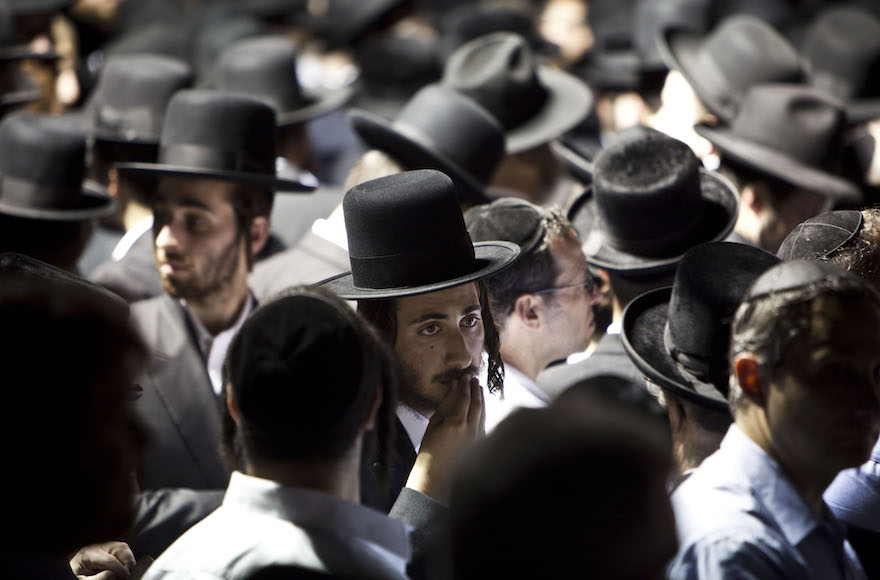
I want to do Tikkun Olam, and I want to bring other Shomer Shabbat, shomer kashrut, Observant Jews with me. Jews who drive vans and Jews who wear black hats and Jews who wear payot. (Is there really anyone who opposes making the world a better place?) When we talk about “the radical middle,” the radical part might be us getting there. We’re not so different from other Jews. Where our ways of life diverge, we should recognize that those very distinctions give each of us special value — especially when it comes to lifting up people.
Louis Keene is a writer living in Los Angeles. He’s on Twitter at @thislouis.
Junk mail is a big pain. No, I don’t want a new credit card. No, I don’t want to enter a contest. No, I don’t want a free steak dinner in return for hearing about my retirement options. Also known as direct response mailers, junk mail not only clutters our homes, it kills a lot of trees to do so.
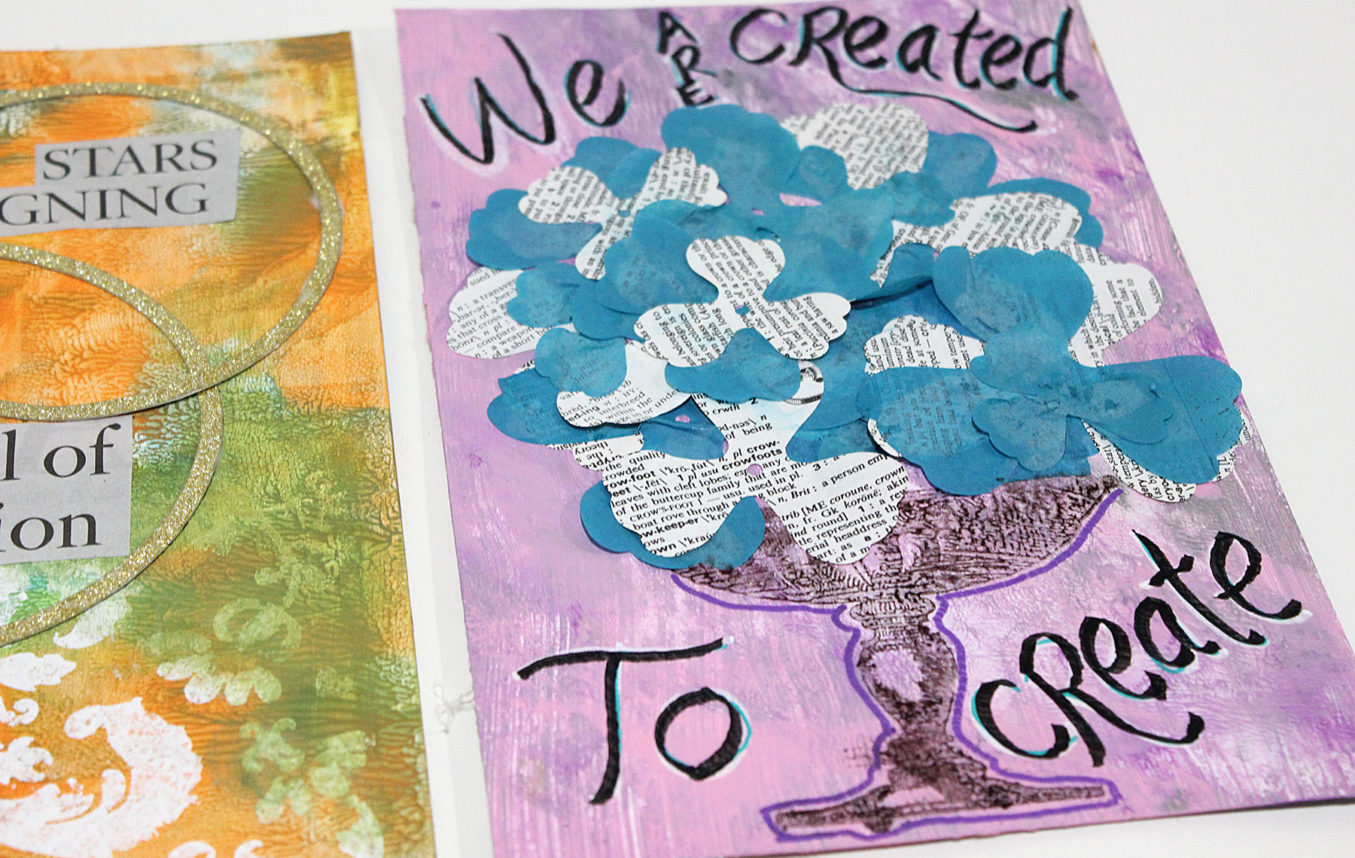
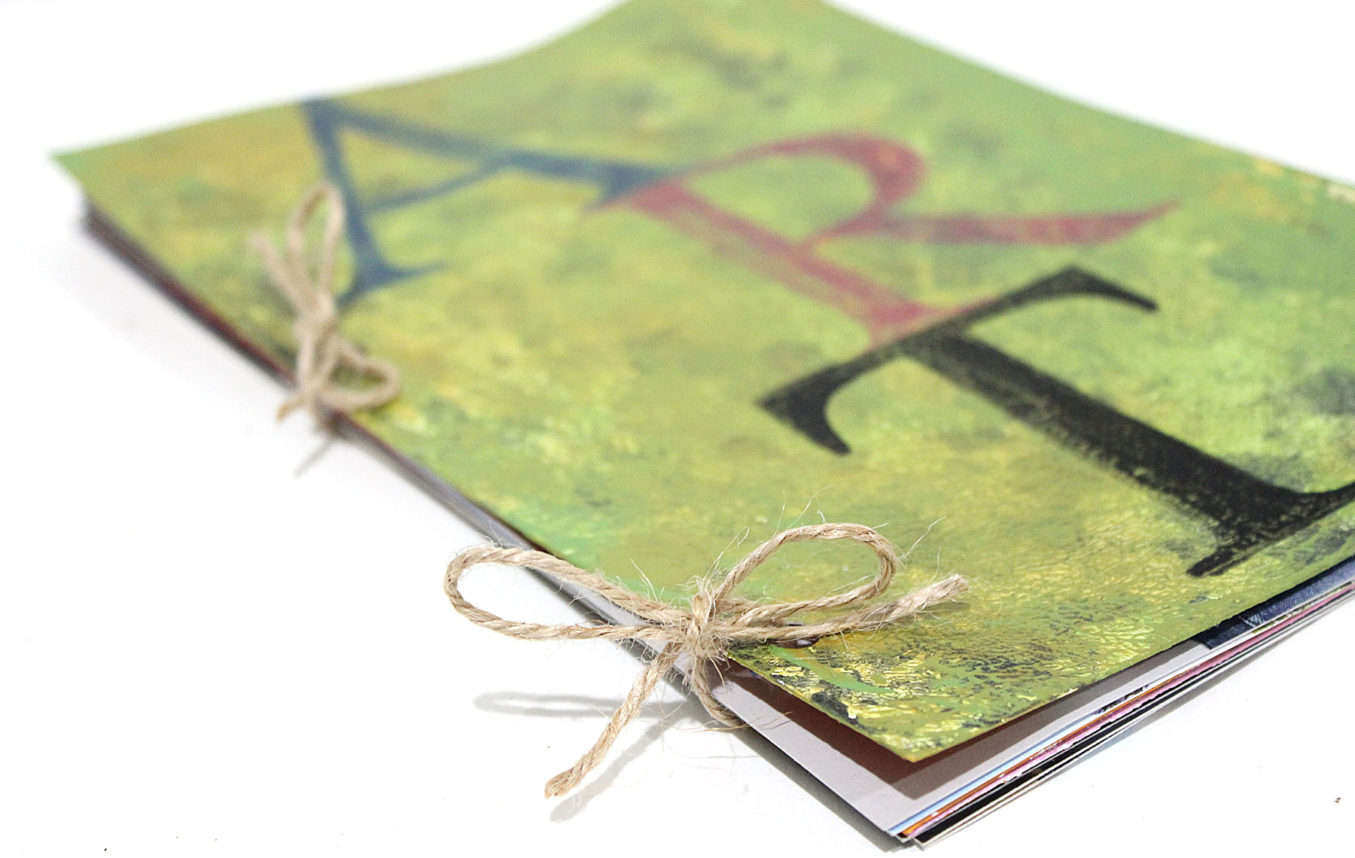
One eco-friendly way to deal with your junk mail is to repurpose it as art materials. In particular, I like the large postcards that real estate agents and performing arts organizations distribute. They are printed on very heavy cardstock, so they will not warp even when you slather them with paints and glues. Assemble a stack of these postcards, apply a base coat of paint to each to hide the printing, bind them together into one book, and you’ll have a set of blank canvases that will serve as an art journal.
Now you may ask: What’s an art journal? It’s a visual diary, a creative sketchbook. Instead of writing your thoughts, you express yourself by painting, drawing, collaging, stenciling, stamping — however you like to create. Your art journal is a mixed media reflection of where your head is. Each page is different, and there are no right or wrong ways to create them. It’s not meant to hang in the Louvre, so don’t self-critique your ideas or artistic abilities. After building a few pages, you’ll find it quite therapeutic and addictive. And the fact that you upcycled what would have ended up in landfill makes your art journal that much more special.
What you’ll need: Junk mail postcards
White acrylic paint
Acrylic paint of different colors
Paintbrush
Your favorite art materials
Hole punch
String or ribbon
1. Save all your junk mail postcards. If they come in various sizes, that’s fine, as the pages in your art journal do not have to be the same dimensions.
2. Apply one or two coats of white paint over the postcards to hide what is printed on them.
3. Add splashes of color on top of the white paint. I like applying paint with sponges to get a mottled effect. Another trick is to place a blank piece of paper on top of the colored paint that you’ve added, press down on the paper and lift it off. This technique creates a unique, leathery texture.
4. Embellish the pages using whatever art materials and techniques you desire. You don’t have to fill your art journal all at once. Tackle a page at a time.
5. To bind the pages together, punch two holes on the sides and tie them together with some string or ribbon.
Jonathan Fong is the author of “Flowers That Wow” and “Parties That Wow,” and host of “Style With a Smile” on YouTube. You can see more of his do-it-yourself projects online.
Lorraine Abbott died Jan. 29 at 84. Survived by daughter Lisa Robles; 1 grandchild. Mount Sinai
Robert Bramson died Jan. 24 at 98. Survived by daughter Bobbe (Martin) Bramson-Goodman; sons David, Tom (Stephanie), Danny (Julee); 5 grandchildren. Mount Sinai
Alexander Dane died Jan. 15 at 82. Survived by wife Sharlene; daughter Julia (Locke) Eldridge; son Elliot (Jackie); 4 grandchildren. Malinow and Silverman
Wilma “Willy” Epstein died Jan. 19 at 85. Survived by daughter Jaimie; sons Todd, David.
Emily Feigenson died Jan. 23 at 65. Survived by husband Dennis H. Perluss; daughters Netanya Feigenson Perluss, Talia Feigenson Perluss; son Gabriel Feigenson Perluss. Mount Sinai
Larry Field died Jan. 28 at 89. Survived by daughters Lisa, Robyn (Anthony O’Carroll); 2 grandchildren. Mount Sinai
Sylvia Freeman died Jan. 26 at 95. Survived by son Eugene (Gail) Lindenberg; 2 grandchildren; 2 great-grandchildren. Mount Sinai
Lorraine Ginsburg died Jan. 20 at 90. Survived by sons Eitan (Wendy Spears), Michael; 3 grandchildren. Mount Sinai
Martin Glade died Jan. 27, at 93. Survived by wife Sandra; daughter Brenda (Craig) Polisky; son Roger (Evie); 3 grandchildren; 4 great-grandchildren; stepchildren Amy,
Wend, Shari; 8 step-grandchildren; 2 step-great-grandchildren. Mount Sinai
Myron “Mike” Guss died Jan. 31 at 85. Survived by daughters Stephanie, Hillary, Allison (Ronald) Gehr; son Bill (Angie); 3 grandchildren; sister Rhoda Rawson. Mount Sinai
Marvin Jaffe died Jan. 27 at 86. Survived by sons Stuart (Fran), David (Tracy); 6 grandchildren.
Henry Klunower died Feb. 1 at 92. Survived by daughter Cheryl (Michael) Schulman; 2 grandchildren; 3 great-grandchildren; sister Rosie Penn. Mount Sinai
Joseph Lassman died Jan. 20 at 89. Survived by wife Adrienne; daughter Mindy (David) Elkabetz; son Mark (Sue); 3 grandchildren. Mount Sinai
Celia Levitt died Jan. 31 at 103. Survived by daughter Beverly (Paul Goldsmith); sons Dennis (Jane Gordon), Reuven (Gila); 7 grandchildren; 13 great-grandchildren. Mount Sinai
Susan Lieberman died Jan. 25 at 73. Survived by husband Ira; daughter Jill (Ben) Super; son Neil (Alan); 2 grandchildren; brother-in-law Richard (Barbara). Mount Sinai
Victor Levy died Jan. 15 at 92. Survived by daughters Melinda Levy-Evans, Victoria; son Jeffrey; 2 grandchildren; 3 great-grandchildren. Malinow and Silverman
Bernard “Buddy” Litten died Jan. 21 at 95. Survived by wife Judith; daughters Marcie (Ron) Glousman, Cindie (Scott) Page; sons Douglas (Victoria), Jeffrey (Allison) Mirkin, Mitchell (Susan) Mirkin; sister Connie (Stanley) Packman. Mount Sinai
Sandra Mainwarring died Jan. 24 at 81. Survived by daughter Lori Hermann; sons David Wolgin, Mark Wolgin; 2 grandchildren; 1 great-grandchild; brother Ronald (Michele) Yoffe. Mount Sinai
Norma Morhar died Jan. 3 at 93. Survived by daughter Robin (Ann Lynch); son Lee; brother Philip Shalitt. Mount Sinai
Marlene Joan Morris died Jan. 26 at 79. Survived by daughter Melanie (Robert) Speiser; 3 grandchildren; brother Douglas (Kim) Goldsmith. Mount Sinai
Robert Oppenheimer died Jan. 22 at 77. Malinow and Silverman
Norman S. Paley died Jan. 25 at 93. Survived by wife Diane; sons Steven (Alicia), Bruce; 4 grandchildren. Mount Sinai
Ceila Pollack died Jan. 30 at 90. Survived by daughters Roberta (Harvey Bronstein), Barbara (Robert) Gibson, Debra (James) Hagen, Sandy Dubin; 3 grandchildren; sister Pearl (Glenn) Jones; brothers Harry (Marsha) Tash, George (Debbie) Tash. Mount Sinai
Mildred Rose died Jan. 28 at 88. Survived by sons Kenneth, Douglas (Terry), Bradley, Eric (Marci); 5 grandchildren. Mount Sinai
Sharrie Silverman died Jan. 25 at 78. Survived by husband David; daughters Gina (Byron Rosenberg) Zuckerman, Marla (Don) Kindelspire; sons Gregg (Debbie) Zuckerman, Garry (Lori) Zuckerman, Jeff (Claudia); sister Gail Bach. Mount Sinai
Serene Skuro died Jan. 12 at 104. Survived by daughter Arlene (Robert) Feldman; son Steven (Marsha); 5 grandchildren; 7 great-grandchildren. Malinow and Silverman
Rita Sorokina died Jan. 22 at 95. Survived by daughters Inna Zalevsky, Vera Elkin; 3 grandchildren; 2 great-grandchildren. Mount Sinai
Sydney Vender died Jan. 24 at 93. Survived by daughter Laurie (Stephen Halper); sons Steven, Rick; 4 grandchildren; 1 great-grandchild. Mount Sinai
Mickey N. Wapner died Jan. 22 at 94. Survived by sons Fred (Audrey Schlesinger), David (Edna); 4 grandchildren; 3 great-grandchildren; brothers Bernard (Nancy) Nebenzahl, Harry (Marilyn ) Nebenzahl. Mount Sinai
Phala Ann Warner died Jan. 30 at 77. Survived by son Seth (Shayna); 2 grandchildren; brother David Fuller. Mount Sinai
Bernard Weinberg died Jan. 29 at 90. Mount Sinai
Stanley Weiner died Jan. 28, at 87. Survived by wife Rosalie; daughters Sheryl, Carrie (Mitchell) Macoves; sons Fred (Ellen Weinstein), Brad Golstein, Ron (Bonny); 9 grandchildren; 6 great-grandchildren. Mount Sinai
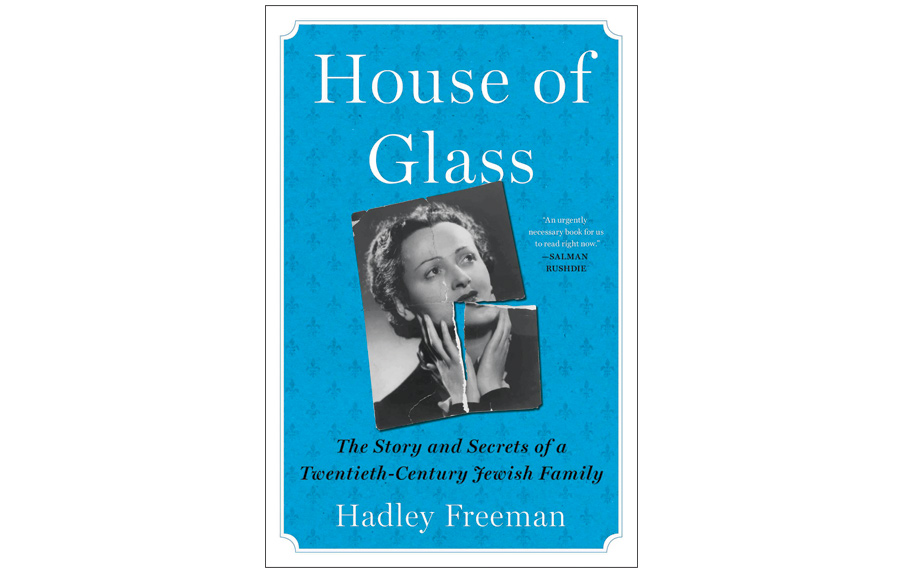
The opening pages of “House of Glass: The Story and Secrets of a Twentieth-Century Jewish Family” by Hadley Freeman (Simon & Schuster) set a scene out of an exotic romantic thriller, and yet it is an authentic family chronicle, deeply poignant and often heartbreaking. I confidently predict that “House of Glass” will find its way to the motion picture screen, but you don’t have to wait to see it on Netflix or Amazon. The story is told with elegance and intensity right there in Freeman’s book.
After the death of her grandmother, Freeman found a shoebox hidden away in a closet. The contents are clues to a mystery: a snapshot of her grandmother in the embrace of a man whose face has been scratched out by “someone’s — presumably my grandmother’s — fingernail”; a telegram from the Red Cross that refers ominously to “distressing news” from war-torn Europe; a drawing bearing the signature of Pablo Picasso and depicting a man with a gun to his head; and a metal tag inscribed with her family name: “Glass Prisonnier Cambrai 1940.” Freeman spent the decade that followed her discovery on a self-appointed mission to flesh out her hidden family history, an enterprise that caroms from Auvergne to America to Auschwitz.
Born in New York and now based in London, Freeman is a columnist for the Guardian newspaper in the United Kingdom and a contributor to Vogue, New York magazine and Harper’s Bazaar, among other periodicals. She is the author of “Life Moves Pretty Fast,” “The Meaning of Sunglasses” and “Be Awesome.” It turns out that her own cosmopolitan life is precisely the right preparation for the work to be done in revealing the life story of Sala Glass, her beloved grandmother.
At the outset, Freeman confesses that she comes from “a family of anecdotalists,” and she frankly entertains the notion that the stories she remembers are only “lightly penciled.” She wonders aloud: “Am I remembering actual memories or are they memories of memories?” Thanks to her own efforts at fact-checking over several continents and decades, however, she is able to paint an extraordinary colorful and detailed tapestry.
The starting point for Freeman is France in the 1930s. Even in America, Freeman’s fashionable grandmother carried the traces of the time she spent there: “Her dresses were still carefully preserved in the dry cleaners’ plastic wrap, and still smelled of Chanel perfume and Guerlain face power (even her cosmetics were strictly French).” As she digs even deeper, she finds that the Glass family, which claimed to have come from Vienna, actually originated in a Polish backwater called Chrzanow, which was under the sovereignty of the Austro-Hungarian empire.
After World War I, the family reached Paris, where one of Sala’s brothers wholly reinvented himself as a couturier and befriended Marc Chagall, among other artists. The Glass family fully embraced the pleasures of life in the City of Light, as Freeman found out for herself when she discovered a collection of photographs that another one of Sala’s brothers took of the enticing young woman who would become his wife.
“She is lying on the bed and spreading her legs, looking to the camera with a sexuality so frank it is unnerving,” Freeman writes. “You don’t expect to find eighty-year-old evidence of your great-uncle and great-aunt’s sex life.”
After the death of her grandmother, Hadley Freeman found a shoebox hidden away in a closet. She spent the decade that followed her discovery on a self-appointed mission to flesh out her hidden family history, an enterprise that caroms from Auvergne to America to Auschwitz.
Freeman also inquires into the sexuality of the great-uncle who changed his name from Sender to Alex and established a Paris fashion house. “The question of whether Alex was gay or bisexual was one that was raised in his lifetime by his friends and colleagues, but always behind his back,” she writes, and never by his own family. One of the sketchers who worked for Alex recalled: “[Alex] was such a dandy, you know? Always in heels, always heavily perfumed, but he talked about his girlfriends, so we in the studio could never figure it out.”
A third great-uncle, Jacques, served in the uniform of the French Foreign Legion when Germany invaded France in 1940 and ended up a prisoner of war, as evidenced by the metal tag that Freeman found in her grandmother’s shoebox. (The meaning and destiny of that metal tag is yet another mystery that Freeman manages to solve.) After the French surrender to Germany, Jacques found himself the target of the anti-Semitic laws that were quickly adopted, losing his fur business and submitting his identity card to be stamped with a the word “Juif.”
“When he joined the Legion to risk his life for France, he had little,” Freeman observes. “[N]ow, after fighting for his country, he had even less.”
Only one member of the Glass family —– the youngest sister, Sala, now known as Sara — was able to escape from France before Germany tightened its grip on the Jews of Europe, but she stand outs among the cast of endearing and beguiling characters who populate the pages of “House of Glass” for more reasons than her survival. The photograph of the man with the scratched-out face is a clue to yet another mystery, the one that is almost literally the heart of Freeman’s book.
“The story of my grandmother confused people — particularly, I noticed, Jewish Americans who generally, and understandably, assume that any story about escaping the war by coming to America is a happy one,” Freeman writes.
All of these stories are carefully placed into their historical context by the author. Indeed, she always seeks to remind us that the intimate personal lives of various family members were lived under the weight of war and pogrom, conquest and occupation, and the machinery of mass murder that we called the Holocaust. Indeed, Freeman shows us exactly how the war against the Jews — the betrayals and denunciations, the roundups and deportations — was actually experienced on the ground in occupied France.
While “House of Glass” is, above all, a highly accomplished, compellingly readable and deeply romantic family memoir, it also honors the victims of the Holocaust by showing us that each one of them was a unique human being whose personalities and passions were not, and could not be, erased by those who sought to kill them.
Jonathan Kirsch, attorney and author, is the book editor of the Jewish Journal.
Discussing how best to create an exhibition chronicling the experiences of African Americans during World War II, the staff at the National World War II Museum in New Orleans knew their archives wouldn’t be sufficient. They needed personal stories and, whenever possible, items to accompany those stories.
“I think a lot of African Americans did not see themselves in our exhibit or in the museum, and this certainly was an attempt to change that in a large way,” Kimberly Guise, assistant director for curatorial services for the museum, told the Journal. “A lot of the work was gathering materials, gathering stories and artifacts.”
That call was answered, and the exhibition “Fighting for the Right to Fight: African American Experiences in World War II” was mounted at the museum in 2015. After completing its run in New Orleans, it was reconfigured as a traveling exhibition that has been staged at museums across the country and is now in Los Angeles at the Museum of Tolerance (MOT) through May 6. It’s the first showing in California.
The synergies between the exhibition’s messages and the Museum of Tolerance’s mission are numerous, MOT Director Liebe Geft told the Journal. “As Simon Wiesenthal said, ‘Freedom is not a gift from heaven. You have to fight for it every day,’ ” Geft said. “We don’t take our democratic freedoms for granted and we’re very mindful in this museum — both in the Holocaust exhibit and in the Tolerance Center — how long fought and hard won are the battles of civil rights, and how constant and vigilant we must be in our protection of human rights.”
“We don’t take our democratic freedoms for granted and we’re very mindful in this museum — both in the Holocaust exhibit and in the Tolerance Center — how long fought and hard won are the battles of civil rights, and how constant and vigilant we must be in our protection of human rights.” — Liebe Geft
Civil rights were put to an extreme test when America went to war. Despite the prevalence of racism, discrimination and practices of segregation that existed in the 1940s, the country needed men for the war effort. President Franklin Roosevelt created an executive order banning racial discrimination in hiring practices in industries that held government contracts related to national defense. As a result, African Americans were permitted to join the armed forces and more than 1.4 million of them signed up to serve a country that proved to be not particularly grateful for their contributions.
Through informational panels and oral accounts, “Fighting for the Right to Fight” details the landscape that African Americans faced before the war, in all branches of the military during the war and the struggles they encountered on the homefront after it ended. The nation needed manpower to fight the war, but black soldiers were admitted begrudgingly, often refused advancement and subjected to many of the same discriminatory practices in the military that they faced in civilian life. In 1948, President Harry Truman issued an executive order that fully integrated the armed forces, but wounds — both physical and psychological — were slow to heal.
“There was a lot of hurt and bitterness over the treatment they received,” Guise said. “Imagine returning home after having served your country and not being allowed to walk into a store on Canal Street — the main street in New Orleans — to try on and buy a suit. That’s a story that I heard directly from a friend of mine who is a veteran. I think that hurt about that experience led many to not want to save their memorabilia.”
Los Angeles resident Allene Carter also has a story about an African American officer who served during World War II: her father in law, Staff Sgt. Edward Carter Jr. It’s a story she has been trying to tell for more than 20 years and it has a place in “Fighting for the Right to Fight.”
A career noncommissioned officer, Carter had fought as a volunteer in the Abraham Lincoln Brigade during the Spanish Civil War and enlisted in the U.S. Army in 1941. At the height of his military career, he served with Gen. George Patton’s Third Army in the “Mystery Division” of blacks, serving as one of Patton’s personal bodyguards. On March 23, 1945, near Speyer, Germany, Carter’s troop sustained heavy casualties and Carter was wounded five times, but he still managed to kill six enemy riflemen and capture two others, obtaining valuable information about enemy positions.
Carter received the Distinguished Service Cross and a Purple Heart but was passed over for the Medal of Honor. A damning report from 1943 falsely suggesting that he had ties to communism effectively ended his military career. Carter was honorably discharged in 1949 but was barred from reenlisting.
“He suffered from shrapnel in his body every day and he didn’t know why his country had betrayed him by not allowing him to serve any longer with no explanation,” said Allene Carter, who never knew her father-in-law.“He died at 47 not knowing, and I think he died of a broken heart.”
She wrote the book “Honoring Sergeant Carter: Redeeming a Black World War II Hero’s Legacy,” which allowed him to be reinterred with full military honors at Arlington National Cemetery. In 1997, President Bill Clinton awarded Carter and six other African American World War II soldiers with the Medal of Honor, the highest possible military honor.
Since Allene Carter had traveled with the families of the other six recipients, she offered to help with outreach when the National World War II Museum approached her about creating “Fighting for the Right to Fight,” which was able to gather and display five of those seven medals at the original exhibition. “Today” show personality Al Roker produced a documentary segment and joined the families of the seven honorees. Two of the Medals of Honor — including Carter’s — have traveled with the exhibition and are on view at the Museum of Tolerance.
“Originally, the World War II Museum wanted me to travel with the exhibition,” Allene Carter said. “But I said, ‘No, I can’t make a career out of following this around.’ That can be pretty grueling.”
In 1978, my mother met a Nazi. Not a Nazi in the “someone who disagrees with me” sense, or even in the buzzed-cut gang sense. She came face to face with an alumnus of the Third Reich.
My mother, a 23-year-old scientist at the time, was collecting plants on a farm in Colombia. Her host, a wealthy businessman, treated her to food and drink in exchange for conversation. A couple of drinks in, he announced that once a month, he put on his S.S. uniform, met up with his war buddies and saluted Adolf Hitler.
“Hunters,” a new series on Amazon Prime, focuses on Jews who assassinate Nazis who have escaped justice to 1970s New York City. The show has been widely depicted as a comic book romp. The Washington Post said it had a “comic book tone.” The New Yorker compared the origins of its lead to Bruce Wayne, while The New York Times dubbed Logan Lerman’s portrayal of a grandson of a Holocaust survivor “part Peter Parker, an incipient hero.”
To me, a grandchild of a woman who lived in the ghettos and concentration camps that “Hunters” depicts, the show is not fantastical. My family history tells me that Nazis infiltrating the West in the 1970s is not a comic book storyline. It’s what really happened.
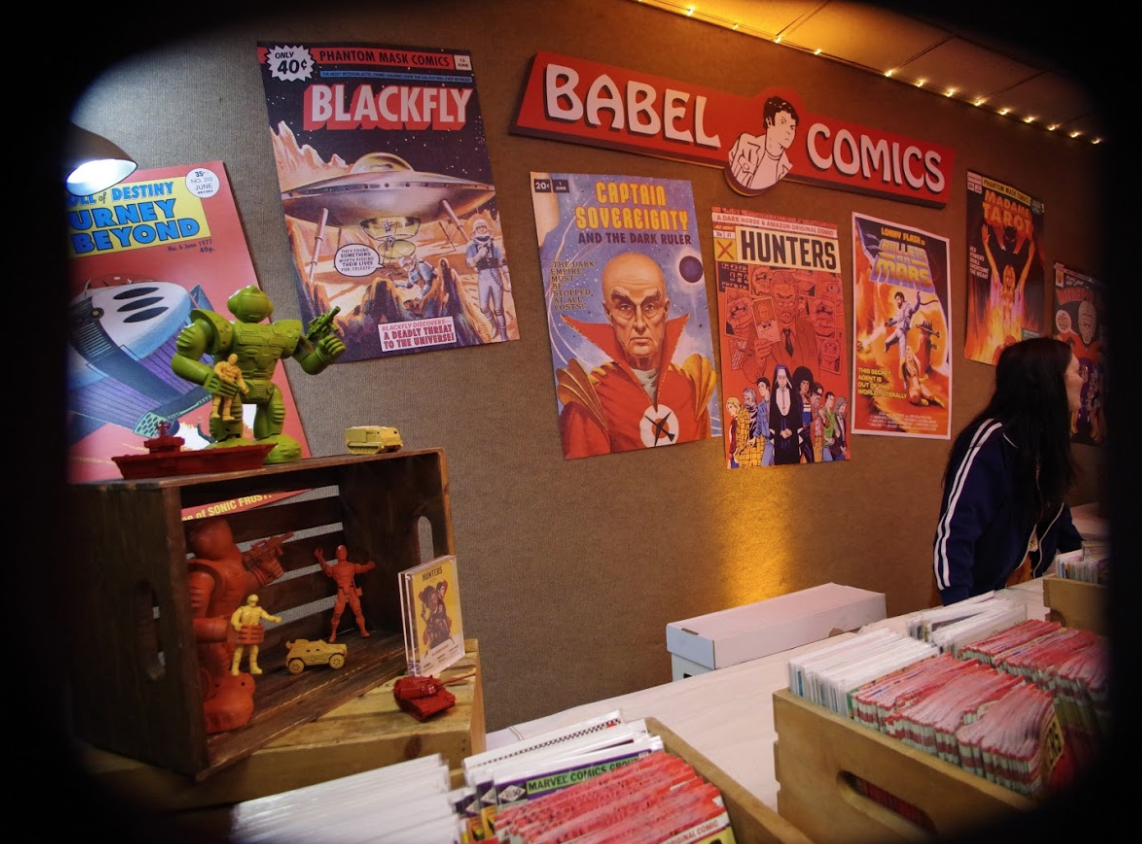

At the “Hunters” Grindhouse Experience in Los Angeles’ Highland Park, Amazon reminded us of that reality. The experience was a free extravaganza that sought to bring viewers into the world of “Hunters” (and get them to stream it.)
Grindhouse, which ran through Feb. 23, is an immersive experience not unlike Maisel Day when Amazon had Los Angeles hair salons, restaurants and hotels offer their 1950s prices to promote “The Marvelous Mrs. Maisel.”
For a few days, Highland Theatres was transformed into “The Empire,” a grindhouse inspired by the ones that once screened movies on New York City’s 42nd Street. The road where the screening took place was lined with vintage taxis and police cars. While guests waited in line to enter the theater, extras dressed in full ’70s garb walked up and down the sidewalk. These actors lured guests into chats — with New York accents as thick as oatmeal.
Inside, guests were treated to comic book depictions of the series (which seems to revel in the comparison.) Wine, boxed popcorn and candy were served at the nostalgic concession stand. The food was complimentary, as was the entire activation, which Angelenos could RSVP to attend online. Amazon also offered themed discounts nearby. Both Good Housekeeping and Gold Line served themed cocktails at their bars. Civil Coffee touted a “Hunters”-inspired menu. Next door, the already nostalgia-prone Artform Studio — a hair salon that sells vinyl records — sold records from the ’70s for $10 off. For a beatnik feel, the Owl Bureau bookshop stayed open late to hold ’70s-inspired spoken-word nights.
The marvel of the Grindhouse Experience is that it highlights the strength of “Hunters.” It’s the ability to be more tangible than a Quentin Tarantino or Marvel project. It has no supernatural elements, just a central conspiracy theory about neo-Nazis infiltrating American institutions.
The centerpiece of the activation was “Hunters Alley,” a swanky bowling alley designed to look like a scene where a congressman is intimidated to do the bidding of Nazis. (The spot is actually Highland Park Bowl.)
Inside, you could visit “Hunters Sideshow,” a Coney Island-inspired room offering fresh cotton candy and drinks. The space had three bars, and the liquor next to the bowling lanes included specialty cocktails such as “The Mensch.” Meanwhile, New York and Jewish classics, like fresh pizza and bite-sized latkes, were carried in (and quickly devoured.)
Of course, the event centered around the “Hunters” screening. Showrunner David Weil discussed how the premise resonated with him and his background as a grandchild of a Holocaust survivor.
Weil told the Journal that “at 6 years old, it was really hard to understand the depths of such horror, such evil. The closest thing I could relate it to was the comic books I loved and the superheroes I followed. It became the lens through which I saw the Holocaust. As I got older, I began to see the reality, the sobering truth and visceral nature of the atrocities.”
The marvel of the Grindhouse Experience is that it highlights the strength of “Hunters.” It’s the ability to be more tangible than a Quentin Tarantino or Marvel project. This is fairly easy, as “Hunters” has no supernatural elements, just a central conspiracy theory about neo-Nazis infiltrating American institutions. But even in 2019, is that inconceivable?
The ideology of Hitler’s regime is very much alive today, as is its violent spirit. “White supremacist extremism is currently the most lethal form of extremism in the U.S.,” American University professor Cynthia Miller-Idriss told Congress in September. From Pittsburgh to El Paso, white nationalists are murdering minorities.
The marvel of the Grindhouse Experience is that it highlights the strength of “Hunters.” It’s the ability to be more tangible than a Quentin Tarantino or Marvel project. It has no supernatural elements, just a central conspiracy theory about neo-Nazis infiltrating American institutions.
Just as in “Hunters,” the upper echelon of today’s American government is tainted with white supremacist sympathizers. Look no further than Stephen Miller. The senior adviser to President Donald Trump helped the founder of the alt-right, Richard Spencer, fundraise for his anti-immigration events. In 2016, Spencer said he was a mentor to Miller in college. A report in 2019 revealed that Miller had sent hundreds of emails linking to white nationalist publications. Although Democrats have called for him to resign, it appears a friend to Nazis remains in an influential position, just as in the “Hunters” pilot.
But the theme of the event was not the 1970s. It was not the Holocaust. It was not even Jews. It was vengeance. Upon entering the screening, visitors received totes that read “The Best Revenge is Revenge” — the “Hunters” tagline. At the afterparty, a bold red-and-black sign above the lanes declared “Revenge is Righteous.” Even event staff wore plain T-shirts proclaiming “Justice is Coming.”
It is this commitment to vengeance that drags “Hunters” into comic book territory. In the series, Holocaust survivors and their descendants — when placed in a plausible situation of finding a Nazi who fell through the cracks — fight back.
While so many Holocaust narratives center around remembrance or trauma, “Hunters” and its Grindhouse Experience are rooted in processing it through more violence. And that’s what makes it so much fun.














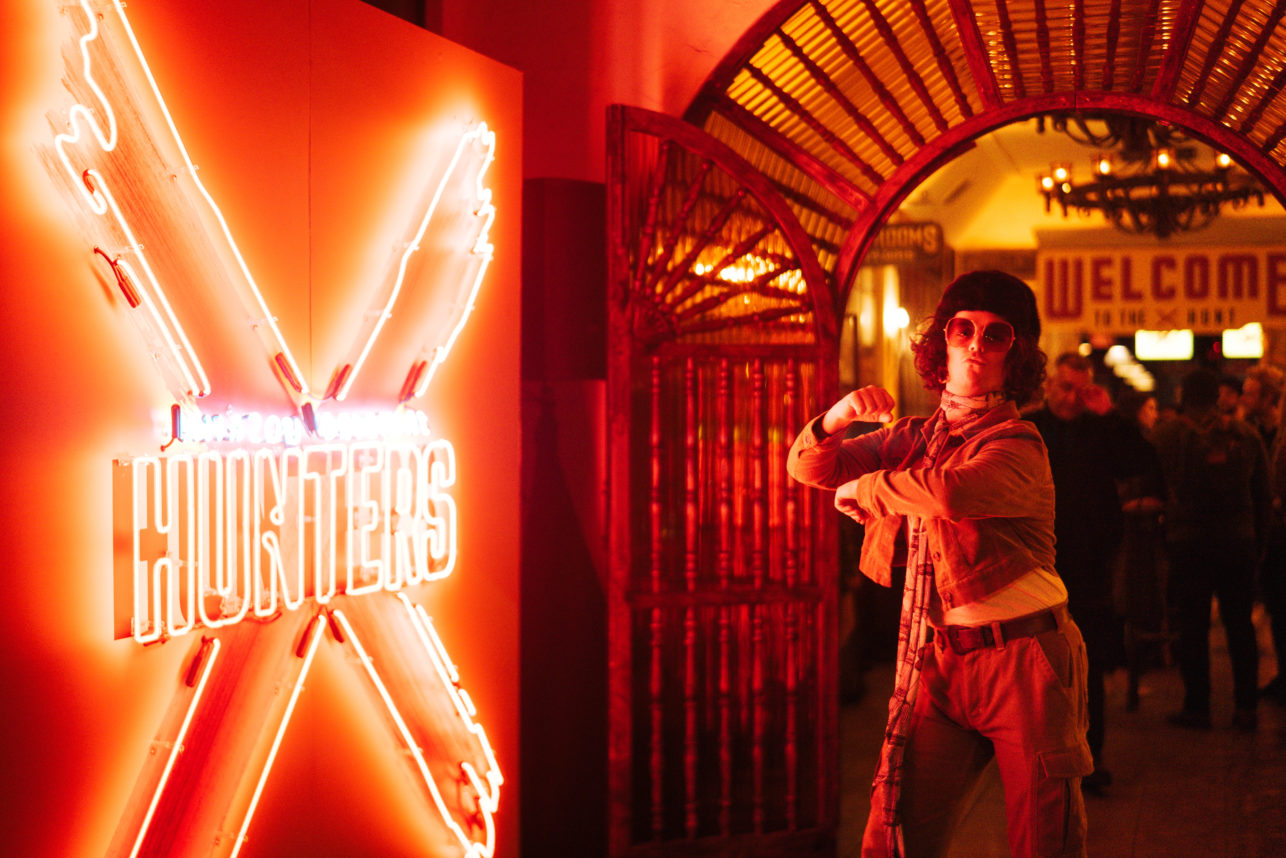 At the “Hunters” Grindhouse Experience in Los Angeles’ Highland Park, Amazon reminded us of that reality. The experience was a free extravaganza that sought to bring viewers into the world of “Hunters” (and get them to stream it.)