fbpx

January 22, 2020

Unrealistic Musings for 2020

This is the column I was hoping to publish at the beginning of the year but which kept getting interrupted by news events:

With 2019 behind us, what can we look forward to in 2020? Realistically, I’m thinking more of the same, only worse. If you haven’t heard, there’s a presidential election looming in November, so you can be sure that as we get closer to E-Day, partisan tensions will escalate, millions of nerves will fray and outrage and anger will be triggered.

We will continue to abhor those who don’t vote like us, to “cancel” each other on social media and reject those with whom we disagree. Of course, that’s assuming we ever meet someone with whom we disagree. As things stand, most of us are pretty content hanging out only with folks who think like us — and why not? It feels good!

Given this reality, what can a lonesome dreamer like me contribute in his first column of 2020? What can I say that will put a rosy spin on these chaotic and divisive times we are in?

What can I say that will put a rosy spin on these chaotic and divisive times we are in?

Well, I can be unabashedly unrealistic.

Let’s start, naturally, with President Donald Trump. My unrealistic wish for 2020? No more talking about Trump at the Shabbat table. Politics in general tends to be boring and repetitive, and it doesn’t go very well with food. Food is enhanced by great conversation, like that new book you can’t put down, or that fascinating story you read in your local Jewish paper (hint, hint), or that comedy special on Netflix that had you in stitches or that Torah class that lit up your soul.

So much of our life and happiness, in fact, revolves around conversation in one form or another. My wish for 2020 is that we will make a concerted effort to watch the words that come out of our mouths and our digital devices. I don’t just mean being sensitive and avoiding hurtful language — that’s a given.

I mean something more ambitious: Let’s make our conversations more interesting. I’m speaking to myself here as much as anyone. I want to find better stories to tell, ask more engaging questions, give my undivided attention to whomever I speak to. I try but often fail. I want to succeed more in 2020.

I also want to meet more people who are not like me. For example, I’d like to attend a Trump rally and maybe get to know some of his fans. Whenever I see clips of those rallies on YouTube, I can’t help thinking about how this crowd is so different from the community I’m used to.

It’s highly unlikely I’ll make it to one of his rallies (too many of my friends would disown me), but remember, this column is about the unrealistic. I’m tired of being realistic. It dulls the senses.

Politics in general tends to be boring and repetitive, and it doesn’t go very well with food. Food is enhanced by great conversation.

I want to write a one-man show I can perform at the Pico Playhouse and kick it off with the Sephardic Yom Kippur prayer I sang for Michael Jackson 20 years ago when he asked me to sing my favorite melody. The show would touch on my Jewish journey from Casablanca to Pico, and include a montage of selected columns with lots of cool images and music.

Unrealistic? You bet. I barely have time to write my weekly column, edit the paper, do my podcasts, run the website, keep up with the news, pitch donors and deal with five kids. And who’s to say I could pull off a one-man show even if I had the time? It’s a whole other skill set.

In any case, it’s liberating to be unrealistic, even if just for one column. I get to dream about all kinds of stuff, like starting a daily broadcast on YouTube where I can share my musings about anything and everything and answer viewer questions. Another wonderful pipe dream.

I can dream, also, about big and important things, like no more anti-Semitism, an actual government in Israel and the Journal winning a Pulitzer. What else? Oh, I don’t know — maybe a year where Jews stop tearing one another apart over politics and do more listening than fighting? I know, that’s not unrealistic, that’s delusional, but it’s fun to mention it.

So, what is your unrealistic wish list for 2020? Don’t be shy, think big. The beauty is that even if none of it ever happens, you can always say, “Hey, that wasn’t realistic.”

And if I bump into you at some event and we start talking, let me know how well I’m conversing and listening — and please don’t run if I tell you about a Trump rally.

Happy 2020.

Unrealistic Musings for 2020 Read More »

Jan. 24, 2020

For fullscreen click here.

Jan. 24, 2020 Read More »

Israeli Soldiers Shoot and Kill 3 Palestinians Who Entered Israel from Gaza

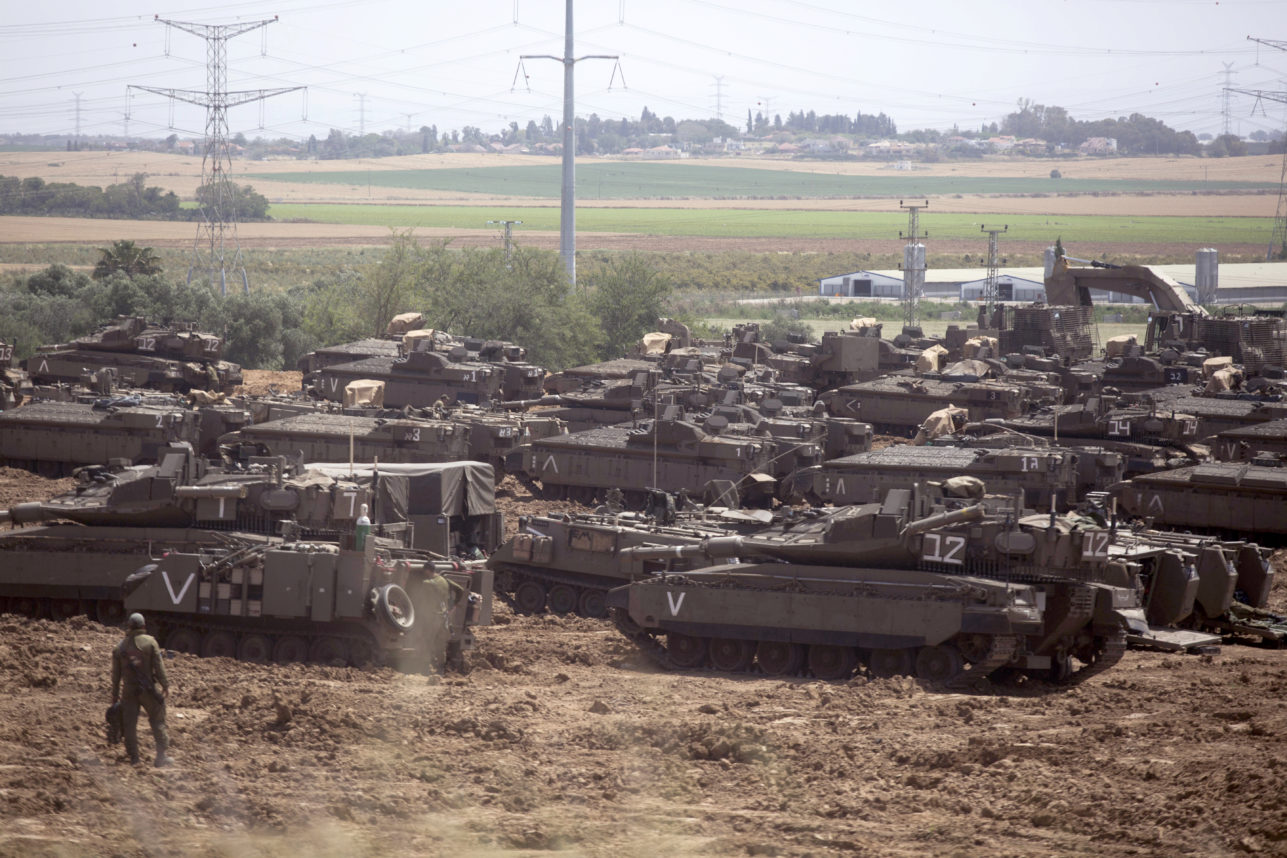
JERUSALEM (JTA) — Israeli soldiers shot three suspected Palestinian terrorists on Wednesday who had crossed the Gaza border fence into southern Israel.

The Israel Defense Forces said in a statement that the infiltrators were hiding in a wooded area opposite Kibbutz Kissufim near the border. After one of the infiltrators threw what the IDF identified as “an explosive charge or grenade” at the Israeli troops pursuing them, the soldiers opened fire.

Palestinian Islamic Jihad, a terrorist group in the Gaza Strip, sent the infiltrators, Ynet reported Wednesday, citing unnamed sources in Gaza.

Haaretz identified the infiltrators as teenagers from central Gaza aged 16-18.

Hamas called the killing an “ugly crime.”

“While the Israeli leadership is busy welcoming leaders from all around the world, Israeli tanks killed three Palestinians in cold blood,” the terror group said in a statement, Ynet reported. “This is a message to all those arriving in Israel, all they [Israelis] know is killing.”

The statement referred to the gathering of world leaders who will be attending the World Holocaust Forum being held Thursday in Jerusalem.

Israeli Soldiers Shoot and Kill 3 Palestinians Who Entered Israel from Gaza Read More »

Despite Warnings, the Far Right Was a No-Show at Richmond Pro-Gun Rally. So A Jewish Food Festival Went On As Planned.

RICHMOND, Va. (JTA) — Hedy Lapkin’s boyfriend wanted to attend the pro-gun rally in this capital city, but she had reservations.

“My boyfriend has a lot of guns,” Lapkin, 79, said of her 83-year-old boyfriend. “He said, ‘You want to go to the rally?’ I said, ‘Are you out of your mind?’”

Lapkin was busy anyway: She was volunteering at the annual Richmond Jewish Food Festival at the Jewish community center about five miles up the road from Capitol Square, the site of the rally. Some 20,000 people met there on Monday, Martin Luther King Jr. Day, to protest gun control proposals by Virginia’s newly Democratic legislature.

She explained to her boyfriend, a Republican, why it made no sense for her to go: She’s a liberal, she votes Democratic and she’s Jewish.

There were reports before the rally that white supremacists would disrupt it, and there were fears the demonstration would turn violent — possibly even deadly, like the far-right rally about an hour away in Charlottesville in 2017.

The fears did not materialize. A Jewish Telegraphic Agency reporter at the rally saw just a single poster using a racially charged term, one  Confederate flag and a scattering of camouflage-clad militia members armed with assault rifles. Social media turned up a couple of white supremacists.

Infowars, the conspiracy-mongering website beloved by the far right, and its armored vehicle turned up, but one of its “reporters” pushing through the crowd talked mostly to himself.

The vast majority of protesters were peaceful and armed only with the conventional slogans of activists whose agenda is upholding the Second Amendment, the right to bear arms. Virginia, which already has a Democratic governor in Ralph Northam, flipped its House and Senate in November elections to Democratic.

In the first weeks of this year, Northam and the Democratic majorities proposed a number of restrictions on gun purchases and possession, including increased background checks and the ability for localities to enhance restrictions on ownership.

“We will not comply” and “Don’t Tread on Me” proliferated among the banners on display. “USA!” was a repeated chant. There was plenty of material lauding President Donald Trump for upholding gun ownership protections.

To the degree that there was a race component to the rally, it was in efforts by some of the protesters to co-opt anti-racist rhetoric as compatible with gun rights. A number of banners referred to Alabama’s rejection in 1956 of King’s application for a concealed carry permit after his house was bombed. (King later said that he reconsidered and thought that possessing guns was counter to his message of nonviolent resistance.)

The organizer of the rally, the Virginia Citizens Defense League, urged participants ahead of the rally to be peaceful and respectful.

“We cannot stress enough that this is a peaceful day to address our Legislature,” a guide for participants said. “IF YOU SEE A BAD ACTOR flag down a police officer and point it out.”

“I think the media tried to beef it up to make it look like we’re all that way — and we’re not,” said a protester named Wendy, who was holding up a sign noting King’s troubles with concealed carry. “The Second Amendment is a unifying force whatever your sex, your race.”

Wendy, from West Virginia, did not give her last name in order to avoid trouble with her employer.

Will Wampler, a Republican lawmaker in the Virginia House of Delegates, urged the crowd to “keep up the energy” and pledged that his party would retake the state’s government in 2021.

Concerns were stoked in part because a number of violent white supremacists were arrested ahead of the rally, some of whom had planned to disrupt it. Northam declared a state of emergency and banned weapons from the immediate vicinity of the state Capitol.

National Jewish security officials were on alert and coordinated with Richmond Jewish officials to enhance security.

Daniel Staffenberg, the Richmond Jewish Federation’s CEO, said the JCC briefly considered whether to cancel its food festival, but decided against — it’s seen as a key annual moment of outreach to the wider community. The majority of the festival’s participants, which numbered some 10,000 this year, are not Jewish.

So the food festival went ahead with 1,600 pounds of brisket, 500 pounds of shawarma, 150 gallons of matzah ball soup and a pumpernickel-flavored beer manufactured specially by a local microbrewery.

For the first time, said Diane Goldberg, who has organized the festival for 13 years, bomb-detecting dogs patrolled the event — part of the enhanced security triggered by the gun rally.

“The dogs did a double-take at the pickles,” she said. “Apparently pickles set them off.”

Marge Pritchett, a retired librarian who is not Jewish, was grateful for an opportunity to hang out with her husband and another couple, and not think about the political tensions five miles away.

“I loved the latkes!” she said. “It takes my mind off the rally.”

Despite Warnings, the Far Right Was a No-Show at Richmond Pro-Gun Rally. So A Jewish Food Festival Went On As Planned. Read More »

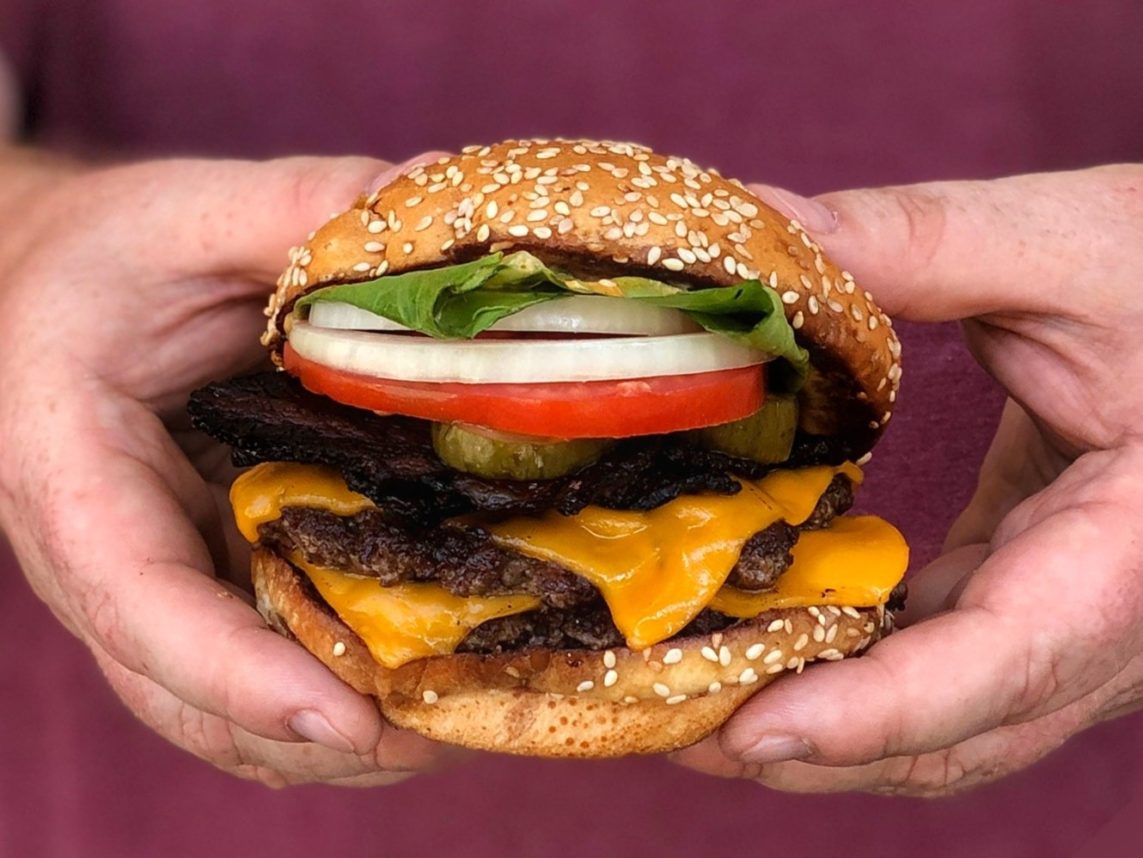
Episode 178: Tel Aviv’s New Kosher Bacon Cheeseburger

Sitting right across from the Cinematheque, Bodega is Tel Aviv’s newest, American-style burger joint. That’s where Todd Aarons and James Oppenheim serve kosher Philly Cheese Steaks and B.L.T.s, and everything is certifiably, mouth-wateringly delicious.
Todd Aarons grew up in LA and has been a professional chef for over 20 years. He has worked in kitchens in Italy, NYC, San Francisco, LA, and Israel, and was founding executive chef of Tierra Sur in Oxnard, CA. James Oppenheim has been working in high tech for over 20 years before entering the food business.

We are super excited to host Todd Aarons and James Oppenheim on the podcast today.

RSS Subscribe

Episode 178: Tel Aviv’s New Kosher Bacon Cheeseburger Read More »

Ripple Effect: Ain’t Gonna Happen 

One of my students explained to me that he believes that nothing “ain’t gonna’ happen for him.”

That way he tells me, he will never get disappointed.

“Also, Ms.,” he adds, “Then, every good thing will be a big surprise.

I don’t believe I’m gonna get custody of my kids,” he says.

“I don’t believe I will keep my freedom.

I don’t believe I’ll ever get a job and I don’t believe that I’ll stay clean.

It simply ain’t gonna happen.”

I look at him. He has a sweet smile and actually seems very content.

“Here’s the deal,” he explains to me the way my kids explain the settings on my phone to me, slow and steady.

“This is where I’m at. This is who I am. I’m cool. I did my time. I fucked up. I lost my kids. Now, I’m doing everything to change that.

But, Ms., nothing, absolutely nothing is a given.

I am who I am right now. I ain’t gonna get nothing.”

“If I start from nothing,” he continues to explain, “then everything I do or get is a blessing. You feel me?”

I look at him. He looks at me and smiles. I am quiet.

“What?” he asks.

“I’m thinking,” I tell him.

I compose my thoughts.

“Doesn’t it depress you to always think that things aren’t going to happen?”

He says in full sincerity, “Nope. Absolutely not.”

“My job is to be happy with who I am and what I have. I got no expectations.”

“Damn,” I say. “That’s impressive. I don’t know how to do that.” I add.


He laughs, and says “You want too much, Ms.”

“It’s not about wanting,” I tell him.

“It’s about ….” I pause. I laugh.

“Crap…yeah, it’s about wanting!” I admit.

“Here is the deal, Ms.” again speaking slow and steady.

“I was locked up for a long time. Being out, that’s good.

Breathing is good. Don’t get me wrong, thinking I ain’t getting nothing don’t keep me from doing better. Like right now, I am doing everything I got to do to get my kids, but I don’t believe the judge will give ’em to me.

Ain’t gonna happen. So, if he does, it will be a big fucking surprise.”

New age and modern times are very invested in positive thinking.

You will it, it will happen.

This was certainly a refreshing approach.

My middle child applied for a very prestigious fellowship. It is a national service program abroad for teens. Thousands of youth applied for the 22 spots. She said to me, “Ema, I want this more than anything in my entire life. I want this so bad. I don’t know what I’ll do if I don’t get it.”
I thought about my homie, and I said to her,

“Just think that you’re not gonna’ get it.” She turned, snarled at me and said,

“What is wrong with you? Why would you say something like that?”

I said, “If you get it, we will be really happy. If you don’t, we now know that this is something you really want, and we’ll figure out where else we can apply and how we can make it happen.”

She looked at me like I fell from the sky.

“Ema,” she said to me. “That’s really not okay. Has no one taught you about positive thinking? How do you do your job? How do you empower youth? You are very un-inspiring.”

I laughed and said, “I actually just learned this from one of my students. He told me to be happy with what you have. Don’t take things for granted. Don’t get wrapped up in things you want to happen. Be content with where you are, who you are. If you can see the sun, smell a flower. You have the privilege of being present.”

She stopped listening mid sentence, put her headphones on, gave me the ‘you are kind of stupid’ look, shrugged and walked away.

You think, it ain’t gonna’ happen, and then it does.

My homie got his kids.

My daughter got the fellowship.

I learned what I have known for a while, that being and doing is what it should be about, not hoping and wanting.

“Ms.,” she said softly.

She was so young and already had been in and out of this lock up faculty more times than you can count.

“I don’t believe in anything good. I’ll never have good. Ever!”

“What if you already have it?” I asked her.

To be honest, I couldn’t think of anything else to say.

This was my first group in the girls’ lock up facility. It was years ago.

She was 15. Her child was taken away from her. She just had three more months added to her time because of a fight she had.

She was angry and sad.

“Ms.” She told me exactly what the homie said to me.

“It ain’t gonna’ happen for me.” Except she did not have his calm, centered demeanor. She was haunted by many demons and I was very new at this.

“Why you going being sad and all serious?” she asked me.

“I’m thinking,” I tell her.

Then I said, “Maybe things will not happen. Maybe they will.  We don’t know that or anything for that matter.”

“We know that this is where you are now. Use your time well. Be efficient. Don’t wait for them not to give you back your son. Don’t wait period. Do! Get your GED. Read. Be. And, PLEASE, please stop getting into fights, ‘cause each one of them adds to your time. You be the good. Don’t wait for it. Do you hear me? Be good, period!”

She looked at me and started laughing. She laughed for several long minutes.

“You are one funny lady, Ms. I can’t be something I aint. Ms., I ain’t good.”

“Yes, you are. So, make it happen.”

She started to say “aint …..”

And before she finished, I said, “Actually, this time it is.”


Naomi Ackerman is a Mom, activist, writer, performer, and the founder and Executive Director of The Advot (ripple) Project a registered 501(c)3 that uses theatre and the arts to empower youth at risk to live their best life.

Ripple Effect: Ain’t Gonna Happen  Read More »

Weekly Parsha: Va’eira

One verse, five voices. Edited by Salvador Litvak, Accidental Talmudist

But Moses spoke before the Lord, saying, “Behold, the children of Israel did not hearken to me. How then will Pharaoh hearken to me, seeing that I am of closed lips? –Exodus 6:12


Rabbi Chaim Singer-Frankes
Interfaith Chaplain, Kaiser Panorama City

Moshe’s voice is a silent howl. It is not unlike that wretched nightmare in which the mouth is open to scream, but not even a peep comes out. The one who yells to deaf ears is a prisoner in a cell. And thus even though Moshe roams the wilderness free, he is like the Israelite slaves: the personification of despair. Furthermore, since Moshe describes his lips as “ar’el” (meaning: uncircumcised), his cry alludes to being alien even among the Israelites.

Muffled, unable to communicate, he is exiled not only by his nemesis, but indeed from his very own community. He has become the consummate outsider and with neither a friend nor an enemy who bothers to listen, Moshe beseeches God in the most raw, vulnerable terms. However, Moshe is not trying to shrink from God’s call to service. It’s really the opposite; Moshe cries about the one thing he desires; to be an effective sacred mouthpiece. Ironically or not, God is the only one who can truly hear and understand him.

Personally, when I feel unheard or misunderstood it’s like I am banished, evicted; and it’s then easy to believe I’m entirely alone. So, under these conditions when God strengthens Moshe and bestows upon him magnificent tools that force everyone to watch and listen, I am reminded that redemption is often closest when things appear the bleakest. This is the message we carry forth in each generation; let’s hear it, and may God open our lips to make it heard!


Rabbi Rebecca Schatz
Assistant rabbi, Temple Beth Am

Before I could talk, I could sing. Before I could run, I could skip. Before I could deliver a sermon confidently, I could sit by someone’s bedside and bring them comfort. We meet Moshe as a man of action in Exodus, saving a Hebrew slave by slaying an Egyptian. No words. No argument. Moshe defines himself as “aral sefataim,” having uncircumcised lips. We imagine Moshe as a reluctant hero, insecure  and inordinately modest. However, once in a relationship with God, he begins with “hineini,” I am present. Moshe develops into the most eloquent of leaders, first through action and eventually through song.

In this verse, Moses claims three things: B’nei Yisrael will not listen to me, so how will Pharaoh listen to me; and I am of closed speech. The 17th-century commentary “Siftei Chakhamim” suggests these verses are out of order: because Moshe’s speech was covered, B’nei Yisrael would not listen and so Pharaoh would not either. Moshe thought it was because of his oratory skills that no one listened, but it was disbelief of what he, their leader, was sharing.

Each of us is a leader of something; whether among friends, as a parent, teacher or adviser. Moshe was not a speaker but he led our people out of slavery and into freedom through action, faith and song. We are all aral sefataim, nervous of the possibilities of our weaknesses being at the forefront of our leadership. Share your insecurities and lead through them to strength.


Ilan Reiner
Architect, author of “Israel History Maps”

What gets people to listen? Is it the content of the message or the rhetoric? Does presentation make a difference or the timing and circumstances under which the message is delivered? Does it matter if the message is general or too specific? Perhaps it’s about the messenger, their oral skills or their charisma.

After Moses tells the people of Israel God’s promise of deliverance, they are too impatient to listen because of their hard labor. Meaning, it is about circumstances and content. The message is too abstract and their suffering is too real. However, Moses thinks that they don’t listen to him because of how he speaks, since he lacks oral skills.

Immediately following, is a family list. The Torah lists the tribal families, beginning with Ruben, Simon, Levi, and abruptly cutting off with Aaron and Moses. The Torah is teaching us that to get a message across, one should speak as one of the family.

For the children of Israel to really hearken to Moses and the divine message of redemption, Moses needs to speak with them as one of the family. Not as an outsider or savior. Rather he needs to feel his shared past and future with the people of Israel. When God talks about deliverance from bondage, it will also include Moses’ deliverance. When God talks about returning to the promised land, Moses, too, must feel that Israel is his promised land. He’s part of the nation, sharing roots, destiny and home in the land of Israel.


Rabbi Yosef Kanefsky
B’nai David-Judea

God doesn’t even bother responding to Moshe’s argument here. God just reiterates the command to go to Pharaoh. Why? Doesn’t Moshe have a point?

If somebody tells you that they tried something way out of their comfort zone, something way beyond their range of experience and competence, and succeeded wildly the very first time, you know that person is — at best — misremembering. The first time we try anything new, in particular something that we’re not convinced we’ll be good at, it’s never a virtuoso performance. The best outcome is that we realize that maybe, with a lot more work and a lot more practice, we will one day truly excel. And this is a very good outcome indeed. It is a personal triumph.

Back at the burning bush, Moshe already had declared that he is incapable of public speaking. He proceeded with the mission to Egypt only because God gave him no choice. His first crack at moving outside of his comfort zone, at doing the thing he believed he was incapable of succeeding at, didn’t go so well. And now he wants to throw in the towel. No wonder God chooses to not dignify Moshe’s complaint with a response. Or to put it more accurately, God says the equivalent of, “Back on the horse, Moshe.”

None of us can be good at everything. But all of us can be good at things that we think are beyond us. And we need a mentor who says, “Back on the horse.”


Yehudit Garmaise
Teacher, Pizza and Parsha, 1- 2 p.m. Sundays at The Community Shul

Why were Moshe’s lips sealed?

After Moshe told Pharaoh to let his people go, Pharaoh responded by intensifying the suffering of B’nei Yisroel. Pharaoh increased their burden by demanding that they create the same number of bricks without providing the straw necessary to do so.

When Moshe complained to HaShem that Pharaoh not only failed to provide instant redemption, but he further mistreated the Jews, Rashi says that HaShem rebuked Moshe for daring to kvetch. HaShem said to Moshe, “You are not like Avraham, whom I promised an heir in Yitzchak, and then ordered to bring him as a burnt offering. Avraham did not question my ways.”

Similarly, although HaShem promised Avraham Eretz Yisroel, Avraham said nothing when he had to overpay for Maarat Hamachpela to bury Sarah.

Perhaps Moshe’s “sealed lips” resulted not so much from a speech impediment, but from his resolve to stay silent in the face of HaShem’s decrees.

Moshe had to learn that he was to persist in challenging Pharaoh, but not HaShem. Similarly, whenever we confront anyone who seeks to hurt us or impose non-Torah values on us, we should know that HaShem remains with us in our distress. Like Moshe, we should know that when we speak out against Pharaoh, we should do so with the respect, authority and determination symbolized by the “staff” in Moshe’s hand. Instead of kvetching about anti-Semitism, we must work practically on how to keep ourselves safe, while continuing to make our world a home for Godliness.

Weekly Parsha: Va’eira Read More »