Nearly 400 emails accusing Jews of “selling blacks” were sent to the University of Montana staff and faculty on Jan. 19.
The Missoulian reports that the emails contained flyers linking to a book titled “Jews Selling Blacks” that blames Jews for the slave trade and encouraged recipients to distribute those flyers.
The emails also linked to a video from Nation of Islam student minister Ava Muhammad referring to Jews as “blood-sucking parasites,” according to Anti-Defamation League’s (ADL) Center on Extremism.
Seth Bodnar, the university’s president, denounced the emails in an email he wrote to students, faculty and staff.
“The work of many on campus, including student groups, points toward a UM family that seeks to build a welcoming and inclusive campus for all,” Bodnar wrote. “This is ongoing work that is, as the hateful email highlights, still necessary.”
He also urged the campus community to speak out against hateful rhetoric.
The Montana Human Rights Network wrote in a Facebook post that they “documented a rise in anti-Semitic material distributed in communities across the state over the past few years. In this instance, the material references the Nation of Islam, which has a record of anti-Semitism, but only represents a small and specific subgroup and is not representative of all Muslim people.”
They later added: “Bigoted ideas are dangerous to our communities, and the work to build coalitions that cross issues and identities is key to having a strong response to hate incidents.”
The Chabad of Missoula said in a statement to the Journal that they “are disheartened by this recent act of anti-Semitism and the evil endeavor wishing to divide the Jewish and African American communities.” They’re going to launch a new Jewish group on campus next week in response to the incident.
“This will go a long way in fostering a sense Jewish identity and pride,” they said.
A spokesperson for the ADL said in a statement to the Journal, “Although we don’t yet know who was behind the email, it is deeply disturbing that someone sent a message containing hateful anti-Semitic propaganda to so many faculty and students. We stand ready to offer assistance to the university as they respond to this incident.”
Shabbat Farbrengen at VBS Longtime Valley Beth Shalom (VBS) Cantor Herschel Fox leads a unique Shabbat farbrengen featuring his legendary voice and the participation of father-and-son Cantors Jackie and Danny Mendelson. In addition to tonight’s concert, the Mendelson cantors participate in a Shabbat morning service. Afterward, they sit down for a conversation with VBS Senior Rabbi Ed Feinstein. Tonight: 5-5:45 p.m. service, 7:30-10 p.m. Shabbat farbrengen. Shabbat morning: 9:30 a.m. service, 12:30 p.m. Shabbat shiur. Valley Beth Shalom, 15739 Ventura Blvd., Encino.
SAT JAN 25
“Every Person Has a Name” The Jewish Federation of the Greater San Gabriel and Pomona Valleys revives the memorable phrase of the Holocaust, “Every person has a name,” as it holds a reading of Shoah victims’ names during 25 hours on the steps of Pasadena City Hall. After the opening ceremony at 7 p.m., the names of Holocaust victims are continuously recited until 8 p.m. Sunday night. The vigil program coincides with the United Nations’ annual Holocaust Remembrance Day, which this year marks the 75th anniversary of the liberation of Auschwitz. Survivors and their children are invited to participate in reading the names. Contact Jason Moss at jmoss@jewishsgpv.org for more information. Pasadena City Hall, 100 N. Garfield Ave.
SUN JAN 26
Reporter’s Family Story at Skirball This afternoon at the Skirball Cultural Center, the Moroccan-born National Public Radio business reporter Aarti Namdev Shahani discusses her new book, “Here We Are: American Dreams, American Nightmares,” which hints at her difficult, tragic immigrant experience, a 14-year problem centering on her father’s imprisonment. She appears with writer Eric Barker as she opens up about her family’s fight with the U.S. justice system she believes sought to destroy her family’s dream. Books will be available. Book signing follows. 2 p.m. $12 general admission, free for Skirball members. Skirball Cultural Center, 2701 N. Sepulveda Blvd.
“Israel and America 2020” The Z3 (Zionism 3.0) Project, which works to strengthen Diaspora-Israel relations, and Stephen Wise Temple hold an all-day conference dedicated to understanding how to speak to others across our ideological divides. “Israel and America 2020: Spanning the Divide to Find Common Ground” features breakout sessions with speakers from the Shalom Hartman Institute, Reut Institute, Hebrew Union College-Jewish Institute of Religion and The Forward, among others. Among the participants is Jewish Journal Editor-in-Chief David Suissa and Journal contributing writer Esther D. Kustanowitz. The opening plenary examines the opportunities and challenges of having two strong Jewish communities, and the closing plenary focuses on Israel’s public image. 9 a.m.-6 p.m. $72 Wise members, $90 general public, $36 young adults 40-and-under, $18 students with ID. Complementary lunch included. For educator discount, contact z3@wisela.org from your school email account. Stephen Wise Temple, 15500 Stephen S. Wise Drive, Los Angeles. (310) 476-8561.
“Violins of Hope” at Sinai The community is invited to Sinai Temple to celebrate the much talked about “Violins of Hope” project, a collection of string instruments rescued from the Holocaust and restored by Amnon and Avshi Weinstein, a father-and-son team of Israeli violinmakers. The evening includes a mini concert and a screening of the 2012 documentary “The Return of the Violin.” Additionally, Holocaust survivor Susanne Reyto, chair of Violins of Hope in Los Angeles, speaks. 6-8 p.m. $10 Sinai members, $20 general. Sinai Temple, 10400 Wilshire Blvd.
MON JAN 27
Historic Polish Film “The Last Stage,” a Holocaust film directed by a former Auschwitz prisoner, screens at Hollywood Temple Beth El. A panel dialogue follows. Participants include the Consul General of the Republic of Poland Jaroslaw Lasinski, Polish Film Festival President Elizabeth Kanski, Rabbi Haim Beliak and Beth El Rabbi Norbert Weinberg. 7 p.m. $12. Hollywood Temple Beth El, 1317 N. Crescent Heights Blvd., West Hollywood. For more information, contact Carmen Fraser at temple@htbel.org.
How the Media Covers Israel Veteran journalist Jodi Rudoren, who spent decades with The New York Times before recently becoming editor-in-chief of the Forward, brings an insider’s perspective to the much-debated topic of how all media cover Israel. The former Jerusalem bureau chief of the Times speaks at UCLA on the challenges of Middle East reporting. Afterward, Rudoren speaks with professor Dov Waxman and takes questions from the audience. Noon-1:30 p.m. Free. Bunche Hall, Room 6275, UCLA, 315 Portola Plaza.
TUE JAN 28
Pnina Pfeuffer
“’Shtisel’ Uncovered: The New Haredim” Operating on the theory that if the progressive left is to regain power in Israel it must seek out new partners it never has considered. Shtisel Uncovered: The New Haredim” explores new ways for leftists to think about political coalitions. Named for the popular and groundbreaking Netflix series, the event organized by the New Israel Fund and Temple Emanuel of Beverly Hills features “Shtisel” co-creator Yehonatan Indursky and prominent Charedi social activist Pnina Pfeuffer. 7 p.m. Free. Temple Emanuel of Beverly Hills, 300 N. Clark Drive, Beverly Hills. (310) 288-3737.
“A Compass for Compassion” Instead of taking a seat and listening to others theorize about solutions for homelessness, Temple Akiba holds “A Compass for Compassion.” A panel of experts discusses current initiatives on the homelessness crisis before inviting the audience to participate in breakout sessions. Karlo Silbiger, chair of the Culver City Committee on Homelessness, leads a lineup of speakers that includes SHARE Director Jason Robison, John Helya of the Homeless Outreach Program Integrated Care System and Lee Winkelman of the Religious Action Center. 6:30-8:30 p.m. Free. Temple Akiba, 5249 S. Sepulveda Blvd., Culver City.
“Religion as We Know It” How did we come to separate religion from our secular life in contemporary culture? That is an issue Pulitzer Prize-winning author Jack Miles investigates in his new book, “Religion as We Know It: An Origin Story.” At Wilshire Boulevard Temple’s Westside campus, Miles meets with Rabbi Ed Feinstein of Valley Beth Shalom to address a number of related topics. 7:30 p.m. Free. Irmas Campus, Westside, Wilshire Boulevard Temple, 11661 W. Olympic Blvd.
WED JAN 29
“The Jewish Cookbook” To celebrate the publication of “The Jewish Cookbook,” author and culinary maven Leah Koenig demonstrates the diversity of Jewish cuisine at the Skirball Cultural Center. Moving far beyond brisket and latkes to Hungary’s tender cabbage strudel and Rome’s dried fruit-studded cookies, Koenig invites her audience to enjoy a taste and purchase a signed copy of her book. 7:30 p.m. $15 members, $20 general admission. Skirball Cultural Center, 2701 N. Sepulveda Blvd.
Sepharad and Beyond Sephardic culture is the subject when the Shalhevet Institute convenes the second session of its “Let’s Talk” series. Discussion centers around Sarah Abrevaya Stein’s and Michael David Lukas’ new books about Sephardim, respectively, “Family Papers: A Sephardic Journey Through the Twentieth Century” and “The Last Watchman of Old Cairo.” For the address of the meeting place, contact Rabbi Ari Schwarzberg, director of the Shalhevet Institute, at a.schwarzberg@shalhevet.org.
THU JAN 30
“Who Will Write Our History?” Award-winning filmmaker Roberta Grossman presents and discusses her 2018 Holocaust documentary, “Who Will Write Our History?” about the Polish historian Emanuel Ringelblum, who died in the Warsaw Ghetto, and the secret archive of the Warsaw Ghetto. Consul General of Israel in Los Angeles Hillel Newman welcomes the audience. This is the first of three monthly “Educate Against Hate” speaker series events by the American Society for Yad Vashem. Limited seating. No tickets at the door. 7 p.m. reception. 7:30 p.m. program. $50 per evening, $100 for all three. SFIXIO Restaurant, 9737 S. Santa Monica Blvd., Beverly Hills. For more information, contact Donna Elyassian at delyassian@yadvashemusa.org.
UCLA Hillel Art Openeings
Artists Mark Strickland, a humanist known for depicting the worst that humans do to one another, and Susan Cooper, who often combines two and three dimensions in her art, are featured in UCLA Hillel’s Winter Art Openings. The titles of the exhibitions, Strickland’s “Between Heaven and Hell, Fears and Desires,” and Cooper’s “Story Line: My Family’s History,” start to explain the distinction in their styles. Mary Leipziger’s “India Through a Jewish Lens” continues on display. 7-9 p.m. Free. The Dortort Center for Creativity in the Arts, UCLA Hillel, 574 Hilgard Ave., Los Angeles.
Roberta Grossman
Klezfarad Concert at UCLA Four decades ago, multi-instrumentalists and Argentine Jews Cesar Lerner and Marcelo Moguilevsky, sometimes known as the Lerner-Moguilevsky Duo, formed a prolific team specializing in Ashkenazic and Sephardic music. They call it Klezfarad — music created through the use of electronic media, loops, flutes, piano and more. In concert at Schoenberg Hall at UCLA, their sound is not quite Argentine folk or tango or jazz or contemporary, but parts of all of them. 7:30-10:30 p.m. Free. Lani Hall, Schoenberg Music Building, 445 Charles E. Young Drive East. schoolofmusic.ucla.edu. RSVP at the link above.
Have an event coming up? Send your information two weeks prior to the event to ryant@jewishjournal.com for consideration. For groups staging an event that requires an RSVP, please submit details about the event the week before the RSVP deadline.
The Jewish Federation of Greater San Gabriel and Pomona Valleys (JFSGPV) held its 25th annual meeting on Jan. 12 at the Pasadena Jewish Temple and Center.
The brunch event honored JFSGPV’s 2019 Volunteers of the Year, Edeena and Brian Gordon, who are members of Temple Beth Israel of Highland Park and Eagle Rock; awarded the Kimberly Dawn Ellis Scholarship to Temple Sinai of Glendale member Charles Lambert; and installed two new members to the JFSGPV board of governors, Julie Bank of Temple Sinai of Glendale and Mickey Bernath of Pasadena Jewish Temple and Center.
KPCC AirTalk host Larry Mantle was the event’s keynote speaker, with JFSGPV board member Oran Reznik speaking to Mantle about his guests, the wide range of topics covered each week and how Mantle prepares for each show. Mantle also discussed the role Jews have played and continue to play in making the city and country great, according to Stephen Sass, president of the Jewish Historical Society of Southern California, who was among attendees.
Additional attendees included Jason Moss, executive director of JFSGPV, who said that since JFSGPV was established in 1993, the organization has been dedicated to improving Jewish life for its community.
“Since that time, over 25 years ago, much has changed but not the dedication the Jewish Federation’s work to meet our mission to build community by strengthening and enhancing Jewish life in the greater San Gabriel and Pomona Valleys,” Moss said in an email. “Each year we hold our Annual Meeting to provide an update to the community on not only the highlights of 2019 but what is ahead in 2020.”
Steven Barlam, newly appointed CEO of JFS Care, a home-care arm of Jewish Family Service of Los Angeles. Photo courtesy oof Jewish Family Service of Los Angeles
Steven Barlam has joined Jewish Family Service of Los Angeles (JFSLA) in the newly created role of CEO of JFS Care, an arm of the social services agency that provides home care throughout the Los Angeles area.
A self described thought leader in the fields of home care and aging life care, Barlam brings 35 years of experience to the position, according to a Jan. 15 announcement by JFSLA.
Since earning a master’s degree from UC Berkeley, Barlam has worked exclusively in the field of geriatrics, according to JFSLA. He began his career at JFSLA as a senior outreach services director before creating a private practice, Senior Care Management, in Beverly Hills. In 1999, Barlam co-founded LivHOME, which pioneered the integration of geriatric care management into home care. Twenty-one years later, he is returning to the organization that launched his career.
Eli Veitzer, president and CEO of JFSLA, said he was happy to be welcoming Barlam back to the organization.
“Steve brings deep experience, expertise and innovation to JFS Care,” Veitzer said in a statement. “His passion for the well-being of clients will help make JFS Care the most trusted homecare agency in Los Angeles.”
Barlam has sat on numerous national and local boards in the professional geriatric community, including the Aging Life Care Association.
When it comes to quality care for older adults, his motto is: “It’s got to be good enough for my mother.”
Although JFSLA has provided home care to older adults for more than 30 years, the organization opened JFS Care as a fully operational home care agency in 2011. It provides personalized care plans, housekeeping and transportation services, in-home care technology and an independence care package.
From left: Rabbi Ahud Sela of Temple Ramat Zion, Rev. Steve Jerbi of the Interfaith Solidarity Network and Imam Suhail Mulla, a resident scholar of the Islamic Society of the West Valley, converse before speaking at an interfaith forum on homelessness last month. Photo courtesy of Brenda Gazzar
“Tis the Season for Love,” an interfaith forum on homelessness that was held on Dec. 12 at the Congregational Church of Chatsworth, featured Rabbi Ahud Sela of Temple Ramat Zion in Northridge, among others.
“What does the Lord demand of us? To feed the hungry, to clothe the naked and shelter the homeless, to see them as we would see our family,” Sela said during the event, which was organized by the Interfaith Solidarity Network and Everyone In campaign.
Additional participants included Rev. Steve Jerbi, chair of the San Fernando Valley-based Interfaith Solidarity Network, and Imam Suhail Mulla, a resident scholar of the Islamic Society of the West Valley.
The faith leaders tackled the question of “What does our faith demand of us when it comes to the homelessness crisis?” Additionally, residents and community leaders shared stories from the streets and from supportive housing communities that are helping to ease the growing homelessness situation in the area.
Multiracial, multifaith community L.A. Voice co-sponsored the forum.
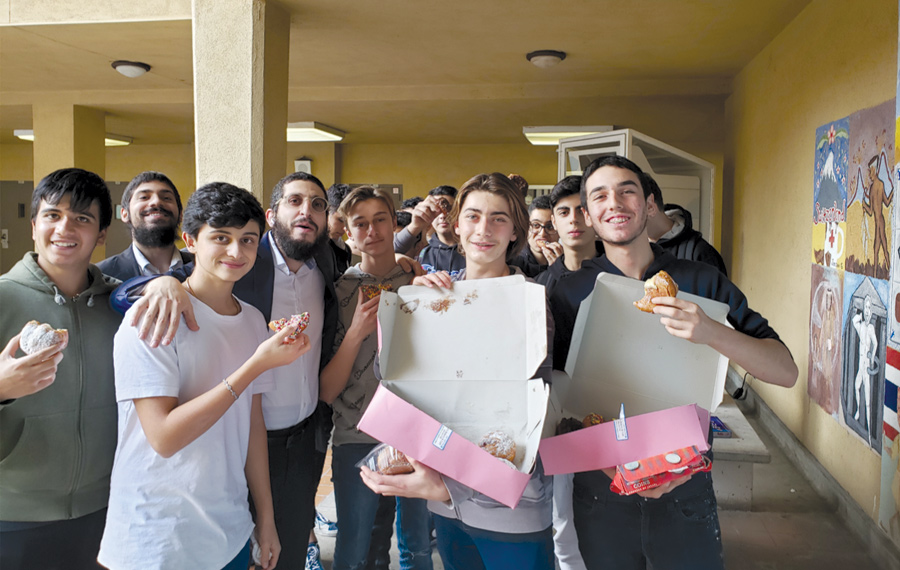
Jewish students at Beverly Hills High School celebrated Hanukkah last month with sufganiyot, Hanukkah gelt and more. Photo courtesy of Beverly Hills High School
The Jewish Club at Beverly Hills High School held a Hanukkah celebration last month, drawing hundreds of students who came and enjoyed traditional Hanukkah sufganiyot and chocolate gelt and heard words from Rabbi Danny Illulian.
Illulian related the Hanukkah message of freedom of oppression. He encouraged the students to appreciate their freedom in all its forms, specifically freedom from peer pressure, “a message particularly relevant when peer pressures are rampant,” according to Jewish Club President Daniel Rabkin.
Beverly Hills High School Principal Mark Mead also made an appearance and encouraged support for the Jewish people and Beverly Hills High School’s Jewish club. The event culminated with students building a 15-foot menorah.
“Jewish students and non-Jewish alike left inspired, empowered and with a knowledge of Jewish culture,” Rabkin said in a statement.
Illulian organized the event with Rabkin, the Jewish Club President, and with the support of Mead.
Want to be in Movers & Shakers? Send us your highlights, events, honors and simchas. Email ryant@jewishjournal.com.
Yarn pom-poms. Where have you been all my life? I had no idea they could add so much pizazz to my style game. These little balls of fluff just scream whimsy and adorableness. They make spiffy bookmarks. They look jaunty sewed to the top of a knit cap. Use them in gift wrapping instead of a bow. Add them to pillows and lampshades. Give one to your cat for hours of playtime. And by all means, hang a couple from your rearview mirror.
And the best part is yarn pom-poms are so fun and easy to make. In fact, get some friends together and have a pom-pom party. And be sure to bring snacks. Like I always say, there’s no “creating” without “eating.”
What you’ll need: Yarn
Scissors
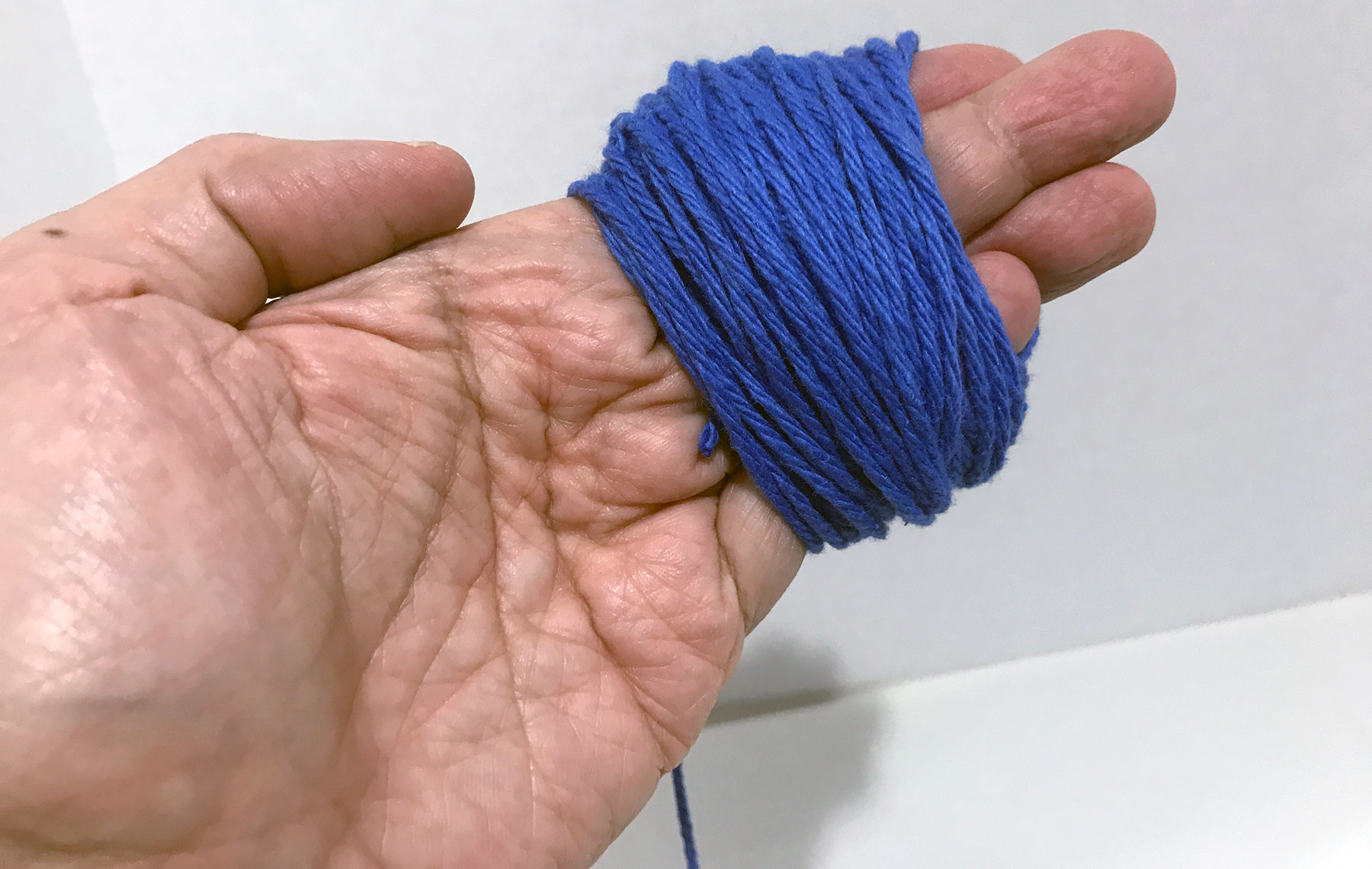
1. Hold out your four fingers so they are lined up straight. With your other hand, wrap yarn around the four fingers about 100 times.
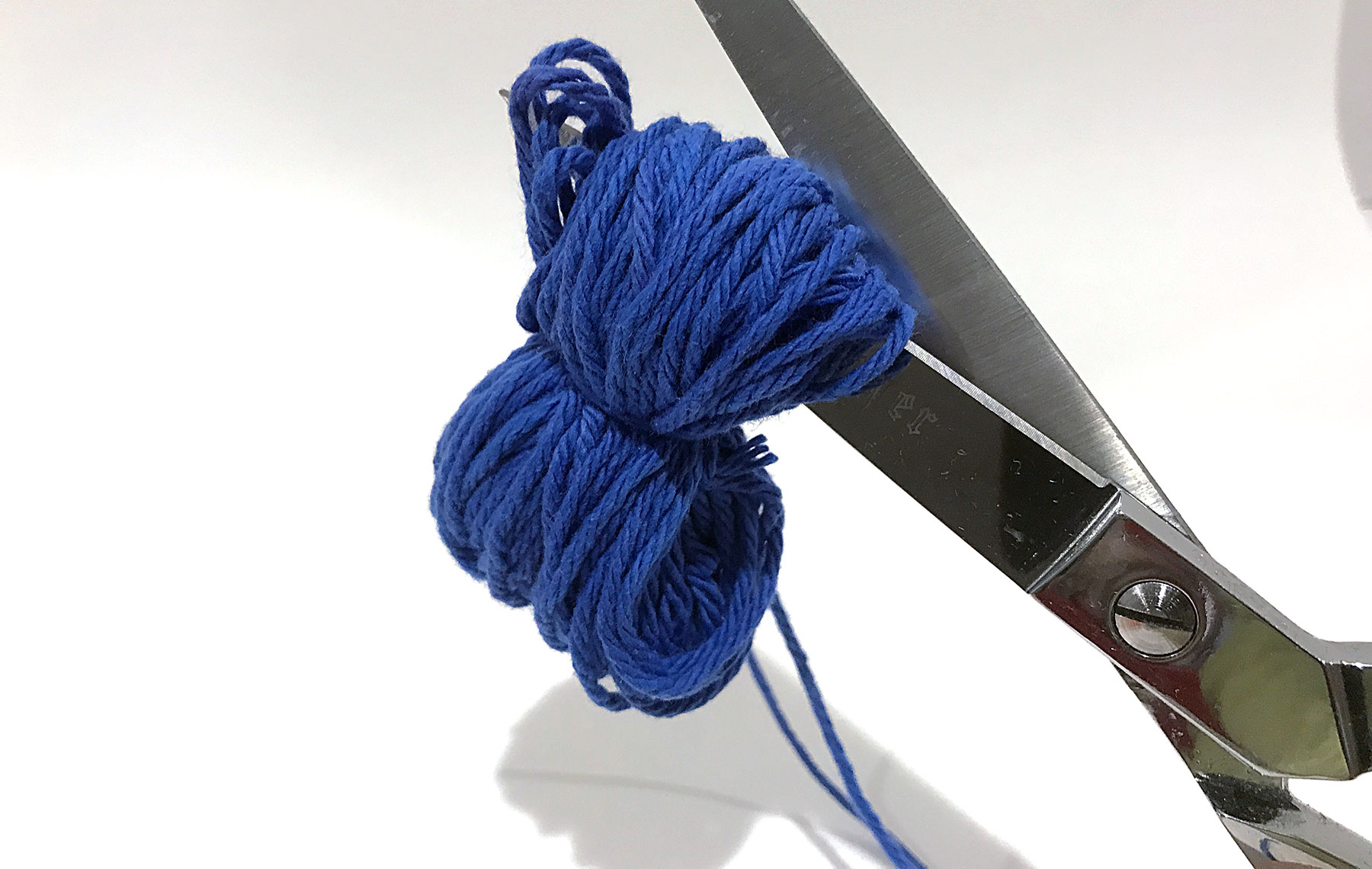
2. Slide the coil of yarn off your fingers. Cut a 24-inch piece of yarn and tie it around the middle of the yarn coil. Double knot it to keep the yarn secure.
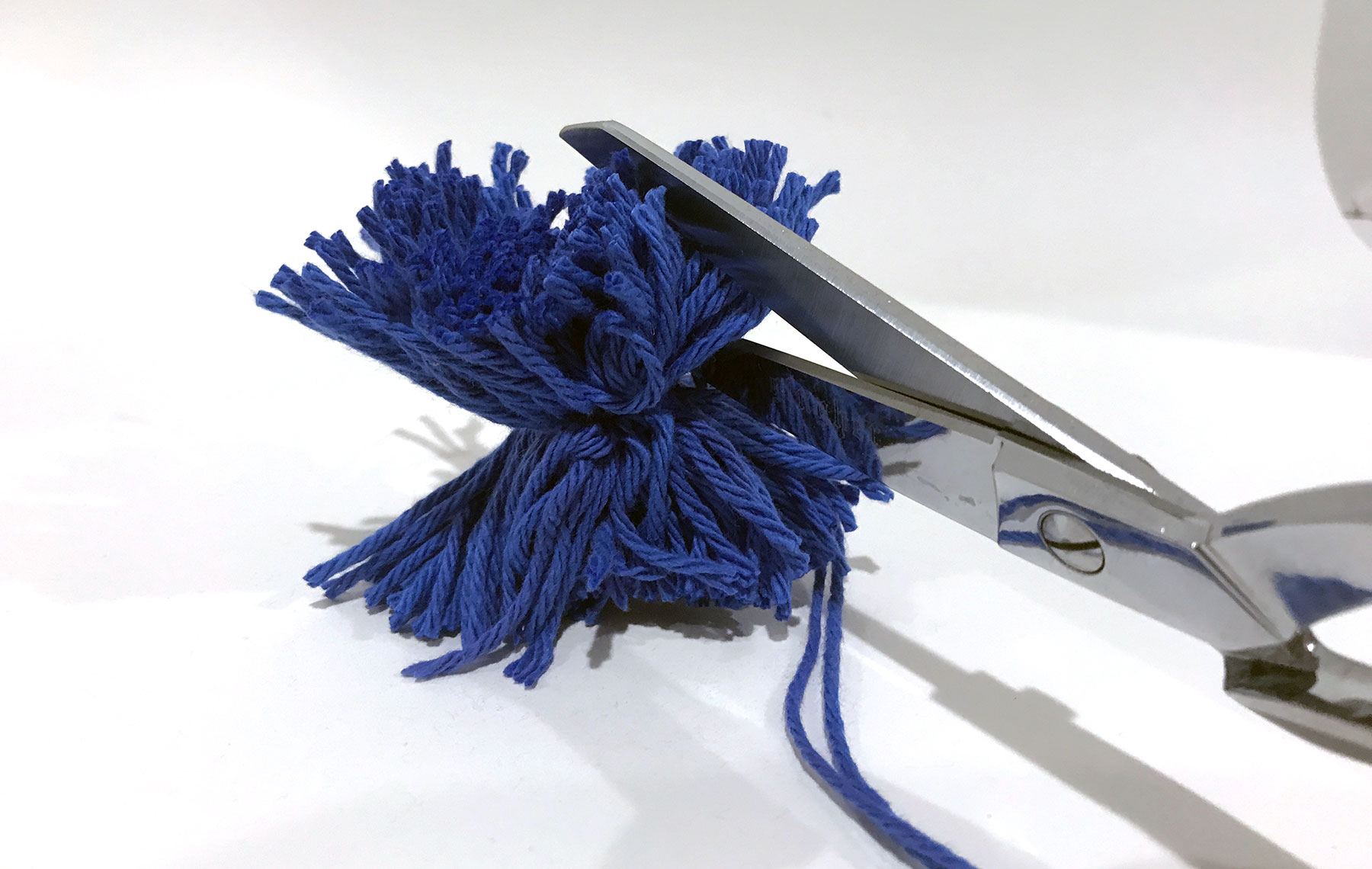
3. Cut through all the loops with scissors.
4. Use scissors to trim around the yarn to create a ball shape. Be careful not to cut off the long piece of yarn that is holding together all the strands.
Jonathan Fong is the author of “Flowers That Wow” and “Parties That Wow,” and host of “Style With a Smile” on YouTube. You can see more of his do-it-yourself projects at his website.
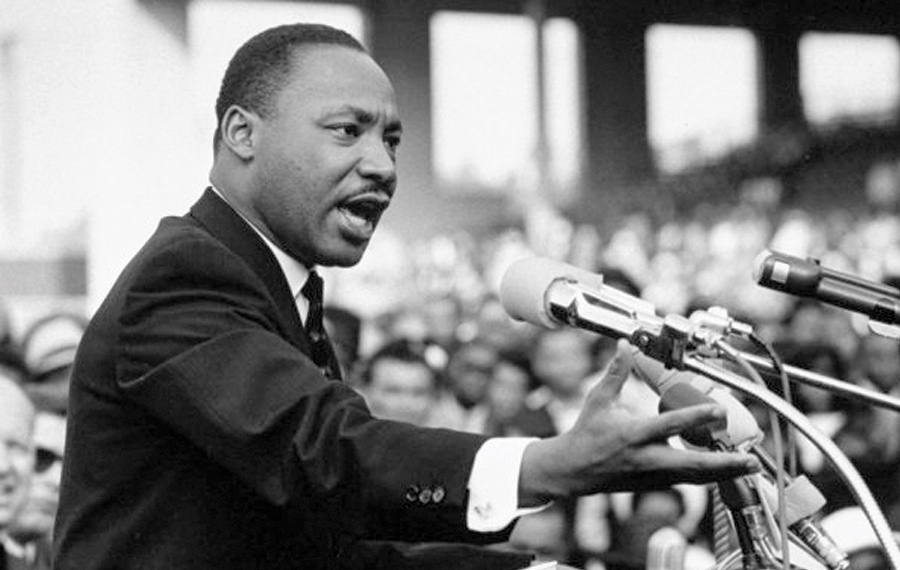
A Friday night Shabbat service at Sinai Temple on Jan. 17 celebrated Martin Luther King Jr. Day through song, words and unity. The service was part of a weekend long unity Shabbat, with the Saturday morning service recognizing the 75th anniversary of the liberation of Auschwitz. The liberation is highlighted every year as part of International Holocaust Remembrance Day on Jan. 27.
The Ted and Hedy Orden and Family Friday Night Live (FNL) event featured Senior Rabbi David Wolpe, singer-songwriter Craig Taubman and members of Faithful Central Bible Church from Inglewood, among others, with a tribute to King.
The Faithful Central Bible Church’s Fresh Generation choir, made up of about 20 singers, sang Stevie Wonder’s “Higher Ground,” prompting attendees to clap along.
Other musical numbers included a cover of Ben E. King’s “Stand by Me,” a rendition of the blessings of “Hashkiveinu” and the prayerful tune “Lekhah Dodi,” played by a multipiece band including a saxophonist, electric guitarists and a keyboard player. As the saxophonist in Taubman’s band belted out the lyrics to “Stand by Me,” Sinai Cantor Marcus Feldman, who usually sings liturgical numbers, played off him in a call and response during the chorus.
Wolpe spoke of how Hedy Orden, a Holocaust survivor who died earlier this month at the age of 93, was like Martin Luther King. Both, Wolpe said, sought to bring additional light into the world. He spoke of how Orden went to great lengths to keep her mother alive during the horrors they experienced during the Holocaust, and about how Orden was able to have a productive, happy life in the United States, and how the monthly FNL service was one of her favorites.
“Dr. King was a reminder we’re just the human race no matter our ethnic backgrounds or spiritual religion. Our real religion is love.”
— Dominique Howard
Additional participants in the Friday night service included Sinai Rabbi Erez Sherman, who spoke about his friendship with Faithful Central Bible Church Pastor Jimmy Fisher, and Sinai Rabbi Nicole Guzik.
“We are honored to be asked to come back again, and we love to intermingle with culture, arts and music and bring what we have to offer in exchange for what you have to offer,” Dominique Howard, a member of the African American choir, told the Journal.
She added, “It’s a reminder of how how God delivered [blacks and Jews] from critical times. We come together. We join as one. Dr. King was a reminder we’re just the human race no matter our ethnic backgrounds or spiritual religion. Our real religion is love.”
Margaret Ruth Arinsberg died Nov. 30 at 80. Survived by husband Norman; daughter Rachel (Aaron) Sunday; son Mark; 3 grandchildren; brother Jerry (Aliza) Ben-Ner. Mount Sinai
Robert Aurerbach died Nov. 21 at 72. Survived by daughter Karen (Roland); son Glenn; 6 grandchildren; sister Donna; brother Gabe. Hillside
Martin Barrad died Nov. 28 at 74. Survived by wife Elaine; daughter Lisa (Ian) Haufrect; son Brandon (Anny); 3 grandchildren; sister Maxine (Larry) Benjamin; brother Gerald. Mount Sinai
Nat Martin Berman died Nov. 28, at 98. Survived by daughters Barbara (Hank) Roemisch, Patti Zingale; son Dennis (Ilene); 5 grandchildren; 4 great-grandchildren. Mount Sinai
Anne Bernstein died Nov. 29 at 99. Survived by daughters Phyllis (Marshall) Sindelman, Carol Kipp; 4 grandchildren; 10 great-grandchildren; 2 great-great grandchildren. Mount Sinai
Harry Boxer died Nov. 8 at 102. Survived by daughters Leah (John), Aviva, Shoshana (Ronald), Zahava, Adena (Eugene); son Aaron; 12 grandchildren; 7 great-grandchildren. Hillside
Steven Brager died Oct. 27 at 67. Survived by wife Terese; daughter Jenna; mother Betty; sister Rhonda. Hillside
Elinor Clymer died Nov. 22 at 90. Survived by sons Robert (Joan Stein), Steven (Brenda), Neil (Akeme); 6 grandchildren. Mount Sinai
Hanita Dechter died Nov. 23 at 104. Survived by daughter Jane; son Dave (Barbara); 2 grandchildren. Hillside
Andrew Drexler died Nov. 10 at 73. Hillside
Claire Frank died Oct. 31 at 94. Survived by daughter Patricia. Hillside
Erika Glousman died Nov. 13 at 89. Survived by husband Michael; daughter Sharon; son Ronald; 6 grandchildren; 3 great-grandchildren. Hillside
Ruth Green died Dec. 1 at 100. Survived by daughter Melinda (Philip Hampton) Lozano-Hampton; son Richard (Rebecca); 5 grandchildren; sister Muriel Rosen. Mount Sinai
Lionel Gross died Nov. 25 at 78. Survived by wife Diann; daughter Cheryl; son Michael (Peggy); 3 grandchildren. Hillside
Allan Jacoby died Nov. 21 at 94. Survived by daughters Pamela (Steve), Linda (Nick); son Ken; 2 grandchildren. Hillside
Ray Kappe died Nov. 21 at 92. Survived by wife Rochelle; daughter Karen; sons Ron (Diane), Finn (Julie); 4 grandchildren; 1 great-grandchild. Hillside
Darlene Kardon died Nov. 13 at 91. Survived by daughter Sue; sons Bruce (Anita), Larry (Ann), Mark (Ellen); 4 grandchildren; brother Sherwin. Hillside
Cindy Katz died Dec. 2 at 59. Survived by husband Scott; daughters Rachel, Rebecca; mother Susan (John) Baer; father Victor (Susan) Tempkin; brother Jeremy (Jill) Tempkin. Mount Sinai
Ruth Kaufman died Nov. 27 at 99. Survived by sons Dale (Sandy), Neal (Linda), Sander (Lisa); 8 grandchildren; 11 great-grandchildren. Mount Sinai
Richard Kirschner died Nov. 12 at 81. Survived by wife Louise; son Daniel (Leah); 2 grandchildren. Hillside
Allen Kramer died Nov. 2 at 84. Survived by wife Nancy; sons Brian (Sheryl), Gary; 4 grandchildren. Hillside
Helen Novodor died Nov. 9 at 77. Survived by daughter Adina; 2 grandchildren. Hillside
David Paperny died Nov. 10 at 68. Survived by son Jerald (Dao); 5 grandchildren. Hillside
Leo M. Pomerantz died Nov. 28 at 91. Survived by daughters Nancy (Ernie), Kathy (Sidney); sons Jeffrey (Cyndi), Andrew (Kim); 5 grandchildren; sister Betty Podber. Mount Sinai
Stanley Rubin died Nov. 23 at 92. Survived by wife Freda; daughter Janet; son Brian; 1 grandchild; sister Molline. Hillside
Esther Saltzman died Dec. 1 at 95. Survived by husband Samuel; sons Stanley (Mariella), David, Gerry; 4 grandchildren; brother Lionel Malkin. Mount Sinai
Eveline Semel died Oct. 30 at 91. Survived by daughter Eileen; son Nathan (Alexandra); 4 grandchildren; 1 great-grandchild. Hillside
Natalia Shakov died Nov. 25 at 83. Survived by daughter Yelena (Leonard) Fayngor; 3 grandchildren. Mount Sinai
Alvin Solomon died Nov. 27 at 91. Survived by daughter Heidi (David) Solomon-Orlick; son Lee; 3 grandchildren. Mount Sinai
Richard Solomon died Oct. 29 at 80. Survived by wife Karen; daughter Renee; sister Judy; brother Tom; 1 grandchild. Hillside
Laurie Spence died Nov. 24 at 63. Survived by husband Dale Harrison; daughters Kendra Harrison, Herron; sons Daniel, Matthew Harrison; sister Judy (Shlomo) Sofer. Malinow and Silverman Mortuary
Kenneth Tuch died Nov. 13 at 84. Survived by daughters Amy (Brent), Lauri (Bruce), Maggie (Dan); sons James (Talia), Donald (Ronit), William, Edward; 12 grandchildren; 3 great-grandchildren. Hillside
William Warnick died Nov. 13 at 98. Survived by daughter (Chris); sons Allan (Rex), Mark (Chris); 2 grandchildren. Hillside
Joshua Yampolski died Nov. 21 at 37. Survived by mother Donna; father Simon; brothers Daniel, Aaron (Amanda). Malinow and Silverman Mortuary
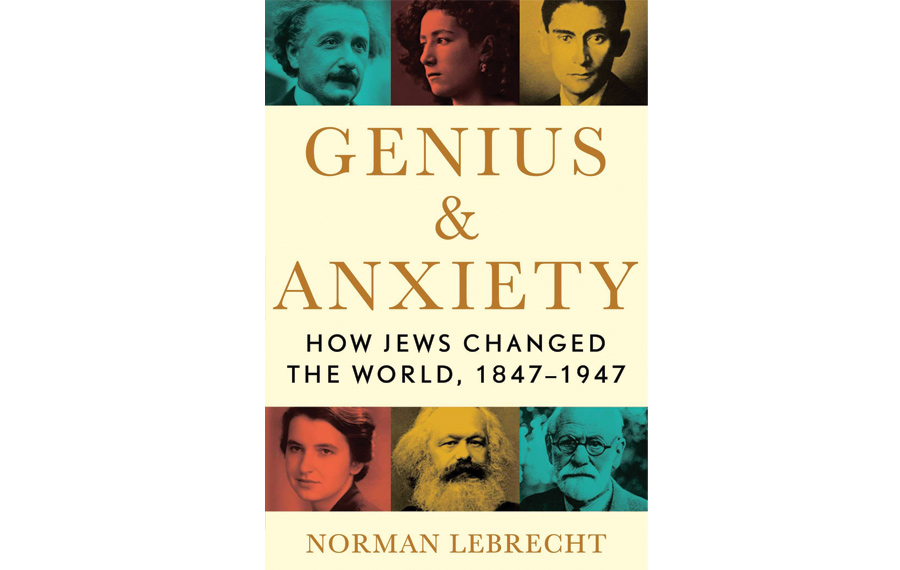
A certain buzz has attached itself to “Genius & Anxiety: How Jews Changed the World, 1847-1947” (Scribner), by London-based author, journalist and broadcaster Norman Lebrecht, if only because the role of Jews in world history is always a fraught subject. The author himself is quick to disavow any intention “to make a case for Jewish exceptionalism,” and he denies any belief in the proposition that “Jews are genetically gifted above the average in mathematics, entertainment, and money, as is often claimed, usually with malice.”
Still, Lebrecht insists that “a handful of men and women changed the way we see the world” during the second half of the 18th century and the first half of the 20th century, and “what these transformers have in common is being Jewish, some by having Jewish parents, others by practicing the Jewish faith.”
The author readily admits, for example, that Theodor Herzl “is, by any reckoning, not much of a Jew.” But there is another “connective factor,” as Lebrecht put it: “In every person of genius who appears in this book, there runs a current of existential angst.” The collision of two characteristics is hardly unique to the Jewish people, but they have resulted in a kind of creative fission among the Jews of Europe: “A Jew is like a man with a short arm,” quipped Gustav Mahler. “He has to swim harder to reach the shore.”
So the author’s cast of characters includes the usual gang of world-changers — Marx, Freud, Proust, Einstein, Kafka — but he also calls our attention to such high achievers as biologist and physician Karl Landsteiner, who pioneered the use of blood transfusions; chemist Rosalind Franklin, whose research was the key to the modelling of DNA; and Emanuel Deutsch, a scholar of the Talmud without whom, he argues, there would have been no State of Israel.
By the way, the argument in favor of Deutsch as a sine qua non of the Jewish state is too nuanced to explain in a brief review, but it turns on Deutsch’s role in teaching Hebrew to George Eliot, the author of “Daniel Deronda.” And it is precisely Lebrecht’s gift for finding and explaining the unlikely and unsuspected linkages between personalities and events that make this such a lively and pleasurable book.
Some of the Jewish exemplars in “Genius & Anxiety” will come as a surprise and perhaps even a shock. Sarah Bernhardt, “the Einstein of fame,” was “born Jewish to a high-class prostitute and baptized by order of her mother’s lover,” and the author calls her “the prime inventor of the twenty-first-century cult of celebrity, the first person to grasp the meaning of soft power and its manipulation.” And Magnus Hirschfeld — “morally impelled, inflexibly principled [and] discreetly gay” — was a physician in 19th century Berlin who conducted scientific research into what he called “sexual inversion” and served among the founders of the movement to repeal the German law that criminalized homosexuality.
Lebrecht describes himself as “a music historian and novelist,” and most of his previous books focused on music, including “Why Mahler?” “Who Killed Classical Music?” and “The Complete Companion to 20th Century Music.” But he also mentions his early yeshiva studies in Jerusalem, his lifelong study of Talmud, and his command of Hebrew, Aramaic and Yiddish. For that reason, we should not be surprised to discover that “Genius & Anxiety” includes a great many musicians of Jewish origin, starting with Felix Mendelssohn and continuing through Mahler, Arnold Schoenberg, George Gershwin, and Irving Berlin.
Mendelssohn, in fact, provides a good example of how Lebrecht regards the Jewishness of the people he writes about. A grandson of the Jewish philosopher Moses Mendelssohn and a famous convert to Christianity, Mendelssohn preserved the melody of “Hevenu Shalom Aleichem” — “a Romanian Hasidic ditty” — in the Reformation Symphony, which Lebrecht describes as “Mendelssohn’s ultra-Christian symphony.” For Lebrecht, it is a clue to the imprint of Jewishness on Mendelssohn that baptism could not wash away.
“Jews hate silence,” he proposes. “They hum and drum while waiting in line, walking in the street, or cooking supper. The infant Felix must have heard synagogue melodies at his mother’s knee.”
Lebrecht may not persuade every reader that there is something inherent in Judaism that explains the remarkable achievements of the men and women whom he describes so vividly, but he makes a good case that Jewishness includes markers that cannot be eradicated.
But Lebrecht widens the lens of his book to include Jews who changed history in other ways. The Seligman family, for example, founded its fortune on providing soft goods and financial services to miners during the gold rush and later rose to prominence in New York City. “When General Ulysses S. Grant threatens to expel Jews from territory under his control, he gets a reminder from Jesse Seligman that his family used to extend him credit when he was a penniless lieutenant and that they are now selling $200 million in US bonds to Europe to support the Union cause,” the author writes. “Grant rescinds his expulsion order.”
Lebrecht finds the threads of Jewishness in the work of such disparate figures as Marcel Proust, whom he credits with “the most famous opening sentence in modern literature,” and he links Proust to both Sigmund Freud and Albert Einstein. “As far as we know, Proust never read Freud or referred to him,” the author explains. “Their similarity of approach arises from a classic Jewish way of observing and understanding small things that others take for granted.” And he insists that “Proust’s concept of ‘lost time’ is not light-years apart from Albert Einstein’s insights into the relativity of time.”
“Genius & Anxiety” is a guided tour through the history of the Western Diaspora — colorful, often provocative and always compelling. Lebrecht may not persuade every reader that there is something inherent in Judaism that explains the remarkable achievements of the men and women whom he describes so vividly, but he makes a good case that Jewishness includes markers that cannot be eradicated.
Jonathan Kirsch, attorney and author, is the book editor of the Jewish Journal.
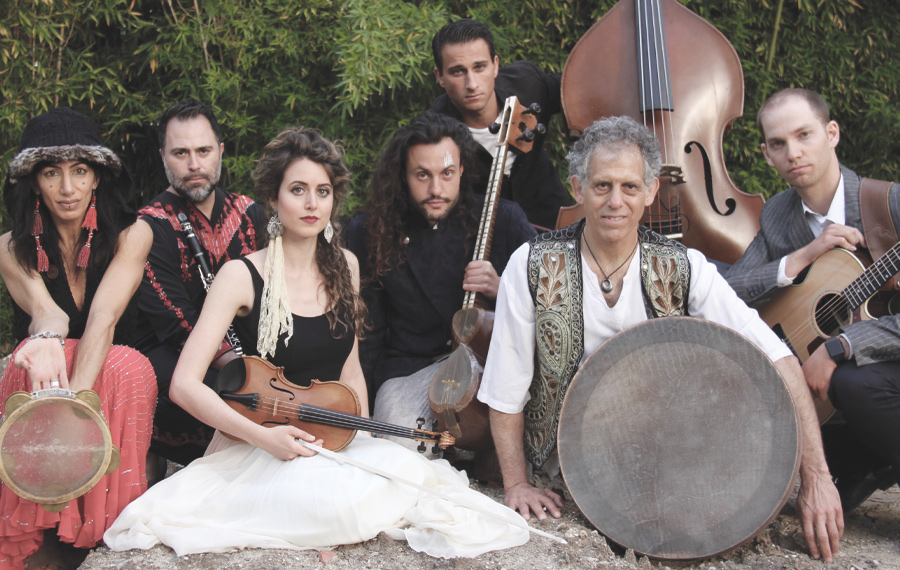
The Jewish Bluegrass of Nefesh Mountain, Syrian Jewish music from Asher Shasho Levy, a selection of show tunes that reflects the influence Jewish composers continue to have on Broadway, klezmer music, and even the UCLA marching band are just some of the musical stylings that will be on display at UCLA’s first-ever American Jewish Music Festival on March 1, under the banner “Music Crossing Boundaries.”
The event is funded by UCLA together with the Lowell Milken Fund for American Jewish Music at the UCLA Herb Alpert School of Music, with additional support from Marilyn Ziering, Elaine and David Gill and the Mickey Katz Endowed Chair in Jewish Music. It is co-sponsored by the UCLA Alan D. Leve Center for Jewish Studies.
Festival programmer Lorry Black, who also is the associate director of UCLA’s Lowell Milken American Jewish Music Center, told the Journal the aim of the festival is to highlight the diversity in Jewish music and show Los Angeles “what there is globally in terms of Jewish music and Jewish music innovation.”
He added, “There’s this idea of any genre being a monolith but anyone who’s dug into Jewish music realizes that’s just a term of convenience. There’s just so much out there and there are so many ways to look at it.”
Black said he chose to call the festival “Music Crossing Boundaries” because it offers the opportunity to look at the “different hybridites that exist in Jewish music and how the intersection of Jewish culture and identity with different types of American culture and identity can create something beautiful.”
He cited Nefesh Mountain as one example of that boundary-hopping, saying the group represents “the meeting of one of the most traditional American music styles with the music of the synagogue, the music in the Jewish community. [The group combines] traditional melodies with new texts [and] they can add new melodies to traditional texts.”
He highlighted a spiritual by the band, “Down to the River to Pray,” as an example of this, noting that in every sense of the word, it’s a Christian piece complete with an allusion to Jesus’ thorny crown. However, Nefesh Mountain reworked the lyrics to refer to Moses’ sister, Miriam.
Black said the new version not only “reorients the song toward Jewish values and identity, but to a modern Jewish identity. I think that’s pretty amazing.”
“There’s this idea of any genre being a monolith but anyone who’s dug into Jewish music realizes that’s just a term of convenience. There’s just so much out there and there are so many ways to look at it.” — Lorry Black
Pianist Inna Faliks will perform the world premiere of a new work by Russian American composer Lev Zhurbin, better known as Ljova. Black described it as “a new Jewish concert work for piano and pre-recorded tapes. That’s not something you’d see in the Jewish concert world very often.”
Also participating in the festival is Los Angeles native Chloe Pourmorady, whose family is from Iran yet she composes music that draws on Persian, Hebrew, Arabic and Indian styles. However, Black notes that she “brings her Jewish identity and values to it.”
In a separate phone interview, Pourmorady told the Journal, “I don’t think that we, as a Jewish people, have just one way of expressing our traditions and our culture and our spirituality. As a composer, I don’t see any separation in music or in language.”
Pourmorady will share the stage with Shasho Levy. Each will lead their ensemble in separate sets, then will perform together, showing the connections and differences between Persian and Syrian music.
South African-born rock musician and renowned fiddle player Craig Judelman, Latvian-born Yiddish singer Sasha Lurje and Lorin Sklamberg, a founding member of the Klezmatics, will showcase the way Jewish music and composers have helped inspire social change. These artists, Black said, “are pushing the envelope but keeping this tradition of offering different Jewish music alive.”
Leading up to the festival, Black has put together a series of four shows that he calls a “pre-festival.” All feature ensembles that freely mix genres.
The first show on Jan. 30 will be “Klezfarad,” a new show by the Argentinian group the Lerner-Moguilevsky Duo, which melds Ashkenazi and Sephardic musical traditions using flutes, piano, African balafon and hang drums, gongs, duduk woodwind instruments, Persian flute, clarinet, accordion, harmonica, mouth harps, bass drum, electronic media, loops and their own voices. The concert will be held at UCLA and is free.
The second show by Mostly Kosher on Feb. 9 also is free and will be held at UCLA. Mostly Kosher calls its music “Jewish roots rock.” It also will hold a workshop that shows how its members integrate traditional and modern sounds.
The third show will be by Toronto-based Beyond the Pale at the Skirball Cultural
Center on Feb. 27. Tickets are $15. The band is inspired by Klezmer and Balkan music, Black said.
The fourth and final “pre-concert” show will by Nefesh Mountain at Temple Israel of Hollywood on Feb. 29. Tickets range from $10-$25.
As for the upcoming March 1 concert, Black said he hopes the audience comes away thinking, “Jewish music is incredibly diverse, alive and a mirror of the American Jewish experience.”
For more information and tickets to the festival, visit the website.
The degree to which any individual can observe Holocaust Remembrance Day on Jan. 27 will vary depending on his or her time, level of faith and personal connection to the darkest period in Jewish history. Those who elect to participate in a unique worldwide effort organized by the International Literature Festival Berlin and coordinated by Goethe-Institut branches around the world can spend the day not just remembering but listening to the testimony of survivors and perpetrators.
For nearly 10 hours.
Working in partnership with cultural and educational organizations throughout the United States and internationally, the Goethe-Institut will screen Claude Lanzmann’s 1985 documentary, “Shoah.” The event offers a rare opportunity for viewers to see the 9 1/2-hour film in its entirety. The Los Angeles screening at the Museum of Tolerance begins at 10:15 a.m. and concludes at 8:40 p.m. with three breaks. The screening is free and attendees are invited to come for part or all of the film as their schedules permit.
“Holocaust education is always important,” said Hilary Helstein, executive director of the Los Angeles Jewish Film Festival (LAJFF). The festival is just one of the organizations presenting the event. Others include the Jewish Journal, the Museum of Tolerance and the German Consulate. “Now more than ever, in the face of growing anti-Semitism and with the remaining survivors dying, I think it is absolutely the most important thing to program a film such as this,” Helstein added.
“One of my colleagues says — and I agree with him — that you almost cannot make another film about the Holocaust without knowing ‘Shoah,’ ” said Lien Heidenreich-Seleme, director of the Goethe-Institut of Los Angeles. “Of course it’s overwhelming, but its closeness and these personal stories are so important to understand so that we can learn from history.”
Lanzmann (1925-2018) spent 11 years creating the film out of more than 215 hours of footage. An unconventional documentary, “Shoah” relied exclusively on oral testimony rather than archival footage. Michael Berenbaum, director of the Sigi Ziering Institute and a professor of Jewish Studies at American Jewish University, said the film is regarded by many as “the greatest documentary ever made.”
“[Lanzmann] did the most voluminous research,” said Berenbaum, who will be at Auschwitz on Jan. 27. “When you go through the outtakes of ‘Shoah,’ you realize how extraordinary his work was because you understand what he left on the cutting room floor. He also was unforgiving to his audience, essentially saying, ‘You want to know about the Holocaust? You’ve got to put up with 9 1/2 hours.’ ”
Upon its completion, the film did not have a conventional release in movie houses but was screened largely in obscure public programming stations in Germany. “Shoah” eventually found both its audience and its place within the canon of Holocaust history. In her appreciation of Lanzmann in the Journal following the filmmaker’s death in 2018, Monica Osborne wrote that Lanzmann had a “peculiar and profound interest in the inherent silences contained in the stories we tell, particularly the stories
of traumatic experiences. … What Lanzmann showed us is that trauma is not contained solely in the moment that defines it, the moment in the past. It breaks its
container, remaining with the survivor indefinitely, pushing holes in every moment that follows.”
Helstein, who worked for the USC Shoah Foundation and wrote and directed her own Holocaust-themed documentary, “As Seen Through These Eyes” (2009), said the LAJFF frequently programs Lanzmann’s films. “Shoah” represents both the culmination of the filmmaker’s lifetime of work and the film against which all other Holocaust-themed films are ultimately measured, she said.
“You almost cannot make another film about the Holocaust without knowing ‘Shoah.’ Of course it’s overwhelming, but its closeness and these personal stories are so important to understand so that we can learn from history.” — Lien Heidenreich-Seleme
Los Angeles is by no means the only place where people can revisit “Shoah.” The International Literature Festival Berlin put out the call to Goethe-Instituts throughout the world and to other educational and cultural organizations to join the screening. Monday is both the 15th anniversary of Holocaust Remembrance Day (designated by the United Nations in 2005) and the 75th anniversary of the liberation of the Auschwitz-Birkenau concentration camp.
Seven North American cities answered the call, including San Francisco, Boston, Chicago, Montreal, Los Angeles and Washington, D.C., with each customizing its event. The Washington program includes a post-screening discussion.
The opportunity to see “Shoah” during a single day is a rare one, as institutes have been more apt to break it up over two days. Heidenreich-Seleme said event organizers considered splitting the film over two days, but the call was very specific and when officials from the Museum of Tolerance determined that Monday was preferable, the actual anniversary day was locked in.
“We also discussed screening it on Sunday and kind of staying true to the festival in Berlin. If it’s Sunday in Los Angeles, it’s already Monday in Germany,” Heidenreich-Seleme said. “But the Museum of Tolerance is the perfect space and we are very happy about this partnership. When they said it would be better for them to show it on Monday, we were happy to go with that.”
Los Angeles City Councilmember David E. Ryu introduced a resolution on Jan. 22 calling for action against anti-Semitism. The resolution also called for the FBI to create an anti-Semitism task force.
The resolution states that Los Angeles has the second-highest Jewish population in the country and the fifth largest in the world, and that “the Anti-Defamation League’s (ADL) most recent Audit of Anti-Semitic incidents in the United States recorded 1,879 acts in 2018, with a dramatic increase in physical assaults, including the deadliest attack on Jews in U.S. history at the Tree of Life synagogue in Pittsburgh, a wave of anti-Semitic robocalls targeting Jewish schools, JCCs [Jewish Community Centers] and synagogues, and a significant number of incidents at K-12 schools and college campuses.”
The resolution also notes that there was a 21% increase in anti-Semitic hate crimes in California from 2017 to 2018 and that the ADL “has linked the growth of anti-Semitism to a global white supremacist ideology that has fueled the rise in hate crimes in both the United States and countries across Europe.”
The resolution echoes the Simon Wiesenthal Center’s call for the FBI to establish a task force, “to address the unprecedented surge in anti-Semitic assaults and violent acts against the Jewish community.”
Ryu also released an open letter addressing anti-Semitism with signatures from 20 organizations in the Asian Americans and Pacific Islander (AAPI) community, including the Korean American Coalition, Organization of Chinese Americans – Greater Los Angeles, and the Asian Pacific and Policy Council.
“An increasing number of anti-Semitic hate crimes in our city and our country calls on all of us to respond,” the letter states. “As leaders in the AAPI community, we recognize that the times are dangerous, and demand that we stand together and do more to fight against these hateful acts.”
The letter echoes the resolution’s call for the FBI to establish a task force and for increased resources for synagogues and Jewish organizations.
“This coalition stands to let perpetrators know that the over a million and a half AAPI Angelenos will help combat the attacks of our Jewish neighbors,” the letter states. “In addition, we aim to work even harder across our City to teach awareness and understanding in order to stop fueling the hate that leads to these heinous crimes.”
Ryu also said in his letter, “The AAPI community is no stranger to hate and discrimination. I think we feel a shared call to root out hate in all its forms, to protect our diverse cultural fabric, and to stand in solidarity with our Jewish neighbors facing unprecedented attacks. An attack against one of us is an attack against us all.”
Jewish groups praised Ryu’s actions.
“We thank Councilmember Ryu and the AAPI communities’ support for the Jewish community in this difficult time,” ADL Los Angeles Senior Associate Regional Director Natan Pakman said in a statement. “We join this call for additional resources to protect organizations and houses of worship, greater communication and information sharing on security threats, and solidarity across the city against anti-Semitism and all forms of hate.”
Associate Dean and Director of Global Social Action Agenda at the Simon Wiesenthal Center Rabbi Abraham Cooper similarly said in a statement, “We are very grateful to Councilmember Ryu and the leadership of the AAPI community who are expressing solidarity with the Jewish Community at a time when it is experiencing unprecedented levels of violent anti-Semitic hate crimes and rhetoric. We especially appreciate that Councilmember Ryu is adding his voice and leadership to the Simon Wiesenthal Center’s call for the FBI to create a special task force on anti-Semitism, to try to take direct action against this rising menace.”