fbpx

January 22, 2020

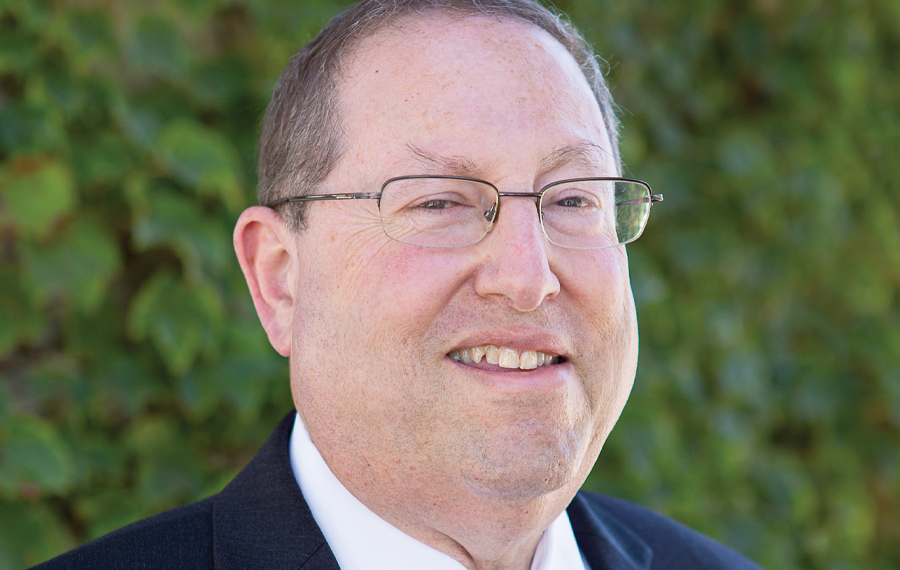
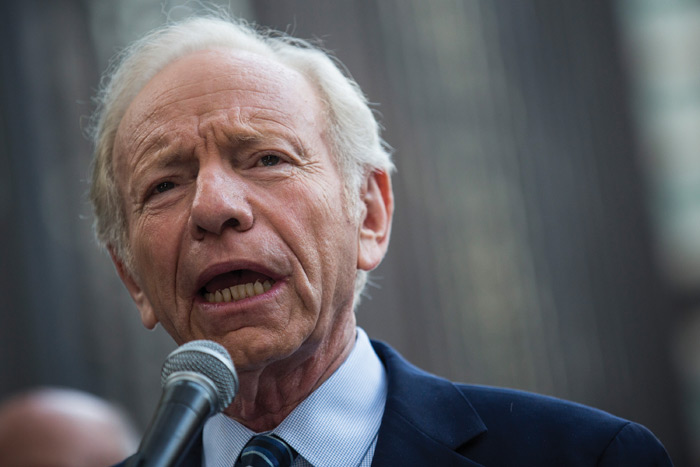
Paul Koretz to Run for City Controller

Los Angeles City Councilmember Paul Koretz has announced plans to run for city controller in March 2022. He officially declared his candidacy on Jan. 2.

“Having been an elected official since 1988, both at the state level and as a local city councilman in two cities for over 25 years, people will understand with that background why I would be looking at this,” the 64-year-old told the Journal.

If elected, Koretz, who currently sits on the city council’s budget and finance committee, would be the city’s 20th controller. The current controller, Ron Galperin, who also is Jewish, will be termed out in 2022.

Koretz praised Galperin’s work, saying, “I think he has done a lot to find efficiencies and make the office more transparent. I think he has been an excellent city controller. If he were not termed out, I wouldn’t run against him in a million years.”

To date, Koretz has received endorsements from more than 90 current and former elected officials, including Mayor Eric Garcetti, City Council President Herb Wesson and City Council President-elect Nury Martinez.

Explaining why he announced his candidacy more than two years before the election, Koretz said, “I have all this support and I might as well let people know early.”

Koretz has served on the city council since 2009, representing an area that extends from Beverlywood, Pico-Robertson and Fairfax into Century City and Westwood, and up into the hillsides of the West San Fernando Valley.

“My support of the Jewish community and support for Israel will not change in this position. I will continue to be out front and lead in every way I can think of.” — Paul Koretz

As a former council member for the city of West Hollywood, Koretz led an effort to incorporate West Hollywood as its own city. On the L.A. city council, he helped the city navigate the recession in 2009 when local officials, including former L.A. Mayor Richard Riordan, were calling on the city to declare bankruptcy.

“I helped us to get through that by looking for efficiencies,” Koretz said. “It was as simple as paying bills on time.”

Koretz also has fought against “mansionization” in his district, championed environmental protections and supported the construction of affordable housing for the city’s homeless.

Born in the San Fernando Valley, Koretz is a longtime leader in the organized Jewish community. His father, who escaped Nazi Germany, introduced Koretz to Democratic politics when Koretz was a young boy. His mother’s family fled the pogroms of Russia before emigrating to the United States.

Koretz, who lives his wife, Gail, and their daughter, Rachel, in the Beverly Grove neighborhood, also was among those who denounced Airbnb when the hospitality company said it would delist properties located in the West Bank.

If elected city controller, Koretz said he would continue to be a vocal advocate for Israel. “My support of the Jewish community and support for Israel will not change in this position,” he said. “I will continue to be out front and lead in every way I can think of.”

Paul Koretz to Run for City Controller Read More »

In This Ragù, Don’t Forget to Add Love

Ragù, in Italian, means meat sauce. When I was a kid, my family made ragù by dumping a jar of Ragú spaghetti sauce into a pan of sautéed ground meat that had been mixed with a seasoning packet labeled “Italian” — as if Italy has one flavor. Once plated, we shook a green canister of Parmesan over it.

I loved it. How could I not? My young palate was addicted to the MSG in the seasoning packet and the high fructose corn syrup in the Ragú.

Since then, my palate has matured, and I’ve read about what processed food does to your metabolism. I’ve often wondered if the maternal notion of food-as-love skipped a generation. Of course, times were different. My mother chose feminism over the kitchen, and even though our family’s food didn’t nourish me emotionally, I wouldn’t have gained the chutzpah to tackle the shortcomings of the American food philosophy without her. And along the way, I learned that feminism and cooking aren’t at odds. My work in the kitchen is an expression of my ambitions and aspirations as a woman.

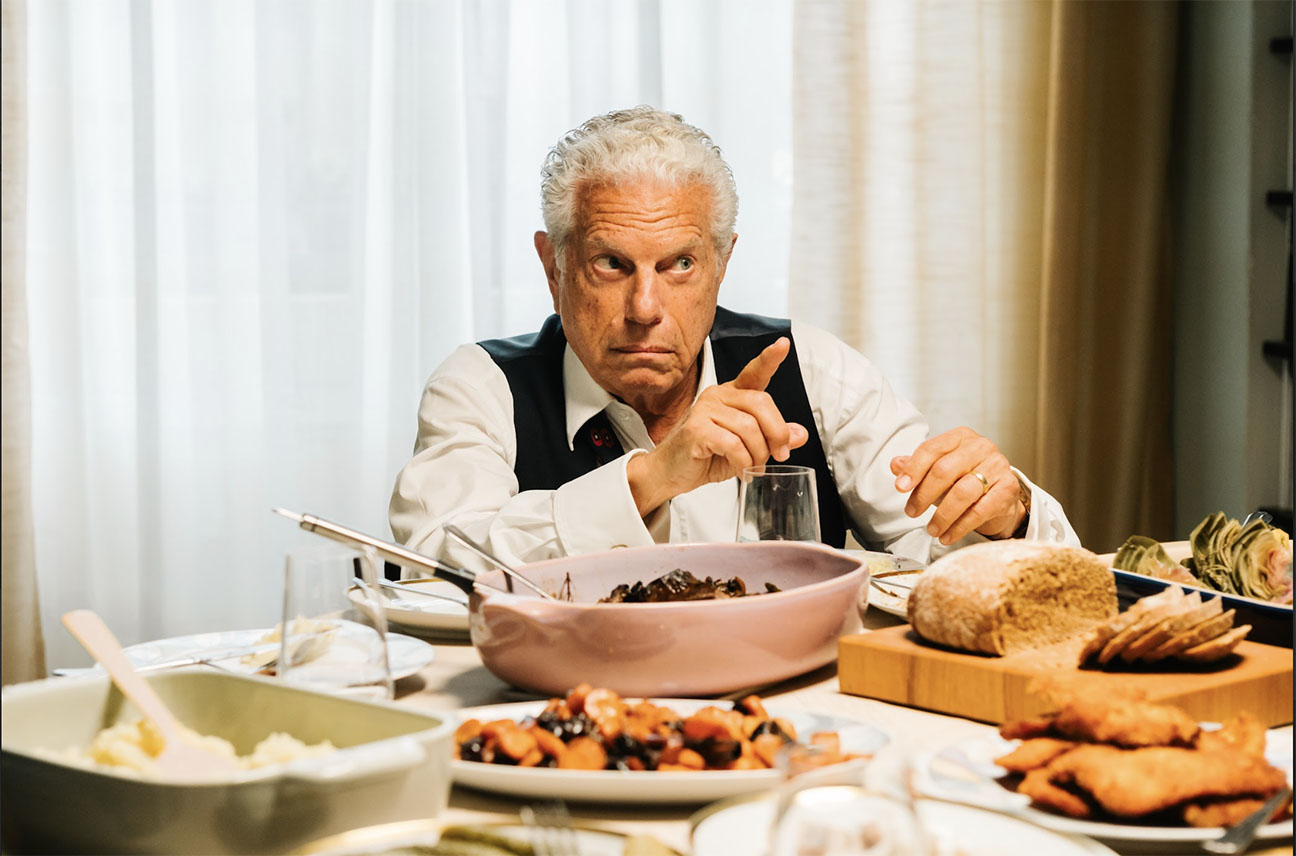
A good meat sauce isn’t something you dump out of a jar or can or whip up in 20 minutes. It’s an act of love that takes time. Here is a meat sauce that can be done in 2 1/2 hours. And except for 30 minutes of this time, you can be enjoying a glass of wine or taking a nap.

Ragù Di Carne

2 cups homemade or store-bought chicken, veal or beef broth
3 carrots, divided
3 celery stalks, divided
1 tablespoon chopped parsley plus one whole sprig
1 large or two small onions, finely chopped
1/4 cup extra-virgin olive oil
2 bay leaves
1 sprig thyme
1 veal shank with marrow bone, approximately 3/4 pound
10 ounces boneless beef chuck in one piece
1 cup red wine
1 28-ounce can Italian plum tomatoes
1 tablespoon kosher salt
40 grinds of pepper mill
1/2 whole nutmeg, grated
2 tablespoons duck fat
1 pound tagliatelle

Heat broth in medium pot over medium-low heat and add one whole carrot, one whole celery stalk and sprig of parsley. If you kept the outer skin of the onion, add that, too. Simmer until it’s reduced by half. Remove and discard vegetables. Set aside.

Finely chop remaining carrots and celery stalks. Cut meat away from the marrow bone of the veal shank.

Place large pot or Dutch oven on stove and turn heat to low. Add olive oil, chopped onions, chopped carrots, chopped celery, bay leaves, chopped parsley, and sprig of thyme. Add marrow bone. Cook for at least 30 minutes, until the soffritto is golden.

Increase heat to medium high. Add veal shank meat and beef chuck, moving aside soffritto make room for meat. Brown meat well on both sides until it sticks a little to bottom of pan.

Decrease the heat to low while completing next step.

Remove meat from pot, and finely chop it by hand or in food processor. (Do not overprocess into ground meat). Add chopped meat back to the pot.

Increase heat to medium high. Add wine and cook until it evaporates, leaving just a touch of moisture around meat mixture.

Briefly pulse tomatoes in a food processor or blender.

Decrease heat to low, add tomatoes, broth, salt, pepper and nutmeg. Cover and cook for about 2 hours, or longer if you have time. If sauce has not thickened, cook uncovered until it does.

Add butter (or duck fat) and let it melt.

Remove half the sauce and set it aside for leftovers. If you like pasta with a lot of sauce, leave more in pot.

Bring large pot of water to boil over high heat. Throw in some kosher salt, followed by pasta. Stir and cook until al dente.

When pasta is nearly done, turn heat under sauce to medium high, a fuoco vivace, a lively flame.

Drain and add pasta to sauce. Toss to coat noodles.

Serves 4 to 6, plus leftovers.


Elana Horwich is the author of “Meal and a Spiel: How to Be a Badass in the Kitchen” and the founder of the Meal and a Spiel cooking school.

In This Ragù, Don’t Forget to Add Love Read More »

The Clash Over Support for Israel

Have the Jews paid a price for defending Israel?

I am a lover and supporter of Israel. I dedicate much of my life and waking hours to defending, supporting and promoting Israel. I say this not to brag or take credit, but to be crystal clear that in asking whether Israel has helped or hurt Judaism, I am not querying whether the state of Israel should exist or whether it has been a blessing to the Jewish people.

Israel is the greatest modern miracle of the Jewish nation. Its existence has saved countless lives. It is the sole democracy in the Middle East and is a global bastion of human rights. Had Israel existed in 1940, 6 million Jews may not have died, and the Holocaust might not have occurred. Israel is the pride and joy of the Jewish people. Those who do not agree with this statement likely are ignorant of Jewish history and blind to Jewish purpose.

But what is the price Judaism has paid for the state of Israel? Is it possible for the Jewish people to remain a light for other nations as they engage in daily struggles to protect and promote their nation state as it is assailed from all sides?

I joined the Chabad movement as a boy, attending summer camp and meeting the Rebbe, Menachem Mendel Schneerson, when I was about 10 years old. The Rebbe’s universal message of globally spreading Judaism appealed to me. By 14, I had switched to a full-time, live-in Chabad yeshiva in Los Angeles. By 19, I was the Rebbe’s student emissary in Sydney, and by 22, along with my wife, Debbie, his full-time rabbinical emissary at Oxford University.

I reveled in making Judaism a light unto the nations. Why should Christianity and Islam, daughter religions of Judaism, make all the impact, with Judaism getting no credit? Where was the Jewish message for non-Jews about passionate marriages, kosher sex, raising inspired children and creating close-knit communities? Why was Judaism a spiritual backwater that appealed only to Jews?

My intention was not to proselytize non-Jews to Judaism. To the contrary, I wanted everyone to find purpose in their own identities and backgrounds. I wanted everyone to — as my friend Marianne Williamson once said — “honor their own incarnation.” But I also wanted universal Jewish values to influence them.

To that extent, I diverged from the traditional Hillel and Chabad campus model of focusing almost exclusively on Jews, and created a student organization that had thousands of non-Jews. Within two years of its creation, the Oxford L’Chaim Society had grown to become the second largest in Oxford’s history.

At that time, the late 1980s, I was keenly aware my beloved Israel was under attack. I was astonished by how much hatred the Jewish state engendered. I dedicated myself and our organization to Israel’s defense. In 11 years, we hosted six men who had or would serve as Israel’s prime ministers: Benjamin Netanyahu, Ariel Sharon, Ehud Olmert, Shimon Peres, Yitzhak Shamir and Yitzhak Rabin. This was in addition to hundreds of other pro-Israel speakers and debaters.

The more I stood up for Israel, especially through ads in the media, the more my liberal friends and admirers began to desert me.

We trained students to be Israel’s spokespeople at important forums such as the Oxford Union. Some of our student leaders and participants went on to be top political officials, including Ambassador Ron Dermer, Mayor Eric Garcetti of Los Angeles and Sen. Cory Booker (D-N.J.), who was one of Israel’s greatest champions before turning on Israel with his support for the Iran nuclear agreement and his vote against the Taylor Force act in Senate committee.

While I continued to defend Israel, I published books on sex, relationships and marriage. I was wearing two hats: Hebrew warrior and relationship guru. The two peacefully coexisted — until about a decade ago, when they began to sharply diverge.

My relationships identity appealed to a liberal crowd that saw me as a rabbi in tune with modern times, someone who made religion accessible and relevant. My defense of Israel appealed to an opposite audience of conservatives that saw Israel as being unfairly maligned by the left. Evangelical Christians flocked to the message of Israel as a beacon of freedom and bastion of human rights.

However, the more I stood up for Israel, especially through ads in the media, the more my liberal friends and admirers began to desert me. How did my universal message of one human family mesh with my passionate defense of a Jewish nation state? How did my belief in the equality of all humankind coexist with what they saw was Israel’s displacement of the Palestinians?

Then-President Barack Obama’s nuclear deal with Iran brought this conflict into stark relief. Liberals delighted in his election and his policies. Those who loved him and supported him were the same people who agreed with my thoughts on Judaism, supported my anti-genocide campaigns in places such as Rwanda, and agreed with my furtherance of Holocaust education.

So how could I so strongly oppose Obama on Iran? Did I not understand this enlightened leader was making peace? The disdain people felt for my ferocious opposition to Obama’s Iran policy was a disappointment not in my politics, but my faith. Is Judaism not a religion of peace? How could we hate the Iranian mullahs?

After the Holocaust, any argument that Jews can survive as a religion without a state is profoundly ridiculous.

I suddenly felt the clash of two identities. My Jewish, rabbinical identity told me to follow Isaiah, beating swords into plowshares, filling the world with love and harmony. But in looking at the existential threat facing Israel, I did not feel the words of Isaiah were immediately relevant; the words of King David in Psalms seemed more appropriate: “Those who love God hate evil.”

As we took out more ads — including with Elie Wiesel — against the Iran deal, pointing out the abomination of giving the world’s foremost sponsor of terror $150 billion in unfrozen assets — much of it in cash — I felt myself losing my once-stalwart liberal base. “Perhaps Shmuley had bamboozled us and was an extremist fundamentalist all along.”

But the clash here was not about Shmuley-the-relationship-counselor versus Shmuley-the-Hebrew-warrior; it was a clash of Shmuley the rabbi, representing the universalist goals of Judaism, with Shmuley the Israel fighter, representing the existential survival needs of the Jewish nation-state.

As many saw it, it was a conflict between Jewish universalism and Hebrew parochialism; Judaism as a religion for all people versus Israel as a state for only Jewish people.

It was at this point I recalled the story of Roman Emperor Vespasian and the greatest rabbi of the last years of the Second Temple, Rabbi Yochanan ben Zakkai.

The gist of the story is this: It’s 2,000 years ago and the Romans have surrounded Jerusalem. They are about to invade, annihilate the population and destroy the Holy Temple. The Jewish rebels fighting the Romans have made it a capital offense for anyone — including the greatest rabbis — to leave Jerusalem, for fear traitors will seek terms with the Romans or betray the Jewish cause.

Zakkai decides the Jewish cause is lost. The Romans will destroy everything. He fakes his death and is taken out of Jerusalem in a coffin, as bodies cannot be buried in the holy city. He is granted an audience with Vespasian, who is then a general, and greets him with the words, “Hail, Caesar.” Vespasian says the rabbi deserves death for giving him the imperial salutation when he is only a commanding general. Just then, a messenger comes in from Rome and says, “Hail, Caesar. The Roman emperor in the capital city has been deposed. You have been proclaimed the new emperor by your troops.”

Vespasian looks at Zakkai and is impressed, thinking the man is some kind of prophet. Vespasian agrees to grant the rabbi three wishes, the most important of which is Zakkai’s request that even if Jerusalem is destroyed, Vespasian will allow the rabbis and teachers to go to the city of Yavneh and establish a yeshiva there for the continuity of Judaism, the religion, unmolested by Rome.

But wait. What about the Temple? What about Israel? What about Jerusalem? What about the Jewish nation state? Clearly, Zakkai made a decision. Israel was lost, but Judaism would remain. The Jewish people would live on not through borders, an army and a capital, but through Jewish mitzvot and Torah observance. The people would survive through rabbis rather than soldiers, through scripture rather than a state, through the minute strictures of the halachah rather than the borders of a country.

From that fork in the road where Zakkai could have asked Vespasian to spare the country instead of sparing the Torah and teachers comes our present dilemma. For 2,000 years, Zakkai’s gamble — for which he was strongly criticized by fellow Talmudists — more or less worked. The Jewish people survived in exile through their Judaism.

I say “more or less” because survival came at the price of humiliation, expulsion, persecution, constant attack and finally, annihilation in the Holocaust. Yet for all those immeasurable and unspeakable horrors, Judaism and the Jewish people survived, even as millions did not.

Judaism ensured the Jewish people would be the first and only nation to survive by belief rather than borders, with rabbis rather than fighters, and the Bible and Prophets rather than an economy and markets.

But along came Theodor Herzl and spoiled the party. What kind of existence is this, he asked, as he surveyed the never-ending humiliation of European Jewry — even those who, like Alfred Dreyfus, had thought they might assimilate into non-Jewish acceptance? This is a wretched life, Herzl thought. We have no dignity. We need a nation state. A Jewish home. A place where Jews can live with prosperity and security provided by their own army.

The rabbis cried foul. Does this mean Israel would replace Judaism? Indeed, many early Zionists were fiercely secular. It’s not hard to understand why. They felt Judaism with its ultimate reliance on God rather than the efforts of the individual was holding back the Jewish people.

Herzl predicted a Jewish state within 50 years. He was off by about five. However, those critical five came with an event: the Holocaust. If Israel had met his prediction, 6 million Jewish lives might have been spared. The Nazi policy was Jewish emigration before it was annihilation. It’s just that no country — including the United States — would take them in. So they were killed at a rate of about 10,000 per day.

In effect, what Herzl did was expose Zakkai’s decision as profoundly incorrect. Yes, Judaism allowed the Jewish people to survive — until they were gassed and turned into ash in the crematoria of Auschwitz, Majdanek, Bergen-Belsen and Dachau.

After the Holocaust, any argument that Jews can survive as a religion without a state is profoundly ridiculous, which is why the Neturei Karta, aside from being an embarrassment to Judaism as they hang out with killers such as former Iranian President Mahmoud Ahmadinejad, also are profoundly ignorant.

The world is not accustomed to seeing Jews stand up for themselves and would prefer us being the people of the book rather than the people of the Uzi.

I am a rabbi. I want the Jewish people to be a light unto the nations. I believe Judaism has redemptive teachings to share with the world on family, sexuality, marriage, human dignity, putting the accumulation of wealth in perspective, equality of women, respect for all of God’s children, hatred of evil and fighting human rights abuses.

As a religion, we can and should impart those values. No one gave us the opportunity to do so when authorities shoved us into ghettos, resulting in poverty-level existence. However, the emancipation of European Jewry provided that opportunity. Judaism finally might be heard.

Jewish luminaries such as philosopher Moses Mendelssohn (1729-86) began the process, even as they compromised some of the core of Judaism in an effort to make it more palatable. The creation of the United States gave Jews full rights and acceptance, and for the first time in 2,000 years, there arose the possibility that rabbis and Jewish thinkers might go public via TV, radio and later, the internet, as well as publish books that profoundly impact hundreds of millions of non-Jews.

Modern media and a new, open, liberal mindset allowed Judaism — for the first time in history — to become a light unto the nations, without having to influence the world through the medium of Christianity or Islam.

I firmly jumped on this bandwagon, using Jewish wisdom to counsel non-Jewish families on a national TV show. I sought to rescue faltering marriages, restore lost intimacy and passion from monogamous relationships, and help parents inspire their children with values.

But as the world turned on Israel, I felt the call of my people. How could I not stand up for the Jewish state, where two of my children served in the army and where my people were fulfilling the ancient dream of returning to Israel and Zion?

I threw myself into the Israel wars via public debates on campus, public debates on CNN, Fox and MSNBC and global advertising campaigns that defended the Jewish state.

With that decision came the loss of much of my liberal audience. How could I, an enlightened person who spoke about human rights and rescuing relationships, not care about the Palestinians, my critics, who were also Israel’s critics. How could I justify Israel’s aggression?

My response that Israel is the great Arab hope was met with deaf ears. I believe the flourishing of a democracy in the Middle East with full rights for all its Arab and Muslim citizens would give lie to Arab dictators who claim that things such as press freedom are impossible in the Middle East. There was a bias against Israel that seemed hard to surmount.

The quandary I faced took me back two millennia to Zakkai, sitting before Vespasian. Would I be silent on Israel so I could remain a rabbi to the gentiles? Would I allow Israel to suffer while I spoke on television about kosher sex? Would I allow my closest friend and former student president Cory Booker to betray Israel and the United States by voting to give the killer mullahs in Tehran $150 billion so Booker’s many admirers would continue to see me as the enlightened Chassidic rabbi who mentored him? Would I be silent to remain popular among the Hollywood set while Israelis were blown up on buses and in cafes?

No, I would not. I would not remain silent, regardless of personal cost.

But this wasn’t primarily about me and the price I personally paid. It was about a choice. As the world turned against Israel and as anti-Semitism sprang up around the world, being a fighter for Israel often meant forfeiting the opportunity to be a light unto the nations. The world at large was not going to listen to someone accusing it of anti-Semitism. The world was not going to see someone who defended Israel — which it vilified as an apartheid occupier — as a moral and spiritual light.

As my son Mendy told me, it’s almost as if the nations of the world were so brutal toward us that they completely reoriented our national mission from spreading the word of God to basic survival. And after they forced us into survival mode, they faulted us for fighting back and said those who fight have no right to preach a spiritual message of universal oneness and cosmic healing.

Photo by Getty Images

The election of President Donald Trump has magnified this divide. Those Jews thankful to Trump for moving the American embassy in Israel to Jerusalem; withdrawing from the catastrophic Iran nuclear deal; stopping the vilification of Israel at the United Nations; ceasing the funding to the Palestinian Authority as long as it channels that money in a pay-for-slay policy for killing Jews; and recognizing the Golan Heights, are treated as unworthy of the mantle of Jewish teacher. If you show the Jewish virtue of hakarat hatov, basic gratitude, toward a president who has strengthened and legitimized Israel immeasurably, especially at the United Nations, you are promoting darkness to the nations rather than serving as a light.

There now is an undeniable conflict between being an Israel warrior and serving as an exponent of Judaism, such that the more one engages in the former, the less effective he or she is in the latter. And one is forced to choose?

To detach Judaism from Israel is to make our religion a lifeless corpse bereft of soul.

Don’t believe me? Take a look at Hillel and Chabad on campus. They care deeply about Israel. Still, they pay, at best, lip service to the battle against the boycott, divestment and sanctions movement on college campuses without mounting any serious and coordinated national campaign to combat it. Why? Their local directors will say — in their minds, with good cause — that if they stand for Israel or fight openly against Israel Apartheid Week, then students won’t come for chicken soup on Friday night. Hillel directors and Chabad rabbis feel they are forced to choose between advocating for Israel and losing more liberal-minded Jewish students, or forfeiting the fight for Israel and getting Jewish students to come to Torah classes or lectures on the Holocaust.

I cannot tell you how many college campus activists have expressed to me privately that Israel now is so toxic a subject on campuses that mixing it with their Jewish activities would cause them to lose more than half their participants.

To these Chabad rabbis and Hillel directors, I responded, “But, wait. If you’re going to cut out Israel from your programs — with the exception for some meaningless tokenism like having a falafel party on Yom HaAtzmaut — then you’ve cut out the heart of Judaism. Israel is central to everything Judaism stands for. What’s next? If God is offensive to atheists and makes you look backward and unscientific for your beliefs, do you drop Him as well? If mikveh is misunderstood by women as a belief that their menses make then unclean, do we cut out that, too? Or the Sabbath, if people believe it’s a day of idleness for people who are lazy and don’t want to work, will the Sabbath also be stripped out of Judaism?”

To this, one of Hillel’s most generous benefactors told me, “Look. I would never say this in public, but the battle for Israel on campus is lost. We should have woken up two decades ago. But we didn’t. And now, if we prioritize fighting for Israel, we cannot be impactful with teaching Judaism.”

So what can we do? Is Israel an unqualified blessing, or has its creation come at the expense of Jewish globalism? Has the creation of a nation-state in our ancient homeland in the Middle East compromised the universal impact we Jews were meant to make as a religion? Has Israel made us parochial rather than global? Myopic rather than universal? Limited rather than expansive? Controversial rather than popular?

Has Israel and the battle we must wage for Israel undermined the Jewish people’s capacity to use Jewish spirituality to influence the nations? The answer is yes and no.

We must not give up on explaining that Jewish spirituality and its success in sustaining the Jewish people is intimately connected with Israel.

Yes, the world is not accustomed to seeing Jews stand up for themselves and would prefer us being the people of the book rather than the people of the Uzi. A cynic might say the world does not so much hate Jews as hate Jews who have power and stick up for themselves. Take Hollywood, for example. Nearly every month, the industry releases an excellent movie about the tragedy of the Holocaust — yet it has not produced one positive movie about Israel since Paul Newman starred in “Exodus.” Jews with yellow Stars of David on them dying and being gassed moves and touches Hollywood writers, directors and producers. Jews battling in Merkava tanks on the Golan Heights, or Israeli commandos storming terrorist outposts in Gaza to ensure they never again are slaughtered, is seen not so much as heroic but as oppressive to Israel’s neighbors.

On the other hand, having Israel warriors has greatly enhanced Judaism. Having a home for which we are prepared to fight and stand up for ourselves in global PR has given the Jewish people a dignity we previously did not possess when we were a pitied nation.

Christian evangelicals now flock not only to support the Jewish state but to learn about the Jewishness of Jesus. In my book “Kosher Jesus,” I argue, based on Christian scripture and the New Testament, that Jesus was a Jewish patriot who fought for the freedom of Israel against the Roman oppressors and was put to death by Roman proconsul Pontius Pilate for his defiance.

Were it not for Israel, the Jewish people — and the Jewish religion by extension — would not have the impact it is having on evangelical Christians. Likewise, were it not for Israel, there would not be a true renaissance of Judaism — not only with the hundreds of yeshivot and seminaries that have opened but with Jewish communities the world over that have strengthened their bonds to their faith because of Israel’s inspiration.

But for those who are more liberally minded and are true globalists, yes, standing up for Israel has somewhat impaired our ability to influence them with Jewish values. For example, the World Economic Forum at Davos, Switzerland, may be the ultimate statement of globalist influence. When I was last there three years ago, Iranian President Hassan Rouhani was treated as a global celebrity, feted by world leaders, even as Benjamin Netanyahu, who spoke two hours after him, couldn’t fill half the room because attendees were boycotting his appearance.

Right now, we may not necessarily win over the globalists as we fight for Israel. They will punish us for standing up for ourselves. But I believe that in time, this will change. There will be a backlash against the false and fraudulent liberalism of today that would demonize Israel even as it fetes Iran, Turkey and China.

As for the price we pay until then, I feel it absolutely is worth it. Israel is worth it. The Jewish homeland is worth it. The Jewish state is worth it. Not only because without Israe there would be no sanctuary for Jews in an age of global persecution, but because as the Talmud says, “He who is without a home is not a person.” Even for Jews who live in the Diaspora, it is Israel that gives our Jewish identity dignity. It is Israel that gives our Jewish observance meaning. And it is Israel that gives every Jewish man, woman and child the greatest pride.

What meaning would our daily prayers have without the supplication of the divine presence returning to Jerusalem? How do we seek to be connected to the teachings of Abraham without understanding that they stemmed from a particular place and time in Israel? To detach Judaism from Israel is to make our religion a lifeless corpse bereft of soul.

Until such time as the world comes to see Israel’s virtue — an event made much harder by globally ingrained anti-Semitism — my advice is that we cannot give up the battle on joining the two. We must not give up on explaining that Jewish spirituality and its success in sustaining the Jewish people is intimately connected with Israel.

We Jews create strong families because we understand bonds that stretch across time and space, like our connection to Israel. We understand holiness because of the holy land of Israel. We understand ecstasy and longing because every year, we read of Moses’ ecstatic longing to enter Israel. We understand the need to keep one’s word and fulfill one’s promises — because after 2,000 years of exile, God kept his promise and returned us to the glorious, beautiful and majestic land of Israel, even as we continue to wait for the long-promised complete redemption of our people with the Messiah, when Israel and all the nations of the Earth will live in peace, men will beat their swords into plowshares, and no man will ever again teach his son the art of war.

May it happen now.


Rabbi Shmuley Boteach is the author of 33 books, including “Judaism for Everyone,” “Renewal: A Guide to the Values-Filled Life,” “Kosher Sex,” “Kosher Adultery” and “Lust for Love,” co-authored with actress and activist Pamela Anderson. Follow him on Twitter and Instagram @RabbiShmuley. 

The Clash Over Support for Israel Read More »

Life After Auschwitz

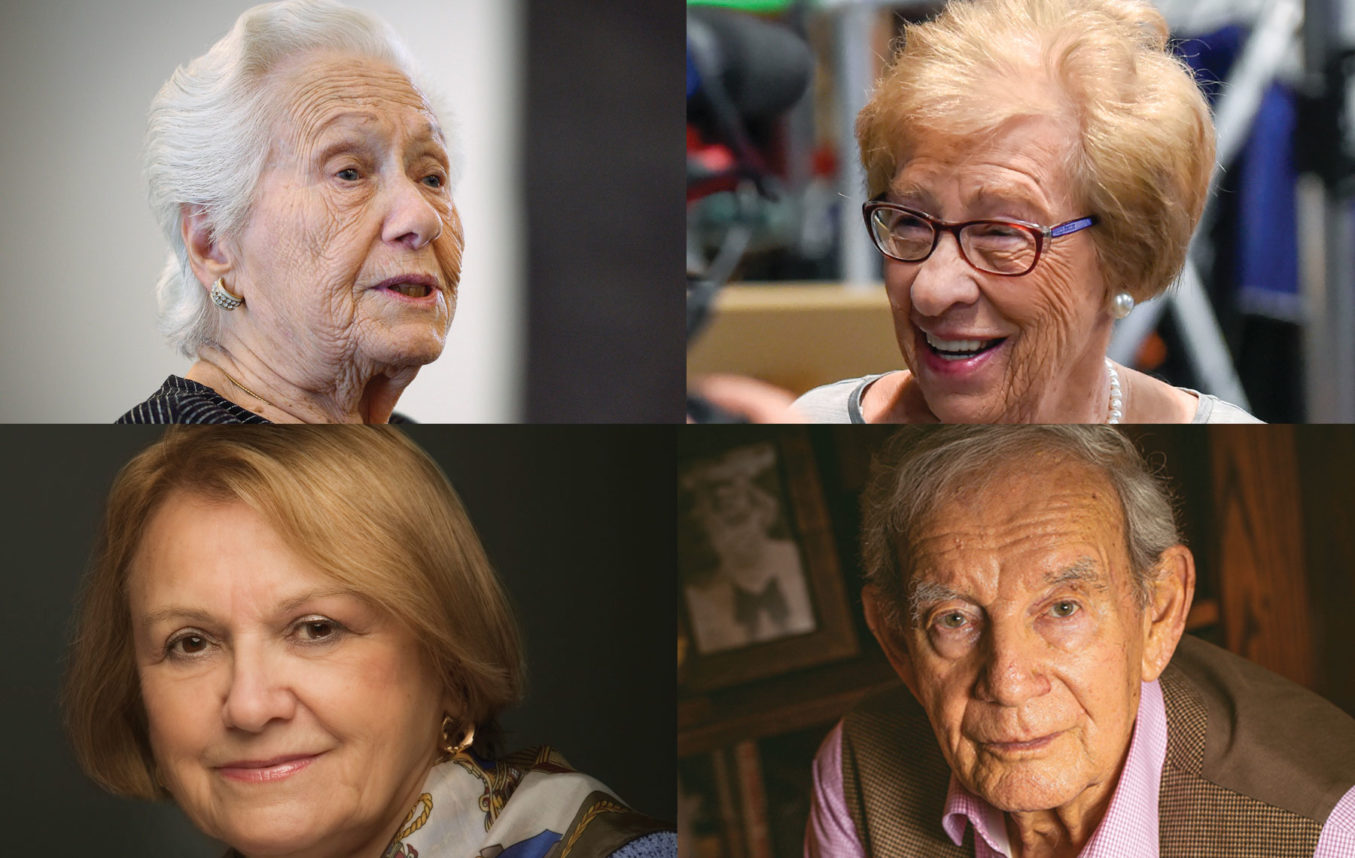
On Jan. 27, 1945, Renée Firestone, Jack Lewin, Eva Schloss and Paula Lebovics woke up to a world after Auschwitz. Not that they knew what that meant that day. When they saw Soviet soldiers emerging through the snow, they knew only that their freedom from Nazi tyranny had been won. But there was no happy ending to the Holocaust. On that freezing day they had no families, no homes, no country, no past and no future. They got back their names that day, but they were starving, diseased, lonely and confused, with no resources except those given or found. It was Day One of their long haul back to humanity.

Looking back 75 years after the liberation of Auschwitz, we know what happened next; how that small remnant of young people hanging onto life contributed to our world. The gritted determination required to restart life under such circumstances was remarkable, even if they had no choice but to put one foot in front of the other. Primarily, they were teenagers who had no time to grieve. Instead, they picked through the rubble of war-torn Europe in search of missing family and friends.

Filmmaker Jon Kean brought this into sharp focus recently with his extraordinary 2018 documentary “After Auschwitz.” Kean followed the journeys of six survivors after their liberation, including Los Angeles resident Firestone, as they navigated deep loss and a near-impossible course of bureaucracy to get back their identities and choose where to go next.

Some survivors went back to their homes and stayed there. The vast majority navigated the red tape to leave Eastern Europe for Israel, the United States, South America and as far as Australia, which to this day has the largest per capita Holocaust survivor community in the world. Often beginning their new life with nothing on arrival, it was another form of survival as they pushed through on hard work and minimal goodwill. Occasionally, survivors in various cities formed groups that they could belong to, such as the 1939 Society founded in Los Angeles. Community was everything, because only those who had lived it understood it.

Through many silent years nothing much was heard from this Diaspora of more than 500,000 survivors, apart from an occasional book published, but usually read by very few. Some married, had families, built their homes, their businesses and became adjusted members of society. But the ghettos and the camps and the hiding places and death marches never left them. As the world moved on and focused on the Cold War, the terror of the Nazi era continued in survivors’ nightmares and haunted them throughout the day. Reminders were everywhere of what they had endured. These unrecognized years of silent pain had to be swept under the rug as they earned their money and their place in society.

I have often heard people say that “survivors were silent after the Holocaust.” In fact, that was far from the truth. In the 1940s, Holocaust survivors tried to tell their stories.Some managed to publish books and write articles. Others, such as Edith Birkin, were turned down. One publisher told her in 1948 that she was a good writer, but she should choose another topic because people were no longer interested in the war. The victims of the camps had promised one another that if they survived they would “tell the world.” It is easy to say as much after the fact, but I have found references from non-Jews who survived Auschwitz who corroborate this. Ella Lingens-Reiner’s book “Prisoners of Fear” was published in 1947. She states that Jews believe they “had to survive in order to tell the world … a struggle for survival of the Jewish people.” She had no reason to share this unless it was true.

As time unfolded, there were moments when what happened during the Holocaust were revealed through the eyewitness survivors. Adolf Eichmann’s trial in Jerusalem in 1961 thrust the voice of the survivors who testified onto the world stage, including survivors Michael Podchlebnik and Simon Srebnik, who later appeared in Claude Lanzmann’s nine-hour documentary “Shoah.” People became accustomed to seeing survivors as the lead narrative voice in telling the history of the Holocaust. In 1978, the announcement by President Jimmy Carter of plans to develop a museum in Washington, D.C., formalized the recognition that the Holocaust had meaning in American society, and with it, the embodiment of survivors such as Elie Wiesel and Shaike Weinberg, who helped found the museum. The Holocaust had been depicted on the silver screen many times but in 1993, “Schindler’s List,” through its powerful storytelling and worldwide box-office success, gave the public access to the historical realities of the Holocaust. This in turn made society more prepared to hear. The outpouring of testimony that followed is a legacy for the ages.

As the 75th commemoration approached, I turned to the testimonies Firestone, Lewin, Lebovics and Schloss gave about their time in Auschwitz, among the 12,797 testimonies in the USC Shoah Foundation that talk about Auschwitz. Their words reminded me that, for all the dehumanization they experienced, they were profoundly human that day. Vulnerable, but with the spark of life they would go on as beacons for the world. In times of darkness and trouble, we can turn to their example and always live to the best of our humanity, never to the lowest common denominator.

Twenty-five years ago, I was at Auschwitz-Birkenau for the 50th anniversary of the liberation. Holocaust survivors, then in their 70s, gathered with world leaders to pay their respects. The world was reeling after war in Bosnia and genocide in Rwanda. If one lesson of the Holocaust was to prevent future atrocities, it seemed that was still to be learned.

The dwindling minority of that original remnant are now in their 90s. They are the exceptions among the exceptions. Rose Schindler of San Diego recently had an emergency procedure and was contemplating whether to travel to Poland this week. It seemed obvious to me that, to preserve her health, a nonagenarian who has paid tribute to her family many times need not make that traumatic return again. “But I have a duty and an obligation,” she said. “If not me, who can stand there and say the Nazis are gone but we are still here?” She, like all the other survivors who will be there, doesn’t need to remember; they have remembered every day for the past 75 years. They go, perhaps one last time, for us. After Auschwitz, they are our reminder: When we stand together, anti-Semitism can be defeated. Hate can be overcome.

The ghettos and the camps and the hiding places and death marches never left them.

Eva Schloss: One morning we woke up and there were no Germans. I saw a huge figure standing, all covered in snow and fur. I thought it was a bear, and then I went a bit closer and I saw the first Russian soldier who had entered the camp.

After having gone through this nightmare, I think I can cope with life.

Jack Lewin: Around 2 or 2:30 in the afternoon, we saw the first Russians. And it was the most beautiful sight in the world. I remember running down the stairs thinking, you better get ahold of yourself because you’re going to go crazy. Six years and all of a sudden you’re free.

I picked this date for my interview, Jan. 27, 1995, because today is my 50th anniversary of my liberation from Auschwitz.

Reneée Firestone: I went on this death march [from Auschwitz] about 60 kilometers, where we were again put into cattle cars. I arrived to Liebau camp, and we were assigned to work at a Krupp factory. A Russian officer rode in. This officer jumped off the horse, came over and started to cry, and hugged and kissed us … and he told us that we can now leave.

And there we were on our own, realizing that now we have to reenter that world that didn’t want us.

Paula Lebovics: On the 27th of January, the Russians came in and they liberated us. A lot of people have bad memories from that but I have good ones … about a soldier picking me up and rocking me in his arms and the tears were just flowing down his face. Just to look at him and figuring in my head, “There is somebody out there who cares about me!”


Stephen D. Smith is Finci-Viterbi executive director of the USC Shoah Foundation. 

Life After Auschwitz Read More »

Star of David Graffiti on WeHo Sidewalk

On January 18, graffiti of a Star of David was found.

WEHOville.com reported the graffiti was located on Santa Monica Boulevard and Kings Road. WEHOville described the graffiti as “what appears to be a Star of David and what some interpret as a Wiccan image.”

Police are investigating the graffiti.

Other anti-Semitic graffiti was found in West Hollywood on December 29 and 31. The December 29 graffiti consisted of the words “Hitler was right” on The WeHo Bayou Restaurant; the December 31 graffiti featured Stars of David and the letters “GD” and “LK.” It is not yet known what the letters mean.

Watchdog StopAntisemitism.org tweeted, “30 days. 3 anti-Semitic incidents. Looks like the city of West Hollywood has a bit of an anti-Semitism issue on their hands.”

American Jewish Committee Los Angeles Regional Director Richard S. Hirschhaut said in a statement to the Journal, “The recent spate of anti-Semitic graffiti in West Hollywood is a reminder that the fight against hate is a daily challenge. Whether these incidents are being perpetrated by a lone bigot, or a series of copycat vandals, they will not carry on with impunity.”

He added, “Eventually, law enforcement will make an arrest and they will be charged with committing hate crimes. Time is not on their side, and the West Hollywood community will soon rest easier.”

Anti-Defamation League (ADL) Senior Associate Regional Director Natan Pakman similarly said in a statement to the Journal, “We are concerned about new reports of alleged anti-Semitic graffiti in West Hollywood. Given the rise in anti-Semitic incidents tracked by ADL, both in California and across the U.S., any hateful graffiti is unacceptable and should be properly investigated as a possible hate crime.”

Star of David Graffiti on WeHo Sidewalk Read More »

Can Beauty Save the World?

Until recently, I didn’t know that there was a major, international auction house in Israel. Art and design are in fact a booming industry in Israel, although little is written about it.

The Tiroche Auction House was founded in 1992 by Jean Tiroche, a Holocaust survivor who established his first art gallery in Tel Aviv in 1957. Over the years, Tiroche has grown to become Israel’s largest auction house with the sale of art collections from such prominent figures as Golda Meir, Abba Eban and the Baron Rothschild. Today, the auction house is run by the founder’s grandson, Amitai Hazan Tiroche.

This year’s annual auction, on Jan. 25, will feature nearly 300 works spanning six decades. Bidders can attend in person, bid by phone or bid online through Trioche’s website.

Tiroche told the Journal that this year’s auction is special for two reasons. First, it includes important international artists such as Marc Chagall, Fernando Botero and Victor Vasarely; previous auctions focused solely on Israeli artists. Chagall’s “Jacob’s Ladder” (1973) is a saga unto itself, as it was stolen and missing for 20 years before being discovered. “The painting depicts one of the most important biblical stories, symbolizing the history of the Jewish people and the land of israel,” Tiroche said.

“The ladder links the Earth with heaven and the angels rise and fall, alluding to the divine prophecy descending upon human beings,” he added. “Chagall chose not to depict the scene in utopian colors, but rather to use dramatic colors according to the painting period of 1973/4, near the difficult time of the Yom Kippur War.”

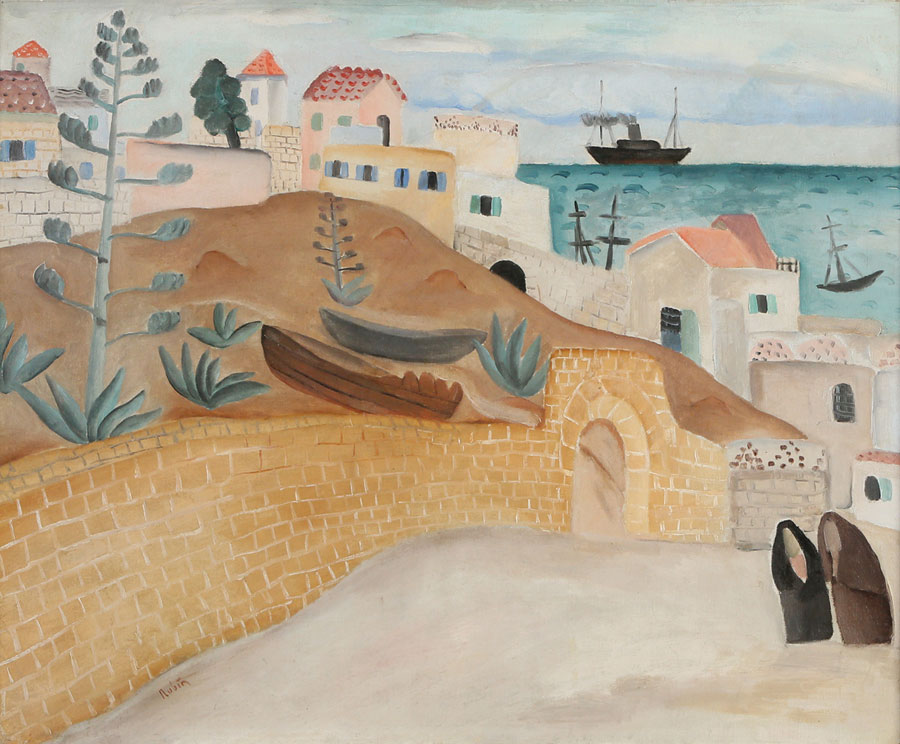
This year’s auction also is important because of the sale of Reuven Rubin’s “Jaffa” from 1924; only a few works from this period have been auctioned. The work was featured in a landmark exhibition and catalog at the Tel Aviv Museum of Art in 1982 that chronicled works from the 1920s.

In 1926, Israeli poet Haim Nahman Bialik wrote that the Israel portrayed in Rubin’s paintings was a “Midrash Agada, a moral reinterpretation of Jewish tradition and identity.”

“The artists portrayed the Mediterranean light in an almost spiritual manner.”
— Amitai Tiroche

“The 1920s are considered the golden age of Israeli art,” Tiroche said. “The paintings of the young nation’s artists reflect the formation of Hebrew and Zionist culture in Israel upon the foundations of the Jewish past, using symbolism and utopian colors. The artists portrayed the Mediterranean light in an almost spiritual manner, as a sign of merging with nature and a new awakening.

“The combination of beauty and romance in the art of these years, combined with the rarity of the artworks preserved from this period, have made the paintings of these years the aspiration of every collector of Israeli and Jewish art.”

Looking at the images of works being auctioned, especially “Jaffa” and Yohanan Simon’s “Figures in the Kibbutz” (1940s), I am again struck not just by the dreamy sensuality, brilliant use of line and color, and an often erotic mysticism in the works, but by the sad fact that so few outside of Israel are even aware of their existence.

Israeli artists seem to understand that deep spiritual beauty can create bonds between disparate cultures; that it can inspire the best within each of us. Can beauty save the world? as the Russian writer Fyodor Dostoyevsky suggested. I decided to find out by starting the first magazine devoted to innovative Israeli art and design. The tagline: the light we create.


Karen Lehrman Bloch is the editor-in-chief of yofi magazine.

Can Beauty Save the World? Read More »

Anti-Semitism in America: When Is It Enough?

It’s an old trope: “Don’t get too comfortable, anti-Semitism is just around the corner.” My parents used to say it all the time. My dad warned me that you never know when it will show up, or from whom it will come. The main reason that he wanted me to marry a Jewish woman is because of his fear that during a fight,  she might call me a “dirty Jew.”

But I grew up in the United States, where safety is something that I took for granted. I would walk or ride my bike to school (without a lock). Never was there a fear of abduction or theft — even here in Los Angeles we had that kind of innocence. And certainly, I had no fear about being Jewish or showing my Jewishness. The idea that my parents tacitly feared anti-Semitism was outdated at best if not downright parochial.

Fast forward to today, violent acts of anti-Semitism and Jew hatred are increasingly common. My parents’ warning seems prescient rather than quaint. But it is our reaction as a community that I find troubling.

About four years ago, my local Chabad synagogue engaged a security guard to stand in front of the door. This wasn’t just a guard — he was a legitimate mercenary. He wore fatigues, carried a machine gun, two pistols and multiple blades. Somehow beneath all that artillery he wore a beatific African American face and greeted me with a smile and a morning “Shabbat shalom.” I loved him. Of course, larger synagogues had employed security guards for many years before that — but our very small shul seemed different. Did we really need a guard with all that firepower? It is a small neighborhood shul in a very Jewish area of cosmopolitan Los Angeles. It seemed like overkill.

Events in Pittsburgh and Poway proved that of course we did need that heavy armor. And in the ensuing years, my local Chabad put in anti-ramming safety barriers, had a squad car blocking the front door, put in a system whereby congregants come out on a schedule to stand with the guard and this past weekend … all the congregants started wearing bulletproof vests.

I should mention that this little shul is less than a mile from where I grew up innocently walking to school without a care in the world and absolutely no fear of anti-Semitism. How far have we fallen from that sense of safety.

Congregants wearing bulletproof vests? Really? Where is our outrage?

But this isn’t what concerns me. What concerns me is our passive acceptance of this situation.

Hiring a guard and wearing bulletproof vests is passive.  I hate to make a hackneyed analogy, but isn’t this a bit like 1930s Germany? Wearing armbands in itself isn’t such a big deal … until it is. Bulletproof vests? Really? Where is our outrage?

The boycott, divestment and sanctions (BDS) movement has been slowly invading our institutions of higher learning for more than a decade. What is most insidious  is the way BDS is slowly rewriting history, delegitimizing the Jewish people and the Jewish connection with the land of Israel — to the point that people claim the Temple Mount is primarily a Muslim site. And yet, we have essentially been silent. Where is our outrage?

We are too comfortable. We have money and power, but we are too afraid to use it. We show up with wreaths at funerals, occasionally attend rallies (which are poorly attended) and speak passively amongst ourselves about how awful it is. But why are we not up in arms? Why are we not storming our elected officials? Why are we not massively crying out against Louis Farrakhan and Sister Ava Muhammad? How are we not constantly calling out white supremacist leaders? When will we unite as a single voice of love for our fellow Jews? What are we waiting for?

My parents were immigrants. They came to this country just wanting to fit in and succeed. Generations later, we have done that, only to face yet another existential crisis. Modernity and comfort have made our religious and cultural connection less vital. Once again, anti-Semitism is serving as our wake-up call.

At some point, even a bulletproof vest isn’t enough to save us.


Daniel Kaufman is a filmmaker, marketing executive and public speaker. His blog, “Confessions of an Orthodox Sinner,” can be found on Facebook.

Anti-Semitism in America: When Is It Enough? Read More »

Removing Stumbling Blocks From the Seeing

“Do not curse the deaf or put a stumbling block in front of the blind, but fear your God. I am the Lord.”

— Leviticus 19:14

Do we still need to pay attention to this verse? Aren’t we “there” already? Look at the latest winner of “America’s Got Talent”: Kodi Lee. He’s a singer-songwriter and pianist; he is blind and has autism. Didn’t we just remove the ultimate stumbling block?

Sometimes the literal removal of sight is a ploy. In the first round of the TV show “The Voice,” it is the judges who are “blind,” as they have their backs to the contestants. If they like what they hear, they press their buttons and turn their chairs to face the contestant. The show’s creator, Dutch billionaire John de Mol Jr., argues that the blind audition format “makes it all about the voice”; the implication is that all other aspects of each performer would be a distraction — or a detraction. Implicit in this model is an acknowledgement of bias.

If actor, dancer, model, activist, boxer and blogger Tatiana Lee told her story in a “blind audition” forum, we would not know that she was born with spina bifida, and relies on a wheelchair for mobility. As she resignedly puts it, “I have three strikes against me: I’m a woman of color with a disability.” Yet Tatiana Lee’s goal is to hide nothing. She has been invited to casting events on the second floor of buildings lacking ramps and elevators; she has landed modeling tryouts despite her health issues, only to be rejected because of her plus-size; she has worked hard to deliver roles earning rave reviews, only to encounter what she calls “inspiration porn”: the assumption that her success comes from “overcoming” rather than excelling.

Is Kodi Lee’s story one of overcoming or excelling? As I listened to the chants of “Ko-DI! Ko-DI!” every week of “America’s Got Talent’s” 14th season, I wondered if the audience members would be as enthusiastic if they had listened to their hero’s voice without knowledge of his disabilities.

Ruderman argued that, for as long as actors with disabilities are being overlooked, authenticity should be prioritized over “buying power.”

In the ever-open eyes of Jay Ruderman of the Ruderman Family Foundation, we still need to focus on overcoming. Kodi Lee’s victory and Tatiana Lee’s success belie the fact that disability is the diversity issue that has celebrated the fewest breakthroughs, and that the unemployment rate for people with disabilities in this country is 70%. A bone of contention in the entertainment world is that, even when protagonists have disabilities, the trend is to give those roles to actors without them. In our phone interview, Ruderman cited as an example the decision of the director of the movie “Blind” to cast Alec Baldwin as its protagonist. Refuting the assertion that an actor of Baldwin’s caliber was necessary to finance the movie, Ruderman argued that, for as long as actors with disabilities are being overlooked, authenticity should be prioritized over “buying power.”

Both in Leviticus and now, there is the assumption of a disparity between the “abled,” who have access and power, and the “disabled,” who require the gracious removal of a stumbling block to achieve parity. Is the goal as simple as the redressing of an imbalance?

Actor Tal Anderson, who plays Sid in Season 3 of the Netflix series “Atypical,” adds a key dimension. She said in a recent press release: “I learned that to be an effective actor, you must be present in the moment. My autism gives me an edge. When I am in a role, I AM that character, and when the director says, ‘It’s a wrap,’ I’m Tal again.” This insight goes beyond authenticity. It suggests that a perspective that is too often seen as a disability adds intrinsic value. Far from being “blind,” Anderson brings an extra keen vision.

Irish playwright Seamus Heaney observed: “One doesn’t want one’s identity coerced.” Perhaps the stumbling block we all share is a deep-seated reliance on categorization; and perhaps its removal would help us to see the people before us as they choose to present themselves.


Orley Garber is the founder of Builder Bees.

Removing Stumbling Blocks From the Seeing Read More »

Let’s Drop the Needle on New Year’s Eve

I love Los Angeles. It’s a great place to raise kids, a great place to be a Jew and a great place for a kosher burger. The weather can’t be beat, and as long as the earth isn’t quaking, the hills aren’t burning and Dodger pitchers aren’t handing out walks, there’s no place I’d rather be.

On one night of the year, however, L.A. is just plain lame: New Year’s Eve. The night we watch a replay of New York’s big party.

I’m especially irked by this deficiency because my wife, Nina, and I met on New Year’s Eve and got engaged on the same night a few years later. We certainly enjoy our anniversary and often celebrate with friends, but we’d love for the whole city to relish New Year’s Eve like we do, and that’s not going to happen as long as L.A. welcomes the new year by replaying the ball drop in Times Square.

Are we not a world-class city? Are we not, in fact, the entertainment capital of the world? Do we not therefore deserve our own iconic celebration? One we can share with the globe like the fireworks in London, Sydney and Berlin? We do. And I’ve got the answer. I’ve been saying it for years, and everyone who’s heard this idea instantly groks it. What’s needed is an impresario who can make it happen. If you’re the person who can save this city from New Year’s Eve lameness, here’s your blueprint:

Imagine a huge crowd gathered in downtown L.A. or on Hollywood Boulevard. We’re not freezing like in Times Square, but we’re just as excited for the countdown. On the massive video screens, an LP is turning on a record player. Its label is a glittery question mark. The needle hovers over the spinning record. For weeks, anticipation has been building as the people of the nation — or the world — submitted their votes for Song of the New Year. Is it a rap song? Rock? Country? Alt? Which artist will it be? TV hosts speculate on the mystery song, interviewing celebrities on the platform overlooking the crowd, which is being amped by a world-class DJ. Novelty hats and glasses abound. Every news station covers the event. Vegas is betting. Kanye and Taylor are favorites, but the smart money is on a new act that broke out on “America’s Got Talent.”

With a minute to go, the countdown begins and the needle’s arm starts dropping. Displaying a record player on huge screens might do until this phenomenon is established, but what the L.A. New Year’s Eve Needle Drop really needs is a massive record player, with an LP as big as Spielberg’s swimming pool turning 33 1/3 times per minute. The needle slowly makes its way toward the grooves and the crowd takes up the chant, “29 … 28 … 27…”

The Needle Drop app has alerted subscribers around the world. The mystery song is about to be revealed. Parties pause from Rio to Moscow as everyone gets ready to dance to the Song of the New Year. “15 … 14 … 13 …” Event technicians glance at their instruments, making sure the pyrotechnics, balloons, streamers, confetti, lasers and, of course, the Hollywood klieg lights are ready to rock as soon as the needle touches down on the huge, turning platter. “8 … 7 … 6…” All eyes watch the screens, now holding on a closeup of that stylus at the end of the branded arm. Sony could be a natural sponsor. Universal Music might be in on it. Perhaps Clase Azul is the official tequila of the L.A. Needle Drop. And a California sparkling wine outbid Moet Champagne. “3 … 2 … 1 …”

“HZSSHT!” A split second of static before the needle finds the groove and then the Mystery Song plays from a thousand speakers in L.A. and a billion smartphones around the world. A little bit romantic, a touch nostalgic, optimistic, quirky … the perfect song.

That’s how L.A. should do New Year’s Eve. Doesn’t that beat a replay of New York on a three-hour delay? If you’re the impresario who can make this happen, drop me a line. I’ll help you fill in the details and add a touch of ancient Jewish wisdom to the proceedings. But for heaven’s sake, let’s not allow another lame New Year’s Eve to go down in the entertainment capital of the world.


Salvador Litvak writes about Judaism for Accidental Talmudist.

Let’s Drop the Needle on New Year’s Eve Read More »

Liar, Liar, Revolution on Fire 

A phrase often attributed to nineteenth-century British Prime Minister Benjamin Disraeli is: “There are three types of lies — lies, damn lies and statistics.”

Many politicians lie, but in the Middle East they don’t seem to do much of anything else.

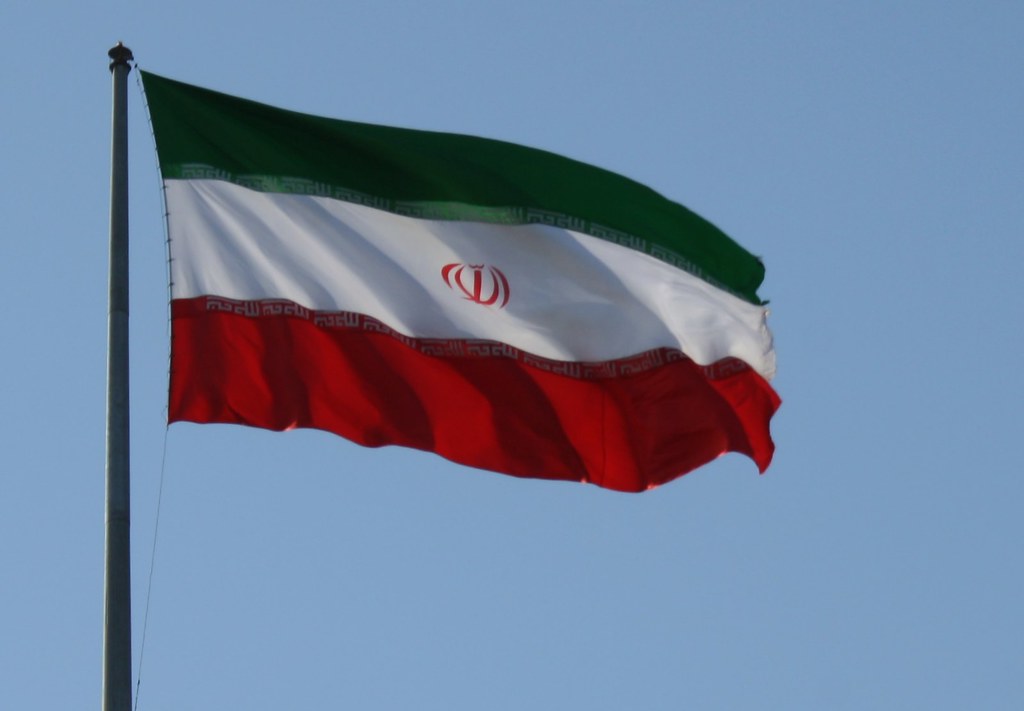
In Iran, leaders lie with such ease and frequency that it would be almost impressive if it weren’t so devastating. And the most famous lie that forever changed Iranian history is one which most Americans have never heard.

It started in 1978 when a movie titled “Gavaznha”  (“The Deer”) was screened at the Cinema Rex in the southwestern Iranian city of Abadan. At 8:21 p.m., four men poured airplane fuel around the theater, barricaded the doors and set the building on fire. The screams of moviegoers could be heard by helpless firefighters outside, who couldn’t get close enough to rescue them.

It’s estimated that between 377 and 420 people were killed inside the theater. It was one of the worst terrorist attacks in history before 9/11.

Before the burned bodies were removed, the lies began: Word spread that the suspects belonged to the SAVAK, the Shah’s secret police. The public uproar was unforgiving and millions of angry Iranians blamed the Shah and condemned the Pahlavi dynasty.

That lie, spread by anti-Shah revolutionaries, lit the spark that ousted the Shah from power 41 years ago.

Today, we know the truth: The perpetrators weren’t aligned with the Shah but with fanatic revolutionary leader Ayatollah Ruhollah Khomeini. Fanatics had deemed the film immoral and decadent. They “punished” sinful moviegoers and managed to blame the Shah for the horror.

In Iran, leaders lie with such ease and frequency that it would be almost impressive if it weren’t so devastating.

Nearly 20 years after the fire, when one Iranian newspaper, Sobhe Emruz, hinted at who really was to blame, the regime immediately shut it down.

For four decades, blatant lying became standard practice for the regime.

And then, on Jan. 8, a Ukrainian passenger jet was shot down minutes after it left Tehran airport, killing all 176 people onboard. Iran’s first official action, before the bodies were even removed? It lied.

It wasn’t us, the regime insisted.

But the world quickly learned that Iran was indeed to blame. The regime’s next response? It’s true, we shot down the plane, but it was really the U.S.’ fault.

Iranian Foreign Minister Mohammad Javad Zarif tweeted, “Human error at time of crisis caused by U.S. adventurism led to disaster,” referring to the U.S. targeted killing of Quds Force Commander Qassem Soleimani on Jan. 3.

But millions of Iranians weren’t fooled. On the heels of the November 2019 protests, in which more than 1,500 people were killed, angry Iranians took to the streets to condemn the loss of the passengers and crew, many of whom were Iranian students and Iranian-Canadians.

It seems that Iranians now, more than ever, have had it with the “damn lies.”

Iranian students are now waving signs that read, “You’ve Killed Our Geniuses and Replaced them with Mullahs.” You can’t get more honest than that.

But there’s more: Some in Iran finally are admitting to the lies.

Two Iranian journalists recently resigned from a state-owned media television channel. Before her Instagram post was deleted, one anchor, Gelare Jabbari, had a message for millions of Iranian viewers: “Forgive me for the 13 years I told you lies.”

That’s the thing about lies. Sooner or later, they catch up with you.

A revolution that began with a lie turned into 41 years of tyranny. But something tells me that this time, between butchering protestors in the fall and downing a passenger jet in the winter, the regime, despite all its efforts to survive, may finally have set itself on fire.


Tabby Refael is a Los Angeles-based writer and speaker. 

Liar, Liar, Revolution on Fire  Read More »