fbpx

January 21, 2020

Netanyahu Pledges to Apply Israeli Sovereignty to All West Bank Settlements

Israeli Prime Minister Benjamin Netanyahu promised on Jan. 21 to apply Israeli sovereignty to every settlement in the West Bank.

Speaking to Likud activists in the Knesset, Netanyahu said, “We will apply Israeli law to all the settlements, as a whole: Gush Etzion, Ma’aleh Adumim, Ariel and all other communities without exception.”

Earlier in the day, Blue and White Party leader Benny Gantz vowed to extend Israeli sovereignty to the Jordan Valley and work with the international community on the matter if he’s elected prime minister.

“Past governments that have discussed returning this land have made a grievous security and strategic mistake,” Gantz said during a visit to the Jordan Valley. “We see this land as an integral part of the State of Israel.”

He also called the Jordan Valley “Israel’s eastern protective wall.”

Netanyahu challenged Gantz on Twitter to support a measure in the Knesset applying sovereignty to the Jordan Valley. Gantz tweeted that Netanyahu could apply such sovereignty with Cabinet officials without approval from the Knesset.

Israel’s elections will be held on March 2.

Netanyahu Pledges to Apply Israeli Sovereignty to All West Bank Settlements Read More »

‘Jew Park’ Sign Found Outside Massachusetts Bagel Shop

The owner of a bagel shop in Dartmouth, Mass., found a sign outside his shop that read “A Jew Park” on the morning of Jan. 15.

The Standard-Times reported that the sign was originally a parking sign for the nearby A & A Jewelers store but was cut in half so it reads as “A Jew Park.” The sign was taped to a lamppost in front of New York Bagel.

The owner, Steven Ginsberg, told WLNE-TV, “The way the sign was done, it almost looked like someone cut it with an X-acto knife. It wasn’t like the wind broke it. The wind couldn’t have pushed it over to my parking lot, stood it up on the light post and taped it to the light post.”

Ginsberg, who is Jewish, shared a photo of the sign on his Facebook page and wrote, “I have lived in this area for over 30 years and am saddened and disgusted that this type of anti-Semitic behavior is still part of our everyday life. Please join me in expunging all the hate people have for different races, religions, and other ethnic cultural groups.”

https://www.facebook.com/photo.php?fbid=10221570820488532&set=a.2270979262636&type=3&theater

The police are investigating the matter as a possible hate crime.

Anti-Defamation League New England Associate Regional Director Melissa Kraus said in a statement to the Journal, “We are disturbed to learn of a reported incident in Dartmouth, MA, which appears to be an anti-Semitic message targeting a Jewish-owned business. We are grateful to law enforcement for treating this incident with the seriousness it deserves. We want the community to know that ADL New England stands with them and is available as a resource.”

‘Jew Park’ Sign Found Outside Massachusetts Bagel Shop Read More »

Holocaust Survivor Celebrates Bar Mitzvah

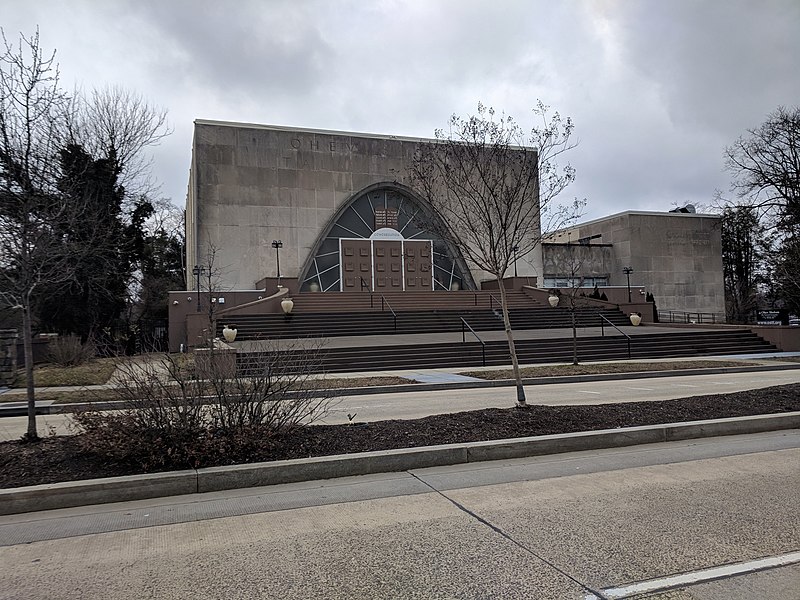
A 92-year-old Holocaust survivor had an official bar mitzvah at a synagogue in Washington, D.C., on Jan. 18 since he wasn’t able to have one during the Holocaust.

Washington Post columnist John Kelly wrote that Gerry Steinkeller was 13 years old when he was residing in Nazi-occupied Poland. Steinkeller and his family were sent to Polish ghettos and then separated into differing concentration camps. Steinkeller was sent to four concentration camps, with the last one being the Flossenburg camp that was on the German border with then-Czechoslovakia.

Steinkeller’s bar mitzvah was held at Ohev Sholom — The National Synagogue, the oldest Modern Orthodox synagogue in Washington. After the service was over, Steinkeller told Kelly he was “overwhelmed.”

There have been other recent examples of Holocaust survivors having a bar mitzvah that they were unable to get at the age of 13 during the Holocaust. In November, 91-year-old Andor Stern, who is the sole Brazilian-born Holocaust survivor, celebrated his bar mitzvah in Sao Paulo. In March 2018, Samuel Heider, then 93 years old, had his bar mitzvah in Dayton, Ohio. Heider’s parents and siblings died in the Holocaust.

Holocaust Survivor Celebrates Bar Mitzvah Read More »

Nuart Retrospective Presents the War Documentaries of Bernard-Henri Lévy

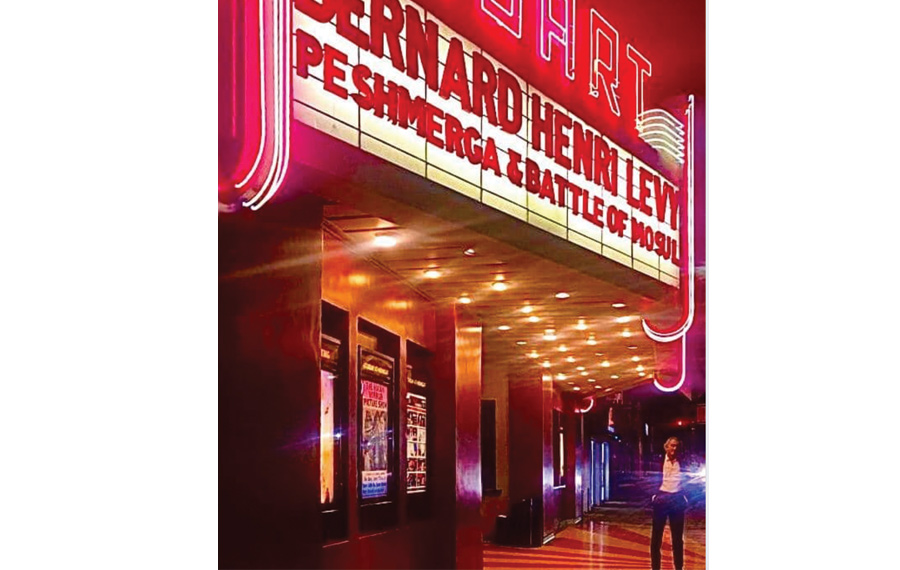
Bernard-Henri Lévy, the world-renowned author, philosopher, political activist and speaker, also is a filmmaker with a unique specialty. He makes cinema verité documentaries from the front lines of the world’s most dangerous conflict zones, depicting war in all its brutality to highlight the plight of the oppressed. 

“Bosna!” (1994) focuses on the Balkan wars; “The Oath of Tobruk” (2102) is about the fall of Muammar Gaddafi; and “Peshmerga” (2016) and “The Battle of Mosul” (2017) follow the Kurds’ war against ISIS and their fight for independence.

On Jan. 17, the Paris-based Lévy appeared at the Nuart Theatre in West Los Angeles to introduce and discuss his two most recent films (“Bosna!” and “Tobruk” played the following day). He shared his experiences and insights in a post-screening Q&A session. 

“Peshmerga,” which means “those who stand in the face of death,” are the aptly named Kurdish fighting force embroiled in ongoing conflict with Jihadi fundamentalists over Kurdish land in Iraq, Iran, Turkey and Syria. In 2015, Lévy spent five months embedded with the Peshmerga, capturing raw and bloody footage. “How ugly and dirty and foul war is,” he says in his narration, underscoring the horror of what we have seen.

Lévy talked about one of the film’s most shocking incidents involving a young Kurdish general who was killed by a sniper’s bullet. “We had spent three days together and I felt that there was something true between us. He said that it was more important that his men were protected than himself. As we said goodbye, I said, ‘God bless you.’ I had this premonition, a sudden feeling that something terrible would happen.”

One of Lévy’s three cameramen, a Kurd named Ala Tayyeb, was nearly killed, escaping with a serious shoulder injury. The filmmaker explained that the documentary’s insurance costs were so prohibitive that it would not have been possible unless he bore the brunt of the cost. “I decided not to be insured myself and offered my private insurance to my team, which was a good call, [considering] Tayyeb was wounded,” he said. “I did it with my heart because he took the risk for me and this movie.” 

He noted that Tayyeb was angry when he found out Lévy was going to make “The Battle of Mosul” without him, and demanded to be on the crew. “He said, ‘I still have my left shoulder.’ He shot some of it with a GoPro.”

Lévy, a seasoned war correspondent who began his career in the 1970s covering the conflict between Bangladesh and Pakistan, recalled the battle in “Mosul” where the Peshmerga were awaiting promised American air support that never came. “It was one of the worst experiences of my life being stuck there in the middle of nowhere with no communication, just the guy on a walkie-talkie asking for air support,” he said. There were many Kurdish casualties as a result. 

“The movies I did, each of the four times I had the feeling that if I did not do it, nobody else would do it, and I had the means to do it.” — Bernard-Henri Lévy

Not surprisingly, he had something to say about the withdrawal of U.S. troops from the region and cessation of President Donald Trump’ administration’s support for the Kurds. 

“The behavior of Trump, the betrayal of the Kurds, is inconceivable to someone like me who loves America,” Lévy said. “We French know we would not have been born without young American soldiers arriving on the beach in Normandy. To have the same country betray its own creed and decide to have the blood of its friends on its hands is a source of great sadness, but not despair because I hope this will be repaired.” 

Now 71, Lévy hopes that he lives to see an independent Kurdistan. “Iraq has all the attributes of a collapsed, failed state. Kurdistan is not a state but it has all the characteristics of a state,” he said. “The Kurds who deserve it so much and already fulfill all of the requirements don’t get to have it. It’s so unfair.”

The author of “The Genius of Judaism” (2016) also discussed being a Jew working in an environment traditionally hostile to the Tribe. “To be a Jew means to be part of a community and more importantly to address the rest of humanity, even those who don’t share your beliefs and want to destroy you,” Lévy said.

He related an incident while making “Tobruk” in which he met with al-Qaeda leaders. “I asked, ‘Do you know that I’m a Jew?’ They laughed and said, ‘Of course we know. There’s a $6 million ransom on your head.’ If I hadn’t been their host, they probably would have killed me.” 

When Levy explained that he was there because he believed that people had the right to embrace democracy, he “saw a change in their eyes, that a French Jew was extending a hand to all the enemies of the dictators in the world [without ulterior motive]. It was a real achievement for me,” he said.

Asked if he’s working on something new, Lévy replied that he never plans his films. “I have a lot of other things to do — books to write, drawings to collect, a family that I love. The movies I did, each of the four times I had the feeling that if I did not do it, nobody else would do it, and I had the means to do it. Maybe in a few months I will be back on duty,” he said. “You never know.”

Nuart Retrospective Presents the War Documentaries of Bernard-Henri Lévy Read More »

Commemorating the Holocaust is an Obligation

Israeli Jews — like the majority of American Jews — say that remembering the Holocaust is essential to their Jewish identity (73% in the U.S.; 65% in Israel). Those surveyed also say that “to be a good Jew” one must remember the Holocaust (87% agree and strongly agree).

This week, Israelis were fed a large dose of remembrance as foreign leaders, including Vice President Mike Pence, the presidents of Russia and France, Britain’s Prince Charles and others flocked to the country for the fifth World Holocaust Forum (WHF), marking the 75th anniversary of the liberation of Auschwitz.

It is a strange occasion, part political event, part commemoration, a mega international event worthy of a pause. A right-wing Israeli government hosted a large number of foreign dignitaries, not because it agreed to pull out of occupied territories, not because of a breakthrough in peace negotiations, not to honor the death of a great leader of the left.

When the opposition alleges that Israeli Prime Minister Benjamin Netanyahu ruined Israel’s standing in the world, dozens of convoys making their way from Ben Gurion Airport to Jerusalem will suggest otherwise. And if you think this is a publicity stunt — finding an excuse to have an international summit to lobby for Netanyahu’s reelection — I’d remind you that events such as the Sharm El Sheikh Summit of 1996 were similarly staged, in that case to support the reelection of Shimon Peres (he ended up losing to Netanyahu).

For Israel, the Holocaust is a living memory, a unifying symbol, a political tool and, most of all, a constant reminder of Jewish fragility and Israel’s need for robustness. On Jan. 20, when foreign leaders began their long journey to the Middle East, Israel’s finance minister decided to add 2 billion NIS (New Israel Shekel; about $580 million) to the defense budget. The Israel Defense Forces (IDF) must purchase more rockets amid growing threats and, budgetary hurdles aside (Israel has no coalition that can pass a budget for over a year, and the deficit is growing), such urgent needs must be met. 

Israel is internationally recognized as the body that carries on the legacy of the perished communities and individuals.

In the minds of Israelis, these two events — budget increase and Holocaust commemoration — clearly are connected. There’s no need for the finance minister to mince the words, no need for the press release to mention a link. Remembrance ceremonies are not about the past as much as they are about the present. 

Netanyahu said before the summit that he would speak to visiting dignitaries about Iran. The past will serve as background to this pressing discussion. And of course, if this were up to other Jewish leaders — not the leaders of Israel but the leaders of non-Israeli communities of Jews — the agenda of the WHF might have been slightly different. These leaders might have emphasized anti-Semitism in France and Britain more than the threat of Iran. They might have conveyed their strong disapproval of President Donald Trump’s administration’s immigration policy (and also urged a return to former President Barack Obama’s agreement with Iran, rather than policies that could lead to confrontation).

What this summit proves from the perspective of the Jewish people, apart from the fact that Israel is hardly isolated, is that Israel stands uncontested at the center of the Jewish world. Auschwitz is far away, Europe is far away, the Holocaust was taking place when the Jewish state did not yet exist. And yet, when the time came to have an international commemoration of the liberation of a Nazi concentration camp that was on Polish soil by Soviet troops, the ceremony took place in Israel. Israel is internationally recognized as the body that carries on the legacy of the perished communities and individuals. 

This isn’t a trivial matter. It burdens Israel with a task it must handle with care and consideration, as the Holocaust is a central feature in the identity of all Jews, including those who didn’t choose Israel as their home or as their representative. It burdens Israel with the need to consider the fact that the Holocaust conveys different and, at times, contradictory lessons to different communities of Jews. In the international psyche, Israel is already the representative of the welfare and the legacy of all Jews. But such recognition must come with the burden of having to earn, as much as is realistically possible, the confidence of all Jews.

Commemorating the Holocaust is an Obligation Read More »

The Creator of the Rehab Center for Youth at Risk

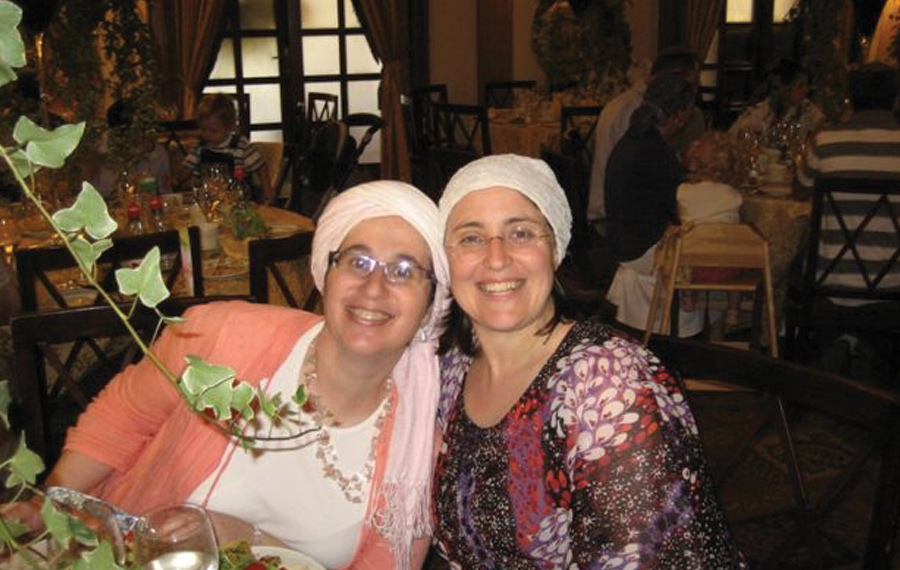
Sarah Malka Eisen’s story as the director of Beit Daniella is one of tragedy and friendship. Beit Daniella is a rehabilitative day center for youth in Tsur Hadassah, a picturesque pastoral village in the Judean Hills. It was established in memory of Daniella Pardes, a 14-year old who took her own life on Dec. 11, 2017.

Daniella was the daughter of  Dr. Hadassa Jakobovits Pardes, and Pardes is Eisen’s best friend. They met over 40 years ago in seventh grade in Toronto. They studied in Jerusalem together during their gap year and attended the University of Toronto together. Eisen introduced Pardes to her husband. 

Eisen was overjoyed when, at long last, her best friend moved to Israel from Belgium 10 years ago. In Israel, the families lived just 30 minutes apart. 

“That was exciting for us because we felt like we really had family here,”  Eisen said, given that her own extended family lives in the U.S. and Canada. “When Hadassa moved, finally my kids had cousins,” she said. “So when Daniella took her own life, it was a total earthquake. It wasn’t just my best friend’s daughter, it was my son’s cousin.” 

Daniella had an eating disorder. She was hospitalized for three months. When she was discharged, she was not healthy enough to return to her school. But she needed a framework, structure, support. While she was going to an outpatient clinic a few times a week, Eisen said “that wasn’t sufficient for her. It wasn’t holistic. She had no skills whatsoever to deal with what was going on.”  

“I’m an activist. For me it’s a very natural thing to see a problem and figure out what we’re going to do to fix it.”  — Sarah Malka Eisen

For so many struggling with mental illness in Israel, there is a glaring gap in services. The hospitals provide acute care. In cases of anorexia, they get patients’ weight up. In cases of depression, they work to adjust the medications. But then what? 

“They have whatever brought them into the hospital, but the hospital is also itself a trauma. They are cut off from their friends, their school, their community … and then they have to go back into society,” Eisen said. After Daniella’s death, it became very clear, Eisen said, “there is no ramp.”

And so, during Daniella’s shivah, the idea for Beit Daniella was born. 

“I’m an activist,” Eisen said. “For me it’s a very natural thing to see a problem and figure out what we’re going to do to fix it.” 

Today, Beit Daniella has a robust multidisciplinary team spanning animal therapy to Dialectical Behavioral Therapy. The center, housed within the Havat Harei Yehuda horse stables is the type of place that would have helped Daniella, Eisen said.  

“This is about empowerment; strengthening the healthy part of you,” Eisen said of Beit Daniella. “Our dream is really to make sure that this facility is available all over the country. That there are day centers where kids can go and transition back into their schools, communities and families in a healthy way.”

The Creator of the Rehab Center for Youth at Risk Read More »

De Toledo Students Learn American Sign Language

At de Toledo High School, most of the teachers encourage their students to use their voices to express themselves. But things are a bit different in Solange “Shula” Dichter’s classroom. The sign on her door reads: “Keep Voice Out of This Classroom.” That’s because Dichter, who is profoundly deaf, teaches American Sign Language, and according to her, “ASL is a visual language and using voice is inappropriate. Students receive information through eyes, not ears.”

Dichter, a native of Morocco who lived in Israel for 22 years before moving to the United States, has been teaching ASL at the West Hills-area Jewish high school for the past 12 years. The ASL program began several years earlier, however, when the late philanthropists Shirley and Aaron Kotler, who supported a number of Los Angeles-area Jewish day schools, made a major gift to the school (then called New Community Jewish High School) in memory of Shirley’s brother, Samuel Intrator, who was deaf. It’s why the program’s official name is SAMI, for Samuel and Miriam Intrator.

An elective subject at de Toledo, students can begin studying ASL as early as freshman year. This year, Dichter has 27 students in four classes. On a recent morning, the students in ASL 3, all juniors and seniors, were making videos sharing their bucket lists. On the walls were colorful, handmade posters of people including Oscar-winning actress Marlee Matlin and co-founder of the National Theatre of the Deaf Bernard Bragg, both deaf, and Thomas Hopkins Gallaudet, who co-founded the first school for deaf children in the United States.

The class began with Dichter reviewing the names of continents and countries with the students. Even with fairly textbook material like this, Dichter is very expressive when she signs.

“The biggest challenge is to consistently encourage students to use facial expression and to consistently encourage students to communicate in the target language (ASL) rather than talking with voice,” Dichter wrote in an email exchange with the Journal. “Facial expression in ASL is like voice inflection in spoken languages. Signing without facial expression is like speaking in [a] monotonous tone,” she added.

The students also watched a video of two young men using ASL. They then broke up and practiced their bucket list presentations on their own. Dichter made the rounds, helping each student make refinements with ASL’s five parameters: hand shape, palm orientation, location, movement and facial expression. 

A change in just one of these can mean an entirely different word as Dichter explained using the words “please” and “sorry,” which are signed identically except for hand shape.

Dichter is well liked and respected by her students. She has a warm personality and is passionate about deaf culture and ASL, which she learned when she first moved to the United States in 1987. (Every country has a unique sign language, including its own finger spelling system.) 

ASL is not confined to the classroom at de Toledo. It is a very visible part of the school culture. Students often interpret at school functions, including the twice- weekly town hall gatherings, as well as at special events such as the annual gala. Even when they are not interpreting on a public stage, they interpret for Dichter.

“Watching my students go beyond passion and dedicate themselves to learning a language that creates a more inclusive society is profoundly meaningful. It really inspires me to see that ASL has become an integral part of students’ lives.” — Solange “Shula” Dichter

Sydney Greenspun, 17, a senior who began her ASL studies as a sophomore, is among the students who regularly interpret. For her, learning ASL has been transformative. 

“Once I started ASL, I was more involved and aware of the world around me,” Greenspun, who is also president of the school’s deaf culture club,” told the Journal. “It’s something I am passionate about and something I could find, not my identity in, but find a way to do something that makes me happy and I know I can use to impact others.”

Greenspun has had multiple occasions to use ASL outside of school, none of them planned. Most memorable was signing with a girl a few years younger than herself at a party. “She walked by and I began signing to her,” Greenspun recalled. “She got so excited. She hadn’t met someone outside her family circle who signed.”

ASL has become such an important part of Greenspun’s life that it informed her college decision. She does not plan to become a professional interpreter, although half a dozen de Toledo graduates have gone this route. But she considered only schools that offer ASL.

“Watching my students go beyond passion and dedicate themselves to learning a language that creates a more inclusive society is profoundly meaningful,” Dichter wrote. “It really inspires me to see that ASL has become an integral part of students’ lives.”

 “The mission of de Toledo High School is to raise the next generation of Jewish leaders,” head of school Mark Shpall, said. “One of the underserved communities in our nation are those with profound hearing loss. Our students, through our ASL program, are able to learn the skills necessary to help bridge the communication gap between the hearing and the deaf world. They not only learn these communication skills but learn about deaf culture, which helps teach empathy.”

De Toledo Students Learn American Sign Language Read More »

Efrat Roman’s Invention to Help Those Battling Breast Cancer

Israeli breast cancer survivor Efrat Roman has found a way to give back to those who are struggling with the disease with her new invention: the EZbra.

When Roman, 52, was diagnosed with breast cancer in 2009, she faced a number of obstacles during her recovery period that she said only the EZbra could solve. The disposable bra absorbs 10 times its weight, offers patients customizable compression, can be taken on and off easily without assistance, and can be worn for 24 hours. With the bra, patients don’t have to constantly change their gauze and dressings post-surgery.

The Jewish Journal spoke with Roman about her breast cancer journey, and how she came to create the EZbra. 

Jewish Journal: How did you react to your breast cancer diagnosis?

Efrat Roman: I guess like anyone else does. With a mixture of fear, hope and anxiety. 

JJ: Does breast cancer run in your family?

ER: Yes. I am a BRCA1 gene mutation carrier. My grandma and all her sisters had breast and/or ovarian cancer and so did my mother. We were all diagnosed between the ages 38 to 42. 

JJ: Are you now breast cancer-free? 

ER: I really wish I were. Once diagnosed, you are always in remission.

JJ: Why did you decide to have a mastectomy? 

ER: Because I had three triple-negative aggressive tumors on one breast, it was clear it had to be removed. And since I am a gene mutation carrier and I was going through a very complicated divorce process at the same time, it was clear I needed to survive for my kids. Therefore, I had to do everything that would decrease the risk of the cancer recurring. 

JJ: How was the recovery period? 

ER: I had a double mastectomy with an immediate reconstruction with implants. I woke up covered with gauze and huge tape that created a severe allergy, so it was replaced with an ACE bandage that was wrapped around my torso. There was no chance I could replace it by myself and I needed my mom, a breast cancer survivor herself, to help me bathe and change dressings daily. 

I had two surgical drains coming out of my armpits and when I was asking what I am supposed to do with these bulbs just hanging there, I was offered to pin them to my clothes. When I was released from the hospital, I was told to wear a compression bra that cut through my skin. The bra got blood and ooze stains that could not be removed, so I constantly felt filthy and disgusted. 

JJ: Is that when you decided to invent EZbra? 

ER: I was certain that out there, somewhere in the world, there must be a post-op disposable bra, which is a dressing. It seemed so obvious to me, just like you’d expect to have a round dressing that is designed to meet the shape of the eye socket when you go to an ophthalmologist. So after searching everywhere for it and not finding it, I created a very simple prototype and went to have a patent search. Once I realized there was nothing like it, I understood it was my mission. 

JJ: What was the process for inventing it? 

ER: After creating the first simple prototype, I met Yael, who is EZbra’s CTO (chief technology officer) and developer. For a few years, we were trying all kinds of designs, searching for the right materials, researching technologies, [and] interviewing hundreds of survivors, surgeons, nurses and wound care experts. [We were] creating prototypes and then trialing them with all these professionals and patients, going back for adjustments and finally, coming up with the device that meets all the post-op requirements of patients and physicians. 

JJ: How many have you sold? Are you selling them online, in stores and at hospitals?

ER: As we are just making our first steps into the market, we just started online sales at our website at ezbra.net. Soon we will start working with distributors that will get it into hospitals, private practices and post-surgical supplies stores. 

JJ: What kind of feedback have you received from customers?

ER: Unbelievable! It is like they have heard my pitch. Women are praising the exact features I was insisting they should have. They love the sterility, the ease of application, the disposable dressing that can just go into the trash and be replaced with a fresh and hygienic one, the independence it gives them to do it on their own and the dignity it allows them through recovery. I am crying on a weekly basis from reading and hearing the patients’ feedback. 

JJ: What do you hope people get out of using EZbra?

ER: I hope EZbra will give the women using it some dignity and control over their lives at this very sensitive and challenging phase. I hope it will make them feel more feminine and whole and allow them some independent time to process and make acquaintance with their new bodies. I hope it will make this traumatic journey a bit more sensible and respectful. 

Efrat Roman’s Invention to Help Those Battling Breast Cancer Read More »

Campus Anti-Semitism Made Me a Zionist

As an undergraduate at the New School, a very liberal college, I would roll my eyes whenever my dad talked about Israel and its importance. He is the son of Holocaust survivors, so it’s no wonder why he saw Israel as necessary for the survival of the Jewish people. On the other hand, I was content being a white New York City girl with Jewish heritage. When I went on a Birthright trip in 2014 (at the behest of my mom), I was incredibly skeptical, especially when our Israeli tour guide told us he identified as a Zionist. That was a loaded term I could not imagine claiming.

Now, I can.

Since 2017, when Jewish lesbians were asked to leave the annual Chicago Dyke March because their Pride flags featuring the Star of David were deemed “Zionist,” I saw the veiled anti-Semitism bubbling up on the left. Why were American Jews being asked to leave a Pride event because of the actions of a country of which they’re not citizens? I couldn’t imagine anyone kicking out Muslims if their Pride flag featured the crescent moon symbol, which is on the flags on many countries criticized for human-rights abuses, including Turkey, Libya and Pakistan. I had enough common sense to recognize not all Muslims are connected to those nations or blindly endorse the politics of those countries. Likewise, I couldn’t see the organization kicking out Christians with a cross on their Pride flag, despite the Christian imagery on the flags of nations such as the UK, Norway, Sweden and Finland.

So why was there a double standard for Jews?

This past fall, I started law school at  City University of New York (CUNY) School of Law. I knew CUNY’s undergraduate institutions were a collage of leftist anti-Semitism. But I figured graduate school, especially law school, would be different. People would be older and perhaps more interested in engaging with differing points of view. I could not have been more wrong.

Maybe it was my fault for not doing enough research into this issue. If I had, I would have found out much earlier about how one of the law clinics here was in hot water for allegedly partnering with a Palestinian rights group with ties to terrorist organizations. I admit that coming here as a Jew who doesn’t hate Israel was likely a mistake — but one I didn’t discover until I was already in the brunt of it.

The irony of this type of divisive ‘with us or against us’ activism is it often has the opposite of the desired result.

Before the semester began, I spoke with the president of my campus’ Jewish Law Student Association (JLSA) about my worries regarding leftist anti-Semitism after I discovered my law school had a Students for Justice in Palestine (SJP) branch. He told me that as far as he knew, it wasn’t really active on campus. I breathed a sigh of relief — only to feel the same fears again a few weeks later.

The first thing that struck a nerve was discovering one of my classmates has an entire Canary Mission dossier online about her (Canary Mission is a website that states it “documents people and groups that promote hatred of the USA, Israel and Jews on North American campuses”). I know Canary Mission is controversial but seeing videos of this person violently calling for the destruction of the world’s only Jewish nation gave me pause.  I was struck by how full of hate she was in her protests, even interrupting a ceremony commemorating 70 years since the liberation Auschwitz. I did more research into her activism and saw she founded a pro-Palestine organization that explicitly discourages talking with Zionists.

So much for productive dialogue.

The irony of this type of divisive “with us or against us” activism is it often has the opposite of the desired result. This person’s radical ideologies did not make me more sympathetic to her cause. On the contrary, for the first time in my life, it inspired me to claim the term “Zionist” for myself. Unfortunately, sharing a classroom with this individual was not the only time I was made to feel uncomfortable on campus.

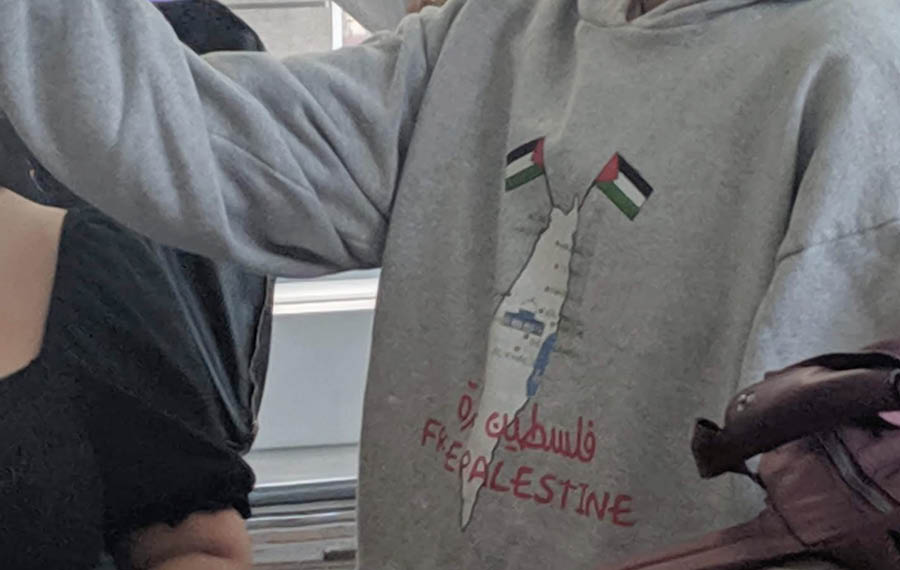
At the beginning of the semester, there was a fair for all the on-campus student groups. I saw SJP had a table, which many people visited. I noticed someone wearing a hoodie that in my eyes, promoted the ethnic cleansing of Jews in Israel. It featured a map of Israel with the words “Free Palestine,” and Palestinian flags. On top of being a divisive message, the design was just really ugly. I snapped a picture not thinking I caused any harm. There were no faces or identifying information in the image. I posted it to my Twitter and to r/baddesigns on Reddit. 

Little did I know that my fellow students, including members of the JLSA, would look me up online, take screenshots and send my posts to the Muslim and Palestinian students at my school.

Being in this environment — where two Palestinian women (including the one with the Canary Mission page) but no Jews were elected to the student government — I found the only way to vent was to engage with like-minded friends I made on the internet. I didn’t feel represented or supported among the student body at my school. This is especially true in a world where Jews on Western college campuses are being pushed out of the community, including from student governments. I made my Twitter private. However, I stupidly allowed two girls from the JLSA to follow me. They took other screenshots — ones that didn’t involve the hoodie or even anything to do with school — to paint a negative picture about me. This tweet, which was about Twitter trolls, was used as justification for the Muslim students to feel I posed a threat to them.

“To me, being Zionist is not a blind endorsement of all Israeli policies.”

Because I mentioned the Israel Defense Forces in a borderline positive way, I apparently was a danger. Never mind that my tweet was hyperbolic and sarcastic. They also sent around my r/lawschools Reddit post about transferring because I felt like I didn’t fit in ideologically. I’m not sure why it upsets them that I wanted to transfer, but that post was brought up to me among the complaints.

At this point, I had gone to Student Affairs and spoken with the Dean of Students. Because people can’t transfer in the middle of the first year of law school, there was little they could do. I felt my fears weren’t taken seriously, and I would have to wait for something explicit to happen (like having a swastika drawn on my locker or being called a “k*ke”) before they would take action. But that’s what’s challenging about leftist anti-Semitism: It is nowhere near as blatant as right-wing anti-Semitism.

The next instance involved an SJP bake sale. Two weeks in a row, SJP set up a table at the bottom of the main escalators. Frustrated and made to feel like an outsider yet again, I took another picture of the table. I did not post it anywhere and again, it included no faces or identifying information. Yet, this did not stop one of the Palestinian women at the table — and one of my teaching assistants (TA) — from waiting for me after class to confront me. I was on my way to grab lunch with my friend when she pulled me aside and asked to speak with me privately.  

“What’s your issue with us?” she began. The 10- to 15-minute conversation is mostly a blur now, as it was incredibly upsetting. I do remember trying to explain how I was just documenting my experiences of things that made me uncomfortable on campus. “Why do you have an issue with us doing a bake sale to raise money for an event?” she wanted to know. I asked her questions in response: Did she think Zionism was inherently anti-Palestinian? She did. Would SJP protest if I were to invite an Israeli speaker to campus? They would. But unsurprisingly, she got angry with me for assuming things about her pro-Palestine stance.

“You don’t know if I’m pro-one state or two state or what,” she exclaimed. Never mind the hypocrisy of her assuming what Zionism meant to me. “You should have known what you were getting into by coming here,” she said, implying that my school has an official stance on the Israeli-Palestine conflict (it doesn’t) and I’m conservative (I’m really, really not). I told her to prepare for the “very Jewy world of lawyering.”

“I’m prepared,” she replied. “I have Jewish friends.”

I can only assume she meant the tiny fraction of self-identified anti-Zionist Jews. Still, I couldn’t help but think how inappropriate that line was considering how people on the left won’t tokenize other marginalized groups in such a way. It’s taboo and a faux pas to say, “I have black friends” or “I have gay friends” when talking about issues of racial justice and LGBTQ rights, respectively. So why is it acceptable to tokenize Jews in the same way?

This TA canceled her office hours that afternoon to accompany a whole group of SJPers to complain about me to Student Affairs. I was called in to Student Affairs the next day.

Apparently, SJP believed I was “stalking” or “monitoring” it by taking pictures. They thought the fact I had to go to my locker on the third floor and come back down to the first floor to pass the bake sale again was me sneakily trying to intimidate them. (It wasn’t. I just needed my laptop from my locker. And let’s ignore the whole “sneaky Jew” trope thrown in there.) I was made to promise not to take anymore pictures on this public university campus.

The next week, SJP again held a bake sale. Lest I be accused of stalking them, I felt compelled to take the back staircase the whole day to avoid them. That Friday, on the eve of the 81st anniversary of Kristallnacht, SJP held its pro-Palestine event featuring the student on Canary Mission as well as two outside speakers. As far as I’m aware, the event was a great success. Numerous people in my class attended in support.

Because of all these issues, I started to see the school counselor. When explaining the situation to her and why it matters to me, she kept saying “the Jewish faith” this and “the Jewish faith” that. I reminded her that, actually, I am agnostic, and this upsets me because it has to do with my ethnicity. “That’s debatable,” she said.

I was in shock. I was about to storm out, but she persuaded me to stay. Her reasoning for her comment was that “not all Jews identify as Jewish ethnically.” That doesn’t make my ethnicity “debatable.” I never went to her office again.

As an undergrad, I kept my mouth shut when SJP defaced my school paper article about being queer and Jewish. I never spoke about being Jewish on that campus again. And when, a year after I graduated, activist and former Women’s March organizer Linda Sarsour was invited to speak on campus at a panel about anti-Semitism, I was outraged and glad this happened after I had graduated. I couldn’t have imagined at the time that this vile form of anti-Semitism would be something I would continue to witness and struggle with.

Lately, I’ve discovered the term “Zionism” is much like the term “feminism,” insofar as it’s divisive and has different meanings to different people. Ask a Men’s Rights activist what he thinks feminism means and you’ll likely be told it’s about “female supremacy” as opposed to what it actually is: gender equality. Ask most Western social justice activists what Zionism means, you’ll likely be told it means “Jewish supremacy and the oppression of Palestinians.” In fact, it simply means the right for Jewish self-determination in their indigenous, ancestral homeland.

Since I embraced the divisive term of “feminist” years ago, why not embrace the term “Zionist” as well? Perhaps it will make people think twice about the actual meaning of the word.

To me being Zionist is not a blind endorsement of all Israeli policies. You can be a Zionist and still support a Palestinian homeland and an end to the West Bank settlements. I sure do. You can still be a Zionist and be critical of Israel’s policies, ranging from treatment of Palestinians to views of who “counts” as Jewish. 

“Being a Zionist does not necessarily mean you hate Palestinians.”

Just as there are many sects of feminism, there are many sects of Zionism. Being a feminist does not necessarily mean you hate men. Being a Zionist does not necessarily mean you hate Palestinians. 

Before this experience, I never wanted to visibly identify as Jewish. I was low key, thankful for my red hair and green eyes, making me look more Irish or Scottish than stereotypically Jewish. Growing up, I never would allow my dad to give me any Star of David jewelry. But this experience compelled me to purchase a small, rose-gold Star of David necklace, which I wear to school most days. During World War II, Jews were forced to wear stars. In modern-day America, Jews are told they can’t participate in LGBTQ Pride events unless they take off their stars. This weird hokey-pokey game is getting old, and I am no longer ashamed to let the world know I am a Jew.

My good friend, Israeli speaker Hen Mazzig, once told me, “[fighting anti-Semitism] is a cause bigger than us. It’s our people and a just cause and that’s why we face this hate. But it is always the just cause that is the hardest to stand for.” These words ring loudly in my ears as I walk into my law school each day.

Combating anti-Semitism was never a popular cause — not during World War II and definitely not now. But if history has shown us anything, it’s that the Jewish people are resilient. Whether or not I transfer schools is yet to be seen. But no matter what, I will continue to hold my head proud as a Jewish (and yes, Zionist) feminist woman.


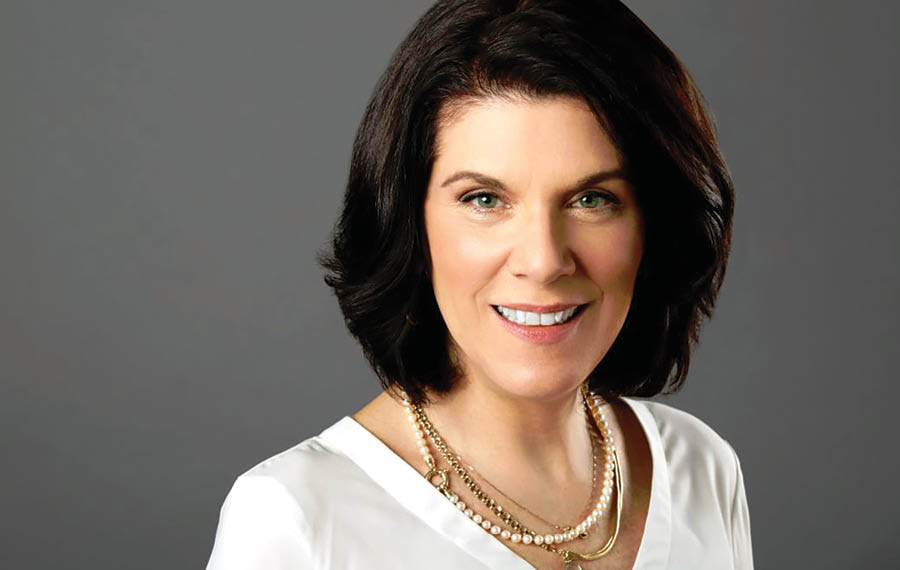
Rafaella Gunz is a  journalist currently studying law in New York City.

Campus Anti-Semitism Made Me a Zionist Read More »

Israeli Startup Helps Farmers Cope with Climate Change

Rural communities in Africa rely on agriculture as one of their largest industries. However, the impacts of climate change have severely affected the crop yield in recent years. OKO, an Israeli startup, is working to make sure that these already underprivileged farmers do not suffer economically from this problem

Video link OKO Farming Insurance:

Farmers in African countries are strongly dependent on the success of their businesses to make ends meet, but the effects of climate change, such as drought and floods, present immense challenges. Countries in Eastern Africa like Mozambique and Zimbabwe were seriously affected by two cyclones in 2019, within just weeks of each other. Cyclones Idai and Kenneth destroyed hundreds of millions of dollars worth in crops and displaced many people from their homes. With agriculture being the primary source of income for so many people in this region, a natural disaster often entails a months-long struggle only to get back on one’s feet.

In Mali, maize and cotton are the main exports, and local farmers depend solely on rainfall for the irrigation of their crops. However, since 2000, rainfall there has been significantly lower than in the early 20th century. With the climate changing around the world, there are many dry months in Mali that are negatively impacting farms. West African countries have lost billions in US dollars due to the decrease in crop yield over recent decades.

What is OKO?

OKO, named after an African god, is an Israeli start-up that helps Malian farmers secure their income despite these climate-related issues. The company is based in Tel Aviv and is part of a hub called MadanesTech Innovation Labs, which is dedicated to insurance technologies. Through the resources and technologies that farmers in Mali can access, OKO compensates them for losses caused by climate change, thus providing them assistance in times of financial hardship.

“We look at startups, like OKO, which provide innovative parametric (index-based) insurance solutions. This is an old concept that gains momentum with the use of deep learning actuarial science for precise risk aggregation calculations, and automated smart contracts to carry out insurance processes (e.g., claims assessment and settlement),” says Shai Levy, CEO of MadanesTech.

Simon Schwall, the founder of OKO, is a Luxembourg native who was educated in Paris and Singapore, and has always been interested in helping communities in need. He helped build huts in Mongolia at age 18 and later worked in Papua New Guinea, Fiji, Egypt, and Senegal with BIMA, a micro-insurance company that uses mobile devices to provide life and health insurance to families in developing countries. Schwall then moved to Israel and decided to take his experiences in helping underprivileged communities and start a company to specifically help struggling farmers. He wanted his work to help people around the world and felt that “crop insurance was an obvious choice, as the vast majority of the population in emerging countries relies on agriculture.”

Everything is Done Remotely

OKO provides index-based insurance to Malian farmers by analyzing publicly available data on weather patterns from past decades and in real-time in conjunction with data on crop yields, to predict changes in production. Schwall explains that before the rainy season, OKO determines thresholds of rainfall below which loss in production is inevitable. If these thresholds are not reached, “it automatically triggers the validation of a claim payment. At the end of the season, [OKO looks] at the sum of the amounts ‘unlocked’ and [they] communicate these amounts to the insurance company, which usually pays within 1 week.” Farmers do not need to make a claim or contact anyone to receive the compensation. By automatically providing compensation to these farmers, OKO guarantees that people are not adversely impacted by a situation in which they have no control.

OKO is able to send money to farmers through a system already in place for many African countries. This system provides the means for people to make transactions using their mobile devices. Farmers can simply sign up and pay for OKO’s insurance service by using their cell phones. OKO sends money over when they determine low crop yield. Everything is done remotely and through a mobile device. Similar to some applications that connect to a bank account and allow people to transfer money to others’ accounts electronically, their devices have money attached to them with no need for internet access or a bank account.

Index insurance is a very efficient way of insuring farmers without having to address the problems in person. Personal assistance is only needed in the beginning, when a farmer signs up for the insurance. Because OKO uses publicly available data to track rainfall and crop yield, they do not need to send people to Mali to evaluate farms every year. The use of public data also helps prevent the risk of insurance fraud. Since farmers are not making claims regarding their crops and OKO is simply using facts, they are able to trust that their information is completely accurate. 

Plans to Expand in Africa

While OKO currently only provides crop insurance to farmers in Mali, they “plan to launch in two new markets in 2020, and be active in seven countries within five years,” according to Schwall. “The challenge is to find the funding to fuel this growth, as the revenues only come once [they] have a large enough customer base.” To achieve this growth, OKO sends representatives to help farmers sign up to receive insurance, which fortunately is a very easy and user-friendly service.

OKO does not combat climate change or give farmers more crops, but is a system that is very much needed, nonetheless. Low crop yields caused by changing rainfall patterns is a pressing issue that must be addressed since climate change will continue to exacerbate this problem, and underprivileged and poor communities are the first to suffer the consequences.

ZAVIT* Science and Environment News Agency

Israeli Startup Helps Farmers Cope with Climate Change Read More »