fbpx

October 30, 2019

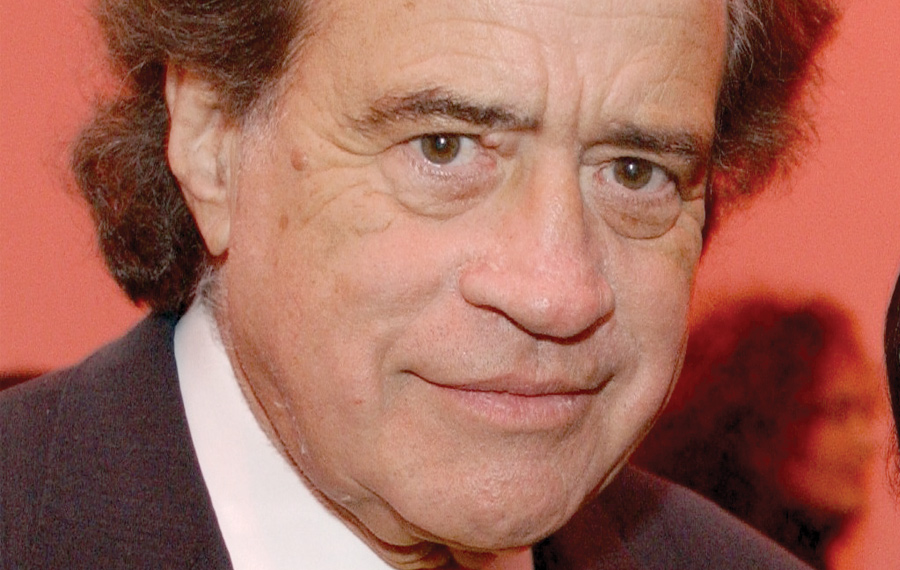
Robert Evans, Studio Chief and Producer, 89

Robert Evans, the onetime clothing salesman who became head of production for Paramount Pictures in 1966 and who was also a successful film producer, died Oct. 26 at his Beverly Hills home. He was 89.

Among the movies he either produced or championed were “Rosemary’s Baby” (1968), “True Grit” (1969), “Love Story” (1970), “The Godfather” (1972), “Chinatown” (1974) and “Urban Cowboy” (1980).

A larger-than-life Hollywood figure, Evans was a staple of the gossip columns, even after he was convicted in 1980 of cocaine trafficking. In 1983, he was linked to the murder of Roy Radin, a co-producer with Evans on “The Cotton Club” (1984), although he was never charged.  

A dashing figure with oversized glasses and a permanent tan who counted both movie stars and statesmen such as Henry Kissinger as his friends, Evans was the model for Stanley Motss, the producer played by Dustin Hoffman in 1997’s “Wag the Dog,” and for Max David, the young producer in Orson Welles’ “The Other Side of the Wind” (2018). And actor Bob Odenkirk called Evans a primary influence on his character Saul Goodman in the AMC series “Breaking Bad” (2008-2013) and “Better Call Saul” (2015-present).   

Evans wrote a memoir in 1994 titled “The Kid Stays in the Picture.” The title was taken from producer Darryl F. Zanuck’s telegram to the cast and crew of the adaptation of Ernest Hemingway’s novel “The Sun Also Rises” (1957), when Hemingway reportedly demanded that Evans’ role as Pedro Romero be recast. Evans’ memoir went on to become a bestseller and the basis for a documentary about his life. 

Evans was born Robert J. Shapera on June 30, 1930, in New York City, one of three children born to Florence and Archie Shapera. His mother was a housewife and his father a dentist. They were, he wrote, “second generation Jews.” The Jerusalem Post reports that while his father changed the family name to Evans, his son did not hide his Jewishness. He didn’t call attention to it, either. But his religion played a part in his decision to make “Black Sunday,” the 1977 thriller about a Palestinian terrorist attack on the Super Bowl.

Evans caught the showbiz bug early, appearing on over 300 radio shows by the time he was 18. He went to work for his brother Charles’ clothing business, Evans Piccone, after graduating from high school.

It was on a 1956 sales trip to Los Angeles when he got his first big break. Lounging poolside at the Beverly Hills Hotel, he caught the eye of actress Norma Shearer. She thought he’d be perfect to play her late husband, producer Irving Thalberg, in “Man of a Thousand Faces.” Blessed with movie star looks but not the talent, Evans appeared in several films but did not appear to be on track for stardom. 

He moved into production and was quickly tapped to become head of Paramount. Bringing in young talent including directors Francis Ford Coppola, Roman Polanski and Sidney Lumet to the studio, Paramount moved from being a stodgy, conservative lot to one of the leading outposts of the “new Hollywood.”

Evans became an independent producer in 1975 and over the years released several films, including the highly successful “How to Lose a Guy in 10 Days” in 2003. 

In 2007, he suffered a stroke and sharply curtailed his public life. 

Over the course of his life, Evans married and divorced seven times. His most famous wife was actress Ali MacGraw, whom he was married to from 1969-1973. Their son, Josh Evans, is an actor and writer. 

Evans also is survived by his sister, Alice Shure, a New York-based documentary filmmaker, a grandson and a nephew.

Robert Evans, Studio Chief and Producer, 89 Read More »

Struggling With the Ultimate Change

If yet more evidence is needed to prove that the heart wants what the heart wants, you will find it in a remarkable memoir by Abby Chava Stein, Becoming Eve: My Journey From Ultra-Orthodox Rabbi to Transgender Woman (Seal Press).

Over the years, I have read and reviewed several accounts of Jewish men and women who were raised in Orthodoxy but chose to pursue any number of different paths into Judaism, or other religions, or no religion at all. But I can’t recall a book in which the author was a rabbi and the transformation included not only a change of faith but also a change of gender.

Abby Stein is a 10th-generation descendant of the Baal Shem Tov, the founder of Chasidic Judaism. Born as a boy in the Yiddish-speaking Chasidic community in the Williamsburg neighborhood of Brooklyn, N.Y., Stein was circumcised, called to the Torah as a bar mitzvah, ordained as a rabbi, married at the age of 18 and became a father at 20. “I devoted myself to religion, and with it to family history, Hasidic theology, and family customs,” Stein recalls. “Still, my piety was, in part, an overcompensation for what I recognized back then as an ‘evil thought’ that defined my interior life: I am a girl.” Significantly, Stein could not have understood these feelings as anything but an affliction. 

“I had no idea there was anyone else like me,” Stein writes. “Without the Internet, without English, I had no name for what I felt.” 

The truth revealed itself in slow motion. At age 3, when Jewish boys in traditional communities are given their first haircuts, young Stein protested. “Don’t cut my hair. I want to have long hair! Why is Hindy allowed to have long hair and not me?” asked Stein, referring to his sister. “You are a holy boy,” said his father. “Girls don’t get to have payos [sidelocks], only holy boys do!” Later, Stein poked at his genitals with a safety pin: “I was angry at ‘it’ for existing, and I wanted to make it feel my pain,” writes Stein. His mother screamed: “Bist meshuge gevorn!” — “Have you gone totally insane?”

Ironically, it was traditional Jewish prayer that held out some hope for young Stein. “Boys were taught to thank God each day by proclaiming, ‘Blessed are you, O Lord our God, King of the Universe, who did not make me a woman,” she writes. “But girls say this instead, and so did I: ‘Blessed are you, O Lord our God, King of the Universe, who has made me according to His will.’” So it was that Stein, at an early age, began to embrace the notion that he may have been born as a boy but God had willed him to be a girl.

“Becoming Eve” is also a glimpse into the history-soaked world of Chasidic Judaism in all of its colorful detail and diversity. Williamsburg was the home of many movements in Chasidism – Satmar, Pupa, Viznitz, Vien, Tzhelim, Skver “and so on.” Several of these movements were represented in Stein’s family, which afforded her a window of opportunity. “So there I was, a mostly Viznitz child attending a school that was dominated by Satmar Hasidim,” she explains. “I was in a perfect position to find a new way to rebel: everyone there followed the rules of the Satmar sect, so I would follow the rules of the Viznitz. It was the perfect strategy for a girl who was attending a boys’ school and wanted to rebel while still being a good student.”

Abby Chava Stein has been hurt, but she is not bitter. And that’s what makes “Becoming Eve” such a sublime and redemptive reading experience.

Much attention was paid to the study of Torah and Talmud, she reveals, but secular instruction was sparing. “I doubt there was a single student who could carry on a full conversation in English,” she recalls. “The last reading book we ever used, an ‘advanced’ one in eighth grade, was a book about the US Mint. It was the only non-Jewish history we ever learned.” Prayer was conducted in Hebrew, and Yiddish was used for everything else. Even so, secular subjects were not the only ones that were neglected. “While Yiddish does have an expression for love, Ich hub dir lieb, I had never heard anyone say it, to me or to anyone else.”

Stein’s gender struggle did not go unnoticed in the boy’s own home. “You are a boy, you are a strange boy,” said his sister Miriam. Stein replied: “I want to live like a girl, but everyone says that I am boy, and I have to follow along.” “ ‘Shtisim,’ Miriam replied, using the Yiddish word for BS. “You have a choice, you are just not trying hard enough!’” And when Stein asked his beloved sister to tell him what to do about the dilemma, she replied: “You have to die and only then will you be reborn as a real girl,” she said. “It is easy, you can do it! Just jump off the balcony.”

Stein readily concedes that her journey to her authentic gender identity led to her departure from Chasidim. “Faith is beautiful for those who possess,” she concludes, “but I’d lost it at age twelve and never got it back.” She found her way to books that questioned the true beliefs of traditional Judaism, including Richard Elliott Friedman’s “Who Wrote the Bible?” and Richard Dawkins’ “The God Delusion.” Tellingly, she could not yet read the books in English, “so I read them in their Hebrew translations.” Only much later did she arrive at the affirmation that we encounter at the end of her memoir: “Today I am proudly Jewish, and proudly transgender.”

“Becoming Eve” is a frank account of an exceptional life. Stein is a gifted writer, full of grace and compassion. Although she describes a painful ordeal that began at birth, she recalls her community of origin — and, especially, her own family — with love and respect, even if her parents will no longer speak to her. She dedicates the book to “my dear son, the love of my life.” She has been hurt, but she is not bitter. And that’s what makes “Becoming Eve” such a sublime and redemptive reading experience.


Jonathan Kirsch, author and publishing attorney, is the book editor of the Jewish Journal.

Struggling With the Ultimate Change Read More »

Portnoy Brothers Have ‘No Complaints’

“We wanted an album with a generally positive vibe as people in Israel, as well as all over the world, will tell you that they are living in the most intense political mayhem and how that spills over into their everyday lives.”

This is how 29-year-old Israel Portnoy — half of the British-Israeli indie rock duo Portnoy — describes their latest album, “No Complaints.” Together with his brother Mendy, 27, the new album infuses a nostalgic blend of folk rock and soul with a modern twist. 

“It’s got that nostalgic sound to the songwriting,” Israel said. “It doesn’t rely heavily on modern synthesized, computerized sounds. It is much more of vocals … guitars, real drums and real bass. It’s got the old-school vibe with a modern polish.”

Even though the brothers live in Jerusalem, they decided to come to the United States and record the album in Nashville. “We decided we should just be true to the songwriting, and the music should be raw and powerful where you can literally shut your eyes and imagine it being played on a stage in front of you,” Israel said. “So we decided that Nashville is the place for that because it is full of these incredible musicians.” 

He noted that the bassist for their band had just finished playing on the “A Star Is Born” album and the drummer has played with Stevie Wonder and Sting. 

“They were absolutely world-class and totally got the music and understood what it needed and had all kinds of great ideas themselves,” he said. “We cut the album in less than 48 hours in Nashville.”

Born in Manchester, England, Israel and Mendy grew up in a religious household where music was a pivotal part of life. 

“The flavor and the fusion of what we grew up on, which was essentially liturgical and cantorial music, definitely played an integral part in our natural influences, the same way we grew up on the way to school listening to the Beatles, Simon and Garfunkel, and Crosby, Stills and Nash.” — Israel Portnoy

“We come from a big family, nine kids,” Israel said. “My dad was an orchestra conductor and music hall arranger and chazzan before he was a rabbi. My mom is very musical and plays a couple of instruments. ”

By the age of 9, Israel was leading synagogue services. “We would be on the bimah accompanying my dad and the chazzan, so in a sense performing just came naturally to us,” he said. “When I think about it, I naturally prefer to just sit in my bedroom and write songs rather than getting up onstage, but from a very young age we were exposed to that concept, so it was almost by default that this became part of life for us.”

The brothers also were exposed to mainstream artists who influenced their sound and style. A family friend who drove them 90 minutes to school every day would fill the long ride with tunes on BBC Radio 2. 

Photo courtesy of Portnoy.

“The flavor and the fusion of what we grew up on, which was essentially liturgical and cantorial music, definitely played an integral part in our natural influences because we grew up breathing those,” Israel said. “The same way we grew up on the way to school listening to the Beatles, Simon and Garfunkel, and Crosby, Stills and Nash.”

When he was 16, Israel moved to Jerusalem to study at the Talmudic College. Mendy joined him a few years later. It was there they began to pursue music as a profession. 

“We realized that collectively we had something that we wanted to pursue. We always loved playing music with each other and we have a natural sense of harmony,” Israel said. They released their debut album “Learn to Love,” in 2015 and have since garnered a core fan base in Jerusalem.

The inspiration for “No Complaints” came in 2018 when the brothers were spending time at their homes in Beit Zayit, a moshav just outside Jerusalem. 

“We were getting out into nature every day and playing and writing together,” Israel said. “We co-wrote all the songs and the lyrics so automatically, there is this interlocking synchronicity that happens between us. It was very much written with harmonies in mind as there is something about siblings singing together which is really powerful.” 

The album’s name was an affectionate nod to their older fans. “When people over the age of 40 asked what the band’s name was, they usually related it to ‘Portnoy’s Complaint’ by Philip Roth,” Israel said, referring to the groundbreaking 1969 novel. “We decided we should really ride this, and by calling the album ‘No Complaints,’ it is almost like a cheeky nod to the old generation and relating to a yesteryear and nostalgic way of songwriting.”

For Israel, the opening track of the album is one he holds dear. “ ‘Celebrate’ is a very powerful song for me on a personal level,” he said. “If I’m having a bad day or down about something, the quickest way out is being able to have gratitude for the positive that I do. There is always something to celebrate. It might not be a birthday, it can be just the fact that you woke up this morning and you’re breathing. You should celebrate that, or that you have food on the table. It is almost like celebrating the mundane.”

“No Complaints” is available on Spotify and Apple Music. 

Portnoy Brothers Have ‘No Complaints’ Read More »

Israel Film Festival Honoree Arthur Cohn Brings ‘The Etruscan Smile’ to L.A.

Veteran producer Arthur Cohn has six Oscars, three honorary doctorates, numerous lifetime achievement and humanitarian honors and a star on the Hollywood Walk of Fame. This month, coinciding with the release of his 28th film, “The Etruscan Smile,” Cohn will receive the Israel Film Festival’s 2019 Lifetime Achievement Award at the opening night gala on Nov. 12. He also will participate in a Q&A after the film’s screening on Nov. 13.

“I am very honored by this recognition,” Cohn told the Journal. “I am also delighted that ‘The Etruscan Smile’ will be shown at the festival. Even though the film seems to have no connection with Israel, there were quite a few Israeli forces behind it.” 

The film’s co-directors, Mihal Brezis and Oded Binnun, are Israeli; Cohn’s son Emanuel is an assistant producer and appears in the film; and daughter Nurith was the music supervisor. Both live in Israel.

Cohn has wanted to make “The Etruscan Smile” since he read and acquired the rights to José Luis Sampedro’s novel in the 1990s, but none of the scripts he commissioned satisfied him until 2016. “My patience and persistence and especially my belief in this wonderful story, paid off,” he said, noting that changes were minimal, including moving its location from Italy to Scotland and San Francisco.

A heartwarming family drama that has won several film festival prizes, the movie is about a dying Scotsman (Brian Cox), his estranged son (JJ Feild), and the bond between a grandfather and his baby grandson. 

“A central theme of this film certainly is to live to our fullest till our last breath and to tell people we love that we love them,” Cohn said. The characters are not Jewish, but he sees “many Jewish elements in the story, like the generational dialogue and handing over a legacy to the next generation.” 

The son of German and Swiss Zionist parents, Cohn was born and raised in Basel, Switzerland. His grandfather was Rabbi Arthur Cohn, who succeeded in persuading Theodor Herzl to hold the first Zionist congress in the city in 1897. 

“We still have the written thank you letter from Herzl to my grandfather at home,” Cohn said. His late father, Marcus Cohn, was a lawyer who saved many Jews from the Nazis. He moved to Israel in 1949 and became Israel’s assistant attorney general. 

While Cohn’s main residence is in Basel, the “proud Zionist” visits Israel several times a year. “I like to spend Jewish holidays in Jerusalem, the most spiritual place on this planet,” he said. He had a traditional Jewish upbringing that plays into his philosophy today. His parents taught him, “ ‘We give you roots and wings. Roots means to maintain our Jewish tradition and to keep our cultural and spiritual legacy. Wings means to fly out and to create something new on your own,’ ” Cohn said. “In my life, I have always tried to combine both roots and wings.”

Not surprisingly, some of his best-known films have Jewish themes. “The Garden of the Finzi-Continis” and documentaries “The Final Solution” and “Children of the Night” deal with the Holocaust, and “One Day in September” documents the murder of 11 Israeli athletes and coaches by Palestinian terrorists at the Olympic Games in Munich in 1972. “There are many other films of mine which you could derive some Jewish values from,” Cohn said, “It would not be farfetched to say that my Jewish identity is present in my art.”

Cohn’s first movie theater experience made a lasting impression. He remembered donning a suit borrowed from his brother to see “Goodbye Mister Chips” with his grandmother. “I always loved the magical experience of going into a theater, something I tried to express in my film ‘Two Bits,’ starring Al Pacino,” he said.

After graduating from high school, Cohn became a journalist and radio reporter covering soccer and ice hockey, but also the Middle East and Israel, publishing three books in German on the latter. From there he segued to scriptwriting, “but I soon realized that my passion was in developing other scripts and producing movies,” he said.

“A central theme of this film certainly is to live to our fullest till our last breath and to tell people we love that we love them.” — Arthur Cohn

He struck Oscar gold in 1962 with his first film, “The Sky Above and Mud Below,” and did it again with “American Dream” and “One Day in September.” 

“I am grateful for any recognition any of my films have received,” Cohn said. “It showed me that I was right — listening to my intuition rather than to well-meant advice from other people, which was the case in most of my films.” 

He spends a couple of months a year in Los Angeles, which he calls the “oxygen tank” for professional filmmakers. He has no plans to retire. “In German, there is a saying which I have adopted in my life: ‘Whoever rests, rusts,’ ” he said, revealing his next project, a film based on the 1971 book “Reunion” by Fred Uhlman set in Germany seven years before World War II. “I have already developed several script versions but I’m not totally satisfied with any of them yet,” he said. 

Now in L.A. for the Nov. 1 theatrical opening of “The Etruscan Smile” and the Israel Film Festival, Cohn eagerly awaits audience reactions. “I hope the American public will be emotionally moved and inspired by this film,” he said. “I have always tried to create human cinema, with no emphasis on sex, violence or special effects. Most of the films you see today you forget the moment they end. I hope my films in general and ‘The Etruscan Smile’ in particular will move the audience and make them think and feel about the important things in life.”

“The Etruscan Smile” opens at Laemmle’s Town Center 5 and Playhouse theaters on Nov. 1 and will screen on Nov. 13 as part of the Israel Film Festival. Visit the website for more information.

Israel Film Festival Honoree Arthur Cohn Brings ‘The Etruscan Smile’ to L.A. Read More »

Scandal, Politics and #MeToo on ‘The Morning Show’

A beloved celebrity is fired amid shocking sexual misconduct allegations. It’s an all too familiar headline in the post-#MeToo world, but this time it’s fiction — a seismic event that sets “The Morning Show” in motion. 

Launching on Nov. 1, the Apple TV+ series takes viewers behind the scenes of a morning television news show. Steve Carell, who plays the beloved male anchor, is accused of rape by a staff member, and the show is thrown into chaos. 

The film highlights power struggles and gender politics as it focuses on two women: veteran anchor Alex Levy (Jennifer Aniston) and reporter Bradley Jackson (Reese Witherspoon), a hotheaded newcomer. The pair deal with professional and personal crises and a variety of reprehensible male behavior. 

Mimi Leder, who directed 2018’s Ruth Bader Ginsburg drama “On the Basis of Sex,” signed on to direct and executive produce the series before there was a script. “I’m a huge fan of ‘Network,’ ‘Broadcast News,’ ‘Larry Sanders,’ ” Leder told the Journal. “I’ve always been intrigued with what happens behind the scenes when you pull back the curtain. Jen [Aniston] and I have wanted to work together for a long time, and here was our opportunity. I took a leap of faith.”

Drawing inspiration from CNN reporter Brian Stelter’s 2013 book “Top of the Morning,” “The Morning Show,” written by Kerry Ehrin, is an amalgamation of stories that we’ve heard about, researched, and people we’ve worked with, but it is not based on any one character in real life,” Leder said. “It’s rooted in life experiences and reflective of the current news and societal shifts, but it’s a work of fiction. It shines a light on real issues in today’s workplace, and talks about the shifting power dynamics.”

She added, “There’s a new playbook that’s being written in real time in workplaces all across the country for equal pay and equal treatment and safer, less toxic working environments. Our show has a conversation about the complexities of power. It explores how we used to look the other way, normalizing bad behavior, and how we’re all capable of participating in the abuse of power. Not anymore. It’s a real snapshot of where we are at this moment in history, examining the shifting culture. I think it’s going to be provocative and controversial and satisfying and unsettling all at the same time.”

Bringing the morning news milieu to life accurately and with the right pitch were Leder’s main concerns. “Our challenges were to keep it grounded, get it right and tell the most authentic story we could tell in a real way,” she said. “This is a drama and a very dark comedy so it’s a very fine line.” 

For research, Leder said she and her team visited the sets of ABC’s “Good Morning America” and NBC’s “The Today Show.” “We had a former director for one of the shows as a tech adviser who made sure we got the control room [scenes] right.”

“Our show has a conversation about the complexities of power. It explores how we used to look the other way, normalizing bad behavior, and how we’re all capable of participating in the abuse of power. Not anymore.”

 — Mimi Leder

Leder praised Ehrin’s writing and the cast, in particular Aniston and Witherspoon, who are central to the story she describes as “a character study about two incredible women who collide in this workplace at very different times in their lives and careers. Alex is on a very professional plateau and Bradley is hungry to make her mark,” she said. “They have very different versions of authenticity and two very different approaches to their jobs. They’re both tired of people controlling their destinies and undermining their abilities and they intersect at this very interesting moment.”

Alex Levy is Jewish, or half-Jewish, Leder said, but “we haven’t explored or said anything about her Jewish background” in the first season. “The Morning Show” was ordered for two seasons, and the second will begin shooting in early 2020. When she finishes working on it, Leder, whose mother survived four concentration camps and whose father, an Army medic, helped liberate Jews at Buchenwald and became a Hollywood producer, plans to focus on making a film about her family. 

She sees some similarities between her “Morning Show” heroines and her previous film’s subject, Ginsburg: They’re women who stand up for equality, whether it’s in the courtroom or in the workplace. 

“I think ‘The Morning Show’ is and will be empowering to many,” she said. “I’d like audiences to take away that every person has a voice and should use that voice. It’s a show that people can dig their teeth into and fall in love with these complicated characters even though they’re sometimes hard to love.”

Leder is glad that she got involved. “It was really great, juicy material to work on and I loved working with these actors, from the stars to the day players,” she said. “It was an amazing group of people in front of and behind the camera. I’m spoiled for life.”

“The Morning Show” begins streaming on Nov. 1 on Apple TV+.

Scandal, Politics and #MeToo on ‘The Morning Show’ Read More »

Israeli Director Nadav Lapid’s Complex Autobiographical Film ‘Synonyms’

Israeli director Nadav Lapid is not surprised that his country’s ministry of culture, a notably conservative agency, helped underwrite his controversial, autobiographical film, “Synonyms,” although he admits if he were launching the movie today (instead of 2 1/2 years ago) it might be an altogether more difficult proposition. 

“As the country has grown increasingly less stable, the recent elections are part of that, there’s been a shift and the Ministry of Culture has become more intolerant,” he told the Journal, at moments his voice intense, even agitated. “At the same time I don’t think ‘Synonyms’ is a political movie like say, ‘Foxtrot,’ (2017), which criticized the Israeli army and could be viewed as leftist. My movie is far more ambiguous and therefore more radical than most political films and I suspect it’s too difficult for the Ministry of Culture to digest.”

That may be arguably true for many moviegoers as well, who, depending on viewpoint, could find the film compelling and/or difficult and/or uncomfortably anti-Israeli.

“Synonyms” recounts the experiences of Yoav (Tom Mercier), a 20-something Israeli who can no longer endure life in his homeland and flees to France, where he is haunted by demons from within and without. He befriends a self-indulgent vapid French couple, poses as a model for a perverse, trendy Parisian painter and finally becomes a security guard for the Israeli Consulate. On his existential quest, he spirals out of control. The film raises questions about Israeli identity, nationalism and the nature of exile.

Chatting in his film distributor’s midtown office, Lapid describes Yoav as a complex Israeli soul awash in contradictions: It’s in his DNA to have empathy for precisely the things he condemns and vice versa. It’s never entirely clear, nor should it be, what he thinks he’s running away from or running toward. “What was once paradise can turn into hell,” he said.

In all his films, including “The Policeman” (2011) and “The Kindergarten Teacher” (2014) but, especially, “Synonyms,” Lapid attempts to define the Israeli character (including his own, he admits), which he suggests is obsessive and informed by apocalyptic visions, real and imagined.

“It’s the way the Israeli talks, moves, dances, kisses, goes to war,” he said. “In everything they’re attacking the moment. It’s a constant battle with the moment. They are confident about their positions, immediately recognizing allies on the one hand and enemies on the other. With allies, their interactions are sufficient and short. With enemies, they are sufficient and cruel. No sense of humor, no nuance, no irony, no doubt, no eclectic way of thinking and talking. In that way Israel is a totally un-Jewish country. At the same time, its collective soul creates the opposite: the need for contradiction and alienation, and that’s very Jewish.”

“I was super enthusiastic to finally become a soldier. I prepared myself for battles and even death if necessary. Of course I didn’t understand anything. The service itself was pretty joyful, less dangerous than what I’ve fantasized about.”— Nadav Lapid

Yoav’s intense muscularity/virility stands in stark contrast to his self-destructive impulses. Early on, we see him fully nude. He is discovered, freezing in the bathtub by his neighbors. They notice that he is circumcised. 

“The ambiguity of the Israeli experience is expressed in the body,” Lapid explained. “It’s the image of the aggressive soldier and the circumcised Jew. It’s a cursed body. It contains exactly what Yoav wants to run away from but never can. Yet his body is also magnificent and admired. Yoav feels superior, also inferior. His feelings are never integrated. He is almost a mythological figure. And, yes, I wanted the actor to have a mythological body.”

Little-known Israeli actor Mercier was a revelation, Lapid said, stunned not by simply his physicality but his instinctual, raw acting talent. Israeli actors for the most part, he said, perform on a visceral level. 

Writing and directing an autobiographical film also brings its own special challenges, not the least is avoiding self-pity, Lapid conceded. Still, it’s a liberating genre precisely because the story followed his experiences and thus he didn’t need to worry about credibility or narrative cohesiveness. “The truth gives me the freedom to preserve the chaotic, not easily digestible material,” he said. 

Born in Tel Aviv to a secular family, Lapid grew up aspiring to be Napoleon, a Greek warrior, a musketeer and a military hero. “I was super enthusiastic to finally become a soldier,” he said. “I prepared myself for battles and even death if necessary. Of course I didn’t understand anything. The service itself was pretty joyful, less dangerous than what I’ve fantasized about. And, yes, there were some dramatic moments. I even got a special mention. It had a major role in the events in my life, but military service in itself isn’t the issue but the whole mental and existential preparation that begins in childhood, at least in my case, to fulfill myself as a soldier.”

As an exile in France — a country chosen mostly because of his youthful fantasies about Napoleon and later his admiration for the French soccer player Zinedine Zidane (Zizou) and Jean-Luc Godard’s 1960 crime drama “Breathless,” he had no particular plans short of “adventure and glory,” Lapid said with a touch of irony. He studied French assiduously (refusing to speak Hebrew), eking out a living as a bodyguard for wealthy Jews, serving in the Israeli Embassy as a security guard and posing as a model for painters/photographers, not unlike Yoav.

His return to Israel came not with a bang, but a whimper when potential publishers for a novel he had written requested a meeting with him. But it didn’t take long for him to understand “I couldn’t go back to France. It was not an expression of ‘there’s no place like home,’ but rather the realization that Israel and France are not antonyms, which is what I originally thought. They were in fact synonyms.” 

Lapid’s next film centers on an Israeli director attending his film’s screening in a deserted village, where he struggles with the recent death of his mother and the death of artistic freedom. “I wrote that film in two weeks,” he said. “And yes, it is autobiographical and yes, I do think artistic freedom is threatened in Israel today.”

Asked if he’d like to make a film in the United States, Lapid said he never had the Hollywood dream. At the moment, his thoughts are most focused on “Synonyms” and his hope that audiences take away two thoughts: appreciating “how strange, paradoxical and moving existence is, but also realizing that before you deal with what you love and what you hate, you have to know who you are.”

“Synonyms” opens Nov. 1 at the Landmark Nuart Theatre.


Simi Horwitz is an award-winning reporter whose work has appeared in The Hollywood Reporter, Film Journal International, American Theatre and the Forward, among others.

Israeli Director Nadav Lapid’s Complex Autobiographical Film ‘Synonyms’ Read More »

L.A. Synagogues Mark Tree of Life Anniversary

Congregations across Los Angeles, including Wilshire Boulevard Temple, Shomrei Torah Synagogue and IKAR, marked the one-year anniversary of the deadly shooting at the Tree of Life synagogue in Pittsburgh by urging Jewish Angelenos to show up to synagogue for Shabbat.

Advocacy group American Jewish Committee, with nearly 30 synagogues in the Los Angeles area participating in solidarity, coordinated the Oct. 25 effort, dubbed #ShowUpForShabbat.

That night, L.A. native Joey Freeman, who currently works for Gov. Gavin Newsom as chief deputy legislative affairs secretary and is Newsom’s unofficial liaison to the Jewish community, spoke at Wilshire Boulevard Temple (WBT), where 11 candles were lit for the victims of the Pittsburgh attack. WBT billed the event as a service to “raise our collective voice of Jewish pride and our commitment to a nation free of anti-Semitism, bigotry and hate.”

“The Jewish community has never been one to cower in the face of hate. We come together as a people, and we open our tent to communities different from our own, and together, we rise above the hate,” Freeman said.

At IKAR, Associate Rabbi David Kasher delivered brief remarks highlighting the Oct. 27, 2018, shooting, which took the lives of 11 worshippers on that Saturday morning.

According to AJC, #ShowUpForShabbat was conceived as a weekend for gathering, remembering and taking action. Last year, the organization convened a similar effort immediately following the shooting at the Pittsburgh synagogue. It “quickly became the largest-ever expression of solidarity with the American Jewish community.” Hundreds of thousands of people from more than 80 countries and 50 states turned out at synagogues to stand with the Jews targeted in the attacks and stand against the hate that led to their deaths.

The “campaign inspired countless people of all faiths to fill synagogues across America and around the world in the wake of the horrific attack at the Tree of Life synagogue in Pittsburgh,” according to the AJC website.

“Arm-in-arm, let’s stand for an America based on mutual respect and shared destiny,” David Harris, CEO of AJC, said in a statement in advance of the Shabbat weekend.

Additional L.A. synagogues that took part in the Oct. 25-26 solidarity Shabbat included B’nai David-Judea, Kehillat Israel, Leo Baeck Temple, Temple Emanuel of Beverly Hills and Ohr HaTorah Synagogue. 

Elected officials, Sen. Elizabeth Warren and Rep. Debbie Wasserman Schultz among them, turned to Twitter to show their support for the #ShowUpForShabbat campaign.

“One year ago today, eleven people were killed at the Tree of Life synagogue. They were observing Shabbat at a place that should have been a sanctuary,” Warren wrote. “We have to end gun violence — and we have to speak up against hate, bigotry and anti-Semitism.”

“As we remember the 11 victims of the Tree of Life shooting last year, I stand in solidarity with Pittsburgh’s Jewish community,” Wasserman Schultz said. “We must all fight for a world free of anti-Semitism, bigotry and hate.”

For those who did not attend synagogue, AJC asked them to sign a document on its website lending their names in support of the campaign. “By adding your name and information,” the AJC website said, “you are sending a clear message that when hate raises its ugly head anywhere in our country, we will rise to confront it with solidarity and determination.”

L.A. Synagogues Mark Tree of Life Anniversary Read More »

Controller Galperin on Homeless Crisis: No. 1 Social Crisis in the City

“Homelessness is the No. 1 social and humanitarian crisis in the city of Los Angeles right now.”

Los Angeles City Controller Ron Galperin made this pronouncement during a panel discussion on homelessness at Temple Akiba in Culver City on Oct. 21.

Panelists included former homeless resident Emily Martiniuk; United Way of Greater Los Angeles’ Everyone In campaign field organizer Chelsea Byers; L.A. City Councilman Mike Bonin’s field deputy, Matthew Tecle; Culver City Committee on Homelessness member Mark Lipman; and West Hollywood Community Housing Corporation Director of Resident Services Danny Pepper.

Around 150 people turned out to the event, hosted at the synagogue run by Galperin’s husband, Rabbi Zachary Shapiro. Galperin noted that there are around 44,000 people sleeping on Los Angles streets every night and “over the course of the year, there are probably 100,000 people who at one point or another have experienced homelessness.” 

He added that there was a 16% increase in homelessness in the city from 2018 to 2019 and a 12% increase in Los Angeles County over the same period. He then went on to note that 918 homeless people died in the county in 2018 and said that number is expected to rise to 1,000 in 2019.

“How can we in this great nation, in this great city … have a thousand people die on our streets?” he said.

Recent measures dealing with homelessness include the passage of Measure H in March 2017 — the sales tax to fund county housing programs, and the November 2016 passage of Measure HHH — the $1.2 billion bond measure to build supportive housing. Galperin said while these were “great initiatives and great investments, the results are not yet at all obvious.” 

Galperin criticized both the L.A. city and county governments over their handling of the homelessness crisis, saying there is a “lack of accountability due to fractured structures” between the two governments. He added that despite their good intentions, various city and county policies have contributed to the homelessness crisis.

“How can we in this great nation, in this great city … have a thousand people die on our streets?”— Ron Galperin

He said that while regulations are necessary to preserve the environment as well as prevent overdevelopment, regulations have driven up the costs of building new housing. He also argued that rent control contributes to homelessness, saying, “In some cases, [rent control] has provided an incentive for landlords to tear the place down, and you lose some of those affordable units.” 

Martiniuk told attendees how she became homeless and eventually broke the cycle. She suffered severe mental health issues after her youngest son was killed in a bus accident, and she found herself financially strapped not long after the 2008 recession. By 2011, she was homeless. After attempting suicide that year, she was institutionalized for six weeks and diagnosed with bipolar disorder. She was then placed in Los Angeles County housing for nine months. Martiniuk said the county helped her obtain a housing voucher, which allowed her to get an apartment in Sun Valley, where she now resides.

“We live in the City of Angels,” Martiniuk said. “Imagine what we can do together.”

Byers urged attendees to fight for affordable housing and blamed neighborhood councils for failing to do so.

Galperin said innovative solutions were needed to fix the homelessness crisis, including shared housing and greater collaboration between the city and county governments as well as nonprofit organizations.

“Together, I believe that we can solve much of this problem,” he said. “But we must do so in a thoughtful way and in a way in which we can engage with each other.”

Controller Galperin on Homeless Crisis: No. 1 Social Crisis in the City Read More »

Multiple Swastikas Found on Smith College Campus

Several swastikas were found on three different buildings at Smith College, an all-women’s school in Northampton, Mass. on Oct. 24.

The swastikas were drawn in red marker on the walls of two science buildings – Burton and Bass Hall – as well as Seelye Hall, which houses various classrooms and faculty offices. There were eight swastikas total and have all been removed, according to Jewish Telegraphic Agency.

College President Kathleen McCartney said in an Oct. 24 statement to the community that she was “sickened” and “angry” about the vandalism. 

“I condemn in the strongest terms this act of hatred and cowardice,” McCartney said. “I also recognize that these are not just marks on a wall but attacks on our community and the values we hold central to our shared humanity. Hate has no place at Smith.”

She added that the college is focused on ensuring “the safety and wellbeing of everyone in our community, especially members of the Jewish community and so many others for whom this symbol is an act of violence and an erasure of identity.”

The Smith College Jewish Community thanked everyone who showed support for the Jewish community in the aftermath of the vandalism in an Oct. 27 Facebook post.

“We are incredibly grateful for the swift and vocal condemnation from the community and the rapid response from the administration, and we hope this trend of immediate action and solidarity continues whenever instances of hate and violence against any marginalized group occur in the future,” the post read. “We stand with everyone impacted by the events of last week, including all students of color, LGBTQ+ students, and all those harmed by white supremacy.”


Anti-Defamation League CEO Jonathan Greenblatt tweeted, “No one should be subjected to #antiSemitism on any college campus. If you see #antiSemitic imagery, such as the swastikas found on Smith College, speak out.”

Multiple Swastikas Found on Smith College Campus Read More »

Carl Bernstein on Trump and the Current State of Journalism

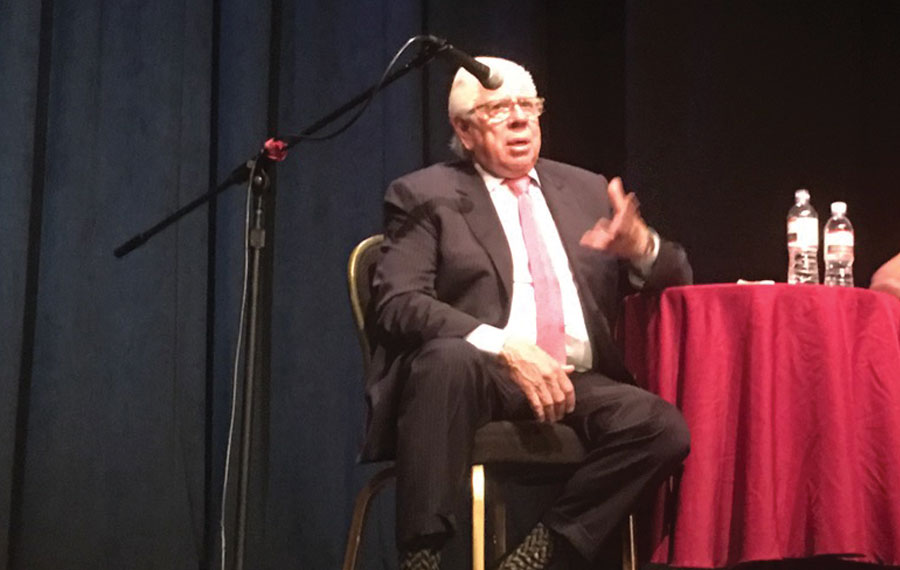
Pulitzer Prize-winning journalist Carl Bernstein discussed President Donald Trump and the current state of journalism, among other topics, when he appeared at L.A. City College on Oct. 27.

Bernstein, who together with Bob Woodward uncovered the Watergate scandal as reporters for The Washington Post, drew parallels between the current impeachment inquiry into Trump and the resignation of former President Richard Nixon in 1974. He said, “Trump’s response to a free press has been more insidious than Nixon’s. …The president himself is a danger to the security of the United States.” 

Bernstein also criticized the media landscape that has enabled Trump’s ascent. He called Fox News the “most important political force in the last 30 years,” adding that it was not a real news source. And regarding the late Roger Ailes, the former chairman and CEO of Fox News and Fox Television Stations, Bernstein said he was an “evil genius.”

The 75-year-old Bernstein, who began his journalism career at the age of 16 as a copyboy for The Washington Star, currently appears as an analyst on CNN. He has described journalism as “the best obtainable version of the truth.” Speaking at the City College event to attendees who included journalism students from the school, Bernstein said achieving that journalistic standard was “elusive in the age of social media.”

Asked by one of the students what advice he had for the next generation of reporters, Bernstein said the key to being a good reporter is listening, adding, “My experience has been people usually want to tell reporters the truth if you give them the chance.” 

He also spoke at length about reporting on the Watergate story, describing a moment in the break room at the Post with Woodward when they realized that Nixon was going to be impeached, which ultimately led to his resignation. Bernstein said their goal was to not betray any biases one way or the other but to keep their focus on reporting the facts.

“My experience has been people usually want to tell reporters the truth if you give them the chance.”
— Carl Bernstein 

He added that he and Woodward, under the guidance of editor Ben Bradlee, benefited from working at a time when editors allowed reporters to spend weeks on a single story. Nowadays, he said, too few news organizations let reporters to do that, instead concerned with feeding the demands of the 24-hour news cycle.

Following the event, Bernstein told the Journal about the role Judaism has played in his life, saying he was raised in a secular household by atheist parents who were involved with groups including the Workmen’s Circle, an organization founded in the early 20th century to support Eastern European Jewish immigrants facing a challenging labor environment upon arriving in the United States.

Declining to delve too deeply into his spiritual life, Bernstein said while growing up he was the head of his B’nai B’rith youth chapter. 

Asked by another reporter about his “rock star” status in the journalism world, Bernstein, the father of two, said it was his son Max, a guitarist for pop star Taylor Swift, who was the rock star. His eldest son Jacob is a reporter for The New York Times.

As to what keeps him going as a journalist, Bernstein said, “I like to know what’s going on. I’m curious.”

Carl Bernstein on Trump and the Current State of Journalism Read More »