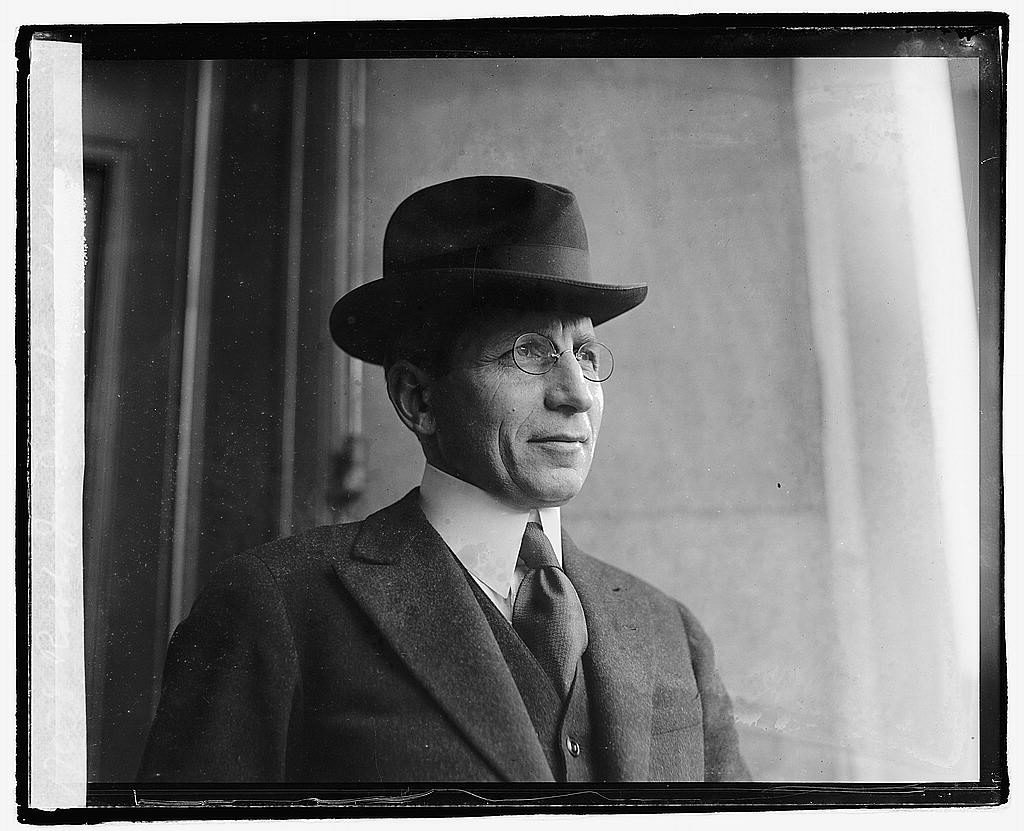
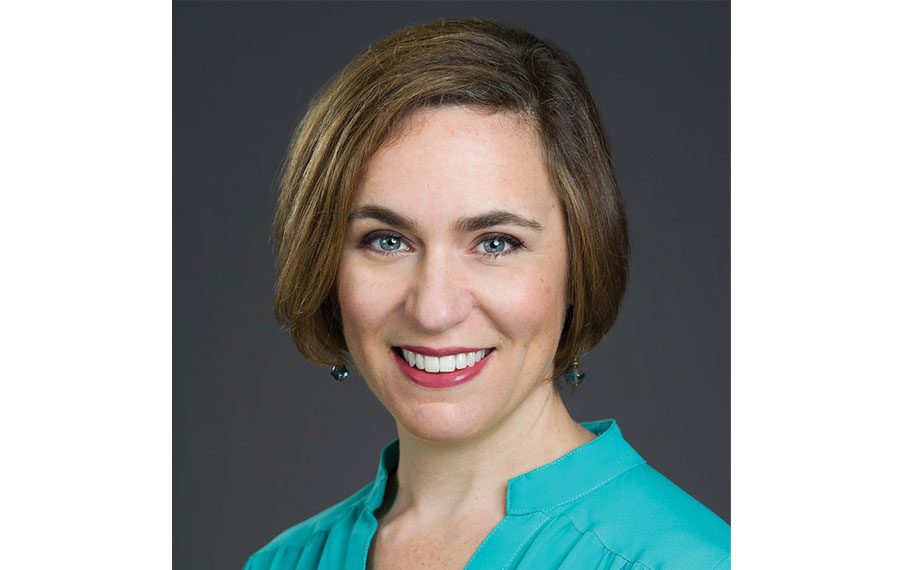
Swedish Foreign Minister Ann Linde, who was appointed to the position on Sept. 10, said during a session of parliament on Oct. 24 that the Swedish government doesn’t view the boycott, divestment and sanctions (BDS) movement as anti-Semitic.
According to the Algemeiner, Linde told Member of the European Parliament of Sweden Lars Adaktusson that the “government does not place an equals sign between anti-Semitism and BDS.”
When Adaktusson challenged her on the claim, Linde argued, “To advocate boycotts of Israel peacefully with a view to ending the occupation is not anti-Semitism.”
Pro-Israel activist Arsen Ostrovsky criticized Linde’s remarks on Twitter, prompting Linde to reply, “Sweden doesn’t support calls to boycott Israel. We want more cooperation with Israel, not less. Under Swedish law, freedom of expression is protected. Individuals in [the] BDS movement have [a] right to freely express their opinions. Any anti-Semitism must be condemned.”
Let’s make it clear: Sweden doesn’t support calls to boycott Israel. We want more cooperation with Israel, not less. Under Swedish law, freedom of expression is protected. Individuals in BDS movement have right to freely express their opinions. Any antisemitism must be condemned.
Linde also said in an Oct. 28 television interview “that Israel’s right to exist is not debatable in any way” but “that the [Israeli] occupation which is in violation of UN resolutions, must end,” according to Ynet News.
The Simon Wiesenthal Center tweeted, “Hear no evil see no evil? @AnnLinde refuses to connect dots between #BDSers who want to end Jewish state and #antisemitism.”
The German Bundestag (parliament) and the Czech Republic’s lower house of Parliament are among those that have passed resolutions condemning the BDS movement as anti-Semitic.
YJP Dinner A diverse group of 20- and 30-something Jewish professionals celebrate Shabbat dinner in the La Brea-Third Street neighborhood. The evening includes a four-course dinner and an open bar. Attendees dine, network and gain the wisdom and confidence to take on the coming week. Bar opens at 6 p.m. Event continues until 11 p.m. $60-$70. Location emailed to guests upon registration. Online reservations only by clicking on the link above.
“Inspire Young Professionals”
“Friday Night Inspire,” a Shabbat at Beth Jacob Congregation, brings together young professionals. The evening includes kabbalat Shabbat services, socializing and a Kiddush with refreshments. Chava and Rabbi Robbie Tombosky host the evening, which is dedicated to the memory of the late Aaron Sichel. 5:45 p.m. Mincha, 6 p.m. kabbalat Shabbat, 6:30 p.m. schmoozing. RSVP to yp@bethjacob.org for the address. (310) 278-1911.
David Makovsky Scholar and former Israeli journalist David Makovsky, who has studied the Middle East for 30 years, shares his perspectives on the region as Young Israel of Century City’s scholar-in-residence. Previously executive editor of The Jerusalem Post and diplomatic correspondent for the influential Israeli daily newspaper Haaretz, Makovsky delivers two major addresses, requiring reservations. “The Trump Administration and the Middle East: What Is Realistic?” is the topic of tonight’s Young Professionals Community Dinner. For Shabbat lunch at Pat’s restaurant, he discusses, “Israel and the Diaspora: Can This Marriage Be Saved?” 7 p.m. Young Professionals Community Dinner, $45 members, $55 general. 9 a.m. Shabbat morning services. 12:30 p.m. Shabbat lunch, $60 per adult member, $65 general, $35 per child ages 4-11. Young Israel of Century City, 9317 W. Pico Blvd. (310) 273-6954.
SAT NOV 2
Lev Eisha Shabbat Lev Eisha, an upbeat community of Jewish women, holds a memorable Shabbat experience at Beth Shir Shalom in Santa Monica. Rabbi Toba August, Cindy Paley and Joy Krauthammer promise to elevate spirits with praying and singing. New faces always are welcome. Kiddush follows. 9:30 a.m.-noon. Beth Shir Shalom, 1827 California Ave., Santa Monica. (310) 575-0985.
SUN NOV 3
Mitzvah Days Emphasizing the ways one person can make a positive difference, Adat Ari El holds Mitzvah Day for the community. Participants meet puppies in training to be guide dogs, donate blood, offer their ponytails to children with hair loss, make sandwiches for food pantries, and bring board games, canned tuna, Halloween candy and even gently used jeans to the synagogue. All ages are welcome. 10 a.m.-12:30 p.m. Adat Ari El, 12020 Burbank Blvd., Valley Village. (818) 766-9426.
Nani
Sephardic Melodies in Downey International singer and composer Nani brings her Sephardic music and jazz show to Temple Ner Tamid of Downey. Expect to see her at the piano and even playing trombone. Nani, the rare artist seeking to revive Ladino while blending Middle Eastern music with North African beats and her own ethnic jazz songs, has been compared to Nina Simone. The evening includes hors d’oeuvres, light drinks and a cash bar. 6-9 p.m. $36. Temple Ner Tamid, 10629 Lakewood Blvd., Downey. (562) 861-9276. Tickets available through eventbrite.com or the temple during business hours.
Comedy Night and Auction During University Synagogue’s annual Comedy Night, attendees enjoy a fun outing at the Hollywood Improv and participate in a live auction for a luxurious prize. Bid on three nights at Casa Fortuna, a beachfront estate in a gated community in Mexico. The package is valued at $7,000-$14,000 a night and includes access to two golf courses, among other highlights. Funds raised will benefit University Synagogue’s Early Childhood Learning Center and the building of a new playground. 7 p.m. $75 general admission, $125 VIP, $75 teacher ticket. $20 for raffle drawing. Hollywood Improv, 8162 Melrose Ave., Hollywood. (310) 472-1255.
Tirzah Firestone
“Voices of Women Rabbis” Featuring diverse voices within the modern rabbinate, a new six-week course, “Voices of Women Rabbis: Challenges and Opportunities,” held at UCLA Hillel, features three women rabbis leading two sessions apiece. Tonight and Nov. 10, Rabbi Tirzah Firestone discusses “Wounds Into Wisdom: Reclaiming Meaning and Purpose After Tragedy and Trauma.” On Nov. 17 and 24, Rabbi Sarah Bassin teaches about “Creating Change in the Jewish Community.” And on Dec. 1 and 8, Rabbi Yael Saidoff’s goal is “Toward Deep Encounters With Spirit-Moving, Soul-Satisfying Prayer.” The Academy for Jewish Religion California organizes the course. 7-9 p.m. $90. UCLA Hillel, 574 Hilgard Ave., Los Angeles, or online via Zoom. (213) 884-4133.
Members of Mostly Kosher performing at the Festival of Holidays. (Scott Brinegar/Disneyland Resort)
Mostly Kosher Jewish cultural revival band Mostly Kosher performs at the Torrance Cultural Arts Center this evening, bringing a blend of sounds seldom heard in contemporary music. Led by Leeav Sofer, the seven-member group sprinkles Latin, rock, hip-hop and folk while reviving familiar Yiddish strains accompanied by a post-klezmer beat. 7 p.m. $25-$35. Torrance Cultural Arts Center, James Armstrong Theater, 3330 Civic Center Drive, Torrance. (310) 781-7150.
“The Last Klezmer” The Los Angeles Jewish Film Festival (LAJFF) holds a 25th anniversary screening of “The Last Klezmer.” The 1994 documentary follows Leopold Kozlowski, the last active klezmer musician in Poland, as he takes a trip back to his hometown in Ukraine. Beginning as a celebration of the Ashkenazi musical genre and highlighting what life was like for a klezmer before World War II, the film changes in tone as Kozlowski takes the film crew to sites from his childhood evoking painful memories. After the screening, Yale Strom, an active participant in the American klezmer revival, performs live music and participates in a Q&A session. The Jewish Journal and Laemmle Theatres co-present the event. 1 p.m. $15. Laemmle’s Ahrya Fine Arts Theatre, 8556 Wilshire Blvd., Beverly Hills. (800) 838-3006.
Andre Aciman
Andre Aciman Author Andre Aciman follows his 2007 international bestseller “Call Me By Your Name,” a coming-of-age romantic novel about two young men that was adapted into an acclaimed film, with “Find Me,” which revisits their relationship as adults after one of them marries. Aciman appears live during a Writers Bloc conversation. 4 p.m. $20 general admission, $36 admission plus a copy of “Find Me.” Ahrya Fine Arts by Laemmle, 8556 Wilshire Blvd., Beverly Hills. (310) 443-9925.
MON NOV 4
Jewish Insights on Marriage Temple Judea Rabbi Joshua Aaronson, the married father of three children, leads a midday class on “Love and Marriage, Men and Women: Jewish Insights.” Drawing on the wisdom of the rabbis of the Talmud, Rabbi Aaronson scatters light humor across his teaching. The course begins today and continues on Nov. 11 and 18. Noon-1 p.m. all three sessions. Free. Temple Judea, 5429 Lindley Ave., Tarzana. (818) 758-3800.
TUE NOV 5
Heather Morris Author Heather Morris, who wrote last year’s bestselling book “The Tattooist of Auschwitz,” returns to American Jewish University to discuss her new novel, “Cilka’s Journey,” based on a true romance during the Holocaust. Taken to Auschwitz-Birkenau as a 16-year-old in 1942, Cilka learns that gaining power means survival. However, when the camp is liberated, she is not allowed to leave, charged with sleeping with the enemy. A book signing follows the lecture. 7:30 p.m. $20, $42 with book. American Jewish University, Shapiro Memorial Synagogue, 15600 Mulholland Drive. (310) 440-1572.
“‘God’and Science” Temple Emanuel of Beverly Hills Rabbi Adam Lutz leads the two-hour class “ ‘God’ and Science: Reconciling God with Our Rational Minds.” How does an aerospace engineer think about God? The rabbi, who used to have that career, shares his concept of God and more. 7-9 p.m. Free. Temple Emanuel of Beverly Hills, Belle Chapel, 300 N. Clark Drive. (310) 288-3737.
THU NOV 7
“An Unorthodox Match” In Naomi Ragen’s new novel, “An Unorthodox Match,” a woman who has failed in her quest for marriage and children steps away from her Orthodox community and lands in a dysfunctional setting with a newly widowed Torah scholar. Tonight, Ragen, a longtime resident of Jerusalem, appears in conversation about her book with award-winning journalist Danielle Berrin. 7:30 p.m. $15. American Jewish University, 15600 Mulholland Drive. (310) 440-1572.
Women’s Health and Challah Bake A panel discussion examining women’s health and cancer prevention focuses on the latest in cancer screening, the Jewish cancer-genetics connection and women’s wellness. Speakers are Annie Spar, Daniella Kamara and Suzanne Gilberg-Lenz. This evening’s program also includes a pink challah bake. Sharsheret, which supports women facing breast cancer and their families, organizes the program with Temple Beth Am Sisterhood. Light dinner is provided. 7 p.m. $18. Temple Beth Am, 1039 S. La Cienega Blvd. (310) 652-7353.
“Heroism on the Home Front” During World War II, the societal roles of women changed drastically and heroically when so many American men were overseas serving in the military. Tonight, the National Women’s History Museum and United States Holocaust Memorial Museum hold a panel discussion on the subject, “How Did American Women Act: Heroism on the Home Front,” examining how women used their newfound influence to sound the alarm about the plight of Europe’s Jews. The speakers are Gretchen Skidmore, director of education initiatives at the U.S. Holocaust Memorial Museum, and writer-producer Denise Kiernan. Lori Ann Terjesen, director of education at the National Women’s History Museum, moderates. 7-9 p.m. Free, registration required. The Paley Center for Media, 465 N. Beverly Drive, Beverly Hills. (310) 556-3222.
Have an event coming up? Send your information two weeks prior to the event to ryant@jewishjournal.com for consideration. For groups staging an event that requires an RSVP, please submit details about the event the week before the RSVP deadline.
A 70-year-old Jewish man was assaulted in Berlin on Oct. 29; the assailant reportedly launched a series of anti-Semitic invectives against him.
The Jerusalem Post and Times of Israel (TOI) report that the victim defended himself from the assailant’s anti-Semitic insults, prompting the assailant to repeatedly punch the victim on his head and chin and knock him to the ground.
The attack ended when another person entered the fray to protect the victim; the assailant fled and his identity remains unknown.
Berlin Mayor Michael Müller condemned the attack.
“It is unacceptable that in broad daylight someone taking a walk is subjected to anti-Semitic insults and then beaten up when he tries to defend himself verbally,” Müller said on Oct. 29, per Jewish Telegraphic Agency. “These kinds of attacks must not become everyday occurrences in Berlin.”
Anti-Defamation League CEO Jonathan Greenblatt called the attack “absolutely disgraceful” in an Oct. 30 tweet.
“Just weeks after the shooting in Germany on #YomKippur, this is especially horrifying,” he wrote. “#AntiSemitism persists [and] we stand strong with the German Jewish community.”
This is absolutely disgraceful. A 70 yr old Jewish man in Berlin was beaten by an anti-Semite. Just weeks after the shooting in Germany on #YomKippur, this is especially horrifying. #AntiSemitism persists & we stand strong with the German Jewish community. https://t.co/ilUwt1T5he
In August, two men attacked a Jewish man in the back as he was walking from a synagogue in Berlin. In July, two men spat and cussed at Jewish Community of Berlin Rabbi Yehuda Teichtal and his son.
The German Interior Ministry reported in May that anti-Semitic incidents increased by nearly 20% from 2017 to 2018. American Jewish Committee Berlin Acting Director Reemko Leemhius told the Wall Street Journal earlier in October, “We have seen a rise in anti-Semitism for years now, we see it across society. We see it on the right, on the left, in Islamism, and in mainstream society. Right now, it feels like it’s coming from everywhere.”
The Shalom Institute held its “Garden of Eatin’” benefit event on Oct. 19 at the Malibu Jewish Center and Synagogue.
The gathering raised funds for the Shalom Institute and the organization’s wildfire relief fund.
Hors d’oeuvres, drinks, live music, a Sukkot honey-tasting, a wine bottle pull and scotch tasting highlighted the occasion, which kicked off at 7 p.m. with a Havdalah ceremony and continued with a dinner and the evening program.
The honoree was Gil Breakman, president of the Shalom Institute’s board of directors and recipient of the Rae and David Finegood Leadership Award. Breakman, who was a camp counselor at Camp JCA Shalom in 1987, is the senior vice president of finance for Warner Bros.Studio Facilities.
In November 2018, when the Shalom Institute was struck by the Woolsey Fire, Breakman was among those who helped Shalom Institute navigate the emotional and financial challenges of the recovery effort, the Shalom Institute website says.
For his part, Breakman said his commitment to Camp JCA Shalom stems from his belief that Jewish camp experiences are transformative for young people.
“Just ask a successful and connected young adult who has attended camp to what they owe their success, and even before mentioning secular or religious school, most of them will point to their camp experiences as the most important turning point in their lives,” he said in a statement.
Also attending was Shalom Institute Executive Director Bill Kaplan, who spoke about the institute’s recovery efforts and the impact Shalom Institute programs continue to have on the community; Jacob Knobel, a member of the Shalom Institute board of directors and recipient of the institute’s Emerging Young Leaders Award in 2013; and Shalom Institute immediate past President Adam Weiss.
Nelly Wisner, a kindergarten teacher at Beth Hillel Day School, received the 2019 Jewish Educator Award from the Milken Family Foundation. Photo courtesy of the Milken Family Foundation
The Milken Family Foundation (MFF) has announced the 2019 recipients of its annual Jewish Educator Award (JEA), which recognizes excellence in the teaching profession at Jewish day schools affiliated with Builders of Jewish Education (BJE).
This year’s winners are Michelle Andron, general studies principal at Emek Hebrew Academy; Eric Hartung, a science teacher at Pressman Academy of Temple Beth Am; Rabbi Abraham Lieberman, a Judaic studies teacher at Shalhevet High School; and Nelly Wisner, a transitional kindergarten and kindergarten general studies teacher at Beth Hillel Day School.
During surprise assemblies at the winners’ schools, MFF Executive Vice President Richard Sandler and BJE Director Gil Graff announced the four JEA winners and gave them an unrestricted $15,000 prize.
“By surprising educators with their awards before their entire school communities, we say in a very public way that excellence in education should be rewarded,” Sandler said in an Oct. 7 statement. “And by capturing the imagination of students, we hope to encourage our next generation to consider careers in teaching — in particular, to strengthen the vital role of Jewish day schools to develop academic potential and cultivate lifelong respect for the values imparted by their Jewish heritage.”
The four 2019 JEA recipients will be celebrated together during an annual luncheon event held at the Luxe Sunset Boulevard Hotel on Dec. 17. “The inclusive event brings together leaders across L.A.’s Jewish community, from the most secular to the most Orthodox,” according to MFF.
Temple Emanuel of Beverly Hills held a farewell ceremony for its long-held day school building on Burton Way, drawing Temple Emanuel clergy, day school alumni and the klezmer band Mostly Kosher to the bittersweet gathering. Photo courtesy of Temple Emanuel of Beverly Hills
Temple Emanuel of Beverly Hills (TEBH) said farewell to its recently sold school building at 8844 Burton Way. The Reform congregation completed escrow on the building in June, selling the property to an affiliated company of Crescent Heights Realty for the sum of $27.4 million, according to a memo the congregation sent out in July.
“With this sale, we can now strategically begin to plan for our future, carefully deploying our resources to support the vision of our extraordinary clergy team. This includes planning the long-range future of our ECC (early childhood center) and religious schools, and continuing to innovate around our prayer experience, our lifelong learning, our social justice work and our community as a whole,” said the memo, which was signed by TEBH Presidents Kristin Jameson, Myra Lurie, Scott Stone and Geoffrey Wharton.
The congregation will continue to operate in its adjacent sanctuary building.
During the Oct. 20 event, which coincided with Simchat Torah, “The mood was both festive and bittersweet,” Matt Davidson, executive director at TEBH, told the Journal in an email.
Attendees included alumni of Temple Emanuel Day School along with TEBH congregants, clergy and others. TEBH Senior Rabbi Jonathan Aaron and Cantor Lizzie Weiss were among those who turned out.
Outside the day school building, which was built in 1963, attendees passed Torahs to one another as they walked down and across the street to the permanent TEBH building.
Klezmer band Mostly Kosher performed, and people walked through the halls of the Burton Way building, which was set up in an open-house style.
TEBH — which moved from the building on Oct. 28 and handed over the keys on Oct. 31 — is looking forward to its future.
“The sale of the Burton Way building has enabled us to retire all of our debt, replenish our endowment, and create an asset fund that will be stewarded with the utmost care and protection,” the TEBH statement said. “With this financial underpinning as a strong foundation, combined with the relief from the overhead burden of carrying the underutilized Burton Way building, TEBH is now in a position to serve the greater Los Angeles community into the future.”
Wanna be in Movers & Shakers? Send us your highlights, events,
honors and simchas. Email ryant@jewishjournal.com.
For nearly two decades I’ve had the special honor of interviewing many individuals from my Iranian Jewish community living here in Los Angeles as a part of my work as a journalist covering the community for different media outlets. Perhaps one of my greatest joys has been sharing the stories and experiences of the older generation of Iranian Jews who faced horrific anti-Semitism in Iran during the last century. One story that many of these older individuals from Tehran told me was that of the “mullah’s donkey” (Khahrey Mollah in Farsi). It is a story about a potential disastrous pogrom that nearly cost the lives of thousands of Jews living in Tehran in 1922. This disaster was miraculously averted thanks to the efforts of the American Ambassador to Persia at the time, Joseph Saul Kornfeld, who was also a rabbi! While the story was well known for decades among the Jews of Iran, in the last 40 years since the Iranian Jewish community’s arrival in America, the story has slowly been forgotten by the community because the majority of the older generation who experienced the incident or remember their family recalling it have since passed away. The story of the “mullah’s donkey” is very appealing to me not only because it is about one Jew trying to help save other Jews from imminent danger, but it is yet another example of how indebted we are as Iranian Jews to our American Jewish brethren for always supporting us in our time of need. I personally feel a responsibility to share the “mullah’s donkey” story for the younger generation of Jews today for the purpose of educating them about the great anti-Semitism the Jews of Iran faced in the last century.
The story of the “mullah’s donkey” was so appealing to me, I wanted to dig deeper by doing my own research to find out if it was just Iranian Jewish community folklore or truly a real and dangerous pogrom that was averted. I turned to the book “Comprehensive History of the Jews of Iran” by Iranian Jewish historian, Dr. Habib Levy which verified the accuracy of the story and offered surprising details of the incident involving the “mullah’s donkey” that took place on September 4, 1922. On that day, a servant of a Tehran mullah was riding his donkey past the Jewish school in the Jewish ghetto, when the school’s custodian stopped the donkey to prevent a group of children from colliding with the animal as they were exiting the school. The servant returned home to his master, the Islamic cleric or mullah “Agha Shayh Abd al-Nabi” and informed him of the incident that occurred with his donkey being held up for a group of Jewish children. The Islamic cleric was furious because his donkey was held up by some “filthy Jews” and he demanded retribution for such an insult! After the mullah called for a general strike in the city, within hours all of the stores in Tehran were shut down and local thugs and hoodlums armed with sticks and clubs randomly beat up Jews they came across in streets and alleyways. The following day thousands of armed rioters surrounded Tehran’s Jewish ghetto seeking vengeance. The Jews of Tehran had nowhere to turn to for help but to their co-religionist, the American Ambassador Kornfeld and he did indeed intercede on their behalf. Habib Levy states in his book that “on Friday morning, with the smell of death and blood in the air, the American Ambassador, a devout Jew, asked for help from the minister of war, Reza Khan Pahlavi, reminding him of the international consequences of this incident”. Following the meeting between Kornfeld and Reza Khan, the minister of war at the time, dispatched the cavalry to the Jewish ghetto to break up the riot and again calm was restored with no Jews being slaughtered by the angry Muslim rioters. The imminent crisis had been averted and lives of thousands of Tehran’s Jews had been saved because of Kornfeld’s intervention on their behalf. Subsequently in 1925, Reza Khan took power in Iran and proclaimed himself the new king or Shah. Both he and his son Mohmmad Reza Pahlavi were indeed benevolent to the Jews of Iran, offering them protection from physical attacks and harassment. The Pahlavi kings also enabled the country’s Jews to leave their ghettos, obtain higher education in Iran and overseas as well as to live in relative peace and prosperity until the 1979 revolution when the Ayatollah Khomeini deposed the Shah.
One is left wondering how on earth thousands of Muslim residents of Tehran at the time could have been whipped up into an angry frenzy to the point where they were seeking to slaughter the Jews of the city over an insult to the mullah’s donkey? Interestingly, in his book, Levy, who was a Jewish officer in the Iranian military at the time indicates he witnessed the rioters in Tehran’s behavior and asked one of them the reason for their rage against the Jews. The rioter told Levy that the “Jews had killed two of the mullah’s children” and they wanted vengeance for those killings! It is no doubt sad that simple minded people at that time were so easily manipulated by an Iranian cleric to do harm to the Jews of Tehran based on his lies about them and because of his sole desire to punish them.
For his part, Kornfeld completed his four years of duty as the American Ambassador and prior to returning to the U.S., he was honored by Tehran’s Jewish community with two silver tablets of the ten commandments as a gift to show their appreciation to him for saving their lives. Aside from the incident with the mullah’s donkey, Kornfeld had help prevent other attacks on Iran’s Jews as well. On a side note, Kornfeld was indeed an ordained rabbi who worked in synagogues in Arkansas, Ohio and Montreal. He had originally emigrated to the U.S. from Austria when was a child. In 1921, after having helped the political campaign of Warren G. Harding, the rabbi was appointed by President Harding as Ambassador to Persia.
As Iranian Jews living in America today, we are no doubt grateful for our American Jewish brethren helping his resettle in the U.S. after fleeing Iran following the 1979 revolution. However those of us with roots in Tehran (myself included) are also eternally grateful for the kindness of Kornfeld in 1922 for saving our ancestors lives. At that time when no Jewish state existed on the planet that could possibly protect world Jewry, the only thing Jews in Iran, Europe, or America could do was rely on one another for help and protection in times of tremendous difficulty. Even today when a State of Israel does exist, we Jews must stay vigilant to threat of anti-Semitism that is growing in America, Europe and worldwide.
Embattled Israeli Prime Minister Benyamin Netanyahu will become the subject of a TV series focusing on his life and political career. Based on journalist Ben Caspit’s best-selling biography “The Netanyahu Years,”
the series will be produced by Israeli production company Abot Hameiri, best known for “Shtisel.”
“Nobody has influenced our country in the past 20 years more than Benjamin Netanyahu,” the company’s co-founder Guy Hameiri told Variety. He described the series as “an epic political story with a very big philosophical and psychological undertone.”
At the same time, the series will be “a super-juicy family melodrama that explores how the personal can become political, and vice versa,” he said. “[Netanyahu] was the first one to bring in [populist] tactics that we see now in a lot of leaders. What Trump is doing [now] is something that Bibi has been doing from way back.”
Writing and production will get underway in 2010. Freemantle will handle international distribution.
(JTA) — Most of the news surrounding Houston Astros slugger Alex Bregman on Tuesday night focused on his “bat carry” — how he ostentatiously carried his bat down to first base while watching his first inning home run sail over the left field fence before dropping it. He apologized for the move after the game.
But the Jewish third baseman’s blast was historic, too: It was his fifth in a World Series, setting the all-time record for most World Series home runs by a third baseman.
If the Astros win the Series — it heads to a decisive seventh game on Wednesday night — Bregman has a solid case to be its Most Valuable Player. One of his homers was a grand slam and he has 8 runs batted in through the six games.
The accolades keep piling up for Bregman, who had a monster year, hitting .296 with 41 home runs and 112 RBI.
(JTA) — Jared Kushner, the point man on the Trump administration’s Middle East peace plan, appeared to endorse a unity government between Israel’s two largest parties.
In a rare interview Tuesday, President Donald Trump’s senior adviser and son-in-law also shot back at Democratic presidential candidate Joe Biden for saying Kushner was ill equipped to be negotiating Mideast peace.
Regarding the unity government, Kushner was asked if he had called on the party leaders — Prime Minister Benjamin Netanyahu and former Gen. Benny Gantz — to find a way forward that would spare Israel the necessity of a third election.
“Right now in the region there really are tremendous opportunities that we’ve accomplished over the last couple years but even more that we could be seizing together, so it would be great for Israel to figure out how to form a government so that we can start working on all the big priorities and opportunities that exist,” Kushner told Axios. “They’re the experts on how to put this together and hopefully they’ll find a way to do that.”
Kushner’s statement is the clearest indication yet of the Trump administration’s position following September elections that have failed thus far to break a political deadlock established by an earlier round of balloting in April. The September election established Gantz’s Blue and White party as the largest, but neither it nor Netanyahu’s Likud held enough seats to form a government.
Netanyahu got first crack at forming a coalition in September but was unsuccessful. Now Gantz is taking a shot. If he fails, Israel could head to its third election in less than 12 months.
Both Netanyahu and Gantz have called for a unity government, but they remain divided on the particulars. At issue is which of the two will serve as prime minister first, for how long and with which coalition partners.
Kushner, who has been leading the administration’s efforts to formulate a still-unreleased Middle East peace plan, met separately this week with Netanyahu and Gantz. Kushner told Axios that other countries in the region are eager to partner with Israel but that Israel needs a functional government for that to happen.
Kushner’s plan has already been rebuffed by the Palestinians, who have criticized Trump for, among other things, moving the U.S. Embassy to Jerusalem from Tel Aviv and slashing their aid. Administration officials have avoided endorsing the establishment of a Palestinian state.
“I think the whole region’s changing now,” Kushner said. “You have a different sentiment in the region of countries that want to do a lot of business with Israel economically. There’s a lot of desire to do military partnerships with Israel. You need to have a government in order to see some of these opportunities that I believe exist today.”
Kushner also responded to Biden, who told “60 Minutes” recently that it was wrong for Trump to have Kushner and his wife, Trump’s daughter Ivanka, involved in “the operation of things they know nothing about.”
Asked if Kushner should be negotiating Middle East peace, Biden laughed and said “What credentials does he bring to that?”
“A lot of the work that the president’s had me doing over the last three years has actually been cleaning up the messes that Vice President Biden left behind,” Kushner said. “I think that President Trump’s entitled to pick his team and we’ve worked with him for a long time, and I think we’ve done a good job of trying to help him be successful.”
The nonprofit Jewish Women’s Archive(JWA) is dedicated to collecting and sharing the stories of Jewish women and their contributions throughout history. Part of its mission is to inspire others to become agents of change. Its website (jwa.org) includes thousands of stories about inspiring, courageous and interesting Jewish women. People can also engage with JWA through their blog, podcast, public programs and fellowship program.
The Journal caught up with JWA Executive Director Judith Rosenbaum, who oversees the organization’s work.
Jewish Journal: Why is it important to have the Jewish Women’s Archive?
Judith Rosenbaum: We’re making sure that the lives, experiences and achievements of Jewish women are part of the Jewish story, so that it reflects the richness and fullness of our history. One aspect of what we do is documenting Jewish women’s stories and making them accessible to people all over the world. Another aspect is inspiring people to be history makers in their own right. History is not just about the past, it also shapes our understanding of ourselves, the world we live in and what’s possible for the future. So we explore the past as a framework for understanding the issues important to Jews and women today.
JJ: How long has the JWA been in operation?
JR: We’ve been doing this work for almost 25 years, and I’m so glad that the rest of the world is catching on to the importance of paying attention to women’s voices. JWA has an abundance of resources that are always relevant and are particularly resonant in this cultural moment.
JJ: What is your role in the organization?
JR: I’m trained as a historian, so I come from the content side of the work. Before becoming executive director, I served in several other roles at JWA. So I bring a lot of institutional memory and experience to my current role. Being an executive director is really several jobs rolled into one: I focus on shaping the organizational vision and direction, building and managing staff and board, fundraising, serving as an organizational spokesperson and thought leader, writing and speaking nationally on issues of women, gender and Jewish history and culture.
JJ: JWA has a really interesting podcast, called “Can We Talk?” What can you tell us about it?
JR: I’m a bit of a podcast junkie, so when I became executive director, one of my ideas was to create a JWA podcast. The podcast medium is very powerful because audio has a certain intimacy to it. Listeners feel like they’re part of the conversation. We launched the podcast in 2016, and we’ve covered so many different topics, from mahjong to Israeli peace activism, from single motherhood to Jewish hair. It’s been a fun and successful way to show the diversity of Jewish women’s experiences and perspectives and to reach new audiences. We’re currently refining the podcast a little so stay tuned.
JJ: How do you decide on the guests for “Can We Talk?”
JR: The focus of the podcast is telling stories at the intersection of gender, history and Jewish culture, so our mandate is pretty wide. In fact, part of what we’re trying to do is challenge people’s stereotypes of who Jewish women are and what Jewish women care about and do, so there are many options of guests to feature. We keep a running list of stories we want to tell and relevant contemporary issues that we can explore with a JWA angle. We try to craft a season with a range of stories connecting to hot topics and to other JWA programs. Our mini-season this fall will focus on interviews with authors whose books are featured in the JWA Book Club this year, and then we’ll release another, fuller set of episodes in the spring.
JJ: Can you discuss the extensive JWA encyclopedia that is available for anyone to access?
JR: Our “Encyclopedia of Jewish Women” is an amazing resource with thousands of entries on Jewish women from the Bible to the present. We’re currently in the midst of a big revision and expansion of the encyclopedia, and working with an amazing international editorial board of scholars to update the content and add new essays. It’s been gratifying to hear from users of the encyclopedia around the world how it has impacted their teaching, learning and understanding of Jewish history.
The encyclopedia is our core scholarly content, but we also have so much other material on our site, including shorter profiles, online exhibits, lesson plans, primary sources, a book club, a blog and oral history tools. There’s something for everyone.
JJ: Can you talk a little about JWA’s Rising Voices Fellowship?
JR: Rising Voices is a national program that trains female-identified teens in grades 10-12 to be thought leaders who shape conversations in their communities. It helps them explore what it means to be a young Jewish woman today, the legacy they’re inheriting and their roles and responsibilities as history-makers. Through both in-person retreats and monthly webinars, they learn about Jewish history, feminism and writing as a tool for social change.
We’ve just started our sixth national cohort, so this program is relatively new compared to some of our other work. It’s been very exciting to watch it grow. In addition to the 18 current fellows, we now have more than 75 graduates and we’re building a strong alumnae network. Rising Voices is such a hopeful part of our work — our fellows and alumnae inspire us and teach us so much.
JJ: How does JWA involve the public in its work?
JR: One way is by engaging the public as our partners in collecting stories of Jewish women and their lives. We’ve just launched a mobile app called Story Aperture, which helps people conduct short interviews and then upload them to our website. We offer many different entry points — from educational resources for teachers and students, to a blog and a book club for readers and writers, to active social media conversations — and more than a million-and-a-half people around the world use our resources every year.
JJ: Looking through JWA resources, it’s clear that there are many incredible Jewish women whose stories may not be known to the public, but should be.
JR: That’s exactly why JWA exists. JWA makes these stories accessible to anyone anywhere, so that they can be known more widely. We want Jewish history to include women’s stories and women’s history to include Jewish stories. So we have our work cut out for us, and we feel privileged to be helping create a world in which the voices and achievements of Jewish women and girls, past and present, are known and valued.
Allison Futterman is a writer based in North Carolina.
“Calgon, take me away!” Remember those commercials from the ’70s in which a harried woman has had it with life and longs for a relaxing Calgon bath? Well, that woman obviously never heard of bath bombs.
If you haven’t tried them yet, bath bombs are tablets or spheres packed with skin conditioners and fragrances that disperse when dropped in a tub of water. They contain citric acid and baking soda, which react when wet to create a fizzy bath. I used to make pilgrimages to Vancouver to visit the Lush store, the birthplace of the bath bomb, to stock up on them. But now, Lush is in Southern California, and better yet, I’ve learned how to make my own.
The recipe is very simple. While you can purchase bath bomb molds on Amazon to make perfect spheres, it’s just as easy to make them in a muffin tin. Then the next time you need some luxurious me-time, you can say, “Jonathan, take me away!”
What you’ll need: 1 cup of baking soda
1 cup of citric acid
1 cup of cornstarch
1/2 cup of almond oil
Lavender essential oil
Purple soap dye (optional)
1. In a large bowl, mix the dry ingredients — the baking soda, citric acid and cornstarch. (The cornstarch slows down the chemical reaction to make the fizzing action last longer.) Sift the ingredients through a strainer if your ingredients are lumpy.
2. Pour the almond oil in a jar. Add about 15 drops of lavender essential oil, and shake the jar vigorously to mix. You can also add about 20 drops of purple dye for coloring, but this is optional. If you do, make sure it’s water-soluble dye formulated especially for soaps so it does not stain your bathtub or skin.
3. Mix the oils with the dry ingredients. Use your hands to really blend all the ingredients well. The mixture should feel like moist sand so that when you ball it up in your fist, it retains its shape. If it’s too dry, just add a few more drops of almond oil to get the right consistency.
4. Place a small sprig of lavender at the bottom of a compartment in a muffin tin. Pack the bath bomb ingredients in the muffin tin, using your fingers and then the bottom of a glass to firmly press down. (I prefer to make one at a time instead of several at once.) Flip the muffin tin upside down and release the bath bomb into your hand. Set it down, and let it dry and harden for at least 48 hours.
Jonathan Fong is the author of “Flowers That Wow” and “Parties That Wow,” and host of “Style With a Smile” on YouTube. You can see more of his do-it-yourself projects at jonathanfongstyle.com.