We call this format a Timesaver Guide to Israel’s Coming Elections. This will be a usual feature on Rosner’s Domain until next Election Day, September 17. We hope to make it short, factual, devoid of election hype, and of he-said-she-said no news, unimportant inside baseball gossip.
Bottom Line
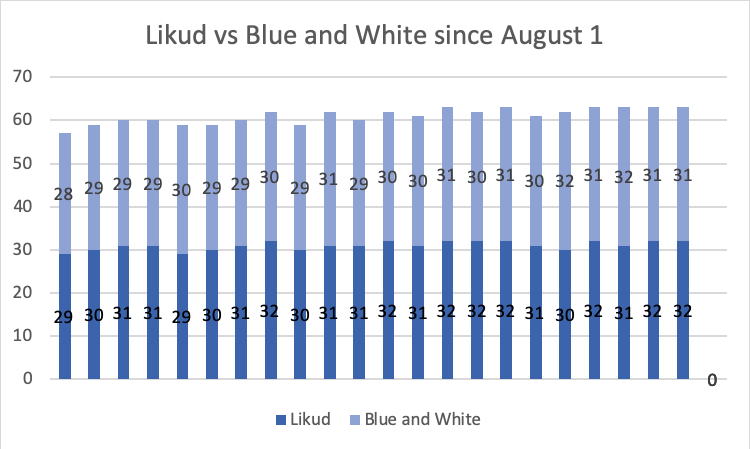
Likud & Blue and White united in wanting to be the largest party.
Main News
Likud is campaigning against Yamina, in an attempt to have more seats than Blue and White.
Blue and White is campaigning against Israel Beitenu, Labor and the Democratic Camp in an attempt to have more seats than Likud.
Gantz vows to form a secular liberal coalition without the ultra-Orthodox.
Legal issues: More details on Netanyahu’s investigations reveal his focus on media regulations.
The Attorney General opposes Likud’s initiative to have cameras in polling stations as the votes are counted. The public seems to be supportive of the initiative.
Otzma: Too soon to tell if this is significant, but today, for the first time, radical rightist Otzma Yehudit got 4 seats in a poll – that is, crossed the Electoral Threshold.
Developments to Watch
Politics: For months we were saying it is all about the blocs. It’s not: In this round, Likud and B&W fight to have more seats as they assume that A. no bloc will have a clear path for a coalition, and B. whoever gets the first mandate to form a coalition has the clear advantage.
Ideology: The anti-Haredi trend is growing stronger. Lieberman proved that it’s working, B&W decided to jump on the same train.
President Rivlin: The closer we get to election day without anyone having a clear advantage, the more we must consider the role of the President in picking the winner. That is, to decide who gets a first shot at forming a coalition.
Yamina: Again, the right-of-Likud party has a problem. Many of its voters are more concerned about having Likud in power, than about having their own party with more seats.
Diaspora affairs: This is marginal, but worth mentioning. When Gantz was asked to give one example of things he’d do differently than Netanyahu, the example he gave was the Western Wall compromise.
The Blocs and Their Meaning
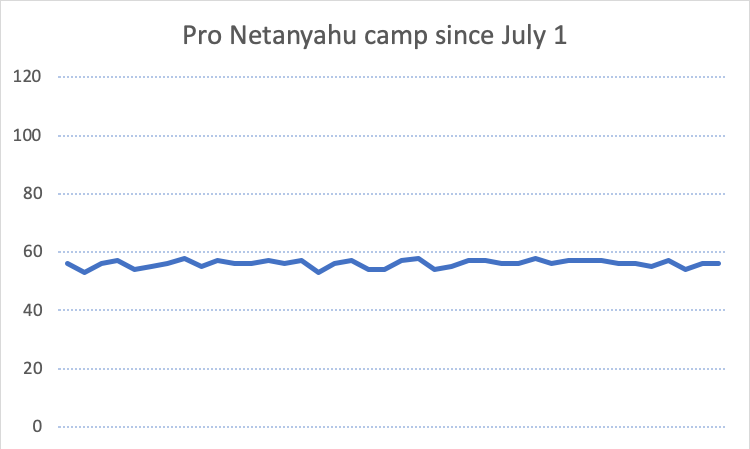
The blocs: Netanyahu’s bloc does not have the 61 seat majority it needs – for now.
The parties: The polls do not show one of the two main parties with clear advantage. They do point to a slow rise in the number of seats they get. They can easily form a unity coalition if they have the will to do it.
Shmuel Rosner’s book, #IsraeliJudaism, Portrait of a Cultural Revolution, is now available in English. The Jewish Review of Books called it “important, accessible new study”. Haaretz called it “impressively broad survey”. Order it here: https://amzn.to/2lDntvh
A set of Barbie dolls depicted as part of a Nazi concentration camp was on display in an art exhibit during Burning Man from Aug. 25 – Sept. 3 in Black Rock Desert, Nev.
The Jewish News of Northern California (J.) reported that the display featured a banner that read, “The Mattel Co. & Auschwitz Inc. presents Barbie Death Camp & Wine Bistro.” The words “Arbeit Macht Plastik Frei” then appear beneath it, referencing the “Work Sets You Free” sign over the Auschwitz death camp. The Barbies were depicted without clothes and being marched into three ovens.
On Aug. 31, an unspecified number of protesters approached the display and threatened James Jacoby, the brains behind the display, and vandalized the property, prompting an unnamed person affiliated with the display to use a mallet against one of the protesters’ tail lights. That person was subsequently arrested.
Jacoby told the J. that he’s Jewish and has featured the display at Burning Man “since [Bill] Clinton was president.” He defended the display as an “aphrodisiac” and said that those who are offended by it should just ignore it.
“It’s a little dark,” Jacoby acknowledged, “[but] part of the magic of [Burning Man] is that it’s not vanilla, Disneyland, pro-family. There’s a lot of nudity. A lot of sex. A lot of drugs. It’s not a family-friendly environment. And our camp isn’t, either.”
Anti-Defamation League Central Pacific Regional Director Seth Brysk told the J. that the display “tarnishes the memories of those who died, including the 6 million Jews and 5 million others. Particularly in the current environment, where we have a confluence of survivors no longer around to tell their stories, and increased extremism and hatred, we think it’s more important than ever to preserve and respect the memory of the Holocaust.”
The Barbie Death Camp’s website states that they are “home to some of the naughtiest, filthiest, snarkiest burners on and off the playa” and they are located in Auburn, Calif., which is in between Sacramento and Reno, Nev.
Burning Man is an annual gathering of tens of thousands of people featuring various displays and exhibits along what’s known as “Black Rock City”; the goal of the event is to unify varying communities. Burning Man has not responded to the Journal’s request for comment.
No matter how many times I tried, I kept getting brushed off. I was trying to pitch my company’s software to a large US-based carrier, and I knew that our product was a perfect fit for their needs.
I called and called but could not get a meeting set. I didn’t have anyone in my network to make an introduction. I was in charge of US operations and my counterparts were halfway around the world in Israel. I needed a way to open the door.
Eventually, I called to let the potential client know I was in New Jersey and that I’d be in their lobby for another meeting. I said I’d love to say hi for five minutes, though I wouldn’t actually have more time than that because I had to run to a flight after. They said they could meet for five minutes.
After I hung up the phone, I bought a roundtrip ticket. I flew all the way to the east coast to go to their lobby and meet for five minutes. Luckily, they saw the same thing I did: that our enterprise software would make their business run better. They became a customer for life.
I knew once they let me get a foot in the door, I could open that door. Getting there took a little bit of chutzpah—that Israeli combination of audacity, nerve, and boldness.
This same chutzpah is what helped propel me to break barriers throughout my career, including becoming the first female commander of F-16 pilots in the Israel Air-Force Simulator, starting my own business, and completing an ironman. Though Israelis have long valued chutzpah to grow businesses and succeed in unlikely circumstances, anyone can draw on it to drive their careers forward. Young professionals, in particular, can stand out in their professions by harnessing chutzpah. How?
1. Understand that it’s OK to Fail
Big risks often don’t scale, especially in the beginning. You might put yourself out there in a big way and fail a dozen times before you see results. That’s OK. Of course, when you take calculated risks, be sure that your team will understand and stand behind you. If I had flown to the east coast and not landed the client, I knew that my company would still be supportive of me taking a risk to land such a big, important client.
2. Know Your Value
When you take bold steps to further your company or career, you still need to be true to your strengths. I know that a risk that will put me in front of a client will go far, because I know that I excel when meeting clients face-to-face. Pinpoint your strengths and have the chutzpah to stand by what you do well, while maintaining respect for your company’s culture and procedures. This also means that you have to truly understand the unique value of your company’s products and services. Without this foundation, anything new you accomplish won’t be sustainable.
3. Be Open to Reinventing Yourself
I have worn a lot of hats over my career—engineer, technical sales leader, product manager, public speaker, investor, entrepreneur, writer, and more. Changing your career path requires a thoughtful strategy for how you talk about yourself, leverage your networks, and work toward your new goals. I know from personal experience, and from helping dozens of individuals propel their careers, that you can reinvent yourself quickly—even in 30 or 60 days—if you really know what you’re doing. But really going for it takes hard work, guidance, a healthy dash of chutzpah—and being open to change.
Taking calculated risks and keeping a growth mindset are incredibly important at all stages of a career, including earlier stages. That’s why next week, I’ll be speaking to young professionals at the Israeli-American Council’s EDGE Summit on Sept. 5 in Los Angeles. At a time when millennials are searching for opportunities to take their careers to the next level, speakers including myself will show them how to harness the inspiration of Israeli entrepreneurship, innovation, and yes, chutzpah to succeed.
Success isn’t a straight line. You will sometimes fail. You must know your strengths, goals, and network. You will change along the way. But with a deep understanding of the value of entrepreneurship, innovation, and chutzpa, anyone can leverage their strengths to bring their career vision to life.
Ilana Golan is General Partner at Homrun, a first-of-its-kind network-based venture focusing on accelerating the growth of Israeli startups in North America. She is also a member of the Forbes Business Council.
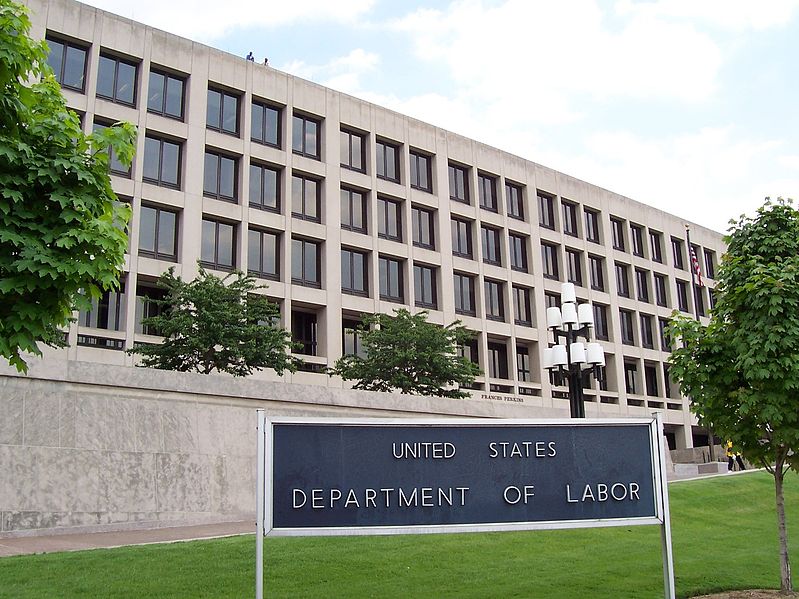
Department of Labor (DOL) official Leif Olson was reinstated on Sept. 4 to his position in the department after he initially resigned due to a Sept. 3 Bloomberg report calling his comments on Facebook “anti-Semitic.”
The DOL said in a statement posted to their website, “On Friday, August 30, 2019, Senior Policy Advisor of the Wage and Hour Division, Leif Olson offered his resignation and the Department accepted. Following a thorough reexamination of the available information and upon reflection, the Department has concluded that Mr. Olson has satisfactorily explained the tone of the content of his sarcastic social media posts and will return to his position in the Wage and Hour Division.”
The comments in question are from Aug. 2016, when Olson posted a status mocking white nationalist Paul Nehlen for a 70-point defeat in his attempt to primary then-Speaker of the House Paul Ryan (R-Wis.). A commenter called Ryan a “neo-con,” prompting Olson to reply that “neo-cons are all Upper East Side Zionists who don’t golf on Saturday if you know what I mean.” The commenter then said Ryan is a Jew, and Olson replied that “it must be true because I’ve never seen the Lamestream Media report it, and you know they protect their own.”
Bloomberg reporter Benjamin Penn called the aforementioned remarks “anti-Semitic” in a Sept. 3 piece reporting that Olson had resigned from the DOL; Olson told Bloomberg that his Facebook comments were “sarcastic criticism of the alt-right’s conspiracy theories and anti-Semitic positions.” Anti-Defamation League spokesman Jake Hyman told Bloomberg that the posts were anti-Semitic; later in the day he told The Washington Post, “We appreciate Mr. Olson’s clarification that he intended to be sarcastic with his posts and accept his explanation of the content in question.”
Olson tweeted, “I’m grateful to be heading back to work. Thank you, Acting Secretary @PatPizzellaDOL and @WHD_DOL Administrator Cheryl Stanton for the opportunity to continue to serve.”
Bloomberg and Penn have stood by their reporting prior to the DOL’s Sept. 4 announcement, saying that Penn simply sent the department a screenshot and they responded that Olson had resigned. Neither have responded to the Journal’s requests for comment.
Rick Recht Rick Recht, one of the busiest touring artists in the world of Jewish music, performs at Temple Aliyah’s “Back to Shul Family Shabbat.” A favorite of Jewish campers, Recht, who gives hundreds of performances every year, entertains Shabbat guests. The evening begins with dinner and concludes with a Shabbat service. 5:15 p.m. family dinner. 6:15 p.m. song session. 6:30 p.m. service. $23 grown-ups, $13 children. Temple Aliyah, 6025 Valley Circle Blvd., Woodland Hills. (818) 346-3545.
Services in the Round A contemplative Shabbat at Kol Tikvah offers services with live music in the intimacy of staging in the round. The highlight of the evening is a special program with human rights attorney Ann Strimov Durbin, director of advocacy and grantmaking at Jewish World Watch. The air conditioning is on for the late-summer outing in the West Valley. Services are led by Rabbi Jon Hanish and Cantor Noa Shaashua. Coffee and sweet treats available. 6:30 p.m. Kol Tikvah, 20400 Ventura Blvd., Woodland Hills. (818) 348-0670.
Barry Manilow
Barry Manilow Jewish singer-songwriter Barry Manilow, who produced a string of hits in the 1970s, starting with “Mandy” in 1975, returns to the Hollywood Bowl for two nights. Born Barry Alan Pincus 76 years ago in Brooklyn, he adopted his mother’s maiden name for the stage. Influenced by sentimental music of the 1930s and ’40s, Manilow’s repertoire includes “Can’t Smile Without You,” “Copacabana” and “Could It Be Magic.” He will perform with the Los Angeles Philharmonic orchestra. Singer Lorna Luft opens the program with songs from her Broadway career. 8 p.m. Sept. 6 and 7. Tickets start at $57. (800) 440-5739.
SAT SEPT 7
“Guilty Parties” and Mourning Shabbat Shabbat morning service with Lev Eisha and Jewish Women’s Theatre (JWT) integrates prayer and song with JWT’s performance of “Guilty Parties,” which is focused on the theme of forgiveness. The Shabbat kicks off Lev Eisha’s 20th year. During Kiddush, new friends get acquainted with the spiritual community of hundreds of women in the Los Angeles area and old friends catch up with one another. 9:30 a.m. Free. Temple Beth Shir Shalom, 1827 California Ave., Santa Monica. (310) 575-0985.
Art Beyond Borders In preparation for a giant weaving to be installed at the United States-Mexico border, the Hammer Museum holds “Family Day: Art Beyond Borders.” Families are encouraged to contribute to the weaving. All ages are welcome, and the afternoon activities of art, music and performance — including the Bob Baker Marionette Theater — are recommended for ages 5 and up. Families can help artist Ashley Hunt make a map of how families are being separated at the border. 11 a.m.-3 p.m. Free. Hammer Museum, 10899 Wilshire Boulevard, Westwood. (310) 443-7000.
SUN SEPT 8
Wendy Hammers
Wendy Hammers When actress-comedian Wendy Hammers reached middle age, she determined she needed to make massive changes in her life. What triggered the upheaval and how she adjusted are at the heart of “Ripe,” Hammers’ performance at American Jewish University’s Shapiro Synagogue. Her message: The time to celebrate life is now. 4 p.m. $25. American Jewish University, 15600 Mulholland Dr., Los Angeles. (310) 440-1572.
High Holidays Discovery Concert The choirs and orchestra members from the High Holidays Discovery Concert are doing double duty, performing first at Young Israel of North Beverly Hills and later in the day at Valley Beth Shalom (VBS). Familiar melodies and prayers heard and recited during the High Holy Days make up the concert selections. Performers include the Yavneh Boys Choir, Rinat Shlomo Choir, the UCLA Chamber Orchestra, Cantor Netanel Baram and Mark Kligman, professor of ethnomusicology and musicology at UCLA. At VBS, the cast also includes Cantors Herschel Fox and Phil Baron. Young Israel concert: Noon. $18 general admission, $35 premier seats. RSVP requested. Young Israel of North Beverly Hills, 9261 Alden Drive, Beverly Hills. (310) 276-7650. yinbh.org. VBS: 4 p.m. $18. RSVP requested. Valley Beth Shalom, 15739 Ventura Blvd., Encino. (818) 788-6000.
Jewish Meditation Retreat With the High Holy Days at hand, it’s a good time to tune into ourselves. Join Metivta, a center for contemplative Judaism, for a daylong meditation retreat. The seven-hour program includes silent sitting, walking meditation, Jewish chanting and a discussion with
Norman Fischer about his new book, “The World Could Be Otherwise: Imagination and the Bodhisattva Path.” 9:30 a.m.-4:30 p.m. $85, includes vegetarian lunch. Santa Monica Synagogue, 1448 8th St., Santa Monica. (310) 288-9474.
Sharsheret Benefit Celebrating three years of changing the lives of Los Angeles-area women and families living with breast and ovarian cancer, national nonprofit Sharsheret holds its annual benefit in a Beverly Hills garden. The evening features wine tasting, dinner stations, storytelling and a silent auction. Kosher dietary laws observed. 6:30 p.m. $150. Garden of the Greer home. Address provided with RSVP. (310) 409-2330.
Distant Cousins
Distant Cousins and More Westside congregation Kehillat Ma’arav holds “KM Rocks the Block,” featuring a concert by indie pop band Distant Cousins. The family-friendly event also features carnival games, including Dunk the Rabbi, plentiful food and a raffle. 2-5 p.m. $10, $15 at the door. Kids 12-and-under free. Admission includes the concert plus credit toward food and amusement. Kehillat Ma’arav, 1715 21st St., Santa Monica. (310) 829-0566.
TUE SEPT 10
“Run. Hide. Fight” The Los Angeles Police Department leads a demonstration at Shomrei Torah Synagogue on steps to be taken during an active shooter event. The presenters focus on law enforcement’s nationwide “Run. Hide. Fight.” protection strategy. 8-10 p.m. Free. Shomrei Torah Synagogue, 7353 Valley Circle Blvd., West Hills. (818) 854-7650.
WED SEPT 11
Rabbi Ed Feinstein
“What to Do With the Rest of Your Life” With less than three weeks to go before the High Holy Days, Valley Beth Shalom Senior Rabbi Ed Feinstein asks his community to begin reflecting on how each person is going to answer this central question: “What To Do With the Rest of Your Life — Preparing for a New Year.” Feinstein explores both obvious options and less-evident ones. While repentance may be the main purpose of the holidays, the challenge is to commit fewer mistakes in the coming year. 7:30-9 p.m. Free. Sher-Lopaty Chapel. Valley Beth Shalom, 15739 Ventura Blvd., Encino. (818) 788-6000.
New Insights About Auschwitz Untold stories of heroism keep coming out nearly 75 years after the end of the Holocaust. The latest comes courtesy of reporter-author Jack Fairweather, who has uncovered the many secrets of the courageous albeit little-known Witold Pilecki in his new book, “The Volunteer, One Man, an Underground Army, and the Secret Mission to Destroy Auschwitz.” In conversation with Michael Berenbaum at American Jewish University, Fairweather explains how Pilecki, during the three years he was imprisoned at Auschwitz, clandestinely sought to undermine the Nazis and inform the Allies of the emergency. A meet-the-author session and book sale follow. 7:30 p.m. $15. Shapiro Memorial Synagogue, American Jewish University, 15600 Mulholland Drive, Los Angeles. (310) 440-1572.
Jonathan Greenblatt
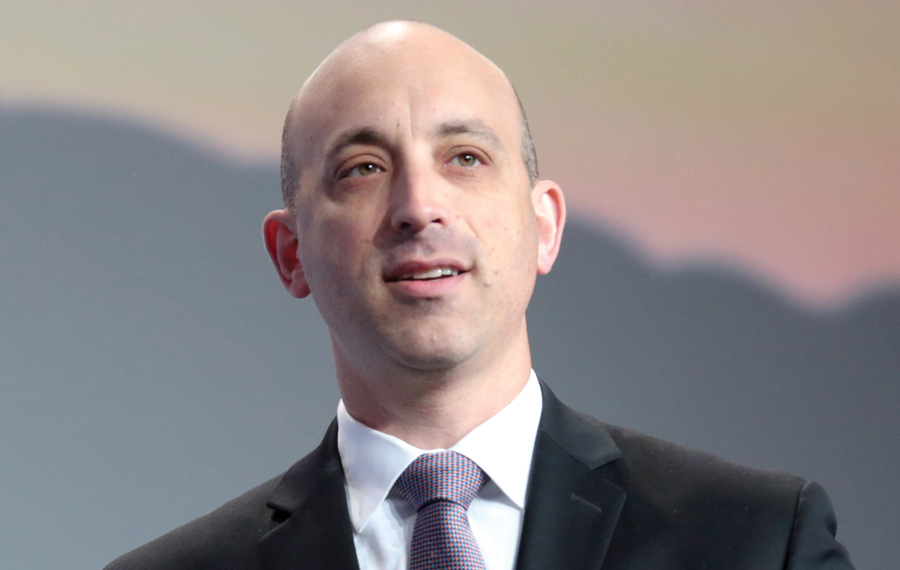
Greenblatt, Wolpe at Sinai Anti-Defamation League National Director and CEO Jonathan Greenblatt, who was a former special assistant to President Barack Obama, sits down for a conversation with Sinai Temple Senior Rabbi David Wolpe. Greenblatt is expected to cover a wide range of topics and share unique insights, especially on the matter of increasing anti-Semitism around the world. 7:30-9 p.m. Free for members. $25 general. Sinai Temple, 10400 Wilshire Blvd. (310) 481-3228.
“A Life for Football” The 2014 film “A Life for Football” screens at the Los Angeles Museum of the Holocaust. It tells the dramatic life story of Kurt Landauer, president of the FC Bayern Munich club, who was forced out by the Nazis in 1933 because he was Jewish. He wound up being imprisoned in Dachau. Landauer, however, returned to Munich after World War II to find his old team in shambles and then successfully rebuilt the squad. A post-screening Q-and-A session features Alan Rothenberg, former president of the U.S. Soccer Federation; Erit Yellen, a writer, producer and consultant on sports and social change content; and soccer coach Justin Greenberg. Los Angeles Times soccer writer Kevin Baxter moderates the discussion. Consul General of Germany in Los Angeles Stefan Schneider introduces the film, which is in German with English subtitles. 7 p.m. Free. L.A. Museum of the Holocaust, 100 S. The Grove Drive. (323) 651-3704.
Have an event coming up? Send your information two weeks prior to the event to ryant@jewishjournal.com for consideration. For groups staging an event that requires an RSVP, please submit details about the event the week before the RSVP deadline.
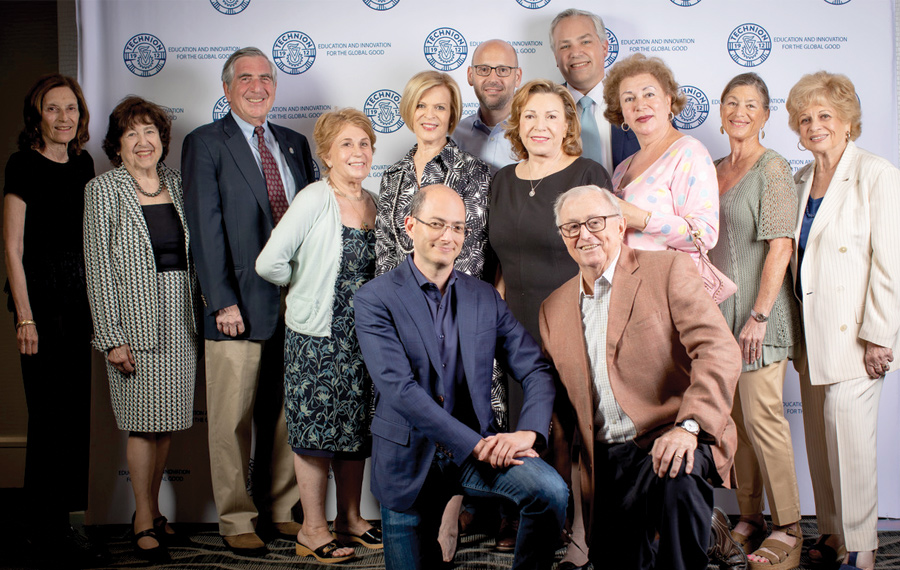
During a visit to Southern California, Technion associate professor Itamar Kahn led a conversation with community members about his and his team’s dedication to understanding the science of Alzheimer’s, Parkinson’s, ALS and other brain disorders.
The discussion, held on Aug. 6 at the InterContinental Hotel in Century City, was titled “Autism to Aging: Innovative Methods for Tackling Neurological and Neurodegenerative Disorders.”
Kahn studies brain function in health and disease, focusing on failures in organization that result in disrupted communication across brain systems. He is the director of the Technion’s Allen and Jewel Prince Center for Neurodegenerative Disorders of the Brain.
The American Technion Society, which raises funds and awareness for the Technion-Israel Institute of Technology, organized the evening.
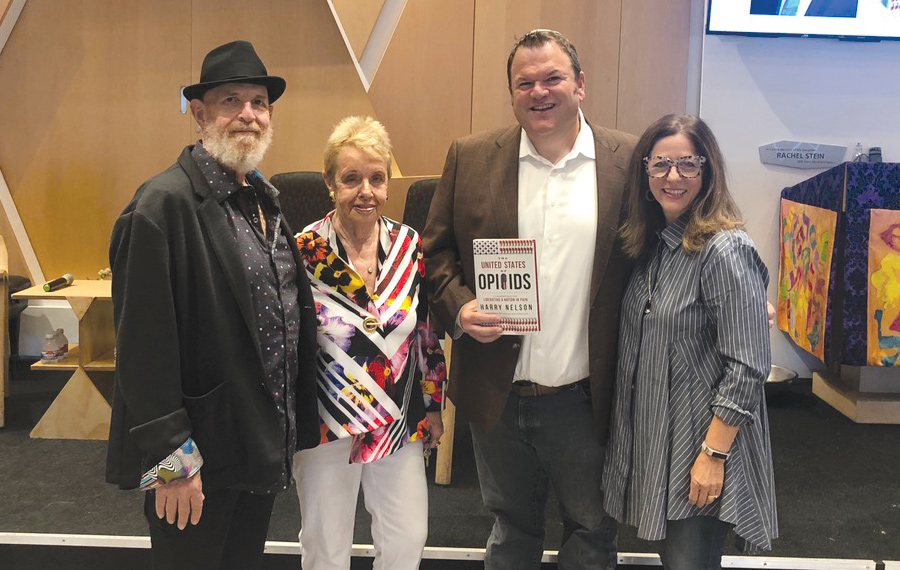
From left: Rabbi Mark Borovitz, Harriet Rossetto, author Harry Nelson and Beit T’Shuvah Board Chair Janice Kamenir-Reznik. Photo courtesy of Beit T’Shuvah
Jewish rehabilitation agency Beit T’Shuvah held an Aug. 25 event in Culver City featuring author Harry Nelson and Beit T’Shuvah founder Harriet Rossetto in conversation with Rabbi Mark Borovitz, founding rabbi at Beit T’Shuvah.
The topic was “The Opioid Epidemic Is Also a Jewish Problem” ahead of International Overdose Awareness Day on Aug. 31.
Nelson’s book, “The United States of Opioids: A Prescription for Liberating a Nation in Pain,” offers a comprehensive picture of how the opioid crisis evolved and what tangible steps people can take to address this issue. For their part, Rossetto and Borovitz have been treating addiction for over 30 years through Beit T’Shuvah’s unique treatment, which combines Jewish teachings, spirituality, psychology and the 12 steps to help those struggling with addiction.
“Beit T’Shuvah allows residents to stay in treatment for up to a year regardless of their financial situation and uses Judaism and spirituality as an integral part of recovery,” a Beit T’Shuvah statement said.
Attendees received a copy of Nelson’s book. They included Janice Kamenir-Reznik, board chair at Beit T’Shuvah.
Nelson, founder and co-managing partner of the L.A.-based law firm Nelson Hardiman, is considered a leading healthcare attorney and top expert on the future of U.S. healthcare.
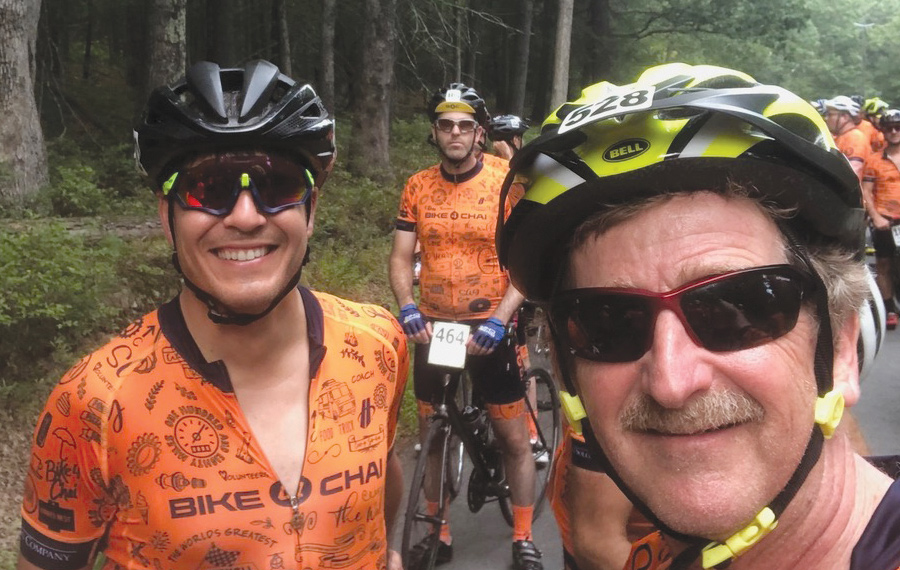
Valley Village bike riders Dr. Jan Moore and Moshe Kinsbursky completing Bike4Chai’s 180-mile ride benefitting Chai Lifeline. Photo courtesy of Chai Lifeline
Valley Village bike riders Dr. Jan Moore and Moshe Kinsbursky joined 575 riders from across the U.S., Mexico and Canada to participate in the 10th annual Bike4Chai, held Aug. 14-15.
Bike4Chai is a two-day, 180-mile bike ride and the top fundraising event for Chai Lifeline, which has grown from a small, community-based summer camp program for children who have cancer to one of the preeminent international health support networks supporting seriously ill children, their families and communities.
Bike4Chai raised $10 million for Chai Lifeline. Together Moore and Kinbursky raised over $19,000.
During the first day, riders traveled 109 miles from Princeton, N.J., through the Pocono Mountains of Pennsylvania, finishing at the Kalahari Resort. That evening, Camp Simcha kids joined the riders in a joyous celebration. The next day, the riders rode the rest of the way to Camp Simcha in Glen Spey, N.Y., where hundreds of family members and volunteers celebrated the riders’ arrival, campers presented each rider with their finisher’s medals and a celebration ensued among campers, staff and riders with music and dancing.
“The energy was off the charts,” Moore said. “It was incredibly emotional to see the pure joy and simcha in the eyes of the campers as we continued singing and dancing with the kids. All the work we did raising money and training came to an amazing conclusion. Seeing the campers and knowing the challenges they face made all our work training seem trivial.”
“We were happy to do our part to help this wonderful organization,” Kinsbursky said. “Hopefully, next year Team L.A. will have an even bigger team for
Bike4Chai 2020.”
Matt Baram has been named the executive director of Hillel 818, which serves more than 6,500 students at Cal State Northridge, Pierce College and Los Angeles Valley College, effective July 1.
Before joining Hillel 818, Baram spent eight years as the millennial director at Sinai Temple. He succeeds Hillel 818’s longtime executive director, Dave Katz.
“The Hillel 818 board and community stakeholders are thrilled to welcome Matt Baram as our new executive director,” Kathi Mangel, chair of the Hillel 818 board, said in a statement. “Matt brings enthusiasm, creativity and a drive to connect with Jewish students throughout our community. He is dedicated to ensuring continued growth and development of this Hillel for the benefit of all the students served today and for many years to come.”
Dave Cohn was named the Allen and Ruth Ziegler Executive Director at USC Hillel, which serves Jewish undergraduate and graduate students, as of July 1.
According to the USC Hillel website, Cohn previously worked as the director of Emory Hillel in Atlanta, retooling its campus engagement internship while achieving recognition from Hillel International.
The Chicago native is a former camper and staff member of the Olin-Sang-Ruby Union Institute, a Jewish summer camp in Wisconsin. He also previously worked in development and strategic projects for Hillel at UCLA and as a music educator in public school and synagogue settings.
The Central Conference of American Rabbis organized a rabbinic delegation to Montgomery and Selma for more than 50 Reform rabbis. Photo courtesy of Central Conference of American Rabbis
Ahead of the High Holy Days, the Central Conference of American Rabbis (CCAR) led a contingent of more than 50 Reform rabbis from across the country to Montgomery and Selma, Ala., “on a journey of truth, justice and reconciliation,” according to CCAR.
The visit took place from Aug. 19-21, during which time rabbis took part in discussions with leading scholars, clergy and activists about the history of and current racism in the U.S. They also visited sites including the Legacy Museum and the National Memorial for Peace and Justice.
According to CCAR, the participating rabbis used the visit as an opportunity to “discuss how Jewish communities, and the country as a whole, can confront our nation’s history and the present reality of racial injustice.” They also explored how the issue of reproductive rights is being debated in Alabama and throughout the South, where they have been laws passed that restrict a woman’s access to abortion.
In a statement, Rabbi Hara Person, chief executive of CCAR, said the trip reinforced the important part the Jewish community plays in confronting racism.
“Reform rabbis in particular have a key role to play in advancing all forms of justice, including racial justice, in our communities,” Person said. “The High Holy Days provide us the opportunity and the obligation to repent for not just our individual sins but for our harmful actions as a society.”
Rabbi Betsy Torop, director of rabbinic engagement and growth at CCAR, said the trip was in line with the mission of CCAR, a Reform rabbinic leadership organization.
“The CCAR has a long history of confronting injustice in many areas, including racial justice,” Torop said in a statement. “This seminar continues CCAR’s proud tradition as a leading Jewish voice on racial justice throughout its history as rabbis recommit themselves to advancing this cause in our own time.”
Trip leader Rabbi Seth Limmer of the Chicago Sinai Congregation and Rabbi Judith Schindler, the CCAR Montgomery seminar leader, also participated.
“This sacred journey provides an opportunity to renew the Jewish commitment to racial justice,” Limmer said.
Wanna be in Movers & Shakers? Send us your highlights, events, honors and simchas.
Email ryant@jewishjournal.com.
In a world that can be difficult for those seen as different, Rabbi “RBO” Rachel Bat-Or’s calling is helping those who have struggled with being LGBTQ+ find their footing.
Bat-Or, director of JQ International’s Helpline and Inclusion Services, has been a therapist, teacher and spiritual counselor for the past 35 years. Bat-Or is gender queer and doesn’t subscribe to any conventional gender distinctions, using the gender pronoun per, not her.
Last spring, JQ International, a nonprofit that works for greater inclusion of LGBTQ+ Jews, honored Bat-Or with its inaugural RBO Lifetime Achievement Award. Bat-Or spoke with the Journal about per faith and what it means to guide those in need of comfort, support and love.
Jewish Journal: How did you come to consider yourself gender queer?
Rachel Bat-Or: I was a woman seeing how many times I failed to live up to the vision of what a woman should be. When I transformed to be comfortable in my own way, my son said, “You must be so relieved.” I’m doing it exactly right for me. People don’t get it and I say to them, “How do you know what gender is?”
JJ: What did it mean to you to be honored with JQ’s Lifetime Achievement Award?
RBO: It never occurred to me I was building up a lifetime of achievement. I did what was needed, helped people who needed help, always had a mindset of working for the greater good. When I saw something that needed fixing, I thought about what I could do to make a difference. Having that acknowledged and honored in front of my peers, friends and colleagues was both a shock and an affirmation of my values. It was only after I was told I was receiving this award that I began to see my work as a whole and not as individual actions. It helped me be inspired by that work and want to do even more of it.
JJ: What are some of the most rewarding parts of working with JQ’s Helpline and Inclusion Services?
RBO: Talking with someone who called the JQ Helpline, hearing how upset, angry, confused, afraid they are. Helping them talk about what they need, what they feel. And then hearing the shift in their voice and knowing they have found an answer to their questions. Doing an inclusion training for an organization and have people ask questions they’ve been afraid to ask and get the answers they need to understand how to approach the unique issues of LGBTQ+ people. Shifting from not knowing to knowing.
JJ: How does being a rabbi inform your work with JQ?
RBO: We begin every team meeting with a question to help us know ourselves and each other better. We end each meeting with a prayer, thanking HaShem for the power, knowledge and resources to do our work with as much joy as possible. Bringing in my knowledge of Judaism, our texts, ethical teachings, new ways to look at ancient writings brings me great pleasure. This is the congregation I was meant to serve.
“I was a woman seeing how many times I failed to live up to the vision of what a woman should be. When I transformed to be comfortable in my own way, my son said, ‘You must be so relieved.’ ”
JJ: How would you like your work with the LGBTQ+ community to be remembered?
RBO: The most important thing to me when I am not here is that people say I helped them heal. The goal of my life is to help people go from being in pain to not being in pain.
JJ: You became a rabbi at 55. What made you decide to pursue the rabbinate?
RBO: The more I did in the Jewish community, the more I wanted to do. I realized I needed to become a rabbi to do what I loved.
JJ: Before you were a rabbi, you were a kosher butcher at a food co-op in New Haven, Conn. What was that like?
RBO: [The co-ops] were collectives. They were supposed to be leaderless, right? That’s never the case. There’s always a leader in life. There were two guys who were the leaders, and we were in the hood, not the [Jewish community] hood but the hood …where we all lived also. And we created a store that was member-run. People came in and took whatever shifts once a month and they were looking for two women to be the first butchers in the state of Connecticut. Like someone sent me an engraved invitation that said, “Will you please do this?” My grandfather had been a kosher butcher. It was the only job I ever had where I walked in, there was a certain thing you had to do and then I got to go home.
JJ: As opposed to being a rabbi where the work never stops?
RBO: Being a rabbi, being a teacher, being a therapist, where nothing is ever finished. It’s like Rabbi Tarfon said, “You might not finish it, but you can’t not do it.” I loved it. I was able to lift up 200 pounds of hindquarter and put it from one hook to the other hook to be able to break it down into parts. I would take 70 pounds of front quarter to the band saw and cut steaks. The only thing I wouldn’t work with, I wouldn’t cut pork. I might have eaten bacon at the time but I wouldn’t [work with it].
JJ: Do you keep kosher now?
RBO:(Shakes per head)
JJ: Do you eat meat?
RBO: Yeah, I do eat meat. I am a pseudo vegetarian. People think I’m a vegetarian, but I’m really not.
Plain brown paper lunch bags are really sad. When you take one to school or work, you just know lunch is not going to be very exciting. But lunch becomes much more promising when you jazz up the plain bags into miniature backpacks. Even peanut butter sandwiches feel gourmet when you carry them in these clever sacks. Besides using them for lunches, they also make great gift bags or treat bags.
What you’ll need: Construction paper, two colors
Brown lunch bag
Scissors
Glue or glue stick
Black marker
**Make this project and share it with the Journal! Post it on social media with #JJcrafts and tag us @jewishjournal**
1. With one color of construction paper, cut one 5 1/4-by-5 1/4-inch square, two 1-by-9-inch strips, and one 1-by-3-inch strip. With a second color of construction paper, cut one 4 1/2-by-3-inch rectangle and two 1-by-3-inch strips.
2. Fold the 5 1/4-inch square piece in half. Fold the paper bag 2 1/2 inches from the top to create a flap. Note: these dimensions are for a standard brown paper bag that is 5 1/4 inches wide. Adjust your measurements if your bag is a different size.
3. Glue the folded 5 1/4-inch square piece so that one half is attached to the back of the bag and the other half is attached to the top of the flap. You should still be able to open the bag.
4. Glue the two 1-inch-by-9-inch strips to the back of the bag to create the backpack shoulder straps.
5. Glue the 4 1/2-by-3-inch rectangle to the bottom of the front of the bag. If you want to use it as a pocket, apply glue only to the two sides and bottom edge.
6. Glue one 1-inch-by-3-inch strip parallel to the top flap and just below it. Apply glue only to the left and right edge. Then glue the second 1-by-3-inch strip to the top flap perpendicular to the first strip so that it slides behind it. Then if you’re feeling artistic, draw dotted lines along all the edges to look like seams.
Jonathan Fong is the author of “Flowers That Wow” and “Parties That Wow,” and host of “Style With a Smile” on YouTube. You can see more of his do-it-yourself projects at jonathanfongstyle.com.
Edward Allen died Aug. 9 at 86. Survived by wife Myrna; daughter Tracy; son Allen; 3 grandchildren. Hillside
Steven Glen died Aug. 7 at 73. Survived by daughter Jennifer; son Adam; 2 grandchildren. Hillside
Deborah Elliot died Aug. 2 at 66. Survived by husband Steven; daughter Beth Zadie; son Cameron; 1 grandchild; brother Andrew Schreiber. Mount Sinai
Sylvia Fialla-Levine died Aug. 7 at 76. Survived by stepdaughter Dorothy Starns; son Morrie (Bonnie) Goldman; 2 grandchildren; brother Ron (Barbara) Weisbrod. Mount Sinai
Susan Ford died Aug. 6 at 67. Survived by brother Alexander. Mount Sinai
Marvin Aaron Friedman died July 30 at 70. Survived by wife Debra; daughters Victoria, Taylor, Elizabeth; son Matthew; sister Sylvia Brown; brother-in-law Herbert Klein. Mount Sinai
Miriam Handman died Aug. 13 at 92. Survived by daughter Judy; son David (Erika). Hillside
Susan Itami died Aug. 4 at 75. Survived by husband Bruce. Hillside
Ellen Itkin died Aug. 16 at 81. Survived by daughter Marla (Steve); son Benjamin (Gabrielle); 5 grandchildren. Hillside
Teri Kaiser died Aug. 9 at 89. Survived by daughters Stacy (Bruce) Mendleson, Kim Brody; son Brett; 6 grandchildren; brother Herman (Elaine) Orenstein. Mount Sinai
Ruth Lehrer died Aug. 10 at 104. Survived by sons Harvey, Wayne, Glenn; 2 grandchildren. Hillside
Paula Machtinger died Aug. 7 at 94. Survived by husband Sidney; daughters Paula (Randy Thompson), Barbara; sons Edward (Willie Ablao), Steven (Susan), John (Adele); 5 grandchildren. Mount Sinai
Mary Myers died Aug. 9 at 87. Survived by husband Randolph; daughters Melinda (Ken), Teresa, Laura, Monica, Lisa, Maria; sons Randolph, Steve, John, James; 29 grandchildren; 5 great-grandchildren. Hillside
Betty Popper died Aug. 5 at 90. Survived by husband Marvin; daughters Lisa, Karynne; son Ronald (Jodi Frey); 4 grandchildren; brother Manny (Barbara) Cetner. Mount Sinai
Henry Present died Aug. 16 at 96. Survived by wife Felicia; daughters Paula (Brian), Lisa (Craig); 2 grandchildren. Hillside
Elliott Richards died Aug. 13 at 78. Survived by daughter Tania; son Paul. Hillside
Jay Richards died Aug. 7 at 84. Survived by sons Bret, Douglas (Susan); 1 grandchildren; 2 great-grandchildren; sister Shelly Dietrich. Mount Sinai
Gary Joel Rosenberg died Aug. 9 at 78. Survived by wife Geri; daughters, Michelle Kredell, Cheri Wynn; 4 grandchildren; sister Phyllis (Patty Wile). Mount Sinai
Selma Roth died Aug. 5 at 99. Survived by sons Andrew (Diane), Ted (Lillian); 7 grandchildren; 21 great-grandchildren; 9 great-great-grandchildren. Mount Sinai
Cecile Rudman died Aug. 10 at 100. Survived by daughter Susan; son Jay; 5 grandchildren; 2 great-grandchildren; sister Roberta; brother Gerald. Hillside
Thomas Rykoff died Aug. 10 at 84. Survived by wife Sondra; son Mark (Elena); 2 grandchildren; sister Ruth; brother Steve. Hillside
Leonard Saxon died Aug. 9 at 89. Survived by daughters Leslie, Rebecca; sons Edward, David, Mark; 8 grandchildren; sister Elaine. Hillside
Herbert Schaffer died Aug. 9 at 90. Survived by wife Esther; daughter Susie Goldstein; sons Steve, Robert; 5 grandchildren. Mount Sinai
Wendy Shane died Aug. 5 at 69. Survived by sister Susan (Peter); brother Shane. Hillside
Lois Sherman died Aug. 6 at 79. Survived by daughter Marcie Jo; son Barry Jay (Jill); 3 grandchildren; sister Ronna; brother Stuart. Hillside
Harriet Doris Silvertrust died Aug. 2 at 89. Survived by daughters Melissa (Jack) Bereustein, Debbie Williams; son Mark (Julie); 4 grandchildren; 5 great-grandchildren. Mount Sinai
Sanford Spielman died Aug. 5 at 87. Survived by wife Lois; daughter Julie; son Steven; 2 grandchildren. Hillside
Bernice Steinberg died Aug. 10 at 95. Survived by daughter Janet; sons Mark (Marilyn), Craig (Phyllis); 3 grandchildren; sister Sybil; brother Bert. Hillside
Shirley Steppler died Aug. 7 at 91. Survived by daughters Terrie, Dianne; 4 grandchildren. Hillside
Stephen Tomar died Aug. 9 at 80. Survived by husband Stuart; sister Connie (Marvin); sister-in-law Susan (Mark). Hillside
Clifford Weitz died Aug. 14 at 89. Survived by wife Marilyn; daughter Julie; son Jeff; brother Ted; 4 grandchildren. Hillside
Louis Willis died Aug. 9 at 99. Survived by wife Dorothy; daughters Dorothy, Paula Siegel, Monica (Stephen) Rosen, Sheryl (Bill) Zika; 6 grandchildren; 6 great-grandchildren. Mount Sinai
Joe Zelman died Aug. 9 at 100. Survived by wife Helen; sons Stephen (Laura), Michael (Jeanette), Richard (Cyndi); 6 grandchildren; 6 great-grandchildren. Mount Sinai
David Zukerman died Aug. 10 at 99. Survived by daughter Nancy (Jerry); 2 grandchildren; 4 great-grandchildren. Hillside
David Ben-Gurion and Tom Segev are consequential figures in the history of Israel, one of them for making it and the other for writing about it. That’s why Segev’s new biography of Ben-Gurion, “A State at Any Cost: The Life of David Ben-Gurion” (Farrar, Straus and Giroux) is such a significant and highly anticipated event.
Segev, a distinguished Israeli journalist and historian, has been described as a “revisionist” because his meticulously researched and highly provocative books have re-framed and re-focused the history of Israel. Ranging from “One Palestine, Complete” to “The Seventh Million: Israelis and the Holocaust,” from “1949: The First Israelis” to “1967: Israel, the War, and the Year That Transformed the Middle East,” Segev has described the history of Zionism, the Holocaust, and the creation of the Jewish state from a courageous and sometimes challenging perspective.
Ben-Gurion, the early and enduring leader of the Zionist movement and the State of Israel, is necessarily depicted in all of these books, but now Segev has reexamined Ben-Gurion’s life and work in tight focus. During his lifetime, Ben-Gurion “worked diligently to shape the historical narrative of his time and of himself,” Segev writes. His letters, diaries, speeches, articles and books, amounting to “millions of words,” were “aimed at gaining the sympathy of future generations. Now Ben-Gurion, a man of immense accomplishment and complexity, has gotten the biographer he deserves.
“A State at Any Cost,” translated from Hebrew by Haim Watzman, penetrates the myths and legends that have threatened to erase the flesh-and-blood human being. Starting in his 20s, Ben-Gurion aspired to write himself into the history of Zionism, but “he did not take credit for founding the state,” as Segev writes, and “justifiably so.” Yet the death of Ze’ev Jabotinsky — “his great nemesis on the right” — and “the decline of Chaim Weizmann, president of the Zionist Organization, “left him almost unopposed in the worldwide Zionist movement.” As Segev shows us, Ben-Gurion was present at the creation of modern Israel at its every moment of both peril and triumph over the most eventful half-century in Jewish history.
Segev’s book showcases his trademark approach to retrieving and revealing the colorful and often unexpected facts of history. Ben-Gurion once boasted that he knew from the age of 3 that he wanted to leave the Polish town where he was born in 1886 as David Yosef Gruen. “I was born a Zionist,” he claimed. He borrowed his new last name from a first-century Jewish politician in Jerusalem who appears in the ancient writings of Josephus as a champion of democracy. In the early years of Bolshevik Russia, Ben-Gurion traveled to an international agriculture fair in Moscow, where he was permitted to “fly the blue-and-white Zionist flag alongside the Histadrut’s red flag” at a display of the figs, olives, chocolates, cigarettes and canned goods that were produced by the Jewish community in Palestine. When he visited Munich in 1933, Ben-Gurion bought a copy of “Mein Kampf.”
“The book includes some intimate details of Ben-Gurion’s private life that put the great man in a new and unaccustomed light.”
More than one paradox emerges from Segev’s biography. Ben-Gurion was a wholly secular Jew, and yet “[o]ne might almost say that he had a mystical faith in the power of and mission of science to solve what seem to be insoluble problems,” as Gen. Yohanan Ratner said of him. He worked on Yom Kippur, ate pork, and commented on his refusal to pray with the distancing remark: “I hope that your God will forgive me that transgression.” Yet his personal library at Sde Boker, the Negev settlement where he retired, included a complete set of the 20-volume Zohar, the root of Jewish mysticism.
Ben-Gurion, as we see, was entirely open-minded when it came to tactical matters but his ultimate goal was always fixed and singular. For example, he regarded the cooperation between the Jewish Agency and the British authorities in Palestine as “the cornerstone of the national home,” and Segev credits them with a crucial role in the achievement of the Jewish state: “The British did not only assist in the ‘state-in-the-making,’ ” Segev writes. “[A]s Arab terror increased, they also lent a hand to the establishment of an ‘army-in-the-making.’ ”
“A State at Any Cost” also includes some intimate details of Ben-Gurion’s private life that put the great man in a new and unaccustomed light. Early in his marriage to his wife, Paula, she sent letters to the camp in Canada where Ben-Gurion was training to serve in a Jewish unit of the British army in World War I. “ ‘You are a bad lover, husband, and father,’ she wrote to him, and again and again reminded him to keep his promise to her, which was apparently that he would not be unfaithful and would not be killed.” Later, as Segev reveals, her concern was proven to be justified — Ben-Gurion engaged in several flirtations and affairs, and he wrote to one young woman that love “is a human weakness that nothing should be done to counter.” Although he wanted a fourth child, Paula declined. “I never told Ben-Gurion how many abortions I had,” she reportedly confided to Israeli politician and author Yitzhak Navon. “Three children are enough for me.”
Segev reminds readers that Ben-Gurion may have opposed the tactics of Menachem Begin’s Irgun paramilitary organization, but he was open-eyed about the fact of Arab resistance to a Jewish state. The wishful notion that Palestine was “a country without a people for a people without a country” struck Ben-Gurion as “naïve Zionism,” and he regarded the Arab population as a problem to be solved: “He believed that the Land of Israel belonged to the Jews and that they deserved to receive it despite the fact that it was populated by Arabs.” Ben-Gurion was willing to make compromises that were bitterly opposed not only by the right-wing parties but even by some elements of the Israel Defense Forces and the Labor Party, during and immediately after the War of Independence. Indeed, the partition of Palestine as envisioned in the United Nations resolution in 1947 — and embraced by Ben-Gurion — was a two-state solution. Yet Segev insists that “[t]he legacy he left his successors on security matters reflected a nightmarish fantasy about the country being overrun with Palestinian Arabs.”
Any biography of Ben-Gurion, of course, is necessarily a history of Israel itself. Segev looks frankly at Ben-Gurion’s role in such crucial events as the declaration of statehood and the War of Independence in 1948, the Sinai Campaign in 1956 and even the Six-Day War in 1967. By then, however, Ben-Gurion was “irrelevant, cut off from public life,” as Segev writes. “At the Six-Day War victory parade, he sat in the audience, instead of on the dais, apparently so as to avoid shaking [Prime Minister Levi] Eshkol’s hand.” (In a 33-page letter written to Golda Meir, the “Old Man” — as Ben-Gurion came to be known — complained bitterly of the “lies,” “corruption” and “idiocy” of the man who had replaced him.) And Ben-Gurion was still writing letters of condolence to the parents of fallen soldiers in the Yom Kippur War in 1973, the year of his death.
None of the readers of his previous work will be surprised that Segev refuses to write a hagiography. He reminds us that Ben-Gurion’s “shrill voice and small stature” worked against him, although “the whiter his mane, the more Ben-Gurion became a symbol of proper and achievable Zionism.” His judgment of Ben-Gurion is candid and nuanced, but he does not deny Ben-Gurion the stature to which he aspired from an early age. “In Ben-Gurion, Zionism and ego blended into a single entity,” Segev concludes. “Every citizen was a soldier in the service of history, and Ben-Gurion was history’s commander.”
Jonathan Kirsch, author and publishing attorney, is the book editor of the Jewish Journal.
Purchase “A State at Any Cost: The Life of David Ben-Gurion” on Amazon.