fbpx

September 4, 2019

‘Farm Girl’ Molly Yeh Serves Up Jewish and Chinese Delicacies

You might expect the host of a Food Network series called “Girl Meets Farm” to serve simple fare from the American heartland, but you’d be only half right. Molly Yeh is of Jewish and Chinese heritage, and she uses that unique culinary perspective to blend both influences in the innovative cuisine she prepares on the show. Her eclectic menus include homey casseroles, decadent desserts and such exotic hybrids as pastrami egg rolls and scallion pancake challah. 

Yeh was a percussion student at the Juilliard School in New York when she discovered that her real passion was food, and began the popular blog that spawned videos, the bestsellers “Molly on the Range” and “Yogurt,” and in 2018, launched her TV career. Beginning its fourth season on Sept. 8, “Girl Meets Farm” emanates from Yeh’s kitchen in northern Minnesota, where she lives with her fifth-generation farmer husband, Nick Hagen, and 6-month-old daughter, Bernie. 

“I want to create food that takes people to another country, another time, or tells a story about something,” Yeh said. “It’s about exploring new things, new flavors, flexing my creativity and just having fun, too.”

Since marrying fellow Juilliard alumnus Hagen, who is Norwegian, she has added Scandinavian recipes to her repertoire, such as lefse, a thin potato crepe with butter, cinnamon and sugar. She also has learned to make bagels but hasn’t mastered Chinese noodles yet. “And I miss really good pizza,” she said. 

Without Whole Foods or Trader Joe’s, she relies on friends to send her hard-to-find ingredients, and she stocks up when she travels. “I have my sources,” Yeh said. “And I’m always looking for things to bring home.”

Growing up in Glenview, Ill., Yeh, a self-described “very picky eater,” lived on her Hungarian-Jewish mother’s challah, matzo ball soup and noodle kugel. Feeling homesick for fresh-baked braided loaves when she moved to Brooklyn, N.Y., she called her mother for the recipe. “It took me a full two days to make it,” she said. “It was so satisfying and I ate it all.”

“[Israel] is where so much of my culinary inspiration comes from. Whenever I go there, I come back with a suitcase full of spices and stock up on tahini and halvah.” — Molly Yeh

Yeh made the challah for her 2015 interfaith wedding, along with most of the food, including mini pot pies, a potato dumpling soup called knoephla and coconut, chocolate marzipan and Funfetti wedding cakes. Hagen built the chuppah. “Nick and I aren’t very religious, but it was really important to celebrate traditions like breaking the glass,” she said.

Her clarinetist father, who met her mother at a party when he dropped a plate of food at her feet, is Episcopalian. “We did celebrate Christmas and Easter,” Yeh said. But she considers herself Jewish. She plans to raise her daughter Jewish and send her to the same Jewish summer camp she attended. “I do love Jewish culture and Jewish values and will teach them to her — family, tradition, tikkun olam, being part of a community,” she said. “It’s one of my priorities.”

But being Jewish isn’t always easy in a community where there are few Members of the Tribe and worship options are a tiny synagogue in the nearest town, Grand Forks, N.D., that depends on a traveling rabbi, or the Chabad in Fargo, 90 minutes away. “When I first moved there and wanted to celebrate the holidays, I realized I was in charge of making it happen,” Yeh said. “In New York it was taken for granted.”

Yeh has been to Israel three times, including a culinary Birthright trip, and most recently, two summers ago. “It’s where so much of my culinary inspiration comes from,” she said. After her first visit, “I came back and lived on Israeli salad, hummus, pita and shakshuka for months. Whenever I go there, I come back with a suitcase full of spices and stock up on tahini and halvah.” 

Rosh Hashanah is Yeh’s favorite Jewish holiday and she’ll celebrate it with a themed episode of “Girl Meets Farm” airing on Sept. 22. She plans to serve her visiting family a brunch menu featuring sweet apple butter rolls with honey-marzipan frosting and brisket with a carrot hash she described as “a mix between a latke and tzimmes.”

Later this season, there will be a Chrismukkah episode for Christmas and Hanukkah, which coincide this year. “I usually do a latke party but this time it’s a sit-down dinner — roasted chicken with apples and latkes on the side,” Yeh said. Also for Hanukkah, she will host a Food Network competition highlighting traditional Jewish foods. She hopes to continue appearing as a judge on the network’s seasonal baking competitions, and has an interest in possibly opening a restaurant. 

“There are so many great little spots near here that would be great for that,” she said. “It would be a lot of hard work and would involve skills that I have no idea about. But if somebody came to me and asked me to create a menu for a restaurant, and they’d do all the business stuff, I would love that.”

“Girl Meets Farm” premieres at 11 a.m. Sept. 8 on Food Network.

‘Farm Girl’ Molly Yeh Serves Up Jewish and Chinese Delicacies Read More »
Sharon Osbourne Calls Corbyn ‘Arrogant’ and ‘Repulsive’

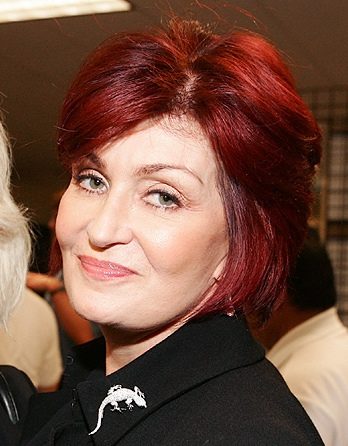
‘The Talk’ co-host Sharon Osbourne, wife of musician Ozzy Osbourne, called UK Labour Party Leader Jeremy Corbyn “arrogant” and “repulsive” in an interview with The Sun published on Sept. 4. 

Osbourne said, “I hate him so much!” when The Sun asked her about Corbyn.

I want to hurt him. I want to physically hurt this man,” Osbourne said. “He is the most arrogant, ugly f—. I want to hurt him. Oh my God, he is revolting, so ugly, inside and out. This ugliness oozes from him, he’s repulsive.”

Osbourne, who is of Ashkenazi Jewish descent, went on to describe her concern about the growing anti-Semitism in the Labour Party 

“It’s always been around and it will always be around and that’s what terrifies me because of all the ugly groups that are coming up all over the world,” Osbourne said. “It’s always the Jews or the blacks or the Muslims — everybody hates somebody.”

Osbourne also discussed about the various instances her late father, Don Arden, faced anti-Semitism while serving in the British Army during World War II, including his fellow soldiers forcing him to “dig a hole” in the pouring rain because he’s “a f—— Jew and this war is over you.”

The Labour Party has faced myriad allegations of anti-Semitism under Corbyn’s stewardship and the Labour Party leader has been criticized for abetting the rise of it; more than a dozen Labour Party members have resigned from the party over the anti-Semitism allegations. 

On Sept. 4, UK Prime Minister Boris Johnson challenged Corbyn to join his efforts to call snap elections after the House of Commons blocked his attempt to get a no-deal Brexit bill passed. Corbyn rebuffed Johnson.

Sharon Osbourne Calls Corbyn ‘Arrogant’ and ‘Repulsive’ Read More »

Jewish Bluegrass Duo’s Single ‘Homesick’ Written to Combat Anti-Semitism

“We want people of all minorities to feel heard. We want non-Jewish people to understand the experience of what it’s like being Jewish and being a minority in this country and not feeling like it’s our home.”

So says Gabriela Rose, 24, one half of the multi-instrumental bluegrass duo Mama Danger. Together with Nick Cameron, 25, their latest single, “Homesick,” draws upon the anti-Semitism and other injustices they have experienced in their southern community of Asheville, N.C.

“I felt this melancholy in the community about identity and living in the South and being Jewish,” Rose told the Journal. “I wanted to speak to that … because Judaism isn’t really talked about in the South and often having a Southern identity has a negative connotation. I want to be proud of being Southern but also be proud of being Jewish. And there is a conflict between those identities.” 

“Homesick” was written toward the end of 2018, not long after the Tree of Life synagogue mass shooting in Pittsburgh. “We wrote it as a single because it was such a specific emotion regarding the whirlwind of the media,” Rose said. 

‘Homesick’s’ lyrics include: “Branches bloom in my lungs. Stealing songs left
unsung.” 

Said Rose, “I’ve always been fascinated by the imagery of trees and branches and how they mirror what our anatomy looks like on the inside. There is also that feeling like you don’t have a voice and what you are saying doesn’t have an impact.”

She added the duo is “very covert with our Judaism [in “Homesick”], because we want to bring people in to listen to the song and then fully understand it.” 

There is a line in the chorus that says: “To ignite this ever-burning flame.”

“Our theme within the song is to ignite this [flame], which is a symbol of the Jewish people prevailing through adversity,” Rose explained. “So often, the story of Judaism is that Jews have been misplaced and pushed around so there is this longing for a home that doesn’t necessarily exist and that is starting to feel that way in America.”

Born and raised in Raleigh, N.C., Rose said, “My mother is a piano teacher, my brother is a drummer, my other brother is a bassist and my father plays guitar. So we would do the whole family band thing. I always grew up around music and especially folk music.” 

Rose’s father is Israeli so a large majority of her family lives in Israel. “I grew up going to Israel, riding camels in the Negev desert and playing in the streets of Tel Aviv,” she said. “Judaism is a very core part of my life.” 

“I felt this melancholy in the community about identity and living in the South and being Jewish. Often having a Southern identity has a negative connotation.” 

— Gabriela Rose

However, growing up in the Raleigh area, Rose said, “I have been bullied for
being Jewish. I’ve been tokenized and made to feel different in a predominantly white community.”

Cameron hails from Maryland. His mother is Jewish and his father is Christian but it was important to them they celebrate the different holidays of both religions. He grew up doing theater and that turned into musical theater, which turned into just music. It wasn’t until 2014 when he moved to Asheville that his Jewish identity came into play. 

“Because the area of Maryland I grew up in had a pretty large Jewish population, I had lots of friends who were really more knowledgeable about Judaism than I was,” Cameron said. “So I never really thought about it until I came to Asheville and I became a lot of people’s one Jewish friend. I was the token Jew as it were, and it was eye opening.”

Rose moved to Asheville in 2013, to study psychology at UNC Asheville. It was in 2016 that she found her way to the music department, where she met Cameron. They were part of the university’s ambassador choir, and during a trip to perform for President Barack Obama’s final Christmas at the White House, a close friendship was forged between them. “On that trip Nick and I became friends and I felt comfortable to share with him the songs that I had been writing over the course of my life,” Rose said.

In seeking out a band name, the duo tried to create an anagram from both their names but came up short. Then they put the word “anagrammed” into an anagram generator and it came up with Mama Danger.  “It had a bluegrassy ring so we went with it,” Cameron said. 

However they do not consider themselves merely a bluegrass band. “We are pretty influenced by a band called Punch Brothers,” Cameron said “They look like a bluegrass band but when you look into their music, it is kind of like all over the map. You can hear jazz and classical and pop. So we are inspired by their disregarding of genres.” 

Aside from Mama Danger, both work at the Asheville Jewish Community Center, where Rose is a preschool teacher and Cameron works in the after-school program twice a week. 

“Living in the South and being Jewish is a core part of a lot of the Jewish population’s identity,” Rose said. “In Asheville, the community is very small (3,500 Jews in all of western North Carolina). “Our Asheville JCC has faced some anti-Semitism and in the past couple of years, we were one of the many JCC’s that had a bomb threat called in. We have had people vandalize the Jewish cemetery and post anti-Semitic flyers around town. And oftentimes, the JCC has to go on high alert. It is scary and I have to teach 4-year-olds what to do when a bad guy comes.”

Moving forward, the duo hope to be a voice for marginalized people. Said Rose, “The future for us is to continue to grow within the western N.C. community and spread our message and the acceptance of a Jewish identity through our music
and playing at Jewish events and non-Jewish events.”

‘Homesick’ is available on Spotify.

Jewish Bluegrass Duo’s Single ‘Homesick’ Written to Combat Anti-Semitism Read More »

Sacha Baron Cohen Plays Israeli Hero in ‘The Spy’

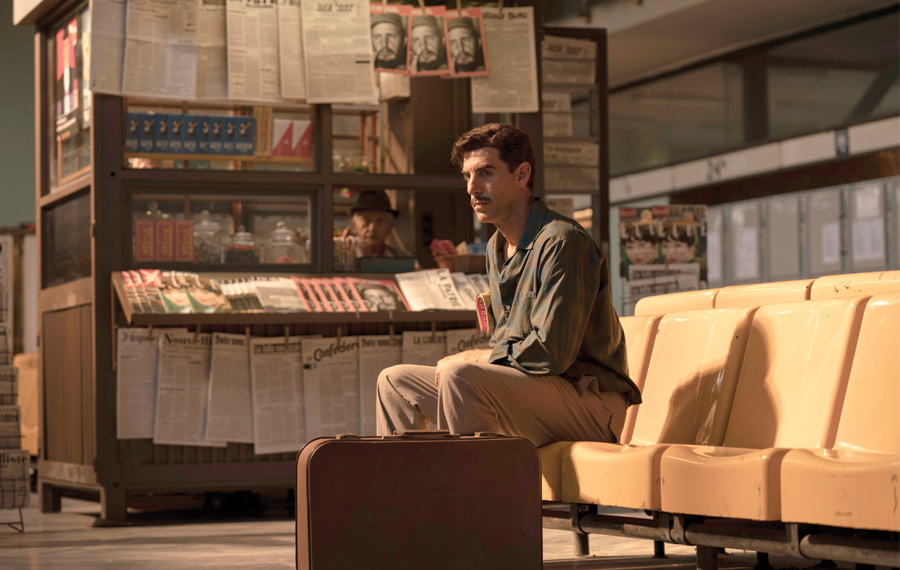
Israeli writer-director Gideon Raff’s story about Israel’s secret mission to rescue Ethiopian refugees in “The Red Sea Diving Resort” recently premiered on Netflix. He returns to the streaming service with another secret mission story from Israel’s past with “The Spy,” a six-part miniseries starring Sacha Baron Cohen in the title role of Mossad agent and national hero Eli Cohen.

Following Cohen on undercover missions in Syria in the early 1960s, where he managed to infiltrate the highest levels of government, the drama has many heart-stopping scenes in which Cohen narrowly escapes detection. But the series is also about what spying does to the psyche and the repercussions of living a double life.

“In telling another spy story, I was looking to do something different this time: to convey the human aspect of being a spy, what it does to your personality, your character, to be torn between your disguise and your real person,” Raff told the Journal. “You have to almost be a method actor. You have to really embrace the undercover identity, but when you come back home, you have to strip it away. I wanted to explore the aspect of identity and, for Eli, the tug and pull between patriotic duty and his family.”

Like every Israeli, Jerusalem-born Raff (“Prisoners of War,” “Homeland”) grew up learning about Cohen’s heroism in school. “We knew the highlights of the story, what he achieved but not the details of how he achieved it and how big his sacrifice was,” he said. Finding out involved extensive research, meeting with Cohen’s wife and children, and talking to ex-Mossad agents who were working at the time, but not directly with Cohen. There was a lot of story to tell, which is why it’s a miniseries, not a movie.

Raff wrote the script with Baron Cohen in mind, and flew to London to meet with him. The British-born actor and double Emmy nominee for “Who Is America?” grew up with the Eli Cohen story, too. “He’s very connected to Israel. His mother is Israeli. He understands the culture. He speaks Hebrew. But this is a bit outside of what Sacha usually does,” Raff said. “He was so courageous to take this on.” 

“This story isn’t about how it ends, whether Eli will be caught or not. It’s about how he rose so high in Syria, what made him tick, and the price he had to pay and all the people around him had to pay.” — Gideon Raff

Most of “The Spy” was shot on locations all over Morocco including Casablanca, for its visual verisimilitude to Damascus and Tel Aviv. Budapest stood in for Zurich, Paris and Buenos Aires. While there, Raff and his husband, Udi Peleg, visited the Tree of Life memorial, a sculpture adjacent to the Dohány Street Synagogue. It’s inscribed with the names of Hungarian Holocaust victims, including those of Peleg’s grandfather and great-grandfather.

Raff acknowledged the challenges that come with making a period piece, but credited his international cast and production team with keeping things accurate. He purposely chose to tell the story in a nonlinear fashion, beginning the first episode with a foreshadowing of the ending. “This story isn’t about how it ends, whether Eli will be caught or not,” Raff said. “It’s about how he rose so high in Syria, what made him tick, and the price he had to pay and all the people around him had to pay.”

Sacha Baron Cohen in “The Spy.” Photo courtesy of Netflix

Cohen’s relationships with his Mossad handler Dan Peleg (Noah Emmerich) and his wife, Nadia (Hadar Ratzon Rotem) are at the heart of the story. “Dan is sending this man he has grown to love to a very dangerous place. He has this dilemma: He wants to protect him, but by sending Eli in, he’s protecting many other people,” Raff said. “Nadia senses more and more that [Eli] is changing and putting himself in danger. But she loves him and she doesn’t want to stand in the way of his duty and self-fulfillment. So a lot of the suspense comes from the personal drama, not whether Cohen is going to jump off a cliff or shoot a guy. You care about these people, and that’s what keeps you on the edge of your seat.”
Beyond the personal story, “The Spy” is a slice of history covering a seldom-portrayed period that significantly impacted the conflicts that followed. The intelligence that Cohen provided enabled Israel to defeat the Syrians in the Six-Day War. “It’s a story about how the Middle East came to be what it is today,” Raff said.

But 55 years after his death, Cohen’s story isn’t over. The Syrians refused to return his remains to Israel, and Nadia still campaigns for their return. “With everything happening in Syria right now, who knows?” Raff said. “But I can only hope that the family has some closure and gets his body back.” In any case, Cohen’s name lives on all over Israel, where numerous streets and schools are named for him.

Having gone straight from editing “The Red Sea Diving Resort” to shooting “The Spy,” Raff is welcoming the break. “I have nothing coming out soon so I’m going to dive back into my little cave and start writing,” he said. He hopes that audiences will watch and realize the price paid by people like Cohen and the ones they left behind. “We put these heroes on pedestals but for their families, the sacrifices they made endure. The pain continues,” Raff said. “Stories like these investigate the people behind that iconic stature — the lives they led and the price they paid.”

 “The Spy” begins streaming Sept. 6 on Netflix. 

Sacha Baron Cohen Plays Israeli Hero in ‘The Spy’ Read More »

Chemocessories is Helping Cancer Patients Feel Beautiful

“Thank you so very much! I received my package! My favorite color blue … it made my day. Such a blessing and kindness! It made me smile on a tough day. Thanks to everyone who makes this possible. Love and blessings to all!”

The above was just one response from the more than 7,000 women who have received a free Chemocessories gift set. The gift sets contain thoughtfully chosen earrings, necklaces, turbans and scarves, designed for women who lose their hair while undergoing cancer treatment. 

Manhattan Beach resident Iris Lee Knell, 60, started Chemocessories in 2011, two years after her own cancer diagnosis. “It was a way to give back,” she said. 

Lee Knell learned that she had breast cancer after a routine mammogram. She underwent two surgeries followed by courses of chemotherapy and radiation. Throughout the process, the self-described optimist tried to remain positive. She found writing helpful and maintained a journal on the website CaringBridge. She continued her work as a school counselor in the South Bay. She planned a bat mitzvah for one of her three, now adult, daughters. And when she lost her hair, she purchased a wig. But she quickly learned she hated wearing it. It was hot and uncomfortable, she said.

She had always enjoyed wearing accessories, however, and had a stash of scarves. Instead of the wig, she began donning colorful turbans with scarves. She chose jewelry to tie together the look. One day, she attended a presentation at an area school wearing the turban and, when people told her how beautiful she looked, she revealed that she had cancer. When a friend mentioned that her mother was undergoing chemotherapy and losing her hair, she wondered if Lee Knell could do anything to lift her spirits.

“My hair was starting to grow in,” said the New York native. “I gave her my turban and a pair of little button earrings.” 

Shortly thereafter, Lee Knell put together a few accessory sets. They were packaged simply in Ziploc bags. But they were assembled thoughtfully, with each bag containing coordinating earrings, a necklace, turban and scarf. At the nearby Cancer Support Community Redondo Beach, where she had been a program participant (and later would become a volunteer), Lee Knell inquired if they wanted the bags, to distribute at no charge. They did, and the bags went quickly.

“If 7,500-plus women smiled one more time than they would have smiled without this, then I have helped somebody.” — Iris Lee Knell

When friends started to write checks to support Lee Knell’s effort, she decided she’d better make it official, and in 2014, Chemocessories became a nonprofit. It is entirely volunteer-driven and supported by donations. Those requesting sets via the website pay nothing. Those making the request on behalf of a friend or loved one are asked if they would like to make a $10 donation to cover the cost of postage and packing materials. These are Chemocessories’ main expenses.

To date, the organization has sent out more than 7,000 sets, filling requests in all 50 states. Lee Knell, who still works full time as a school counselor and maintains a private therapy practice, credits a cadre of loyal volunteers, who once a month gather and set up something like a small factory line. 

Chemocessories also hosts larger events, such as a recent two-day affair that took place at Lee Knell’s synagogue, Congregation Tikvat Jacob Beth Torah in Manhattan Beach. 

All items included in the bags are new or very gently used. 

“I had an idea that has become a passion,” she said. “If 7,500-plus women smiled one more time than they would have smiled without this, then I have helped somebody. It doesn’t take a lot for us to get out of our own comfort zone and do something for someone else.”

For more information, visit the website.  

Chemocessories is Helping Cancer Patients Feel Beautiful Read More »

Temple Etz Chaim Welcomes New Rabbi

Temple Etz Chaim of Thousand Oaks (TEC) welcomed Rabbi Ari Averbach as its spiritual leader this summer. Averbach, 36, was officially installed on July 1, replacing Rabbi Richard Spiegel, who retired after 19 years at TEC. 

Spiegel, 69, is still involved with the congregation, teaching classes and is preparing to lead a group travel tour to Morocco in November. Averbach previously served as assistant rabbi at Congregation Beth Shalom in Chicago. 

“Temple Etz Chaim was looking for someone who met a diverse set of needs across numerous demographics,” Eric Feigenbaum, co-chair of TEC’s rabbinic search committee, told the Journal. “We wanted someone dynamic who could connect with everyone from our retirees to our young families with infants in our thriving infant care center and preschool. This is especially challenging in a one-rabbi synagogue where one person is central to so many. ” 

Feigenbaum added that Averbach “showed us an extraordinary ability to connect with people across the board in addition to an excellent teaching style, presence on the bimah and application of Torah to modern life. [We] felt certain we found someone who could take us into the next generation and stir excitement and increased participation in Jewish life throughout the Conejo Valley.”

Born and raised in Agoura Hills, Averbach said moving back to Southern California was like a homecoming for him, his wife, Vanessa, and their three children. Even though his family never belonged to Etz Chaim, he was very familiar with it. He had friends who went there and he attended b’nai mitzvahs there. “It’s exciting and it’s like this weird homecoming where it feels like I know so many people over here already.” 

However, he didn’t always want to be a rabbi. In high school, he was head of the drama club and it was his dream to work in the film industry. In 2001, he attended New York University, where he studied film theory and made some short films. After graduation, he returned to L.A. in 2005 to work in the entertainment industry but quickly realized that it was not the right path for him.

“I worked really hard and very long hours with very little appreciation on projects I knew weren’t going to be picked up,” he said. “It just wasn’t so meaningful. I just needed to cleanse my soul and try something a little different.” 

In 2007, Averbach began working at the nonprofit Jewish World Watch, the organization dedicated to fighting genocide and mass atrocities worldwide. He traveled to synagogues, schools and churches to speak about international crisis issues. But it was ultimately the late Rabbi Harold Schulweis, Averbach’s childhood rabbi at Valley Beth Shalom in Encino, who convinced him he should become a rabbi.

“In order to meet with all the congregants, we are doing house parties where there are eight to 12 couples and we sit in the backyard and we have a glass of wine and we get to know each other and we do some learning. So far it’s great.” — Rabbi Ari Averbach

“I asked [him], ‘What’s the best part of being a rabbi?’ and his response was, ‘Getting to be with people in their most important moments in their lives … when you sit with a family in a hospital room or you sit with a couple before their wedding or [talking to them when they’re] trying to get pregnant.”

And so, in 2010, Averbach enrolled at American Jewish University’s Ziegler School of Rabbinic Studies. He received the Chancellor’s Award for Academic Excellence and his first position after graduation was as assistant rabbi at Congregation Beth Shalom in Chicago. But after hearing about the position at Etz Chaim, he was eager to return to Los Angeles. Barely two months into the job, Averbach has wasted no time meeting the congregation’s 400 families. 

“In order to meet with all the congregants, we are doing house parties where there are eight to 12 couples and we sit in the backyard and we have a glass of wine and we get to know each other and we do some learning. So far it’s great,” he said. “It’s a lot of work. It’s just kind of nonstop.”

Averbach feels it is important to make sure that TEC has programming events and education for congregants all ages. He has already initiated weekly educational learning sessions at people’s homes. “I think so often in Judaism we focus on the youth and then a lot of times on retired people who have a lot more time. If we can continue the education, I think that helps make people feel like they are part of the community.” 

As the High Holy Days approach, like most synagogues, security is high on Averbach’s mind. “We take security very seriously,” he said.  “We have a current security protocol. We are talking to synagogues all over Los Angeles and all over the country to see what they are doing and what they find successful. We want to make sure that people feel safe and secure and, at the same time, that it doesn’t feel like a fortress.”

Moving forward, Averbach plans to build upon TEC’s community. “There are so many things I find need to be addressed but my main job right now is to be part of this community and to help lead it to the change they need to see,” he said. “We are working on re-doing the mission statement and the vision statement. In the next few weeks, the whole board is having a half-day retreat to see what are our goals [are], what do we want to be doing and how to make these small incremental changes that people still feel it is their community, so that we are brought into the next generation.”

Temple Etz Chaim Welcomes New Rabbi Read More »

New Space, New Light, New Sanctuary at Temple Beth Am

After a decade of brainstorming, fundraising and construction, Temple Beth Am (TBA) celebrated the completion of its newly renovated Ganzberg Sanctuary this past Shabbat.

“Our new sanctuary is a gift to the entire Jewish community of Los Angeles and beyond,” TBA President Avi Peretz, who worked on the project for the past five years, said in a statement.

The completion of the $7 million project marked the end of the first part of the congregation’s expansion effort. TBA also is building a new gymnasium and expanding its school, Pressman Academy. The new sanctuary now seats more than 390 people. On the High Holy Days, the back of the sanctuary will open into a ballroom for total seating for about 1,000 people.

The dedication festivities kicked off Aug. 30 with a Torah procession from Beth Am’s Ziering Family Field and continued on Saturday with morning learning led by Senior Rabbi Adam Kligfeld, followed by an afternoon tour of the sanctuary led by architect Steve Rajninger of Herman Coliver Locus. The final event was held during Saturday night’s Havdalah ceremony.

The Havdalah ceremony featured blessings from TBA members and community leaders. Attendees included Los Angeles Mayor Eric Garcetti, L.A. City Councilman Paul Koretz, recently appointed Consul General of Israel in Los Angeles Hillel Newman, Journal Publisher and Editor-in-Chief David Suissa and Temple Emanuel of Beverly Hills Cantor Lizzie Weiss. 

“My blessing and my wish is this be a place in which everybody can see through the window, to this congregation,” Garcetti said. “[And] from this congregation to our city and from our city, and may that be a place of belonging, of understanding, of healing and of justice in this world that so badly needs it.” 

“One doesn’t think of light in that way. You think of wood, you think of stone, you think of glass — but light really can be a material, too, and I think that’s the material that gives the sense of presence in a sacred space.”— Architect Steve Rajninger

The sanctuary’s new design features pews arranged in a semicircle around the bimah, allowing for prayer in the round, Kligfeld told the Journal. “Prayer is never meant to be frontal but centripetal. We wanted to change the focus of what is happening at the front and who is speaking at the front to how are we joining together, and you’re seeing a return to that in a lot of sanctuaries.”

Congregants Steven Ganzberg and Anne Adair, who donated the lead gift of $2 million, dedicated the sanctuary in memory of Ganzberg’s parents, Holocaust survivors George and Anna Ganzberg, and Ganzberg’s late twin sister, Rena. George was a regular at Beth Am’s Saturday morning services. 

Ganzberg Sanctuary

Rajninger participated in the weekend’s dedication activities. In designing the space, the architect said he paid attention to creating a presence in the room through the use of light. While the original sanctuary was windowless, the new design features a window behind the ark and a large skylight. As the sun moves during Shabbat services, light billows down from the skylight and wraps around the congregation like a tallit, Rajninger said.

“The notion of a presence and how do you create that in a space — I think the way to create it is by using light as a material, as a building material,” Rajninger said. “One doesn’t think of light in that way. You think of wood, you think of stone, you
think of glass — but light really can be a material, too, and I think that’s the material that gives the sense of presence in a sacred space.”

Rajninger also used different woods in the walls and in the sanctuary’s canopy design to make it feel as though the congregants were being held in place, he said.

“The layering of the space, the outer ring of light, the inner warm ring of wood, the delicate canopy which creates the sense of intimacy, almost a nest-like feeling, that was an important quality we really wanted to be expressed in the space,” he said.

Rajninger also wanted to reflect Beth Am’s deep love of learning in the design. To that end, the sanctuary is decorated with 54 “Parsha Panels” for each of the 54 weekly Torah portions. The current Torah portion of the week can be highlighted with lights at the base of each panel.

Then there is the new ark, dedicated by the late Lou Colen. The ark is composed of suspended translucent blocks, featuring holes that are intended to be filled with colorful slips of paper containing congregants’ prayers, dreams and wishes. The concept recalls the ritual of slipping folded notes into the Western Wall in Jerusalem.

“The individual prayers of children and adults of the community will be part of the ark in perpetuity,” Kligfeld said. “This was another way [for the design] to use the ritual and icons of Judaism in the architecture.“

Near the entrance to the sanctuary space is the Hall of Memories, which worshipers pass by as they walk into the prayer space. Inside is the Holocaust Memorial Wall, which was originally created in the 1960s and once flanked the bimah. Because the original memorial was plastered into the wall, it was impossible to remove and relocate the entire piece. Instead, a cast of the original wall was made and a replica was created. 

“Building a sanctuary like this for a strong community of vitality allows it to maintain and elevate its standing and impact on the community, and I hope that ramifies out to great goodness in the world,” Kligfeld said. “If you gave me $7 million, I could find many different ways to spend it for the benefit of Jewish people and humanity. I stand by this as an extraordinary way to bring Jews together for sacred purposes, and now it’s our task to make that happen.”

This article has been updated. A previous version of this article incorrectly stated the amount of the lead gift was $1 million and that the new ark was named the Pressman Ark in honor of the late Rabbi Jacob Pressman.

New Space, New Light, New Sanctuary at Temple Beth Am Read More »

Keeping a Child’s Memory Alive Through Random Acts of Kindness

In the past few days alone, one woman made and delivered lasagna to a colleague recovering from knee surgery. Someone else went out of their way to give a ride home to an employee they recognized from CVS. One person gave blood. Another left a $25 tip on a purchase of just a few dollars. What do all of these acts have in common? They are all part of Gidi’s Kindness Project.

Gidi was Gideon Zilberstein. But everyone called him Gidi. Three years ago, just shy of his fifth birthday, Gidi died in a freak boating accident while his family was on vacation in Lake Arrowhead, even though he was wearing a life jacket. 

One year later, in 2017, his parents — Woodland Hills residents Jesse and
Amit Zilberstein — started Gidi’s Kindness Project, an annual event lasting approximately two weeks, which runs through Sept. 7 — Gidi’s birthday. They got the idea from the MISS Foundation, a nonprofit, volunteer-based organization that provides counseling and other support services to families that experience the death of a child.

“One of the things that MISS Foundation promotes is random acts of kindness in honor of your dead child as a way to help do something with your grief,” Jesse Zilberstein said. “We really loved the sound of that. But our family doesn’t like to do things small. We sort of thought, ‘We don’t want to be the only ones doing random acts of kindness.’ We are surrounded by such an incredible village of people in our lives, from our synagogue [IKAR], day school, neighborhood. There were so many people who were grieving with us for Gidi. We wanted to give everyone the opportunity to spread kindness in Gidi’s name. It seemed to us such a perfect thing to do for Gidi in particular, because he was always the welcomer, the lover, the one really teaching us all about kindness.”

Gidi Zilberstein; Photos courtesy of Jesse Zilberstein

The Zilbersteins printed thousands of colorful cards (Gidi was very keen on color and glitter) that read: “This random act of kindness was done in memory of Gidi Zilberstein, forever 5 years old. To spread more kindness in memory of Gidi, visit ww.gidimagic.com.” People can also print cards directly from the website in either English or Hebrew. (Amit is from Israel.) 

The couple, who has two other sons, now 13 and 11, distributed the cards to friends and family. They weren’t sure what to expect. They anticipated that some people would participate. But the response was overwhelming, in the best sense. 

“What we saw people doing in his name, I don’t have words for it,” Zilberstein said. “Someone would do an act of kindness and give a kindness card to a stranger. That stranger would look at the card, go online and find the Facebook page and post that they had been the recipient, that they would always remember [Gidi] and pay it forward. In a way, it was like he was still here because the world was still learning about him. There is nothing I love more than when I get those posts.”

The Zilbersteins also speak about Gidi at IKAR. This year, during the Saturday morning Shabbat service, Gidi’s brothers Zeve and Oren passed out bracelets reading “Gidi — make the world sparkle” and temporary tattoos featuring Gidi’s signature.

“On a selfish level, I hope that Gidi’s name and his face and everything that he really exuded becomes part of that person’s consciousness so that he continues to be a presence in the world.” — Jesse Zilberstein

Zilberstein said the project, which coincides with a particularly difficult time of year — between Gidi’s yahrzeit and his birthday — “really adds light to the world for a couple of weeks.” 

But the family is still very much grieving.

“Just because we’re doing good things in Gidi’s name and just because we feel the incredible support of our community and just because we’re able to keep his memory alive in such a beautiful way, doesn’t mean I don’t curl up in a ball and cry,” Zilberstein said. “Three years might seem like a long enough period of time to people on the outside to think we have acclimated to a new normal. But we have not. He is missing all the time from everything, even in our most joyous moments — and we do have joyous moments. But that joy is always tempered by his absence.”

Ultimately, Zilberstein hopes Gidi’s Kindness Project does two things: “On a selfish level, I hope that Gidi’s name and his face and everything that he really exuded becomes part of that person’s consciousness so that he continues to be a presence in the world,” she said.

“On a higher level, I would hope that this kind of project continues to teach people the lessons Gidi taught people in five short years, which is that you can engage with strangers and bring a smile to someone’s face and you can be tolerant and open, and when you do these things, it makes you feel really good. He lived in a state of pure joy.”

To learn more and to participate in Gidi’s Kindness Project, visit their website.

Keeping a Child’s Memory Alive Through Random Acts of Kindness Read More »

True Grit: Cooking Like a CEO at Milk Money Kitchens

When West Point military Academy graduate Nancy Preston was assigned to the engineering unit of the 3rd Infantry Brigade and deployed to Iraq for 15 months, she made a promise to herself. After nine months straight of working 21-hour days, seven days a week, and with the thought of six more months of the same ahead of her, Preston recalls thinking “If I ever make it out of here, I am getting out of the Army and doing what I love.” 

Although she knew her passions centered around food, having inherited the kitchen chops from her Korean mother, and love of service to others from her American father, Preston admits the only thing standing between her and entrepreneurship was confidence. “I never thought I had the grit and stamina to open my own food business but after serving in one of the toughest and longest deployments in the armed forces, I realized that I could do anything.” 

Preston was born in a small village in South Korea. Her family was so poor that her last memories of her birthplace involve carrying well water to the family hut several times a day. For the chance at a better life, her family gave up their 6-year-old daughter for adoption to a close family friend, a Korean woman married to an American service member. Her father, now retired from the military, brought her to his hometown of El Paso, where she and her adoptive mother were naturalized. But tragedy stuck a few years later when her father died suddenly, leaving 8-year-old Preston, her older brother and their mother in financial ruin. 

Fortunately, although she barely spoke English, Preston’s mother was a skilled cook who could make hearty and delectable meals from mere scraps. She worked in any kitchen that would hire her: restaurants, markets, bars and even bingo halls. Every day after school, she and her brother would join her in whatever kitchen she was working that night. Mostly she remembers how hard her mother labored to keep food on their own table. 

Preston said it was her childhood experiences sitting in the corner of various establishments while waiting for her mother to finish, often past midnight, alternating between homework and sleep, that prompted her to think about how food-focused entrepreneurs could start businesses with less risk and capital investment. 

“Preston gauged she could create opportunities for people to launch and grow their own business in a shared kitchen facility.”

After leaving the Army, Preston and her husband, Jeff, who she’d met and married in college, moved overseas for government consulting jobs to save money for their business. For four years, Preston researched and collected data on the food industry. She discovered that New York City was the most risky and restrictive market in the U.S. for food businesses. Not only were the laws restricting cottage industries prohibitive, the new minimum wage requirements, taxes, rising rents and food costs made pulling together the capital investment to open even a small food business in New York unfeasible for her and others like her.

Preston’s analysis of the food industry showed that 85% of food-related businesses in the city fail in less than five years, with 60% of these failures happening within 12 months after launching. Calculating an average $320,000 loss of initial capital plus other costs incurred by their vendors, suppliers and employees, Preston gauged she could create opportunities for people to launch and grow their own business in a shared kitchen facility. 

After a brief period living with family outside the city, she and her husband, now with two young children in tow, moved to a small apartment in lower Manhattan to launch their business. Their company, Milk Money Kitchens (MMK), what Preston calls “the WeWork for food,” is her solution for cooks who want to delve into the food-space without risking a future of crushing debt. Instead of office space, MMK provides shared commercially licensed kitchen space by the hour — no contractual commitments required. 

Preston’s passion and enthusiasm for MMK caught the attention of commercial real estate investor Michael Rakosi while she reluctantly toured one of his properties in the East Village with her broker. Rakosi instantly recognized the validity of MMK’s business model and was so impressed with her business acumen, he kept the space vacant for a year so she was able to secure funding to sign a 10-year lease on the 10,000-square-foot property. 

What’s become a dynamic business partnership between Rakosi and Preston will culminate in a late-September opening, with three more MMK locations in the works in strategic locations around the city. Despite its kitchens still being in the final stages of construction, MMK already has 60 committed food businesses signed up and waiting to launch. “Nearly all of our food businesses are minority-owned (90% women and/or ethnic minorities) with fewer than 10% having a professional culinary school background,” Preston said at an auction at a recently shuttered restaurant in the city. “I go to restaurant closings all the time for the great deals on kitchen equipment, but also for the contacts. Restaurants are closing in the city at an alarming rate and laid-off cooks, bakers and pastry chefs are looking to start their own food business without risking a lifetime of crushing debt.” 

MMK also helps its clients, who they call “food-preneurs,” solve common business issues by providing consulting to improve production, staffing, cost reduction and expense management. 

Although MMK is a for-profit company, it is also a certified B-corporation, and already has committed 1,000 free hours of kitchen rentals and services to veterans and low-income entrepreneurs who want to launch or scale their food business but lack the capital and business savvy.

Preston’s mother died years ago after a prolonged battle with cancer but her influence and work ethic remain a driving force in her daughters’ life. “Food and cooking got us through some hard times and that fuels my belief that it can improve lives through entrepreneurship,” Preston said. “I often think about how different her life would have been if she’d had a place like MMK, if she’d had an opportunity like this.” 

When the auction was about to begin, I left the 5-foot-2 powerhouse surrounded by a sea of much larger and aggressive-looking restaurant industry hustlers and grinders. But I wasn’t worried she’d get the short end of the stick. I had the distinct impression that I’d be seeing Preston’s face again, perhaps splashed on the cover of Forbes or in a top spot on one of their famous lists: “Entrepreneurs with grit who changed the face of the food industry.”


Yamit Behar Wood, an Israeli-American food and travel writer, is the executive chef at the U.S. Embassy in Kampala, Uganda, and founder of the New York Kitchen Catering Co. 

True Grit: Cooking Like a CEO at Milk Money Kitchens Read More »

Table for Five Parsha: Shoftim

One verse, five voices. Edited by Salvador Litvak, Accidental Talmudist

You shall not have pity: life for life, eye for eye, tooth for tooth, hand for hand, foot for foot. –Deuteronomy 19:21


Nili Isenberg
Pressman Academy, Judaic Studies faculty

My father (z”l) loved to tell this joke about a pirate who had a gold tooth, a peg leg, a hook for a hand, and a patch on his eye. When asked what happened, the old buccaneer was more than happy to explain each battle injury in chilling detail. But let’s cut to the chase: “And what about your eye?” My father would curl his finger into the shape of a hook and gesture toward his eye, cracking up himself: “Ah, well, me parrot pooped in me eye, and it was the first day after I got me hook!” Cue groaning. 

If anyone needs to be served the justice of “an eye for an eye” (Rashi says the value of his eye) it’s our friends, the pirates. Yet, who wouldn’t have pity on the likes of Captain Jack Sparrow, for example, most dashing of all fictional baddies? If he took out my eye, I’d forgive him. But the midrash cautions, “One who is merciful to the cruel, in the end is cruel to the merciful.” The Torah wisely sets high standards for justice in our earthly courts. 

However, with the High Holy Days approaching, even if we are as sinful as pirates, we can still pray for mercy in the Heavenly Court. 

How does a pirate confess his sins to God? Search for “Pirate Viduy” on youtube.com, and let me know what you think. Hopefully you won’t want to take out my eye, tooth, hand or foot for creating it!

Peter Himmelman
Musician, author and founder of Big Muse

It’s challenging for most modern Jews to open a Chumash and read something as harsh as this pasuk (verse). So fierce is our love of kindness that these very words are likely to have turned many of us off from prayer in general, and from Jewish prayer specifically. Unlike mitzvot like tzedakah (charity) or visiting the sick, this one, which goes so far as to require us to forgo our sense of pity, seems cruel and well … un-Jewish.

But the Talmud, (tractate Makot) shows us a very different view of this pasuk, one whose essential aspect is indeed kindness. The pasuk refers to how one must deal with a particular type of false witnesses called adim zomemim. Adim zomemim are witnesses who were proven by two other reliable witnesses to have been in another place when an alleged crime was taking place. Their false testimony, a subversion of justice and truth to the extent that an innocent person could be put to death, is as grave a crime as murder itself. This is why the pasuk tell us, “You shall have no mercy.” And as we’ve seen in our own times, the subversion of truth ultimately threatens to destroy the fabric of society.

So rather than look at the pasuk as harsh or cruel, it might make sense to reframe it as something else entirely: a strong, but necessary bulwark against the brutality of falsehood.

Michael Berenbaum
American Jewish University

This verse demonstrates an important concept, central to Judaism. Jews are bidden to take the Torah seriously, not literally. 

Despite the admonitions in the book of Devarim, “do not add to it [the Torah] and don’t take away from it,” we do add to the Torah, interpretatively transforming its teachings. 

Judaism is a rabbinic religion that understands Torah commandments through the lens of biblical interpretation, via rabbinic eyes. 

Its most Orthodox justification, two revelations occurred at Sinai, one written — the Torah as we have it — and one oral, the interpretive tradition that enables us to understand the Torah’s meaning. 

The interpretive tradition was an indispensable means for remaining faithful to the admonitions of the Torah while mitigating some of what future generations came to regard as the difficulty of actually carrying out its teaching. Thus, “an eye for an eye” is rendered as “monetary compensation” and “a tooth for a tooth, a hand for a hand, and a foot for a foot” likewise, while “a life for a life” is understood more literally. 

A literalist reading of the Torah would certainly read the verse quite differently. Imagine an “originalist” reading, to borrow from a school of thought of U.S. constitutionalist interpretation. 

Finally, no verse of the Torah should be read in isolation, so the introductory phrase “have no pity” is not a general principle. “The people of Israel are compassionate and the children of the compassionate,” the rabbis teach. Have no pity is thus applicable only the punishment for bearing false witness.

Rabbi Nicole Guzik
Sinai Temple

My friends and I joke that in life, there really is no instruction manual. Time and time again, the Torah proves us wrong. While not necessarily teaching how to walk step by step, the Torah clarifies when we must show mercy in this very confusing world of ethical dilemmas. Chizkuni, the 13th-century commentator, explains, “You shall not have pity with the guilty person; on the other hand, even during war time you shall display pity on people who are in the process of building their homes for the first time, be it if they are engaged to be married, that they are in the middle of building a house, or planting an orchard.” The lesson is palpable: there is a time and place to exact justice. But more often than not, we are meant to open our eyes to those that are trying to build, grow, plant seeds, and live life — even those we might call our enemies. 

When someone is building a house, we can’t help but wonder who is inside. People, eating, sleeping, telling stories and making memories. When we see the planting of an orchard, we witness rebirth, the tilling of soil so that others will one day reap its harvest. It is much easier to open one’s heart when we get a glimpse of the way another opens theirs. Perhaps that is why Avot de-Rabbi Natan shares the challenge and difficulty: Who is a hero? The one who transforms an enemy into a friend. 

Rabbi Tzvi Freeman
Editor of Chabad.org, author of “Wisdom to Heal the Earth”

The most precious friend is one who knows how to listen. Often you yourself don’t understand why you say what you say, but this friend listens to your words and hears there the hidden things of your heart. 

Moses was God’s good friend. God said, “Tell the Children of Israel to sanctity every firstborn.” Another prophet would have the nation sacrificing their firstborn. But Moses? He tells the people to redeem their firstborn with a few silver coins. 

And if somebody would have asked, “But Moses, is that what God said?” Moses could have answered, “That’s what He meant.” 

God said, “Moses, let go of Me so I may destroy them.” Moses heard, “Plead on behalf of my beloved children and elicit My compassion for them.” 

The same here. The Divine word crashes into Earth’s atmosphere: “An eye for an eye!” But it falls upon the soft, well-tilled soil of Moses and the sages, who tell us, “He means fair monetary compensation — as He said on other occasions.” 

And if we ask, “But is that what He said?” they will answer, “In His Torah, as it is above in a world of the spirit, justice is achieved in perfect balance. Damage inflicted by any sentient soul comes back to that soul in exact measure. And so He says those words.” 

“But our world cannot endure unmitigated judgment. Our world is built with kindness.” 

“So here, justice comes as monetary compensation.” 

God chose a good friend in Moses and his people. (See also Shelah, Mishpatim.)

Table for Five Parsha: Shoftim Read More »