fbpx

June 12, 2019

Bow Tie Pasta Card for Father’s Day

For Father’s Day, give the men in your life some more ties. But not the kind they wrap around their necks. I’m talking these cute little bow ties on a do-it-yourself card. They’re created with bow tie pasta, so after you make the card, you’ll have extra for a Father’s Day dinner. 

What you’ll need:
Bow tie pasta
Acrylic paint
Paintbrushes
Cardstock
Glue or hot glue


1. Paint the bow tie pasta with acrylic paint. Depending on the color, it may take a few coats to get full coverage. You don’t need to paint the back side, as it won’t be visible on the card.


2. After the paint is dry, add some polka dots with white paint. Instead of using the bristle side of a paintbrush, make the dots with the opposite end of the brush. You can also use a paint marker.


3. Fold a piece of cardstock to make a card. Trim it to a standard size of five by seven inches if you wish. I also glued another piece of cardstock in a contrasting color to the front.


4. Glue the bow ties in a straight row on the front of the card. The finished card will be lumpy, so put it in a large envelope that will accommodate it.


Jonathan Fong is the author of “Flowers That Wow” and “Parties That Wow,” and host of “Style With a Smile” on YouTube. You can see more of his do-it-yourself projects at jonathanfongstyle.com.

Bow Tie Pasta Card for Father’s Day Read More »

Obituaries June 14, 2019

Leslie Arden Archer died May 4 at 68. Survived by sister Adrienne (Lewis) Weissman. Mount Sinai 

Norman D. Beals died May 4 at 102. Survived by sons Terry (Darlene), Larry (Beatrice); 1 grandchild; 3 great-grandchildren. Mount Sinai 

Goldie Bemel died April 21 at 93.  Survived by daughters Barbara, Susie Rissien; son Brian; 2 grandchildren. Mount Sinai

Izrail Bikvan died April 18 at 73. Survived by wife Stella; daughter Klara; brother Anrikh. Mount Sinai

Rita Blank died May 3 at 98. Survived by daughter Jean (Hal) Murray; son John (Rochelle); 7 grandchildren; 12 great-grandchildren; 1 great-great-grandchild. Mount Sinai 

Barbara Byrnes died May 5 at 84. Survived by son Baron Hackney; brothers Alex (Tina), Greg (Kelly). Mount Sinai

Elissa Joy Carow died May 12 at 75. Survived by husband Lawrence; daughters Allison, Michele; son Bradley; brother Jeff (Renee) Friermor. Mount Sinai 

Esfir Dement died May 6 at 97. Survived by daughters Diana (Boris) Fyerman, Larissa Ashrafor; sons Arik Dyment, Yagif Kazimor; daughters Diana (Boris) Fyerman, Larissa Ashrafor; 13 grandchildren; 13 great-grandchildren; 2 great-great-grandchildren. Mount Sinai

Jeannette Di Cov died May 10 at 103. Survived by daughters Judith (Les) Pinchuk, Susan (Bob) Feiles; 4 grandchildren; 9 great-grandchildren. Mount Sinai 

Doris Eaker died April 16 at 84.  Survived by son Carl (Leslie) Ogden; 3 grandchildren; 2 great-grandchildren. Mount Sinai

William Louis Friedman died April 23 at 62. Survived by wife Jo; daughters Shana, Chava; father Albert; brothers John (Jean), Daniel. Mount Sinai

Marlene Rae Gerson died May 7 at 83. Survived by son Steven (Chele); daughter-in-law Rikki; 5 grandchildren; 3 great-grandchildren. Mount Sinai 

Helen Glenn died April 22 at 86. Survived by daughter Michelle Pav; son David (Shelley) Baker; 2 grandchildren. Mount Sinai

Sandra Helene Greenspoon died May 1 at 87. Survived by daughters Andrea Medina, Claudia (Michael B. Van Scoy-Mosher) Stone, Ronda (Jack Myers) Carnegie; 6 grandchildren; 2 great-grandchildren. Mount Sinai

Judy Griffin died May 2, 2019 at the age of 57. Survived by husband Louis Newman. Mount Sinai 

Carolyn Haas died May 11 at 79. Survived by brother Herb (Linnear). Malinow and Silverman

Benayahu “Ben” Habibi died May 13 at 95. Survived by wife Adele; daughters Michele (Mark) Licht, Miryam (Sam) Tarica; son Don (Miriam); 12 grandchildren; 7 great-grandchildren. Mount Sinai 

Barry L. Horwitz died May 2 at 76. Survived by wife Marlene; sons Marc, Brad (Mindy), Michael (Natalie); 4 grandchildren; sister Diane. Mount Sinai

Regine Jaffee died April 22 at age 83. Survived by husband Martin; daughter Belinda; sons Rami, Sid.

Alan Neal Kalsman died May 11 at 77 Survived by brother Paul (Anne). Groman Eden

Janet C. Kaufman died April 21 at 97.  Survived by daughter Deborah Covell; 2 grandchildren. Mount Sinai

Eileen Kestenbaum died April 16 at 81. Survived by daughters Terrie Rotter, Lisa Thomas. Mount Sinai

Hilda Kunstadt died April 29 at 92. Survived by sons Robert (Carole), Donald (Patti); 5 grandchildren. Mount Sinai

Leila Landau died April 22 at 90. Mount Sinai

Lev Lapidus died April 25 at 84. Survived by daughters Bella (Dmitri), Elvira (Boris) Kogosova; 4 grandchildren; 3 great-grandchildren. Mount Sinai

Lidia Lekhgolts died May 2 at 93. Survived by son Victor; 1 grandchild; 1 great-grandchild. Hillside

Norman R. Marcus died May 2 at 81. Survived by wife Linda; daughter Lorrie; son Andrew (Ron); 1 grandchild; sister Rita Federico. Mount Sinai

Melvyn Masters (née Mitteldorf) died May 2 at 86. Survived by wife Pearl; daughter Robin (David) Gorski; son Mark; stepdaughter Carrie (Josh) Pinkwasser; stepson Eric Binder (Shannan); 6 grandchildren; sisters Roberta Schrier, Pearl Wexler. Groman Eden

Sol Melvin Nidetz died May 9 at 89. Survived by sons David (Julie Nimoy), Robert (Rosie). Mount Sinai

Eileen Peisner died May 2 at 83. Survived by husband Robert; daughters Julie, Laura; sons Edward, Steven (Helena); 7 grandchildren; 2 step-grandchildren. Mount Sinai

Steven Perry died April 20 at 82. Survived by wife Joan; daughter Leesa; son Gregory; 1 grandchild; sister Linda. Hillside

Hale Porter died May 20 at 90. Survived by wife Sydney; daughter Andrea Kaplowitz; son Scott (Min); stepdaughters Hillary Turk, Stacie Turk; 2 grandchildren. Malinow and Silverman

Sam Praw died April 17 at 90. Survived by wife Vicky; daughters Debbie (Eddie) Herbst, Ruthie (Hillel) Kellerman, Judy (Louis) Michelson; son Henry (Leanne); 15 grandchildren; 10 great-grandchildren; sister Frieda (Karl) Newman. Chevra Kadisha

Rita Reinstein died May 11 at 83. Survived by daughter Susan (Chris) Burr; son Steven (Diana); 8 grandchildren; 8 great-grandchildren. Malinow and Silverman

Barbara Ronen died April 28 at 90. Survived by son Peter. Hillside

Elaine Rosenberg died May 6 at 84. Survived by sister Joyce Ficks. Mount Sinai 

Jason H. Ross died May 1 at 86. Survived by wife Doris; daughter Lori (Rob Garcin); 4 grandchildren. Mount Sinai

Ellie Rubin-Leichter died April 19 at 85. Survived by husband Ira; daughter, Abbey Anna, Beth (Imani Tolliver) Rubin; 1 grandchild. Mount Sinai

Soura Sadigursky died May 12 at 91. Survived by daughter Clara (Alex) Alter; son Isaac (Raya); 5 grandchildren; 10 great-grandchildren; sister Esther Schwartzman. Mount Sinai

Paula Sanders died April 21 at 66. Survived by daughter Lyndsay (Aaron) Nevins-Kay; sisters Rosemary Walker, Barbara (Chuck) Barnett; brother Mark. Mount Sinai 

Alla Sigal died May 5 at 77. Survived by son Edward (Rada); 2 grandchildren; sister Raisa (Naum). Mount Sinai

Eugene “Gene” Simon died April 28 at 74. Survived by wife Camille; daughters Elizabeth Kaplan, Elana; sons Charles (Sheila Pitchenik), Matthew (Susan), Howard (Cari); 6 grandchildren; 1 great-granddaughter; sister Carole Mequia; brother Robert (June). Mount Sinai 

Dina Sofer died April 22 at 91. Survived by daughter Miriam. Hillside

Pearl K. Solomon died May 5 at 85.  Survived by husband Eugene; daughter Aura Weltchman; son Steve (Sharon); grandchildren. Mount Sinai 

Marian Stearn died April 29 at 108. Survived by daughter Judith (William); 2 grandchildren; 4 great-grandchildren; brother Stanley (Lois). Hillside

Arnold Stern died May 9 at 93. Survived by wife Jacqueline. Mount Sinai 

Barbara Takamoto died April 27 at 84. Survived by daughter Leslie Stern. Mount Sinai

Pearl Tarnor died April 20 at 94. Survived by son Elisha (Susan Goldberg); 1 grandchild. Mount Sinai

Sol Taylor died April 11 at 87. Survived by wife Pearl; daughter Elana (Benjamin) Vorspan; son Benjamin (Niva); 9 grand-children; sister Myrna Haas. Chevra Kadisha

Phyllis Waldman died April 20 at 90. Survived by daughters Jan Worthy, Dawn (Dave) Bostwick; son Matt; daughter-in-law Sherry; 7 grandchildren; 2 great-grandchildren. Mount Sinai

David Winters died April 23 at 80. Survived by sons Jonathan (Piano), Alexander; 1 grandchild; brother Marc. Mount Sinai 

Arnold Wishnick died April 27 at 76. Survived by wife Jaclyn “Jackie” Maduff; stepdaughter Wendy (Daniel Karen) Maduff; 1 grandchild; sister Audrey Greenberg. Mount Sinai

Alexander Zalevsky died May 2 at 67. Survived by wife Inna; daughter Natalie (Tiberius) Nour; son Greg. Mount Sinai

Lester Zola died April 24 at 87. Survived by daughter Barbara; sons Mark (Utta), Brian; 8 grandchildren; 4 great-grandchildren. Mount Sinai 


Obituaries June 14, 2019 Read More »

Digging Deeper on the Poet Paul Celan

“After Auschwitz,” warned Theodor Adorno, “to write poetry is a barbarity.” And yet, ironically, some of the most iconic words ever written about the Holocaust are embodied in a poem — the dark, deeply moving and often-quoted “Todesfuge” (“Death Fugue”), which was composed during World War II by the celebrated Jewish Romanian writer known as Paul Celan. It was his first published poem. It reads, in part:

Black milk of daybreak we drink you
at night

we drink you at noon death is a master
from Germany

we drink you at sundown and in the
morning we drink and we drink you

death is a master from Germany his
eyes are blue

he strikes you with leaden bullets his
aim is true

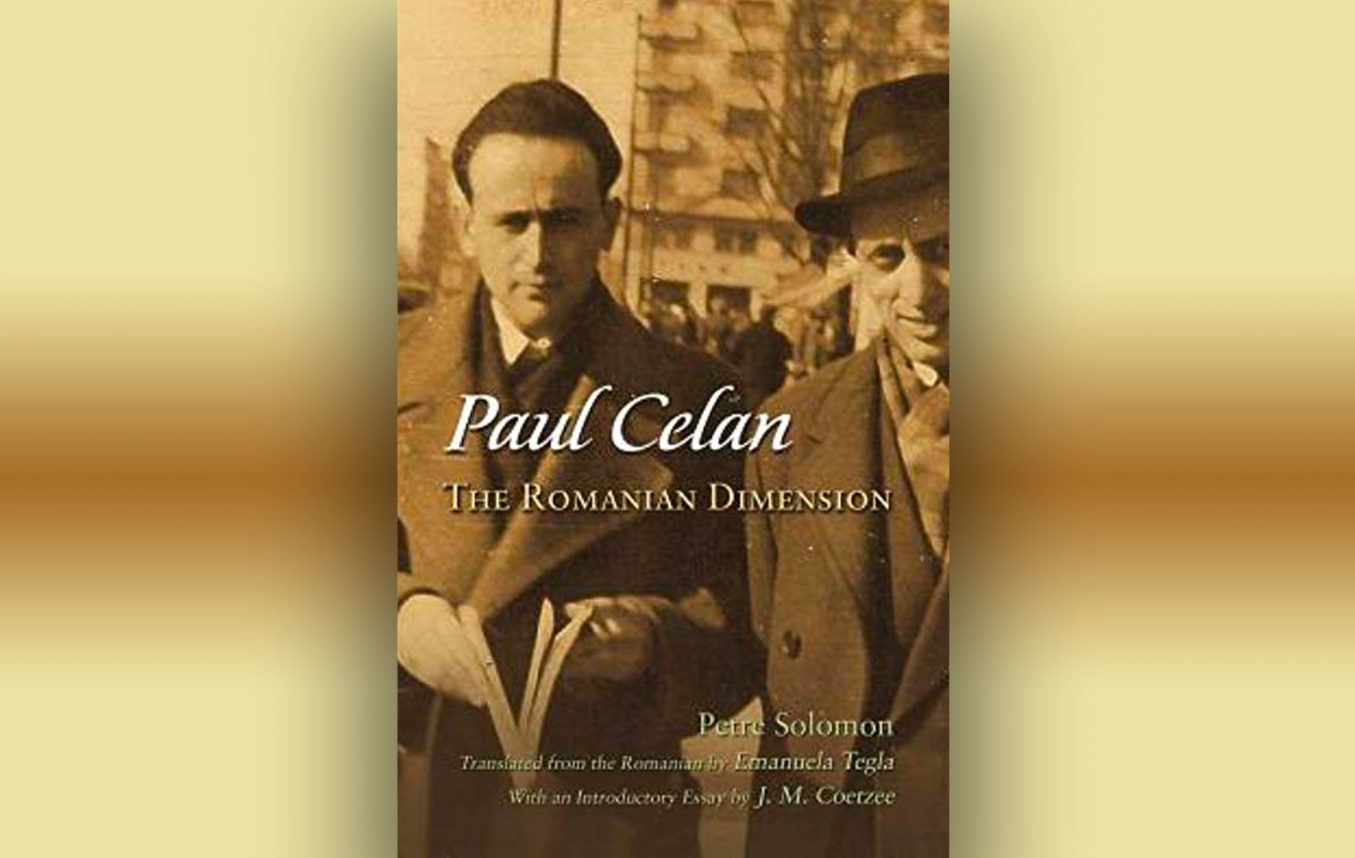
Celan’s life and work are the focus of “Paul Celan: The Romanian Dimension” by the late Petre Solomon, translated by Emanuela Tegla. The literary provenance of “Paul Celan” is fascinating in itself. The book, which was written and first published in the Romanian language in 1987, is now appearing for the first time in an English translation as part of the Judaic Traditions in Literature, Music and Art series from Syracuse University Press. The author, who died in 1991, was a poet and translator whose translations include works by Shakespeare, Byron, Balzac and Melville. The translator of Solomon’s book is herself the author of books about Salman Rushdie and J.M. Coetzee, and it is Coetzee who contributes an introductory essay to the book.

“Paul Celan” was the nom de plume of Paul Antschel, who was born in 1920 in Bukovina, a region in the Austro-Hungarian Empire that was attached to Romania after World War I. He was a German speaker, although his education included instruction in Romanian and Hebrew. His parents were victims of the Holocaust, and he survived only because he was sent to a slave-labor camp. After the war, he taught German literature in Paris, and most of his own poetry was written in that language. His gift for wordplay is evidenced in his choice of Celan as a last name — it’s an anagram based on his real surname as it is spelled in Romanian.

Much has been written about the life and work of Paul Celan, including the benchmark biographical study by John Felstiner, “Paul Celan: Poet, Survivor, Jew.” But Petre Solomon offers an unaccustomed point of view — he seeks to put Celan into a frame of reference that includes the poet’s Romanian and Jewish background. “Celan’s drama is not foreign to this essential fact of his biography,” writes Solomon. Celan chose to write “in the language of his parents’ executioners,” as Solomon concedes, but he also points out that “some of Celan’s poems may appear to be doing violence to the German language.” Surely, what Celan witnessed and experienced in Romania during the Holocaust “hurt him into poetry,” to borrow a phrase from Auden.

But Solomon also was moved to “reveal what I know about my friend and to make public some of the texts he entrusted to me,” and one of his motives was to move beyond “Death Fugue” and other poems written in German by calling attention to the writings that “testify to the poet’s mastery of a language he acquired in all its intimate nuances — the Romanian language.” The omission of his place of origin from Celan’s biography is a mistake that Solomon seeks to correct.

“Surely, what Paul Celan witnessed and experienced in Romania during the Holocaust “hurt him into poetry,” to borrow a phrase from Auden.”

“Paul Celan needs not a hagiography but a better knowledge of all the elements that compose his spiritual biography, so complex and so closely intertwined as it is with his work,” Solomon explains. “At least four cities — Czernowitz, Bucharest, Vienna, and Paris — have good reason to claim him.”

By way of example, Solomon describes how he worked with Celan in 1947 on a Romanian version of “Todesfugue” under the title “Todestango” — that is, “Tango of Death” rather than “Death Fugue.” Solomon writes: “It was like a general rehearsal before a premiere that, of course, Celan had anticipated for a European audience, German in particular, because the ‘Todesfugue’ was a poem written in German, meant to awaken and unsettle the conscience of the German people, who were guilty of the crimes evoked by him.”

Solomon does not overlook Celan’s Jewish identity, but he wants us to understand what Jewishness actually meant to him. “Celan spent his childhood in a family atmosphere that was imbued with Judaism, but the increasingly acute conflict between him and his authoritarian father made him reject the ‘old man’s’ rather rudimentary Zionism from an early age,” Solomon writes. “For him, being Jewish meant acknowledging the evidence of a physical, rather than metaphysical, order, although later, after the bitter experience accumulated in the West, a certain metaphysical, even mystical dimension would become manifest in his attitude toward Judaism.”

The use and misuse of “Death Fugue,” in connection with both the Holocaust and the life story of Paul Celan, is one of the leitmotifs of “Paul Celan.” In that sense, Solomon’s posthumous book, which is an indispensable and highly illuminating companion text to Celan’s enduringly famous poem, inevitably calls Adorno’s caution to mind. Yet, according to Coetzee’s introduction, “Adorno took back his words, grudgingly, in 1966, perhaps as a concession to ‘Death Fugue.’ ” 

Solomon’s aspiration, so fully and richly achieved here, is to widen and sharpen the lens through which we see Paul Celan’s enduring masterpiece.


Jonathan Kirsch, author and publishing attorney, is the book editor of the Jewish Journal.

Digging Deeper on the Poet Paul Celan Read More »

Jewish Fashion Through the Ages

The well-known Hollywood red carpet query is “Who are you wearing?” But at a fashion exhibit currently making the rounds at Los Angeles Public Library (LAPL), the more appropriate question might be “Did they really wear that?”

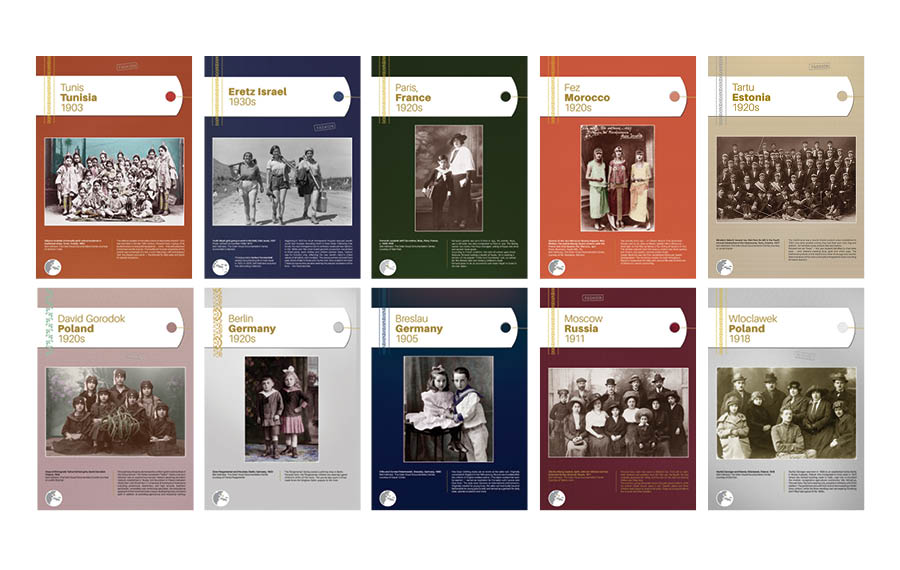
Indeed, our multicultural ancestors did, and the 22 posters in the Vintage Jewish Fashion Posters exhibition prove it. These men, women and children weren’t playing dress up. The conical gold headpieces (“kufia”) attached with scarves were part of a Jewish girl’s school uniform in Tunisia. Young Fernand Lopatnik of Paris sports a Little Lord Fauntleroy suit for his end-of-school-year photo in 1920s Paris. And that traditional white cotton kemis (ankle length dress) worn by a Beta Israeli would quite naturally be festooned with Stars of David and menorahs … even in Ethiopia. 

“Fashion is something that everyone can relate to and some of these images are so surprising,” said Wendy Westgate, a librarian in the exploration and creativity department at LAPL who helped organize the exhibit. “There are some really surprising fashions and locations in there, and they weren’t all inherently religious, which is good, too.” 

The globe- and era-spanning images depict individuals from Europe, North Africa, the Middle East and Israel. Viewers can see men and women in uniform, at leisure, posed for formal portraits or cutting loose at festivals. Some are exotic and others not so much. Although you probably couldn’t track down the types of hats worn by the Brumbergs of 1911 Moscow anywhere other than a museum, the young Israeli girls headed to work in Eretz Israel in 1937 are clad in the types of khaki shorts and head kerchiefs that would not be so out of place today.  

Each image contains a paragraph with information about the fashion and the subject. The Queens of the Moroccan Beauty Pageant in 1927, for example, were shot by the noted Moroccan Jewish photographer Joseph Bouhsira. And the white-suited young man cutting loose with friends in Tel Aviv in 1930 is identified as Dov Milchan, father of Oscar-nominated film producer Arnon Milchan.  

“Many patrons have said how wonderful it was for them to be able to share these photos with their children and how it was the starting point of conversations about their own Jewish heritage,” Westgate said. “And it’s so heartwarming, to look at some of the people and think, ‘What happened to them?’ It really tugs at you.” 


“There are some really surprising fashions and locations in there, and they weren’t all inherently religious, which is good, too.”  — Wendy Westgate

Westgate learned of the exhibition from Lisa Silverman, a colleague at the American Jewish University’s (AJU’s) Sperber Library. The images belong to Beit Hatfutsot, the Museum of the Jewish People in Tel Aviv, and they travel easily. Beit Hatfutsot has eight to 10 “capsule” poster exhibitions on different themes, which libraries or cultural institutions are able to download, reproduce and display.

The Beit Hatsfutsot collection has more than 400,000 images depicting Jewish history, heritage and communal life across the globe. The library received permission from Beit Hatfutsot and the library’s digitalization department created the posters. Depending on their available space, the individual branches are displaying as many of the posters as they have room for.

“I wanted to bring it to the Sperber Library but we don’t have enough people just walking through, and I wanted all of L.A. to see it,” said Silverman, who learned of the opportunity during a visit to Beit Hatfutsot last year. “It has a broader reach and I knew Wendy at LAPL could get it done.”

The exhibition opened in the Robertson Branch at the beginning of May to coincide with Jewish heritage month. After spending two weeks on the Westside, it moved to the Studio City branch and will reopen June 26 at the Woodland Hills branch before moving to Fairfax (July 17-31), Encino-Tarzana (August 7-21) and Westwood (Aug. 28-Sept. 11) as well as a brief stop at the Warner Center Marriott in Woodland Hills during the Association of Jewish Libraries conference June 17-19. After the library tour concludes in September, the posters will be permanently housed at the American Jewish University.

For more information, visit their website. 

Jewish Fashion Through the Ages Read More »

NYC’s Russ & Daughters Holds L.A. Pop-Up

It was possible to believe a part of New York’s Lower East Side had moved west, as Russ & Daughters, the iconic 105-year-old New York City eatery, brought its smoked fish, bagels and babkas to Venice for a pop-up brunch at the revamped Rose Venice on June 8, and crowds lined up for up to two hours to sample the fare.

The event was a dream a long time in the making for Rose Venice chef Jason Neroni. A Southern California native who worked in New York from the late 1990s until 2010, he was a regular customer at Russ & Daughters and became friends with Niki Russ Federman and Josh Russ Tupper, the fourth generation of the Russ family in the business. When Neroni returned to Los Angeles, he’d constantly ask them, “Wouldn’t it be awesome to get you guys out to L.A.?” 

Busy with expanding their business in New York, they repeatedly turned him down until this year, when they finally said yes. Russ & Daughters shipped 720 bagels, over 100 pounds of salmon, 40 pounds of smoked sable, cream cheese spreads and 100 black-and-white cookies to L.A. Rose Venice supplied the tomatoes, onions, eggs and labor.

One dish you wouldn’t expect to find on Russ & Daughters’ New York menu, Neroni said, is smoked salmon pizza. “It wouldn’t be L.A. without a smoked salmon pizza,” he said. Neroni worked in 1997 at Spago for chef Wolfgang Puck, who has been serving smoked salmon pizza since 1982, so they decided to add it to the pop-up menu. 

“By 10:30 a.m., the cafe was packed, with a line snaking through the restaurant and into the parking lot.”

By 10:30 a.m., the cafe was packed, with a line snaking through the restaurant and into the parking lot. Within two hours of the 8 a.m. opening, the potato latkes and babka croissants were sold out. By noon, Neroni said more than 650 plates had been sent out of the kitchen. By early afternoon, more than a thousand people had been served. Russ Tupper, who could be seen slicing lox as you walked into the café, pronounced the event a success, telling the Journal, “This was beyond what we could have expected … a real joy.” 

Mike Colasuano and Jen Ruppmann at the pop-up event. Photos by Steve Mirkin.

The customers were a mix of East Coast expats and Angelenos curious to see what the fuss was about. Couple Mike Colasuono and Jen Ruppermann recently moved here from the East Coast. Ruppermann said the transition hasn’t been easy, so they came for “a taste of home.” They were particularly pleased with their Pastrami Russ, a sandwich of pastrami-cured salmon on a bagel with sauerkraut and mustard. “It’s kind of a Reuben with lox,” Colasuono said. 

A former New Yorker, Jason Cohen was waiting for counter service and said he was looking for bagels and lox like the ones he’d grown up with, and he wanted to introduce his young daughter to a genuine babka. 

Angelenos Kira and Carissa read about the pop-up online and decided to check it out. They called their bagels and lox “great” and “amazing.” 

Asked if the pop-up was a precursor to a possible Los Angeles outpost of Russ & Daughters, Russ Tupper said, “Short answer? No.” Russ Federman said the question comes up in every conversation she has with Angelenos. “Everyone has a strong opinion where we should open,” she said, “and everyone lobbies for the neighborhood closest to them.”  

NYC’s Russ & Daughters Holds L.A. Pop-Up Read More »

Acme Has Big Fish to Fry

Reaching Acme Smoked Fish in Brooklyn requires traversing worlds: through Chasidic Williamsburg, full of modestly dressed Chasidim, and then through Hipster Williamsburg, where tattooed young adults bike while balancing green smoothies. Before arriving at low warehouses in Acme’s neighborhood, you pass through Williamsburg’s waterfront district, edged in shiny new high-rises.

A block into Greenpoint and you’ve reached the promised land, where people line up to enter Acme Smoked Fish’s warehouse, which opens at 8 a.m. every Friday to hundreds who come from all over New York City for prices chopped like so much whitefish salad.

Recently, computer scientist Giro Cavallo attended his first Fish Friday. His colleague Maxim Sviridenko, a mathematician, brought him along. Sviridenko has been coming to Fish Fridays for 15 years, starting shortly after he moved to the United States from Russia. He first encountered Acme while examining packaged fish at Zabar’s, the famed Upper West Side appetizing emporium. “I wondered, ‘Who is Acme?’ ” he said, and then started making the trip Friday mornings.

“It sounded interesting, so I came with him,” Cavallo said. 

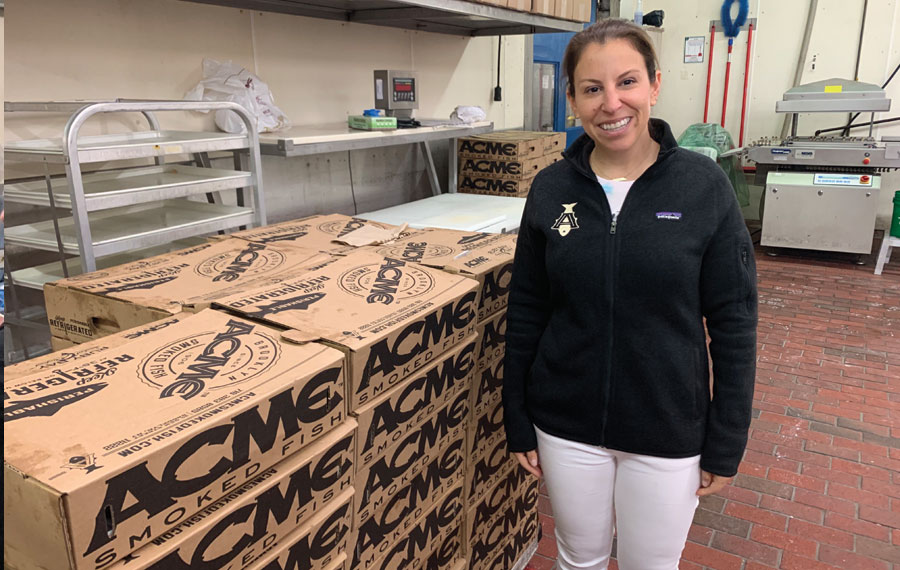
Acme’s 65,000-square-foot production facility and offices continue to blossom in the hands of its fourth generation of Jewish family owners. Emily Gindi, 40, is Acme founder Harry Brownstein’s great-granddaughter. He arrived in New York from Russia in 1905 and in1906 became a smoked fish jobber. He’d buy piscine delights from Lower East Side smokehouses and distribute them in a horse-drawn carriage to appetizing shops throughout the city. In 1941, Rubin Caslow married Brownstein’s daughter, Charlotte. By then Brownstein had started a smoked fish company in Brownsville, where sons Joe and Morty joined him. In 1954, Harry, his sons and Caslow opened their own smokehouse on Gem Street. They called it Acme so it would be regarded as the pinnacle of piscine perfection. And listed first in the phonebook.

“Fish is in my blood. People say, ‘Do you get sick of eating it?’ and I don’t. But my husband says that like a shoemaker’s child without shoes, I don’t bring it home enough.” — Emily Gindi

Caslow’s sons Eric and Robert joined the business in the 1970s. Today, Robert’s son Adam and Eric’s son David are co-CEOs and co-owners. Emily is co-owner and manages customer service. She joined the company full time in 2003 but stepped back in 2010 to raise the three children she has with husband Nathan Gindi, who works in real estate. 

“We have an unwritten rule that it’s blood relatives only and I think it’s why we’ve survived to the fourth generation,” Gindi told the Journal. She returned to Acme in 2016. In her youth, she’d come to Acme with her dad and stick a hand into a herring barrel and pull out a snack. “Fish is in my blood,” she said. “People say, ‘Do you get sick of eating it?’ and I don’t. But my husband says that like a shoemaker’s child without shoes, I don’t bring it home enough.”

In Harry Brownstein’s time, there were countless fish smokehouses. Now only Acme remains, plus a couple of small artisanal firms, Gindi said.

The line forms inside the warehouse on Fish Friday. Photos by Debra Nussbaum Cohen

Acme sells more than 15 million pounds of smoked fish and pickled herring every year. “It’s 10 times bigger than it was when I came,” she said. Then “it was still a Jewish food, meant for bagels and Sunday brunch and Jewish holidays. Now everybody eats it.”

Today, Acme offers mesquite- and dill-flavored fish plus salmon and tuna poke bowls packaged at its Brooklyn plant. Four years ago, the company opened a 100,000-square-foot cold smoke plant in North Carolina. Trailer trucks bring product to Brooklyn daily, which Acme then ships to Costcos, supermarket chains and delis around the country —  from New York City’s iconic Russ & Daughters (read about their pop-up LA store here.) to Los Angeles’ famed Canter’s Deli.

Acme will soon move distribution to Newark, N.J., roomier than tiny Gem Street, which gets blocked with 15 Acme trucks setting out each morning and returning in the afternoon.

In the future, Gindi hopes Acme will be a name requested at deli counters like Empire meat. “People ask for a pound of lox and they’re getting Acme but don’t know it,” Gindi said. 

Her biggest wish? That Acme will accommodate any of the 10 offspring of the current owners, including her own, if they one day want to become the fifth generation leading the family fish business.


Debra Nussbaum Cohen is the Jewish giving maven at Inside Philanthropy and is a freelance journalist living in New York City.

Acme Has Big Fish to Fry Read More »

U.S.-Based Nonprofit Spearheads Fortified Hospital in Haifa

The terrace outside Dr. Amnon Rofe’s office at Bnai Zion Medical Center offers picturesque views of the Mediterranean Sea and the Báha’í Gardens in the northern Israel port city of Haifa. Lebanon is visible, too. Rofe, the hospital’s bespectacled, graying CEO, looks down at a cluster of parked cars in the street below. 

“That’s where the rockets hit,”  he says, flashing a defiant grin. 

“They love to target us. They love to hit hospitals and they almost did.” he adds, referring to the summer of 2006, when Israel was locked in a military conflict with Hezbollah for 34 days. Fighting took place in Lebanon, the Golan Heights and surrounding parts of northern Israel. Residents heard clattering booms and saw billowing smoke. By the end of the conflict, Hezbollah rockets had struck the heart of the city, several hitting less than 350 feet from the hospital, with shrapnel breaking windows. 

Miraculously, nobody in the hospital was injured. “We were very, very lucky,” Rofe says. Still, the episode highlighted the hospital’s vulnerability in the face of armed conflict, always a looming prospect in the region. Rofe recalls the chaos: shards of glass littering the hallways, the hospital staff frantically transferring patients to more secure areas. There was a fear of power outages or a blown gas tank. 

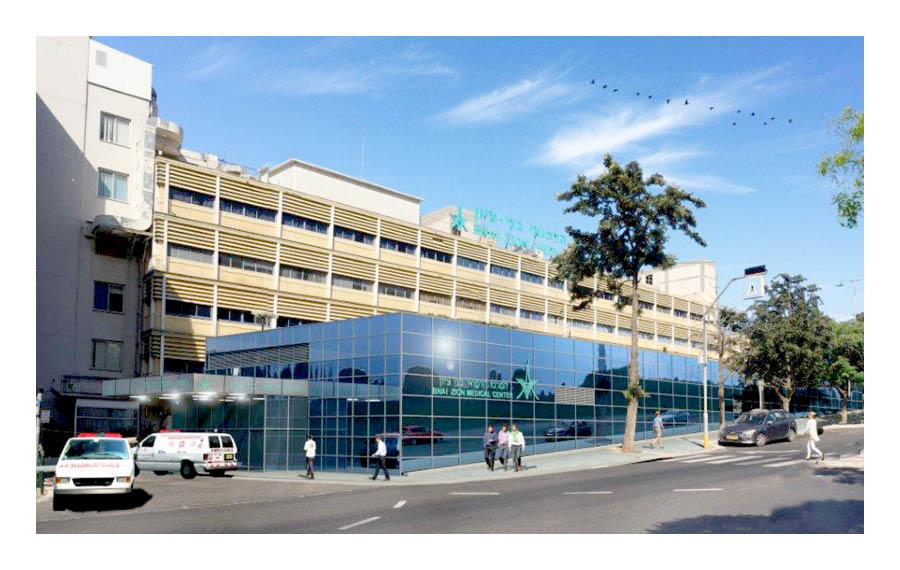
Bnai Zion is the only hospital in the Haifa region without a fortified facility built to withstand an attack. But that will soon change. 

Ground was broken in October 2017 on an ambitious project dubbed “A Hospital in a Hospital” to deliver the medical center its own protected, reinforced section. Now taking shape is a new underground 62-bed hospital, a street-level 45-bed emergency room and a parking lot on the roof. The entire complex will be capable of withstanding nuclear, biological and chemical attacks, as well as earthquakes and natural disasters.  

The $18 million project is slated for completion by 2021. Israel’s Ministry of Health and private donors from Israel and abroad are significant contributors, but the bulk of funding is coming from the Bnai Zion Foundation, a U.S.-based nonprofit that identifies and funds capital projects in Israel in the areas of social inclusion, health and culture. The medical center, formerly Rothschild Hospital, was renamed in the late 1980s after the Bnai Zion Foundation contributed significant funds to renovate and modernize the main buildings.  

“Without the constraints of politics or religion, Bnai Zion Medical Center can flourish in ways that reach beyond the expected while bringing to fruition a true support system for Israel’s most vulnerable population.” 

— Rebecca Harary

“The medical center brings to life everything the Bnai Zion Foundation stands for: care, dignity and love for the people of Israel,” Rebecca Harary, senior vice president of the Bnai Zion Foundation, told the Journal. “Without the constraints of politics or religion, Bnai Zion Medical Center can flourish in ways that reach beyond the expected while bringing to fruition a true support system for Israel’s most vulnerable population.”

Haifa is an incredibly diverse city. Nearly 20% of residents are Arab, including both Christians and Muslims, while the Druze and  Báha’í communities live there, too. This diversity is reflected both in the staff and in the beds of the Bnai Zion Medical Center, according to Rofe. 

“This hospital is an excellent example of coexistence,” Rofe says, walking its halls. “Our staff, our doctors include Christian Arabs, Muslim Arabs, Jews, all working side by side treating everyone in the city of Haifa.” A native of Haifa, Rofe was born in the hospital he now runs. “It’s my home,” he says. “Literally.” 

The hospital also treats Palestinian residents of the West Bank and the occasional Syrian refugee, Rofe says. It’s home to one of the most advanced prosthetics divisions in the world and has pioneered an innovative program to treat sexual abuse victims that’s being replicated around the country. 

Inside the neonatal intensive care unit, Dr. David Haber, the department’s head for the last 25 years, speaks with a Christian Arab couple about their newborn. Haber, who completed his studies at Children’s Hospital Los Angeles, points to the premature babies sleeping in their isolettes and says, “Life is the most precious commodity here. This is a unique hospital in a unique country.” 

George Schaeffer, a Florida-based businessman and current board chairman turned private donor of the Bnai Zion Foundation, shakes Haber’s hand and says, “One life means everything here. To me, there’s no country like this. That’s why I give [the hospital] money.” Schaeffer’s name is plastered all over the hospital, due to his many private contributions, including the soon-to-be Irina Schaeffer Labor and Delivery Suites, thanks to his $2 million gift. 

Outside, Tzvika Rom, the project manager on the construction site, paces in a hard hat near bulldozers clearing stone to make way for the underground hospitalization department. 

“This is the most complicated project in this hospital, ever,” he says, citing the thick structural reinforcements needed. “Many engineers from the area come to learn, to check it out. But we’re quite proud of it.” 

The project appears to be on pace to finish a few months ahead of schedule, according to Rom. 

Standing beside him, Erez Shimko, the hospital’s administrative director, holds a rendering of the sleek, modern-looking emergency room. “It won’t have windows but we’ll cover it with mirrors,” he says with a smile. “We just want it to look nice.” 

After observing the construction site with Rom and Shimko, Rofe removes his hard hat and takes refuge in the shade of a tree.  

“After 2006, I said I wasn’t going to rest until we got this hospital protected,” he says. “It’s my dream. We’re getting close.”  


CORRECTION: An earlier version of this story incorrectly titled George Schaeffer as Bnai Zion’s previous board member. He is the current board chairman.

U.S.-Based Nonprofit Spearheads Fortified Hospital in Haifa Read More »

BCC Celebrates Shavuot with Pride

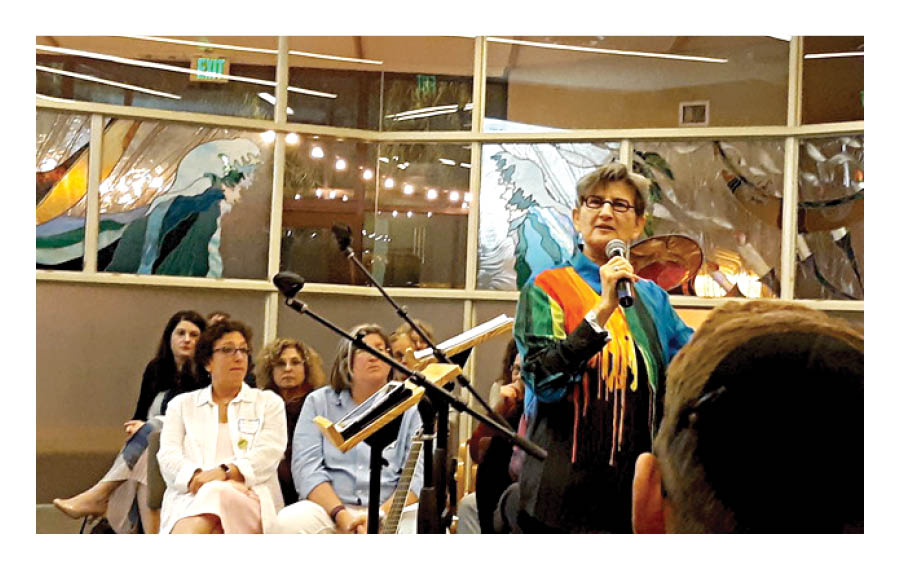
Beth Chayim Chadashim (BCC), Los Angeles’ first gay and lesbian synagogue, and Temple Isaiah came together on the night of June 8, to celebrate Shavuot and Pride Weekend.

Titled “True Colors — A Shavuot Experience,” the event, held at BCC, was conceived by BCC Cantor Juval Porat and Temple Isaiah’s Rabbi Jaclyn Cohen. 

“We have a really nice relationship with BCC and we were talking about ways to collaborate and bring our communities together,” Cohen told the Journal. “Cantor Porat looked at the calendar and said, ‘Shavuot is falling on Pride Weekend and wouldn’t this be a wonderful opportunity?’ We brainstormed this idea of true colors and coming out, whatever that means to you no matter how you identify, and celebrating that and linking it to Torah.” 

More than 50 people attended the event and snacked on traditional Shavuot fare — cheesecake, blintzes and kugel — and listened to performances from BCC and Temple Isaiah choir members under the direction of Porat. 

Porat reflected on the act of chanting on this special occasion: “The thing I love most about chanting in nigun (melody),” he said,  “is the stillness that comes out of it. There is something very pure in that stillness. I think the act of chanting on this Pride Weekend and on this night of Shavuot … allows us to tap into that which sometimes … in our habitual living, gets hidden by shields of defense or inconvenience, and so tonight we are really invited to peel off those layers and reconnect with that which is important to us, that which is authentic to us.”

“We brainstormed this idea of true colors and coming out, whatever that means to you no matter how you identify, and celebrating that and linking it to Torah.”

— Rabbi Jaclyn Cohen

Temple Isaiah’s Rabbi Zoë Klein Miles spoke about a section of the Talmud where Rabbis Hillel and Shammai discuss what one says to a bride at her wedding. She related this to how we see each other through loving eyes and the difference between brutal truth and tenderness and support.

Outgoing BCC Senior Rabbi Lisa Edwards, who is retiring after 25 years at the end of the month, delved into the contemporary midrashic reading of the Book of Ruth and the passionate speech where Ruth the Moabite swears loyalty to her Israelite mother-in-law Naomi. 

“It’s one of the most beautiful lesbian scenes that have ever been written,” said Rabbi Edwards’ wife Lezbtzn Tracy Moore, “and it really encapsulates a feeling of complete commitment in any love and where it comes from and what it entails and what it encircles and holds close.” 

In her teaching, Cohen, said,  “Telling our stories isn’t always easy but it can lead to some beautiful, authentic truth, and I hope that as we celebrate the receiving of Torah, that the Torah script of our own lives contains more truth, more realness, more authenticity, more love, more color, more pride in our stories and more power to live as our true selves.”

The evening concluded with the choir singing “Elohai N’tzor,” with all the members dressed in clothing reflecting the colors of the rainbow, and Cohen and Porat singing Cyndi Lauper’s “True Colors.” 

Temple Isaiah choir member Elaine Diamond told the Journal the evening was “a wonderful connection between our two congregations. To be here on Shavuot and Pride Weekend is a double celebration. We have two wonderful cantors, Juval and Jaclyn, and the melding of their voices with the congregation’s voices just lifts all our spirits.” 

And in her last Shavuot service as senior rabbi, Edwards told the Journal the connection between Shavuot and Pride is like “the image of the crowds gathering at the foot of Sinai. It works nicely that we are walking into [the parsha of] Bamidbar this week because I always think of a Pride parade when we read about all of the tribes gathered around with the great treasure of the tabernacle and everyone has a banner and their flags to identify them. It is very Pride linked.”

BCC Celebrates Shavuot with Pride Read More »

Rabbi Sherre Hirsch: AJU’s New Chief Innovation Officer

It seems there is nothing Rabbi Sherre Hirsch can’t do when it comes to shaping the Jewish community. She was a pulpit rabbi at Sinai Temple, is a published author, a leading public intellectual and, as Hillel International’s senior rabbinical scholar, has made the wellness of college students a priority.

On Aug. 1, Hirsch will take on the role of chief innovation officer at American Jewish University (AJU). She has been tasked with reimagining Jewish education, outreach and engagement for AJU’s two campuses, rabbinical school, and community and public educational programs. She also will provide leadership for AJU’s Whizin Center for Continuing Education, which offers classes, lectures, author events and concerts.

In an interview with the Journal, Hirsch said the AJU offer simply was one she couldn’t pass up.

“There is so much potential and so much possibility, and I really just thought there was something magical that could happen,” she said. “I first told [AJU] no, because I was so happy with Hillel and we were developing HillelWell (Hillel’s initiative to educate and normalize mental health in and around the Jewish community), but [the AJU offer] just kept me up at night.”

Hirsch said she is ready to start thinking about how to put AJU on the map not just as a religious institution but also as an academic institution, and to find new ways to approach college and programming. 

“We are thrilled to bring Rabbi Hirsch onto our senior leadership team to help drive AJU’s development of a new paradigm for education that meets the needs of our rapidly evolving community in Los Angeles and beyond,” AJU President Jeffrey Herbst said in a statement. “At a time when people are increasingly searching for spirituality and educational options beyond traditional institutions, AJU is uniquely positioned to deliver a new model for programming that engages and enlightens communities locally, nationally and globally — both inside and outside of the Jewish world. Rabbi Hirsch’s extraordinary experience, wisdom and insight will be invaluable in developing this new model.”

“I think the first thing I’m going to do is listen and understand how we can take [AJU’s] history and move it to modern things. I want to understand literally the holiness of this place.” — Rabbi Sherre Hirsch

Hirsch’s expertise spans more three decades. She told the Journal her first 10 years were working as a pulpit rabbi, her second 10 years consisted of bringing the Jewish perspective into media and television, and her next 10 years will be in organizational leadership. 

“I think the first thing I’m going to do is listen and understand how we can take [AJU’s] history and move it to modern things,” she said. “I want to understand literally the holiness of this place. I want to see where the need is. I want to really look at problems and possibilities and fill them.”

Hirsch added she is excited to change the way people look at education and find new ways to collaborate with entrepreneurs in Silicon Beach.

“I think we can be something at the forefront and we can be leaders for other institutions,” she said. “I‘m really looking forward to understanding what we can bring in for the next generation — really [striving] to help develop young people into the Jews we want them to be, serving the next Jewish world.”

Rabbi Sherre Hirsch: AJU’s New Chief Innovation Officer Read More »

MAZON Highlights Food Insecurity at ‘Hunger Bites’ Event

More than 200 supporters gathered June 5 to sample dishes from some of Los Angeles’ top chefs at Playa Studios in Culver City for “Hunger Bites: Small Plates, Big Change,” a fundraiser for and celebration of MAZON’s work in the fight to end hunger. Emcee Joshua Malina (“The West Wing,” “Scandal”) introduced speakers and urged the crowd to buy raffle tickets to support the organization.

Attendees paid $180 for a basic ticket and $360 for VIP tickets. By the end of the night, MAZON had raised $100,000. Attendees also received recipes for some of the featured dishes, including a Southern Fried Chicken Sandwich from Junior’s Fried Chicken, a peach and watermelon salad with feta cheese from The Butcher’s Daughter, Andrea’s California Borscht from Salty Baby LA, and a butterscotch pudding from Jar. The vegetarian offering from Jaffa, a tahini with charred eggplant, was a hit with vegetarians and carnivores alike.

In a press release before the event, MAZON President and CEO Abby J. Leibman, said the event “will allow MAZON to elevate issues faced by vulnerable Americans, move the needle on critical legislation, and solidify relationships with policymakers who share our deep concern about the pervasive yet solvable problem of hunger.” 

Inspired by Jewish values and ideals, MAZON: A Jewish Response to Hunger is a nonprofit that works to end hunger among people of all faiths and backgrounds in the United States and Israel. According to the release, 41.2 million people struggle with hunger in the United States, including 12.9 million children and 9.8 million seniors. 

In partnership with the Co-founders of CHEFS 4CHANGE — Leonardo Marino, R.L. King, Gennaro Pecchia and Michael Ramsdell — the event featured food from Etty Benhamou, Le Mervetty; Hugo Bolanos, Wolfgang Puck Fine Dining Group; Anne Conness of Jaffa; Vivian Ku, Joy and Pine & Crane; Ivan Marquez, Broken Spanish; Joann Roth Oseary, Someone’s in the Kitchen; David Padilla, The Butcher’s Daughter; Andrew Phillips, private chef; Andrea Ruth, Salty Baby; Suzanne Tracht, Jar; and Sexy Lunch Club. Event sponsors included Soylent, Equal Exchange, St. George’s Spirits, Sunset Beer and Three Weavers Brewing.

“We are so gratified by the Los Angeles community’s response to our first annual Hunger Bites event,” Leibman told the Journal after the event. “This was a powerful evening celebrating MAZON’s work to fight hunger in the United States and Israel. As the only national Jewish social justice organization headquartered in Los Angeles, MAZON is rooted in the mission of shining a light on the pervasive issues of hunger through advocacy and policy change to help the most vulnerable in our communities.”

(From left) Actor and Emcee Joshua Malina and Board Chair Liz Kanter Groskind. Photo courtesy of MAZON.

MAZON made a sea change in the hunger space “by emphasising quality of food equally or more importantly than quantity,” said Bruce Rankin, executive director of Westside Food Bank, a nonprofit corporation which provides food to social service agencies on the Westside of Los Angeles County. 

“People who need food assistance know what’s good and what isn’t but often can’t afford what’s good, so they often have to buy food to get calories rather than to get the nutrition that they need,” Rankin, who has worked with the food bank for more than 30 years, told the Journal at the event. “No one has done more than MAZON to get the food assistance network focused on the full range of nutrition, among many other things.” 

The event also premiered MAZON’s soon-to-be-released digital video experience “This is Hunger,” profiling real people who struggle with hunger, poverty and lack of access to medication. 

“Don’t ever think this can’t happen to you or your family,” one man profiled in the video said, noting that he once had a great job, but “it’s gone and all the things attached to it are gone: health care, life insurance … now I’m stuck here trying to figure out what I’m going to do.”  

“[‘This is Hunger’] evoked a powerful emotional response and clearly strengthened people’s resolve to join with MAZON and make a difference in the lives of others,” Leibman said.

“It was fun and we all ate and had a good time,” Malina told the Journal after the event, “and then the lights go down and you see a seven-minute movie [“This is Hunger”] and it’s staggering seeing the personal face of hunger and looking at the numbers. It’s astounding that we live in a country where 40 million plus are SNAP (Supplemental Nutrition Assistance Program) recipients.” 

Photo courtesy of MAZON.

Malina mentioned a clickable map on MAZON’s website (mazon.org) that shows 11.8% of California households are food insecure, and that more than 2 million California households are on SNAP. 

Malina credited his parents, who also attended the event, for being the ones who “first taught me about tikkun olam.” 

Leibman called Malina, a longtime MAZON partner, “a strong voice for those who struggle in our nation. We are so appreciative of his remarkable commitment.” 

Many guests thanked Malina during the event for his work on behalf of MAZON. 

“It’s sweet, thanking me as if I’d done some huge thing,” Malina said. “I came out for two hours, I read from a script, I urged people to buy raffle tickets. … I didn’t do very much, so I try to walk away asking, ‘What more can I do?’ I hope I will continue to get more involved and help MAZON get its message out.” 

“At a moment in our city when food insecurity is so prevalent, when we know that the homeless crisis is ever-growing, being with people I know are doing something actively is not only the right thing to do, it’s necessary,” said Serena Oberstein, a Northridge resident who attended the event. “We all have to dig in and not just watch the crisis grow, but make sure that it stops.”


CORRECTION: A recent version of this story incorrectly reported the amount of money raised. The event raised $100,000.

MAZON Highlights Food Insecurity at ‘Hunger Bites’ Event Read More »