fbpx

June 12, 2019

Reporter Challenges Iranian Foreign Minister on Executing Gays

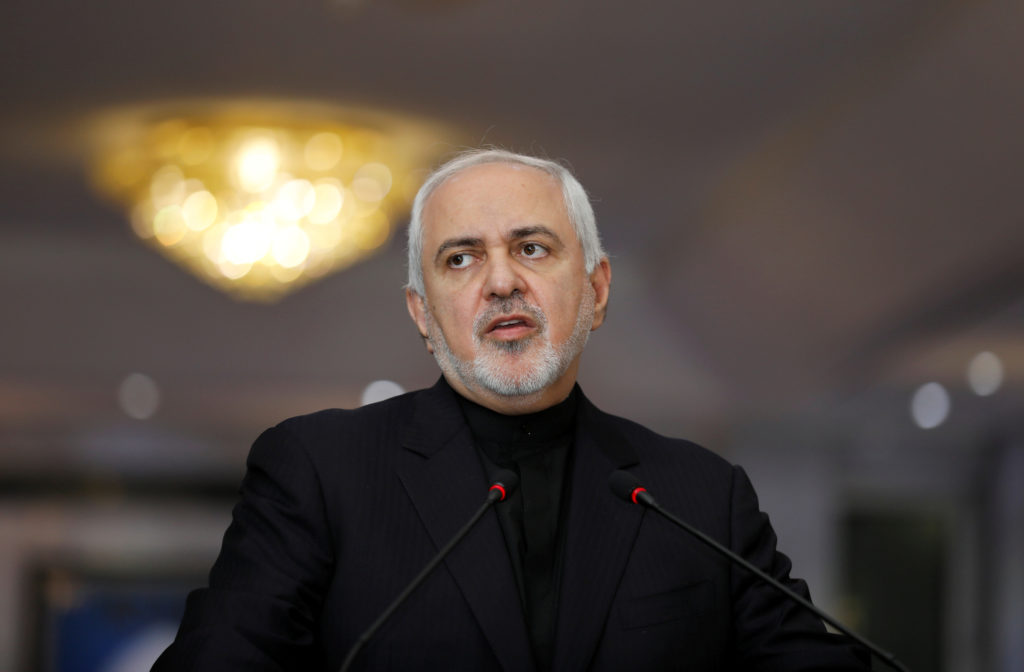
An openly gay reporter for the German tabloid Bild challenged Iranian Foreign Minister Javad Zarif in a June 10 press conference in Tehran.

The reporter, Paul Ronzheimer, asked Zarif, “Why are homosexuals executed in Iran because of their sexual orientation?” Zarif replied, “Our society has moral principles. And we live according to these principles. These are moral principles concerning the behavior of people in general. And that means that the law is respected and the law is obeyed.”

According to The Washington Post, Ronzheimer’s boyfriend helped him form the question to Zarif. The question reportedly caused a stir among Iranian officials in the room.

German Foreign Minister Heiko Maas, who was holding the press conference with Zarif, remained silent on the matter. German Deputy Foreign Minister Michael Roth told Bild afterwards, “In Iran and seven other countries worldwide, homosexuals face the death penalty. That is inhuman and completely unacceptable.”

United States Ambassador to Germany Richard Grenell, who is openly gay himself, told the German Press Agency, “The Iranian regime has violated basic principles of the United Nations. UN members should honor (the UN Universal Declaration of Human Rights) if they want to be members at all. The criminalization of homosexuality plainly violates this declaration.”

In 2007, then-Iranian President Mahmoud Ahmadinejad declared in a speech at Columbia University that there are zero gays in Iran. According to Human Rights Watch, homosexuality in Iran is a crime that can result in multiple lashings and death. Iran’s judicial system frequently relies “on confessions extracted through physical torture and extreme psychological pressure” to imprison Iranians on sodomy charges.

Human Rights Watch also notes that Iranian authorities frequently harass and abuse gays. A 42-year-old gay man named Navid told Human Rights Watch that in 2007, two members of the Basij, one of the paramilitary forces in the Islamic Revolutionary Guard Corps, detained Navid in his house, where he alleges they beat and sexually assaulted him.

Human Rights Watch estimates that thousands of Irianians identify as LGBTQ.  

Reporter Challenges Iranian Foreign Minister on Executing Gays Read More »

Swastikas Discovered in New Jersey School

Two swastikas were discovered at Glen Rock High School in Glen Rock, N.J., over the last two weeks.

The first was found on May 28 on a bathroom wall adjoining the high school and middle school. 

“There are no suspects, nor has a specific intended target been identified,” Glen Rock Police Chief Dean Ackermann told the Fair Lawn-Glen Rock Daily Voice. “A bias incident follow-up was completed by the detective bureau based upon limited information [made] available from school officials.”

On June 6, a teacher discovered a second swastika chiseled into a classroom wall. Ackermann said officers responded and photographed the area but there was little evidence as to the perpetrator.

“The administration, staff and maintenance personnel at the Glen Rock public schools are currently working diligently to inspect all facilities for any other bias or inappropriate graffiti which may be obscured in inconspicuous locations,” Ackermann told the Daily Voice. “All suspected bias incidents are treated seriously. Where evidence supports the identification of the actor, appropriate prosecution will occur.”

Glen Rock Public School Interim Superintendent Bruce Watson sent a letter to parents on June 4 stating the school district was making “every effort to identify the offender, but as of this date, our efforts have been unsuccessful. The building administration will continue to be diligent in our search.”

He added, “The Glen Rock [school district] denounces the use of this symbol … as it symbolizes genocide, intolerance and hate.”

“It’s something we have to get in front of because if this gets normalized with students, imagine what kind of impact it’s going to have on society at large.” — Evan Bernstein

In a June 5 statement, Glen Rock Mayor Bruce Packer and the Glen Rock City Council said, “Hate speech and hate in any form is not welcome in Glen Rock. While the Superintendent and BOE (Board of Education) are the appropriate lead on the response in the schools to this incident, we have offered our help and support in any way that they deem necessary. In the wake of this incident, we urge our community to come together; for us all to speak with our children and our neighbors; to discuss the impact of our words and actions on others, whether or not the intent is malicious.”

Anti-Defamation League (ADL) Regional Director for New York and New Jersey Evan Bernstein told the Journal the swastikas were “a continuation of a very disturbing trend that’s happening in K-12 schools in northern and central New Jersey.” He added the ADL’s 2018 Audit of Anti-Semitic Incidents found an uptick in anti-Semitic instances in New Jersey schools.

“It’s something we have to get in front of,” Bernstein said, “because if this gets normalized with students, imagine what kind of impact it’s going to have on society at large.”

The ADL will be working with the Jewish Federation of Northern New Jersey to help implement its anti-bias training program called No Place for Hate in schools to prevent such anti-Semitic incidents, Bernstein said.

“We go into schools with our educational team and work with school parents, administrators and students to make a school no place for hate,” he said. “We had over 200 schools last year that graduated as No Place for Hate schools. We want to get into as many of those schools as possible in New Jersey.”

According to the ADL, there were 200 anti-Semitic incidents in New Jersey in 2018, the third-highest of any state. However, the ADL also found there was a 4% decline in anti-Semitic incidents in the state between 2017 and 2018.

Swastikas Discovered in New Jersey School Read More »

Lessons From My Father

The great scholar Maimonides wrote, “The measure of honor and awe due one’s teacher exceeds that due one’s father. His father brings him into the life of this world, while his teacher, who teaches him wisdom, brings him into the life of the world to come.”

Maimonides was a highly respected intellectual, philosopher and a physician to kings, but maybe he got this one wrong. Why would you give more honor to your teacher than to your father? Well, there’s a catch: What if your father is also your teacher? If this is so, then the adage becomes a little easier to digest.

My father was born in Montreal in 1914. When my dad was only 12 years old, his own father died of a sudden heart attack. He was forced to quit school and start to work as a messenger boy in the garment district. He had to support his mother and his three sisters. There was little or no welfare at that time.  

Eventually he learned to be a cutter, someone who spreads rolls of fabric on a long wooden table, then uses an electric knife to cut out the various parts used in assembling a garment. After a few years in the cutting room, he became shop foreman. 

During World War II, my father served in the Canadian army, but because he was the sole provider for his family, he was given an exemption from serving overseas. So he worked at a military supply base in Longueuil, just across the St. Lawrence River from Montreal. There, he met his future business partners. After the war, he and his partners opened a small factory that produced women’s blouses. 

The business provided a modest lifestyle for our family. We had a nice home in the suburbs; we vacationed every summer in the Laurentian Mountains (the Catskills of the north); and every three or four years, my dad would buy a brand new convertible. But running the factory came with a tremendous cost. My dad worked a six-day week, often leaving the house before sunrise and returning at 9 or 10  o’clock each night. During the work week, it was rare to see him at all. 

“My father was a superb negotiator, and he used his techniques when speaking to his kids, his employees, his suppliers and his car salesmen, each of them walking away thinking they got the better of the deal.”

Sunday mornings were special. My father would still wake up early in the morning. He would take out a gray, steel file box and pay all the bills while sitting at the kitchen table. He would dress a little less formally on Sunday, forgoing his usual three-piece suit and tie for a short-sleeved polo shirt and cotton pants.

My sister and I came to the breakfast table just as my father was putting away his metal box. It was time for an “adventure.” First, we would look to see if there were any other children on the street who wanted to join us. My dad was always happy to stuff as may kids as possible into the back seat of his Mercury Monterey. We would then travel to the weirdest places that anyone has ever seen.

Once we went to the very politically incorrect Midget’s Palace in the east end of Montreal. A “little person” guide would lead our group through the various rooms where every piece of furniture was miniature. At the end of the tour, the residents would put on a show of singing, dancing and acrobatics.

One Sunday, my dad took us to Sainte-Sophie, a small town about 60 miles north of Montreal. According to my father, there were a few Jewish families who owned farms in Sainte-Sophie, and in the summer months, children from Montreal would stay on these farms for their holidays. My father had vivid memories of this little town and he was eager to share them with us. He showed us the tiny wooden synagogue with the Star of David etched on the front door. He brought us to meet some of his old friends, one who was a chicken farmer and the other who produced sour pickles. We enjoyed sampling the pickles directly from the barrel. 

The one “adventure” that most impressed us was a visit to the Port of Montreal. In the 1960s, the port was, well, just a port. There were no touristy attractions, Ferris wheels or bike paths; just a row of ships, cranes, grain elevators and salty sailors. On that particular Sunday, a huge Soviet ship was docked in one of the slips. The gangplank was extended and a few Soviet sailors were milling about. My father went up to the seemingly highest-ranking officer and asked him if we could have a tour of the ship. Amazingly, he agreed, and our group of five kids along with our dad boarded the ship. We were given a tour of the sleeping quarters, the galley, the bridge and the engine room. As we were leaving, my dad was given a bottle of vodka as a parting gift.

My father had a special way of speaking to people. He was a superb negotiator, and used his techniques when speaking to his kids, his employees, his suppliers and his car salesmen, each of them walking away thinking they got the better of the deal.

After I finished school, I entered the family business and that’s when I truly got to know my father. Unfortunately, I never picked up his negotiating skills, but I did learn to be honest, to treat all people with respect, to work hard and to give generously to those in need. 

My father died from cancer at age 66. He never got to meet his children’s spouses or his grandchildren. At his shivah, I was overwhelmed by the number of people who told me stories about my father.

“Your father helped me start my own business,” one visitor said.

“Your father saved my marriage,” recounted an employee who told me that my father showed up at his house to moderate a dispute between the employee and his wife.

“Your father was able to sponsor my wife to immigrate to Canada,” a neighbour exclaimed. 

There were other stories too numerous to mention. All of these adventures and episodes taught me so much more about life that I ever learned in school. So on Father’s Day, I truly honor the person who was my greatest teacher. 

Happy Father’s Day.


Paul Starr is a recently retired systems analyst living in Montreal. He belongs to a Modern Orthodox congregation.

Lessons From My Father Read More »

Letters: ‘New’ Canard or an Old Canard in a New Disguise?, Religion in Israel

‘New’ Canard or an Old Canard in a New Disguise?
According to the “new” canard, Zionists created an apartheid state in the Middle East. Because apartheid is a despicable system, well-meaning people have the right and, in fact, a duty to sanction and boycott the Zionist entity. David Suissa puts this canard in its rightful place (“Anti-Zionism Worse Than Anti-Semitism,” May 31). However, I also posit that there is nothing new here. Although the boycott, divestment and sanctions movement started after 2001, back in the good ol’ days, I had the bad luck in communist Hungary to see the consequences of the 1975 United Nations General Assembly Resolution 3379, determining that “Zionism is a form of racism.”

After World War II, Jews in Hungary welcomed the Red Army as liberators. Many of the Hungarians who returned with the liberators — some of them as officers of the Red Army — were Jewish. In fact, the leaders of the Hungarian Communist Party were predominantly Jewish.

Unfortunately, Stalin’s “Doctors’ Plot” was a pretense to start an outburst of latent Soviet anti-Semitism (pogroms were invented in Russia, after all). Despite the fact that by 1975 Stalin was long dead, Hungarian party leaders still felt obligated to show their alignment with Moscow by aggressively supporting U.N. Resolution 3379. This promptly fueled the existing, up to that point thinly veiled, anti-Semitism in Hungary. (The country had its own, strong anti-Semitic history, so none of these developments came as a surprise.)

The justification was eerily the same as today: “We don’t have any problems with the Jews, but Israel is a racist state and it is open season on anybody who supports it.”
Peter Hantos, via email

Religion in Israel
When reading David Suissa’s anti-Charedi diatribe (“Religious Parties Hurt Their Religion,” June 7), consider: They made aliyah, they act only in concurrence with rabbinic decisions, they are fruitful and multiply, and their grandchildren will be halachically Jewish. Very few readers of this paper can say that.
S.Z. Newman, via email

Another wonderful Editor’s Note. It’s based on the reality in Israel but goes beyond Israel’s boundaries with the universal truth in it. I experienced firsthand socialism/communism and can confirm that even the most beautiful idea or religion cannot succeed if imposed forcefully.
Svetlozar Garmidolov, Los Angeles 

I am shomer Shabbat, which means I am not anti-religious. We got married in the United Kingdom, first civilly — for practical reasons — and then in a London synagogue.

When our sons got married in France, the rabbis followed the law and married them only after they went to “La Mairie” (the town hall) and got a civil wedding certificate.

In the U.S., you can choose how you want to marry.

How does it make you feel when you realize that Israel, the country we love so much, unfortunately is like Iran, Saudi Arabia, Syria, Libya, etc., where the Charedi rabbis act like the mullahs and don’t allow civil marriage?

This is not my definition of a democracy.

As David Suissa wrote, it is up to the Israelis to decide if they want this to change.
Jacques Kukurudz, Los Angeles

‘Born With a Jewish Soul’
I read both stories about converting (“It’s Never Too Late to Be a Ruth,” “Are You Sure You Want to Be Jewish?” June 7) and was thrilled by the women mentioned. 

I also was born with a Jewish soul. At 73, with 72 years as a Catholic, people say to me: “But you’re not marrying a Jew.”
I am in a conversion class of amazing young couples (ages 25-35).
Why now? The story is too long for a letter to the editor, but I’m sure I’ll always hear, “Funny, you don’t look Jewish.”
Ginger Caples-Urode, Marina del Rey

Happy Father’s Day to My Jewish Father
In Jewish comedy, fathers usually have played the secondary role of straight man to their wives’ leading role. But to all of us fortunate enough to grow up with a Jewish father, he brought to the table of life certain staples that have no culinary or psychological equal.

My Jewish father died in January 2002, and after the internal moral code that he left me as his legacy, I will kneel by his gravesite, plant a stone and share with him tales of woe, felicity and humor like we did in the days of yore.

My dad, more than any renowned scholar or Olympic athlete, was, is and always will be a hero to me.

Celebrating my final year in the sexagenarian range, Dad’s words, lectures and homilies have stood the test of time, finding resonance as much (or more) at 69 as at 6.

Words such as integrity. Honor. Respect. Love. Justice. Empathy. Candor. Wisdom. Truth. Loyalty.

Lectures that centered on the primacy of brains over brawn; wisdom superseding intellect; and conscience as the ultimate denominator of behavior.

Homilies predicated on doing what is right as a self-intrinsic reward; the sacrosanct three F’s (family, friends and fidelity); and how morals, ethics and values are to the mind, heart and soul as food is to the stomach.

In the ensuing almost 18 years since my dad’s death, I have been told, to the annoyance of the few and to the consternation of the many, that my grief timeline has reached its expiration date and I need to move on.

But to me, grief is a forever type of love, and I loved my father in ways that I should have expressed every day that I had food to eat, a roof over my head, a baseball to hit, a basketball to shoot and the unforgettably warm hug that was his special and unique gift to me.

Happy Father’s Day, Pop.
Marc Rogers, North Hollywood

Did the U.S. Call for Israel to Annex the West Bank?
The question “Did the U.S. Call for Israel to Annex the West Bank?” employs a falsehood as a starting point for discussion. Ambassador David Friedman never used the word “annex.”

This is because the disputed territories west of the Jordan are just that, disputed, and Israel has legitimate claims to land there.

Bear in mind that in 1948, Arab armies looted and razed the entire Jewish Quarter of Jerusalem’s Old City, as well as Jewish villages in Judea and Samaria, among them Beit Ha’arava, Neve Ya’akov, Atarot, Sha’ar Hagolan, Kfar Darom and the Etzion Bloc. This is one reason why U.N. Security Council Resolution 242 is not specific about jurisdiction over territories taken by Jordan in 1948 and returned to Israel in 1967. The intent was for the parties involved to work out mutually satisfactory arrangements.

Friedman is entirely accurate. Resolution 242 allows Israel to retain parts of Judea and Samaria. “Retain” and “annex” are not synonymous.
Julia Lutch, via email

Journal Is a ‘Must-Read’
I’ve been meaning to send this personal note for months just to say that the Journal is a consistently surprising, engaging and balanced must-read. There’s not a week that goes by when there’s not an unexpected delight. In the May 31 edition, it was the long piece about Persian Jewry in Los Angeles and the United States (“Lost in Translation”) and the provocative article about the millennials and Judaism (“Jewish Youth Are More Spiritual Than You Think”). I didn’t necessarily agree, but it sure made me think.

Keep up the fantastic work.
Jeff Gottesfeld, North Hollywood

CORRECTIONS
In a story about the new consul general of Israel in Los Angeles (“Newman Ready for Diplomatic Post in L.A.,” June 7), former consul general Sam Grundwerg’s new position was incorrect. Grundwerg is World Chairman of the Keren Hayesod–United Israel Appeal (UIA).

In a column about conversion (“It’s Never Too Late to Be a Ruth,” June 7), it was reported that the convert’s husband is Jewish. He is not.
Letters: ‘New’ Canard or an Old Canard in a New Disguise?, Religion in Israel Read More »

Jewish Meditation, Beach Shabbat, Ben Shapiro

FRI JUNE 14

“The Joy of Change”
Sinai Temple honors Matt Baram, millennial director at Sinai, at his final Orden Family Friday Night Live Shabbat program. 7 p.m. doors open. 7:30 p.m. services. 8:30 p.m. dinner for all ages. $20. Registration required. Sinai Temple, 10400 Wilshire Blvd. (310) 474-1518.

“The Hatmaker’s Wife”
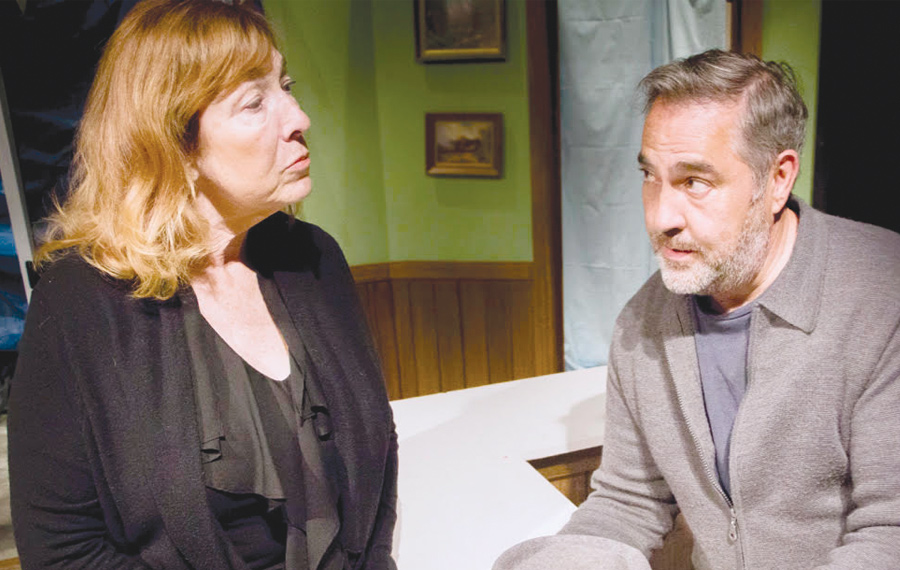
Inspired by the Jewish folktales of Sholem Aleichem, playwright Lauren Yee has written a fairy tale comedy, “The Hatmaker’s Wife,” which may remind Long Beach Playhouse audiences of Aleichem’s broad style. Swinging between the realistic and the fantastical, “Hatmaker” is the story of a young woman who moves in with her boyfriend in hopes of domestic bliss, only to be repeatedly disappointed. She finds assistance from the unlikeliest of places — a wall in her home. 8 p.m. Fridays and Saturdays, 2 p.m. Sundays. Through July 6. $20 Fridays, $24 Saturdays and Sundays. For seniors, $18 Fridays, $21 Saturdays and Sundays. $14 students all performances. Long Beach Playhouse, 5021 E. Anaheim St., Long Beach. (562) 494-1014.

N’ranena Service
Adat Ari El’s musical Shabbat service, N’ranena, features performers from The Miracle Project, which serves those with autism and other differences through an inclusive theater, film and expressive arts program. Challah is provided. Guests are invited to bring their own vegetarian or dairy picnic dinner along with a dessert to share, or they may purchase a meal. 6-8:30 p.m. Free, $10 meal. Adat Ari El, 12020 Burbank Blvd., Valley Village. (818) 766-9426.

“Friday Night Inspire”
Beverly Hills-based Beth Jacob Congregation’s young professionals minyan meets for “Friday Night Inspire,” which is dedicated to the memory of Aaron Sichel, who died of cancer four years ago. The hosts are Lauren and Daniel Packer. 6:45 p.m. Mincha. 7 p.m. Kabbalat Shabbat. 7:30 p.m. Kiddush, refreshments and shmoozing. (310) 278-1911. RSVP to YP@bethjacob.org to obtain the address.

Shabbat on the Beach
Members and friends of Mishkon Tephilo in Venice gather for “Na’or: An Enlightened Shabbat,” as the congregation leaves behind its building and moves its Friday night services to the beach in Santa Monica. Attendees convene at South Beach Park, located at the southern end of the Ocean Park parking lot, just off the boardwalk, and are asked to bring their own picnic dinner, arrive early and enjoy the beach. 6 p.m. BYO picnic dinner. 6:45 p.m. musical sunset Shabbat service. Free. Open to the public. (310) 392-3029.

John Biewen

“The Illusion of Whiteness”
Journalist and documentarian John Biewen leads three conversations at Temple Isaiah on race in America and its meaning and impact in our lives. On Friday following Shabbat services, he discusses “Whiteness — A Historical Overview.” On Saturday morning, he offers “A Deeper Look Into Race in America.” And on Saturday afternoon, his topic is “Looking Backward and Moving Forward.” June 14: 6:15 p.m. services. 8 p.m. lecture. June 15: 10:30 a.m. lecture. 12:30 p.m. lunch. 1:30 p.m. lecture. Free. RSVP required. Temple Isaiah, 10345 Pico Blvd., Los Angeles. (310) 277-2772.

Shabbat Under the Stars
Kick off summer with University Synagogue as the Westside congregation holds its first Shabbat Under the Stars of the season. The scene is the back patio, and guests are encouraged to bring a jacket or sweater for comfort from the ocean breezes. 7:30-9 p.m. Free. University Synagogue, 11960 Sunset Blvd., Los Angeles. (310) 472-1255.

SUN JUNE 16

Father’s Day Remembrance
A Father’s Day Remembrance Service at Hillside Memorial Park and Mortuary features Rabbi Jonathan Aaron of Temple Emanuel of Beverly Hills (TEBH), Temple Akiba Cantor Lonee Frailich, University Synagogue Cantor Jay Frailich, TEBH Cantor Lizzie Weiss and storyteller Joe Koplowitz. 10 a.m. Free. Hillside Memorial Park and Mortuary, 6001 W. Centinela Ave., Los Angeles. (310) 641-0707.

“Sacred Sounds Unbound”
To honor fathers on their special day, Temple Beth Am and musical partner Temple Emanuel of Beverly Hills hold a “Sacred Sounds Unbound,” starring song leader and composer Joey Weisenberg. The creative director of the New York-based Rising Sound Institute, Weisenberg is accompanied by Los Angeles musicians and immerses the crowd in two types of nigunim, the familiar and the new. This is the second in a series of concerts put on by Beth Am and Temple Emanuel. 2 p.m. $18 suggested donation. Temple Beth Am, 1039 S. La Cienega Blvd. (310) 652-7353.

“Who Will Write Our History”

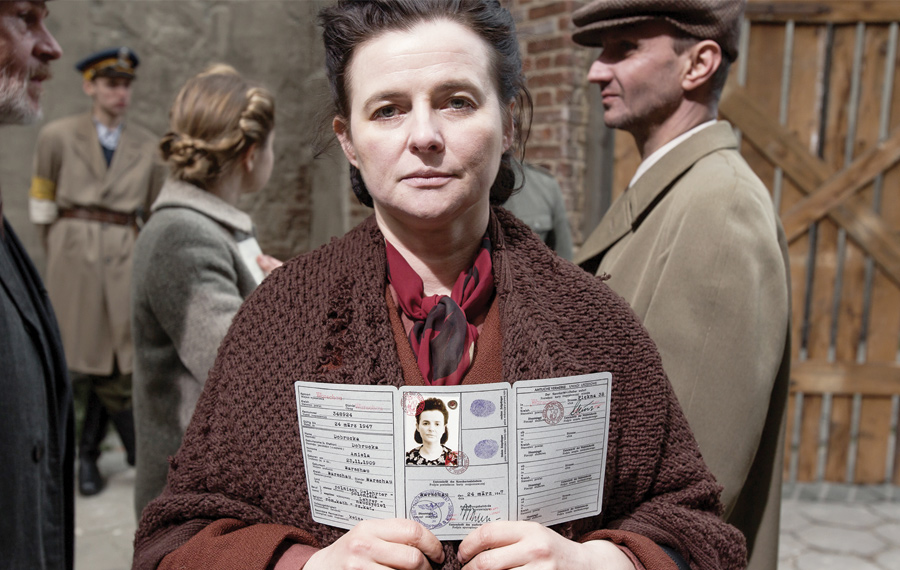
“Who Will Write Our History”
Seventy-six years after the Warsaw Ghetto uprising, American Jewish University (AJU) holds the screening of “Who Will Write Our History.” The documentary is about a clandestine scholarly group that hid treasured archives from the Nazis that were not discovered until after World War II. The Association of Jewish Libraries (AJL) co-organizes the evening. The film featuring rare footage also includes new interviews and reflections. Following the screening, Michael Berenbaum, director of AJU’s Sigi Ziering Institute, appears in conversation with Roberta Grossman, the documentary’s director, writer and producer. 7:30 p.m. $15. Warner Center Marriott, 21850 W. Oxnard St., Woodland Hills.  (310) 440-1572.

MON JUNE 17

“Mental Health and Memory”
Dr. Jennifer Logan, a family medicine specialist at UCLA, offers an overview of the causes and recommended treatments for anxiety, depression and dementia. Logan explains how these conditions affect memory and certain kinds of recollections. 2:30-4 p.m. Free. Kehillat Israel, 16019 W. Sunset Blvd., Pacific Palisades. (800) 516-5323.  

Improv Comedy Night
Comedy Sportz, one of the most popular improv groups in Los Angeles as it emphasizes audience participation, comes to Adat Ari El for “Improv Comedy Night.” With two teams of comedians pitted against each other, audience members holler suggestions and the the crowd eventually votes for the winning side. 7:30-10 p.m. $18 pre-registration. $25 door. Adat Ari El, 12020 Burbank Blvd., Valley Village. (818) 766-9426.

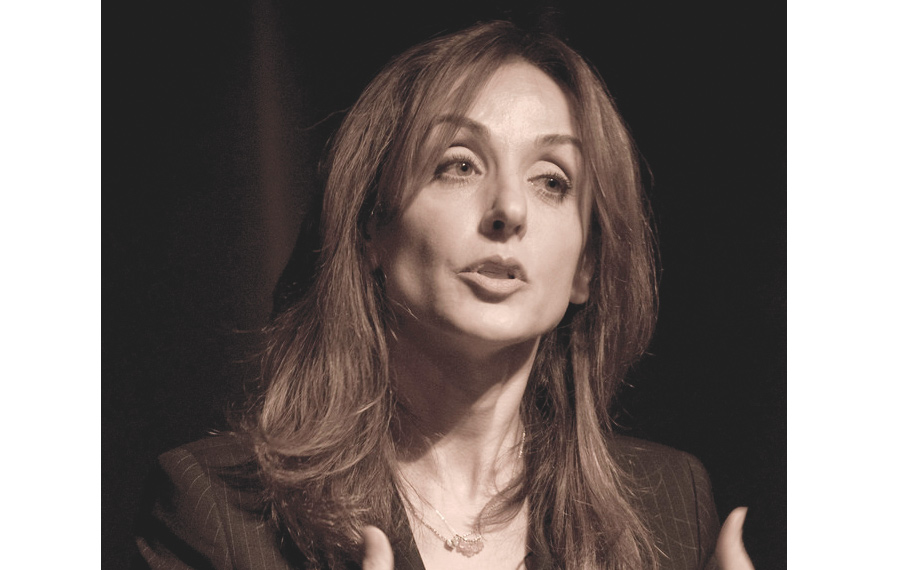
Gina Nahai

Libraries Conference
The diverse, tightly packed three days of the 54th annual conference of the Association of Jewish Libraries (AJL) at the Warner Center Marriott includes presentations on research skills for high schools, talks by Russian-born author and artist Eugene Yelchin and author Gina Nahai, a look at new Jewish fiction for adults, museum tours and a visit to American Jewish University. Through June 19. 8:30 a.m.-5 p.m. each day. Prices vary. Warner Center Marriott, 21850 Oxnard St., Woodland Hills. (201) 371-3255.

TUE JUNE 18

Alison Laichter

Jewish Meditation
Find a solitary moment in a noisy world to learn and master meditation techniques. Alison Laichter’s Jewish meditation class is for beginners and practitioners. Laichter, who founded the Jewish Meditation Center when she lived in New York, marries the concepts of intention, understanding and Jewish texts in her 60-minute class. Noon-1 pm. $5 general admission. Free for Skirball members. Skirball Cultural Center, 2701 N. Sepulveda Blvd., Los Angeles. (310) 440-4500.

WED JUNE 19

Story of Truman and Israel
Actor and playwright Arnie Weiss tells the story of an unknown haberdasher who convinced President Harry S. Truman to recognize the State of Israel in his one-man play, staged over lunch with the Renaissance Senior Group of Kol Tikvah synagogue. 11:30 a.m.-1:30 p.m. $12.50. Kol Tikvah, 20400 Ventura Blvd., Woodland Hills. RSVP required. (818) 348-0670 or dshayer@koltikvah.org 

THU JUNE 20

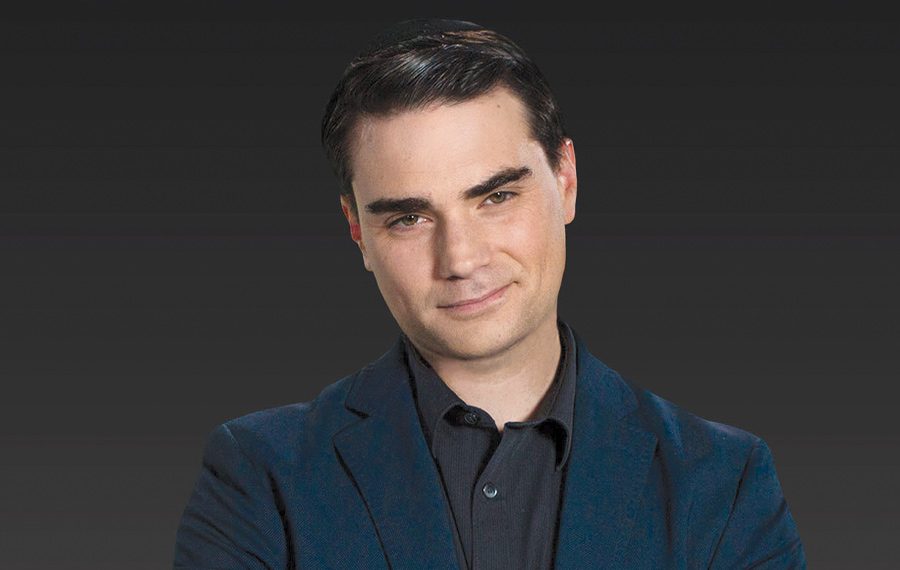
Ben Shapiro

Ben Shapiro
Political conservative Ben Shapiro, a nationally syndicated columnist since he was 17 years old and the author of eight books, appears at Valley Beth Shalom for “An Evening With Ben Shapiro.” The Jewish Republican Alliance (JRA) organizes the appearance of Shapiro, whose syndicated radio program is on more than 150 stations. 6 p.m. VIP check-in. 6:30 p.m. VIP reception and event check-in. 7:30 p.m. speaker. No entry after 8 p.m. $25 JRA members, $35 general admission. Advance purchase only; no tickets at the door. Photo ID and copy of receipt required. Valley Beth Shalom, 15739 Ventura Blvd., Encino. (310) 478-0752.


Have an event coming up? Send your information two weeks prior to the event to ryant@jewishjournal.com for consideration. For groups staging an event that requires an RSVP, please submit details about the event the week before the RSVP deadline.

Jewish Meditation, Beach Shabbat, Ben Shapiro Read More »

Report: Hezbollah U.K. Terror Attack Foiled in 2015

British authorities snuffed out a potential Hezbollah terror attack in 2015 after raiding the terror group’s stockpile of explosives, according to a June 9 report from the UK Telegraph.

The Telegraph report states that MI5 and the Metropolitan Police raided four areas in northwest London and discovered myriad ice packs containing three metric tons of ammonium nitrate, more than what was used in the 1995 Oklahoma City bombing, per the Jewish Chronicle. An unidentified 40-year-old man was also arrested during the raid but was later released.

Hezbollah’s reported terror plot was still in the process of being planned, but it is believed that the terror group was planning other terror attacks worldwide as well, as Hezbollah cells were later discovered in New York, Thailand and Cyprus. Israeli intelligence helped tip off British authorities about Hezbollah’s explosives as well as the other aforementioned plots, according to the Times of Israel.

The Telegraph report noted that the raid occurred three months after Britain signed onto the Iran nuclear deal, which the Telegraph said “raises questions about whether senior UK government figures chose not to reveal the plot in part because they were invested in keeping the Iran nuclear deal afloat.” The raid was also kept secret during the British parliament’s debate on banning Hezbollah’s political wing from the country. The British government officially banned the terror group in February.

Labour Friends of Israel Chair and Member of Parliament Joan Ryan said in a letter to Home Secretray Sajid Javid, “Without the bravery of our security forces this would have been used to target and murder Jews around the world. We now need to know urgently why the Government failed to disclose this vital information to the public and parliamentarians and resisted for more than three years my calls to ban Hezbollah in its entirety.”

In addition to terrorism, Hezbollah has been involved in transnational criminal activity, including drug trafficking in Latin America.

“Hezbollah has one goal and it shares the same goal with other radical Islamic organizations and that is to establish an Islamic state where Sharia [law] rules supreme,” American Jewish Committee Transatlantic Institute Director Daniel Schwammenthal said during an event at Wilshire Boulevard Temple School May 28.

Report: Hezbollah U.K. Terror Attack Foiled in 2015 Read More »

Poker Fundraiser, FCLA Party, JFS Gala

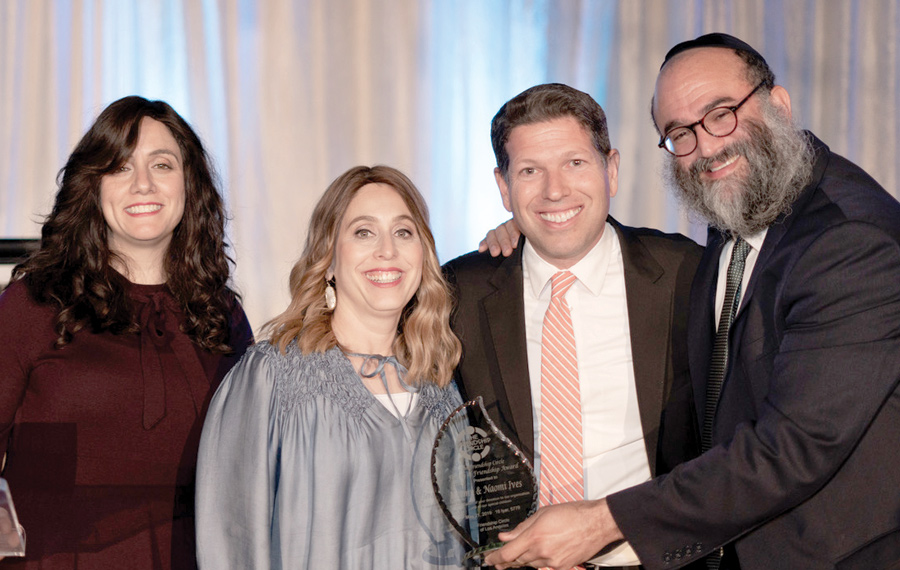
Friendship Circle of Los Angeles (FCLA) celebrated its 552 volunteers at their annual garden party, on May 21.  

In its 16th year, FCLA runs 24 programs for Jewish children and young adults who have special needs. 

“The night culminated an incredible year at FCLA, with the ceremony highlighting their shared passion for inclusion,” a FCLA statement said. 

The Family of Friendship Award was presented to Jeremy and Naomi Ives. Jeremy is an early supporter of FCLA. As a sponsor for the last five years of FCLA’s annual Walk4Friendship, Jeremy spoke about their family’s desire to help FCLA spread the word of inclusion and acceptance of children who have special needs.

Chanie Lazaroff, the Mitzvah Volunteer Program (MVP) coordinator at FCLA, recognized the 73 MVP graduates for dedicating their time to learning more about how to interact appropriately with children who have special needs. The sixth, seventh and eighth graders of MVP stood proudly, wearing their MVP sweatshirts.

Keynote speaker Brandon Farbstein shared his story. After severe bullying and an attempted suicide, he turned around his life and inspires others to do the same. His words impacted the entire crowd. Farbstein, 19, has traveled the world as an activist and author after discovering his calling at age 15 on the TEDx stage. He realized his life’s meaning was to change the lens through which people see their world.

FCLA awarded the Fellowship Award to 51 volunteers who have dedicated hours to their special friends and furthering their knowledge in the field of special education. Each volunteer was called up and presented with a certificate and glass award for their commitment. 

FCLA’s program director Miriam Rav-Noy presented Julius English with the Heineini Award. English has been FCLA’s head behaviorist for seven years. 

“Volunteers, we are so many flames ablaze,” Rav-Noy said. “Together, when we shine brighter, warmer and stronger, we are unstoppable.” 


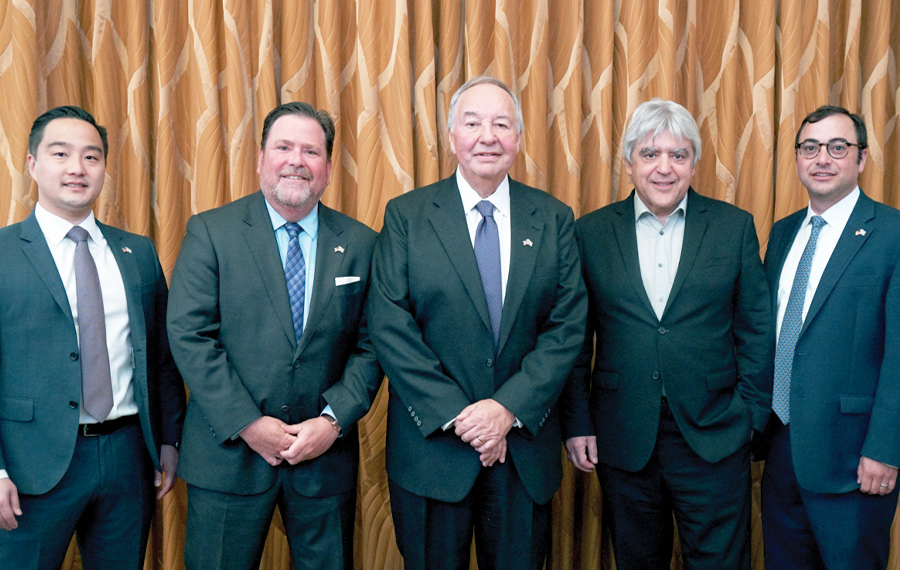
From left: Stephen Seo, Jeffrey Abrams, Selwyn Gerber, David Suissa and Jonathan Gerber attended the launch event for the Jerusalem Portfolio. Photo courtesy of The Jerusalem Portfolio

Investment adviser company RVW Wealth has announced the launch of The Jerusalem Portfolio (TJP), a new investment vehicle that will empower individuals, foundations and institutions to dedicate a portion of their portfolios to owning a stake in Israeli-focused companies. 

“The Jerusalem Portfolio fills a critical need in the market: a values-driven investment opportunity for individuals and institutions dedicated to supporting Israel,” Selwyn Gerber, co-founder and chief strategist of TJP and RVW Wealth, said in a statement. “With TJP, investors gain unprecedented access to Israel’s rapidly-growing economy by investing in established, listed companies.”

TJP celebrated the launch with a May 29 event at the Waldorf Astoria Beverly Hills. Speakers included Stanley Gold, a private investor in Israel; acting Consulate General of Israel in Los Angeles Eitan Weiss; and Israeli investment strategist and economist Joe Levin.


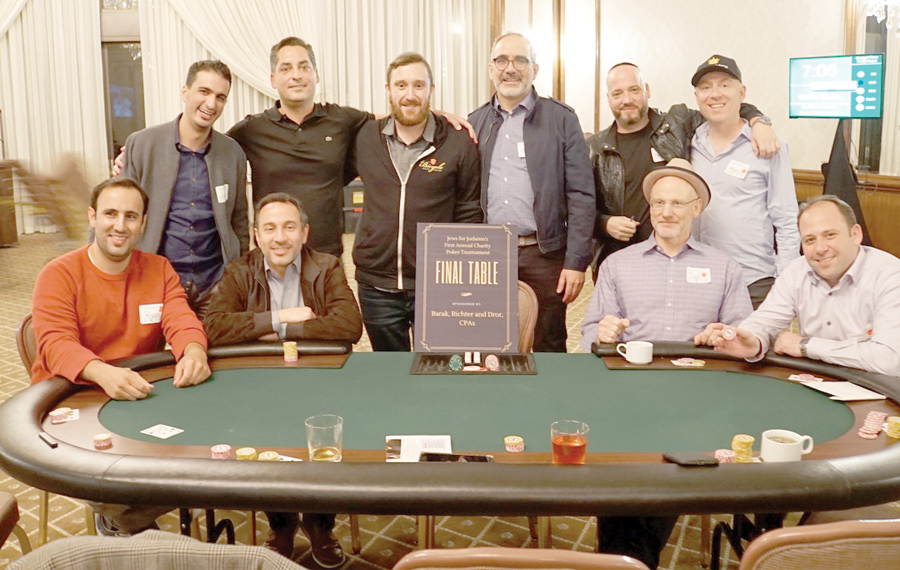
From left (top row): Justin Damavandi, Pedram Ben-Cohen, Yonah Linkovsky, Moshe Benarroch, Nechemya Shiner and (from left, bottom row) Ryan Makabi, Sean Namvar, Sal Litvak and Steven Bernstein participated in Jews for Judaism’s charity poker tournament. Photo courtesy of Jews for Judaism

A Jews for Judaism charity poker night was held at Sephardic Temple on May 30.

Coinciding with the first game of the NBA finals, which was projected onto a wall of the temple ballroom, the evening drew an array of men — and a couple of women — to the Westwood-area temple, including Stephen Wise Temple Senior Rabbi Yoshi Zweiback; “Accidental Talmudist” writer Sal Litvak; Rabbi Zalman Kravitz, COO of Jews for Judaism; Kravitz’s father, Rabbi Bentzion Kravitz, founder and CEO of Jews for Judaism; and Ilana Nishli, director of development and strategic partnerships at Jews for Judaism.

Yona Linkovsky was the winner of the tournament-style gathering, which began at 7:30 p.m. and concluded at midnight.

Shaun Gabbay and Dan Shainberg co-chaired the event, which featured professional dealers, prizes, dinner and an open bar.

Proceeds benefited Jews for Judaism’s educational initiatives and programming. Founded in 1985, Jews for Judaism aims to counteract proselytizing targeting Jews and encourages critical thinking. According to its website, “we are a respected resource for all ages and all denominations within the Jewish community.”


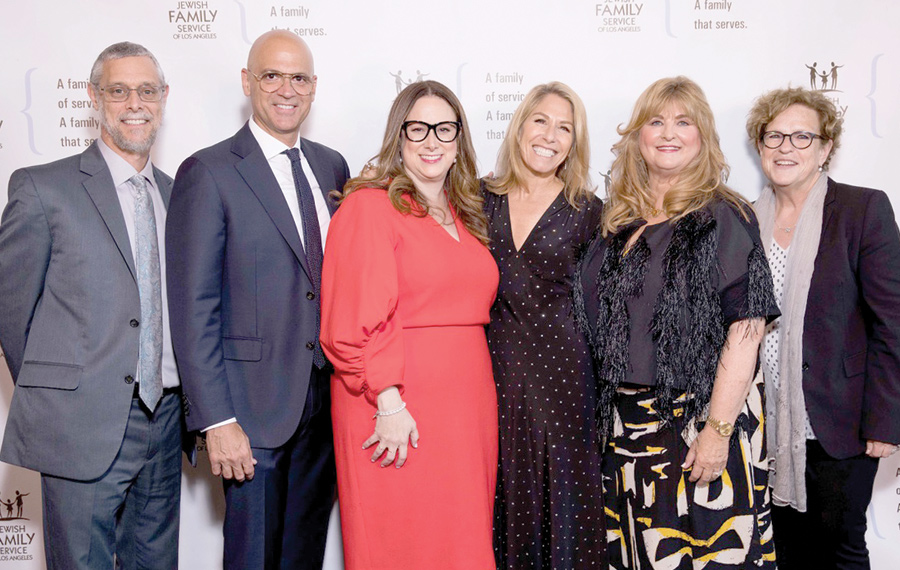
From left: Jewish Family Service of Los Angeles (JFS) President and CEO Eli Veitzer; JFS honorees Brett Paul and Susan Rovner; JFS Board Member Tami Kupetz Stapf; JFS Board Chair Shana Passman; and JFS Executive Vice President Susie Forer-Dehrey attended JFS’ 26th annual gala. Photo courtesy of Jewish Family Service of Los Angeles.

Jewish Family Service of Los Angeles (JFS) held its 26th annual gala on May 29 at the Beverly Hilton. Drawing more than 700 attendees, this year’s event raised $1.3 million for JFS services that fortify the Los Angeles community.

During the 26th annual gala, JFS honored Brett Paul and Susan Rovner, presidents of Warner Bros. Television and Warner Horizon Scripted Television, with the Spirit of Humanity Award for their commitment to helping the vulnerable in the community and their support of JFS.

JFS also presented the Anita and Stanley Hirsh Award to Eileen Brown, David O. Levine and Dena Schechter for their ongoing support. All three are long-term members of the JFS board of directors and have dedicated themselves to the success of the JFS capital campaign toward a new home and flagship service center for JFS on Fairfax Avenue. In this capacity, Brown has served as co-chair of the building committee, Levine as the co-chair of the building committee and capital campaign and Schechter as the co-chair of the capital campaign.

A special recognition award was presented to Lois and Richard Gunther and the late Anita and Stanley Hirsh. In honor of the supporters of the capital campaign, JFS re-dedicated its new site on Fairfax Avenue as the JFS Gunther-Hirsh Family Center.

At the gala’s “Raise the Paddle” fundraiser, attendees donated more than $300,000 in just a few minutes — a record for JFS. The event included additional remarks from Beryl Geber and Greg Berlanti.


Wanna be in Movers & Shakers? Send us your highlights, events, honors and simchas.
Email ryant@jewishjournal.com.

Poker Fundraiser, FCLA Party, JFS Gala Read More »

Adam Sandler Gives Daughter a Bat Mitzvah Surprise: Adam Levine

Adam Sandler’s daughter Sadie got a very special surprise for her bat mitzvah last month when Adam Levine and his Maroon 5 bandmate James Valentine showed up and played three songs at her party. Sandler had texted the singer, a friend, asking for a favor.

“I didn’t even know why I did this, but I said, ‘I’m sorry to do this to you, my kid’s getting bat mitzvahed Saturday night. Would you mind coming and singing a few tunes? It would be incredible,’” Sandler said in an appearance on “Jimmy Kimmel Live.” Levine responded immediately that he would do it, and told Sandler he’d attended bar mitzvahs at the same venue when he was a kid.

“It was the coolest thing, man.” Sandler said, adding that Sadie “hugged me so much.” Levine was one of many celebrities in attendance. Dustin Hoffman, Conan O’Brien, Chris Rock and David Spade were just a few of the stars on the guest list.

Sandler, whose Netflix movie “Murder Mystery” with Jennifer Aniston begins streaming June 14, now has three years to plan a surprise for his daughter Sunny’s bat mitzvah. “Maybe he’ll come back,” he said of Levine. “I can’t top my Adam.”

Adam Sandler Gives Daughter a Bat Mitzvah Surprise: Adam Levine Read More »

The 3-D Artist Keeping Kids Entertained During Shabbat Services

Award-winning artist Avi Pashnov has spent his career merging art and Judaism. As a teaching assistant in the Judaica Department at Bezalel Academy of Arts and Design in Jerusalem, he has tried to make people think and feel through his 3-D creations. His latest invention is a freestanding 3-D Judaica game for children called Ezrat Yeladim that focuses on all the Jewish holidays. He was inspired to create it after seeing parents struggle to keep their young children engaged — and quiet — during Shabbat services. Multiple children can participate in forming the puzzle, which includes things such as the Ten Commandments, a Kiddush cup and a shofar. The goal is for children to engage with one another and connect to Judaism in a hands-on way.

Jewish Journal: How did you come up with the idea for Ezrat Yeladim?

Avi Pashnov: Every Shabbat, when I would watch the children play in the courtyard of my synagogue in Jerusalem, I wondered why they were not inside, sitting next to their parents praying. I realized they come to synagogue for social reasons; to interact and play games with their friends. Parents, on the other hand, bring their children to absorb the atmosphere and learn more about their religion, to enhance their connection to Judaism. That’s when a light bulb went off — to combine the needs of the parents and the wishes of the children in a single object.

JJ: Do you see this as something that can turn into a series?

AP: There are gaming elements in my other works, but they are mainly conceptual. This was created and designed as a game focused on the entire Jewish cycle that combines all of the Jewish holidays and traditions from a Jewish child’s point of view. That said, this project could certainly continue to develop and acquire additional layers, turning it into a series. 

JJ: What was your design process?

AP: The design process was the most interesting part. I started off by researching all the different components one step at a time, including Jewish holidays, Judaica, games, children’s likes and dislikes, the materials I could use, and the concept I was toying with. 

I drafted my ideas on a two-dimensional drawing as well as building 3-D models of them and then slowly collected original materials from everything I created and centered them into one whole idea. It took me about a year to develop the object, though I had been thinking about it for a few years. I would like to also give credit to Yaron Ronen, Yossi Farkash and Bezalel Academy professor Vered Kaminski for their support on the project.

JJ: Why did you want to work on a kids’ project?

AP: As a creator, I always try to generate meaning in my work, to make people think and feel things. Here I have the ability to use my tools to create and teach small children. There is no greater satisfaction than that.

JJ: What age is the project designed for?

AP: The game was intended for children ages 4 -12, when they are taught Chumash and Mishnah. But with time, I was pleasantly surprised to discover that adults also enjoyed playing the game, sometimes even more than the children.

JJ: Can you talk a bit about the Shabbat themes and images that are displayed in the game? 

AP: When you first look at the game, you see a board with icons that remind you of the different occasions and dates throughout the year. They were all created from a child’s point of view. They are arranged in a circular design and surround a smaller inner circle, which is where the Shabbat icons appear.

After looking at the icons, you suddenly discover that there are layers of icons that can be pulled out of the board, exposing a whole world of parts and shapes that become three-dimensional Judaica tools that are also designed from a child’s point of view.

For me, Shabbat is the center of the Jewish experience, and this highlights that perspective. 

“I realized children come to synagogue for social reasons; to interact and play games with their friends.”

JJ: What is your favorite part of Shabbat and is that incorporated into the game?

AP: One of my favorite Shabbat traditions is the Havdalah ceremony. It is unique in that it makes connections between different experiences. I incorporated this into the game with the box of besamim (spices), illustrated with icons such as cloves and cinnamon, which are used in most Ashkenazi communities. The structure of the box is triangular to symbolize the binding of the spices coming from Eastern countries.

JJ: Where can people find this game?

AP: The object, which has a didactic dimension and was designed so that a number of children can play it at the same time, is intended for schools, kindergartens and the synagogue courtyards. I am hoping that interested parties contact me directly, because I am able to adapt the game according to the needs of each specific customer and how they envision it being used.

To learn more about Ezrat Yeladim, email pashiavi@gmail.com.

The 3-D Artist Keeping Kids Entertained During Shabbat Services Read More »